• home
  • index of films
    • index of films featuring maps
    • index of films featuring photography
    • bibliography
  • blogs
    • maps in films
    • choses vues - things seen
    • l'Escalographe
    • the BlowUp moment
  • how to map a film
    • the first maps >
      • Some Maps in Gance's Napoléon
  • Paris
    • 1890s-1909 >
      • firemen in Paris, 1896
      • La Villette c.1896-97
      • Hatot-Breteau 1897
      • Place de l'Opéra
      • Paris 1900
      • French Cancan >
        • the real Paquerette >
          • Paquerettes
      • Alice Guy - Paris locations >
        • Alice Guy in the brothel ...
      • a dangerous street corner
      • Capellani in Paris
      • La Fille du faux-monnayeur
    • 1910-1929 >
      • a gateway out of Paris c.1910
      • L'Enfant de Paris (narrative of an identification)
      • Fantomas Over Paris: episode 1 >
        • Fantomas Over Paris: episode 2 >
          • Fantomas Over Paris: episode 3 >
            • Fantomas Over Paris: episode 4 >
              • Fantomas Over Belgium
      • One Place, Three Films: Fantomas and the French New Wave
      • a staircase in Belleville
      • Vampires Over Paris >
        • Les Vampires 1
        • Les Vampires 2
        • Les Vampires 3
        • Les Vampires 4
        • Les Vampires 5
        • Les Vampires 6
        • Les Vampires, 7
        • Les Vampires 8
        • Les Vampires 9
        • Les Vampires 10
      • Irma Vep posts a letter
      • Inside-Outside: space and light in Judex
      • L'Affaire Barsac
      • neon Paris c.1913
      • electric nights in Paris (and Berlin)
    • 1930-1959 >
      • Quai des Orfèvres
      • Olivia - Audry - 1951
      • Paris Noir: Becker, Dassin, Melville
      • the persistence of graffiti: Paris c.1952
      • Du rififi chez les hommes - reading topotropically >
        • Du rififi chez les hommes - locations identified
      • Het Parijs van Le Ballon rouge
    • the New Wave and after >
      • New Wave places >
        • New Wave Paris >
          • New Wave Newness: architecture in Paris
          • Eric Rohmer in the rue de la Huchette, c.1956
          • Les 400 coups: Paris locations >
            • Baisers volés
          • 'New York Herald Tribune' - Parrish and Godard on the rue de Berri >
            • A bout de souffle (narrative of an identification)
          • the Grisbi connection: Chabrol and Becker
          • Les Bonnes Femmes: sequence by sequence
          • Une femme est une femme: the places documented
          • the boulevard des Italiens
          • Jules et Jim: Paris configured
          • the place of cinema: cinema as location in Vivre sa vie
          • Godard and Melville: the view from the rue Jenner >
            • Melville: more views from the rue Jenner
          • the New Wave in Pigalle c.1963
          • La Peau douce - displaced places
          • Le Bonheur 1965
          • Paris vu par
          • Masculin Féminin
          • The Topography of La Guerre est finie
        • France
      • Le Samourai: places and maps >
        • Un flic: art and artifice
      • Bresson in Paris - Pickpocket
      • Bresson 69-71
      • Every Revolution
      • statues in Godard and Duras
      • Holy Motors >
        • Holy Motors - notes
    • banlieues >
      • Le Canal de Ourcq
      • Ville d'Avray en 1903
      • Three filmmakers in Romainville
      • filmmaking in the Fontainebleau forest
      • Feuillade's lonely villas
      • anarchists in the suburbs c.1912
      • One Church Two Cemeteries: Clouzot and Chabrol at Montfort L'Amaury
      • Feuilladian Franju - Les Yeux sans visage
      • country houses and suburban villas
      • banlieue locations in L'Amour existe
      • the Landru Villa
      • 1 place 2 filmmakers: Rivette & Chabrol in Ermenonville
      • Céline et Julie: what's the address of that house?
      • cinemas in La Petite Voleuse
    • The Stairs: Paris
  • London
    • 1890s-1920s >
      • Lumiere London >
        • Lumière London, bis
      • Robert Paul in London: tour guide and film maker
      • Ultus in Isleworth
      • Cocaine 1922
      • Fu Manchu 1923
    • London Locations >
      • Piccadilly Circus >
        • Piccadilly Circus in films
        • Piccadilly Circus in art
        • Piccadilly Circus in postcards
        • Piccadilly Circus photographed
        • Piccadilly Circus: invisible things
      • Muswell Hill
      • the Arsenal Stadium mysteries
      • Brentford streets on screen
    • the locality of London studios >
      • Early Ealing
      • straight out of Whetstone
      • Walthamstow's studios
    • Sherlock Holmes >
      • some Baker Street irregularities
      • an American Sherlock in London
    • Sojourners + Cosmopolitans >
      • London in French Film >
        • Rififi in London
        • London in London River
      • maps in krimis
      • Kriminal (1966)
      • Kaurismaki's London c. 1989
    • places in Face
  • Geneva
    • Swiss New Wave - shared-world practice
    • Geneva in Swiss New Wave films >
      • SNW Geneva: collective housing
      • SNW Geneva: villas
      • SNW Geneva: bowlings + piscines
    • The Chronology of Le Petit Soldat
    • La Lune avec les dents (Michel Soutter 1966)
    • L'Inconnu de Shandigor (J.-L. Roy 1967)
  • signage, etc.
  • studios, etc.
    • Eclair
    • Eclipse
    • Gaumont >
      • Cité Elgé locations
    • Lumière
    • Lux
    • Pathé >
      • Where's Max >
        • when Harry met Max, and where
        • Max takes the train
      • Bébé victime d'une erreur...
      • Montreuil in Pathe films
      • Pathé police stations
      • Pathé filmmaking in Nice c. 1908
    • studios & the local >
      • Ealing >
        • Kind Hearts and Coronets: suburbia and other places
        • the view from Ealing
  • my local filmmaker
    • The Unfortunate Policeman >
      • Buy Your Own Cherries >
        • The Medium Exposed >
          • The ? Motorist >
            • The Fatal Hand >
              • A Little Bit of Cloth
              • Blind Man's Bluff >
                • Bill Sikes Up-To-Date
    • Walter Booth in Muswell Hill
  • my local cinemas
  • favourites
    • Agnès Varda >
      • Cleo 5-7 - Time
      • Sans toit ni loi >
        • Sans toit ni loi - the 12 tracking shots
        • Mona's postcard collection
    • Alice Guy >
      • Alice Guy + JLG
    • Chris Marker
    • Jacques Rivette >
      • a map of Out 1
      • Le Pont du Nord: locations identified >
        • topographical telescoping in Le Pont du Nord
        • Le Pont du Nord (narrative of an identification)
    • J.-L. Godard >
      • Godardiana
      • A bout de souffle: footnotes to the film >
        • A bout de souffle - the cast list
        • A bout de souffle in colour
      • photographs in Le Petit Soldat
      • Bande à part
      • Paintings in Pierrot le fou
      • sculptures in Made in USA
      • Les Fins de Godard
      • Week End - time, place and cars
      • Bukowski in Sauve qui peut (la vie)
      • Life magazine + Hdc
    • J.-P. Melville
    • Louis Feuillade
    • Max Linder
    • Robert Paul
  • cine-tourists
    • a German tourist in Paris: Le Silence de la mer
    • an American tourist in Paris
    • History Lessons in Rome
  • Nouvelle Vague
    • New Wave Christmas
    • the New Wave and modern art >
      • New Wave Braque
      • New Wave Chagall
      • New Wave Klee
      • New Wave Manet
      • New Wave Miro
      • New Wave Modigliani
      • New Wave Picasso
      • Pierre Alechinsky in Le Joli Mai (1963)
    • New Wave cameos
    • Attal et Zardi
    • Le Signe du Lion: six small things
    • New Wave films in New Wave films
    • Cahiers du Cinéma on screen
  • other things
    • assorted stamps
    • Maps in Books
    • the topographies of La Fille aux yeux d'or
    • place-time in Thérèse Raquin
    • photography >
      • 10 photographs by Brassaï in 3 Paris dancehalls >
        • painters in the rue Blomet
      • Gisèle Freund in Paris >
        • Gisèle Freund in Histoire(s) du cinéma
      • Godard's Histoire(s): photographs of women
      • the photographer as photographer: André Dino with Tati, Truffaut and Chabrol
      • some Simenon book covers
      • films playing at the Moulin Rouge
    • building sites >
      • a building site and some buildings, c.1961 >
        • Jean Ginsberg
      • 93 - Seine Saint Denis: HLM, cités, grands ensembles >
        • 93 - Seine Saint Denis: Aubervilliers to Bondy
        • 93 - Seine Saint Denis: Drancy to l'île Saint Denis
        • 93 - Seine Saint Denis: La Courneuve to Saint Ouen
        • 93 - Seine Saint Denis: Sevran to Villepinte
      • Chateau Gaillard
      • Euston Station
    • investigations >
      • A Remarkable Journey in Zigoto's New Motor-Car - 1912
      • the Hotel Bristol enigma
    • news >
      • French news
      • news from England
      • news from the U.S.
    • a picture of great significance
    • A Girl and a Gun >
      • Griffith, Shadowland, May 1922
  • efc - places
  • contact details
    • directories
    • address books
    • hotel registers
    • envelopes and postcards
    • telegrams
  • family, locality
    • a Succession of Edwards
    • Henri Grieshaber - architecte chaudefonnier
  • about this site
  • Publications
The Cine-Tourist

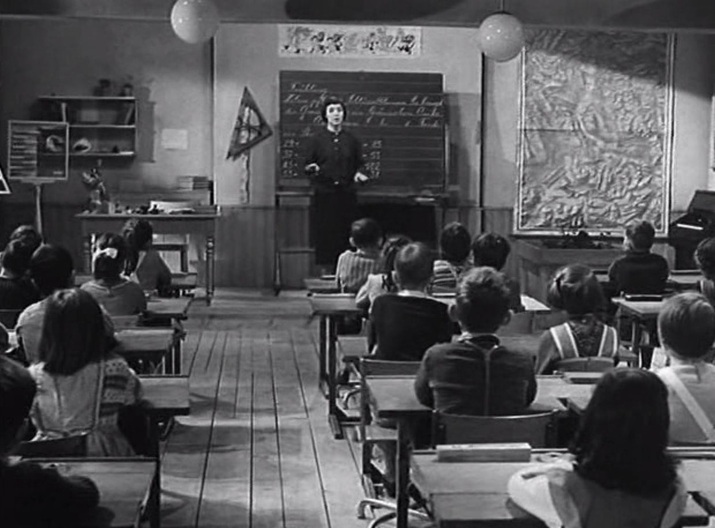
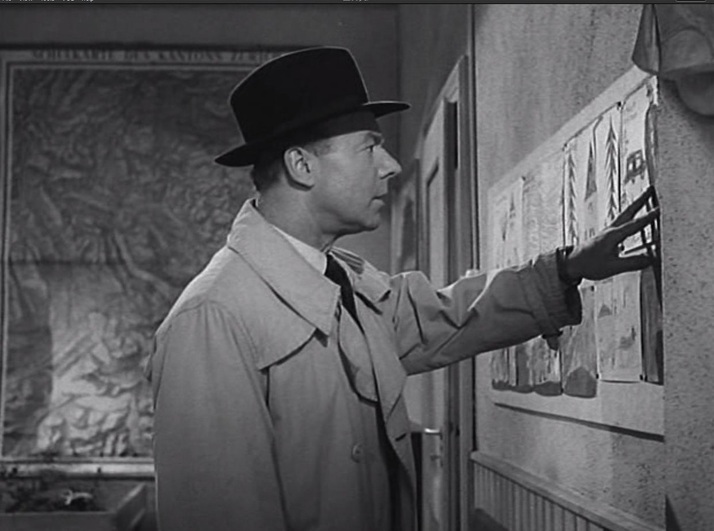
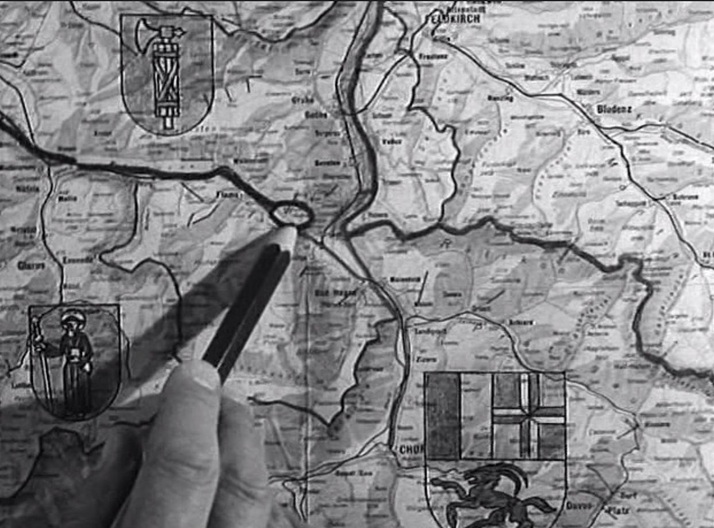
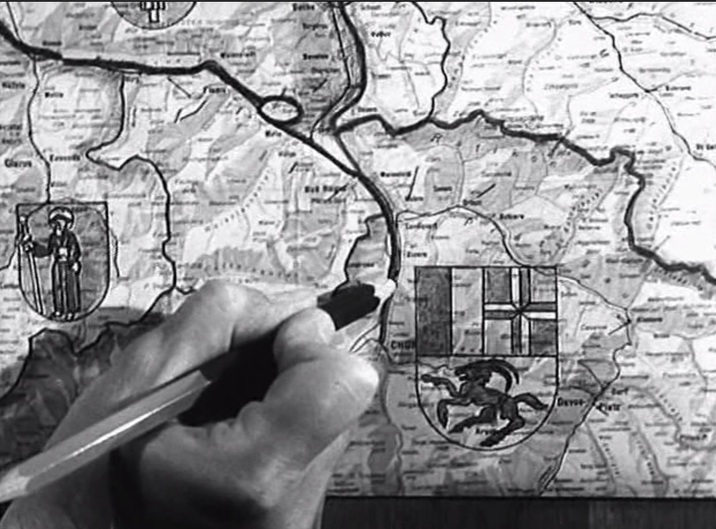
161/ Es geschah am helichten Tag [It Happened in Broad Daylight] (Ladislao Vajda 1958): Graubünden - Les Grisons

15/9/2011

0 Comments

 
Picture
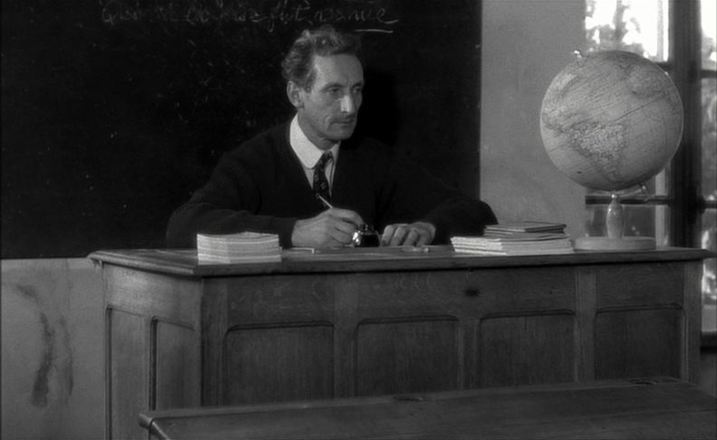
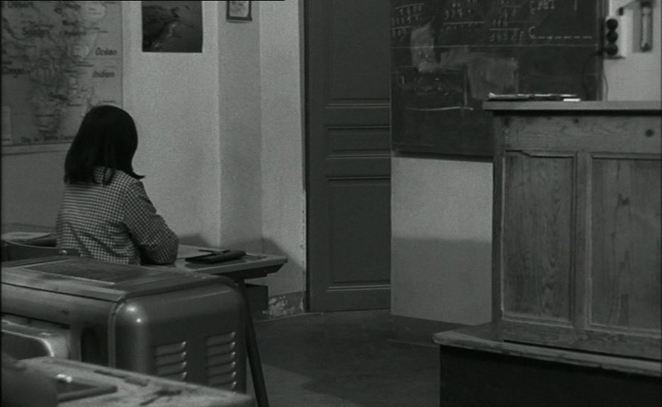
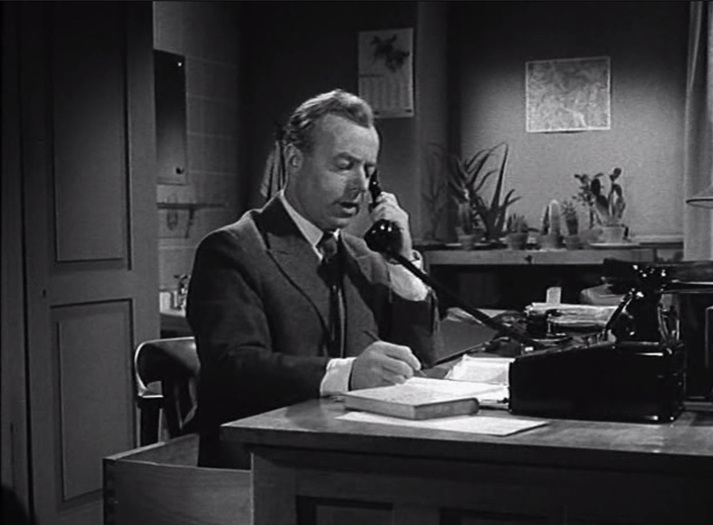
Maps provide familiar background décor in the police inspector's office and in the schoolroom:
Picture
Picture
Picture
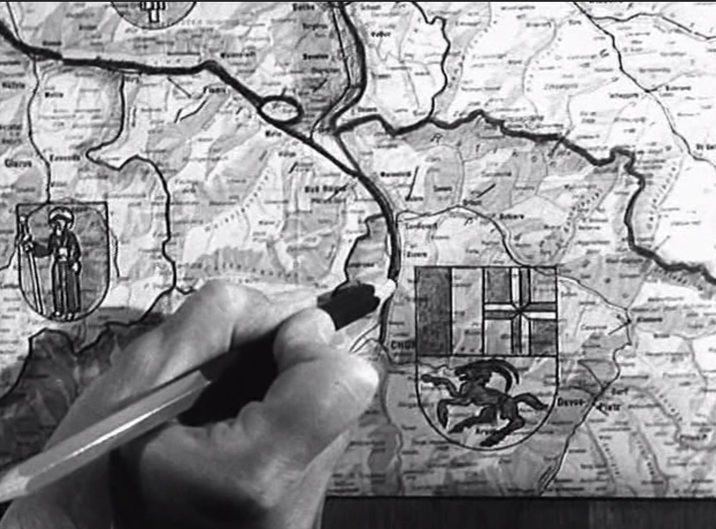
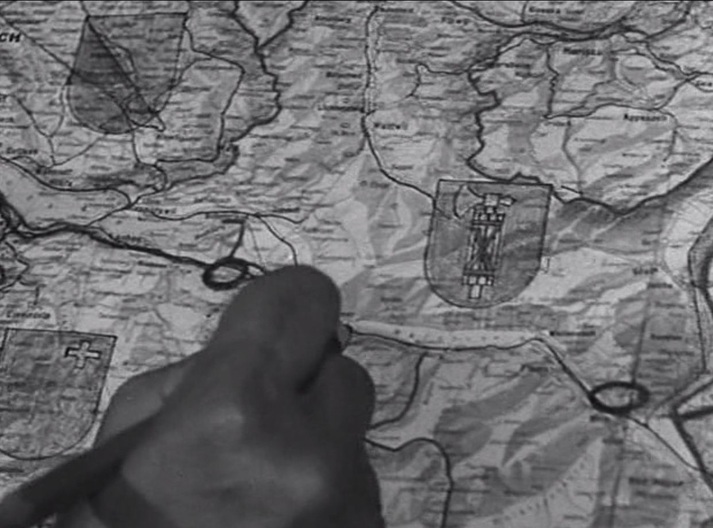
The inspector finds a clue in a child's drawing, where the ibex from the cantonal coat of arms of Graubünden is represented.  On the map he works out where he will find the child-killer:
Picture
Picture
Picture
0 Comments

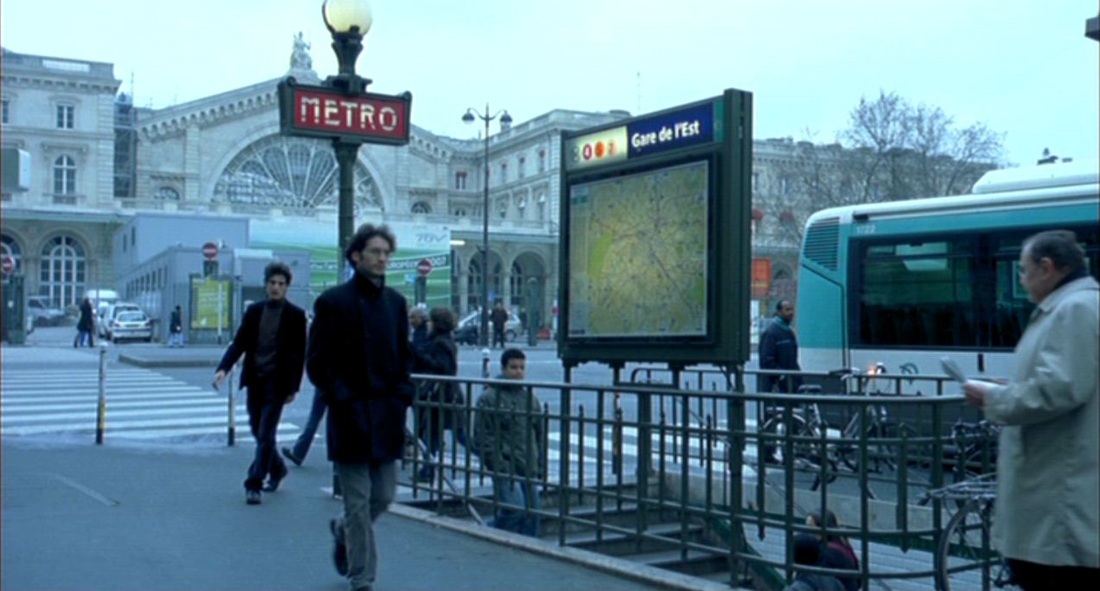
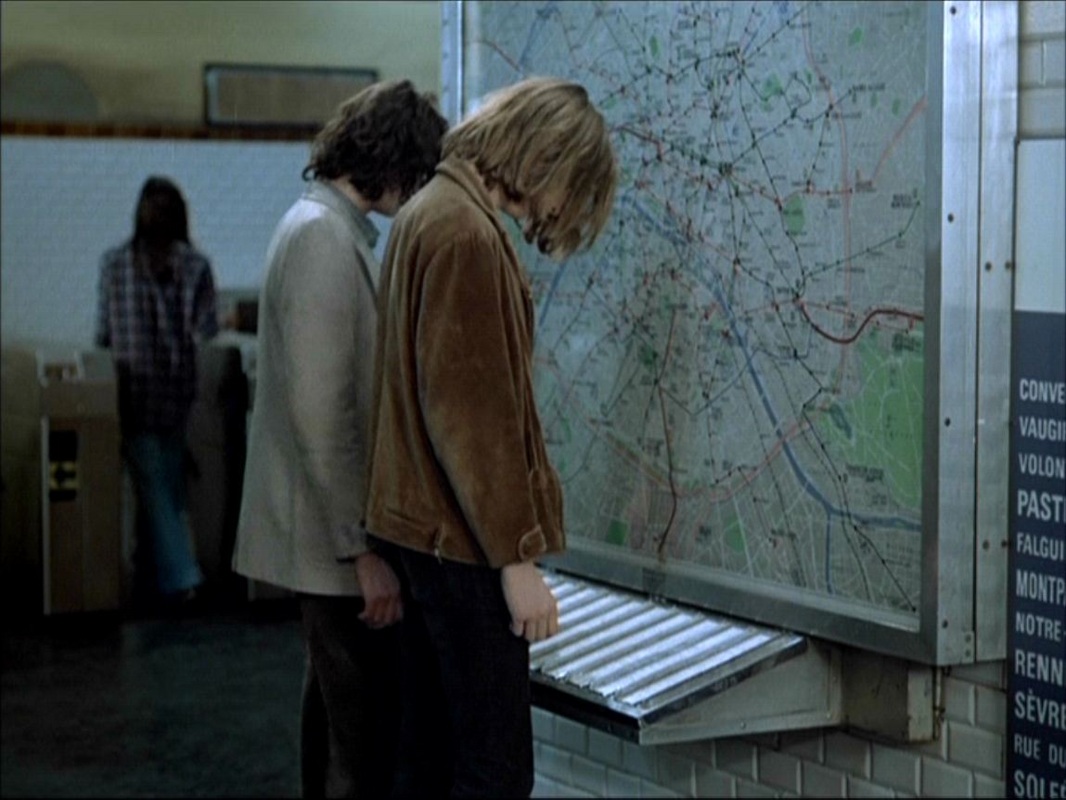
145/ Les Chansons d'amour (Christophe Honoré 2007): maps at Paris métro entrances

30/8/2011

0 Comments

 
Picture
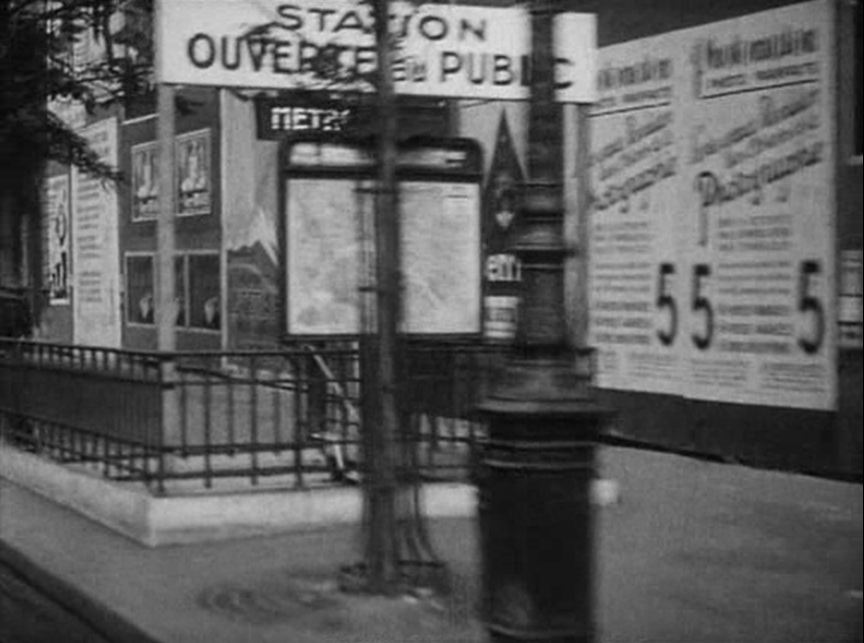
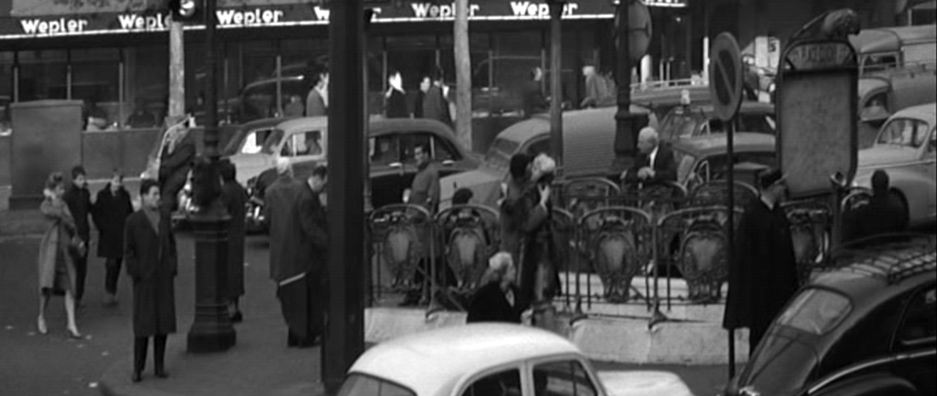
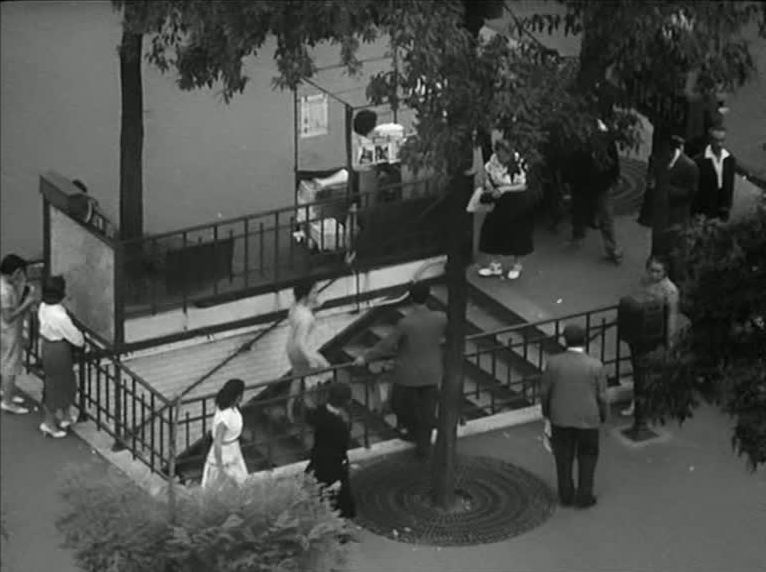
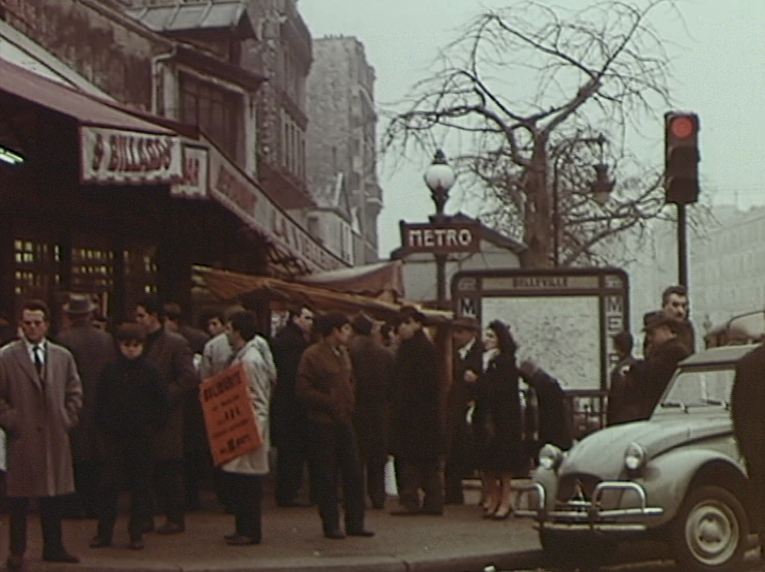
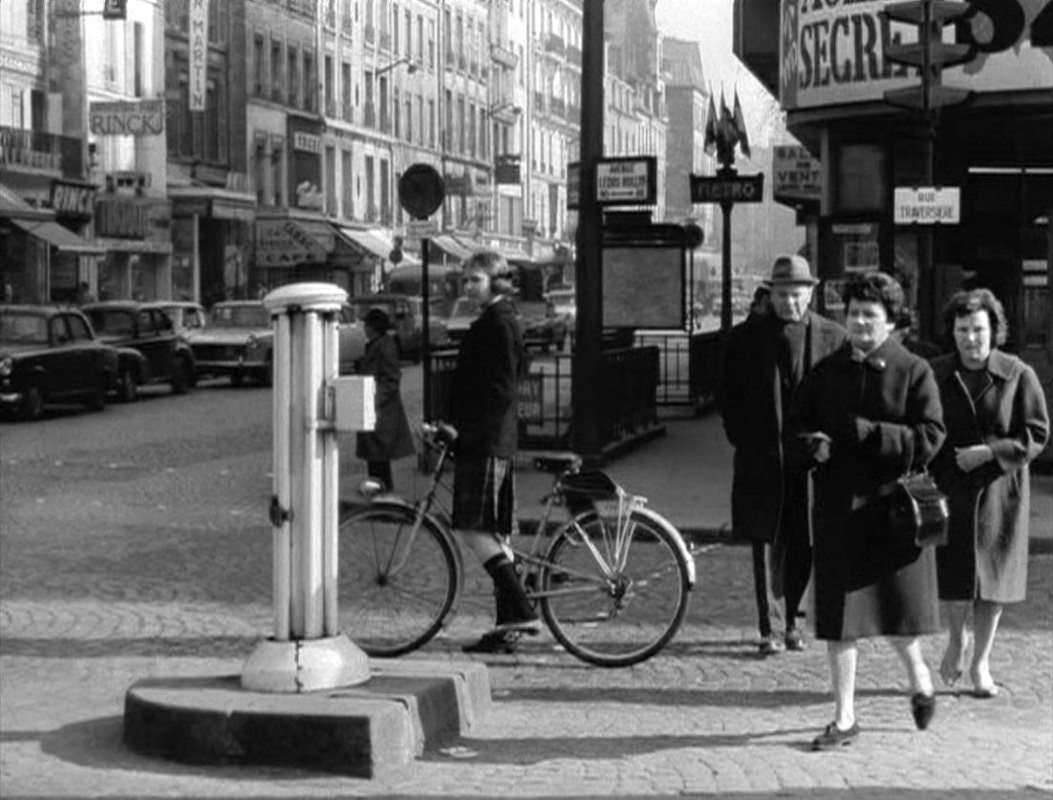
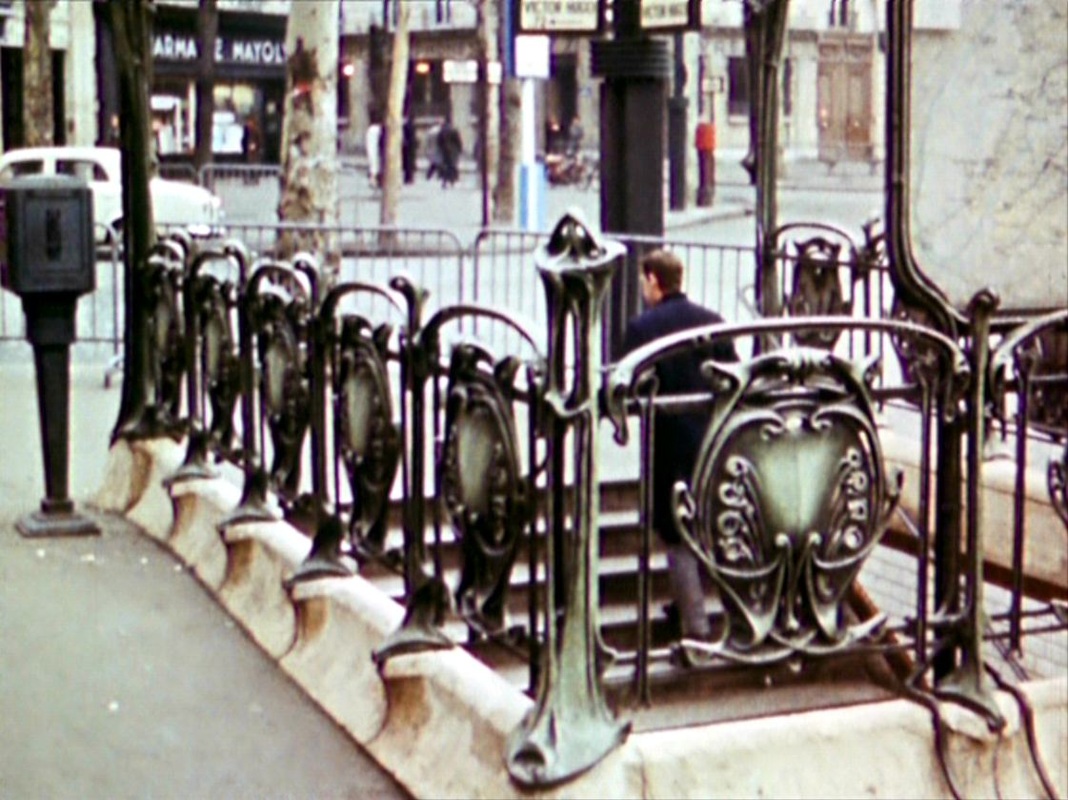
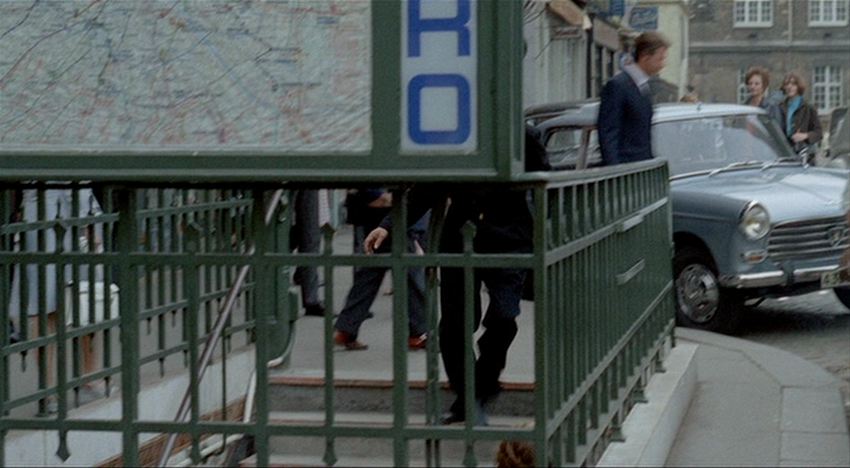
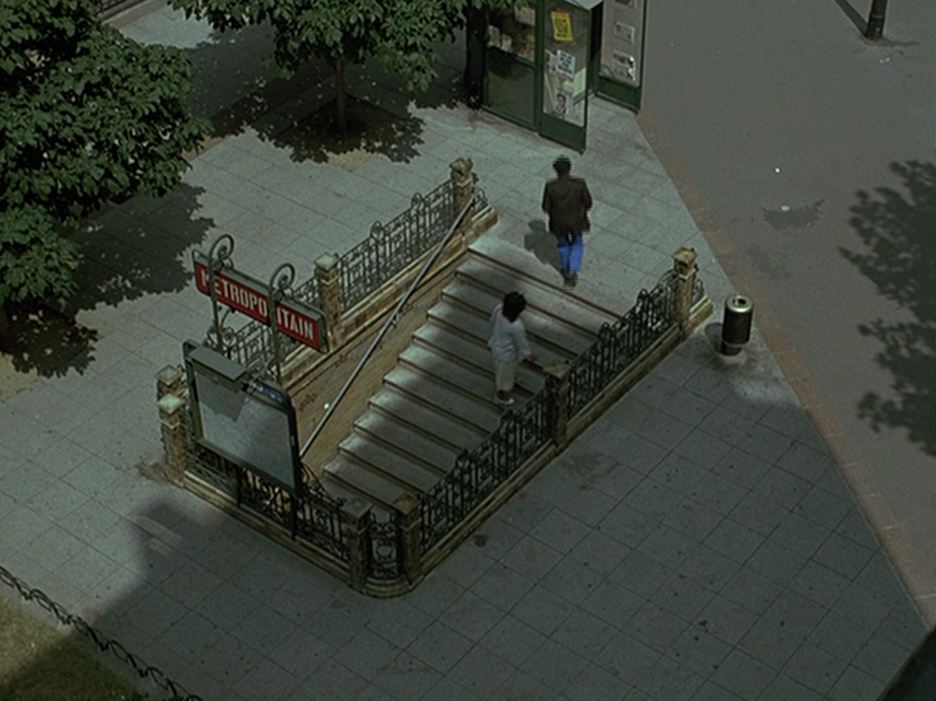
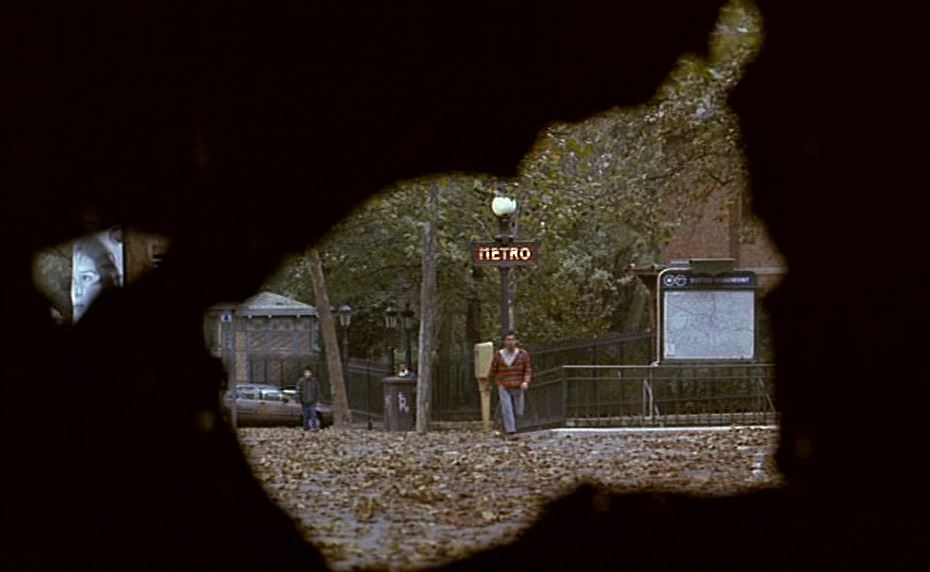
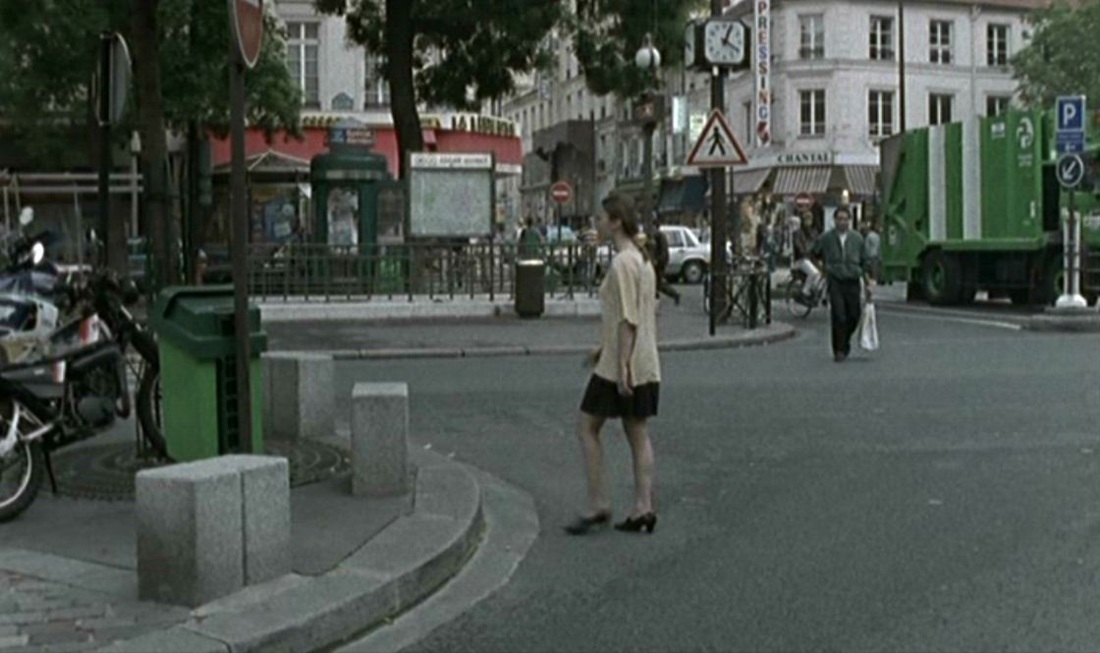
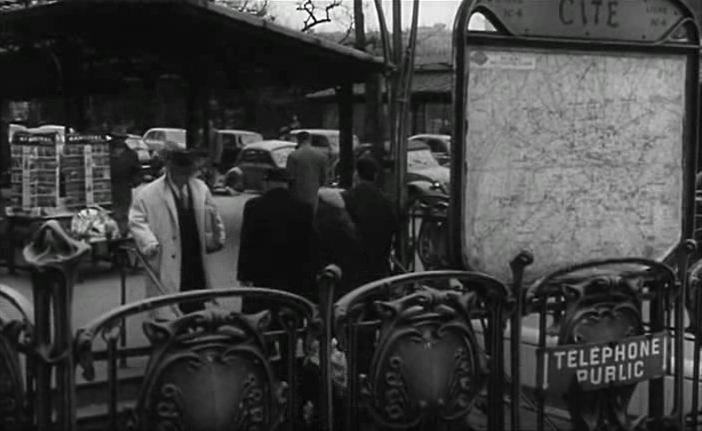
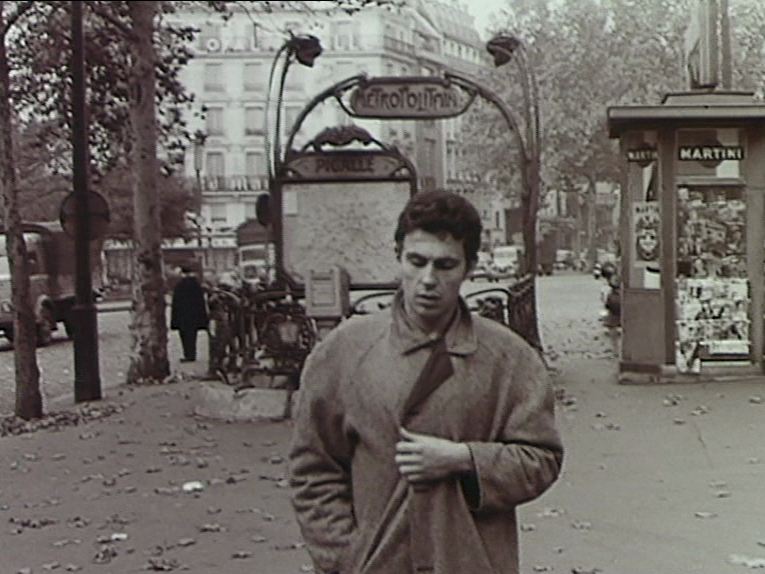
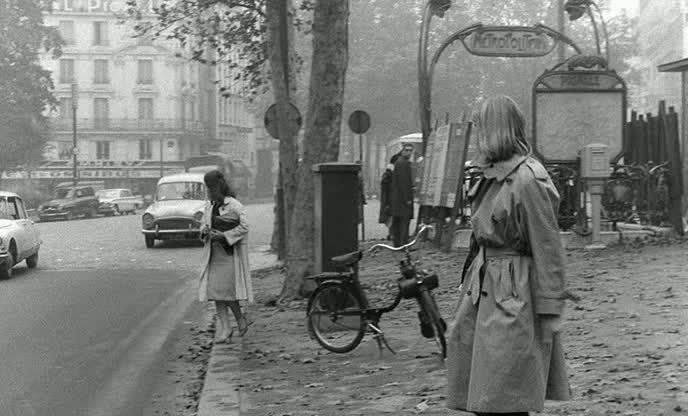
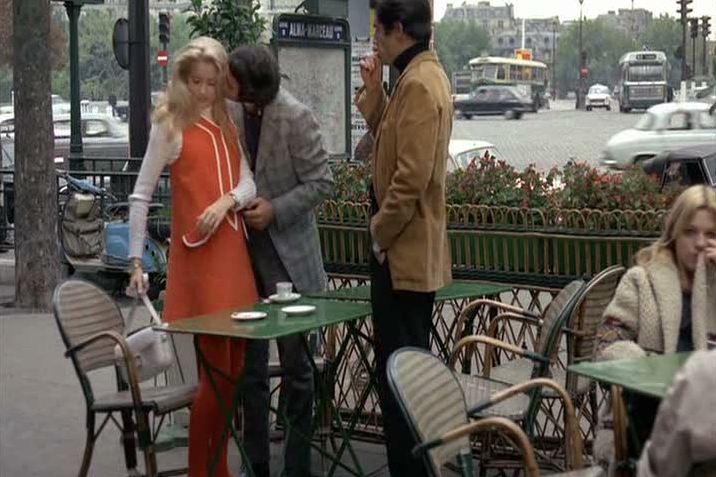
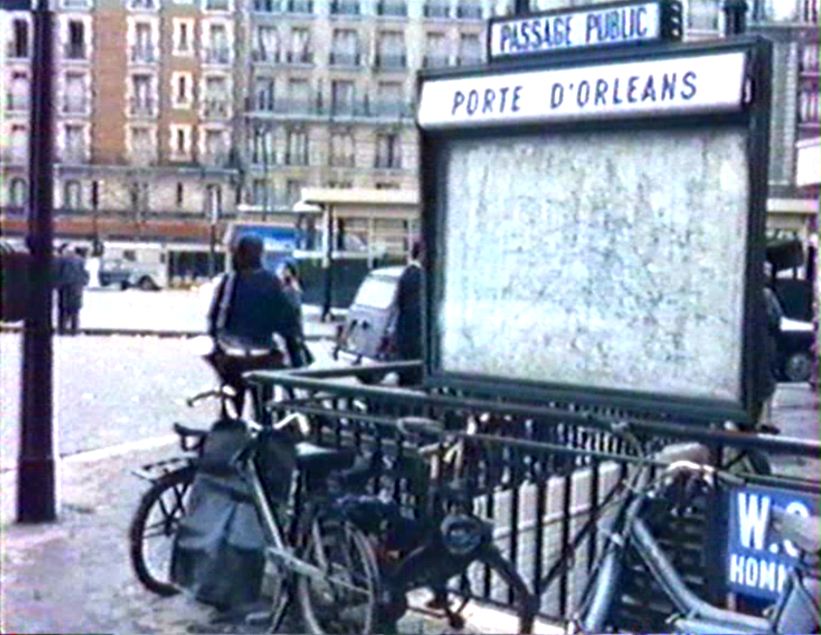
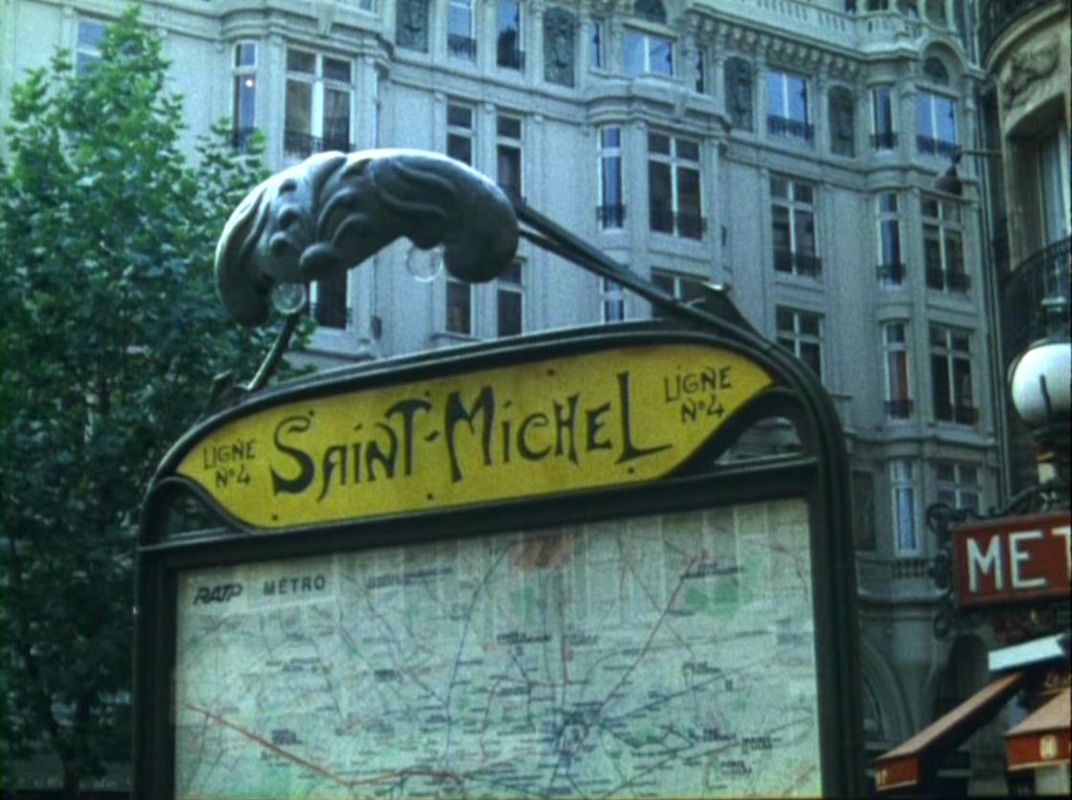
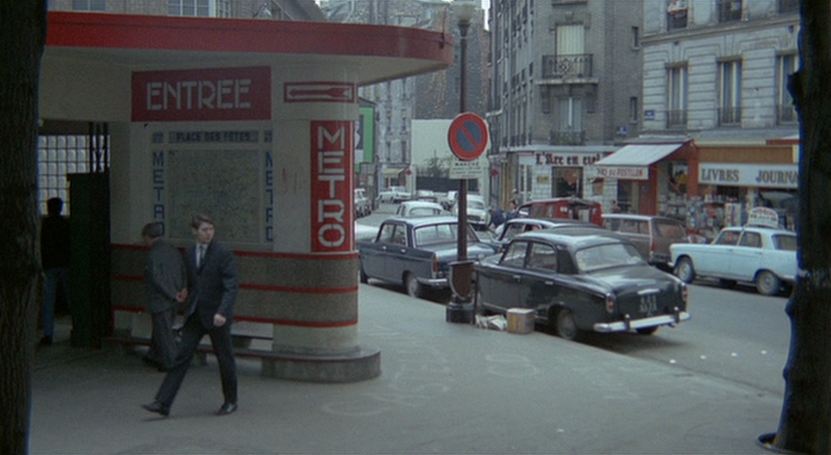
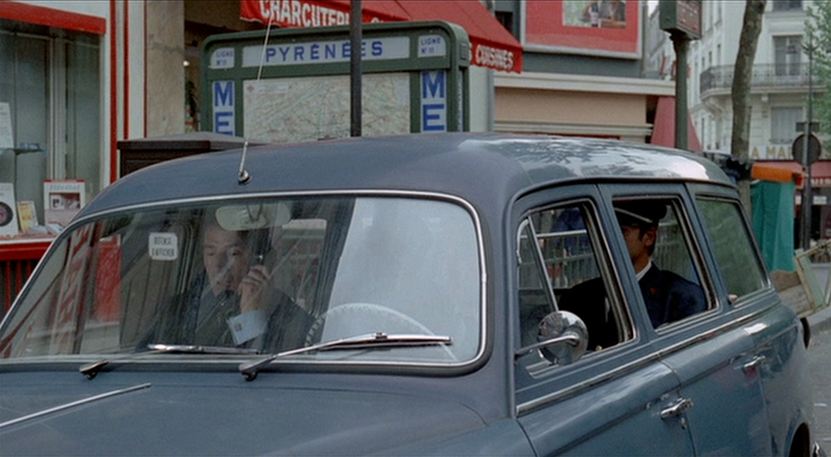
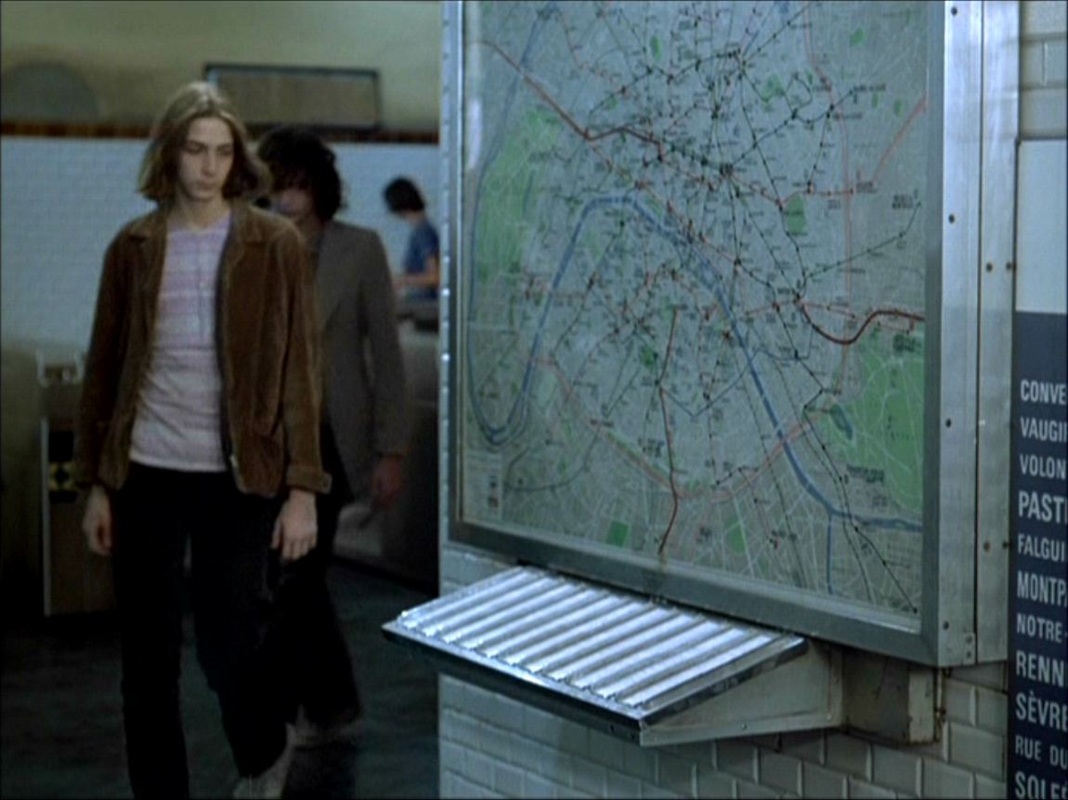
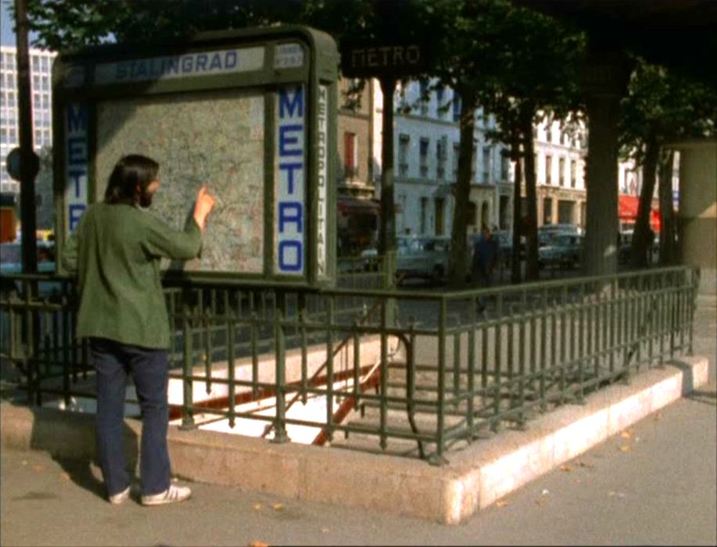
Maps at entrances to the métro are often just an incidental part of the street scene, like any other characteristic piece of Parisian street furniture:
Picture
Juve contre Fantômas (Louis Feuillade 1913)
Picture
L'Effet d'un rayon de soleil (Jean Gourguet & Georges Péclet 1929)
Picture
Les 400 coups (François Truffaut 1959)
Picture
Paris nous appartient (Jacques Rivette 1960)
Picture
Terrain vague (Marcel Carné 1960)
Picture
Une femme est une femme (Jean-Luc Godard 1961)
Picture
Cléo de 5 à 7 (Agnès Varda 1961): as sampled in Le Fils de Gascogne, see below
Picture
In the French Style (Robert Parrish 1963)
Picture
L'Amour à la mer (Guy Gilles 1963)
Picture
Bande à part (Jean-Luc Godard 1964)
Picture
Une fille et des fusils (Claude Lelouch 1964)
Picture
'Place de l'Etoile', in Paris vu par... (Eric Rohmer 1965)
Picture
La Femme de l'aviateur (Eric Rohmer 1981)
Picture
Le Samourai (Jean-Pierre Melville 1967)
Picture
Soigne ta droite (Jean-Luc Godard 1987)
Picture
Les Amants du Pont-neuf (Leos Carax 1991)
Picture
Le Fils de Gascogne (Pascal Aubier 1995)
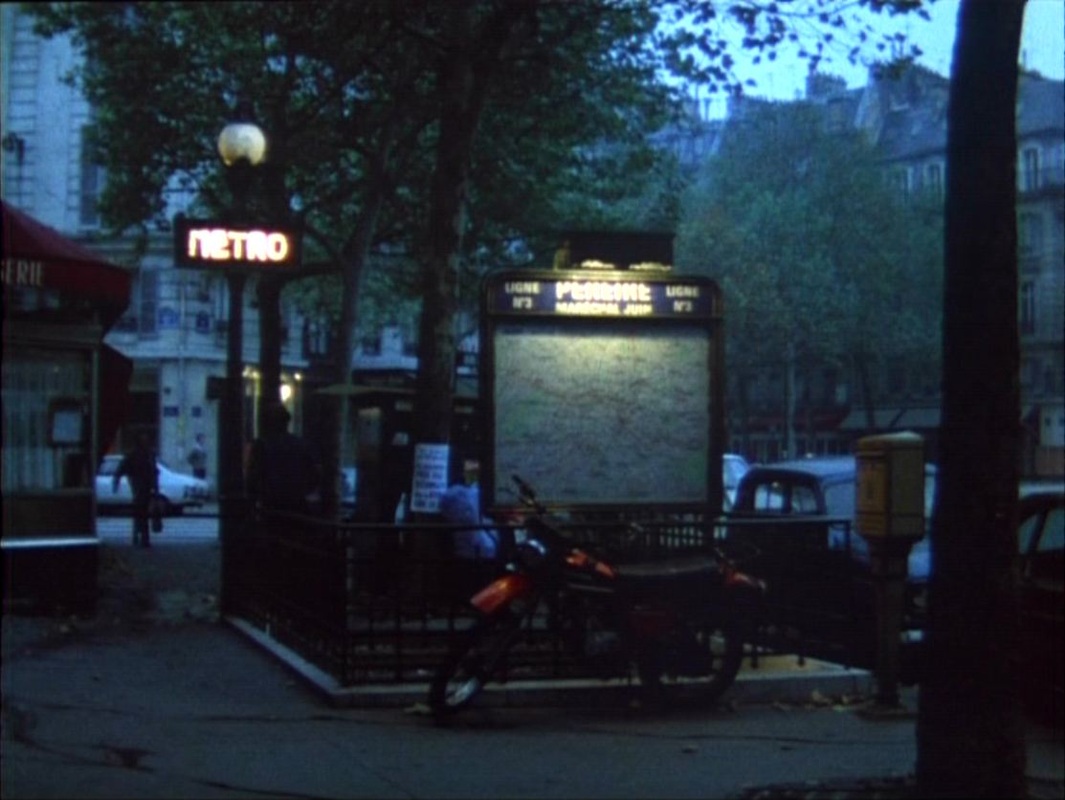
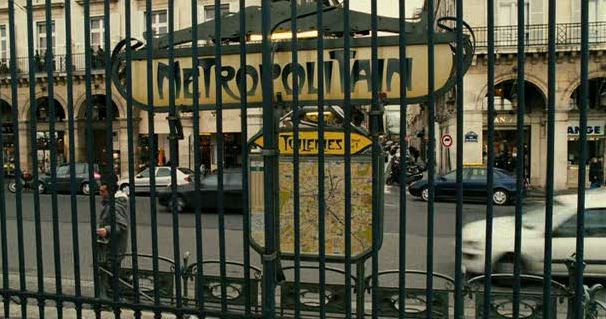
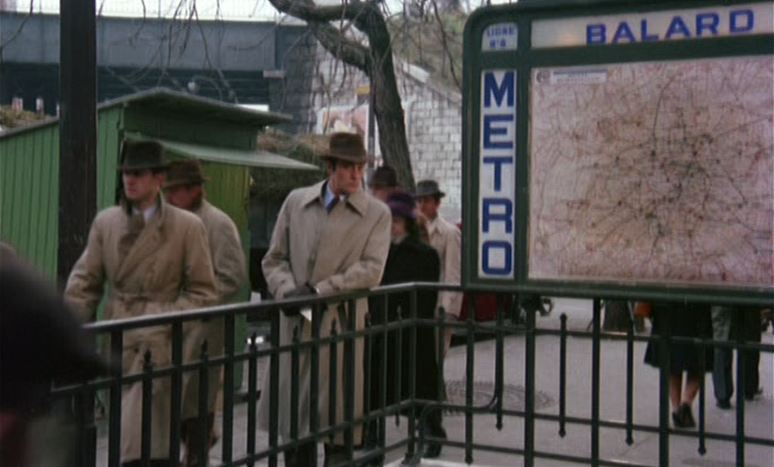
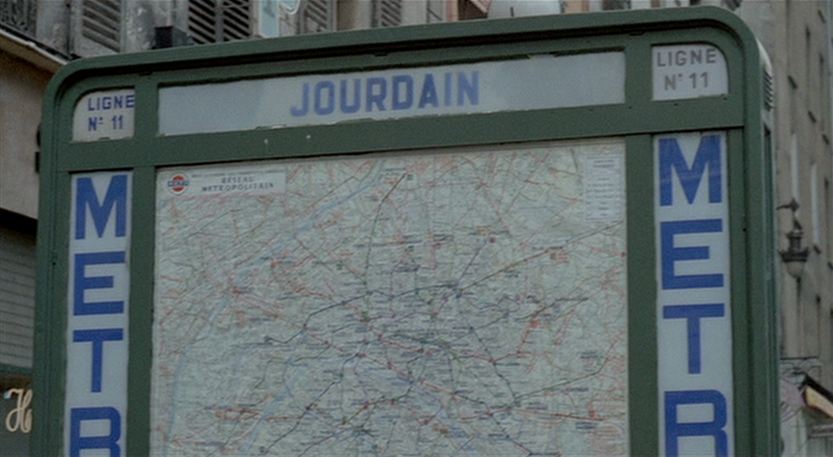
But they can serve more specific purposes. Since they often have displayed above them the name of the station, they enable us to identify exactly where we are in the city:
Picture
Le Désordre et la Nuit (Gilles Grangier 1958)
Picture
L'Amour à la mer (Guy Gilles 1963)
Picture
Strip-tease (Jacques Poitrenaud 1963)
Picture
Manon 70 (jean Aurel 1968)
Picture
Out 1 (Jacques Rivette 1971)
Picture
La Femme de l'aviateur (Eric Rohmer 1981)
Picture
'Tuileries' in Paris je t'aime (Ethan & Joel Coen 2006)
Picture
M. Klein (Joseph Losey 1976)
These place names can be an important part of a narrative development, as in Le Samourai, where the protagonist's location underground is exactly traced on a map at police headquarters (see here and here), while the location of policemen waiting for him above ground is just as precisely identified for us:
Picture
Le Samourai (Jean-Pierre Melville 1967)
Picture
Le Samourai (Jean-Pierre Melville 1967)
Picture
Le Samourai (Jean-Pierre Melville 1967)
Unlike, for example, the London Underground map, on which the only overground feature is the river,  this Paris map combines both levels on the one surface. For Le Samourai this corresponds to an idealised levelling, in contrast with the city's layered complexity (where, for example, the underground figures the criminal underworld).  

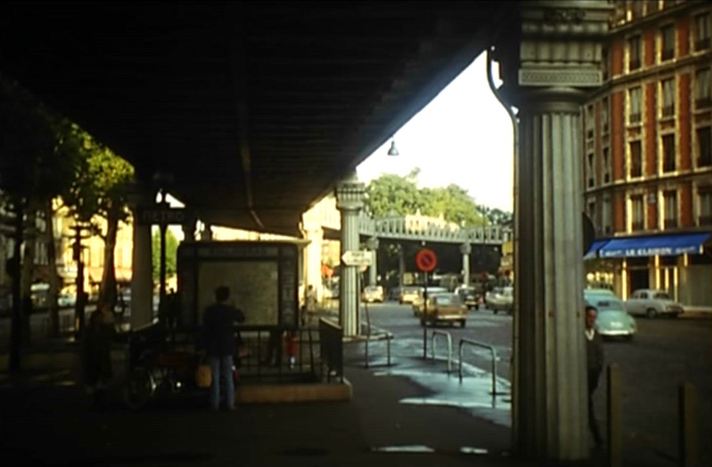
Dichotomies of under- and over-ground are common in Paris cinema, and the métro entrance map, when associated with a stairway, can serve as a simple figure of that multi-layered reality. This is true of the Fantômas image (near the top of this post) and also here, where visitors to Paris in Petit à petit embark on a fantasy-ascent through Paris, from underground to funicular and cable car (ending up in another world entirely):
Picture
Petit à petit (Jean Rouch 1969)
Among other functions served by these maps is the occasion to show a protagonist attempting to orient themselves in the city, allowing the cine-tourist in the audience a comfortable space of identification, the reassurance that he is not alone in trying to work out where he is in the film:
Picture
L'Amour à la mer (Guy Gilles 1963)
Picture
Au pan coupé (Guy Gilles 1967)
Picture
Au pan coupé (Guy Gilles 1967)
Picture
Chappaqua (Conrad Rooks 1966)
Picture
Vladimir et Rosa (Jean-Luc Godard & Jean-Pierre Gorin 1971)
Picture
More (Barbet Schroeder 1969)
Picture
More (Barbet Schroeder 1969)
Several of these images also appear in The Stairs: Paris, a slideshow.
0 Comments

119/ Around the World in Eighty Days (Michael Anderson 1956)

4/8/2011

0 Comments

 
Picture
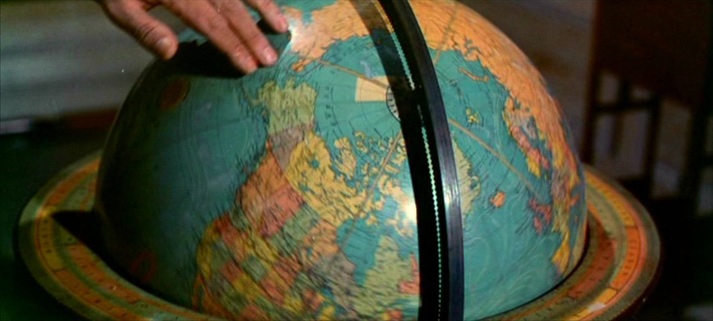
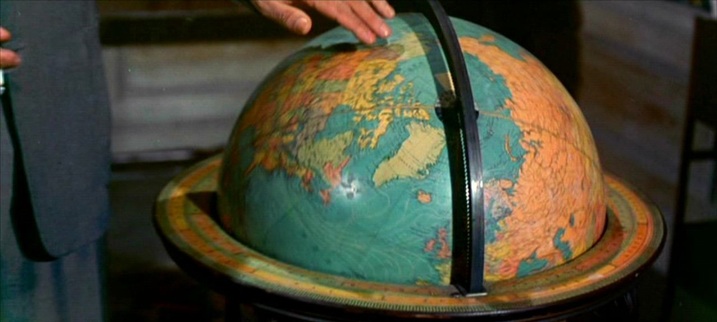
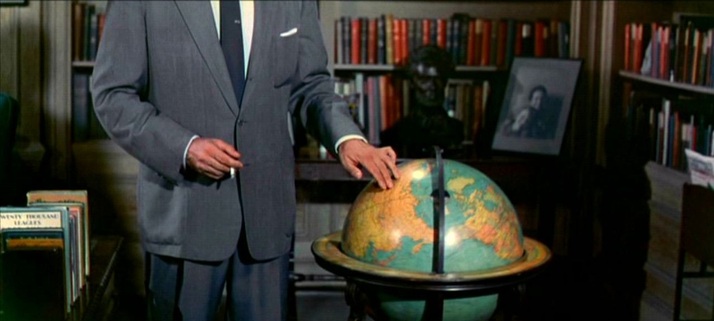
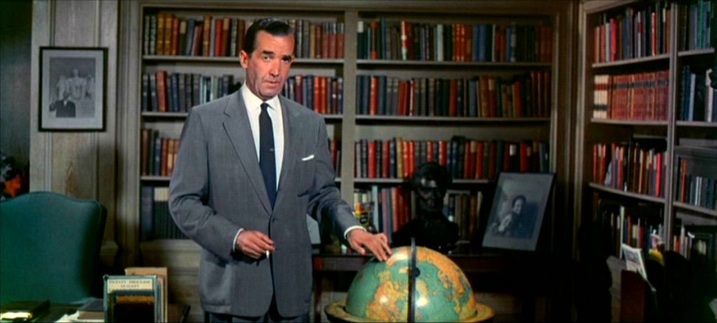
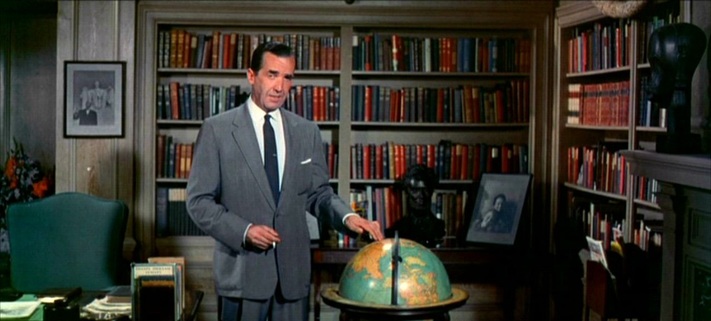
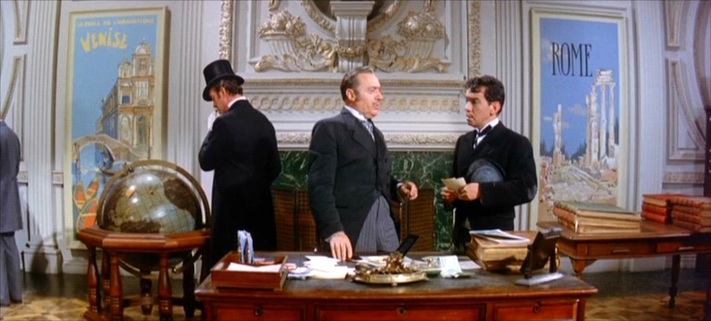
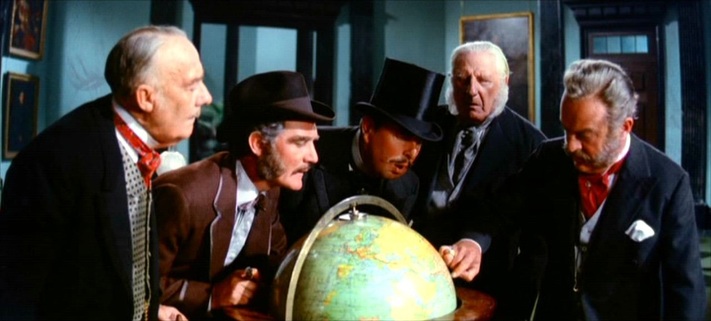
This map scene is from the out-takes of the film. Otherwise what we have are the globe in the prologue (with Méliès's Voyage dans la lune incorporated), and two globes in the body of the film:
Picture
Picture
Picture
Picture
Picture
Picture
Picture
Picture
Picture
Picture
Picture
Picture
Picture
Picture
Picture
0 Comments

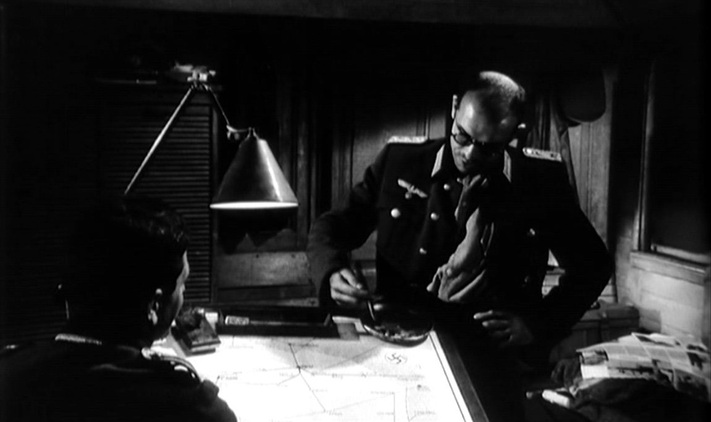
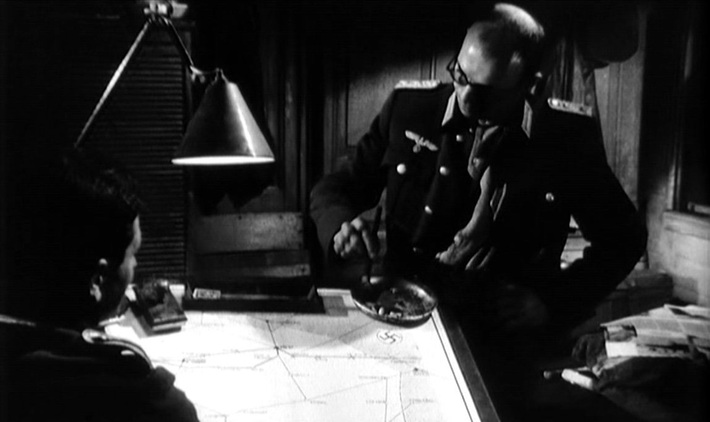
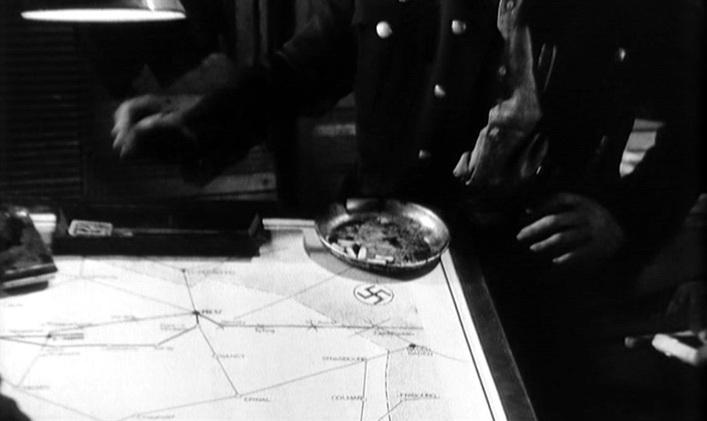
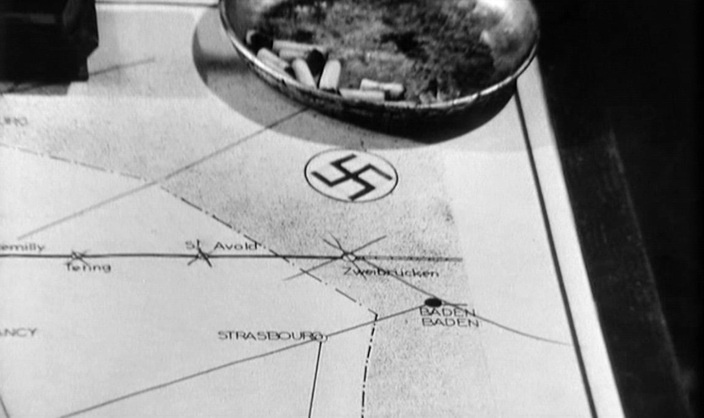
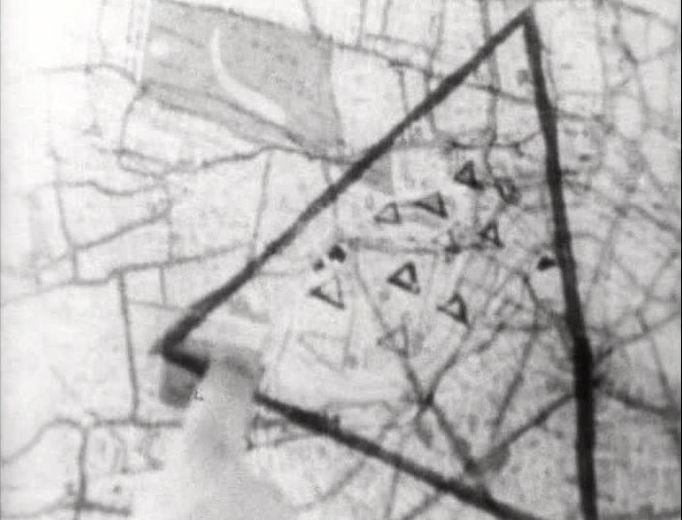
113/ The Train (John Frankenheimer 1964): all the maps

29/7/2011

0 Comments

 
Picture
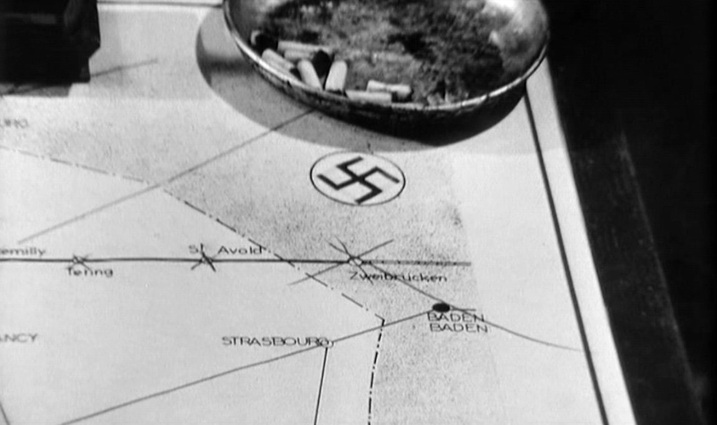
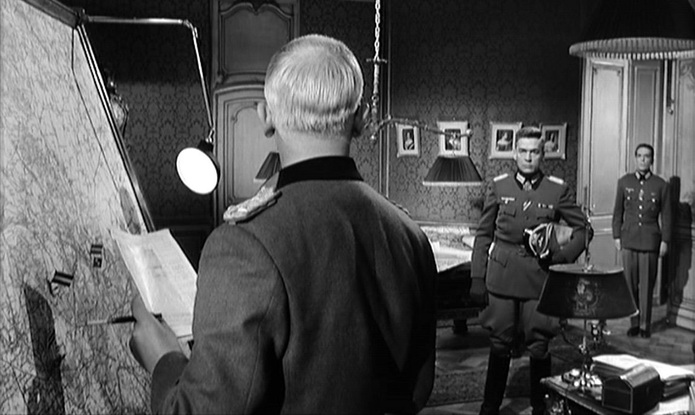
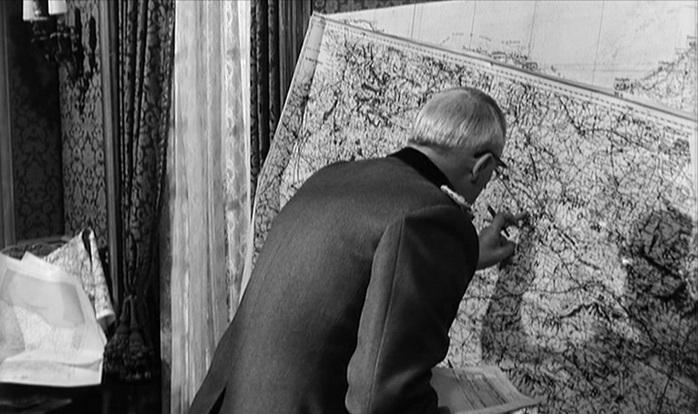
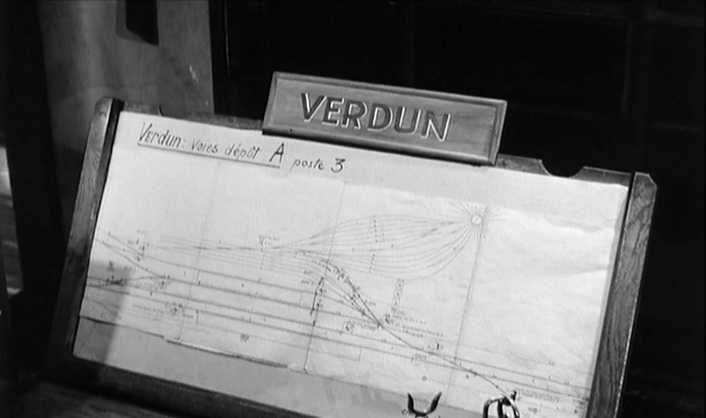
A continuation of yesterday's theme, with a reprise of motifs from the earlier film.
Picture
Picture
Picture
Picture
Picture
Picture
Picture
Picture
Picture
Picture
Picture
Picture
Picture
Picture
Picture
0 Comments

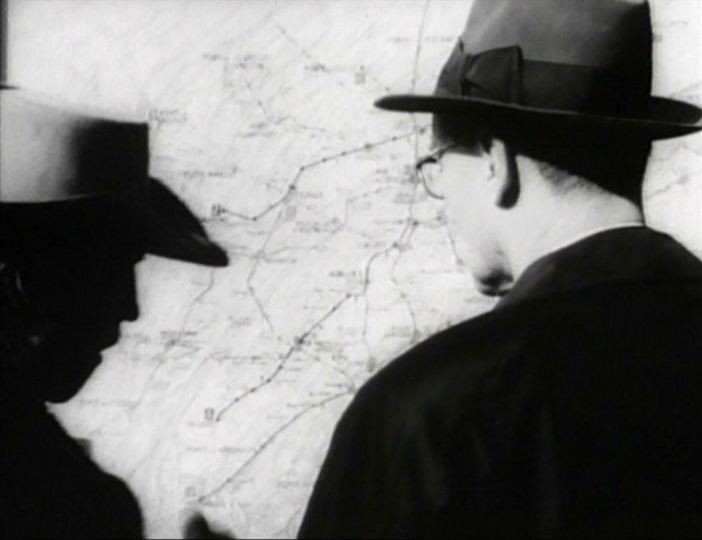
112/ La Bataille du rail (René Clément 1946): all the maps

28/7/2011

0 Comments

 
Picture
Picture
Picture
Picture
Picture
Picture
Picture
Picture
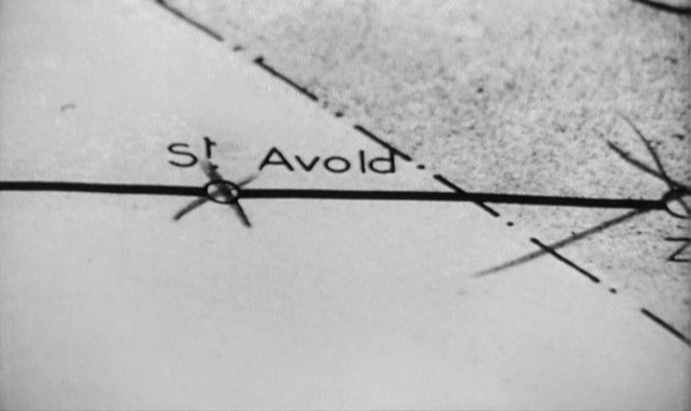
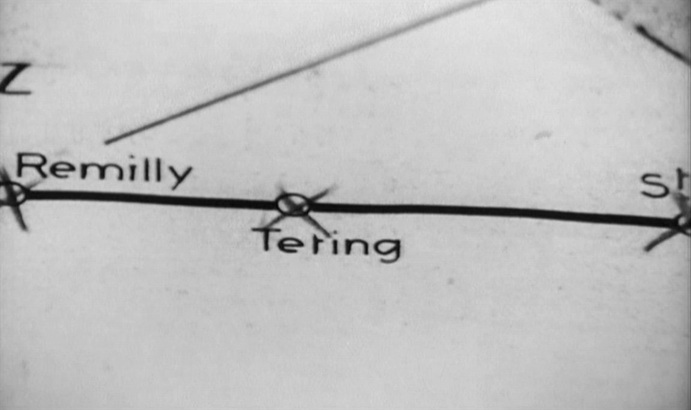
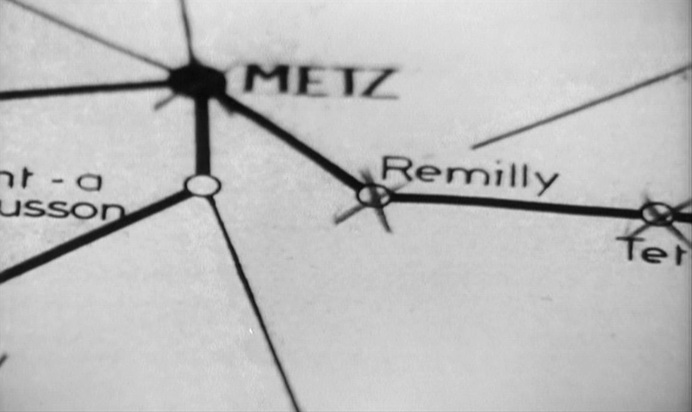
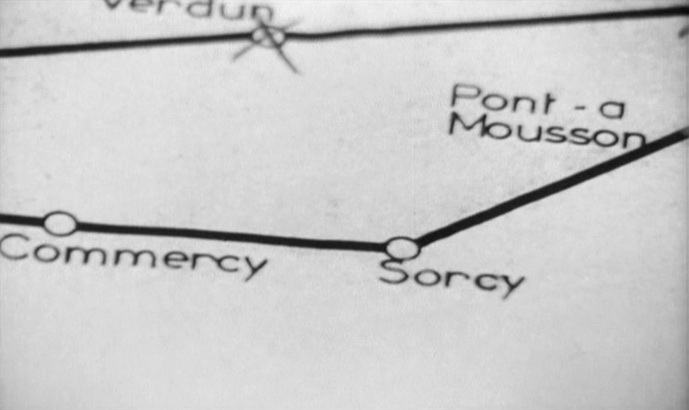
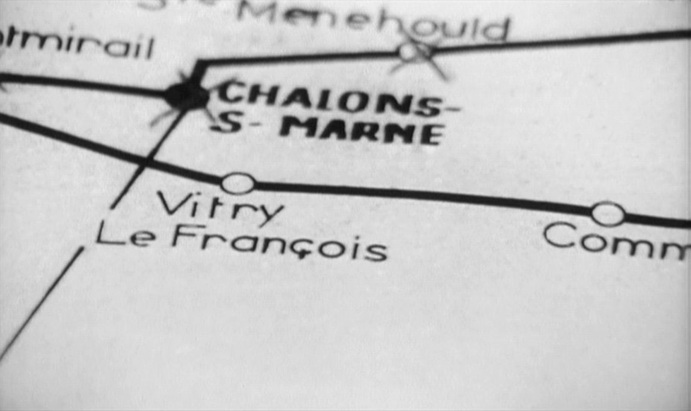
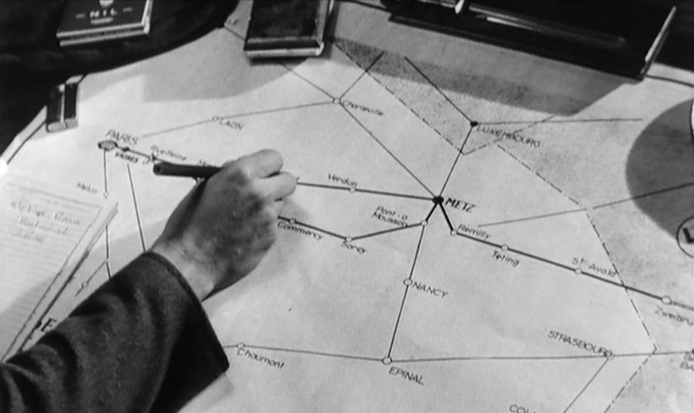
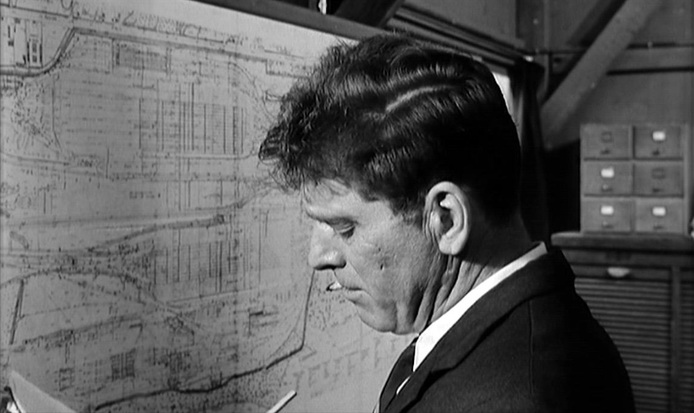
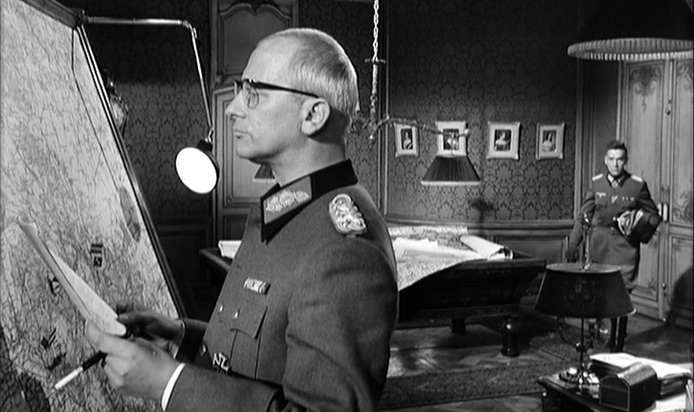
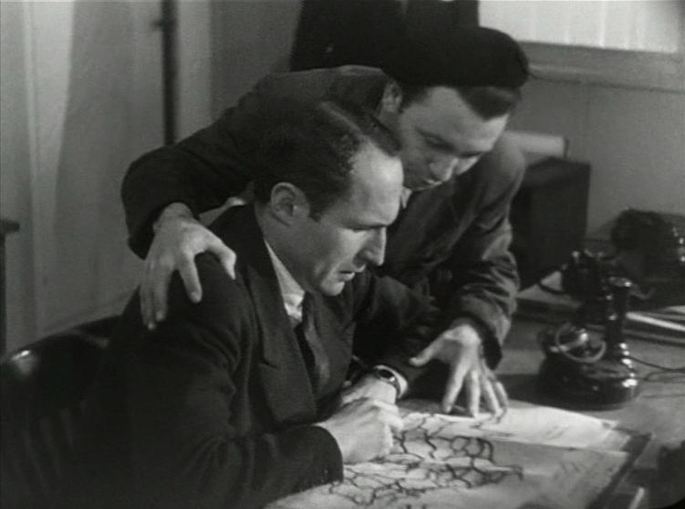
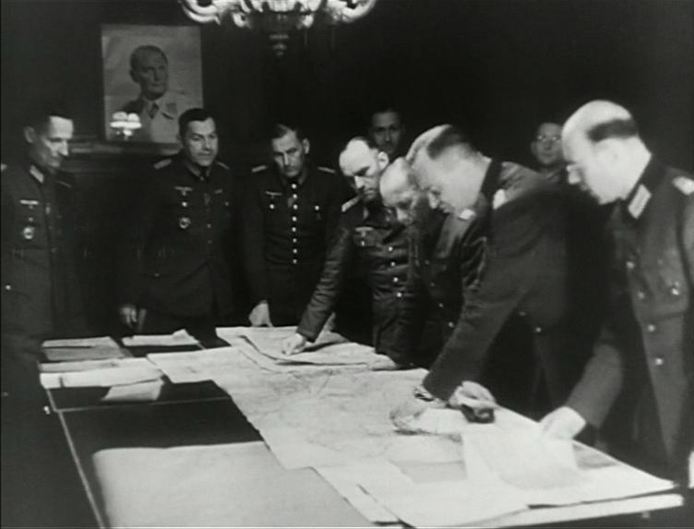
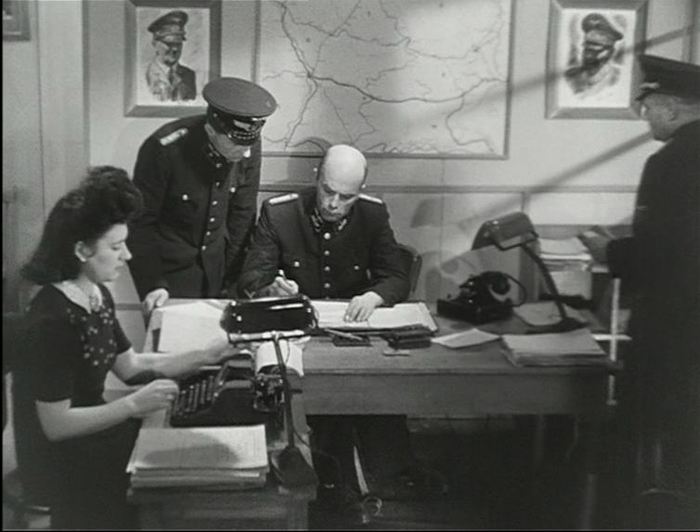
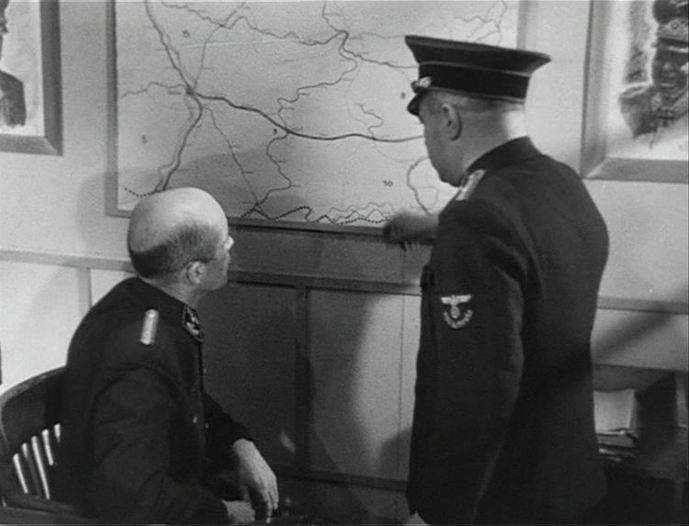
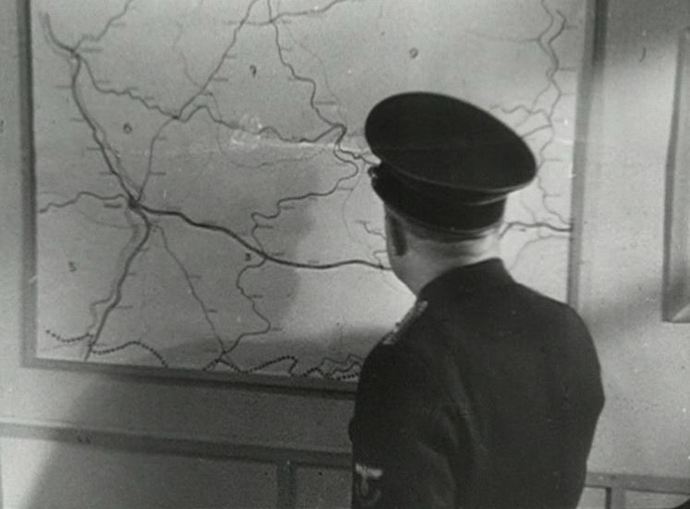
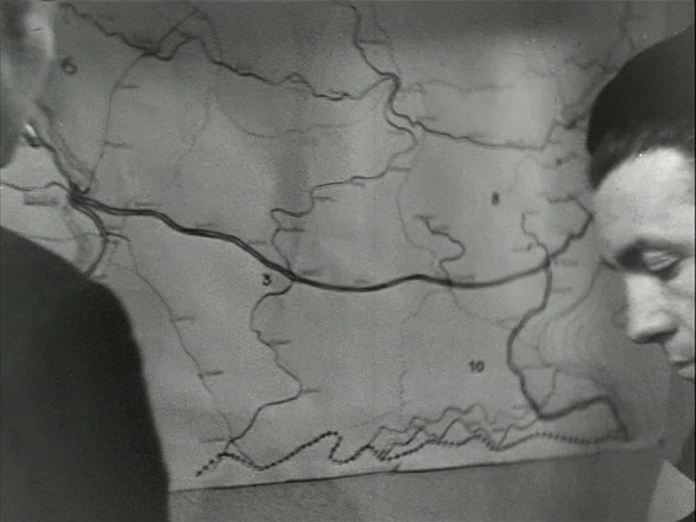
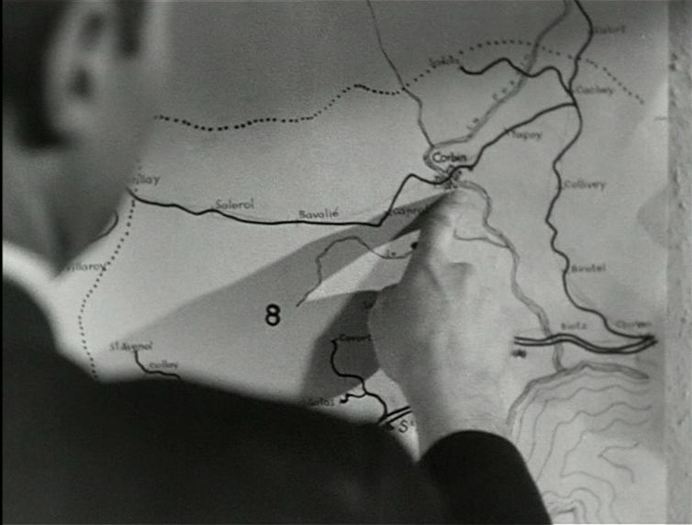
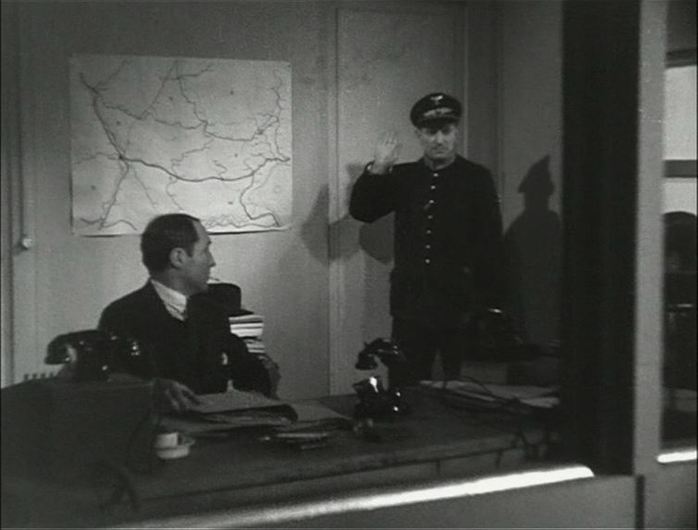
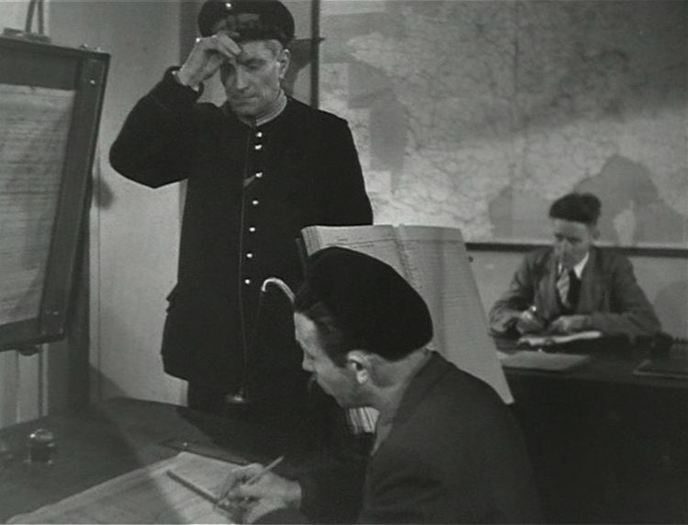
‘The long section devoted to the German convoy, for example, starts with a shot of the Resistance leader looking at a map, cuts to the German command looking at another map, cuts to the Transport Kommandantur, where two German officers  consider a railway map and then fades to the same map, but this time being studied by two Frenchmen. The montage and continuities of content clearly establish an equivalence between the German and French leaderships. This equivalence will be underscored by subsequent cross-cutting between the two commands.’
  Martin O’Shaughnessy, ‘La Bataille du rail: Unconventional Form, Conventional Image?’, in Nancy Wood & Rod Kedward (eds), The Libertation of France: Image and Event (Oxford: Berg, 1995), pp.20-21.

Picture
Picture
0 Comments

94/ L'Argent (Robert Bresson 1983)

10/7/2011

0 Comments

 
Picture
Picture
Picture
Picture
Picture
Picture
‘A film is not its shots, but the way they have been joined. As a general once told me, a battle often occurs at the point where two maps touch.’ 
Robert Bresson, ‘Encountering Robert Bresson’, interview with Charles Thomas Samuels, republished in The Films of Robert Bresson: Casebook (London: Anthem, 2009), p. 96.

Below are more maps  from Bresson films.
Picture
Le Diable probablement
Picture
Picture
Quatre nuits d'un rêveur
Picture
Au hasard Balthasar
Picture
Picture
Picture
Pickpocket
0 Comments

93/ L'Argent (Marcel L'Herbier 1928): all the maps

9/7/2011

0 Comments

 
Picture
Picture
Picture
Picture
Picture
Picture
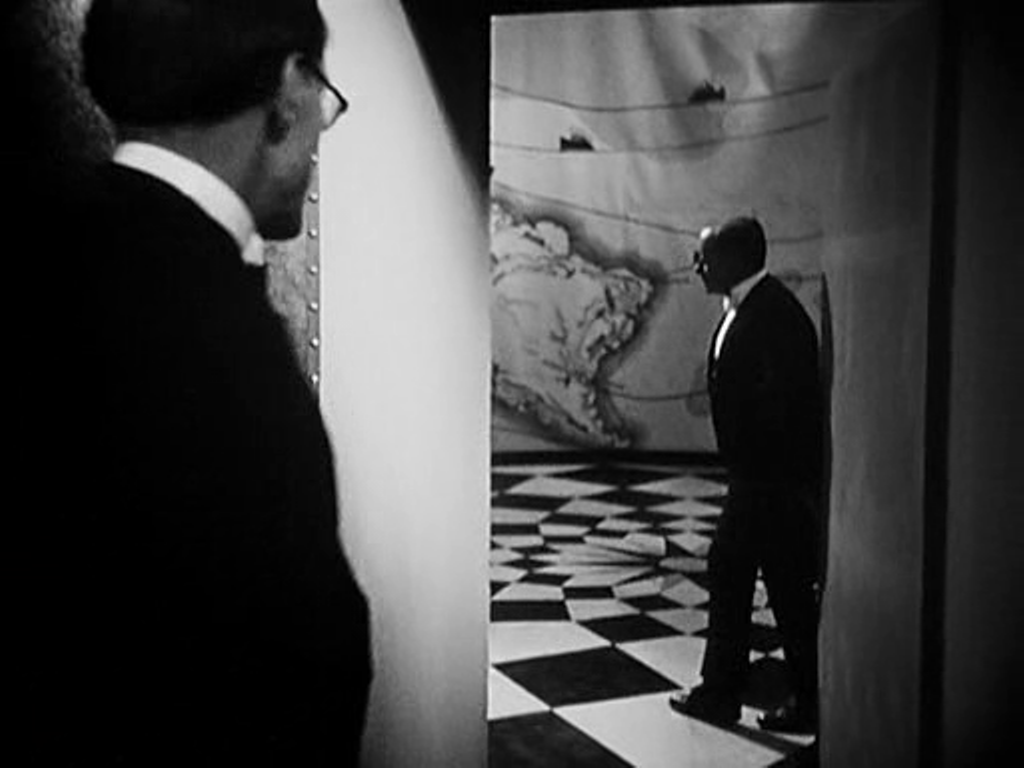
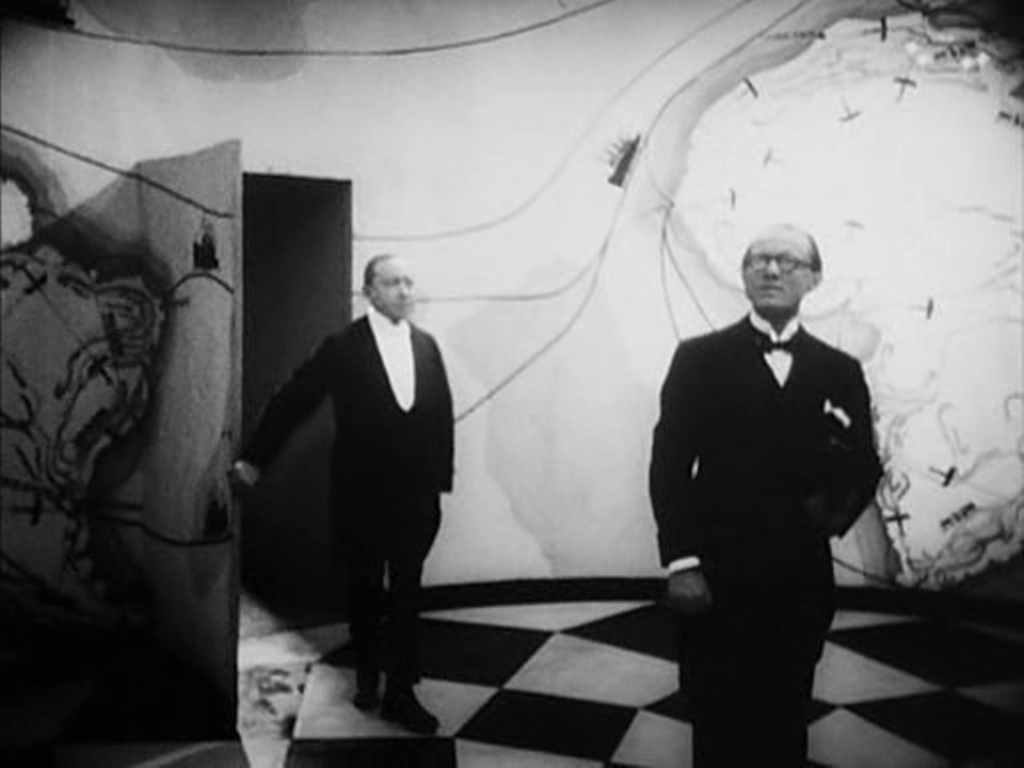
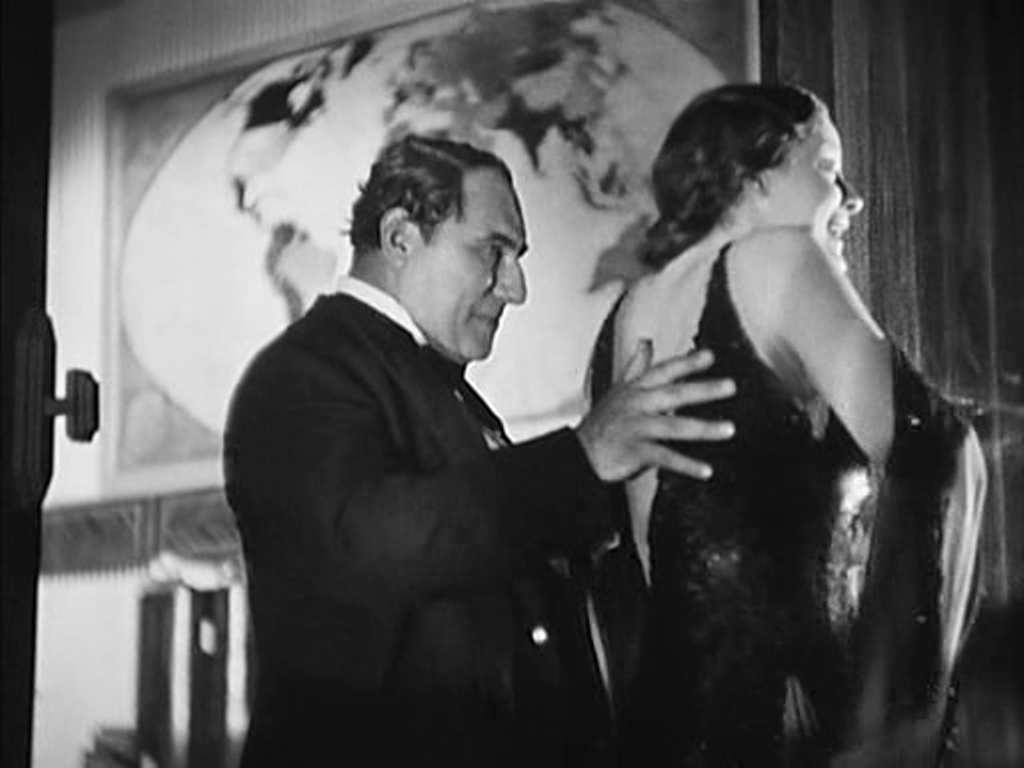
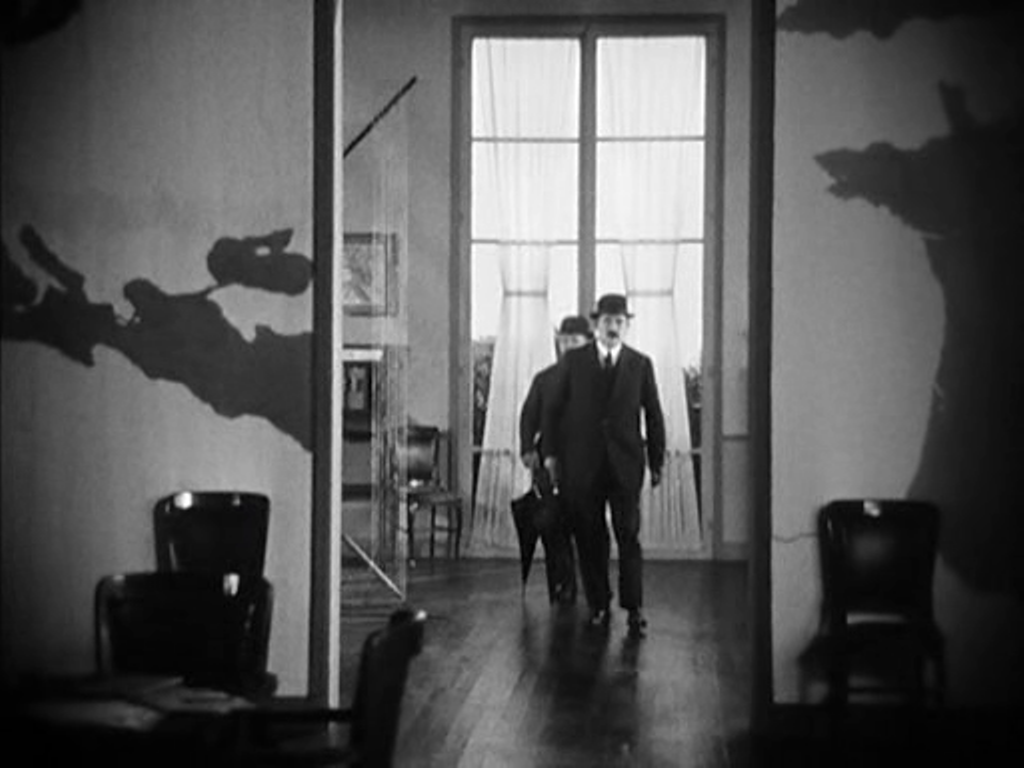
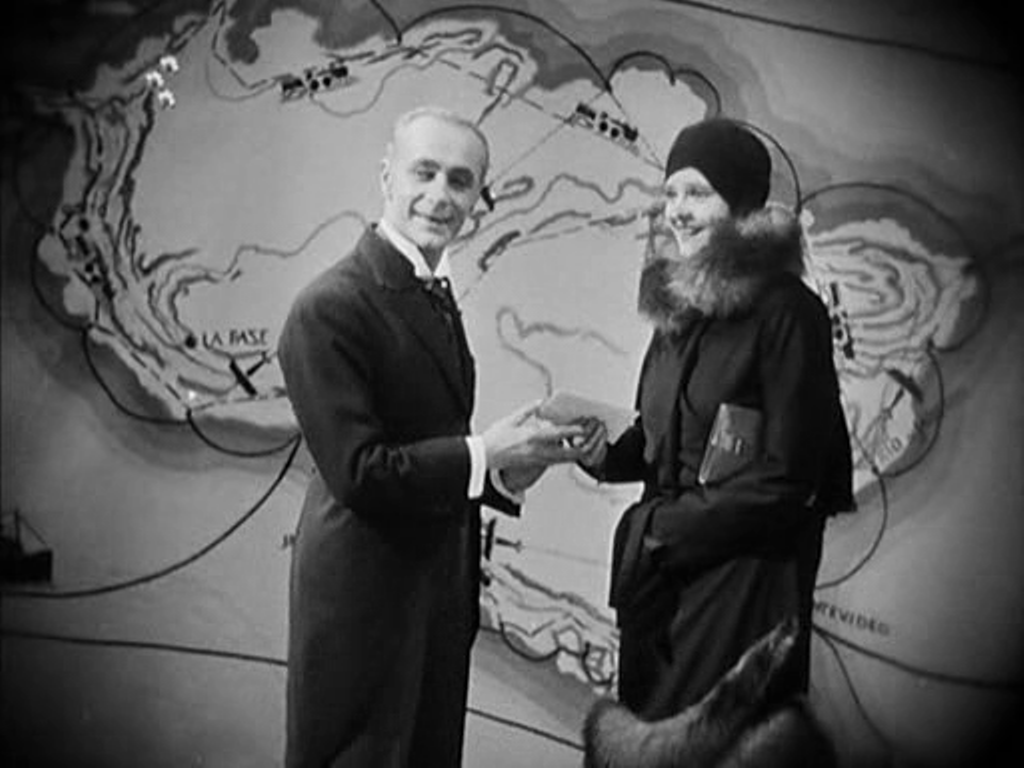
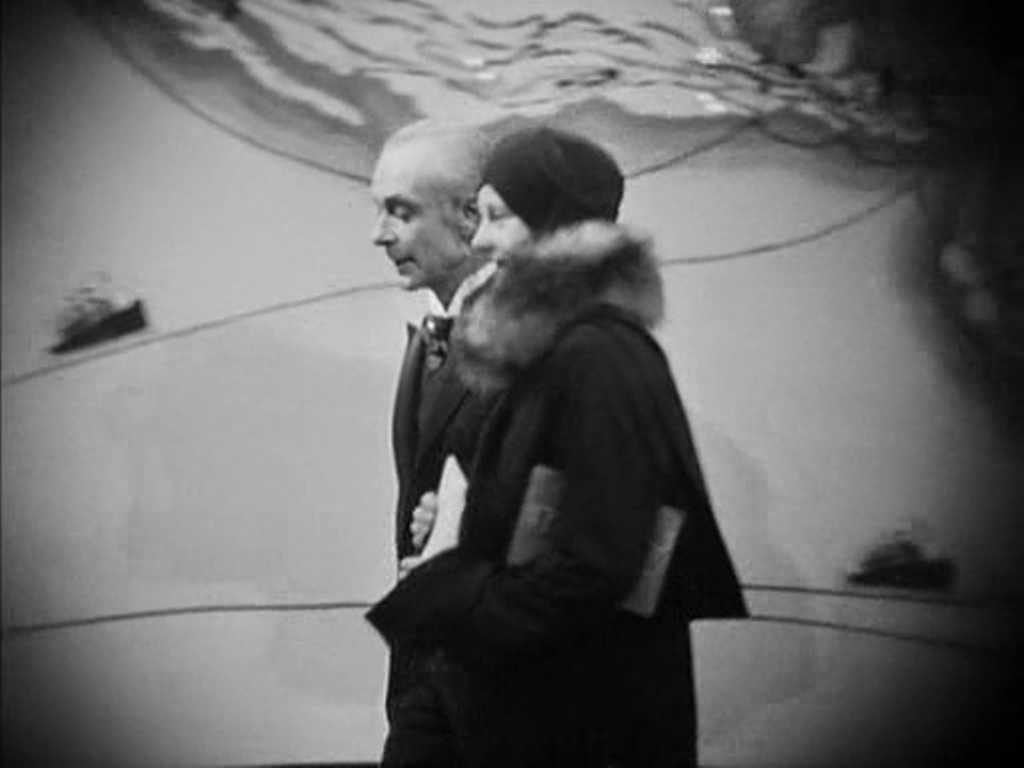
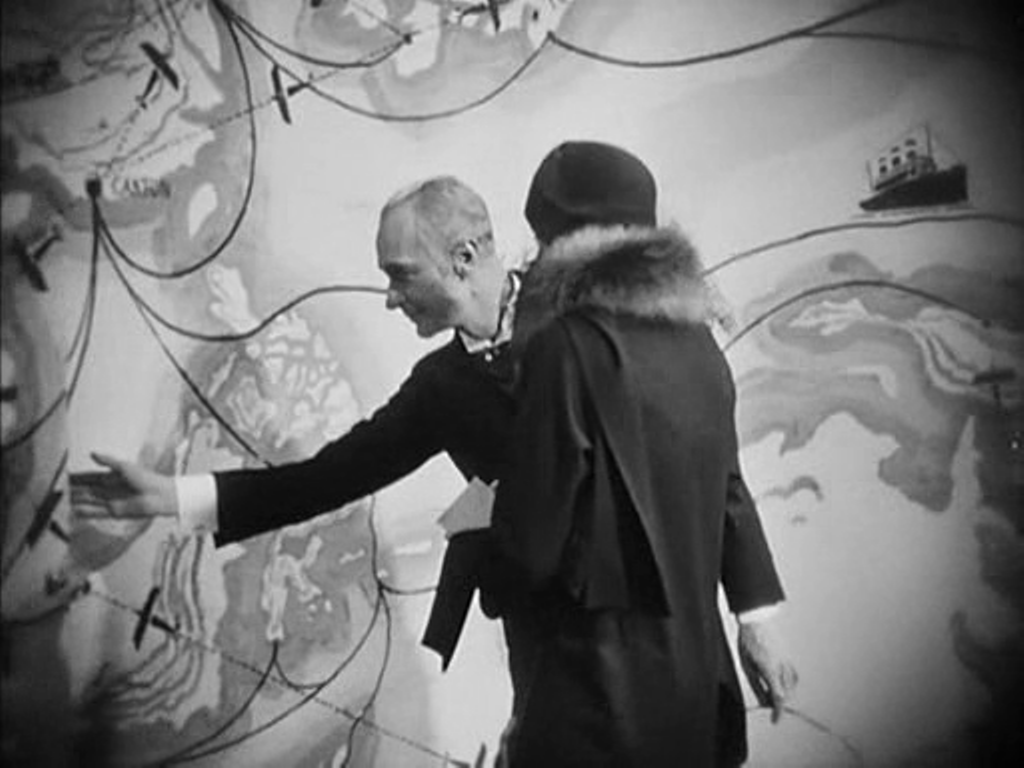
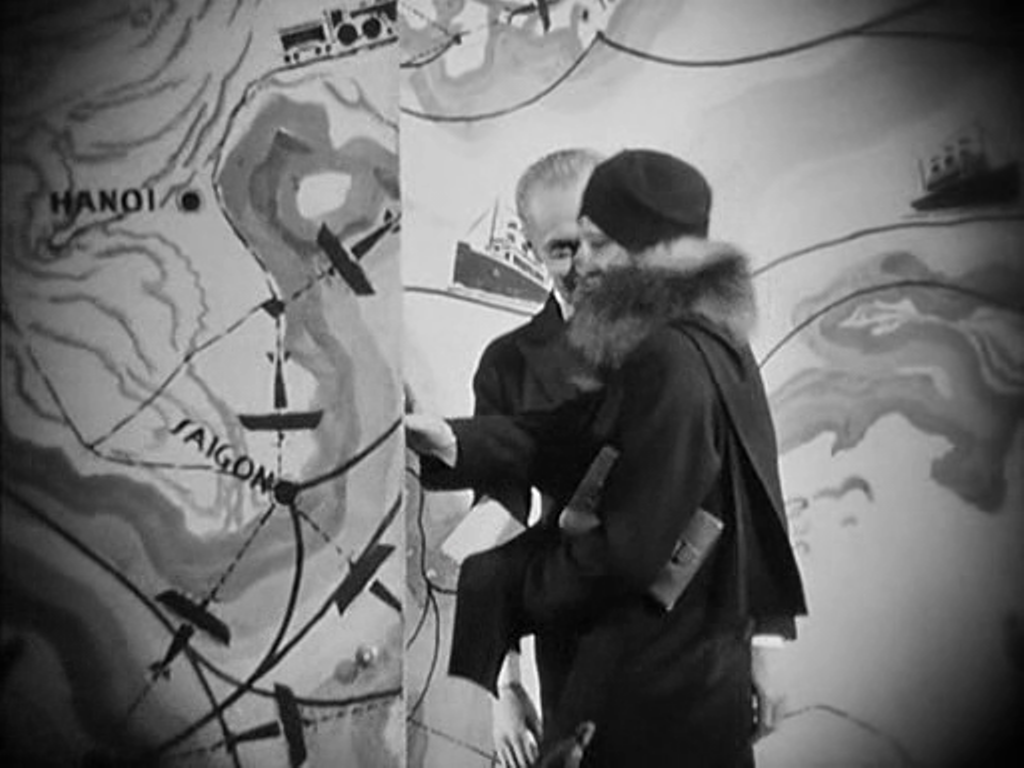
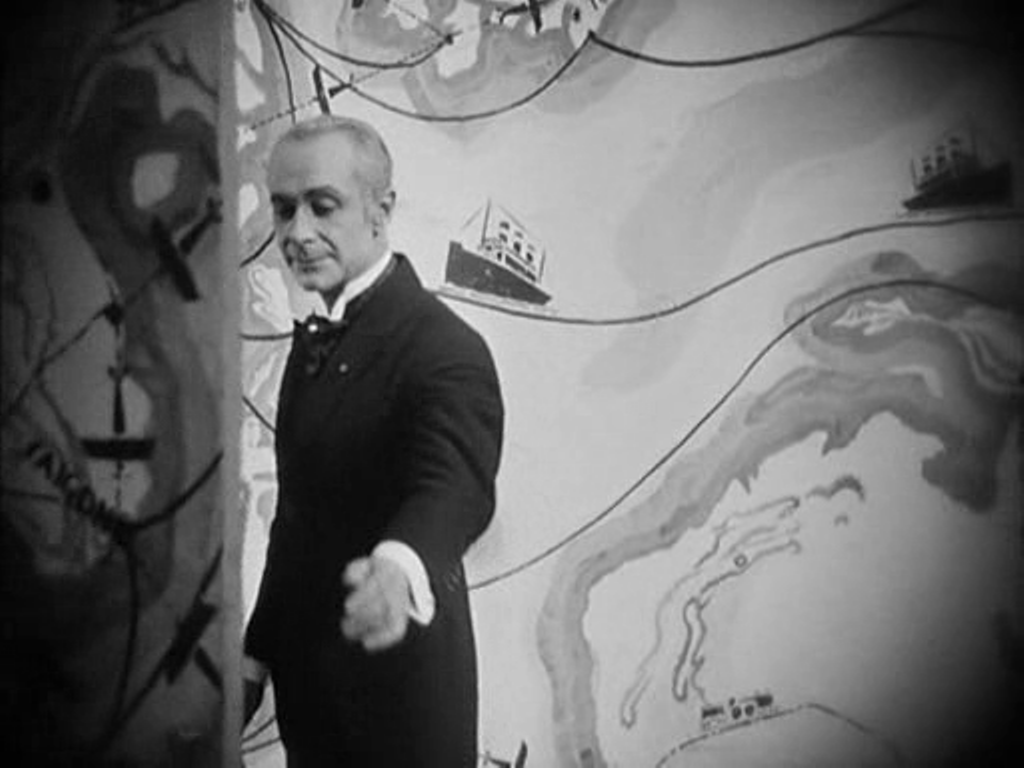
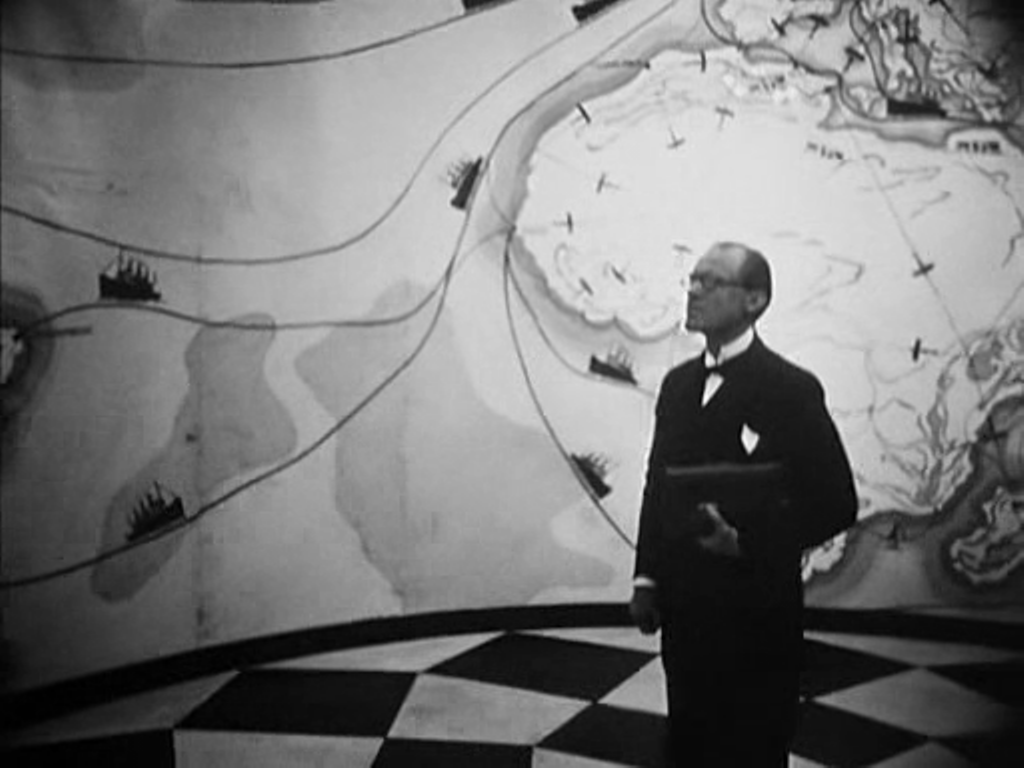
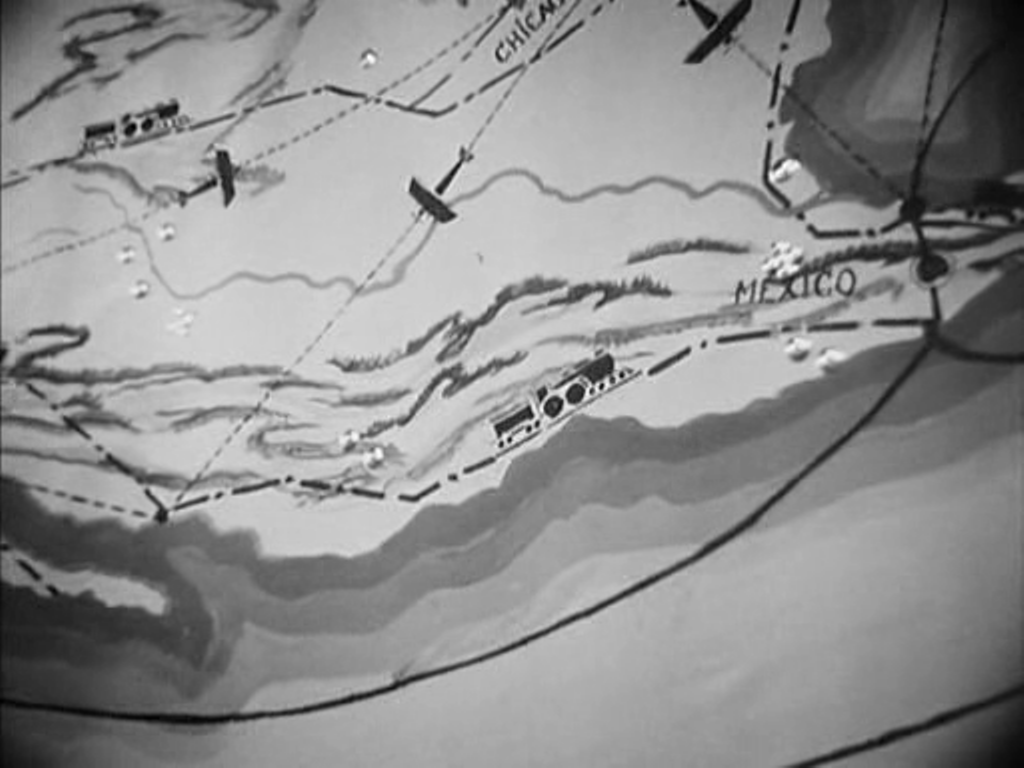
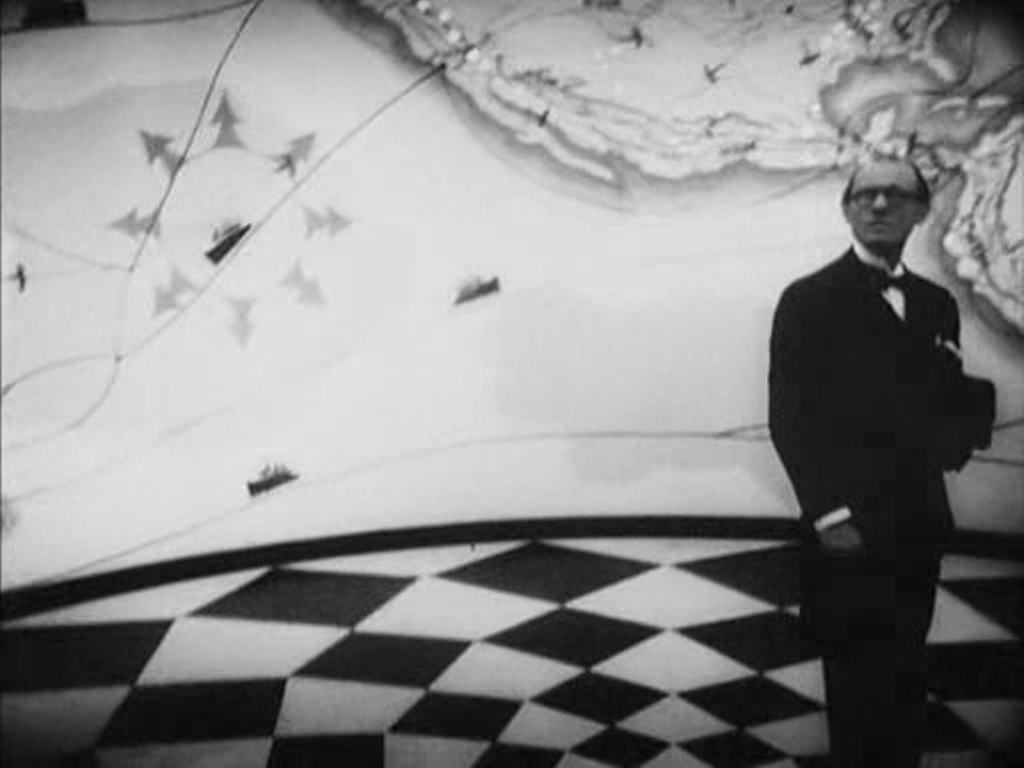
Of the five spaces in which maps figure in L'Argent, the first is the most spectacular. We follow an agent of the banker Gundermann as he is led by a butler into an antechamber decorated  to represent the reach of the banker's power. In combination with the cinematography, this mise-en-scène also displays the distorting, disorienting force of money.

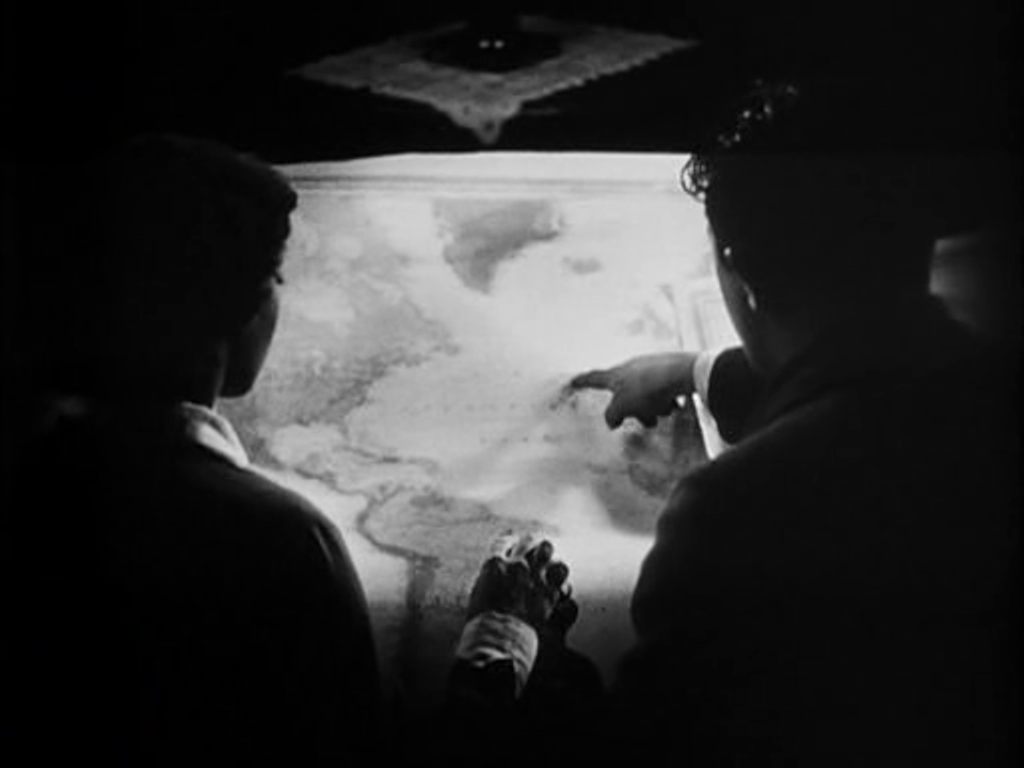
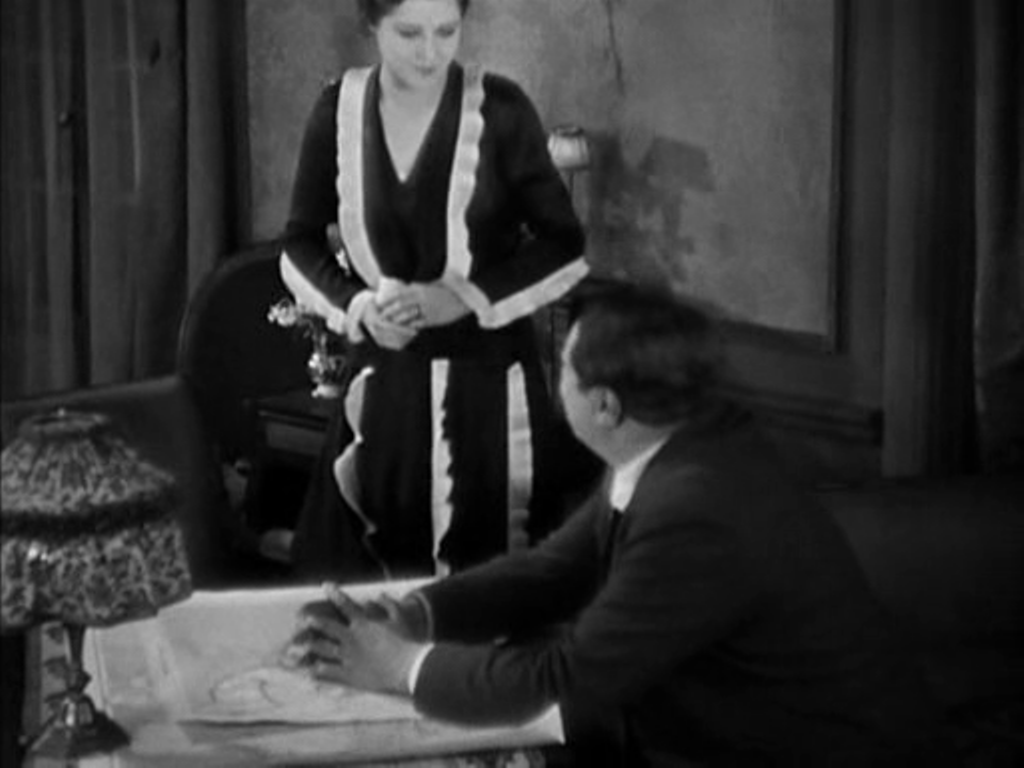
The second space is more conventional: in their modest apartment. the naive adventurer hero Hamelin and his wife Line examine a map of the Americas, though it becomes a mere backdrop to the expression of their love for each other.
Picture
Picture
Picture
Picture
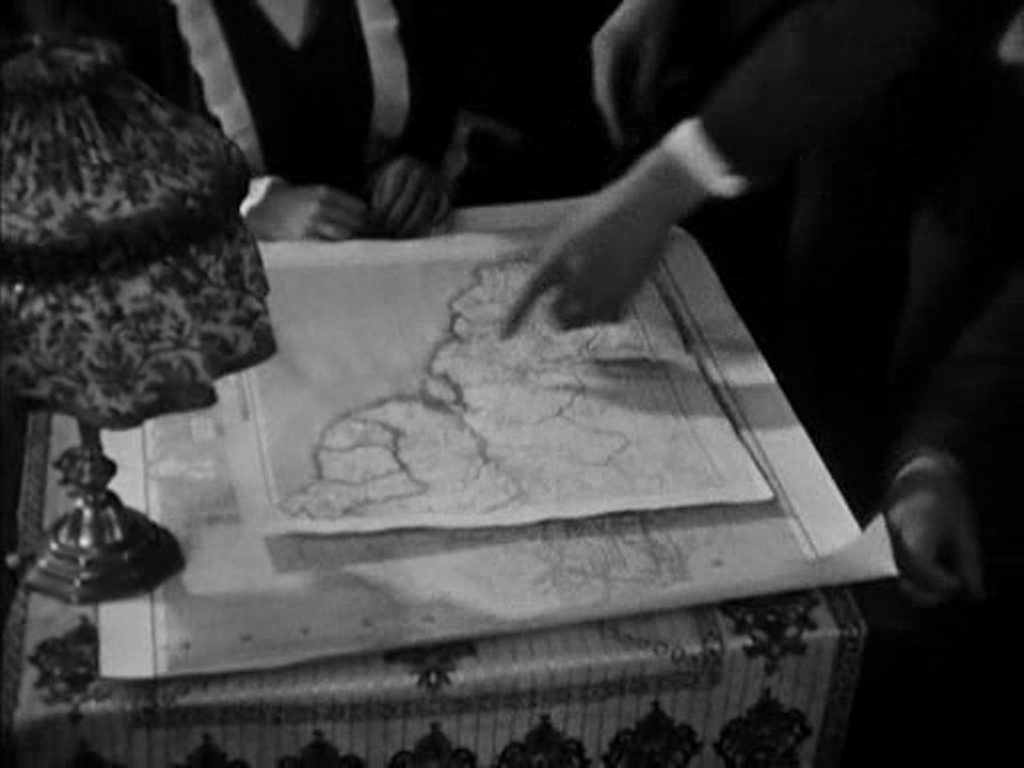
Later, in the same space, Hamelin explains his plans to the banker Saccard, with a view of a more detailed map of the region that Hamelin proposes to exploit for oil. We first see the scene diffusely,  in a mirror, before passing to  two readable mapshots.
Picture
Picture
Picture
Picture
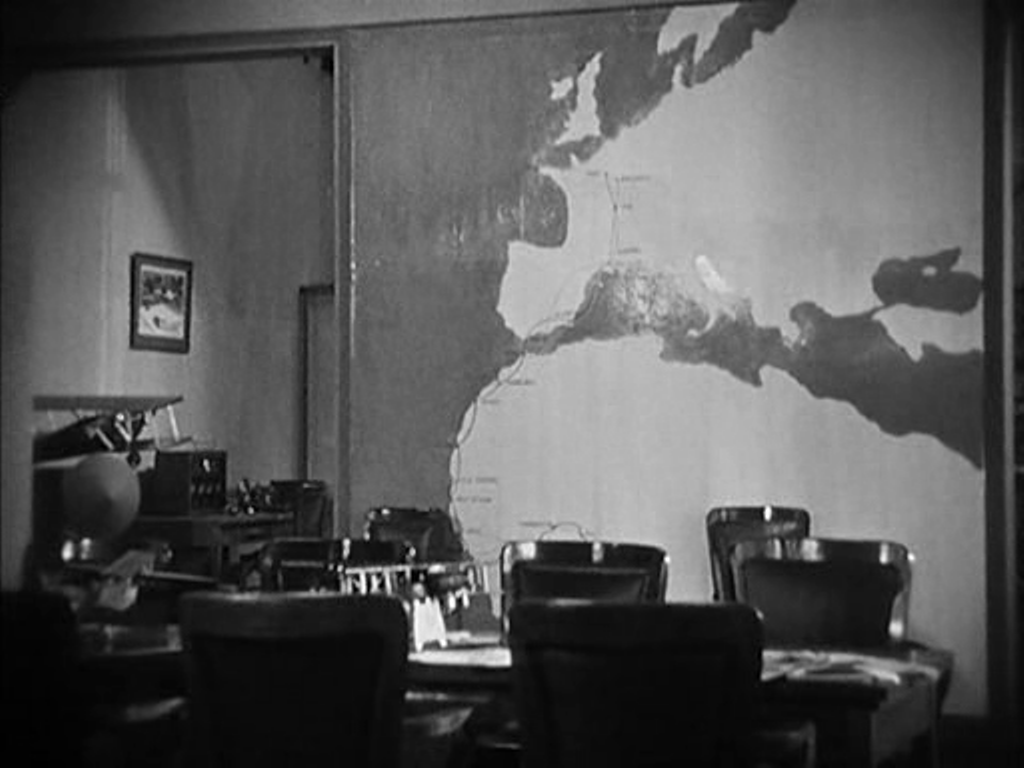
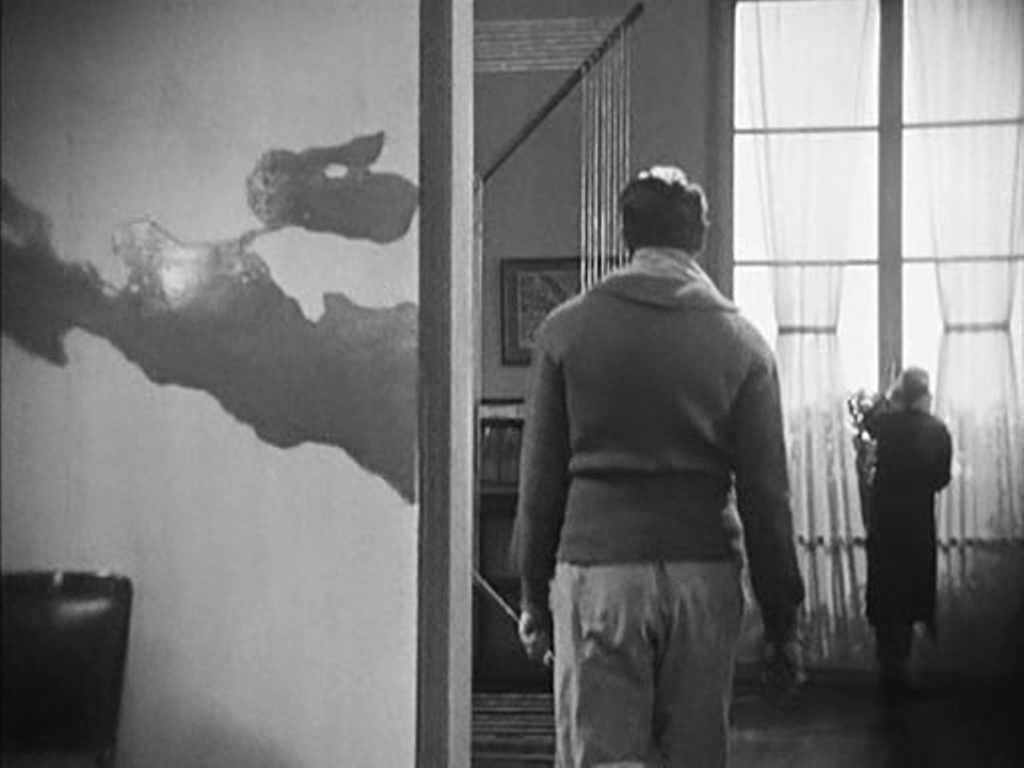
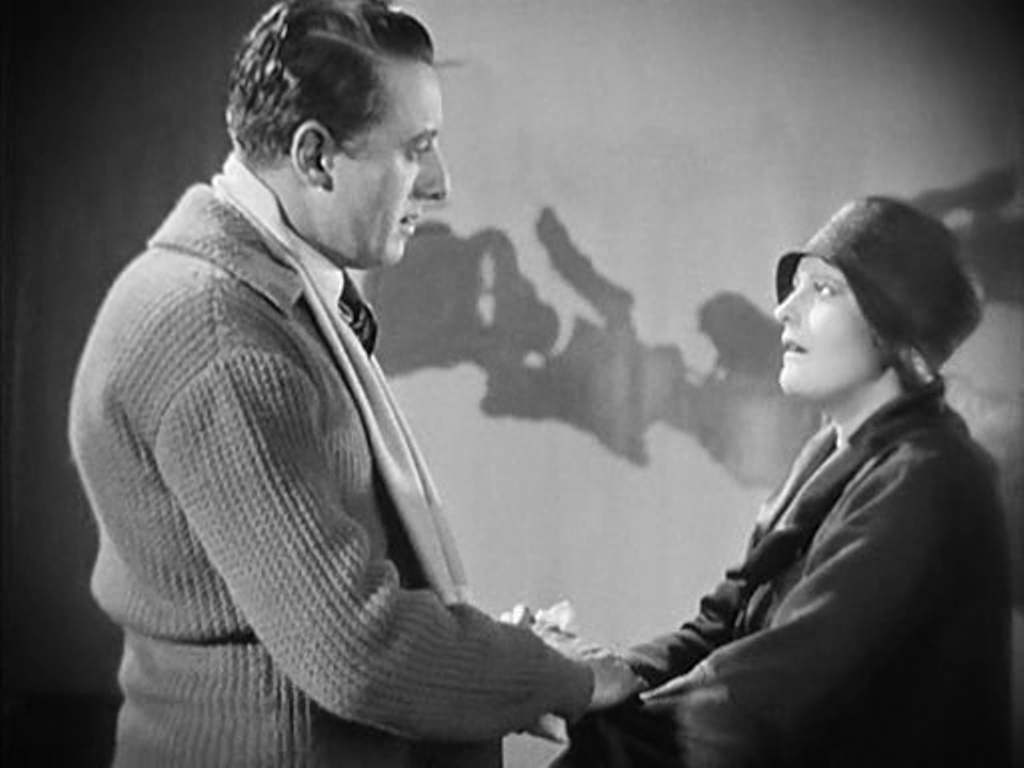
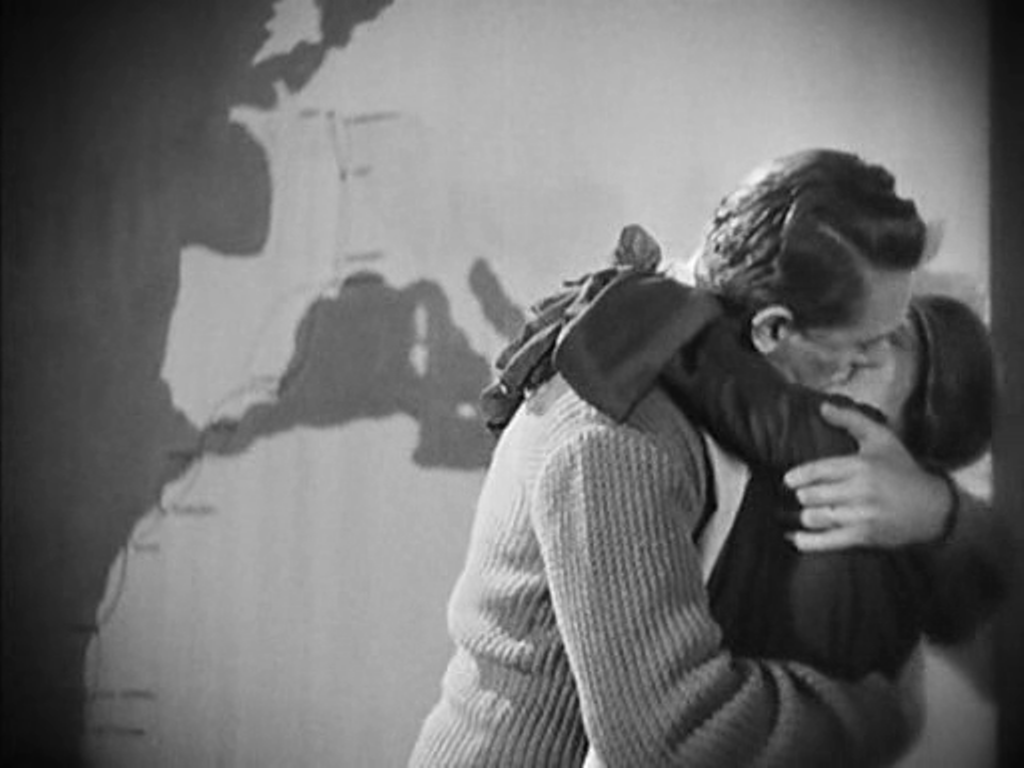
Next, in a room at the airport from which Hamelin will take off on a solo flight across the Atlantic, Line looks on in terror at the thought of the danger he will face. He enters, first seen as a shadow cast over a map of Europe and North Africa, which then becomes the backdrop to their passionate embrace on parting. 
Picture
Picture
Picture
Picture
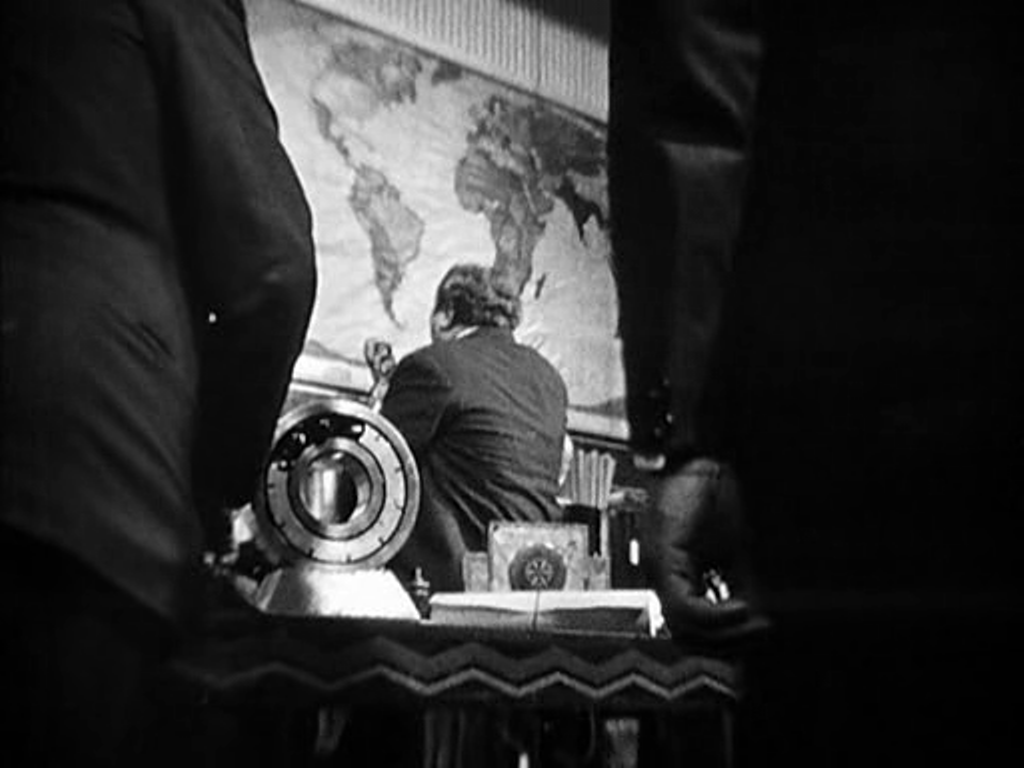
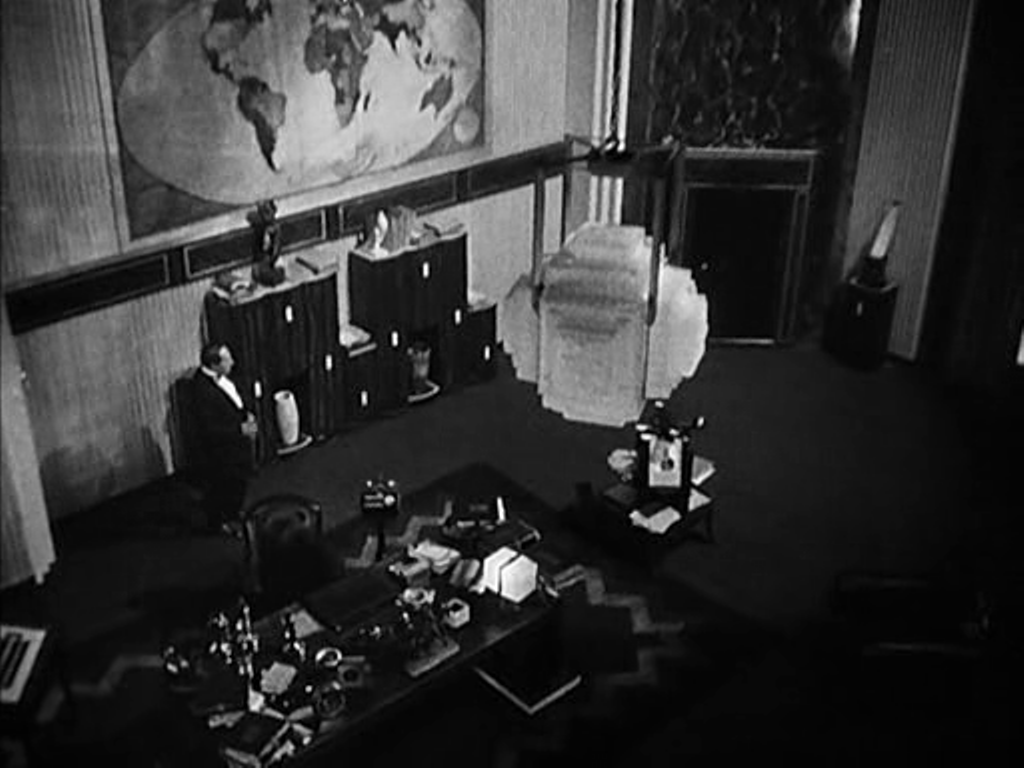
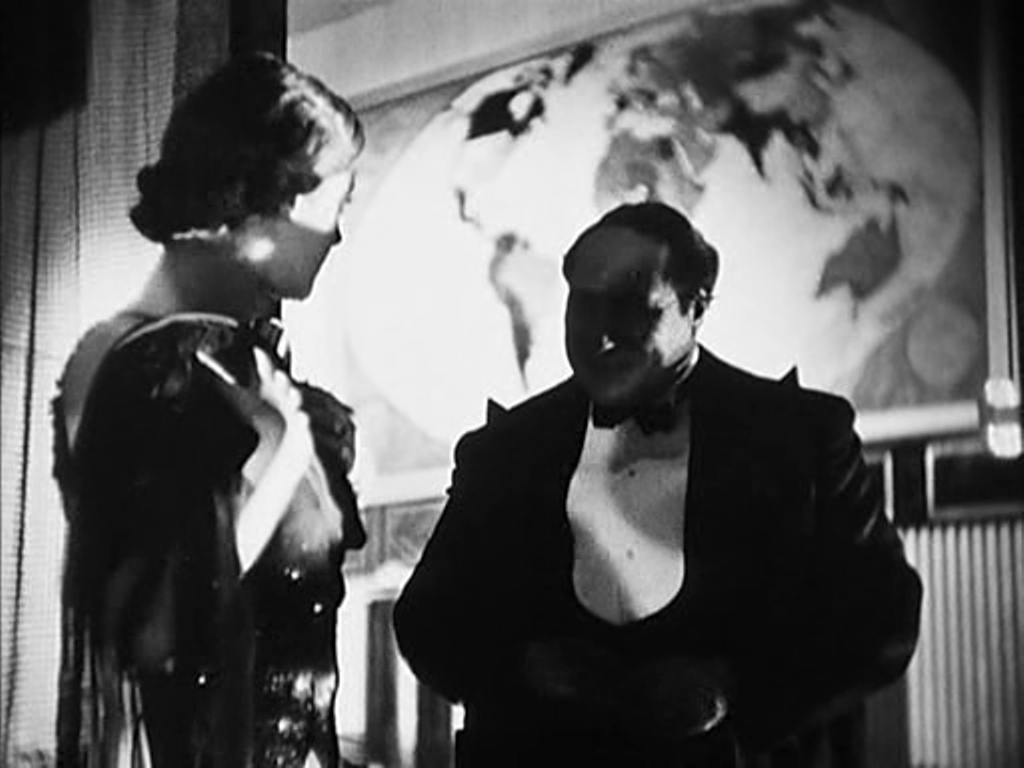
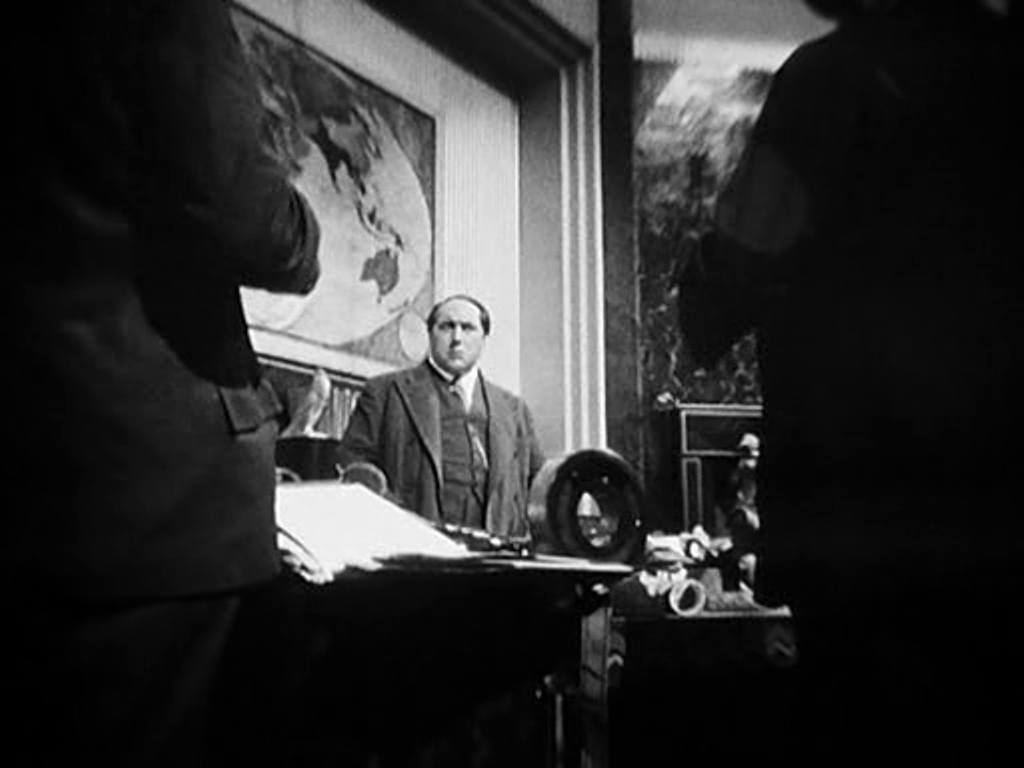
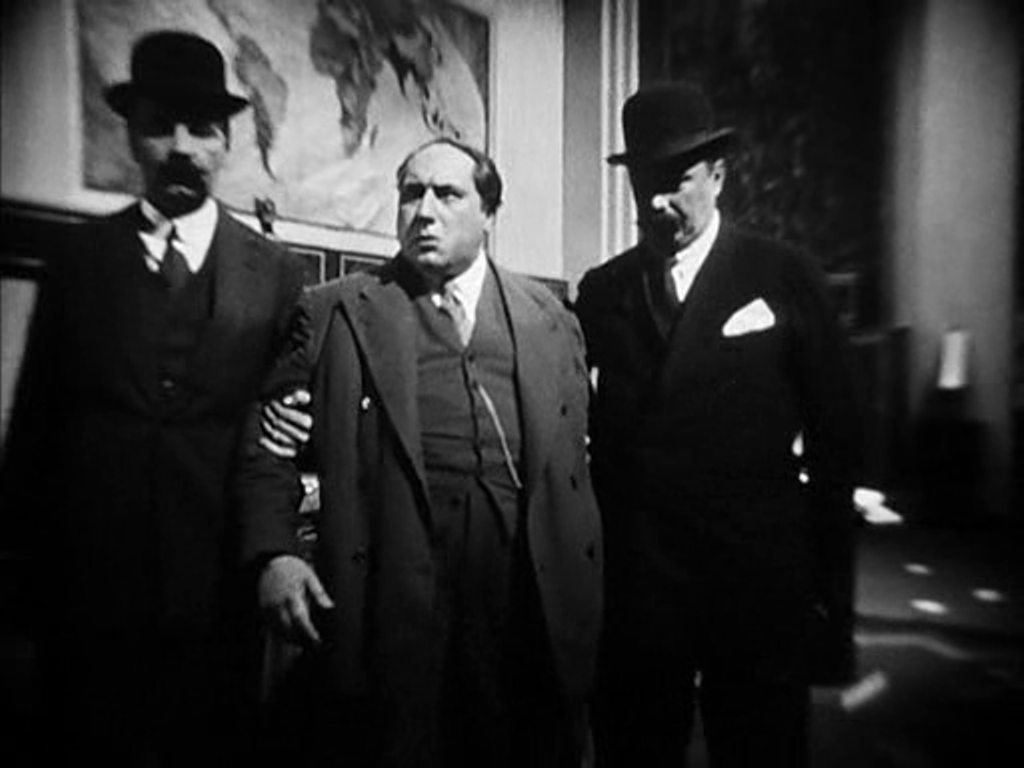
The most often shown space in the film is the banker Saccard's office, dominated by a map of the world. Against this  backdrop we see Saccard manipulate markets on a global scale, we see him attempt to seduce Line, and finally we see him arrested for fraud.
Picture
Picture
Picture
Picture
Picture
Picture
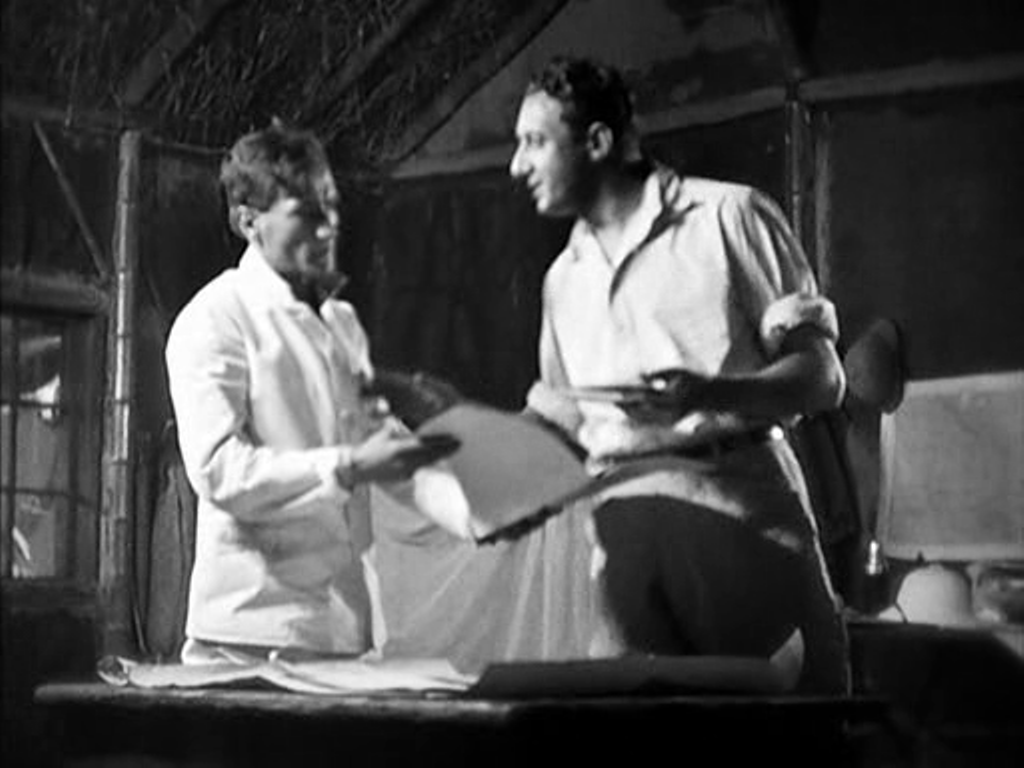
Prior to Saccard's arrest we see Hamelin in Guyana (here with Antonin Artaud as Saccard's secretary). A map on the wall serves as establishing decor, but it cannot compete with the cartographic spectacles on display back in Paris.
Picture
Hamelin returns to France and we see two policemen waiting to arrest him in the same room at the airport where he had kissed Line farewell. This time we see more of the cartographic decor, including the west coast of France:
Picture
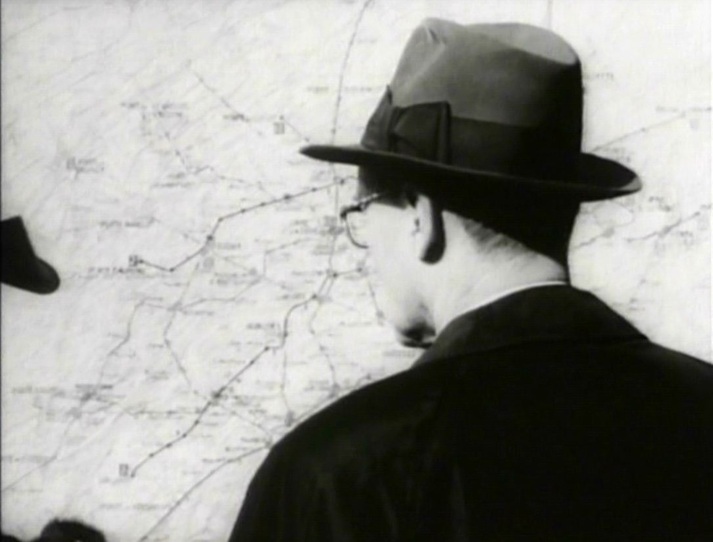
The film's denouement involves Line approaching  Gundermann, and we see again, in more detail, his spectacular antechamber:
Picture
Picture
Picture
Picture
Picture
The decor of L'Argent is one of Lazare Meerson's finest achievements, especially in the cartographic configurations of this last, framing space.
0 Comments

81/ Christophe Colomb (Gaumont production 1910) - the source of the map

27/6/2011

0 Comments

 
Picture
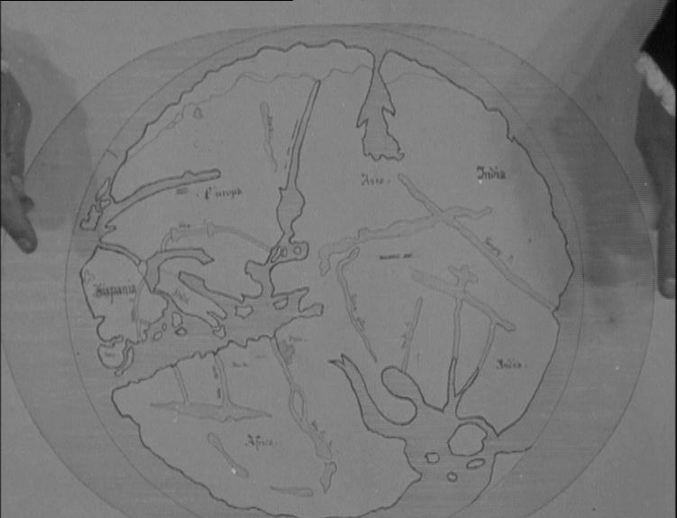
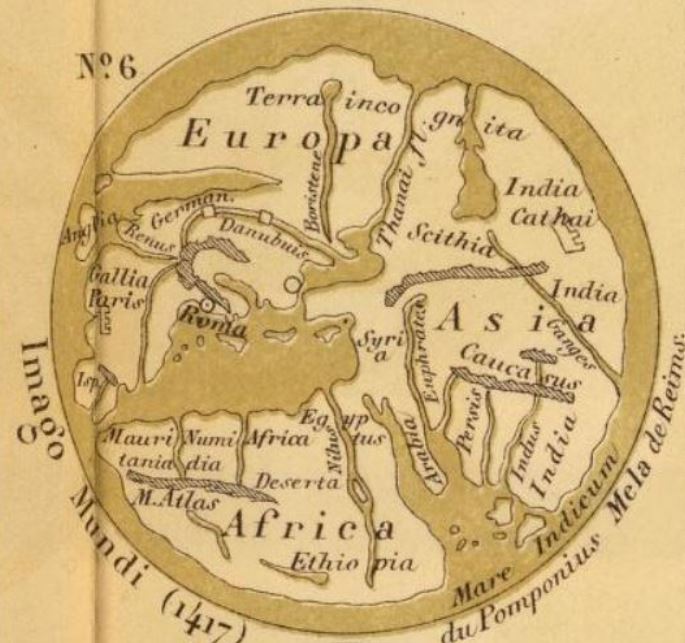
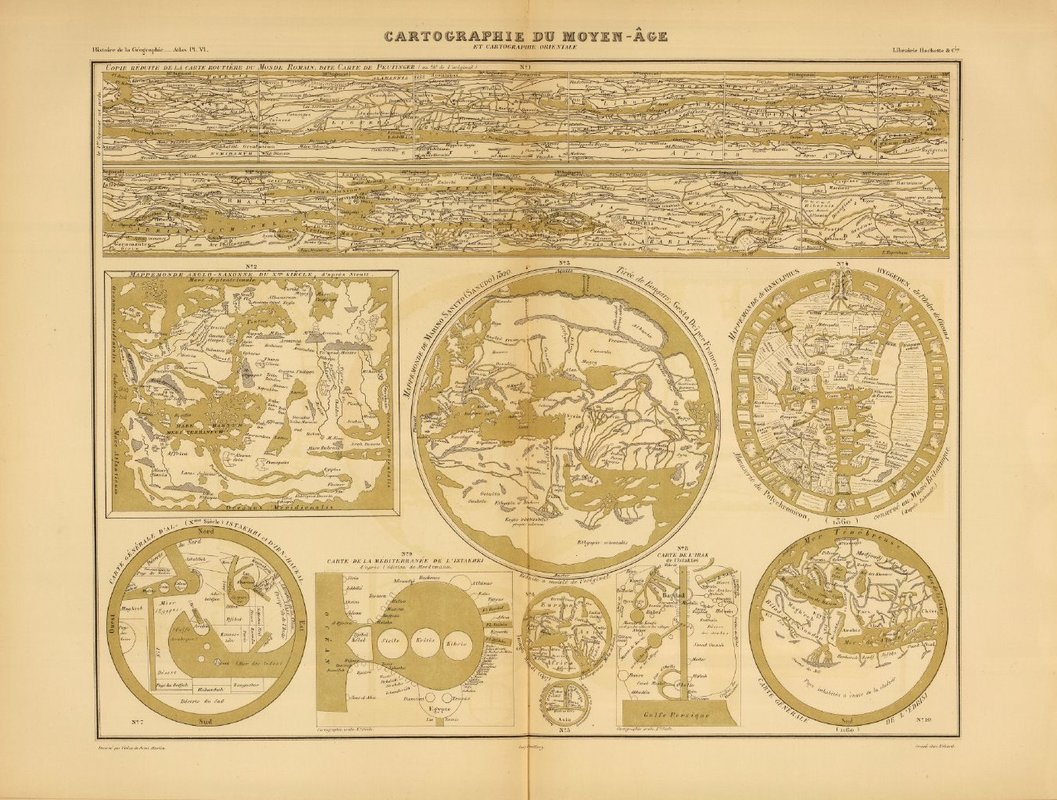
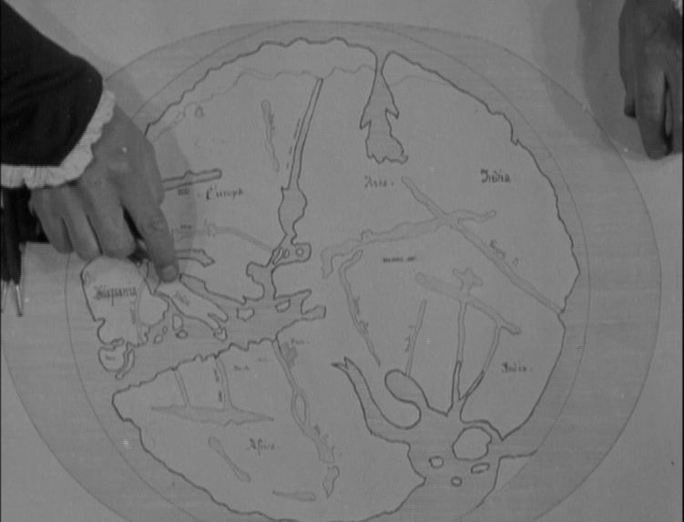
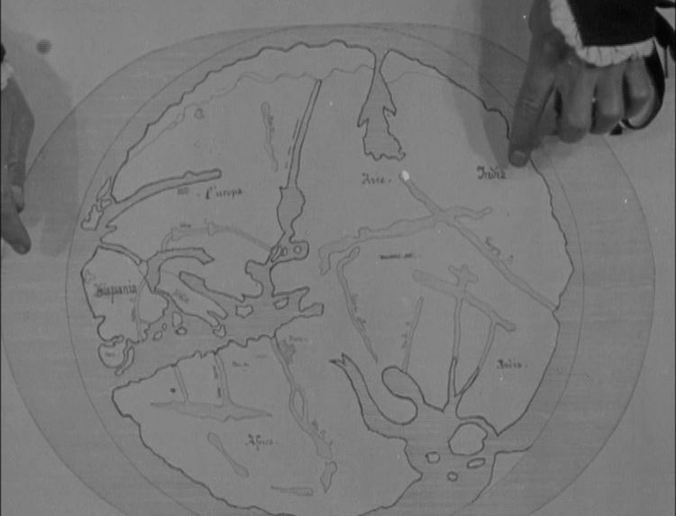
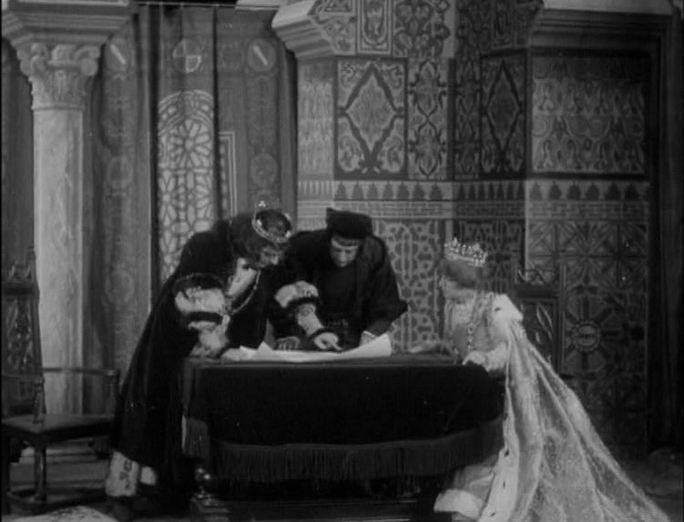
The model for the map used here appears to be this, a nineteenth-century configuration of a fifteenth-century map:
Picture
Picture
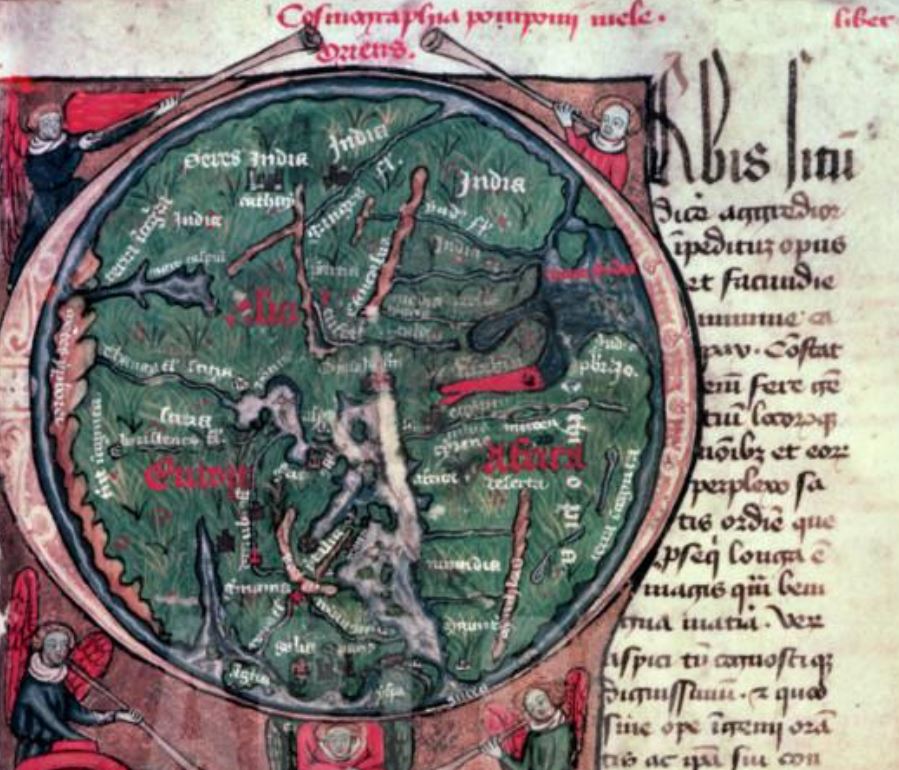
This is an 1874 Hachette publication. The map is based on an illustrated initial (the O of Orbis)  in a 1417 manuscript of Pomponius Mela:
Picture

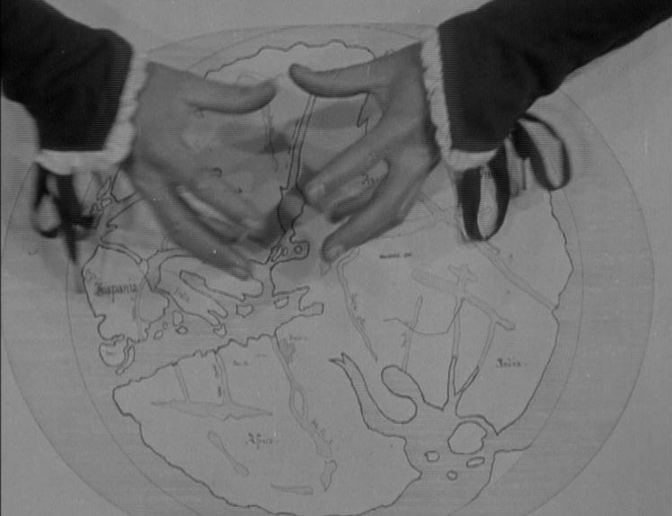
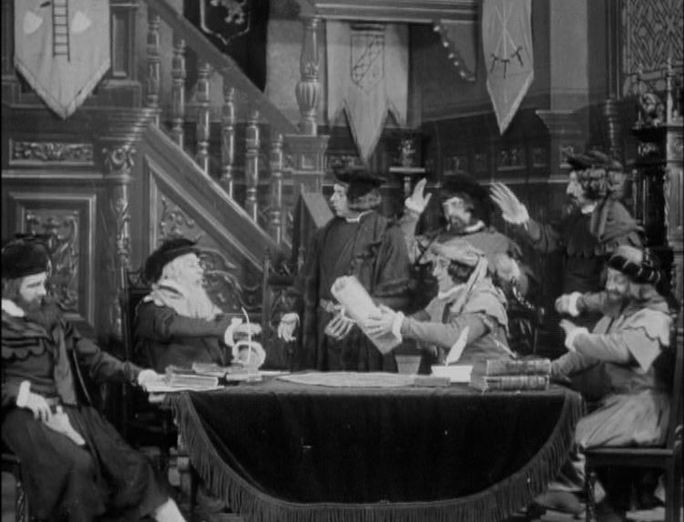
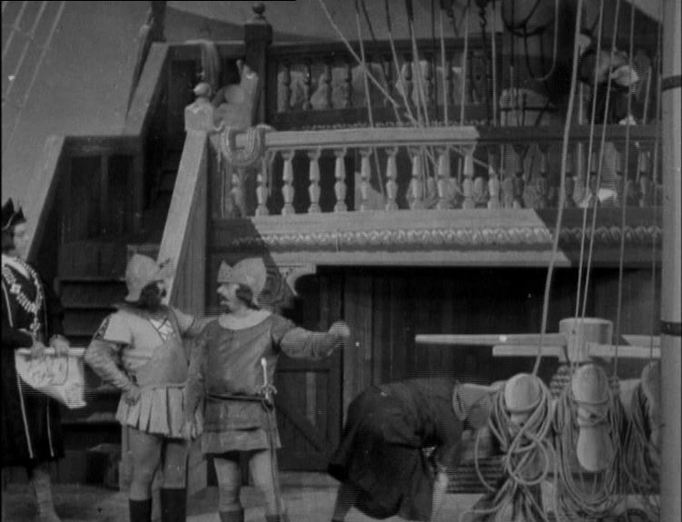
The scene in Christophe Colomb is the earliest instance I know where a map is discussed, pointed at and made available to be read by the spectator.

Richard Abel (who attributes this film to Louis Feuillade, though a recent Gaumont edition gives it to Etienne Arnaud) signals the unusualness of the shot:
‘The first scene, in which Columbus explains his plan to the Genoa officials, is filmed in full shot, but includes a cut-in to an unusual high angle close up of a map (approximating a POV shot), with his hands coming in from the top of the frame to point and gesture.’
 See Richard Abel, The Ciné Goes To Town: French Cinema 1896-1914 (Berkeley CA: University of California Press, 1994), p.273.

Picture
 
Picture
 
Picture
 
Picture
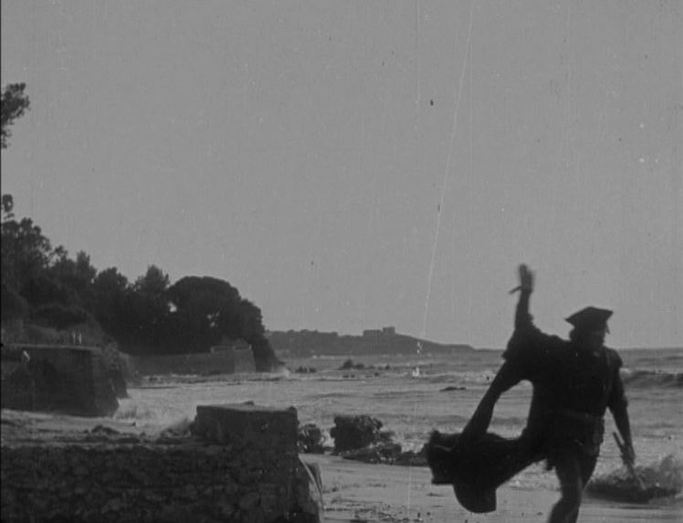
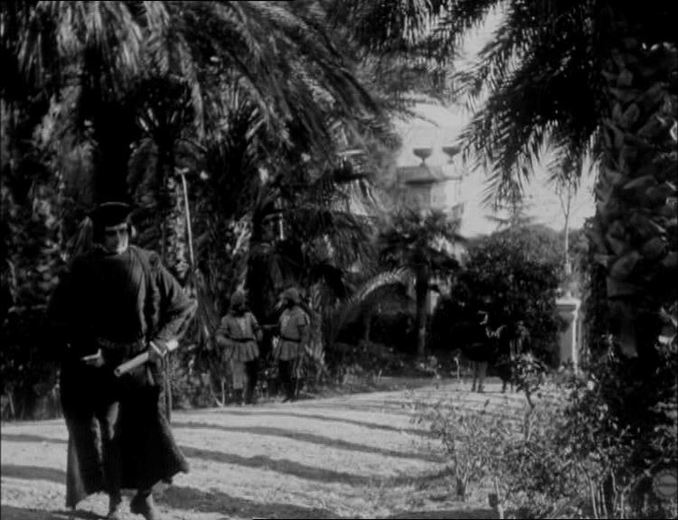
Columbus can be seen clinging determinedly to his map in four further  scenes of the film:
Picture
 
Picture
 
Picture
 
Picture
0 Comments

71/ Cosa avete fatto a Solange? [What You Done To Solange] (Massimo Dallamano 1972): London

17/6/2011

0 Comments

 
Picture
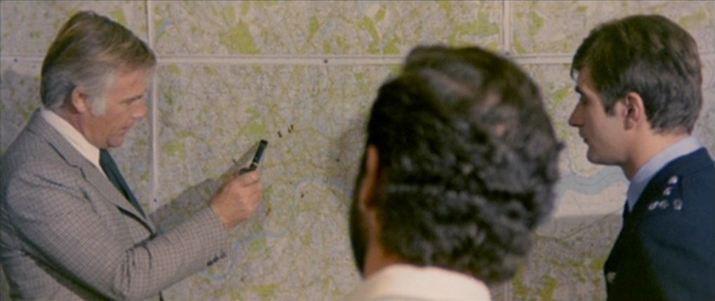
'In an essay on cinematic mapping, Tom Conley has suggested that the sight in a film of a geographical map, "which refers to the real world, complicates the imaginary space of the diegesis as well as the space in which spectatorial subjectivication takes place". What is a complication for the spectator positioned vis-à-vis the imaginary space of the narrative is, however, for the spectator who has already abandoned imaginary spaces for the real world of street names and postcodes, a spectacular sanction. He can, for example, enjoy the solecism when the detective in What Have You Done With Solange? points on a map to the positions for a stake out of, according to the narrative, Battersea Park, South London, but actually is pointing to Regent's Park, in the North. The space between these two parks is, for the map-reading ciné-tourist, the space of spectatorial subjectivication.' 
[In the published version of this piece I had to my shame  identified Regent's Park as Hampstead Heath: ‘London Circa Sixty Six: the Map of the Film’, in Gail Cunningham and Stephen Barber (eds), London Eyes: Reflections in Text and Image (Oxford: Berghahn, 2008), p.163.]
0 Comments

70/ La Police en l'an 2000 (anonymous Gaumont production 1910)

16/6/2011

0 Comments

 
Picture
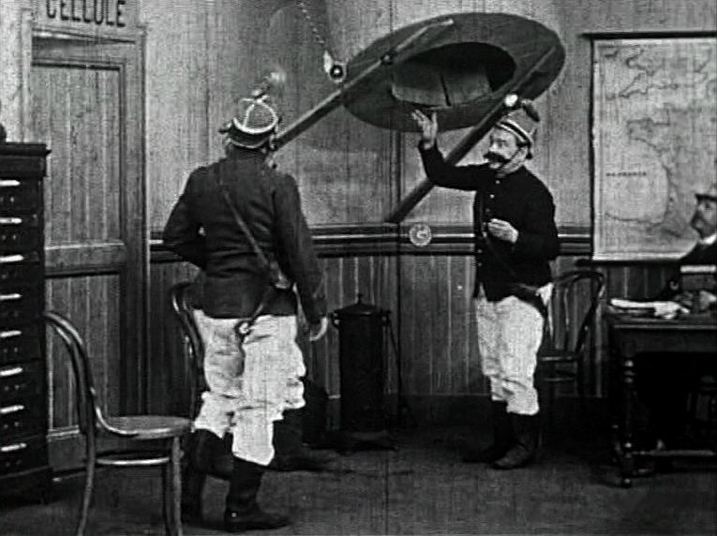
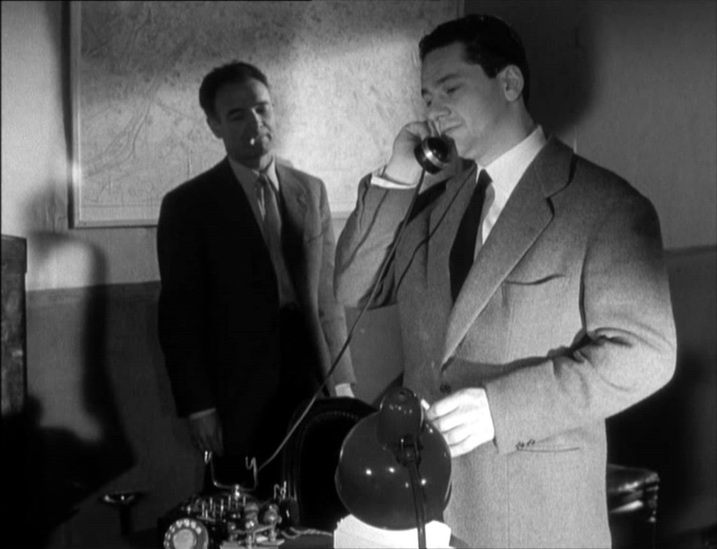
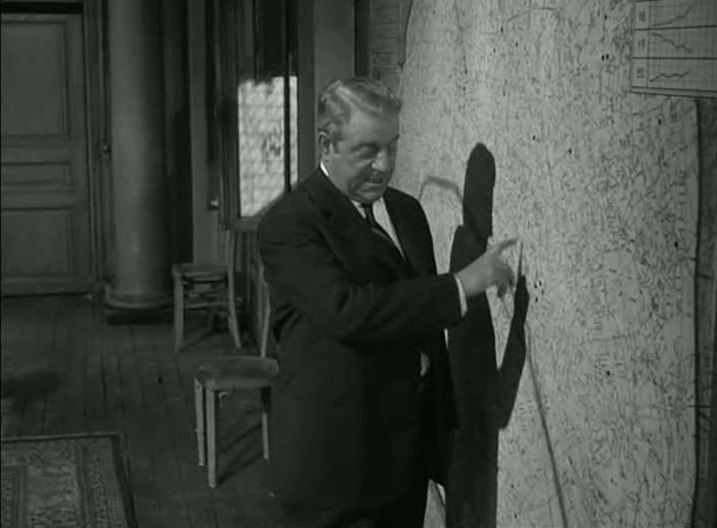
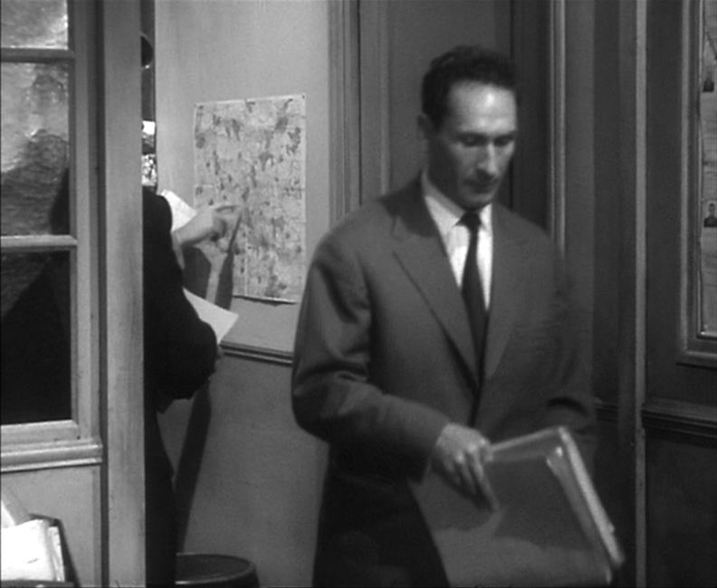
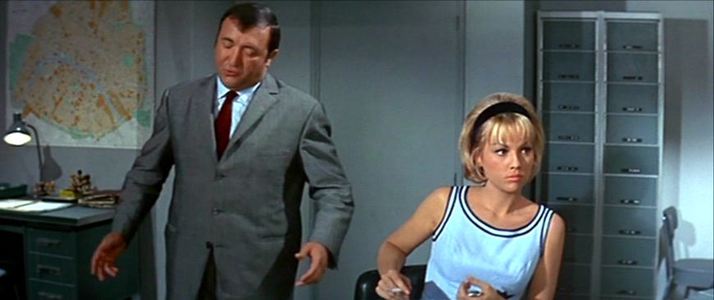
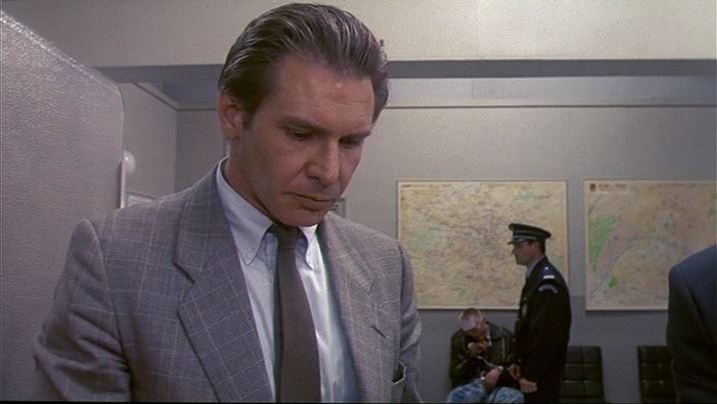
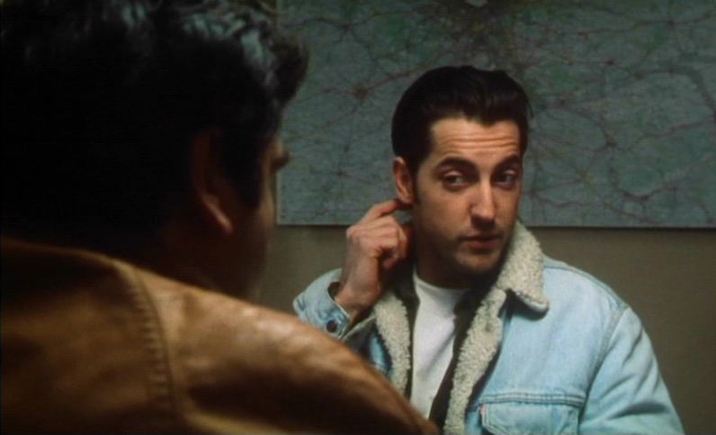
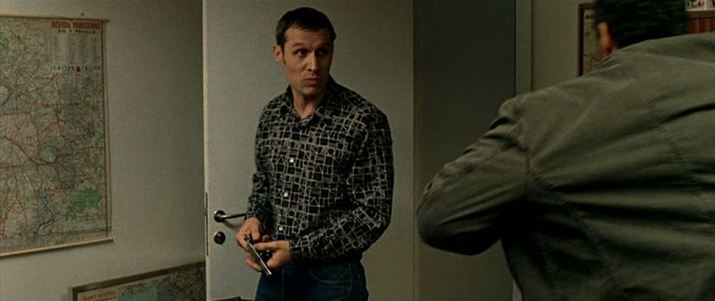
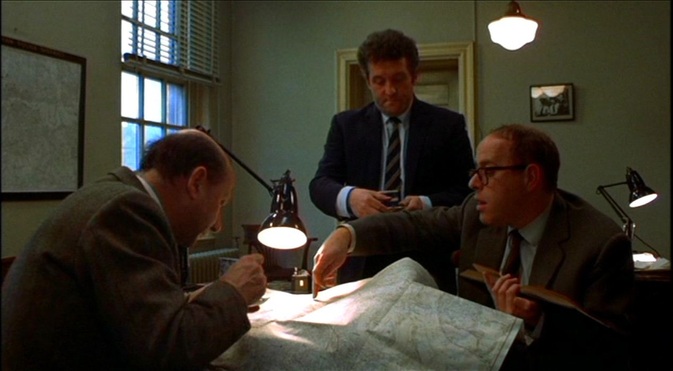
The police station is the other of the two settings in which a map in a film is most likely to be found. This is the earliest  example I know of a map in such a setting, though the map is of the whole country rather than  - as it will almost always be thereafter - of the city in which the action plays out. Below are some later illustrations from French police stations, all of them maps of the city or the immediate region.
Picture
La Chienne (Jean Renoir 1931)
Picture
L’Alibi (Pierre Chenal 1937)
Picture
Monsieur Verdoux (Charles Chaplin 1947)
Picture
Casque d'or (Jacques Becker 1952)
Picture
Bob le flambeur (Jean-Pierre Melville 1955)
Picture
Maigret tend un piège (Jean Delannoy 1958)
Picture
Pickpocket (Robert Bresson 1959)
Picture
Fantômas (André Hunebelle 1964)
Picture
Tante Zita (Robert Enrico 1968)
Picture
Papa les petits bateaux (Nelly Kaplan 1971)
Picture
Charles et Lucie (Nelly Kaplan 1979): Marseille
Picture
Police (Maurice Pialat 1985)
Picture
Frantic (Roman Polanski 1988)
Picture
Douce France (Malik Chibane 1995)
Picture
Les Témoins (André Téchiné 2007)
0 Comments

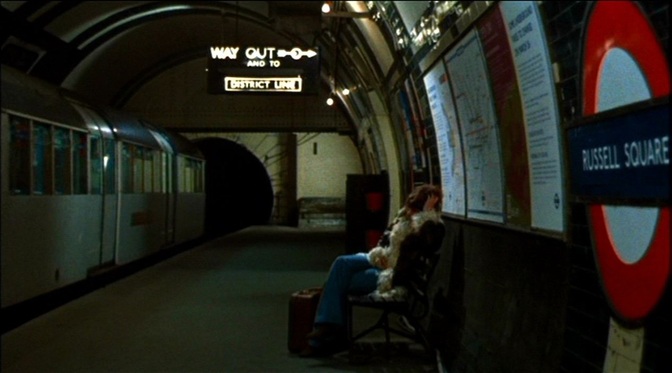
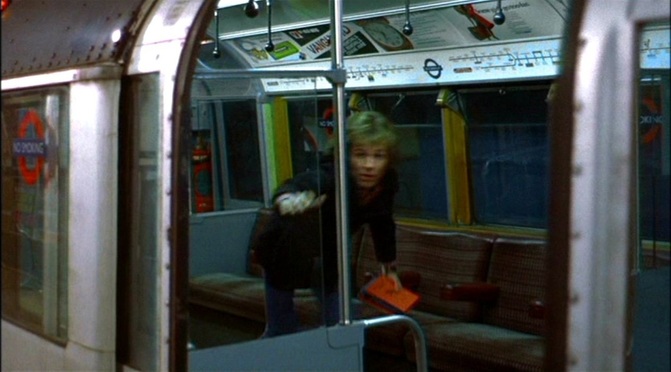
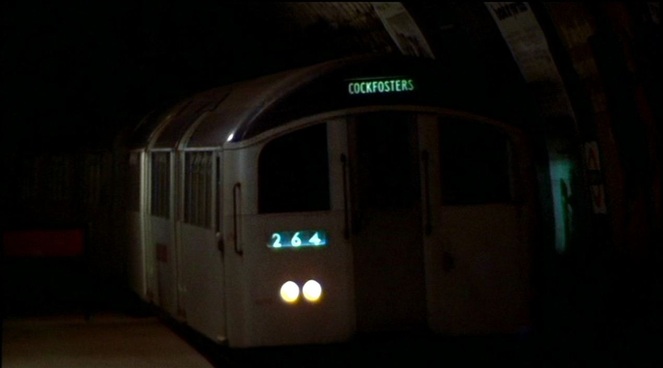
68/ Deathline (Gary Sherman 1973): London

14/6/2011

0 Comments

 
Picture
Picture
Picture
‘Memory, too, is a topos in its own right: it is a place we revisit, or to which we are transported; it is the road we travel along and also the destination of our memory-journey. To this extent, memory not only has a topography, it is a topography; and the site of production of place-memories  is the lived body, the body which traces out the scenes of memory. Memory, in this view, is at once emplaced and embodied.’
Annette Kuhn, ‘The Scenes of Cinema Memory’, in An Everyday Magic: Cinema and Cultural Memory (London: I.B. Tauris, 2002), pp.16-17.

Picture
0 Comments

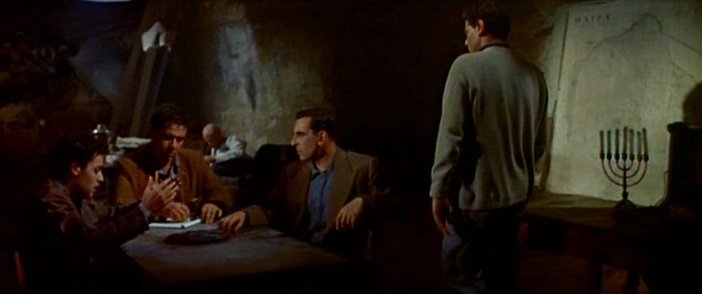
66/ Exodus (Otto Preminger 1960)

12/6/2011

0 Comments

 
Picture
Picture
Picture
Picture
Picture
Picture
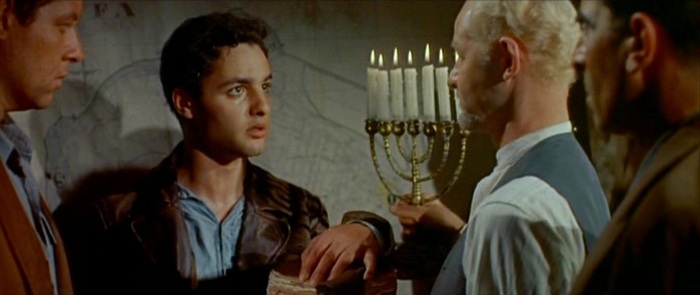
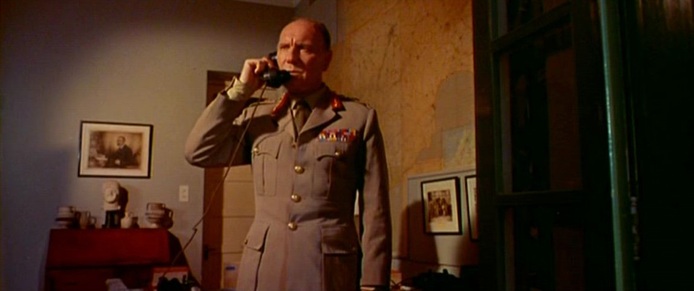
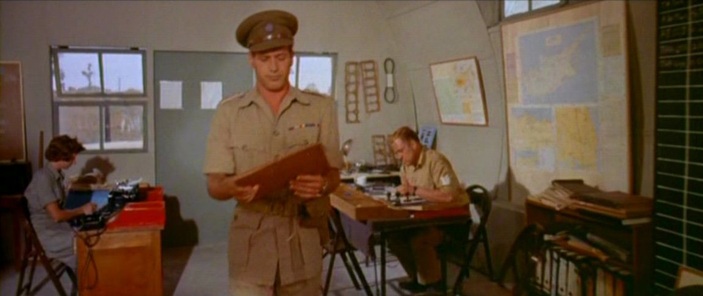
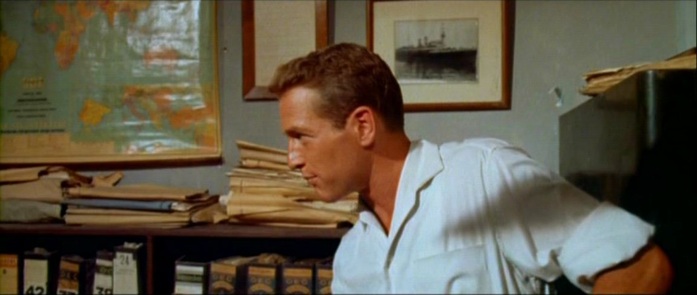
‘Published on 23 September 1958, the book had a distinctive blue cover with “EXODUS” in type that evoked Hebrew lettering. A freedom fighter stretched the complete length of the book jacket, his rifle barrel casually pointing upward to the author's name. Maps are used for the endpapers and to introduce each of the five books of the novel (an intentional parallel with the five books of Moses that make up the Torah). A biblical quotation accompanies each of the maps that introduce an individual section. Additionally, a map of the Middle East emphasizing the minuscule region of Israel appears inside the front cover. The rear map is a close-up of the country , the verso the northern part of the land, the recto the southern. Uris clearly felt the need to situate the reader geographically throughout his 626 pages.’
  Ira B. Nadel, Leon Uris: Life of a Best Seller (Austin TX: University of Texas Press, 2010), p.108.

Preminger’s film features several maps, but none of them works to situate the viewer geographically throughout its 119 minutes.

0 Comments

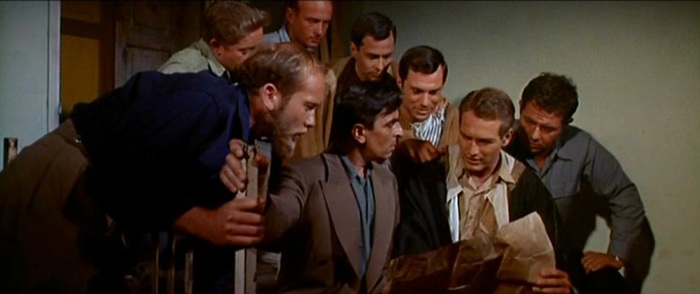
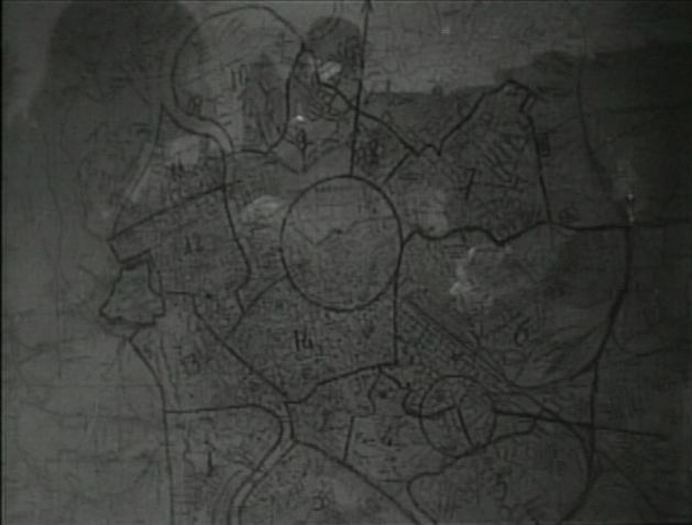
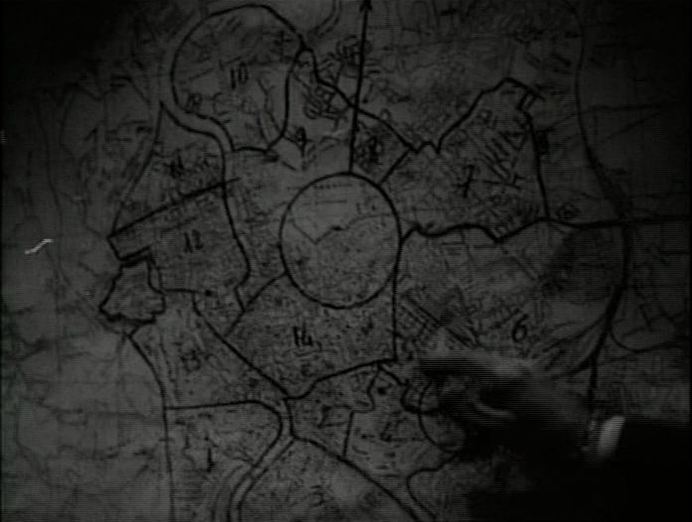
63/ Rome Open City (Roberto Rossellini 1945)

9/6/2011

0 Comments

 
Picture
Picture
‘Surveillance - the controlling view of the city from above, as seen on a map, or from a distance, as through a camera lens – is the key to Bergmann's particular form of power, but also its limitation. As Peter Brunette has pointed out, his power of surveillance is a directfunction of his distance from the city at street level. He views it from above, he knows it through maps and photographs (cameras are like extensions of his eyes), through his agents and spies, like Ingrid, and through the collaboration of the Fascist police, who have local knowledge and intelligence networks of their own that he can tap into.'
David Forgacs, ‘Space, Rhetoric and the Divided City in Roma Città Aperta, in Sidney Gottlieb (ed.), Roberto Rossellini’s Rome Open City (Cambridge: Cambridge University Press, 2004), p.113.

0 Comments

60/ Le Diable probablement (Robert Bresson 1977): Paris

6/6/2011

0 Comments

 
Picture
Picture
Picture
‘Some Métro stations in Paris have maps with colored bulbs along each line of the system. To use the map, passengers push a button with the name of a desired destination, and the bulbs display the recommended itinerary. Like the lines on the palm of a hand, those of the Métro system can be read, especially given the multicolored display of routes whose configuration passengers soon memorize. But what makes an itinerary efficient does not always make it desirable, especially when, in a mode of flânerie, movement becomes an end in itself.
  Maps show place-names that can be plotted, but they also function in other ways. Michel de Certeau writes that “proper names carve out pockets of hidden and familiar meanings. They ‘make sense’ as the impetus of movements, like vocations and calls that turn or divert an itinerary by giving it a meaning (or a direction) that was previously unseen. These names create a nowhere in places, they change them into passages.” Maps show where the Place des Vosges used to be and how to find the hillside park at Buttes-Chaumont. But it is almost as if, in order to function as formal ensembles of abstract places, maps must erase their genesis. From log to itinerary, the history of maps seems to have evolved in the name of science — from recording a route taken in the past to prescribing one to be followed in the future.’
Dudley Andrew and Steven Ungar, Popular Front Paris and the Poetics of Culture (Cambridge MA: Harvard University Press, 2005), pp. 292-93.
0 Comments

50/ Chappaqua (Conrad Rooks 1966): Paris

27/5/2011

0 Comments

 
Picture
‘In my writing I am acting as a map maker, an explorer of psychic areas, to use the phrase of Mr  Alexander Trocchi, as a cosmonaut of inner space, and I see no point in exploring areas that have already been thoroughly surveyed.’
  Willam S. Burroughs, ‘Censorship’, The Transatlantic Review, 11 (1962), p.6.

0 Comments

45/ The Lodger (Alfred Hitchcock 1926): London

22/5/2011

0 Comments

 
Picture
‘As indicated by the subtitle of the film, the Bunting house is situated in London. In the Avenger's range of action, the house is localized on the city map, by both the police and the lodger, in the area where Vauxhall Bridge Road becomes Bessborough Gardens, just before Vauxhall Bridge. As Gary Giblin has demonstrated, this location in Pimlico refutes the claim, repeated by several commentators and Hitchcock himself in  a 1970 interview, that the cinematic Buntings lived in Bloomsbury.’
  Steven Jacobs, The Wrong House: the Architecture of Alfred Hitchcock (Rotterdam: 010 Publishers, 2007), p.68.
0 Comments

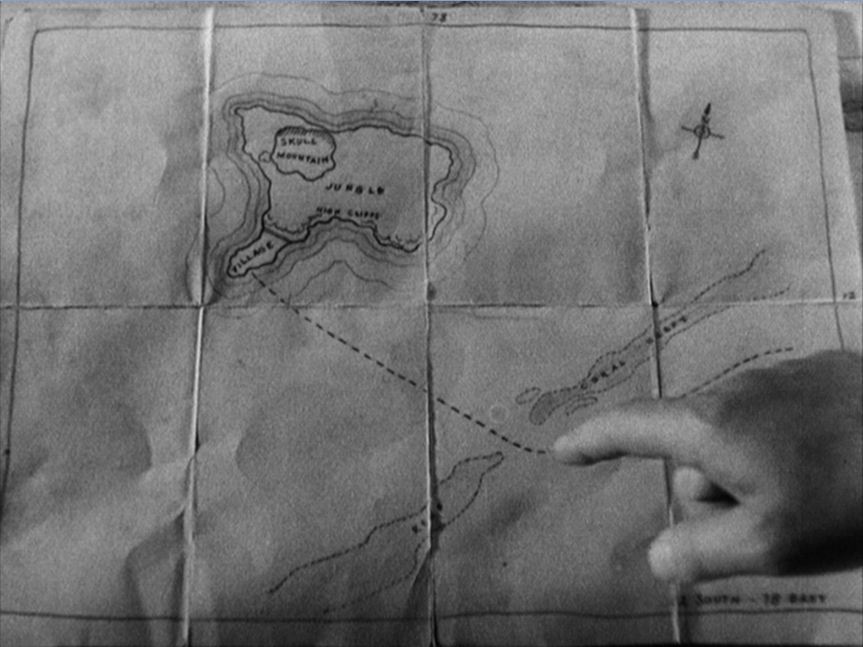
43/ King Kong (Merian C. Cooper & Ernest B. Schoedsack 1933)

20/5/2011

0 Comments

 
Picture
‘Like Moby- Dick, whose ribbed brow mirrored Ahab's, King Kong is an image both of the Other (specifically — depending on the sensibility of the perceiver — gorilla, ape-man, black male) and of the Self (our generic self as Hominid). Carl Denham in many ways resembles Ahab, moreover, when Denham finally "spill[s] it" about the nature and destination of the secret voyage, he says of Kong's Island, "you won't find that island on any chart.” Like Queequeg's home, "true places never are" on any map. But this one must be just off the map, at the edge of what is known, where there be dragons. Seelye assumes that the dinosaurs are the only dragons here as Kong ironically becomes the chivalrous knight defending the damsel Ann Darrow from the dragon tyrannosaurus. Noël Carroll, on the other hand, dismisses the dragon completely from the mythical architecture of the film: he claims that "Kong is not even peripherally a dragon story. The reason is simple; dinosaurs do not belong to the same symbolic species as dragons". Dinosaurs, he claims, are not "fusion figures" as dragons are. Once we realize that King Kong is a retelling of the Andromeda myth we see how both these readers are wrong. Kong is a dragon become an ape.’
  Joseph Andriano, Immortal Monster: the Mythological Evolution of the Fantastic Beast in Modern Fiction and Film (Westport CT: Greenwood Press, 1999), p.46.
0 Comments

39/ The General (Buster Keaton 1926): Tennessee, Georgia

16/5/2011

0 Comments

 
Picture
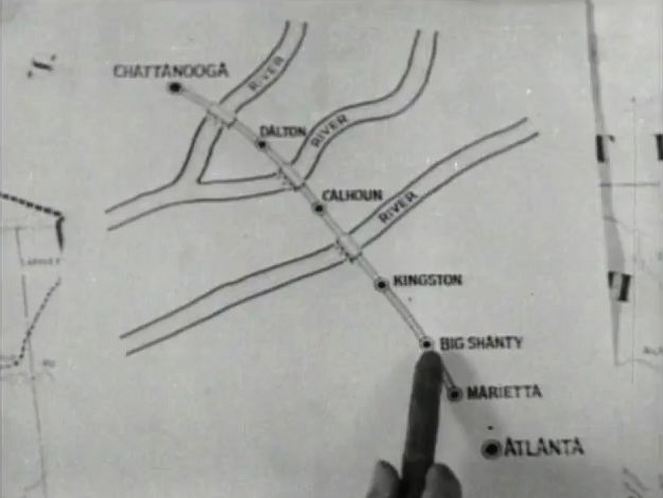
‘There is a scene early on in The General in which the Union spy, Captain Anderson, shows his commanding officer a map of the railroad tracks between Chatanooga, where the Northern forces are encamped, and Marietta, Georgia, where the opposing Southern army is headquartered. It is along this route that Anderson plans to hijack Johnnie Gray's locomotive The General and then drive it behind Northern lines whence it can be used to spearhead an attack upon the Confederates. I have heard commentators refer to this map as a diagram of Keaton’s narrative, literally a plot line. Keaton's evident love of geometry and especially symmetry , it is suggested, drew him to this neatest, cleanest, most elegant of narrative designs. First, the Union hijackers steam the train one way with Johnnie in earnest pursuit; then he recovers the engine and races home in the opposite direction with the Northerners on his tail. Was there ever a more linear narrative? Moreover, the symmetry involved in these two chases over the same terrain affords the opportunity for a wealth of comic variations on various recurring themes, such as decouplings and side-trackings, made all the more risible for being repeated.
  This interpretation of the map is very tempting.’
 Noël Carroll, Comedy Incarnate: Buster Keaton, Physical Humor and Bodily Coping (Chichester: Wiley-Blackwell, 2009), pp.159-60.
0 Comments

35/ L'Amour à mort (Alain Resnais 1984)

12/5/2011

0 Comments

 
Picture
‘This intervention of the aleatory signals the start of a proliferating structure, the fragment of music intensifying the indecision before the appearance of a map in close up. The city, roads and rivers evoke a nerve cell and its many ramifications...’.
  Jean-Louis Leutrat, Resnais: l’Amour à mort (Paris: Presses de la Sorbonne Nouvelle, 1992), p.124.
  (En souvenir de  Jean-Louis, décédé le 29 avril 2011.)

0 Comments

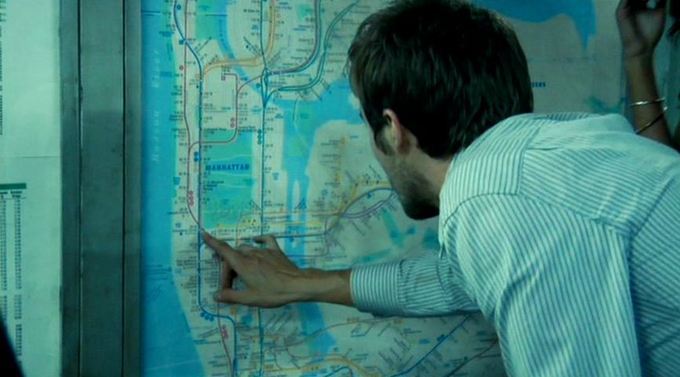
18/ Cloverfield (Matt Reeves 2008): Manhattan

25/4/2011

0 Comments

 
Picture
‘Is, then, Manhattan hard to point to? But if you were approaching La Guardia Airport on a night flight from Boston, then just as the plane banked for its approach, you could poke your  finger against the window and, your interest  focussed on the dense scattering of lights , say "There's Manhattan"; so could you point to Manhattan on a map. Are such instances not really instances of pointing to Manhattan? Are they hard to accomplish? . It feels hard to do (it is, then and there, impossible to do) when the concept of the thing pointed to is in doubt, or unpossessed, or repressed.’
  Stanley Cavell, The Claim of Reason: Wittgenstein, Skepticism, Morality and Tragedy (Oxford: Clarendon Press, 1979), p.74.

0 Comments

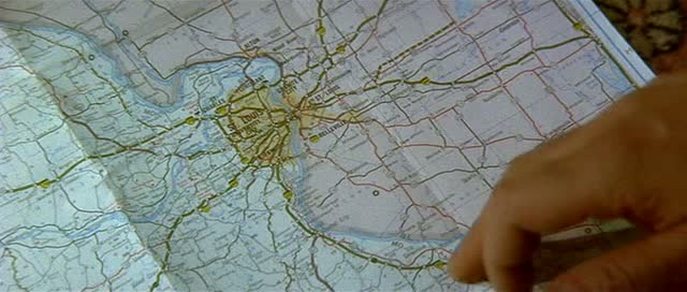
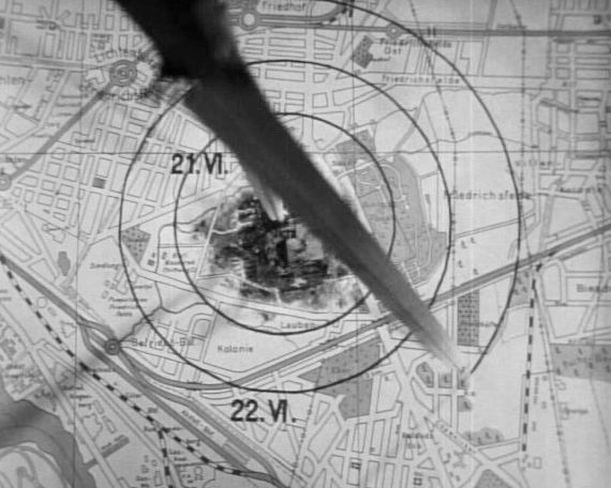
11/ M (Fritz Lang 1931): Berlin

18/4/2011

0 Comments

 
Picture
'Two shots angled have been used for this map, which refer to the two perspectives that have dominated cartography historically: (1) the oblique perspective – or  “perspective militaire” – has been widely used by artists since the Middle Ages, to represent landscapes. (2) The vertical perspective or bird’s eye view characterizes the more modern and scientific representation of Earth.  These two subsequents views of the same map capture the passage from a classic to a more modern perspective in cartography.'
Sébastien Caquard, 'Murder and Modern Mapping', (e)space & fiction
0 Comments

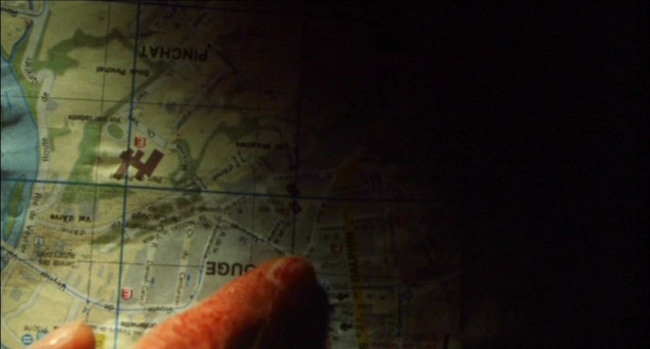
9/ Trois couleurs: rouge (Krzysztof Kieslowski 1994): Carouge (GE)

16/4/2011

0 Comments

 
Picture
'The upside down map thus, ironically, provides a “corrected” orientation. One of the words appearing upside down on the map is Carouge – a district of Geneva, but also by its obvious pun, a designation of something that is not on the map: Auguste's red jeep. This inversion of the map coupled with the code written upside down on the map and designating something that cannot be part of the map's cartographic function force us to think that Kieslowski's atlas in this film is going to be of a world “à l'envers [upside down]” and one whose itinerary must be followed by some other code that we must substitute for any known cartography.' 
T. Jefferson Kline, Unraveling French CInema (Chichester: Wiley-Blackwell, 2010), p.102.
0 Comments

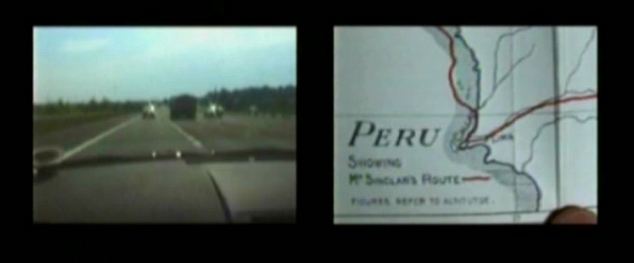
6/ London Orbital (Chris Petit & Iain Sinclair 2002): Peru
13/4/2011

0 Comments

 
Picture
'I seriously was interested in where things fell on the map. I thought psychogeography could be adapted quite conveniently to forge a franchise – which is what happened, more than I could have imagined. It took off. I think of it, I suppose, as a psychotic geography – stalking the city.'
The Verbals: Iain Sinclair in conversation with Kevin Jackson (Tonbridge: Worple Press, 2002), p.75
0 Comments

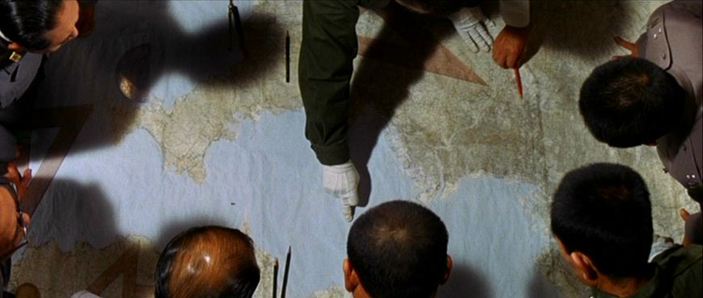
5/ King Kong Escapes [Kingu Kongu no gyakushû] (Ishirô Honda 1967): Japan

12/4/2011

0 Comments

 
Picture
'And this was Brecht's notion of dialectic: to hold fast to the contradictions in all things, which make them change and evolve in time. But in Hegel, Contradiction then passes over into its Ground, into what I would call the situation itself, the aerial view or the map of the totality in which things happen and History takes place.' 
Fredric Jameson, 'Notes on Globalization as a Philosophical Issue', in Fredric Jameson & Masao Miyoshi (eds), The Cultures of Globalization (Durham: Duke University Press, 1998), p.76.
0 Comments

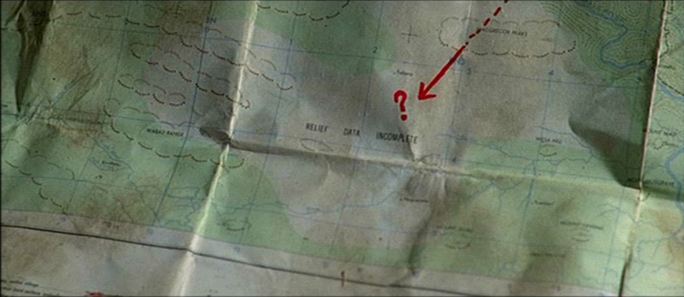
4/ La Vallée [Obscured by Clouds] (Barbet Schroeder 1972): Papua New Guinea

11/4/2011

0 Comments

 
Picture
'The expression “obscured by clouds” refers to those areas that have never been cartographically surveyed since they are always blanketed in cloud.' Cosmopolis
0 Comments
Forward>>
    Follow @CineTourist
    ​  

    Categories

    All
    Africa
    Algeria
    Algiers
    All The Maps
    Alsace-Lorraine
    Americas
    Animation
    Antwerp
    Arctic
    Argentina
    Arizona
    Arsenal
    Asia
    Atlantic
    Australia
    Austria
    Avignon
    Baltic
    Baltimore
    Barcelona
    Belgium
    Berlin
    Black Sea
    Bordeaux
    Bradford
    Britain
    Bruges
    Bulgaria
    Burgundy
    California
    Canada
    Caribbean
    Celestial Map
    Chicago
    Cinemap
    Cine-tourism
    Colombia
    Congo
    Crete
    Cuba
    Cyprus
    Czechoslovakia
    Djibouti
    Documentary
    Egypt
    England
    Europe
    Face
    Fictional Map
    Finland
    Foldaway Map
    France
    Geneva
    Germany
    Globe
    Greenland
    Haifa
    Haiti
    Hamburg
    Hand Drawn
    Heist
    Helsinki
    Holland
    Hong Kong
    Hungary
    Iceland
    Imaginary Place
    India
    Iran
    Iraq
    Ireland
    Island
    Isle Of Man
    Israel
    Italy
    Japan
    Kentucky
    Leningrad
    Local
    Logo
    London
    Los Angeles
    Louisiana
    Luxembourg
    Lyon
    Malaysia
    Mali
    Manchester
    Manhattan
    Map As Décor
    Map Room
    Marking The Map
    Marseille
    Marshovia
    Mediterranean
    Mexico
    Milan
    Montreal
    Morocco
    Moscow
    Munich
    Naples
    New Mexico
    New Orleans
    Newspaper
    New York
    Nice
    Nigeria
    Okinawa
    Oklahoma
    Oz
    Pacific
    Palestine
    Panama
    Papua New Guinea
    Paris
    Paris. Metro
    Petersburg
    Philadelphia
    Philippines
    Pointing
    Poland
    Police
    Poster
    Railway
    River
    Road Map
    Rome
    Rumania
    Russia
    San Francisco
    Schoolroom
    Scotland
    Screen
    Seattle
    Singapore
    Solar System
    Solomon Islands
    South Africa
    South America
    South Korea
    Spain
    Street
    Subway
    Sweden
    Switzerland
    Tanzania
    Television
    Texas
    Thames
    Tokyo
    Underground
    United States
    Vanuatu
    Venice
    Vienna
    Vintage Map
    Wall Map
    War
    World
    Zenda

    Today's Country Map I.D.
    (mouseover map to identify)
    Country Maps ID