Une femme est une femme - the places documented
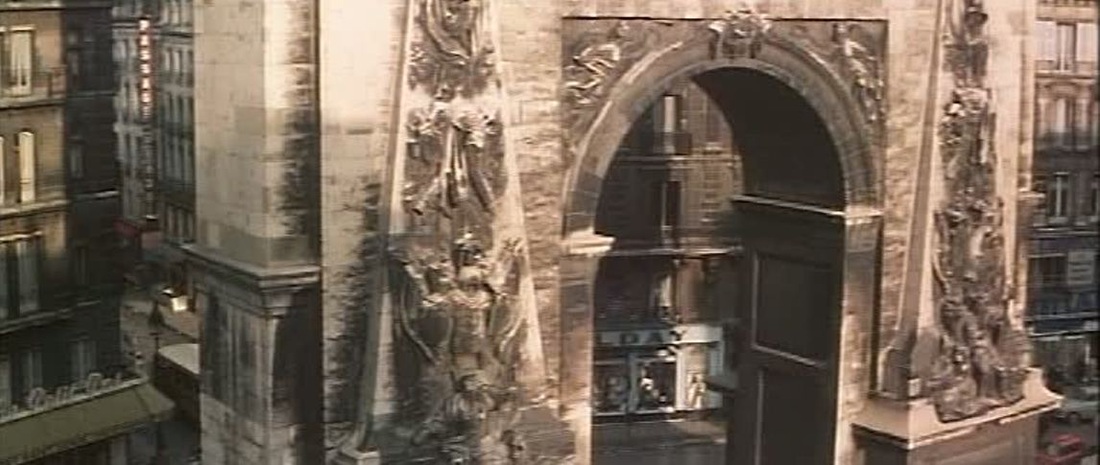
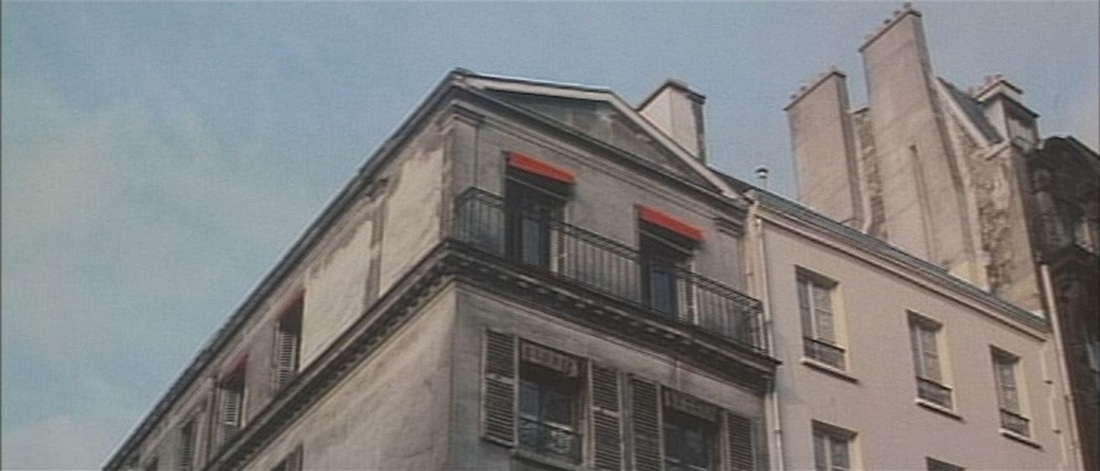
Godard's third feature centres on one character, Angela, in two locations: her home and her place of work. Home is a fourth-floor apartment at 73 rue du faubourg Saint Denis, 10e. This is the film's most northerly location:
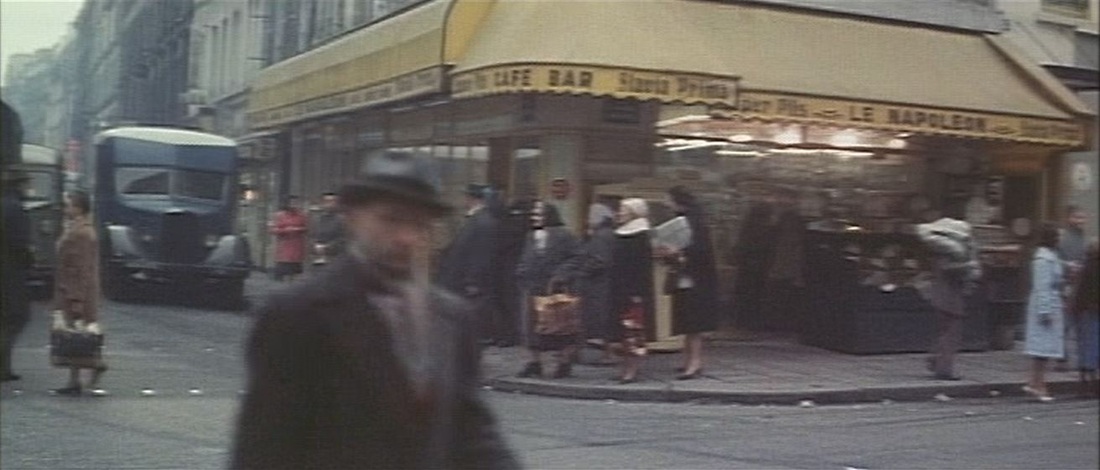
On the ground floor of this building is Le Napoléon, a café visited by Angela in the film's opening sequence:
The interior of Le Napoléon is shown in that first sequence and again later when her partner Emile, his friend Alfred and two of her work colleagues are on a date:
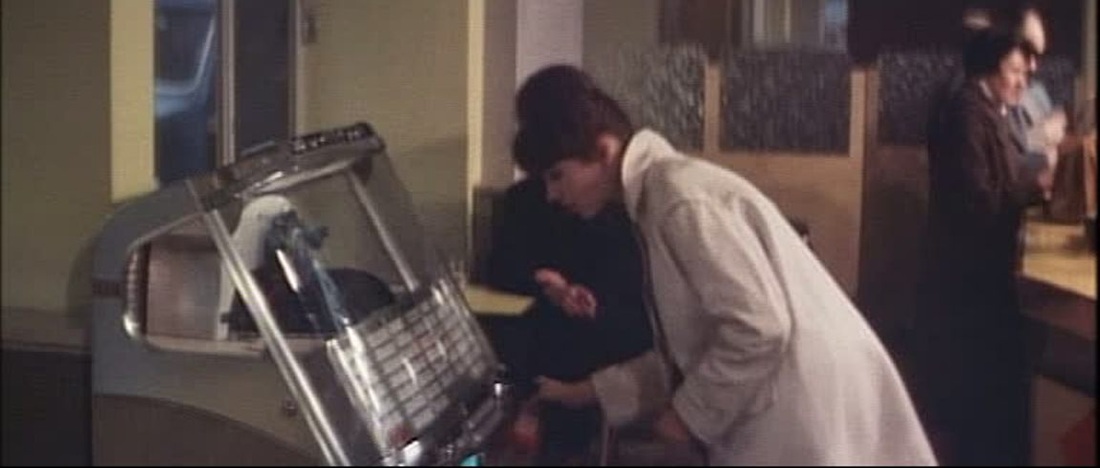
|
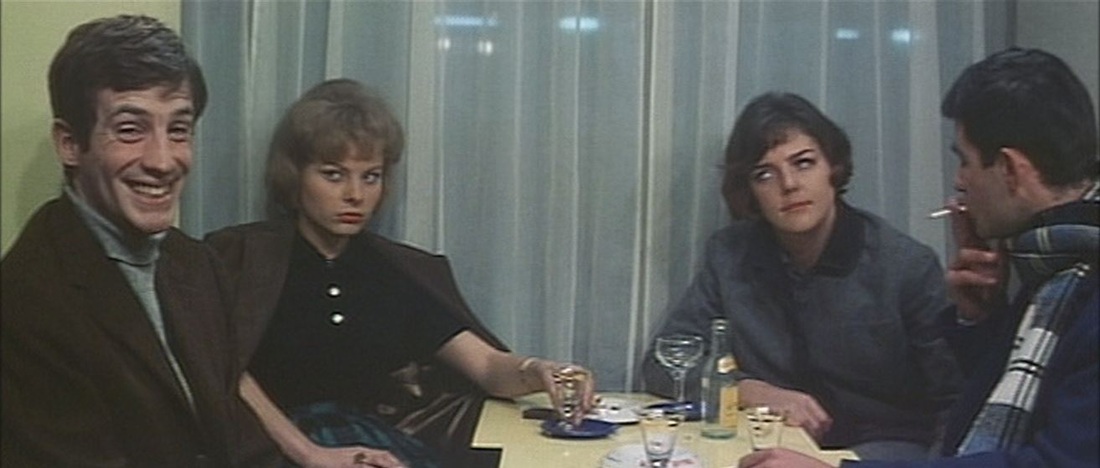
|
Angela's workplace is Le Zodiac, a cabaret-cum-stripclub at 8 boulevard Bonne Nouvelle, 10e:
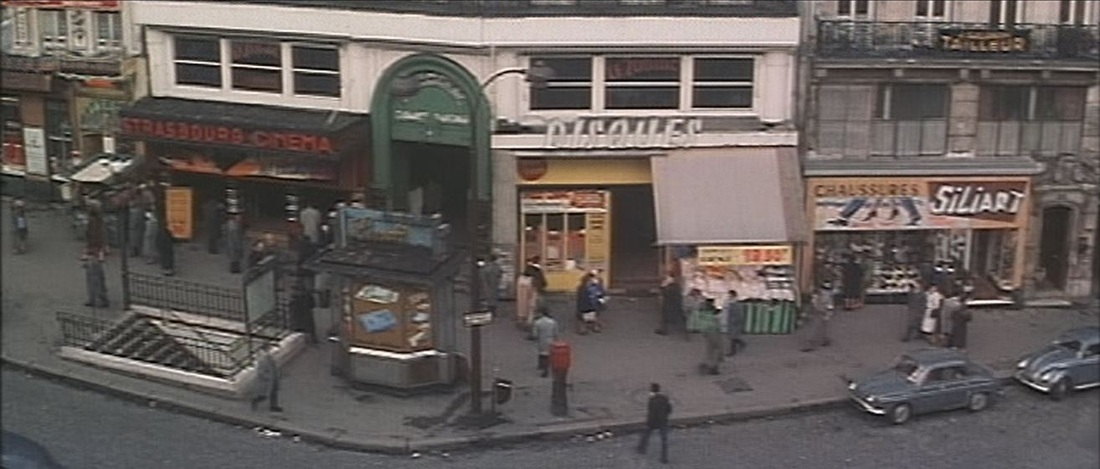
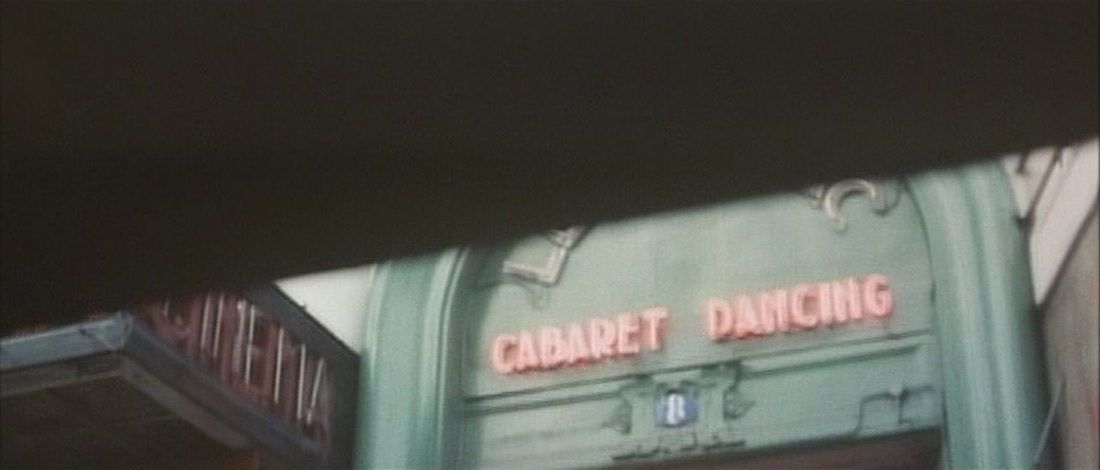
The interior of Le Zodiac is shown from various angles in several sequences across the film.
These two places are connected by the rue du faubourg Saint Denis, down which Angela walks after leaving the Napoléon. Along the way she goes into the bookshop at no. 61, which is run by Emile:
These two places are connected by the rue du faubourg Saint Denis, down which Angela walks after leaving the Napoléon. Along the way she goes into the bookshop at no. 61, which is run by Emile:
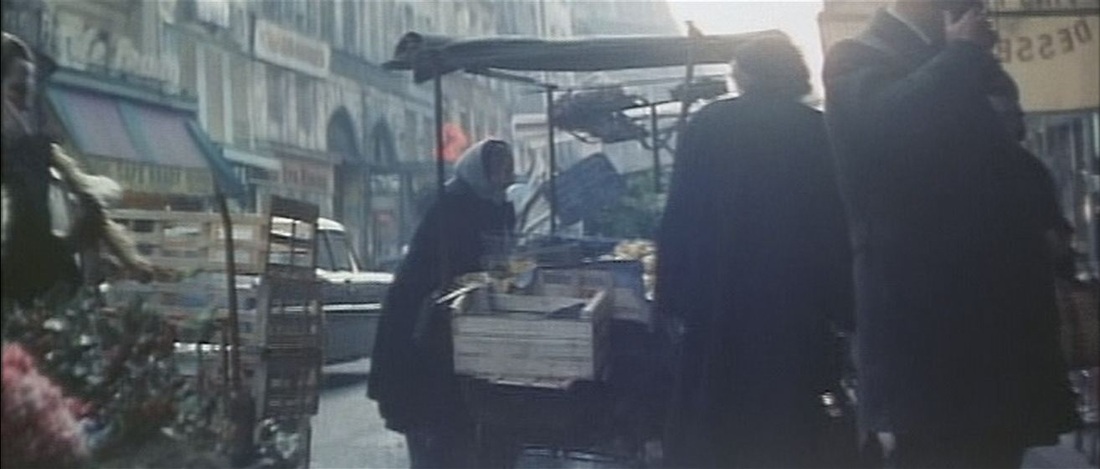
Angela's walk down the rue du faubourg Saint Denis is shown in six views of her from a variety of angles and distances. These are joined by two views of the street in front of Angela, though from too low an angle to be her point of view:
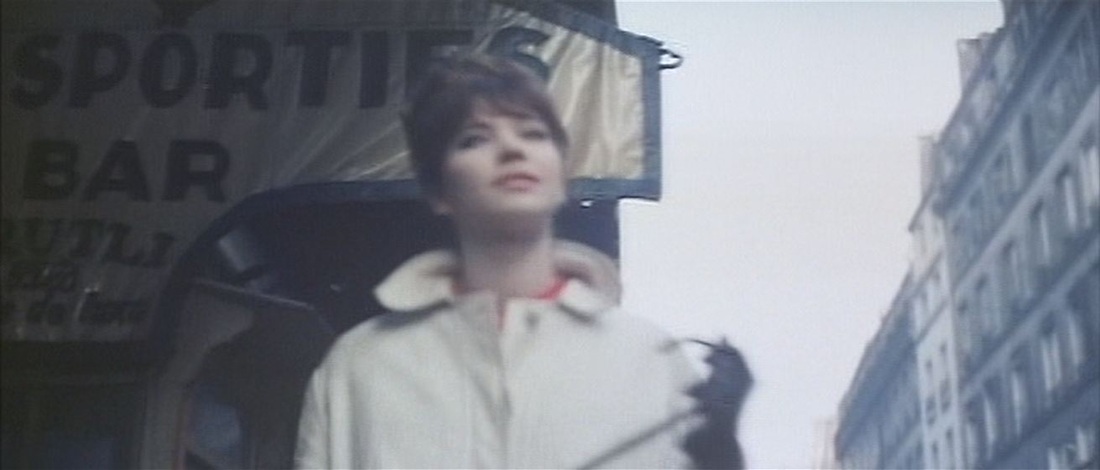
|
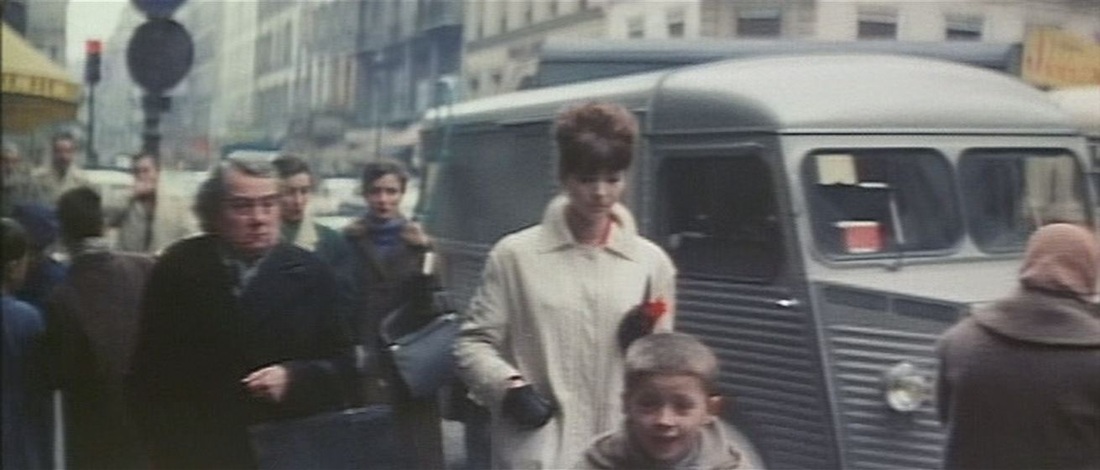
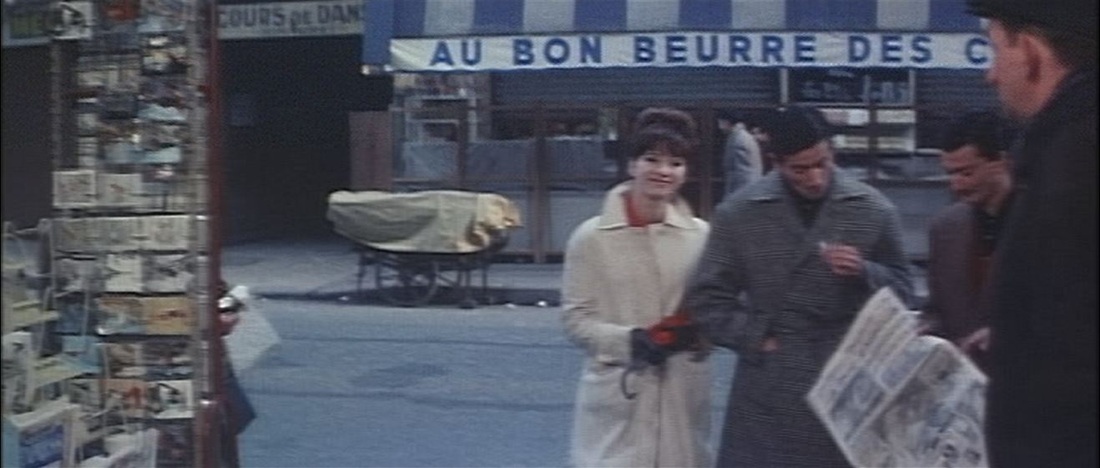
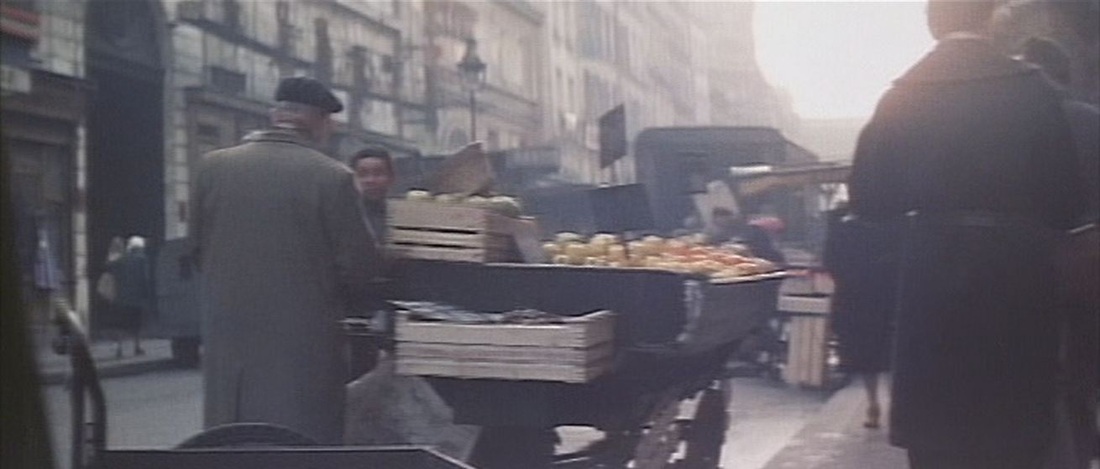
|
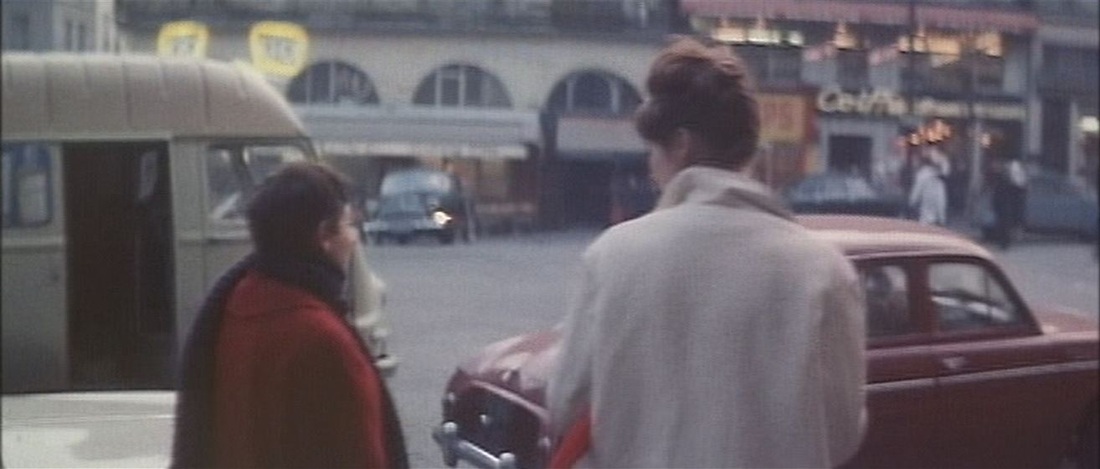
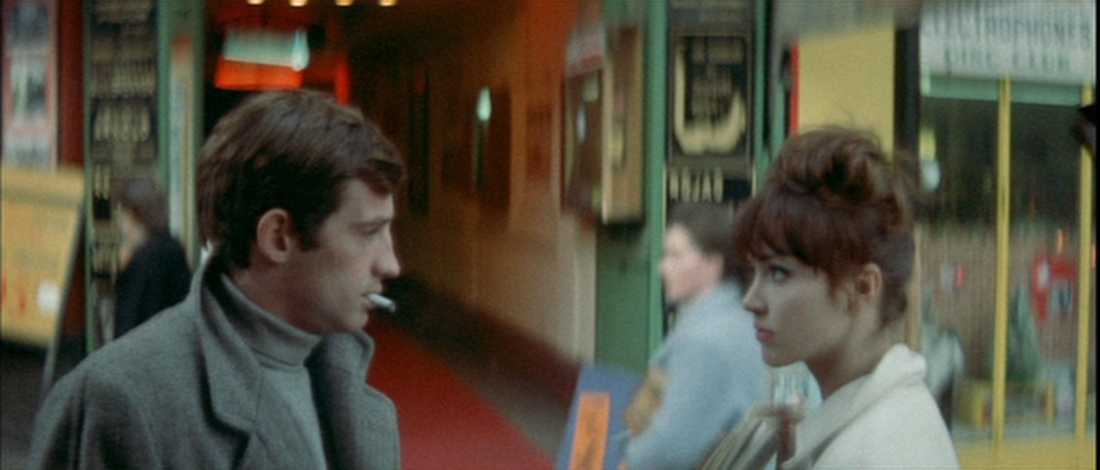
This montage ends at the junction of the rue du faubourg Saint Denis and the boulevard Bonne Nouvelle, where she meets Alfred outside Le Zodiac:
|
|
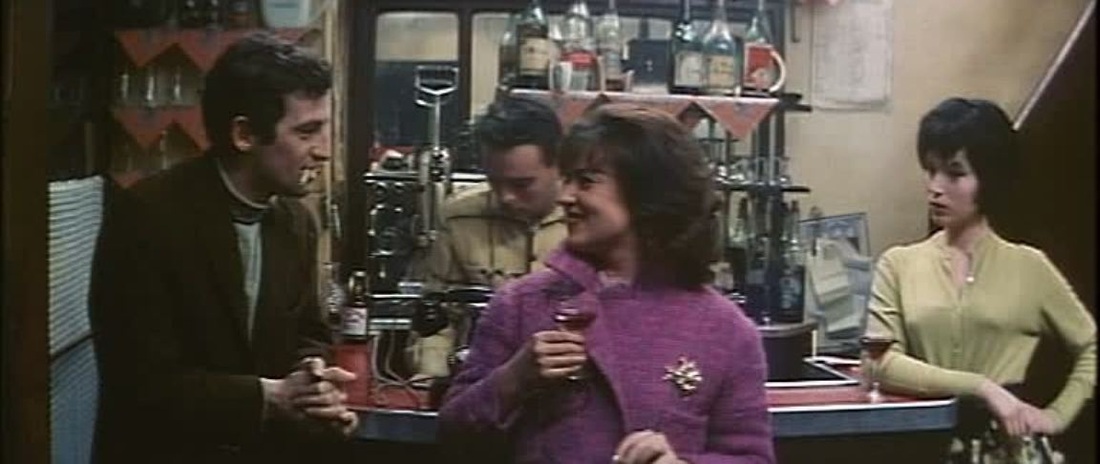
All of the other locations in the film are in this vicinity. 'Chez Marcel', a café in which Alfred meets first Jeanne Moreau and then Angela, is on the passage de l'Industrie, which runs into the rue du faubourg Saint Denis from the east:
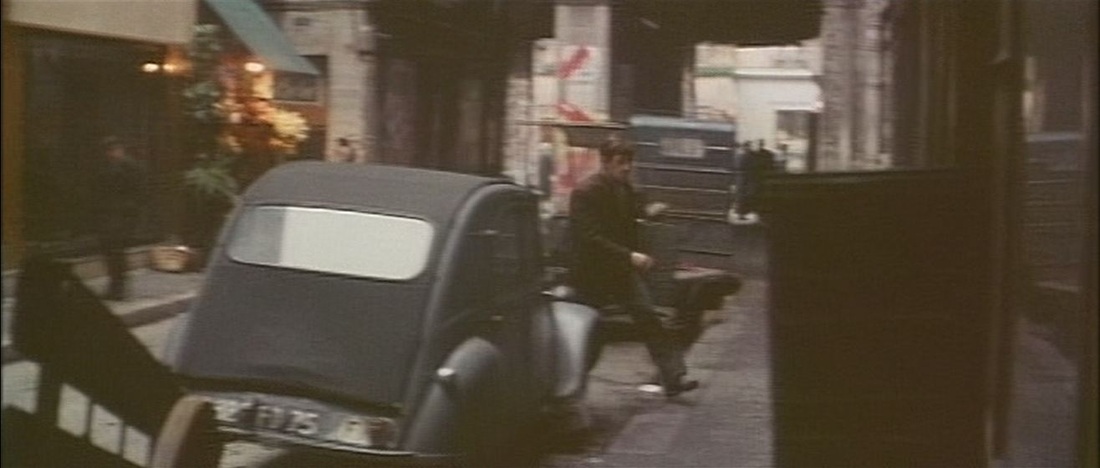
|
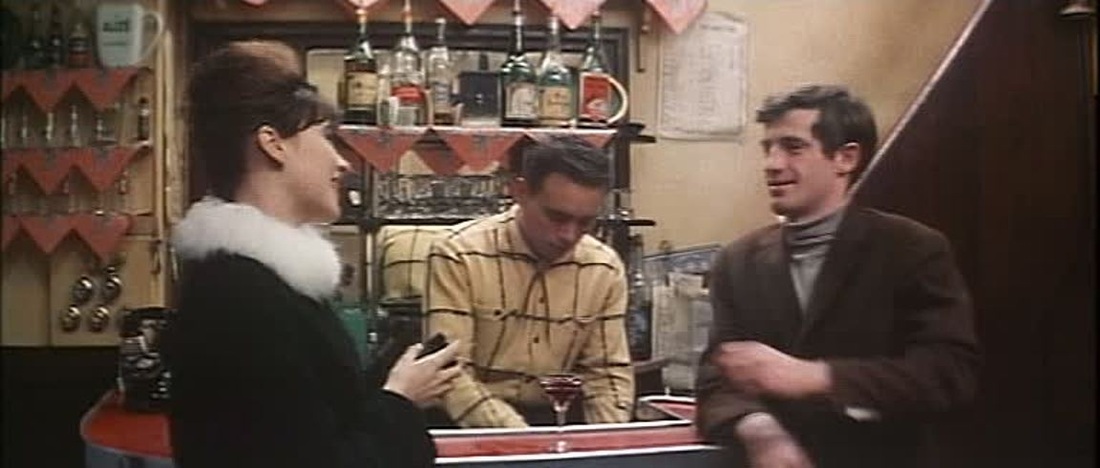
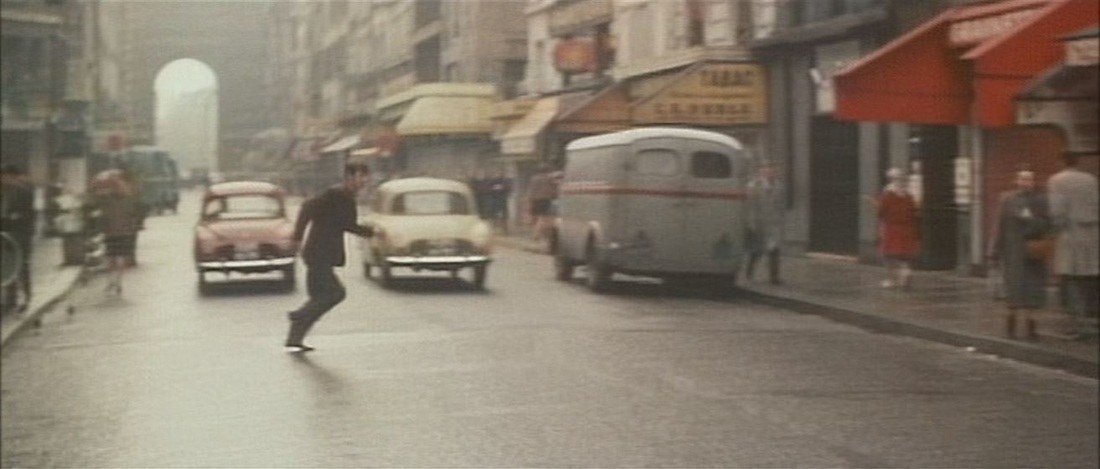
|
It is Chez Marcel that Alfred (played by Jean-Paul Belmondo) hopes to catch A bout de souffle on the tv.
When Emile stops passersby to ask if they will sleep with Angela, they are at the junction of the boulevard Saint Denis and the boulevard de Strasbourg, by Strasbourg-Saint Denis métro station:
When Emile stops passersby to ask if they will sleep with Angela, they are at the junction of the boulevard Saint Denis and the boulevard de Strasbourg, by Strasbourg-Saint Denis métro station:
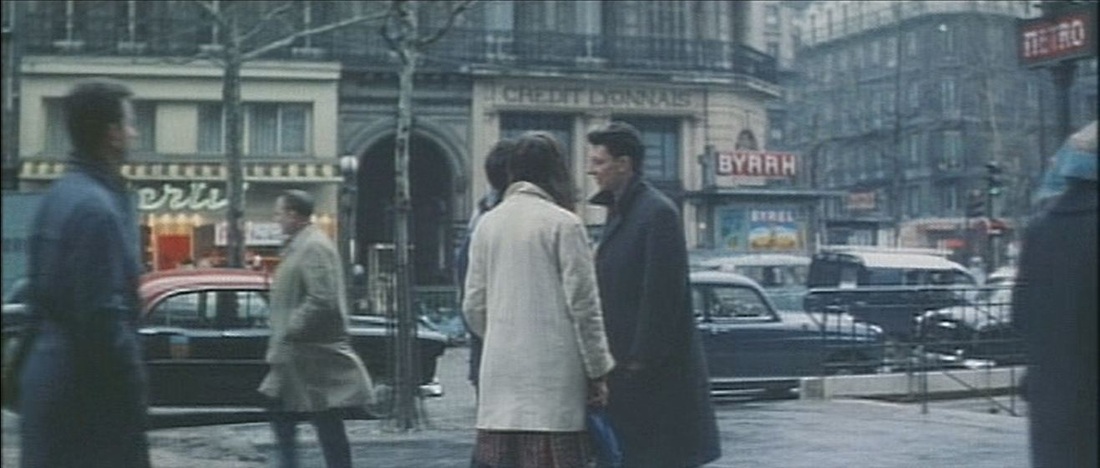
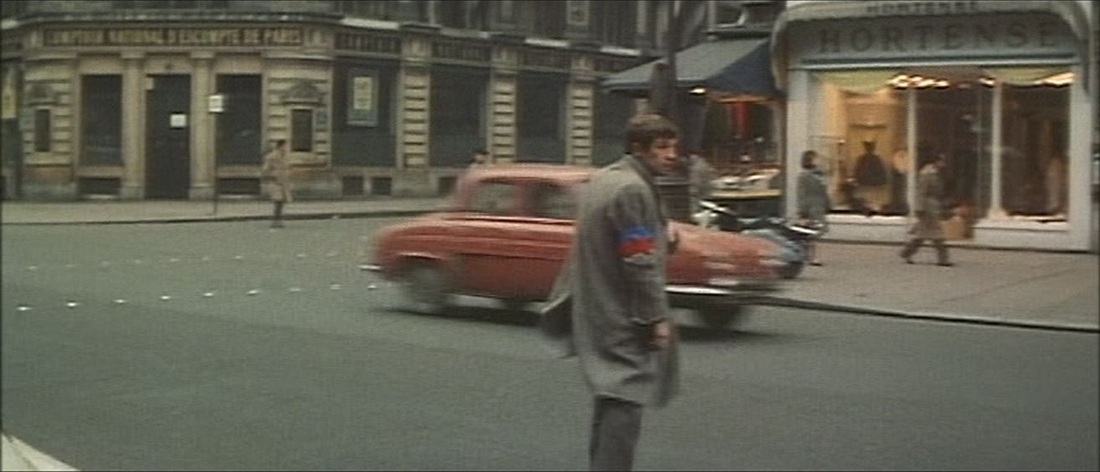
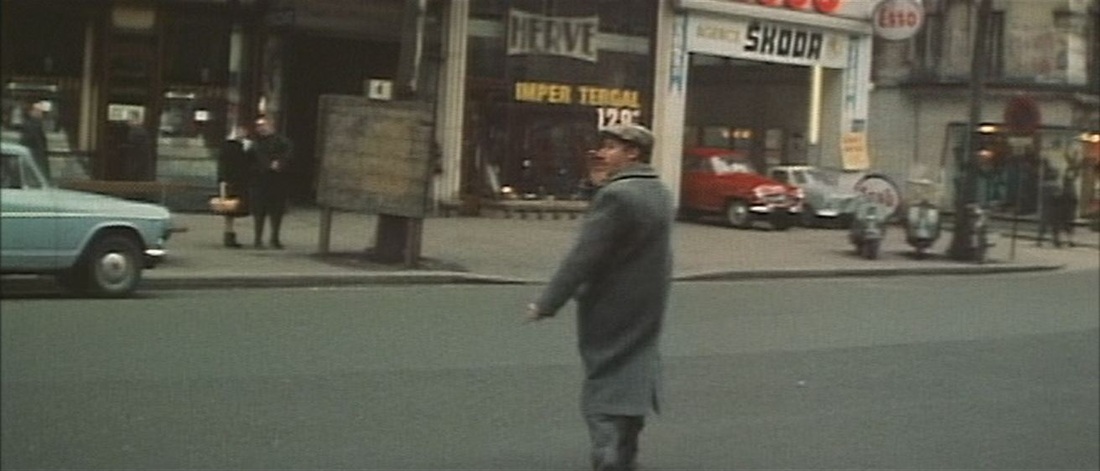
Alfred has an altercation with a man he owes money to at the junction of the boulevard de Strasbourg and the rue de Metz. This and Strasbourg-Saint Denis métro station are the film's most easterly locations:
|
|
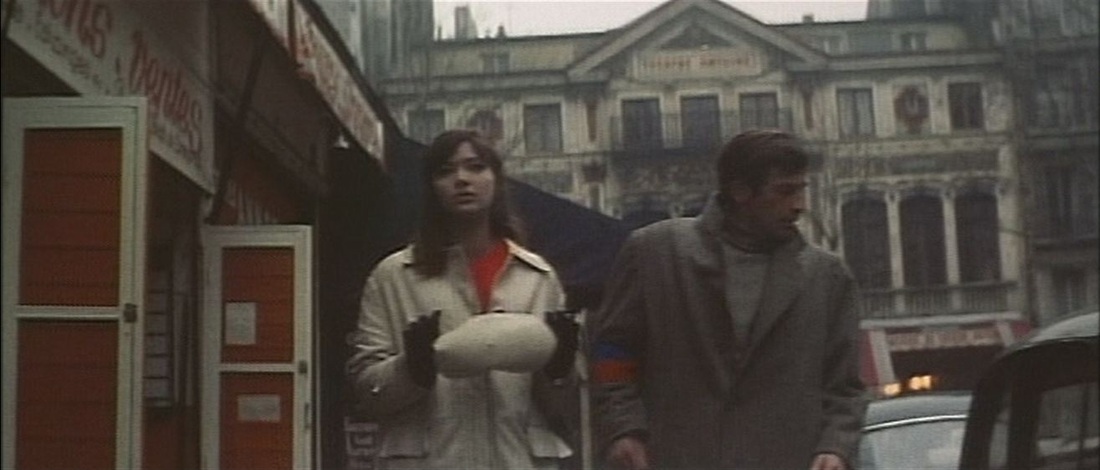
Alfred and Angela walk west along the rue de Metz. The Théàtre Antoine, on the boulevard de Strasbourg, is visible behind them:
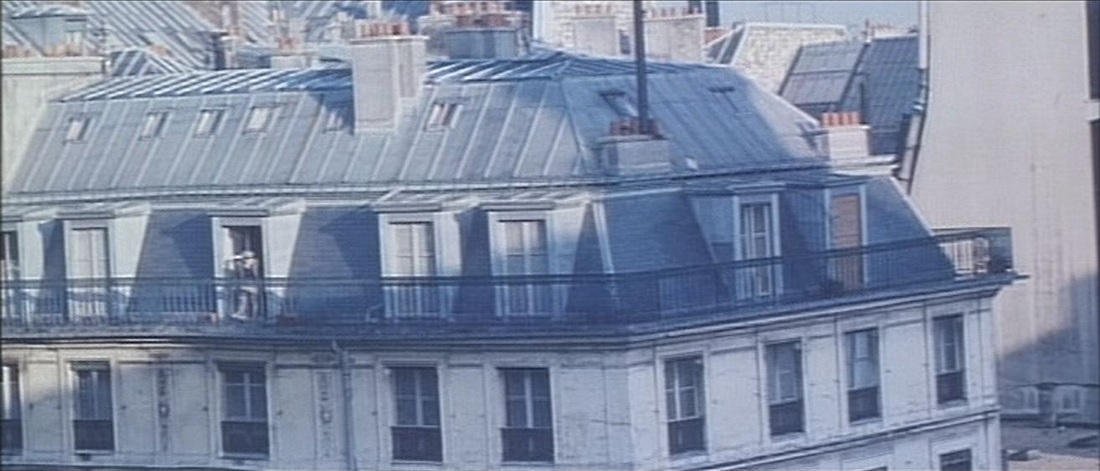
Alfred's apartment is on the sixth floor of a building west along the boulevard Bonne Nouvelle from Le Zodiac, where it meets the rue du faubourg Poissonnière:
The film's most southerly location is across the grands boulevards at 26 rue Sainte Foy, 2e. This is where Emile goes with a prostitute:
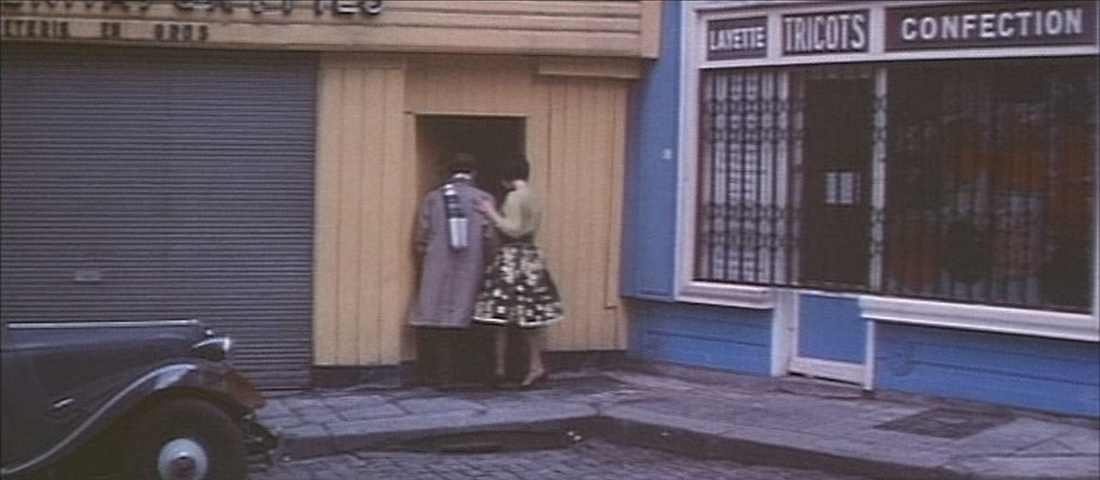
This same location is used four years later in Jean-Daniel Pollet's 'Rue Saint Denis' chapter of Paris vu par... (1965):
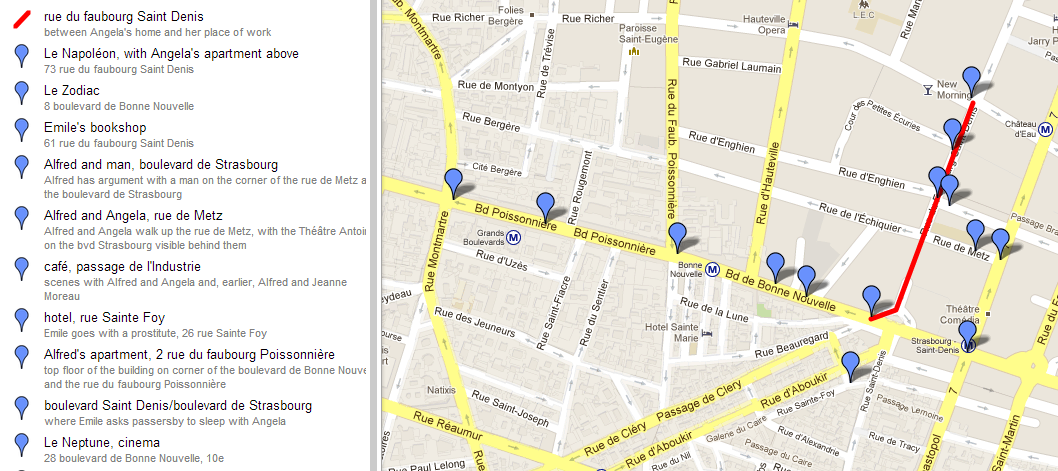
The territory corresponding to the locations of Une femme est une femme is small, about half a square kilometre:
Never going beyond this area's confines, Une femme est une femme is the most intensely localised of all French New Wave feature films. A few New Wave shorts, like Varda's L'Opéra-Mouffe, Douchet's Le Mannequin de Belleville and the films that make up Paris vu par..., are as strictly confined to one area.
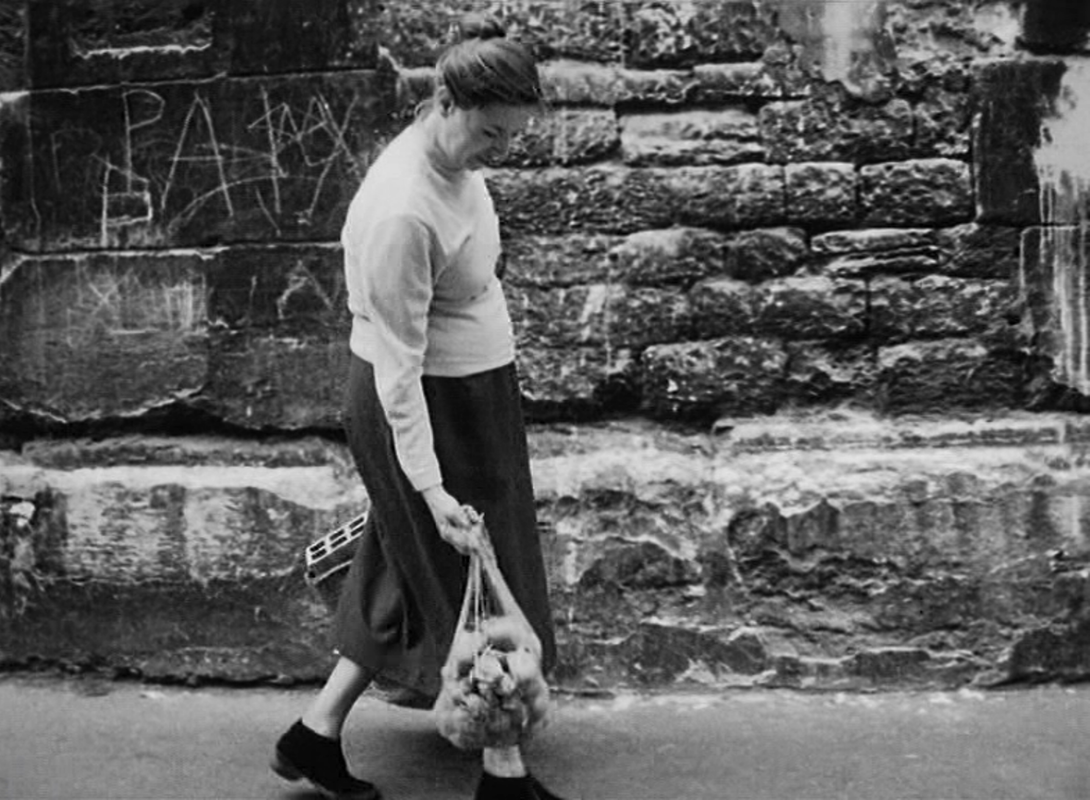
L'Opéra-Mouffe (Agnès Varda 1958): rue Mouffetard
|
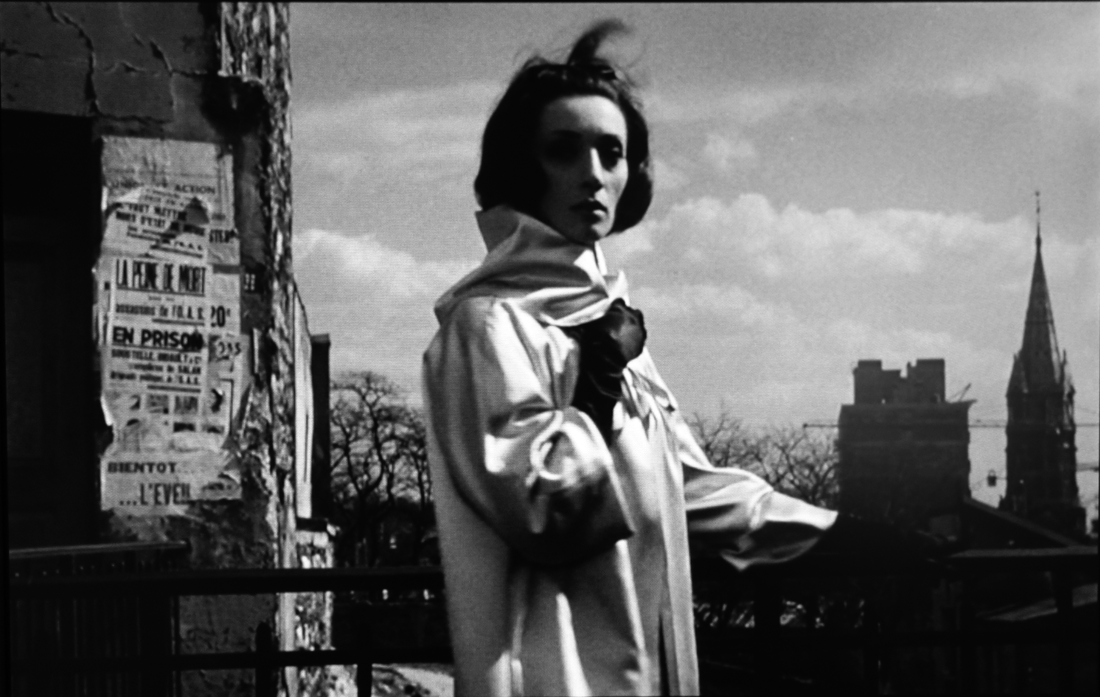
Le Mannequin de Belleville (Jean Douchet 1962): rue Piat
|
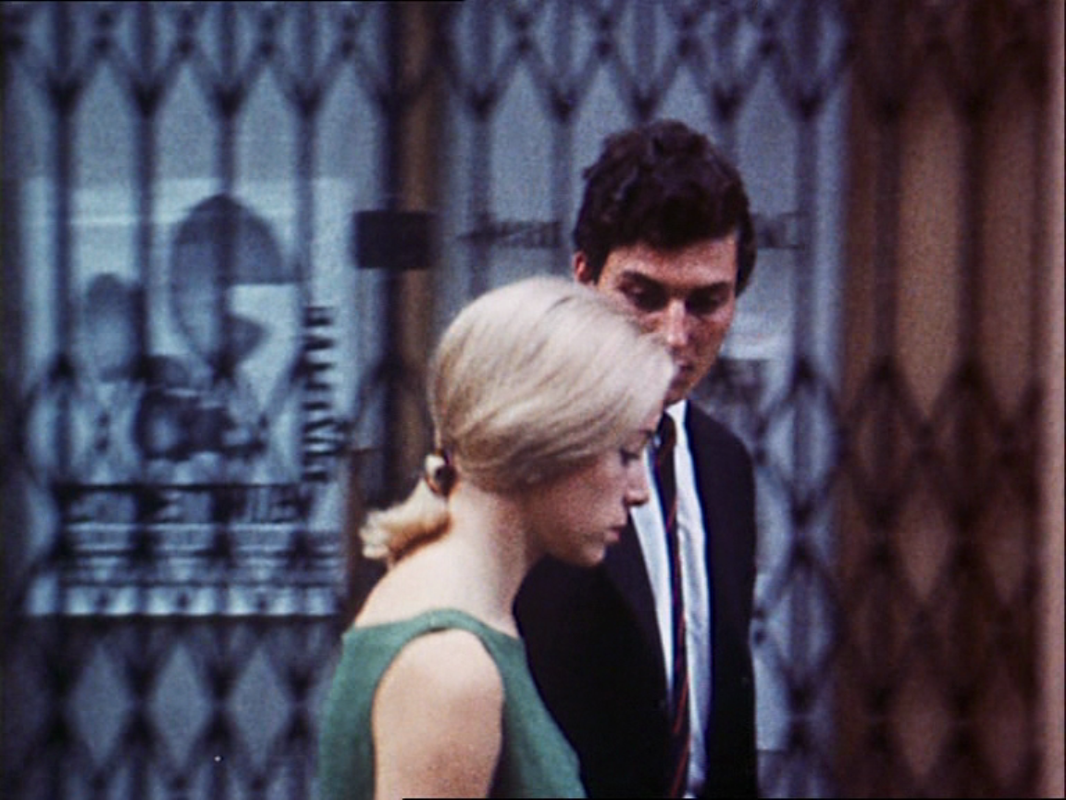
'St Germain des Près' (Jean Douchet 1965): rue de Seine
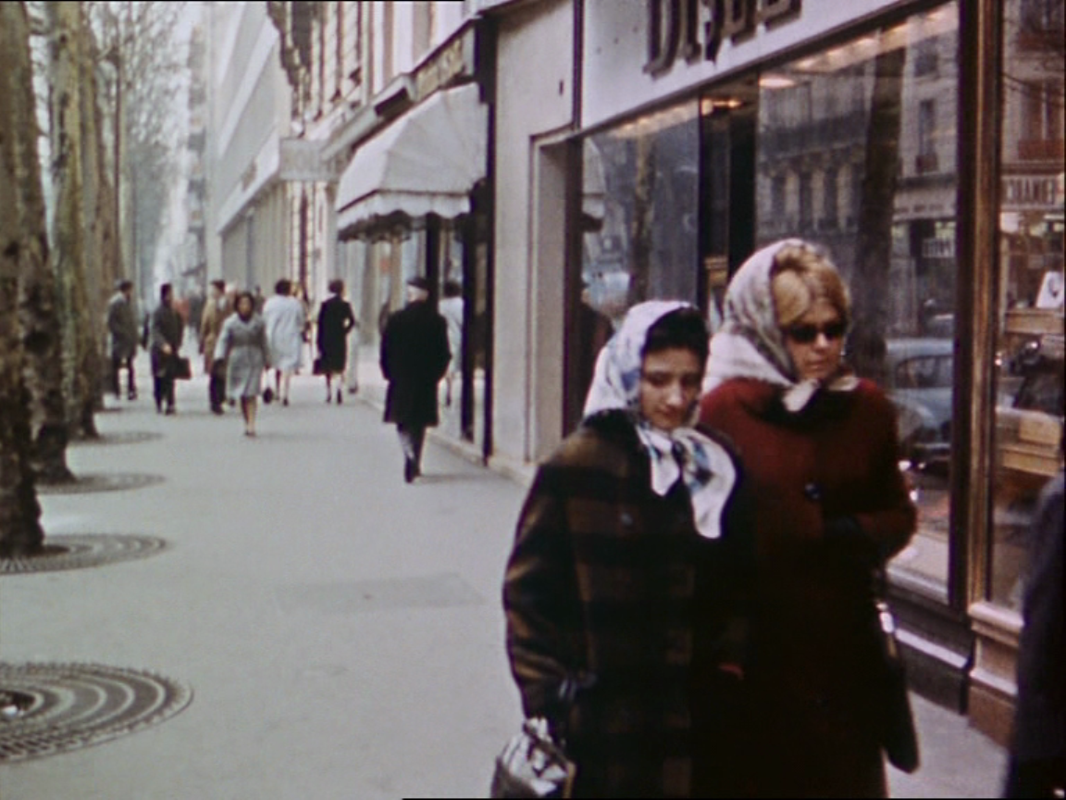
'Place de l'Etoile' (Eric Rohmer 1965): avenue Victor Hugo
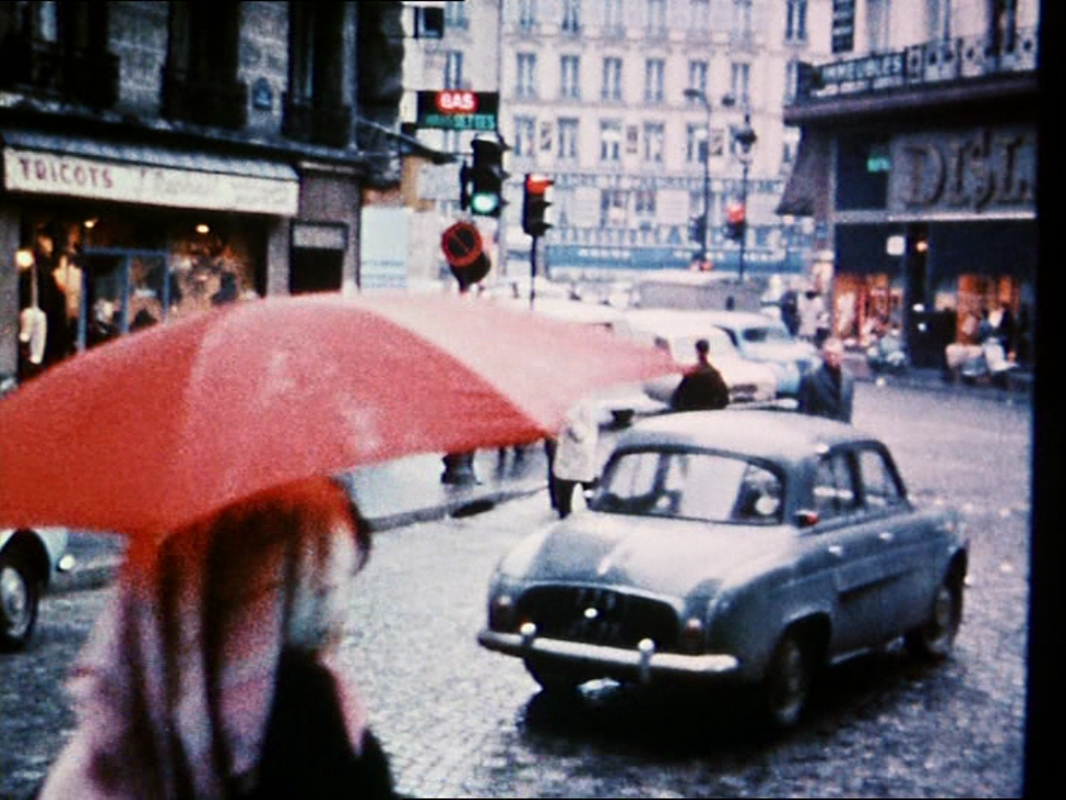
'Rue Saint Denis' (Jean-Daniel Pollet 1965): rue Saint Denis
|
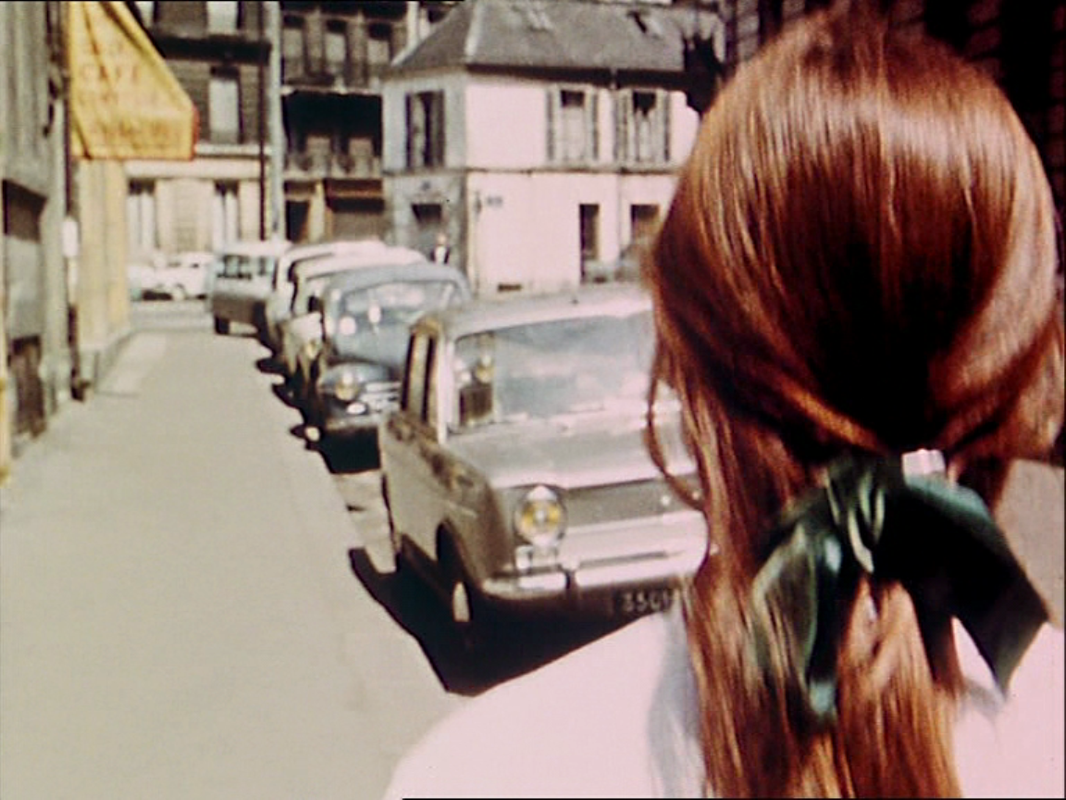
'Gare du nord' (Jean Rouch 1965): rue d'Alsace
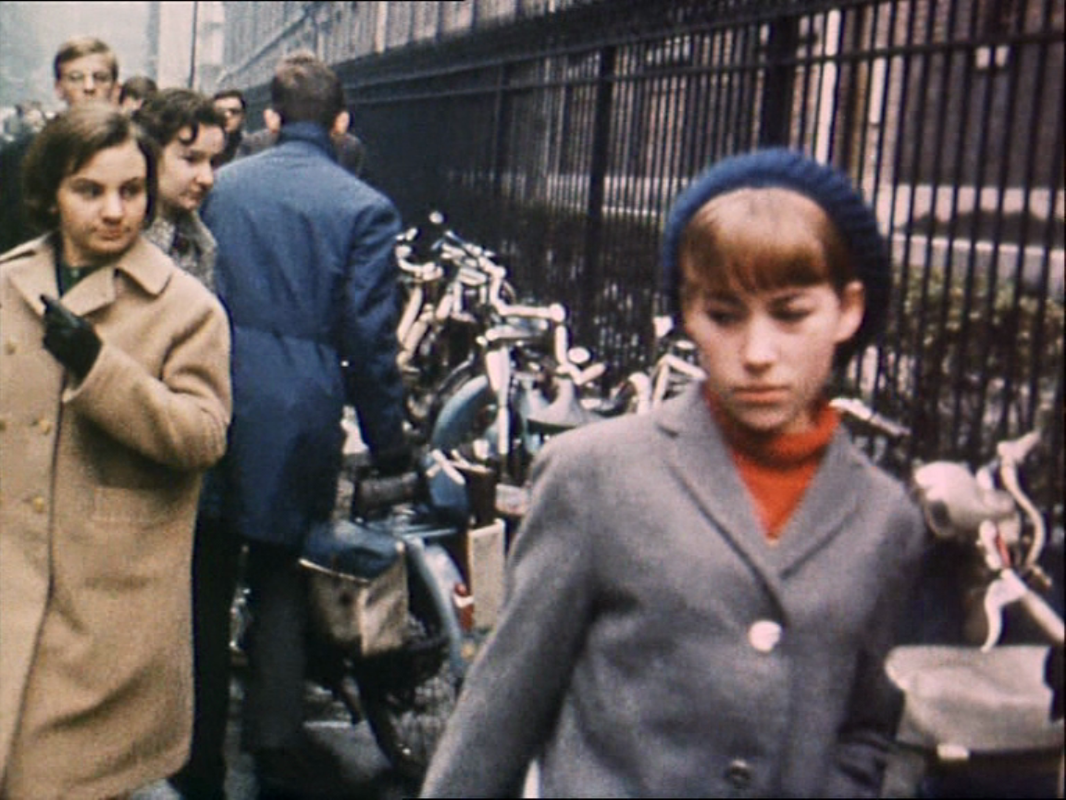
'La Muette' (Claude Chabrol 1965): rue de Longchamp
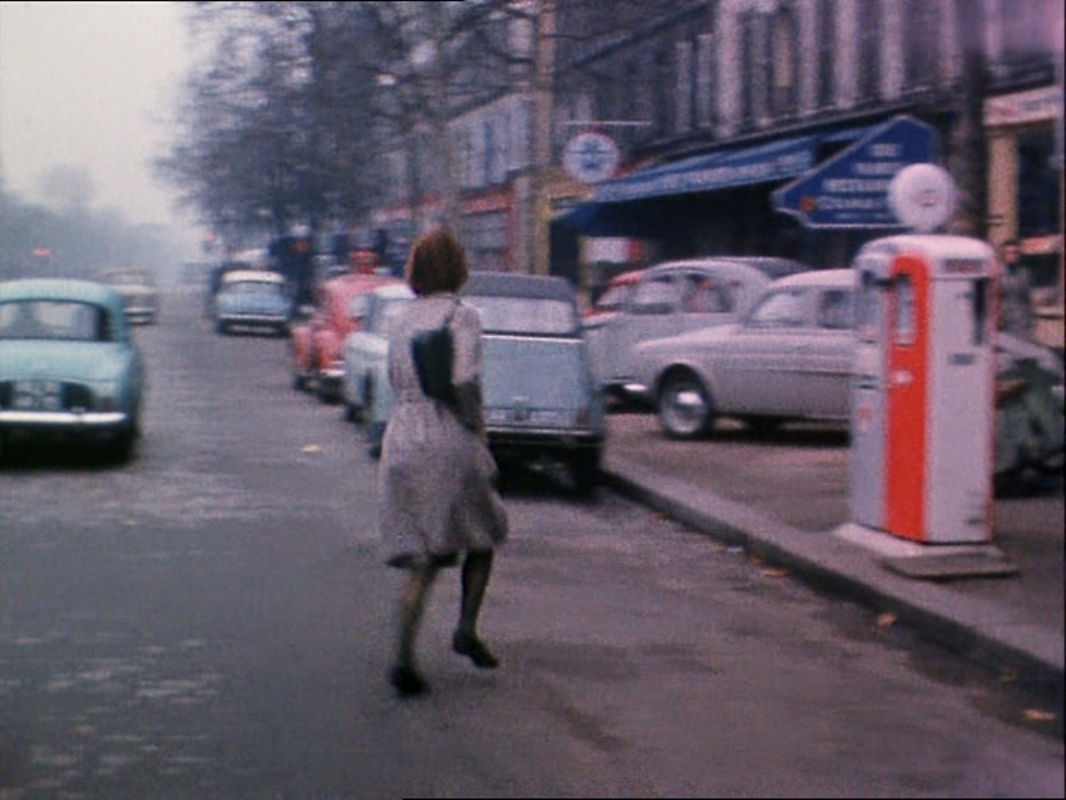
'Montparnasse-Levallois' (Jean-Luc Godard 1965): boulevard Bineau
|
The New Wave features that are identified with particular districts all allow themselves the odd excursion into other districts, or even out of Paris. Rohmer's Le Signe du lion (1959) is centred on the quartier latin but goes to Les Halles, the place de l'Opéra, Pigalle, the Champs Elysées and on to Neuilly (see here for details):
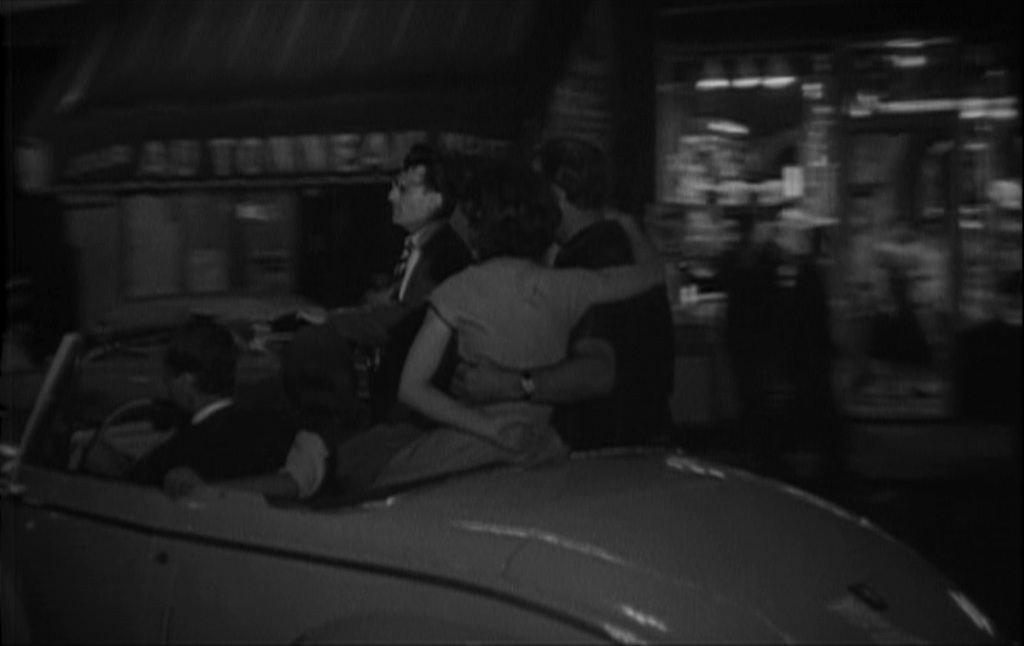
place Pigalle
|
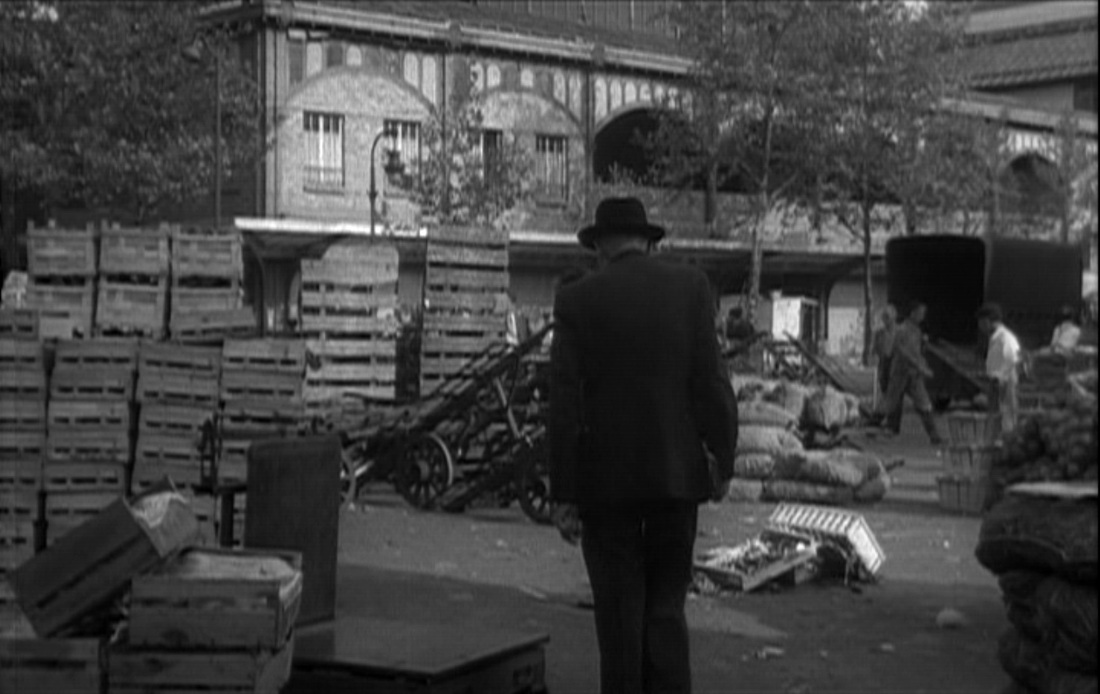
Les Halles
|
Truffaut's Les 400 coups (1959) spends most of its time in the 9e arrondissement, but also goes west into the 8e, 16e and 17e, and even across the river into the 7e and 15e (see here for details).
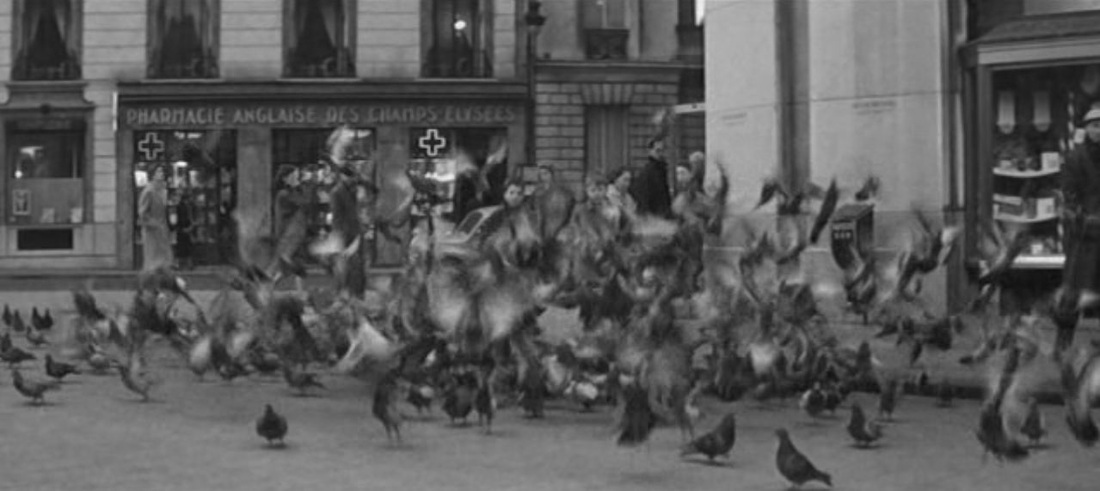
Champs Elysées
|
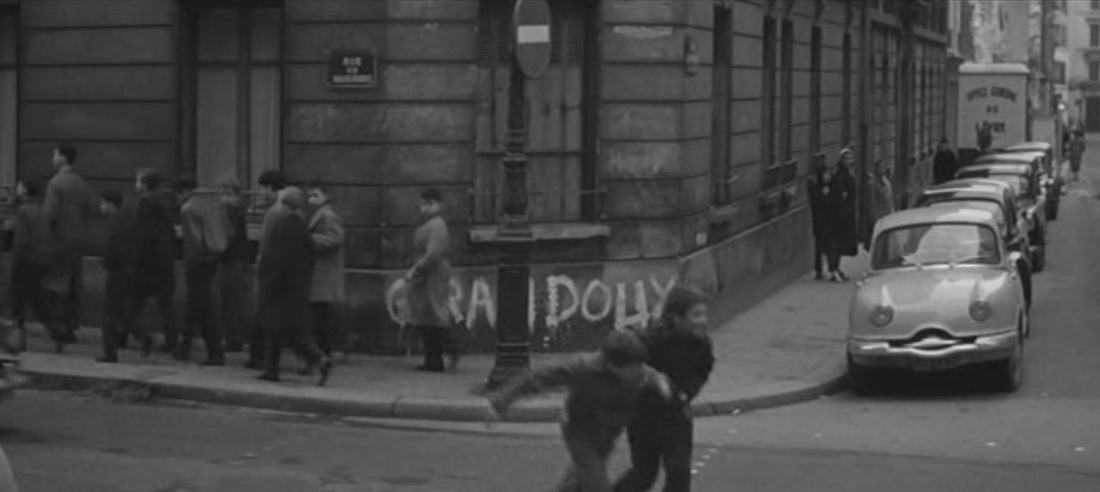
rue de Vaugirard
|
De Broca's Les Jeux de l'amour (1960), a film made from the same scenario used by Godard for Une femme est un femme, is, like Godard's film, intensely localised around the district in which the protagonists live and work - in this case the Montagne Sainte Geneviève, in the 5e. But, unlike Godard, De Broca takes his characters out and about in Paris, into the banlieue and and even to the countryside for a picnic:
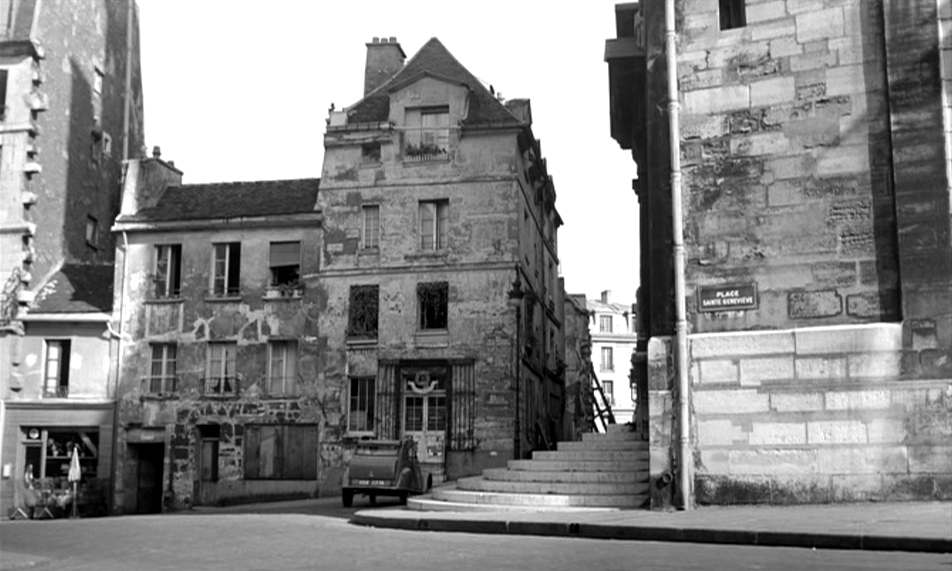
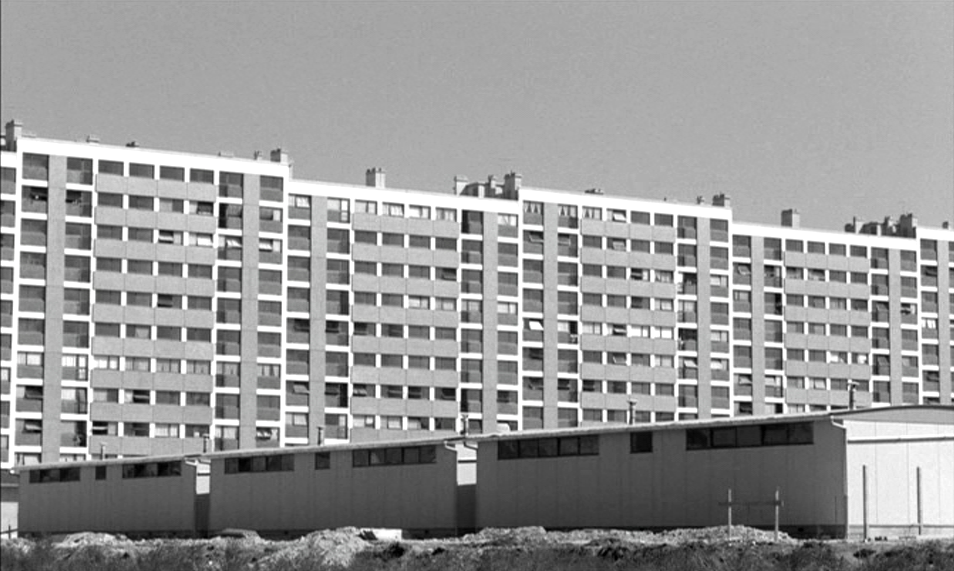
|
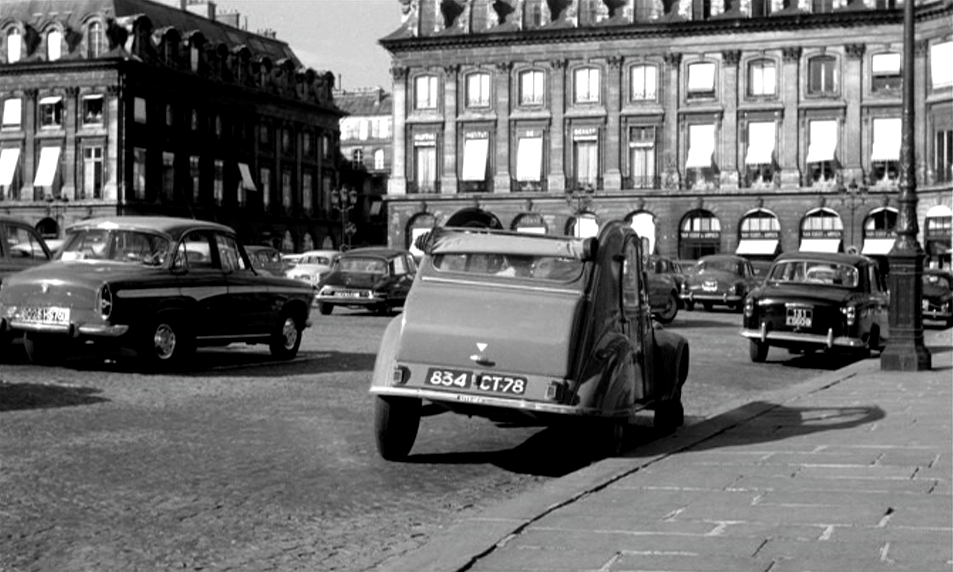
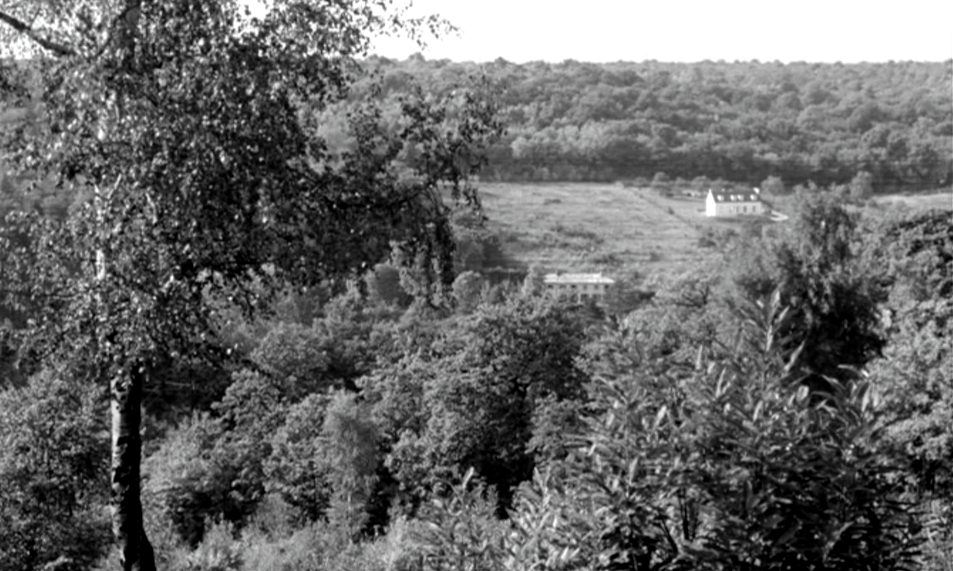
|
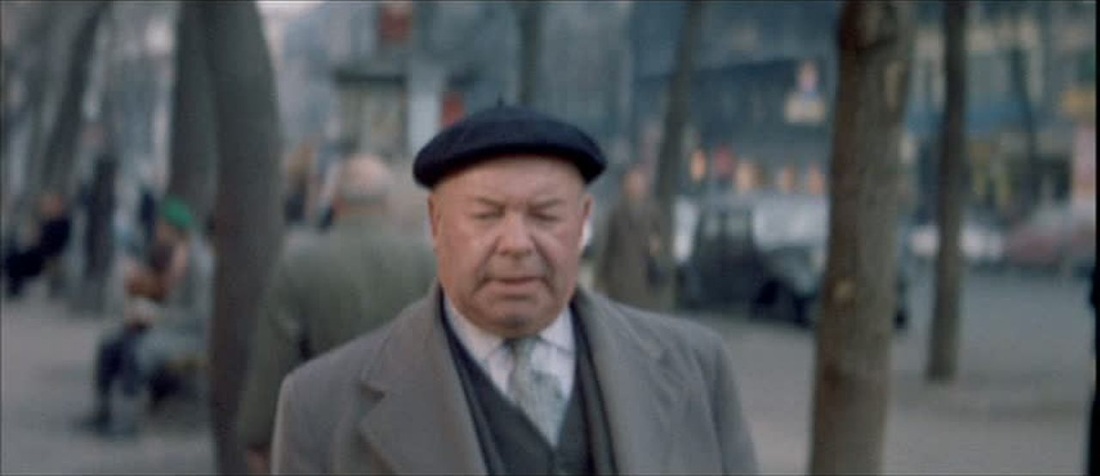
In Une femme est une femme the localisation of action around the Porte Saint Denis is further intensified by a sequence in which a conversation between Angela and her friend Suzanne is accompanied by a montage of thirty one documentary views, all (I think) taken on the rue du faubourg Saint Denis or the boulevards Bonne Nouvelle and Poissonnière.
These street-level shots of passersby are interrupted three times, once by a view upwards towards Angela's apartment windows, once by a view down onto her workplace and once by a slightly angled, downward view of the Porte Saint Denis (to each side of which is a shot of Angela talking with Suzanne).
I have not managed to identify the locations of all thirty one street level views, so my claim that these are all local is only a guess. Here are some locations I am sure of.
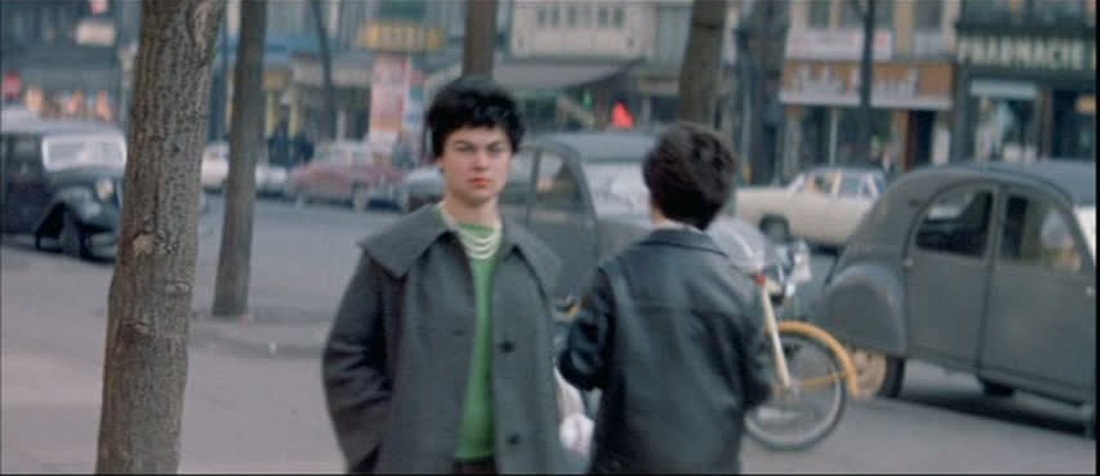
Just behind these two women we can see where the pavement on the boulevard Bonne Nouvelle starts to rise, requiring steps up from the street. This puts them across from no. 7 boulevard Bonne Nouvelle:
These street-level shots of passersby are interrupted three times, once by a view upwards towards Angela's apartment windows, once by a view down onto her workplace and once by a slightly angled, downward view of the Porte Saint Denis (to each side of which is a shot of Angela talking with Suzanne).
I have not managed to identify the locations of all thirty one street level views, so my claim that these are all local is only a guess. Here are some locations I am sure of.
Just behind these two women we can see where the pavement on the boulevard Bonne Nouvelle starts to rise, requiring steps up from the street. This puts them across from no. 7 boulevard Bonne Nouvelle:
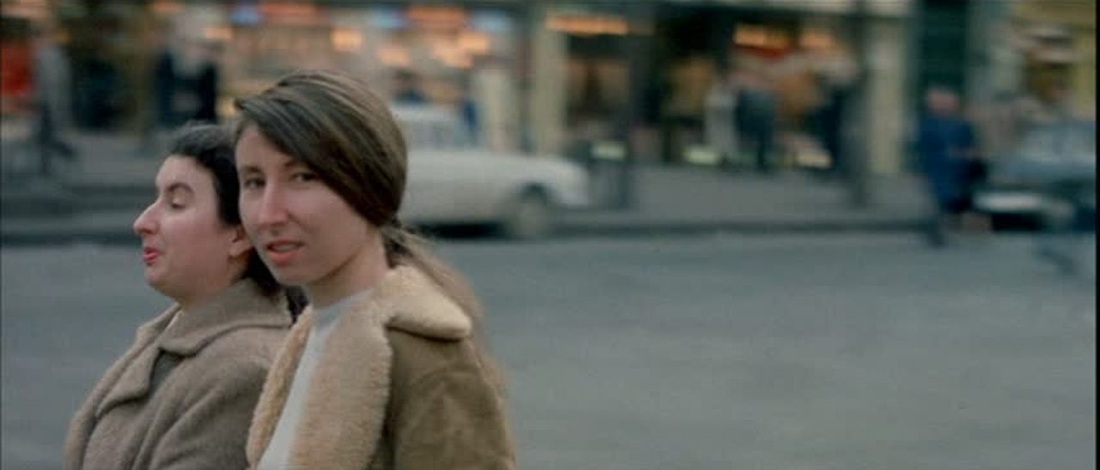
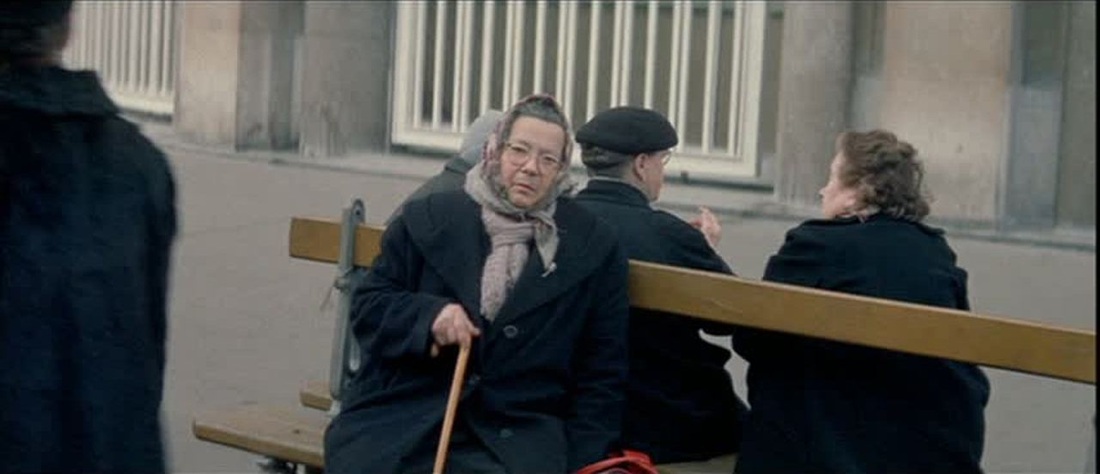
Below are two shots of the same tree, on the same boulevard. We are across the road from the Pharmacie du Globe, 19 boulevard Bonne Nouvelle, which can just be seen at the right hand edge of the image to the right:
|
|
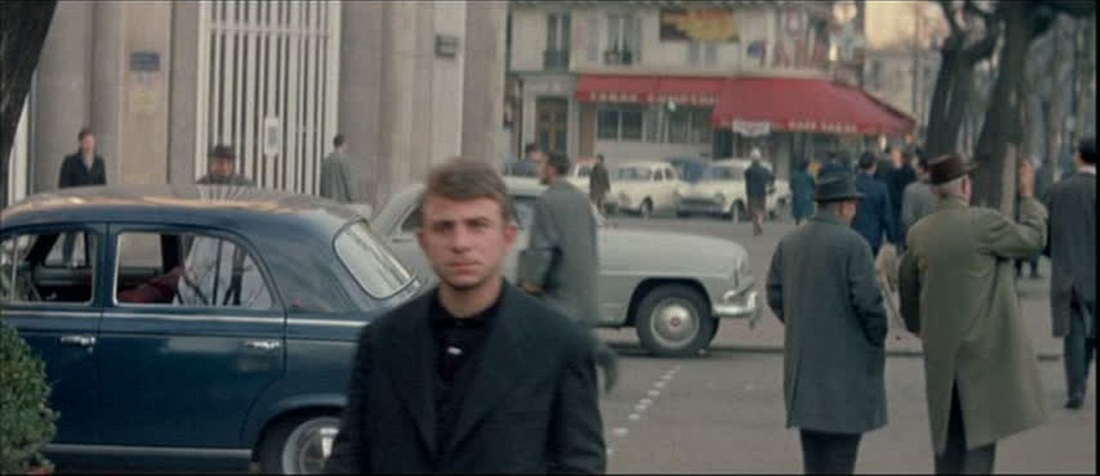
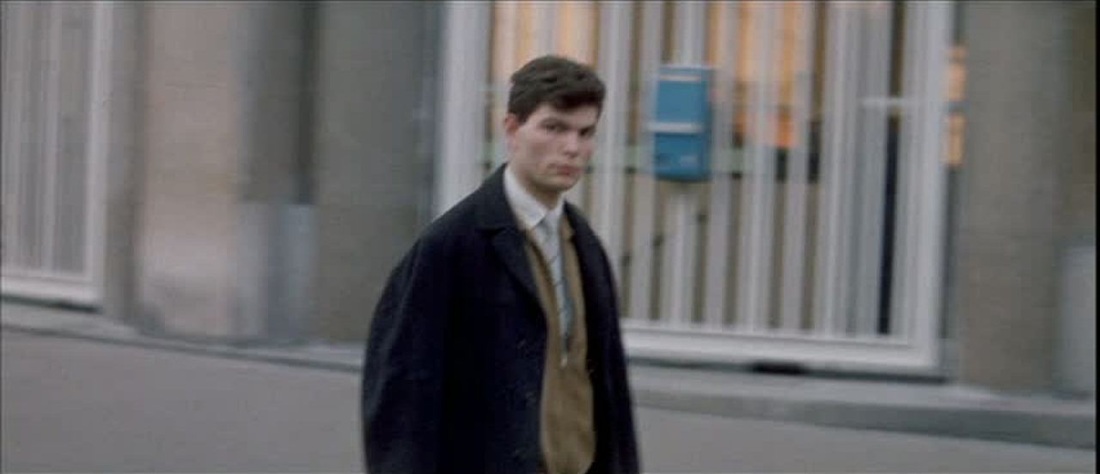
The camera is just in front of the bureau des PTT (post office) at 18 boulevard Bonne Nouvelle. Four shots in the sequence show this office building. Built in 1953 (architects Gutton & Bukiet - see here), it is the only modern architecture on view in the film:
|
|
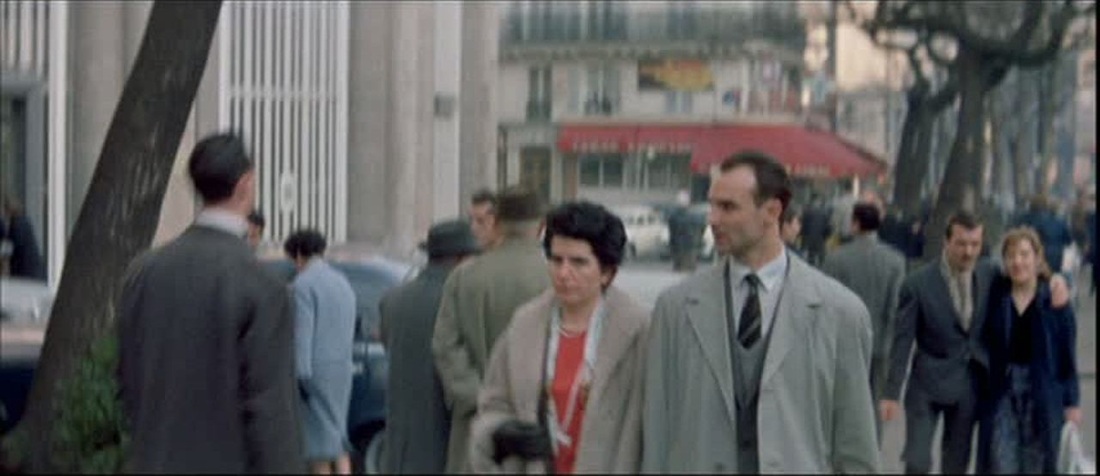
This shows the café Au Bouquet, the next building along, at no. 24:
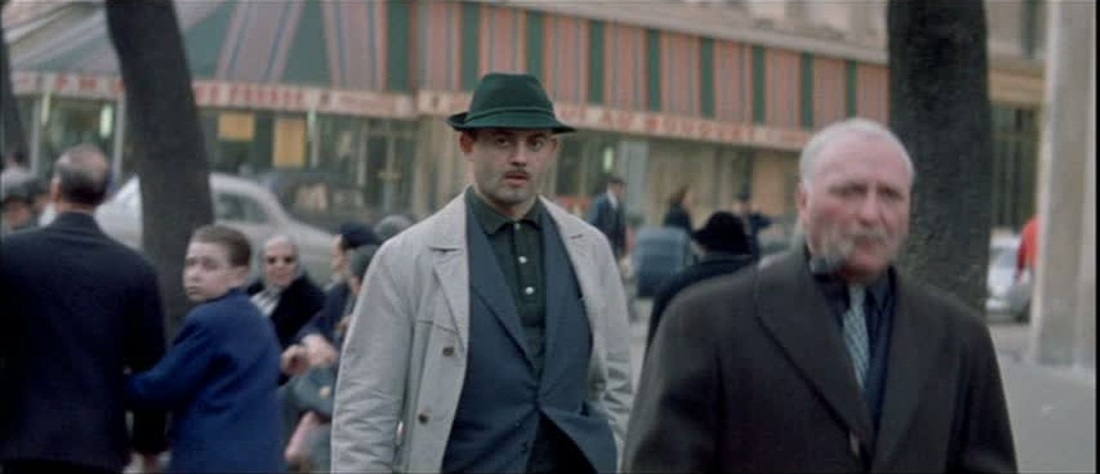
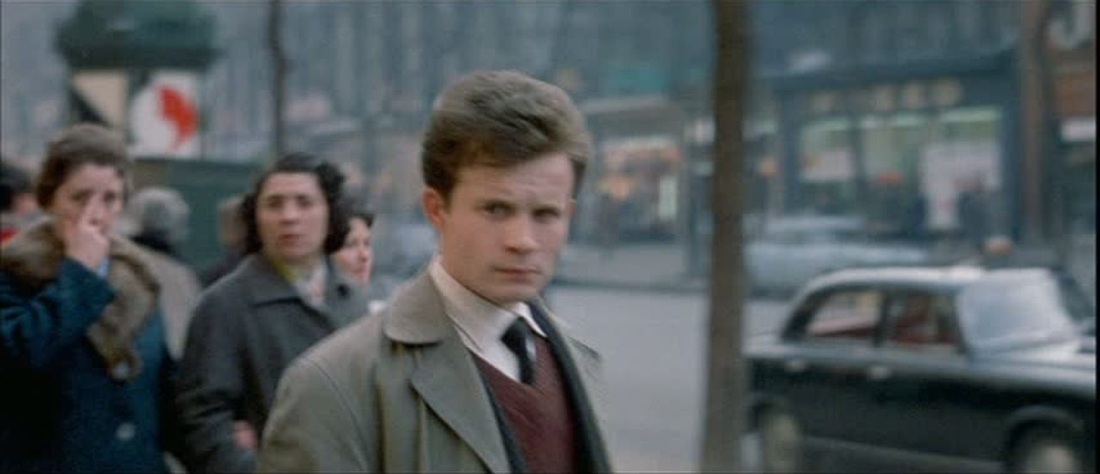
Here are two views of the boulevard Poissonniere (the shop sign beginning with a 'J' is Joé Joé, at no.19):
|
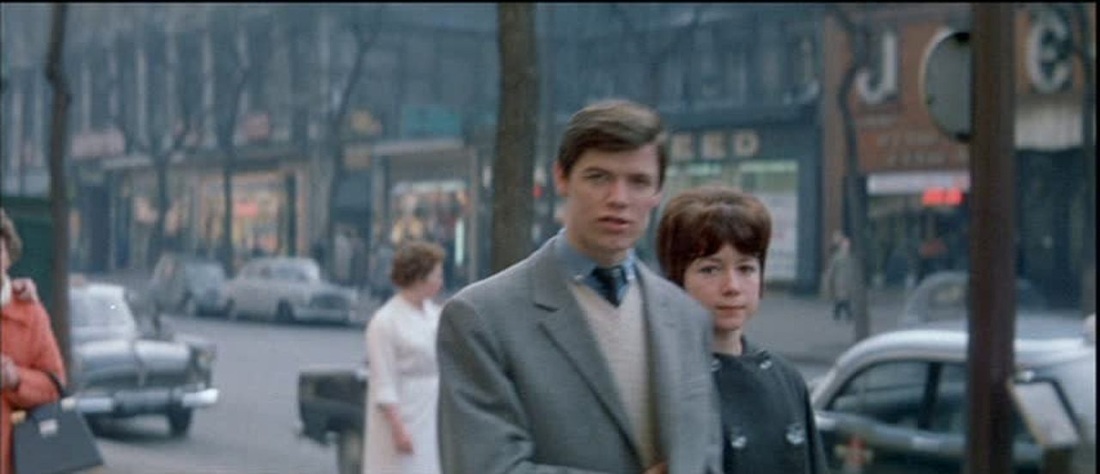
|
This (the film's most westerly location) is an exit from Rue Montmartre métro station (now 'Grands Boulevards'), on the boulevard Poissonnière, opposite the junction with the rue Montmartre:
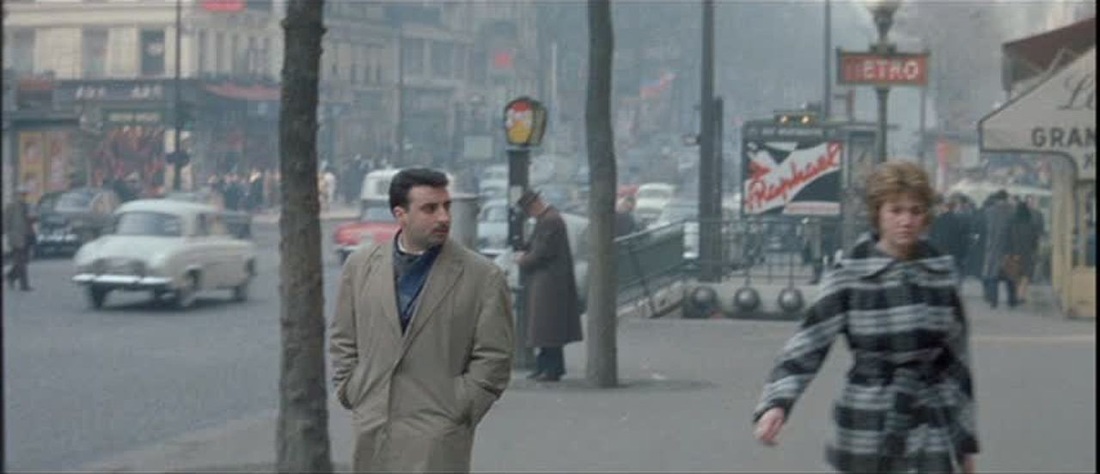
This, I think, is the corner of the Boulevard Poissonnière and the rue Rougemont:
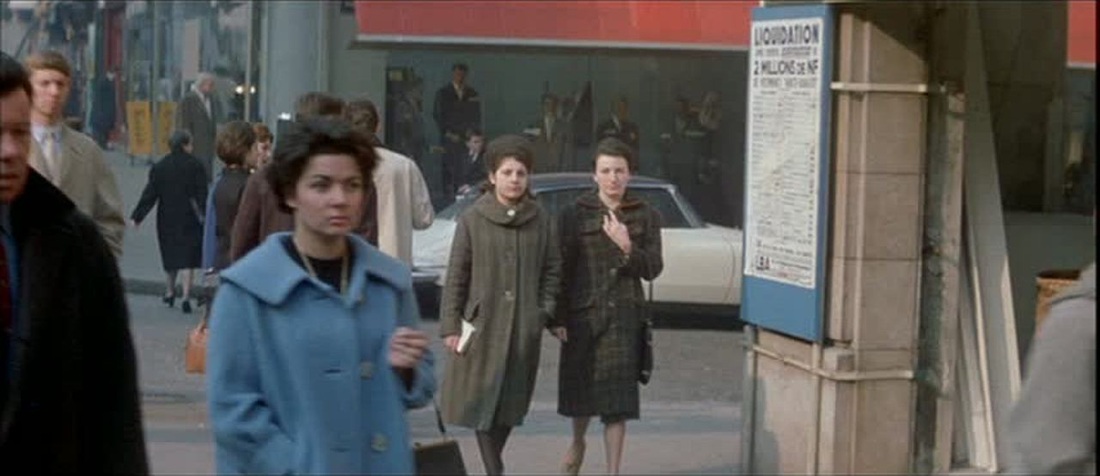
Here are four shots of the same carrot stall:
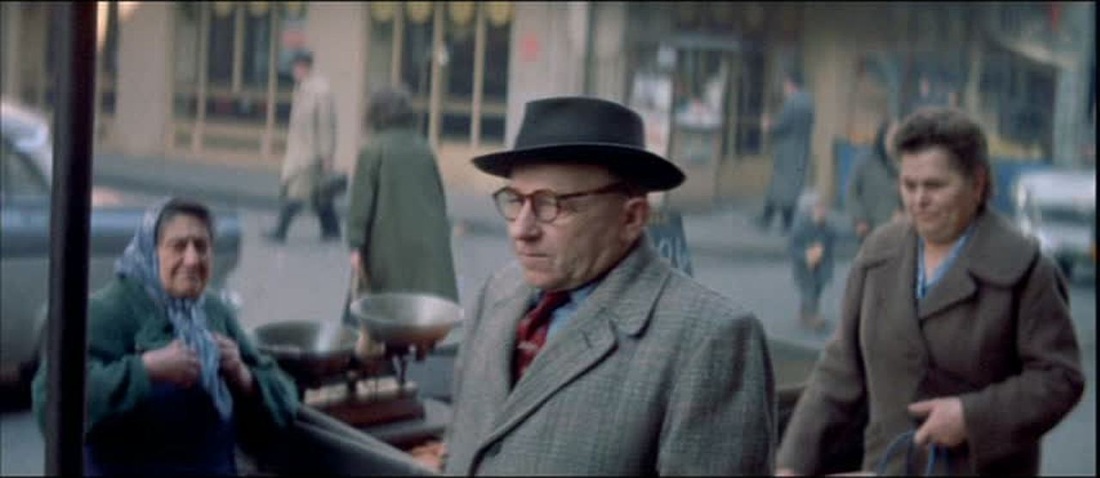
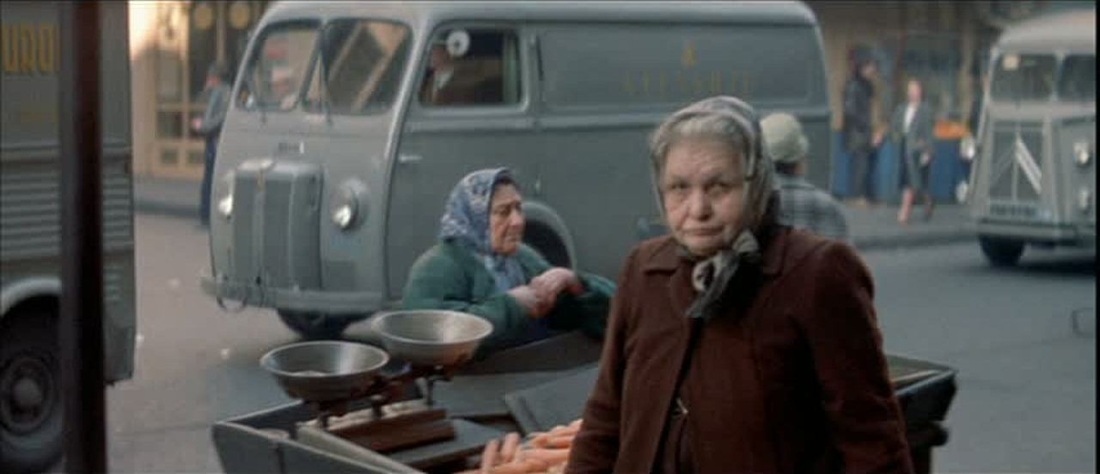
|
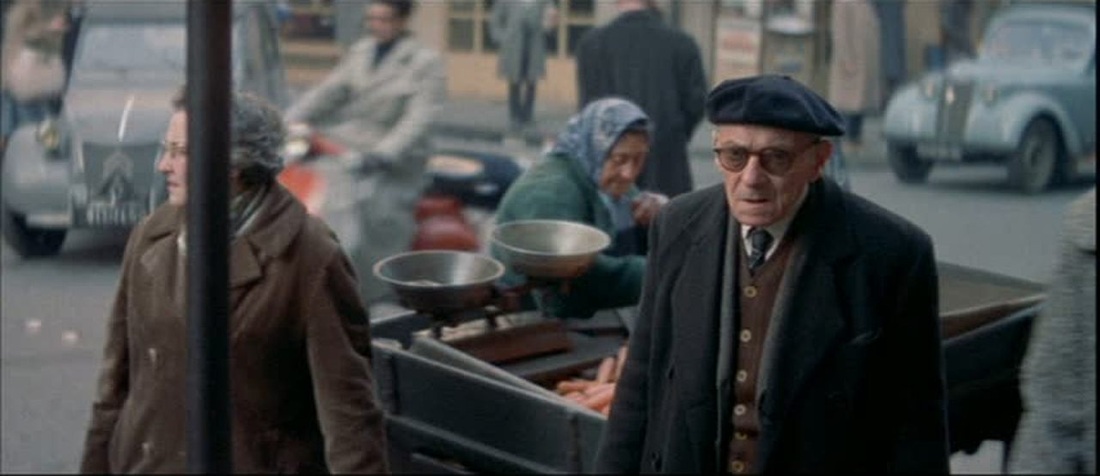
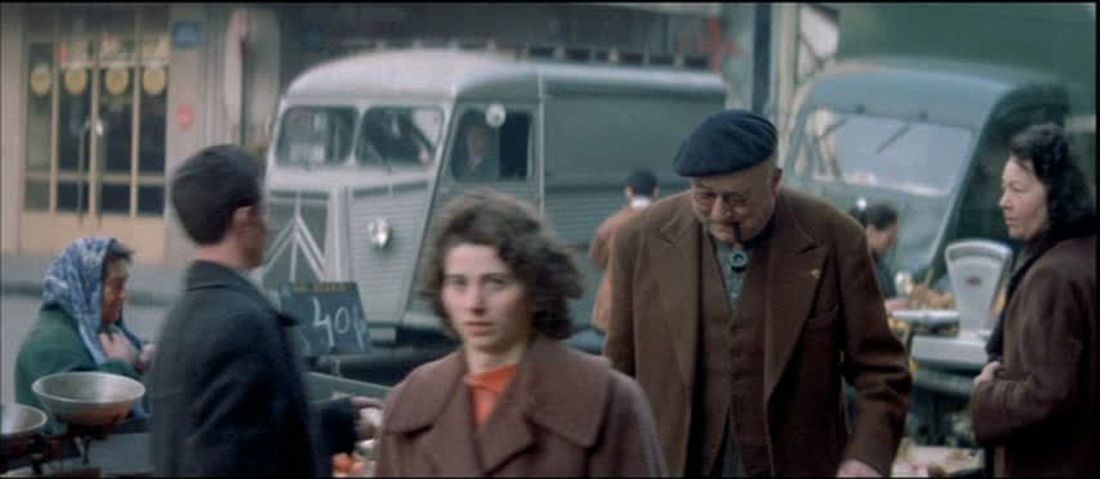
|
This is a view from a similar position, without the carrot seller:
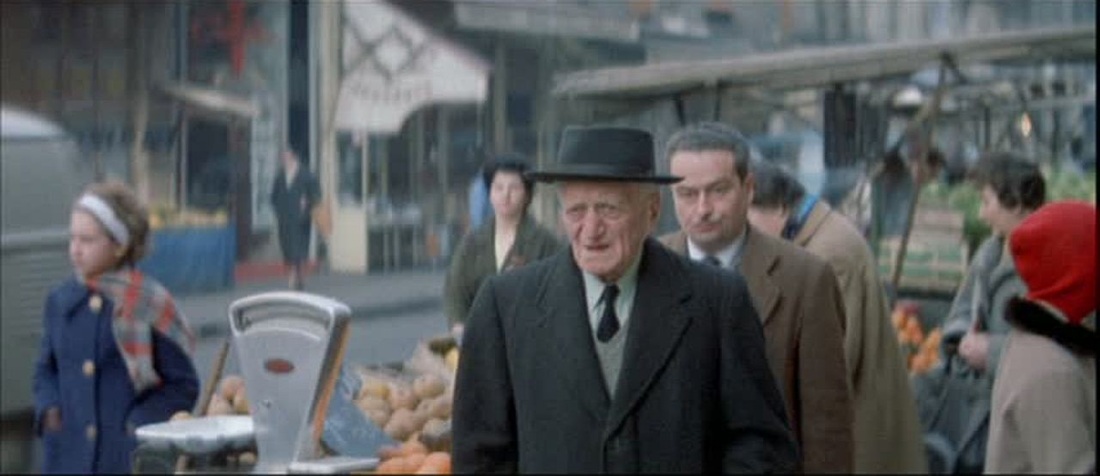
These five shots are taken on the rue du faubourg Saint Denis, near the corner with the rue d'Enghien. Inserted into the sequence of anonymous passersby is a shot of Angela and Suzanne, at this same location:
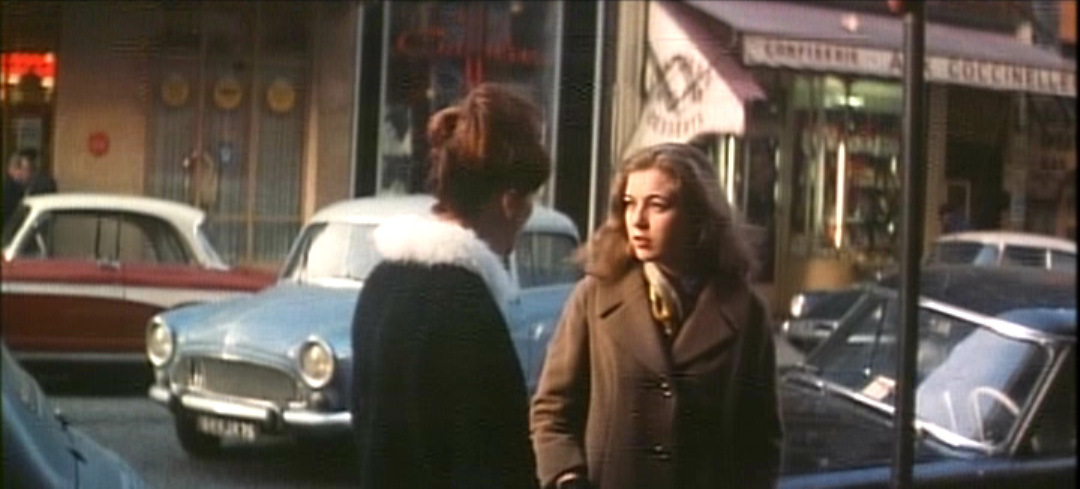
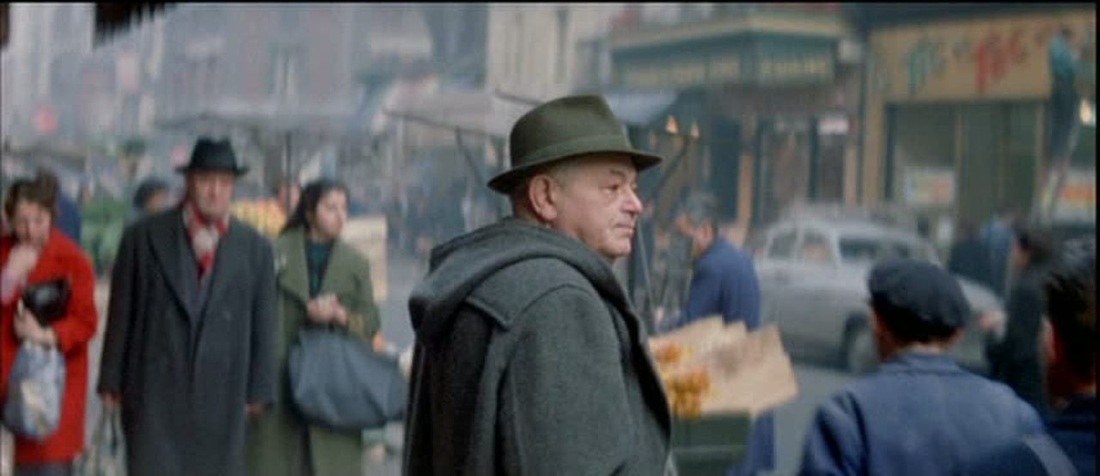
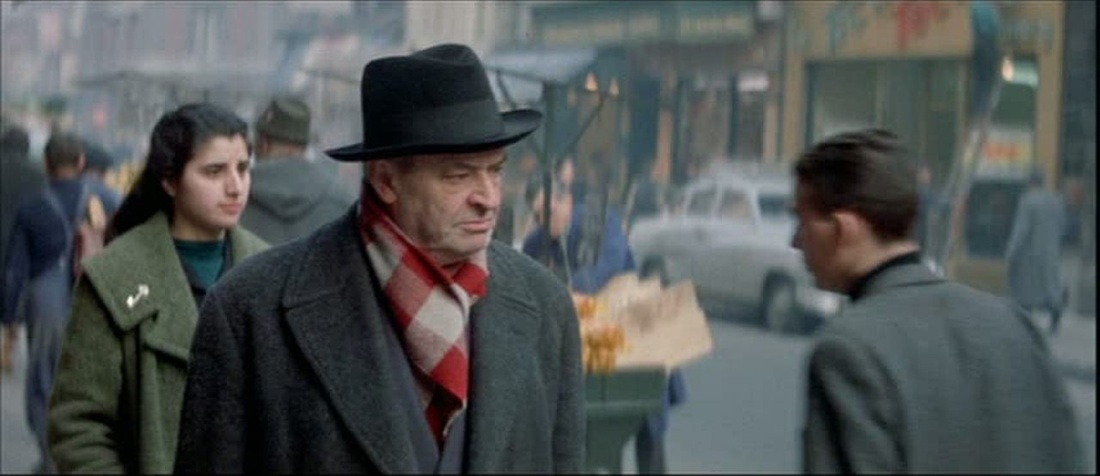
The remaining locations in this sequence still need identifying. Several can be grouped together, as here, where the sixteenth and fourth shots of the thirty one are of the same place, from the same place, and of the same people. The building in the distance to the left looks like the school on the corner of the rue du faubourg Saint Denis and the rue de Metz:
|
|
And it looks like this man is standing in front of the shop across the street with the green canopy:
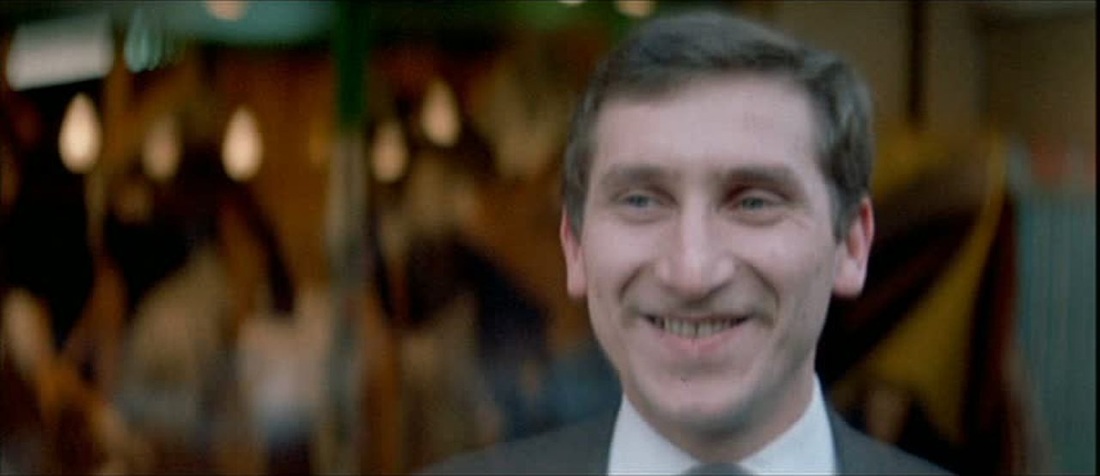
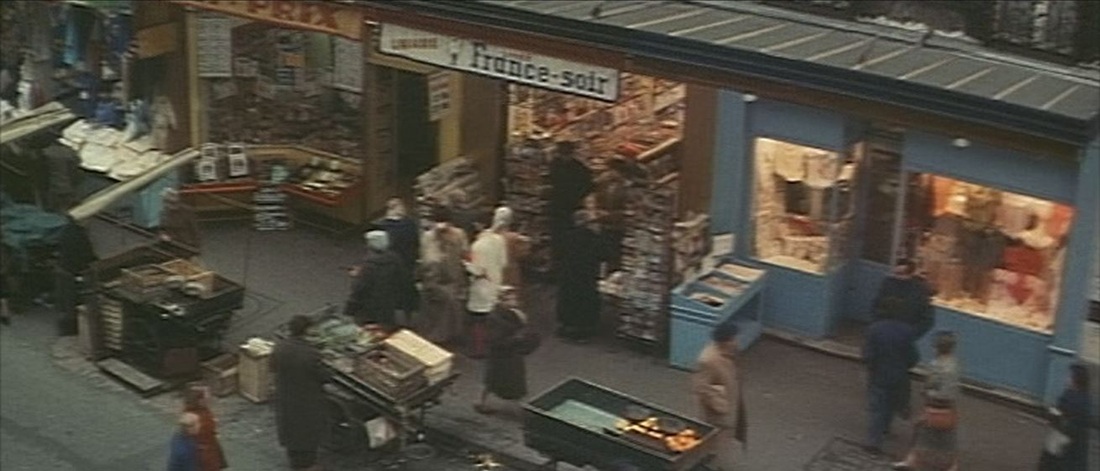
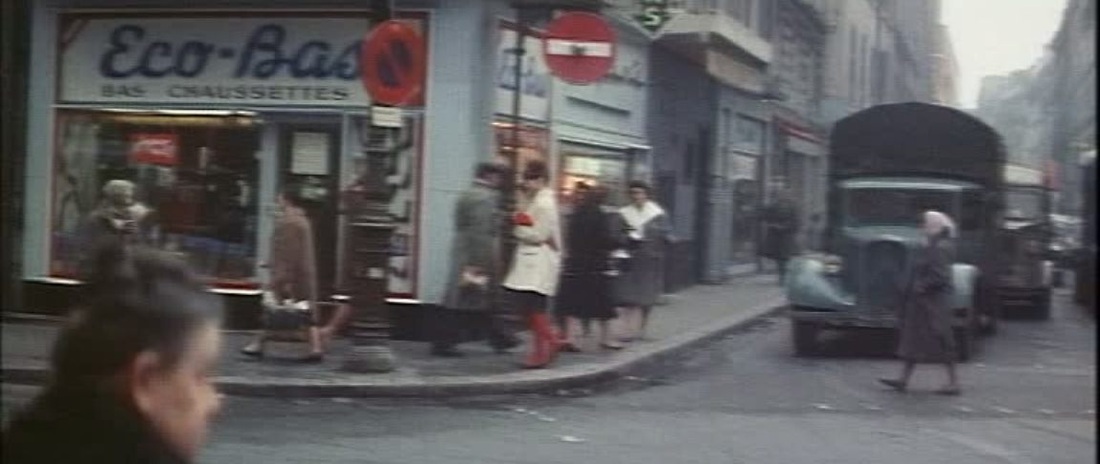
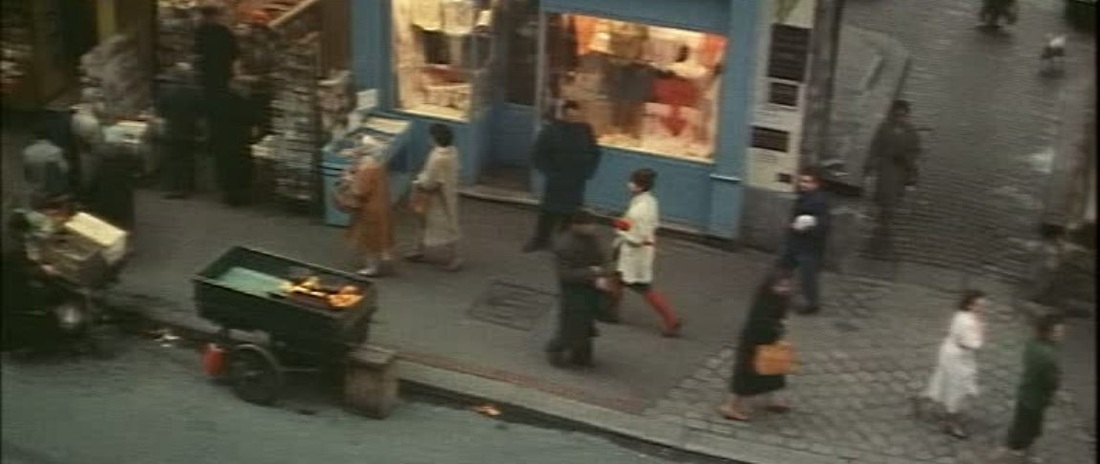
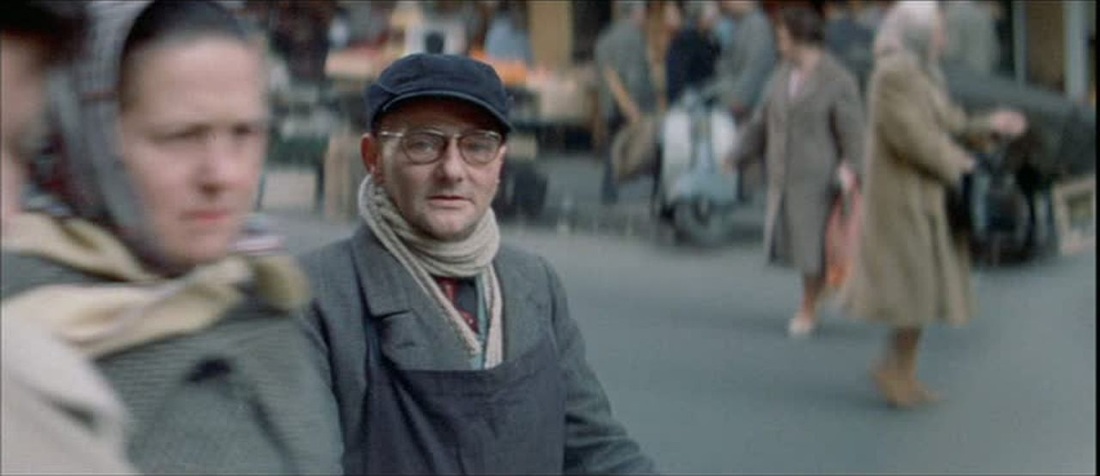
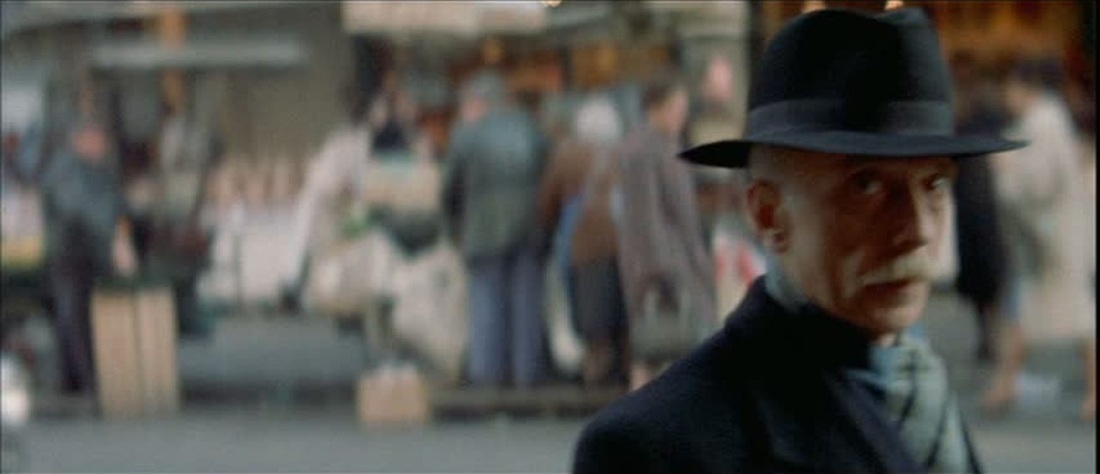
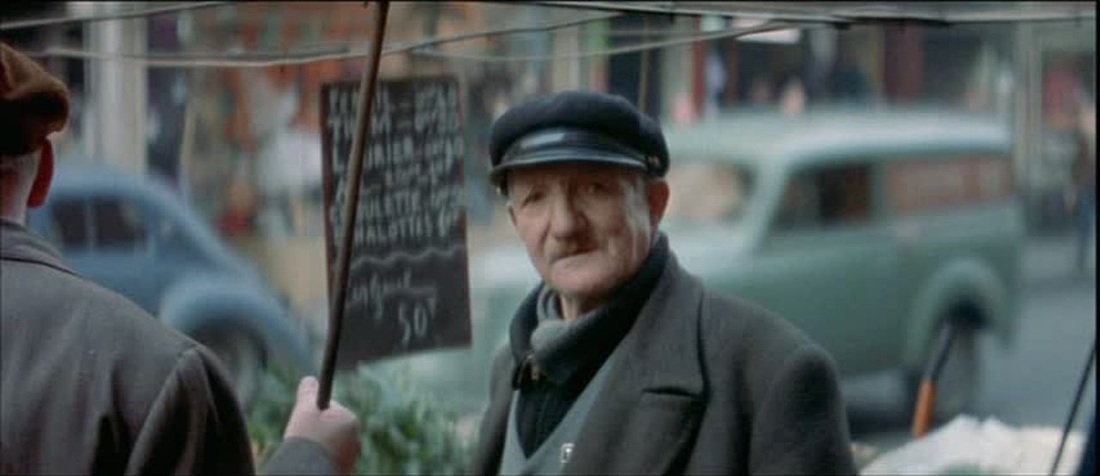
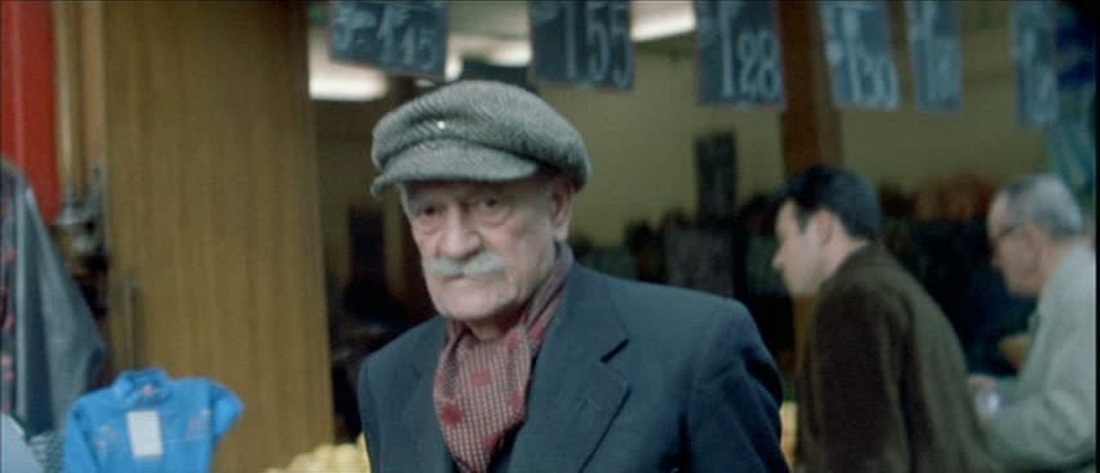
Here are four more four shots a street with market stalls. Like the three above they must, I think, be of the rue du faubourg Saint Denis:
|
|
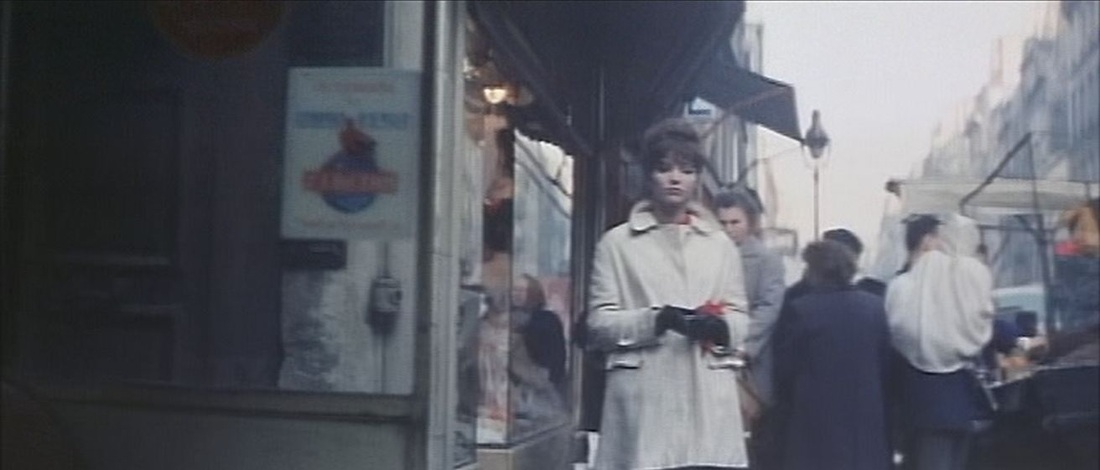
Though it is hard to be sure, the blue of the shopfront behind this close-up is the same blue as that of the shop next door to Emile's bookshop, so I think this is also on the rue du faubourg Saint Denis, near no.61:
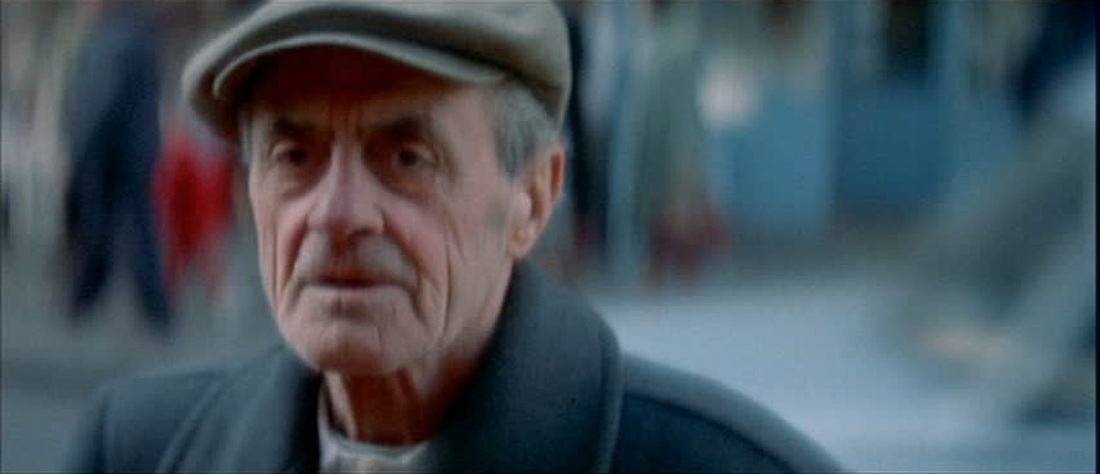
That leaves six unmatched or unidentified shots out of the thirty one:
This sequence is closed by a view of the Neptuna cinema at 28 boulevard Bonne Nouvelle, showing Vera Cruz with Burt Lancaster. In a conversation at the Napoléon café, earlier, one of Angela's co-workers had proposed to Alfred and Emile that they go see this film here:
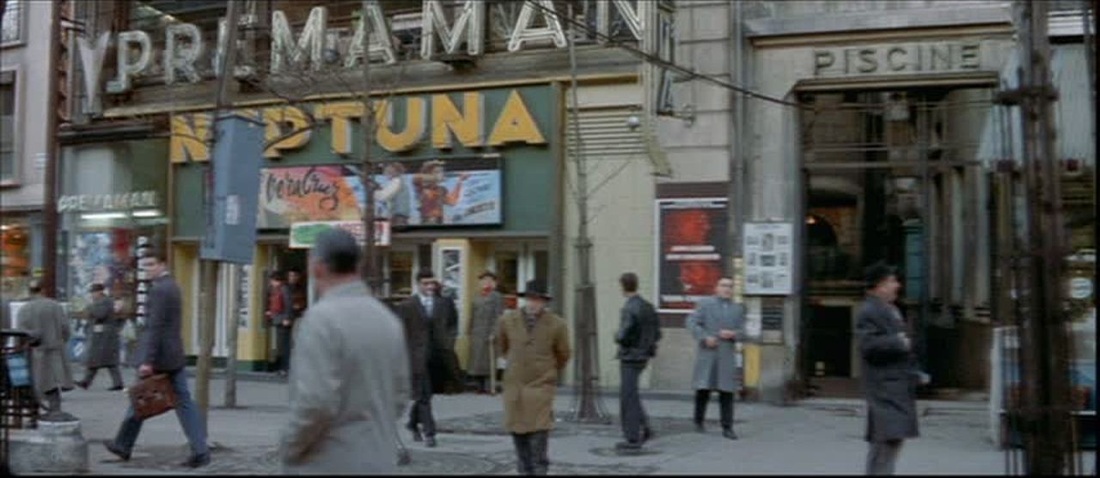
The Neptuna was two blocks up from Le Zodiac, and indeed that in the brown coat is Luciano, the Zodiac's manager, who has been ogling girls as they emerge from the swimming pool next door.
Angela and Suzanne part across the road from the Neptuna, by the stairs that lead up to the rue de la Lune:
Angela and Suzanne part across the road from the Neptuna, by the stairs that lead up to the rue de la Lune:
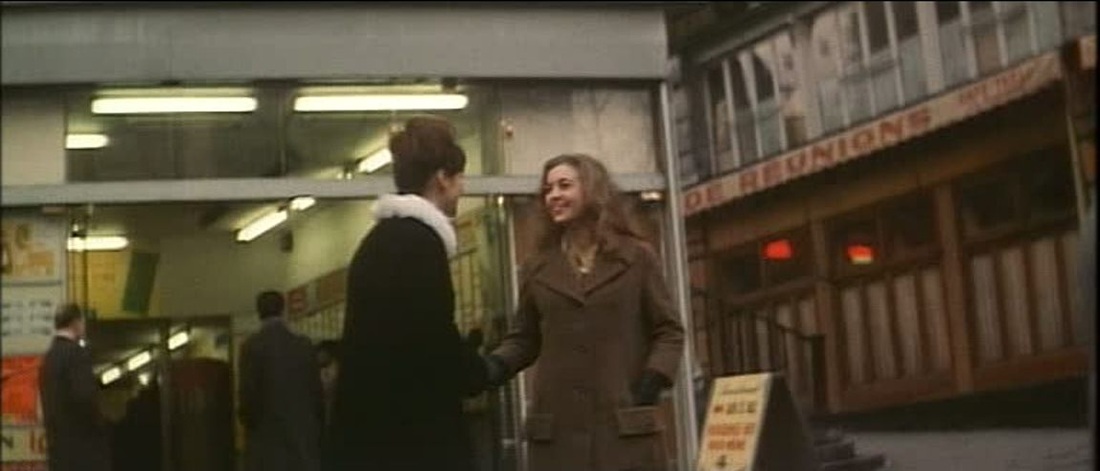
These stairs are a principal location of Louis Malle's Zazie dans le métro (1960):
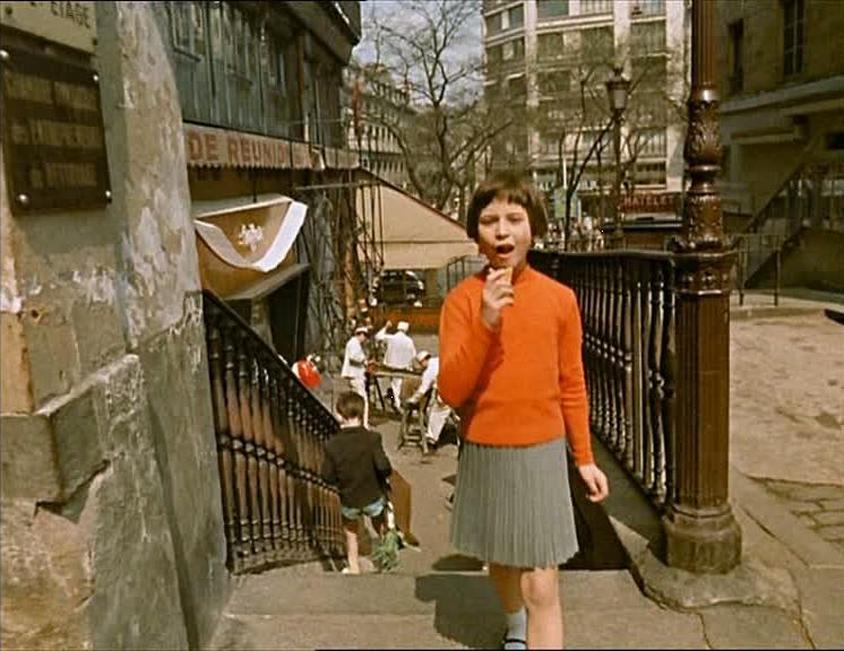
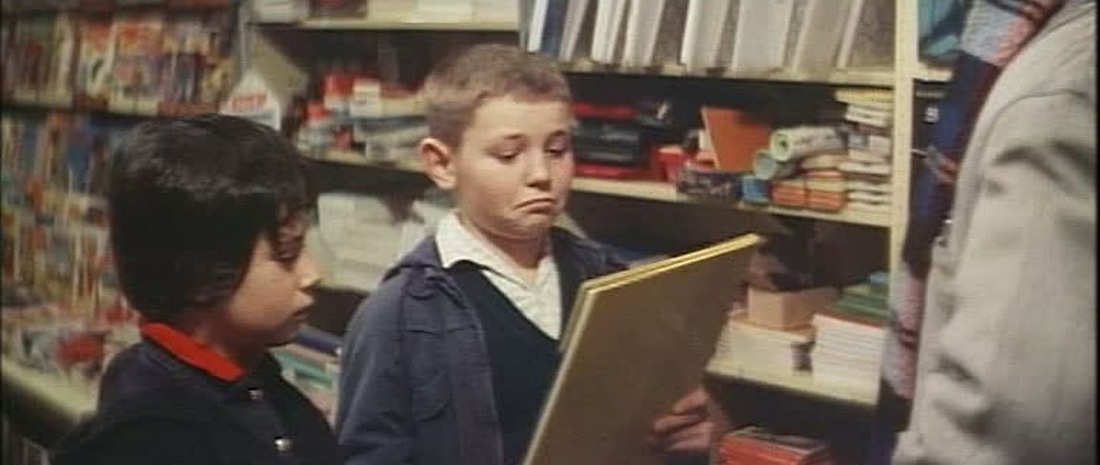
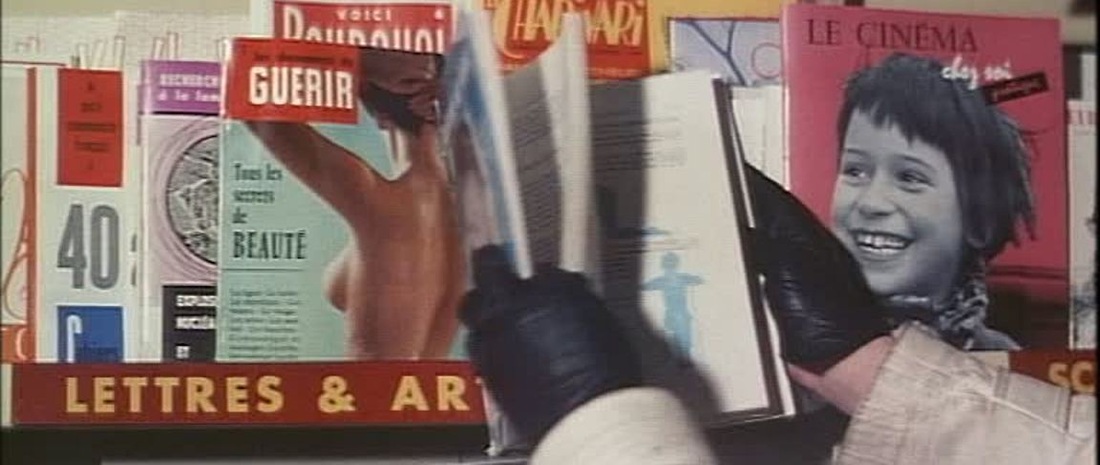
It is just a coincidence, but Catherine Demongeot, who plays Zazie, appears in Une femme est une femme, both in the flesh as on the cover of a magazine:
|
|
But this post is about places, not people.
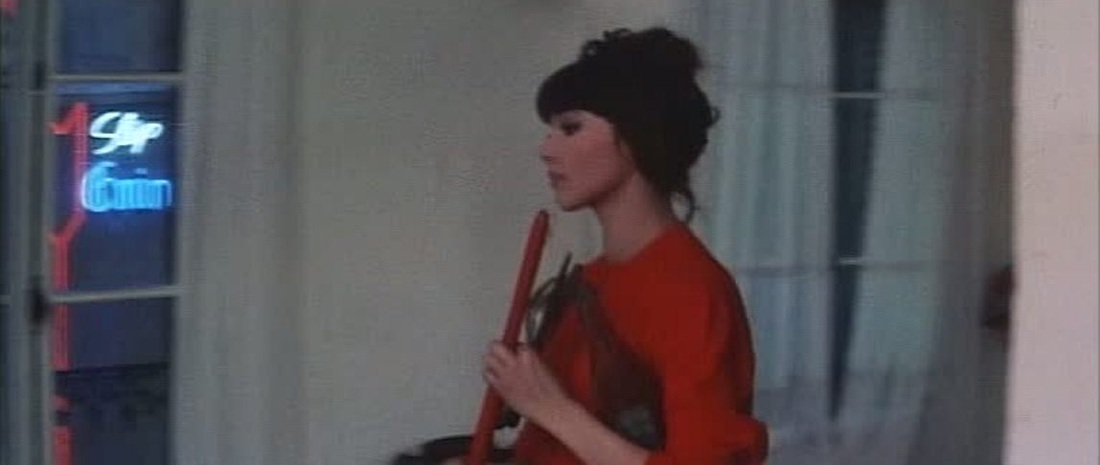
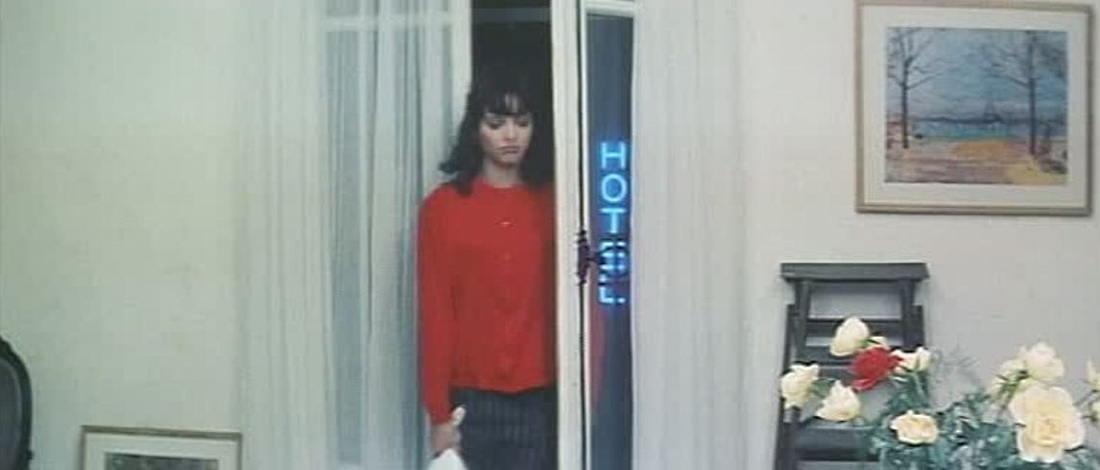
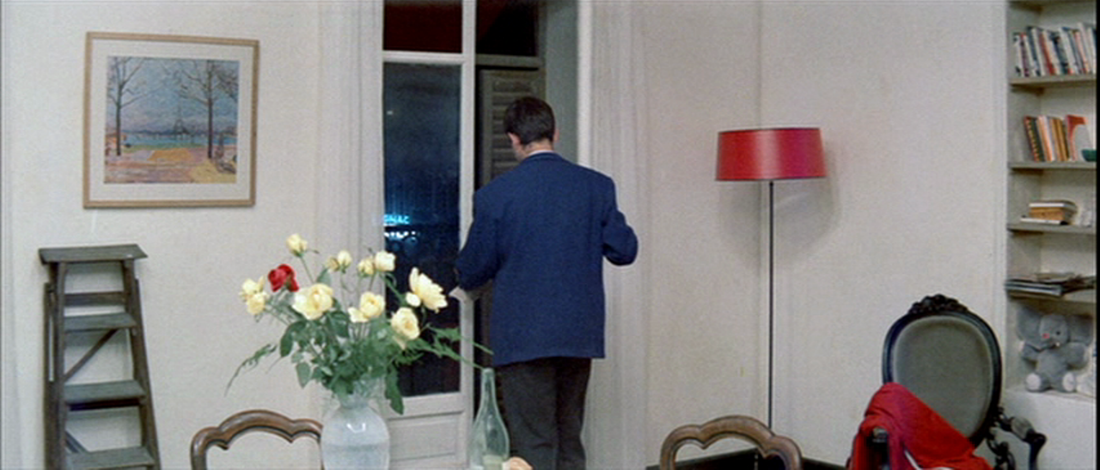
Le Zodiac is a real place, shown outside and in. The exterior of Angela's apartment is real, but the interior is only a studio construction, based on a real apartment at that address.
Through the windows of the fake interior a fake exterior is represented by neon signs:
|
|
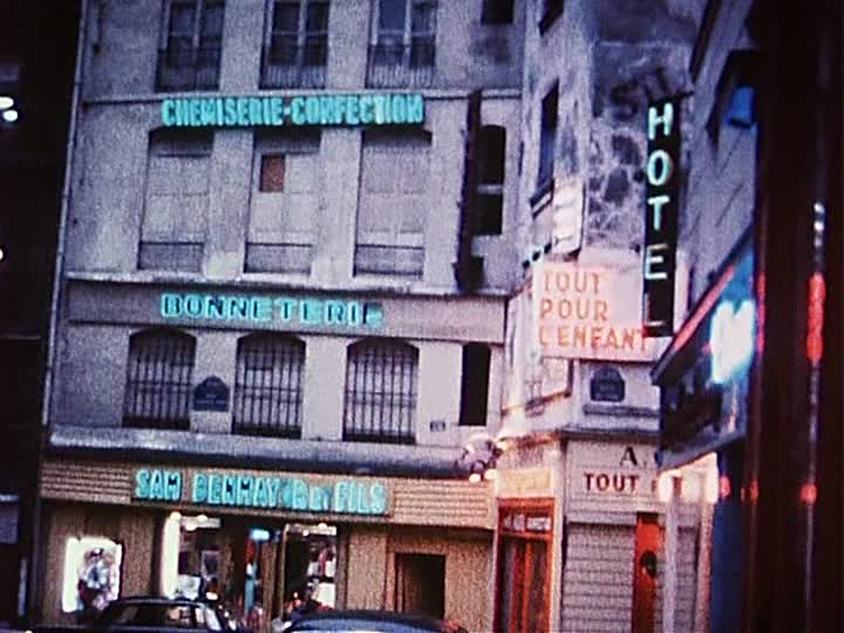
The film also shows real neon signage, found in real streets:
I don't know where this is, but the 'Petit Bateau' figures and 'O-Yes Jolie Poitrine!' slogan festooning a high rounded building were probably a known landmark at the time, and I'm sure it'll get identified eventually.
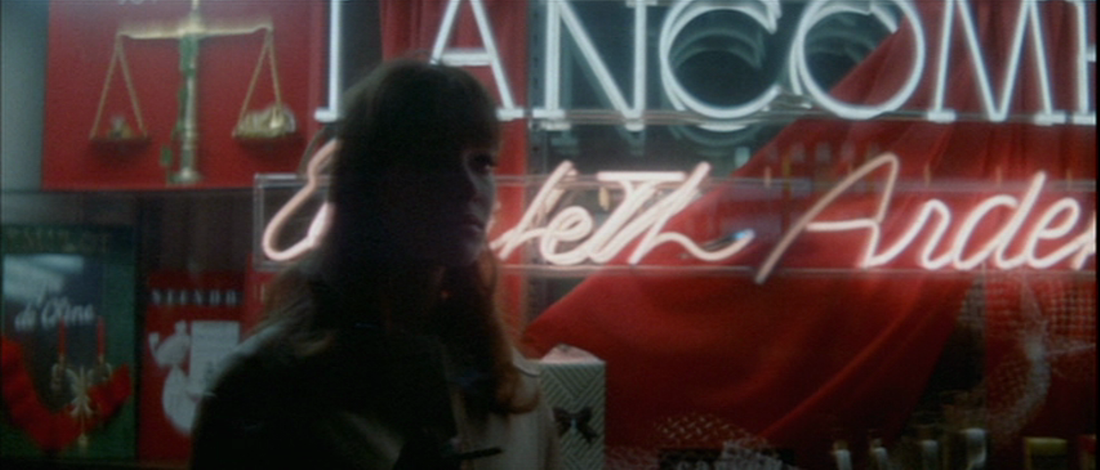
There is other electric signage in the film, in particularly a neon that reads 'BEAUTE' above a perfumier just opposite the Napoléon, at 1 rue des Petites Ecuries:
There is other electric signage in the film, in particularly a neon that reads 'BEAUTE' above a perfumier just opposite the Napoléon, at 1 rue des Petites Ecuries:
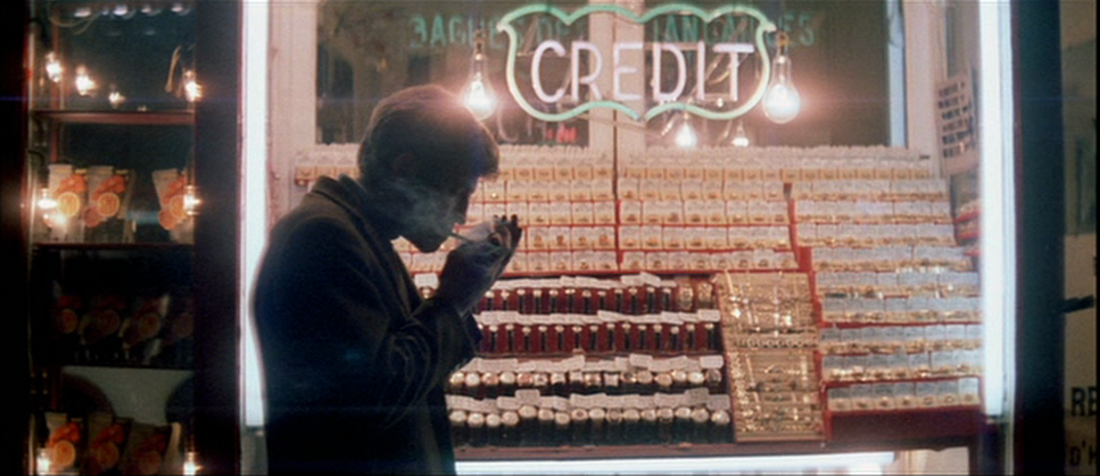
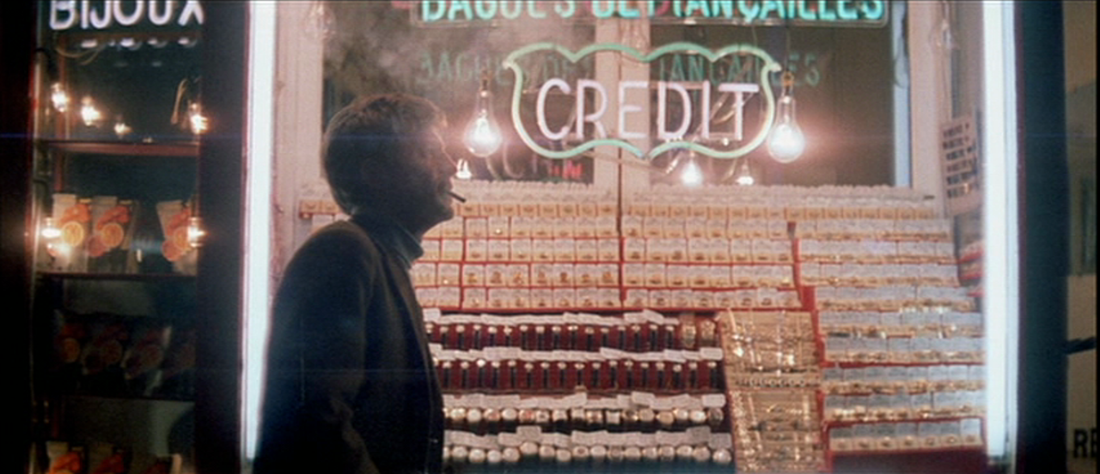
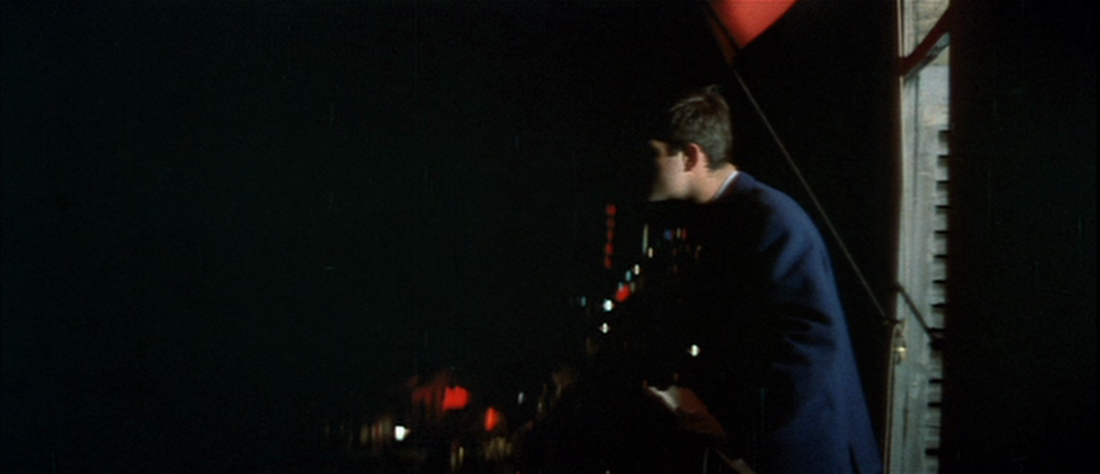
The jeweller's shop in front of which Alfred lights a cigarette is also supposed to be nearby, since Emile calls down from the apartment balcony to him in the street below:
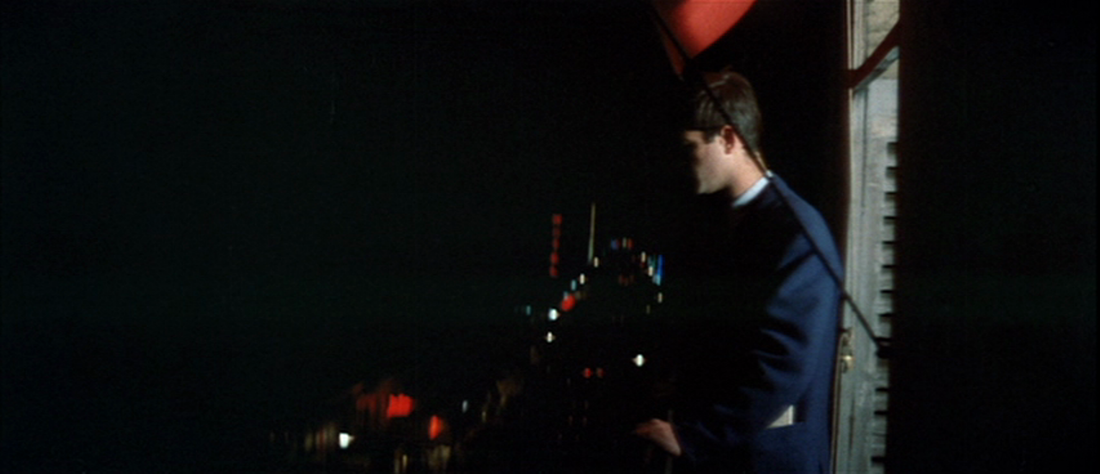
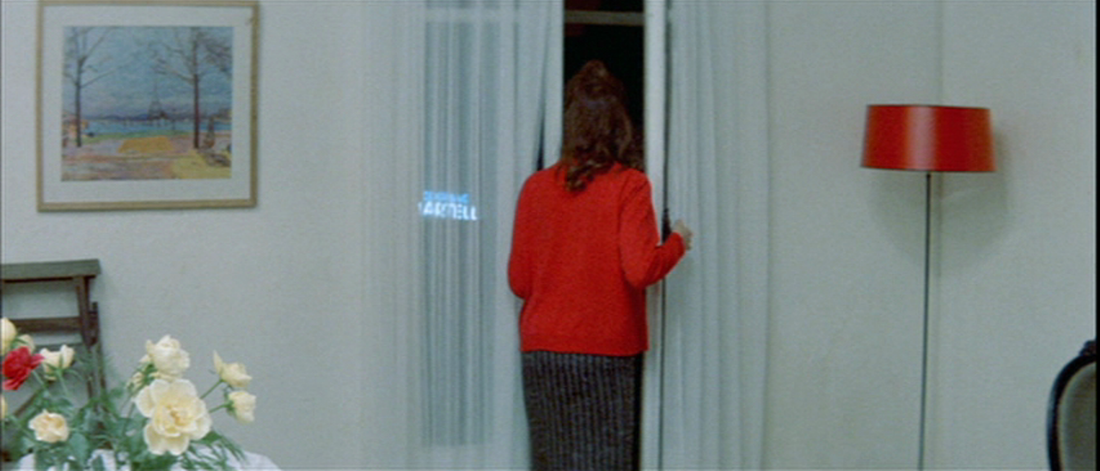
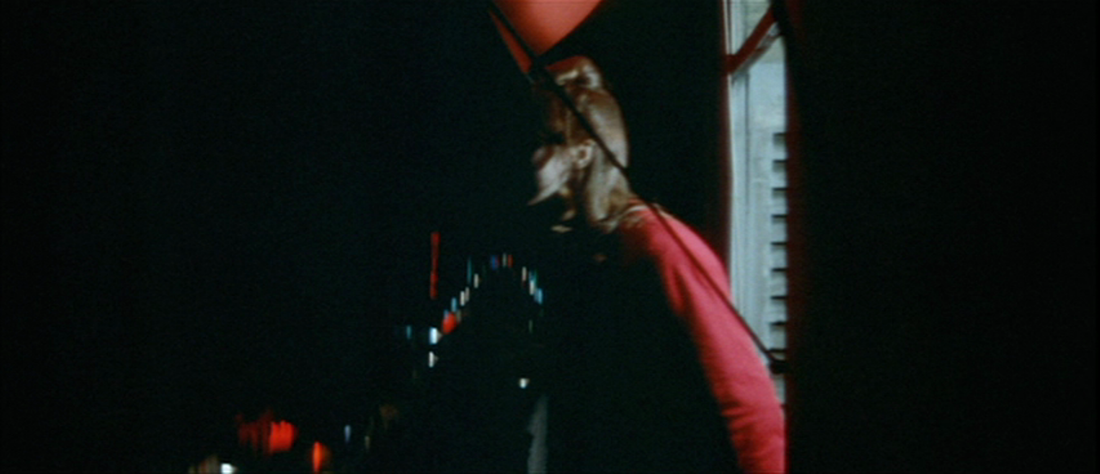
The view of Emile on his balcony is a rare moment where the apartment itself is represented by a real place as opposed to a studio construction. He steps out from the studio interior and in the next shot is in the real world:
|
|
Later Angela does the same thing:
|
|
There is always pleasure in finding different orders of reality each side of a cut.
Once we are on the balcony the space extends into the real, by a process of shot-countershot:
Once we are on the balcony the space extends into the real, by a process of shot-countershot:
|
|
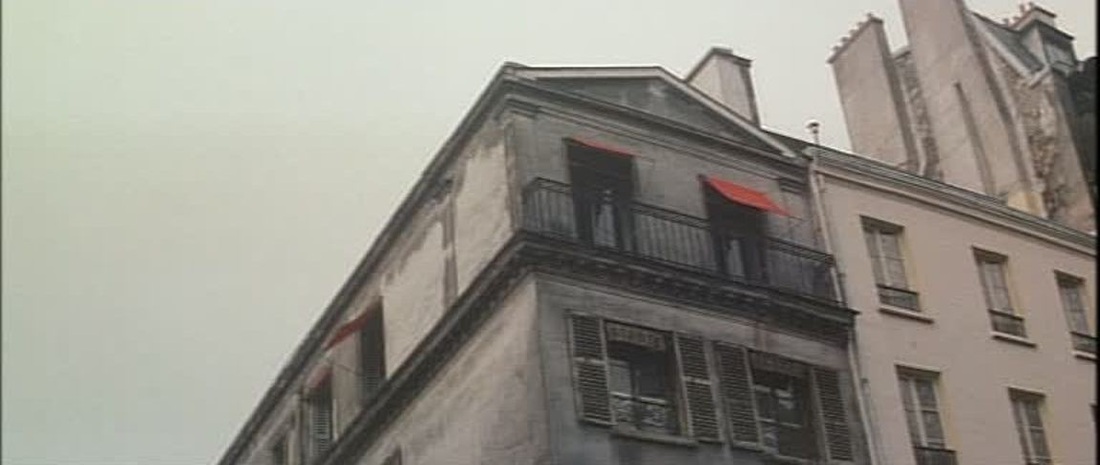
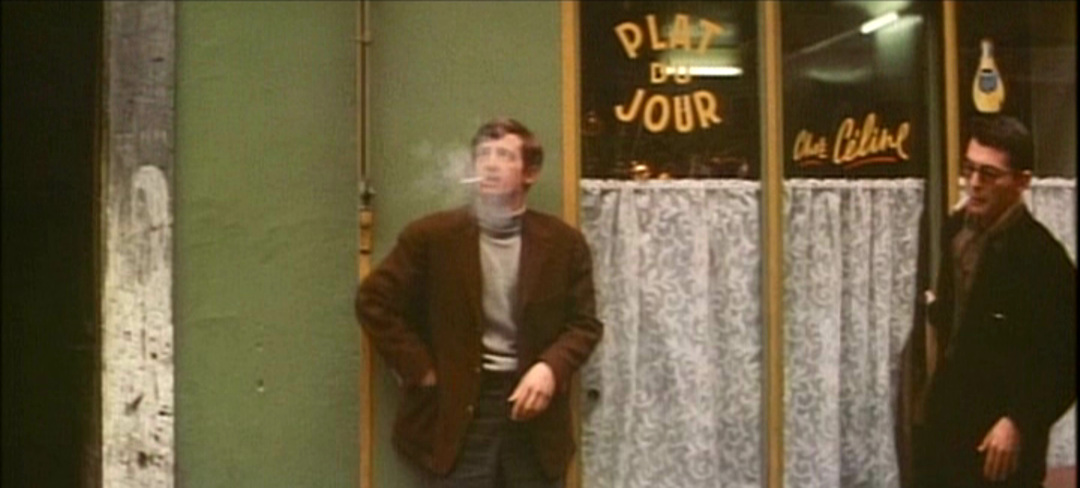
I haven't found a match to the jeweller's shop, yet, and it is possible that the contiguity of the spaces in these two shots is a fiction of montage. This may be again true when, later, Alfred looks up at the apartment, waiting for a sign from Angela. I think that the restaurant he is standing in front of is what is now the Chateau d'Eau café, 68 rue du faubourg Saint Denis. The name says 'Chez Céline', and the owner of the establishment at this address is listed in the 1959 phone book as 'C. Cecille'. If this is that place, the 'C' would stand for Céline - but this could still be somewhere else entirely:
|
|
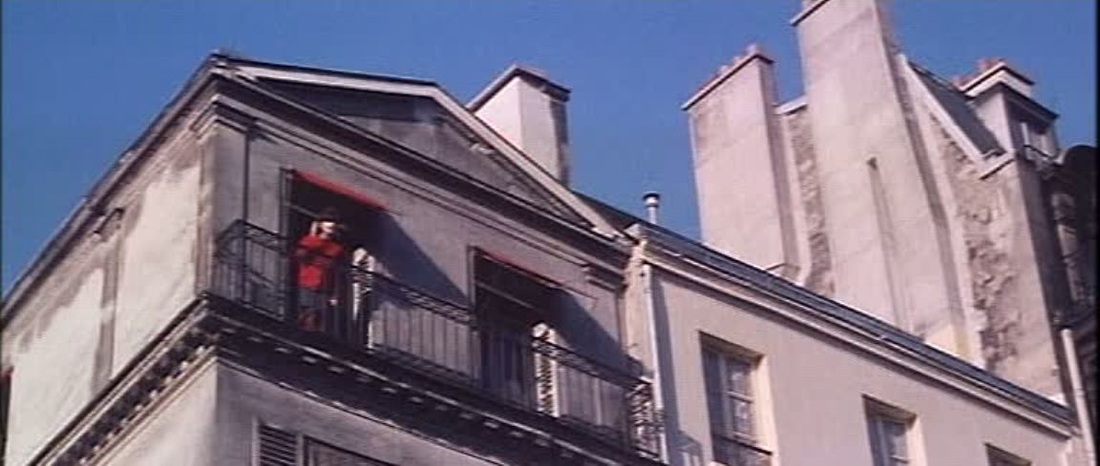
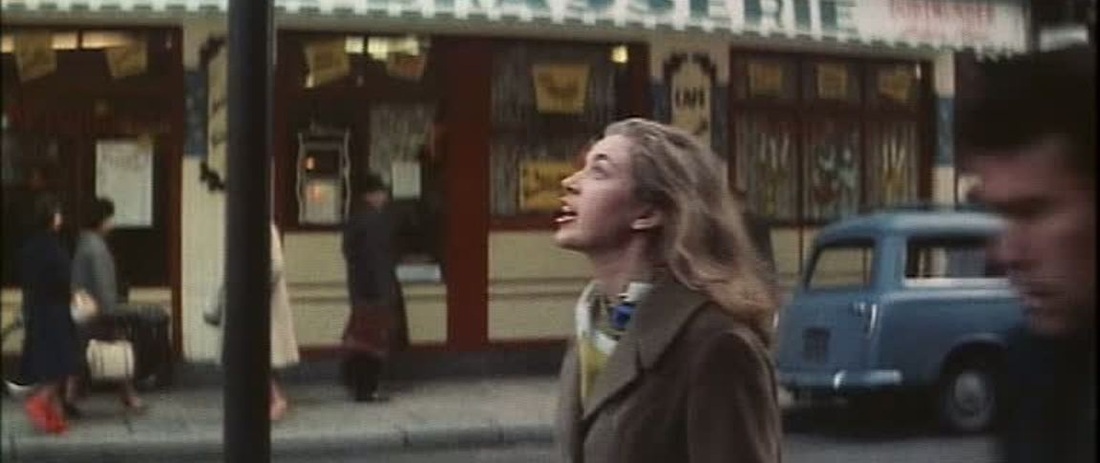
There is at least one instance where we can confirm contiguity across the cut. When Suzanne calls up to Angela, behind her is a brasserie at 70 rue du faubourg Saint Denis:
|
|
I think that all of the spaces accumulated by the film around its topographical centre at 73 rue du faubourg Saint Denis really are in that vicinity, but from the fact that the heart of this location, the apartment-interior, was moved elsewhere (to a studio), a doubt lingers over the spatial integrity of everything we see around the apartment. We know that at least once the actual exterior balcony of the building was used, since we see Angela there calling down to Suzanne, but we cannot know that this is the same balcony on which Emile and Angela are filmed at night. It is not from views like this that we could recognise the rue du faubourg Saint Denis:
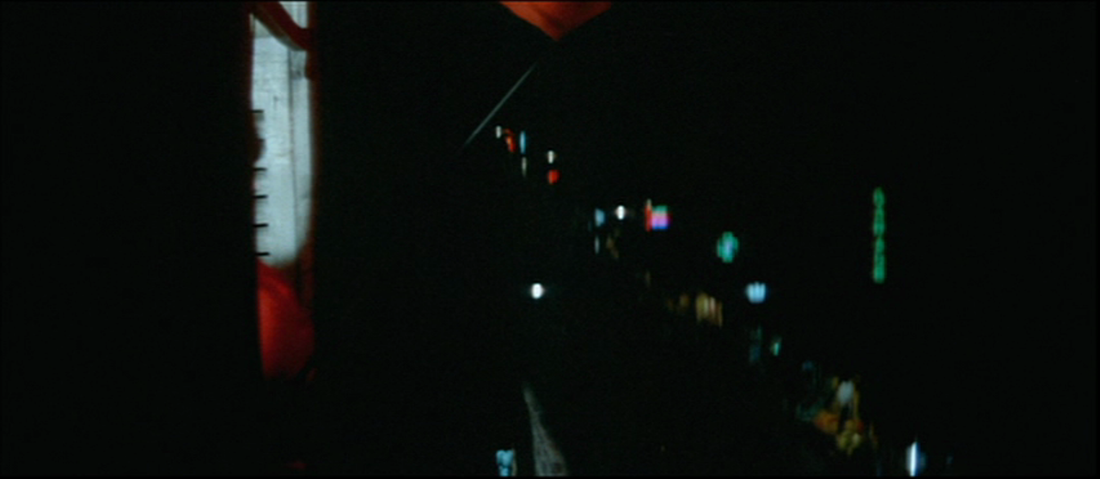
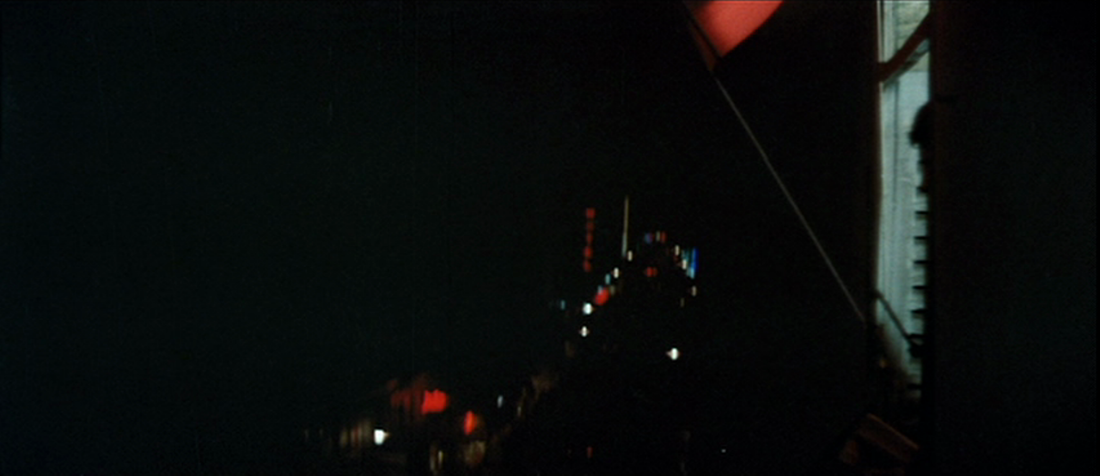
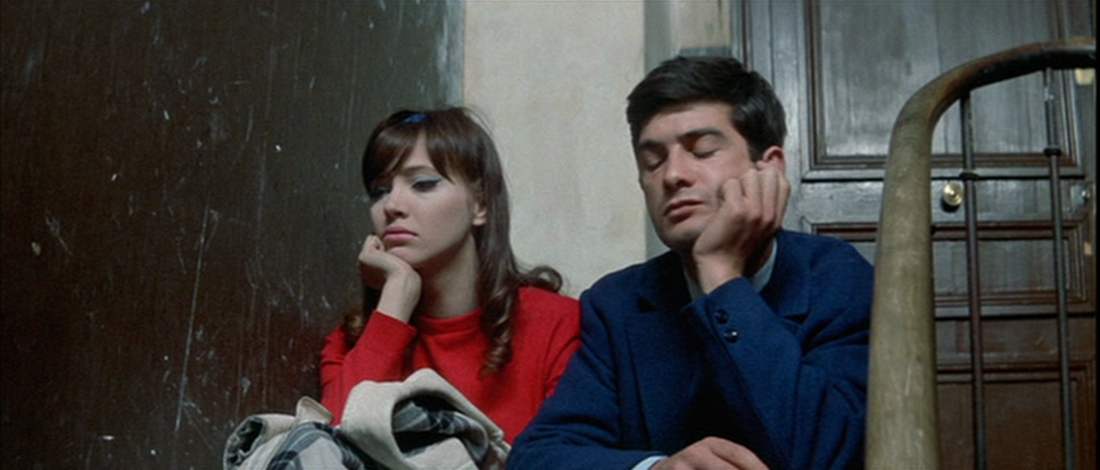
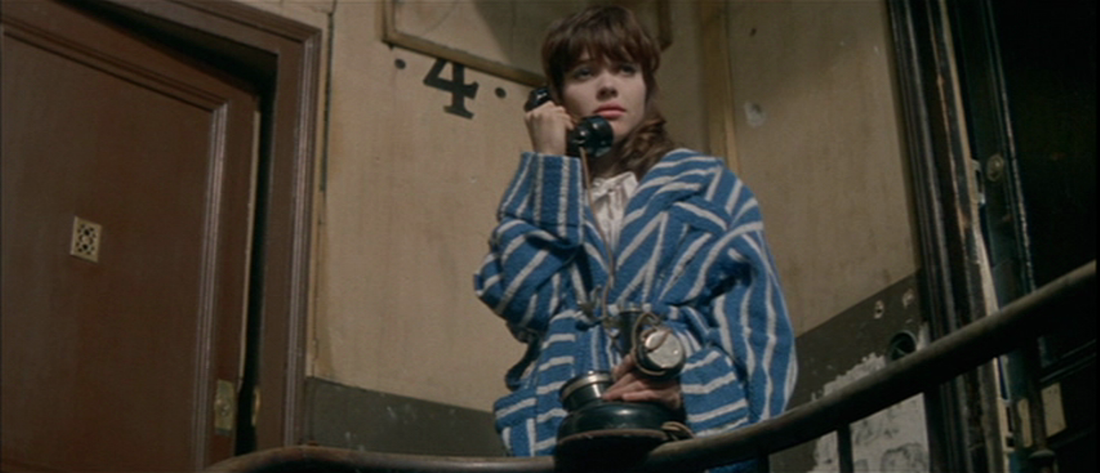
This probably is that balcony (given the red shades), but the landing and staircase beyond the apartment door, though they are not studio constructions, are not necessarily in the building that we see from the outside:
|
|
I have still to go and look more closely at the area, and hopefully I shall find out whether the passage by the stairs that lead up to the apartment is actually behind the building at no. 73:
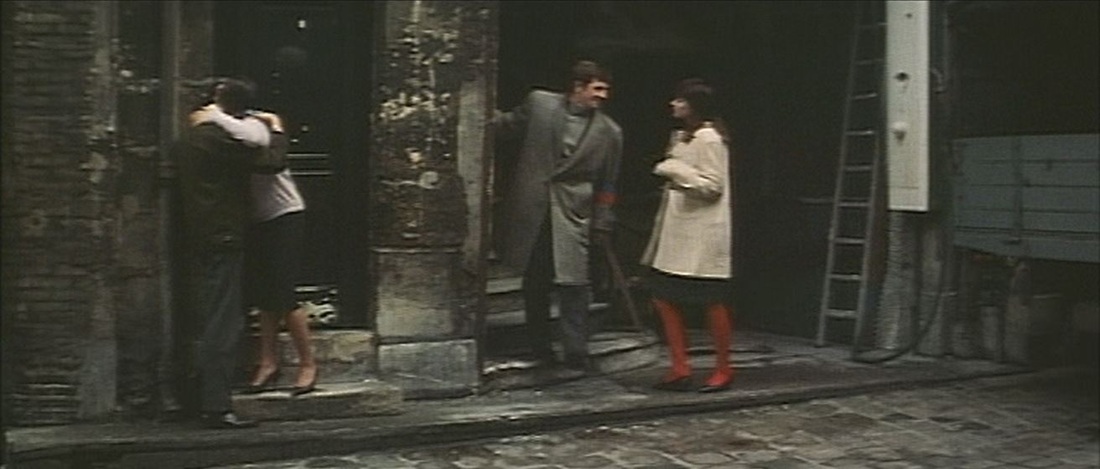
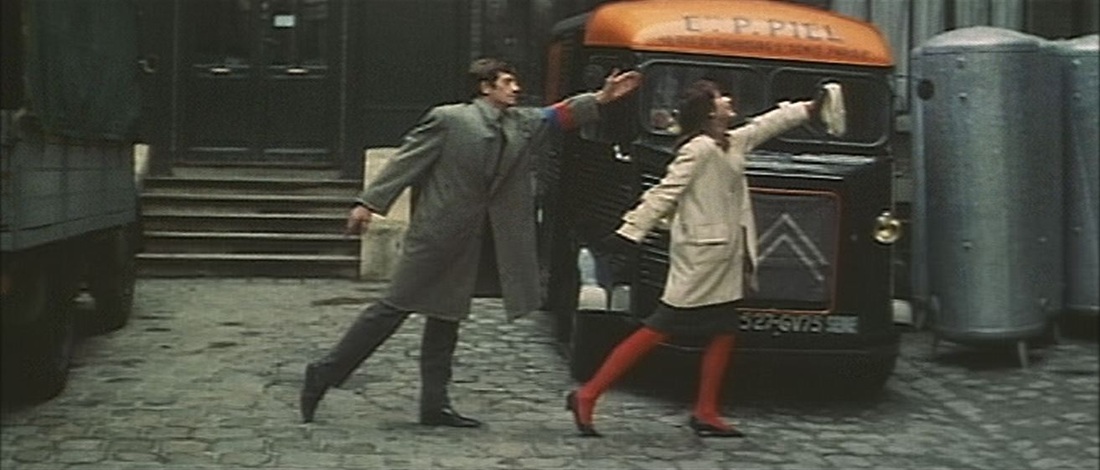
I suspect not, because a van belonging to the 'Etablissements P. Piel' (a manufacturer of taps) is parked in this passage, and Piel's business was further down the street at 48 rue du faubourg Saint Denis (the address is written on the vehicle, helpfully):
Another passage, supposedly leading to Alfred's apartment, may actually be at that address (2 rue du faubourg Poissonnière):
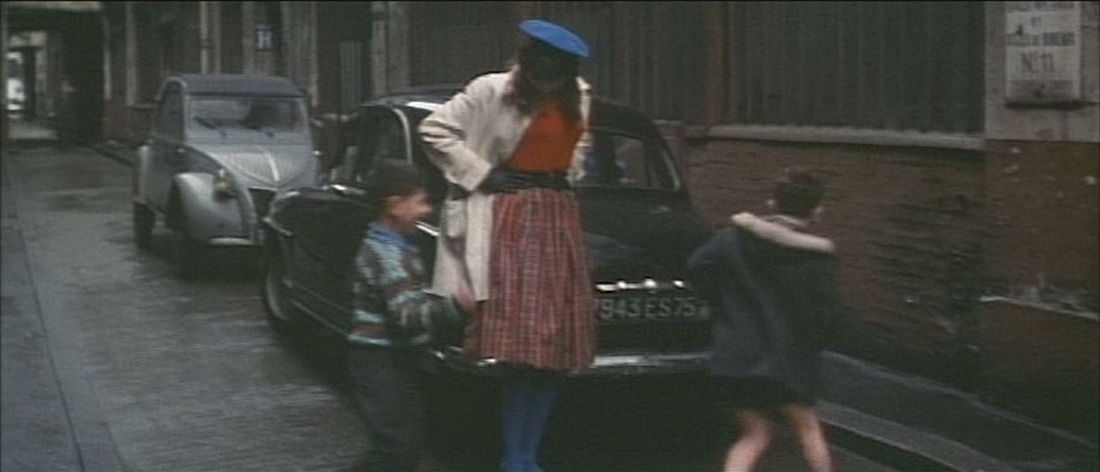
Or it may not.
UPDATE:
Emilien Awada has identified the above as a passage running west from 65 rue du faubourg Saint Denis:
UPDATE:
Emilien Awada has identified the above as a passage running west from 65 rue du faubourg Saint Denis:
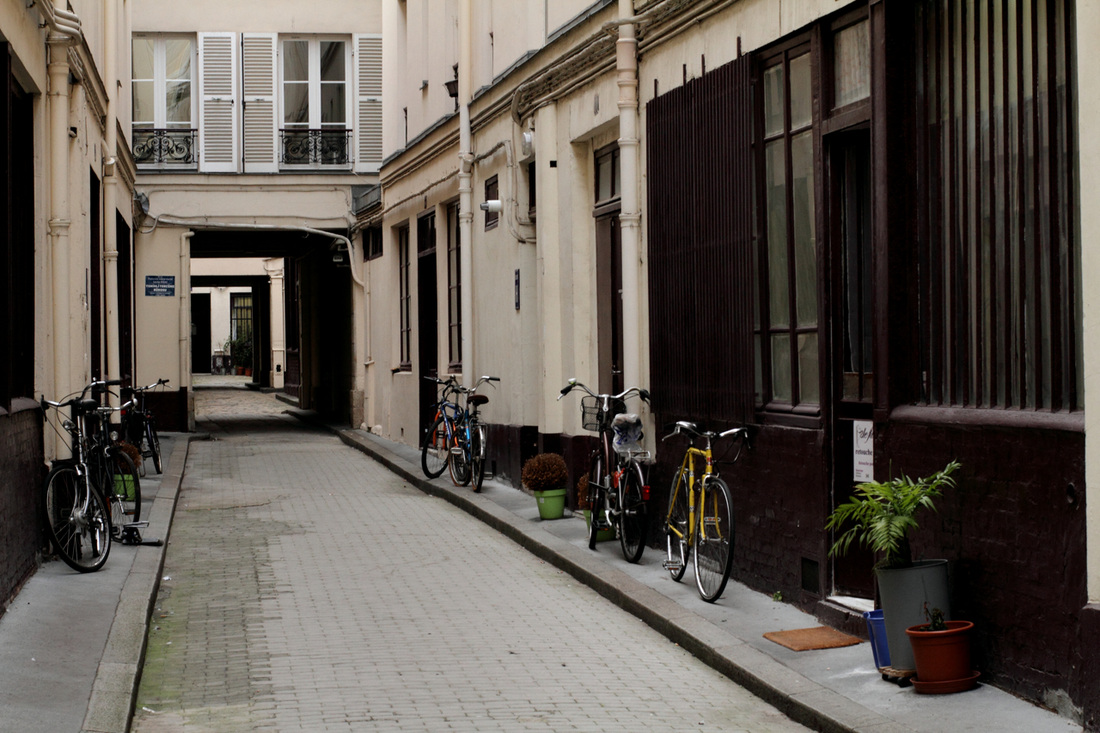
Here is Alex Toledano's photograph of the same passage:
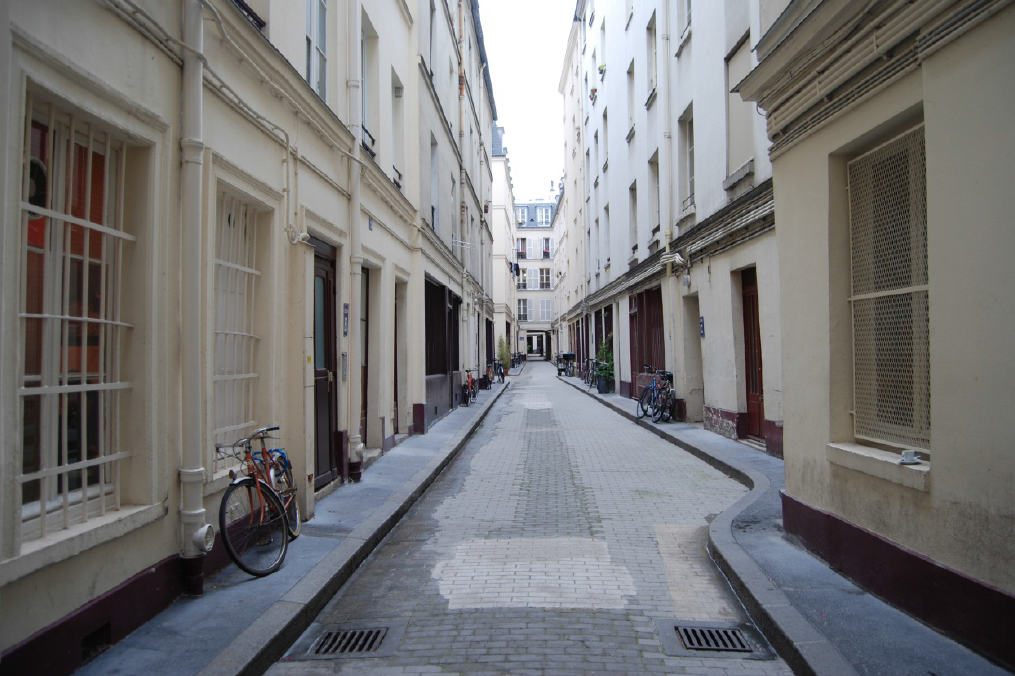
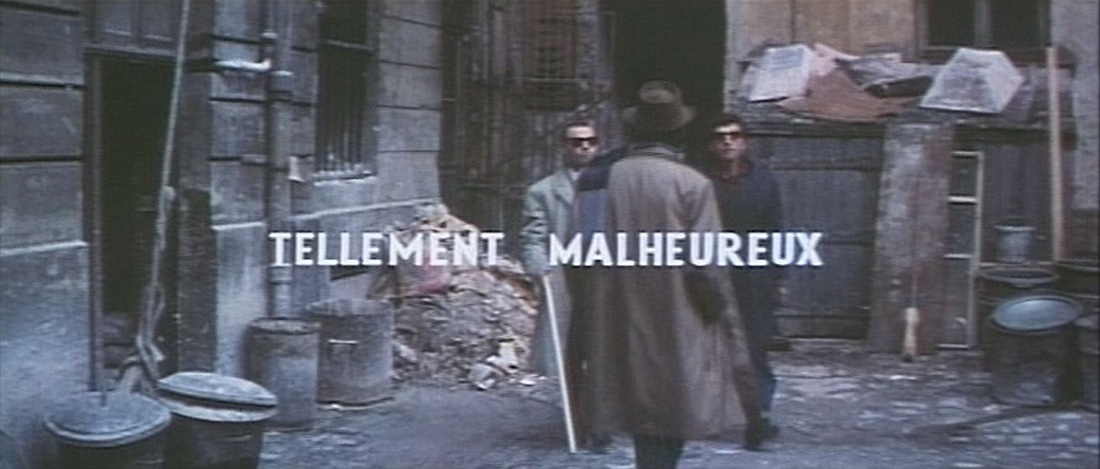
There are three more passage-like locations to identify (the last of them here appears twice in the film):
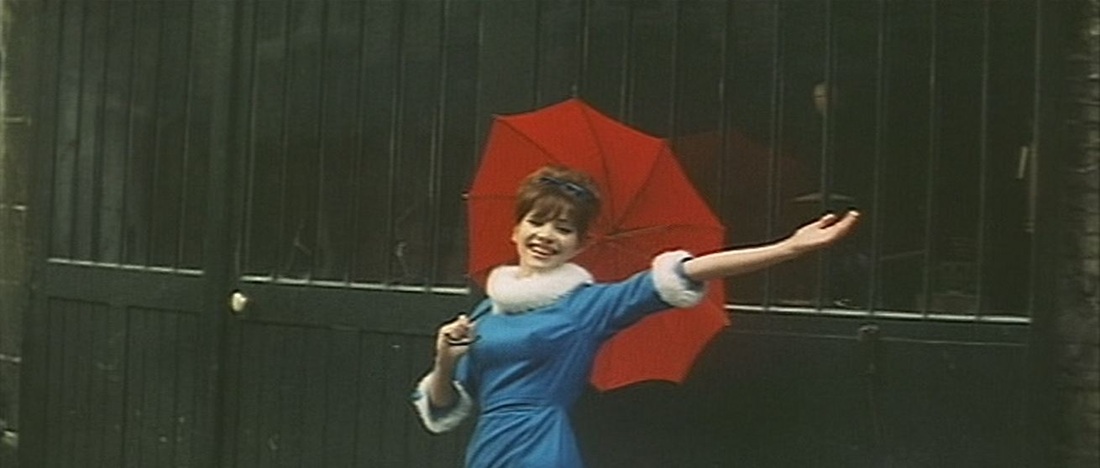
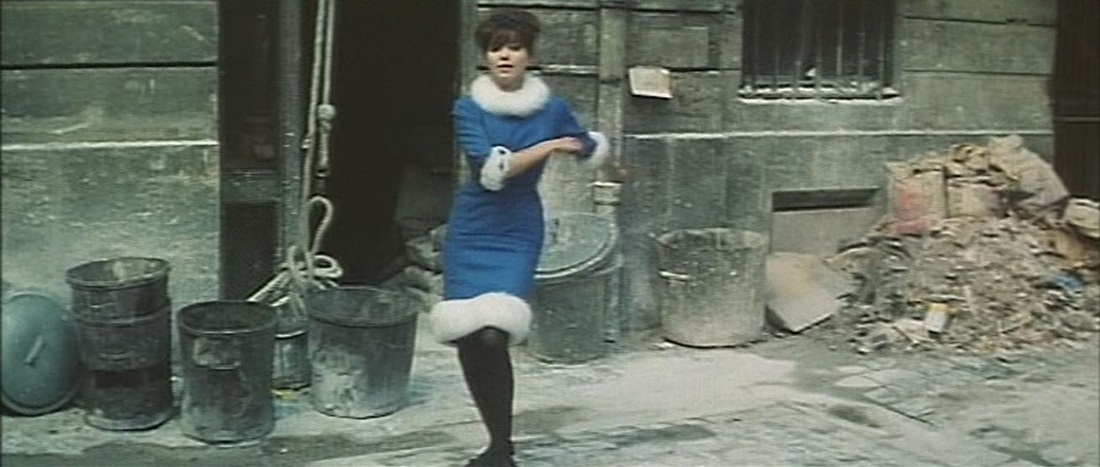
|
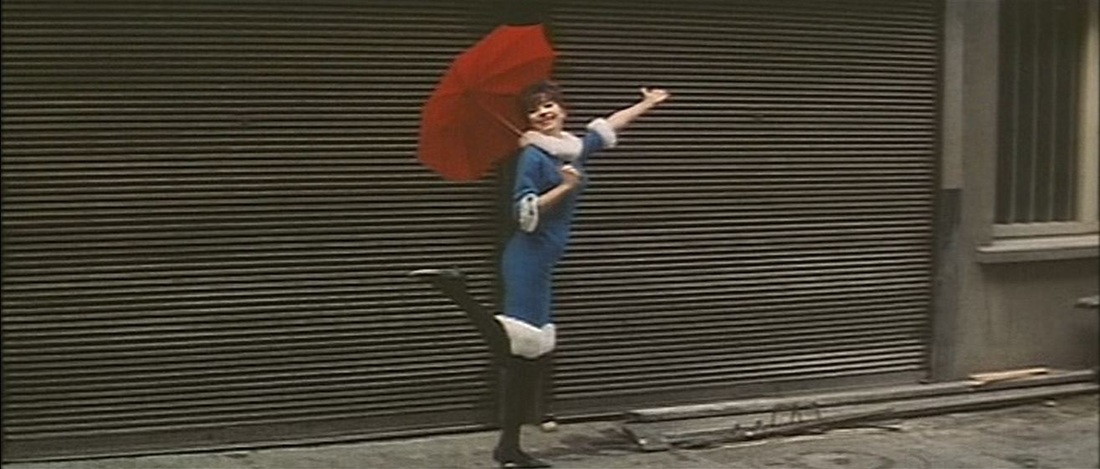
|
The film seems so keen on staying local that these are surely all somewhere near the rue du faubourg Saint Denis, no?
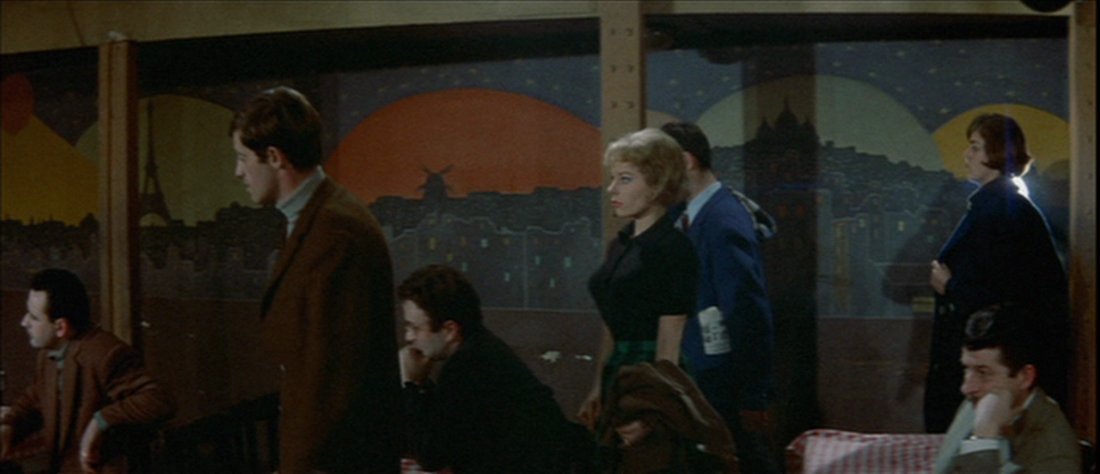
Paris beyond the Faubourg Saint Denis district occasionally figures in Une femme est une femme. Angela is supposed to have gone for a job at the Lido on the Champs Elysées. At Le Zodiac one wall is decorated with a fresco of Paris, highlighting the Sacré Coeur, the Moulin Rouge, the Arc de Triomphe and the Eiffel Tower:
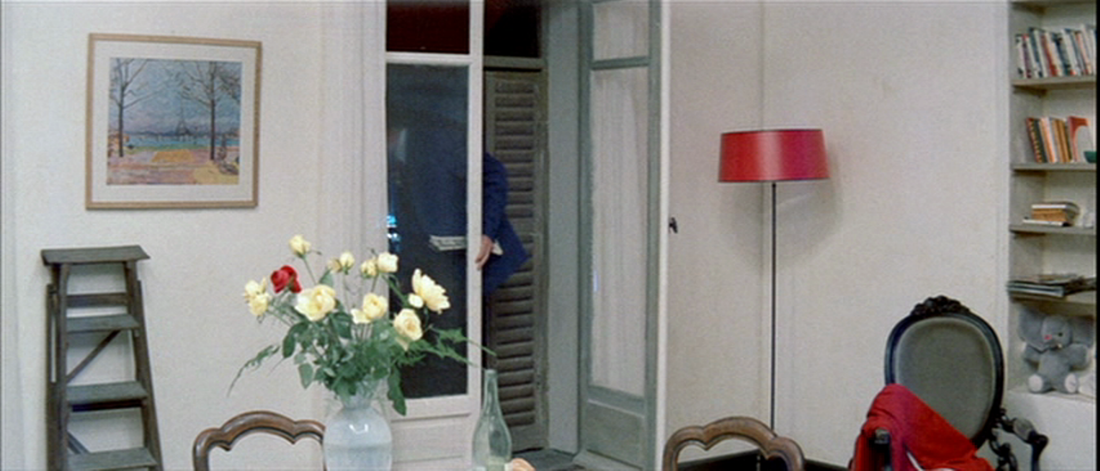
There is a picture of the Eiffel Tower on the wall in the apartment:
And on a television in the window of an electrical goods shop - a shop that is also supposed to be somewhere near 73 rue du faubourg Saint Denis, but in this case I think it's a studio confection - an extract from Varda's L'Opéra-Mouffe pays homage to the best of all New Wave films about a single place, a portrait of the rue Mouffetard and vicinity:
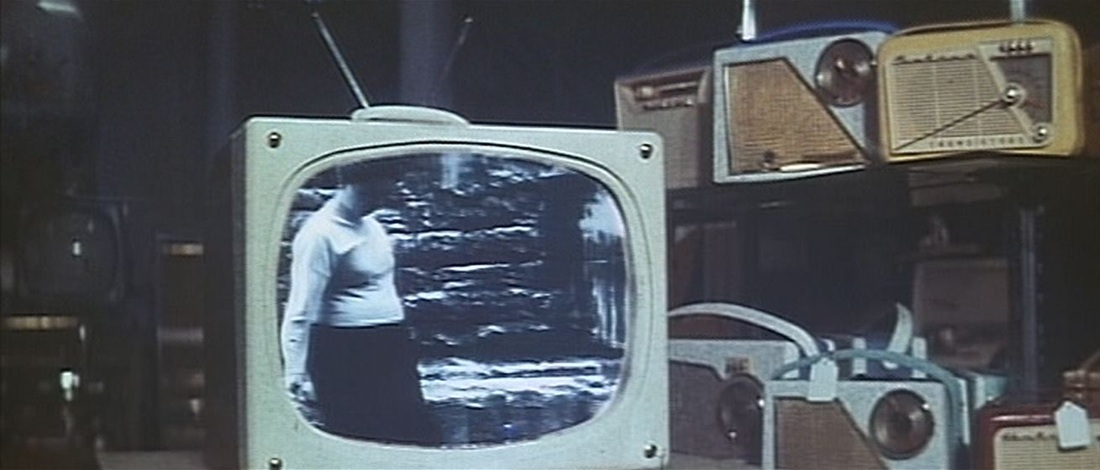
(A future post on Varda's film will, I hope, identify exactly where in the rue Mouffetard area this woman is.)
With thanks to Constanze Ruhm, for the prompt to write this post, and to Alex Toledano, for information. You can see Constanze Ruhm's work on Une femme est une femme here.
With thanks to Constanze Ruhm, for the prompt to write this post, and to Alex Toledano, for information. You can see Constanze Ruhm's work on Une femme est une femme here.