the shared world aesthetic of the Swiss New Wave
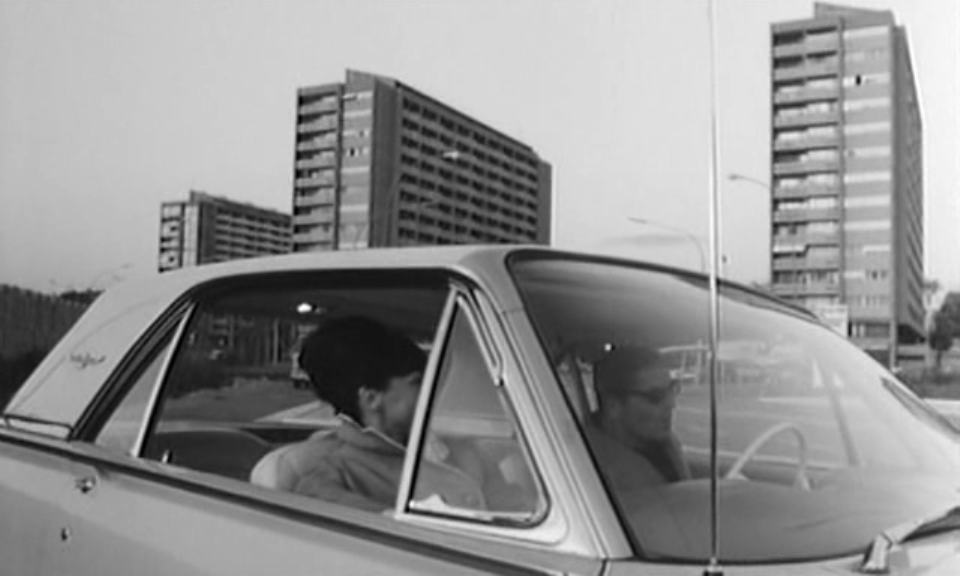


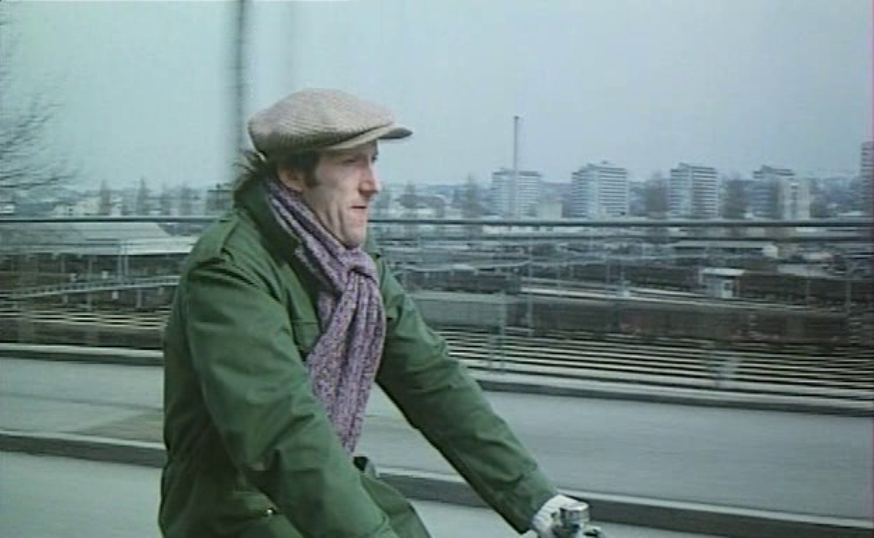
The influence of the French New Wave on filmmaking in French-speaking Switzerland (Romandie) between 1965 and the early 1980s - on what I have been calling the Swiss New Wave - is obvious, and that despite the absence, as far as I can see, of any explicit acknowledgement thereof. The films of Alain Tanner, Michel Soutter, Claude Goretta, Jean-Louis Roy, Yves Yersin, Francis Reusser and Patricia Moraz are highly allusive, but I haven't yet discerned any specific reference to French New Wave films or filmmakers.
In her recent doctoral research on the French New Wave, Xiaoman Zhang has established the idea of a shared world as a defining characteristic of that corpus of films. In a similar way, but on a smaller scale, the Swiss New Wave can be seen to be informed by a shared-world aesthetic, where the world represented in the films can be read as a coherent reality. At the same time the evidence of that world's coherence is also material that foregrounds the films' self-reflexivity, as elements in a world defined by intertextual exchange, rather than a shared reality.
The self-reflexivity of the Swiss New Wave aligns it with other art cinema of the 1960s and 1970s, and it would be interesting to explore whether in other 'New Waves' of that period - Czech, Polish, Hungarian (not British, obviously, which never was a New Wave) - there is also evidence of a shared-world aesthetic. (Zhang has identified parallels in this respect between the French New Wave and the work of some recent Chinese filmmakers - Tsai ming liang, Wong kar wai and Jia zhang ke.)
The self-reflexivity of the Swiss New Wave aligns it with other art cinema of the 1960s and 1970s, and it would be interesting to explore whether in other 'New Waves' of that period - Czech, Polish, Hungarian (not British, obviously, which never was a New Wave) - there is also evidence of a shared-world aesthetic. (Zhang has identified parallels in this respect between the French New Wave and the work of some recent Chinese filmmakers - Tsai ming liang, Wong kar wai and Jia zhang ke.)
More so than the French New Wave, in its first years the Swiss New Wave can be identified as a definite movement, centred on the Groupe 5 in Geneva: five filmmakers, including Tanner, Soutter and Goretta who in 1967-68 set out to make films as individuals but in a system of mutual aid, supported by a co-production agreement with Swiss Romand television (TSR). All of these filmmakers had experience making documentaries and fictions for TSR.


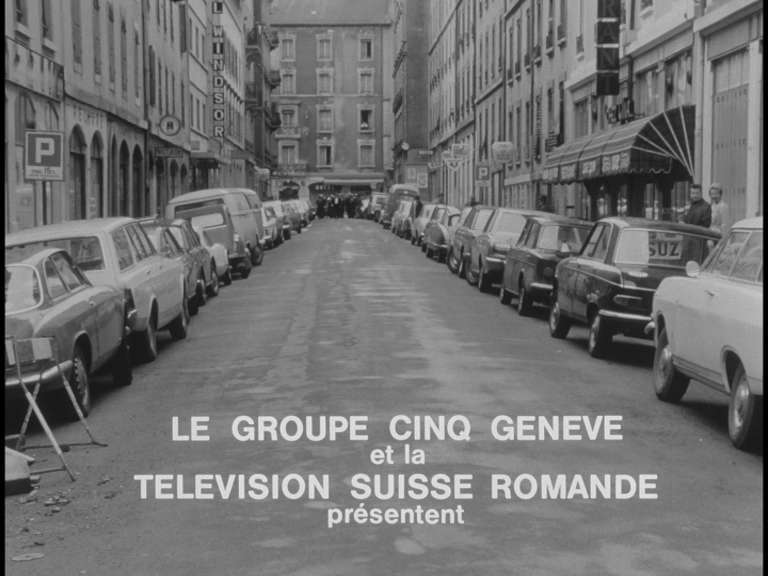
The Groupe 5 filmmakers shared resources, including actors. There are parallels here with the French New Wave, though the pool of actors drawn on by the Swiss New Wave is smaller, creating a stronger impression in the spectator of familiarity with the world in which the fictions are set. Here are some of the most frequently deployed performers: François Simon (9 films), Jean-Luc Bideau (11), Jacques Denis (9), Pierre Holdener (6), Claudine Berthet (5), Daniel Stuffel (9), Dominique Catton (8), Arnold Walter (6), Roger Jendly (9), Nicole Zufferey (7), André Schmidt (8), Antoine Bordier (4):
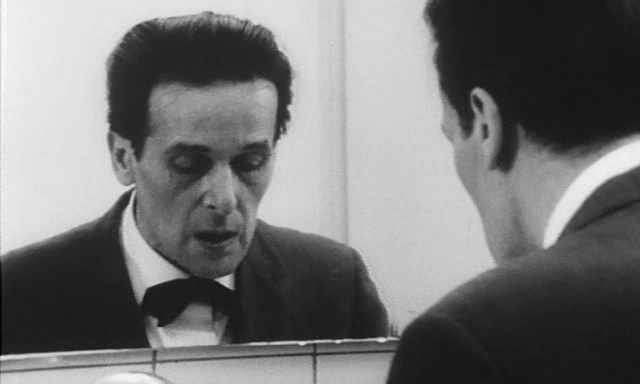
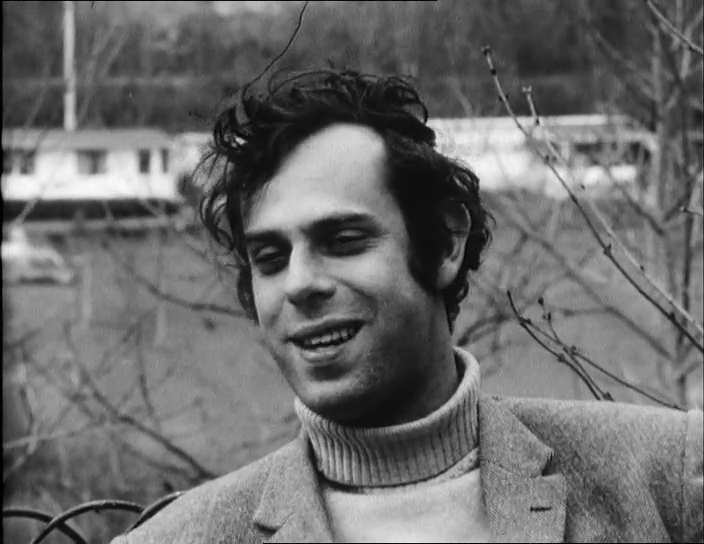

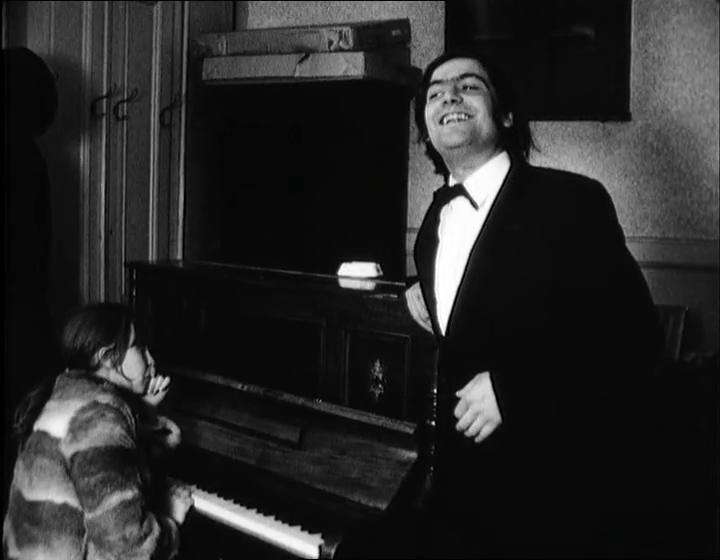
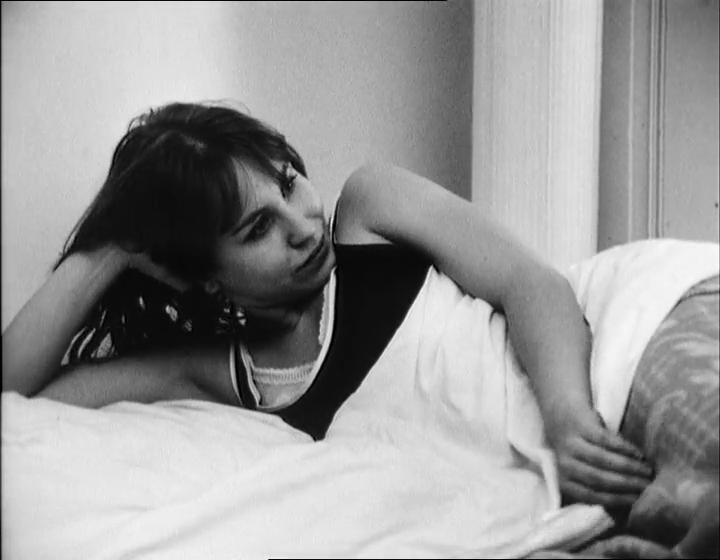
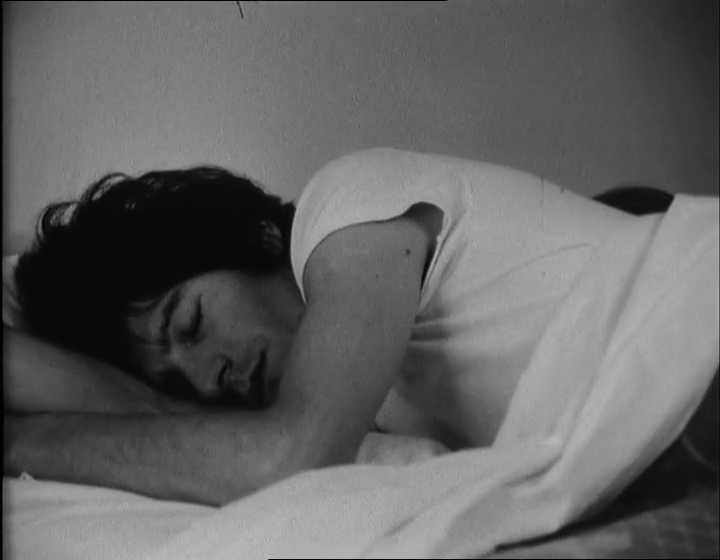
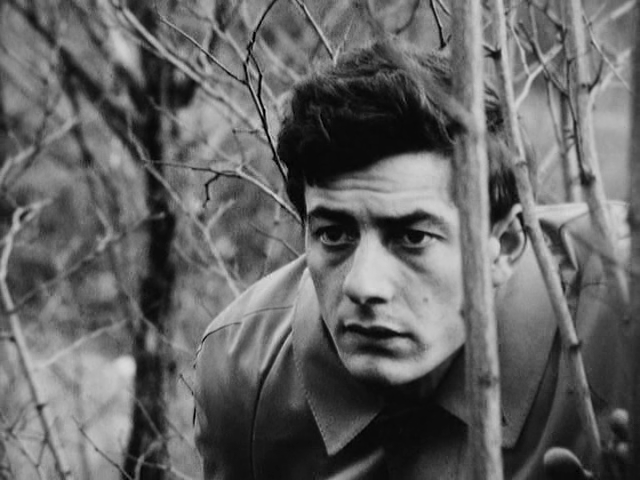
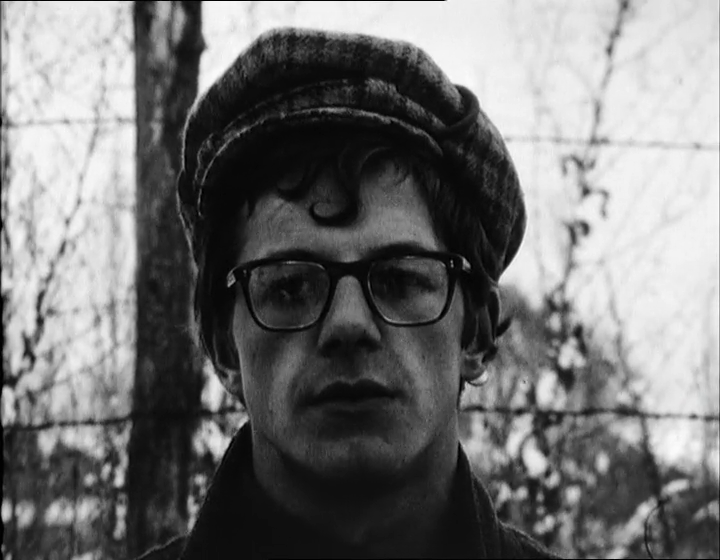
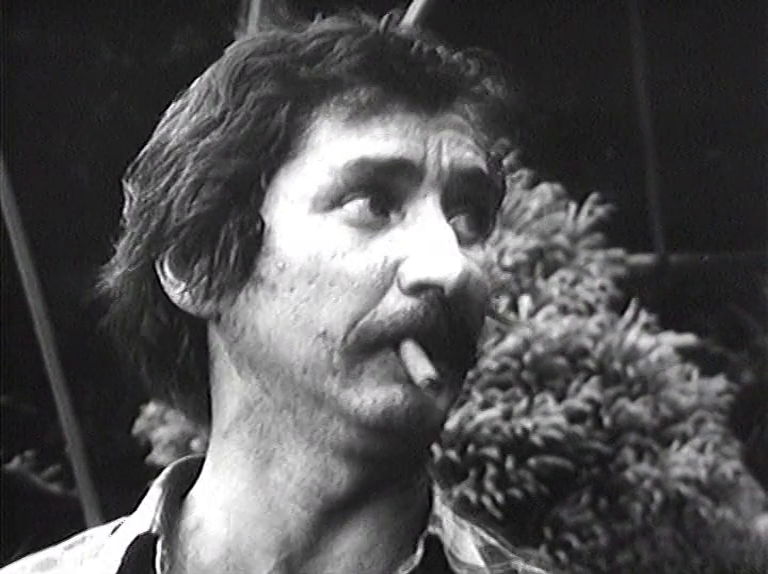
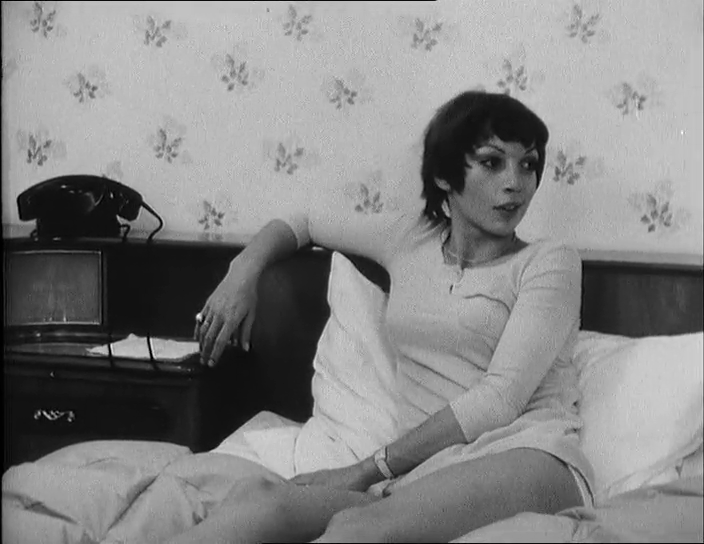
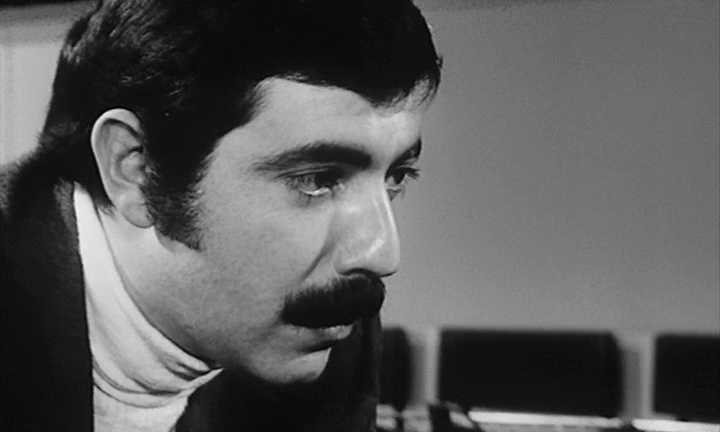
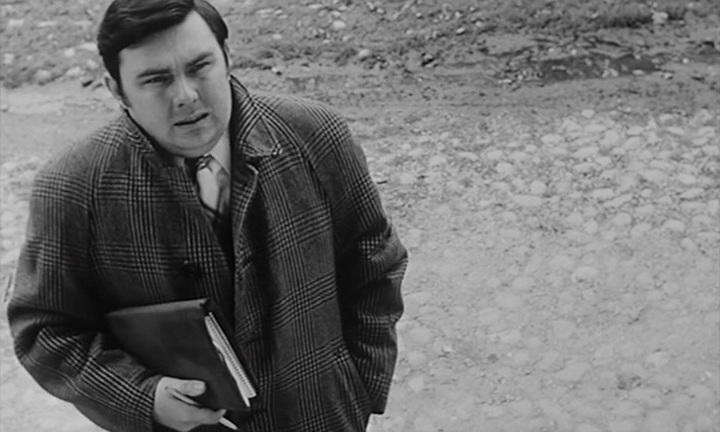
They also shared composers - Patrick Moraz (7 films), Jacques Olivier (4), Guy Bovet (5) - and cinematographers - Renato Berna (13 films), Jean Zeller (5).
Soutter's first feature film was La Lune avec les dents (1967). His second feature, Haschisch (1968), is connected to the first by a photograph on a wall showing the final shot of that first film:
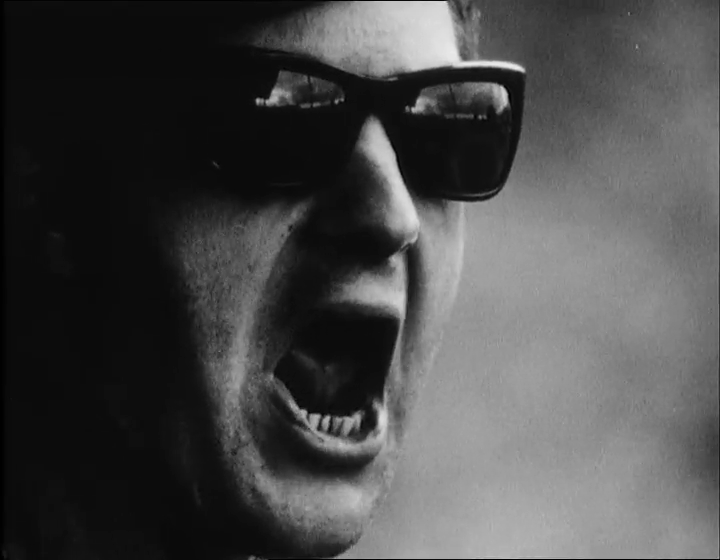
La Lune avec les dents
|

Haschisch
|
The room with the photograph is the office of a theatre director. Nothing in the narrative of Haschisch connects William Tudor, the protagonist of La Lune avec les dents, with this place or situation, and the photograph can only be read heterodiegetically as an intertextual signpost. It was placed there by Soutter as a tacit hommage to the actor in the photograph, William Wissmer, who had committed suicide just weeks after the completion of La Lune avec les dents.
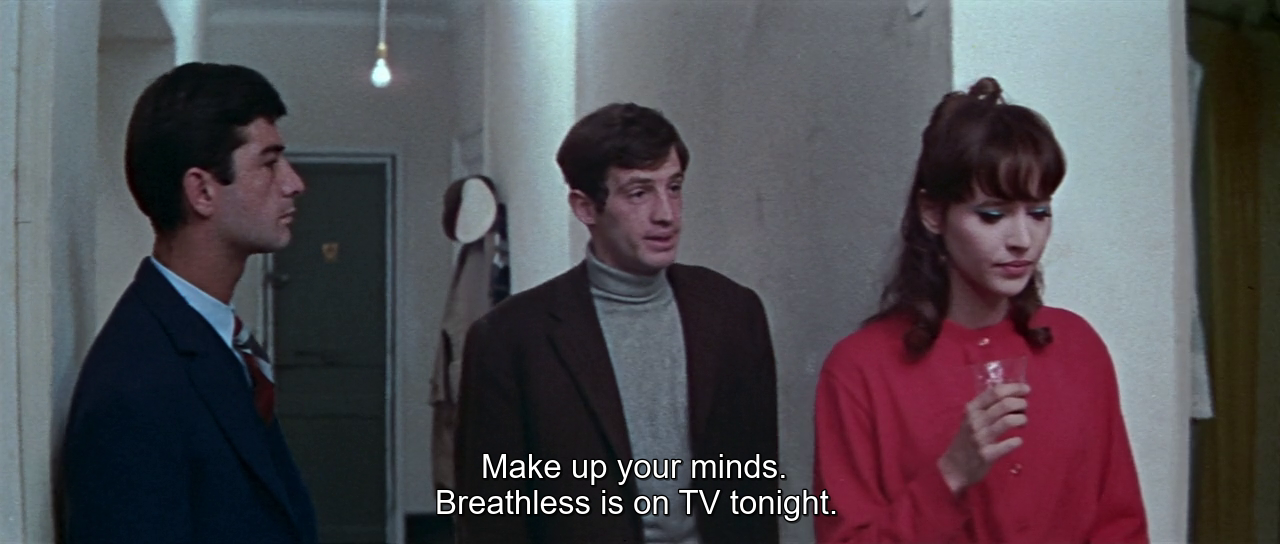
In some of Godard's French New Wave films narratively incongruous references function in a similar way as signposts, though ludically rather than mournfully. A good example from Une femme est une femme is Alfred - Jean-Paul Belmondo - saying that he wants to get to watch A bout de souffle (starring Jean-Paul Belmondo) on tv, and then later meeting Jeanne Moreau and asking how's it going with 'Jules et Jim':
In some of Godard's French New Wave films narratively incongruous references function in a similar way as signposts, though ludically rather than mournfully. A good example from Une femme est une femme is Alfred - Jean-Paul Belmondo - saying that he wants to get to watch A bout de souffle (starring Jean-Paul Belmondo) on tv, and then later meeting Jeanne Moreau and asking how's it going with 'Jules et Jim':
|

|
William Wissmer's photograph in Haschisch marks a place that, had he lived, the actor might have occupied in that film. Following Haschisch it became Soutter's practice to re-use actors from previous films; in some cases they explicit reprise their rôles, in others they are presented so that they might easily be the same person from the preceding film. The protagonist of Haschisch is an actor, Mathieu (played by Dominique Catton), and in Soutter's next film La Pomme (1969) Catton reappears, unnamed but again an actor:
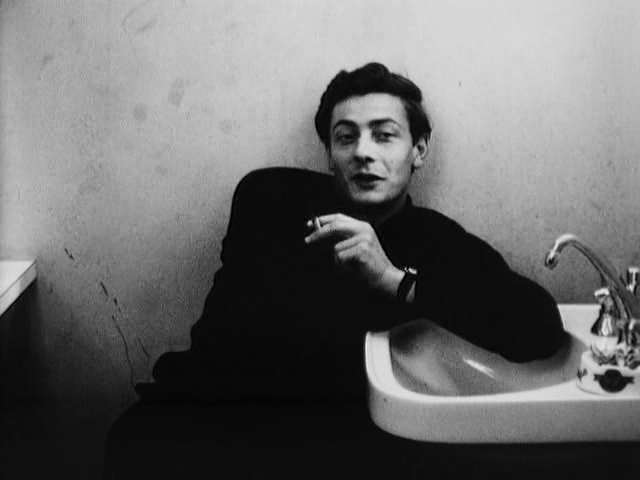
Haschisch
|
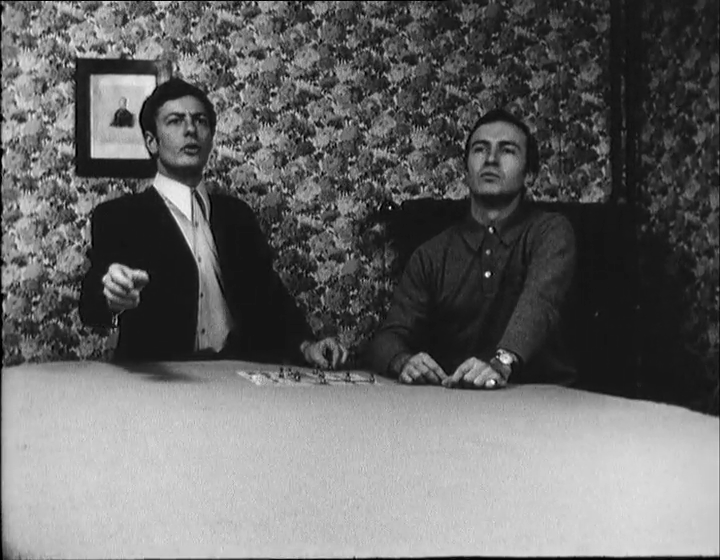
La Pomme
|
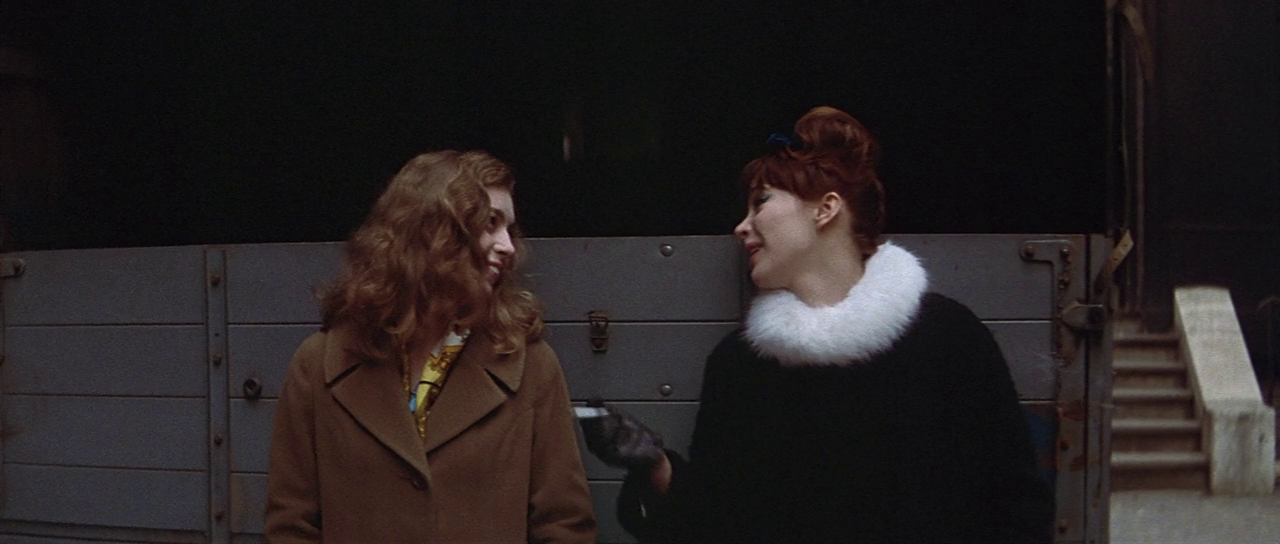
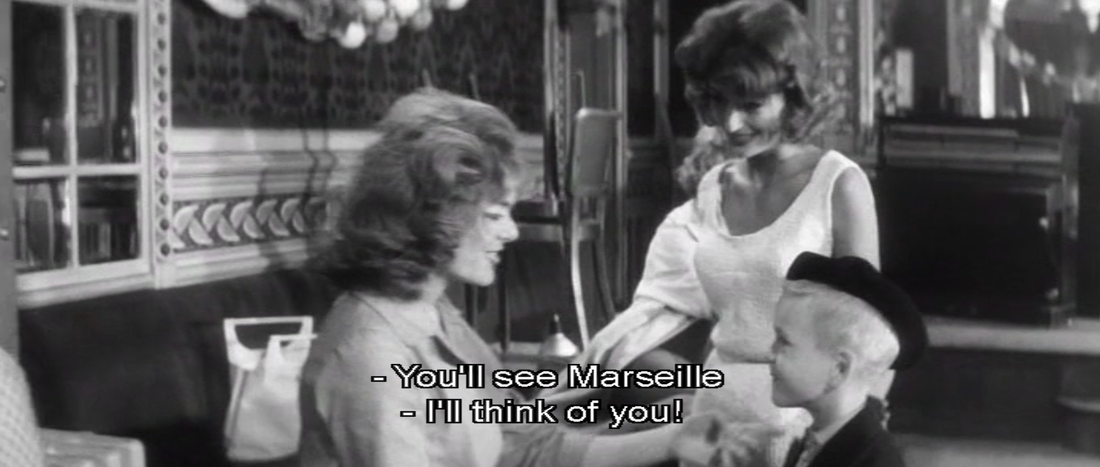
The connection across films can be made by allusion. In La Pomme, Claudine (played by Claudine Berthet) tells her friend Laura that her previous boyfriend had left her and gone to Anatolia. In Haschisch Mathieu the actor (above) had planned to go to Anatolia with his friend Bruno, but Mathieu changed his mind and so Bruno went to Anatolia alone. In so doing he left behind his fiancée Antoinette (Marion Chalut). Bruno and Antoinette's story is the same as that of Claudine and her boyfriend, even if the names are different; in more oblique form this resembles the Balzacian continuity that French New Wave filmmakers sought to establish when referencing characters from an earlier film in a later one. In Godard's Une femme est une femme, for example, a woman played by Marie Dubois says to her friend Angela (Anna Karina) that she had a friend, Lola, who went to Marseille and ended up in Buenos Aires. At the end of Jacques Demy's Lola the protagonist is leaving for Marseille:
|
|
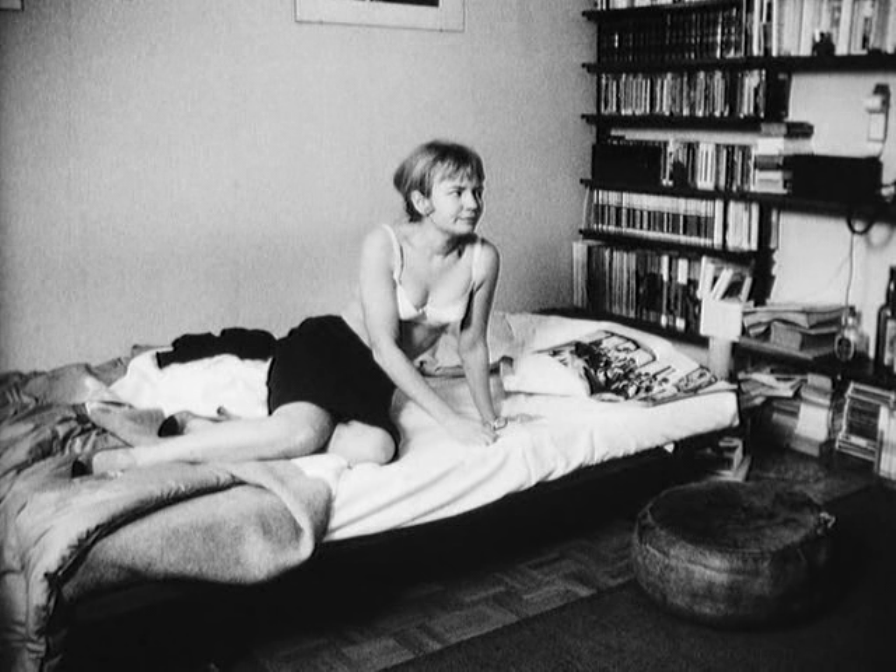
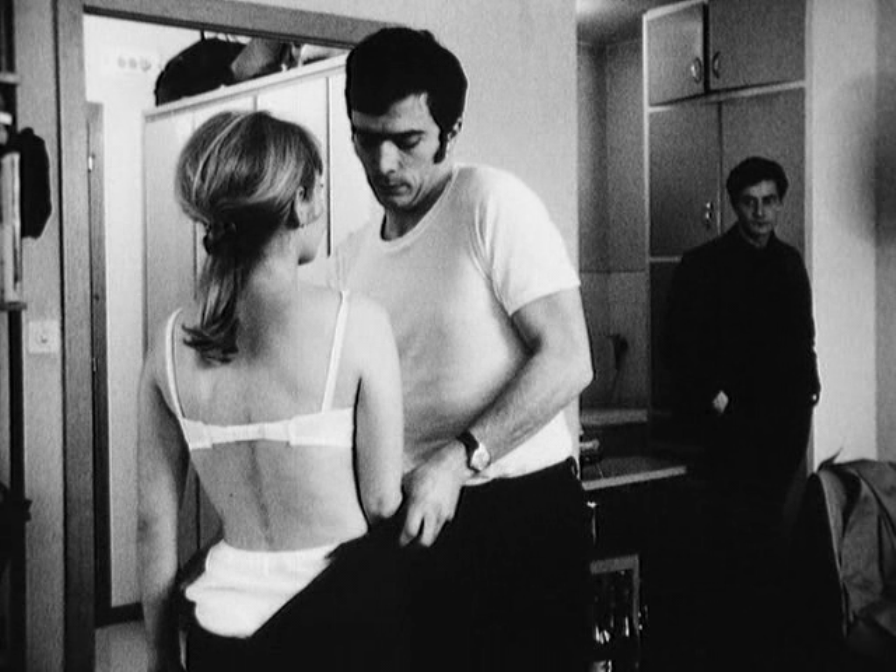
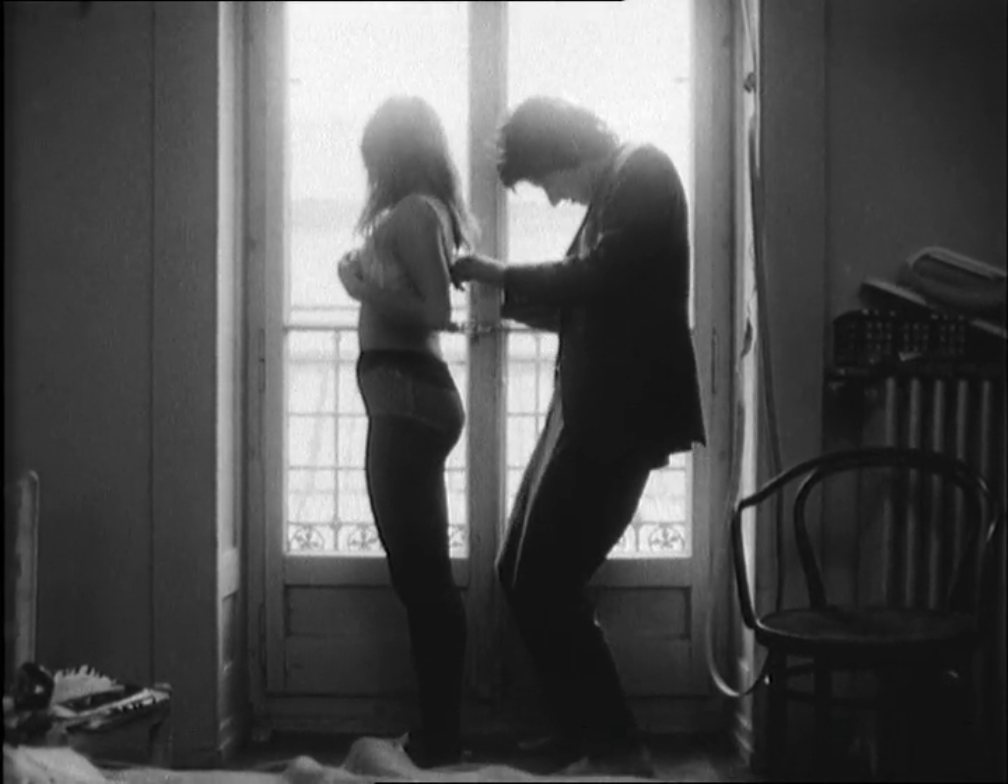
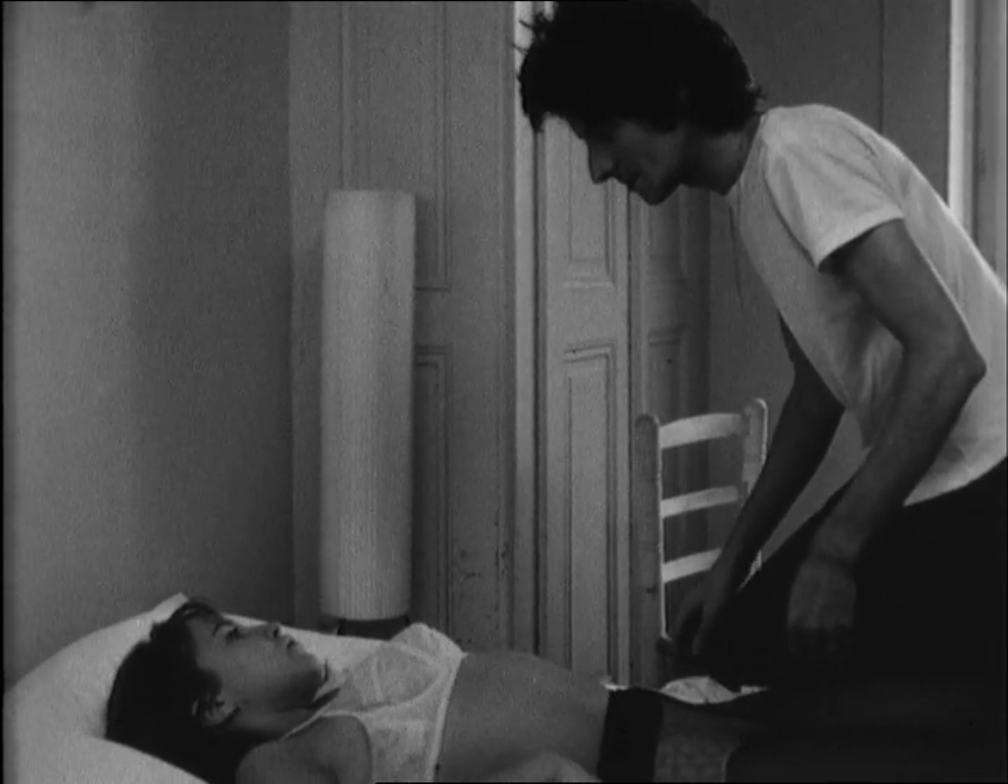
Though Antoinette in Haschisch and Claudine in La Pomme are played by different women, they resemble each other, especially in two complementary scenes across the two films. In one, after they have had sex, the man forcibly dresses the woman, and in the other the man starts to help the woman dress, but then they have sex:
Haschisch
|
Haschisch
|
La Pomme
|
La Pomme
|
So the continuity across films is established here by a combination of allusion and the repetition of actions.
The continuity between La Pomme and Soutter's next film, James ou pas (1970) is established by matching action, character and setting. The last sequence of La Pomme is at Geneva's airport, Cornavin. There we see Simon (Arnold Walter), wearing a false beard. James ou pas has an early scene at the same airport, and there we see again Arnold Walter as Simon, still wearing the false beard:
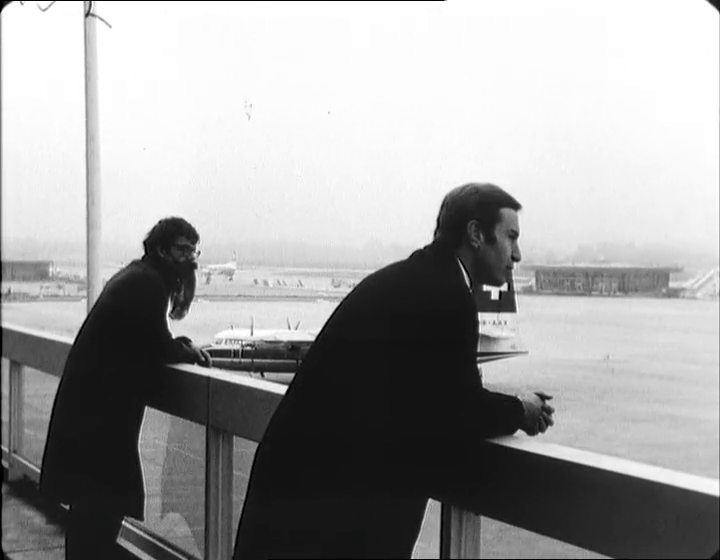
La Pomme
|
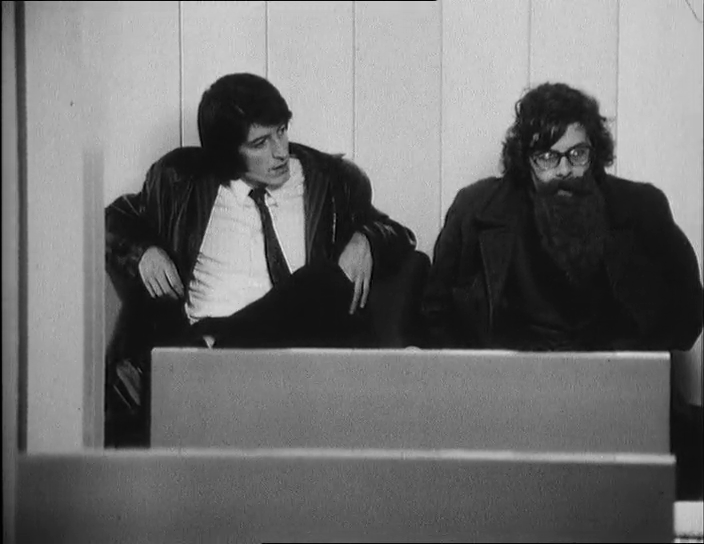
James ou pas
|
The man he is with in James ou pas, above, is played by Daniel Stuffel. He had a minor rôle, unnamed, as Simon's friend in La Pomme, but Simon now disappears from James ou pas while the friend, still unnamed, continues as a character through most of this film.
A scene towards the end of James ou pas makes another connection to La Pomme through an action. At the end of La Pomme Simon had given his rival in love a kick in the bottom; in James ou pas Simon's friend is given a kick in the bottom by a love rival (Jean-Luc Bideau):
A scene towards the end of James ou pas makes another connection to La Pomme through an action. At the end of La Pomme Simon had given his rival in love a kick in the bottom; in James ou pas Simon's friend is given a kick in the bottom by a love rival (Jean-Luc Bideau):
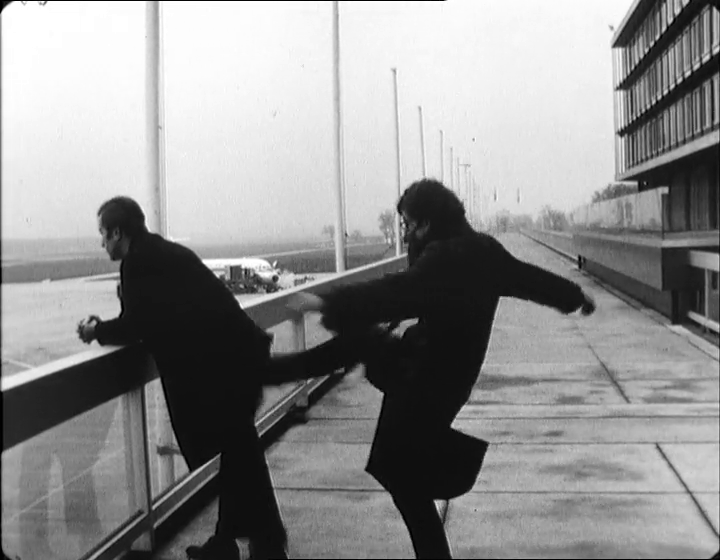
La Pomme
|
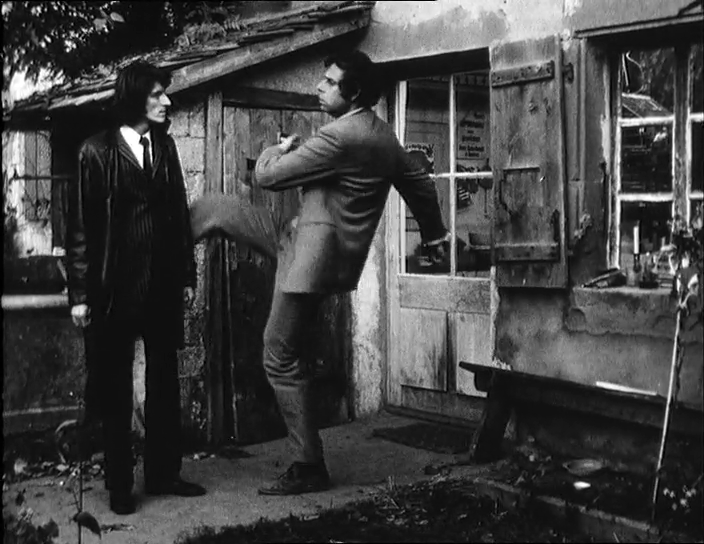
James ou pas
|
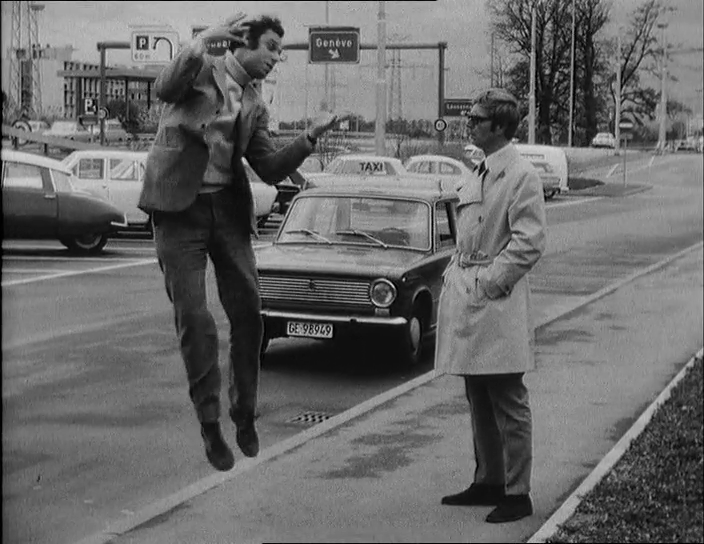
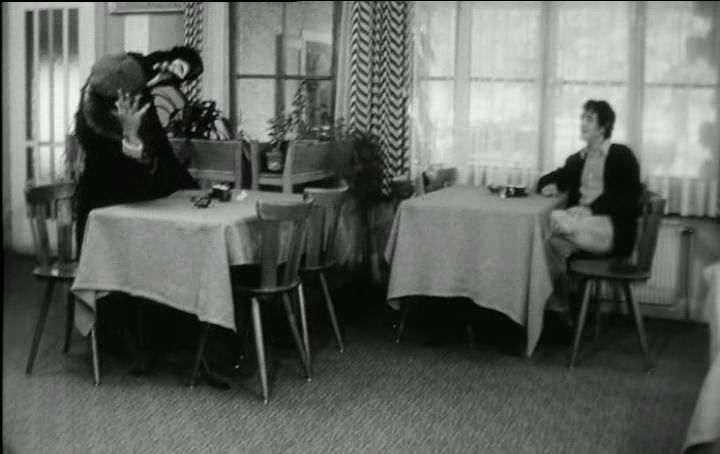
In Les Arpenteurs (1972), Soutter's fifth feature, the connections to his earlier films are more oblique. Jean-Luc Bideau appears again but the addition of a moustache makes his appearance entirely different. The one connection is an action. Several times in James ou pas Bideau replicates the movements of footballers as he dramatically describes their warm-up before a match, and in a brief moment near the beginning of Les Arpenteurs he makes a footballing gesture, diving with his hands, and asks 'remember?':
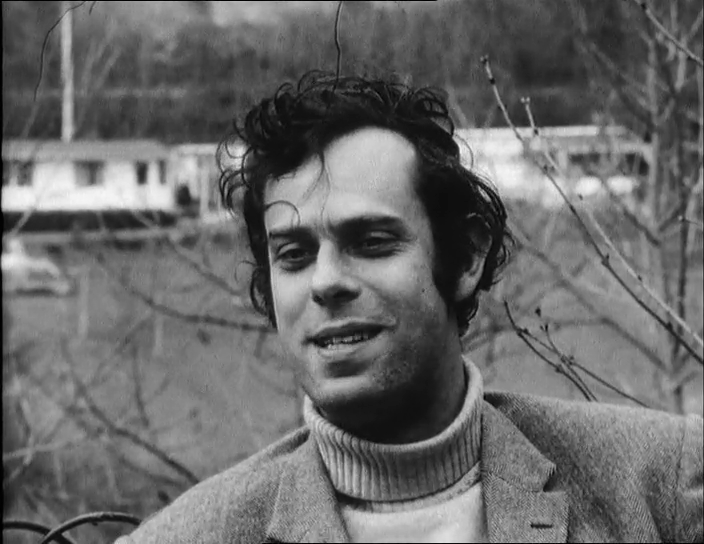
James ou pas
|
|
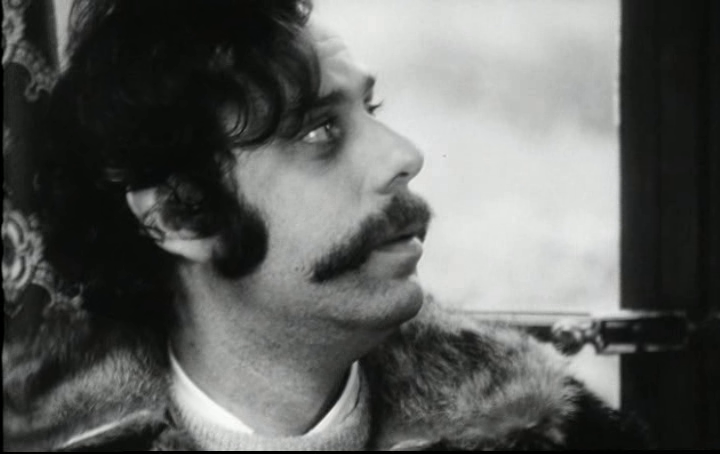
Les Arpenteurs
|
|
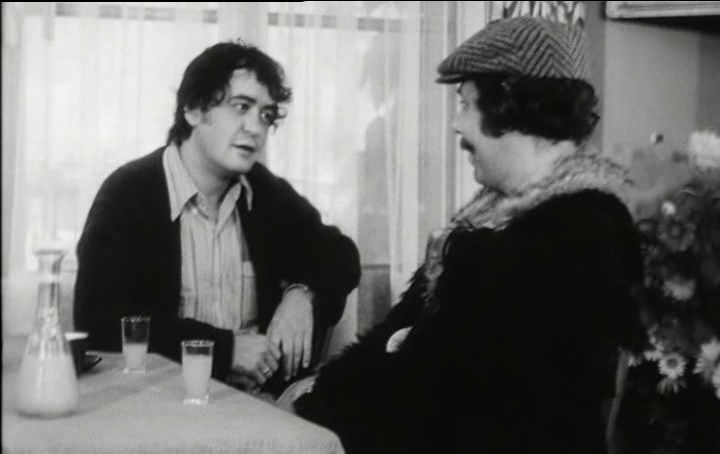
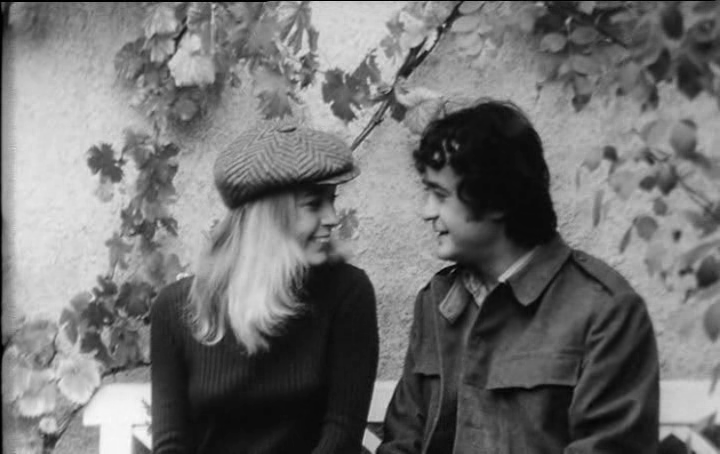
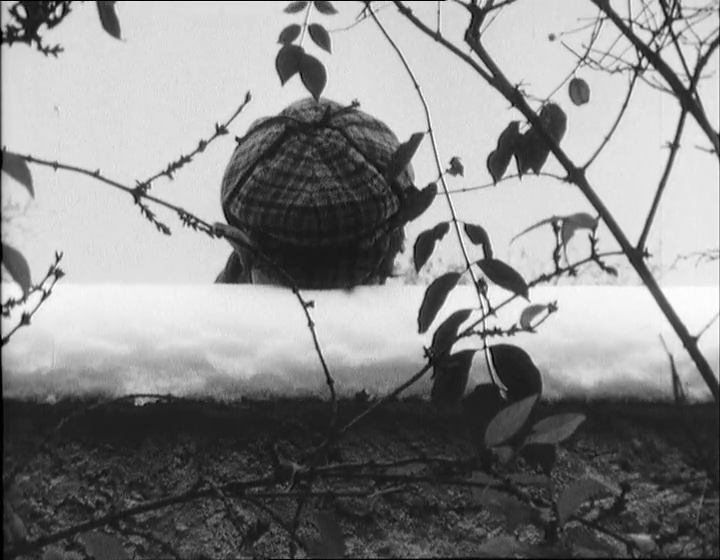
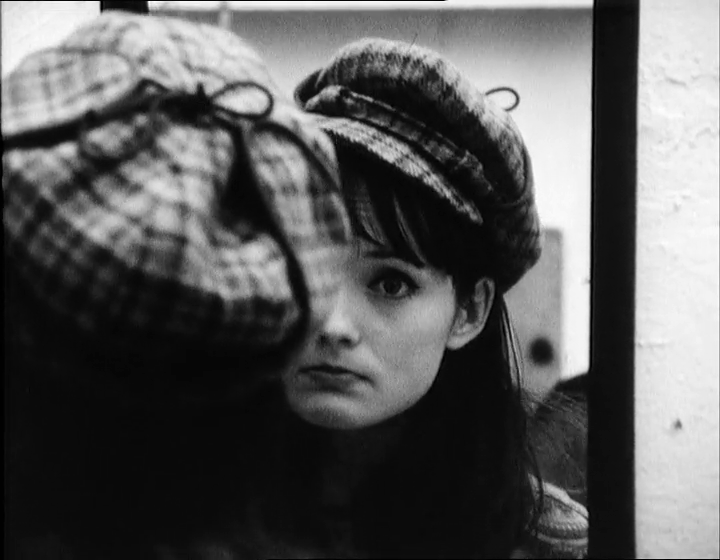
Another oblique connection between Les Arpenteurs and an earlier film is made by an object, the hat that passes from Lucien (Jacques Denis) to Léon (Jean-Luc Bideau) then via Ann (Jacqueline Moore) and Alice (Marie Dubois) back to Lucien. This echoes the business around Simon's hat in La Pomme, which passes to Laura for a while and then is lost. The hats in each film are similar enough for one to be a memory of the other:
|
|
|
|
Recurrent objects, actions and actors are characteristic of the world that Soutter presents. The recurrence of his actors in films by other Groupe 5 filmmakers suggests that this is a world they share. Soutter matched the end of James ou pas, a freeze-frame showing Jean-Luc Bideau and Jacques Denis, to a scene between the two near the beginning of Les Arpenteurs:
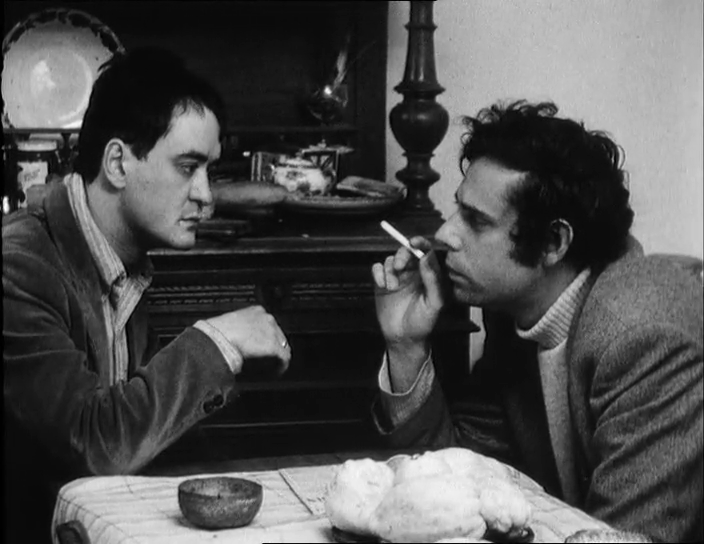
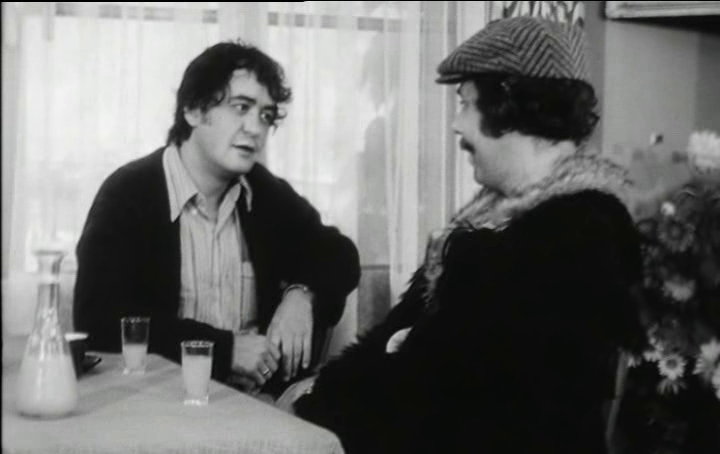
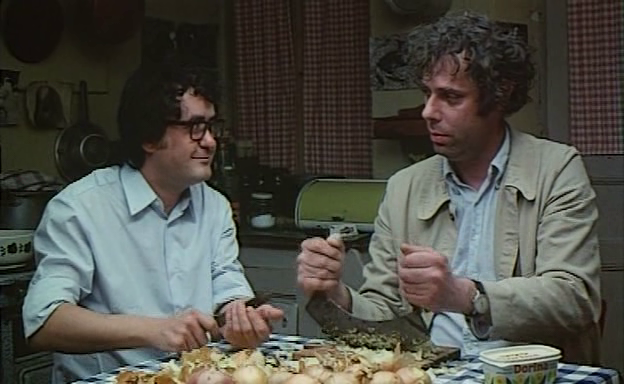
Between these two Soutter films Bideau and Denis are paired by Alain Tanner in La Salamandre (1971), and later Tanner pairs them again in Jonas qui aura 25 ans en l'an 2000 (1976):

In Claude Goretta's first film Le Fou (1970), Bideau, without Denis, has a brief rôle as 'Jean-Luc', effectively playing himself, or at least the aggregate of all his appearances in Swiss New Wave films:

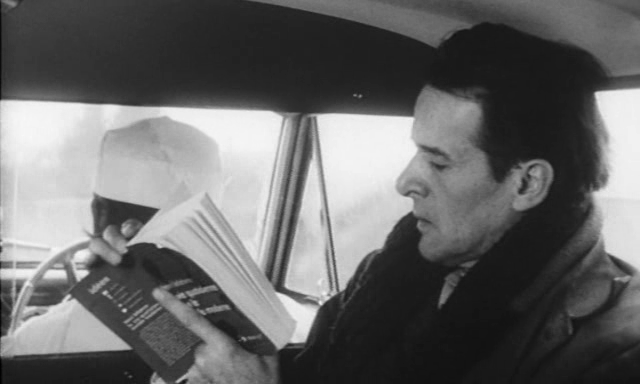
The omnipresence of Bideau and Denis in generally similar rôles contributes to the impression that the world represented in Swiss New Wave cinema is a real one in which all of the films have a share. Cinematic shared worlds have a tendency, however, to counter this real-world coherence with intertextual play that foregrounds the constructedness and reflexivity of the world represented, and that intertextual play can also be manifest in the recurrence of actors. The man whose hand Bideau is shaking, above, is François Simon, playing Georges Plond in Goretta's Le Fou, the madman. Simon's immediately preceding rôle was as Charles Dé in Tanner's Charles mort ou vif (1969), a character wholly different in situation, social standing and class position from Georges Plond, so that there is no possibility of seeing the two characters as an expression of realist continuity within the world occupied by the two films. However, the conclusion of Charles mort ou vif has the protagonist being taken away by men in white coats to be confined to an asylum - his son is claiming that Charles is no longer sane. Goretta's film picks up the accusation and applies it to Georges, who like Charles becomes, from an institutional viewpoint, mad. The continuity of plot and theme is underscored by an actor-centred intertextual play, since in Charles mort ou vif one of the men in white coats was played by Bideau:
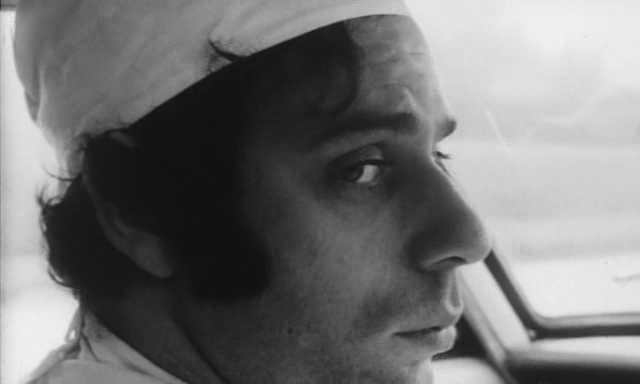
|
|
The handshake in Goretta's film is the antithetical intertext of this closing scene from Tanner's film.
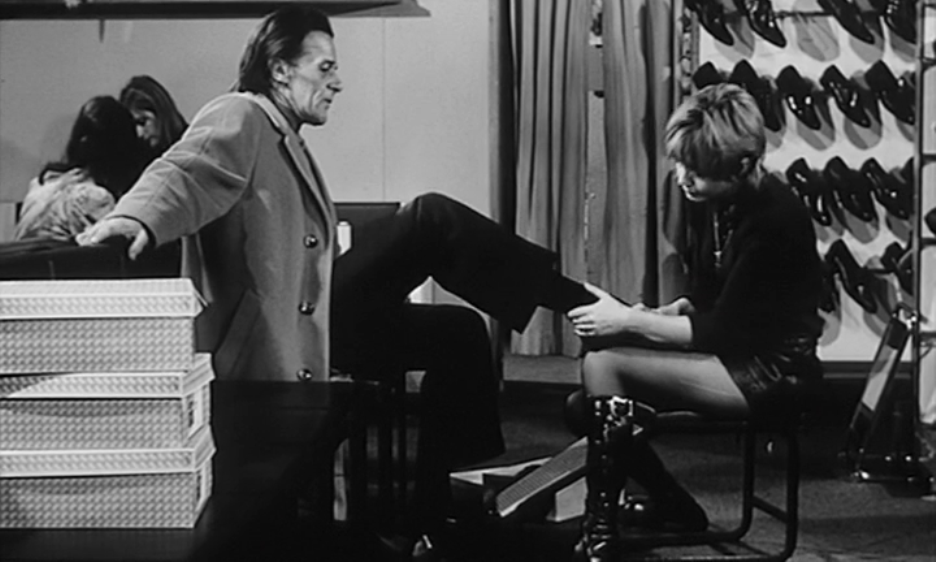
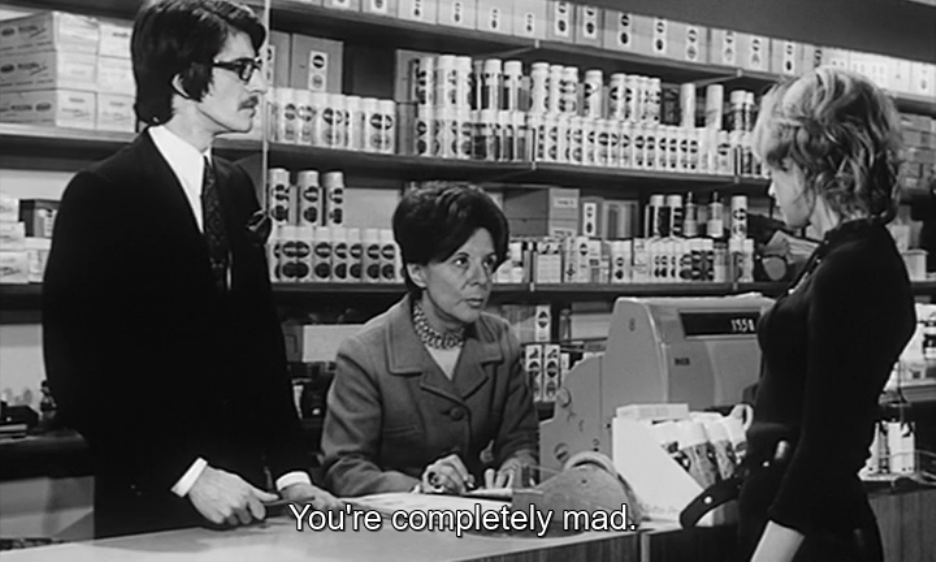
François Simon's recurrences in Swiss New Wave films play on the dichotomy estabished in these first two rôles. Tanner follows up on the 'madness' of Charles mort ou vif at the end of La Salamandre (1971), where his female protagonist, working in a shoe shop, is accused of madness by her employers. The accusation is prompted by her erotic fondling of the leg of a customer, who is played by François Simon:
|
|
|
It would be difficult to find a realist continuity here with either of Simon's preceding SwissNew Wave rôles, since we can assume that after year or so Charles would still be in the asylum to which he was taken in Charles mort ou vif, and we know that by the end of Le Fou Georges is dead.
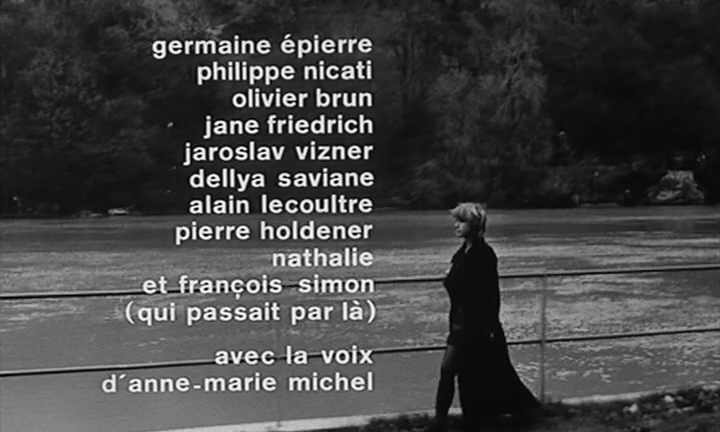
We can conclude, rather, that this is François Simon as himself, since the explanation given in the credits of the actor's presence in the film is that he just happened to be passing (see right). |
|
The next time Simon appears in a Goretta film it as the enigmatic Emile in L'Invitation (1973). Emile is clearly a pseudonym, premised on his function as educator of his employer Rémy Placet, an allusion to Jean-Jacques Rousseau's Emile ou de l'éducation (1762) - Simon will play Rousseau in Goretta's Les Chemins de l'exil in 1978.
If 'Emile' is a pseudonym, I am inclined to conjecture that the character is in fact Charles Dé, from Charles mort ou vif, now released from the asylum, relieved of the burden of running a business, and free to reinvent himself as a a polymathic, polyglottal citizen of the world. There is continuity here with the poetic intellectualism of Charles in Tanner's film: as he is being taken away to the asylum he quotes at length from Henri Lefebvre's La Vie quotidienne dans le monde moderne (1968), a passage relating to Saint-Just and the invention of happiness. Prior to that he had been himself educated in the ways of existential critique by the anarchists who had given him a home.
If 'Emile' is a pseudonym, I am inclined to conjecture that the character is in fact Charles Dé, from Charles mort ou vif, now released from the asylum, relieved of the burden of running a business, and free to reinvent himself as a a polymathic, polyglottal citizen of the world. There is continuity here with the poetic intellectualism of Charles in Tanner's film: as he is being taken away to the asylum he quotes at length from Henri Lefebvre's La Vie quotidienne dans le monde moderne (1968), a passage relating to Saint-Just and the invention of happiness. Prior to that he had been himself educated in the ways of existential critique by the anarchists who had given him a home.
I do not think it is entirely fanciful to see Emile as an evolution of Charles, when we see Tanner's framing of Simon in the mirror matched by Goretta, here:
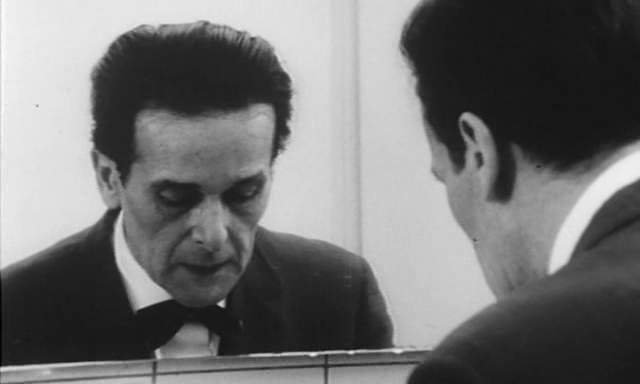
Charles mort ou vif (1969)
|
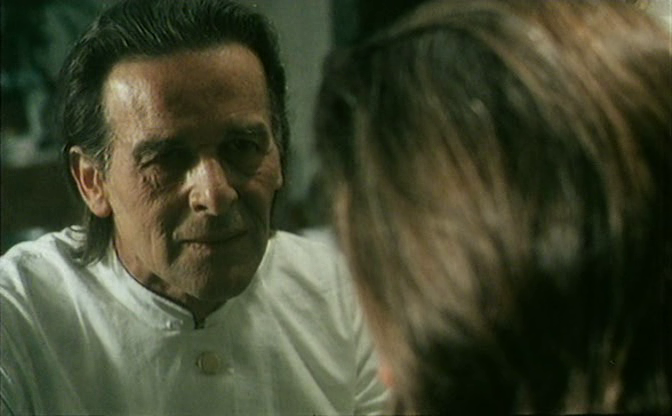
L'Invitation (1973)
|
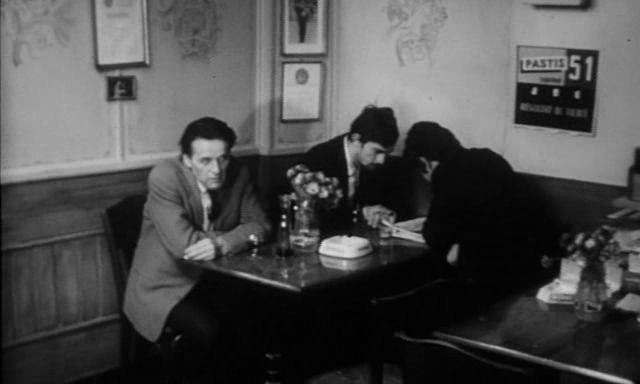
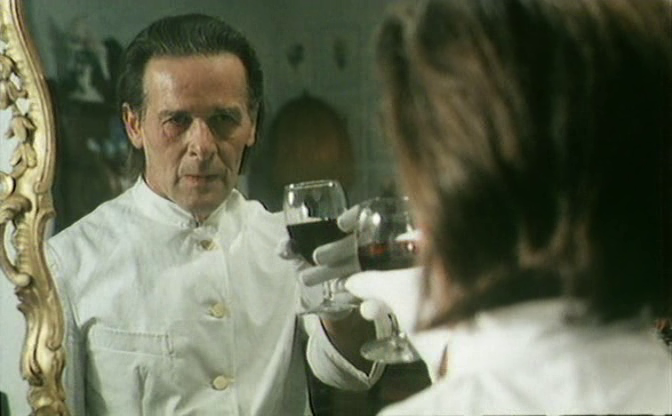
A stage in Charles's evolution from angst-ridden industrialist to existential philosopher is his succumbing to drink. Goretta indicates clearly that his Emile is also bibulous:
|
|
That Charles might have a life after Charles mort ou vif is certainly the view of Patricia Moraz, in her 1977 film Les Indiens sont encore loin. There we find Charles Dé now living in Lausanne, an enigmatic sage who delivers to the protagonist Jenny (Isabelle Huppert) the enigmatic line that gives the film its title: 'The Indians are still far away'.
He is first noticed by two soixante-huitards sitting in a café:
He is first noticed by two soixante-huitards sitting in a café:
|
|
- Isn't that old Charles?
- They must have released him under supervision. - Who is it? - It's Charles Dé. ... He was an industry boss, like all the others... a wife, children, money, everything that guarantees happiness. And then one day, in 1968 or '69, for some reason, a tv company came to interview him. He told the story of his life, not at all in the way they expected. He delivered his confessions to the tv viewers. He really spoke, it created quite a scandal. And then Charles disappeared. Later they found out that he was living in the Geneva suburbs with some man and his wife. His family were more worried about his money than about him, they had him tracked by a detective, and turned over to the laywers. - Was he locked up? - Yes. It's scandalous to prefer the search for identity over habit and money. |
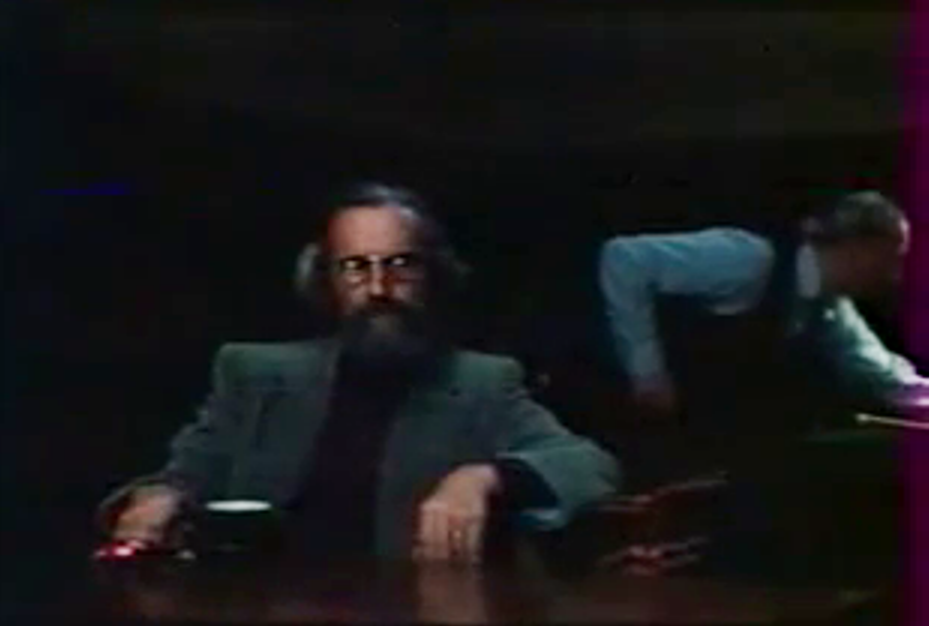
|
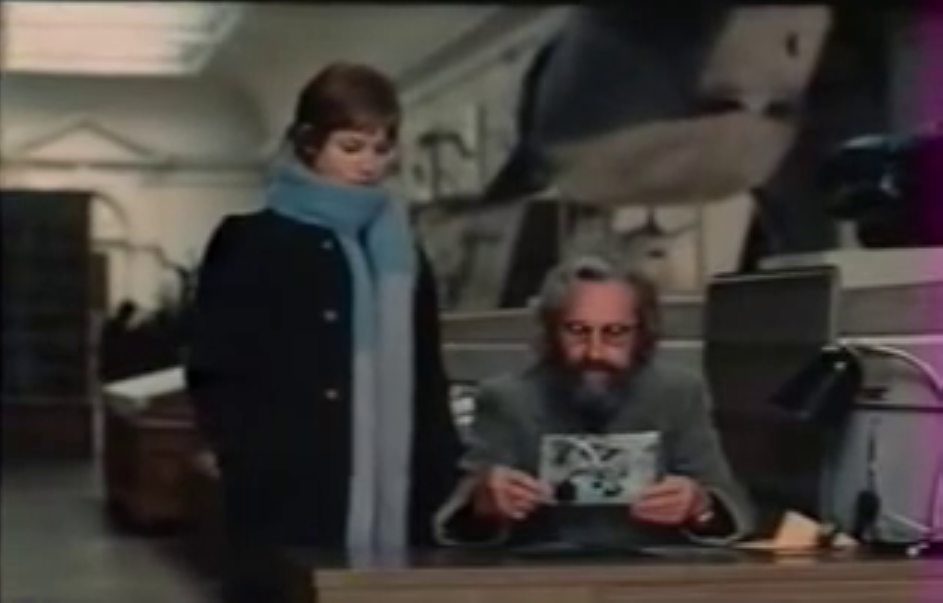
|
You may have noticed that this does not look like François Simon. Moraz has Charles Dé played by another actor, Bernard Arczynski, no doubt because Simon wasn't available. Both Simon and Arczynski had had small parts in Goretta's Vivre ici (1969), but I haven't seen that film to know whether they are in the same scenes, and so whether there is an intertextual prompt to Moraz's casting of one in the other's rôle.
That SNW cinema is situated in an intertextualised shared world was something clearly apparent to Jean-Luc Godard when he returned to (relatively) mainstream narrative filmmaking with Sauve qui peut (la vie), (1980), shot in Geneva and Lausanne. Godard ensured the 'suissitude' of his film firstly by using crew and cast formed by the SNW: the cinematographer Renato Berta, the sound man Luc Yersin, and several Swiss actors: Roland Amstutz (Le Fou, Tanner's Le Milieu du monde, Goretta's Pas si méchant que ça, Soutter's Repérages, Yves Yersin's Les Petites Fugues); Roger Jendly (L'Invitation and Pas si méchant que ça, Tanner's Le Retour d'Afrique, Le Milieu du monde and Jonas qui aura 25 ans en l'an 2000, Soutter's L'Escapade and Repérages); Michel Cassagne (Soutter's Les Arpenteurs, L'Escapade and Repérages, Edelstein's Les Vilaines Manières); Dore de Rosa (Les Petites Fugues).
The three principal members of the cast were French. Nathalie Baye would that same year star in Goretta's La Provinciale. Isabelle Huppert was associated with the Swiss New Wave through Moraz's Les Indiens sont encore loin and Goretta's La Dentellière (1977).
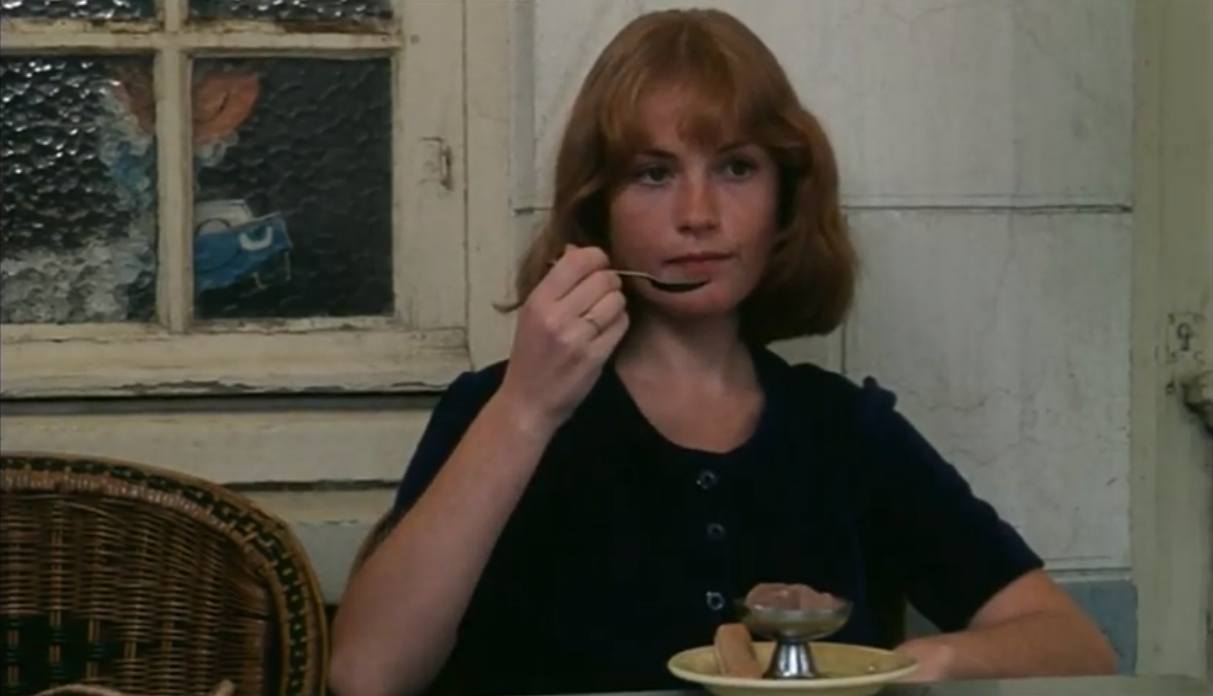
Huppert in La Dentellière
|
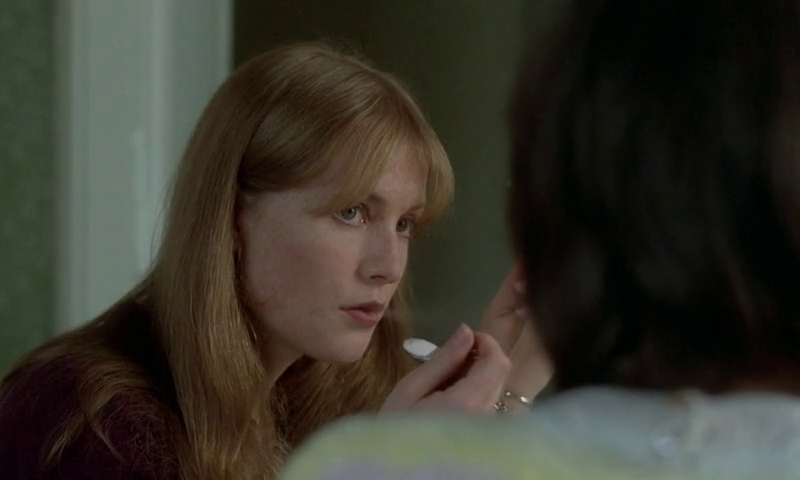
Huppert in Sauve qui peut (la vie)
|
Godard's original plan was to cast Miou-Miou, who had starred in Tanner's Jonas qui aura 25 ans en l'an 2000:
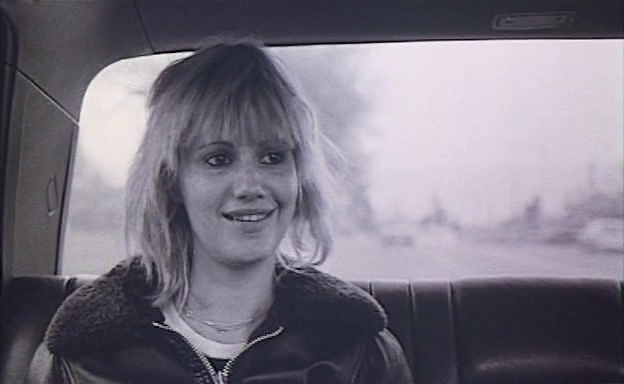
Miou-Miou in Jonas qui aura 25 ans en l'an 2000 (1976)
|
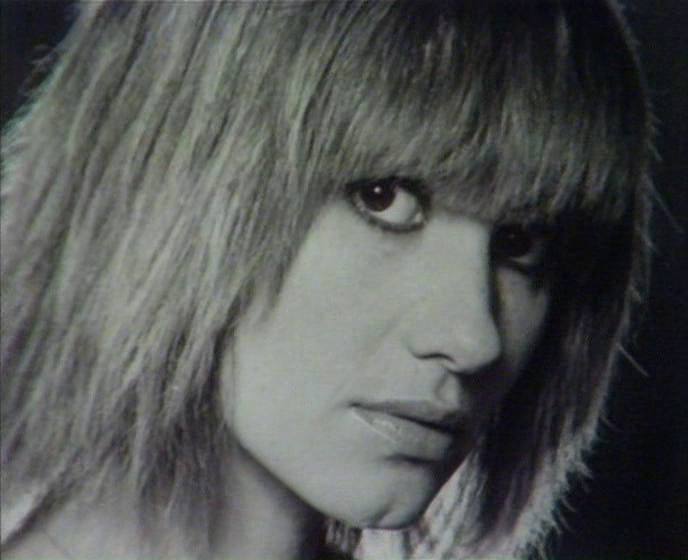
Miou-Miou in Scénario de Sauve qui peut (la vie) (1979)
|
The oddest of Godard's appropriations of the Swiss New Wave is the casting of Alain Tanner's daughter Cécile as the daughter, also called Cécile, of the protagonist (filmmaker called Paul Godard):

Cécile Tanner as 'Cécile' in Sauve qui peut (la vie) (Jean-Luc Godard 1980)
|
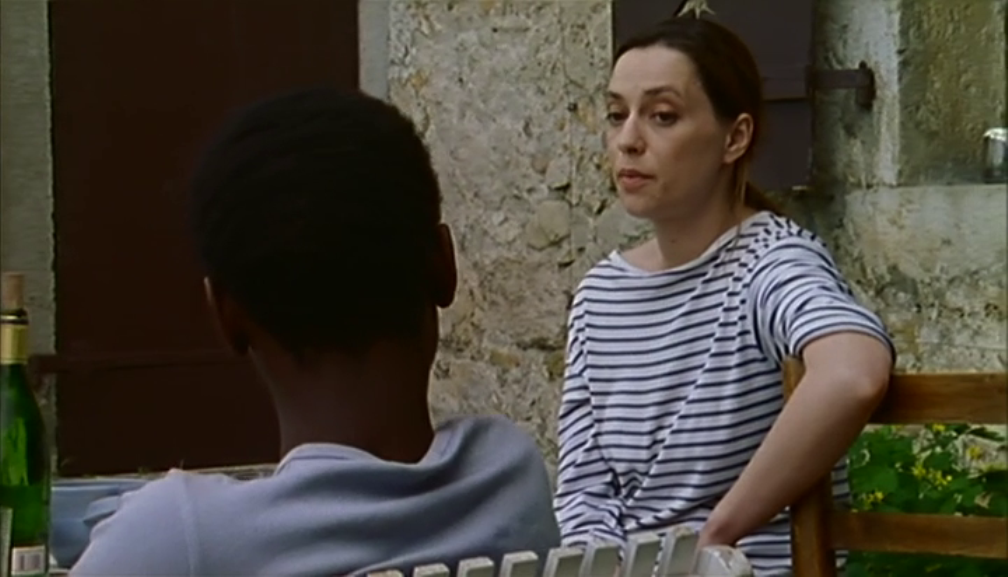
Cécile Tanner as 'Cécile' in Jonas et Lila, à demain (Alain Tanner 1999)
|
|
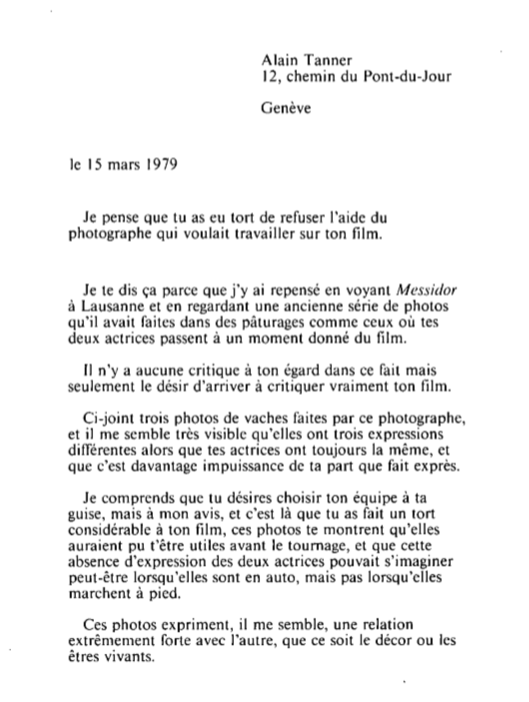
At the same time as he was working on Sauve qui peut Godard edited the 300th issue of Cahiers du Cinéma, and included in it a letter addressed to Alain Tanner (right) in which, in remarkably hostile manner, he criticises how Tanner filmed the two actresses in his film Messidor (1979), comparing their inexpressivity to the expressivity of cows in some photographs (reproduced alongside the letter). The cinematographer on Messidor was Renato Berta, one of three cinematographers who worked on Sauve qui peut; I don't know if the cows in Sauve qui peut were filmed by Berta. |
|
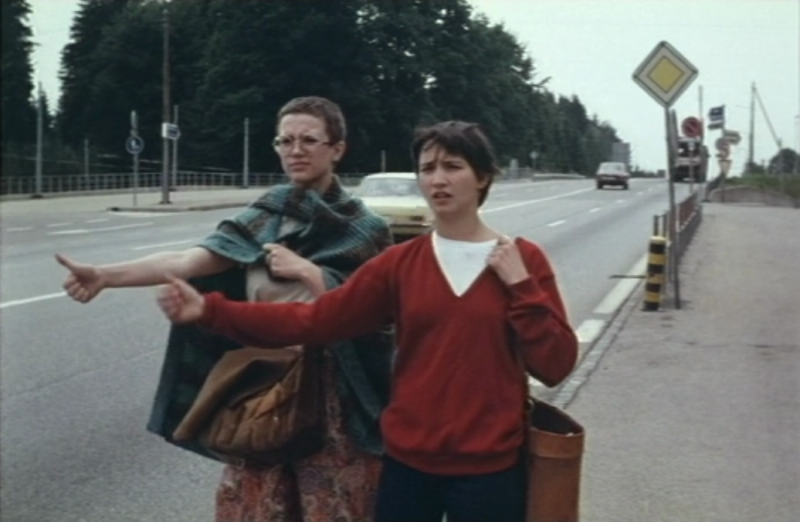
Clémentine Amouroux and Catherine Rétoré in Messidor
|
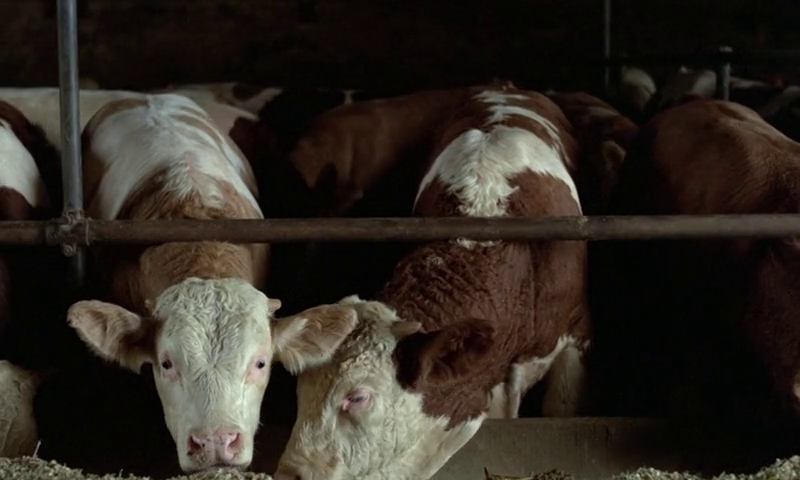
some cows in Sauve qui peut (la vie)
|
Godard's next film, Passion (1982), was also set and filmed in Romandie, but unlike Sauve qui peut it featured no crew or cast associated with the Swiss New Wave, except Isabelle Huppert again:
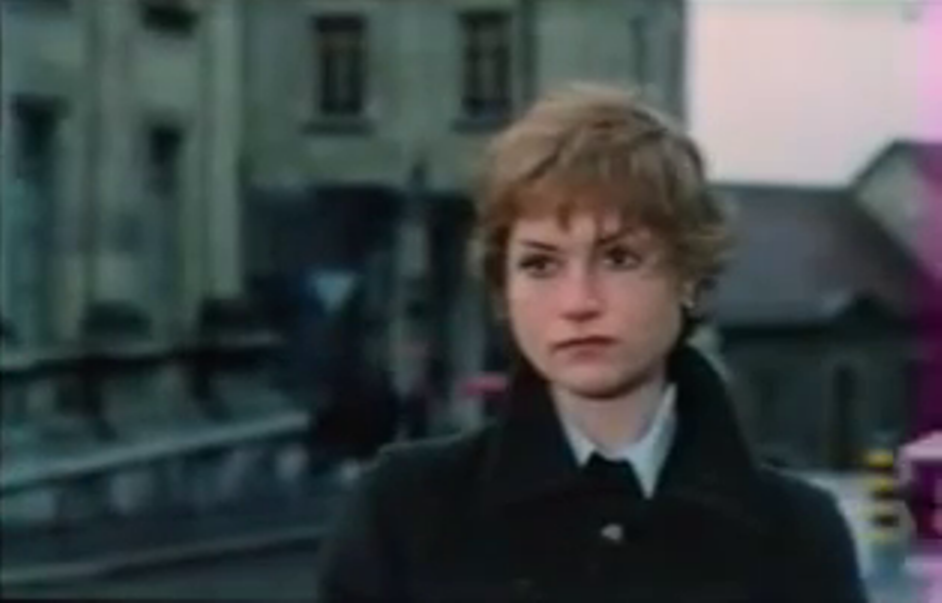
Isabelle Huppert in Les Indiens sont encore loin (1976)
|
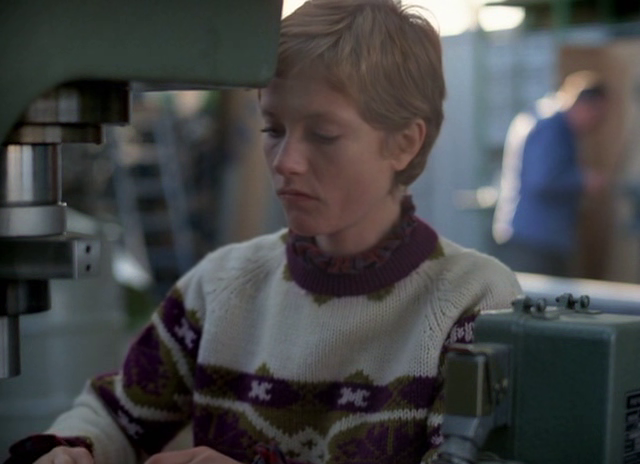
Isabelle Huppert in Passion (1982)
|
Godard had originally intended to include in Passion a majorly emblematic figure of the Swiss New Wave, having cast Jean-Luc Bideau as the owner of the factory in which Huppert's character worked, but Bideau was fired after seven days, apparently for appearing in a play in the evenings when his contract explicitly forbad him doing so. He was replaced by French actor Michel Piccoli.
This post has concentrated on actors as signifiers of a shared-world intertextuality, but there would also be something to say about the use of locations as a signifier of the same kind. In Goretta's Le Fou, Georges Plomd is walking home via the Promenade des Bastions, past the Monument de la Réformation, and through a group of children shooting at each other with toy guns:

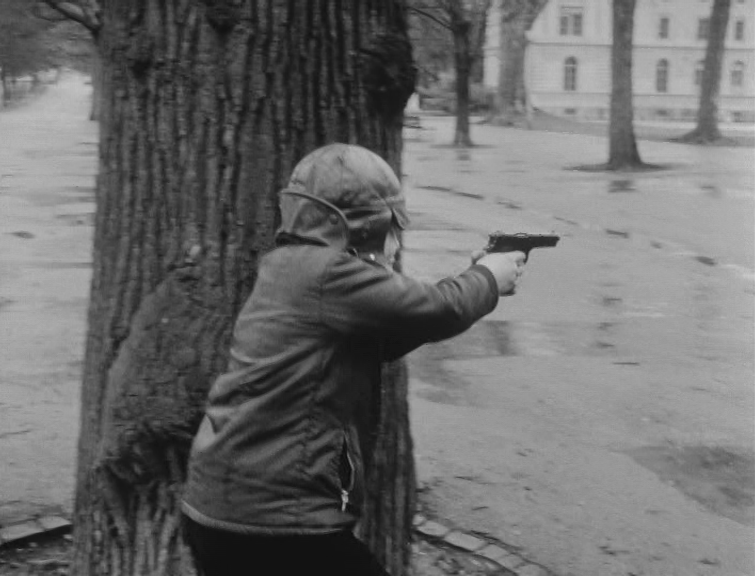
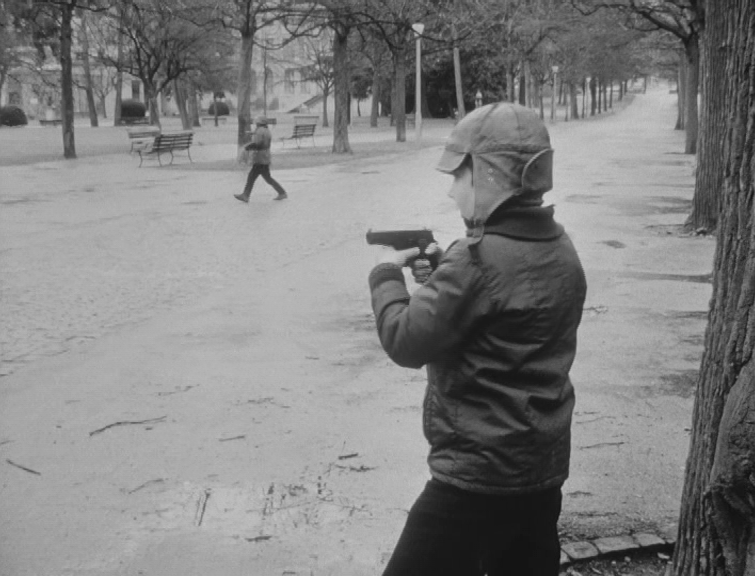
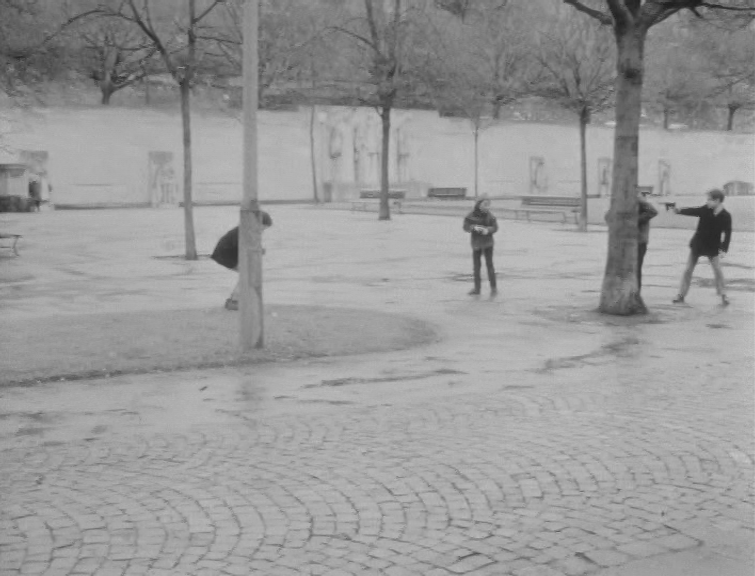
In this same location, three years before, in L'Inconnu de Shandigor (1967), Jean-Louis Roy had staged a real shoot-out between spies, and filmed it somewhat more dramatically:
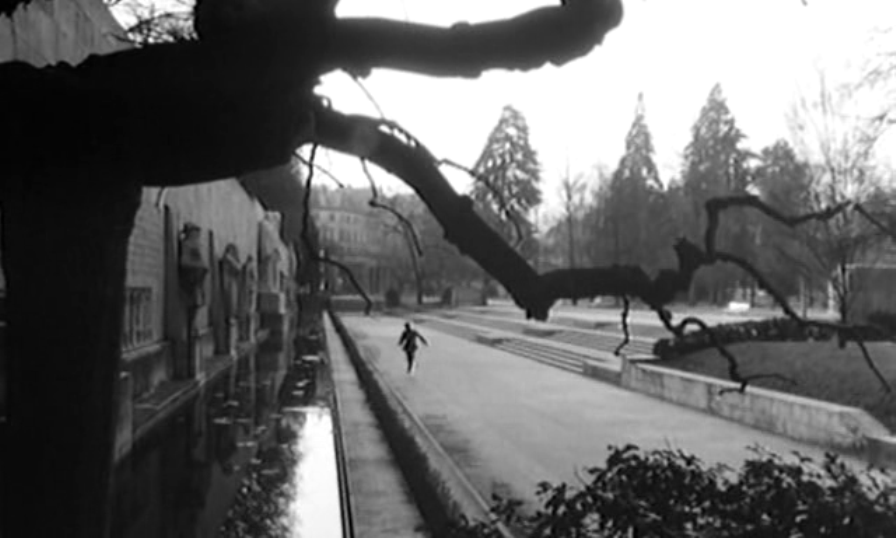
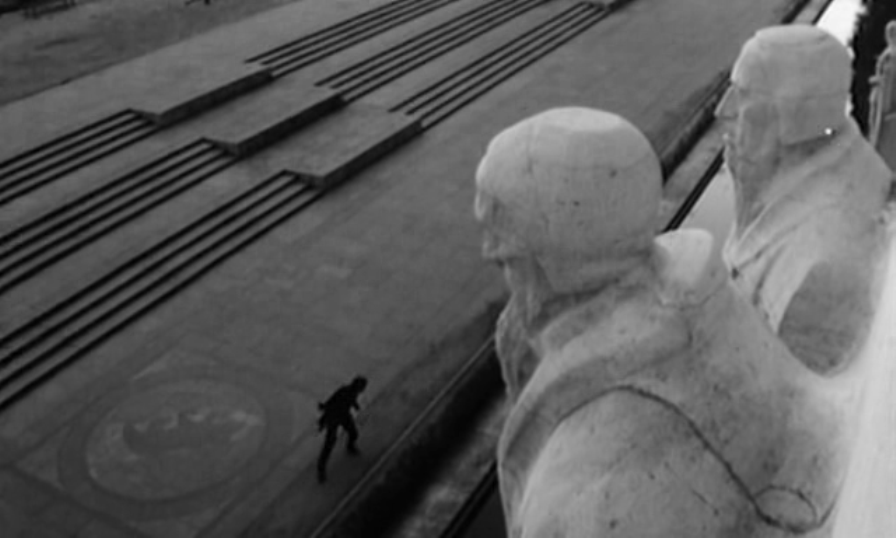
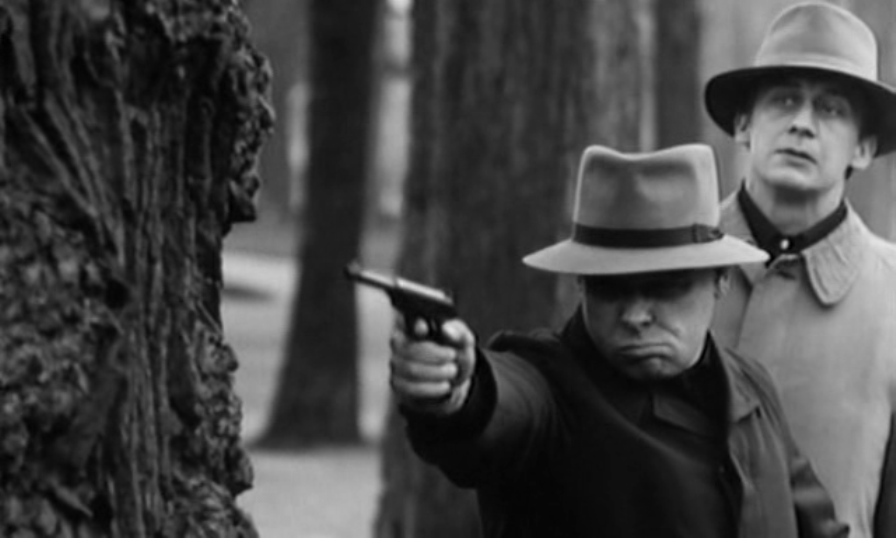
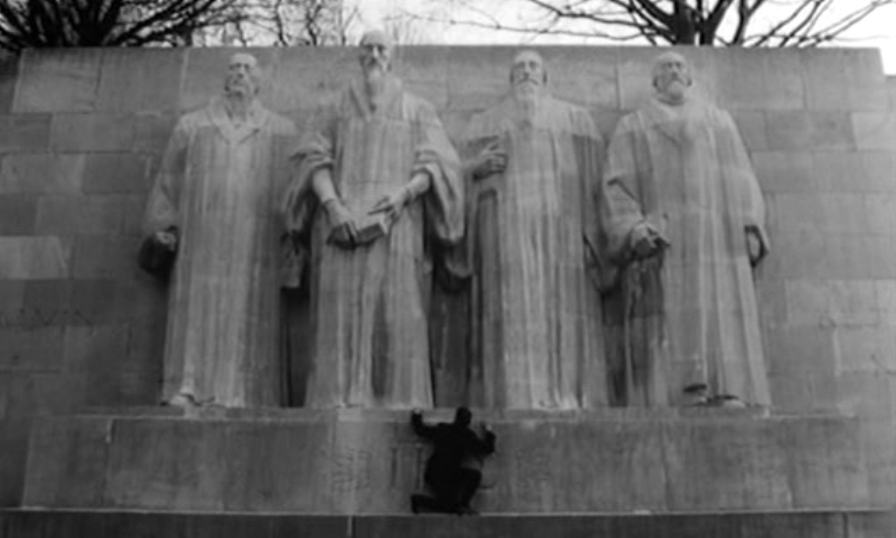
Goretta's restaging declares the difference of his film from Roy's parody spy thriller, one of the two foundational feature films of the Swiss New Wave, though its visual excesses and comedic verve were not taken up as models by other filmmakers (not even by Roy).
The other foundational film of the Swiss New Wave was Soutter's La Lune avec les dents. Goretta also restages an action from this film, in the same location used by Soutter. Georges Plond witnesses a bookshop owner catch and beat up a young man who has tried to steal a book from the boxes on the quayside. Georges then himself steals a book, successfully, but then he throws it into the lake:
The other foundational film of the Swiss New Wave was Soutter's La Lune avec les dents. Goretta also restages an action from this film, in the same location used by Soutter. Georges Plond witnesses a bookshop owner catch and beat up a young man who has tried to steal a book from the boxes on the quayside. Georges then himself steals a book, successfully, but then he throws it into the lake:
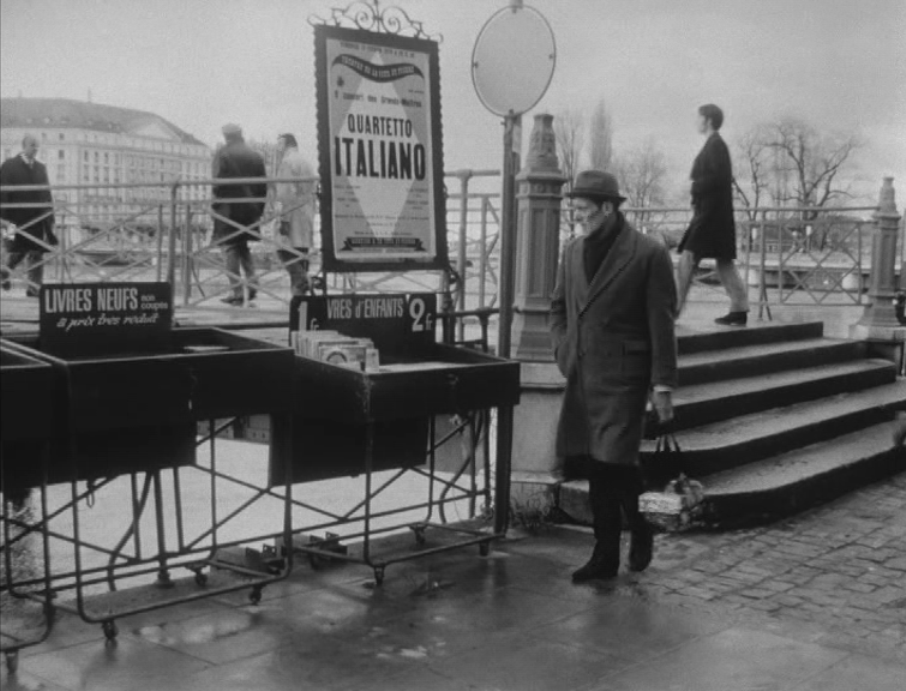
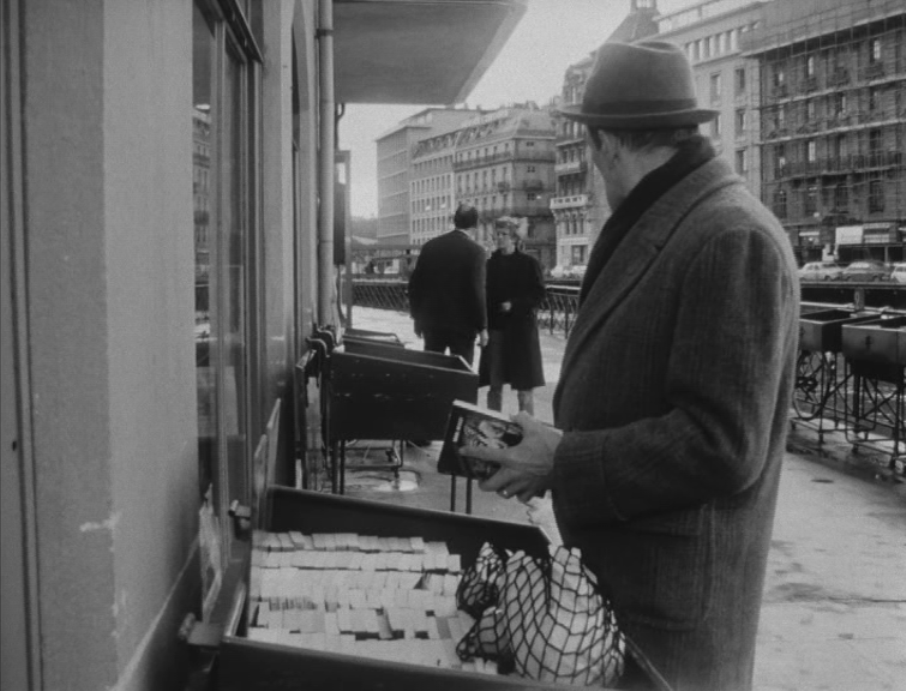
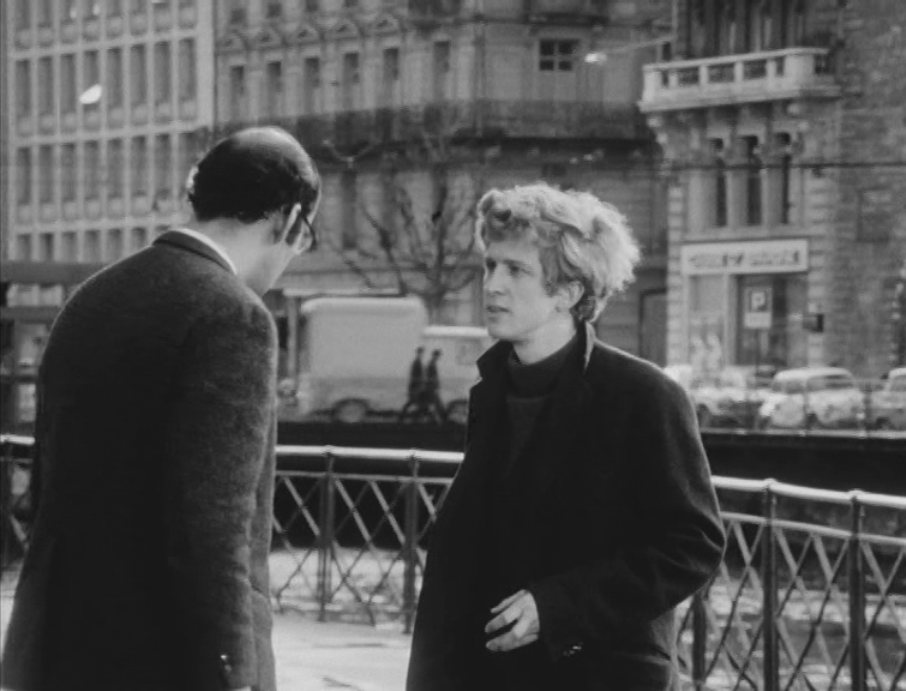
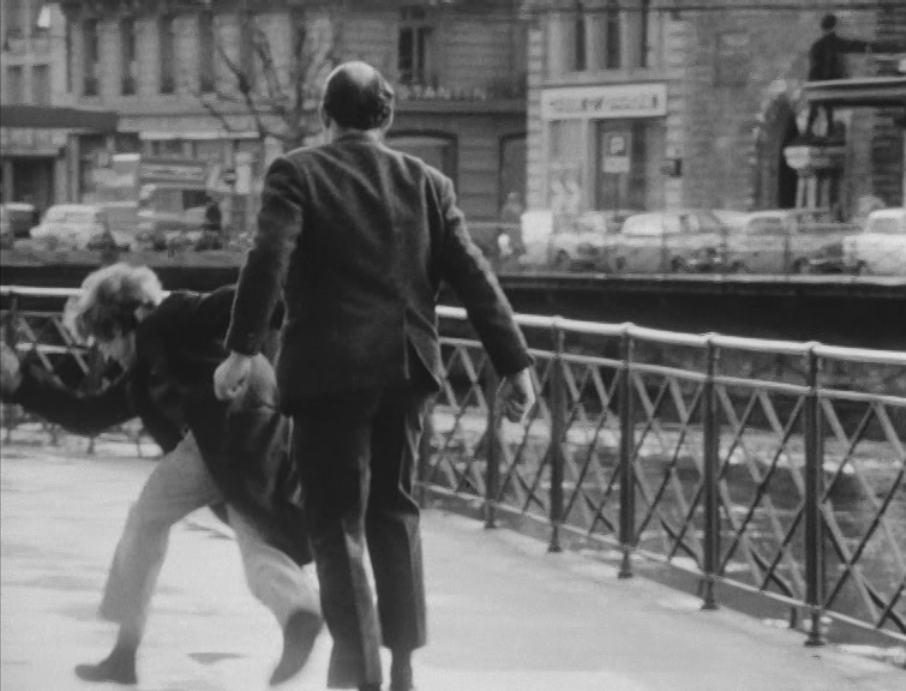
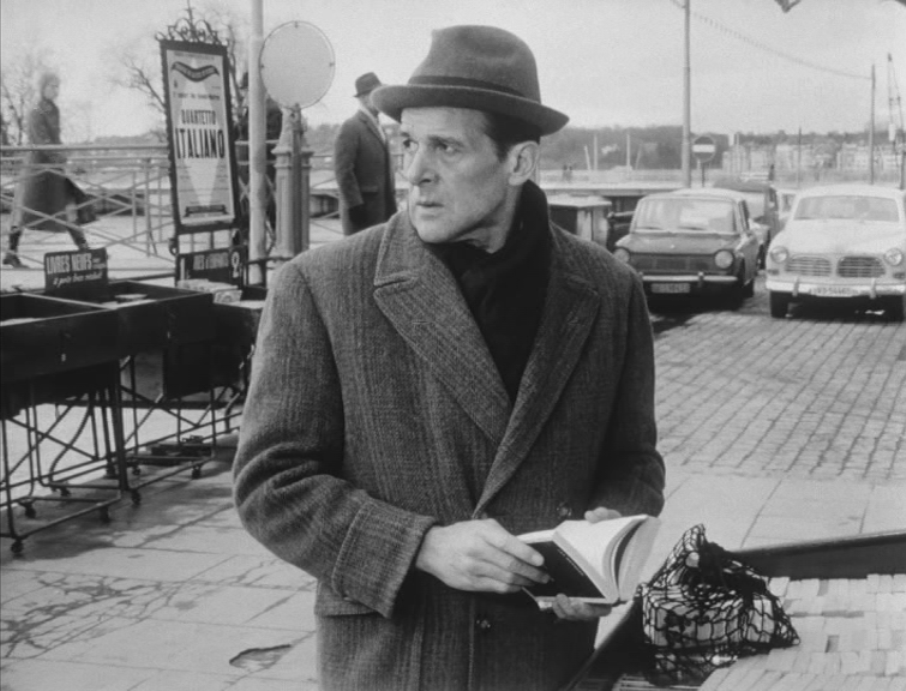
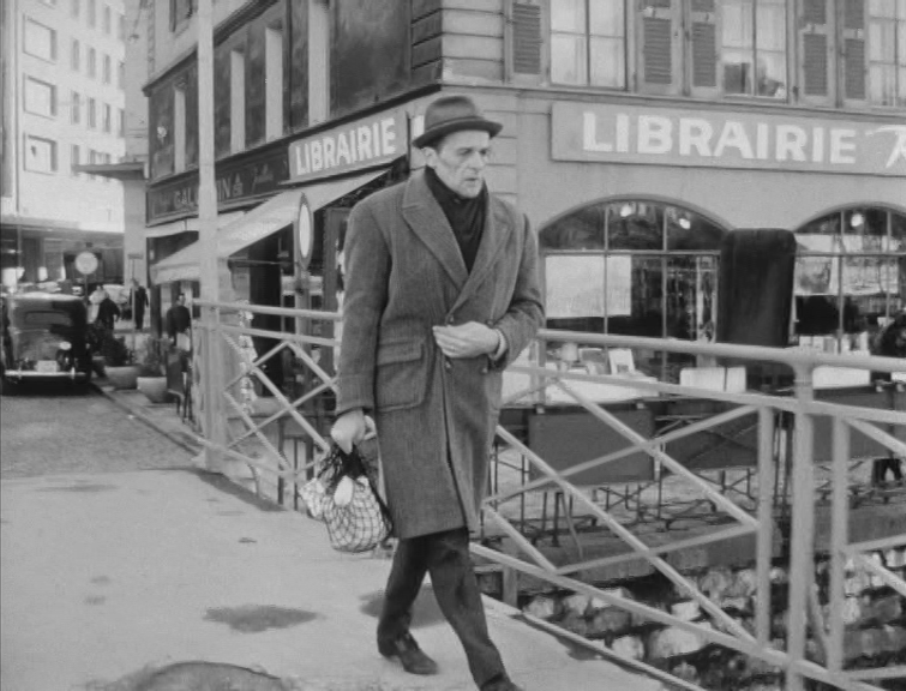
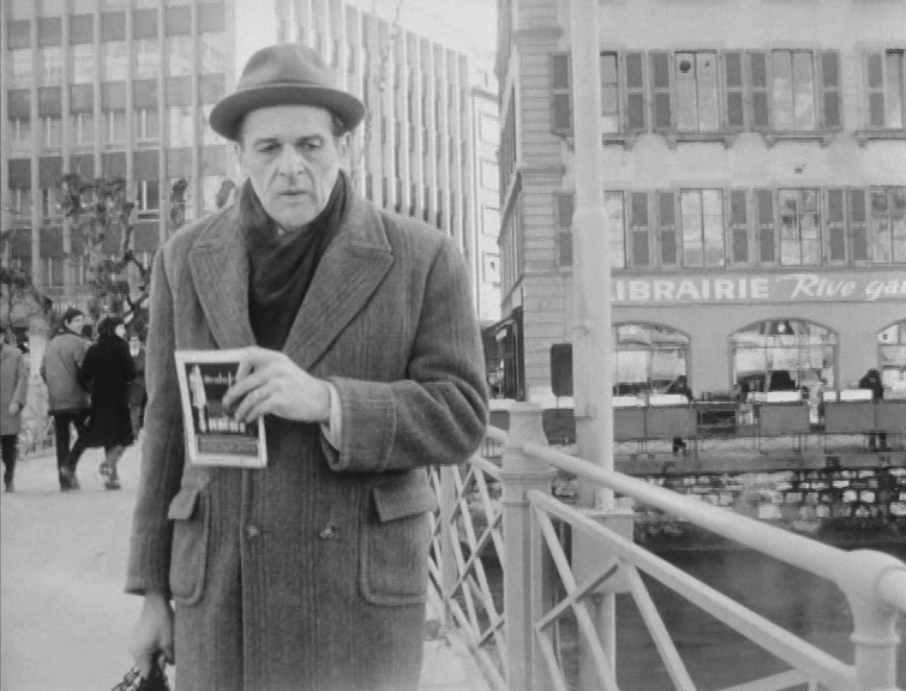
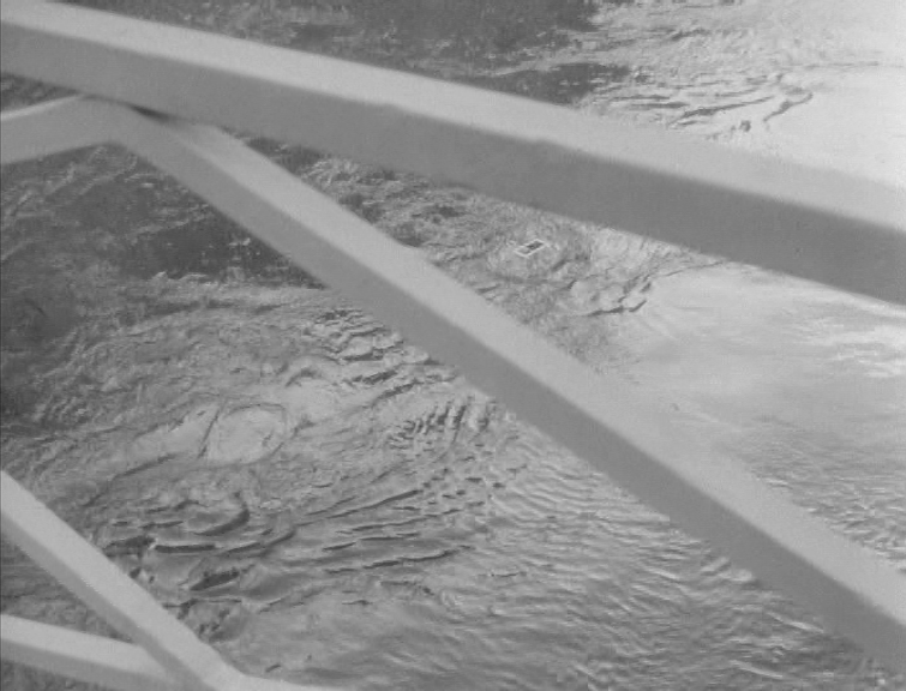
Three years before, in Soutter's film, William had sucessfully stolen a book from the same quayside boxes:


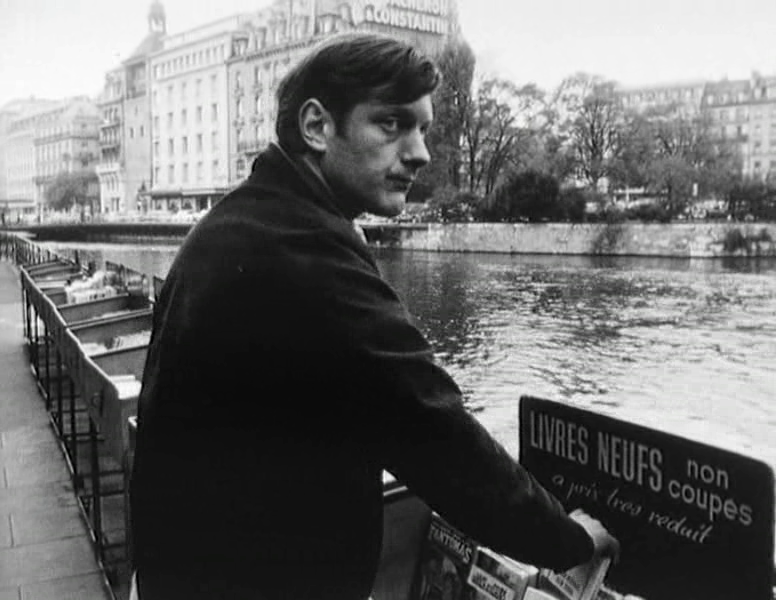
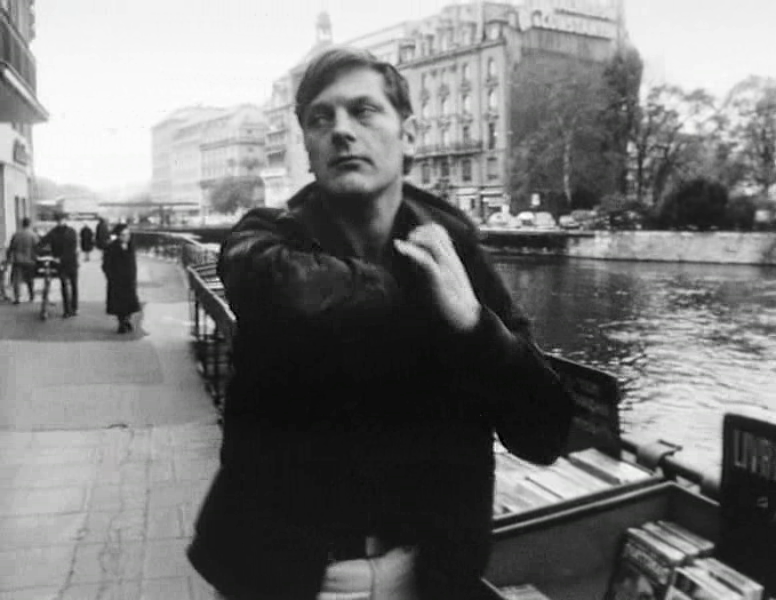
This time Goretta's restaging is a declaration of affinity with Soutter's film.
Very near to this location is the statue of Jean-Jacques Rousseau. Here is that statue in Soutter's Haschisch (1968) and Tanner's Jonas qui aura 25 ans en l'an 2000 (1976):
Very near to this location is the statue of Jean-Jacques Rousseau. Here is that statue in Soutter's Haschisch (1968) and Tanner's Jonas qui aura 25 ans en l'an 2000 (1976):


And here is that statue viewed from behind, in a film that I doubt if any of the Swiss New Wave filmmakers had seen when they came to make their films, though it is, technically, the first New Wave film from Switzerland: Jean-Luc Godard's first fiction film, the Geneva-set-and-shot short Une femme coquette (1955):

The second New Wave film to come out of Switzerland was of course Godard's Le Petit Soldat (1960), about which see here.
In Godard's film the protagonist is supposed to assassinate a man called Palivoda, played by Desko Janic:
In Godard's film the protagonist is supposed to assassinate a man called Palivoda, played by Desko Janic:
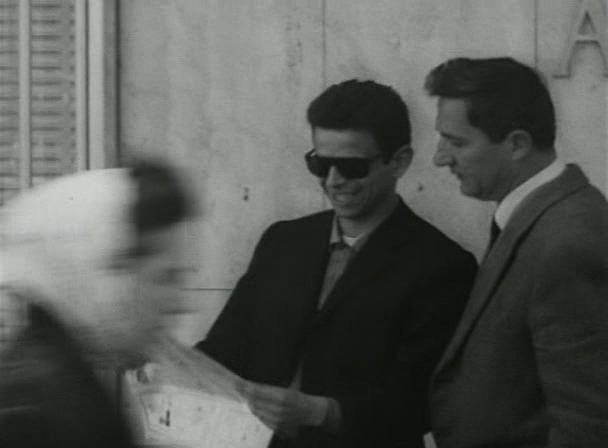
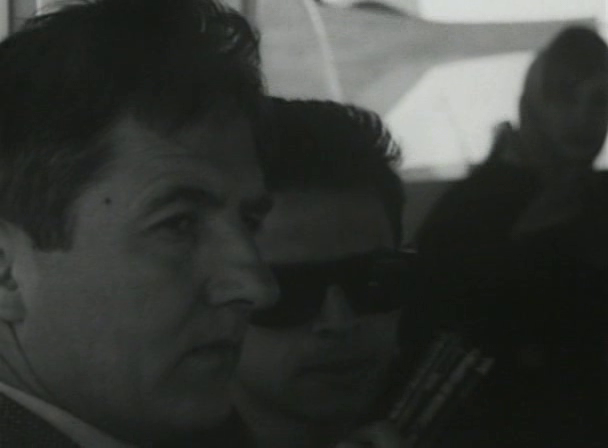
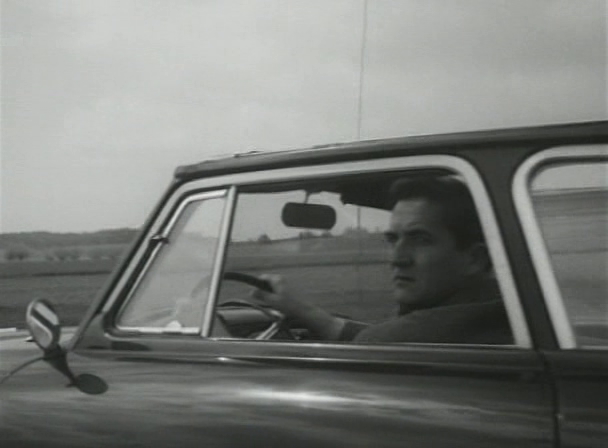
This actor appears in two films by Soutter (Mick et Arthur, La Lune avec les dents) and one by Goretta (Le Fou):
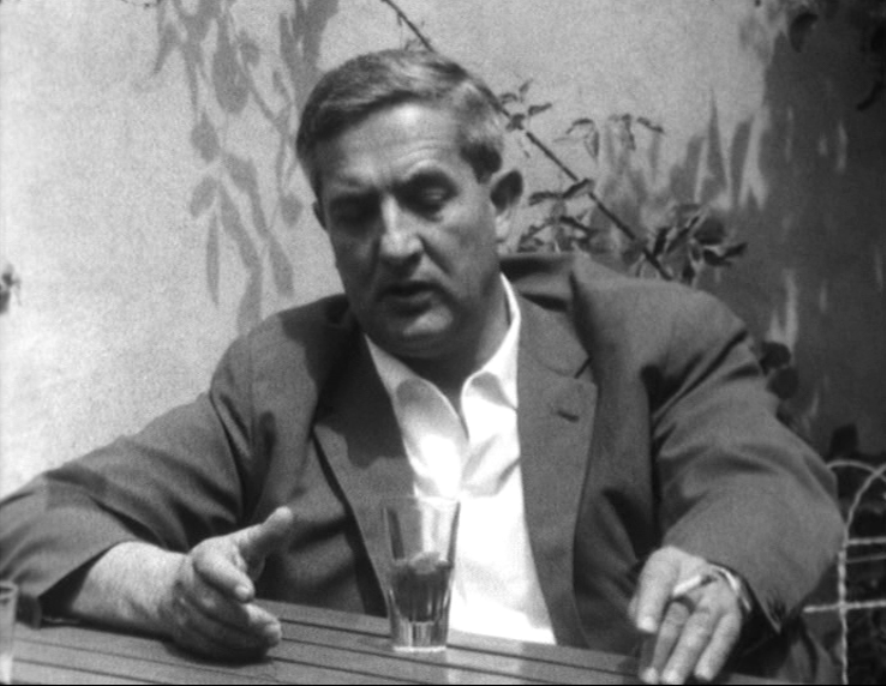

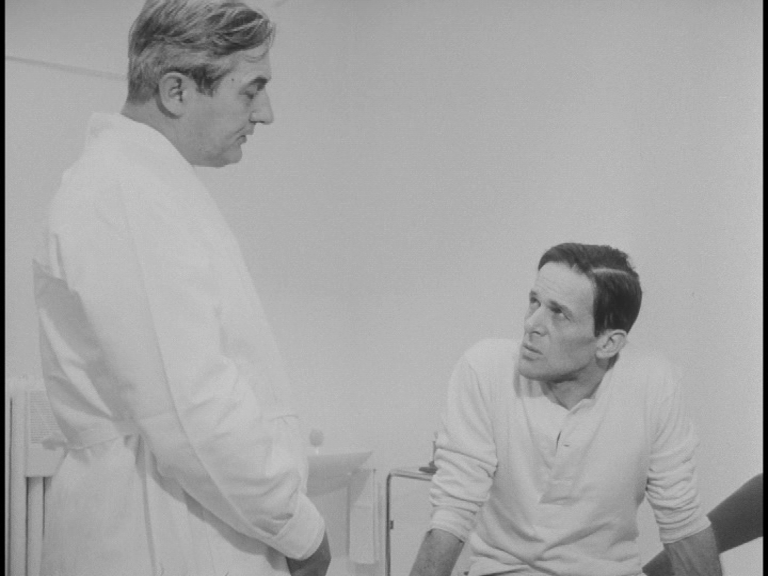
Janic is the one direct connection between Le Petit Soldat and the New Wave filmmaking that began again in Geneva five years later.