my local cinemas
For a long time, as a child, I thought we owned a cinema. Discretely, so as not to be identified as the purchaser of such substantial real estate, from the back of the local auction room my grandfather had, apparently, successfully bid for the ABC Cinema on Muswell Hill.

the ABC in 1960, when it was called the Ritz, from the amateur film Beauty in the Borough
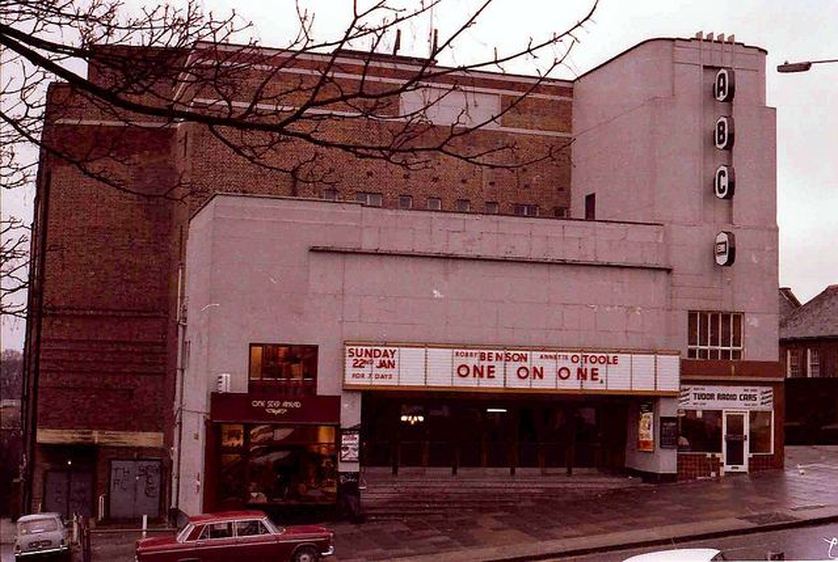
the ABC Muswell Hill (1936), designed by W.R. Glen, photographed by Ralph Stephenson 27.01.1978
|
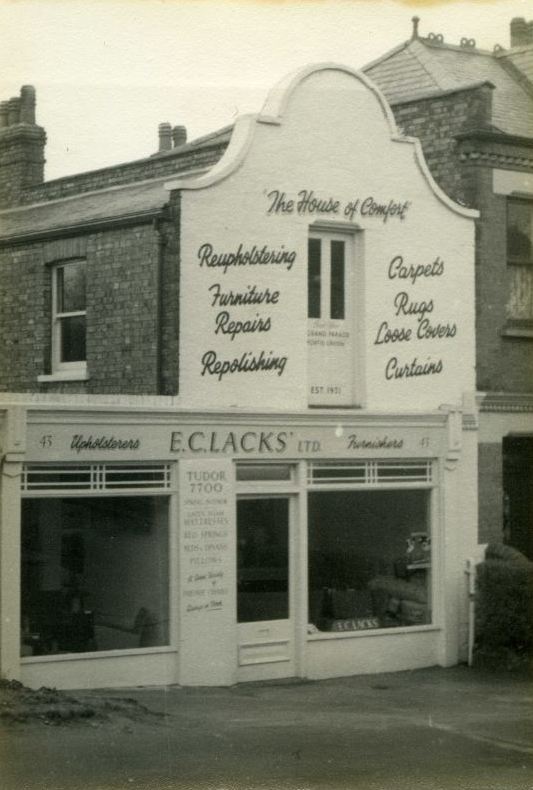
If he’d really wanted to keep the acquisition a secret from the locals, his efforts were certainly thwarted by my boasting at school of this glamorous addition to the family patrimoine. Some time later I discovered that what he’d actually bought was not one of North London’s landmark Art Deco cinemas but the ABC bakery on Colney Hatch Lane, a less imposing edifice, acquired so that the flat above could be used as a workshop or store rooms for furniture. E.C. Lacks' were a firm of carpenters, upholsterers and furniture retailers, with a shop just up the road, right.
The bakery premises, built around 1902 as part of Alexandra Parade, still survive (I live in the flat above), whereas W.R. Glen’s elegant cinema, opened in 1936 as the Ritz, was demolished in 1978 to make way for an undistinguished office block. I still cannot wait at the bus stop opposite without thinking of my lost cinematic heritage.
|
|
More usually, we localise our relation to cinema
at the point of consumption. It was in a local cinema that I first saw films, not in fact at the
ABC, but as Saturday morning pictures at Muswell Hill’s other cinema, the
Odeon (a more famous Art Deco edifice, built by George Coles in 1936, and still extant).
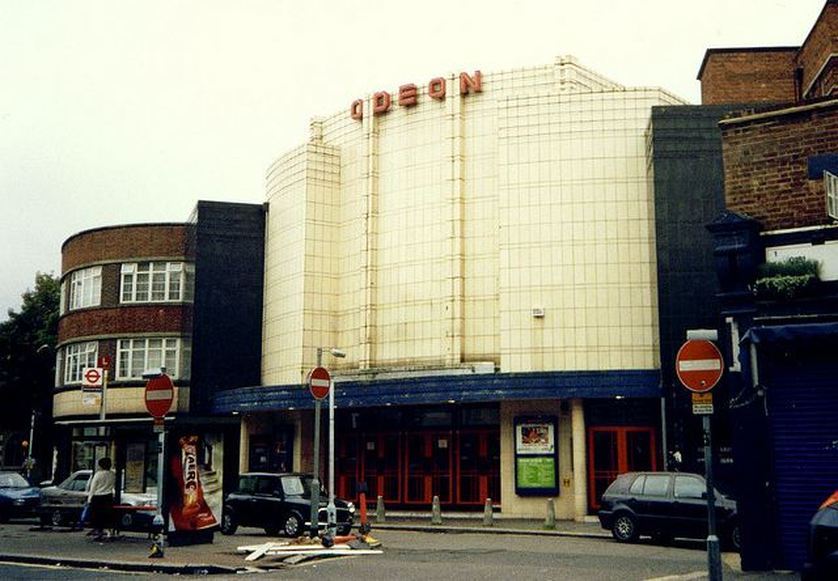
the Odeon Muswell Hill (1936), designed by George Coles, photographed by Andrew Woodyatt, 16.05.2009
Going to Saturday morning pictures continued, after we moved to Southgate, at the Odeon there, another Deco masterpiece, built 1935 (demolished 1982).
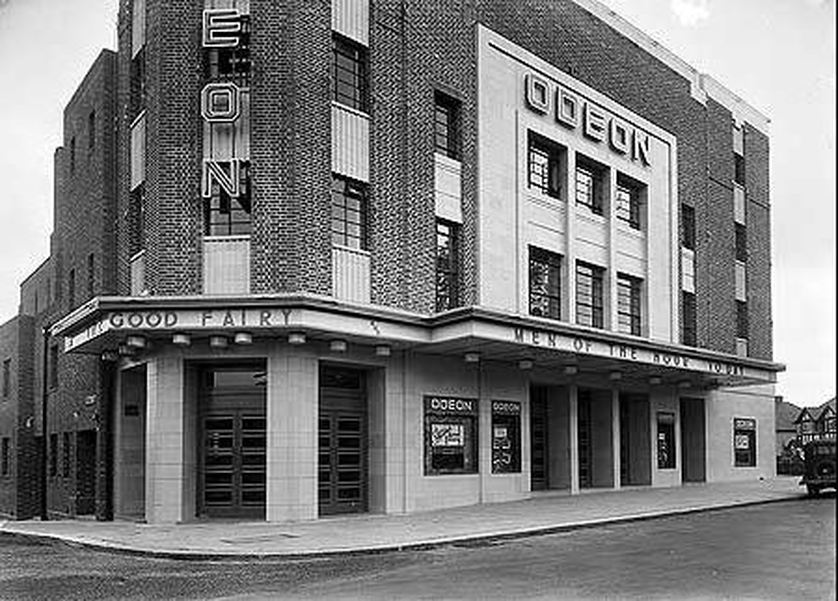
the Odeon Southgate (1935), designed by Bertie Crewe, photographed by John Maltby in 1935.
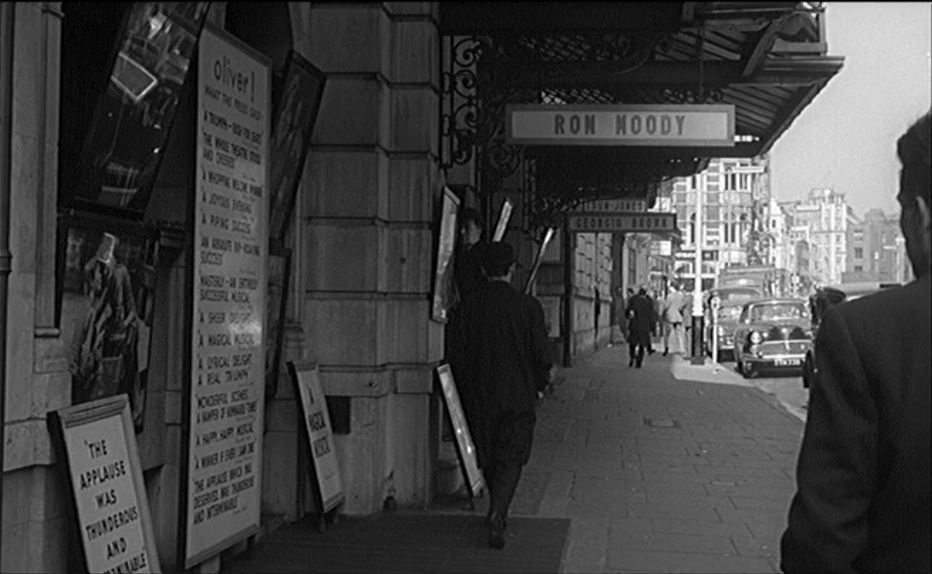
I couldn’t say exactly what the films were, no doubt some combination of Warner cartoons, Republic serials, travelogues and products of the Children’s Film Foundation. Oliver! (1968) was my first outing to the cinema en famille, for which we left the locality to go up west, to a cinema in Leicester Square or thereabouts. (This film acquired local associations for me only later, when I found that Ron Moody, Fagin in Carol Reed’s film, was living in Southgate - as he does still).
In 1972 a school friend and I, unchaperoned, saw Elvis – That’s The Way It Is at the Florida in Enfield, and the first film I saw twice at the pictures was David Essex in That’ll Be the Day, in 1973, again at the Southgate Odeon.
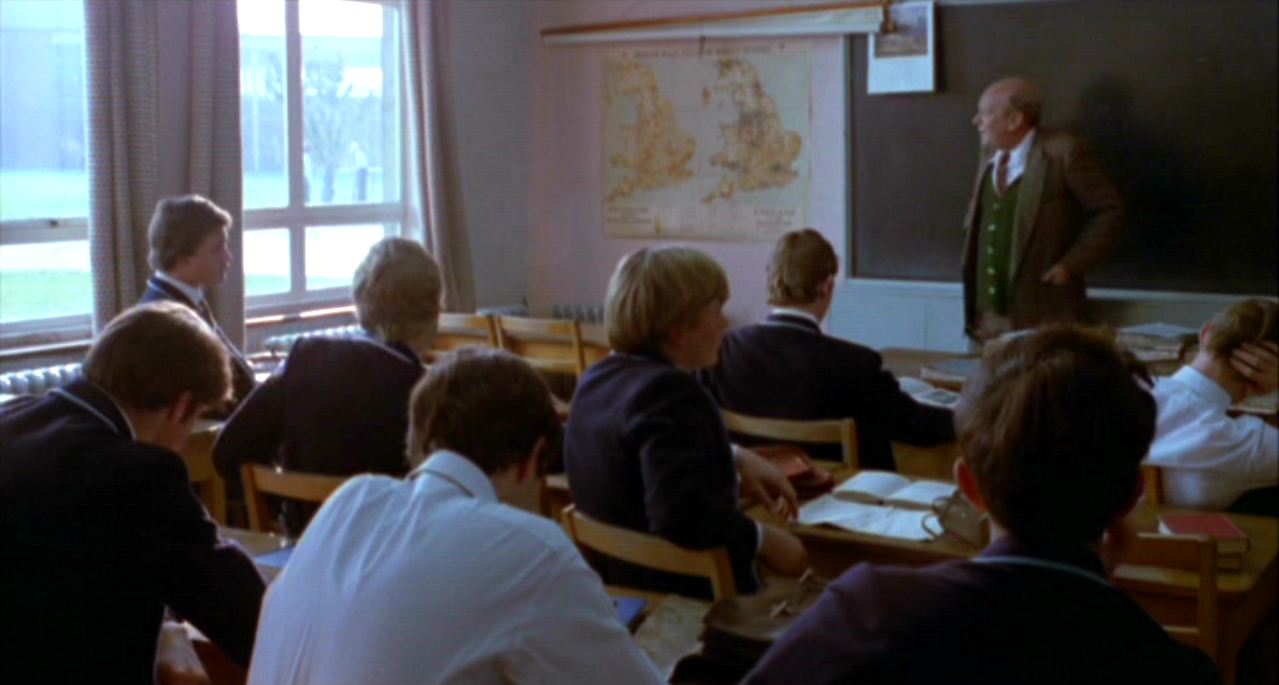
In 1972 a school friend and I, unchaperoned, saw Elvis – That’s The Way It Is at the Florida in Enfield, and the first film I saw twice at the pictures was David Essex in That’ll Be the Day, in 1973, again at the Southgate Odeon.
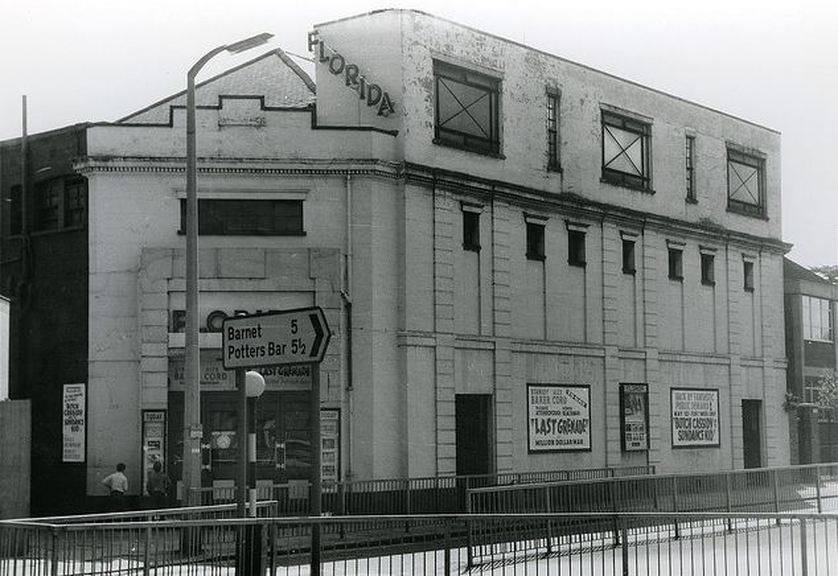
the Florida, Enfield, originally the Queen's Hall, built 1911. Photograph from dusashenka's Flickr photostream.
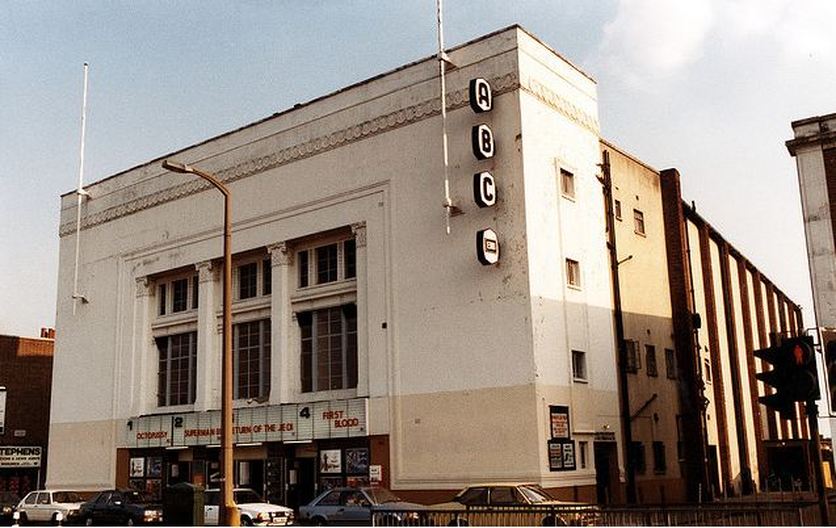
the ABC Enfield, designed by George Cole in 1935.
Photograph from dusashenka's Flickr photostream.
My first date at the pictures was at the ABC in Enfield, to see James Caan in The
Gambler (1975). Not a very romantic choice, but anyway my first
kiss in front of an image projected onto a screen had come two years earlier,
on board the SS Uganda – later to serve in the Falklands as a hospital
troop carrier – on a schools' cruise to Amsterdam, Copenhagen and Bergen. The
girl on the ship had a brother called James Dean, of whose
homonym I had heard from David Essex’s song Rock
On (as featured in That'll be the Day). The film on the ship was The
Amazing Mr Blunden (1972), and when not discovering what braces on teeth –
on someone else’s teeth – felt like, on the screen I recognised Gary, a boy I had
known a few years earlier, the child-actor son of the Muswell Hill
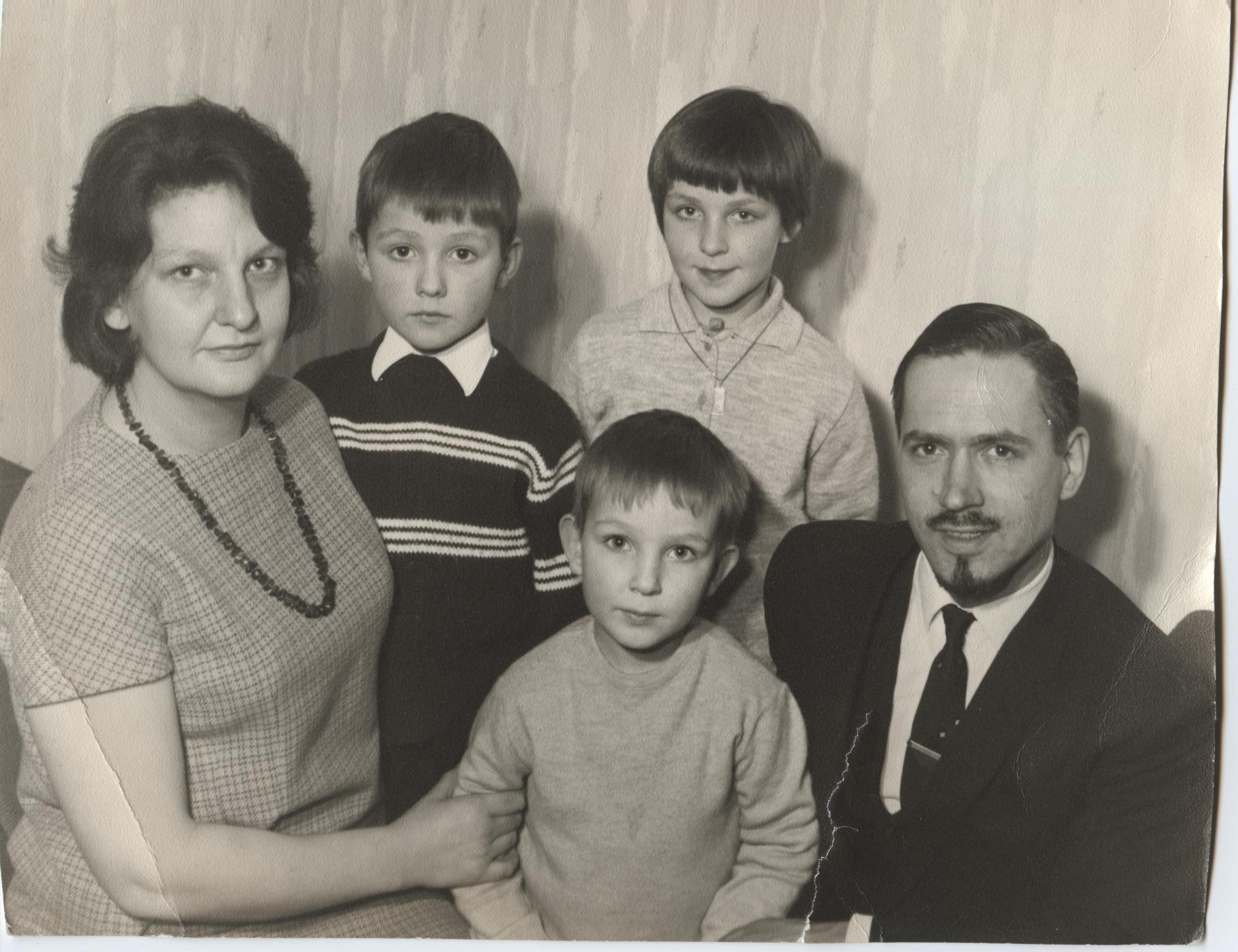
photographer who had taken our family portraits.
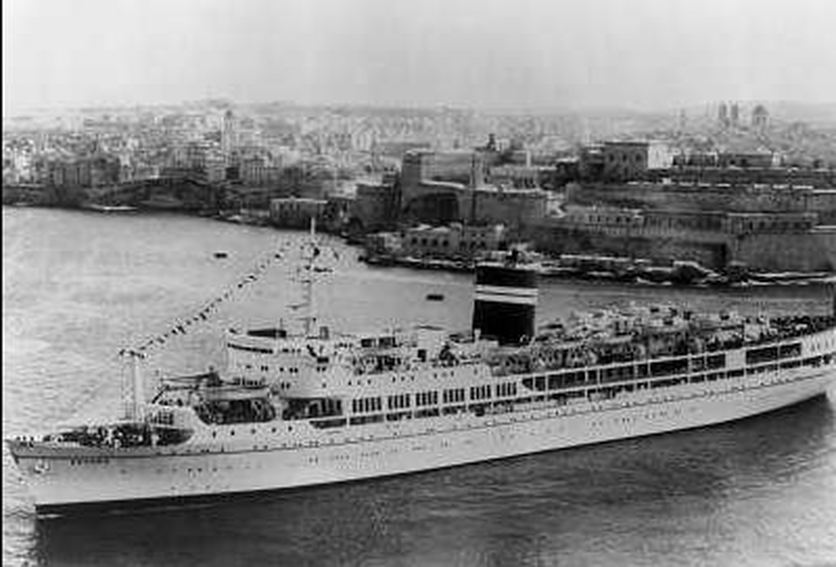
the S.S. Uganda, built 1952.
I discovered arthouse cinema in a youth club in
Edmonton, a local film society screening of Don’t
Look Now, to which I’d gone with friends from school and one of the
priests (a Montgomery Clift lookalike who liked the film but
thought the sex superfluous). With us, also, was John Maybury, two years
older than I and yet to become the second best filmmaker the school would produce (after Alfred Hitchcock). I discovered a personal investment in the film on screen when I realised, because of his name, that the
actor must be the famous film star who had been married to my favourite teacher in primary school. She had been exotic enough, a Canadian in Muswell Hill with a taste
for avant-garde rock (Flock and the Mothers of Invention), but the association
with movie stardom had added something.
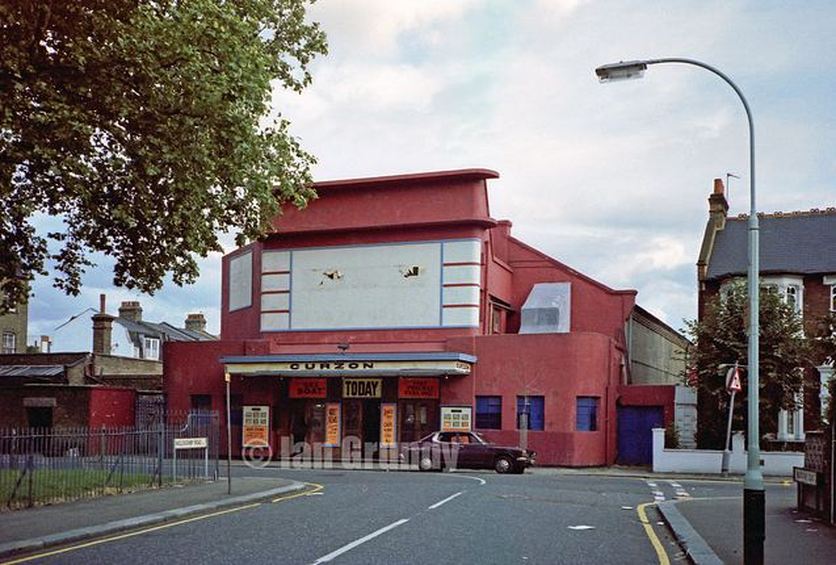
the Curzon, Turnpike Lane, originally the New Electric Cinema (1910), designed by Emden & Egan. Photograph (1984) from stagedoor's Flickr photostream.
What’s missing from these personal firsts is a
first porn film: this must have been at some time in the 1970s, probably at what
was the Curzon cinema near Turnpike Lane. This was a famous fleapit and is, though it survives as the ‘Jubilee Worship Church’, one of the oldest surviving cinema buildings in North London -- predating by several months another 'Premier Electric Theatre', the still functioning Phoenix, in East Finchley, my local arthouse cinema.
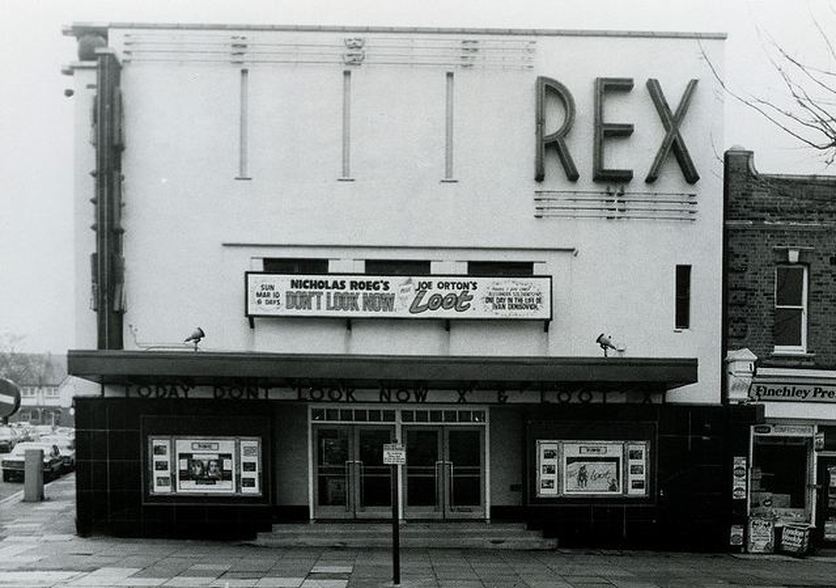
the Phoenix (1910), known as the Rex between 1938 and 1975.
Photograph from dusashenka's Flickr photostream.
The what and where of one individual’s first contacts with cinema and cinemas are of no intrinsic interest to others: I have listed them here emblematically. One impulse behind my research is to situate myself vis-à-vis the cinema somewhere other than in front of the screen (the common place where we all have found ourselves). But a stronger impulse is to think and write about film, that uncommon place, as a place that we might have occupied literally, or may come to occupy literally.
for further information on some of the cinemas featured here, see:
Jeremy Buck, Cinemas of Haringey (Hornsey Historical Society, 2010)
Jeremy Buck, Cinemas of Haringey (Hornsey Historical Society, 2010)