a staircase in Belleville
(on some locations in Feuillade's Les Vampires)
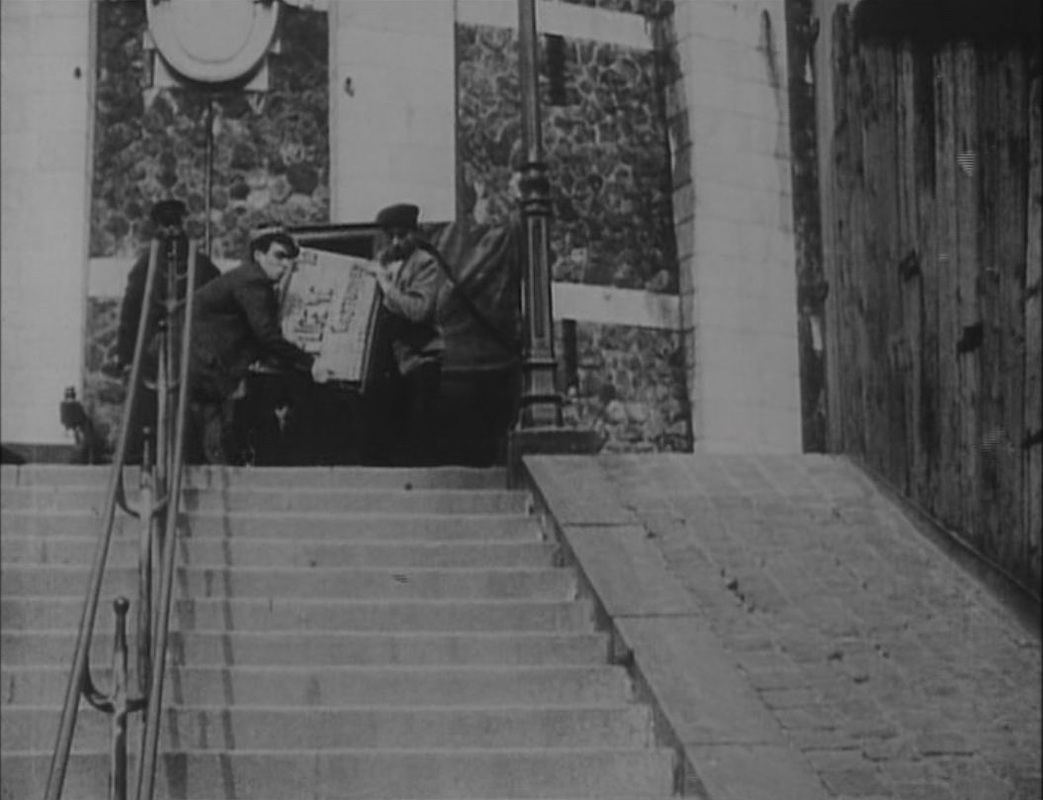
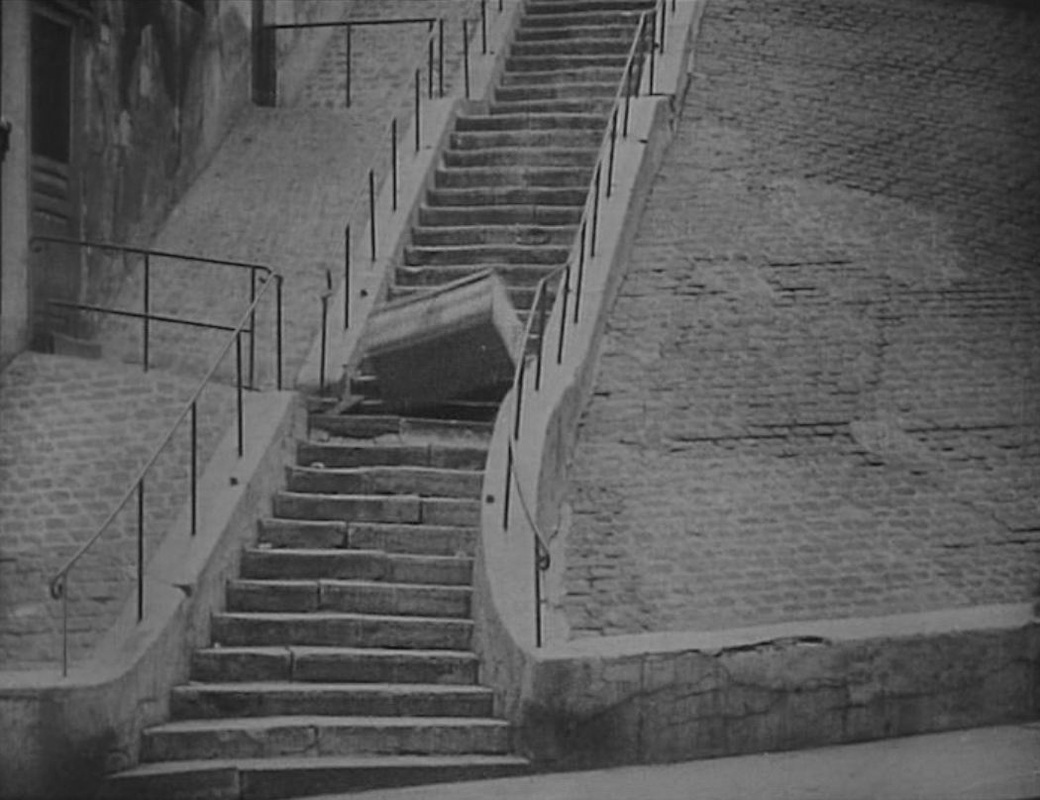
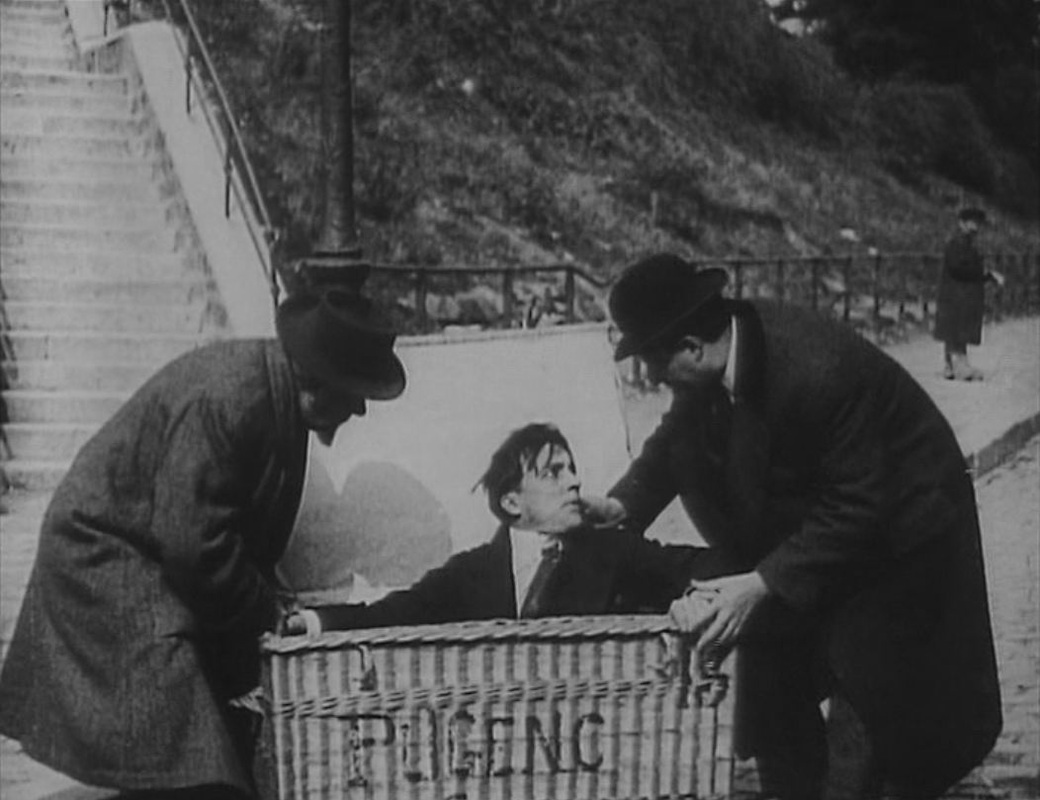
One of the many memorable moments in Louis Feuilllade's ten-part series Les Vampires (1915-1916) has the kidnapped Philippe Guérande escape from the Vampires' clutches when the basket they have put him in is left briefly unattended at the top of a flight of stairs in Montmartre. The basket wobbles then topples, tumbling down at least sixty steps into the path of two strolling gentlemen who ensure that the Vampires cannot retrieve their victim:
|

|
|

|
|
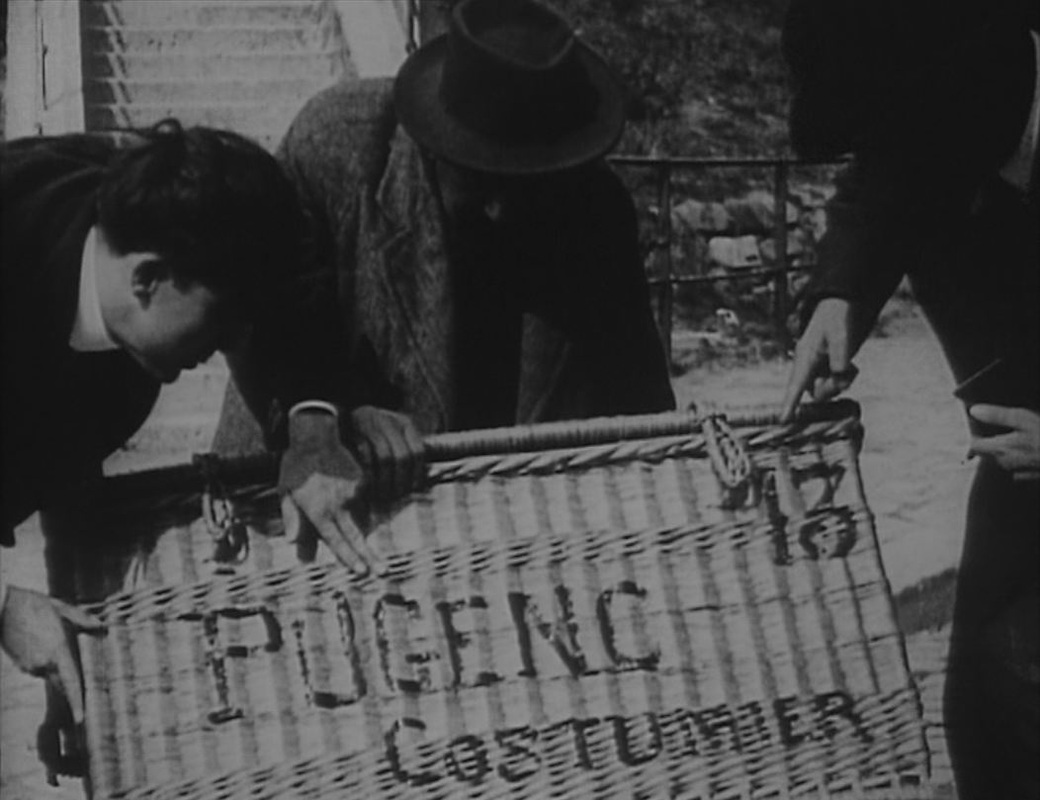
L'Evasion du mort
|
Guérande's escape is a variation on a motif running through Les Vampires, showing movement between levels, be it by climbing or falling. Guérande ended up in the basket in the first place by looking out of the window and being lassooed out of his apartment:
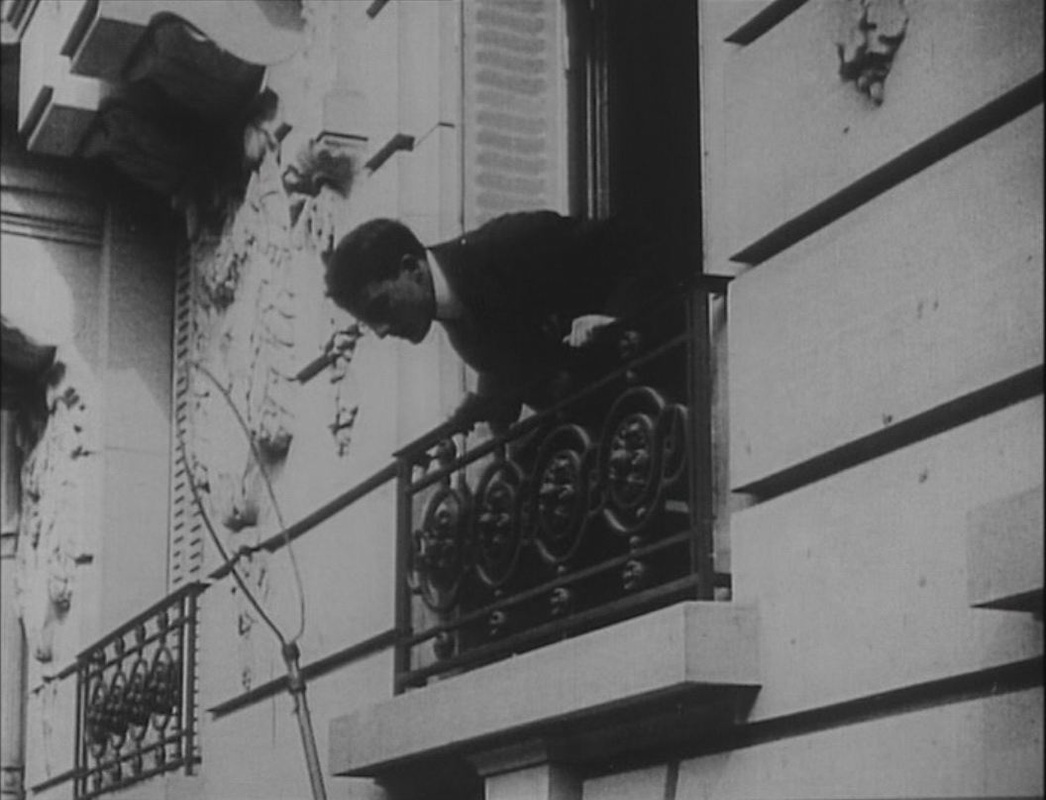
|
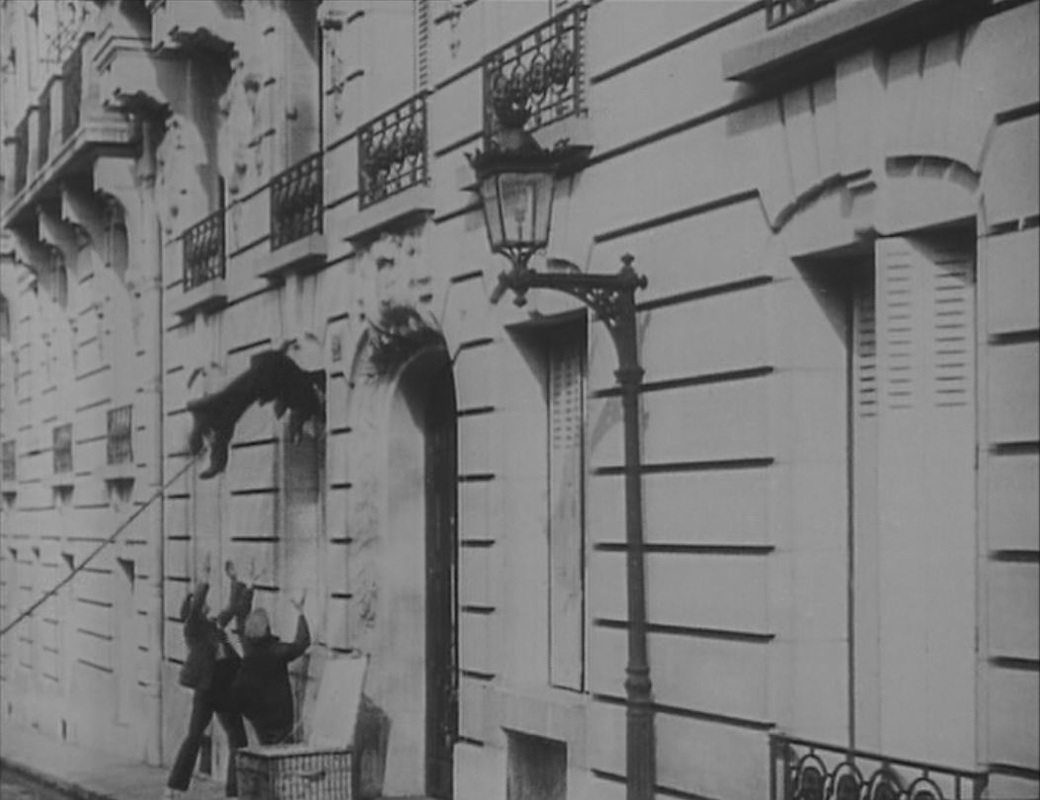
|
The Vampires use the same device later to kidnap Philippe's wife:

|
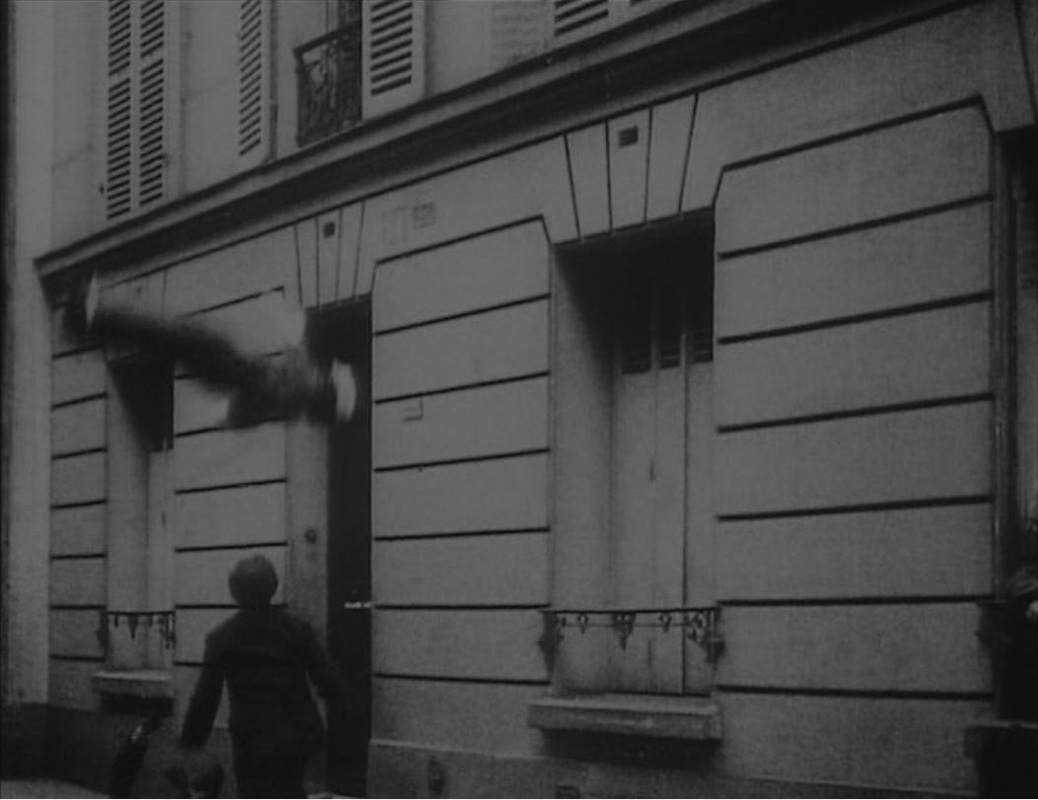
Les Noces sanglantes
|
Here is a selection of climbs and falls from across the series:
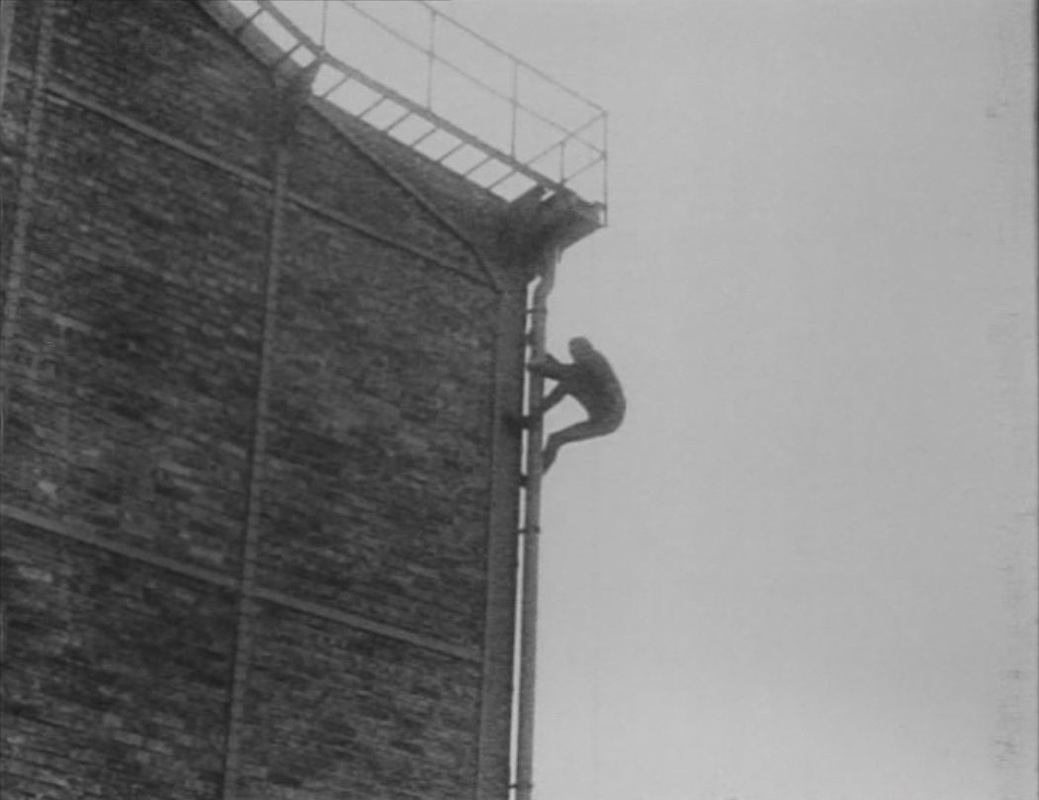
Dr Nox escaping in La Tête coupée
|
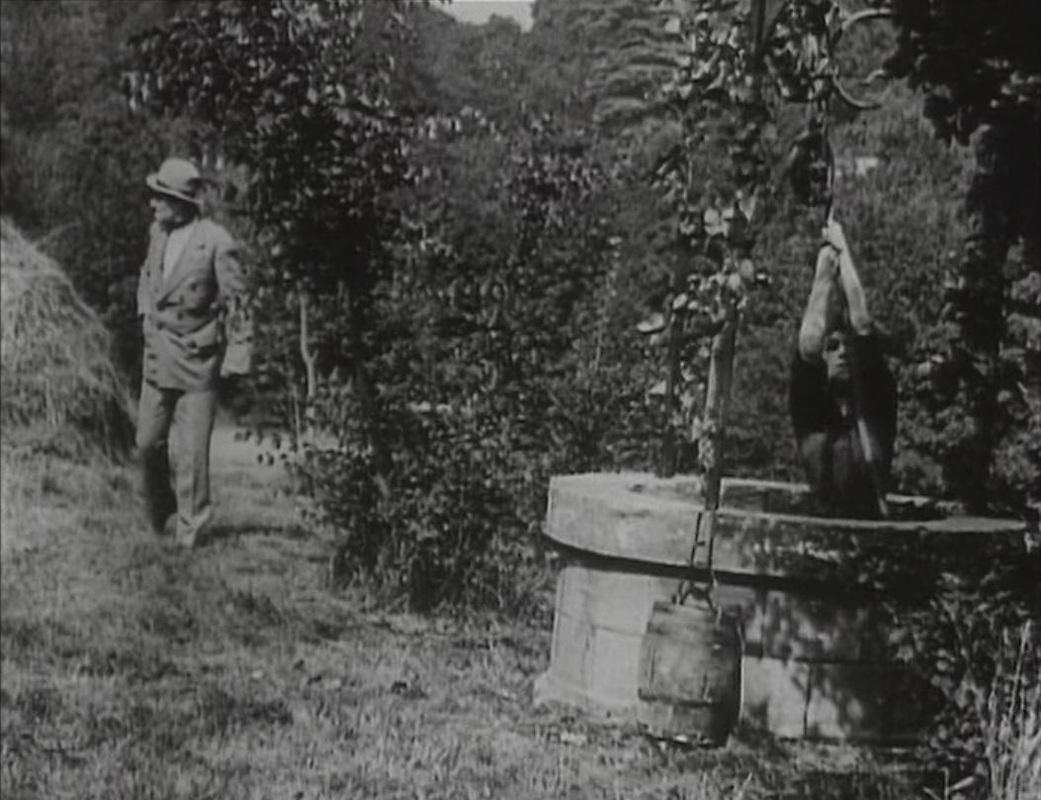
Irma Vep going down into a well in Le Cryptogramme rouge
|

Métadier's corpse thrown from a train in Le Spectre
|
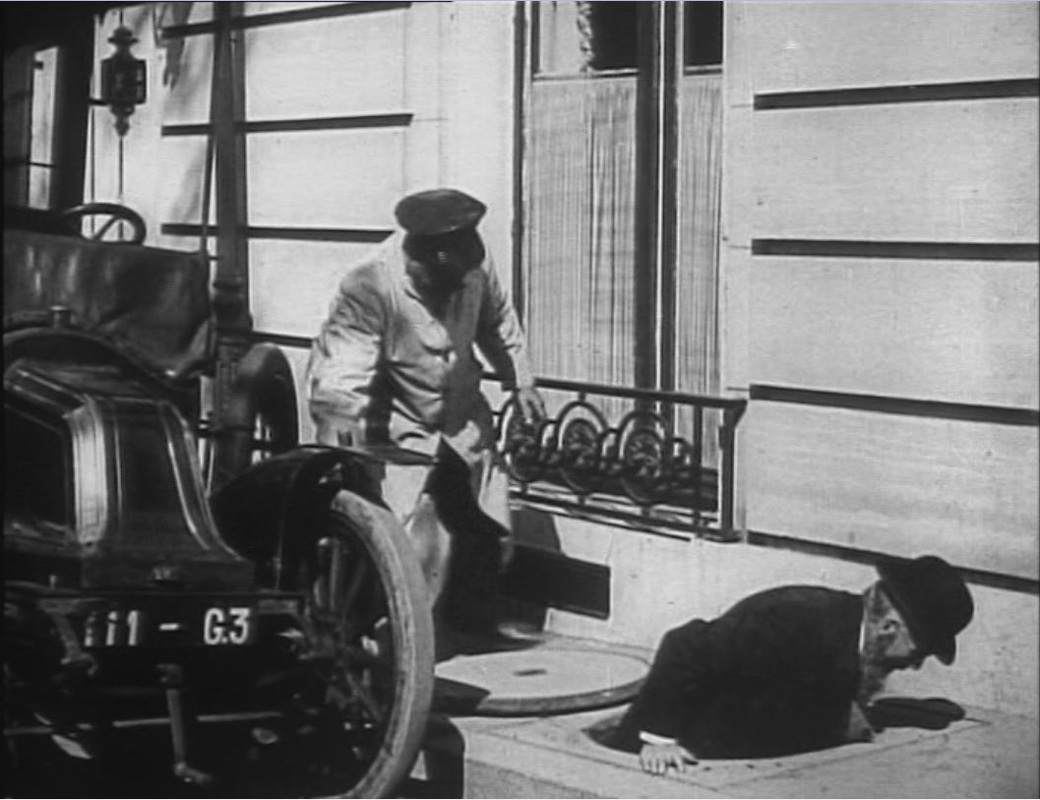
and Moreno disguised as Métadier, going down a manhole
|
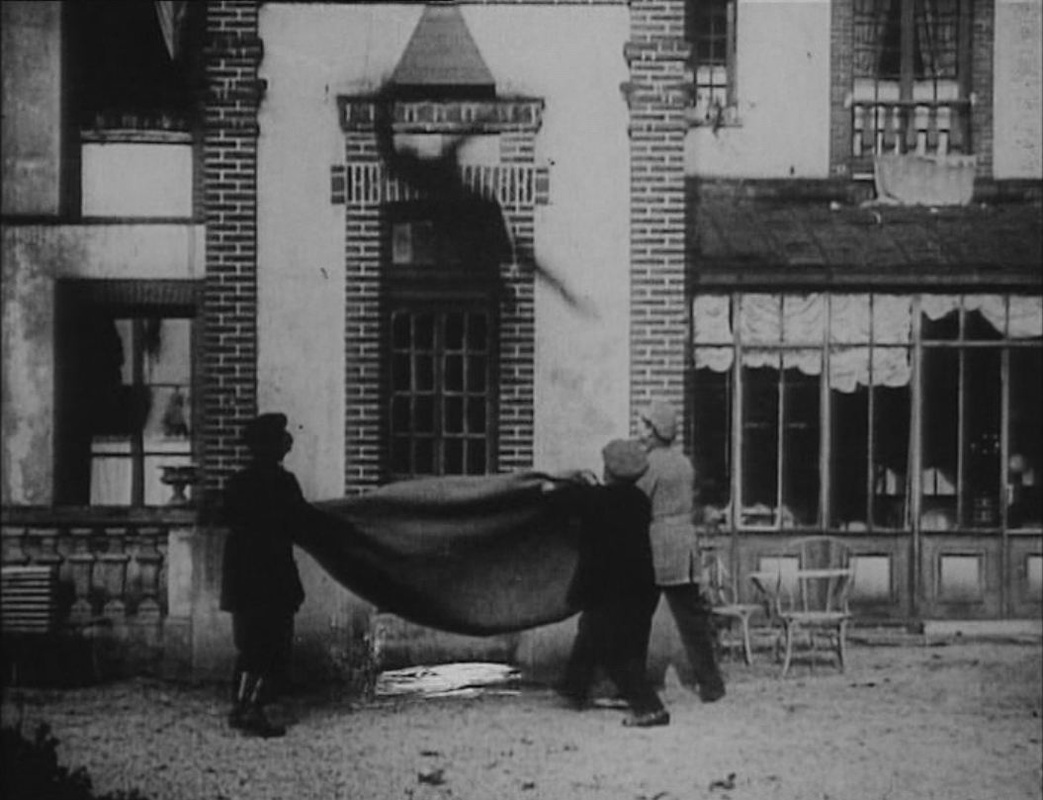
Irma Vep, thrown from a hotel window by Moreno,
|
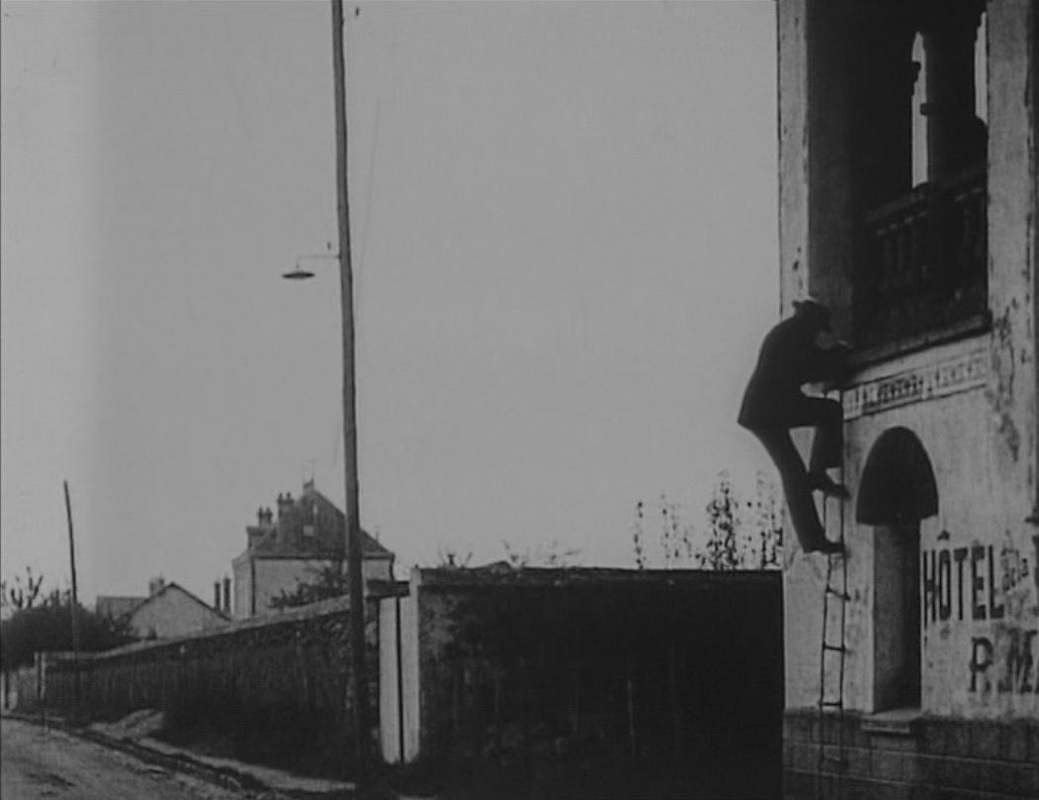
and Moreno leaving the hotel, in Les Yeux qui fascinent
|
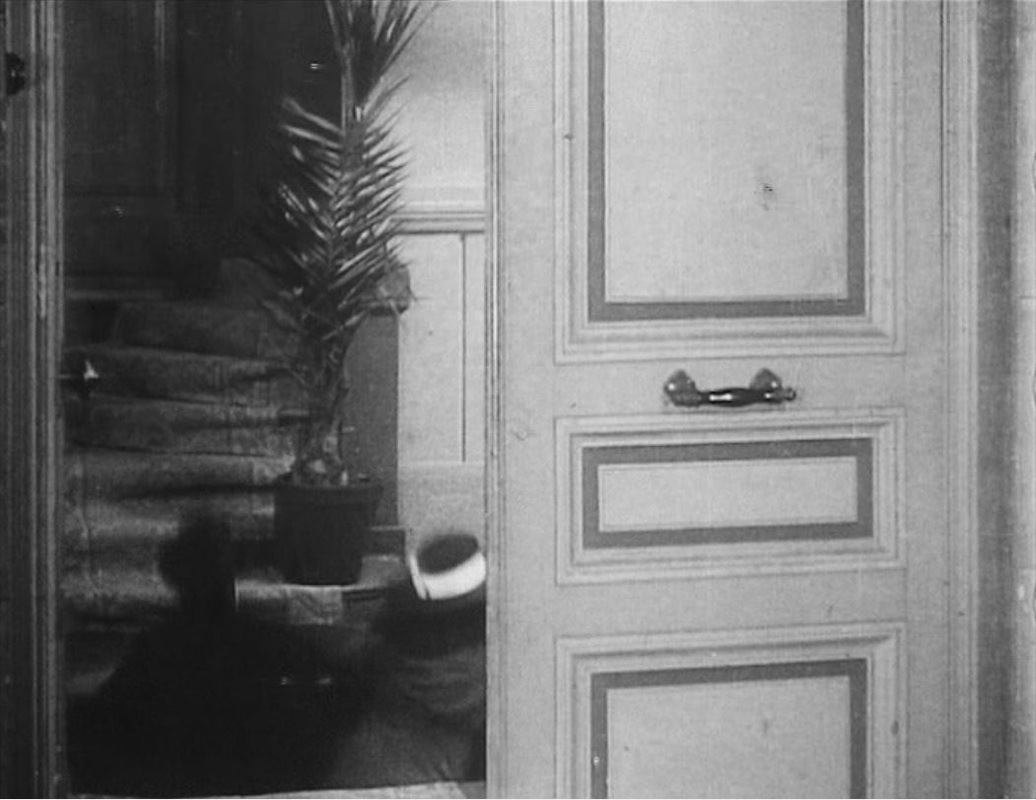
Irma Vep and Moreno falling into a trap in Satanas
|

Satanus jumping from Guérande's apartment in Le Maître du foudre
|

a Vampire climbing up the fiancée's building, in L'Homme des poisons
|
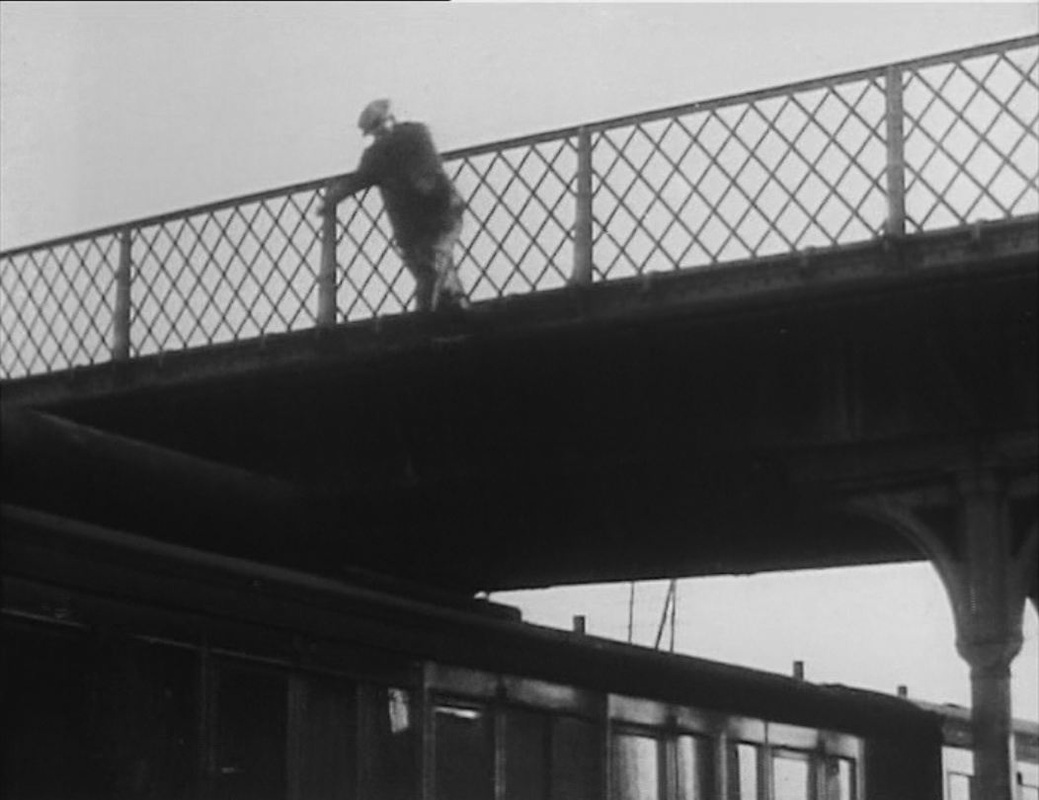
and another, jumping onto a moving train
|

Irma Vep escaping by rope from a Montmartre apartment building
|
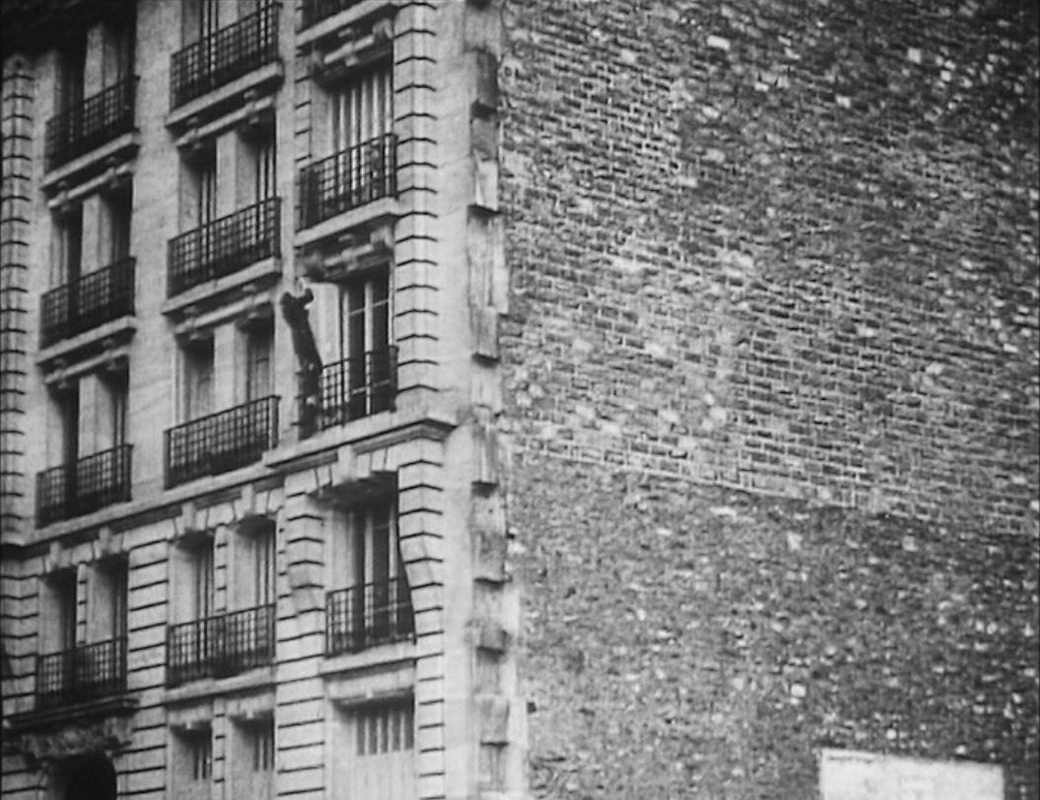
followed by Venenos, in Les Noces sanglantes
|
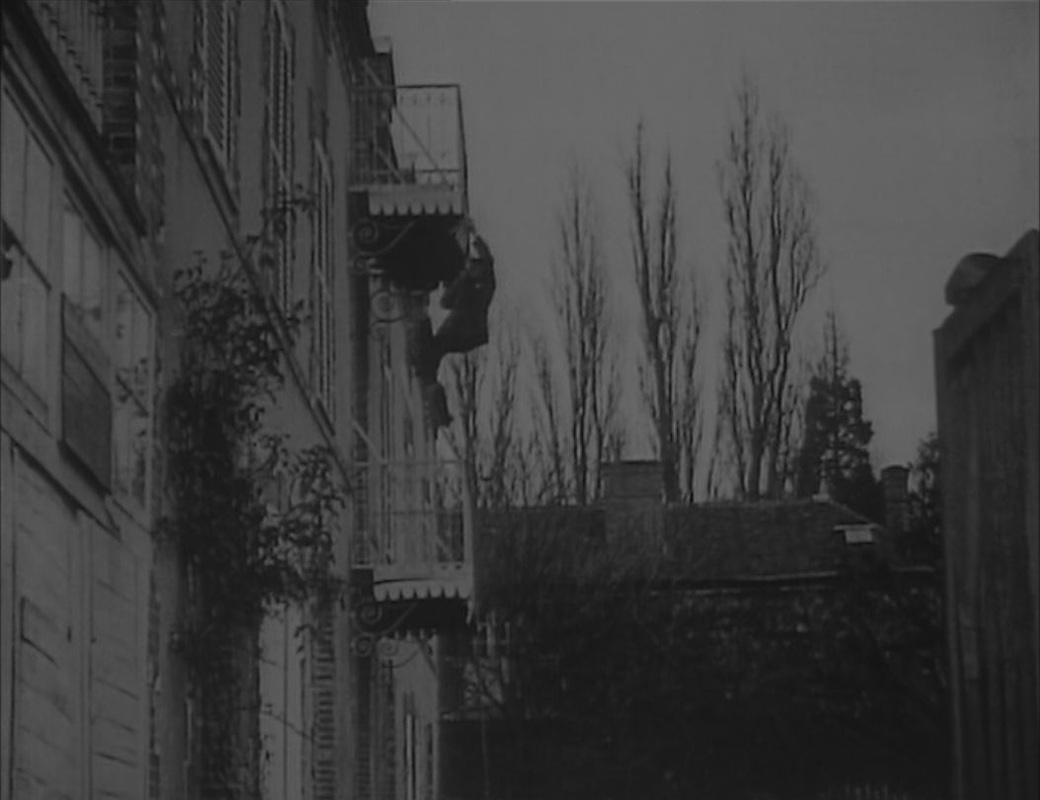
Guérande climbing onto a hotel balcony in Fontainebleau
|

and the Vampires falling from that balcony, in Les Noces sanglantes
|
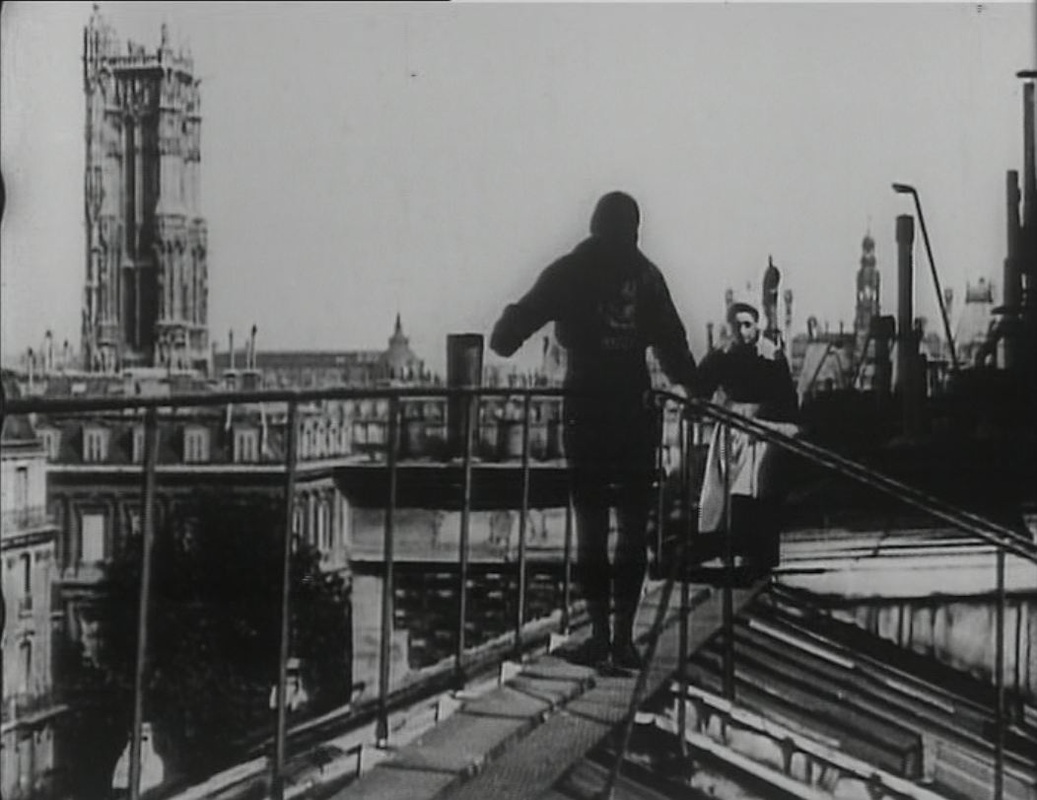
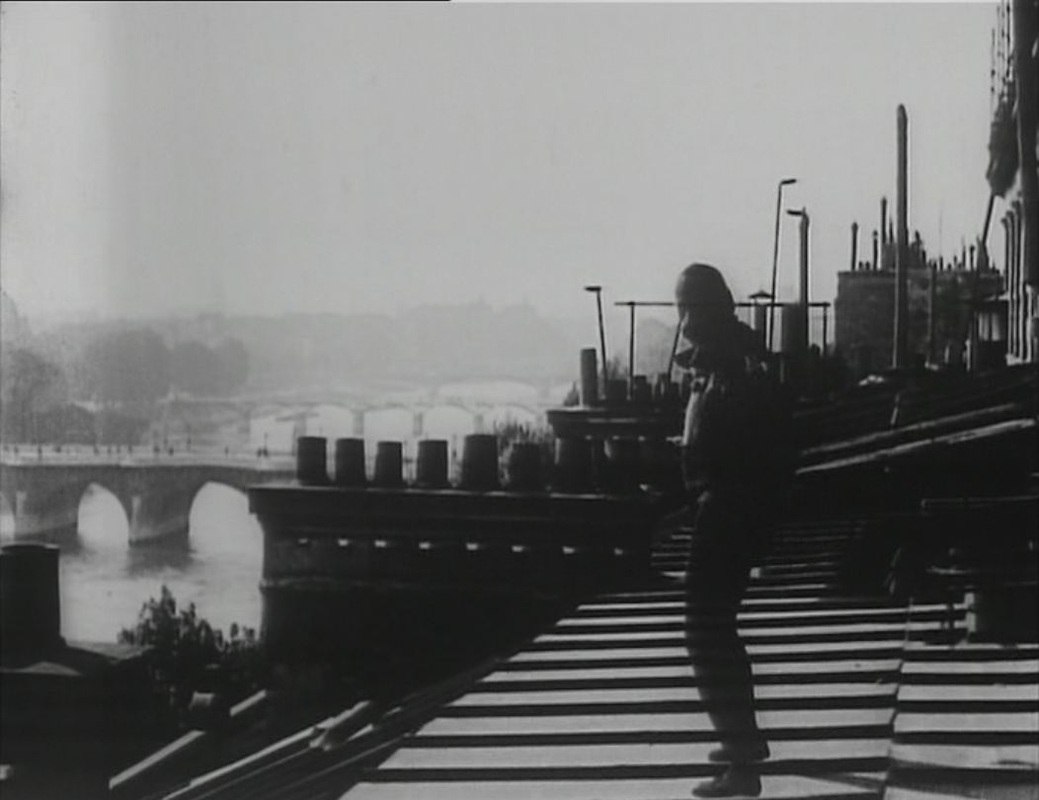
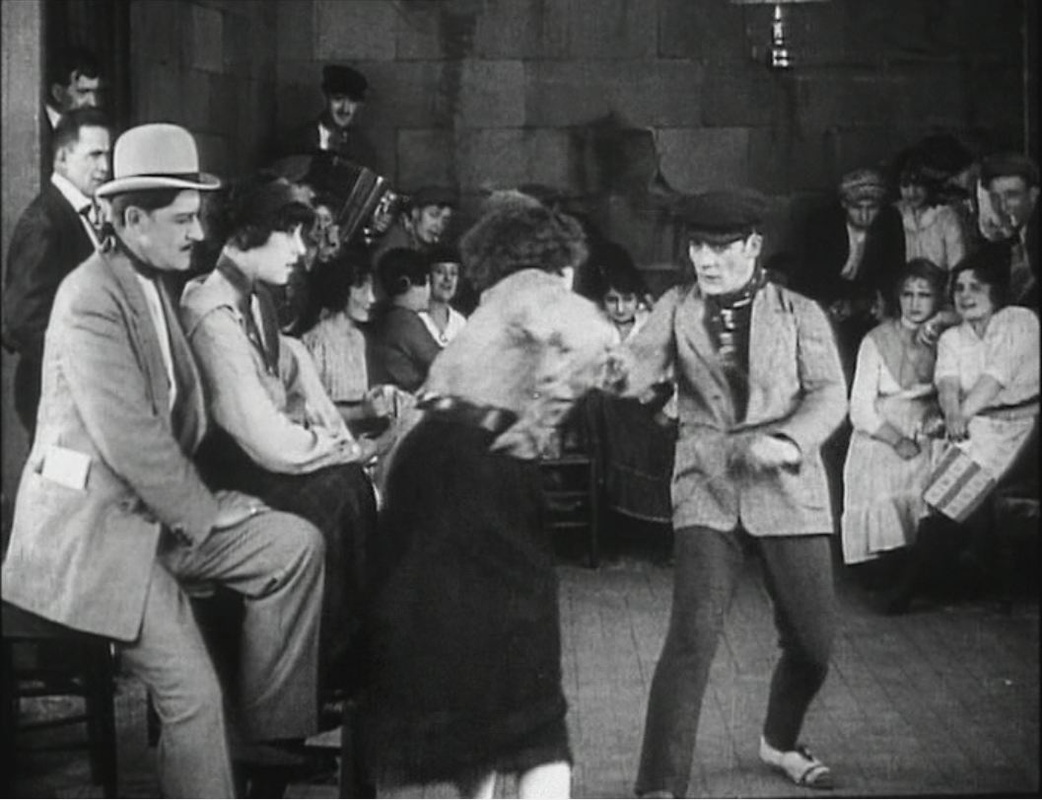
There are other manifestations of this interest in different levels, such as the famous rooftop walking shots, with views over Paris, and the basement hideouts used by the Vampires:
|
|
|

|
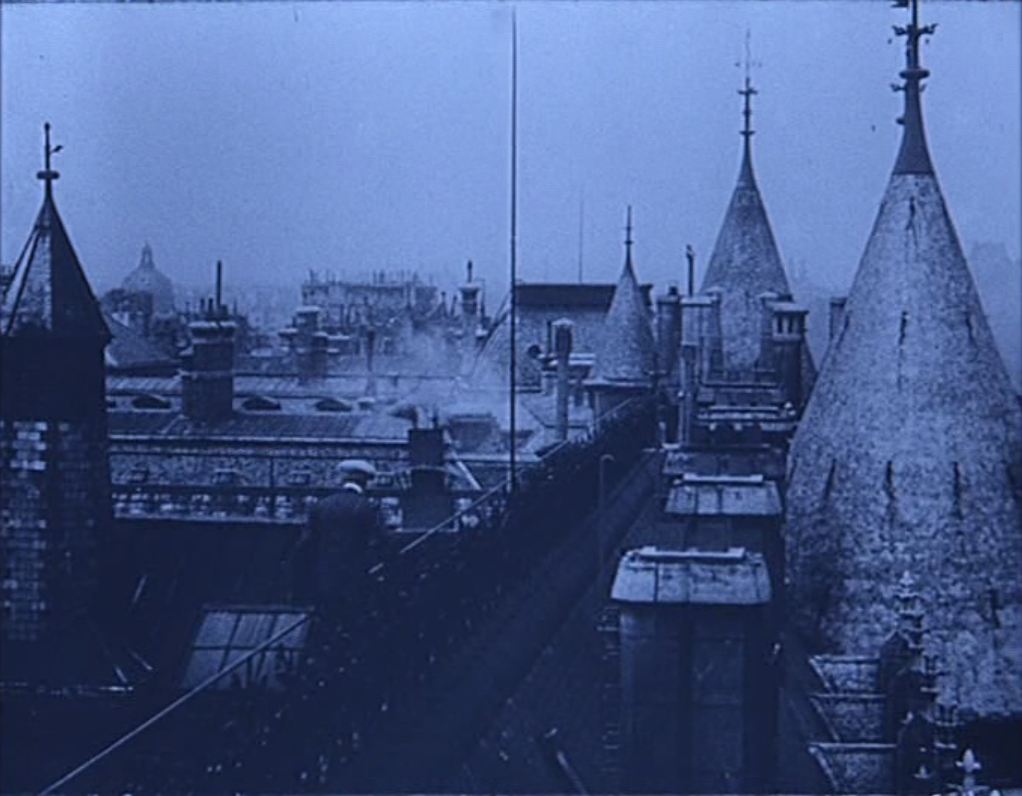
This motif developed over the course of Feuillade's previous crime series Fantômas, from the horizontally inclined first and second episodes, through to the third, Le Mort qui tue, with the Palais de Justice investigated by Fandor from rooftop to sewer:
|

|
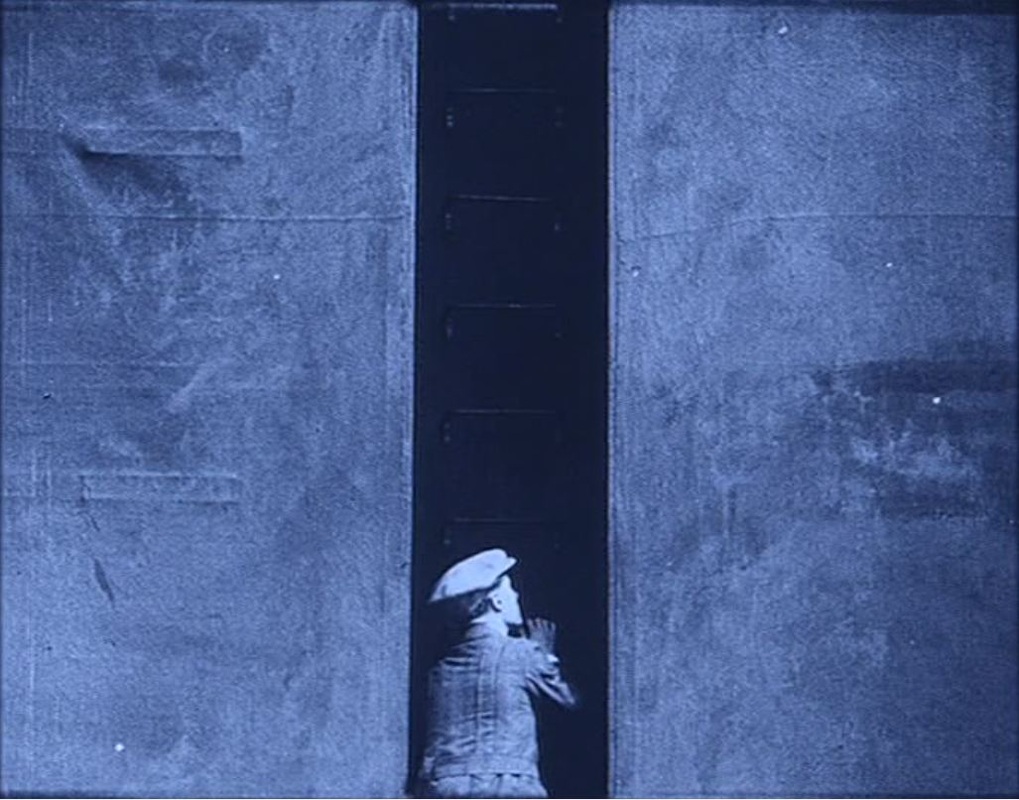
|
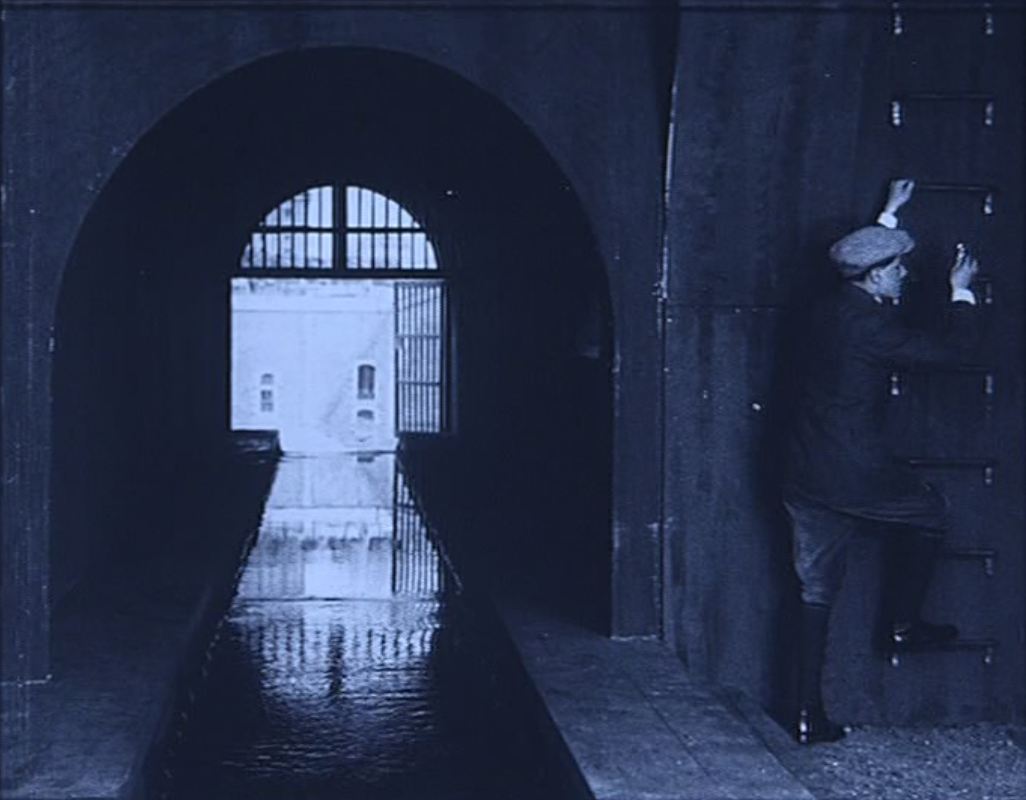
|
This is reprised in the fourth film, Fantômas contre Fantômas, when Juve is kidnapped from the Palais de Justice via the window and some scaffolding, and brought by Fantômas's gang to an underground lair:

|

|
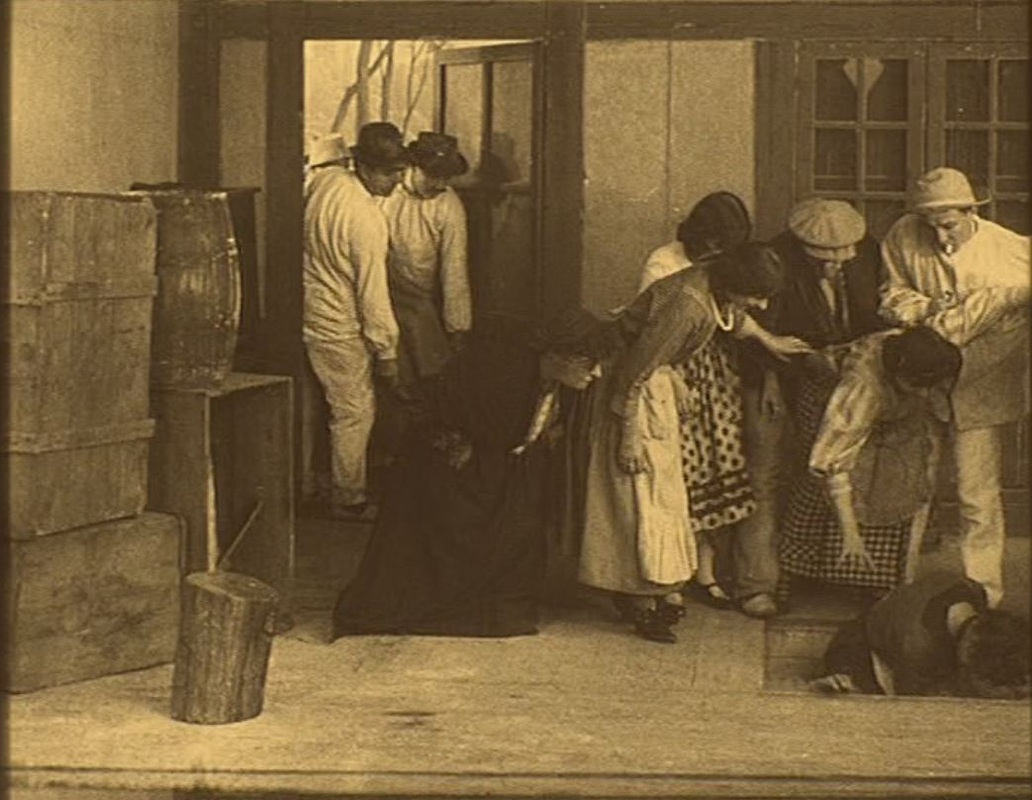
|
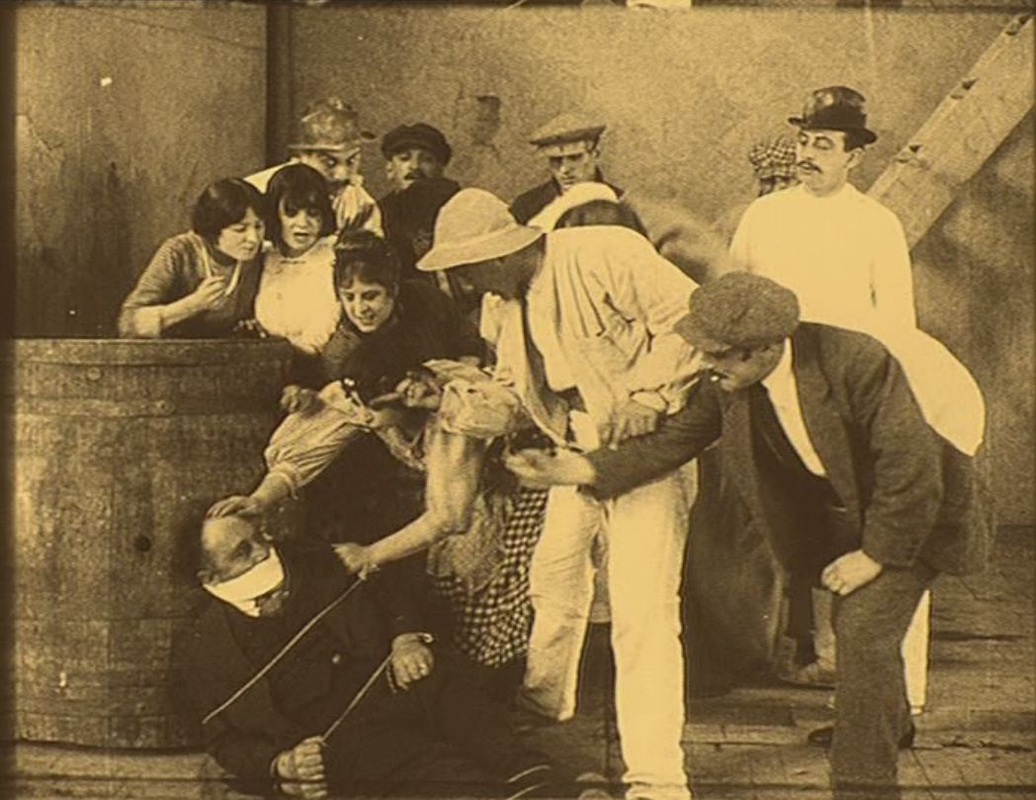
|
This film ends with a neat twist on the motif, as Fantômas, taken prisoner by Juve and Fandor, is led by his captors across some open ground. In fact it is he who is leading them, since they walk to the exact spot where Juve and Fandor will fall into two hidden traps, enabling Fantômas to escape:
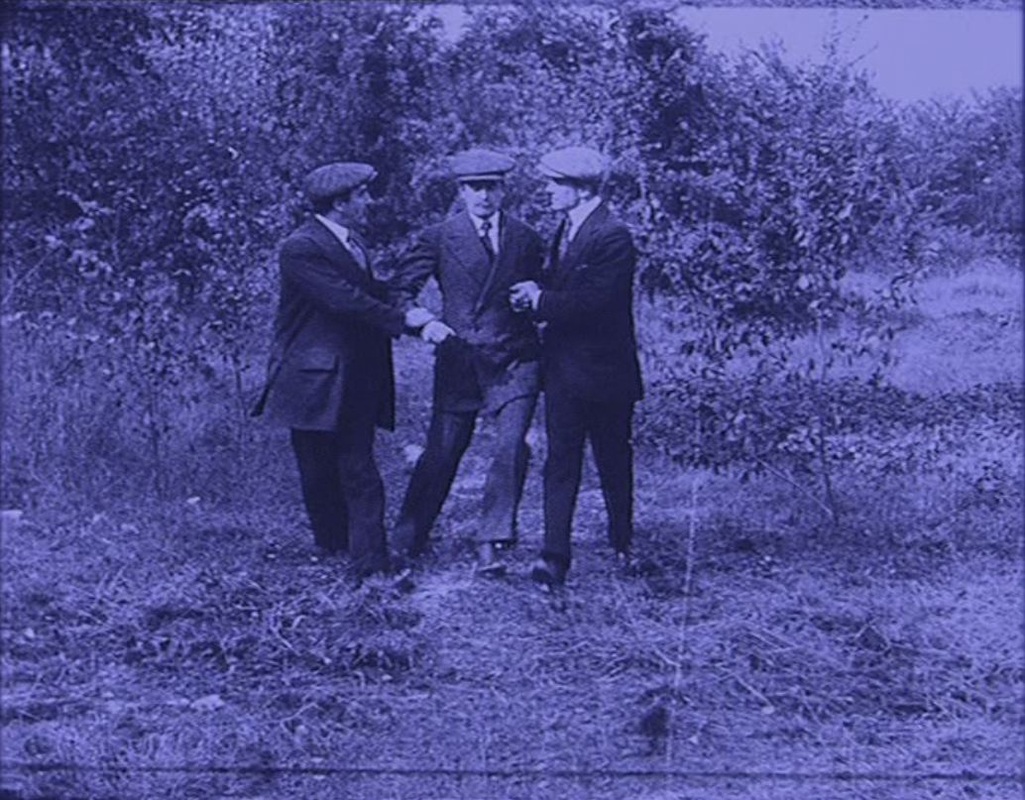
|
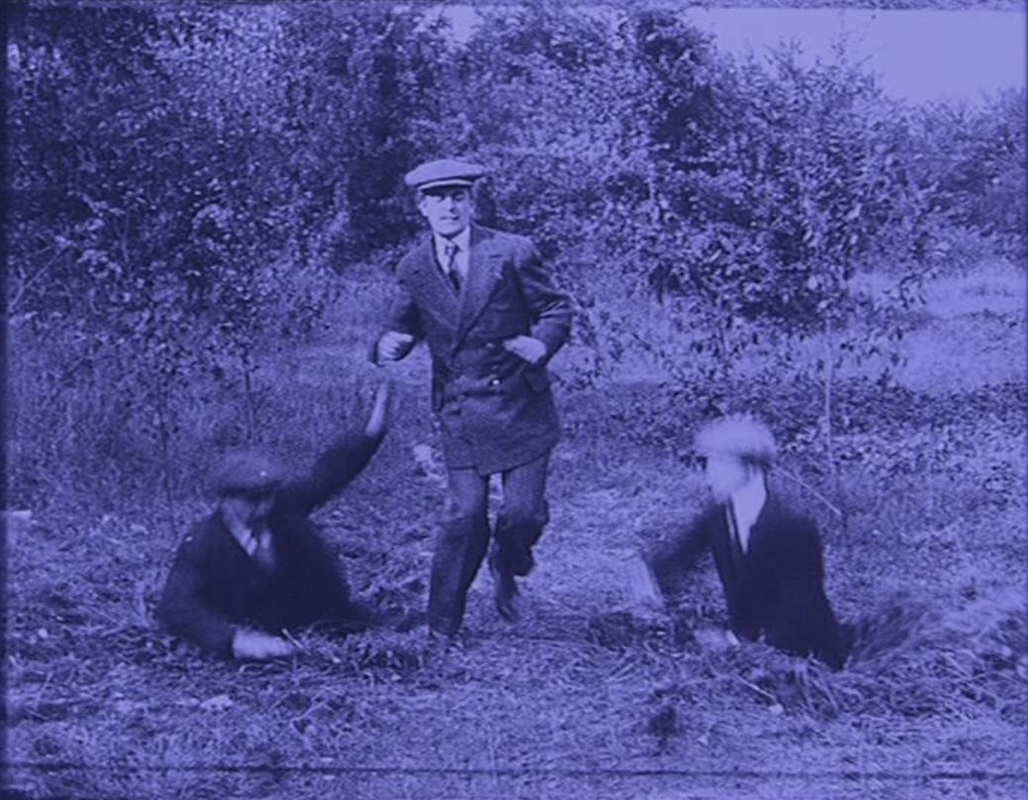
|
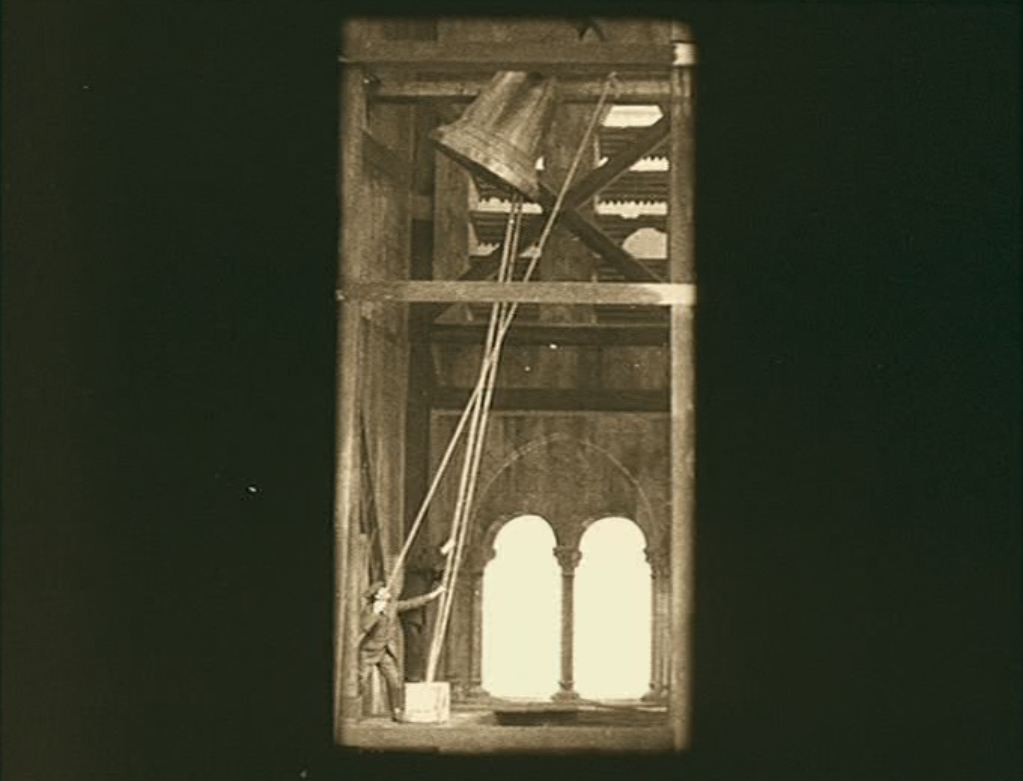
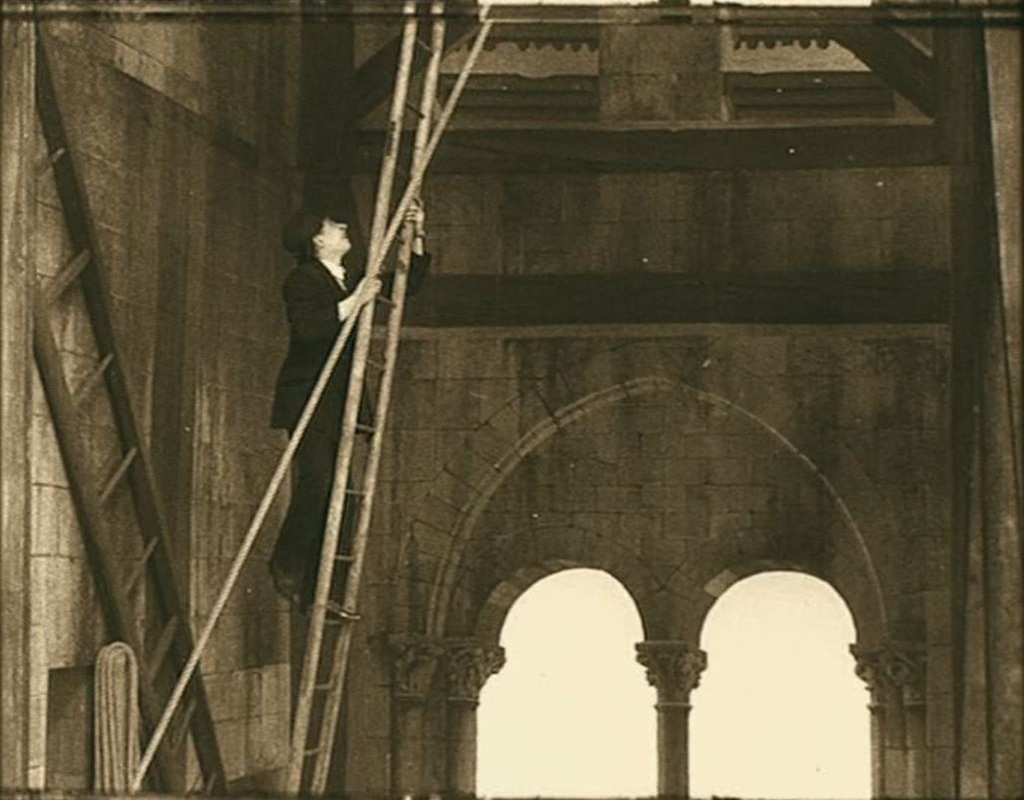
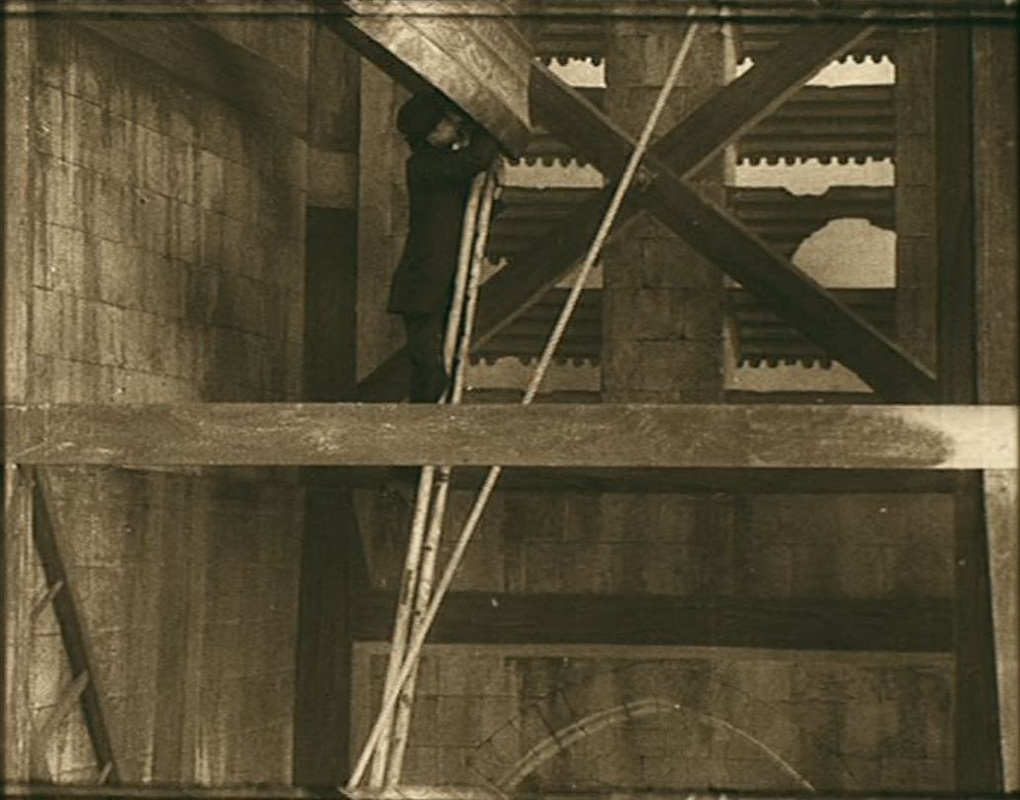
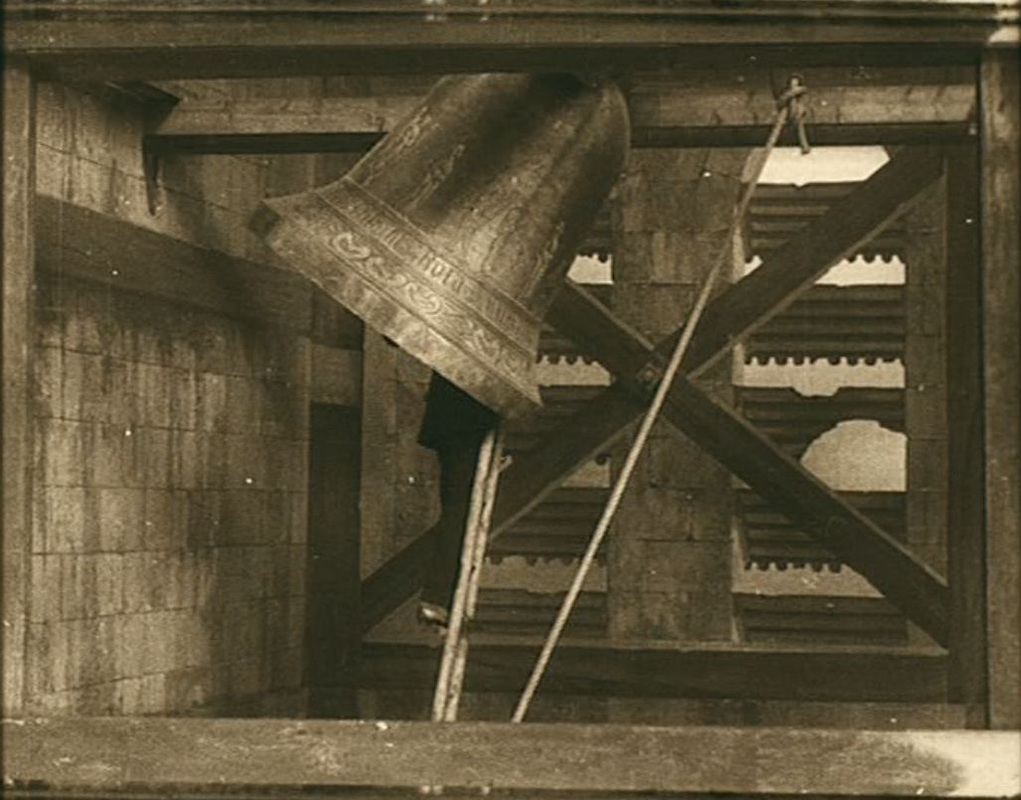
The motif's most powerful expression, in either of these two series by Feuillade, is in the fifth Fantômas film, Le Faux Magistrat:
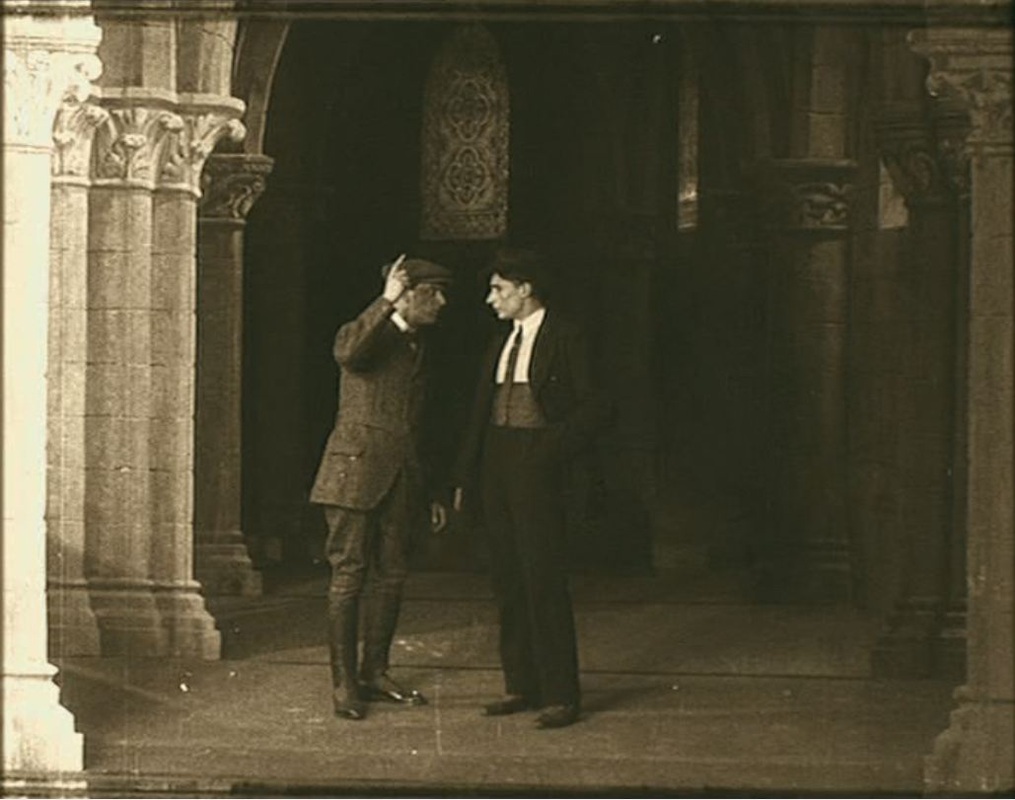
|
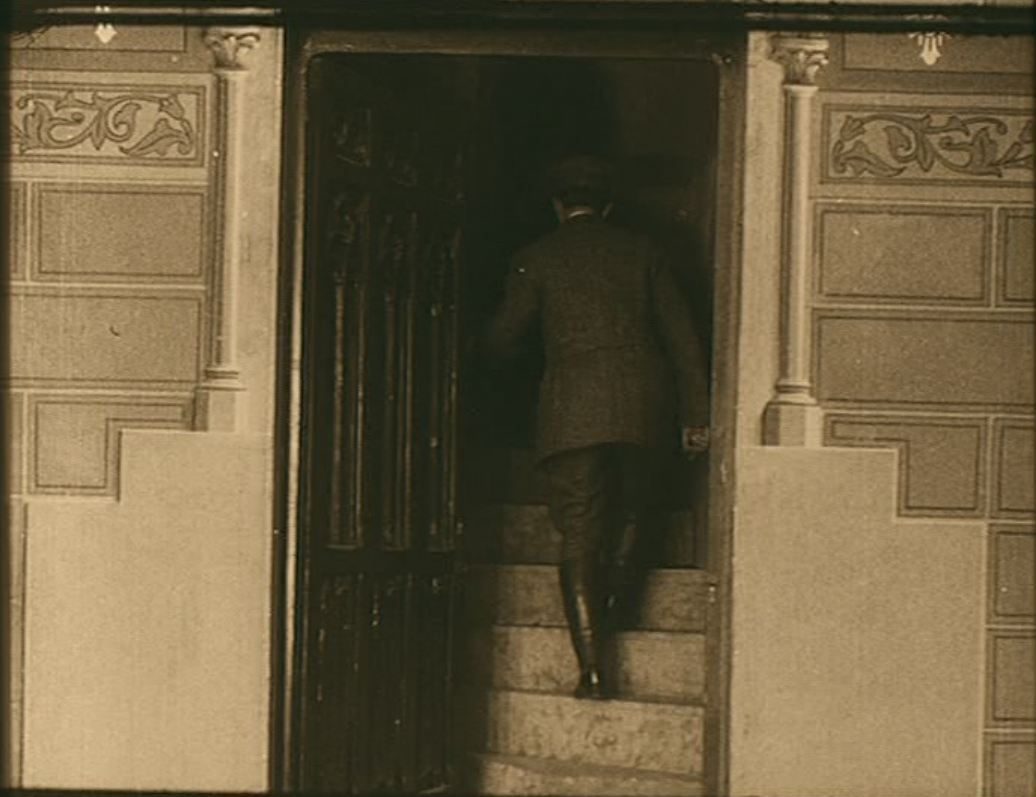
|

|
|

|
|
|
|
|
|

|
|
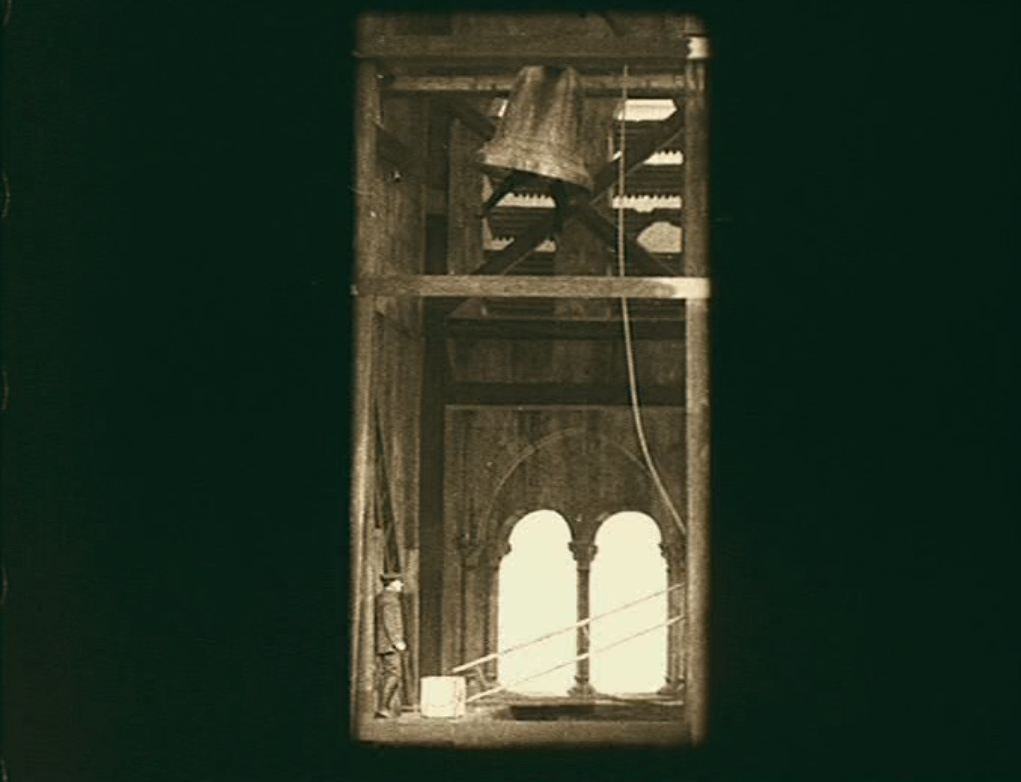
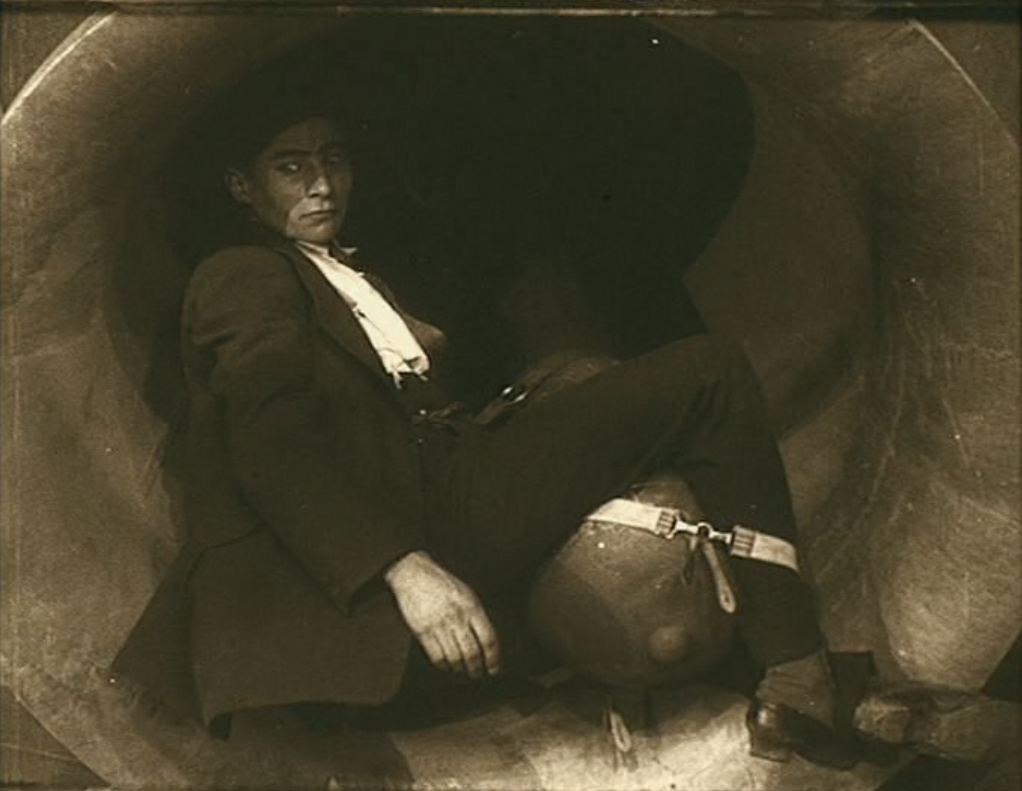
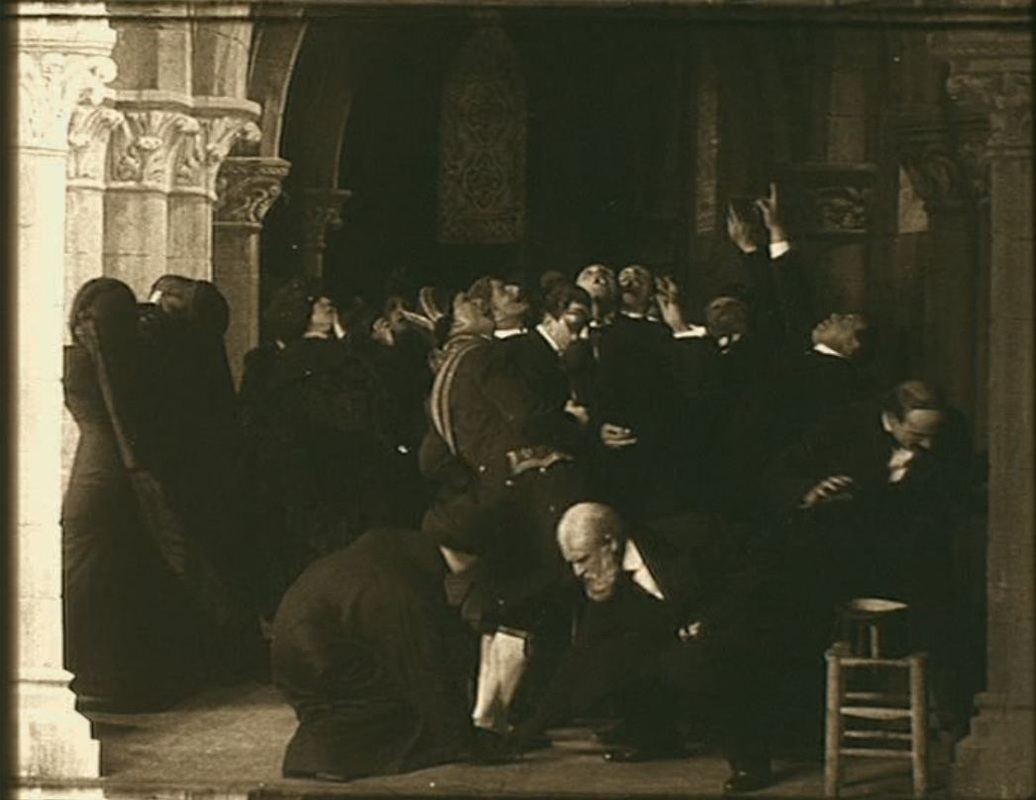
Fantômas and an accomplice retrieve some stolen jewels hidden in a church belltower, in the bell itself. When the accomplice throws the jewel case down to Fantômas, he removes the ladder and leaves the accomplice clinging to the clapper. A few days later, in the course of a funeral service the bell is rung, causing diamonds, pearls and blood to rain down on the congregation (the accomplice had removed the jewels from the case before throwing it down to Fantômas). The dead accomplice is transformed into a human clapper:
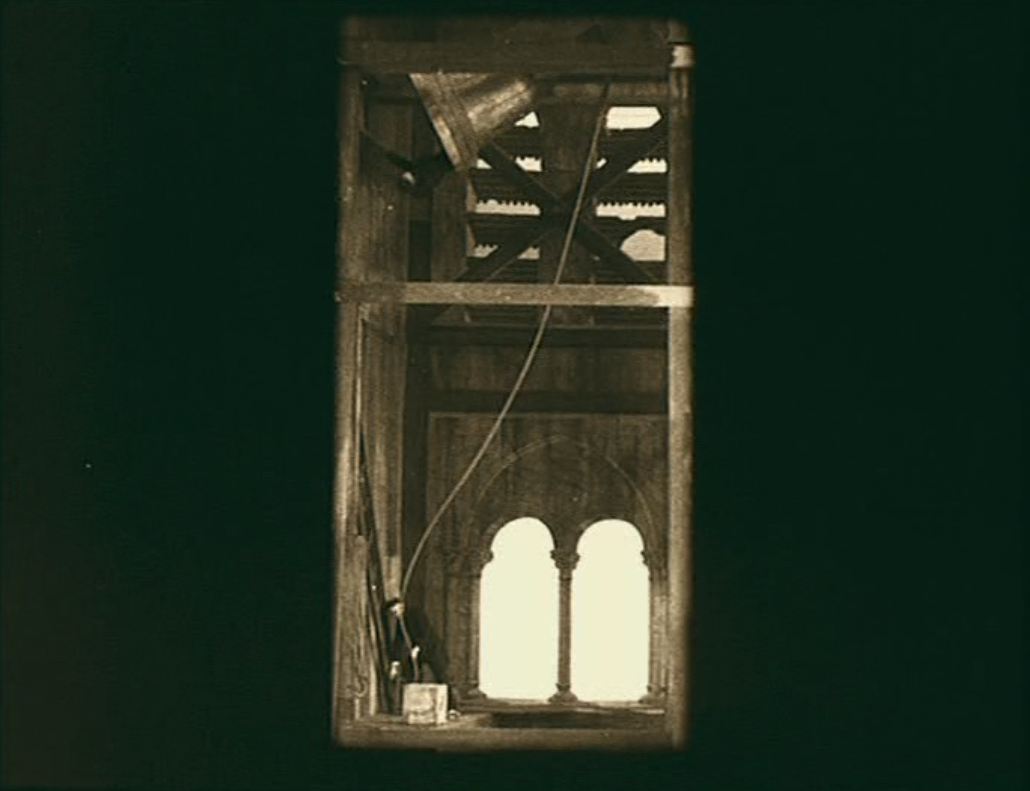
In such a context, Guérande's tumble down stairs in a basket looks relatively tame, even old fashioned. Gaumont comedies had for ten years or so been making comical ascents and descents up and down staircases and other inclines. Here is a sample:

Une histoire roulante (Alice Guy 1906)
|
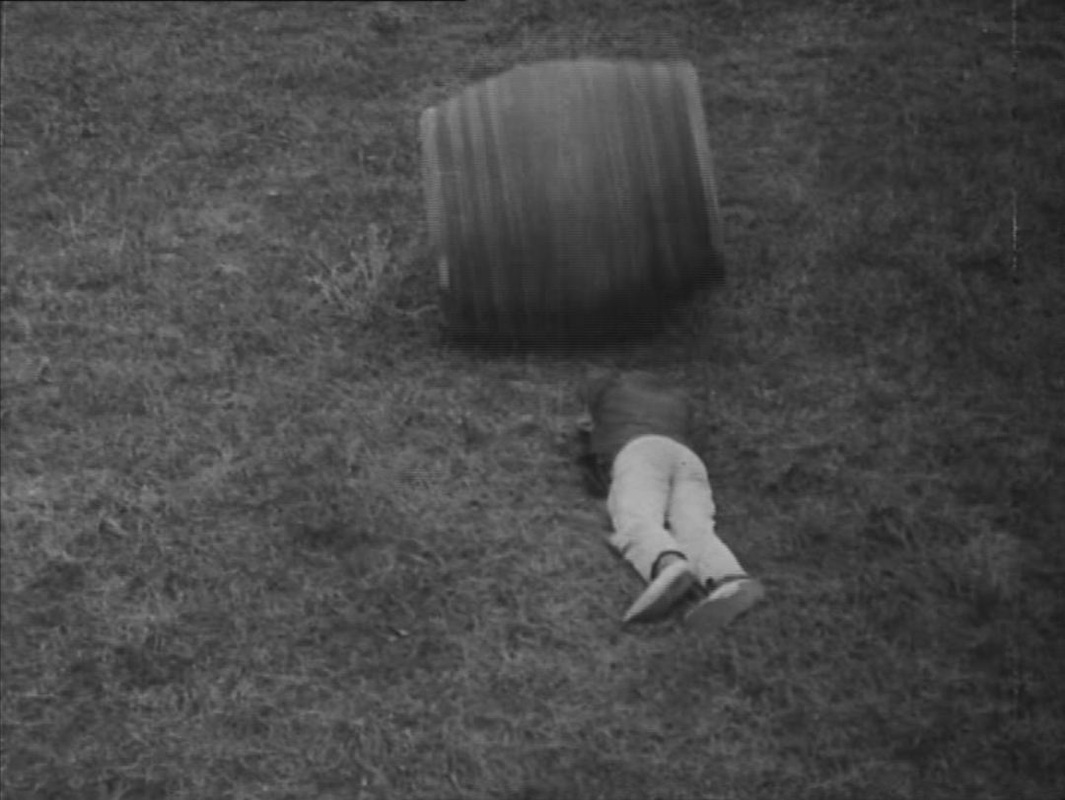
Une histoire roulante (Alice Guy 1906)
|
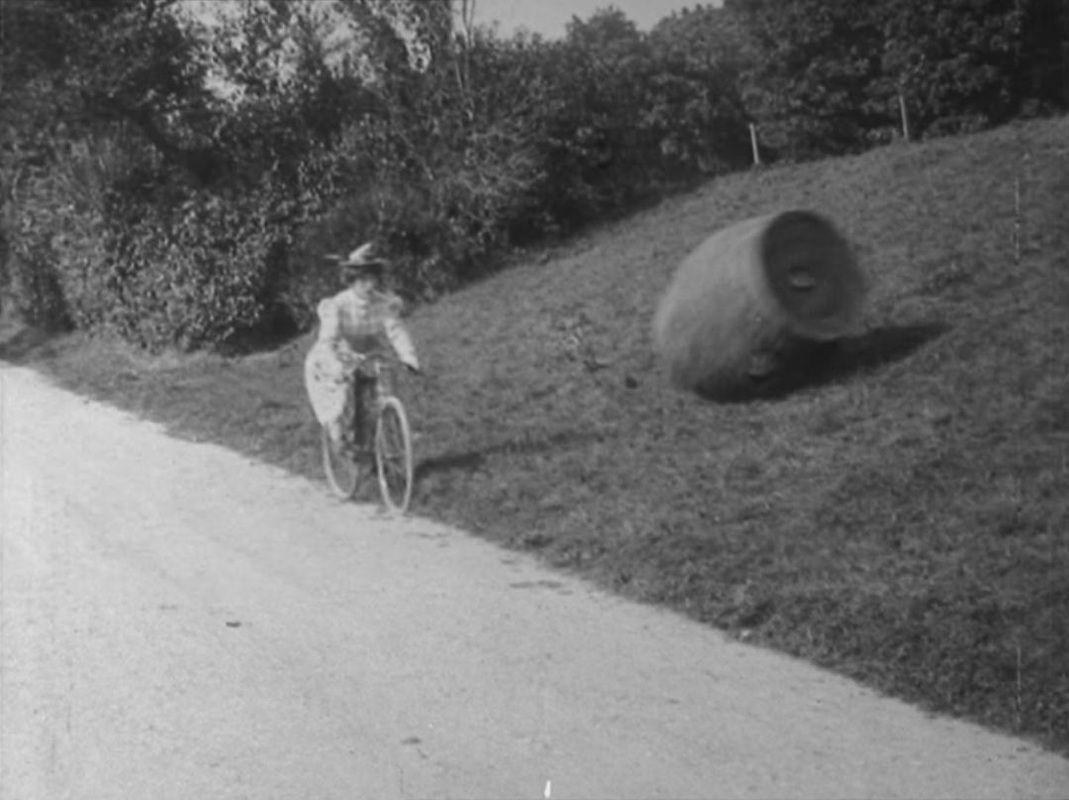
Une histoire roulante (Alice Guy 1906)
|
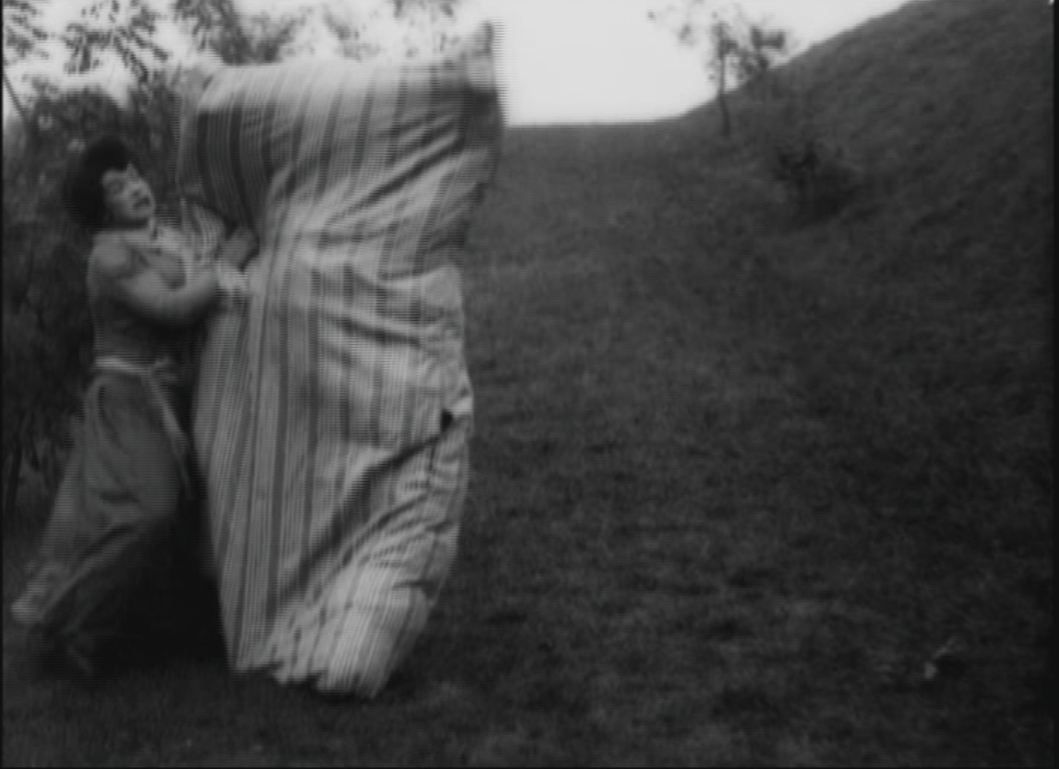
Le Matelas épileptique (Alice Guy 1906)
|

Le Matelas épileptique (Alice Guy 1906)
|
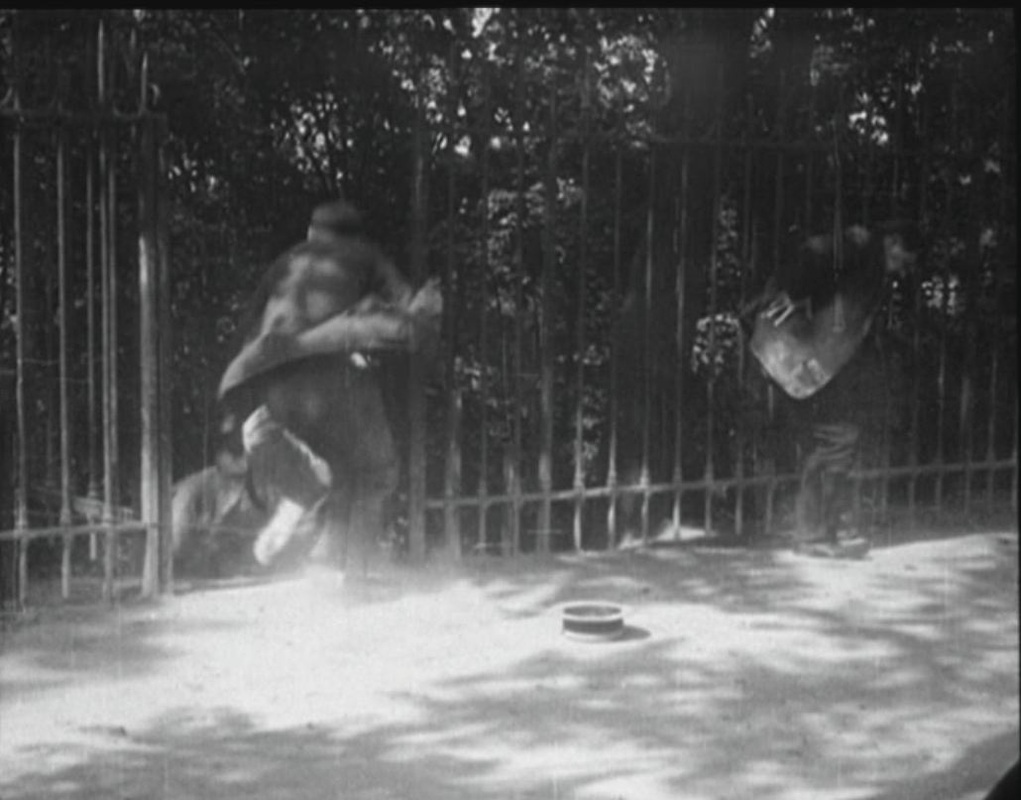
Une héroïne de quatre ans (Alice Guy 1907)
|
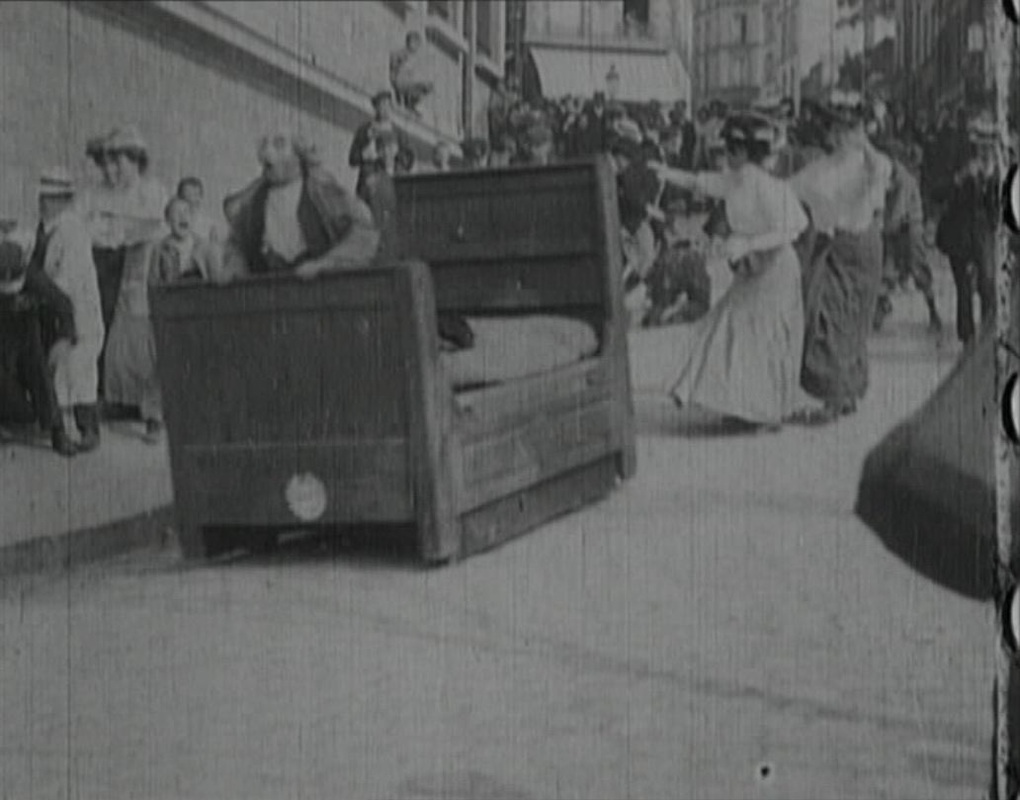
Le Lit à roulettes (Alice Guy 1907)
|
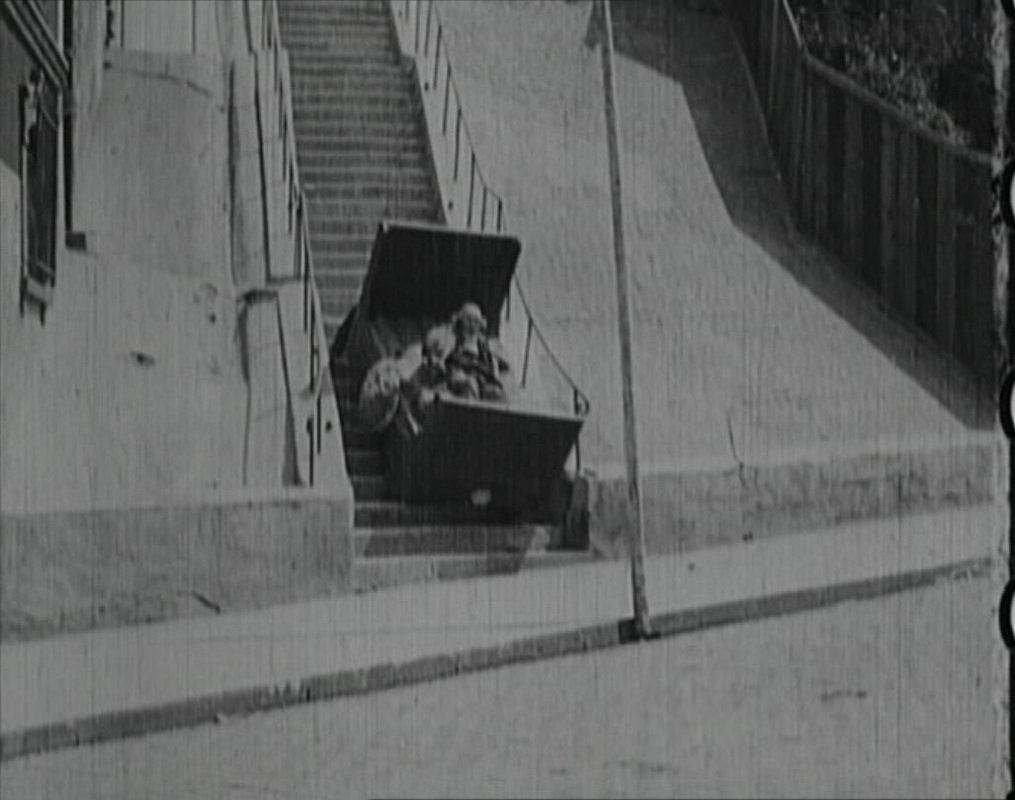
Le Lit à roulettes (Alice Guy 1907)
|
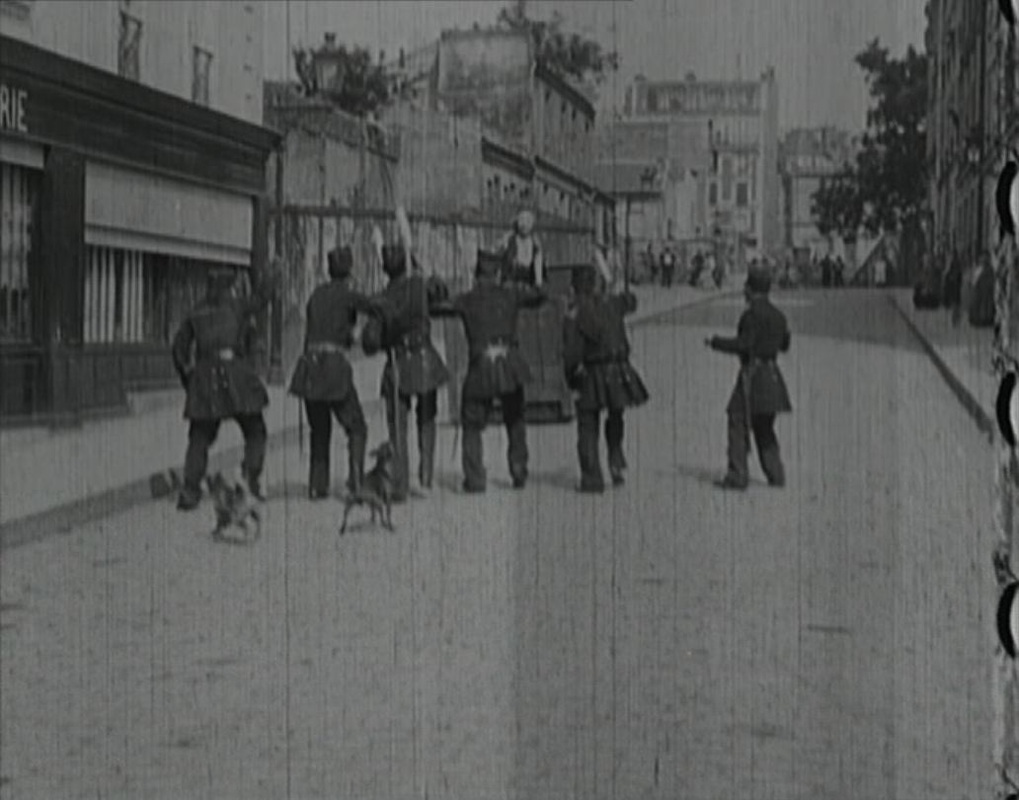
Le Lit à roulettes (Alice Guy 1907)
|

La Course à la saucisse (Alice Guy 1907)
|

La Course à la saucisse (Alice Guy 1907)
|
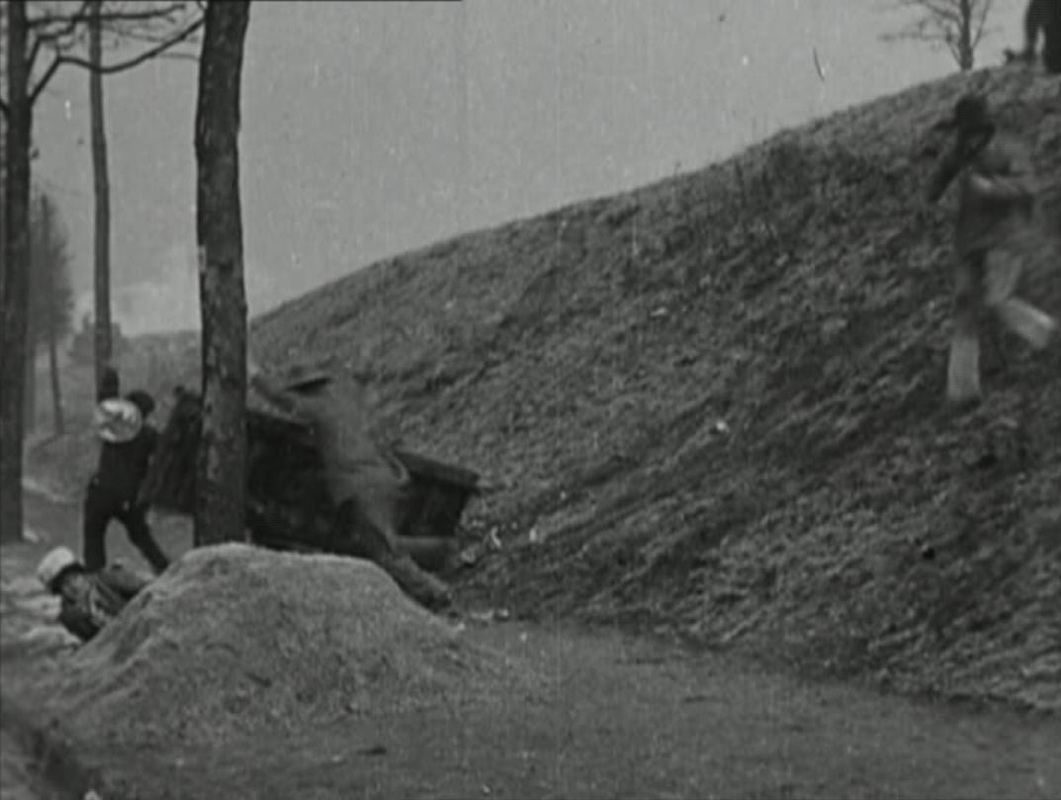
La Course à la saucisse (Alice Guy 1907)
|
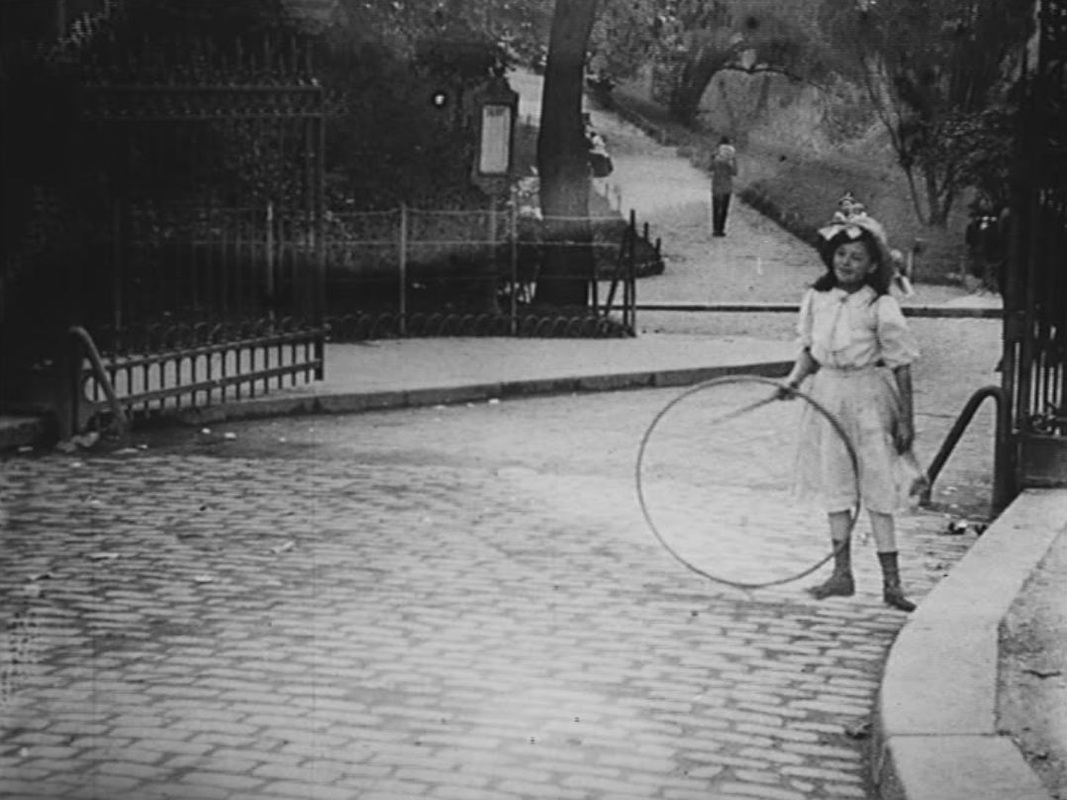
Le Cerceau magique (Emile Cohl 1908)
|
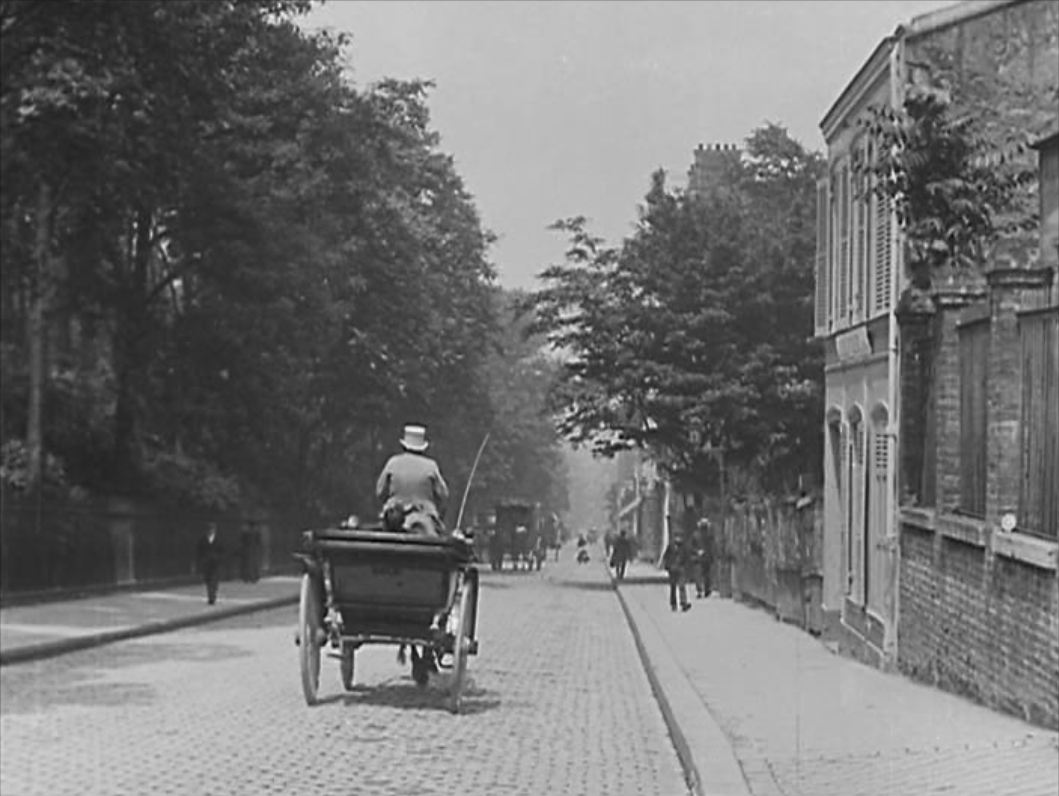
Le Placier est tenace (Emile Cohl 1910)
|
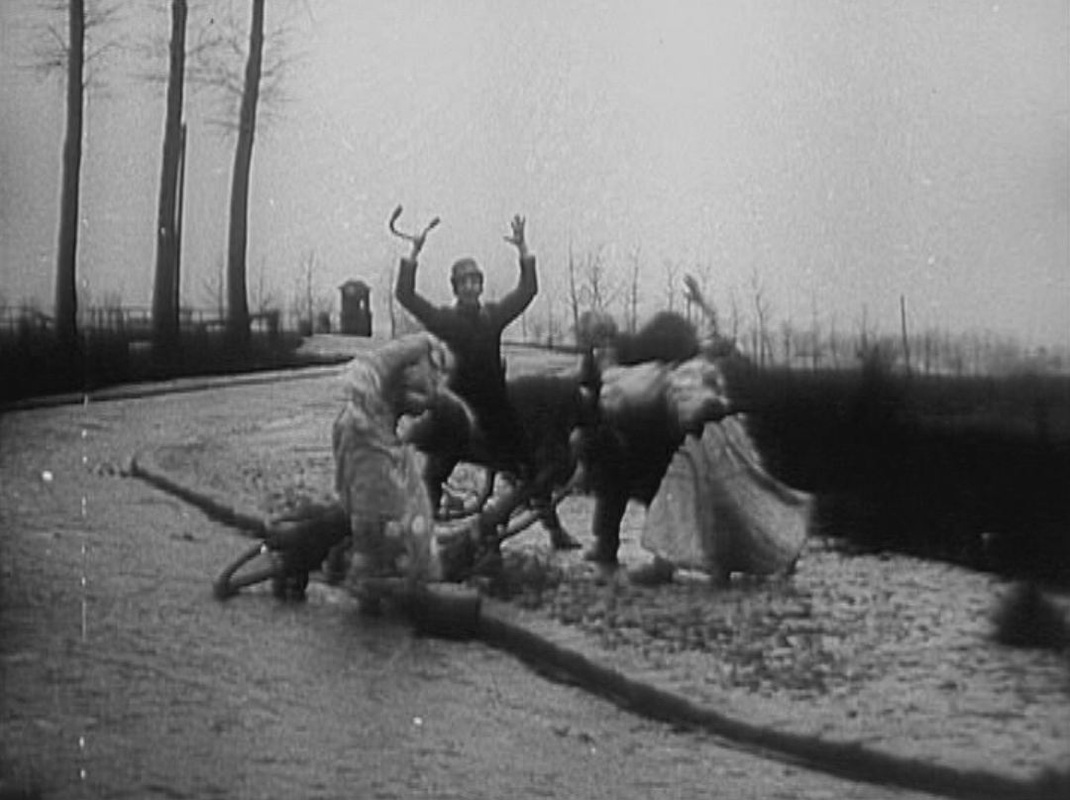
Le Baptême de Calino (Jean Durand 1911)
|
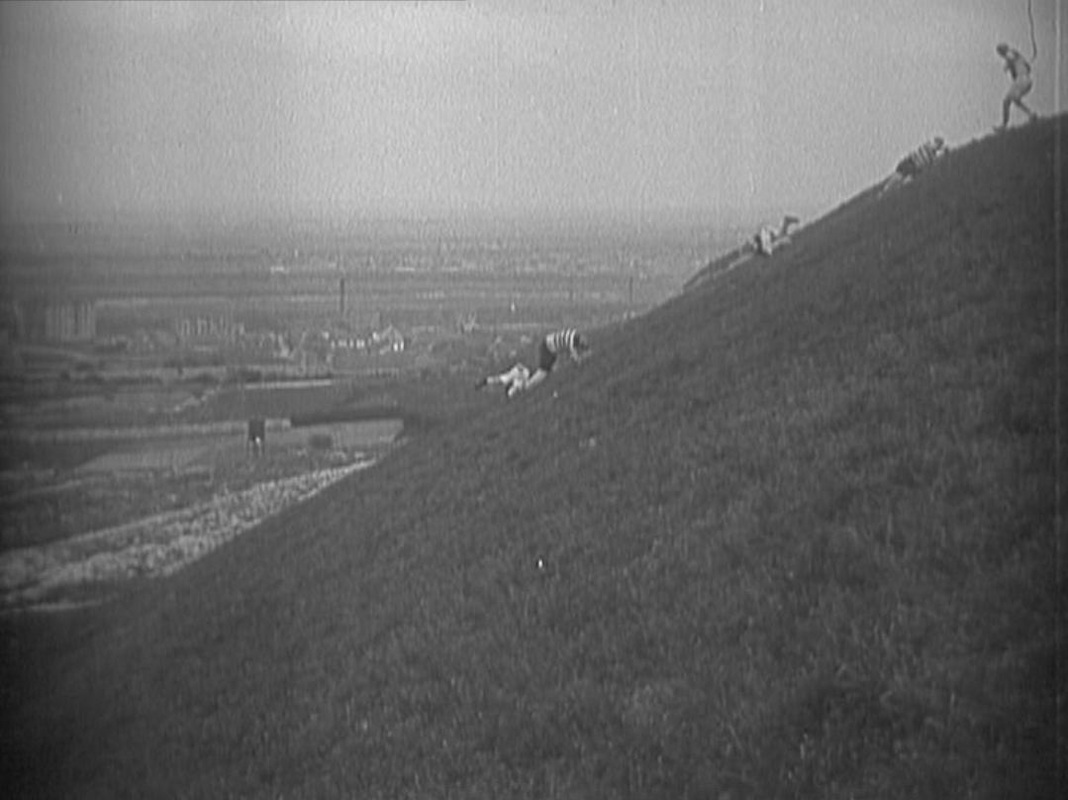
Oxford contre Martigues (Jean Durand 1912)
|
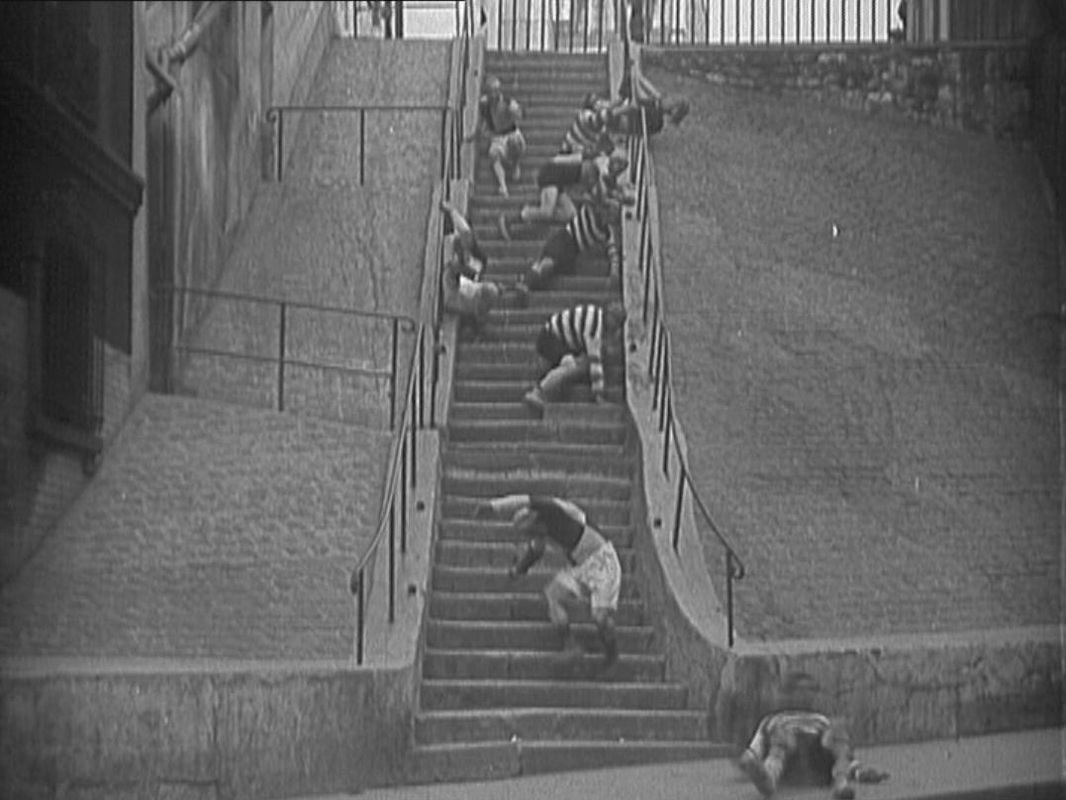
Oxford contre Martigues (Jean Durand 1912)
|
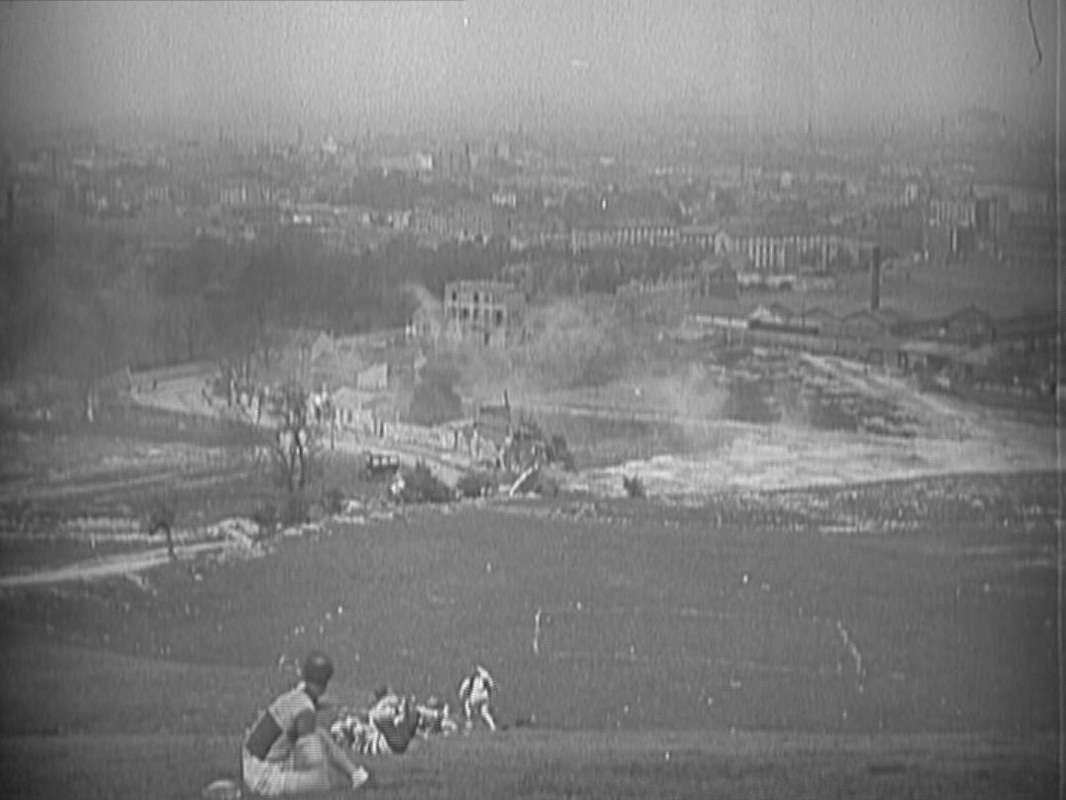
Oxford contre Martigues (Jean Durand 1912)
|
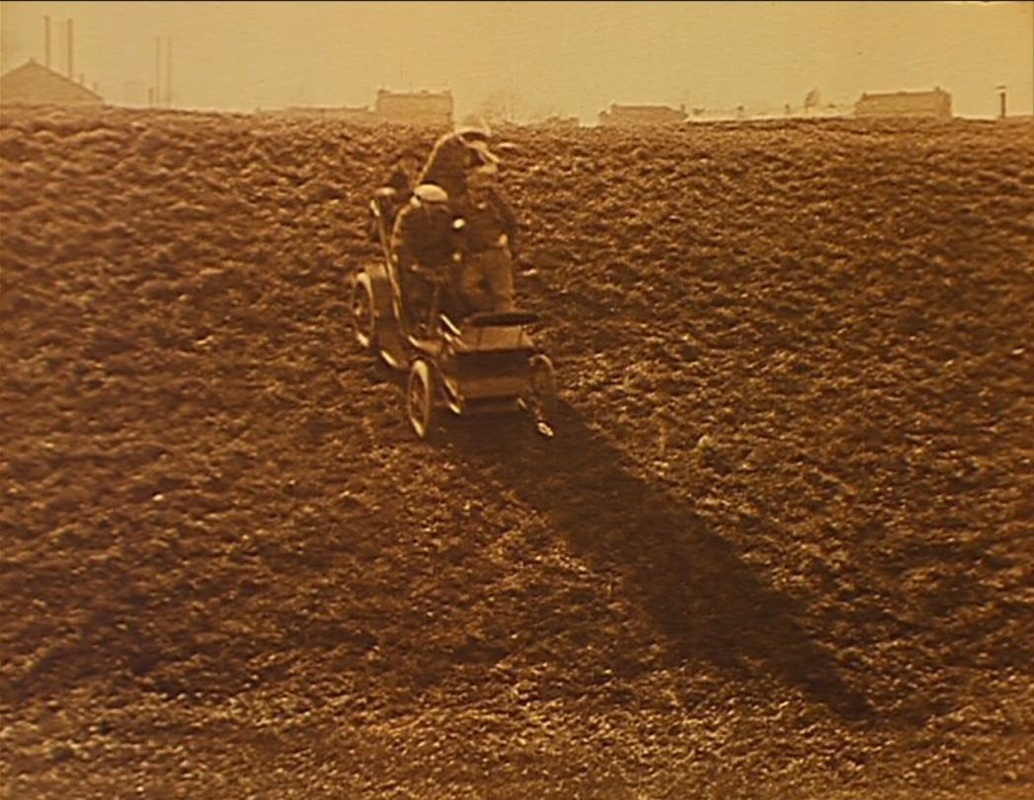
Zigoto promène ses amis (Jean Durand 1912)
|
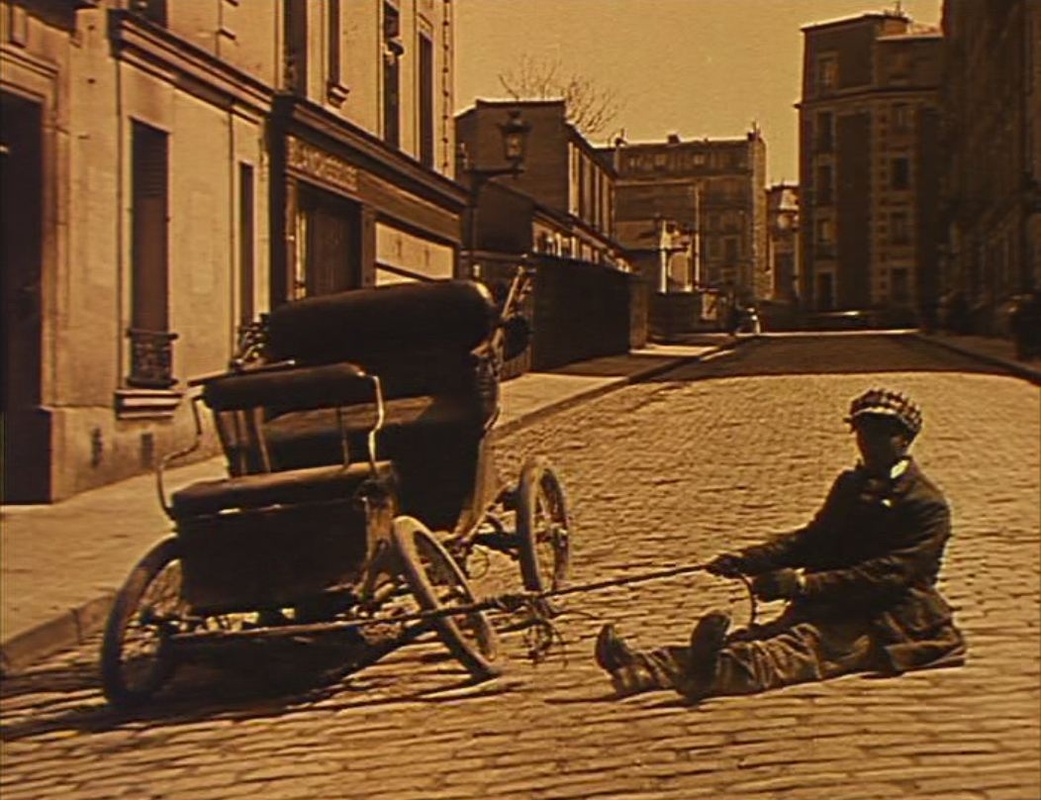
Zigoto promène ses amis (Jean Durand 1912)
|
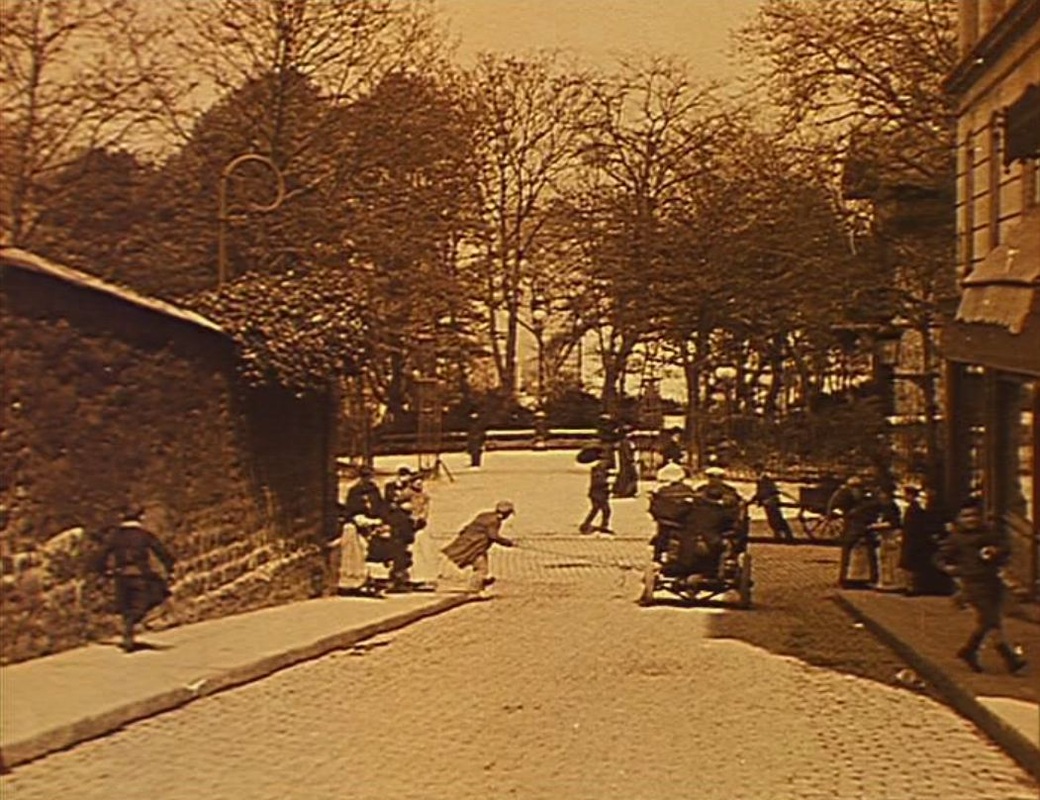
Zigoto promène ses amis (Jean Durand 1912)
|
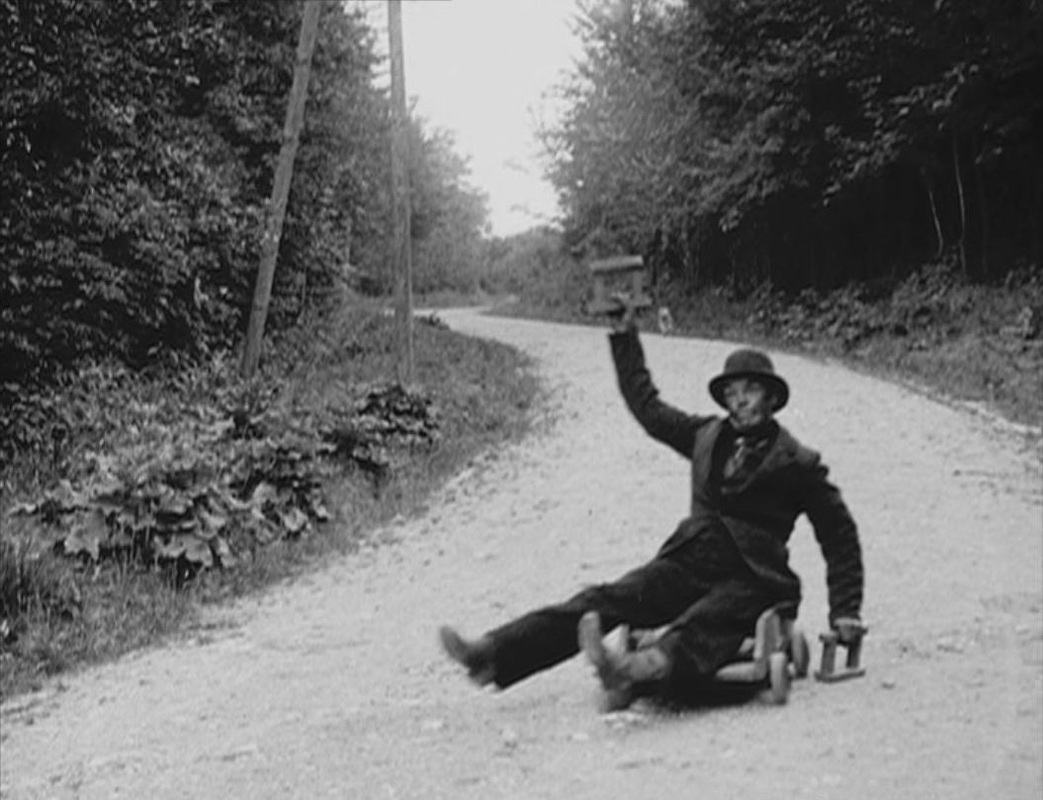
Zigoto et la blanchisseuse (Jean Durand 1912)
|
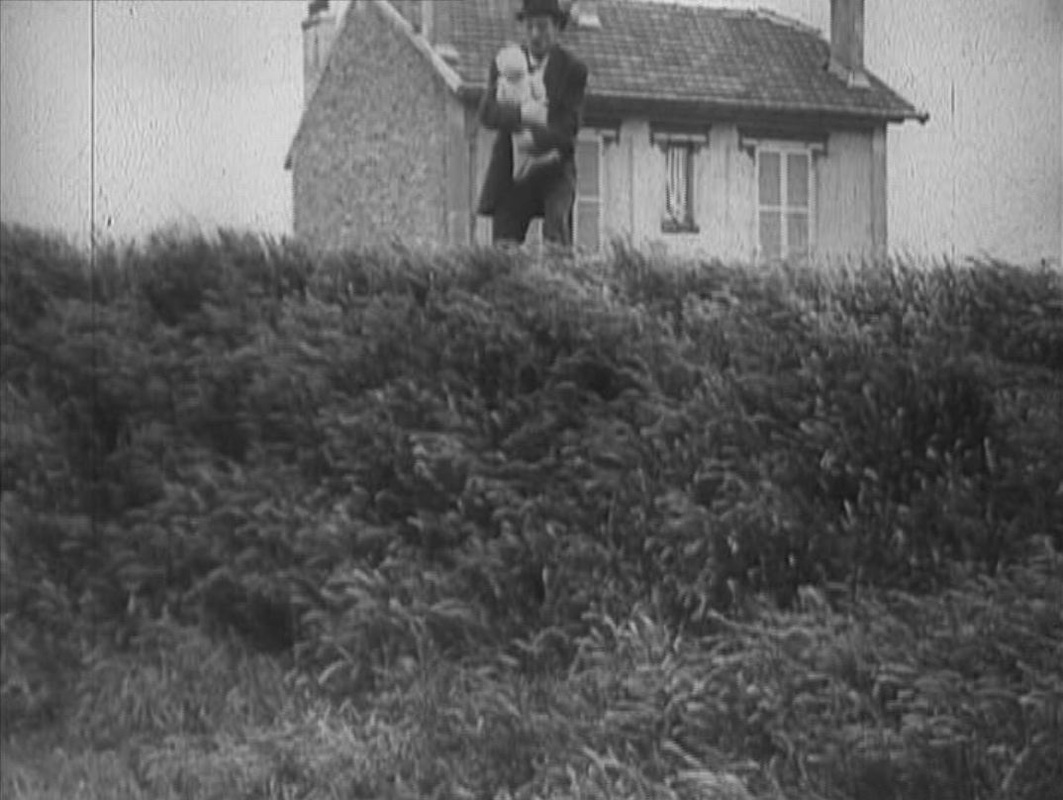
Onésime et le nourisson (Jean Durand 1912)
|
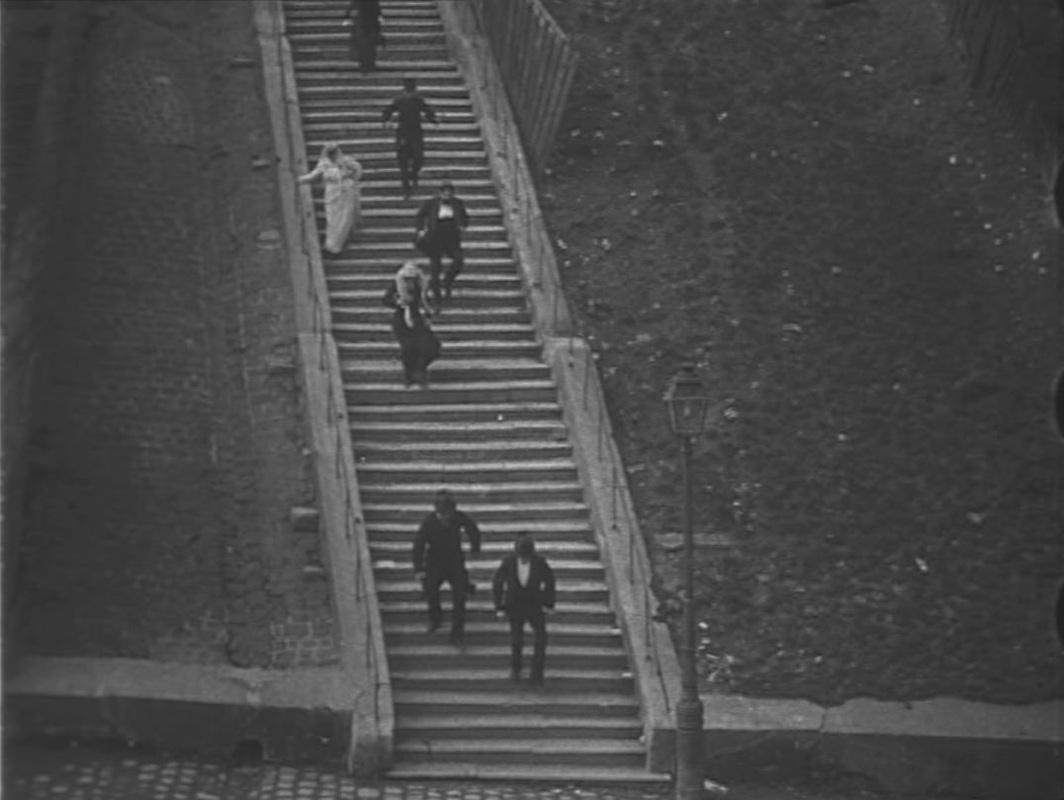
Onésime tu l'épousera quand même (Jean Durand 1913)
|
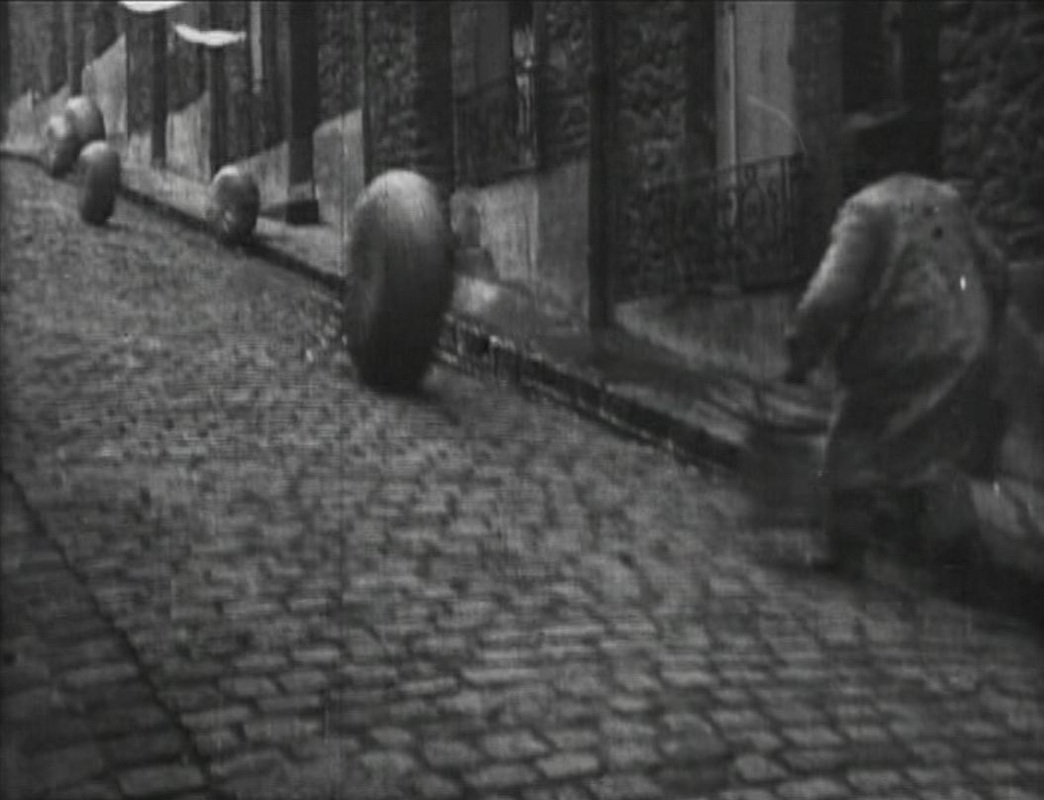
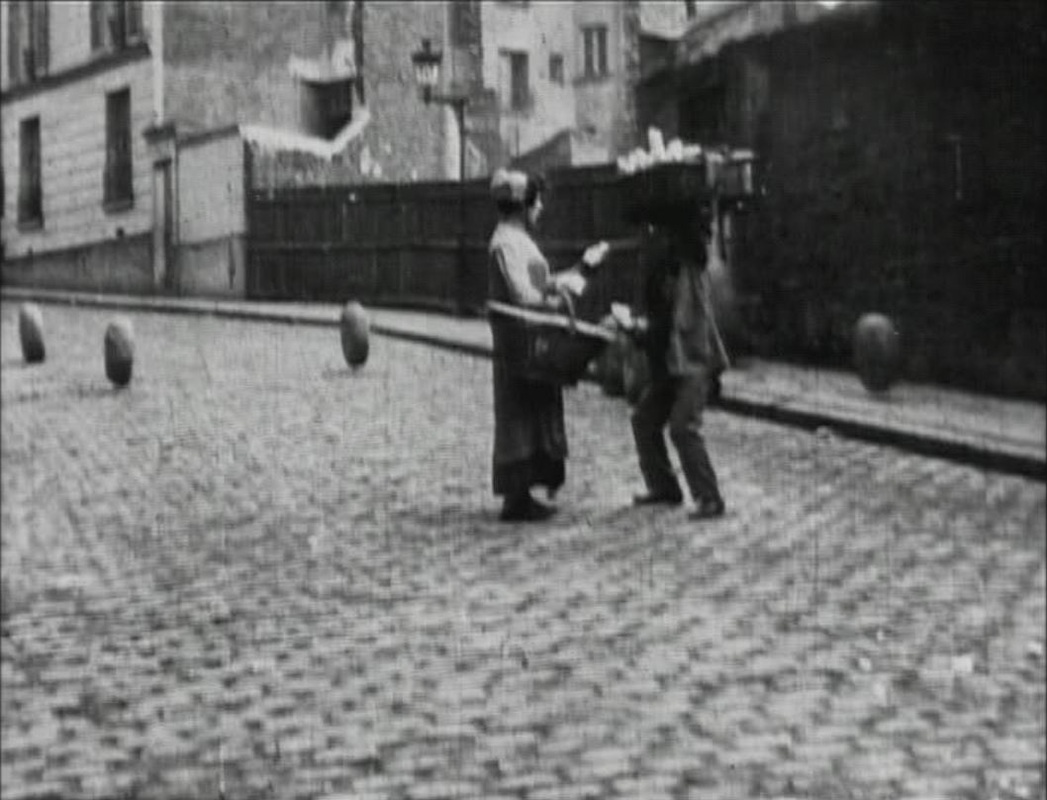
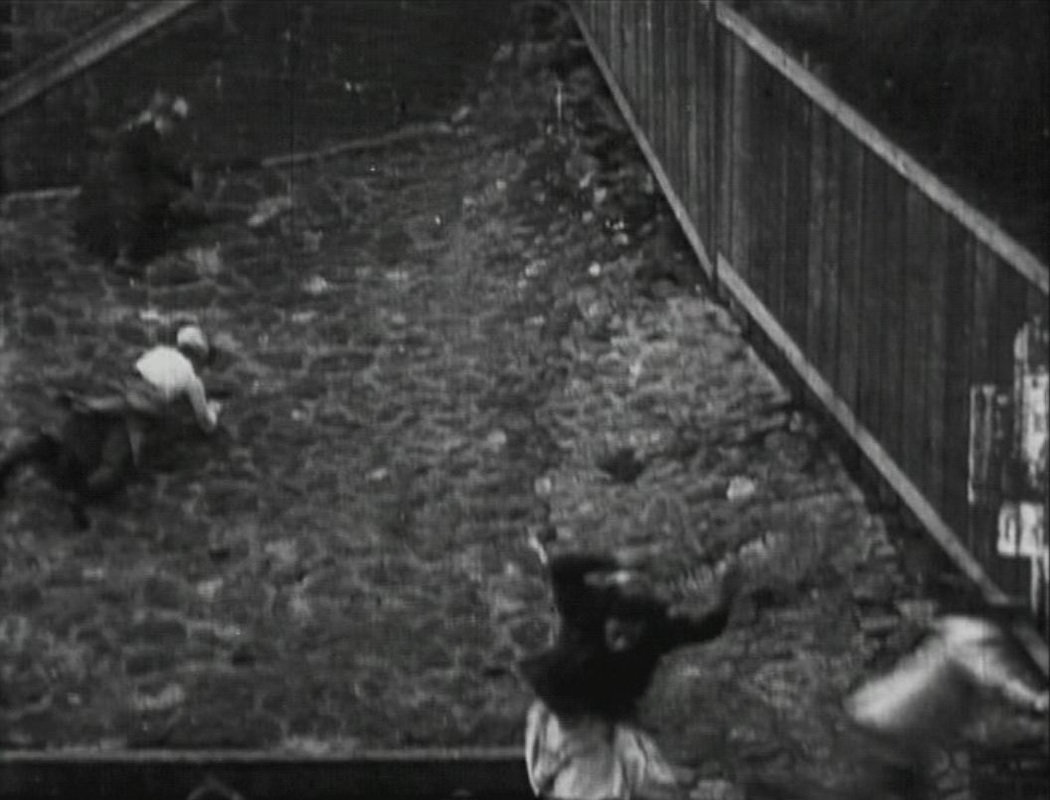
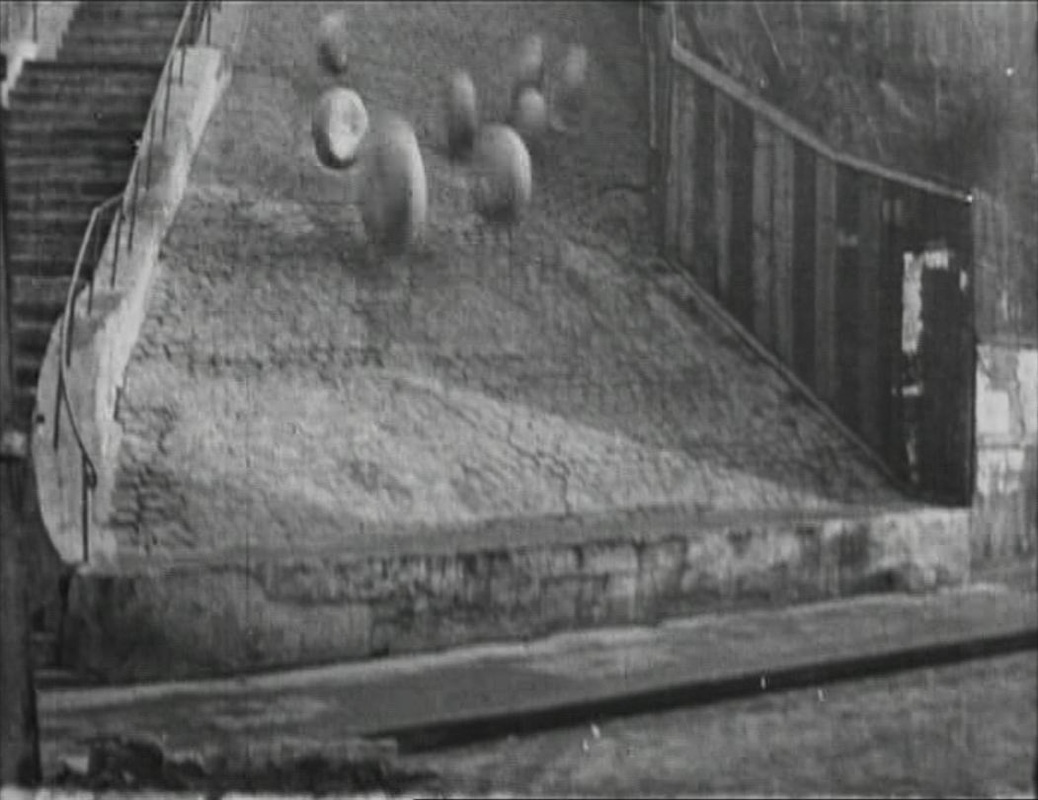
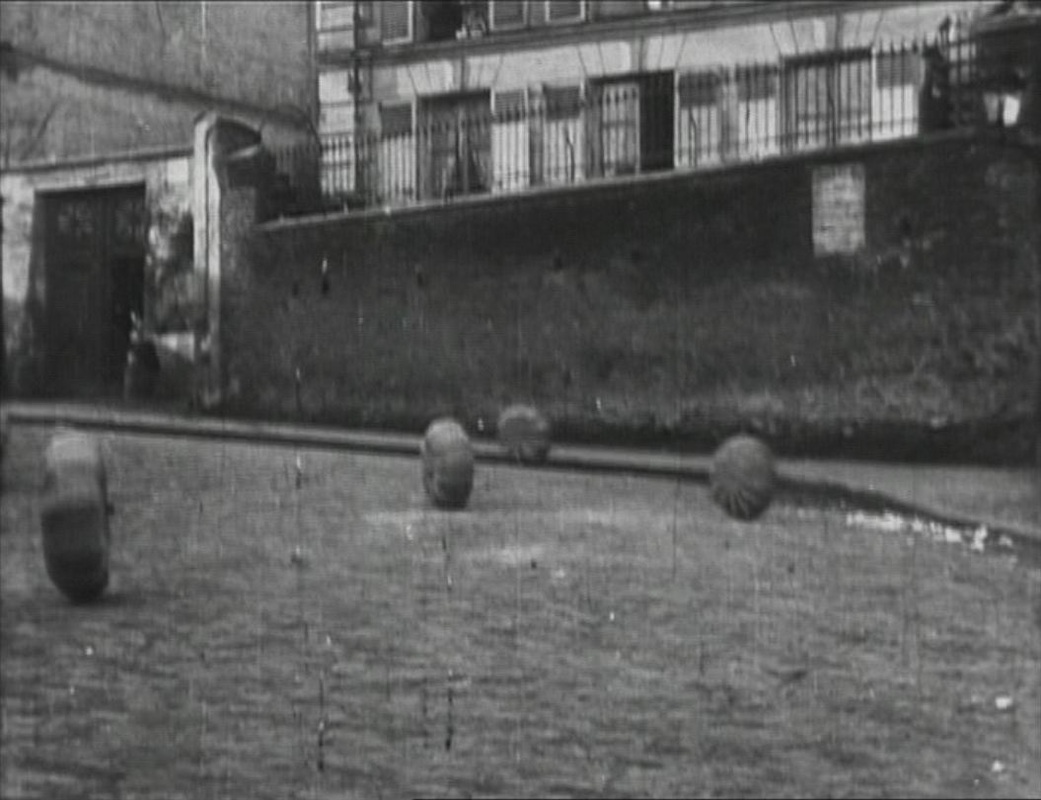
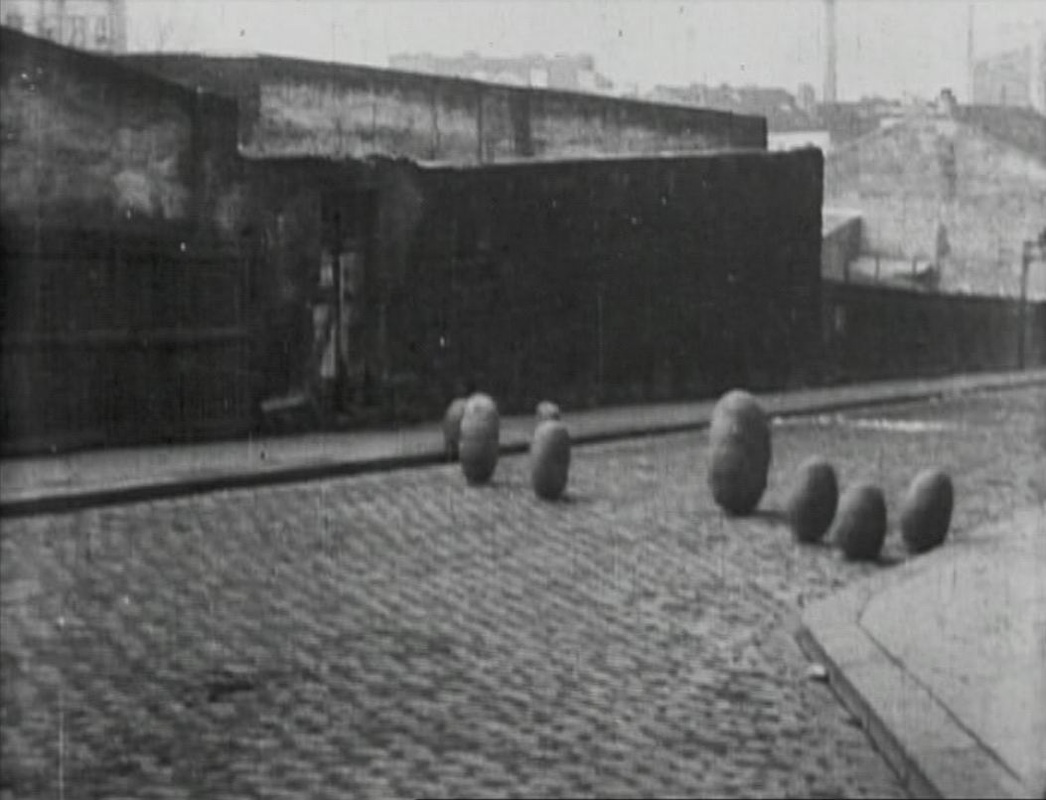
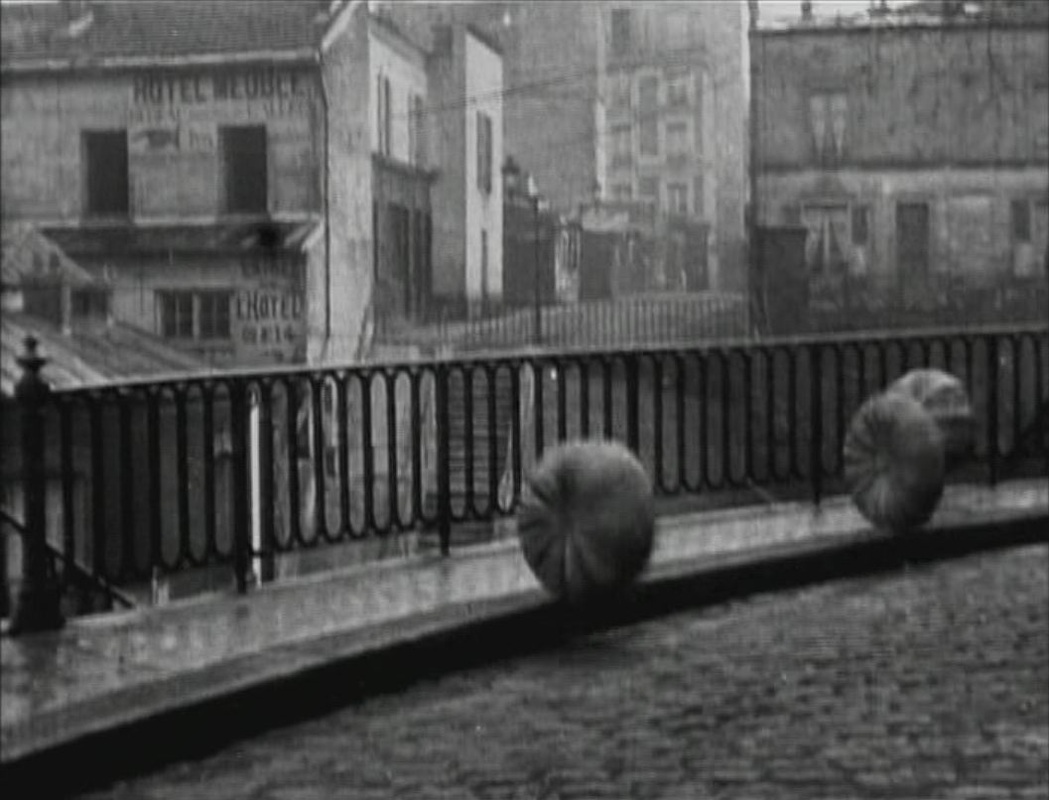
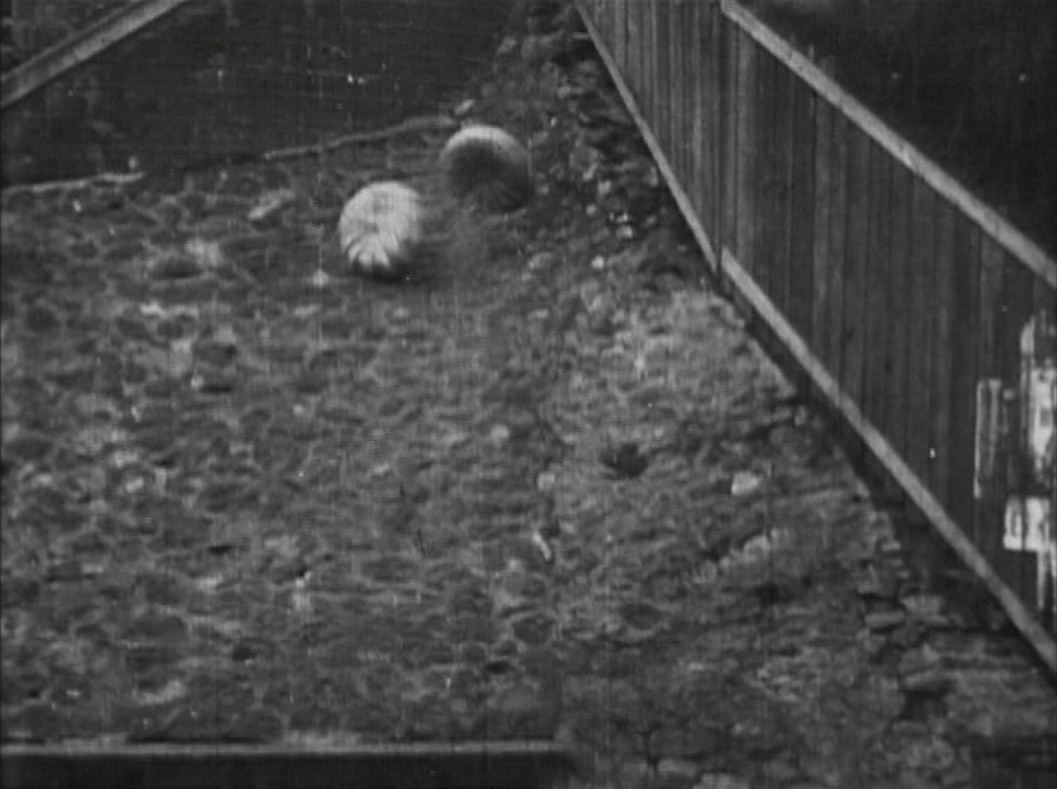
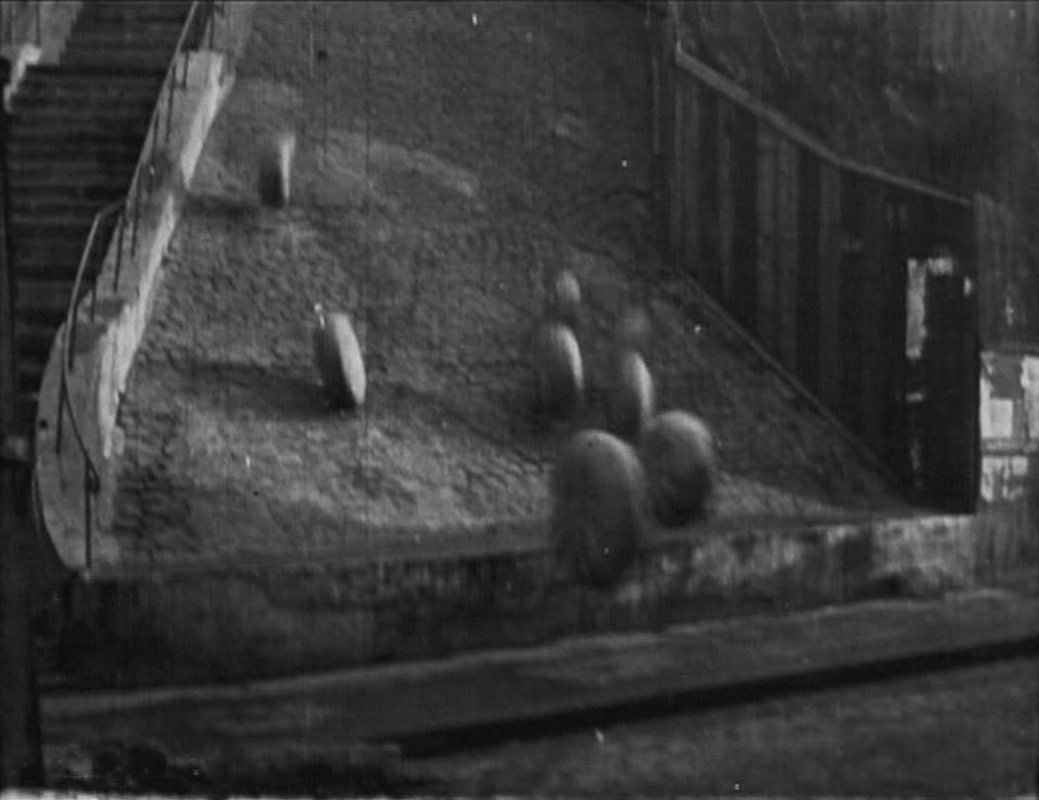
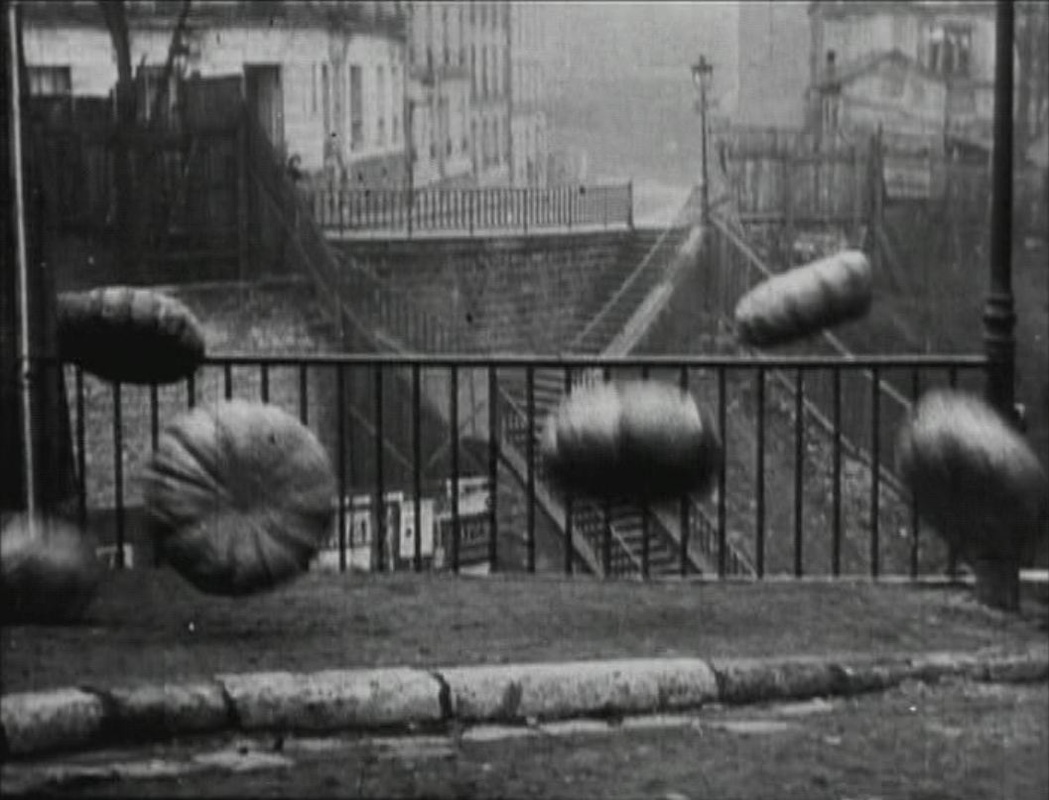
The epic of Gaumont slope-and-stairs films is Romeo Bosetti's 1908 La Course aux potirons, where a collection of rolling pumpkins are chased down and up the streets and stairs of Belleville:

|
|
|
|
|
|

|
|

|
With admittedly only a small corpus of films on which to base such a claim, I would venture to say nonetheless that a major difference between Gaumont comedies and those of their rivals Pathé, around the years 1906-1913, is that Gaumont films make humour out of slopes and stairs far more often than do Pathé films, and that this is because there were far more slopes and stairs in the vicinity of the Elgé site than there were in the vicinity of the Pathé studios in Vincennes and Montreuil (see here for examples of slope-free Pathé comedies). Gaumont filmmakers had the landscaped parc des Buttes Chaumont nearby, as well as the Buttes Folles and the earthworks of the city fortification (see here, near the end of the piece, for a discussion of Gaumont's use of these sites). There were also many staircases. Here is a detail of a map showing the staircases in the area today. A hundred years ago there would have been several more, now lost to development:
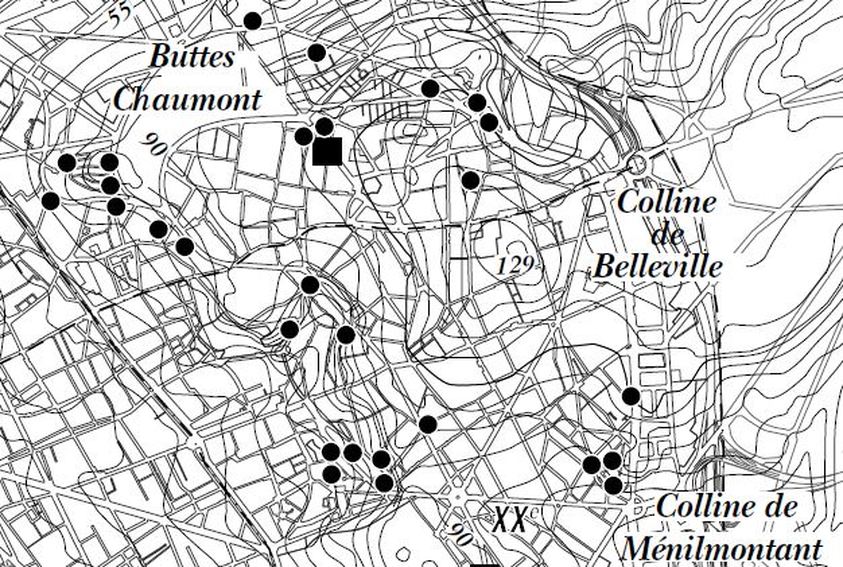
François L'Henaff, Paris en marches: les escaliers des rues de Paris (Atelier Parisien d'Urbanisme 2001)
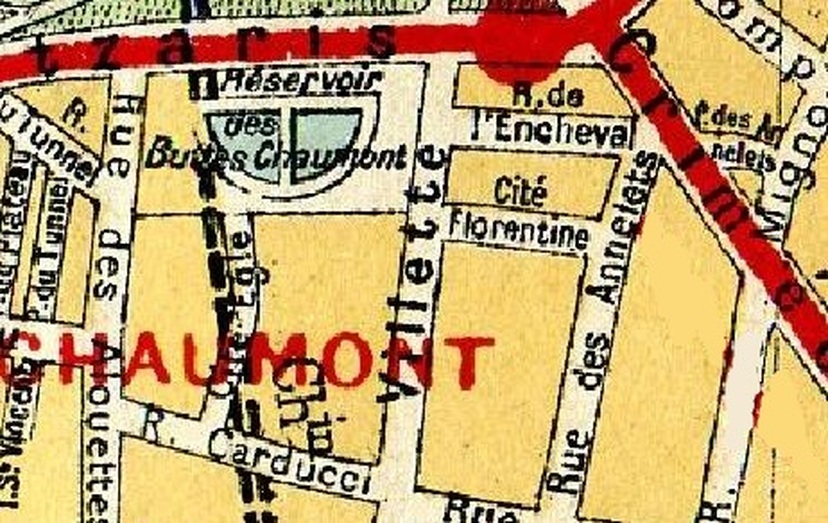
You may have noticed that one staircase in particular appears several times among the images sampled above. This was in the passage des Annelets, and was a very short distance from the Cité Elgé. If the crew left by the entrance on the rue de la Villette (roughly between the two letters 'l' on the map below), turned left and then right into the rue de l'Encheval, they would find themselves on the rue de Crimée, immediately in front of a convenient set of forty-eight stairs:
The stairs are there now, looking little different from their appearance 105 years ago in Le Lit à roulettes:
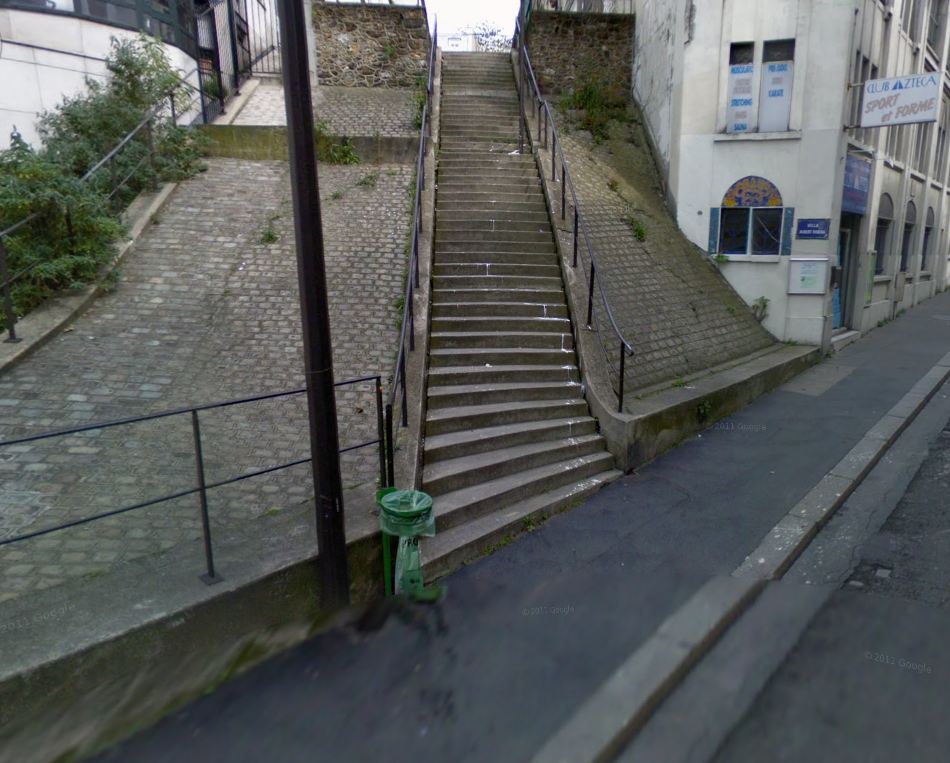 Google Maps |
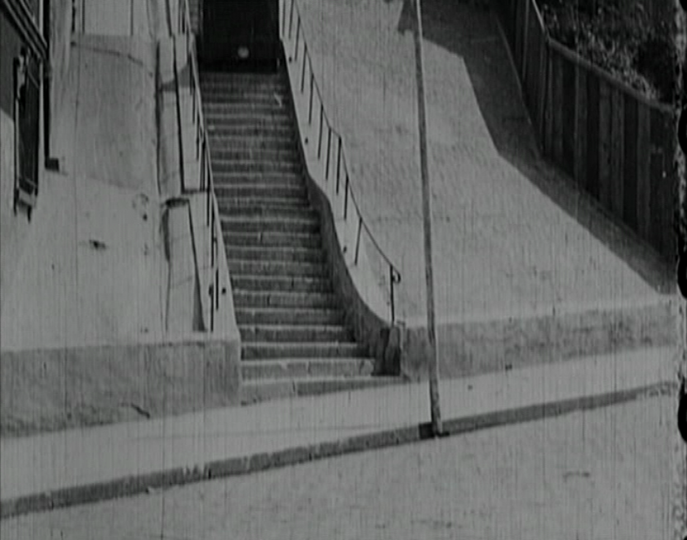
|
The proximity of these stairs must have been their principal appeal to Gaumont filmmakers, but there was also the advantage that just opposite is another set of stairs, connecting the rue des Annelets and the rue de l'Encheval with the rue de Crimée. In fact to get to their favoured location the crew would have had to come done this other set of stairs. Here is a view of the passage des Annelets stairs from the rue des Annelets stairs, and the latter, seen from the rue de Crimée:
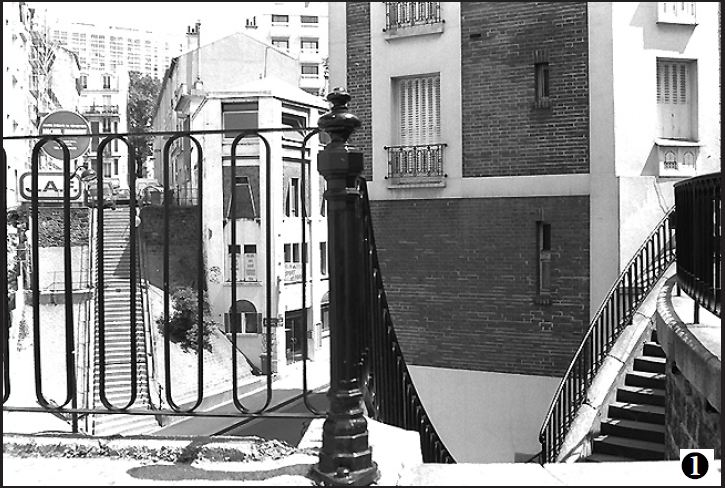
|
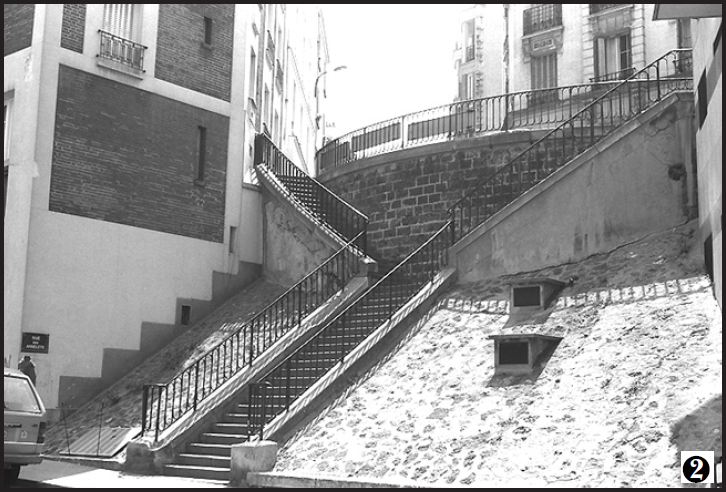
François L'Henaff, Paris en marches (APU 2001)
|
La Course aux potirons is the only film I have come across that uses the more distinctive, Y-shaped staircase (as opposed to six films that use the other). The pumpkins arrive at the top of the rue des Annelets stairs and go over the balustrade (all the time pursued by a group of humans, a donkey and a dog). They go down to the rue de Crimée via the contiguous glacis, then go up alongside the passage des Annelets stairs, coming over the opposite balustrade. The two matching views of the stairs opposite give this sequence a fine symmetry:
|
|
|
|
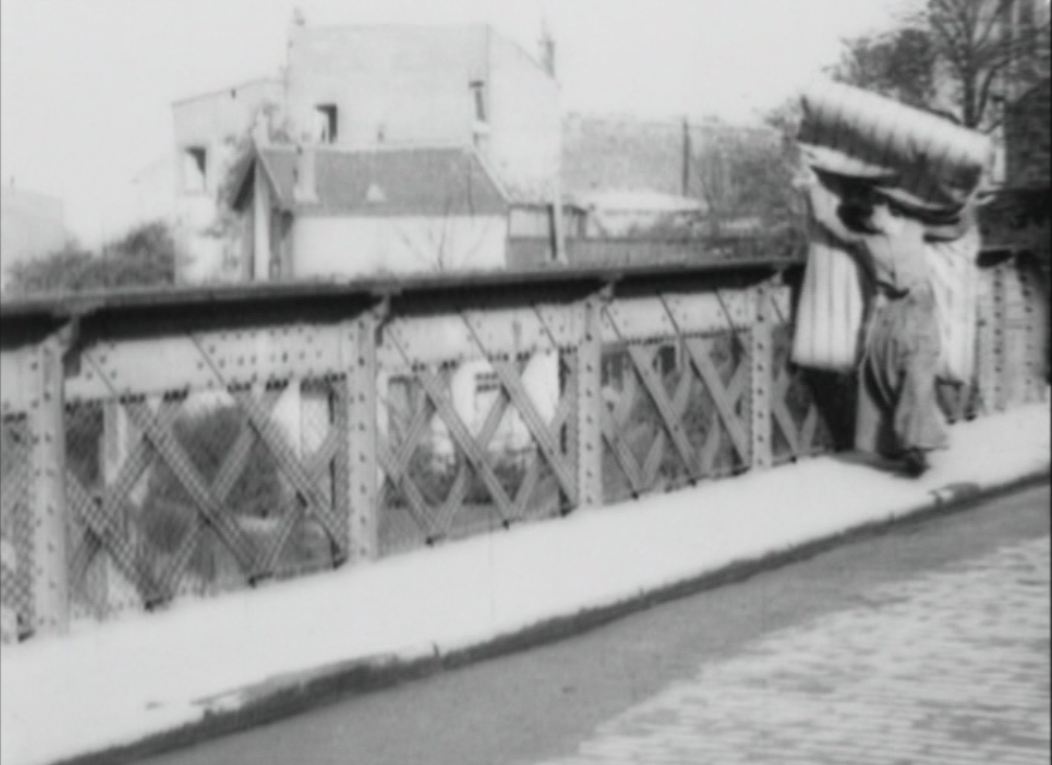
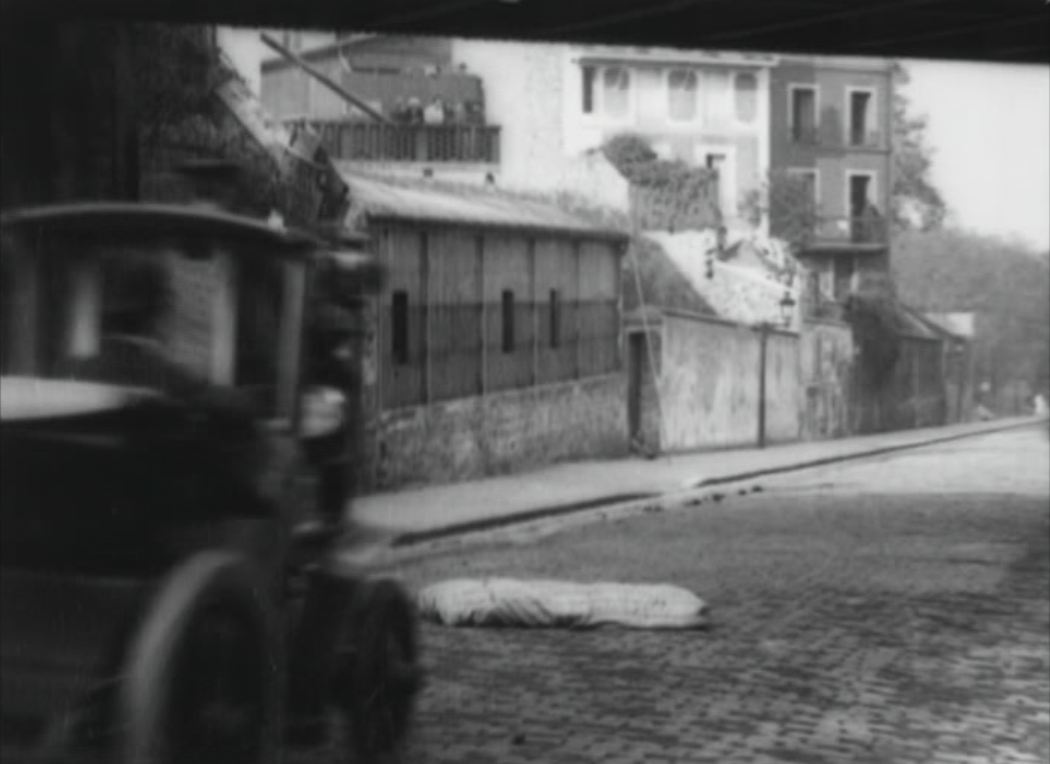
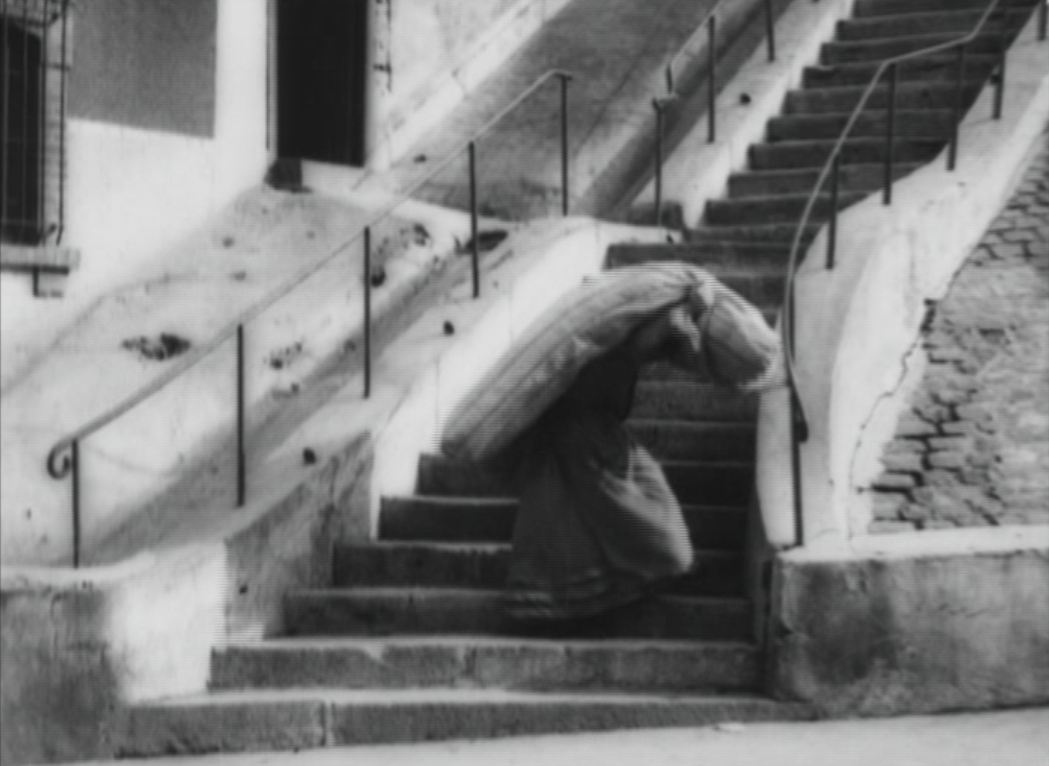
Two years earlier, Alice Guy had made similar good use of this area's specific topography in Le Matelas épileptique. A woman with a mattress to deliver (unaware that a man has been sewn into it) is struggling along the rue des Mignottes (now rue Arthur Rozier). As the street crosses the rue de Crimée via a bridge, the mattress wrests itself from her grasp and falls into the street below. There it gets caught in the wheels of a passing taxi. To retrieve the mattress she comes down the stairs of the passage des Annelets, and then has to come back up those stairs with the struggling mattress on her back:
|

|
|
|
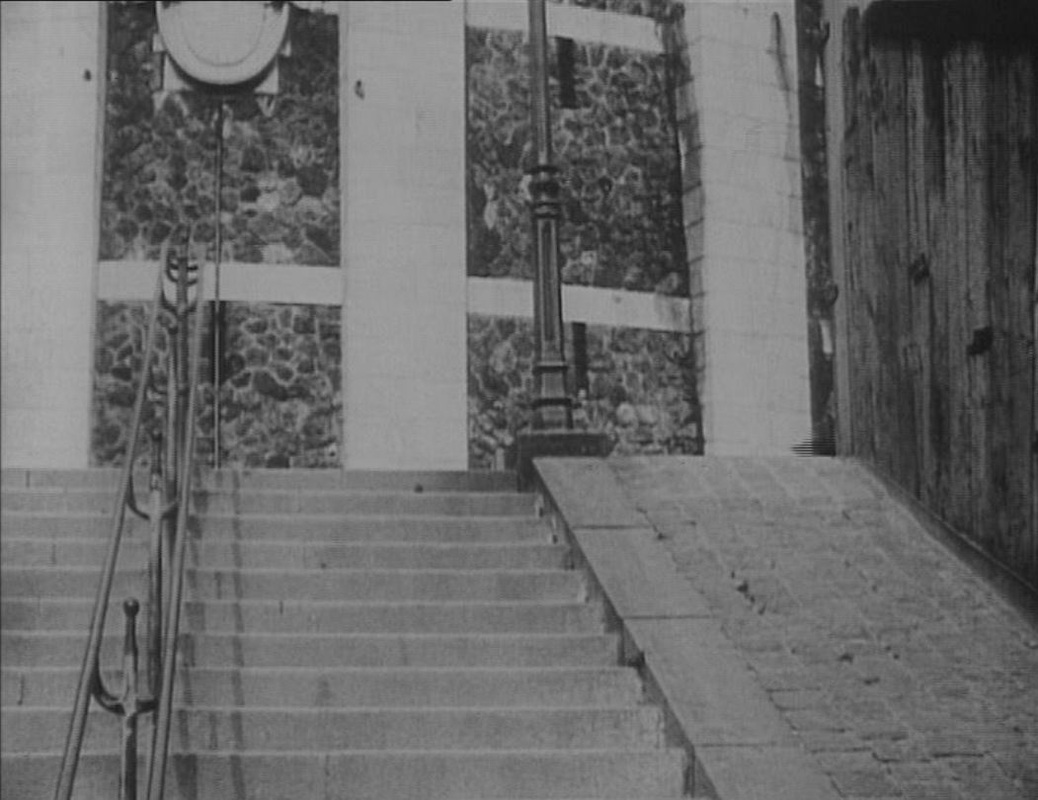
These are Gaumont filmmakers drawing on the immediate vicinity of the Belleville studios as a resource, as local filmmakers. But we began with Feuillade and his crew filming a staircase some distance away, in Montmartre:
|
|
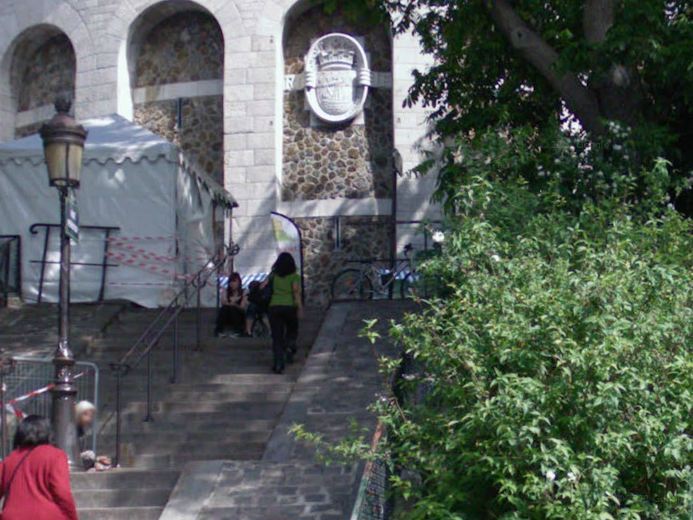
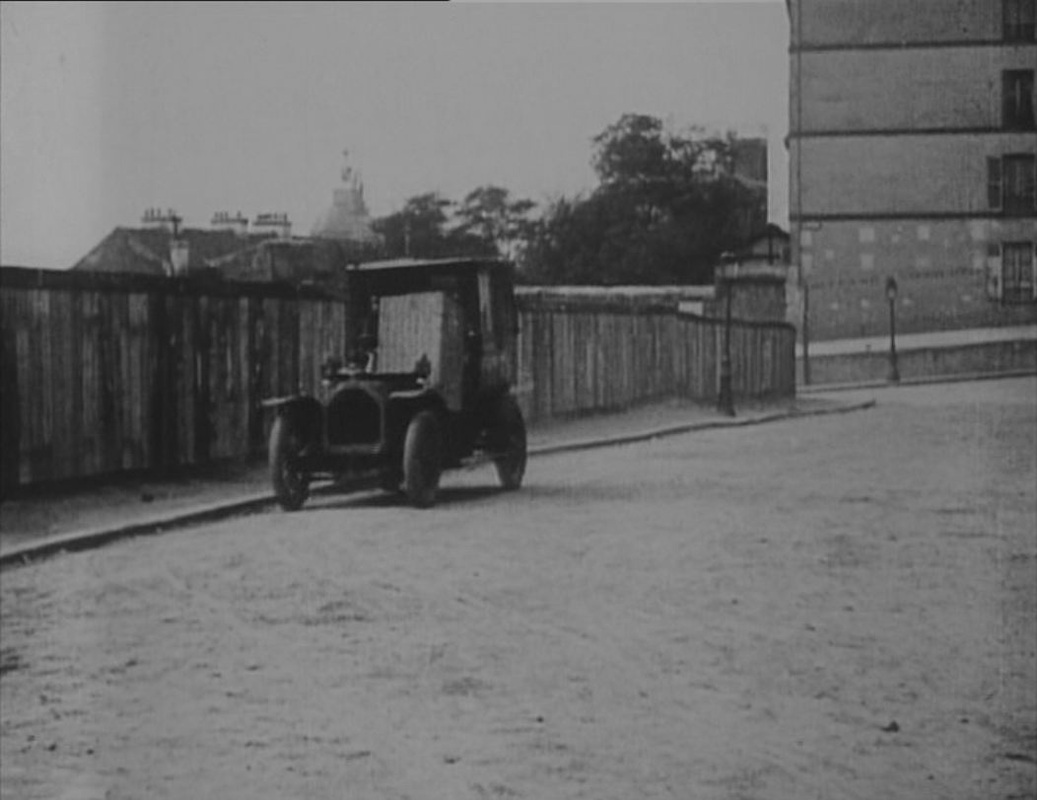
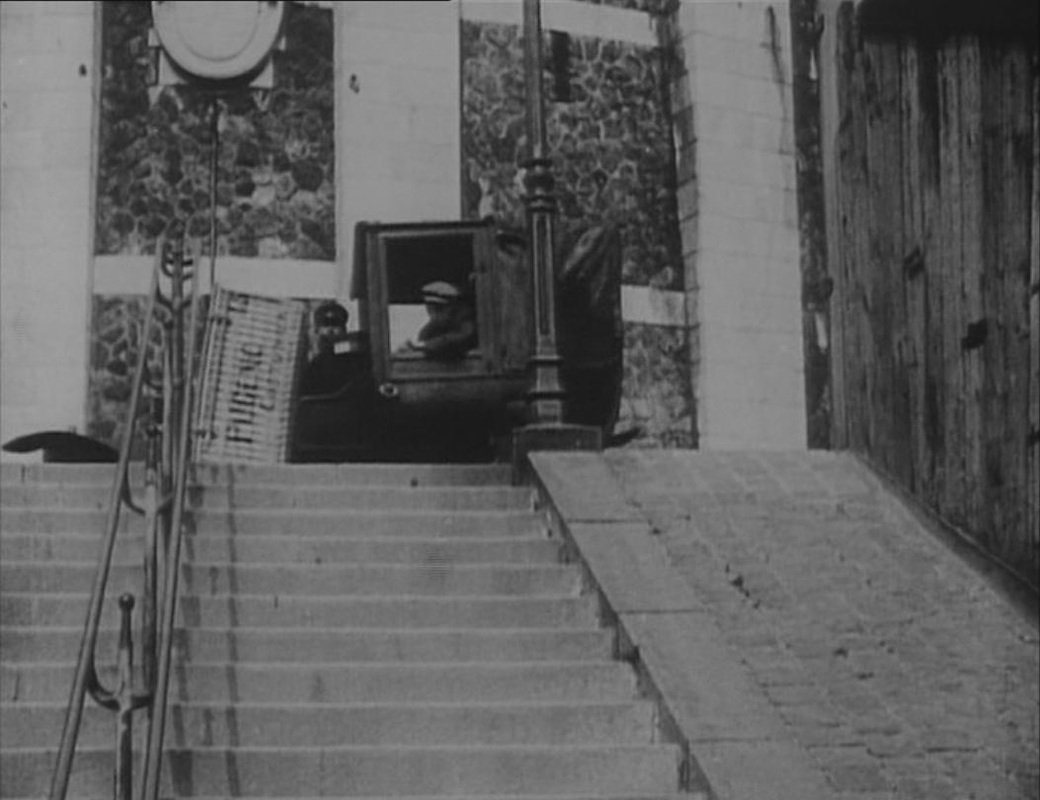
This is the staircase that leads up from the junction of the rue Cardinal Dubois and the rue Sainte Eleuthère, at the top of the rue Foyatier. The stairs lead to the rue Azais and the Montmartre Reservoir, which we see here. The car carrying the basket comes along the rue Azais and stops at the top of these stairs - though in the first shot it is travelling west to east along the rue Azais, and in the second it is coming east to west. Topographical coherence sometime conflicts with directional matching, as here, since the car in both shots is going left to right, but the camera has moved to the other side of the street:
|
|
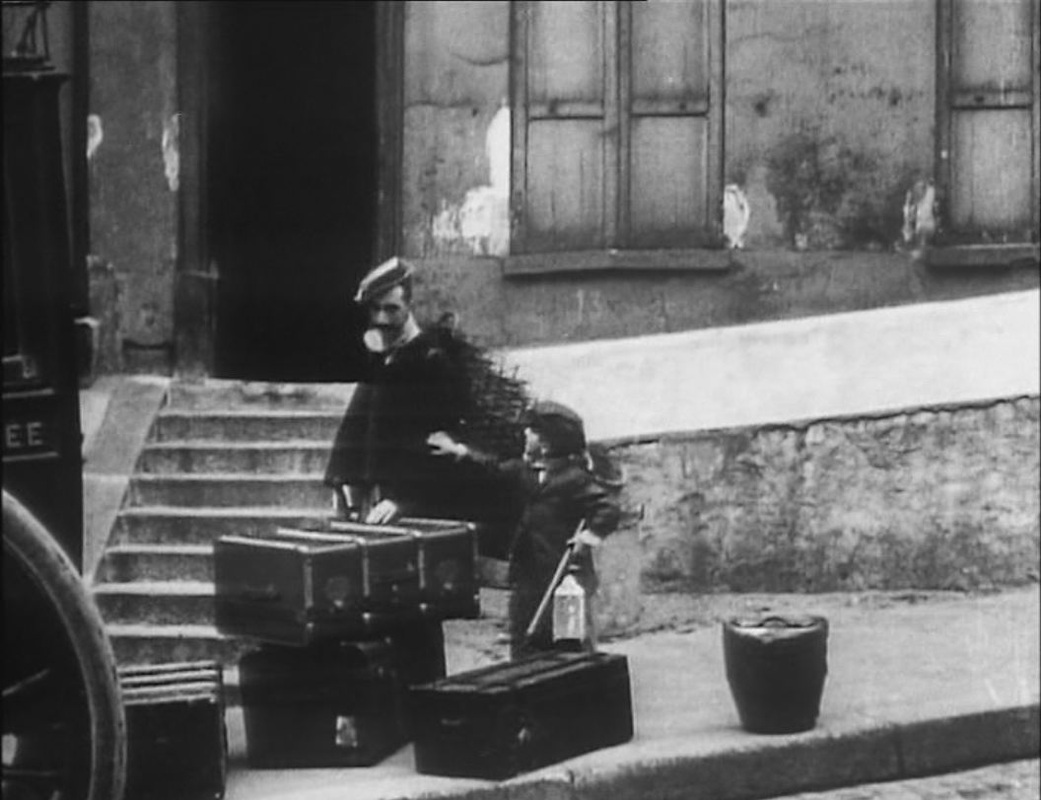
This isn't the only time these stairs appear in Les Vampires. In the eighth film, Le Maître du foudre, when Mazamette and his son are disguised as ragpickers with baskets on their backs, they go up the stairs from the rue Saint Eleuthère. They then arrive at no. 1 rue Saint Eleuthère, which can seem illogical, since that is the street they just came from (the street name is visible at the bottom of the stairs). But it is only a little topographical humour, since the pair laboriously climb the stairs when they could have more easily got to the same place simply by following the gentle incline of the rue Saint Eleuthère eastwards:

|
|
The last film in the series, Les Noces sanglantes, spends time in another part of Montmartre, on the avenue Junot:
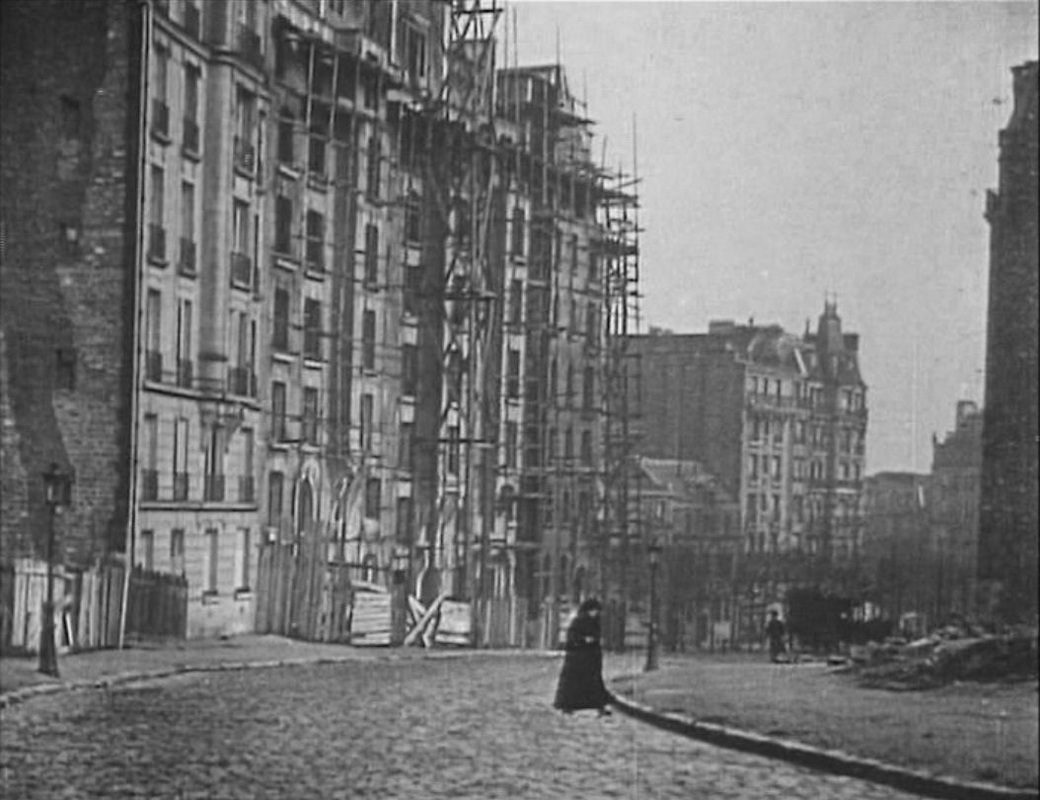
|

|
When Guérande deciphers a set of figures in a codebook belonging to the Vampires, he constructs a map of Paris, with all trajectories leading from one place, Montmartre:

Le Maître du foudre
Montmartre is an important location in Les Vampires not just for the actual scenes shot there but also as part of an emblematic topography of Paris. This comprises recognisable views (as in the rooftop shots of the Seine and the Tour Saint Jacques), generic views ('typical' Paris streets and buildings), and places identified by name. The latter might be combined with a recognisable view (e.g. the Gaumont Palace, the prison Saint Lazare) or with a generic view. For example, in L'Homme des poisons, the address of Guérande's fiancée is given as 115 rue d'Artois, 8e, an elegant street just north of the Champs Elysées (though its numbers only go up to 45). The representation of this apartment building is composite: the façade on the street is actually 22 cité Malesherbes, 9e, whereas the views of the rooftops over which Venenos escapes and of the building up which a Vampire climbs later in the episode are taken in the Cité Elgé:
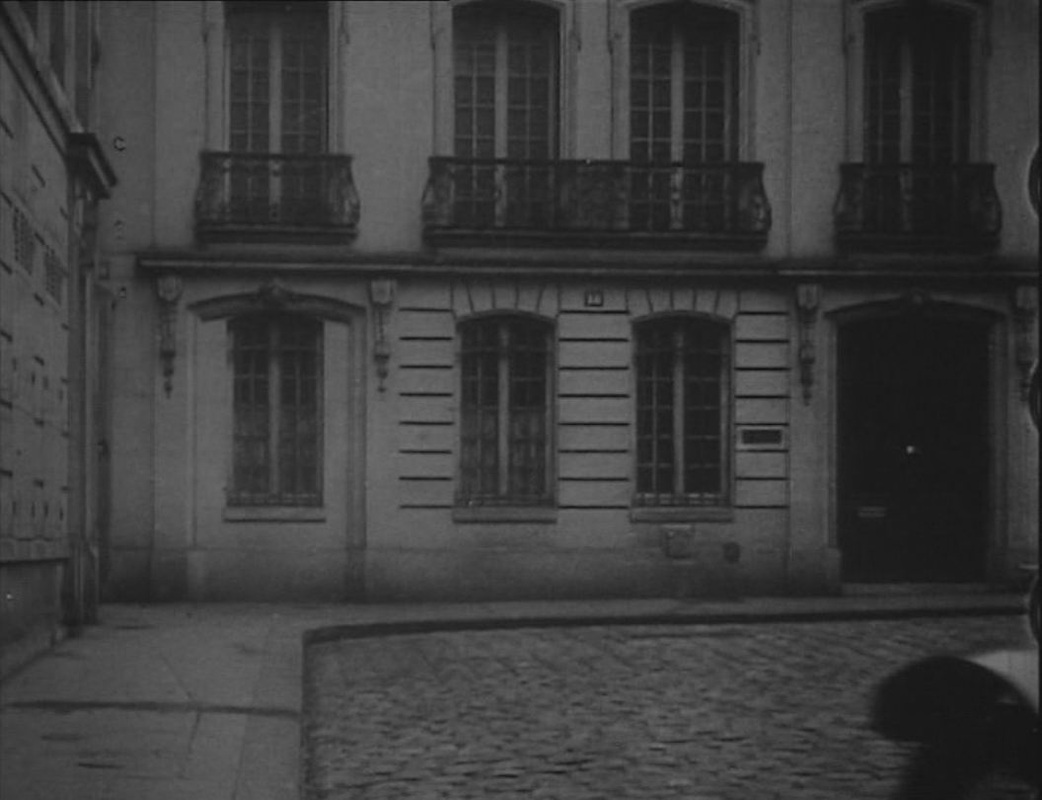
|
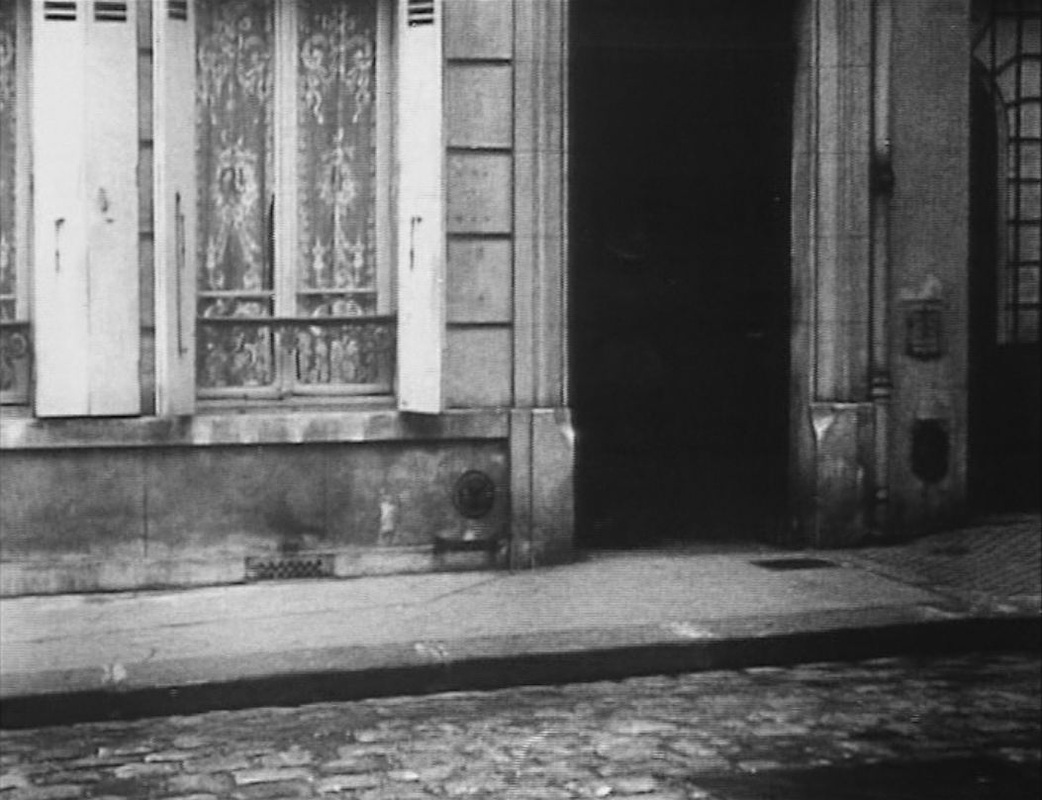
Cité Malesherbes, 9e
|
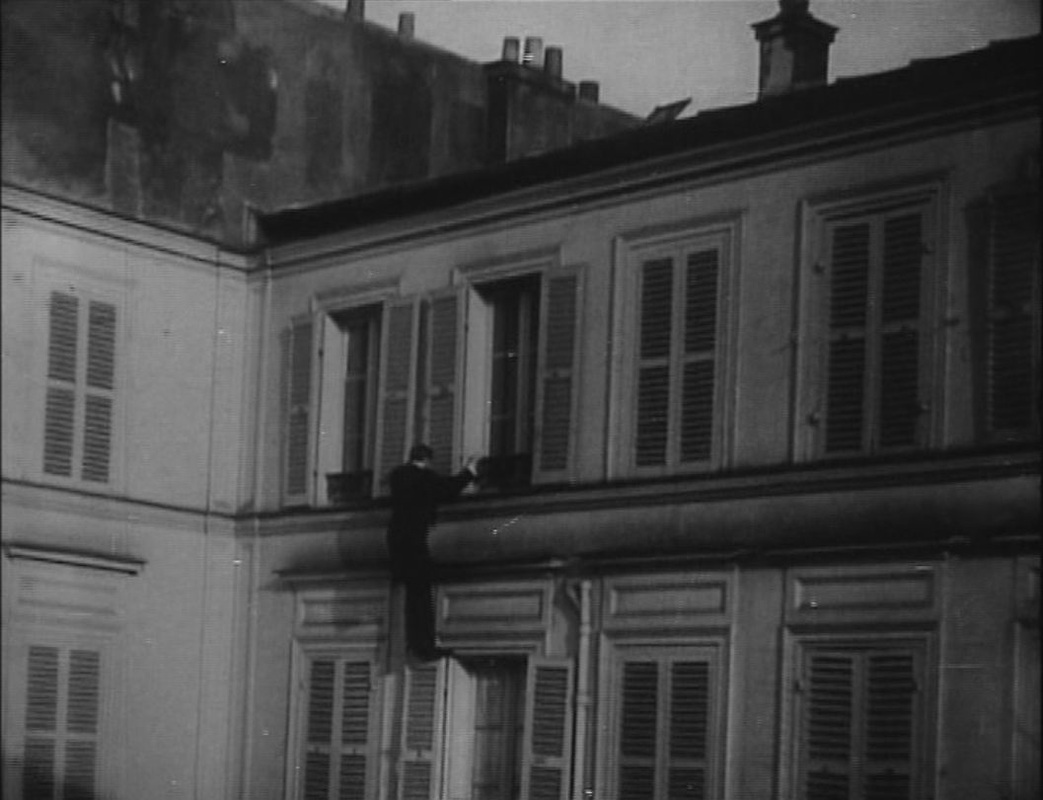
|
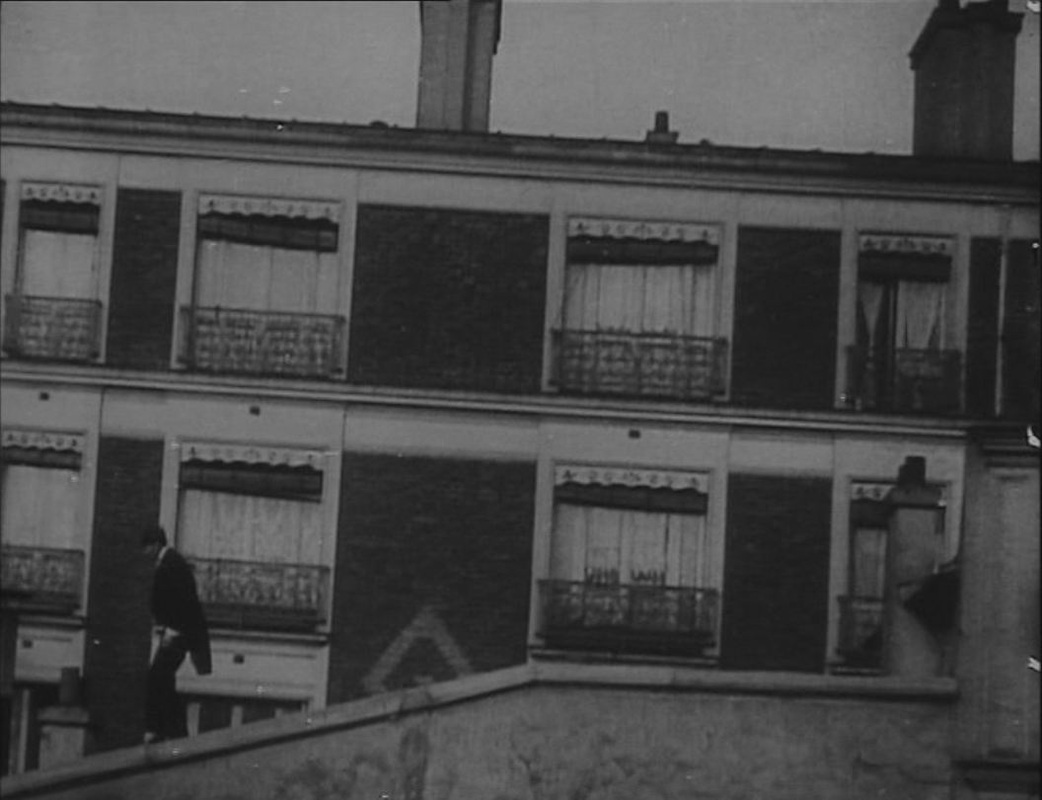
Cité Elgé, 19e
|

|
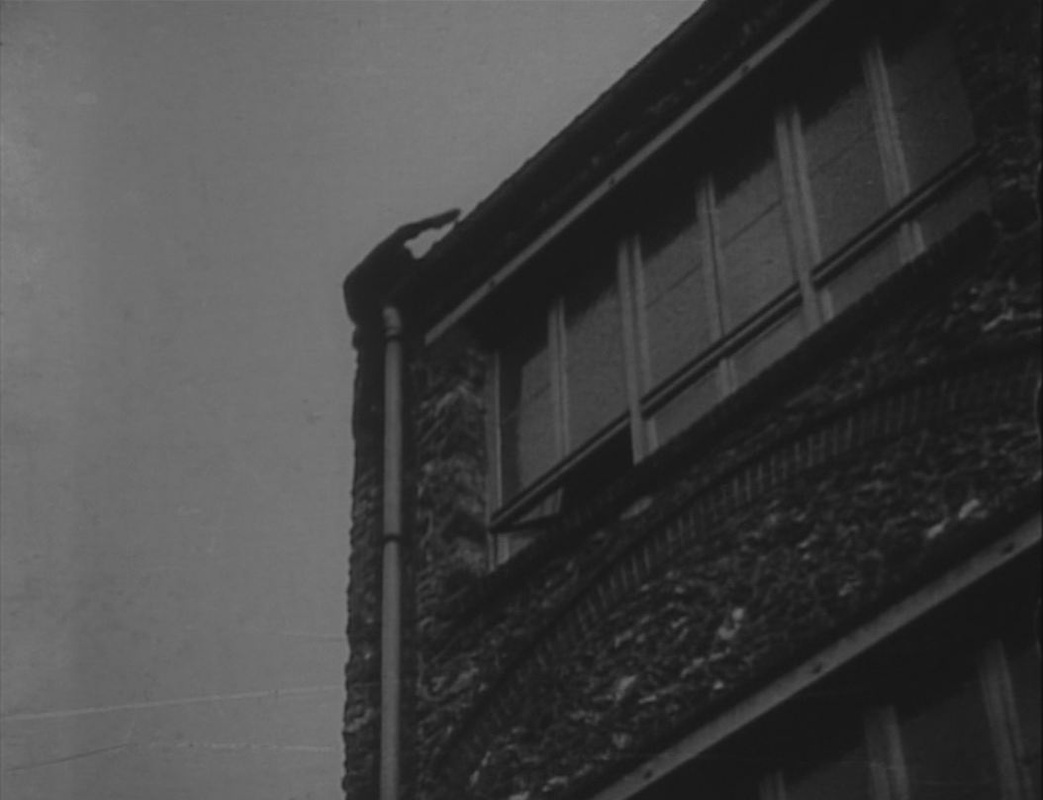
Cité Elgé, 19e
|
The cité Malesherbes is at the bottom, slightly right, on the map below, a gated street with an entrance on the rue Victor Massé and the rue de Martyrs:
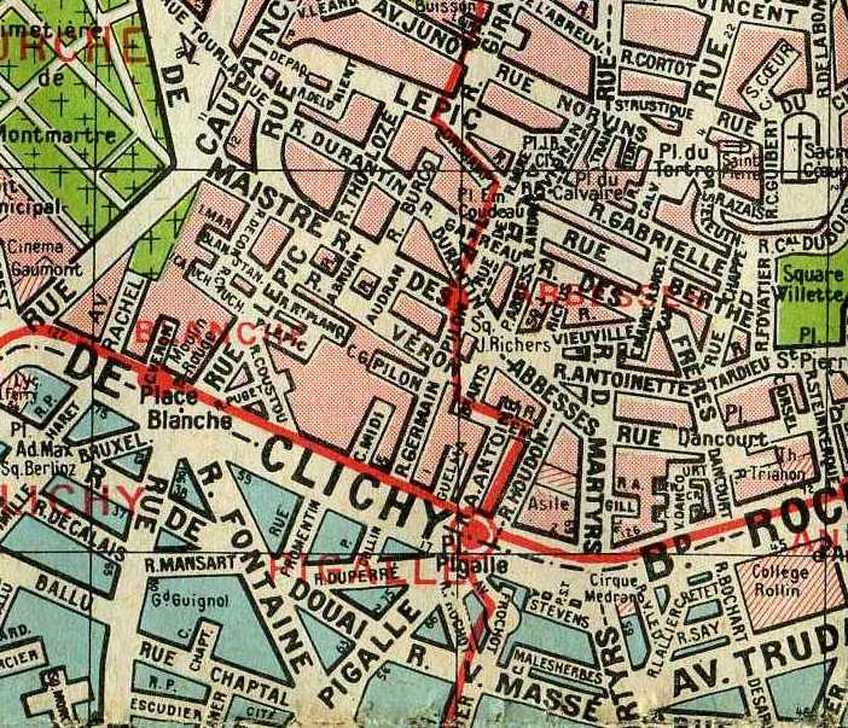
Feuillade had already used the cité Malesherbes three years earlier, in Juve contre Fantômas, along with the adjacent streets. In that film the area is identified as Montmartre, which can seem strange today, when Montmartre is thought to be just the Butte with its staircases and church, but for a long time the name was used for a broader area, including Pigalle at the foot of the Butte. In Juve contre Fantômas Feuillade is in this vicinity in part for the local colour (a scene is set in a nightclub on the place Pigalle, and we see the Bal Tabarin cabaret on the rue Victor Massé), but also because this area is also, for Gaumont filmmakers, local. Not to the factory and studio, but to their administrative and exhibition base on the rue Caulaincourt, the Gaumont Palace. On the map above the Palace is on the left just below the cemetery (see here for the use of the Palace itself as a location in Gaumont films).
If the streets around Pigalle can be said to be local to Gaumont, then so can those parts of the Butte Montmartre that we see in Les Vampires: the rue Saint Eleuthère (right side of the map, to the left of the Sacré Coeur), the avenue Junot (top of the map in the middle), and of course the stairs up which Mazamette and his son go, with their baskets, and down which, in a basket, comes Guérande.
If the streets around Pigalle can be said to be local to Gaumont, then so can those parts of the Butte Montmartre that we see in Les Vampires: the rue Saint Eleuthère (right side of the map, to the left of the Sacré Coeur), the avenue Junot (top of the map in the middle), and of course the stairs up which Mazamette and his son go, with their baskets, and down which, in a basket, comes Guérande.
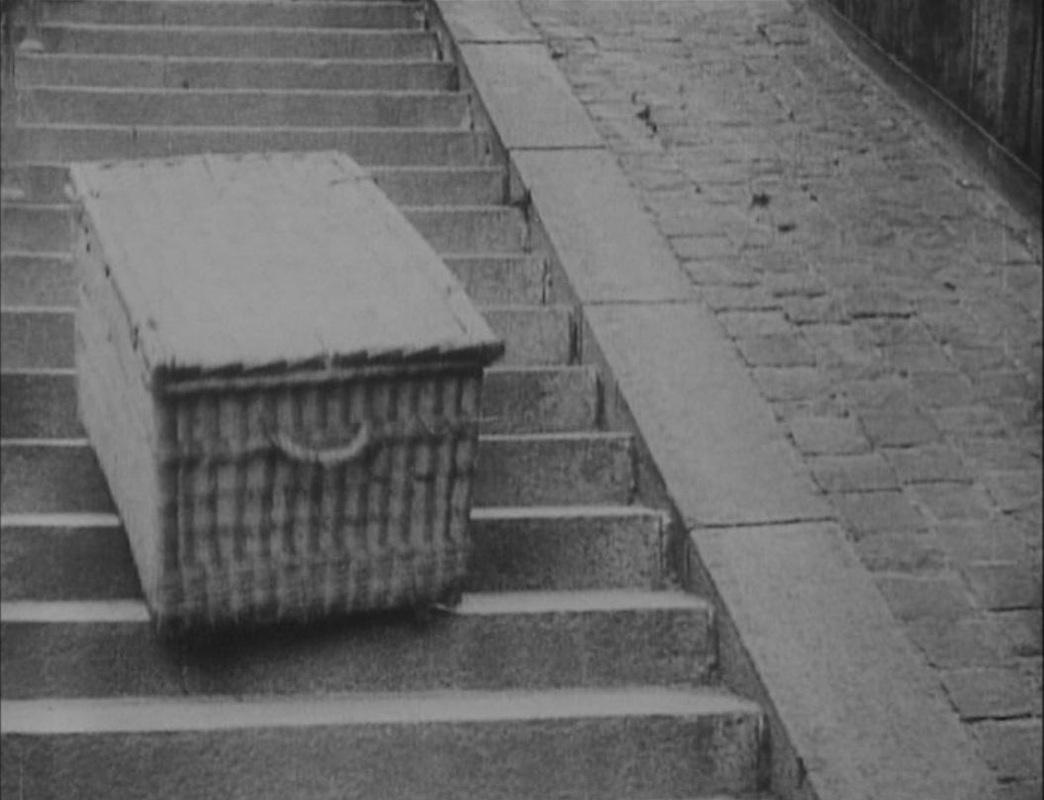
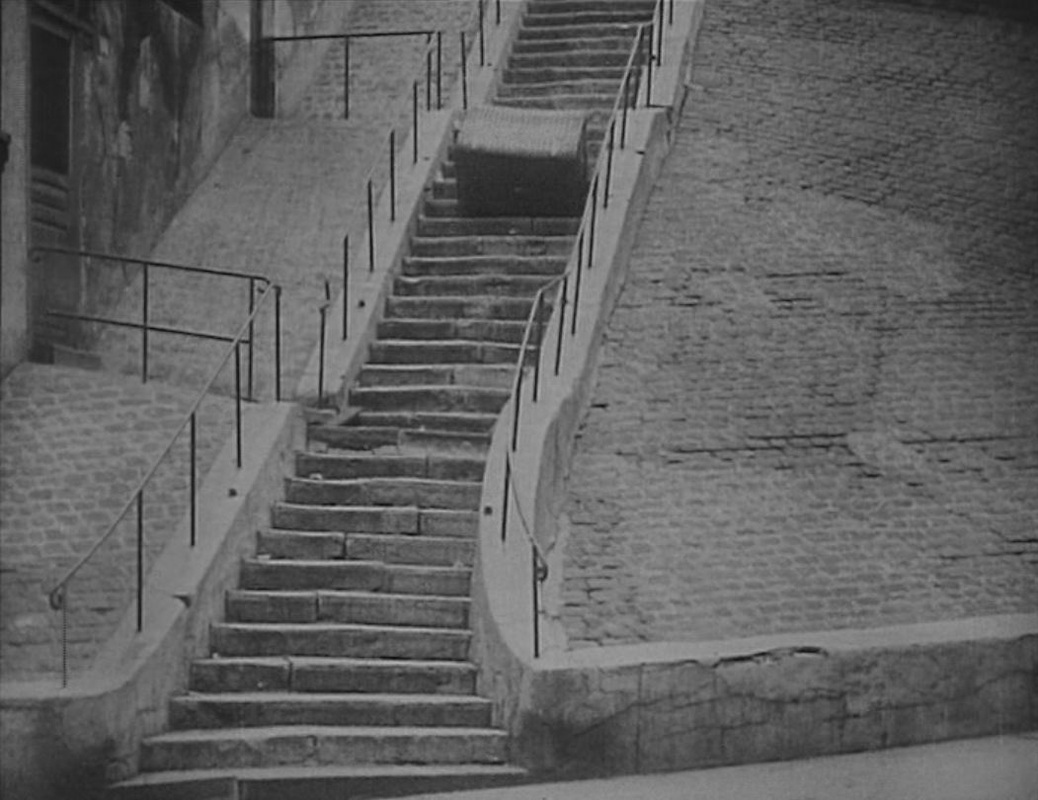
The observant among you may have noticed that though Guérande begins falling in Montmartre, he appears to land in Belleville. On the left are the stairs that lead down from the rue Azais to the rue Sainte Eleuthère (18e); on the right are the stairs that lead down from the rue des Mignottes to the rue de Crimée (19e), the stairs we have seen already in films by Guy, Bosetti and Durand:
 |
 |
This is strange. Feuillade went to Montmartre to film a basket tumbling down stairs. If he wanted it to tumble further than the twenty or so steps of his first choice staircase, he could have had the basket carry on down the rue Foyatier, nine sections of twenty-three steps each. Or he could have gone to any one of the more than thirty other staircases in Montmartre.
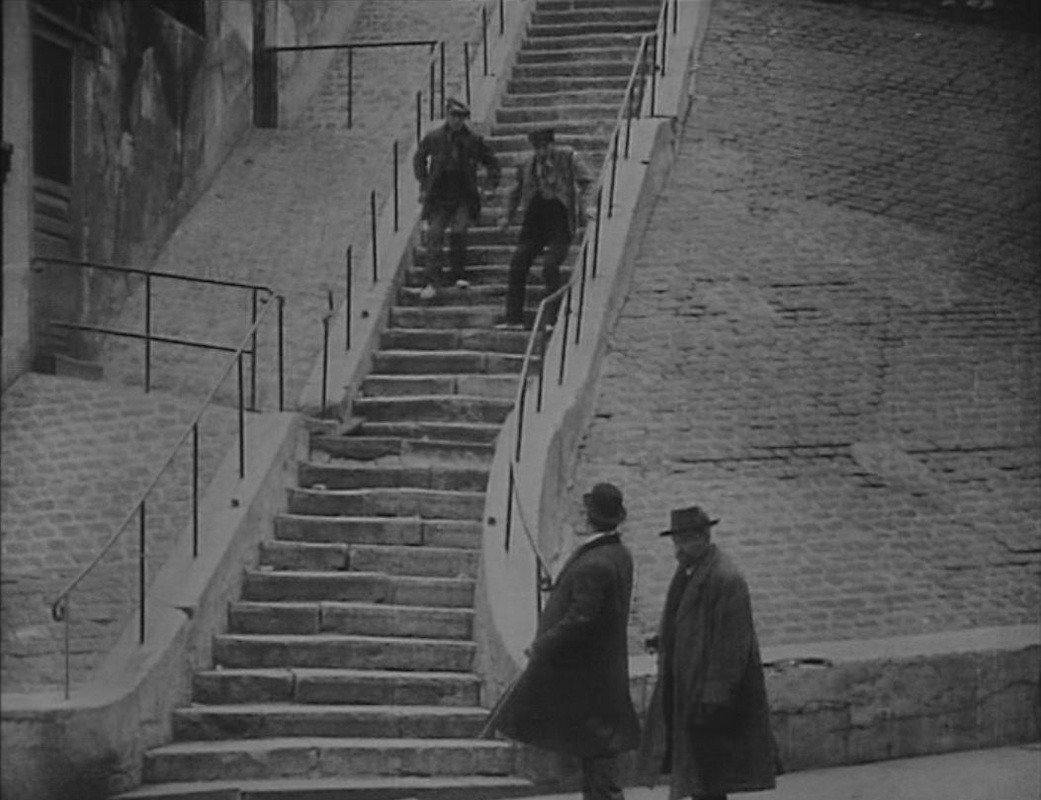
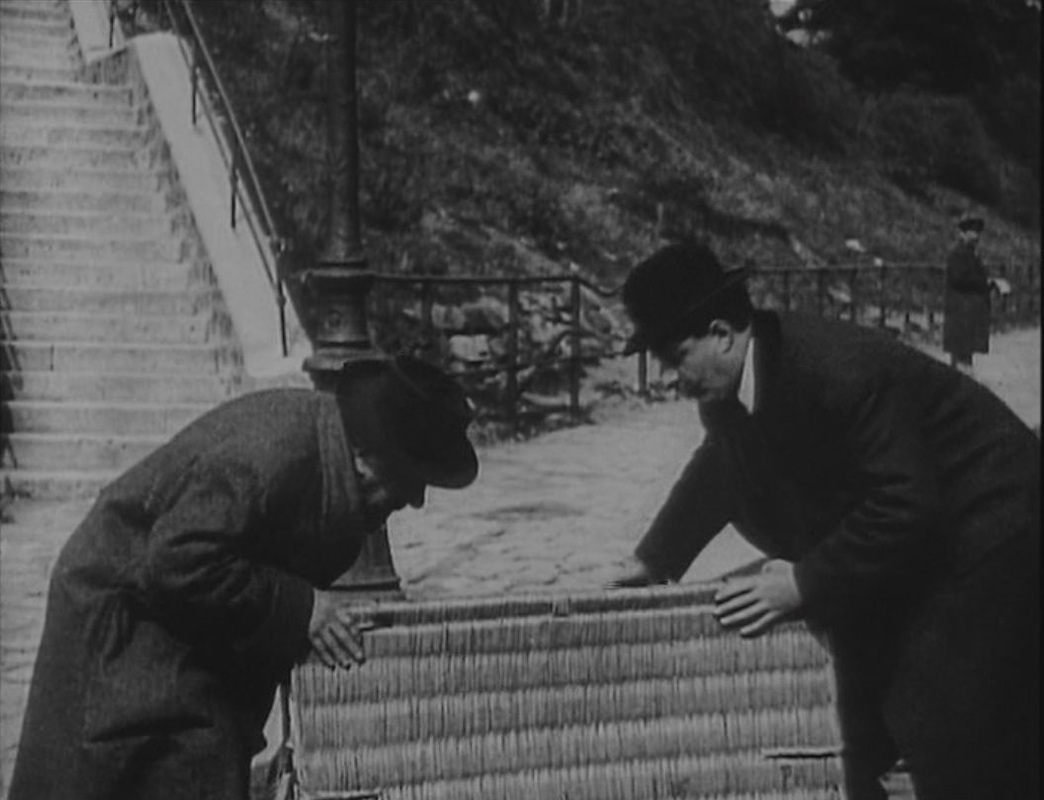
It looks like a need for retakes, after sight of the rushes, and a reluctance to go back to Montmartre when there are perfectly good flights of stairs round the corner. But if that is the case, then there must have been something still wrong with the retakes, because - as the really observant will have noticed - there aren't two staircases in this sequence but three:
It looks like a need for retakes, after sight of the rushes, and a reluctance to go back to Montmartre when there are perfectly good flights of stairs round the corner. But if that is the case, then there must have been something still wrong with the retakes, because - as the really observant will have noticed - there aren't two staircases in this sequence but three:
|
|
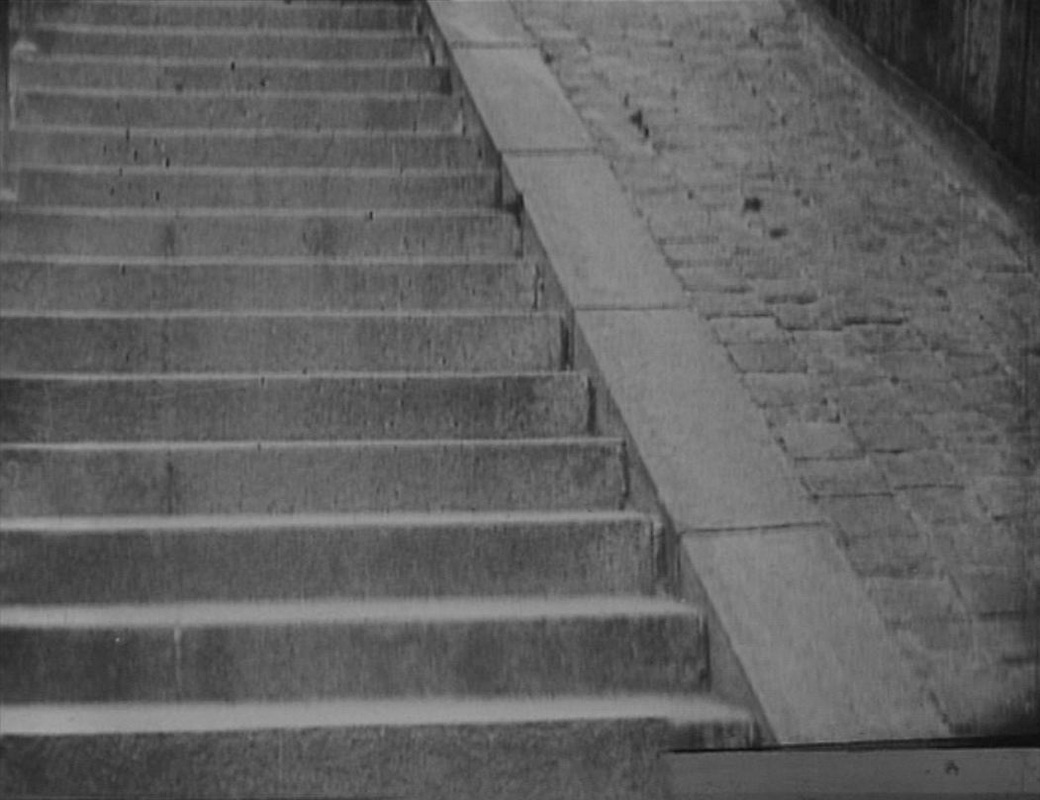
The third part of the sequence, where Guérande emerges from the basket and discusses with the men what happened, is filmed at the base of yet another staircase, which I have not yet identified. On the evidence - a first flight of seventeen steps, similar handrails at the sides and none in the centre, proximity to the studios - it might be the staircase at the end of the passage Gauthier, 19e:
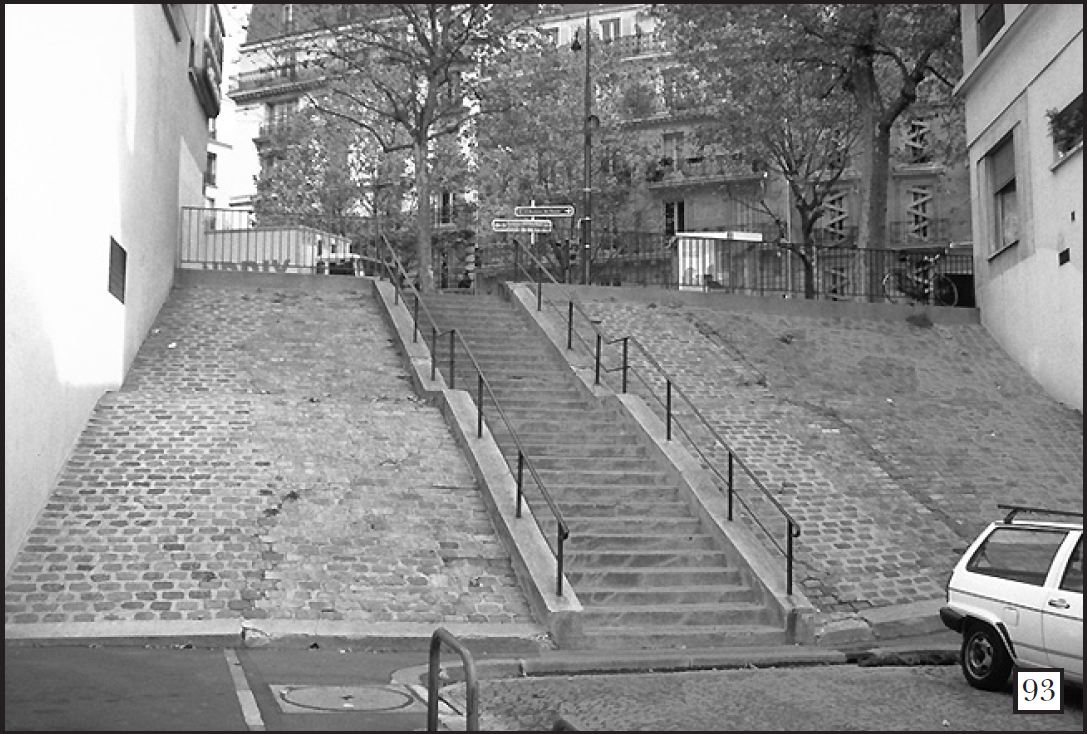
François L'Henaff, Paris en marches (APU 2001)
The passage Gauthier is a little further from the Cité Elgé, in the other direction. The crew would leave by the main entrance on the rue des Alouettes, turn left then right into the rue Fessart, left into the rue Pradier, right onto the avenue Simon Bolivar, ending up shortly at the top of the stairs:
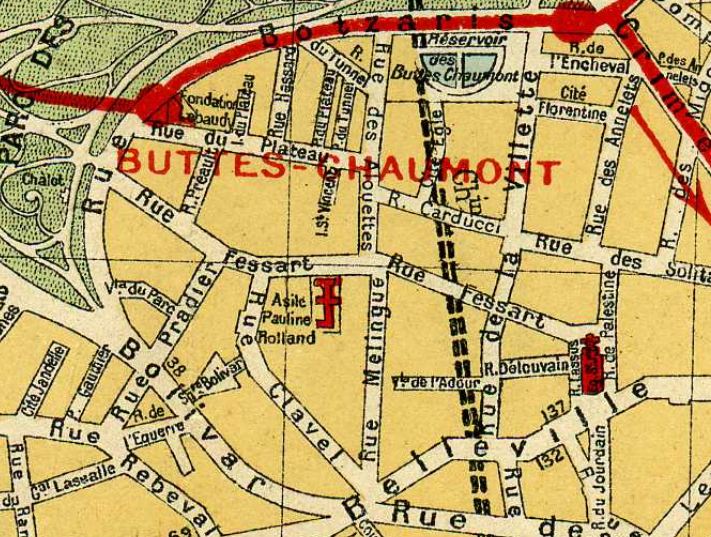
|
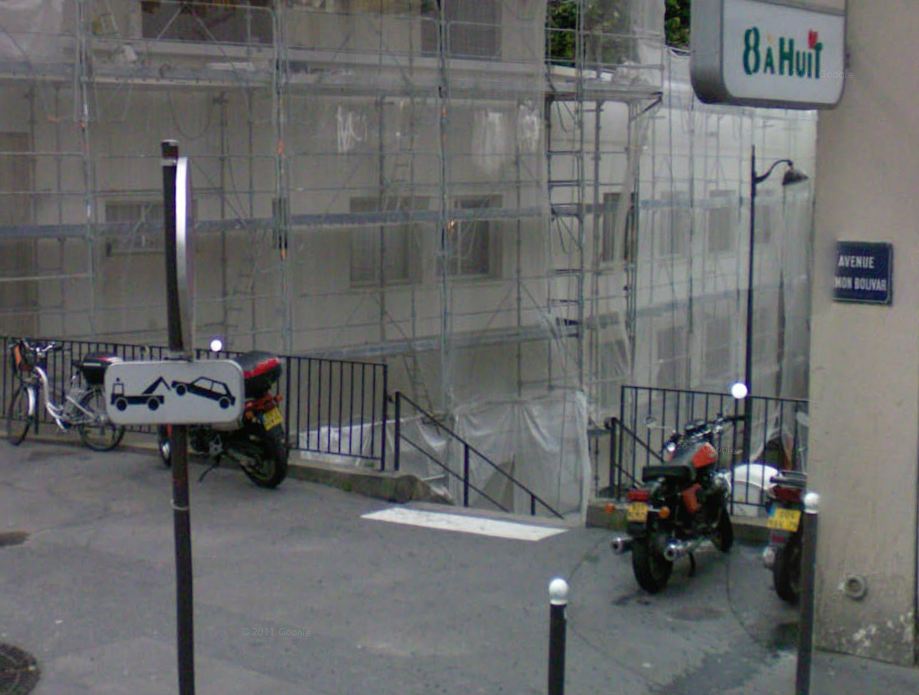
|
Though I cannot explain why Feuillade and his crew went to three different places to shoot this simple, basket-down-the-stairs routine, it is testament to the filmmakers' skills that the topographical disjunctions of this thirty-second tumble can pass unnoticed, and testament to the interest of the action that for almost a hundred years we have been looking only at the basket, anxious for the well-being of the poor man inside, and not at the stairs it is tumbling down.
References
- Thierry Cazaux, La cité Malesherbes (Musée Carnavalet, 2001)
- François L'Henaff, Paris en marches: les escaliers des rues de Paris (Atelier Parisien d'Urbanisme 2001)
- Alain Masson, 'Le Paris de Louis Feuillade', Forum des Images
Films by Feuillade are also discussed in the following posts:
- Fantômas Over Paris: Fantômas: à l'ombre de la guillotine
- Fantômas Over Paris: Juve contre Fantômas
- Fantômas Over Paris: Le Mort qui tue
- Fantômas Over Paris: Fantômas contre Fantômas
- Fantômas Over Belgium: Le Faux Magistrat
- Three filmmakers in Romainville (Une dame vraiment bien)
- Irma Vep posts a letter (Les Vampires)
- Inside-Outside: space and light in Judex