Bébé, victime d'une erreur...
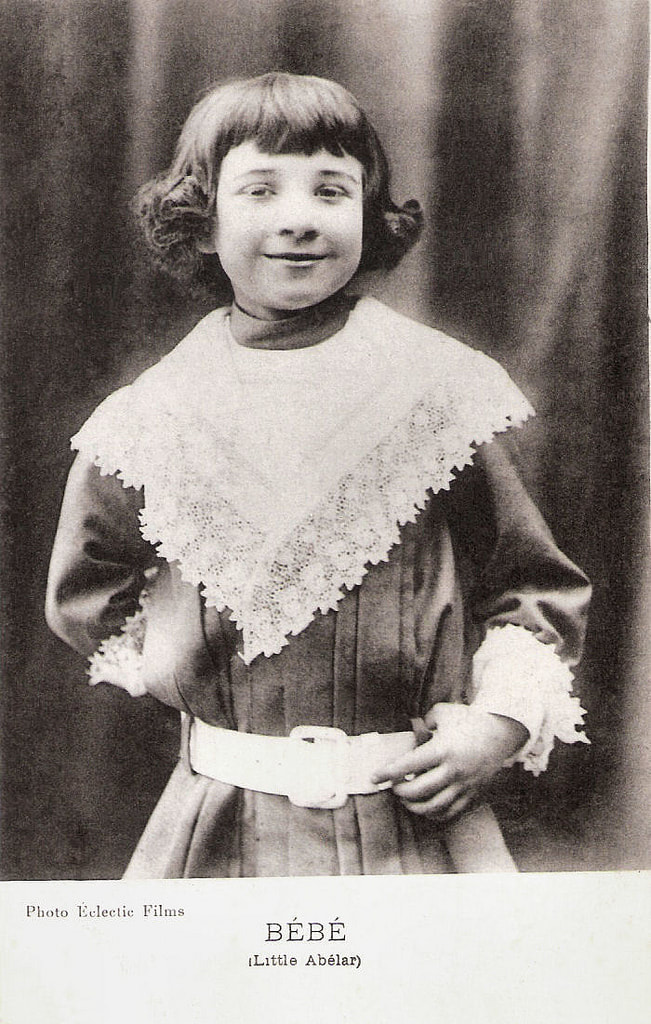
|
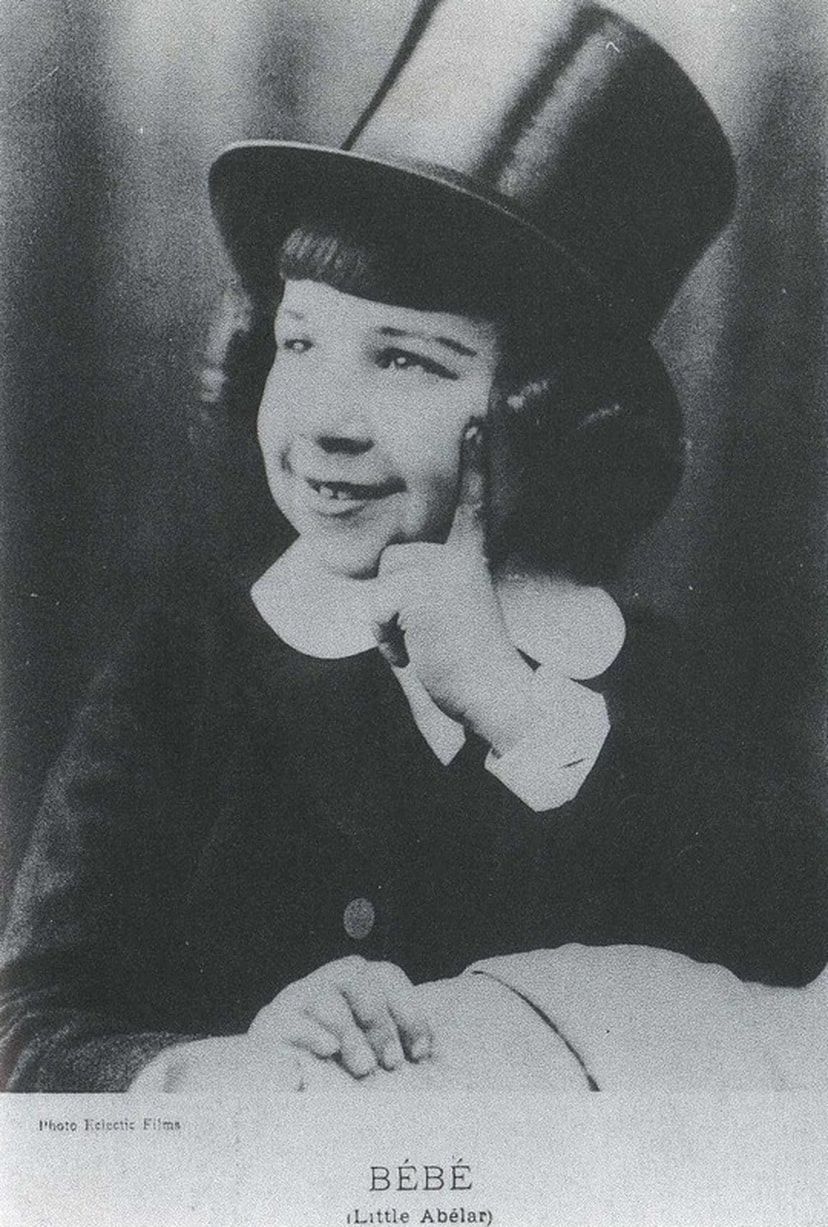
|
This piece was written by someone who is not a specialist in early cinema, in the sense that I have not spent enough time in archives seeing films in their raw state, and I don't read regularly enough the specialist press. If I had done the latter, in particular, I would be better placed to know whether what I'll be saying is known, done and dusted. Despite the risk of redundancy, this can serve at least as an illustration of method.
Here is how the question (in the heading above) arose. I have been researching into how studios before around 1920 made use of their immediate environs, to the point that we can speak of their productions as a kind of local cinema. I began with a studio local to me, here in Muswell Hill (Robert Paul's Animatograph Works, see here), and have moved on to films made near the Gaumont studios in Paris (see here) and films made near the Pathé studios in Vincennes (see here) and Montreuil (see here).
Without archives, the corpus on which I have been able to draw for Gaumont and Pathé is very small, limited to a few dvd editions and some (usually very poor) online uploads. To compensate I have made sure to look very closely at the films I can see, likewise at the fragments of films I can see.
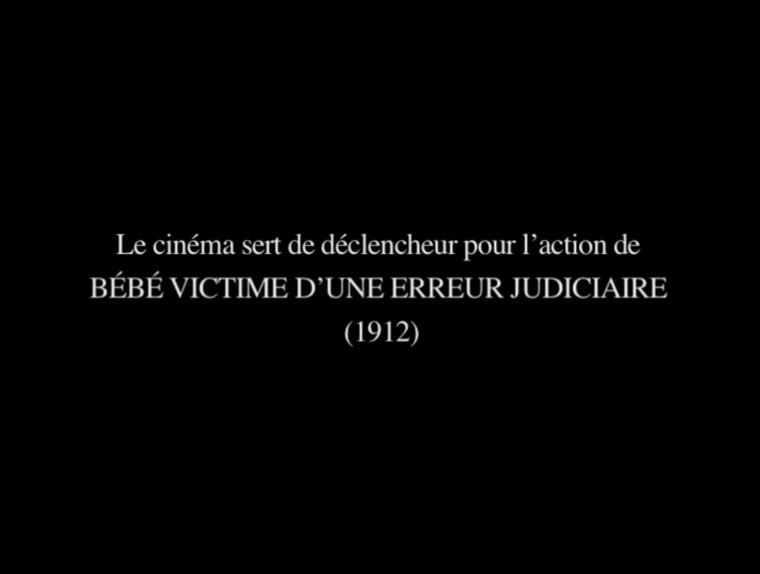
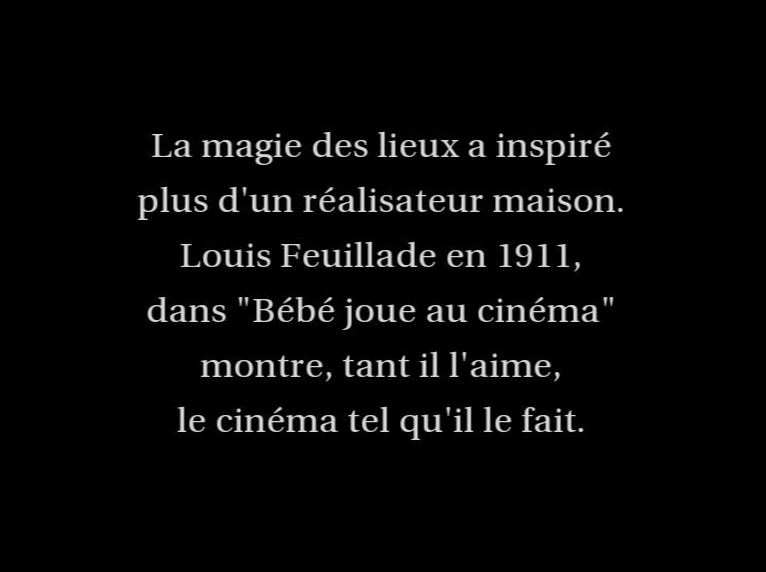
On one of the Feuillade disks in the Gaumont box 'Le Cinéma premier, 1897-1913' there is a short extra called 'Le Miroir de l'écran', focussing on reference made to the filmmaking process in some Feuillade films. Extracts are shown from a film called Bébé victime d'une erreur judiciaire ('Bébé victim of an error of justice'). Some of the same extracts are used in a supplement in the second box, 'Le Cinéma premier, 1907-1916', called 'Gaumont actualités', a compilation of footage about the Gaumont company and premises. In this case the film is given a different title and date:
 |
 |
This film, under this second title, was shown at the Cinémathèque française in 2006 as part of a Feuillade retrospective, and was described at the time thus: 'In the course of a film shoot, Bébé is so realistic in the role of a brigand that some policemen are fooled.'
In a film studio, Bébé (Clément Mary, aka René Dary) is shown dressing for the part of a street thief:
In a film studio, Bébé (Clément Mary, aka René Dary) is shown dressing for the part of a street thief:
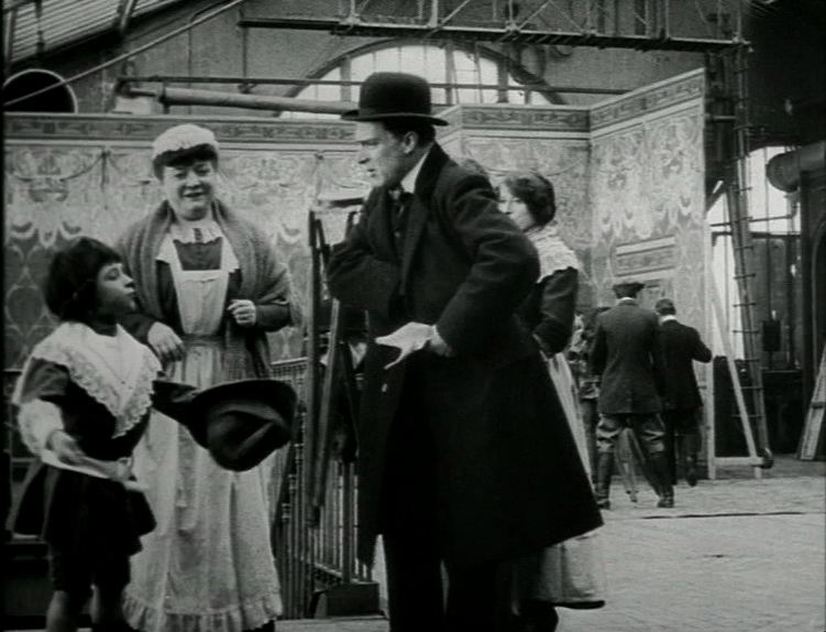
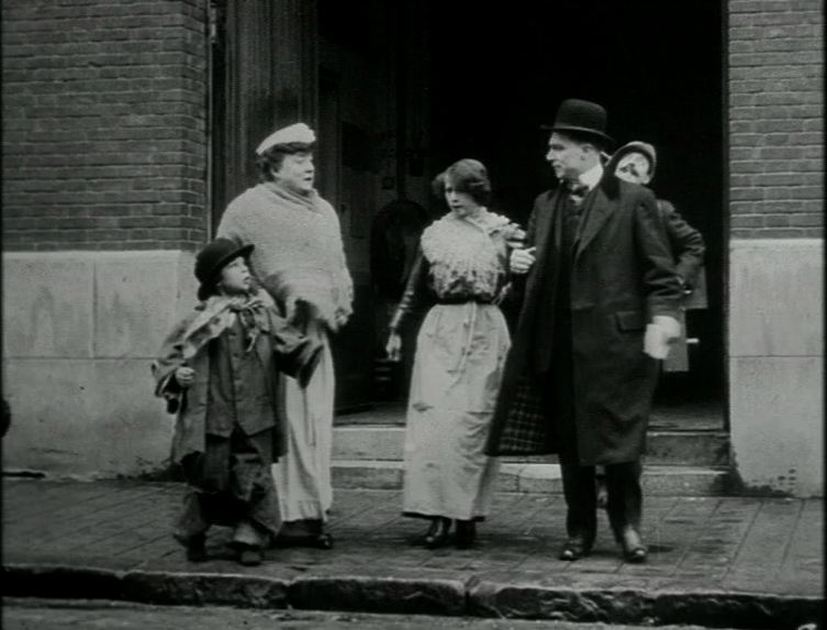
Then we see him emerging from the studio onto the street with the director and camera operator (both men) and two women, an actress in the film and a chaperone for Bébé:
We are then shown the grocer's shop from which Bébé is to pretend to steal vegetables:
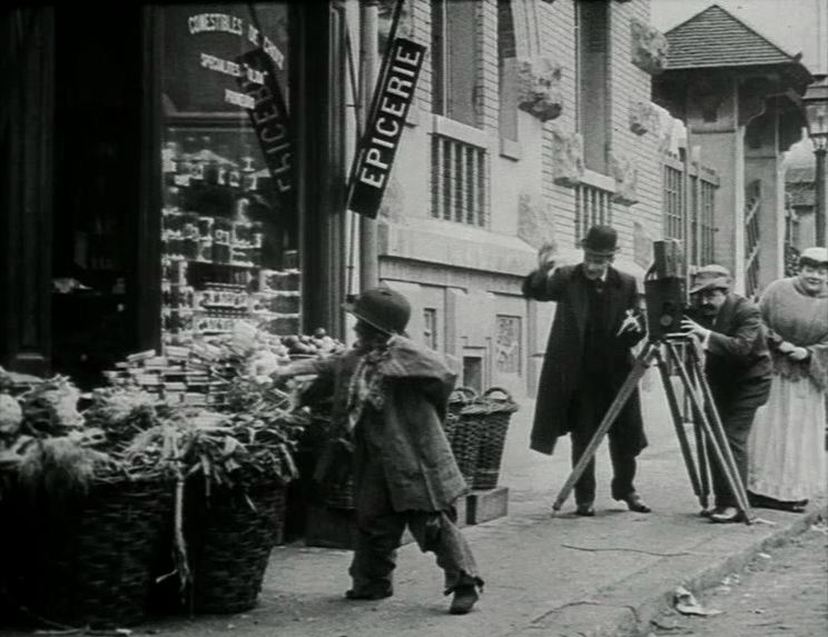
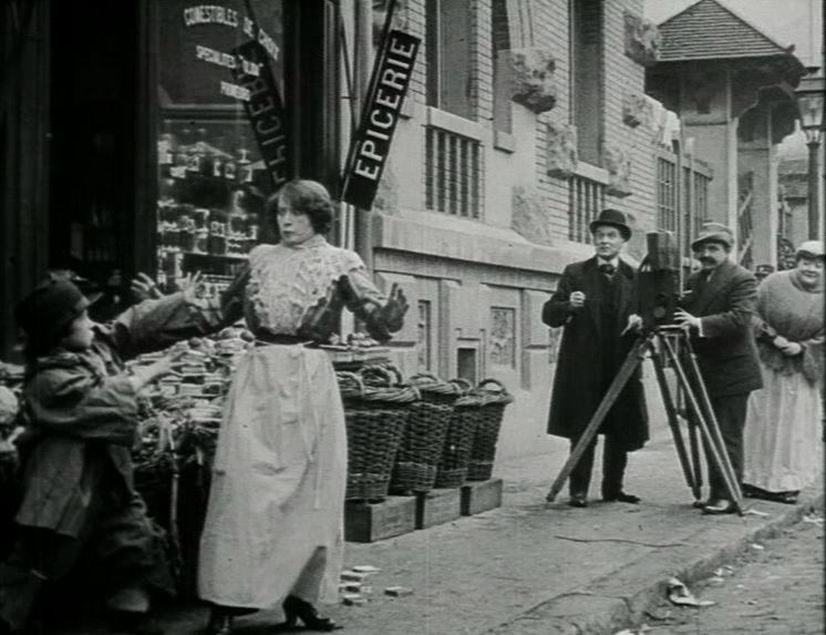
The extract ends there, frustratingly since Bébé seems to be exerting an hypnotic power over the shop assistant, and it would be interesting to see where that leads.
But for us there are two more interesting questions: when is this happening, and where.
when:
The Cinémathèque programme dates this film 1912. Francis Lacassin, in his Feuillade filmography, dates it February 2 1912, though curiously this is one of only two films from that year (the other is Bébé roi des policiers) for which he supplies no details whatsoever, as if he wasn't at all sure that it belonged. The film is listed at the Forum des Images as Bébé joue au cinéma, and is dated 1911. And we know that the Gaumont dvds give two different dates.
where:
In my trawl of the streets around the Gaumont studios, I looked hard for this location and didn't find it. When I came back to earlier research I had done on the streets around the Pathé studios, I found it straightway. This is the same shop that we see in Louis Gasnier's Le Cheval emballé (1907):
But for us there are two more interesting questions: when is this happening, and where.
when:
The Cinémathèque programme dates this film 1912. Francis Lacassin, in his Feuillade filmography, dates it February 2 1912, though curiously this is one of only two films from that year (the other is Bébé roi des policiers) for which he supplies no details whatsoever, as if he wasn't at all sure that it belonged. The film is listed at the Forum des Images as Bébé joue au cinéma, and is dated 1911. And we know that the Gaumont dvds give two different dates.
where:
In my trawl of the streets around the Gaumont studios, I looked hard for this location and didn't find it. When I came back to earlier research I had done on the streets around the Pathé studios, I found it straightway. This is the same shop that we see in Louis Gasnier's Le Cheval emballé (1907):
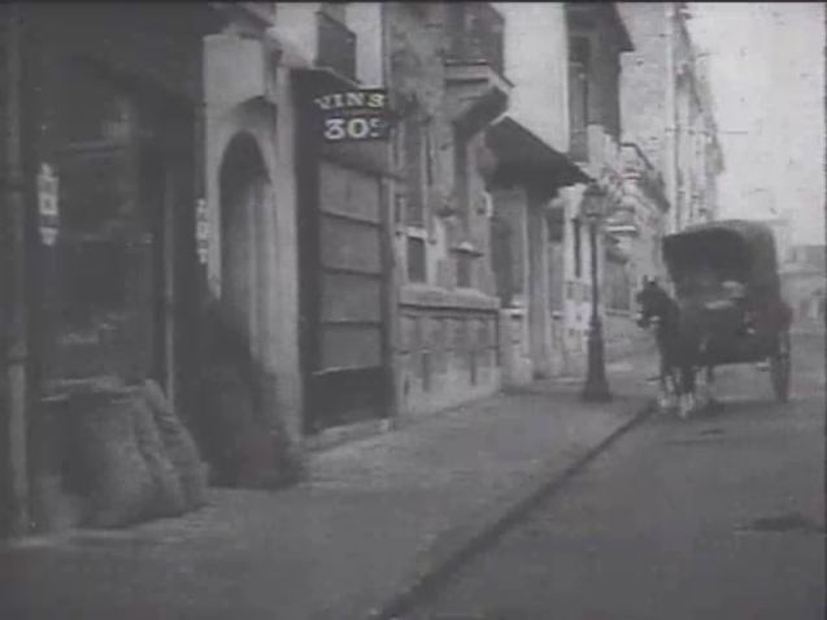
In Albert Capellani's L'Homme aux gants blancs (1908):

And in Max Linder's L'Ingénieux attentat (1910):
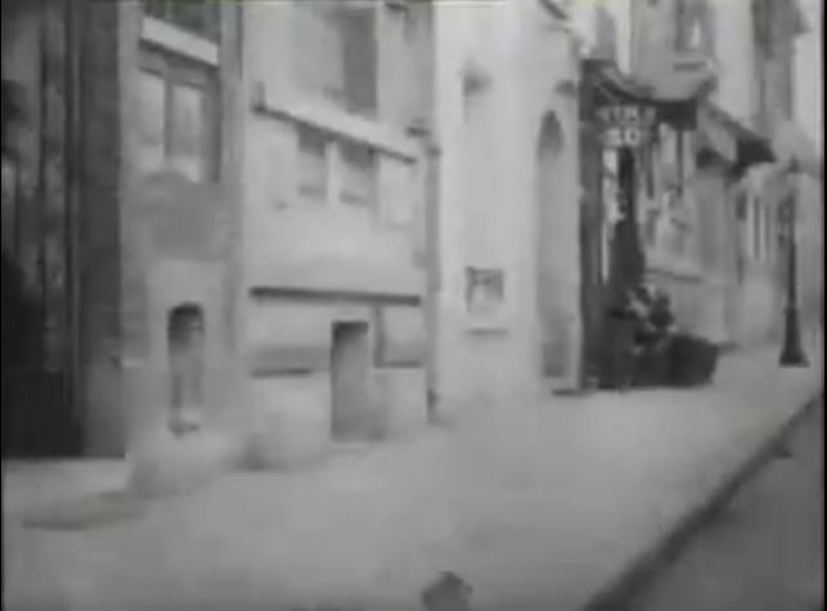
The exact address is 30 rue Louis Besquel, in Vincennes:
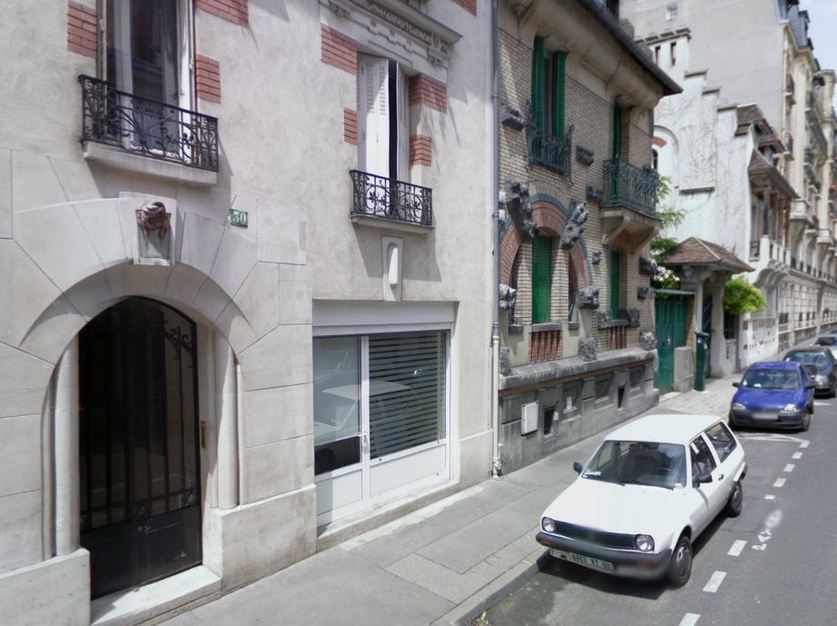
Google Maps
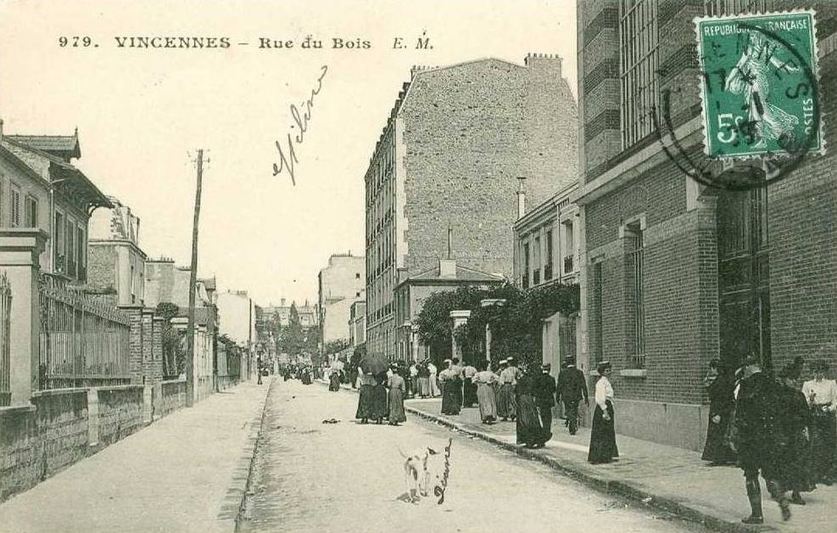
Furthermore, when in Bébé victime d'une erreur judiciaire we see Bébé and company leaving the studios to film in the streets, the door by which they leave is that of the Pathé studios, on the next street along, the rue du Bois (now rue Anatole France):
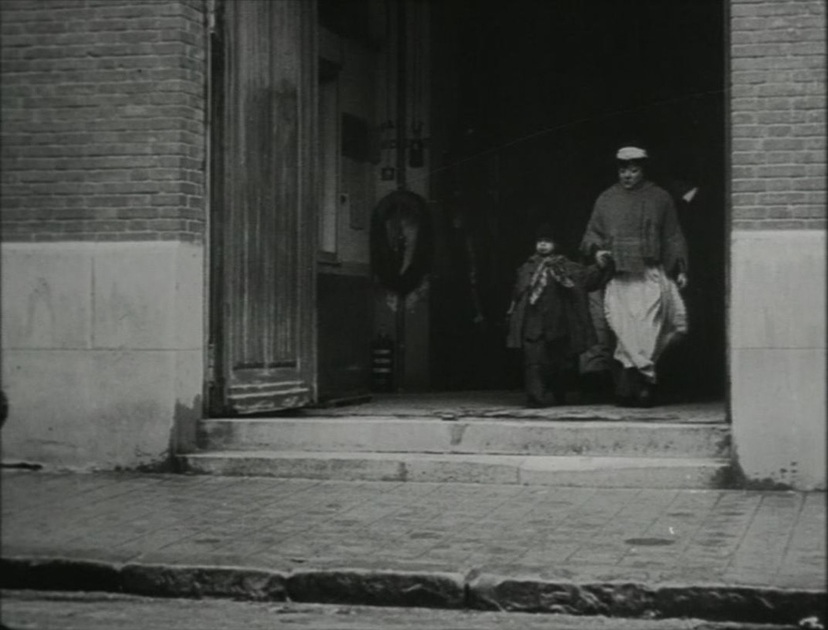
Here is that doorway in Linder's Mari jaloux (1914):
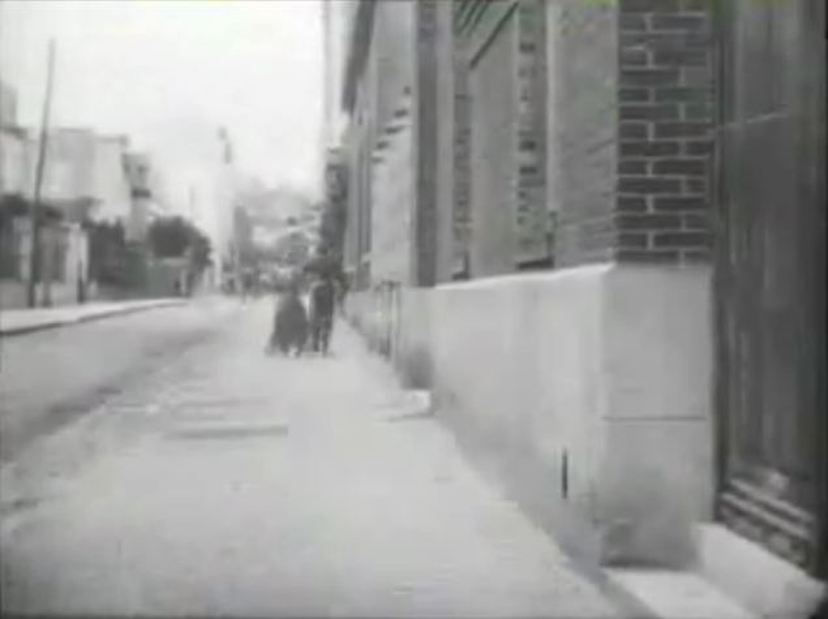
And here, as the entrance to a police station, in Max prend un bain (1910) and L'Aspirateur (1908):
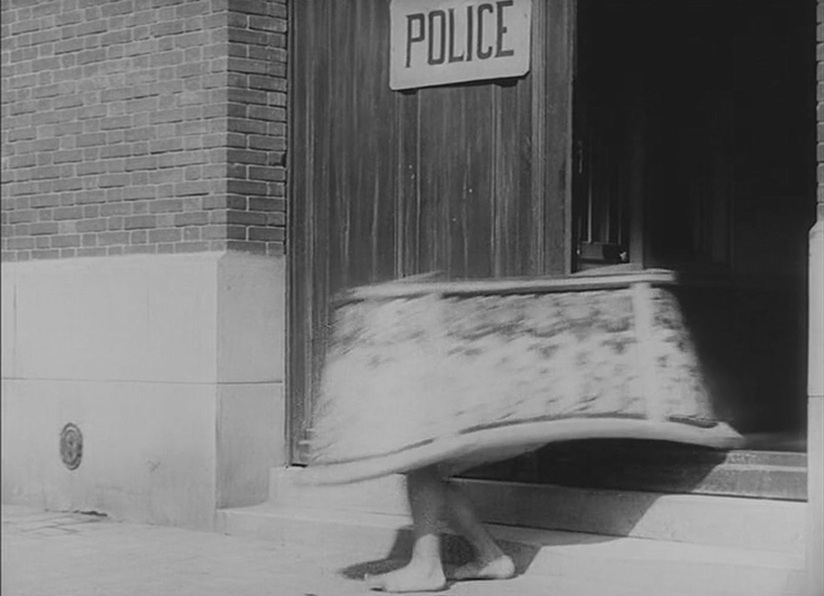
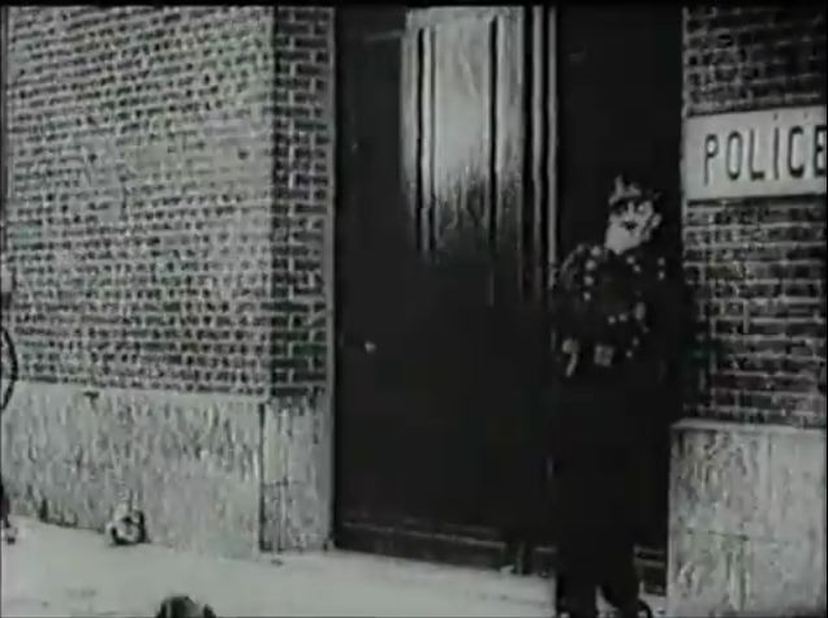
Here is a picture of the entrance to the Pathé studios, a hundred years ago:
Here is what stands there now:
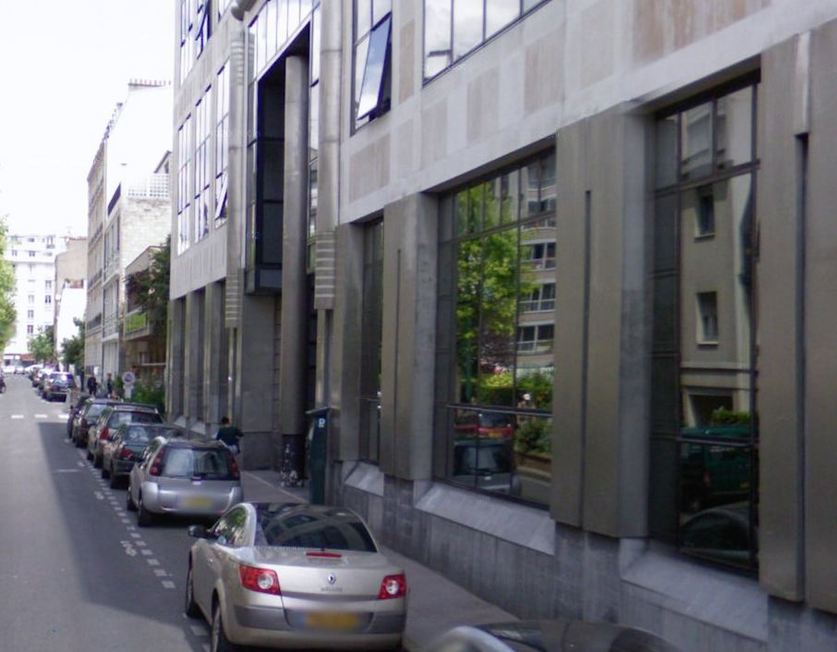
Google Maps
For purpose of comparison, here (from the 'Gaumont actualités' supplement) are two entrances to the Gaumont works:
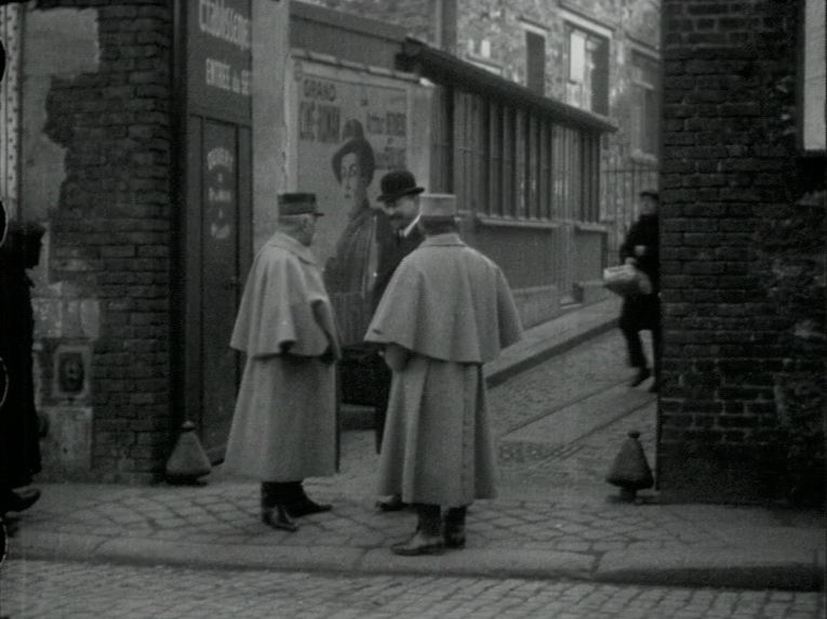
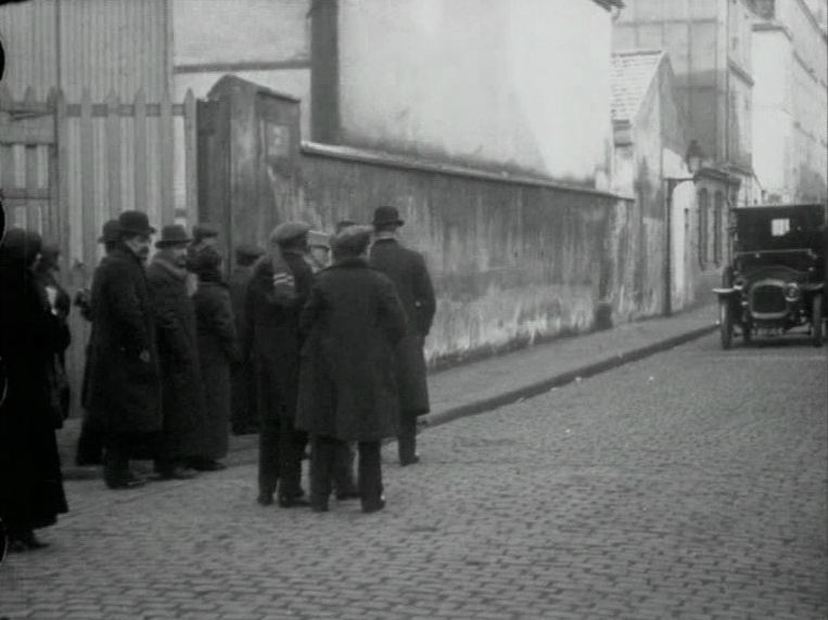
It is to me inconceivable that a Gaumont filmmaker should take his company over to the rival Pathé studios (about 5 kilometres) to make a film about filming in a studio and then in the street, when he could have done the same thing in his own studio and in his own streets. There must be another explanation.
At the end of 1912 Clément Mary (who plays Bébé) stopped working for Gaumont and went over to Pathé (or rather its subsidiary Eclectic). The Pathé catalogue does not include Bébé victime d'une erreur judiciaire among the films he made for them. It does include a film called Bébé joue au cinéma, an Eclectic-Films production dated April 1913, length 205 metres, though the entry reads: 'This title is crossed out on the list'. I'm not sure how to interpret that.
On the evidence of the places filmed, this would be a Pathé film, not a Gaumont film. Which would mean that it was not directed by Feuillade, and that it does not date from 1912. But it would be strange, then, that the film should find its way into the Gaumont archives, and onto a dvd feature about Feuillade; perhaps there is an explanation that escapes me.
When I see the complete film rather than just the extracts on the Gaumont dvd, perhaps I'll see the tell-tale Gaumont logo somewhere attached to the set, and I'll have to accept that Feuillade took his team over to film in the Pathé studio. It is true that the team seems to include Bébé's regular co-star Jeanne Saint-Bonnet (who always played the maid), and she remained at Gaumont after Bébé defected, so (I write this two days after the original post) I'm more inclined to think that this is a Gaumont film.
But what are they all doing over in Vincennes, 'chez l'autre'?
(Writing a few days later, I have gone back to thinking it must be a Pathé film. Luke McKernan has identified the camera as a Pathé camera, which doesn't seem a prop likely to be used in a Gaumont film. Also, I think the maid may look like the one in the Gaumont films but not be the same woman.)
I need more facts. In the meantime, I'll take pleasure in the suggestion that knowing where a film is made might, on occasion, tell us when it is made, and by whom.
At the end of 1912 Clément Mary (who plays Bébé) stopped working for Gaumont and went over to Pathé (or rather its subsidiary Eclectic). The Pathé catalogue does not include Bébé victime d'une erreur judiciaire among the films he made for them. It does include a film called Bébé joue au cinéma, an Eclectic-Films production dated April 1913, length 205 metres, though the entry reads: 'This title is crossed out on the list'. I'm not sure how to interpret that.
On the evidence of the places filmed, this would be a Pathé film, not a Gaumont film. Which would mean that it was not directed by Feuillade, and that it does not date from 1912. But it would be strange, then, that the film should find its way into the Gaumont archives, and onto a dvd feature about Feuillade; perhaps there is an explanation that escapes me.
When I see the complete film rather than just the extracts on the Gaumont dvd, perhaps I'll see the tell-tale Gaumont logo somewhere attached to the set, and I'll have to accept that Feuillade took his team over to film in the Pathé studio. It is true that the team seems to include Bébé's regular co-star Jeanne Saint-Bonnet (who always played the maid), and she remained at Gaumont after Bébé defected, so (I write this two days after the original post) I'm more inclined to think that this is a Gaumont film.
But what are they all doing over in Vincennes, 'chez l'autre'?
(Writing a few days later, I have gone back to thinking it must be a Pathé film. Luke McKernan has identified the camera as a Pathé camera, which doesn't seem a prop likely to be used in a Gaumont film. Also, I think the maid may look like the one in the Gaumont films but not be the same woman.)
I need more facts. In the meantime, I'll take pleasure in the suggestion that knowing where a film is made might, on occasion, tell us when it is made, and by whom.
more facts
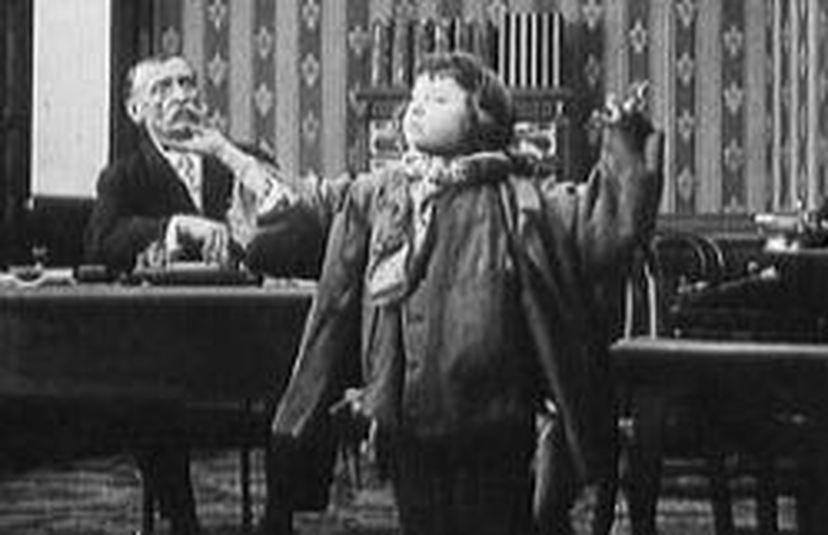
In his essay in the volume La Firme Pathé frères: 1896-1914, Laurent Mannoni reproduces this photograph of a shoot in a Pathé studio:
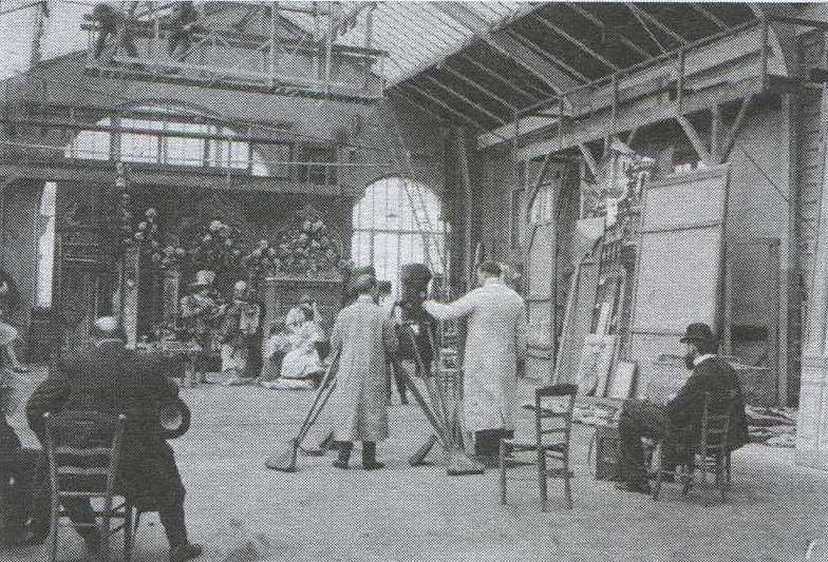
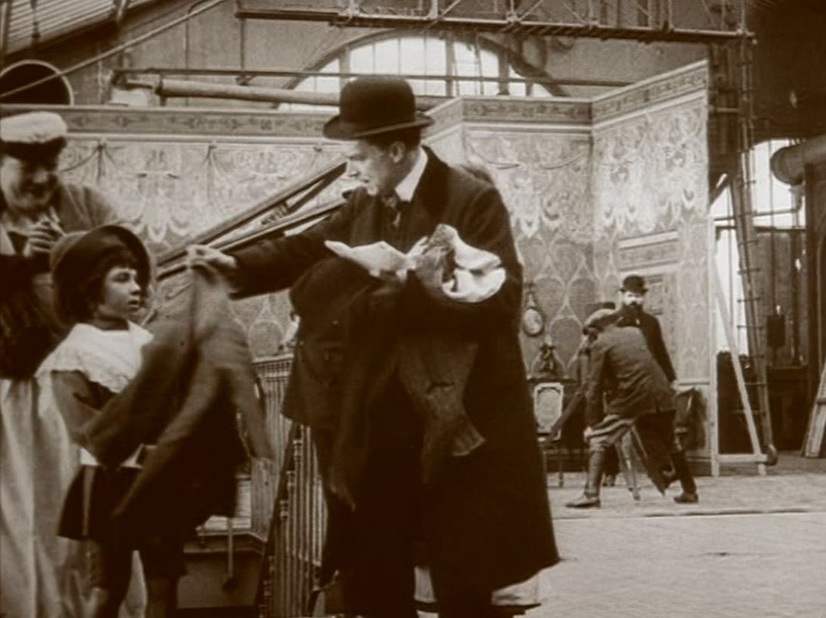
This is definitely the same studio in which we see Bébé 'jouant au cinéma' - and is that the same bowler-hatted and bearded man in both pictures?
|
note
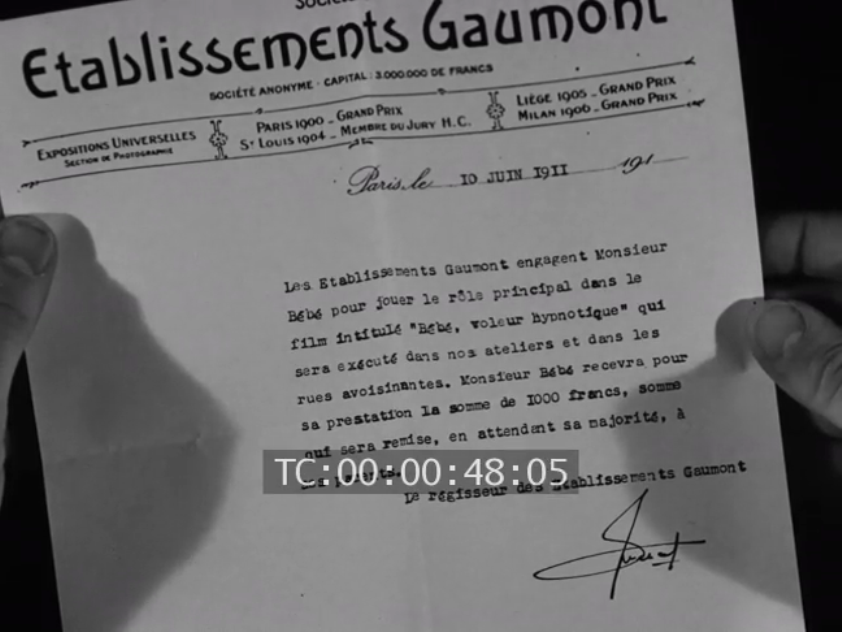
I have been able to see the whole film on the Gaumont Pathé Archives site. The insert of a letter on Gaumont headed-paper is evidence that this is a Gaumont production, but I conjecture that it was added later to give the film coherence by someone who had made that assumption. |
|
The same would be true of an intertitle reading 'Aux Buttes Chaumont', which doesn't refer to the park but to the Gaumont studios nearby. There is no scene in the actual park.
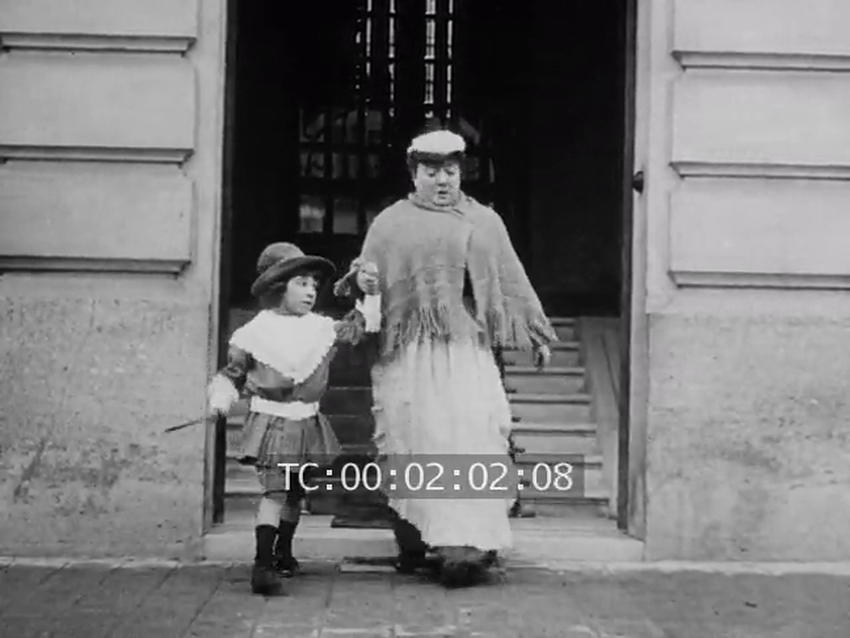
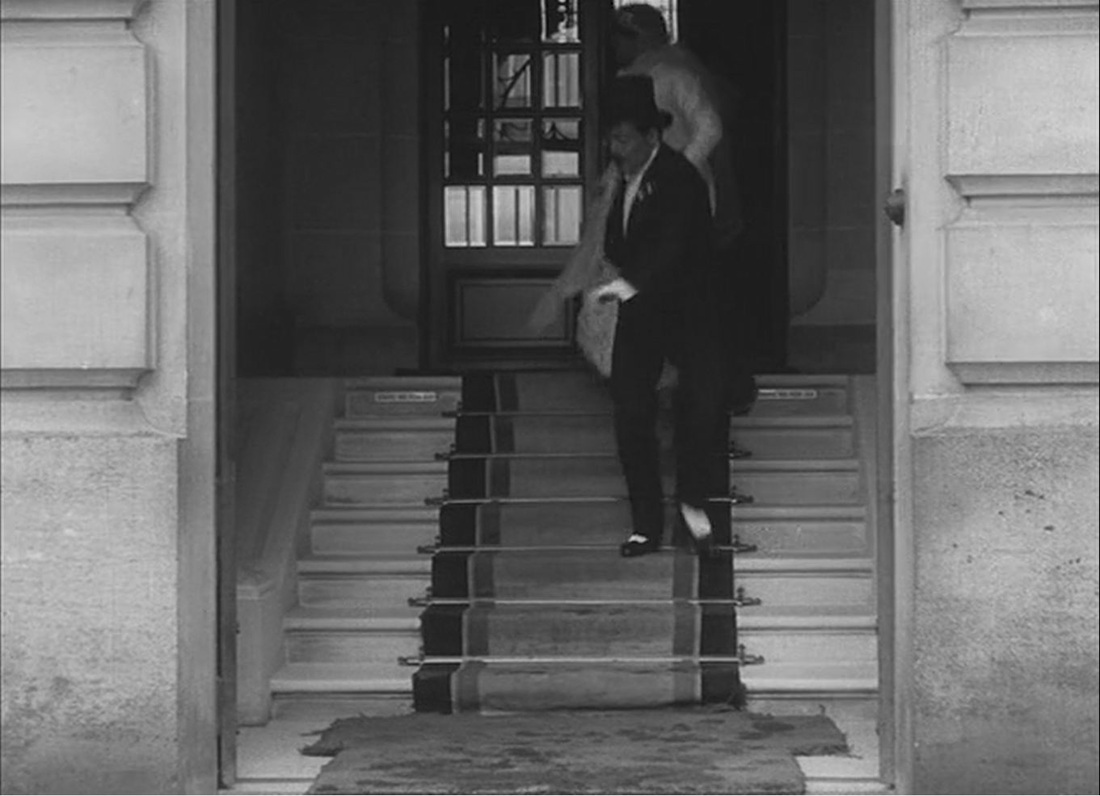
The exterior shown of Bébé's house confirms adds to the topographical evidence that this is a Pathé production. The address is 10 rue Louis Besquel, used frequently in Pathé films, especially those featuring Max Linder (see here). Here is Bébé leaving that address with his maid and then Max leaving it with his wife:
The exterior shown of Bébé's house confirms adds to the topographical evidence that this is a Pathé production. The address is 10 rue Louis Besquel, used frequently in Pathé films, especially those featuring Max Linder (see here). Here is Bébé leaving that address with his maid and then Max leaving it with his wife:
references
- Francis Lacassin, Maître des Lions et des Vampires: Louis Feuillade (Paris: Bordas, 1995)
- Laurent Mannoni, 'Les studios Pathé de la région parisienne (1896-1914)', in Michel Marie & Laurent Le Forestier (eds), La Firme Pathé frères 1896-1914 (Paris: AFRHC, 2004)
- Gaumont: le cinéma premier 1897-1913 (box set issued 2008)