L'Enfant de Paris (Léonce Perret 1913) -
narrative of an identification
narrative of an identification
1/ an apartment building
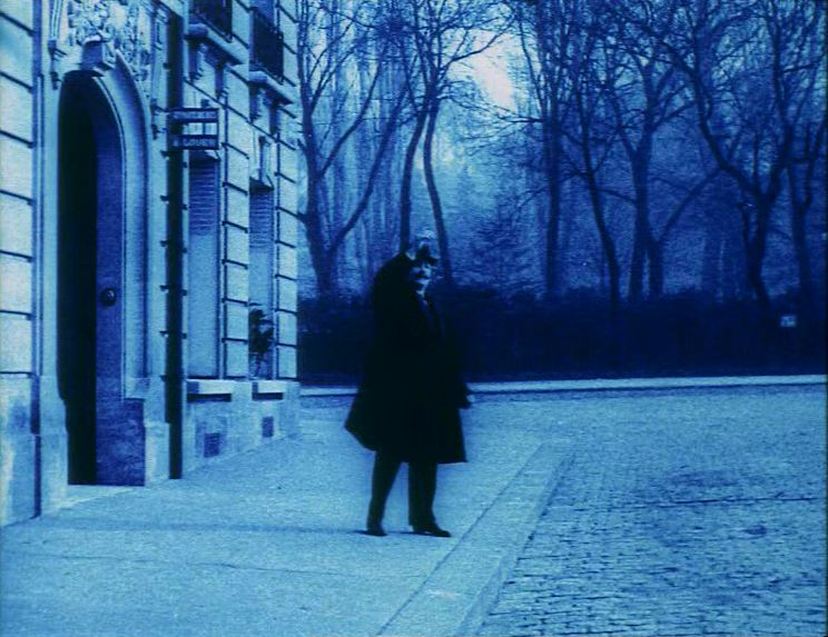
In 'Les Pirates de Paris', the third chapter of this Gaumont production directed by Léonce Perret in 1913, Captain Pierre de Valen takes a taxi from his elegant address in the west of Paris to a rendezvous with the criminals who are holding his daughter for ransom. The daughter is being held somewhere in the lower class districts to the east, but the rendezvous point is in the centre of Paris:
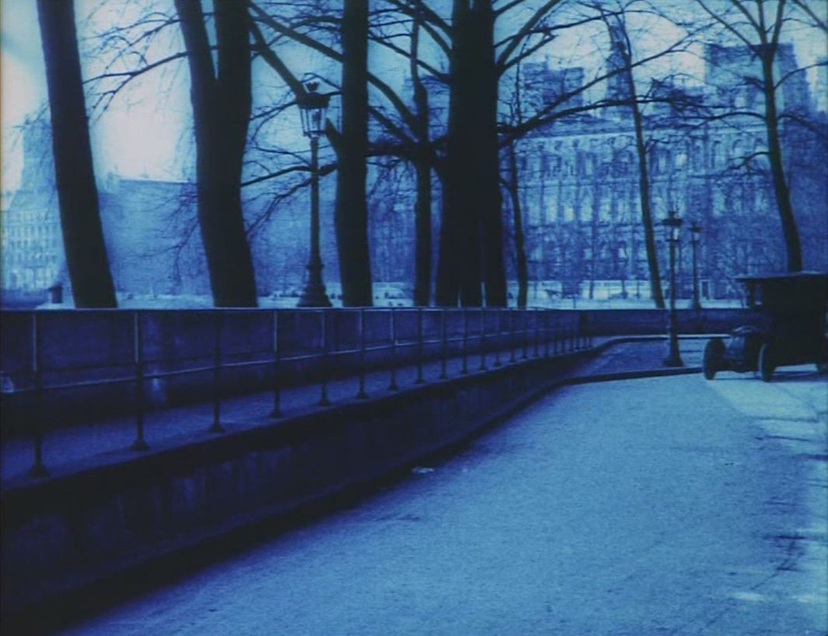
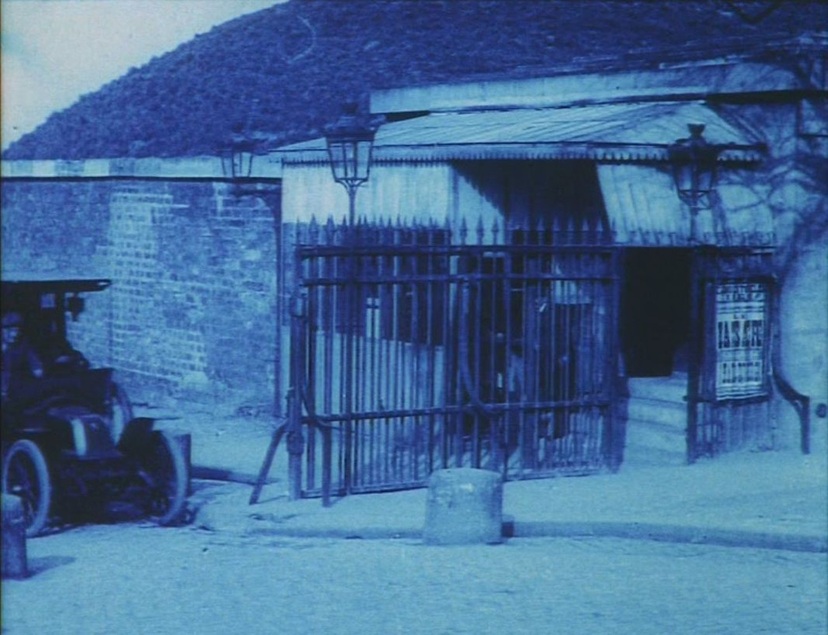
From here de Valen is taken east in the taxi to a place from where he will be led on foot to his daughter:
The centre point of this 'traversée de Paris' poses no problem of identification. The letter de Valen received from the kidnapper specified the place - 'Quai d'Orléans, by the ramp leading down to the river' - and the rendezvous sequence was clearly shot at that place on the île Saint Louis (a view of Notre Dame is included in case there was any doubt).
But the beginning and end points of this journey are more problematic.
De Valen's address is given as '26 Avenue de la Grande Armée':
But the beginning and end points of this journey are more problematic.
De Valen's address is given as '26 Avenue de la Grande Armée':
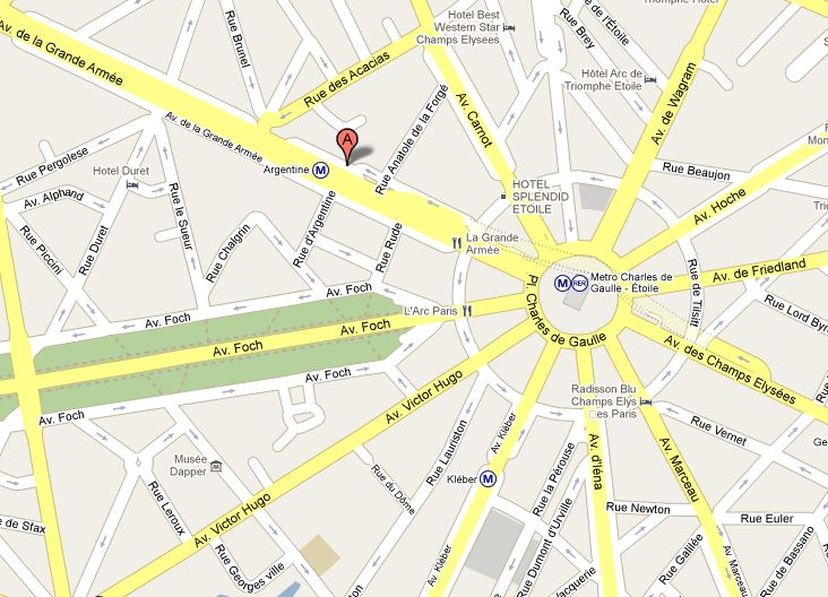
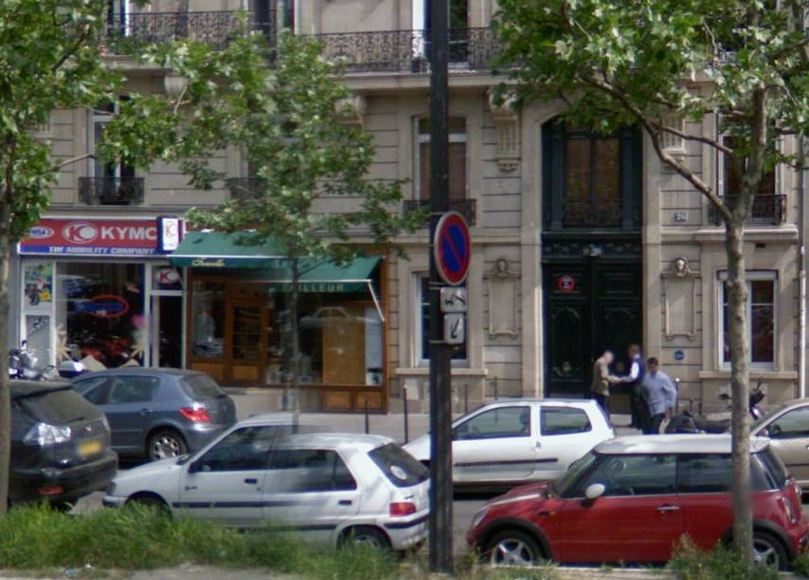
Google Maps
Even given how a building's appearance can change over 100 years, this does not look like the place from which de Valen sets out. The arch of the door is sizably different, the building is not on a corner, and there is no wooded area nearby.
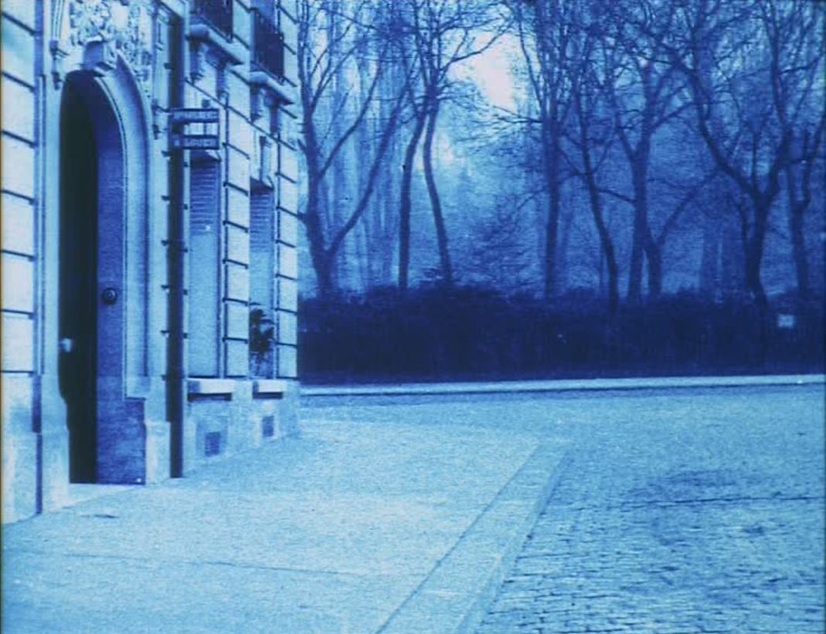
This building is not too different in type from that of the address given, and to find it might feasibly entail examining others in the vicinity, perhaps those on the corners of streets adjoining the tree-lined Avenue Foch, just south of the Avenue de la Grande Armée.
Such an examination proved fruitless, however, and if I wasn't to visit every street corner in every elegant district of Paris, I needed to take a different approach.
A maxim of the location identifier, especially when dealing with studio-based films, is that if a location of a certain type serves in one film, it will very likely serve again in another. An examination of elegant doorways in Gaumont productions between 1912 and 1916 revealed the following:
Such an examination proved fruitless, however, and if I wasn't to visit every street corner in every elegant district of Paris, I needed to take a different approach.
A maxim of the location identifier, especially when dealing with studio-based films, is that if a location of a certain type serves in one film, it will very likely serve again in another. An examination of elegant doorways in Gaumont productions between 1912 and 1916 revealed the following:
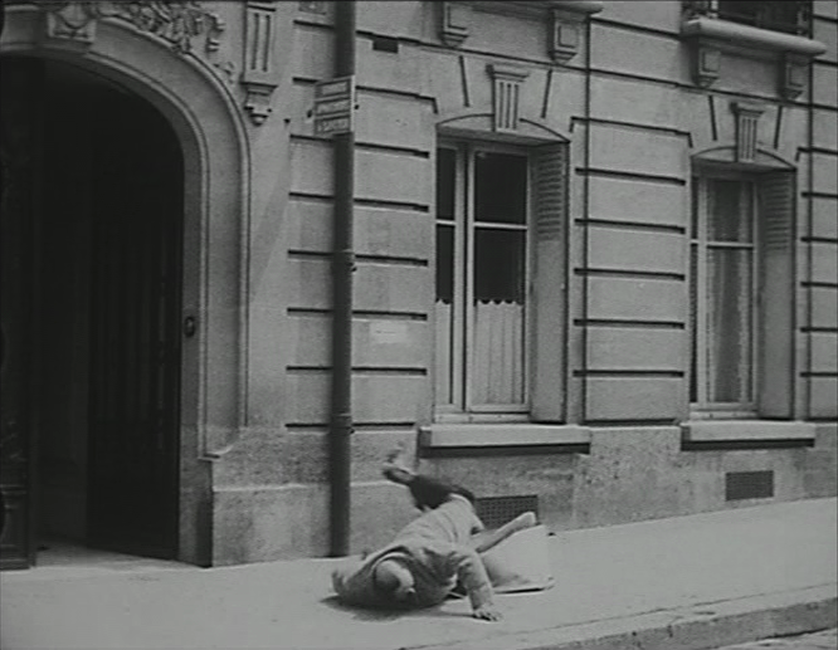
Oscar et Kiki la midinette (Léonce Perret 1913)
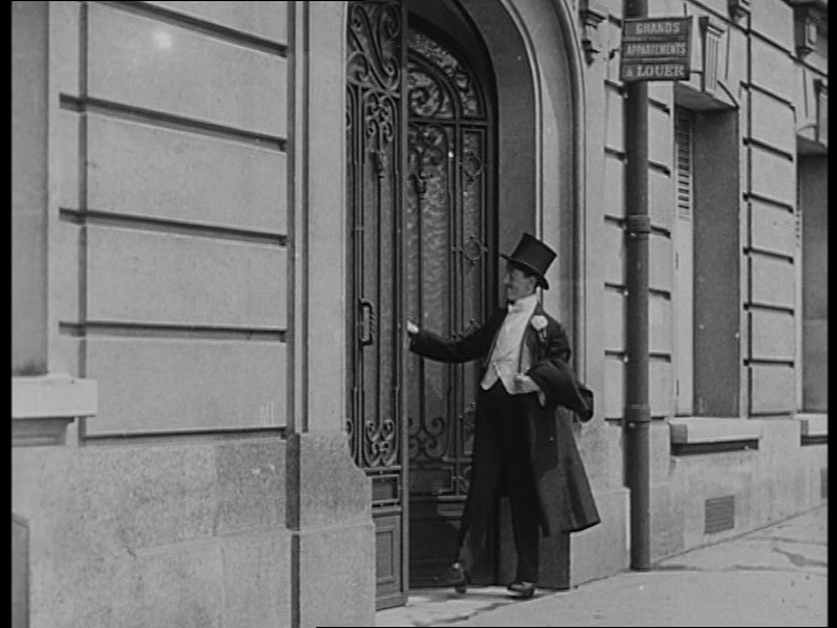
Biscot se trompe d'étage (Jean Feyder 1916)
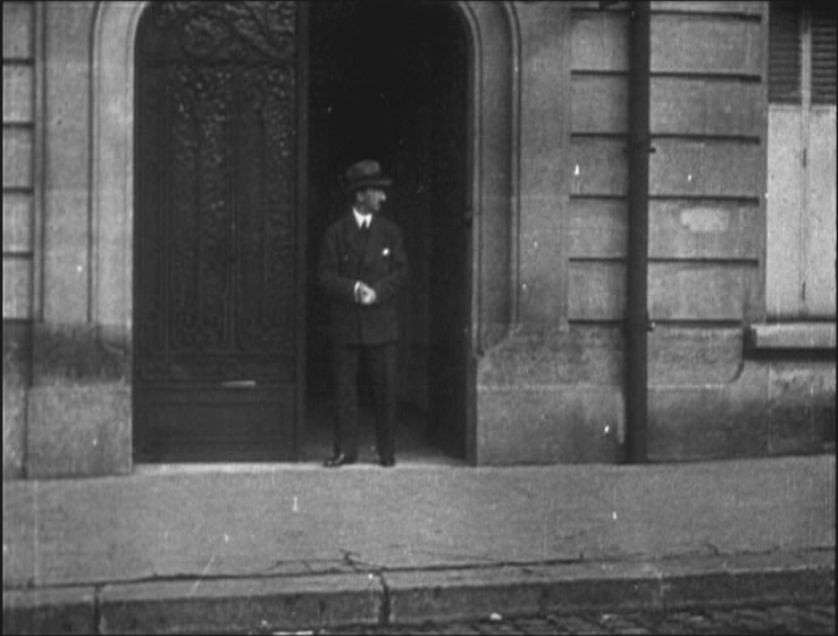
Judex (Louis Feuillade 1917)
These are all the same building as in L'Enfant de Paris. Among the identifying details are: the shape of the doorway, the elaborate moulding above it, the metalwork of the door itself, the facing on the walls, the decoration above the windows, the type of grating below them, and the incline of the street.
This doesn't tell us where the building is, but another maxim of the location identifier is that a rule of least effort often applies. A production will not go far from its base if a location of the type needed is near at hand. The Gaumont factory and studios were in the 19th arrondissement, in a space demarcated by the Rue des Alouettes to the west, the Rue Carducci to the south, the Rue de la Villette to the east and the Réservoir des Buttes Chaumont to the north (on this map, the street running through the area is marked 'Cité Elgé', the given name of the Gaumont works):
This doesn't tell us where the building is, but another maxim of the location identifier is that a rule of least effort often applies. A production will not go far from its base if a location of the type needed is near at hand. The Gaumont factory and studios were in the 19th arrondissement, in a space demarcated by the Rue des Alouettes to the west, the Rue Carducci to the south, the Rue de la Villette to the east and the Réservoir des Buttes Chaumont to the north (on this map, the street running through the area is marked 'Cité Elgé', the given name of the Gaumont works):
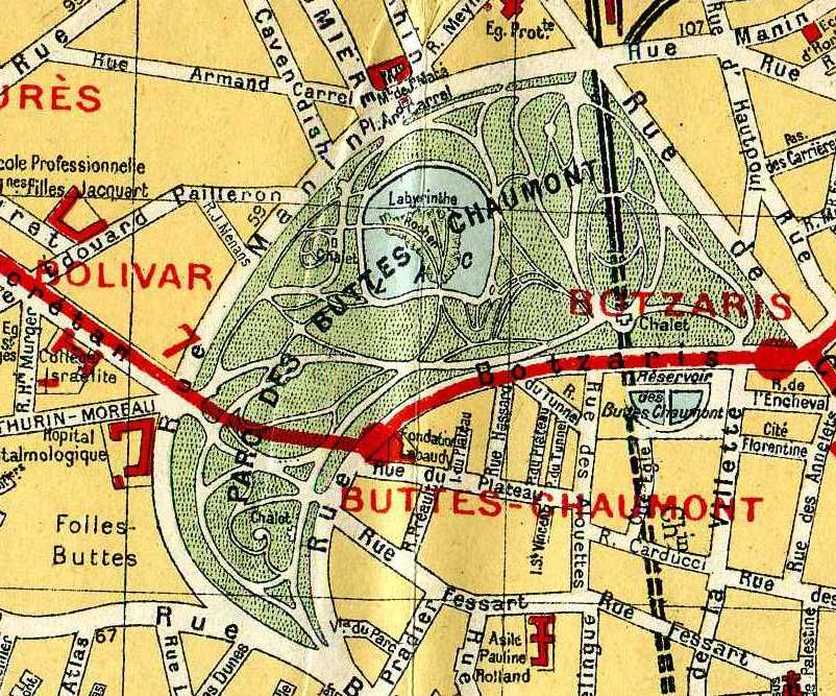
Nouveau Plan de Paris (Paris: Hachette, 1917)
Since we know from L'Enfant de Paris that the building is on a corner and near a wooded area, the obvious places to look are the street corners giving onto the Parc des Buttes Chaumont. An examination of these showed the location to be number 7 Rue Jean Ménans, on the north side of the park, built in 1910 by the architect Auguste Latapy:
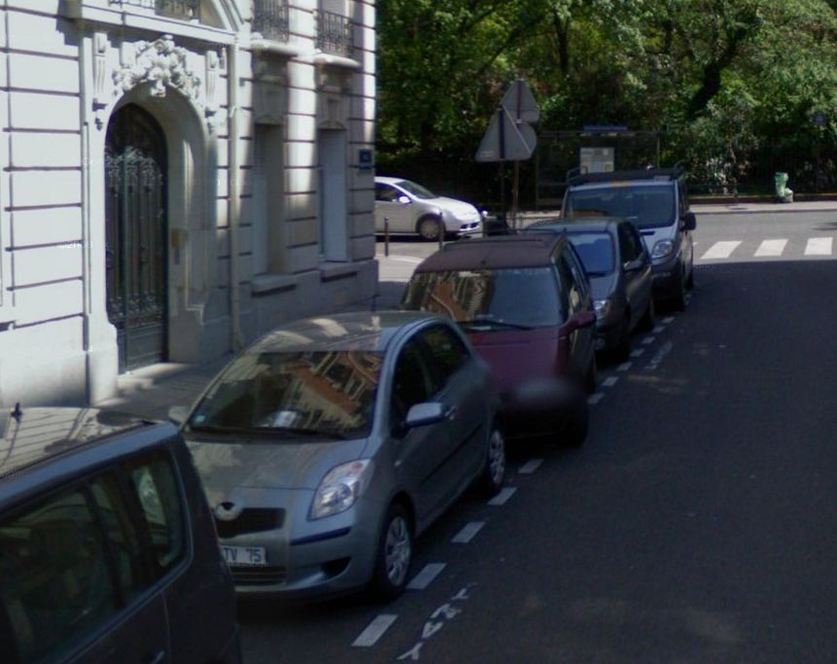
Google Maps
This result shouldn't surprise us. My search for locations in Gaumont films from between 1906 and 1917 has turned up around thirty different uses of locations in the vicinity of the studios, and I have only examined a very limited corpus (those films that are available on dvd, such as the two boxes of 'Le Cinéma premier' issued by Gaumont in 2008 and 2009).
2/ a gateway
Returning to de Valen's journey across Paris in L'Enfant de Paris. The taxi deposited him and his guide at a peculiar gateway:
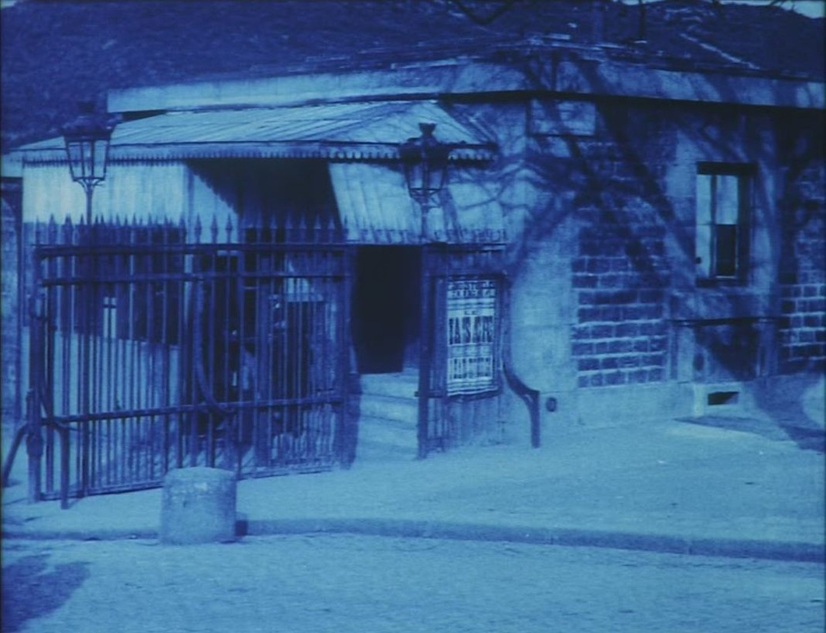
With the grassy hill behind it this could be the entrance to a park and, applying a maxim already invoked, this could well be the park in the vicinity of the Gaumont factory and studios. There are five large gateways into the Parc des Buttes Chaumont, and they all have railings and lampposts similar to those in the film. Here is the entrance opposite the Place Armand Carrel, c. 2008 and about a hundred years earlier:
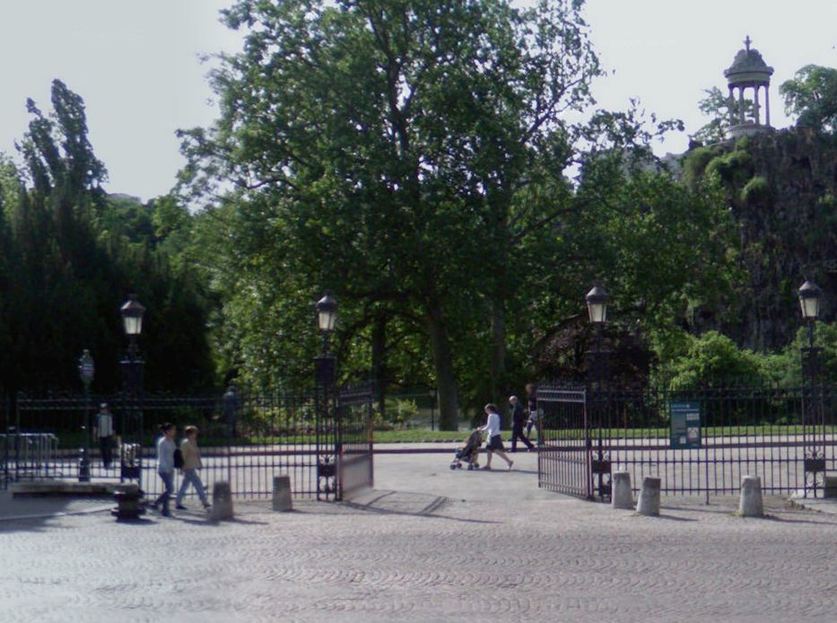
Google Maps
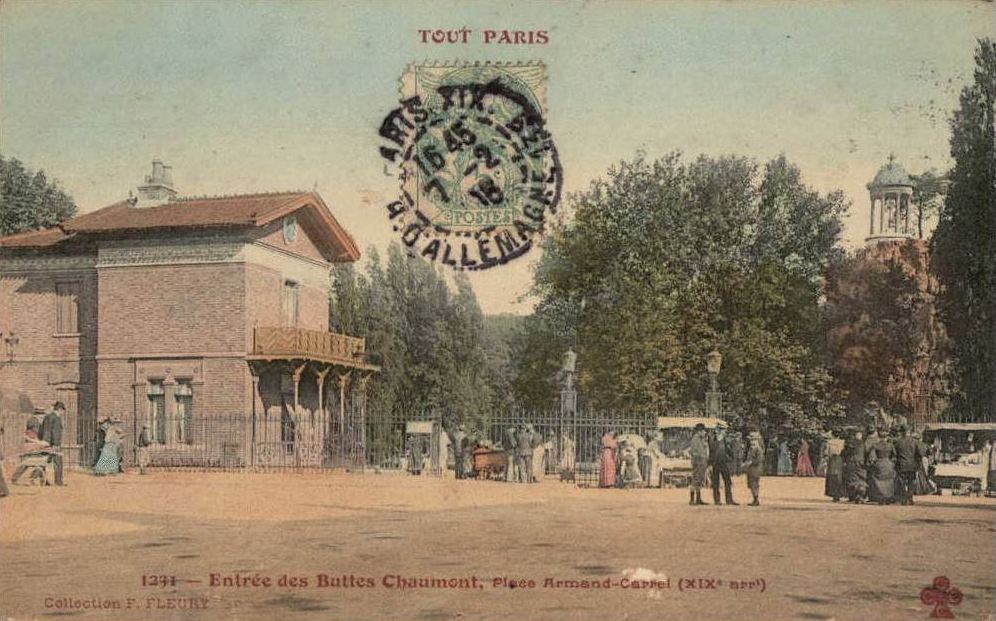
Despite certain similarities, this cannot be the gateway in the film because the terrain immediately beyond the gates is flat.
Only one of the main entrances to the park has rising land behind it:
Only one of the main entrances to the park has rising land behind it:
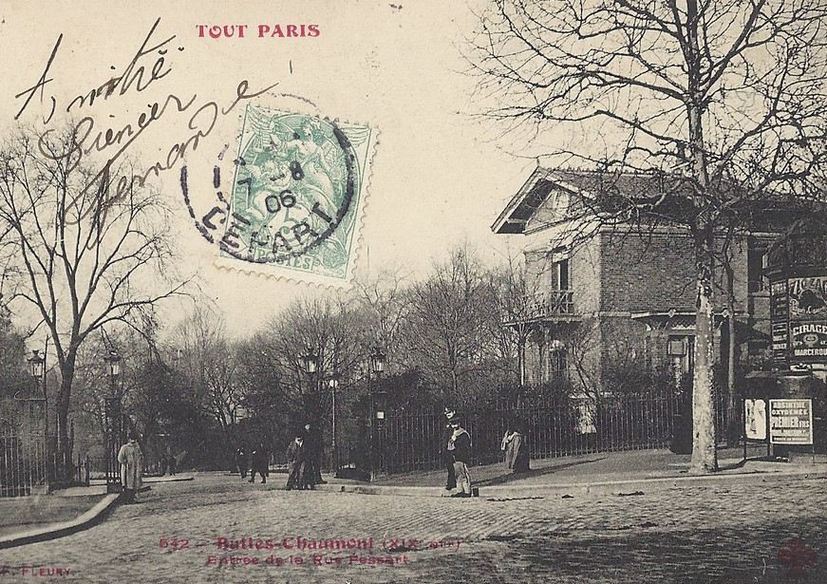
But the obstacle to identification here is the architecture. This postcard was sent in 1906, and the building shown, a 'maison de gardien', is still there today. It is not the building visible in the 1913 film, and none of the other entrances to the park has by it a building like that in the film.
Applying my other maxim, I looked for other such gateways in Gaumont films. The only thing similar is this, from Judex (1917):
Applying my other maxim, I looked for other such gateways in Gaumont films. The only thing similar is this, from Judex (1917):
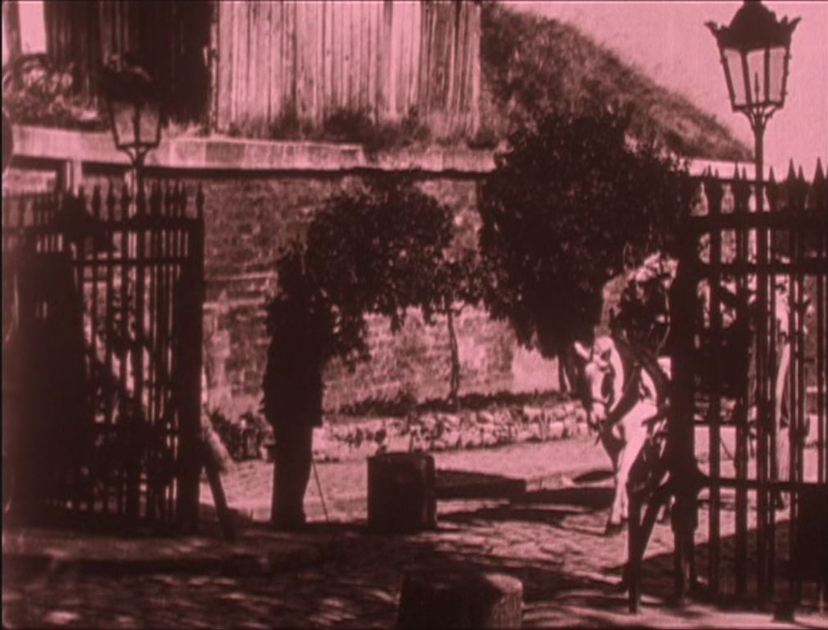
The railings and lamp posts are the same, but shown from a different angle.
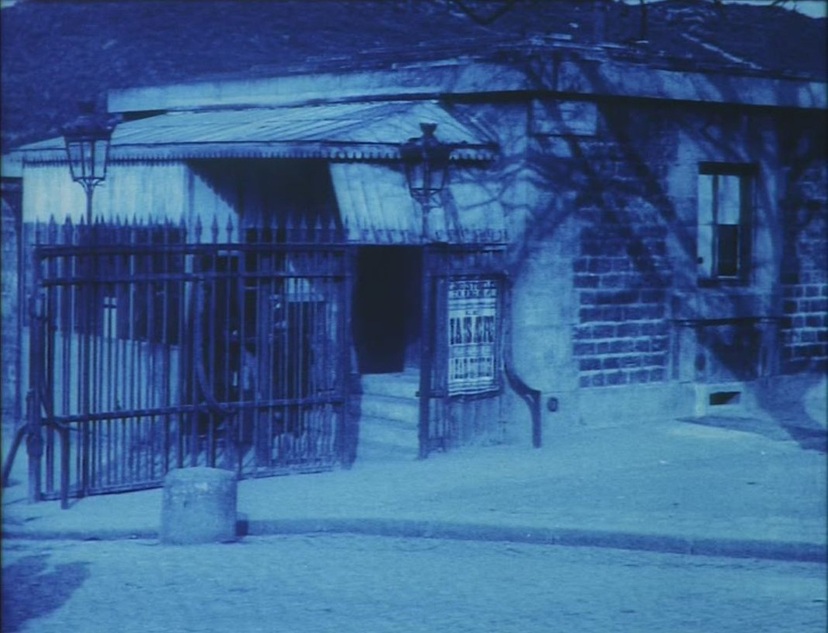
The shot in Judex is the only sight we have in that film of this entrance, but in L'Enfant de Paris we see it twice again in later sequences, and the different positions of the camera reveal more of the space:
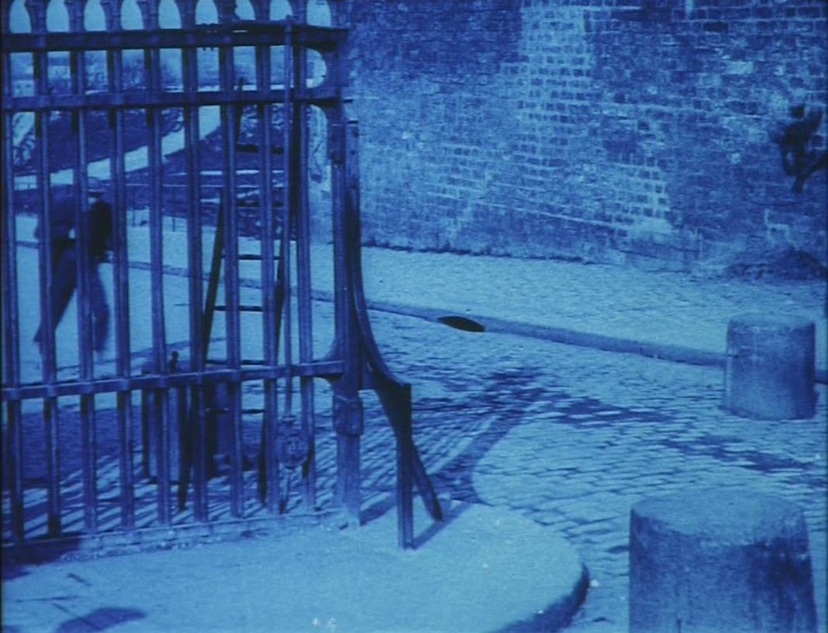
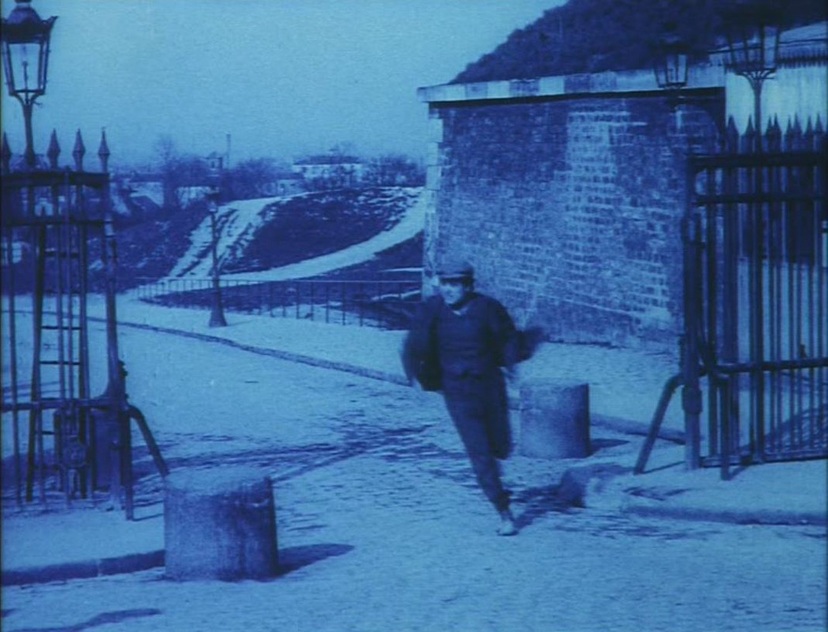
In Judex this is described as an entrance into Paris, and if it is so then we can identify the grassy hills and brick constructions to each side of the gates as part of the fortifications that surrounded Paris at the time. None of the gateways into Paris through the fortifications survives, but old postcards reveal details that are similar to what we see in these two films:
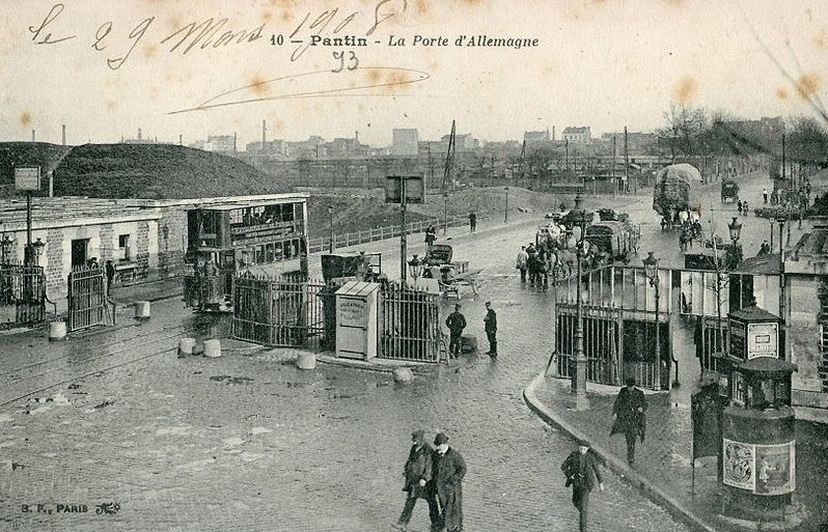
The Porte d'Allemagne, or Porte de Pantin, is in the same arrondissement as the Gaumont factory. The earthworks of the fortifications are recognisable, as is the type of bollard on the ground. The pattern of stone and brickwork on the building at the extreme right of the postcard is also similar to that of the building in the film, but the layout of pavement, bollards and lamp posts is not quite right. This is not the entrance that we see in the film, but it is certainly an entrance of this type that we see.
We can also conjecture that the entrance in the film is one of those to the east of Paris, within striking distance of the Gaumont studios. Here are two other nearby portes, neither of which is the one in the two films:
We can also conjecture that the entrance in the film is one of those to the east of Paris, within striking distance of the Gaumont studios. Here are two other nearby portes, neither of which is the one in the two films:
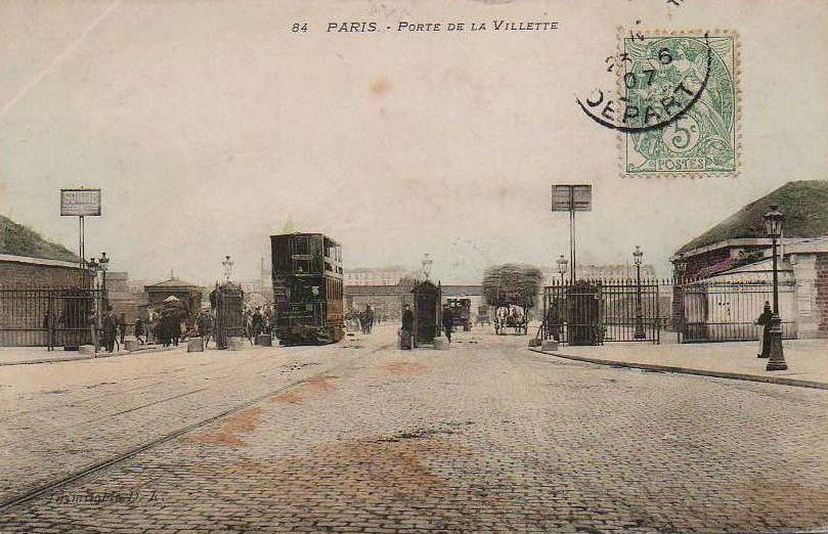
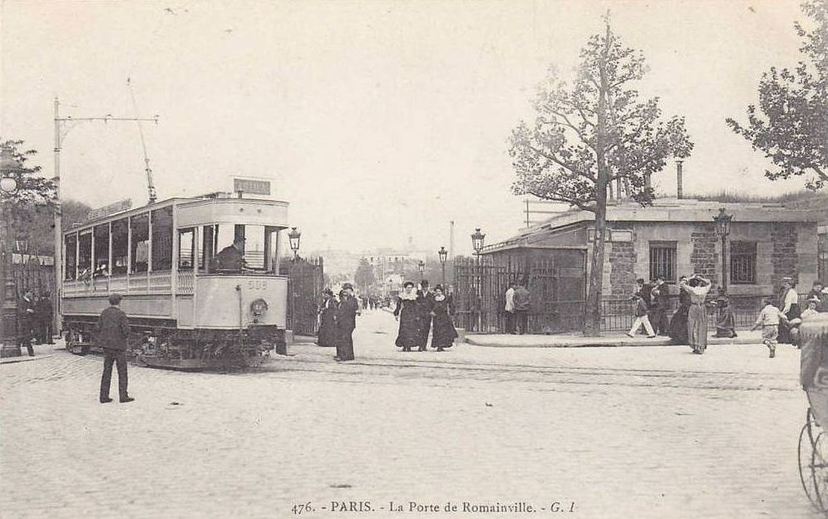
(La Porte de Romainville is another name for the porte des Lilas.)
I haven't found images of either the Porte de Chaumont or the Porte Brunet, both nearby in the 19th, but a third, the Porte du Pré Saint Gervais, was photographed by Atget in 1913, the year of L'Enfant de Paris:
I haven't found images of either the Porte de Chaumont or the Porte Brunet, both nearby in the 19th, but a third, the Porte du Pré Saint Gervais, was photographed by Atget in 1913, the year of L'Enfant de Paris:
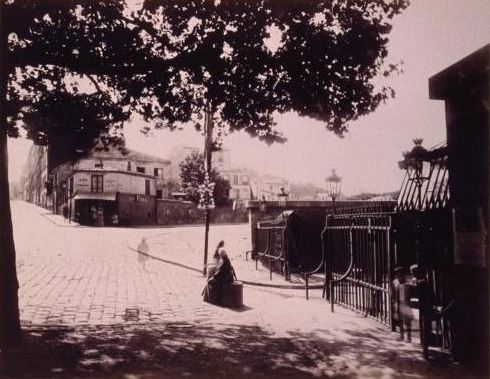
Eugène Atget, porte du Pré Saint Gervais, 1913
This, I think, is the right porte.
Only the shot in Judex corresponds to the direction of Atget's view, and it isn't from the same angle. Moreover, even if the registering of distances by the two cameras is necessarily different, the bollard on which the woman is sitting in Atget's photograph seems to be further forward than the bollard in Feuillade's film. Also, there is a wooden construction on the fortification wall in the film that we cannot see in the photograph, but it is a distortion that makes us think that the portion of wall we see in the film is the same as that in the photograph. In fact, with the film camera almost in front of the gates, it doesn't show the stretch of wall shown by Atget, so the wooden construction is not an indicator.
Only the shot in Judex corresponds to the direction of Atget's view, and it isn't from the same angle. Moreover, even if the registering of distances by the two cameras is necessarily different, the bollard on which the woman is sitting in Atget's photograph seems to be further forward than the bollard in Feuillade's film. Also, there is a wooden construction on the fortification wall in the film that we cannot see in the photograph, but it is a distortion that makes us think that the portion of wall we see in the film is the same as that in the photograph. In fact, with the film camera almost in front of the gates, it doesn't show the stretch of wall shown by Atget, so the wooden construction is not an indicator.
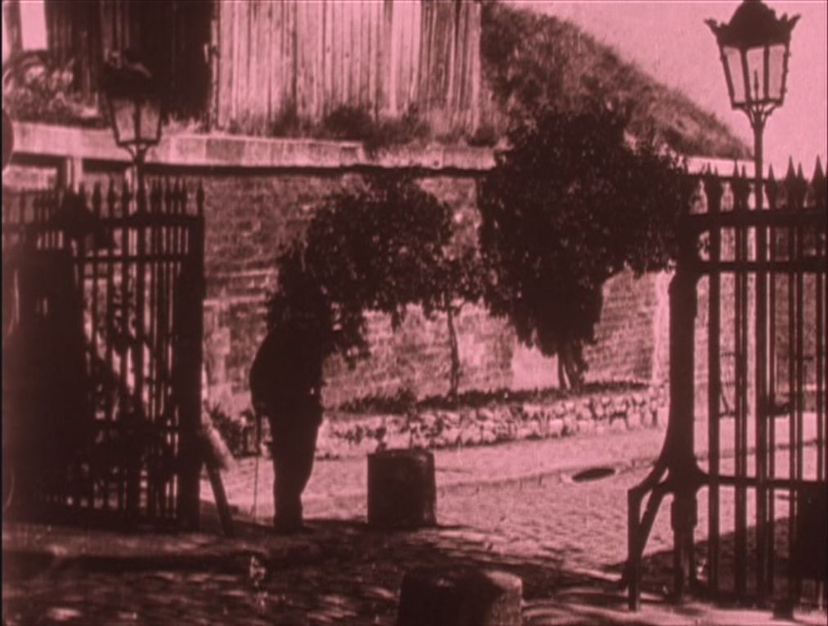
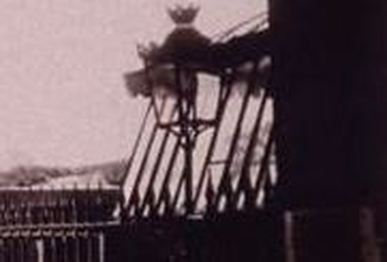
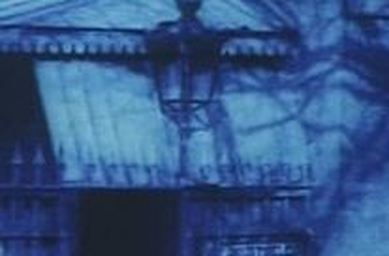
If we go back to one of the shots in L'Enfant de Paris, we can see the sloping canopy-like feature on the building to the right in the photograph, though the light isn't reflected by it so brightly:
 |
 |
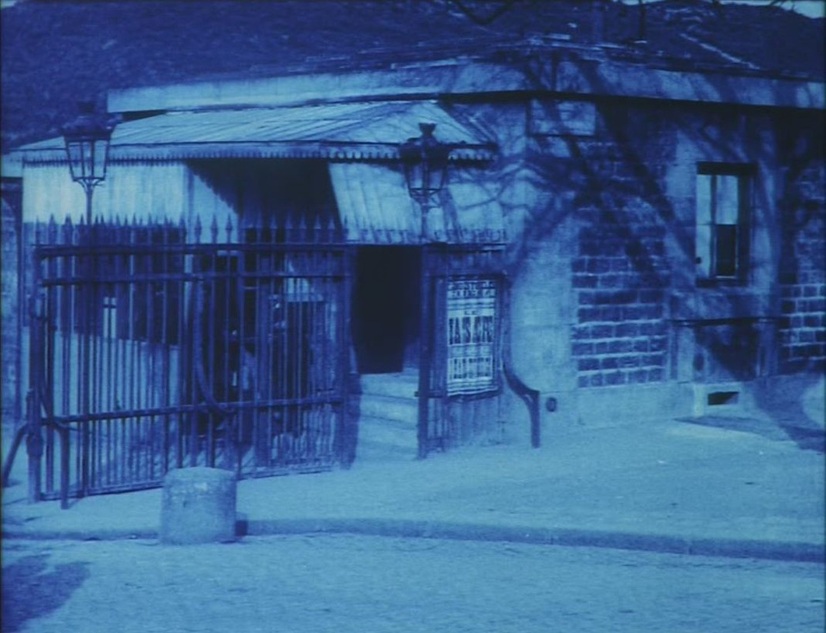
I'm inclined to find the evidence so far conclusive, but there is a last piece from Judex. After the wagon crosses the barrier into Paris, the next shot shows it pulling up at a café. The café is very similar to the one we see in the background of Atget's photograph. Both have a striped awning, and on the left side of both can be seen a hand rail.
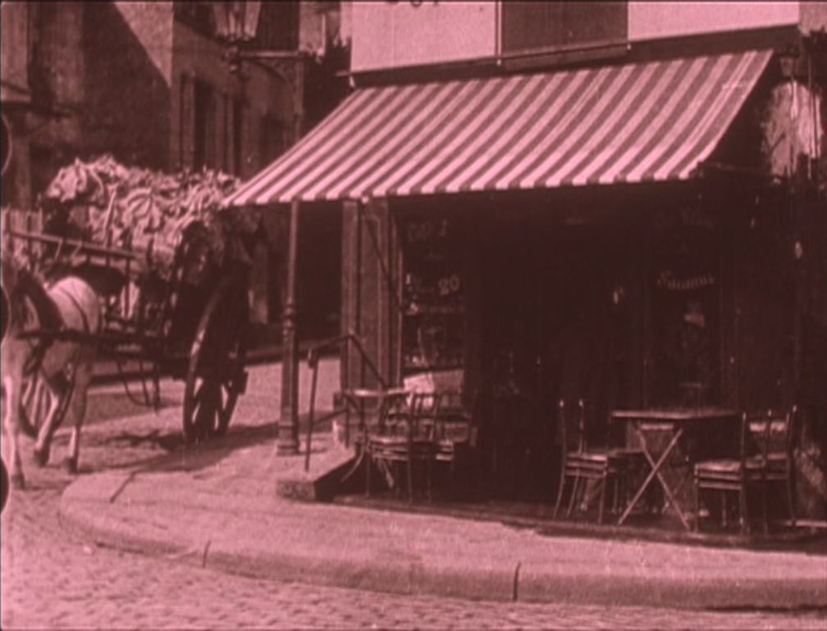
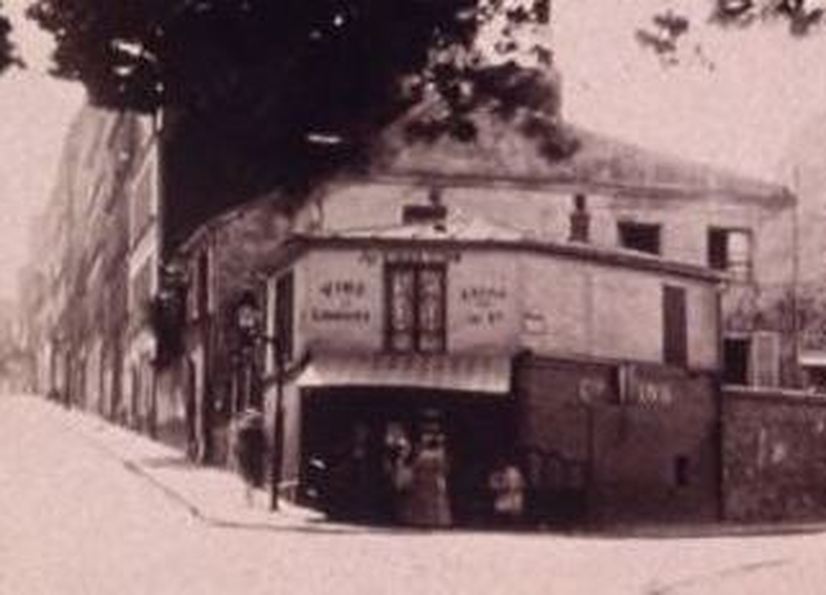
If this is the same café, the wagon in Judex is not approaching it from the right direction, since it is supposed to have just entered by the gateway, but I have not found many films of this period to be concerned with matching movement to the actual (as opposed to the perceived) topography.
A last piece of evidence is this postcard showing the Porte du Pré Saint Gervais, from a few years earlier. The wooden construction seen in Judex isn't there, but I would argue that it was a temporary structure and not a fixed part of the fortifications. The land rising up behind the gateway is very like what we see in L'Enfant de Paris, and the overall arrangement of walls, buildings, railings, gates and lamp posts is very like what we see in the two films. (If there appears to be no bollards it is because the people are all standing in front of them.)
A last piece of evidence is this postcard showing the Porte du Pré Saint Gervais, from a few years earlier. The wooden construction seen in Judex isn't there, but I would argue that it was a temporary structure and not a fixed part of the fortifications. The land rising up behind the gateway is very like what we see in L'Enfant de Paris, and the overall arrangement of walls, buildings, railings, gates and lamp posts is very like what we see in the two films. (If there appears to be no bollards it is because the people are all standing in front of them.)
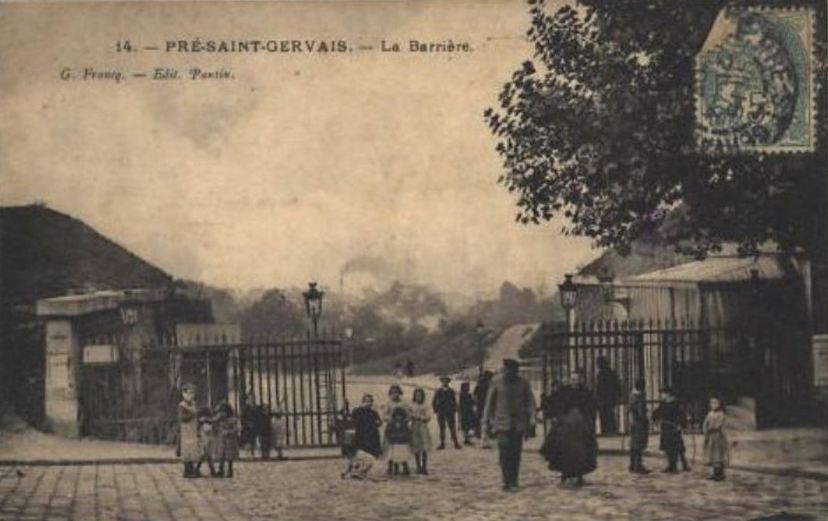
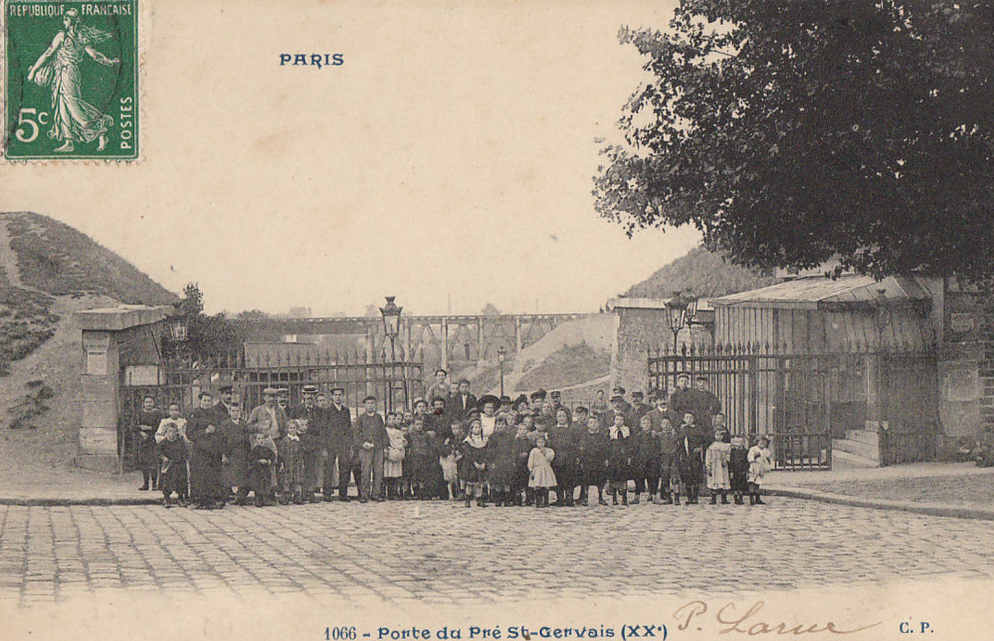
Added 21.07.2013: here are two more postcards of this porte, supporting the identification made above:

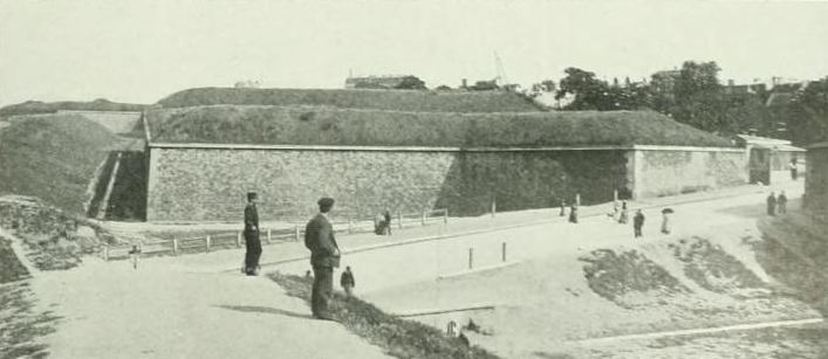
Lastly, here is a view from the other direction, looking towards Paris, published in the 1900 Paris Atlas by Fernand Bournon:
I apologise for so laboriously going over these images as evidence, all to prove (or not) that when, in L'Enfant de Paris, de Valen is taken to the outer limits of the city, the specific point to which he is taken is very close to the Gaumont production base:
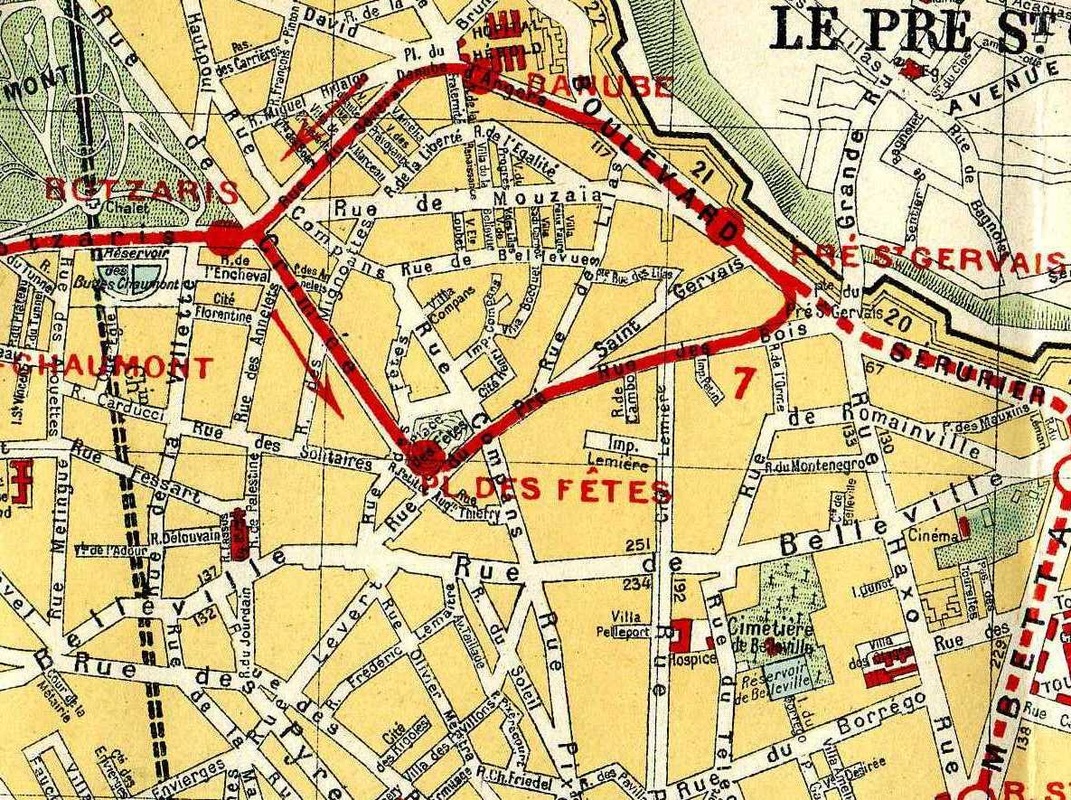
Nouveau Plan de Paris (Paris: Hachette, 1917)
The identification of the entrance into Paris is of a different order from the identification of de Valen's home, where a building in one part of Paris passes for a building on the other side of the city. The deception, or fiction, regarding de Valen's address is determined firstly by semantic over-determination (this military hero has to live in the avenue of the 'Grande Armée') but more importantly by a topographical differentiation in the narrative. His journey across Paris is a journey across social divides, down through social strata, a movement conveniently expressed here (as in many other films) as a passage from west to east.
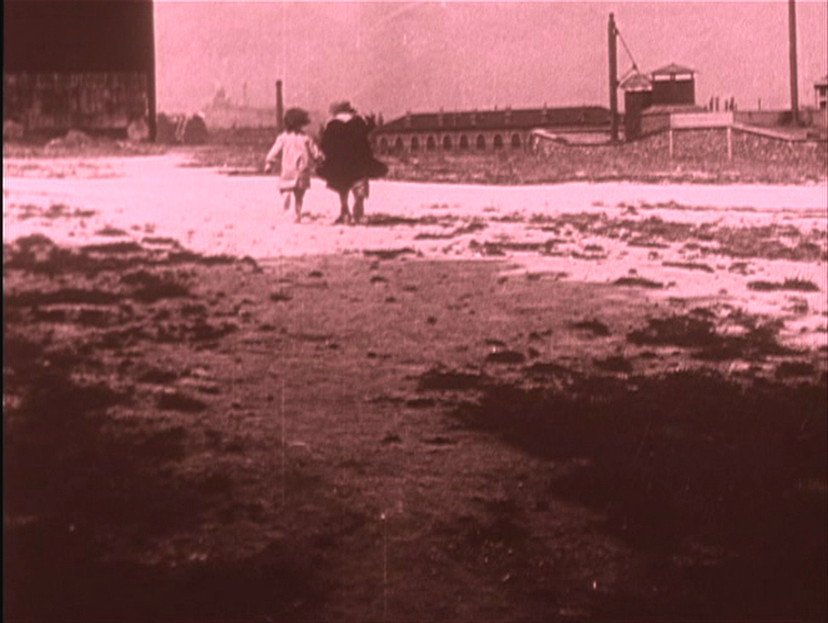
Incidentally, arrival at the Porte du Pré Saint Gervais in Judex initiates a movement in the other direction, as le môme Réglisse agrees to take le petit Jean across Paris to find his mother in Neuilly. Their journey begins with the two heading off across a stretch of wasteland, the 'zone', near the fortifications:
Incidentally, arrival at the Porte du Pré Saint Gervais in Judex initiates a movement in the other direction, as le môme Réglisse agrees to take le petit Jean across Paris to find his mother in Neuilly. Their journey begins with the two heading off across a stretch of wasteland, the 'zone', near the fortifications:
3/ Belleville-Ménilmontant
There is more work to do concerning the part of Paris to which de Valen is brought. The sordid interiors in which the 'pirates de Paris' conspire and do violence are generic, studio-constructed locales, but the spaces around them are topographically distinctive (even if I cannot yet identify them all):
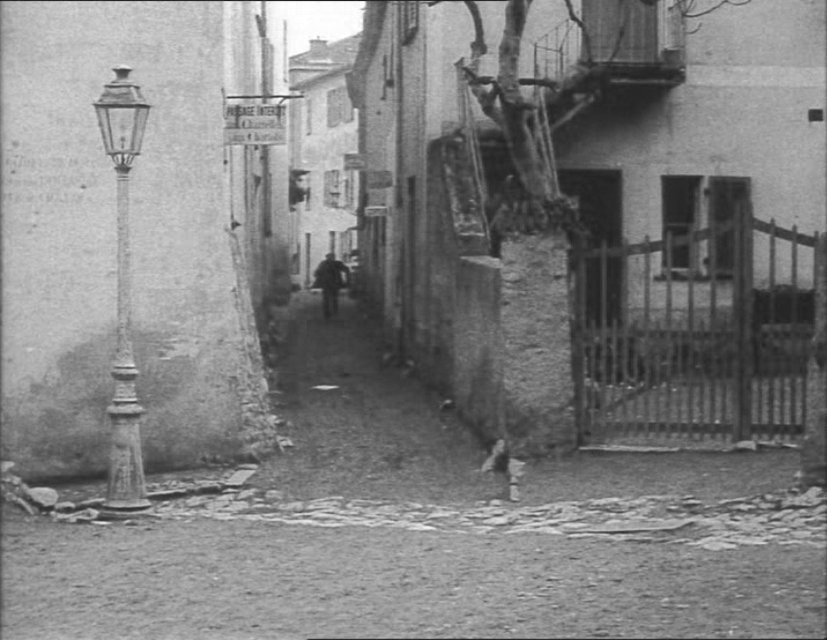
This passage, probably now gone through redevelopment, is characteristic of the Belleville-Ménilmontant area. Though I am only guessing, it looks to me like the passage des Mûriers, photographed here (in counter shot) by Henri Guérard in the 1950s (reproduced here from the Ménilmontant-centred site Rue du Pressoir):
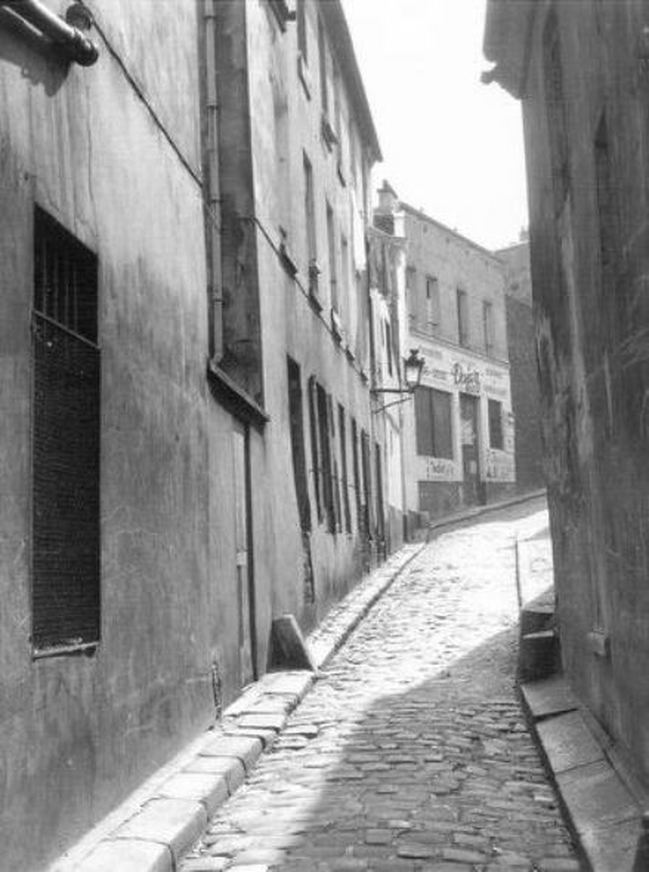
Wherever exactly the passage Perret films may be, his framing of it finds an echo in later films like Kirsanoff's Ménilmontant (1926):
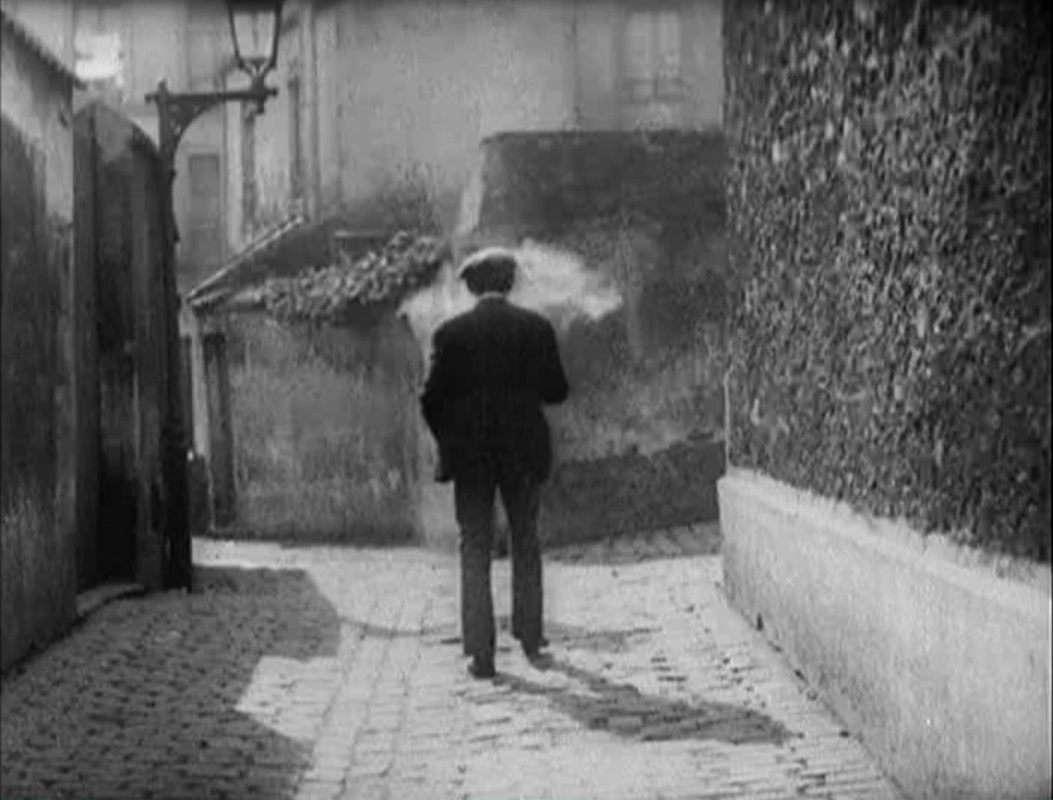
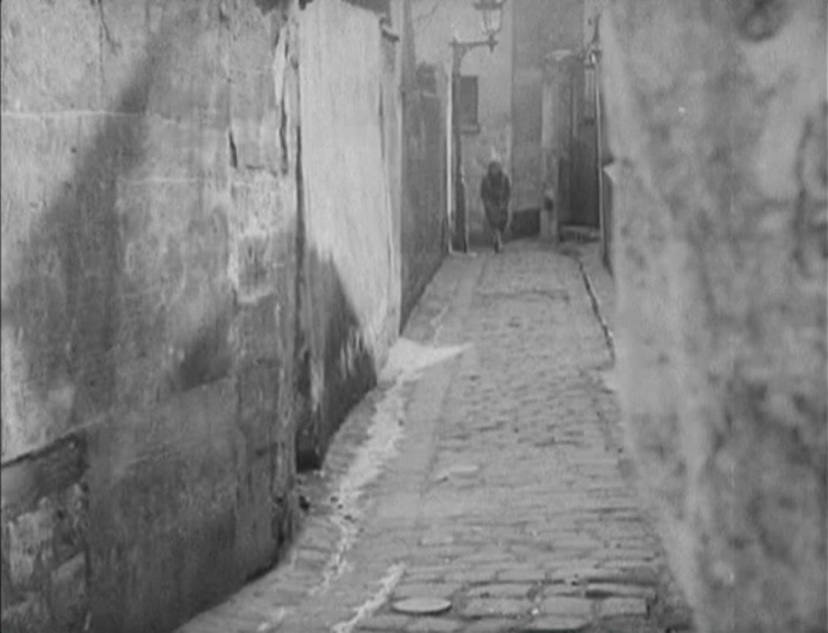
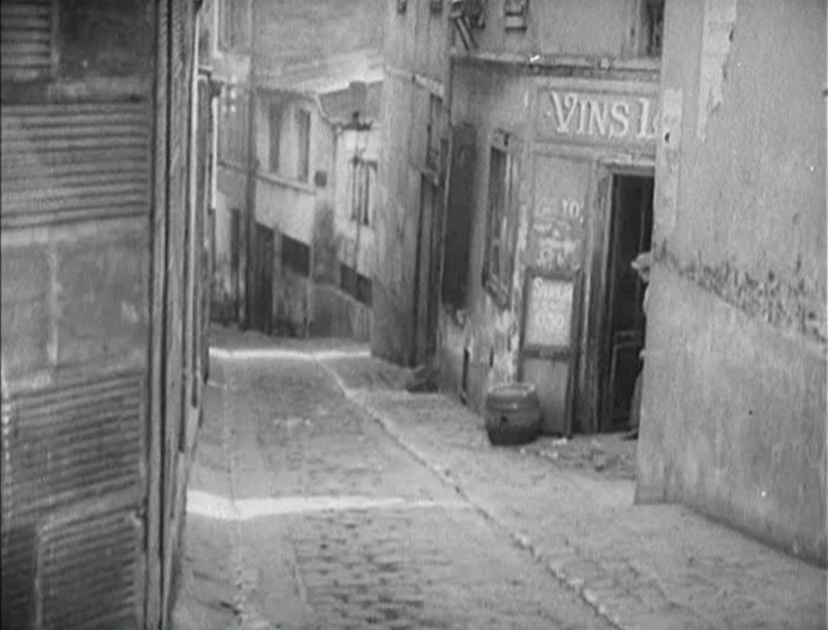
Or Cavalcanti's Rien que les heures (1926):
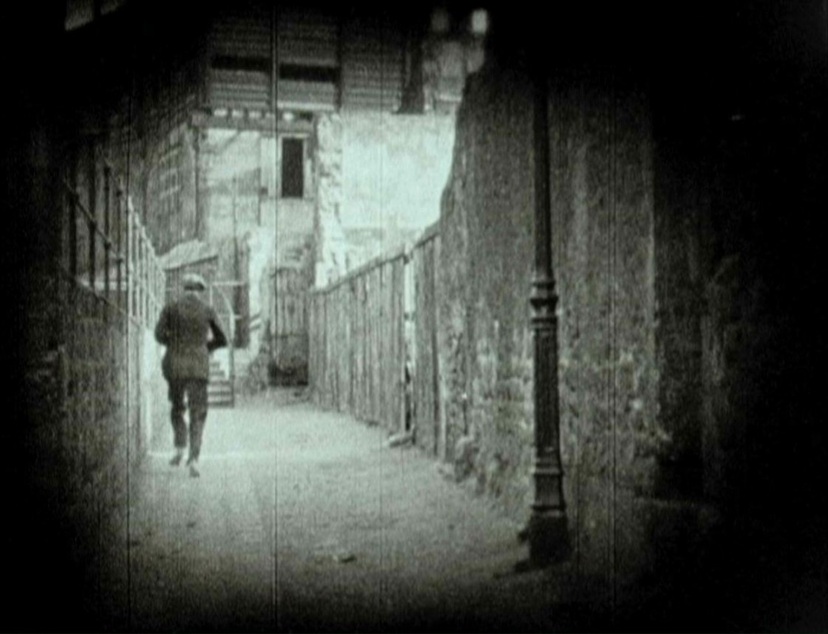
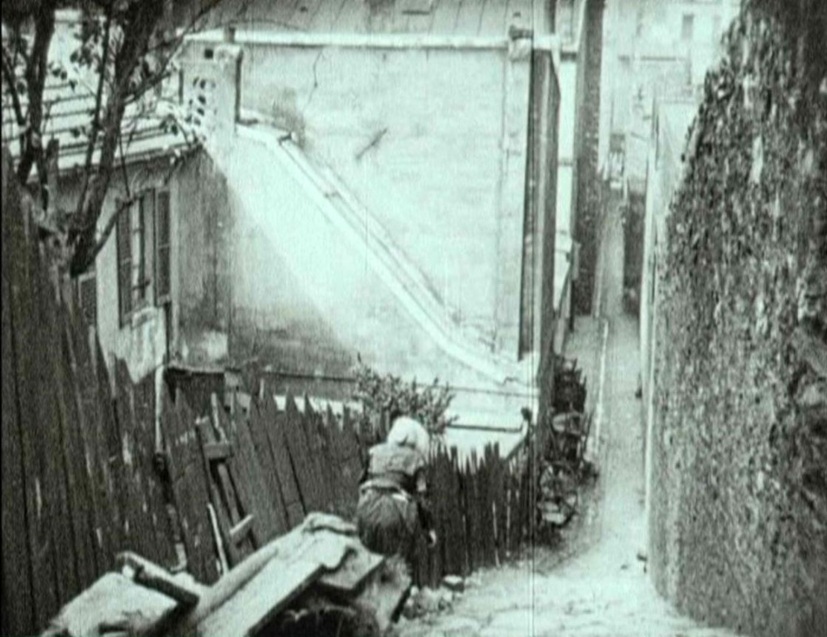
These streets and such framings of them become all the more familiar in later Ménilmontant-set films:
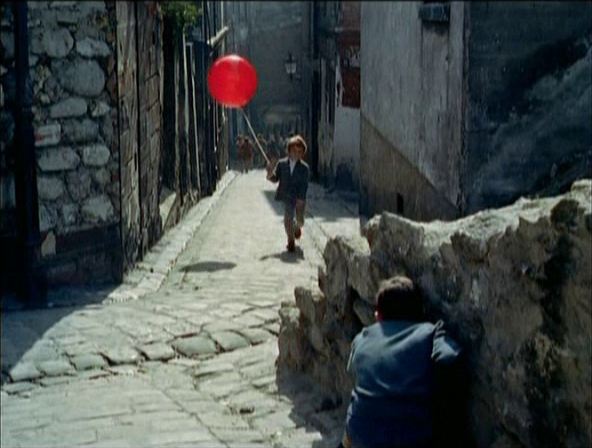
Le Ballon rouge (Albert Lamorisse 1956)
And in the work of photographers like Willy Ronis:
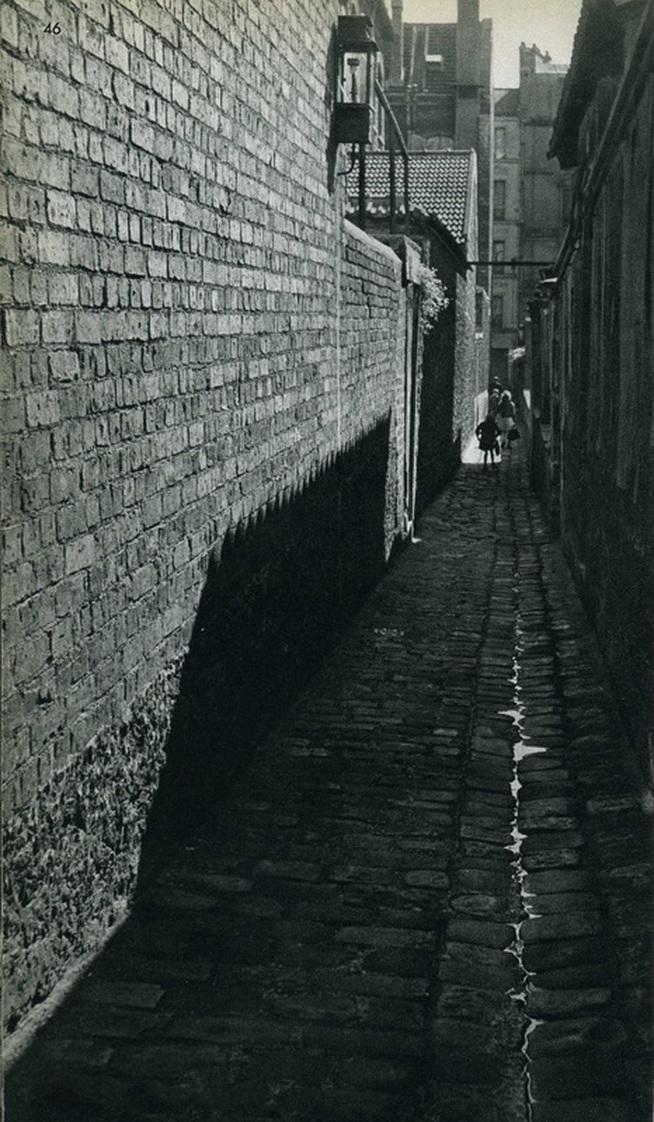
'Passage du Retrait', in Belleville-Ménilmontant (Paris: Arthaud, 1954)
The street in L'Enfant de Paris is characteristic, but not easy to locate.
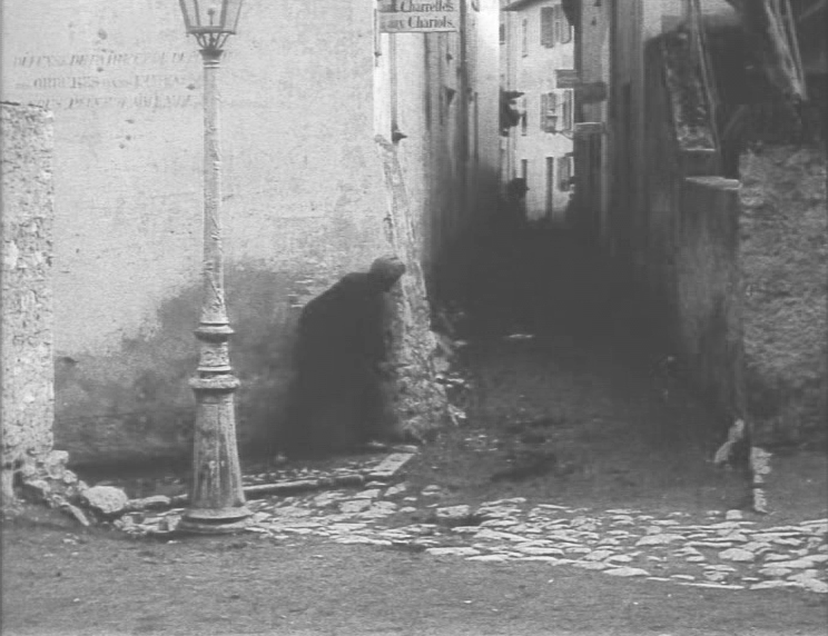
In the film, the hero Le Bosco runs twice from here to the Pré Saint Gervais gateway, and the cut each time suggests that the two places are contiguous, but since on the first occasion he runs offscreen left and on the second offscreen right, each time ending up at the gateway, it is clear that the topography of the film is not coherent in its own terms, never mind coherent in relation to the actual topography of Paris.
On the second occasion he is following a clue as to where the villain has taken de Valen's daughter, an address found on a scrap of paper. The address given is '285 Rue des Pyrénées', in the 20th. Here is a view of the Rue des Pyrénées, looking towards number 285:
On the second occasion he is following a clue as to where the villain has taken de Valen's daughter, an address found on a scrap of paper. The address given is '285 Rue des Pyrénées', in the 20th. Here is a view of the Rue des Pyrénées, looking towards number 285:
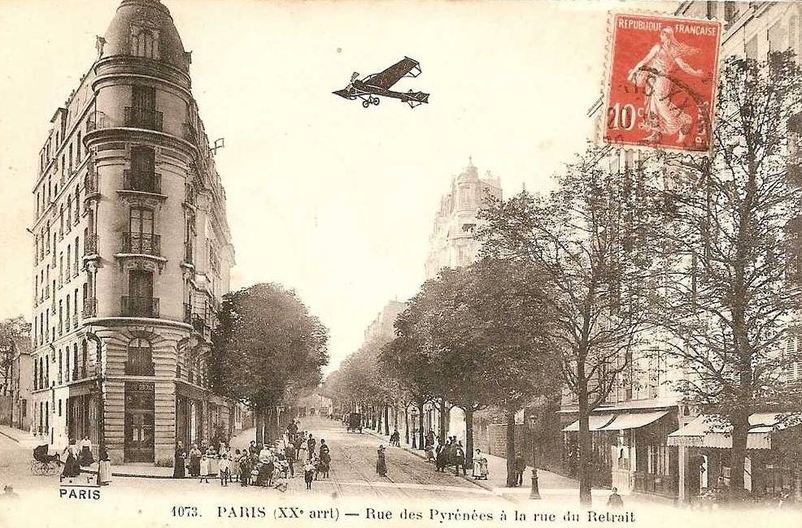
We can't see the actual building beyond those trees, but this is what that address looks like now:
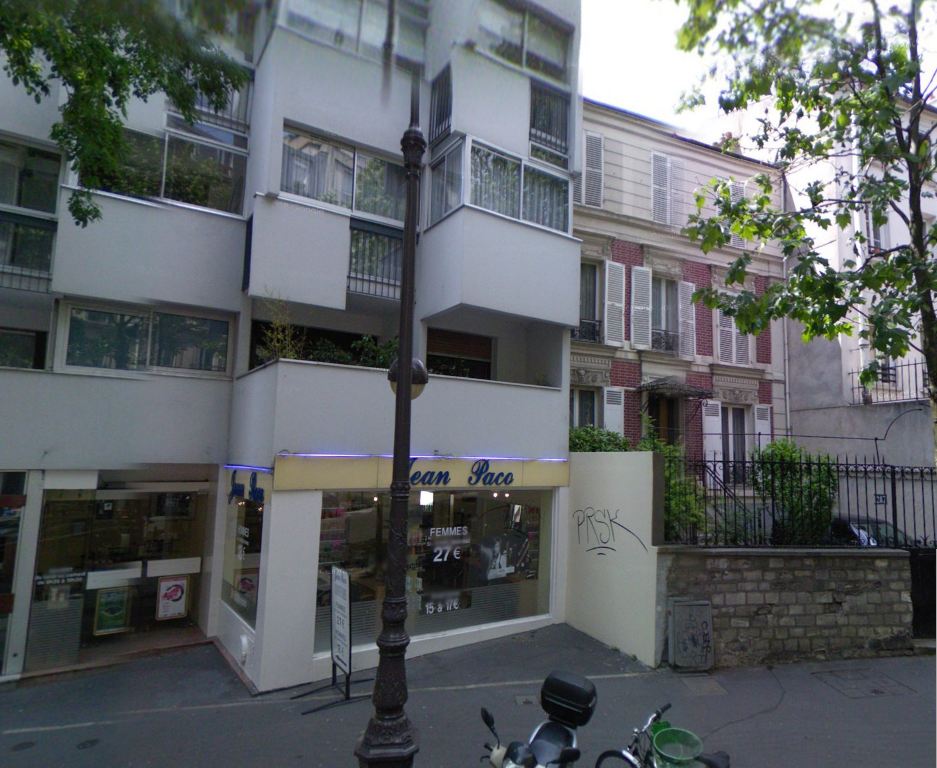
Google Maps
Nothing at this address corresponds to anything that might have been filmed in 1913 (even if the neighbouring house would have been there), but anyway, when Le Bosco supposedly arrives at the address, we are shown a completely different street:
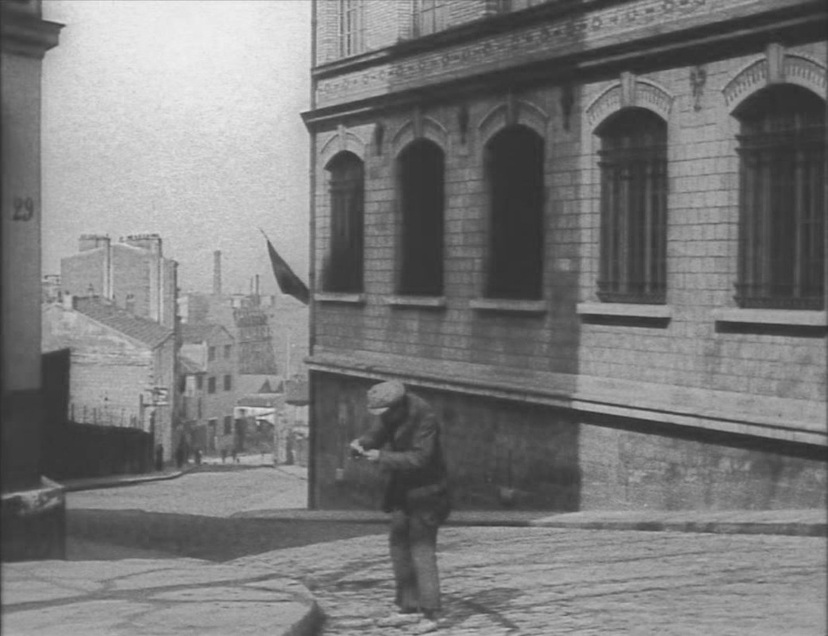
This is the rue Compans, in the nineteenth, one of the more steeply sloping streets in the vicinity, and a key locale for Romeo Bosetti's slope-centric La Course des potirons five years earlier (another Gaumont production):
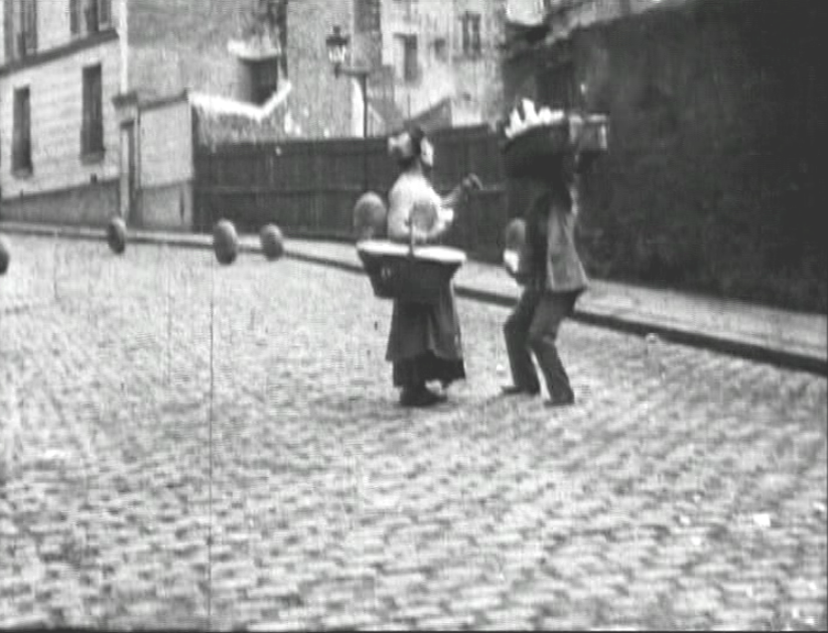
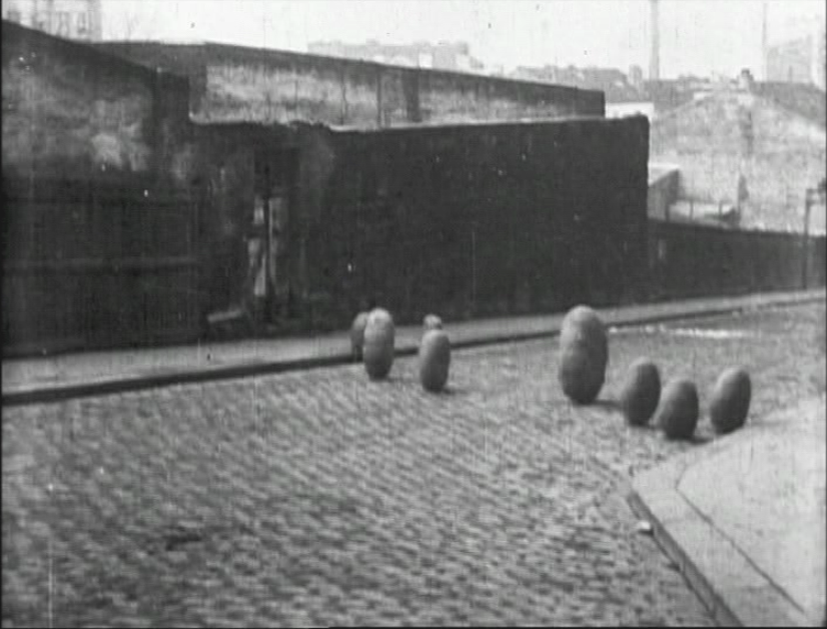
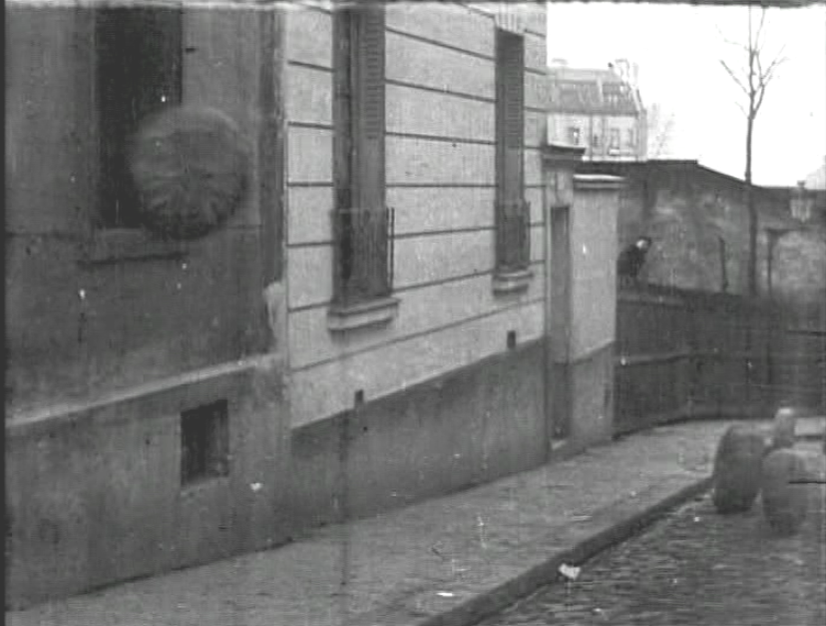
Various parts of Belleville and Ménilmontant come together in Perret's construction of a criminal milieu. Other exteriors include a café:
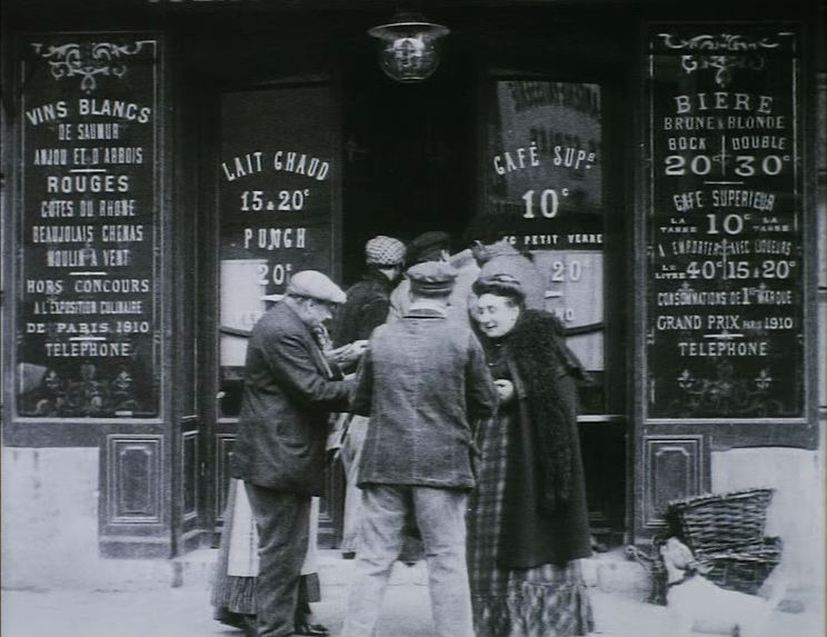
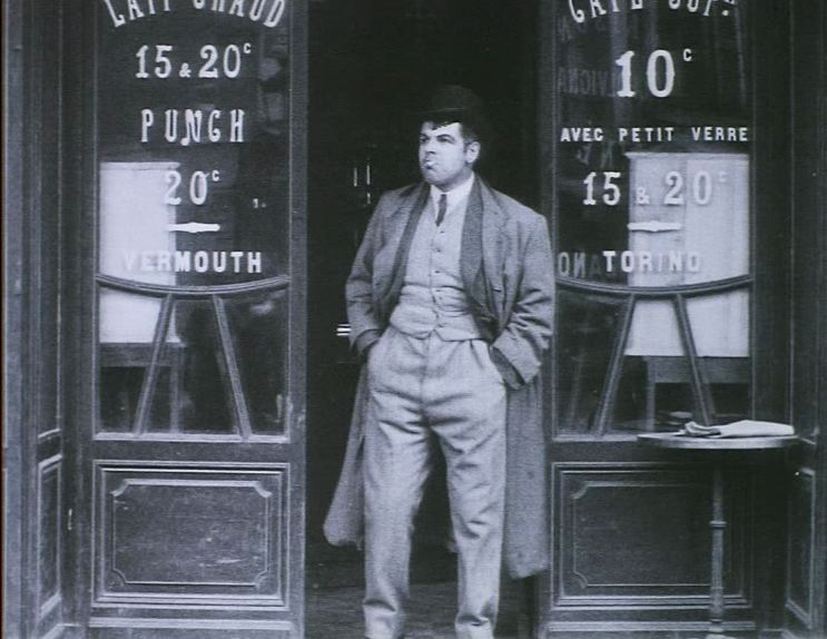
And a bureau des Postes, apparently very near the café:
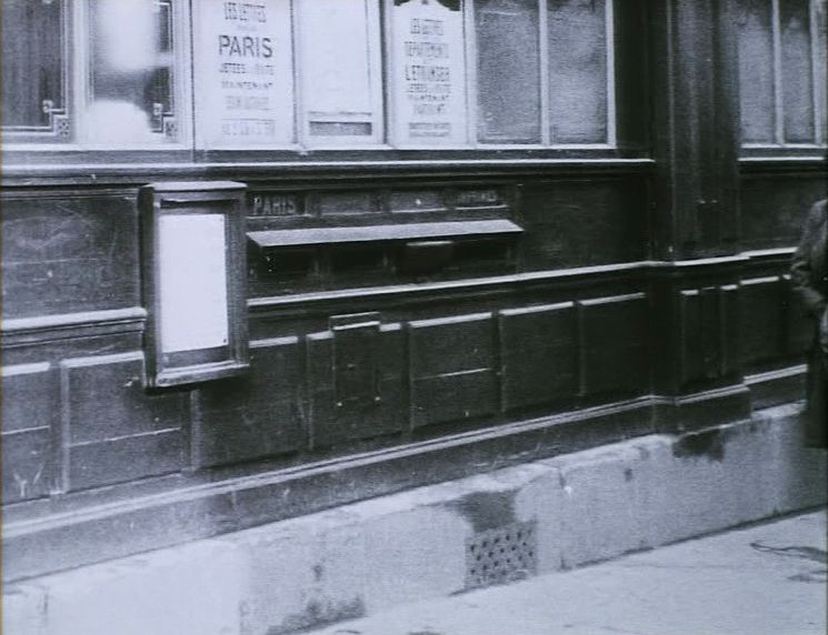
Neither cafés nor post offices tend to retain their exact aspect over a century, and I don't hold out much hope of identifying these two locations. I assume they're in the 19th or 20th arrondissement, and conjecture that they may be the café and post office we see here, further down the street from where Le Bachelier (the villain emerging from the café) is supposed to live:
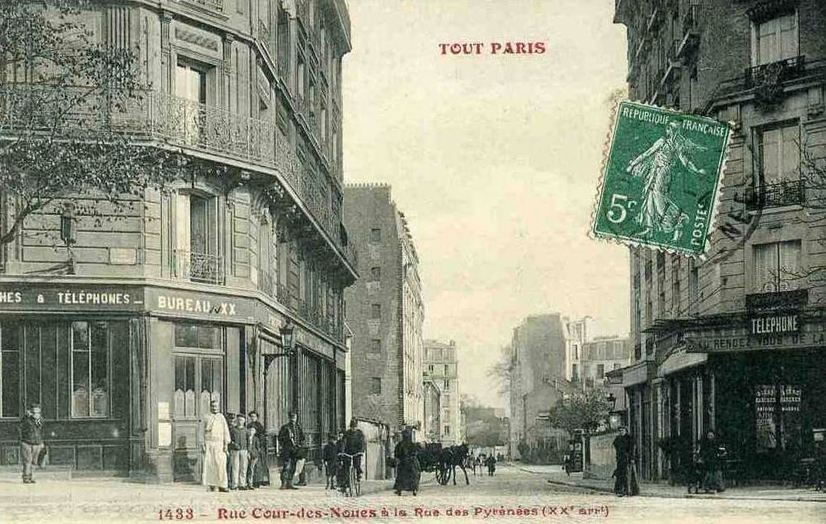
But there is no reason for the post office or café actually to be near each other (they are separated in the film by a cut), nor for either to be near either where the villain is said to live or where he is shown to live.
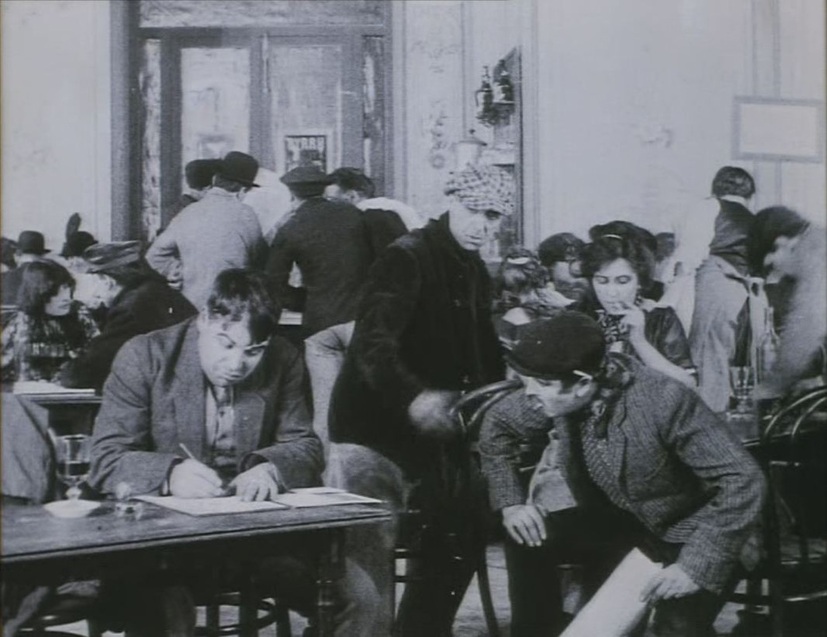
Nor does it really matter: these are convenient exteriors that naturalise actions played out in studio-confected interiors. Here is Le Bachelier in the café, addressing the ransom letter he will then go and post:
Belleville and Ménilmontant are a natural setting for the criminal activities depicted in L'Enfant de Paris. More generallly, these districts are the natural terrain of Gaumont filmmakers when they venture out of the Cité Elgé. Of the films I have seen, only L'Enfant de Paris announces the picturesque realism of proletarian milieux that will in later cinema and photography come to be identified with the area (to the point of becoming a cliché):
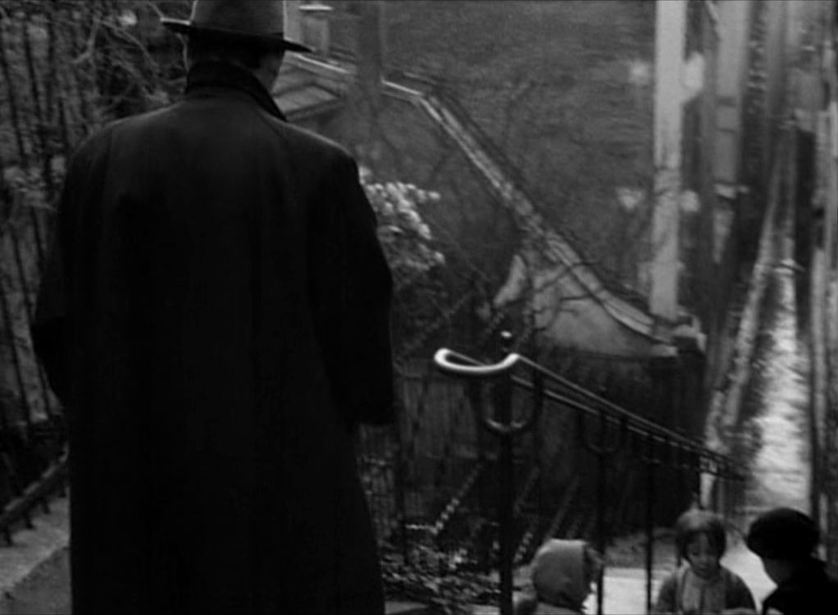
Du Rififi chez les hommes (Jules Dassin 1955)
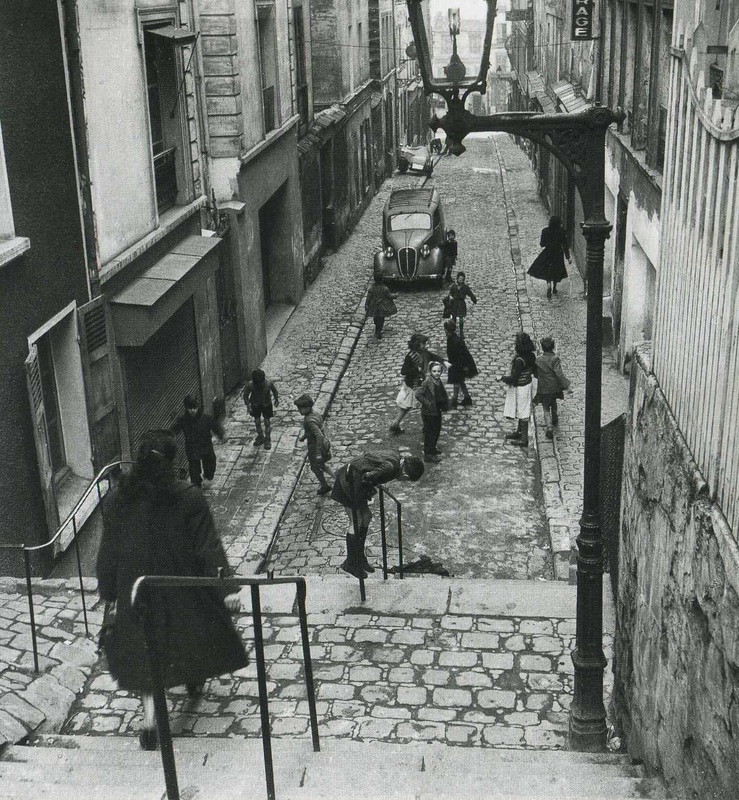
Robert Doisneau, passage Julien Lacroix, 1953
Nonetheless, if Gaumont films make great use of their salubrious bourgeois environs (e.g. the streets around the Parc des Buttes Chaumont, as in the first locale discussed in this piece), several films do show and record the ordinary spaces of the lower classes. Below is a selection of such spaces, few of which I have been able to identify, but all of which I would guess are in filming distance from the Cité Elgé:
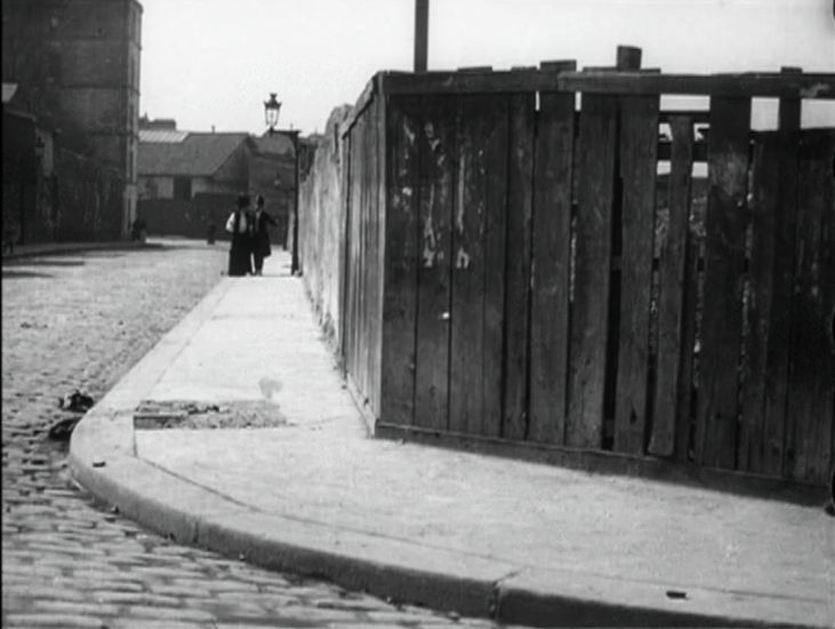
Le Billet de banque (Alice Guy 1907)
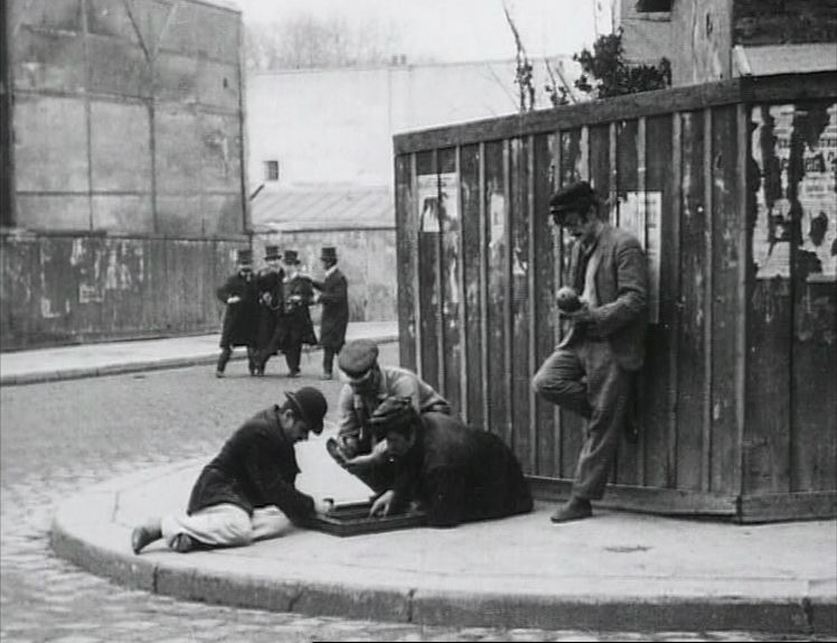
La Grève des apaches (Etienne Arnaud 1907)
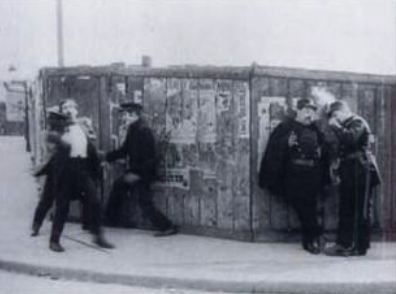
Les Agents tels qu'on nous les représente et les agents tels qu'ils sont (Feuillade 1908) -still taken from David Bordwell's Figures Traced in Light.
(It is clearly the same - unidentified - street corner in the three films above.)
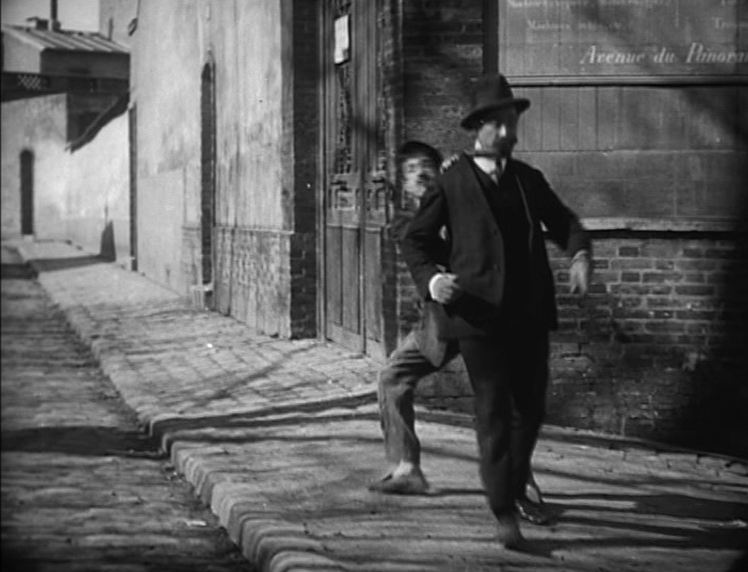
L'Agent a le bras long (Roméo Bosetti 1909)
[note on 3.11.2015: I have since found that the image above is in fact a street in Romainville, some distance from the studios - see here for more on Gaumont filmmaking in this suburb.]
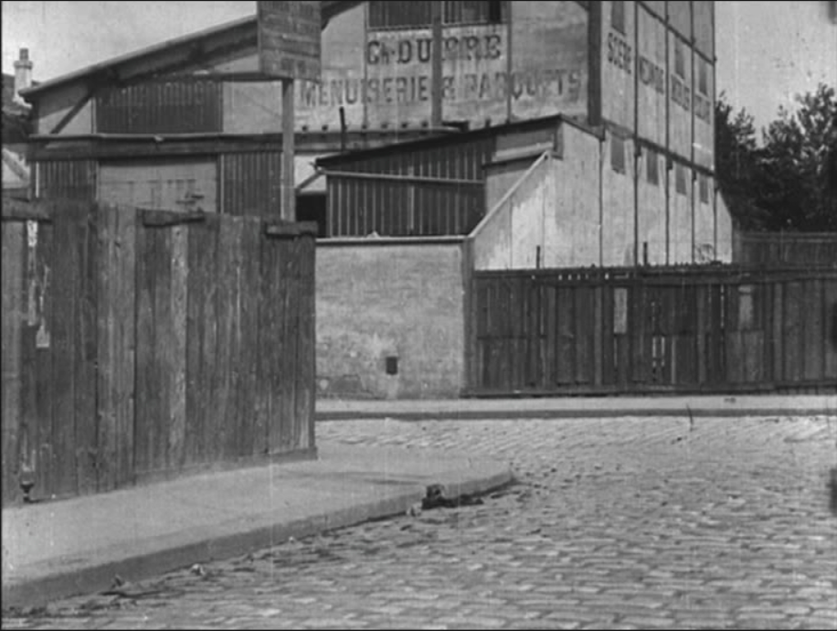
Sur la barricade (Etienne Arnaud 1907)
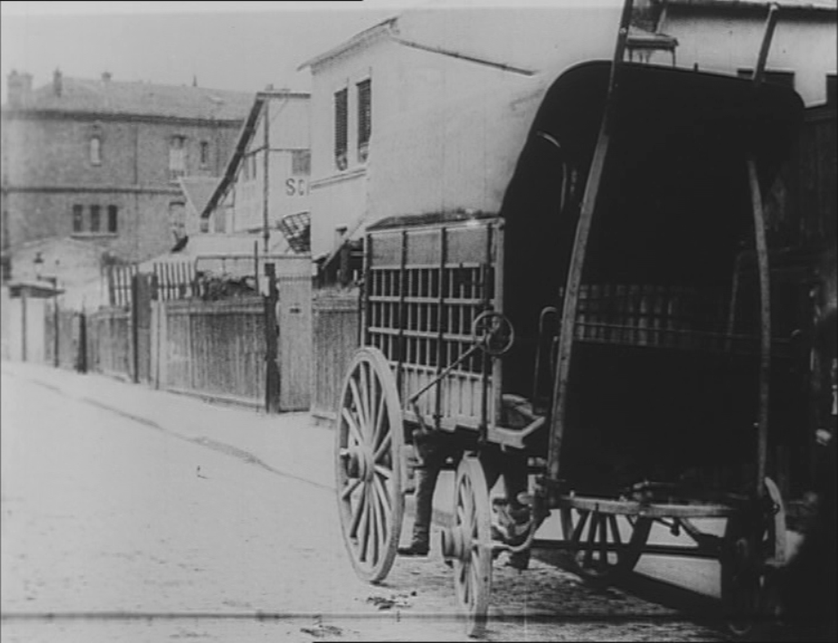
L'Homme aimanté (Louis Feuillade 1907)
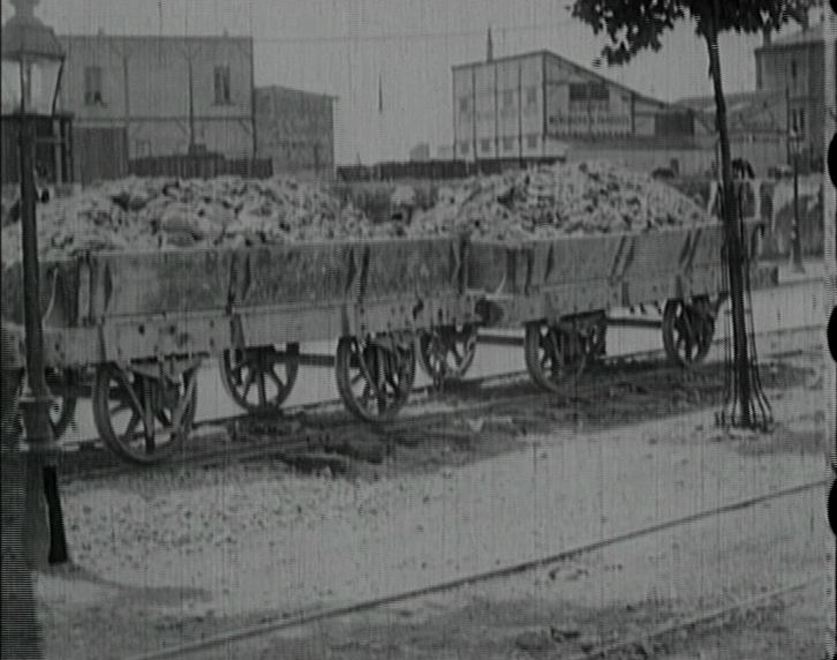
Le Lit à roulettes (Alice Guy 1907)
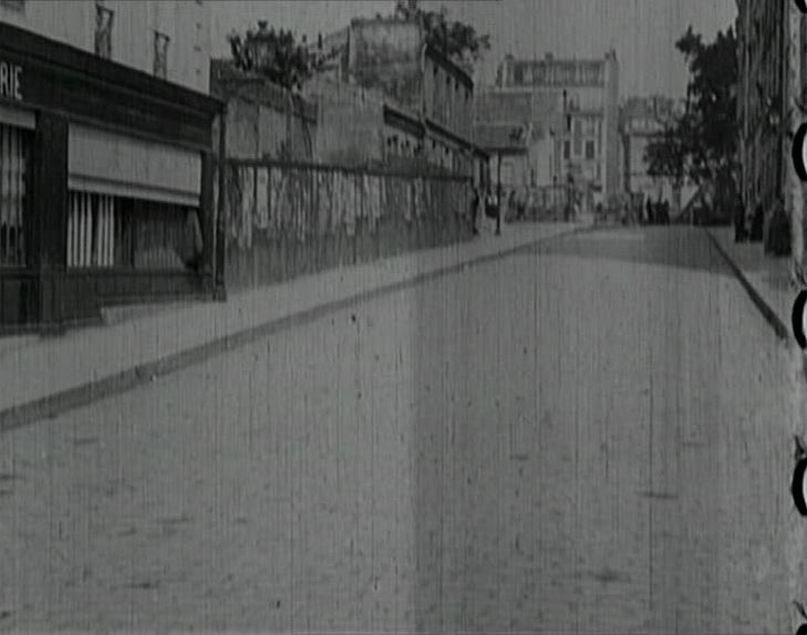
Le Lit à roulettes (Alice Guy 1907)
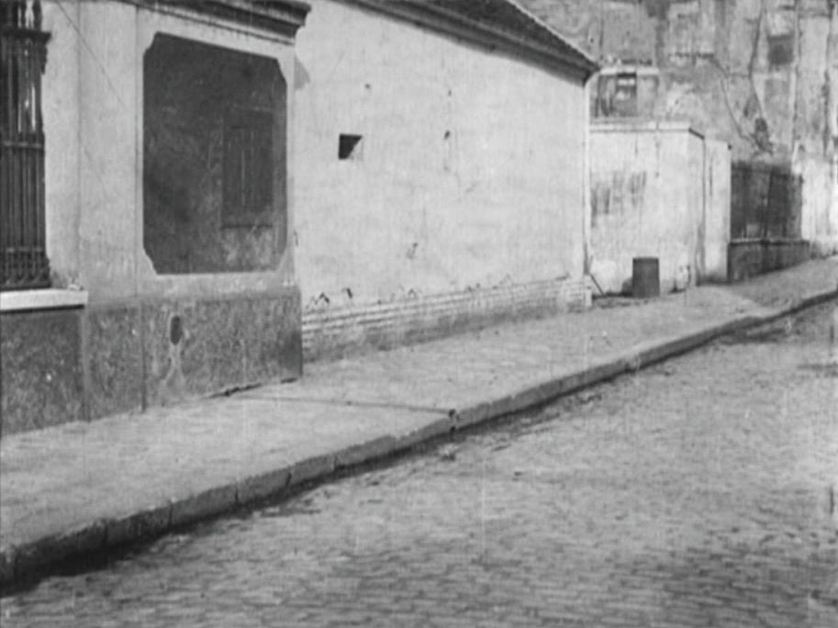
Sur la barricade (Etienne Arnaud 1907)
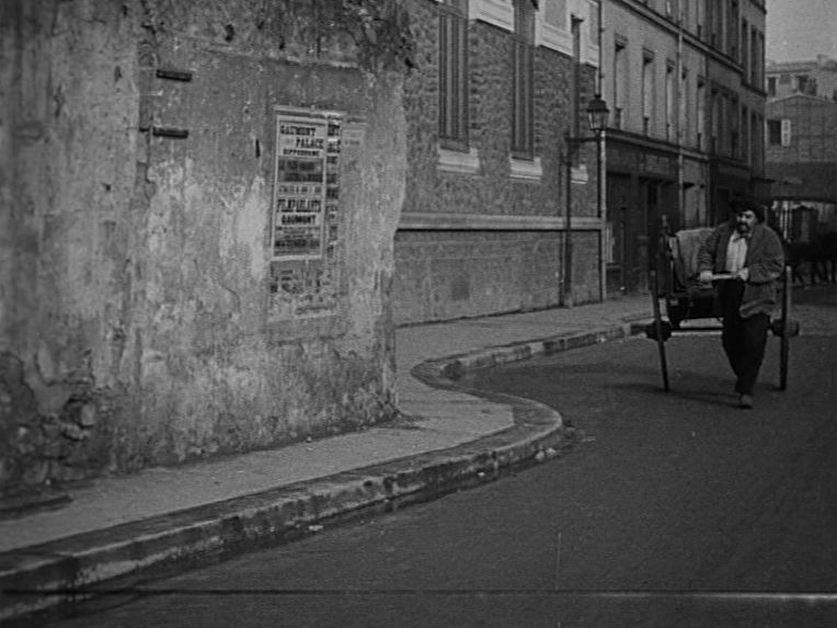
Un drame à l'usine (anon. 1912): Rue des Alouettes
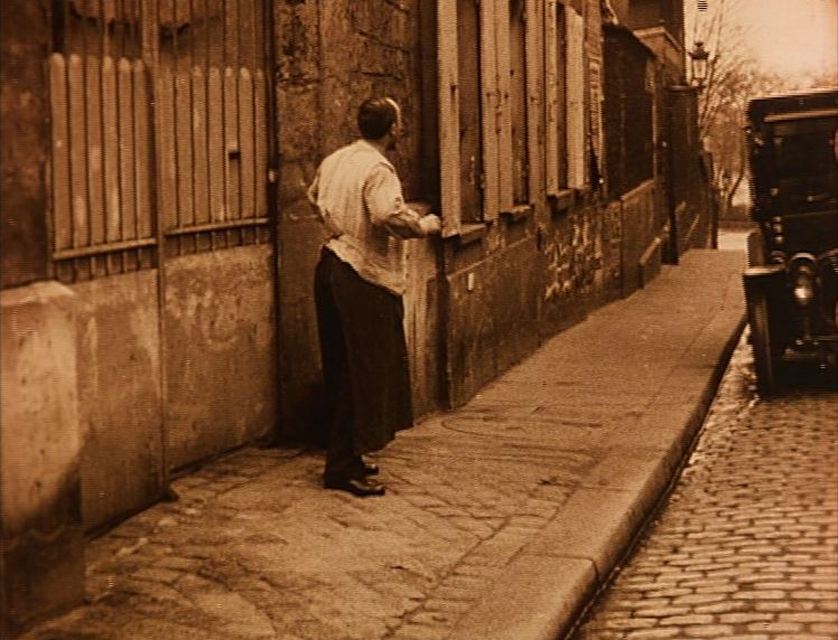
Jeux d'enfants (Henri Fescourt 1913): Rue de la Villette
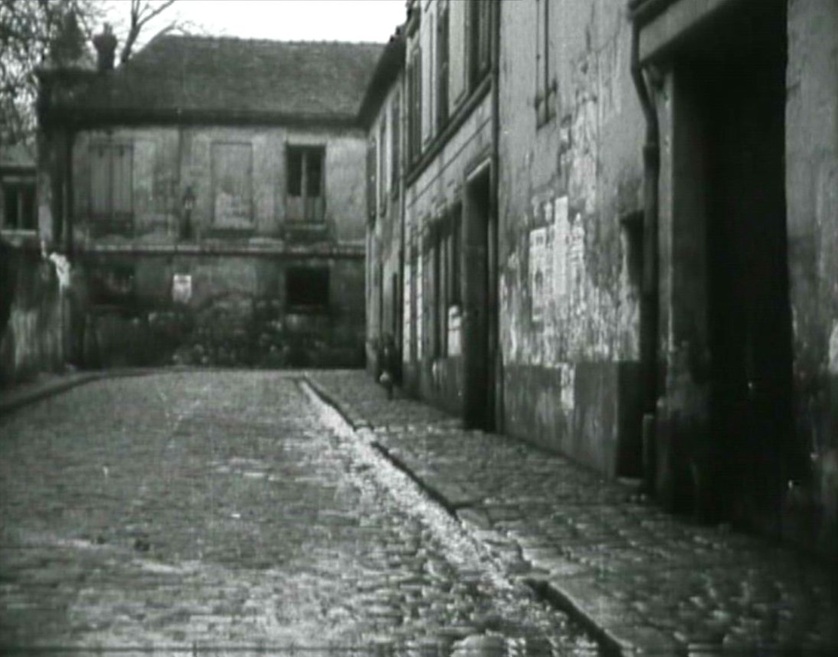
L'Intruse (Louis Feuillade 1912)
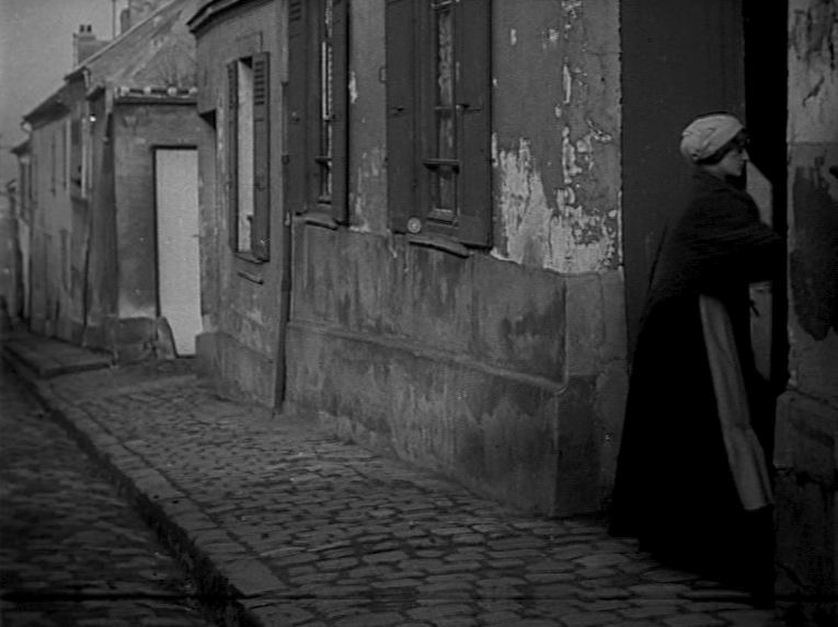
Le Pavé de Paris (anon. 1912)
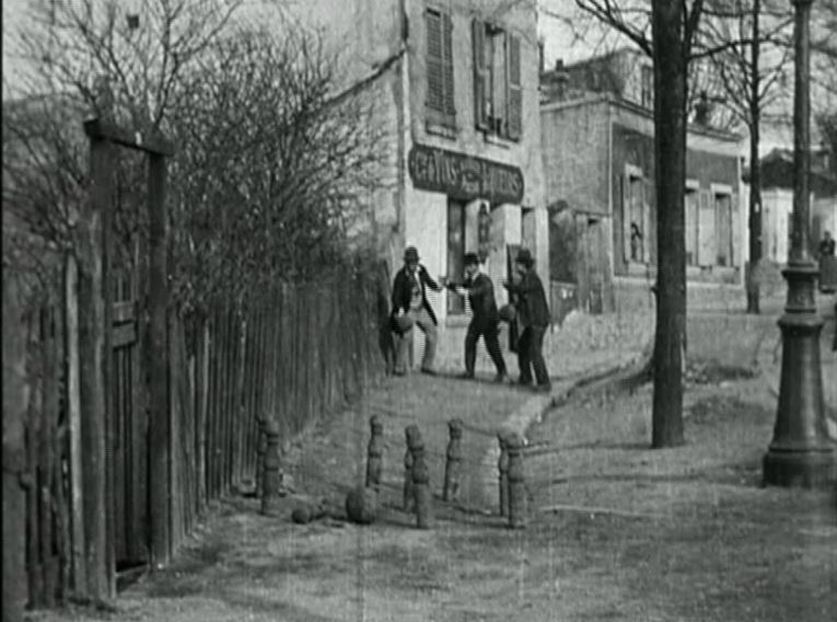
La Course à la saucisse (Alice Guy 1907)
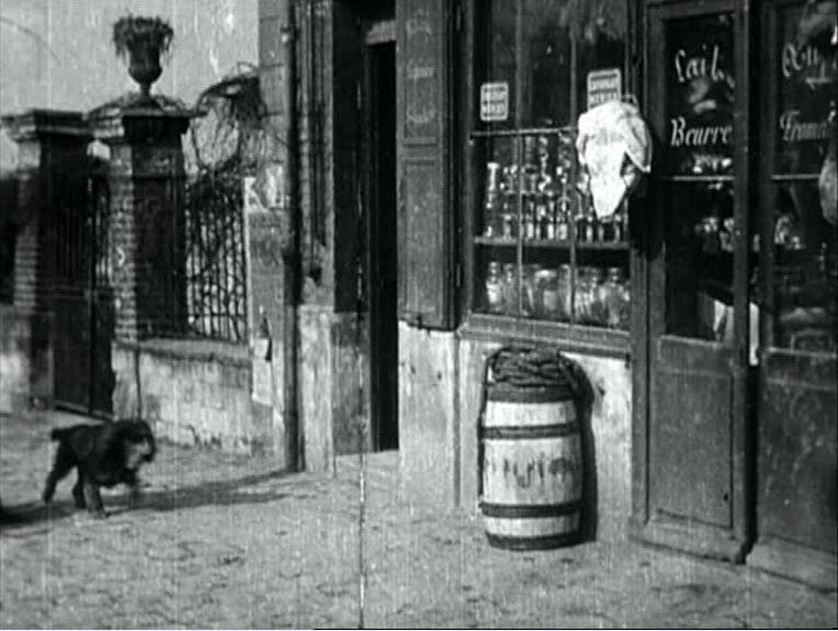
La Course à la saucisse (Alice Guy 1907)
[note on 3.11.2015: I have since found that the above two locations are in Le Pré Saint Gervais. See here for details.]
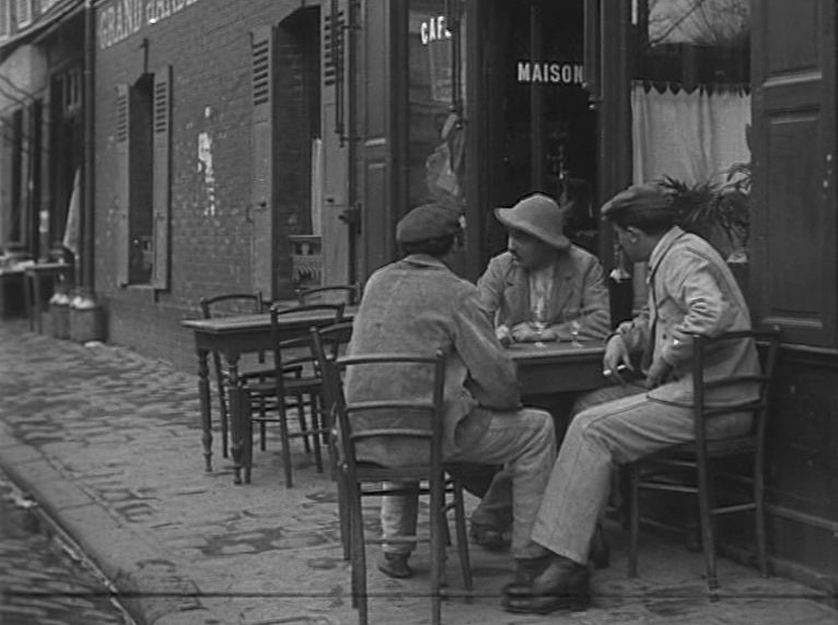
Un drame à l'usine (anon. 1912)
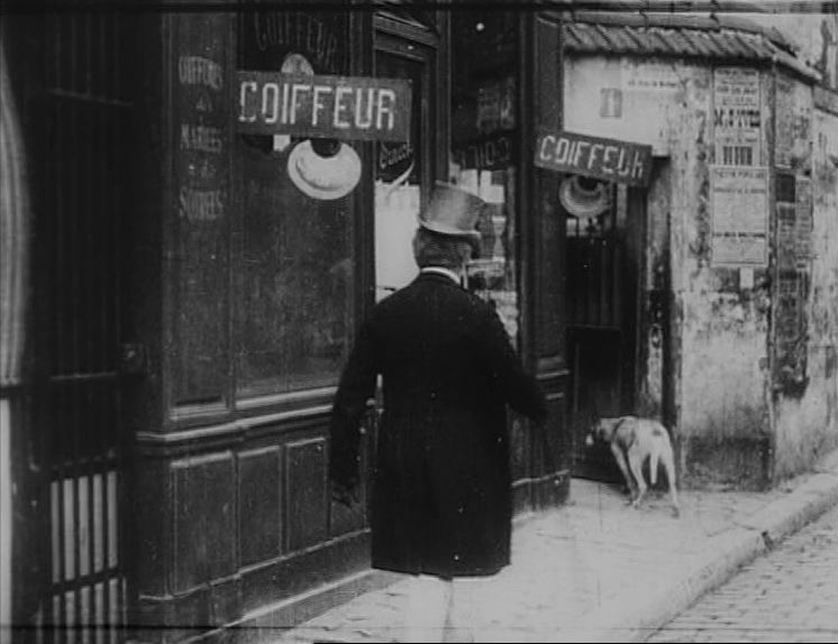
L'Homme aimanté (Louis Feuillade 1907)
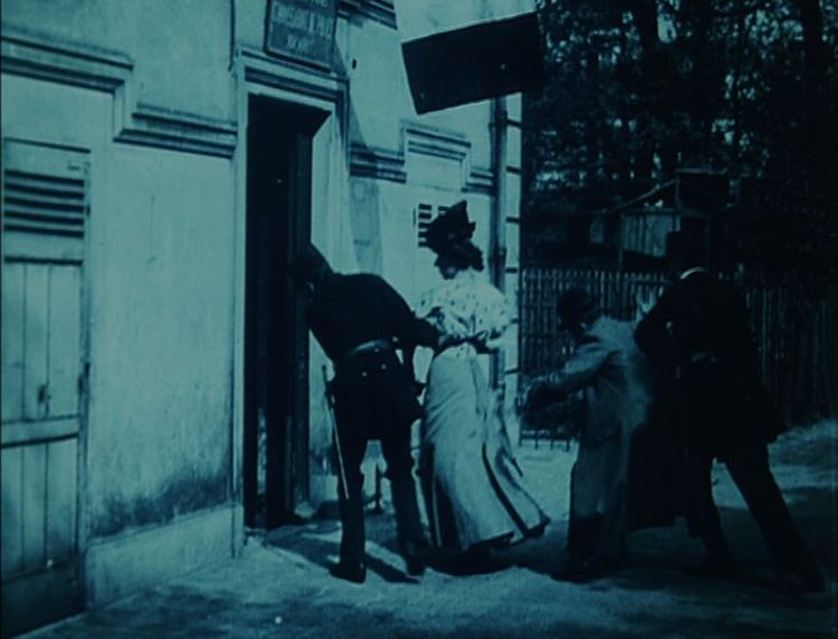
Le Tic (Etienne Arnaud 1908)
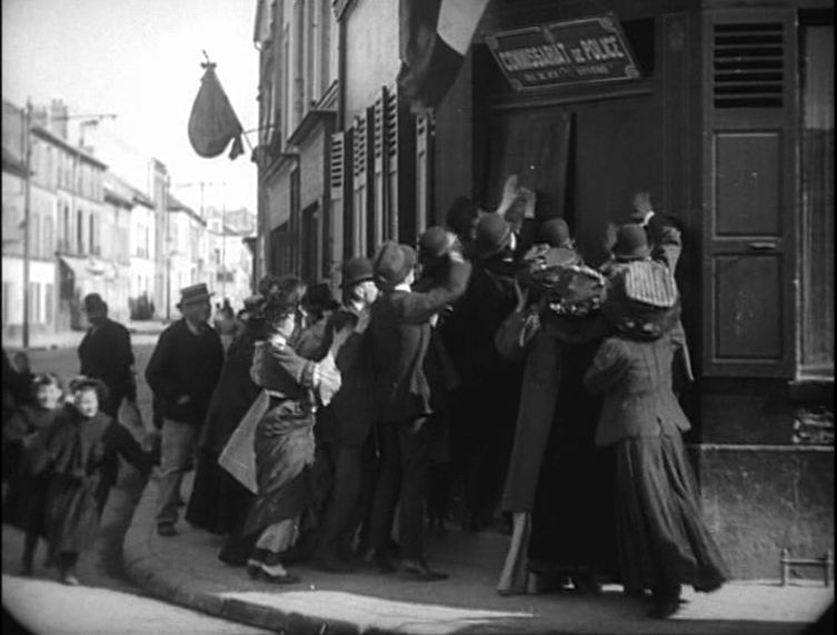
L'Agent a le bras long (Roméo Bosetti 1909)
[note on 3.11.2015: I have since found that this also is Romainville - see here.]
4/ La Zone
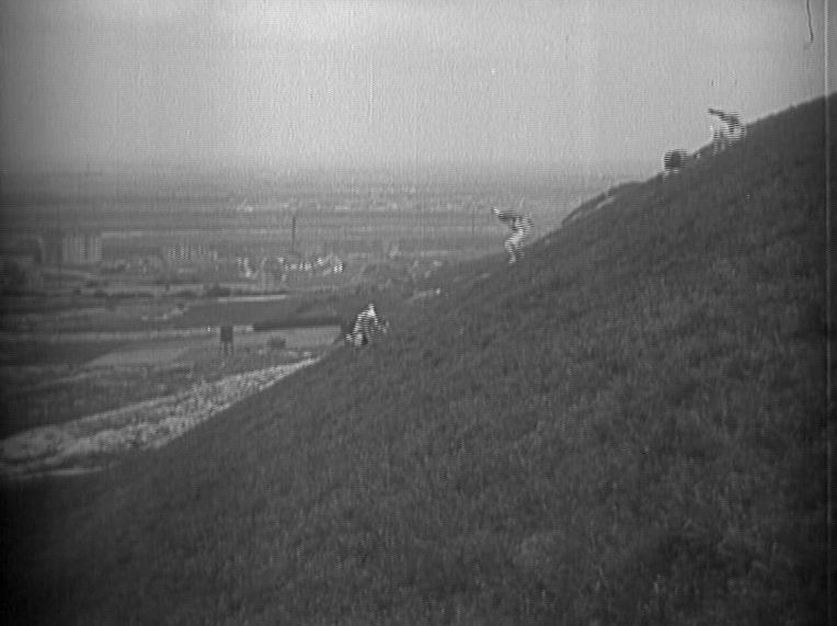
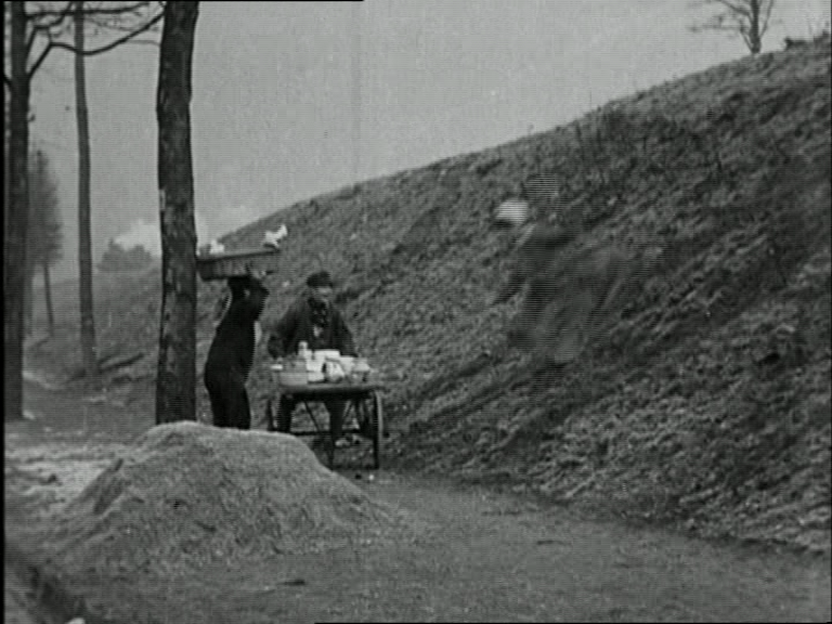
The Parc des Buttes Chaumont gave Gaumont directors a perfect on-hand location for plein air filming. For a time I thought their many scenes of comic frolicking in an open space must have all been filmed there, though I began to doubt this when I couldn't find in the park, as it is now or in photographs of it then, exactly these kinds of space:
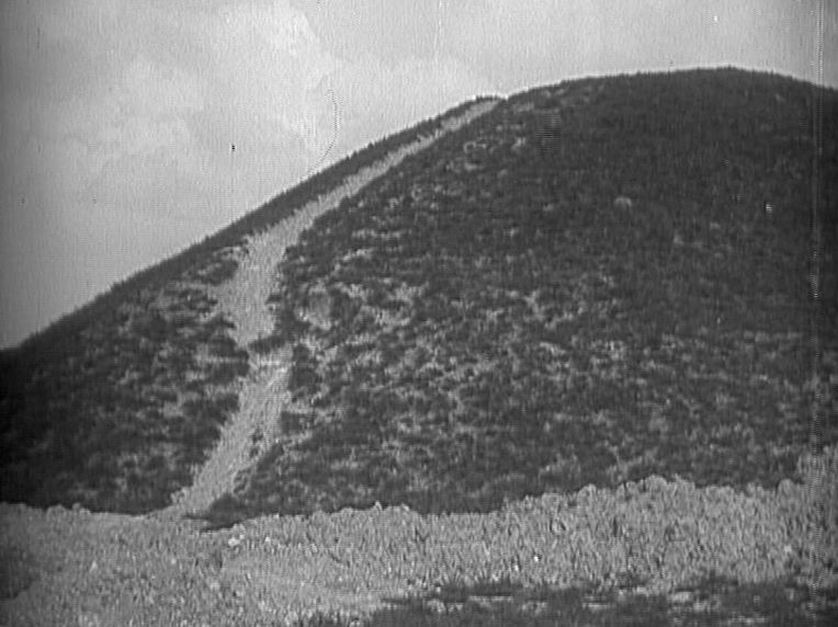
Oxford contre Martigues (Jean Durand 1912)
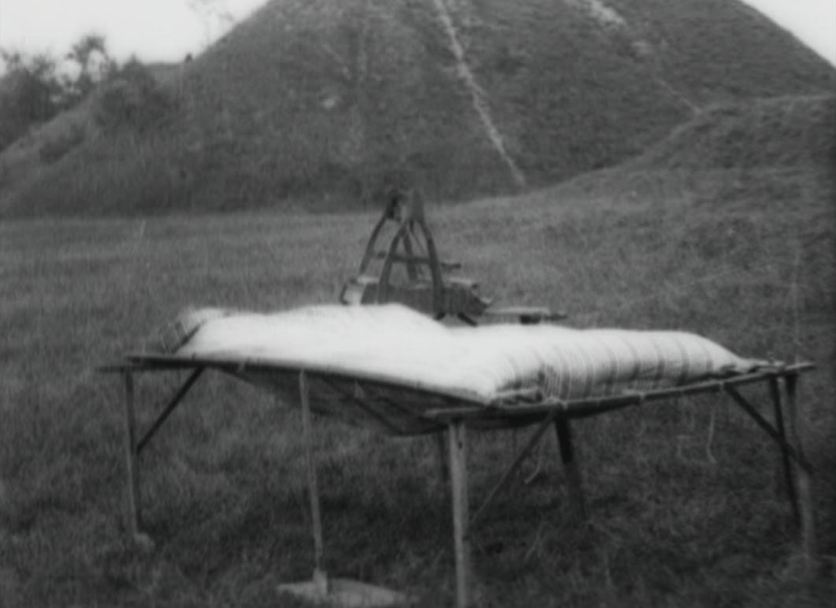
Le Matelas alcoolique (Alice Guy 1907)
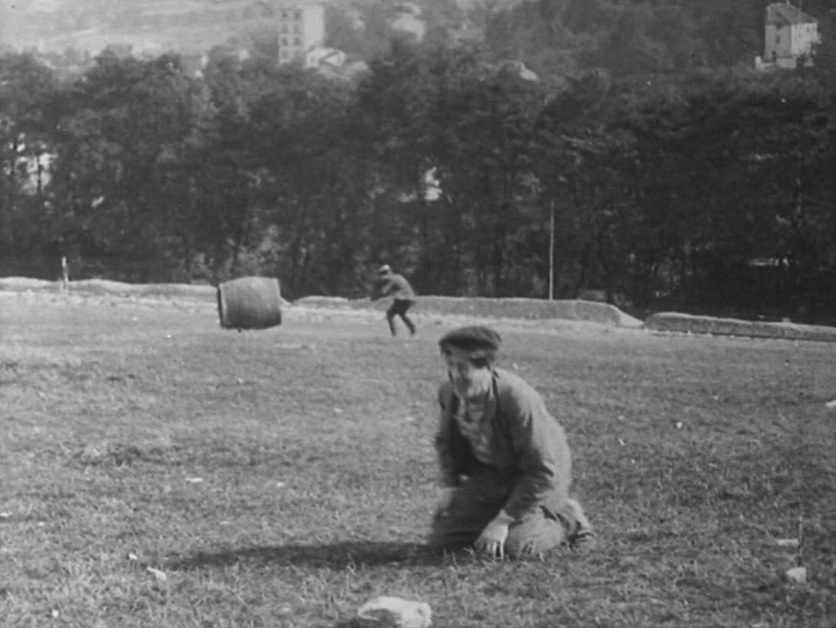
Une histoire roulante (Alice Guy 1906)
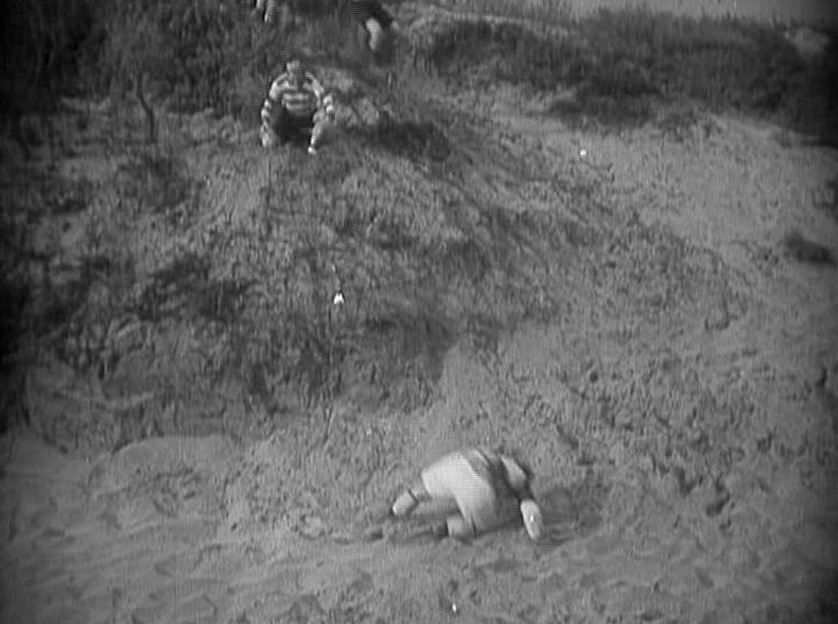
Oxford contre Martigues (Jean Durand 1912)
Oxford contre Martigues (Jean Durand 1912)
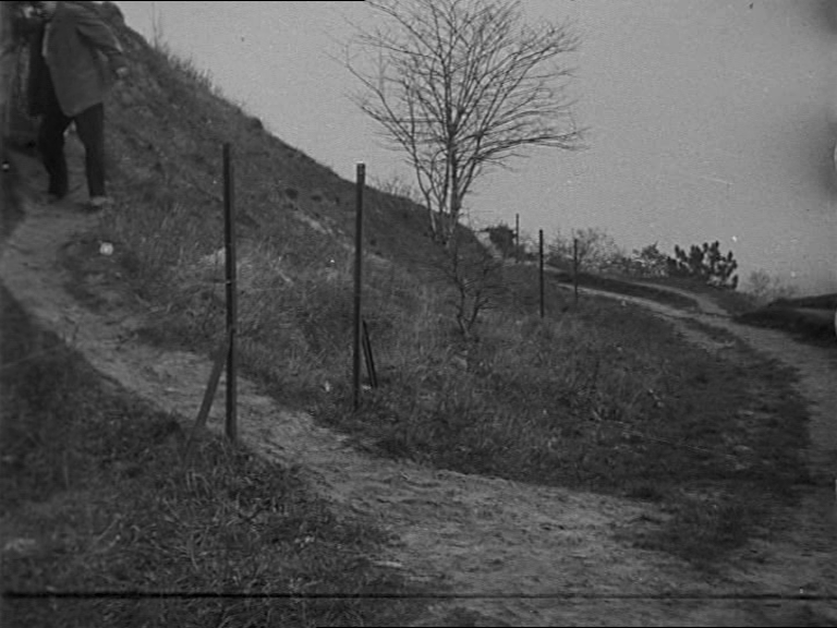
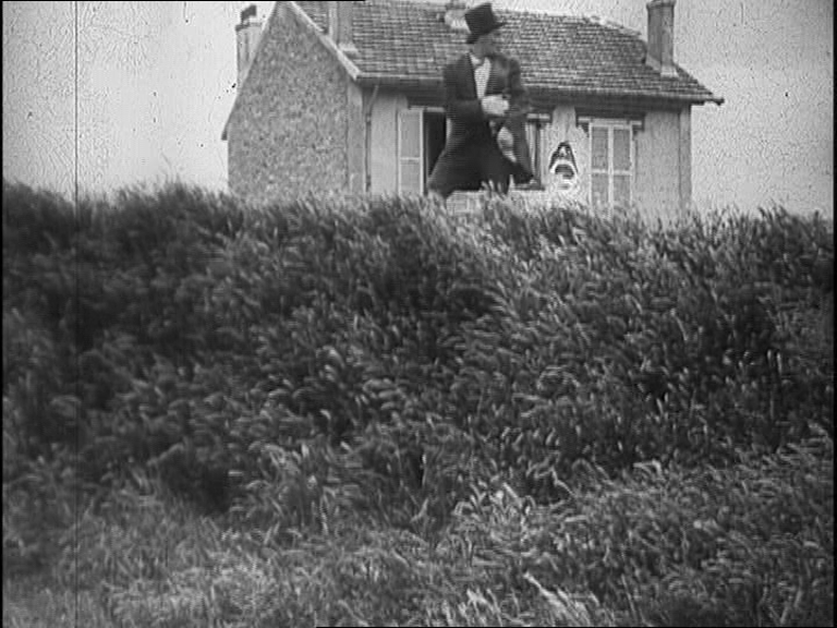
The terrain seems altogether too rough, and the views don't seem to correspond to the park's surroundings:
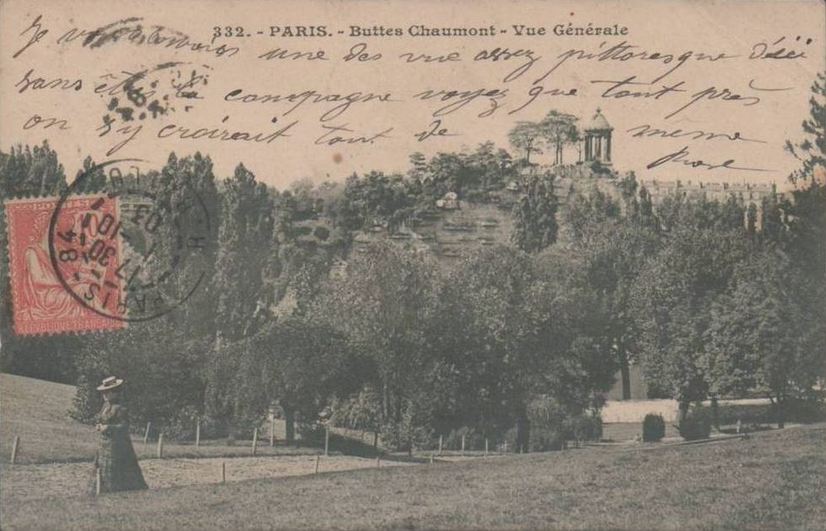
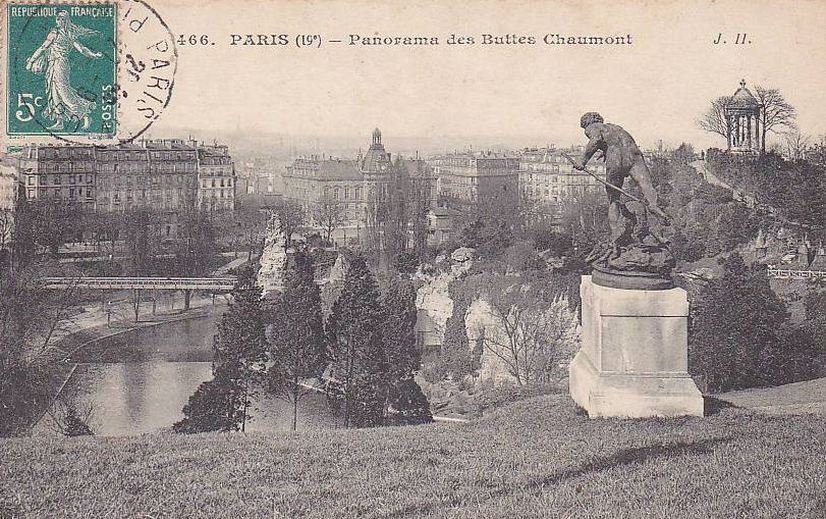
I don't rule out the possibility that the slopes I've shown so far are those of the Buttes Chaumont, but this further set of inclines must be somewhere else:
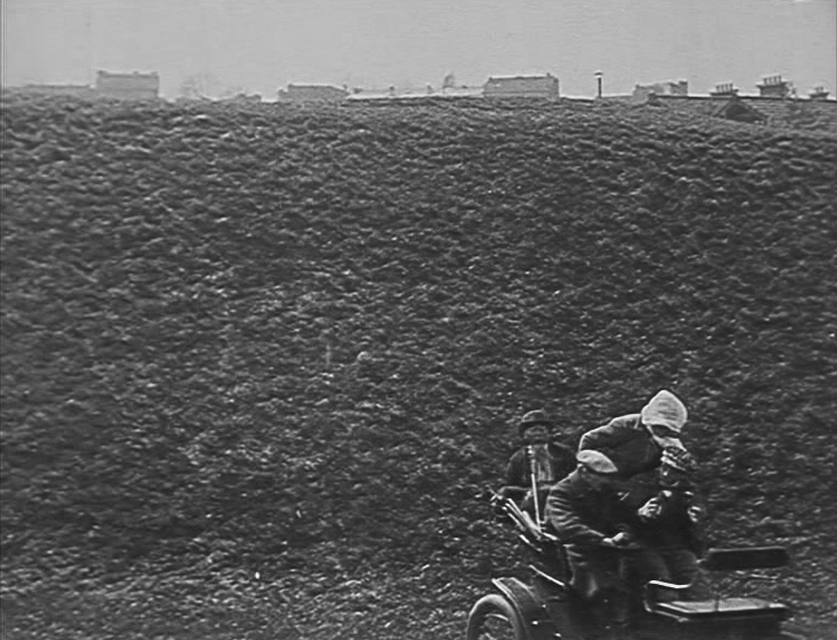
Zigoto promène ses amis (Jean Durand 1912)
La Course à la saucisse (Alice Guy 1907)
Le Pavé de Paris (anon. 1912)
Onésime et le nourrisson (Jean Durand 1912)
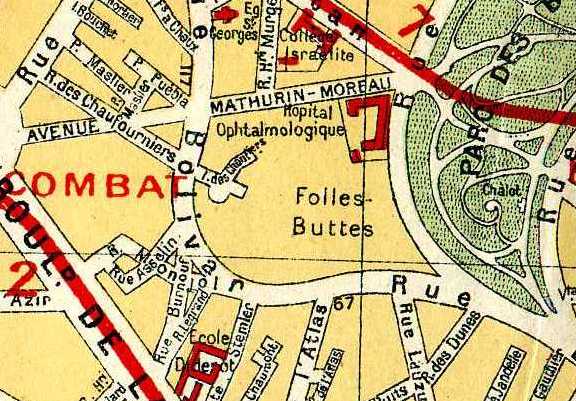
There is a nearby alternative, but about which I know very little. To the west of the southern tip of the Parc des Buttes Chaumont is another hill that had been quarried for gypsum but which, unlike the Buttes Chaumont, had not been reshaped in the 1860s into an elegant park for the people. (More exactly, it had formed part of the same 'butte' as that of the park, but was separated from it in the course of the park's creation.) Known now as the Butte Bergeyre, it corresponds to the area below marked 'Folles-Buttes'.
Nouveau Plan de Paris (Paris: Hachette, 1917)
The name 'Folles-Buttes' was only given it (I think) when an amusement park opened on the hill in 1914, though there was an open-air cinema on the hill from 1911. Here is the amusement park in the year it opened:
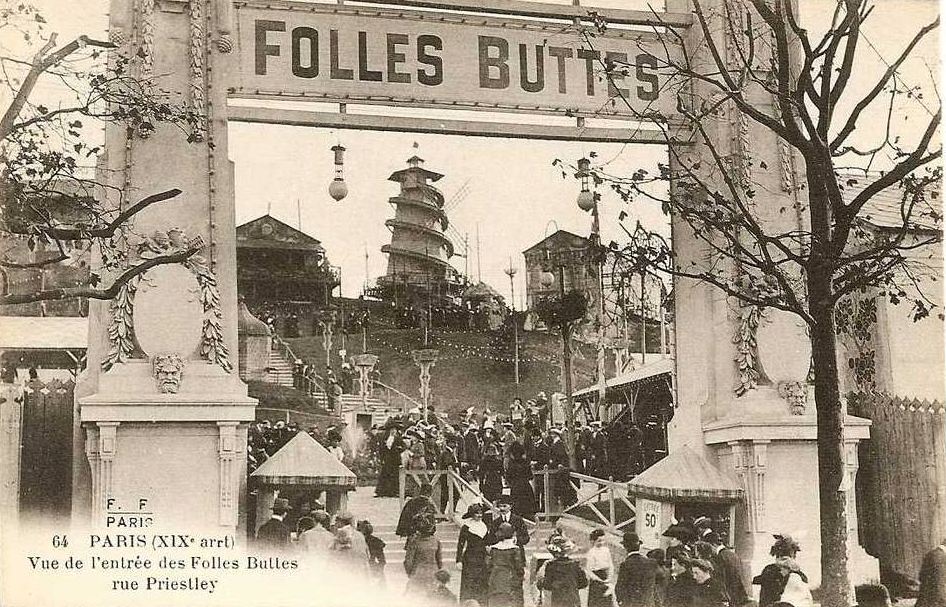
With no photographs of what the place looked like before 1914, I am only guessing that it might have been one of the places in which Gaumont filmmakers had their actors roll comically down slopes.
Clues to another possibility can be found in these two images:
Clues to another possibility can be found in these two images:
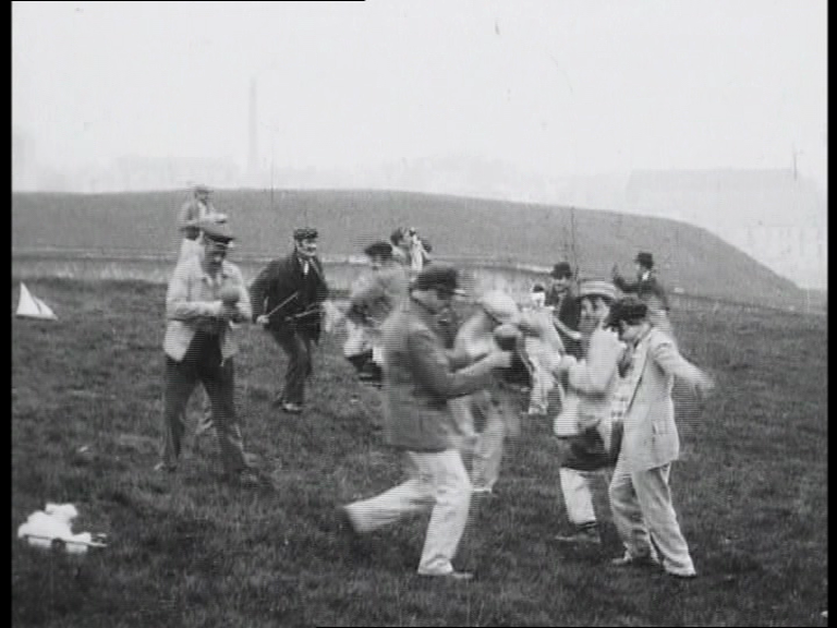
La Grève des apaches (Etienne Arnaud 1907)
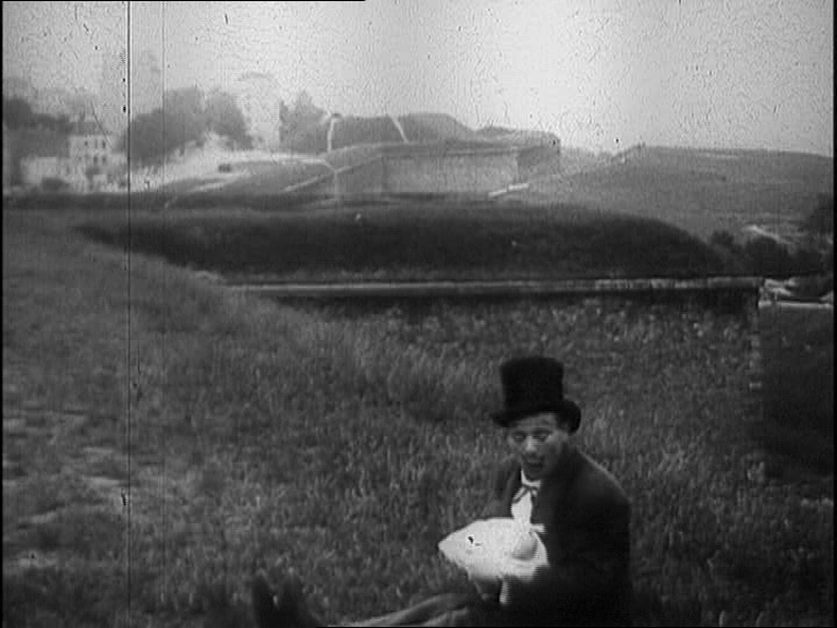
Onésime et le nourrisson (Jean Durand 1912)
The combination of grassy earthwork and walls behind the Apaches and behind Onésime is very familiar. They can only be fortifications of the kind we have seen earlier near to the various gateways into Paris.
Resemblance to Atget's photographs of fortifications elsewhere around Paris suggests that other open spaces in these Gaumont films are near these city limits:
Resemblance to Atget's photographs of fortifications elsewhere around Paris suggests that other open spaces in these Gaumont films are near these city limits:
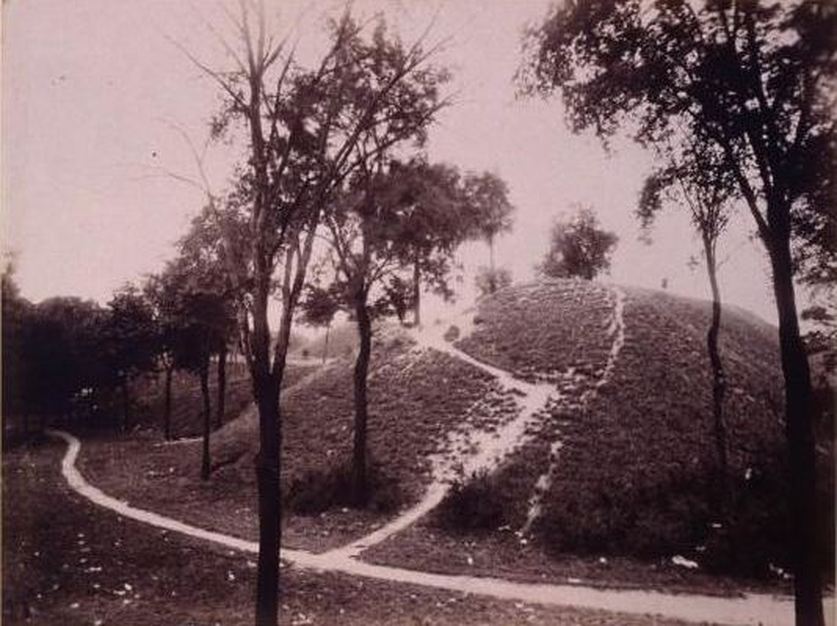
Eugène Atget, porte de Versailles, 1913
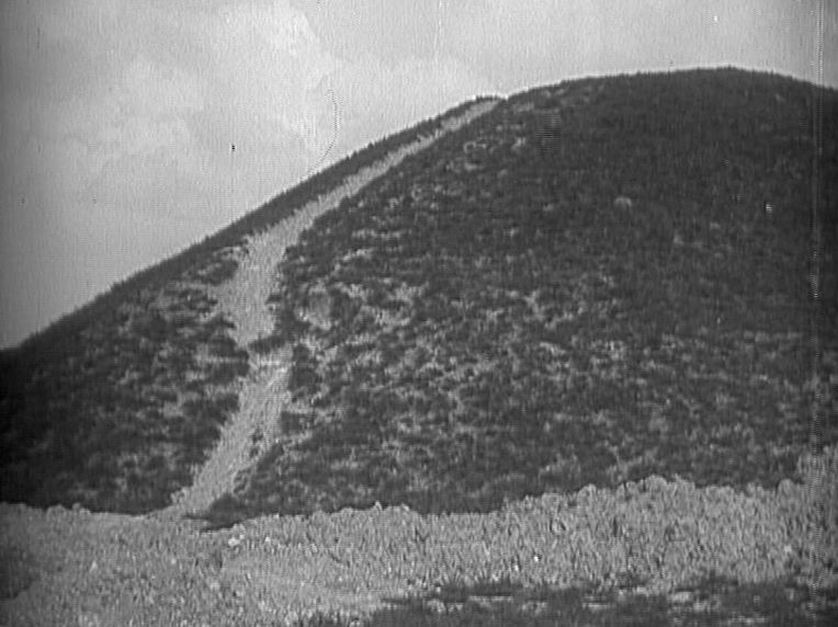
Oxford contre Martigues (Jean Durand 1912)
I conclude, then, that when Gaumont filmmakers needed open space in which to film comical tumbling, they had three immediate options: the Parc des Buttes Chaumont; the 'Folles Buttes' (or whatever they might have called it circa 1907); and the stretches of wasteland around the fortifications, perhaps above all towards the porte du Pré Saint Gervais.
In 1954 the former fortifications there were still a playground, as this photograph by Willy Ronis shows:
In 1954 the former fortifications there were still a playground, as this photograph by Willy Ronis shows:
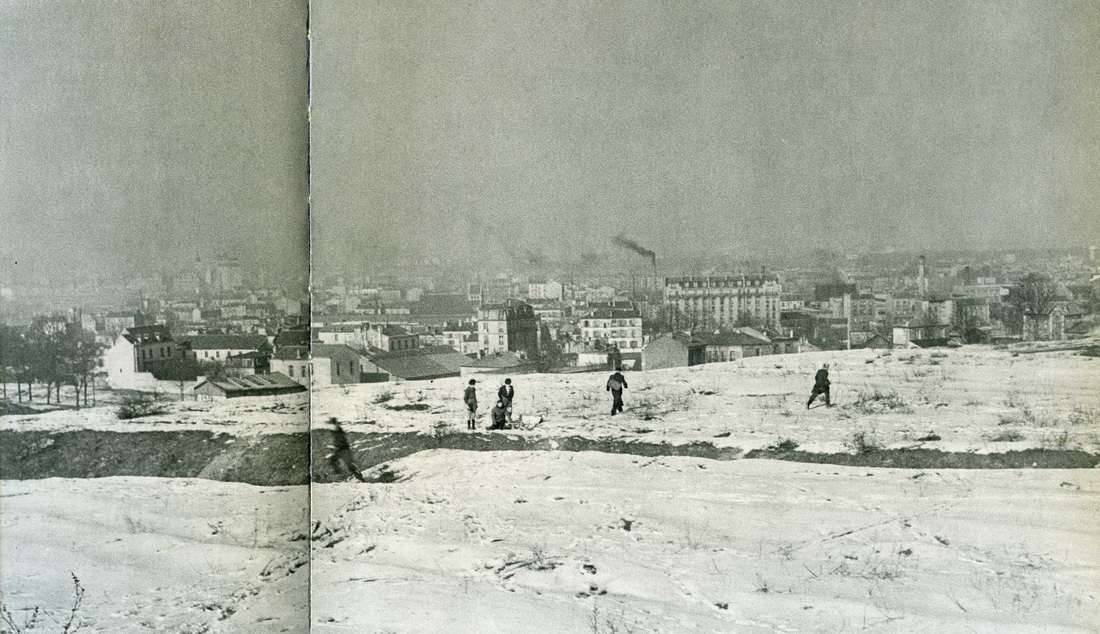
'Anciennes fortifications vers le Pré Saint Gervais', in Belleville-Ménilmontant (Paris: Arthaud, 1954)
When they ventured out towards the fortifications, Gaumont filmmakers ventured into 'la zone'. By this name the area around the fortifications was known, firstly in a military sense, relating to its strategic significance, and then sociologically, as the name for an area occupied by people at the margins of the city's life. (Georges Lacombe's 1928 film La Zone is an illuminating document of their lives.)
In perhaps his most affecting photographs, Atget documented the spaces occupied by these marginals, and also their faces and demeanour. He published his work on the 'zoniers' in 1913.
L'Enfant de Paris includes in its composite portrait of the city's lower depths a visit to the 'zone' c. 1913. When Le Bachelier escapes from the police with Valen's daughter, he goes into a zonier's dwelling and there disguises himself as a ragpicker (forcing the child into the basket he carries on his back). The interior is a space reconstructed in the studio, but Perret and Atget have observed the same details:
In perhaps his most affecting photographs, Atget documented the spaces occupied by these marginals, and also their faces and demeanour. He published his work on the 'zoniers' in 1913.
L'Enfant de Paris includes in its composite portrait of the city's lower depths a visit to the 'zone' c. 1913. When Le Bachelier escapes from the police with Valen's daughter, he goes into a zonier's dwelling and there disguises himself as a ragpicker (forcing the child into the basket he carries on his back). The interior is a space reconstructed in the studio, but Perret and Atget have observed the same details:
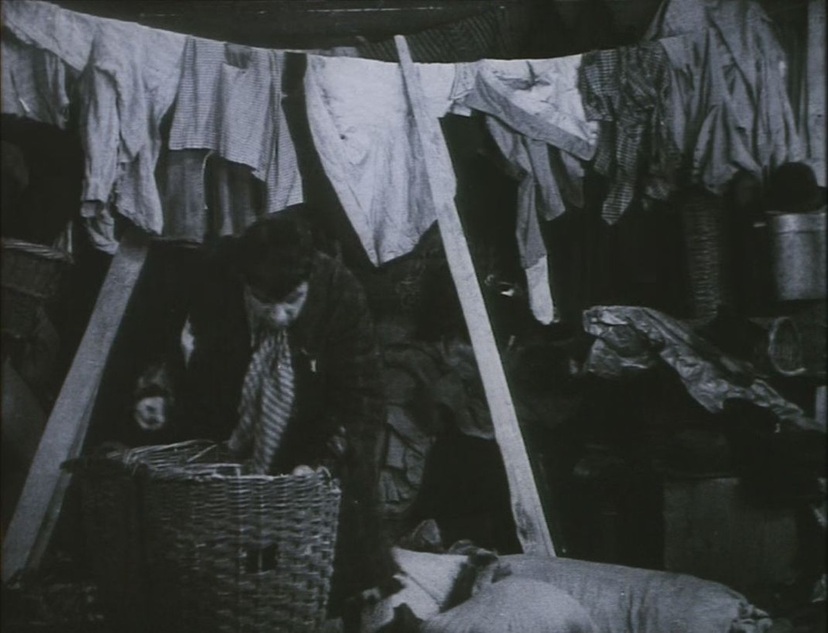
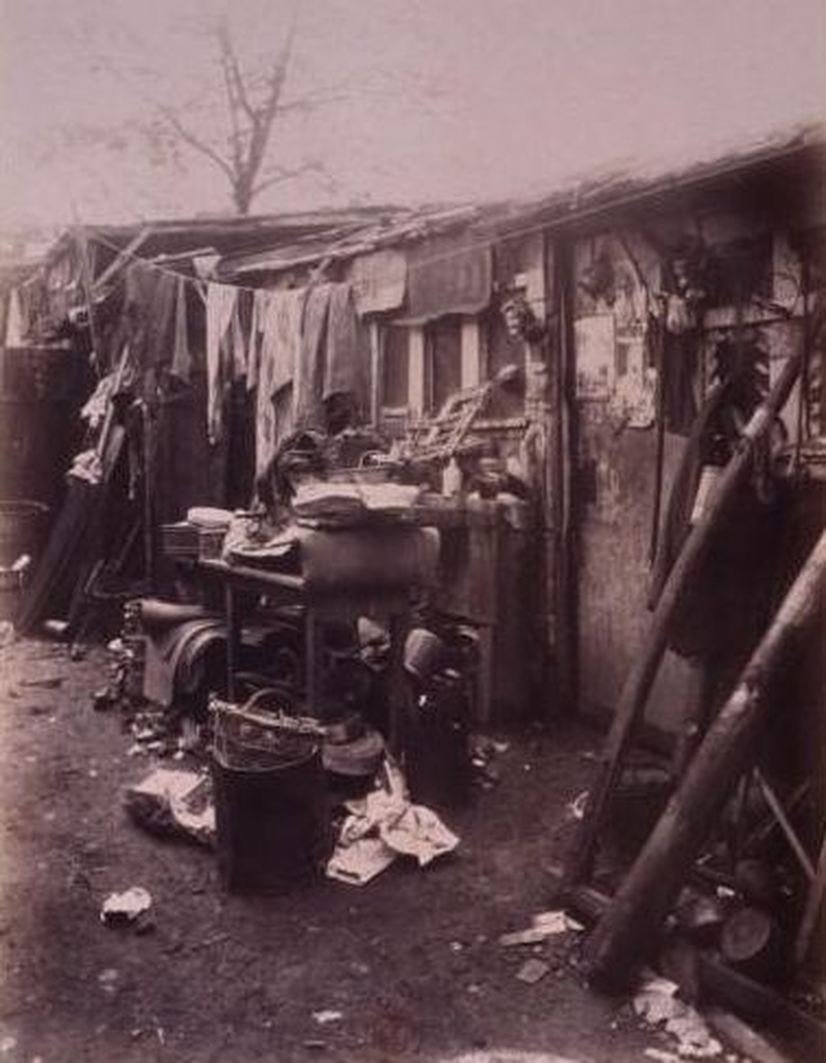
Eugène Atget, Intérieur (sic) de chiffonier, 1912
The exterior, on the other hand, is not a reconstruction. Here, Atget and Perret are documenting the same thing:
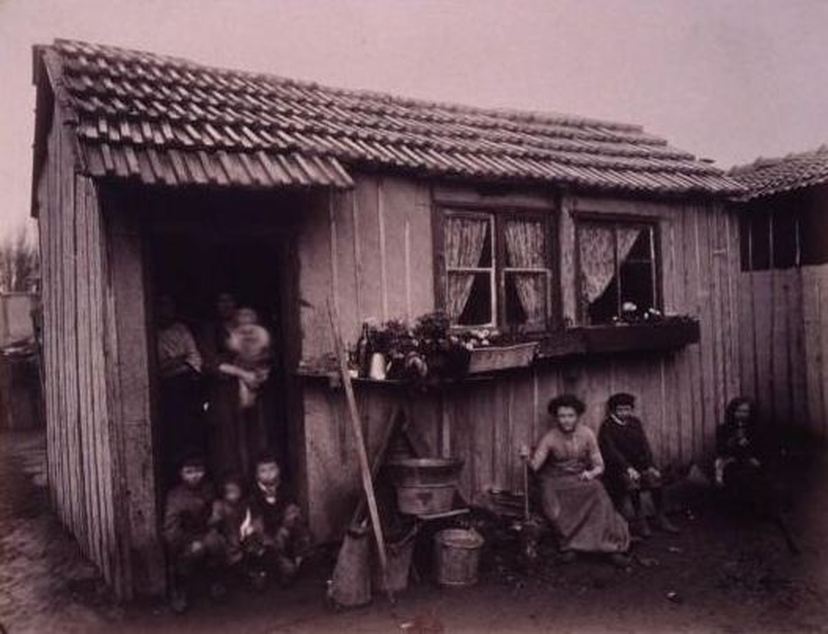
Eugène Atget, Poterne des Peupliers, zoniers,, 1913
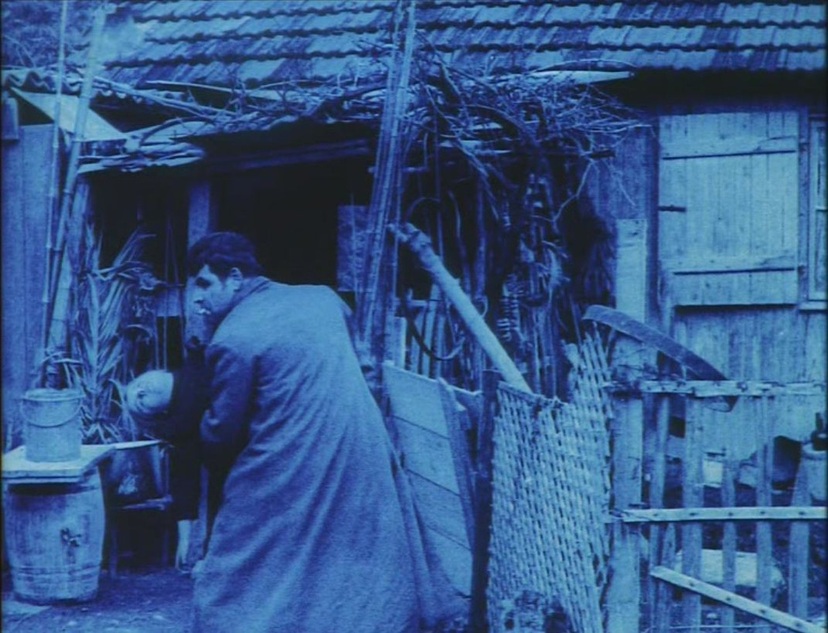
Unlike an elegant apartment building on the Avenue de la Grande Armée or a narrow back street somewhere in Ménilmontant, the 'zonier' dwelling documented here by Perret is beyond further identification. We can only know what kind of thing it was, in what kind of place it could be found, and what kind of people lived there (and that they weren't arch-criminals like Le Bachelier, here pictured).
The zone is, for those of us obsessed with identifying and interpreting the places we see in films, a non-place: un non-lieu.
The zone is, for those of us obsessed with identifying and interpreting the places we see in films, a non-place: un non-lieu.
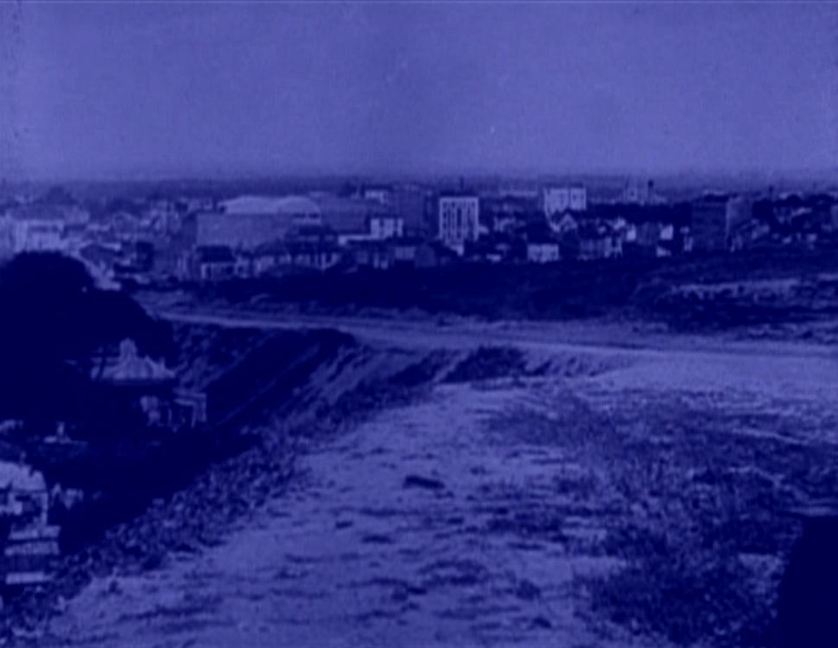
Les Vampires ('La Bague qui tue') (Louis Feuillade 1915): la zone
notes and acknowledgements
- The film L'Homme aimanté is listed as 'filmmaker unknown' in the Gaumont box set, Le premier cinéma 2, but Francis Lacassin in his book Louis Feuillade: maître des lions et des vampires (1995) makes it clear that the film is by Feuillade.
- Most of the films mentioned in this piece can be found on those two box sets issued under the title 'Gaumont: le cinéma premier', Volume 1: 1897-1913 (in 2008) and Volume 2: 1907-1916 (in 2009).
- For Judex I referrred to the 2004 Flicker Alley edition, and for Les Vampires to the 2005 Image Entertainment edition.
- The maps I have used are Google Maps and a Nouveau Plan de Paris published by Hachette in 1917.
- The full set of Atget's 'zonier' photographs can be viewed at Gallica's Bibliothèque numérique.
- The postcards used as illustrations were found on collector sites such as CPArama and delcampe.net.
- To find out more about Belleville-Ménilmontant, visit the Rue du Pressoir.