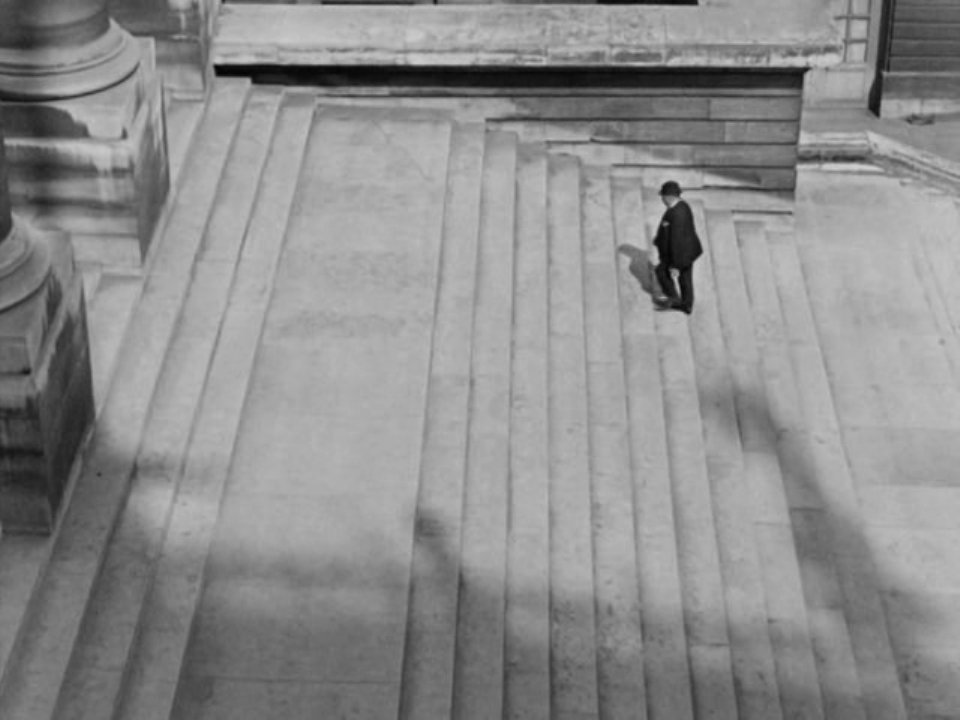
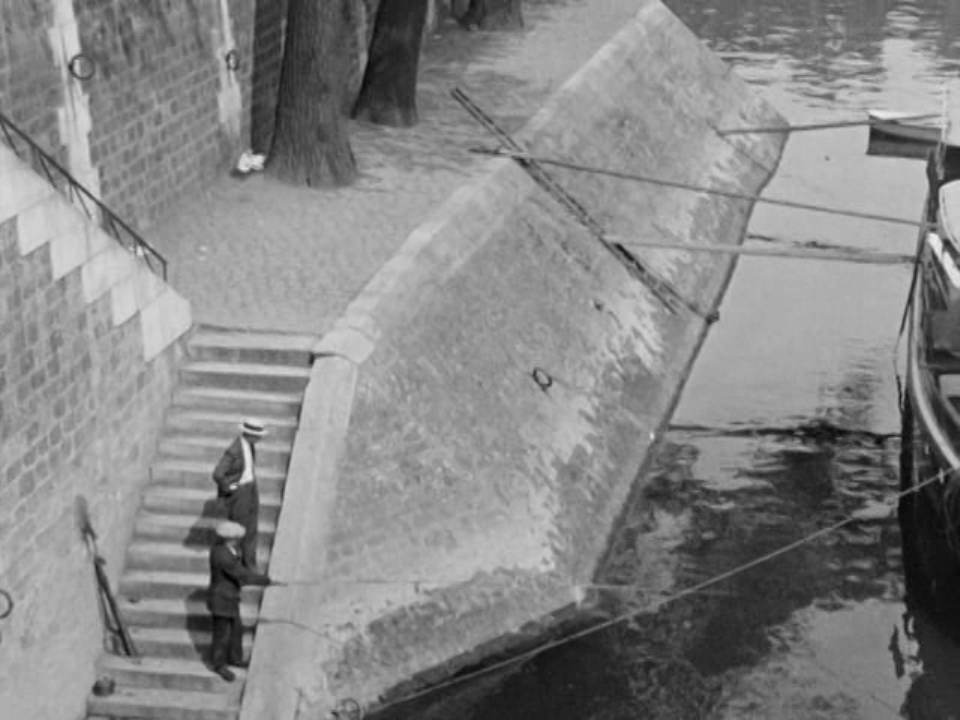
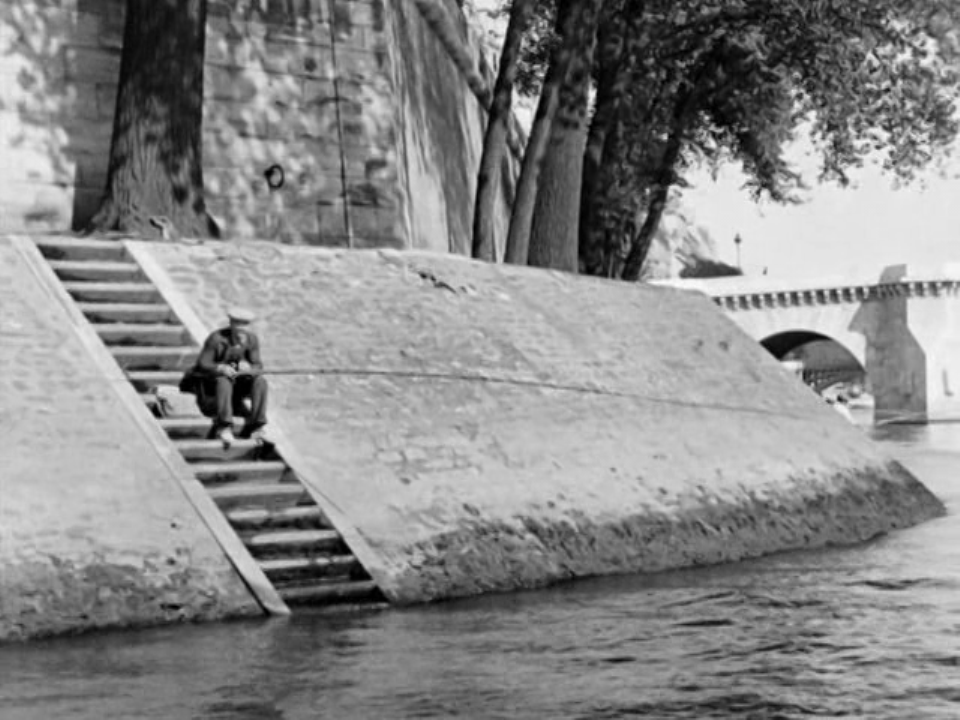
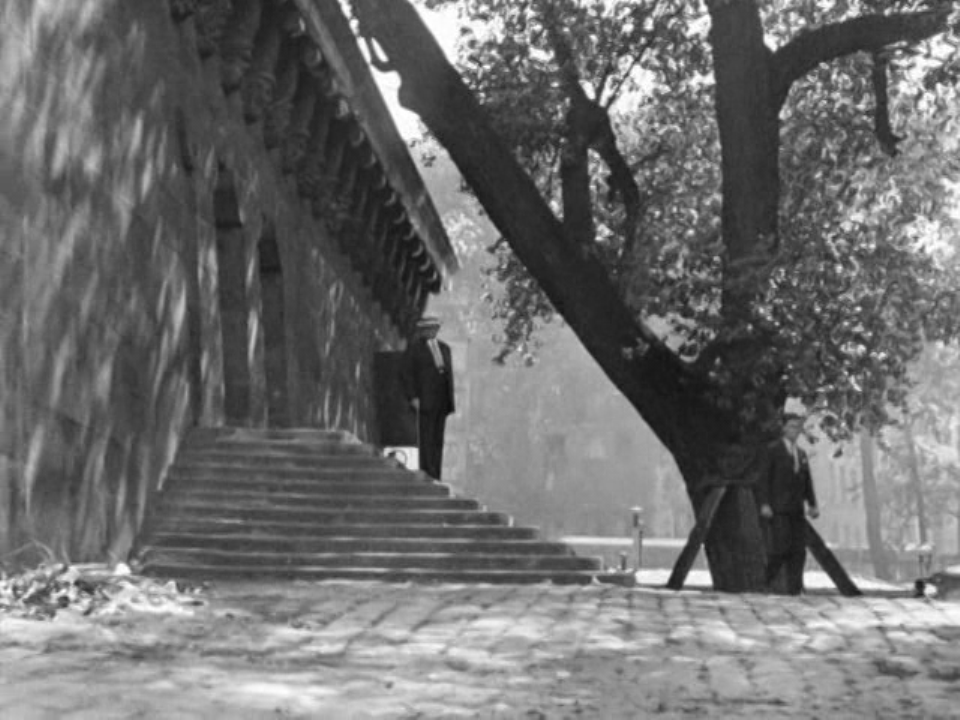
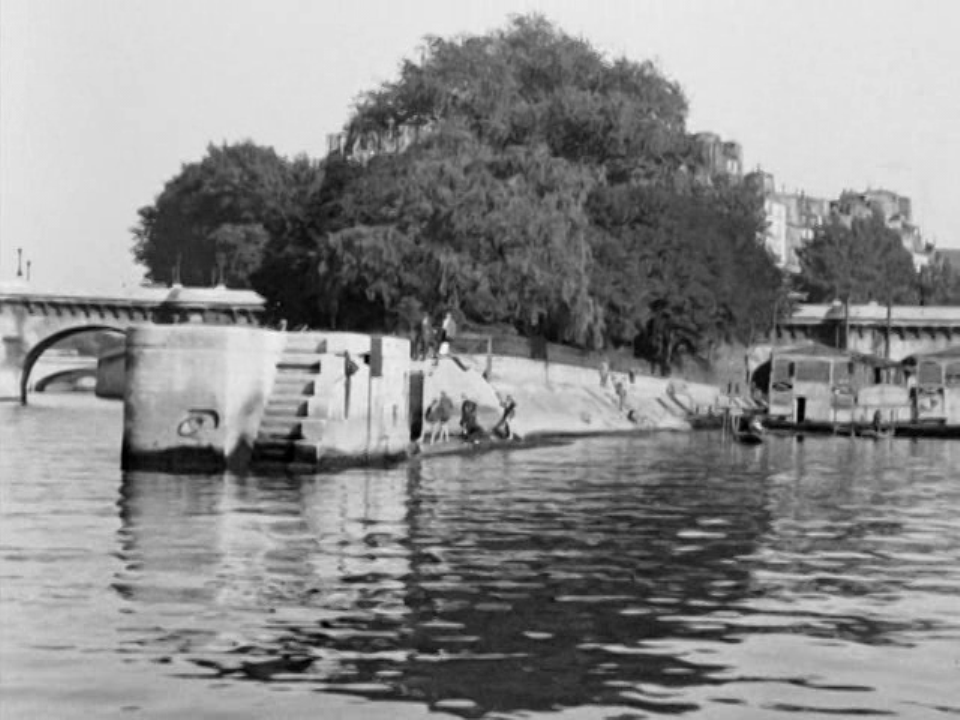
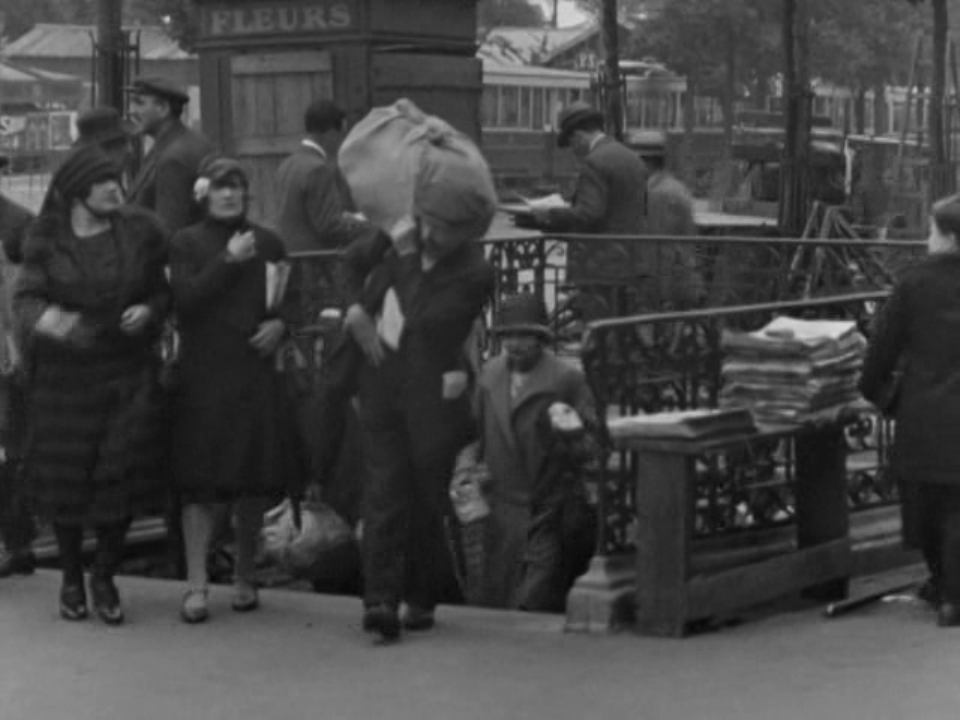
 André Sauvage's 1928 visual essay Etudes sur Paris includes a brief staged drama among its documentary observations. Down a pair of facing staircases leading from the Quai aux Fleurs come a man and a woman, only to find that they cannot meet because the staircases don't meet:  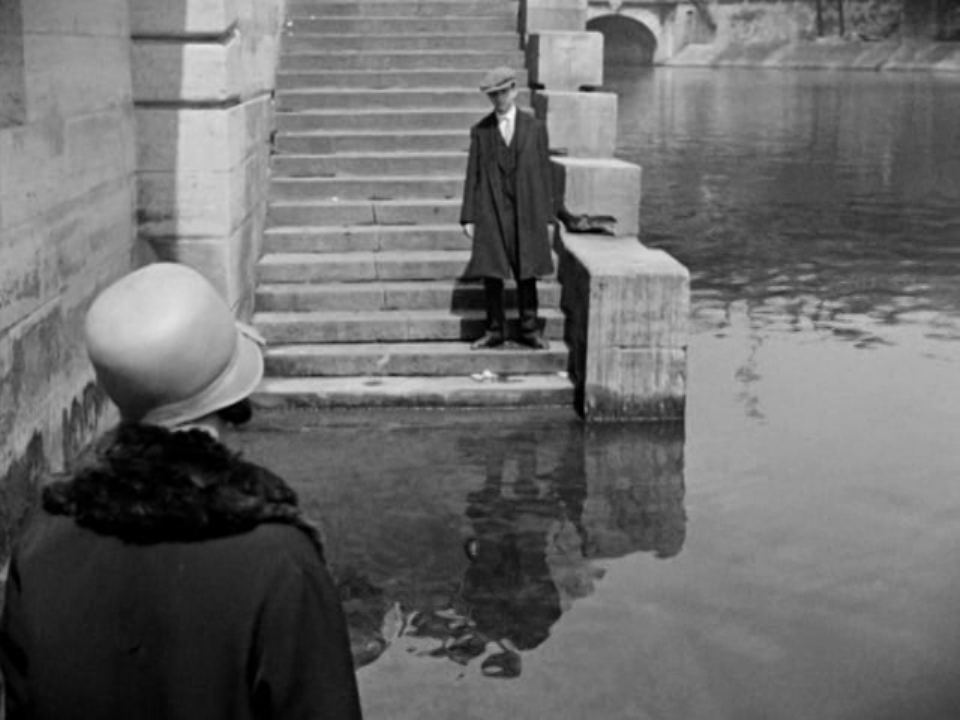 So each turns to go back up the stairs, each disconsolate: 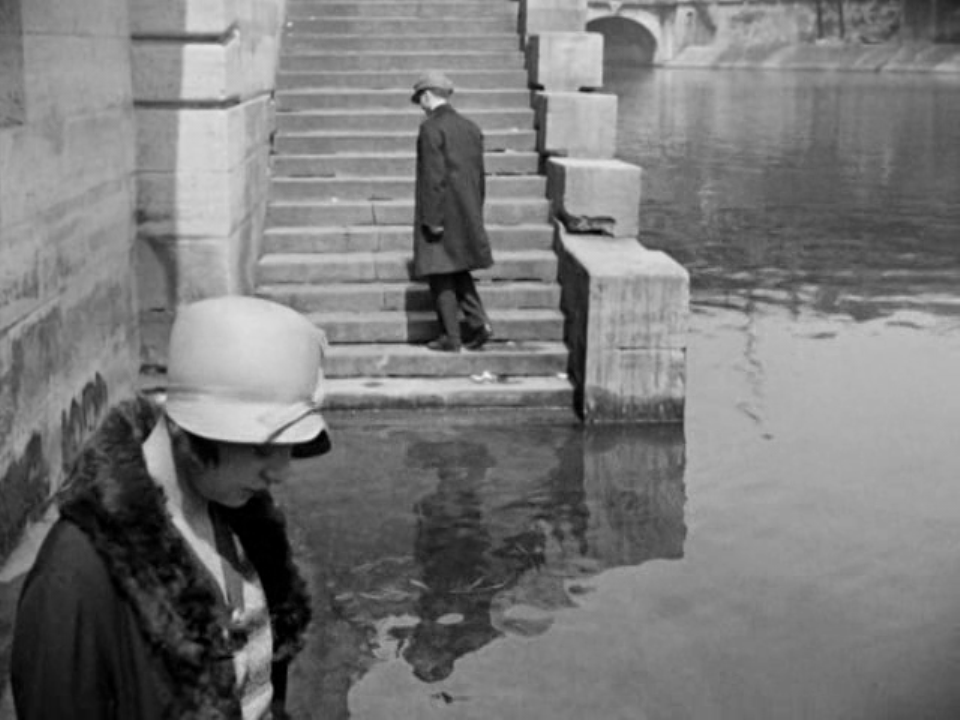 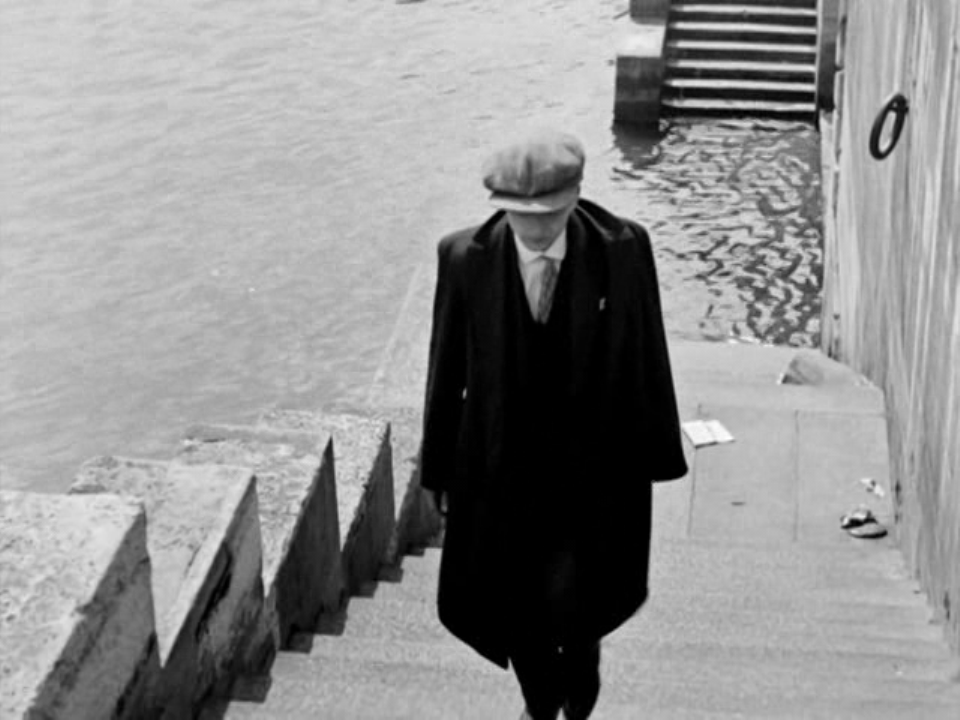 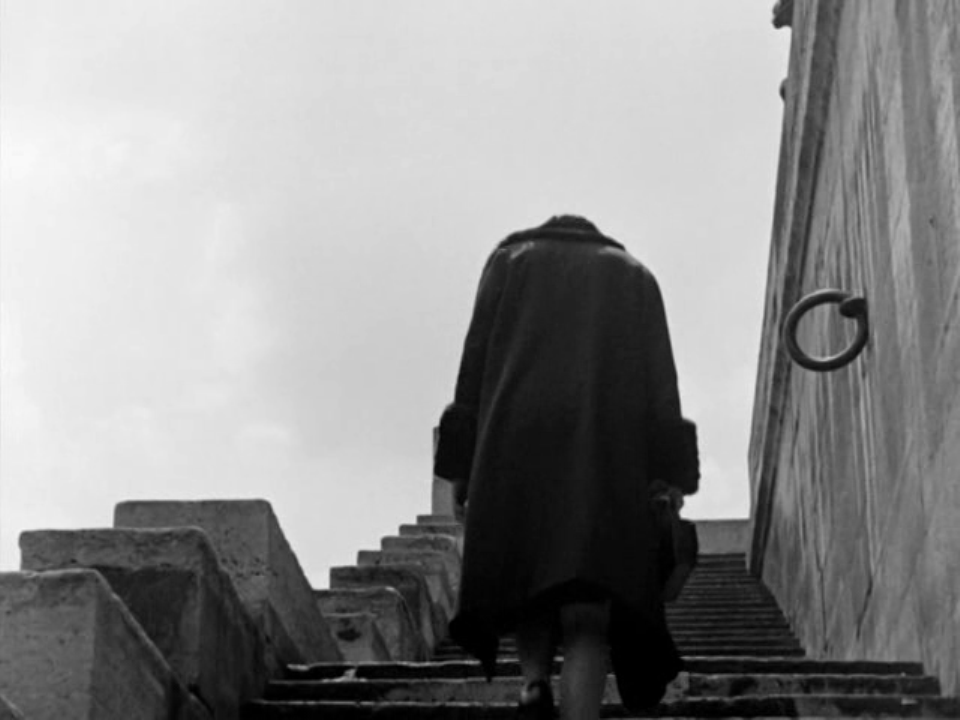 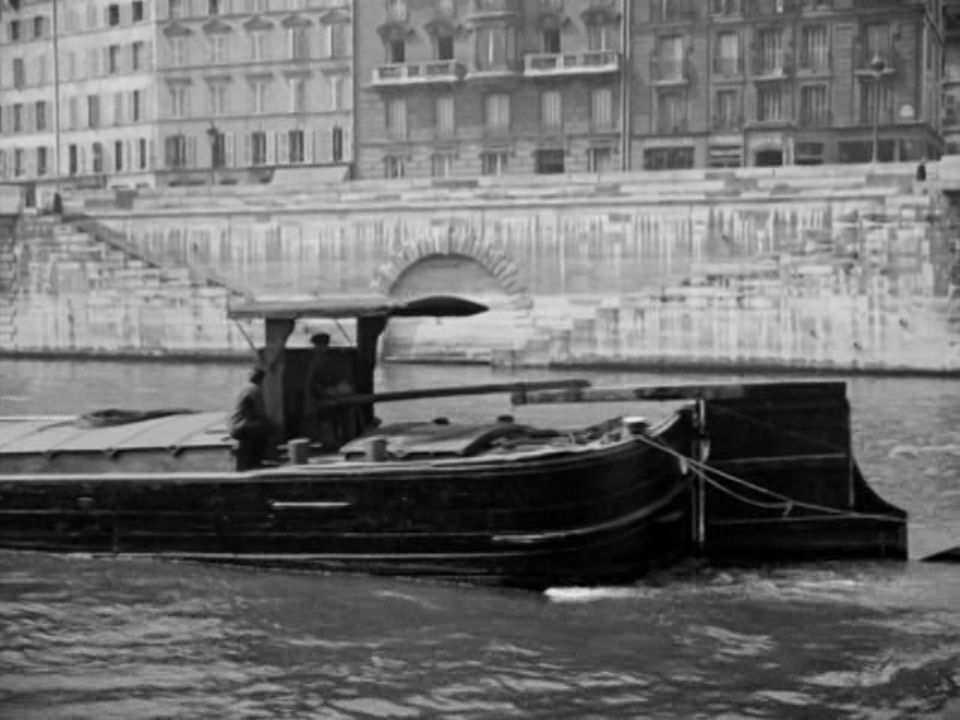 Several riverside staircases are featured in Etudes sur Paris:
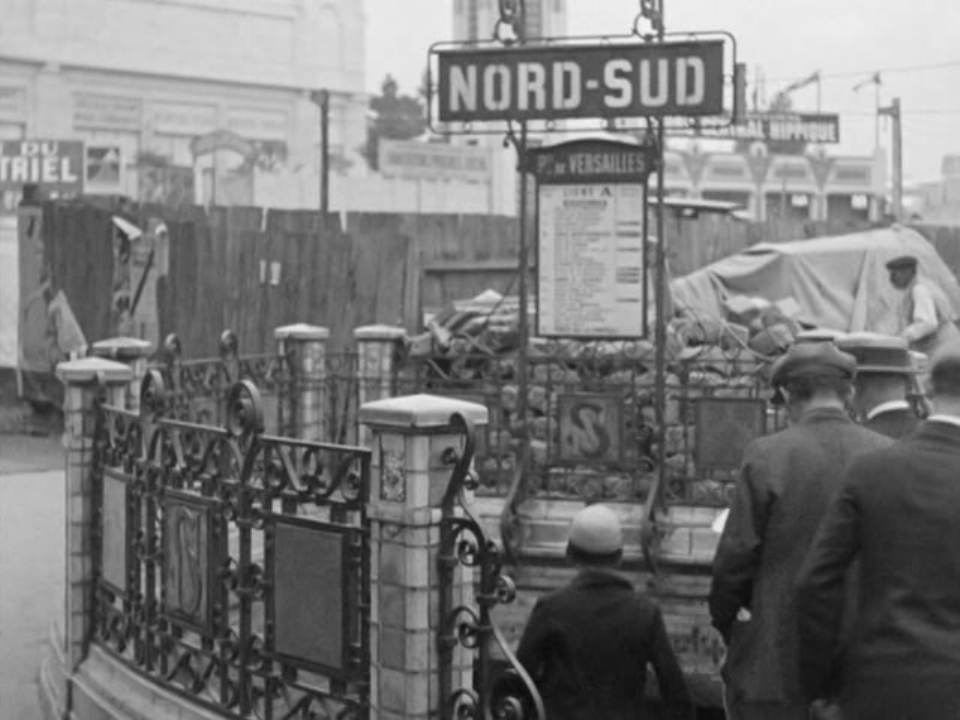
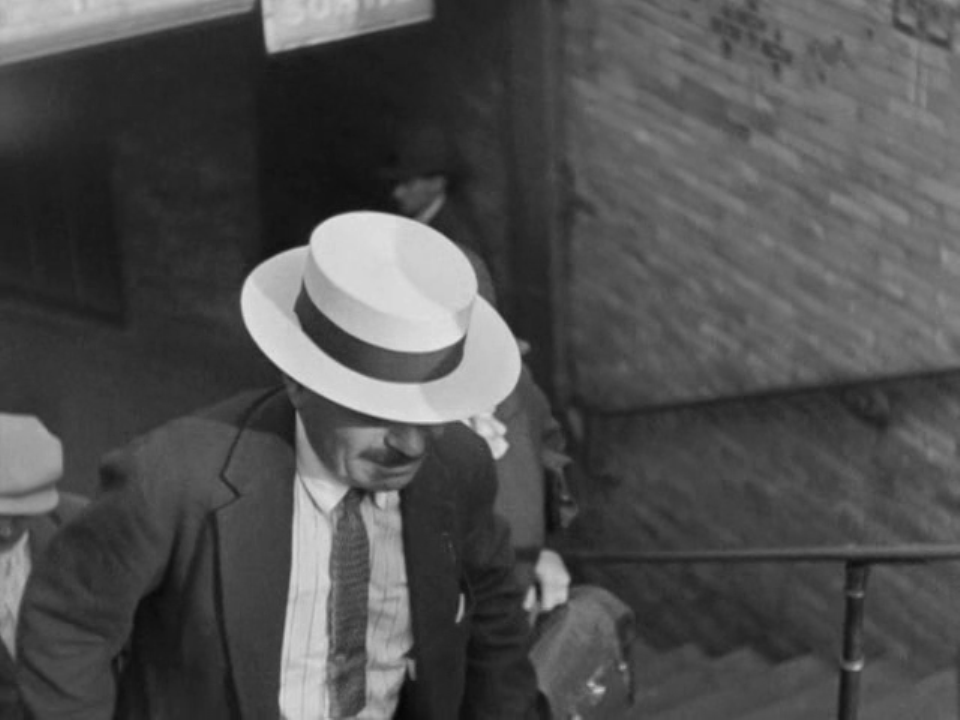
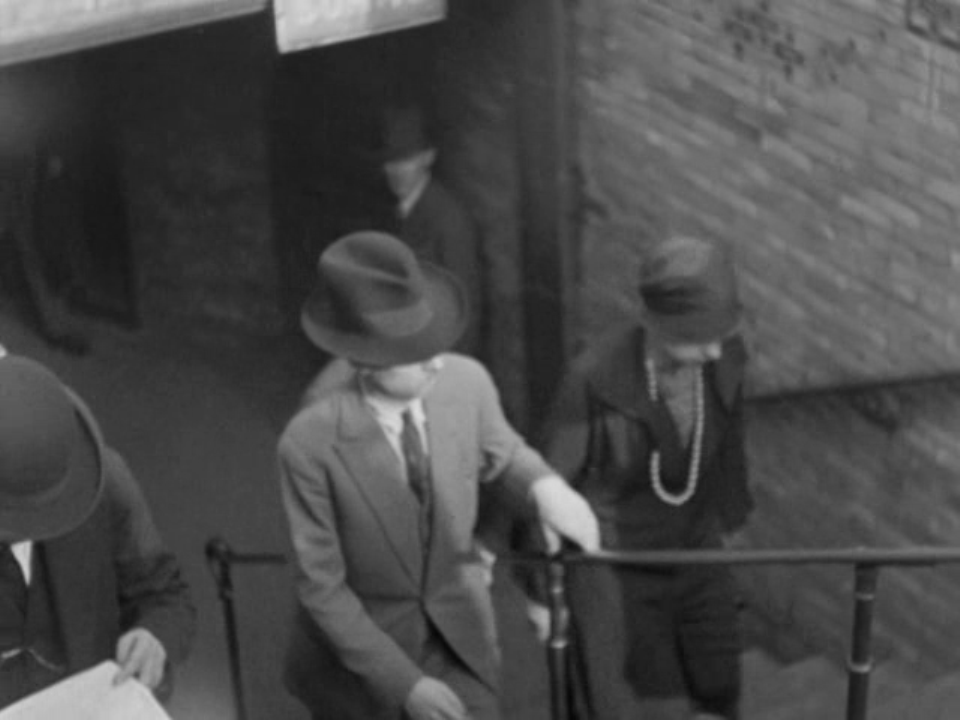
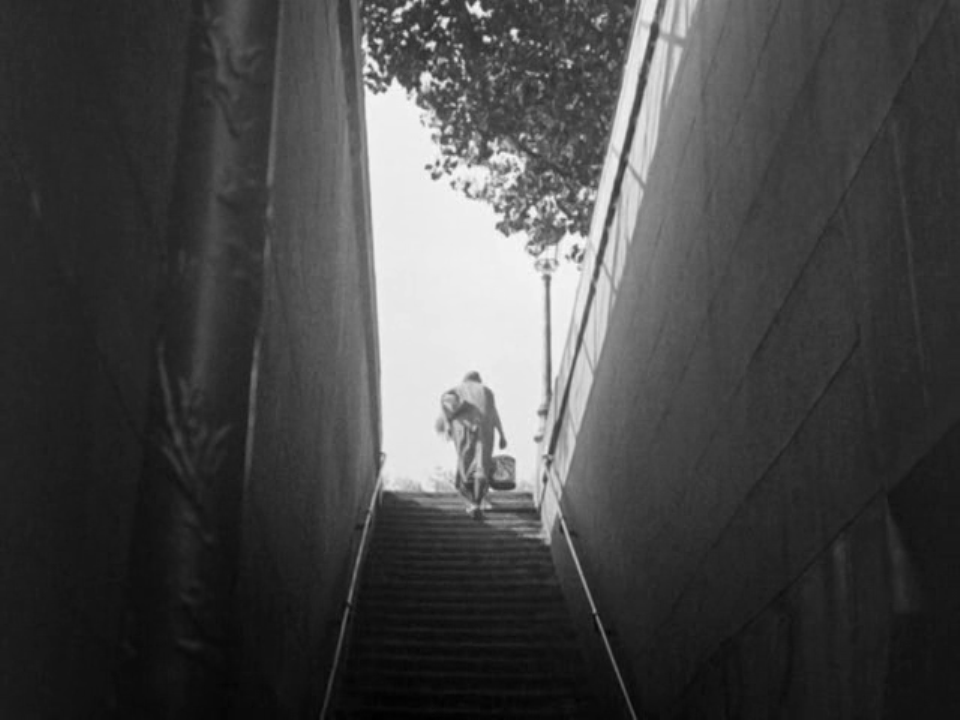  Other staircases in the film are associated with railways, under and overground:
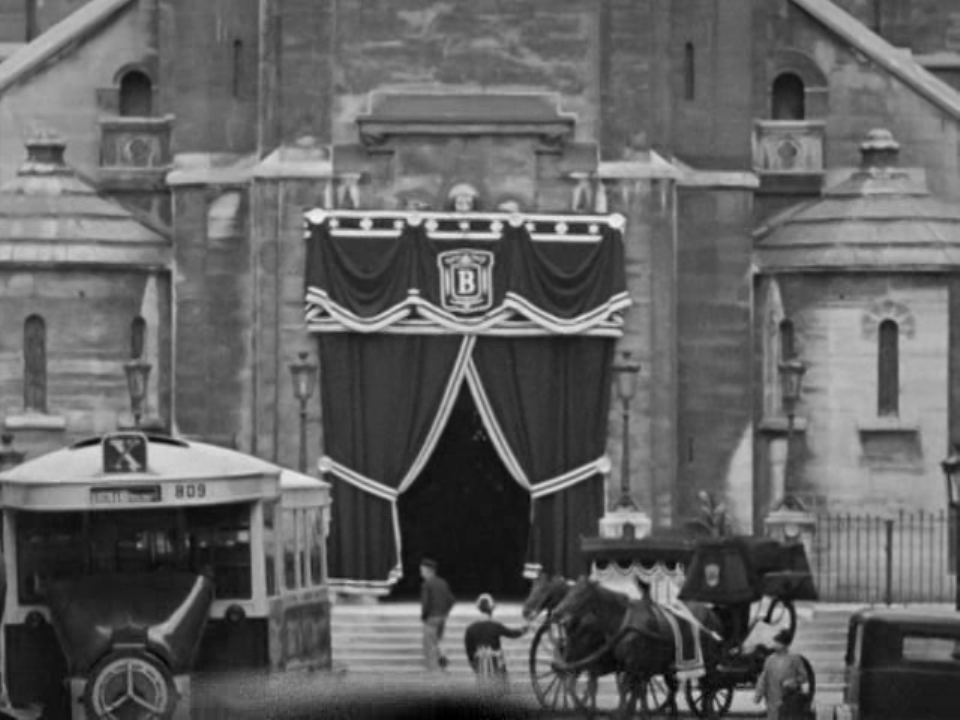
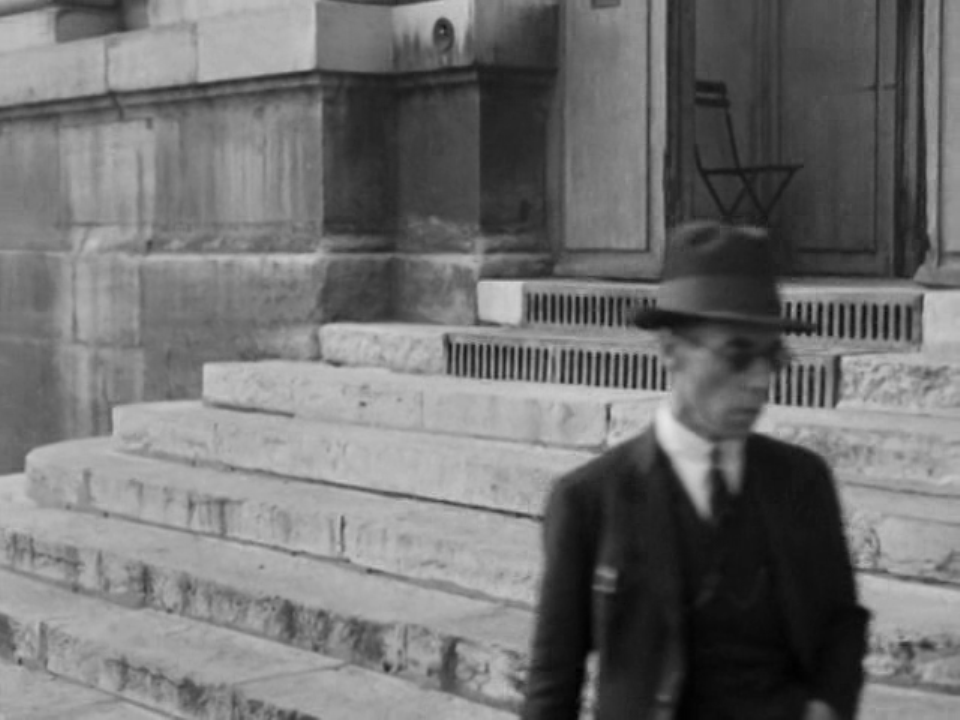
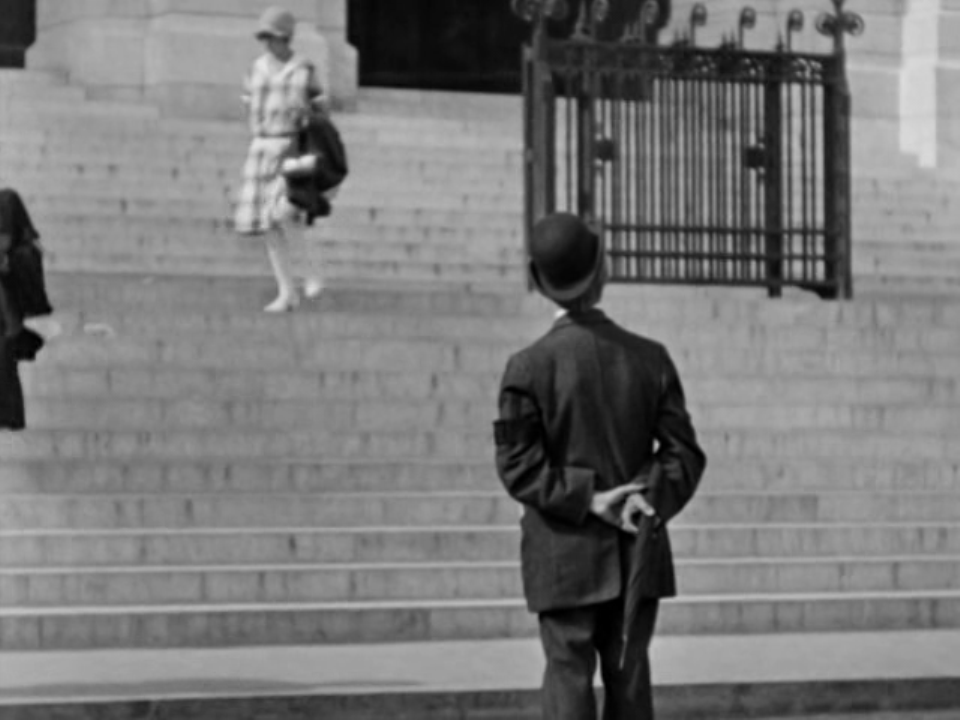
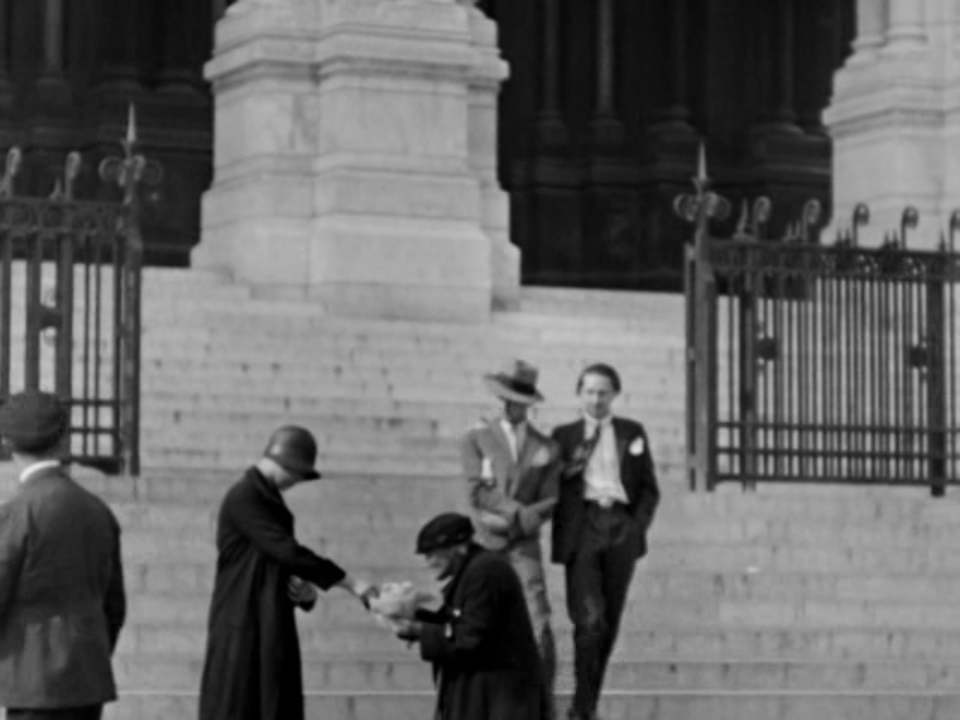
 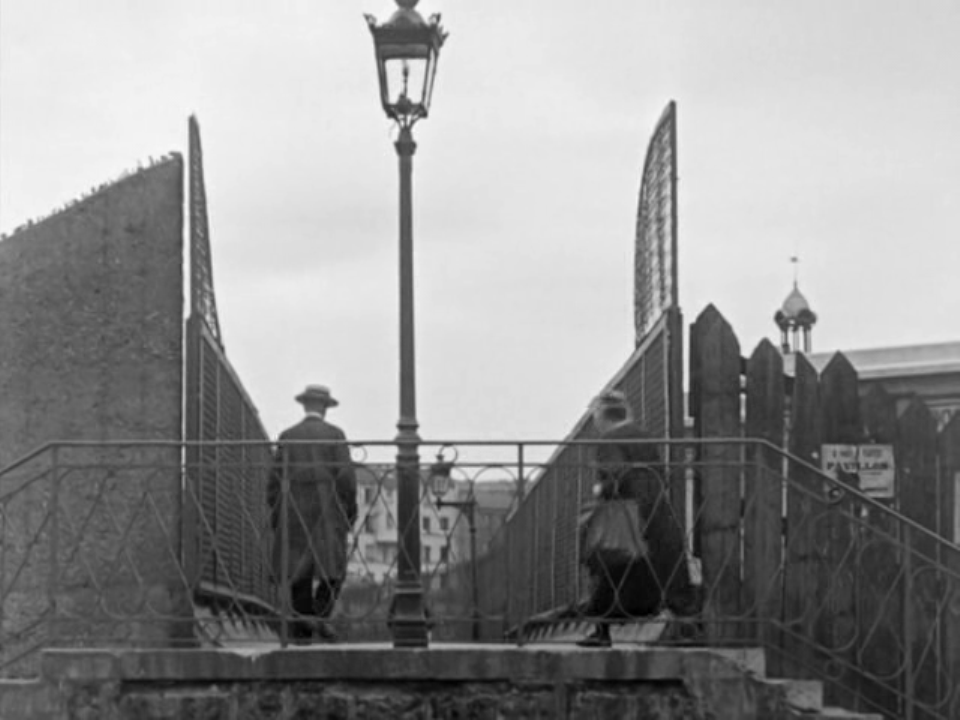 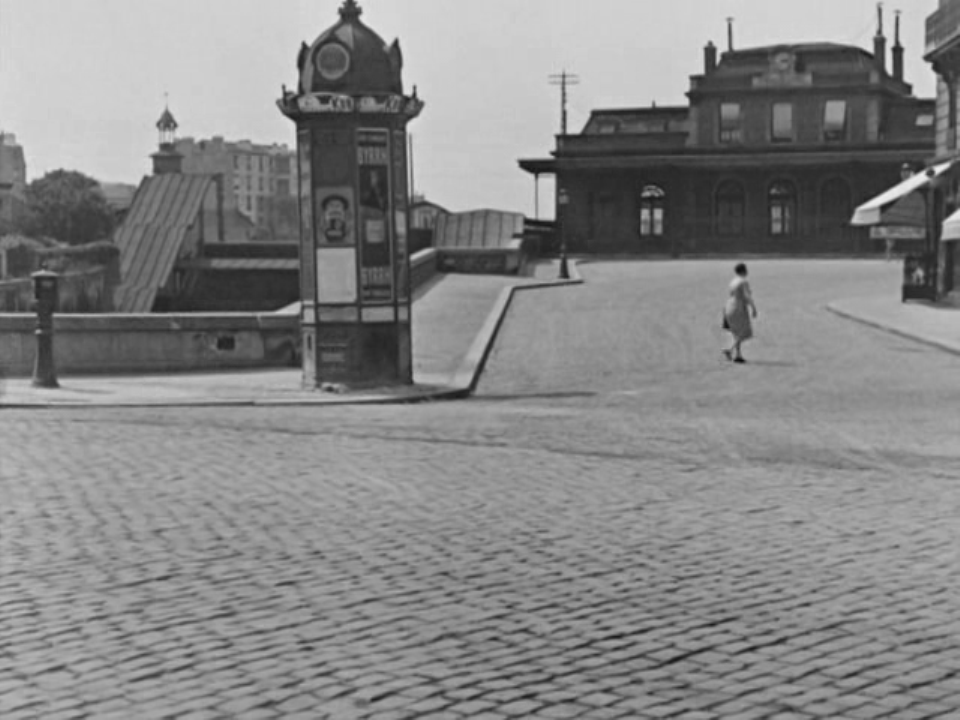 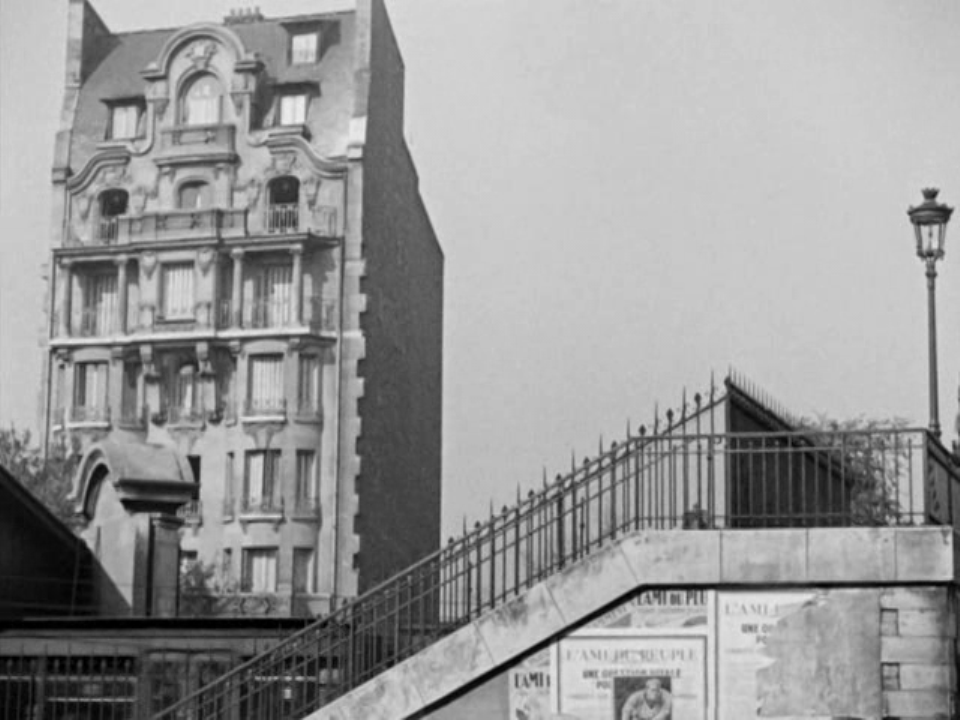 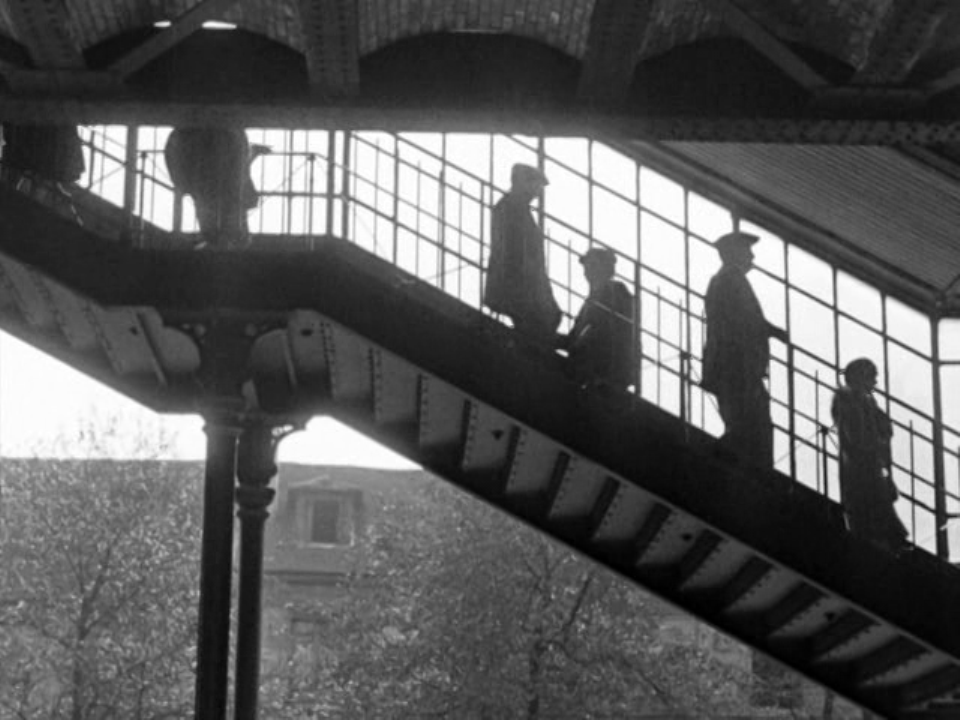 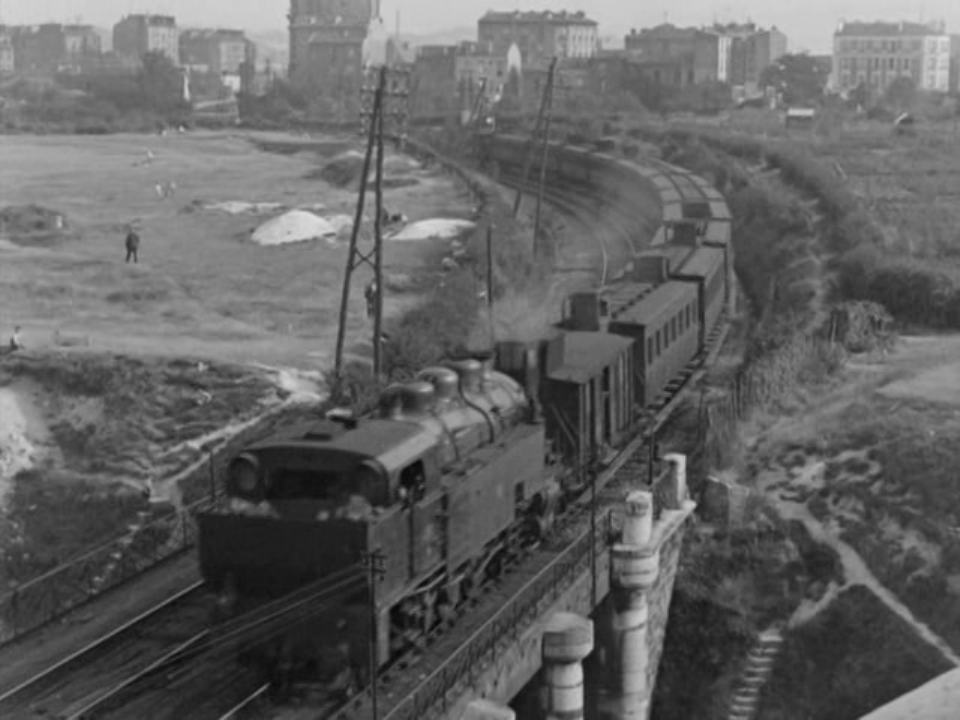 With churches, monuments and public buildings:
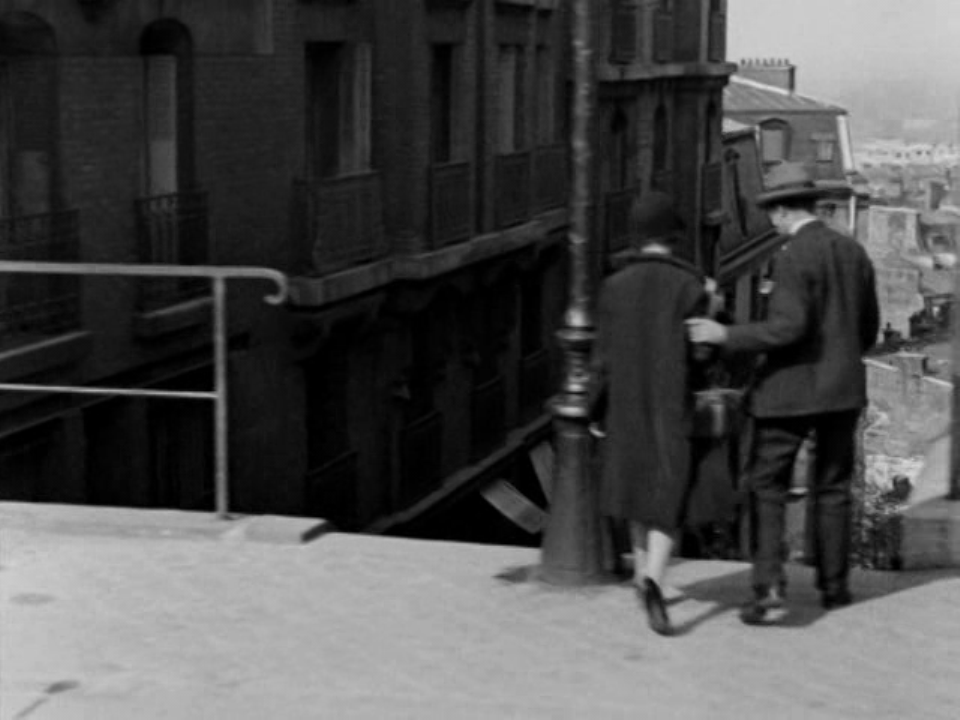
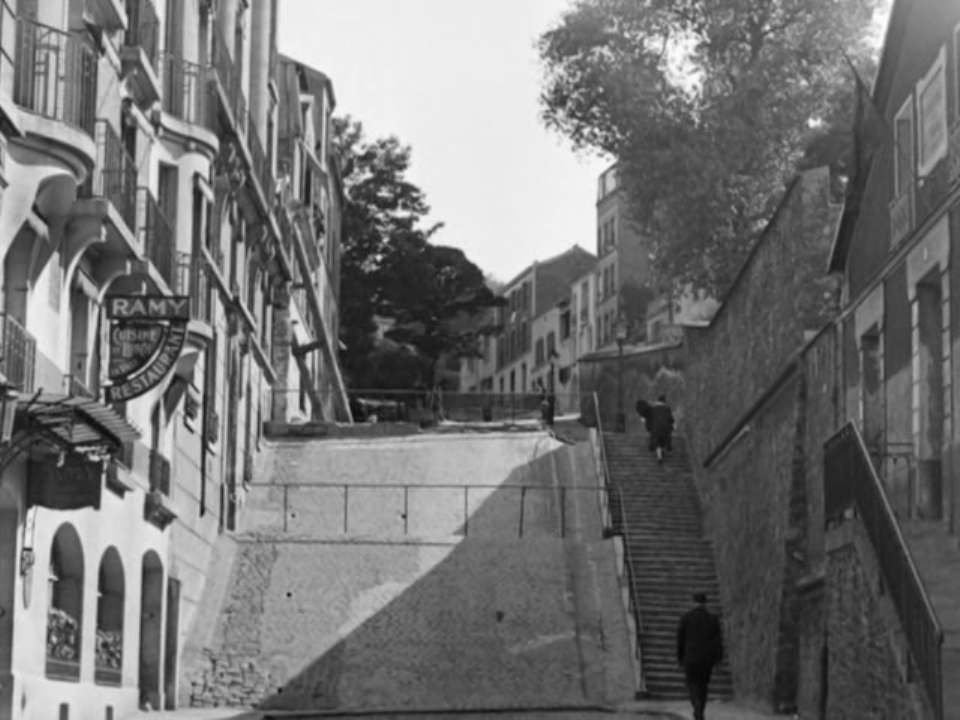
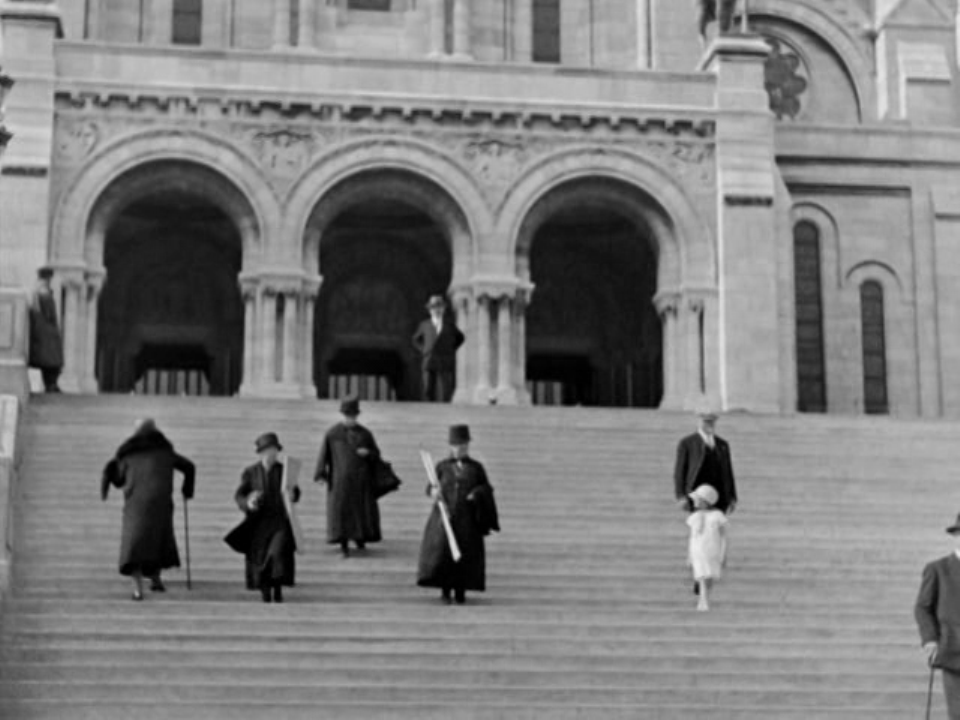
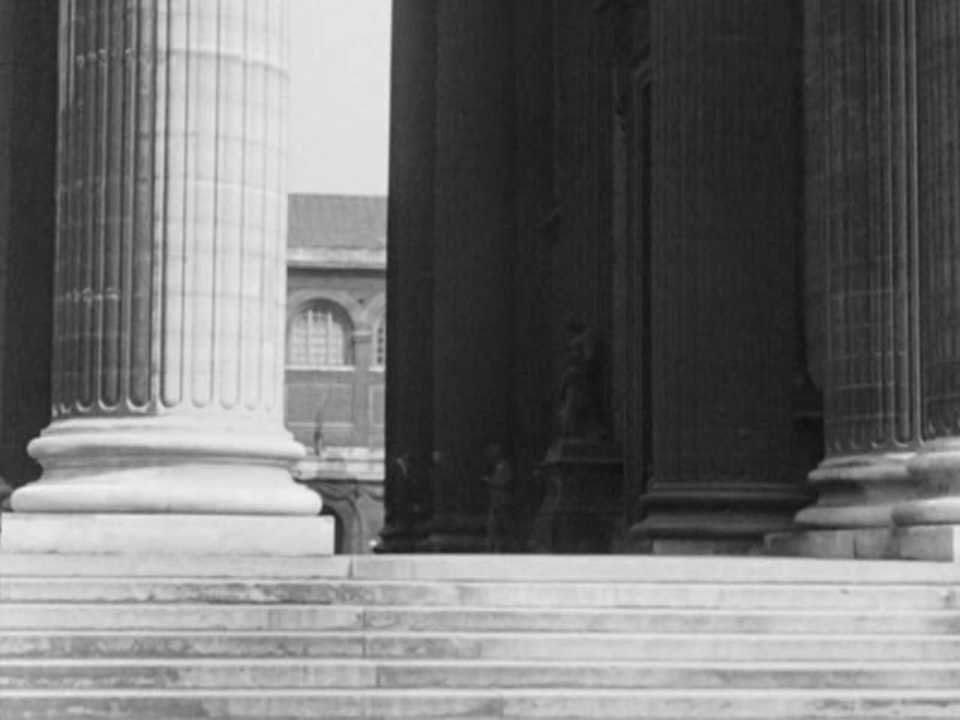  The film is of course interested in the stairs of Montmartre, those surrounding the Sacré Coeur and other, less monumental staircases:
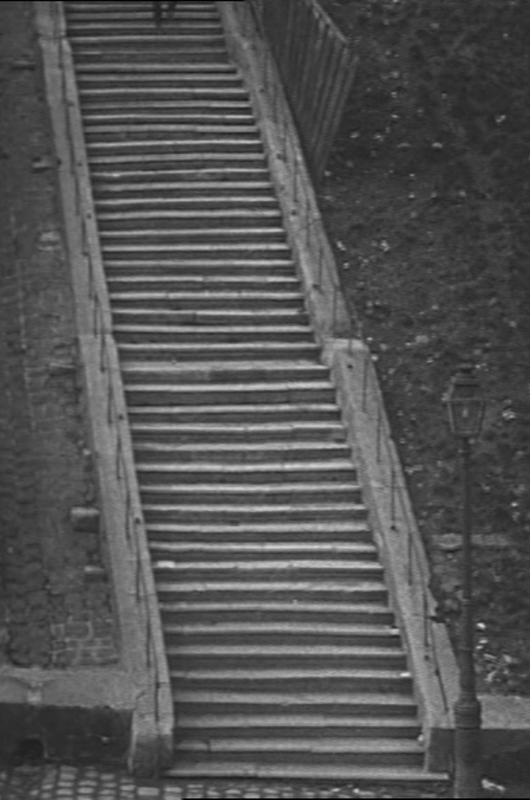
     The service stairs of the Eiffel Tower are shown: 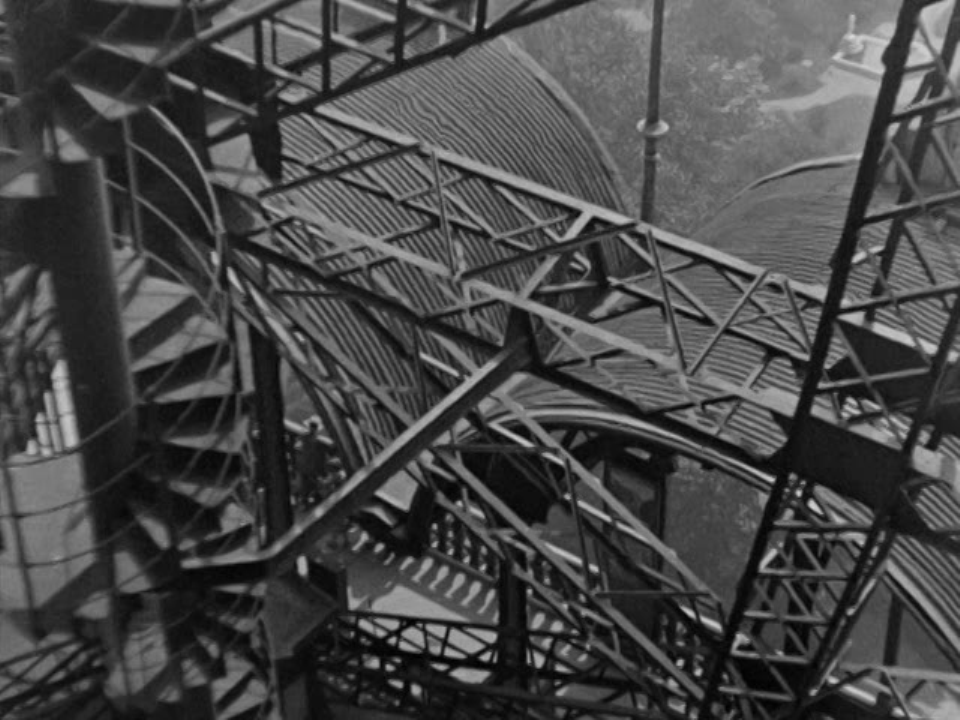  To be echoed later by the temporary stairs of construction-work scaffolding: 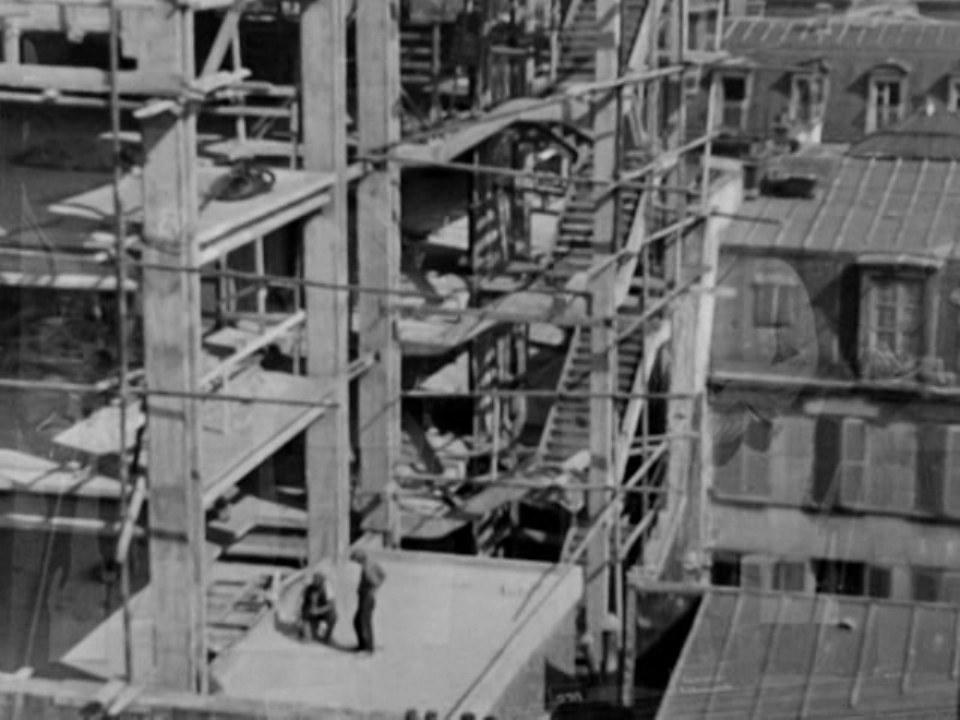 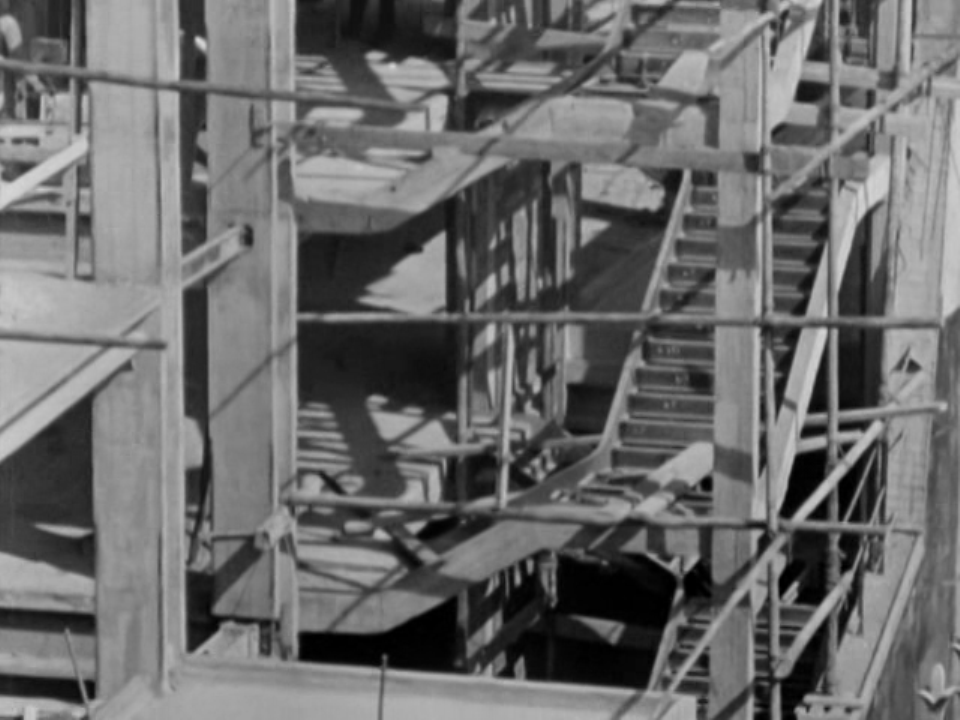 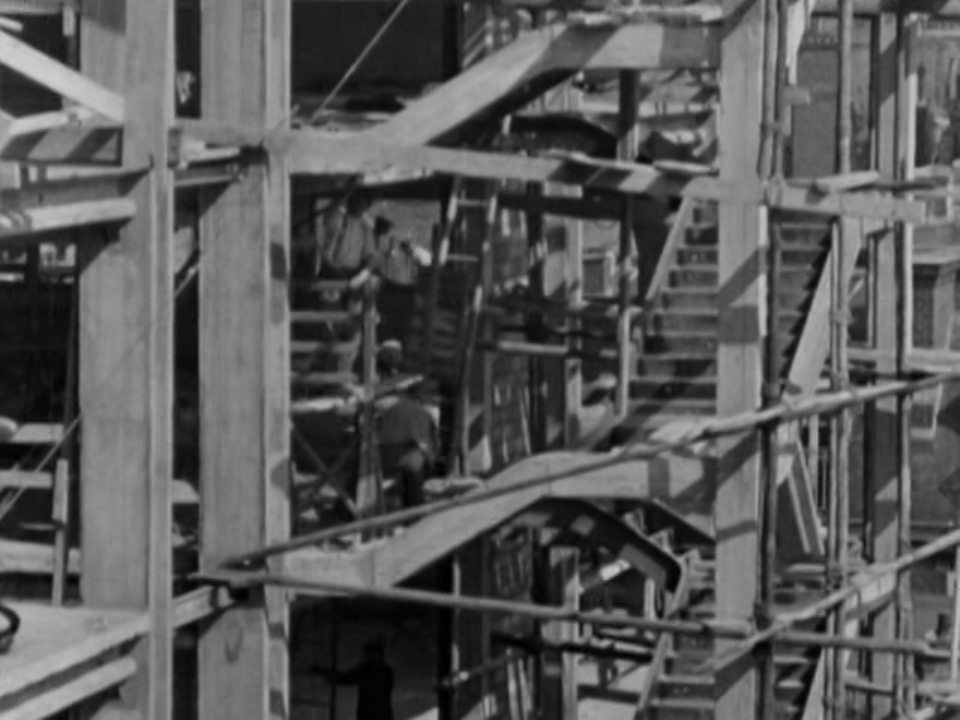 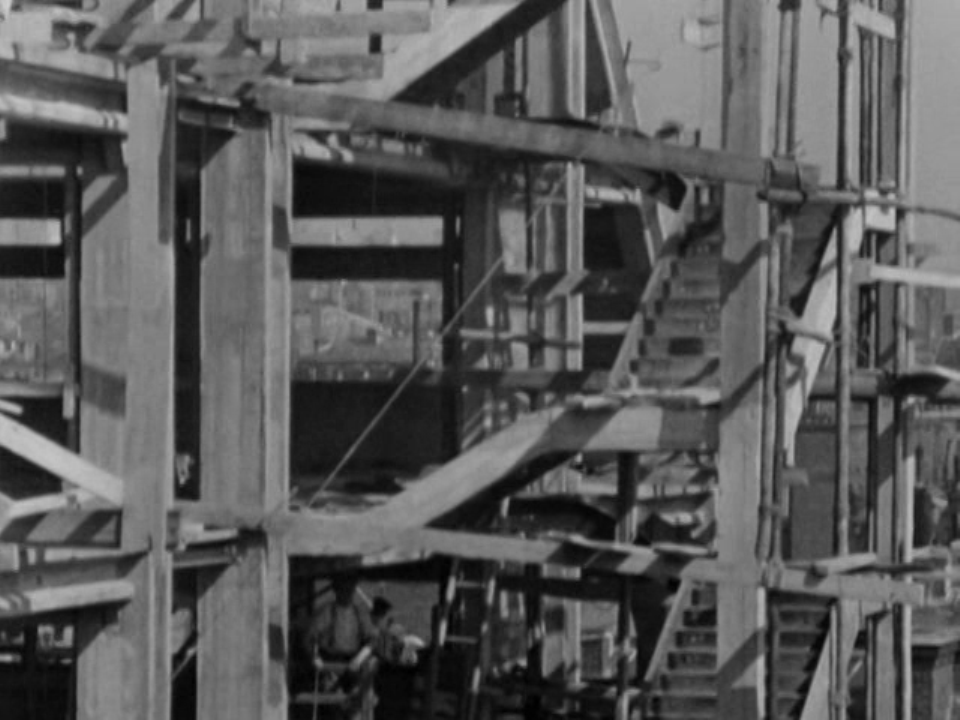 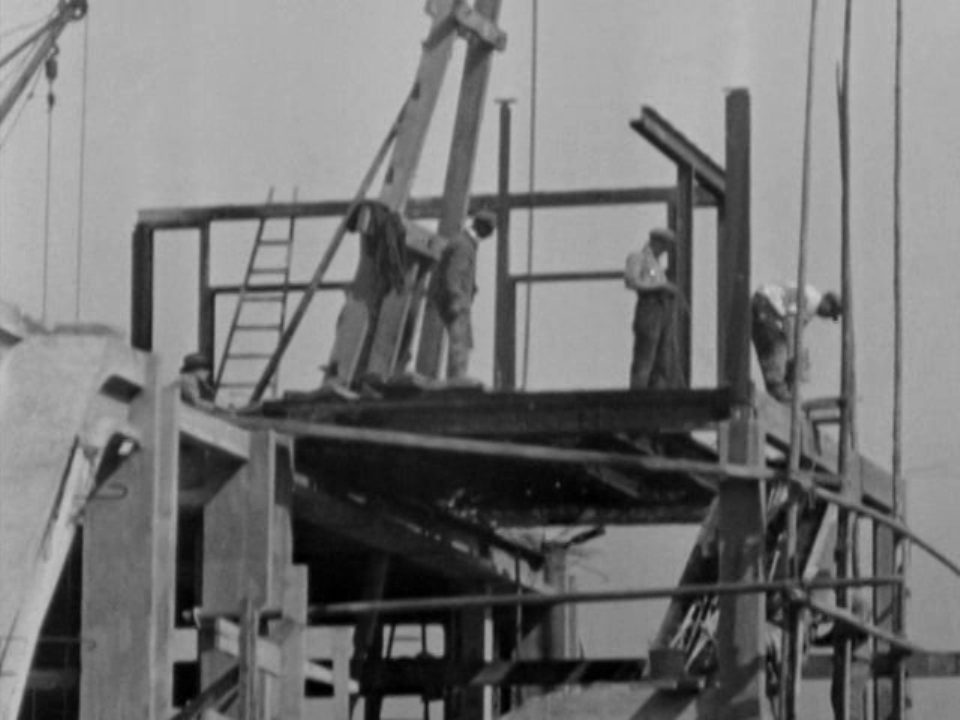 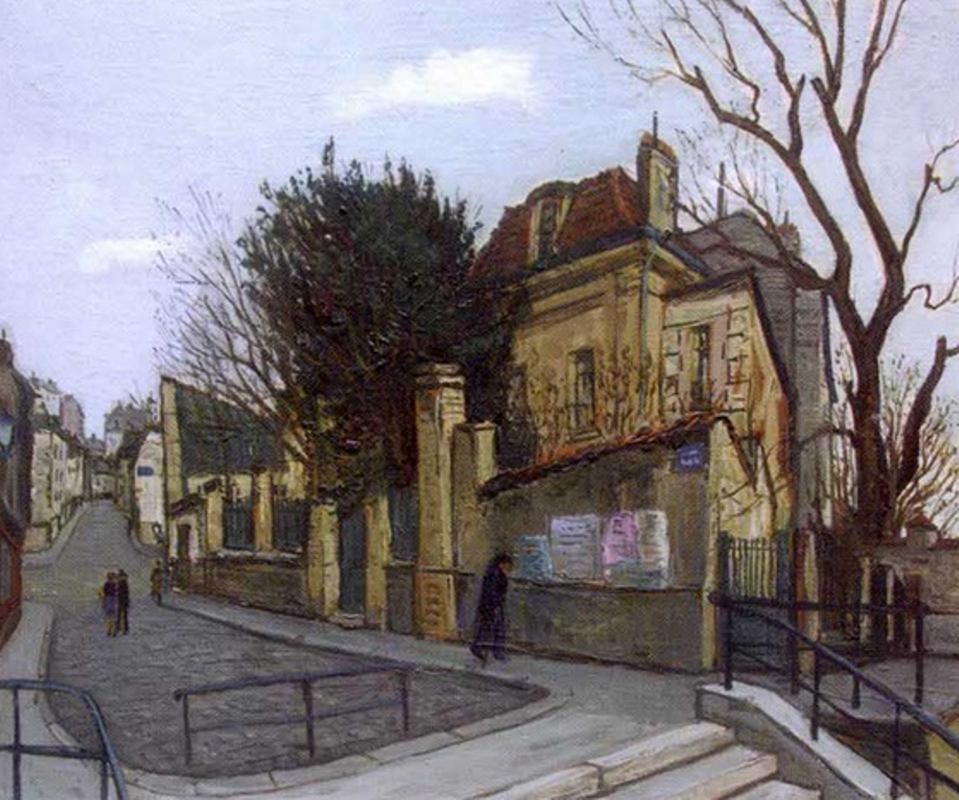 This is a callback to a post from January 2012 (here), where I wondered where a staircase seen in two Durand-directed Gaumont comedies might be, or have been if it was now gone. 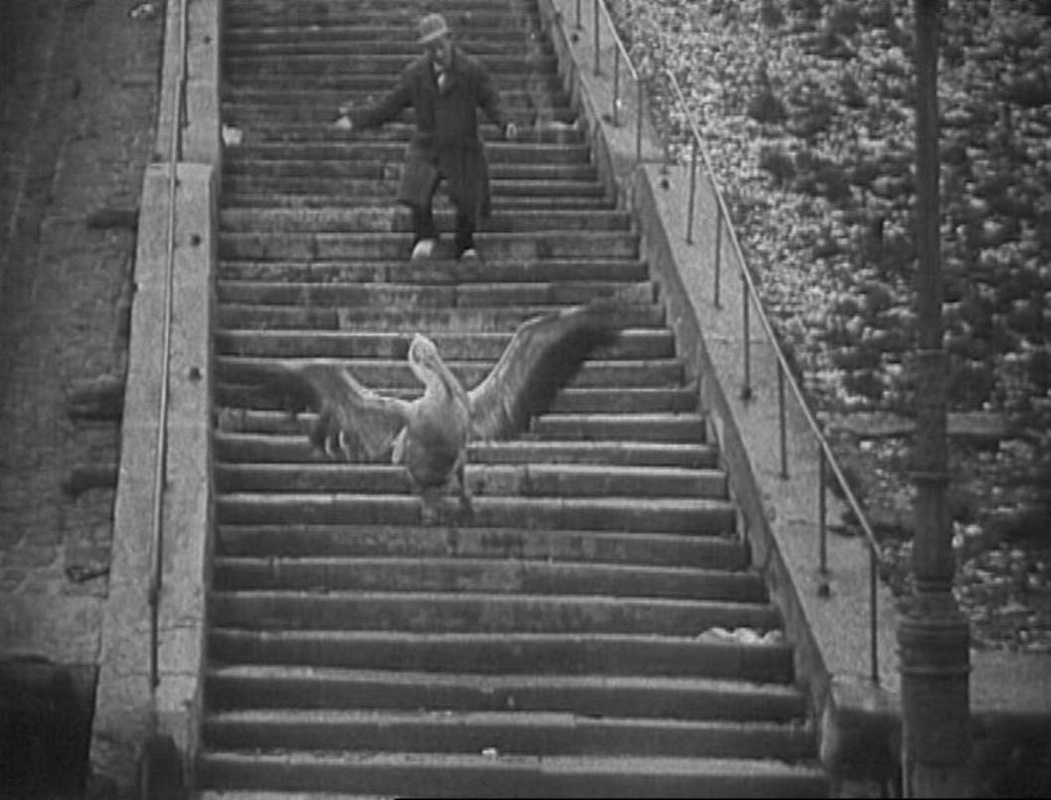 On♪sime et le pélican (1913) 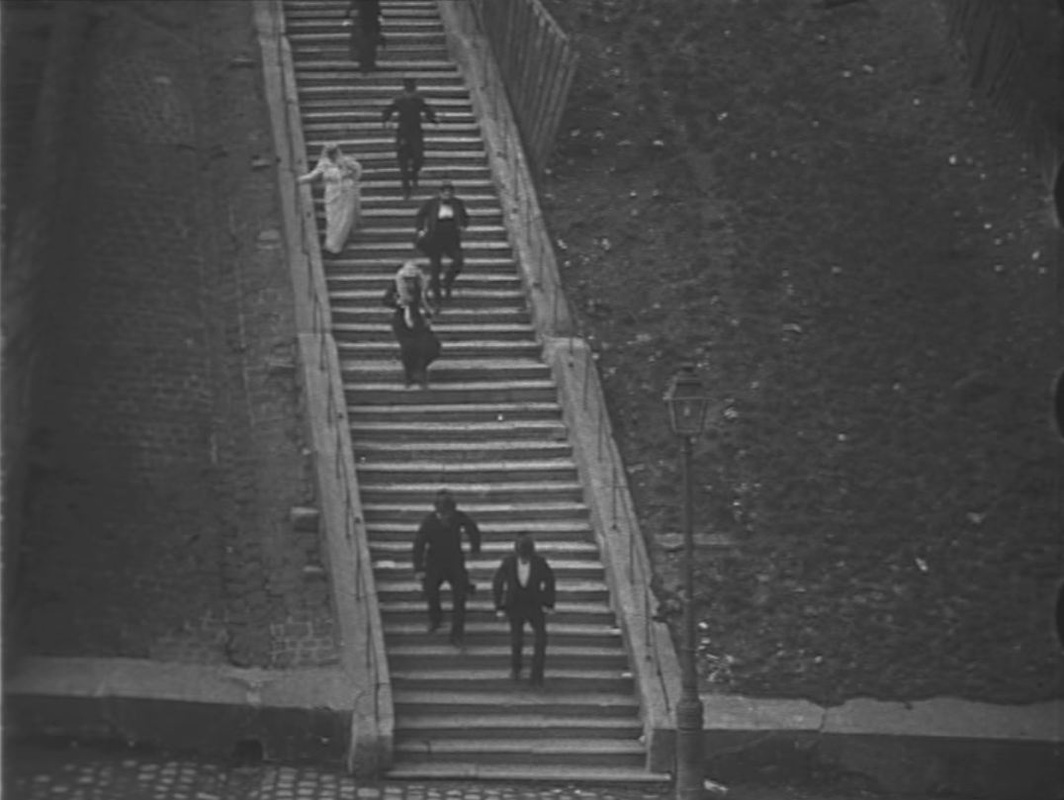 Onésime, tu l'épousera quand même (1913) Although the strong likelihood was that these stairs were somewhere near the Gaumont studios in the 19e arrondissement, I had examined carefully every one of the 148 staircases featured in François L'Henaff's Paris en marches, the Parisian escalographer's bible, without finding a match. L'Henaff himself looked at the images and gave me an analysis of the staircase's construction, but didn't recognise it as an extant staircase in Paris. Since then the staircase has turned up in three more films by Durand: 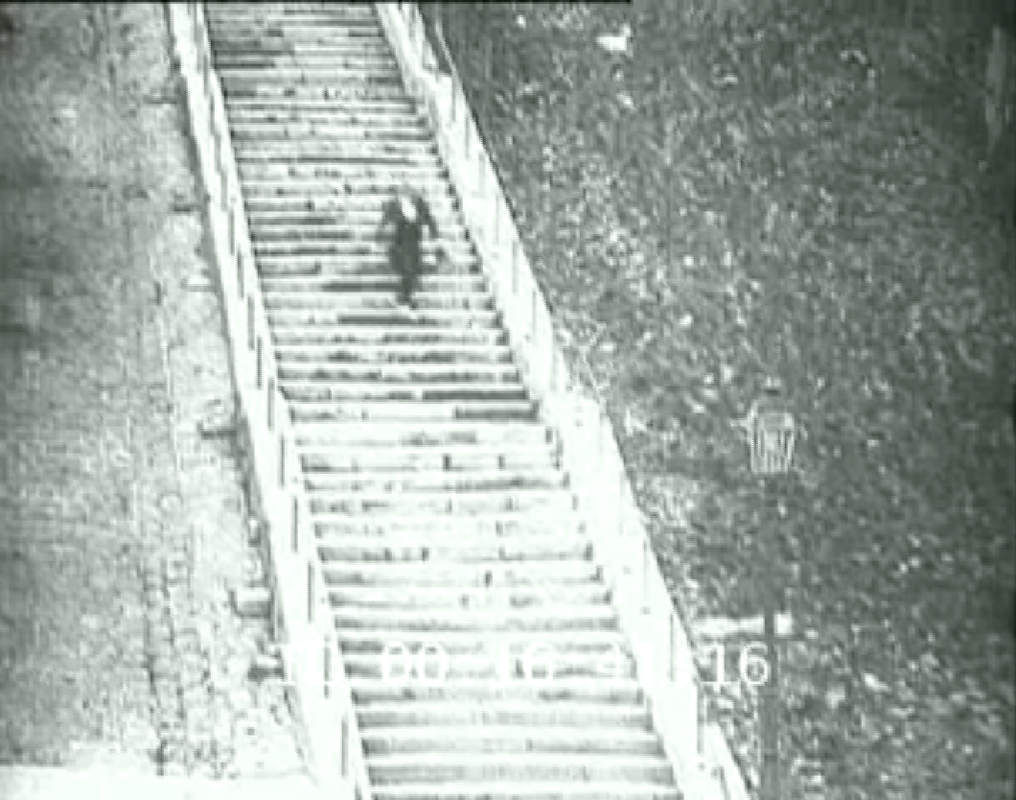 Onésime et le gardien du foyer (1913) 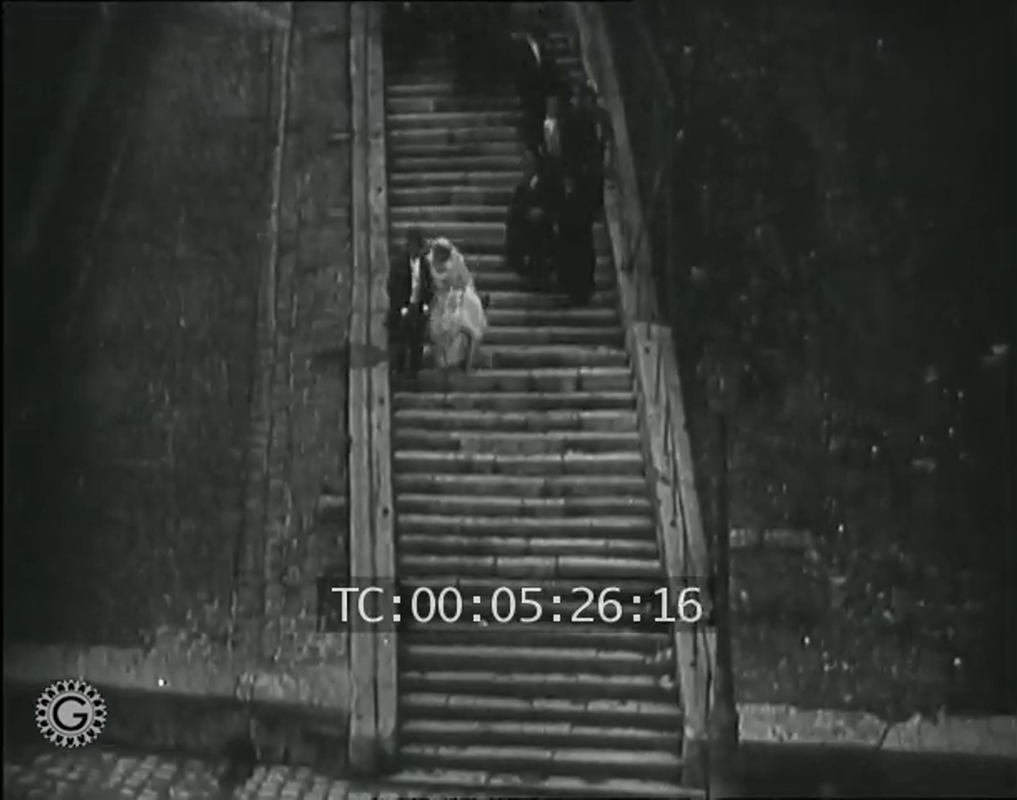 Onésime est trop timide (1912) 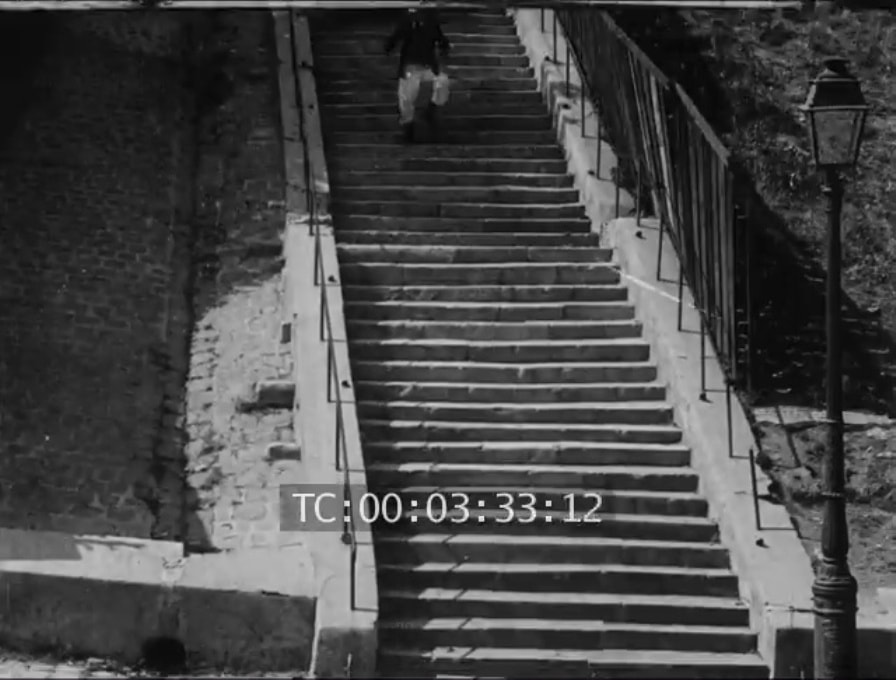 Calino polygame (1911) These slightly different framings of the stairs give no more clues to their location, but I did find a clue in seeing more footage from Onésime et le pélican, where the shot of Onésime chasing the pelican down the stairs is preceded by one of him chasing it in a street with what appears to be the head of a staircase behind them: 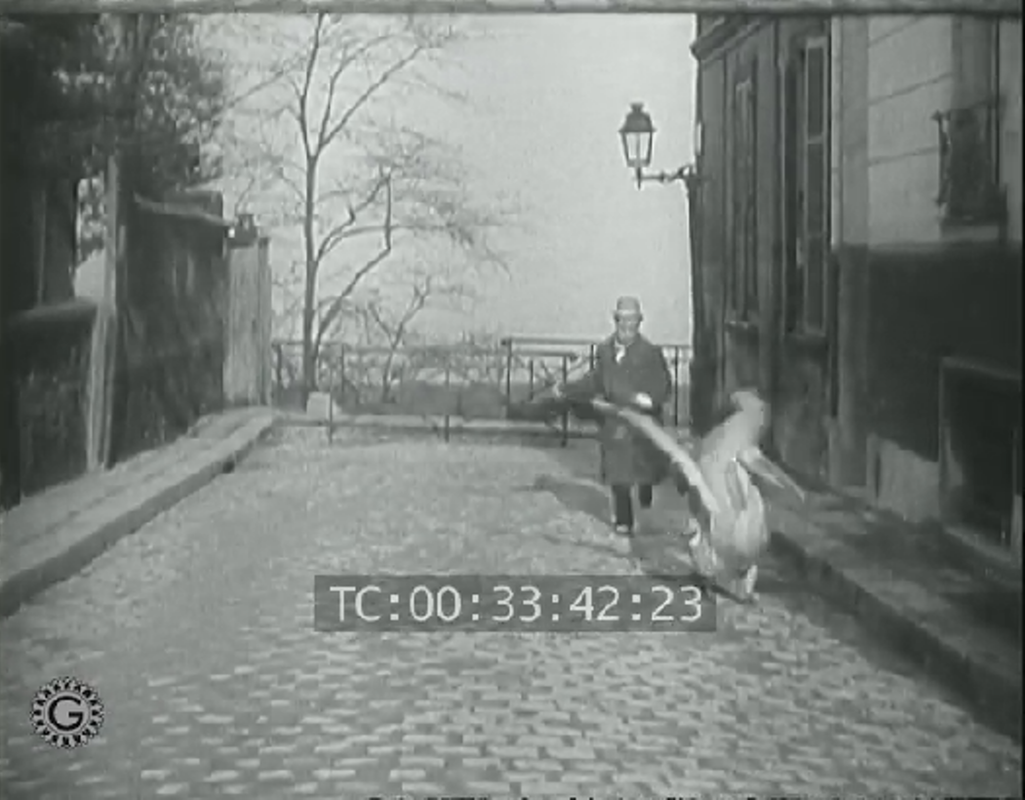 This is the end of the rue des Lilas, 19e: 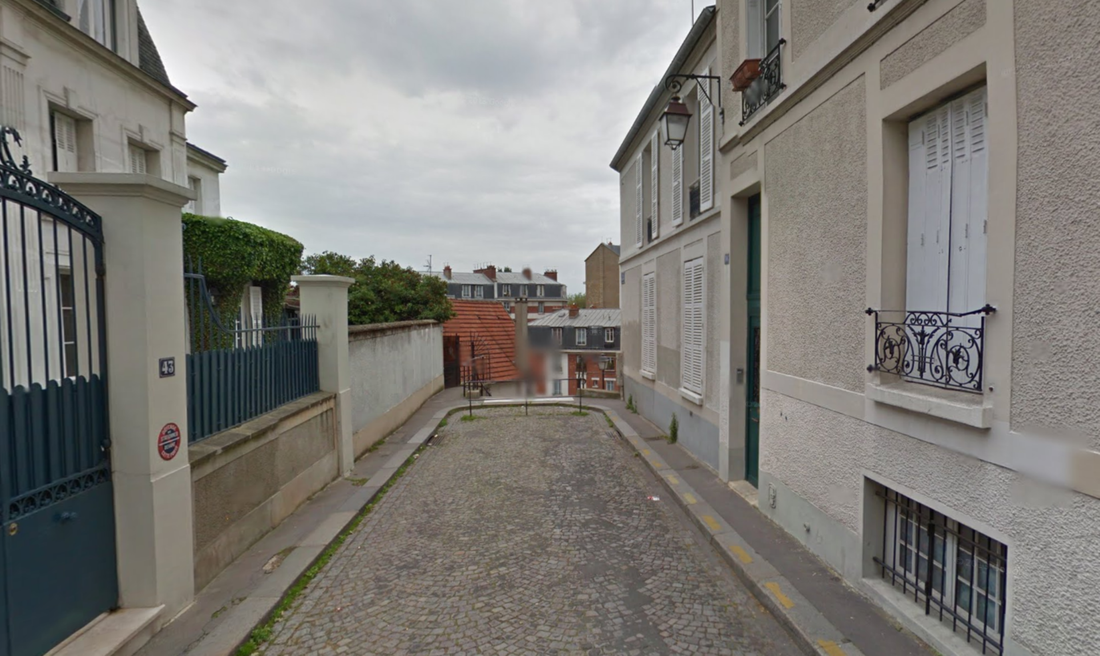 Google Street View The staircase beyond leads down to the boulevard Sérurier:  Google Street View If a shot of the top of a staircase is followed by a shot of the bottom of a staircase it doesn't necessarily mean that these are shots of the same staircase, but the probability is strong. Here, however, the staircase leading down from the rue des Lilas doesn't look enough like the staircase in the Gaumont films. For one thing, it bends to the left after the second landing, whereas the Gaumont staircase appears to carry on straight:
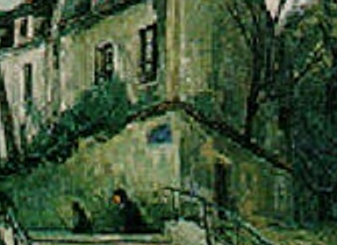
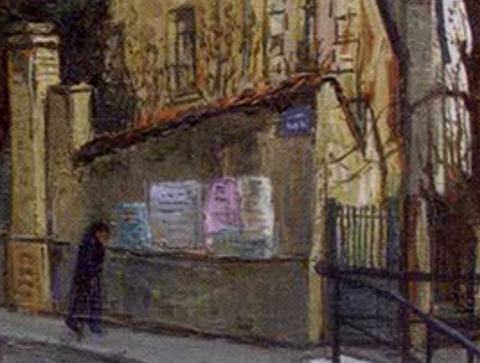
The handrail down the middle could have been added later, the lamp post could have been repositioned, but the first flight of the modern staircase has 25 steps whereas the one in the film has only 20. That seems to be an insurmountable obstacle to the identification of one with the other. If this is the same place, then the staircase must have been remodelled. If the plan parcellaire of this place, drawn no later than 1896, is to be believed, the staircase linking the rue des Lilas and the boulevard Sérurier was originally straight: 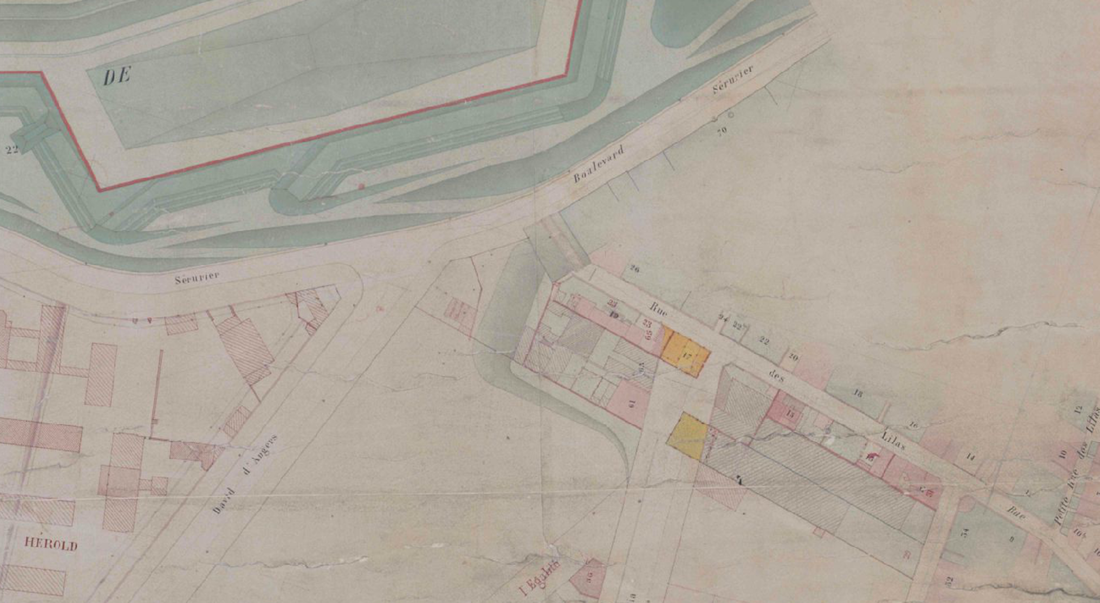 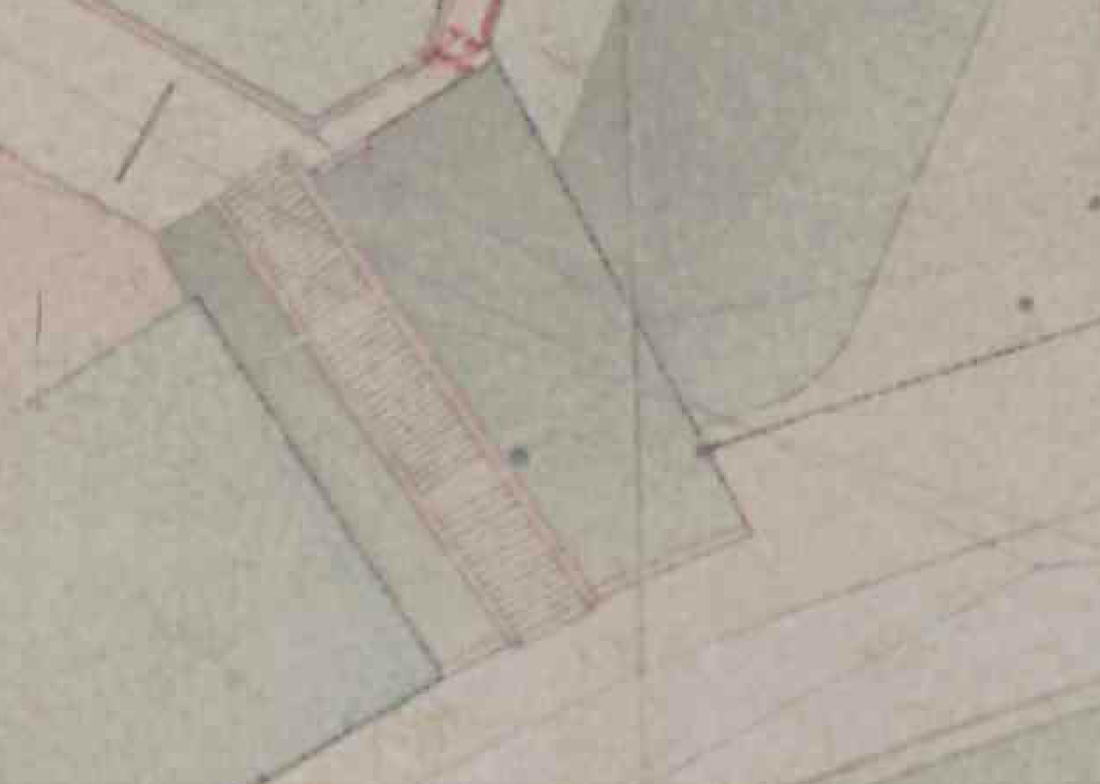 So I'm inclined to think that the staircase was remodelled at some time, but the evidence I need is an image of the rue des Lilas stairs from before then. I haven't found a photograph from the period, but other visual evidence may be useful. At the head of this post I placed a painting by Alphonse Quizet of the top of the rue des Lilas staircase:  This picture (undated when it appeared at auction in 2003) suggests that there was no central handrail when it was painted, but otherwise offers little to allow a match with the staircase in the Gaumont films. Quizet painted other parts of the rue des Lilas:
And painted the boulevard Sérurier:
But didn't show anything of the stairs linking the two. He does have one painting called a Staircase in Belleville, dating from the late 1920s: 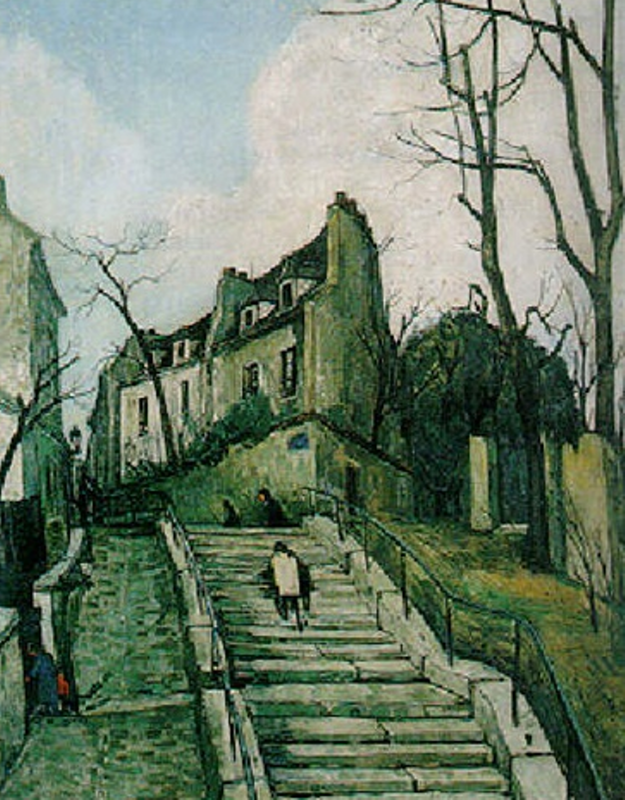 Les Escaliers de Belleville This is promising. The stairs are the right type, there's no central handrail, and the corner of wall with the street name on it matches the one in his Rue des Lilas painting:
The slight differences may be due to changes over time, or to artistic licence, but the bigger problem is the upper part of the building. This, in the Rue Des Lilas painting, is the Manoir de Beauregard, an eighteenth-century mansion now serving as a guest house (see here). The Rue des Lilas painting accurately shows the chimney stack, the one dormer window in the roof, and other details: 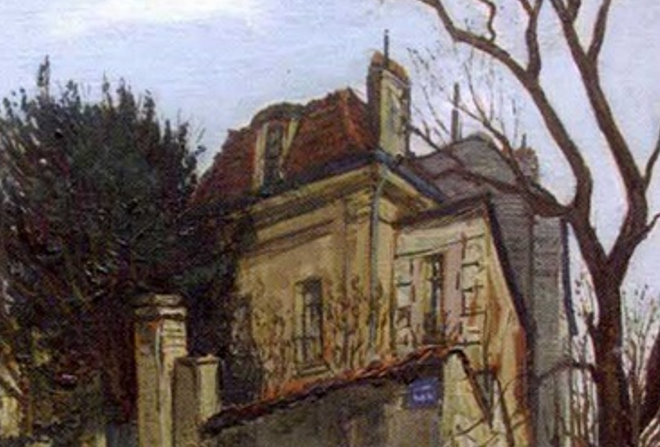 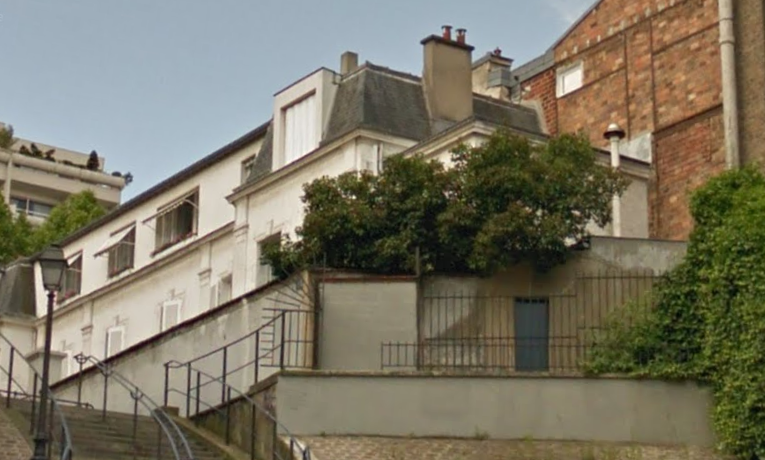 Whereas the details of window and chimney in the Escaliers de Belleville painting are quite different: 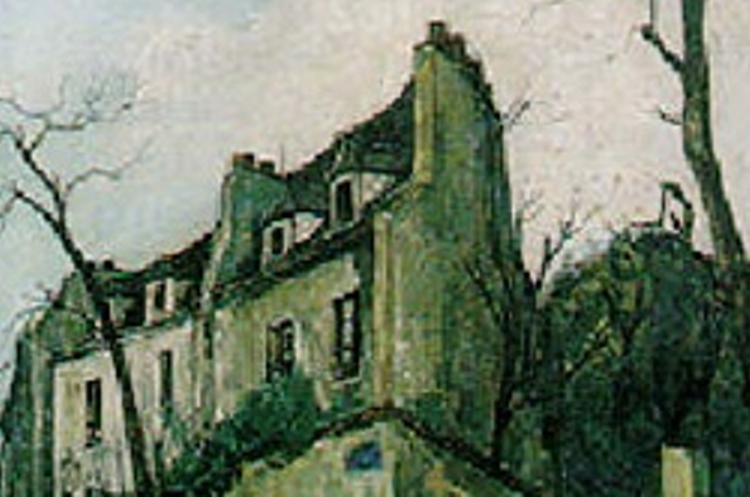 Either Quizet was happy to be inaccurate, or the Escaliers de Belleville painting is of a quite different staircase. If it is a different staircase, I haven't found it yet. Another staircase painted by Quizet poses a different problem: 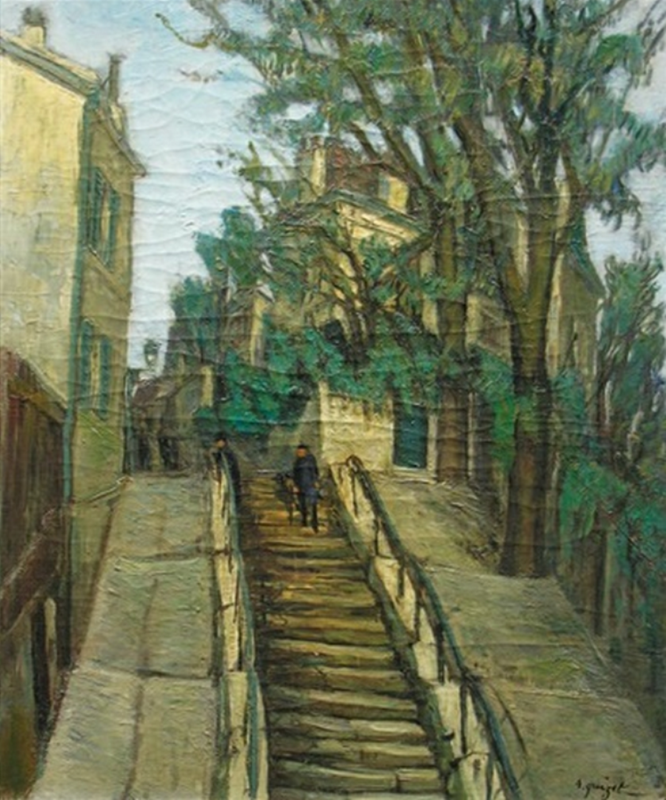 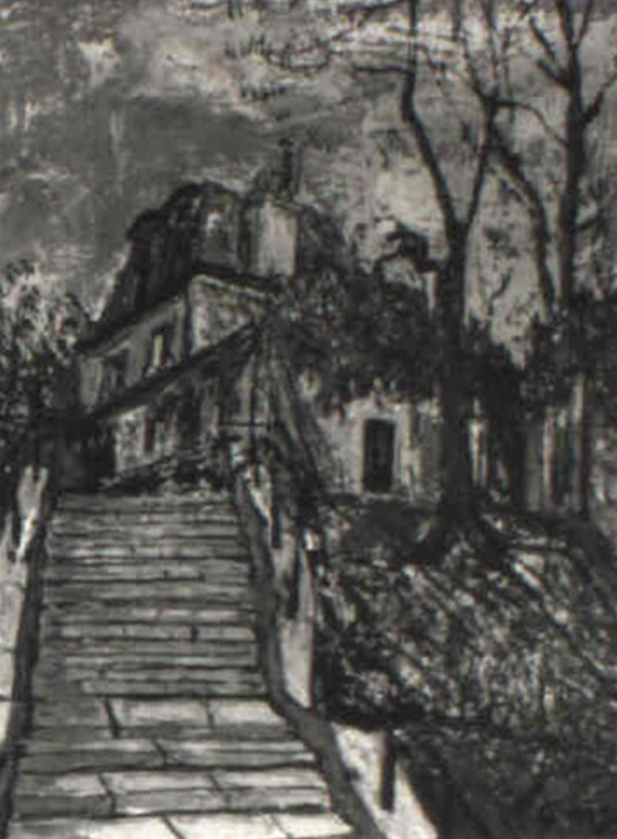 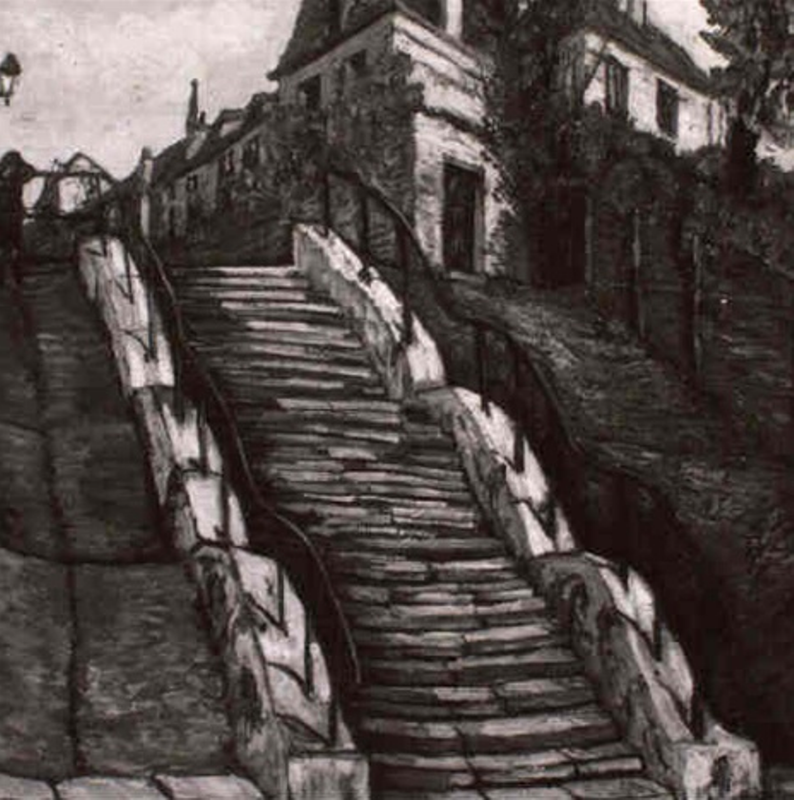 The last two images above are, I think, black-and-white reproductions of colour oil paintings. All three are, I think, of the same place; all three were identified by their various sellers as of staircases in Montmartre, but to my eye all three buildings at the top are variations of the Manoir de Beauregard on the rue des Lilas. I haven't, at least, found a Montmartre staircase with similar architectural surrounds, though I'm still looking.
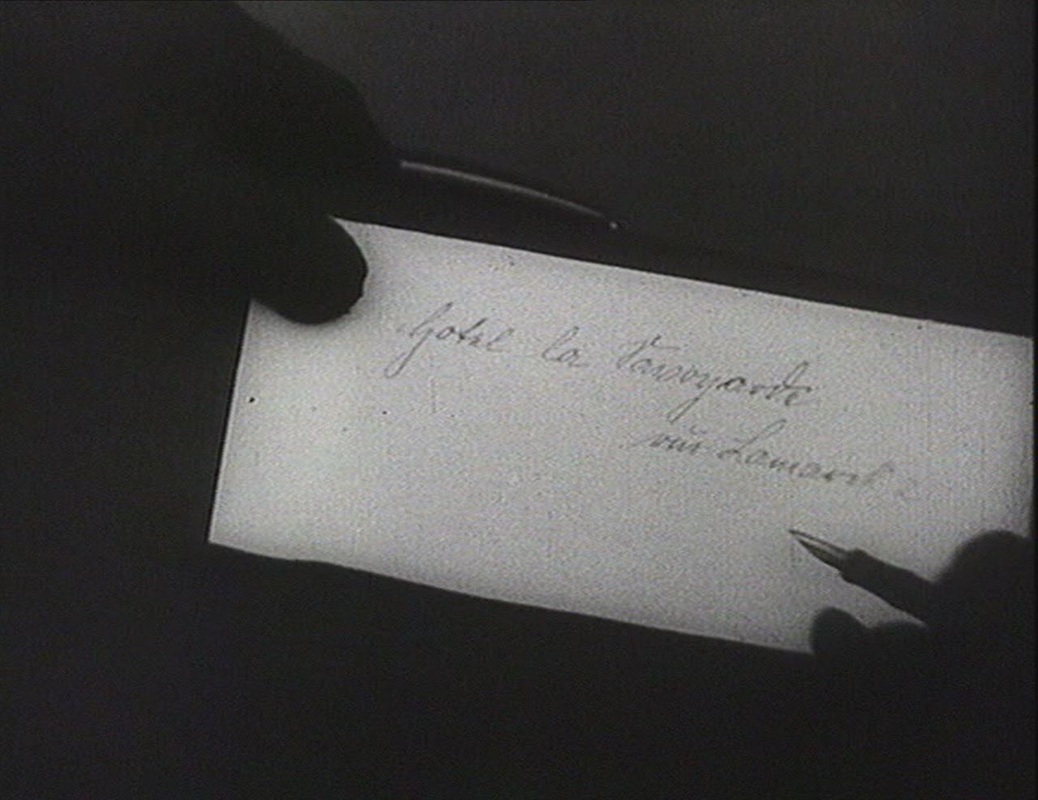
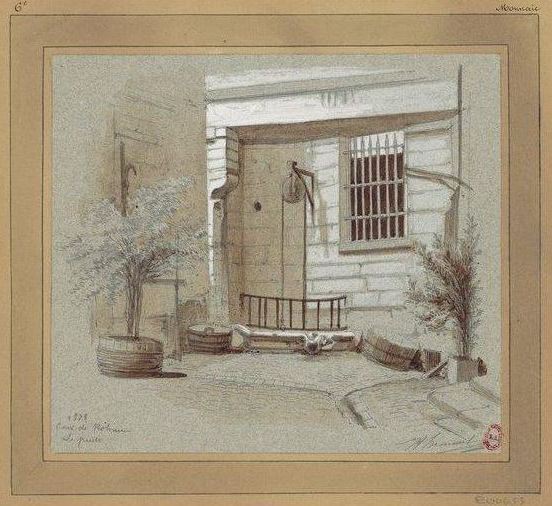
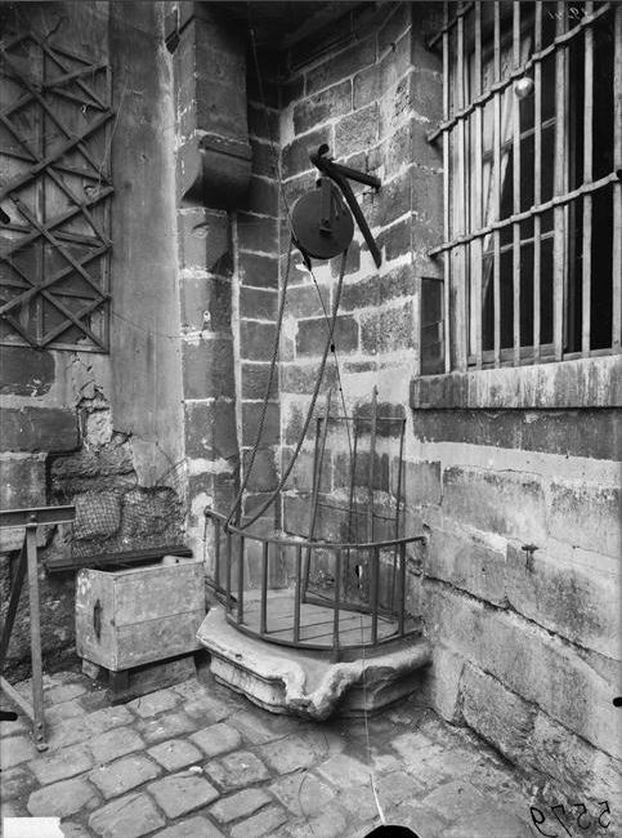
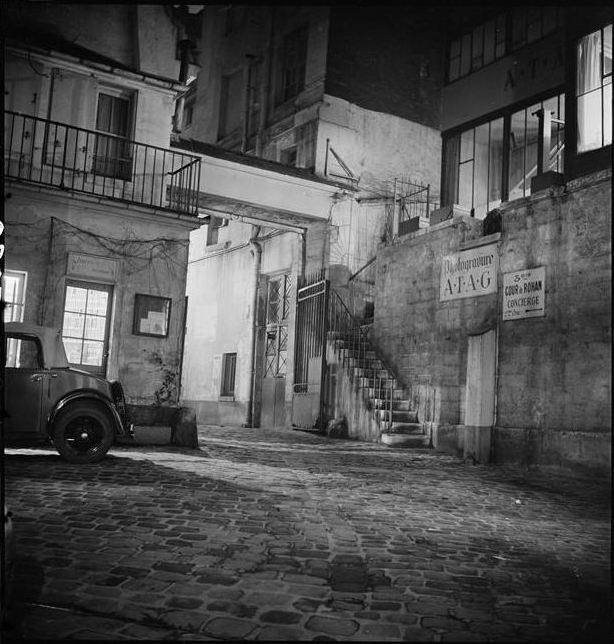
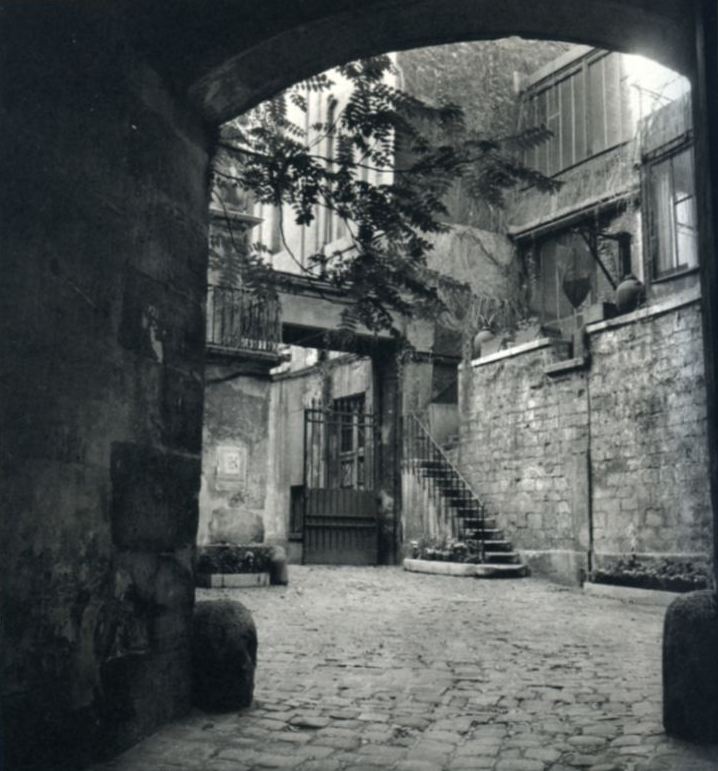
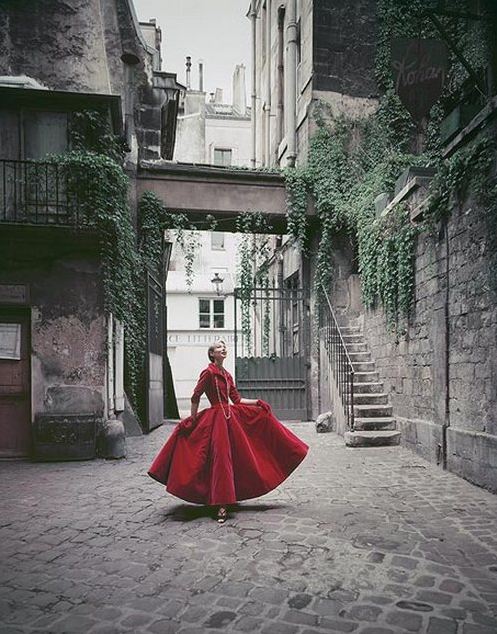
If I get to be any more definite about either the staircase in the Gaumont film or the staircase(s) painted by Quizet, I shall post again. 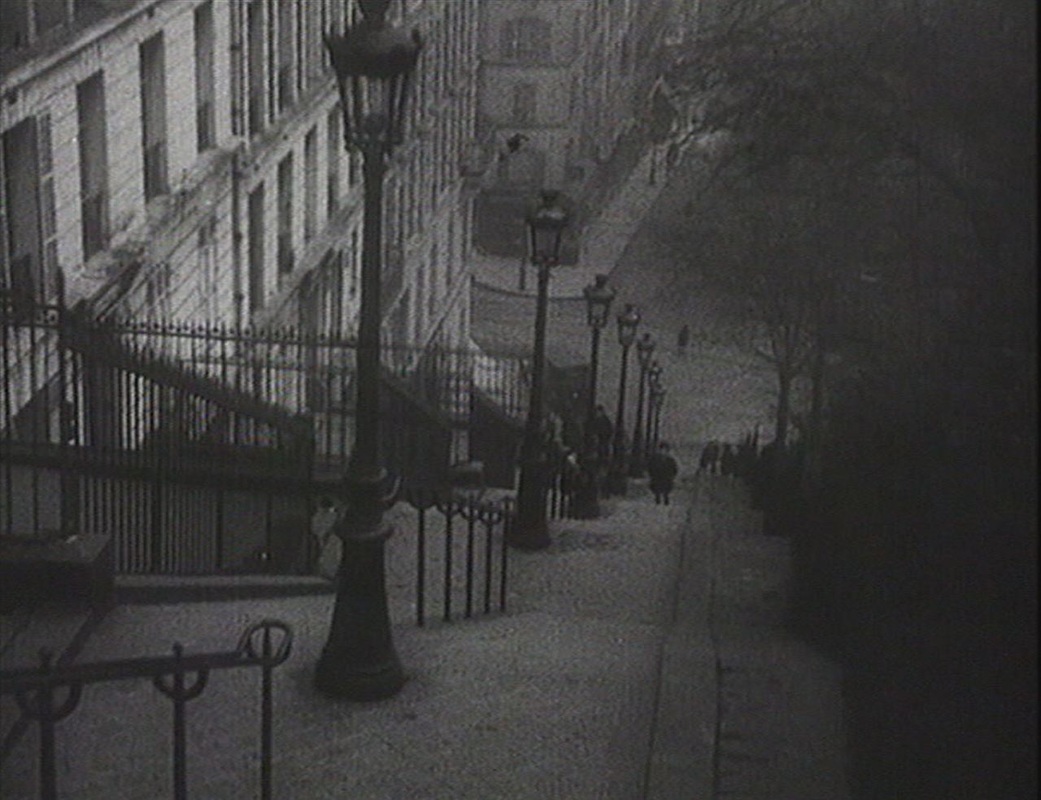 In a pan the film climbs the stairs that connect the rue Paul Albert with the rue Lamarck, finishing with a view of its tourist protagonists at the Hôtel 'A La Savoyarde': 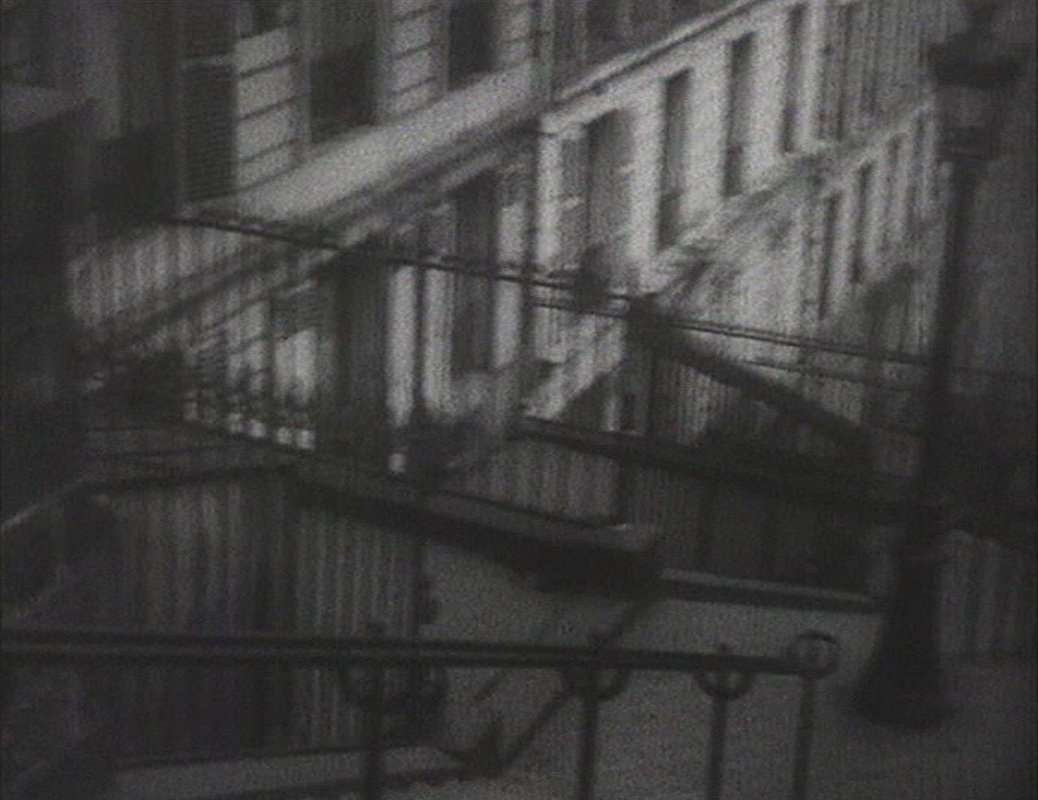 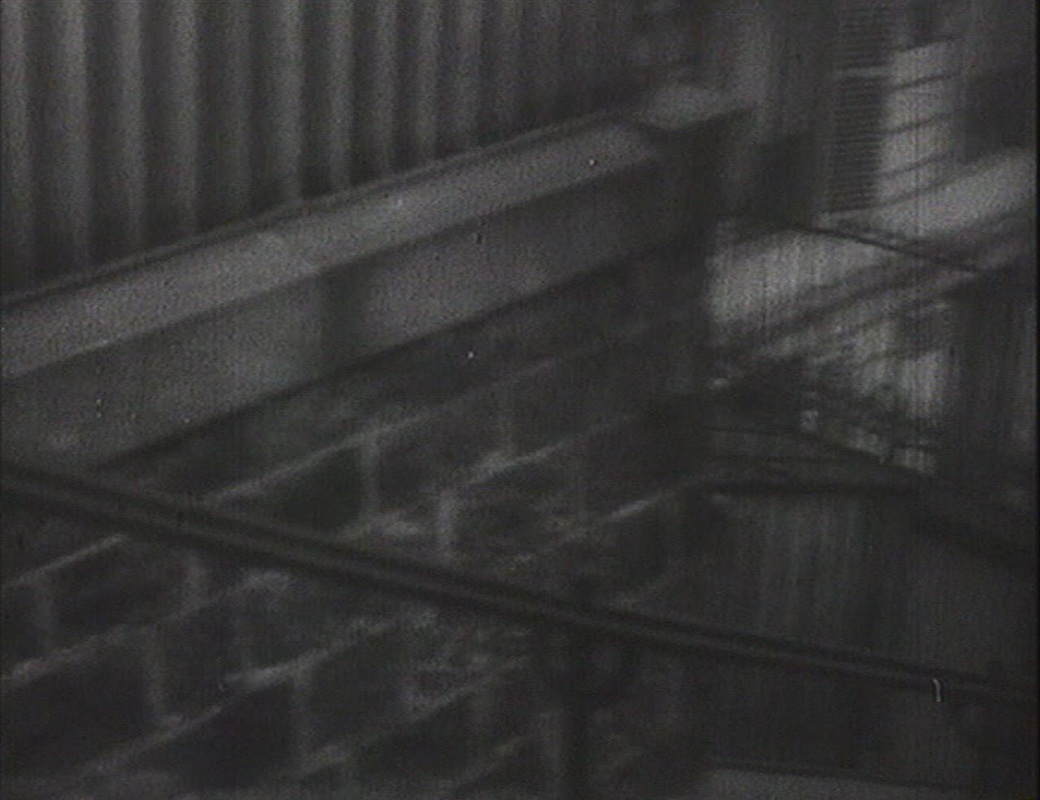  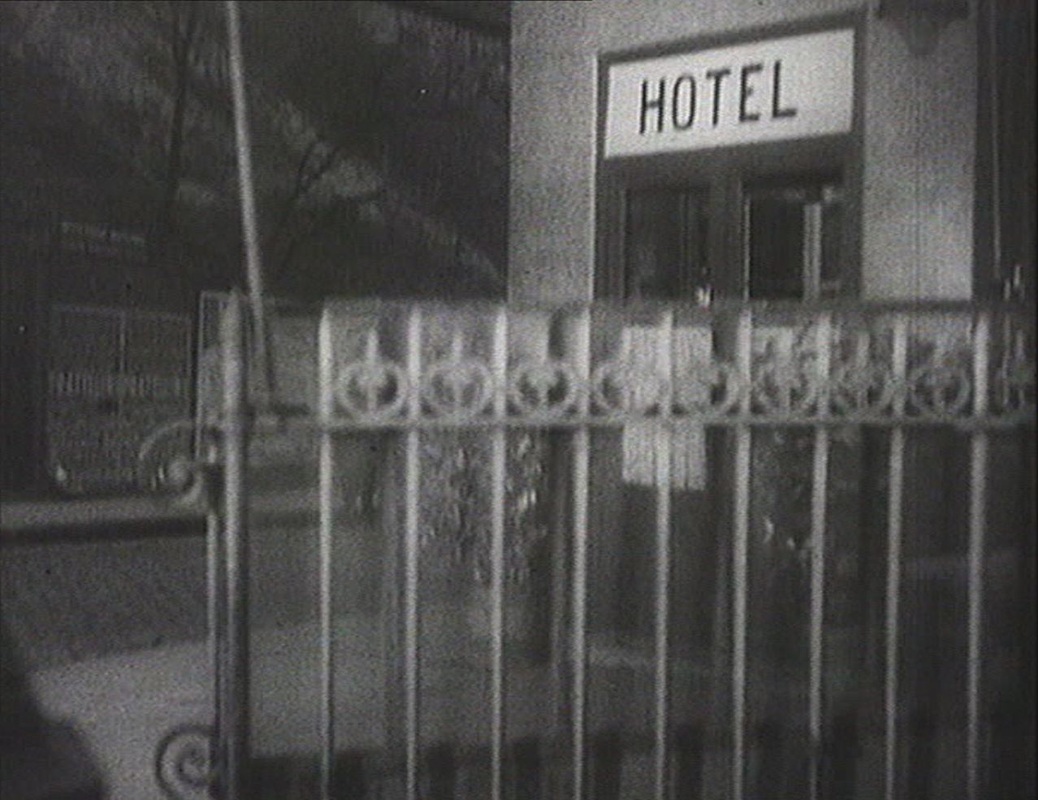  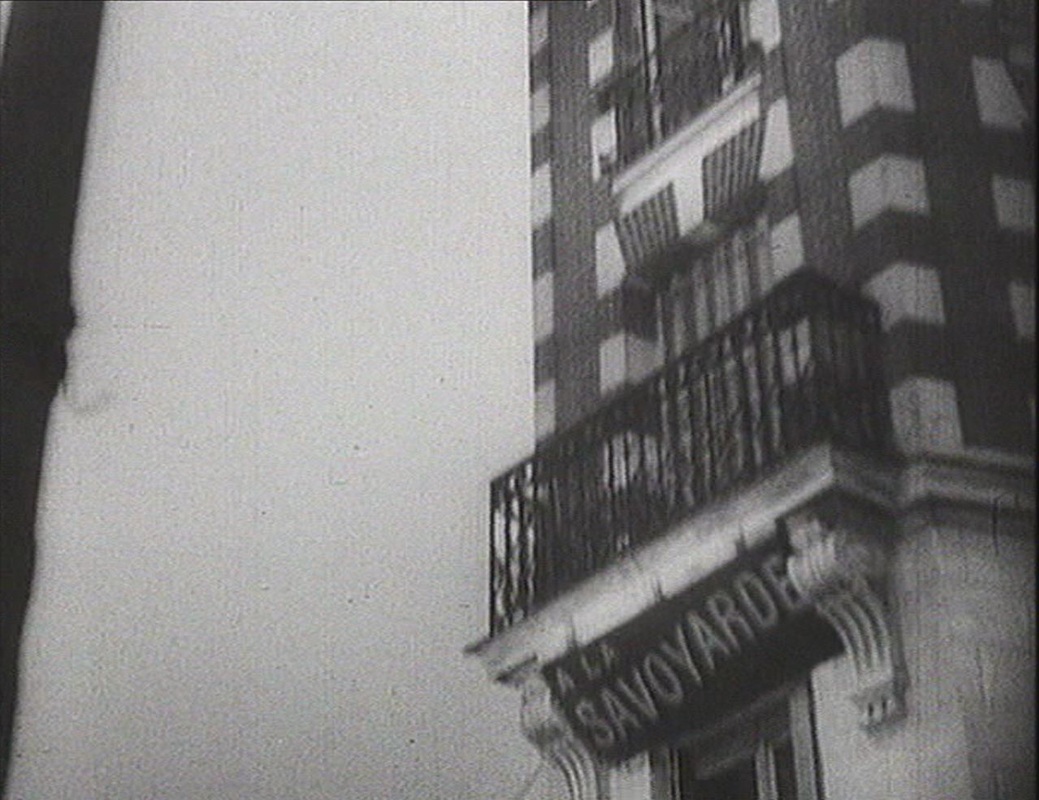  Looking up from their hotel room they have a view of the Sacré Coeur : 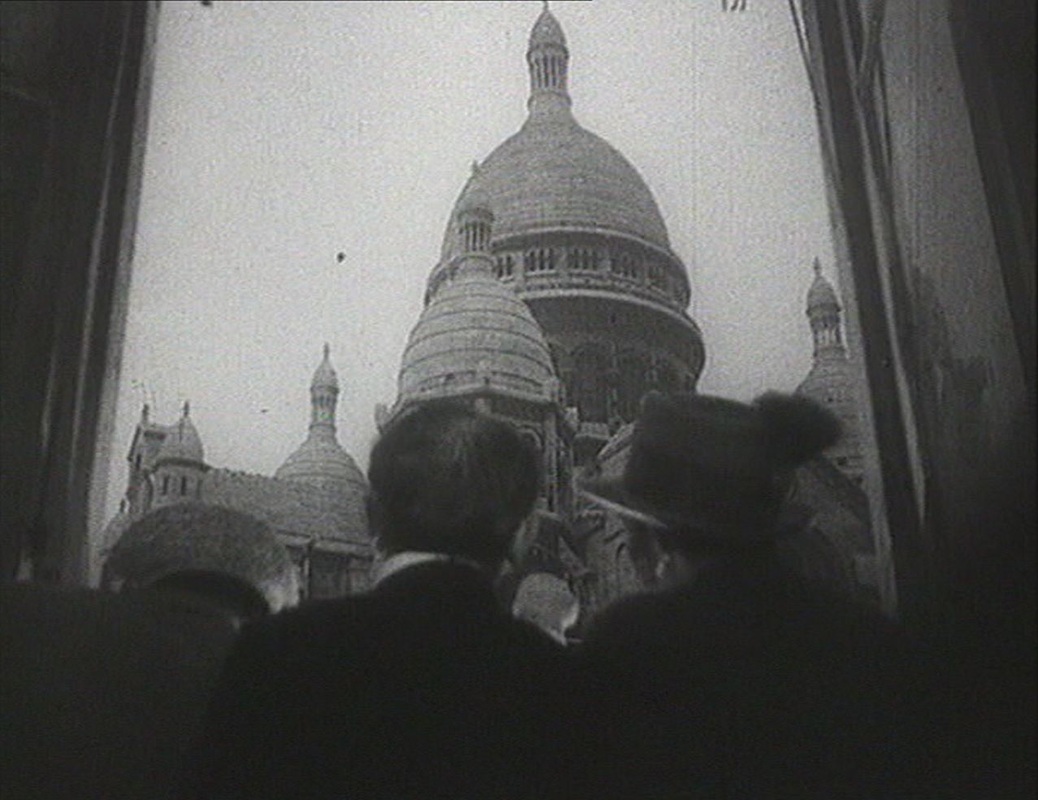 Looking down they see the top of the staircase, and the woman that one of them has come to meet: 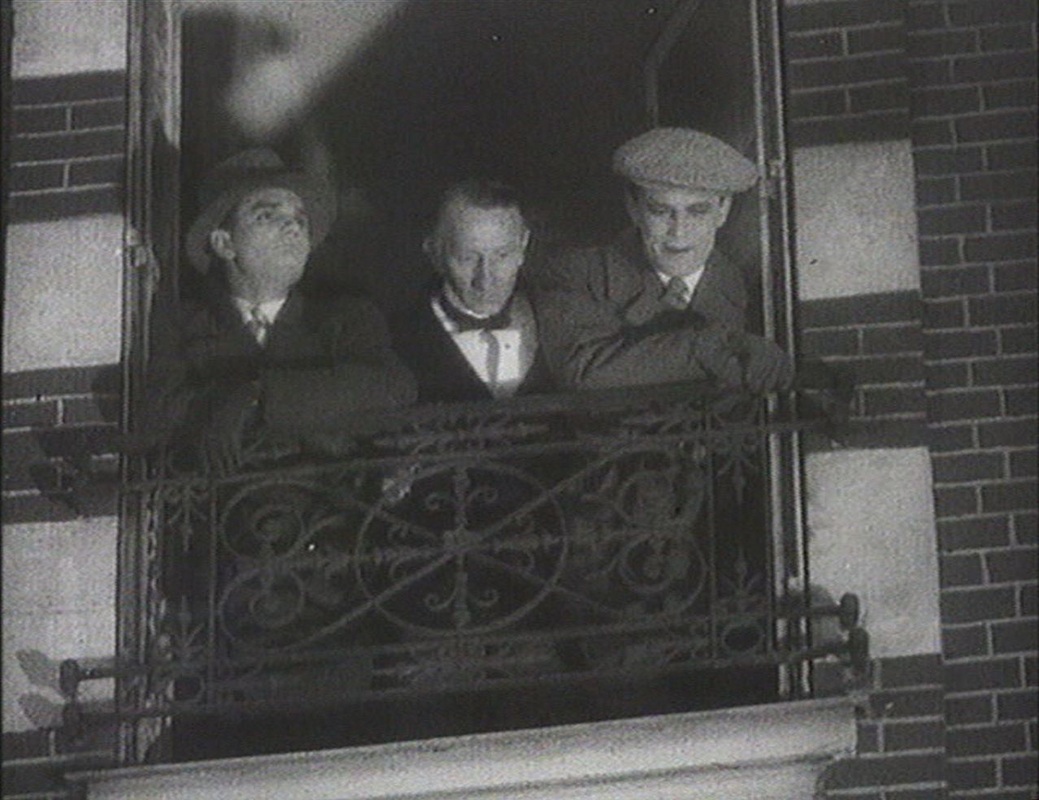 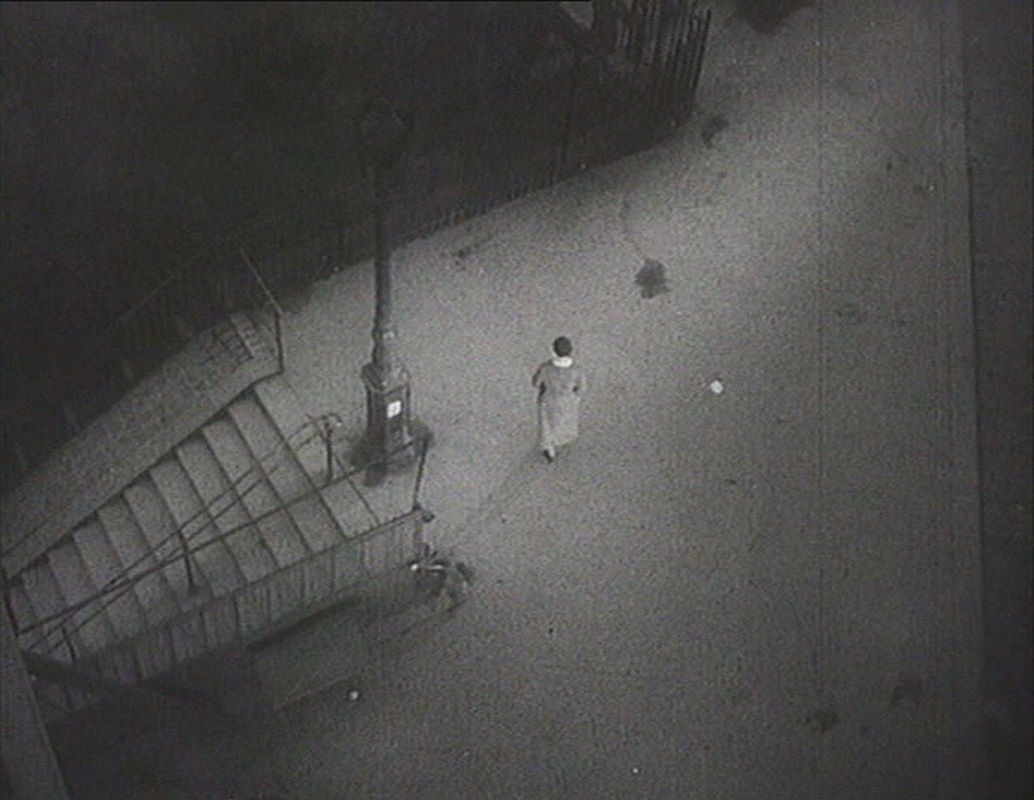 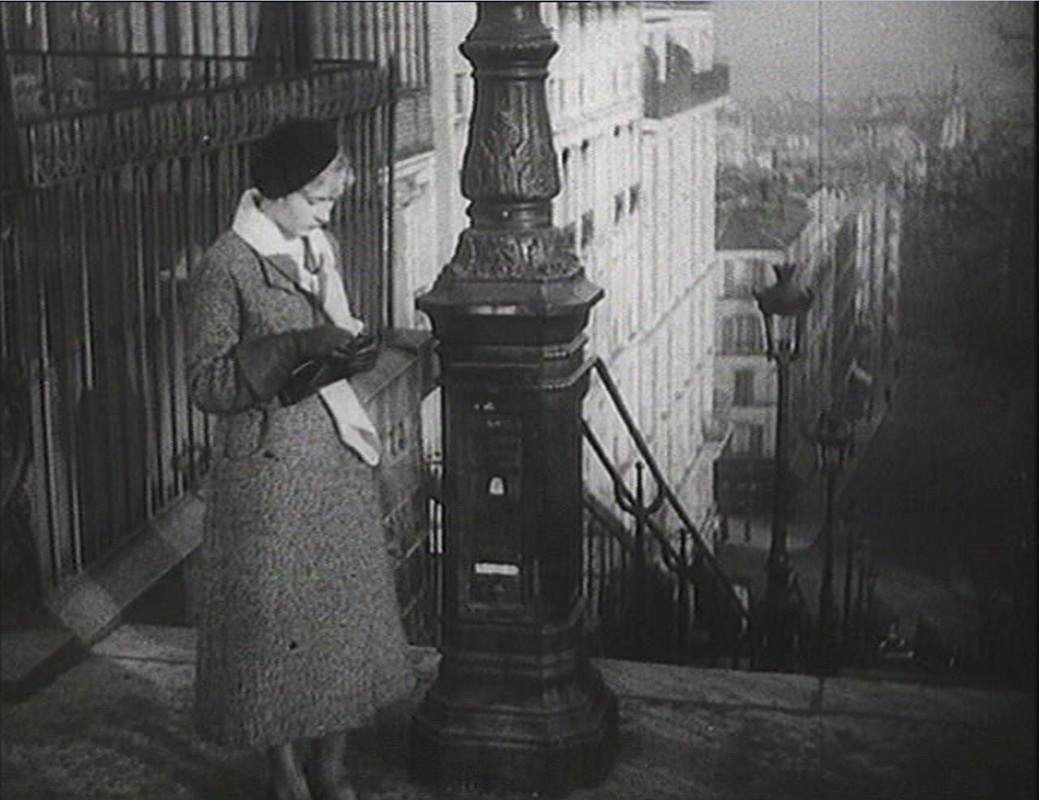 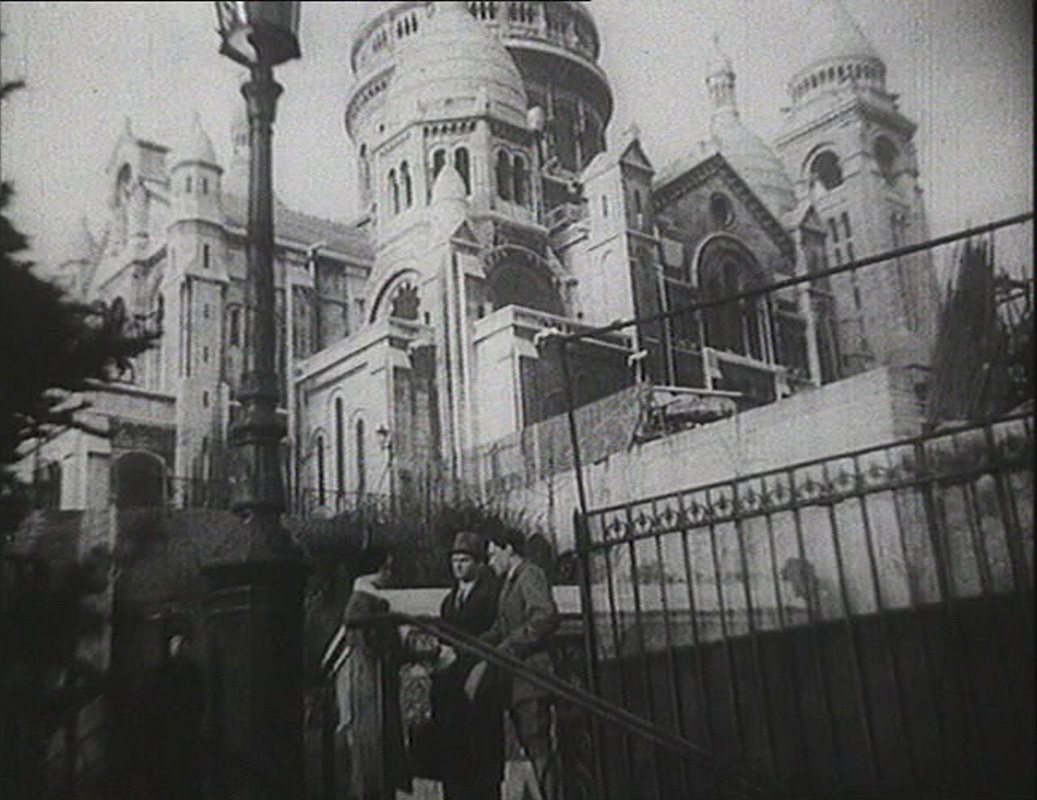 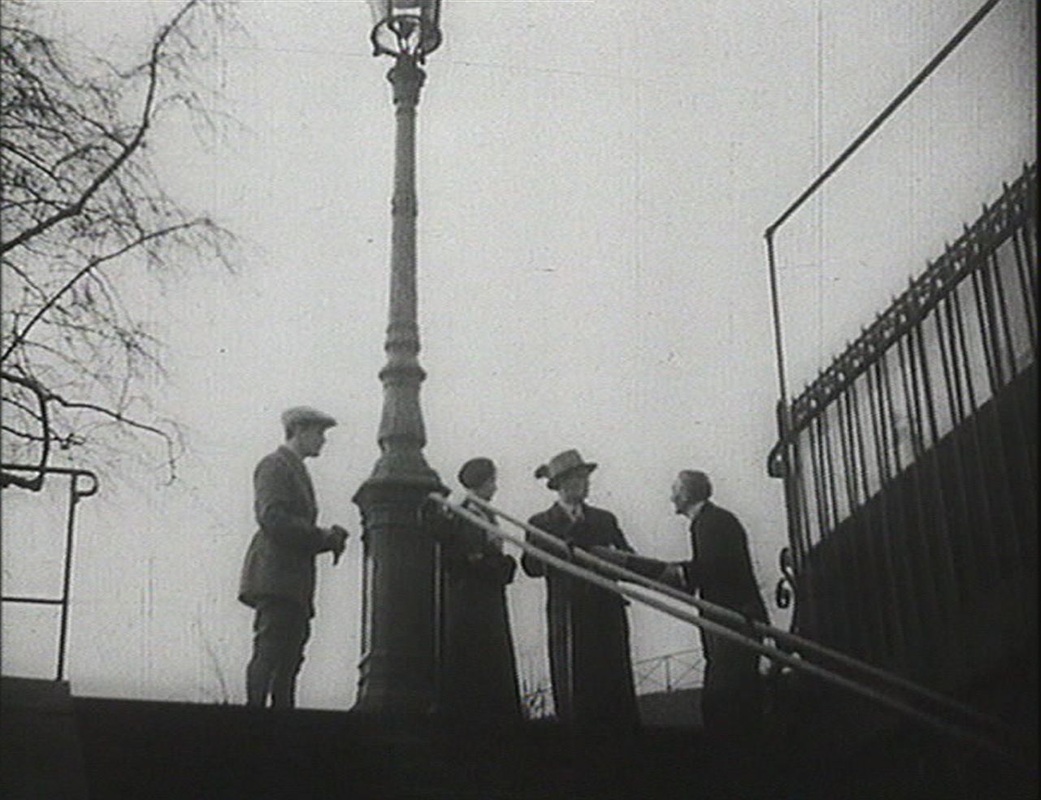 The stairs are still as they were, but the façade of the hotel has changed, it has lost its principal entrance, and it is no longer a hotel: 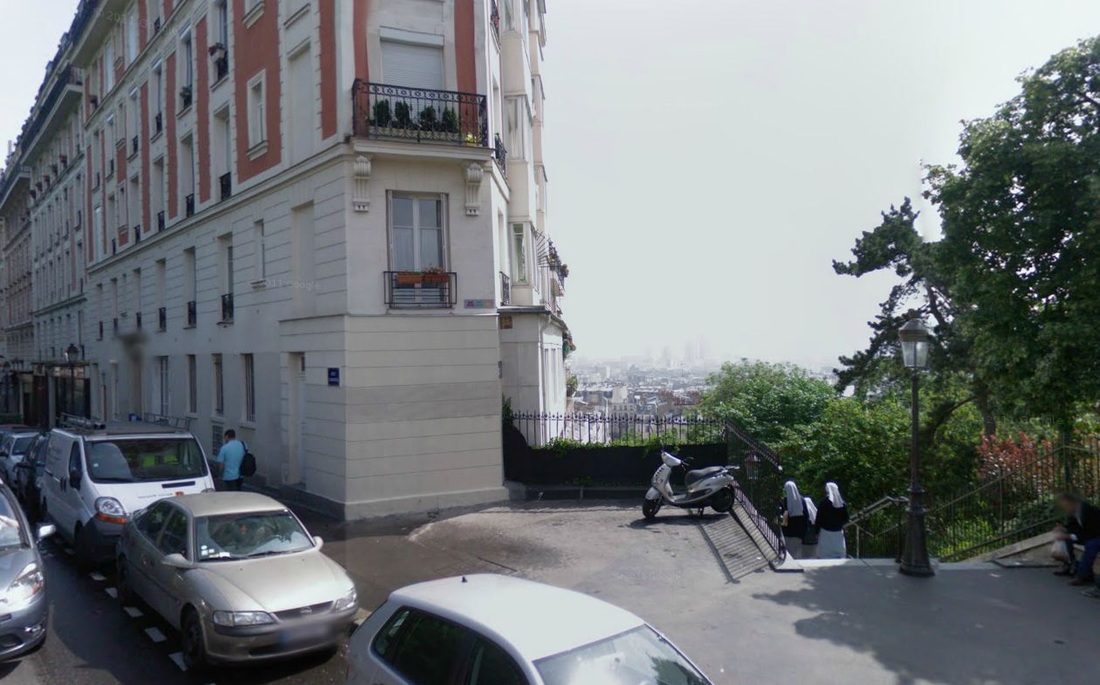 Google Maps, May 2008 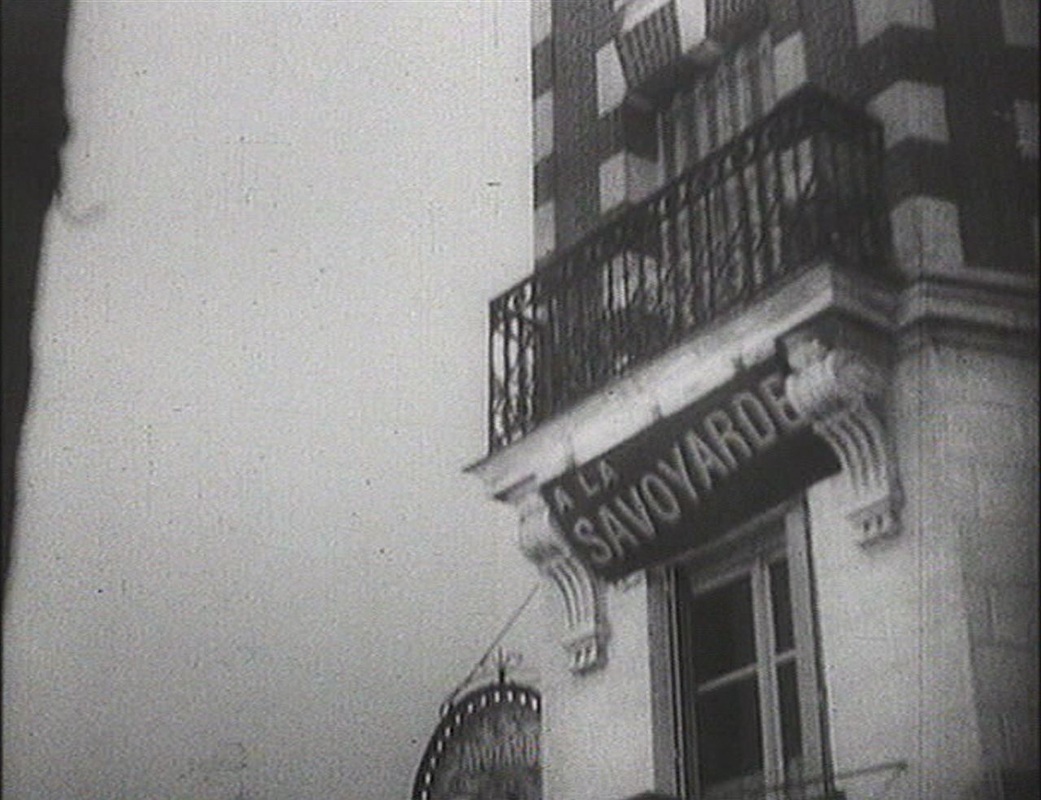 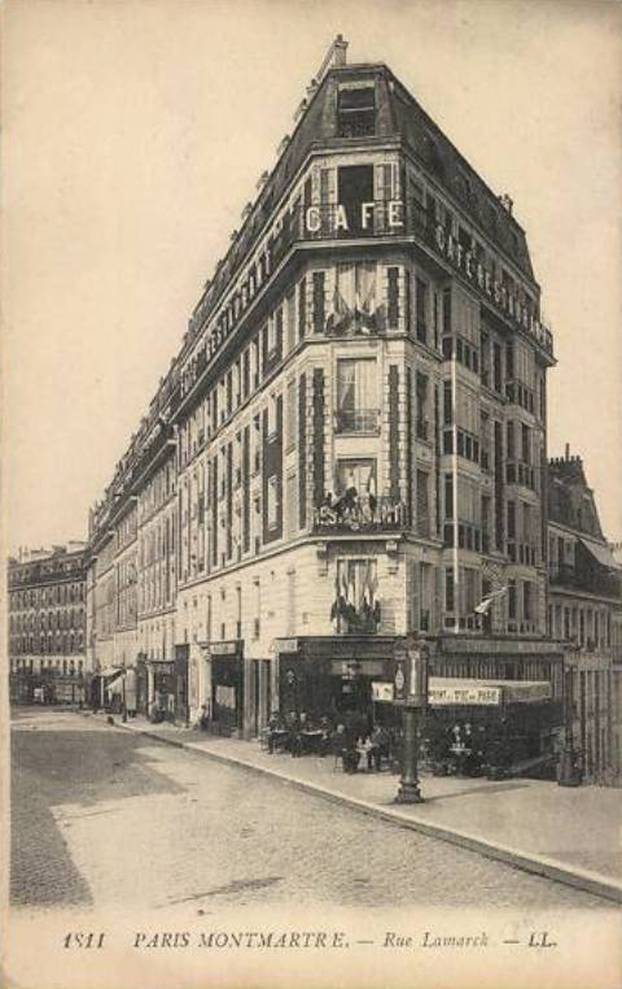 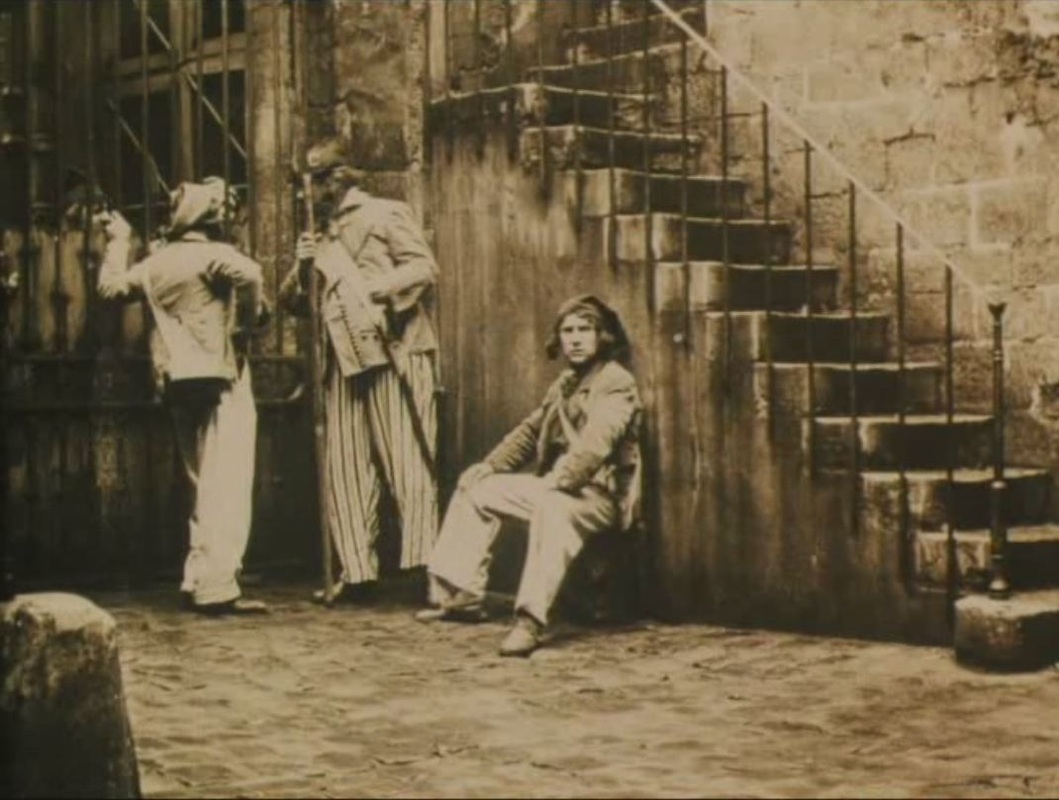 Le Chevalier de Maison-Rouge (Albert Capellani 1914) Among the Paris locations found by Albert Capellani in 1913 for his historical drama Le Chevalier de Maison Rouge was the cour de Rohan, also known as the cour de Rouen. This is a set of courtyards with parts dating back to the thirteenth century, though most is from the sixteenth century onwards, such as this well: 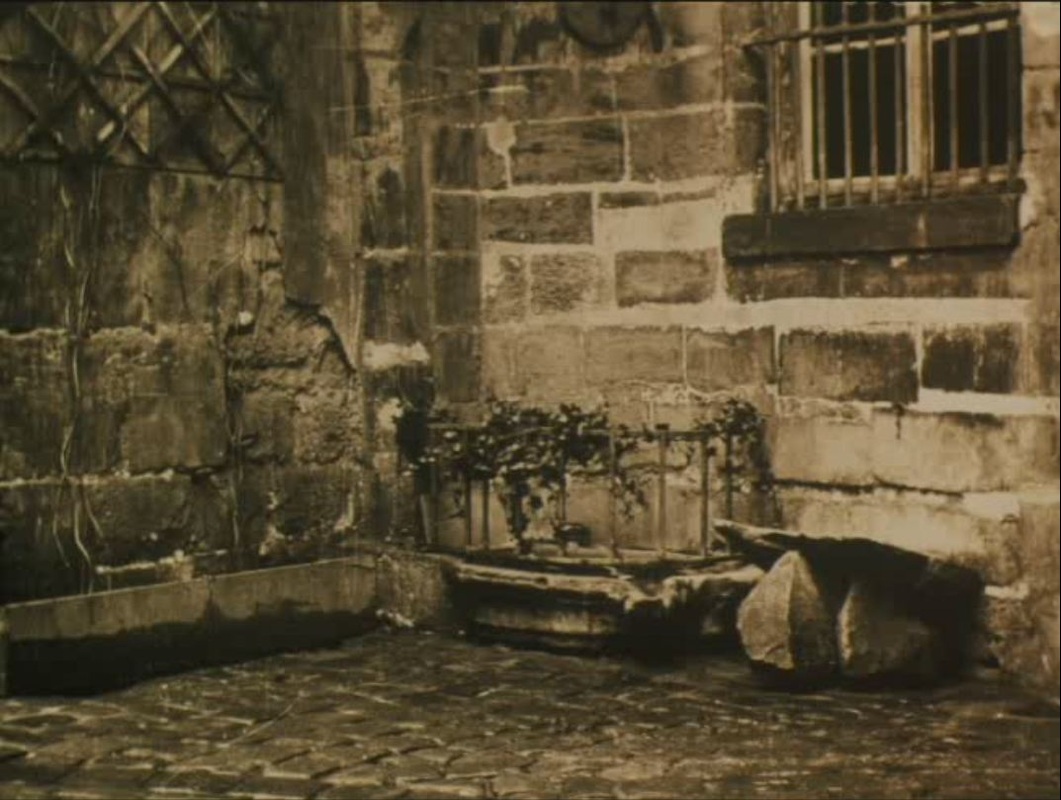 Le Chevalier de Maison-Rouge (Albert Capellani 1914)
But the most often represented feature of the cour is the staircase: 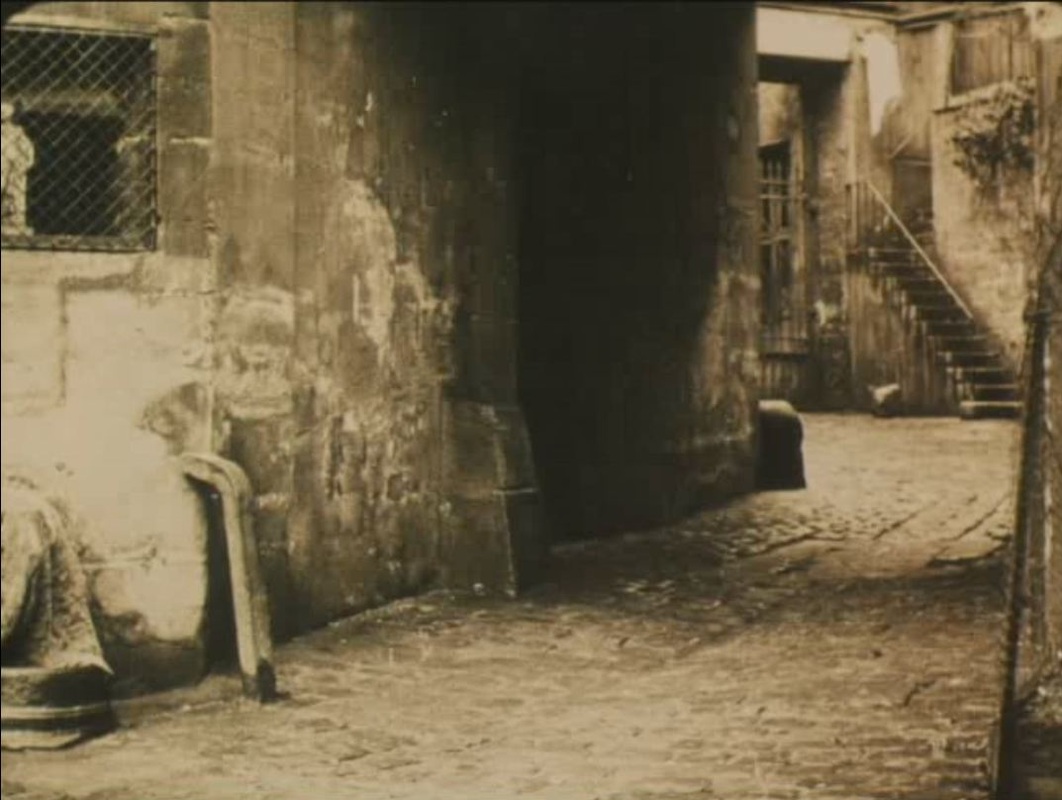 Le Chevalier de Maison-Rouge (Albert Capellani 1914) Here it is in a postcard, franked in 1908, and in a photograph by Atget from 1915: 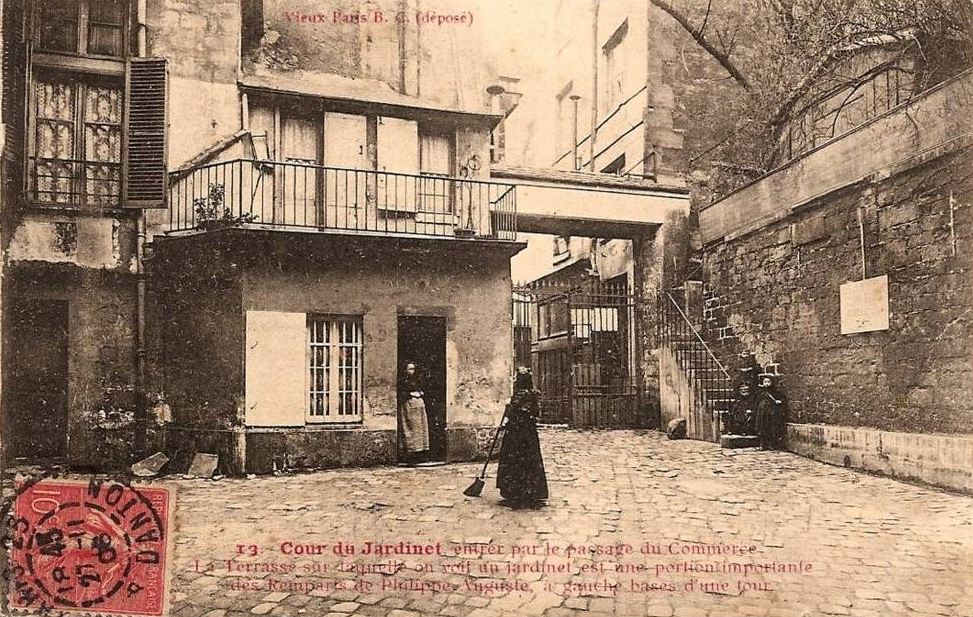 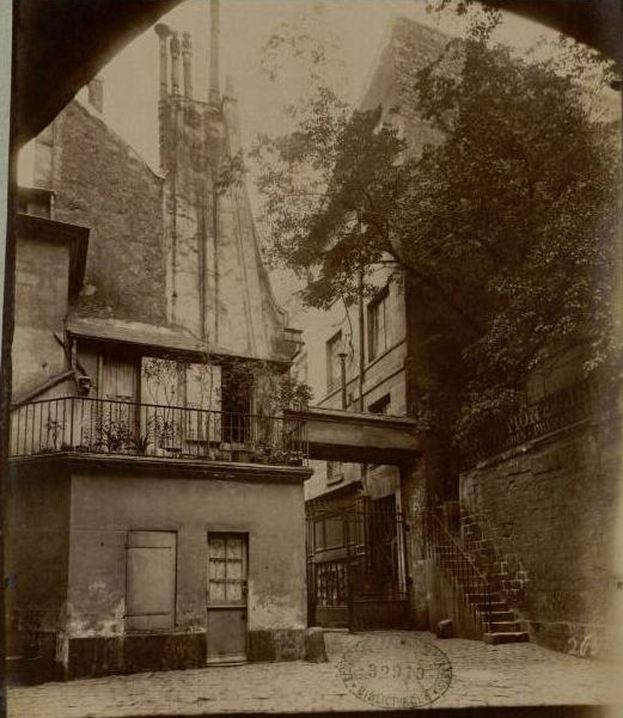 It was photographed by Marcel Bovis in 1938 and by Janine Niepce in 1957:
And Mark Shaw photographed a Chanel dress there in 1955:
Just up those stairs was the painter Balthus's studio. When Leslie Caron runs up them, as Gigi, she appears to be going to visit him:  Gigi (Vincente Minnelli 1958) When Louis Jourdan comes down into the courtyard after visiting Gigi, in the next shot he is in the rue de Furstemberg, which is where Balthus had a studio before coming to the cour de Rohan. These are strange coincidences. 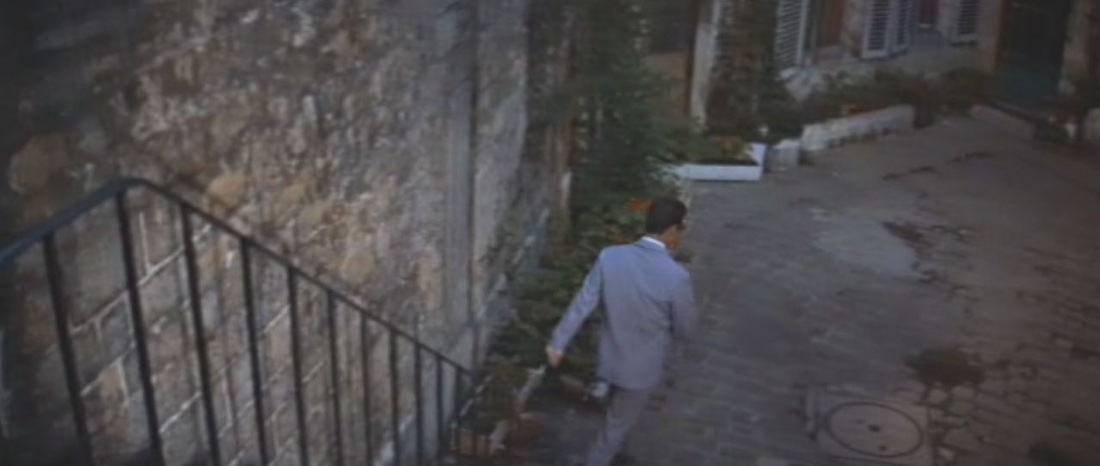 Gigi (Vincente Minnelli 1958)  Gigi (Vincente Minnelli 1958) 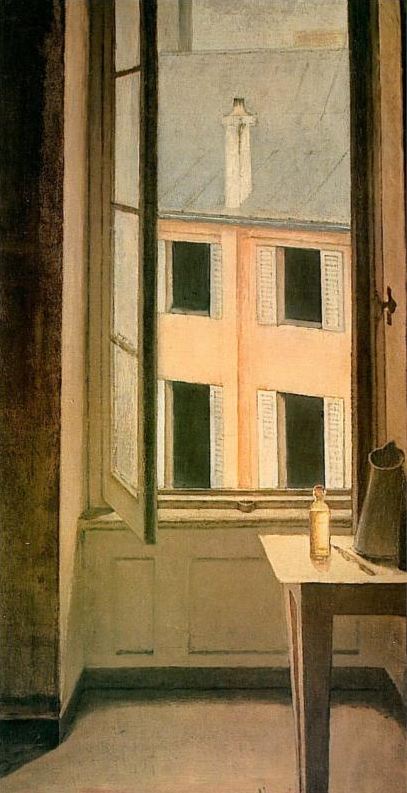 Balthus, cour de Rohan, 1951 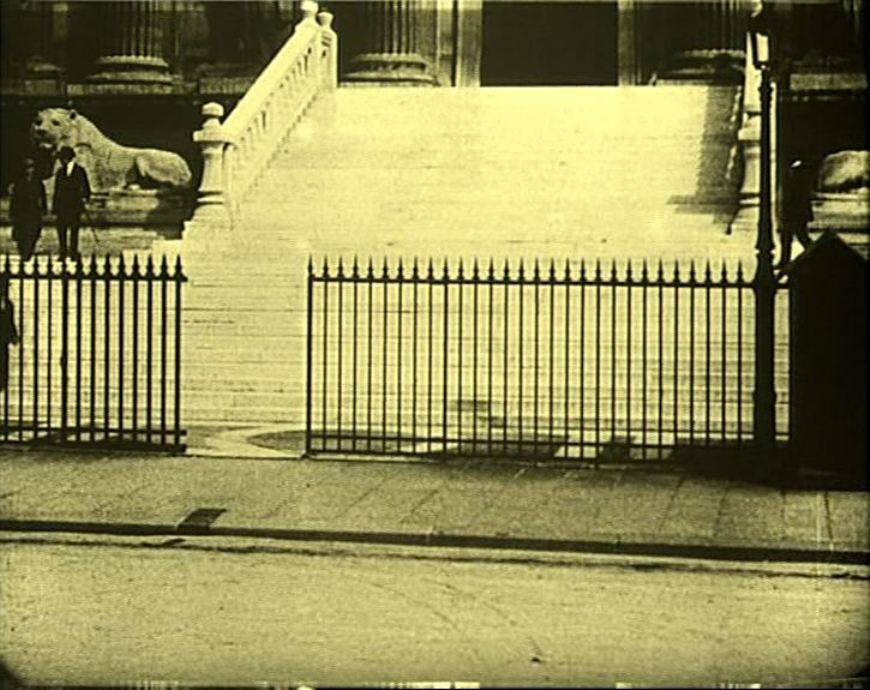 Fantômas - Le Mort qui tue (Louis Feuillade 1913) 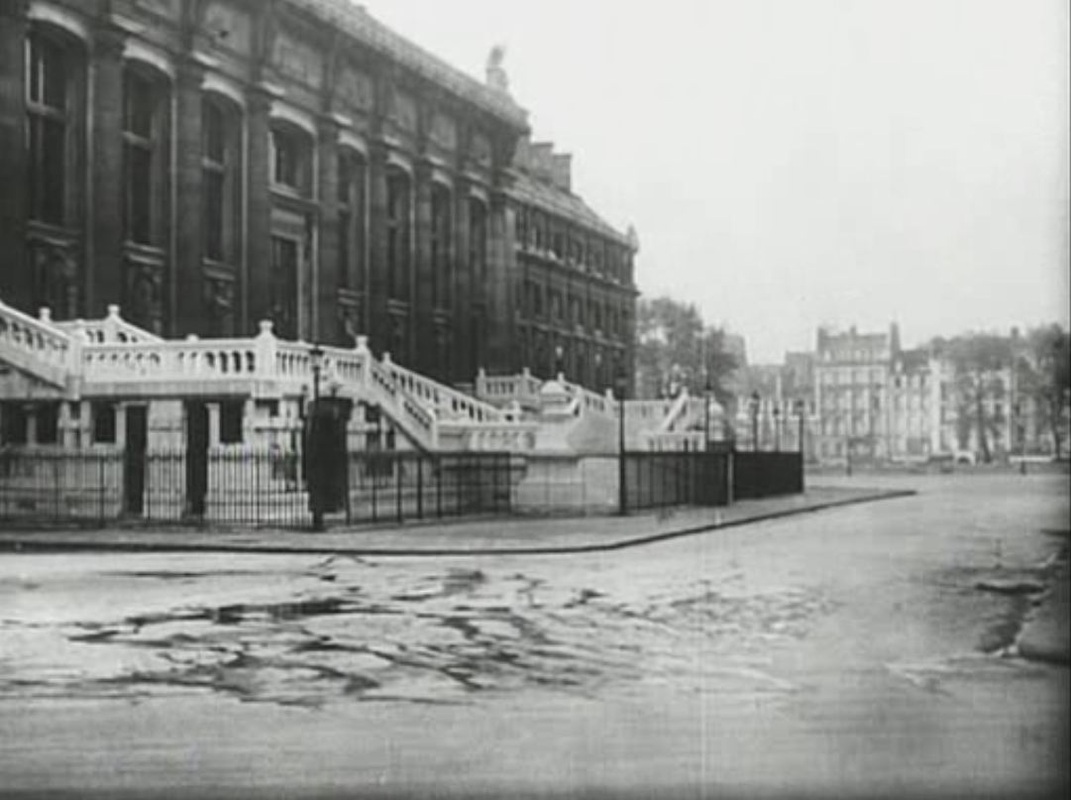 Paris qui dort (René Clair 1923) 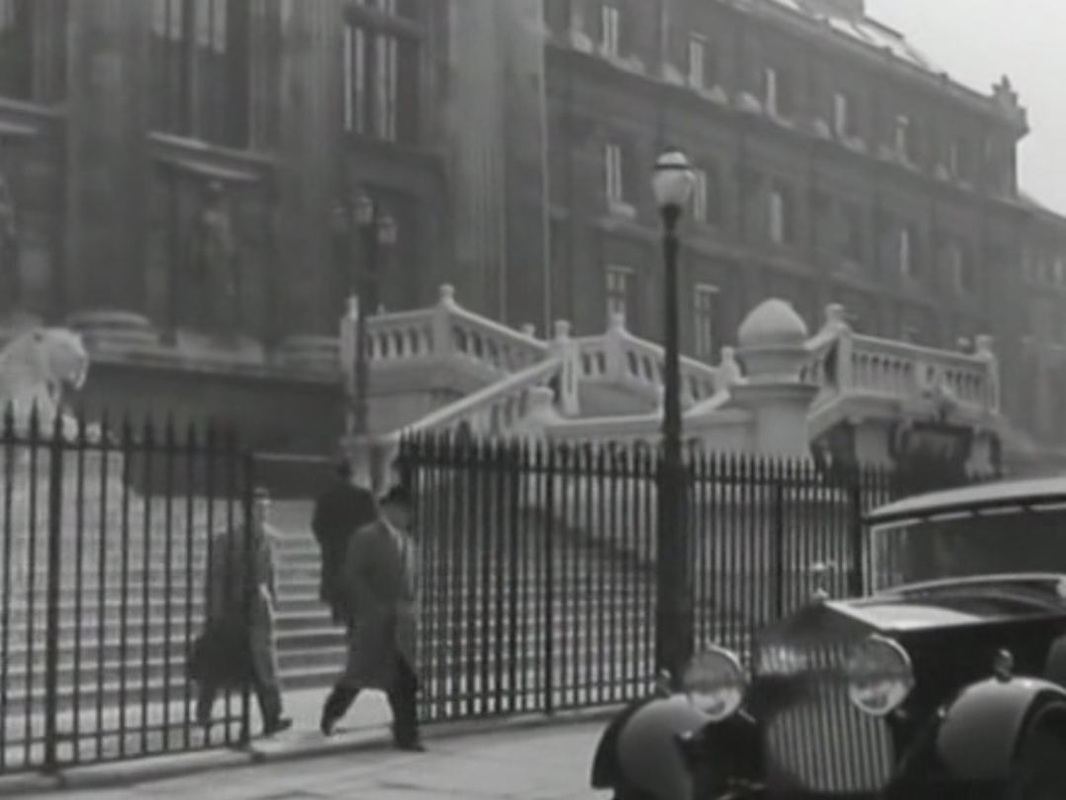 Miroir (Raymond Lamy 1947)  Je suis un sentimental (John Berry 1955) 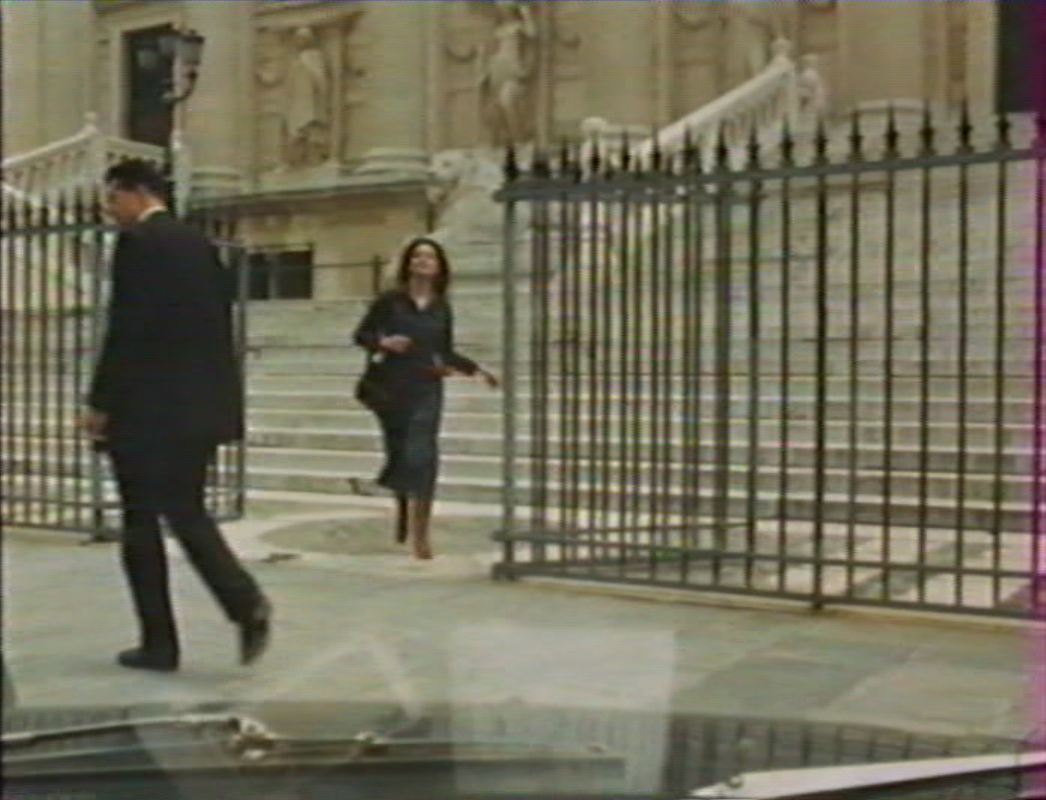 Out 1 - Noli me tangere, episode 2 (Jacques Rivette 1971) The steps of the entrance to the Palais de Justice, on the île de la Cité, facing the place Dauphine. These steps were inaugurated in 1875. 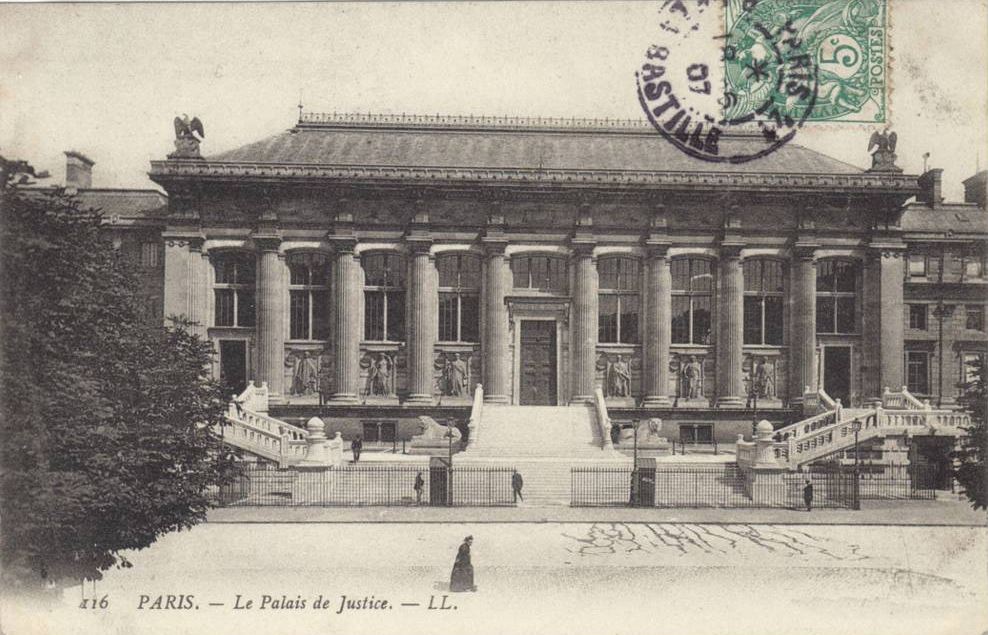 These are images illustrating a paper on 'Les Escaliers de Paris' for the 'Paris en Images' conference, 24-25 May 2012. For details of the conference see here: Paris en Images  Albert Robida 1871 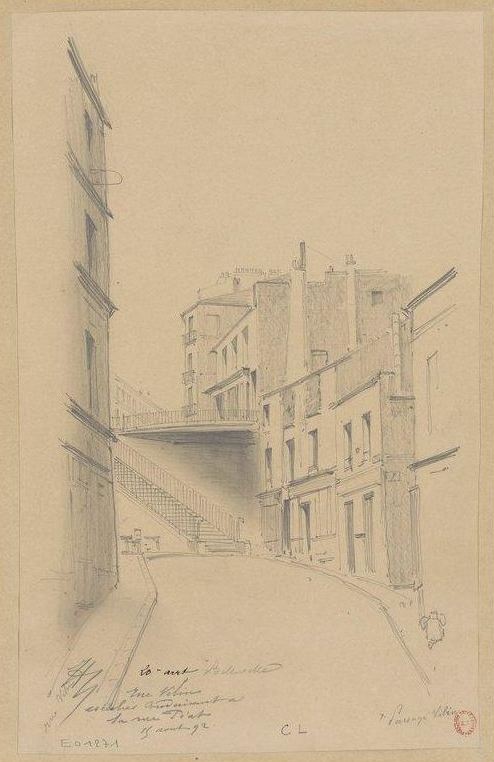 Jules-Adolphe Chauvet 1892 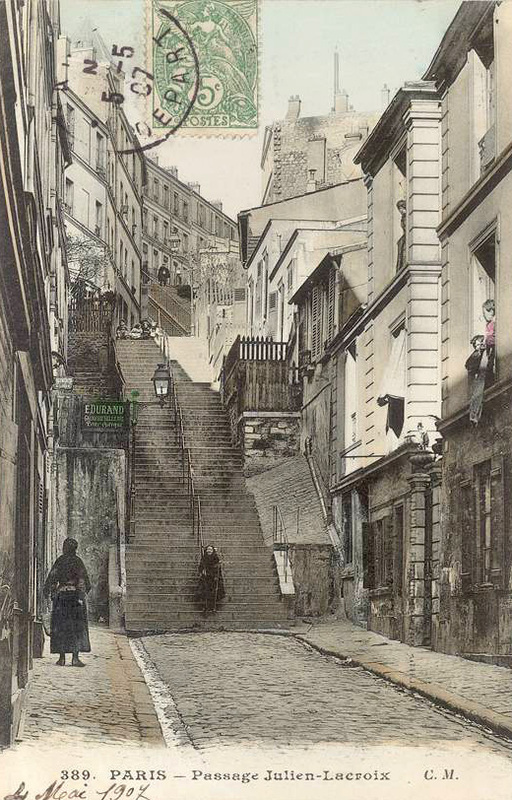 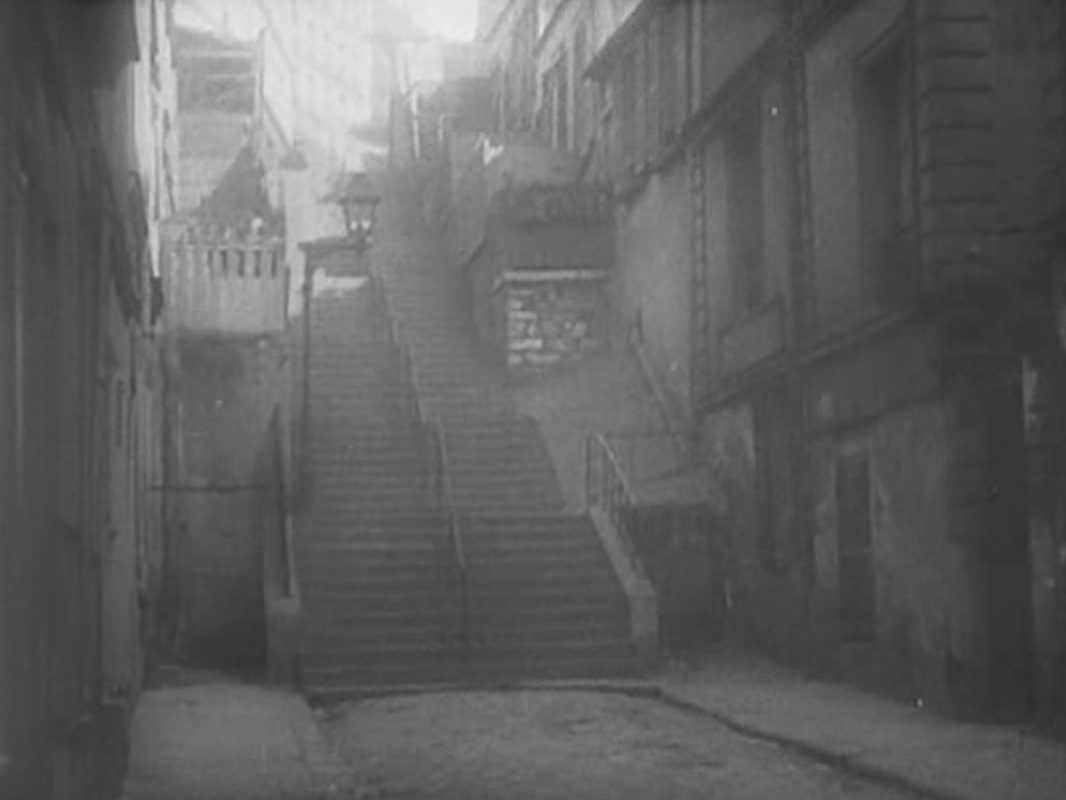 Ménilmontant (Dimitri Kirsanoff 1926) 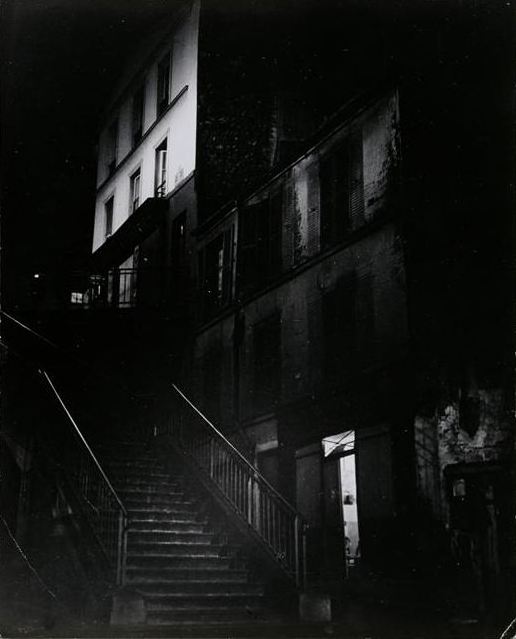 Brassai 1932 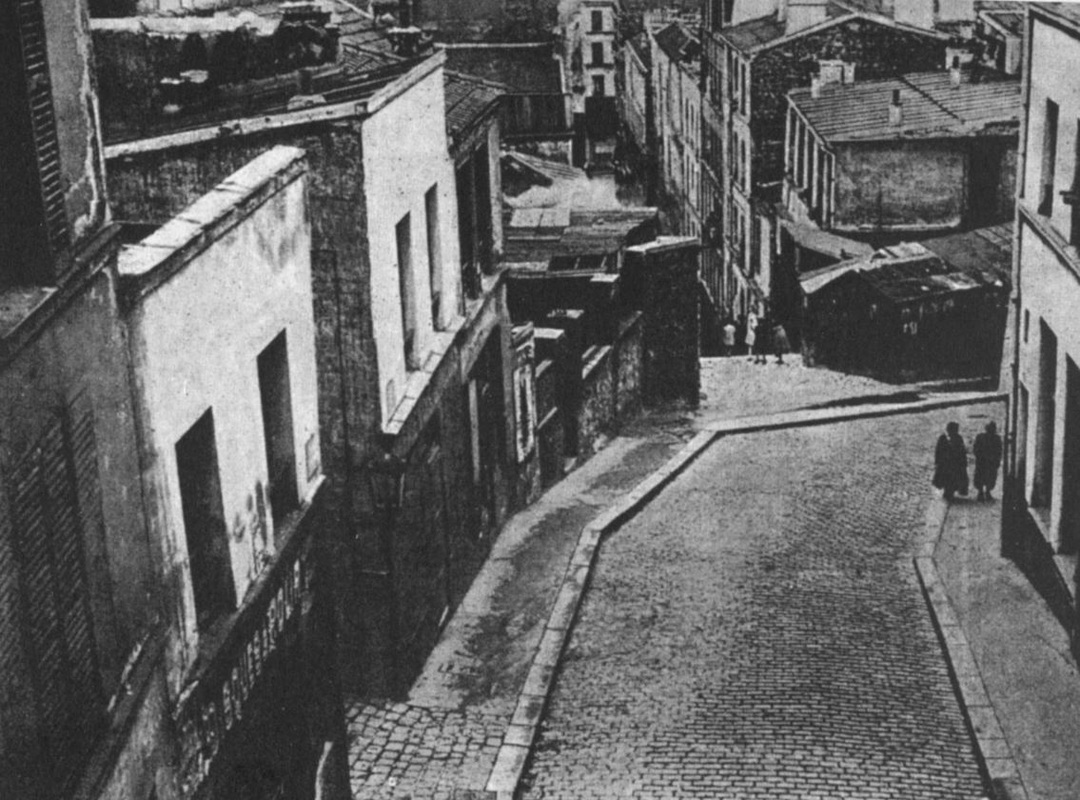 Ilya Ehrenburg 1933 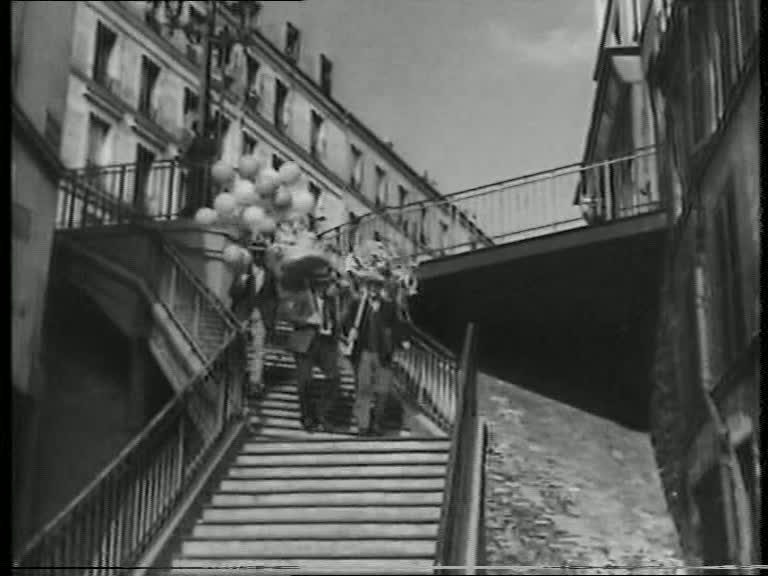 Ménilmontant (René Guissart 1937) 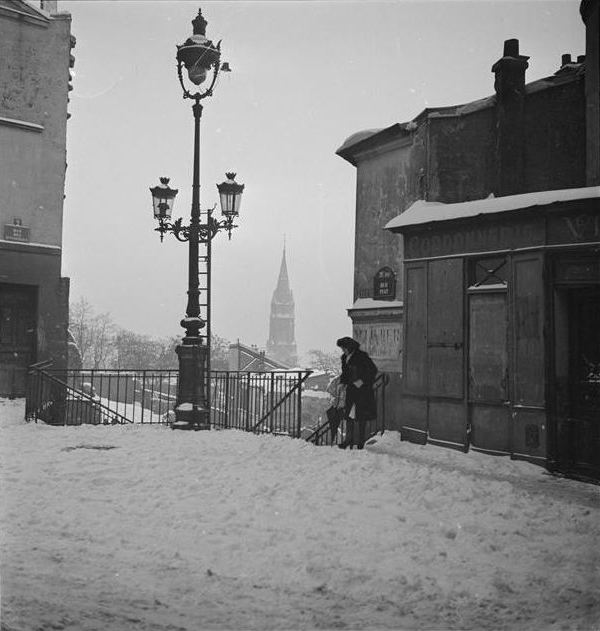 Marcel Bovis 1945 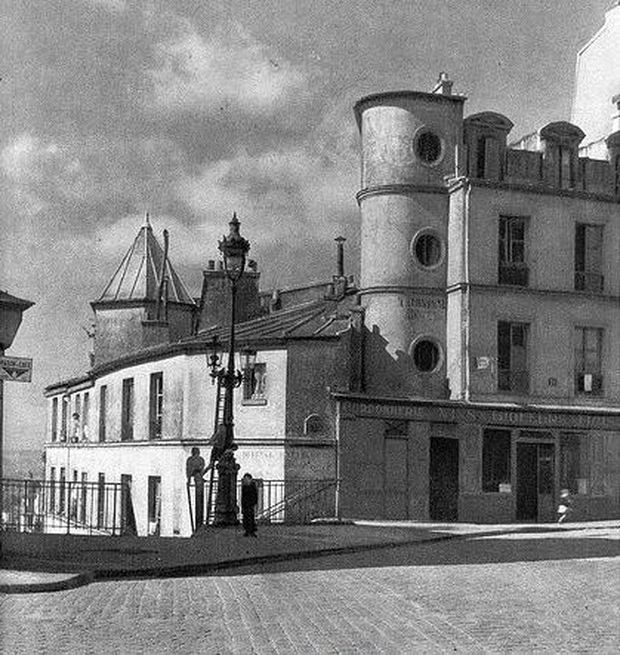 Marc Foucault 1946 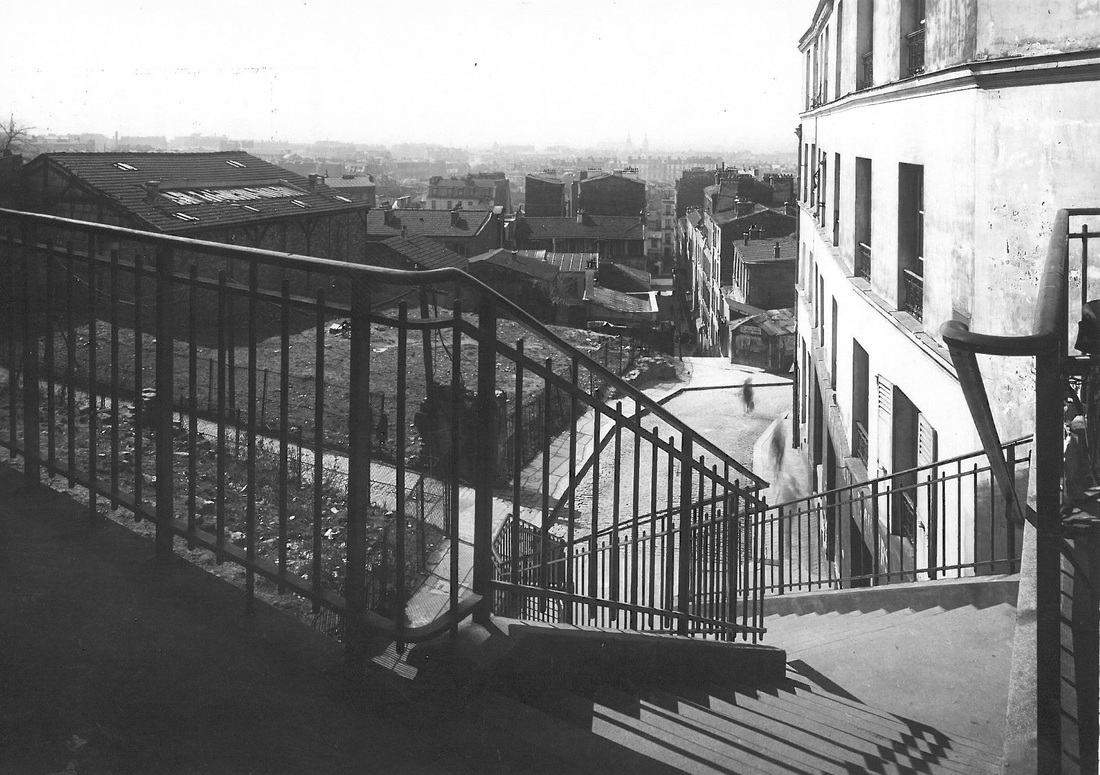 coll. Pavillon de l'Arsenal 1947 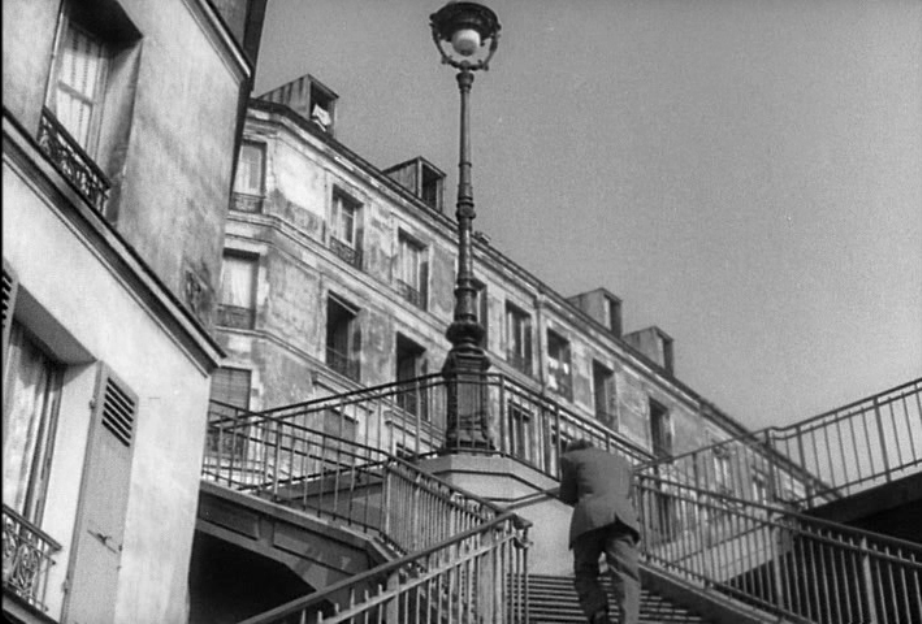 Orphée (Jean Cocteau 1950)  Sous le ciel de Paris (Julien Duvivier 1951)  La Commune de Paris (Robert Ménégoz 1951) 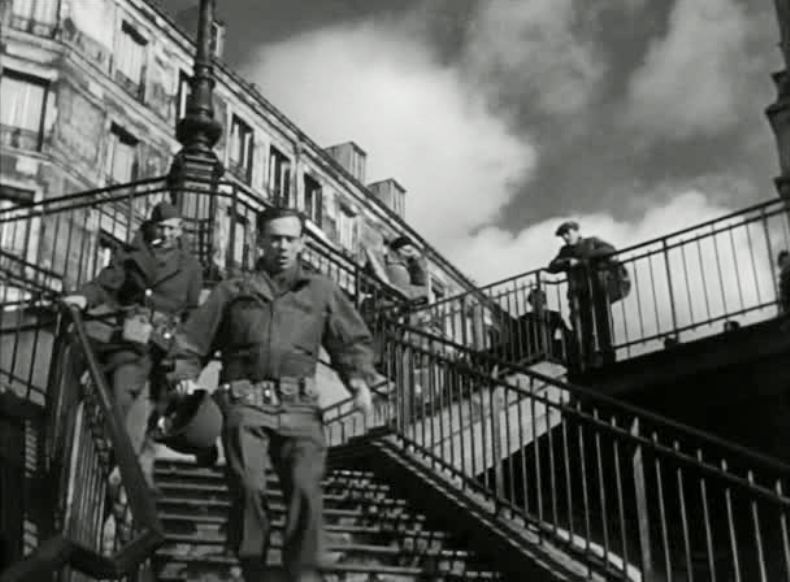 Act of Love (Anatole Litvak 1953) 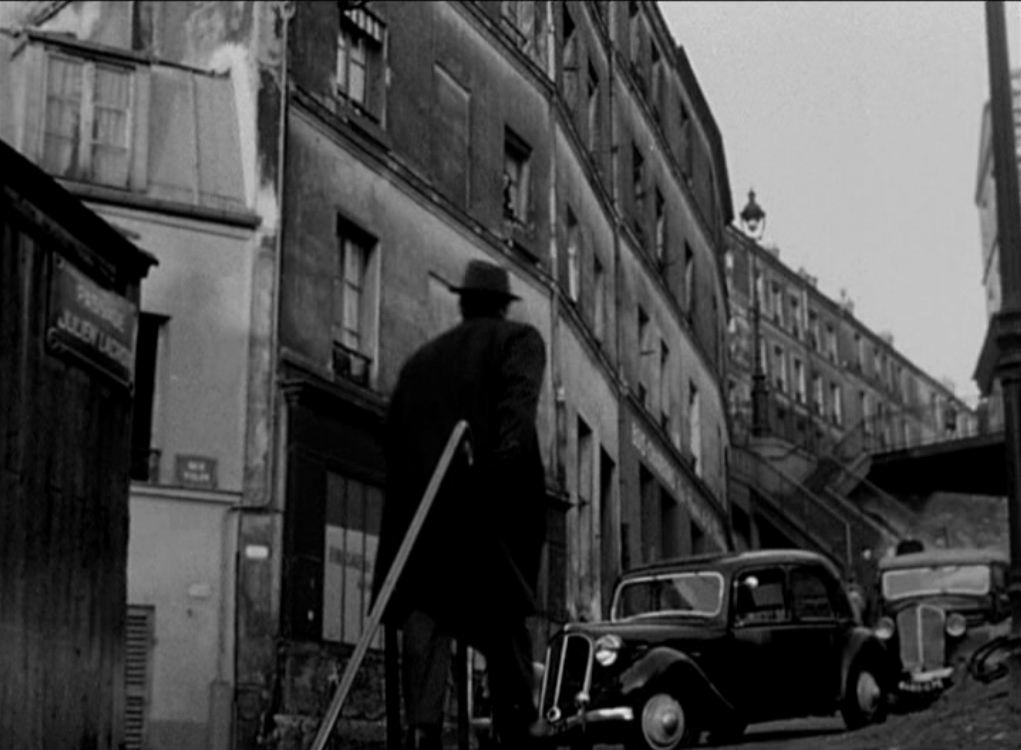 Du rififi chez les hommes (Jules Dassin 1955) 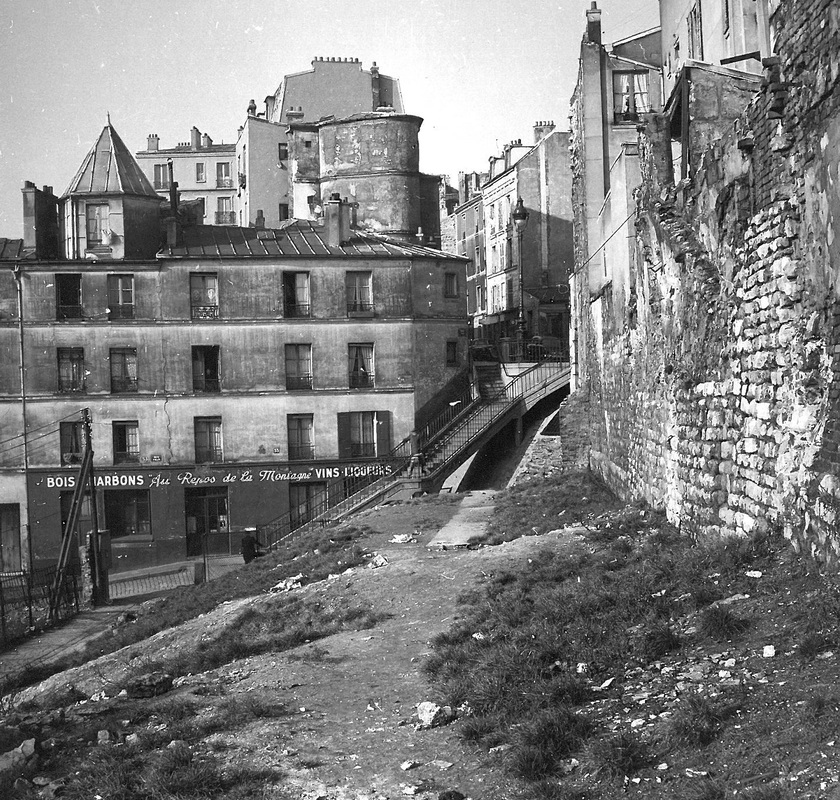 coll. Pavillon de l'Arsenal 1955 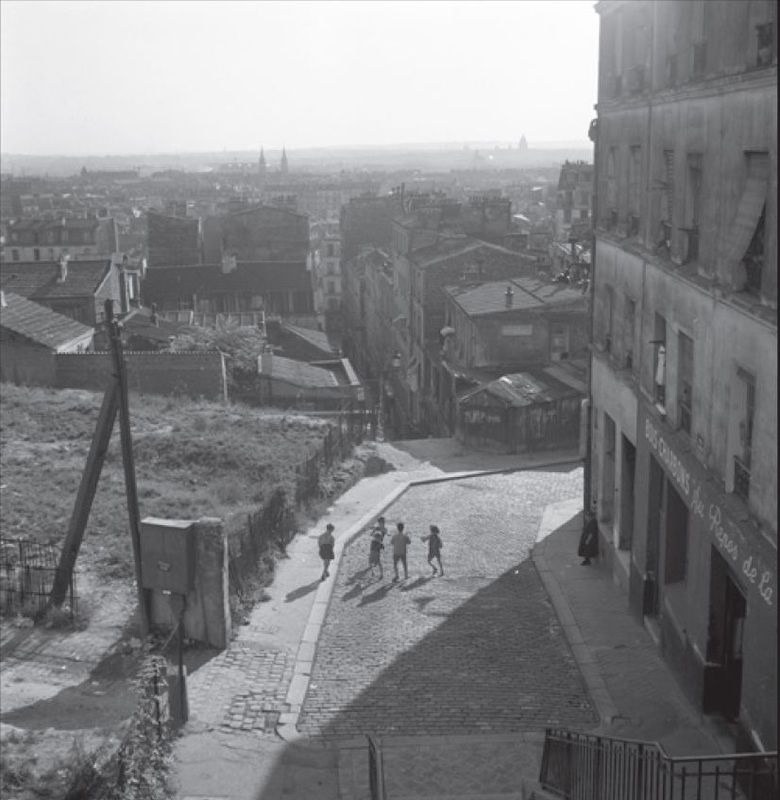 Kees Scherer 1955 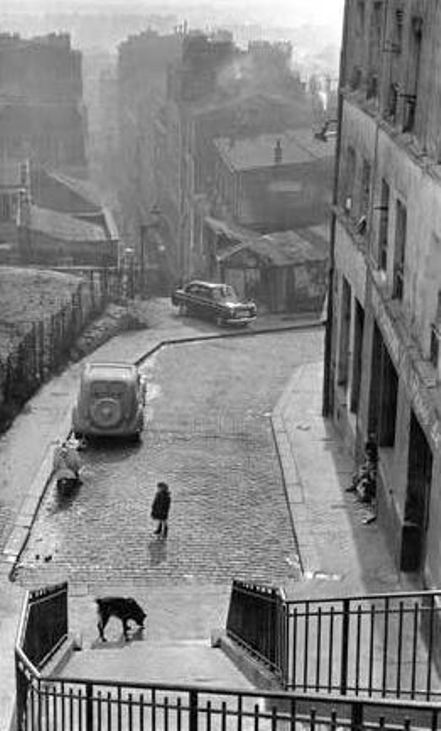 Edouard Boubat 1955 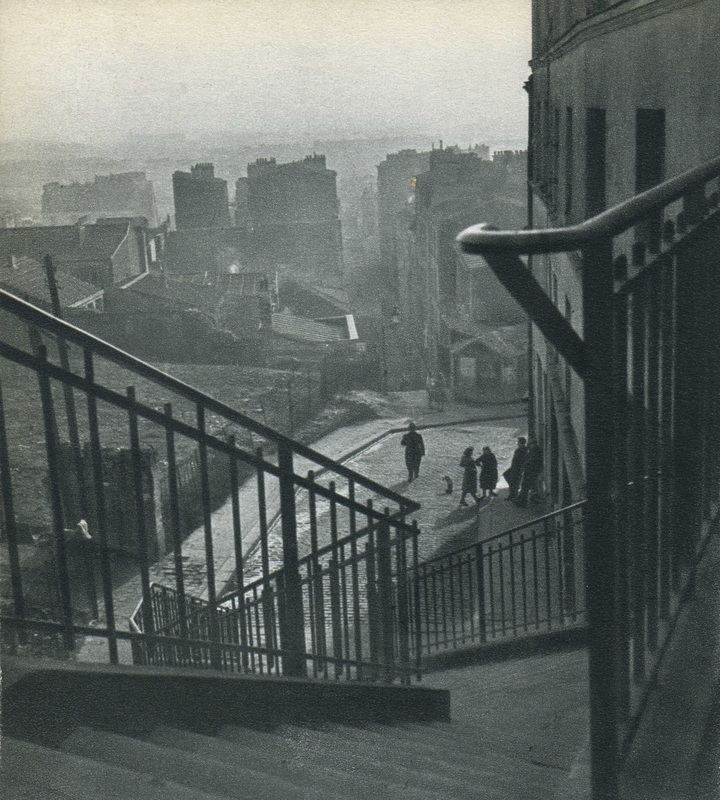 Willy Ronis 1950s 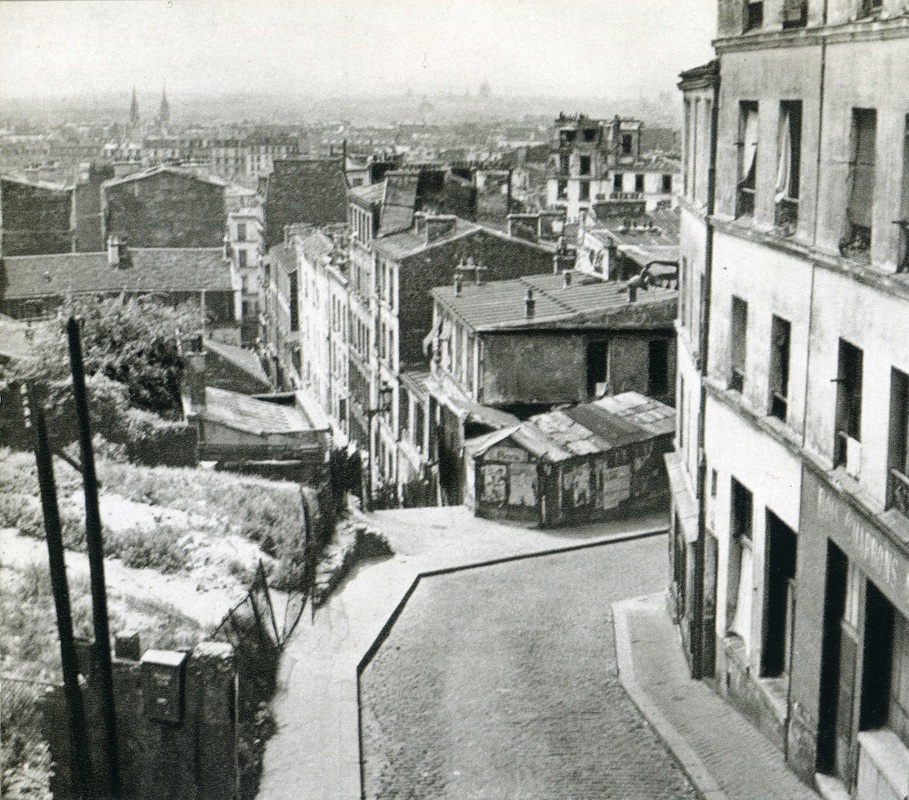 Noël Le Boyer 1950s 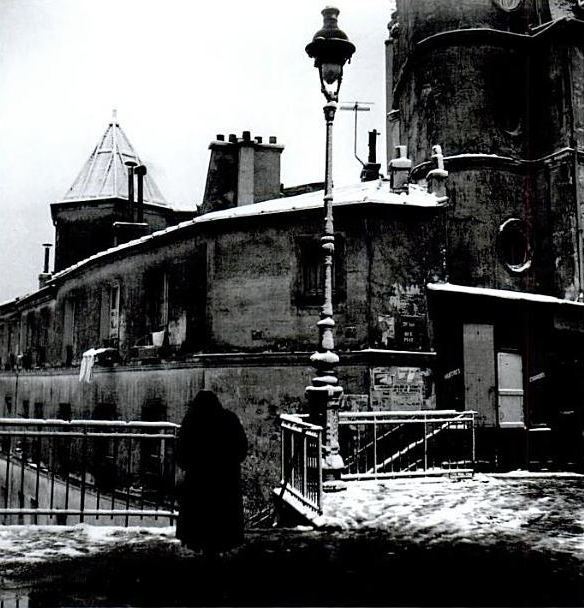 Daniel Frasnay 1950s 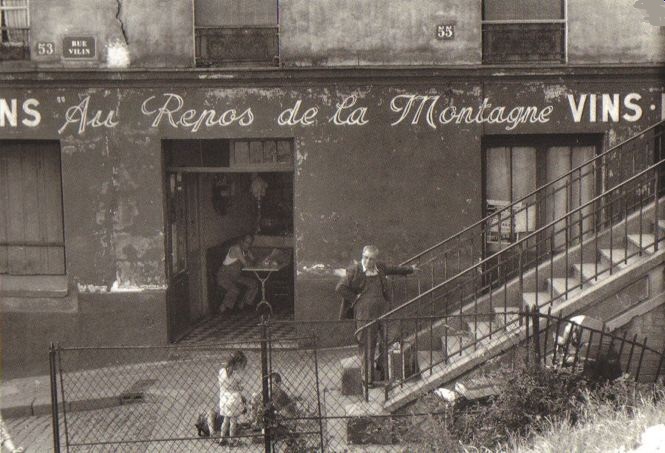 Willy Ronis 1957 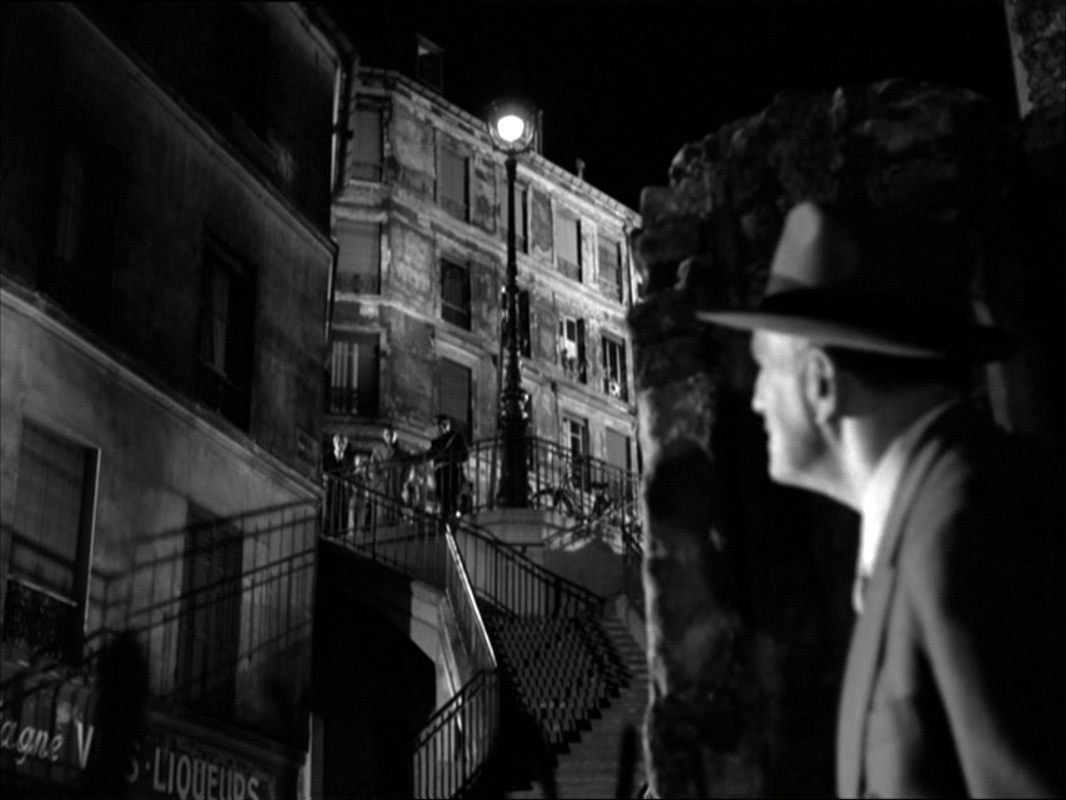 Rafles sur la ville (Pierre Chenal 1957) 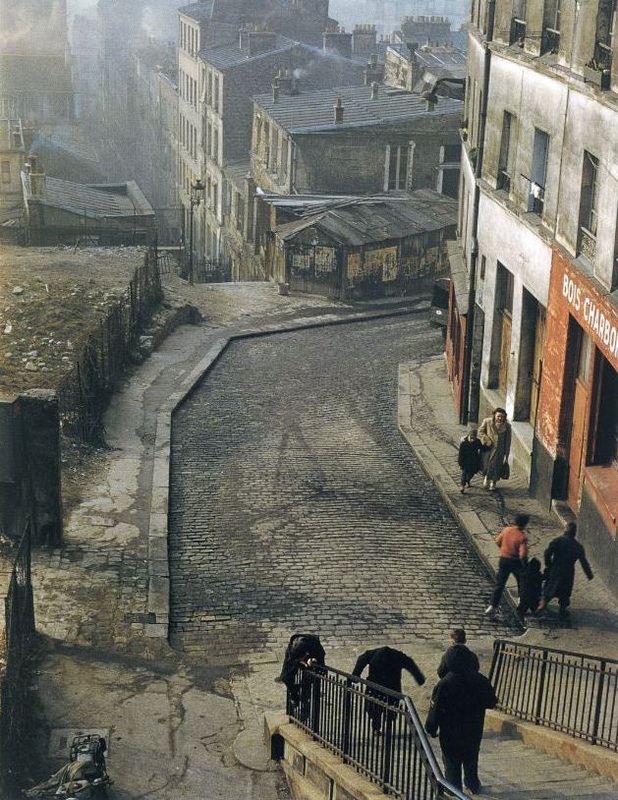 Henri Guérard 1959 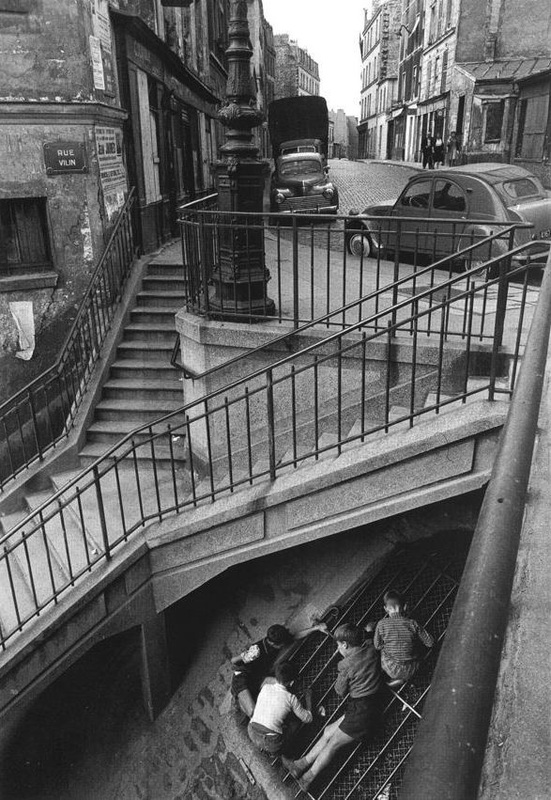 Willy Ronis 1959 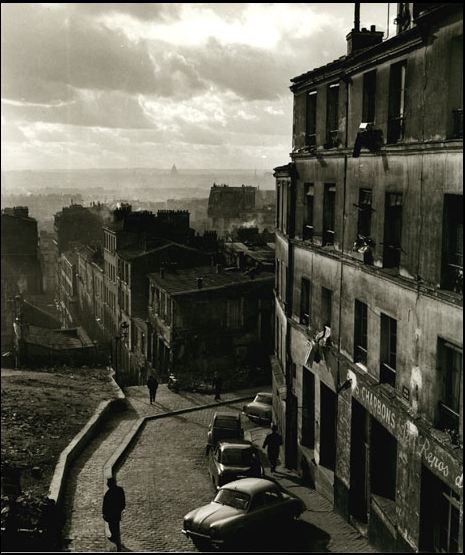 Henri Guérard 1960 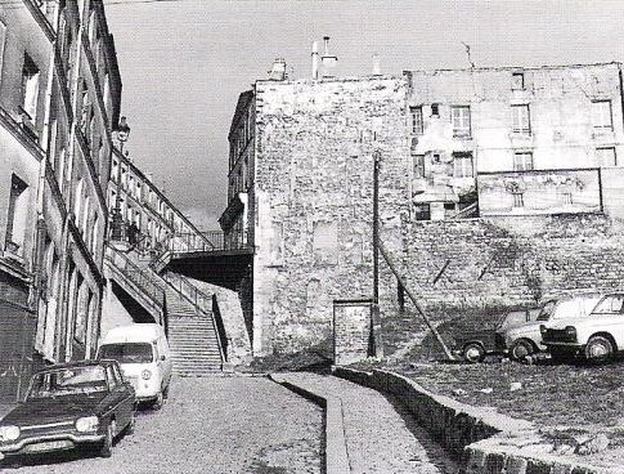 Henri Guérard 1960s 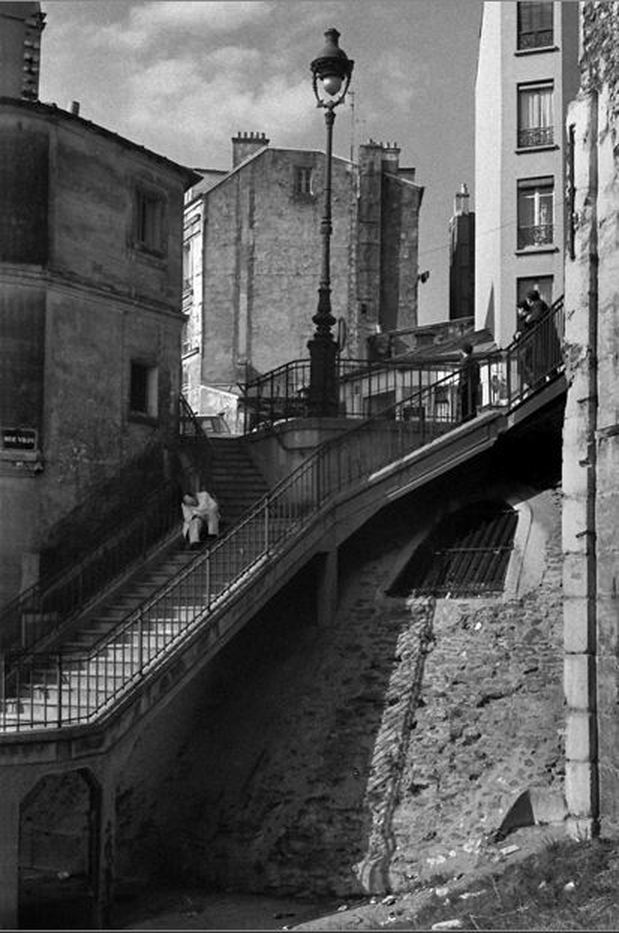 Claude Pavy 1970  coll. Pavillon de l'Arsenal 1977 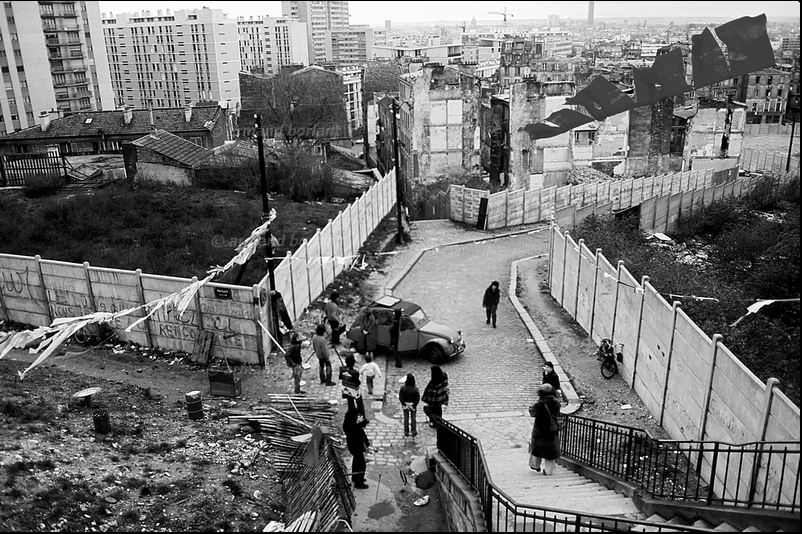 Armand Borland 1970s 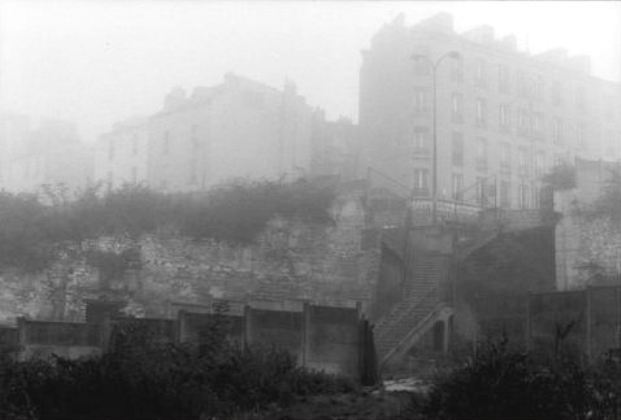 Michel Sfez 1984 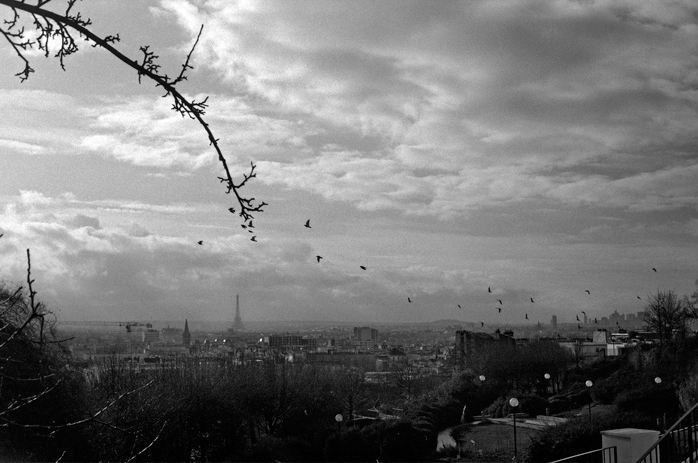 Claude Pavy 2010 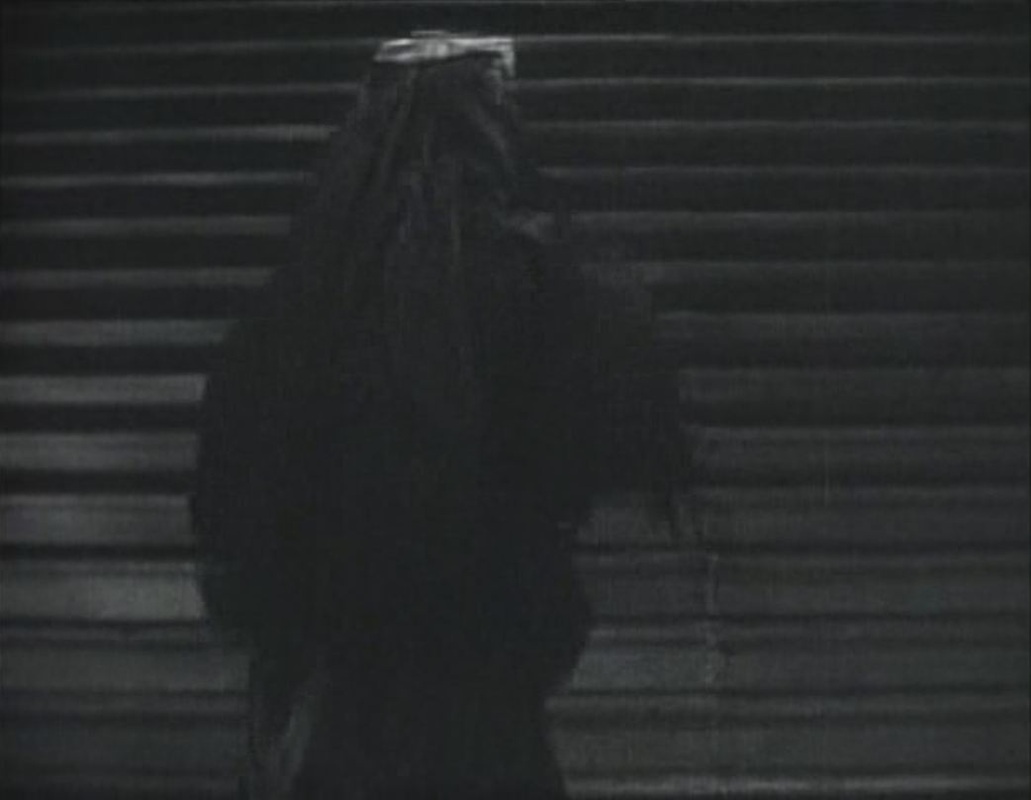 Belphégor (Henri Desfontaines 1927) 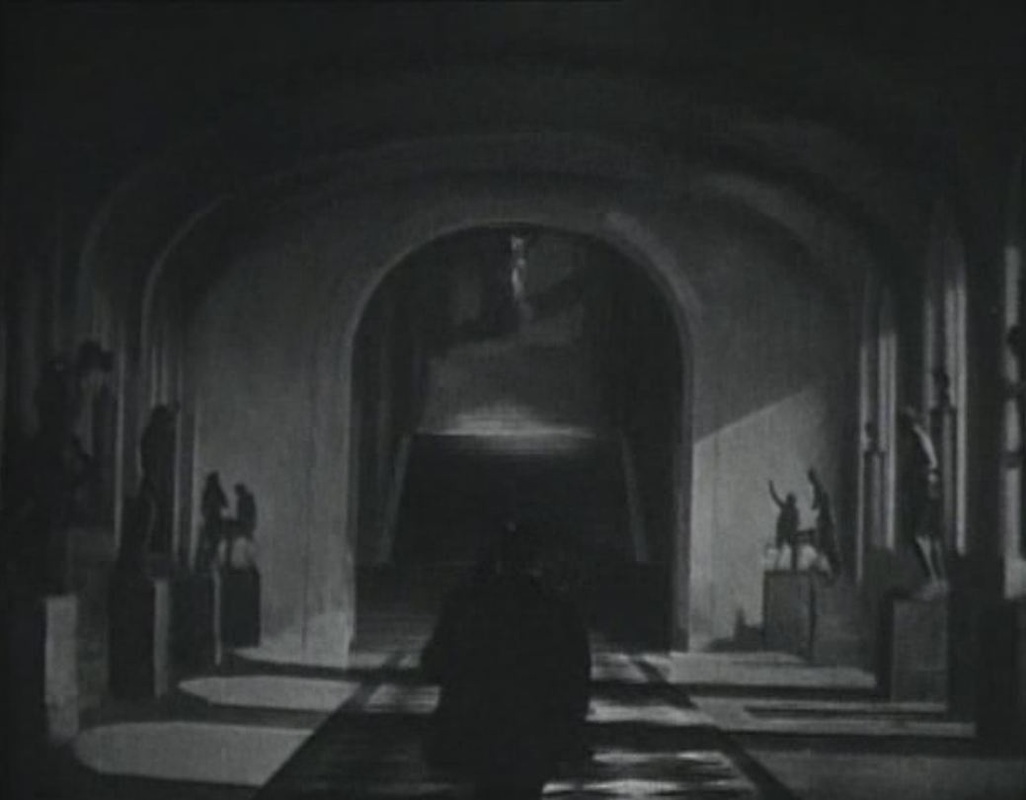 Belphégor (Henri Desfontaines 1927) 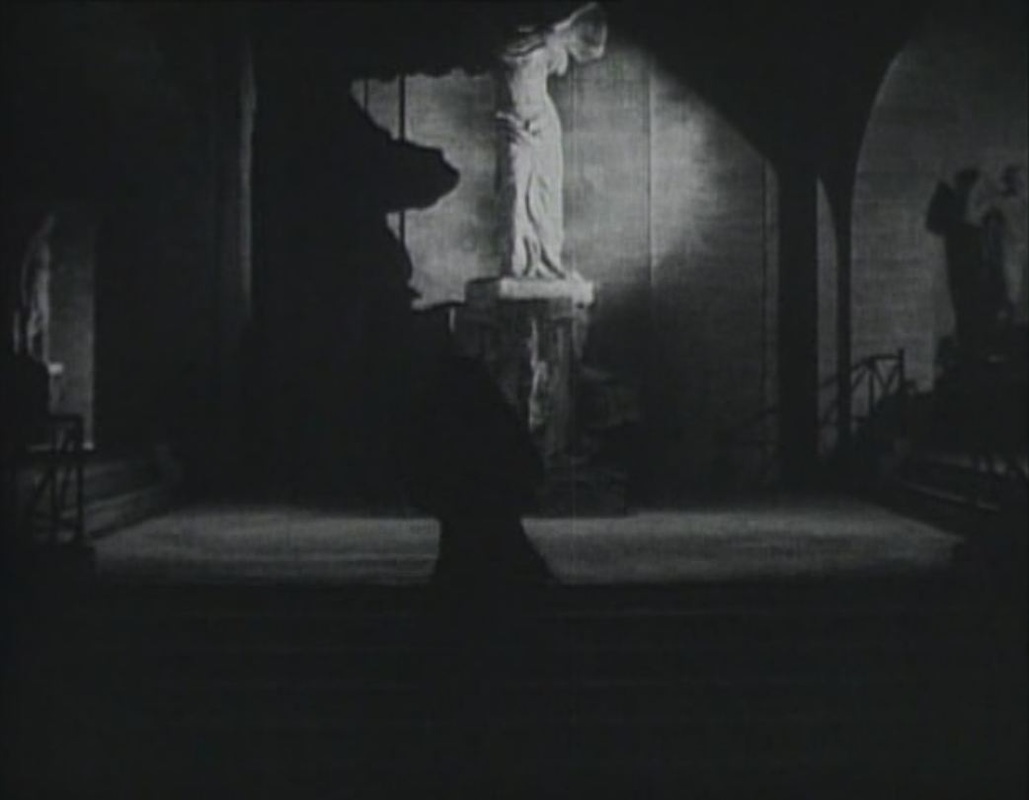 Belphégor (Henri Desfontaines 1927)  Belphégor (Henri Desfontaines 1927)  Escalier de service (Carlo Rim 1954) 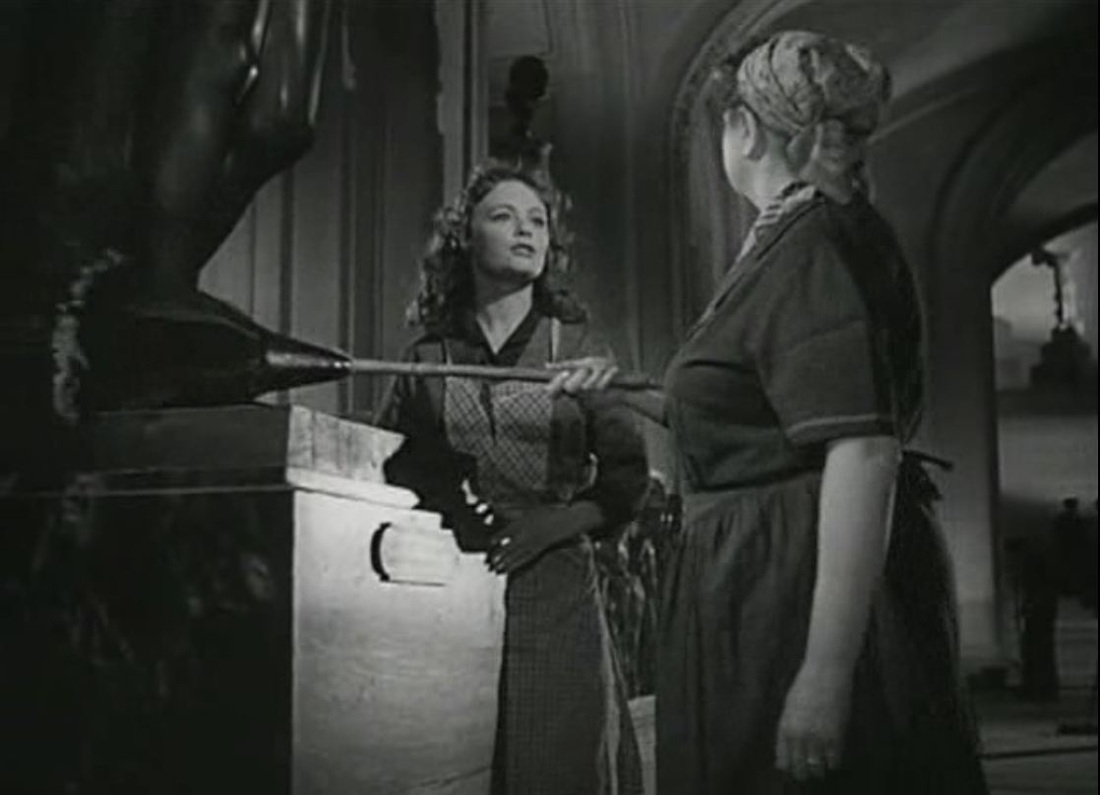 Escalier de service (Carlo Rim 1954) 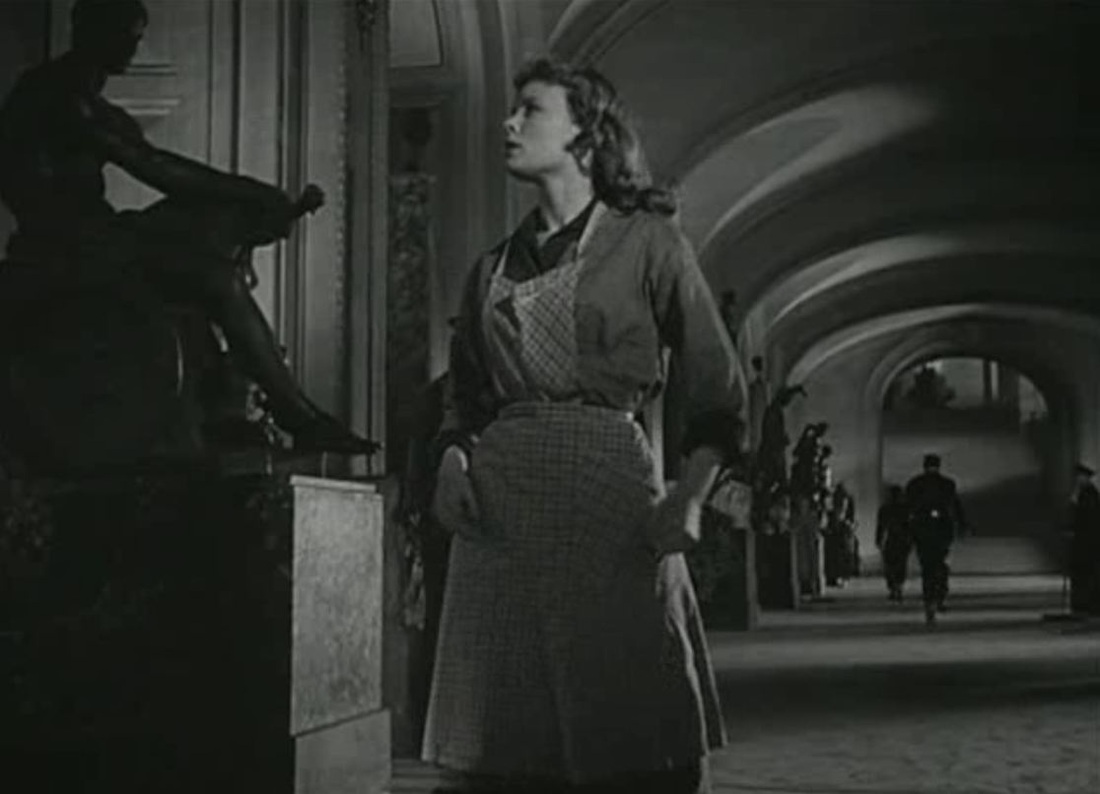 Escalier de service (Carlo Rim 1954) 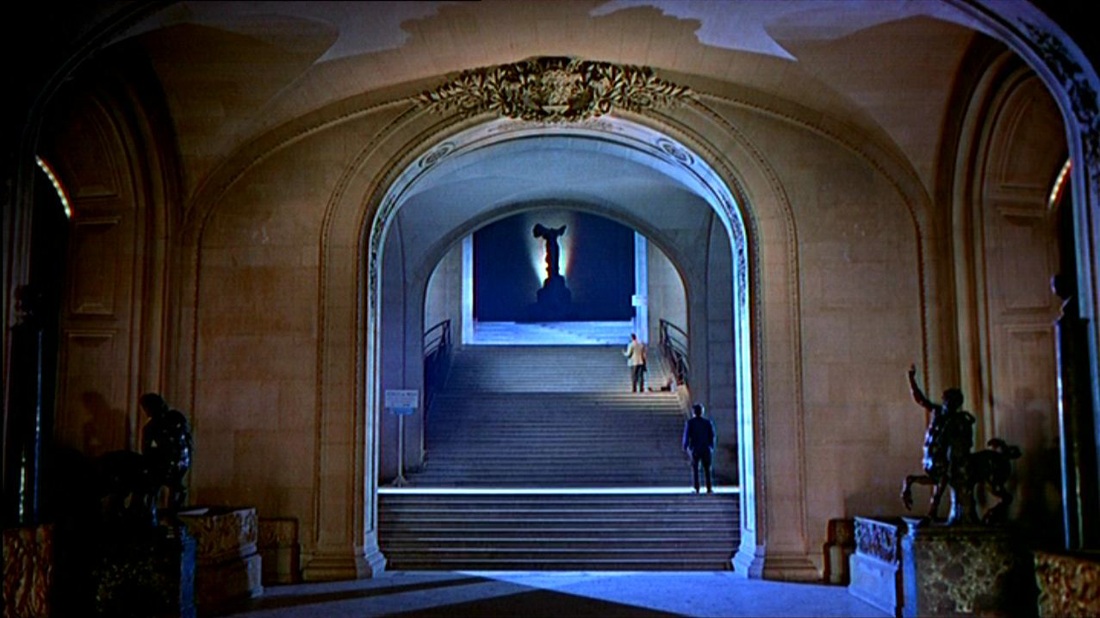 Funny Face (Stanley Donen 1957)  Funny Face (Stanley Donen 1957) 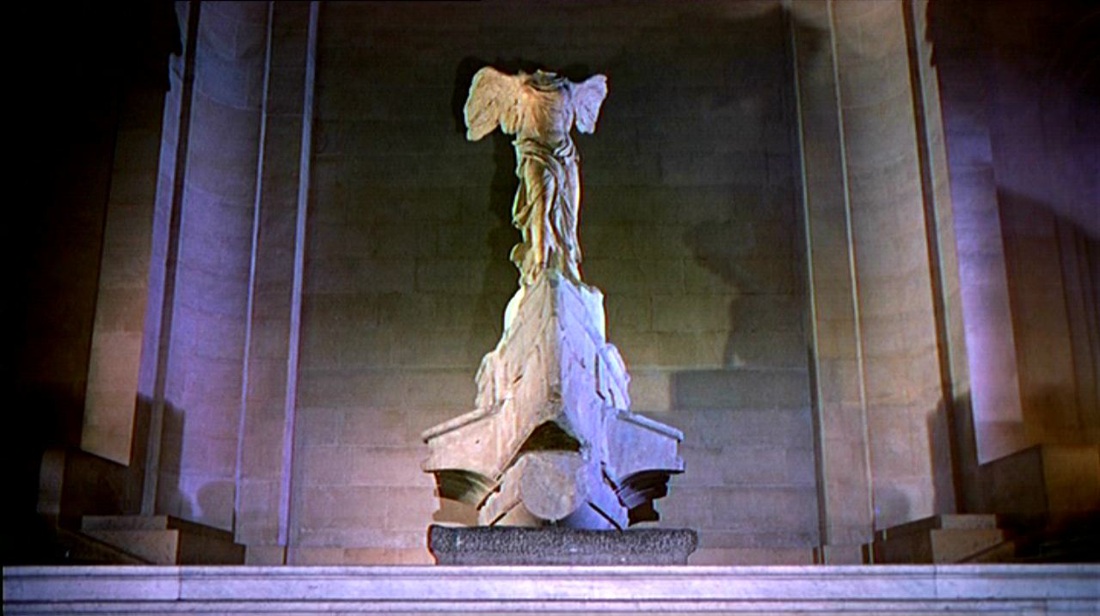 Funny Face (Stanley Donen 1957) 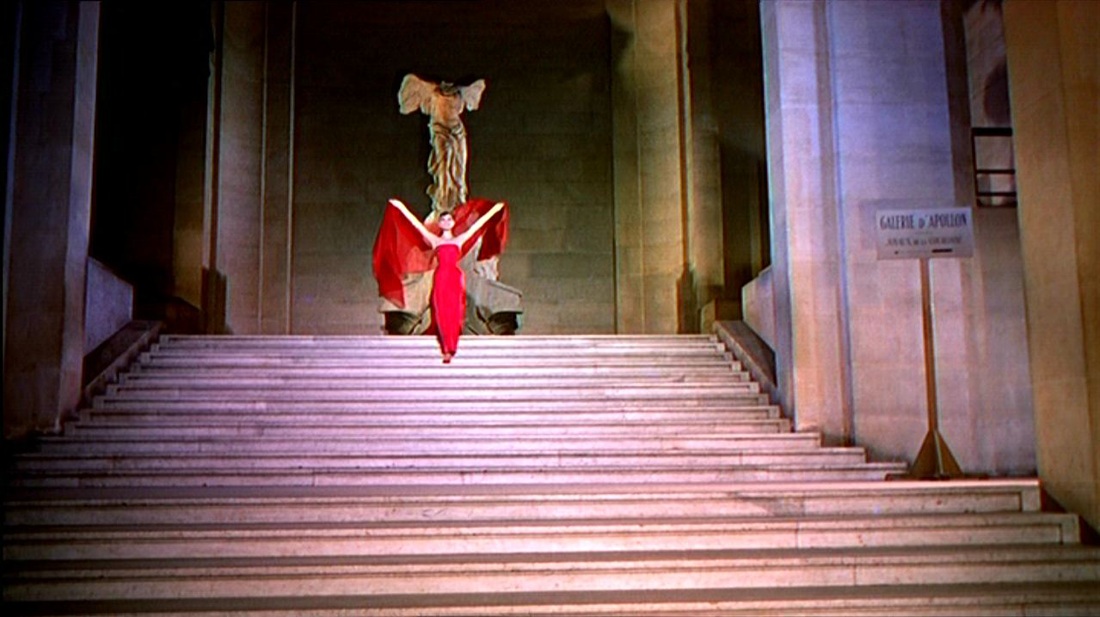 Funny Face (Stanley Donen 1957) 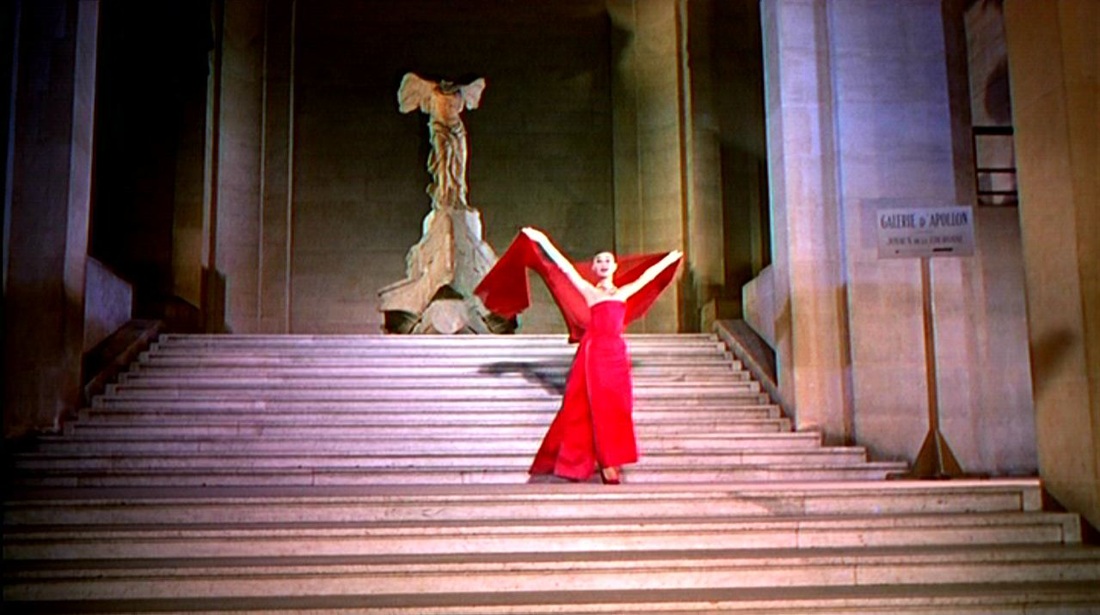 Funny Face (Stanley Donen 1957) 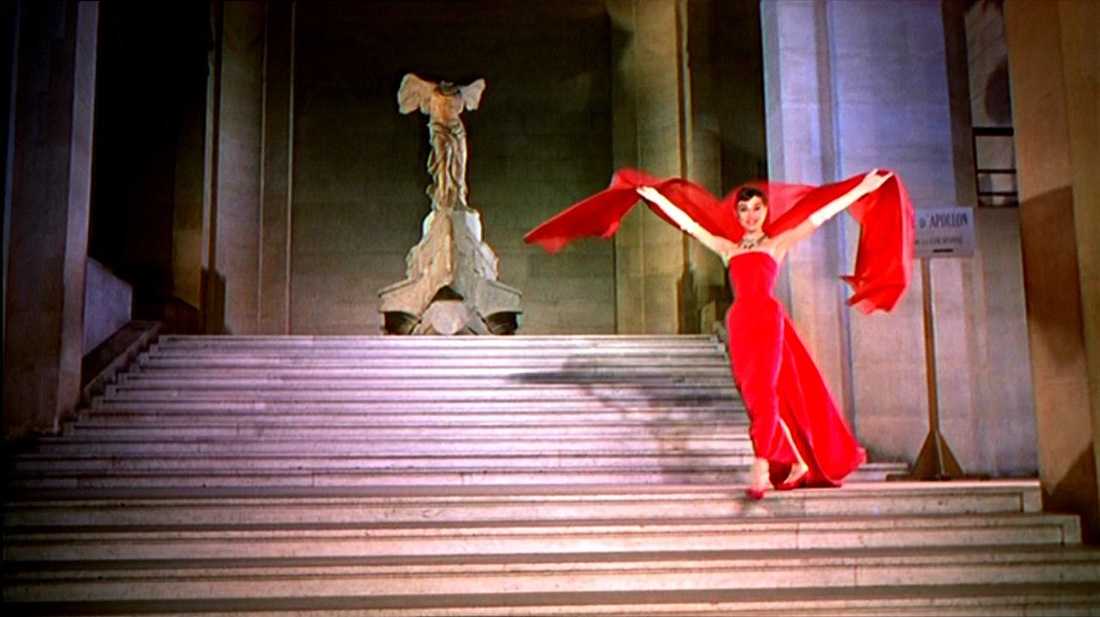 Funny Face (Stanley Donen 1957) 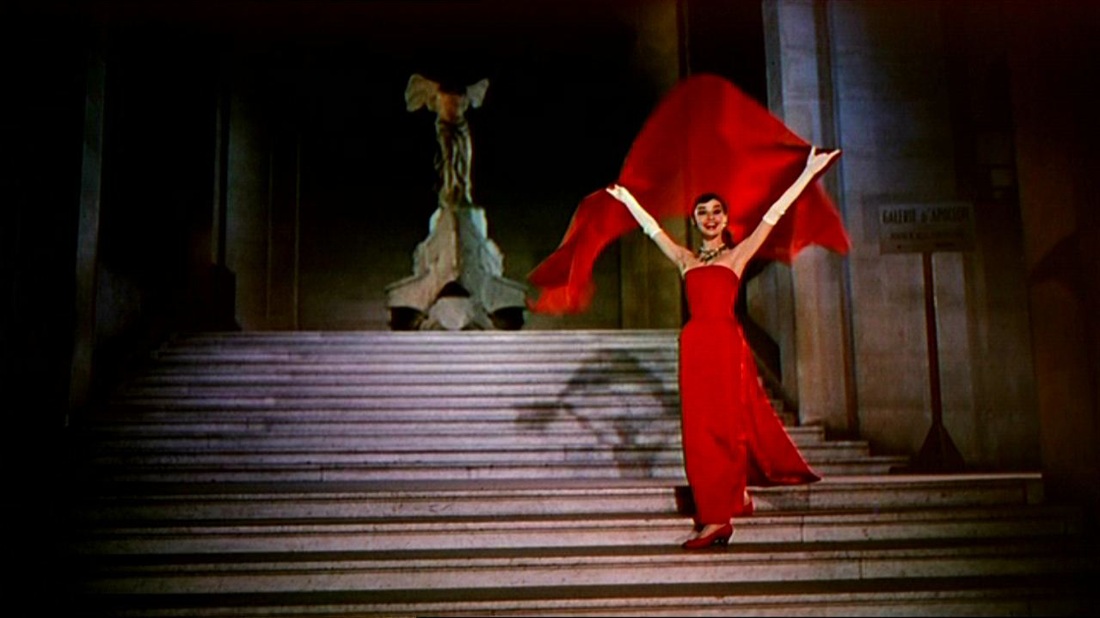 Funny Face (Stanley Donen 1957) 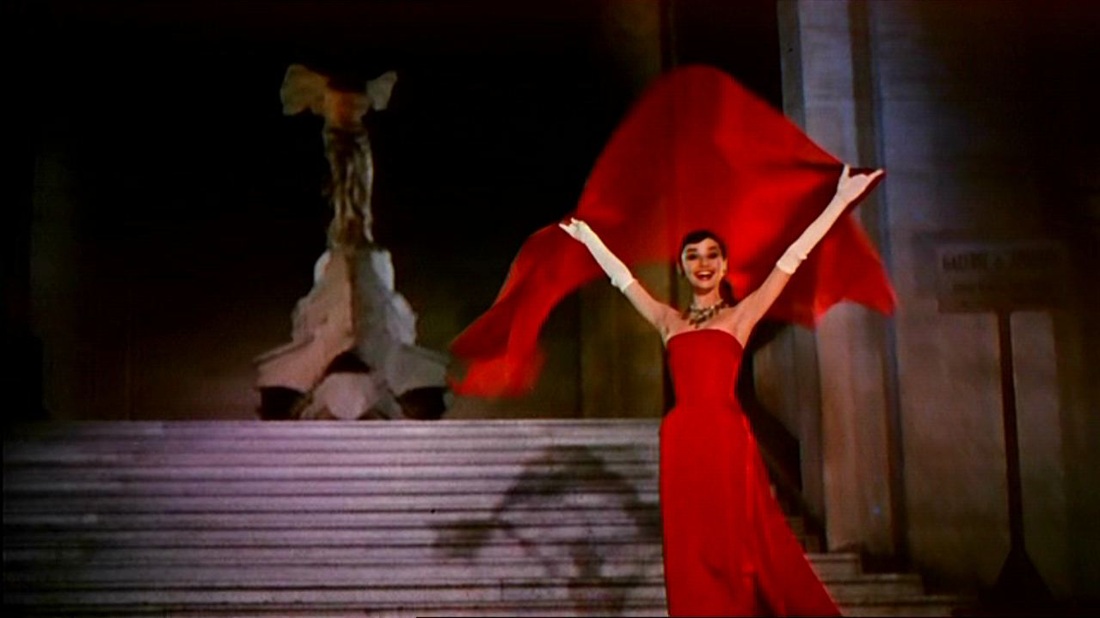 Funny Face (Stanley Donen 1957) 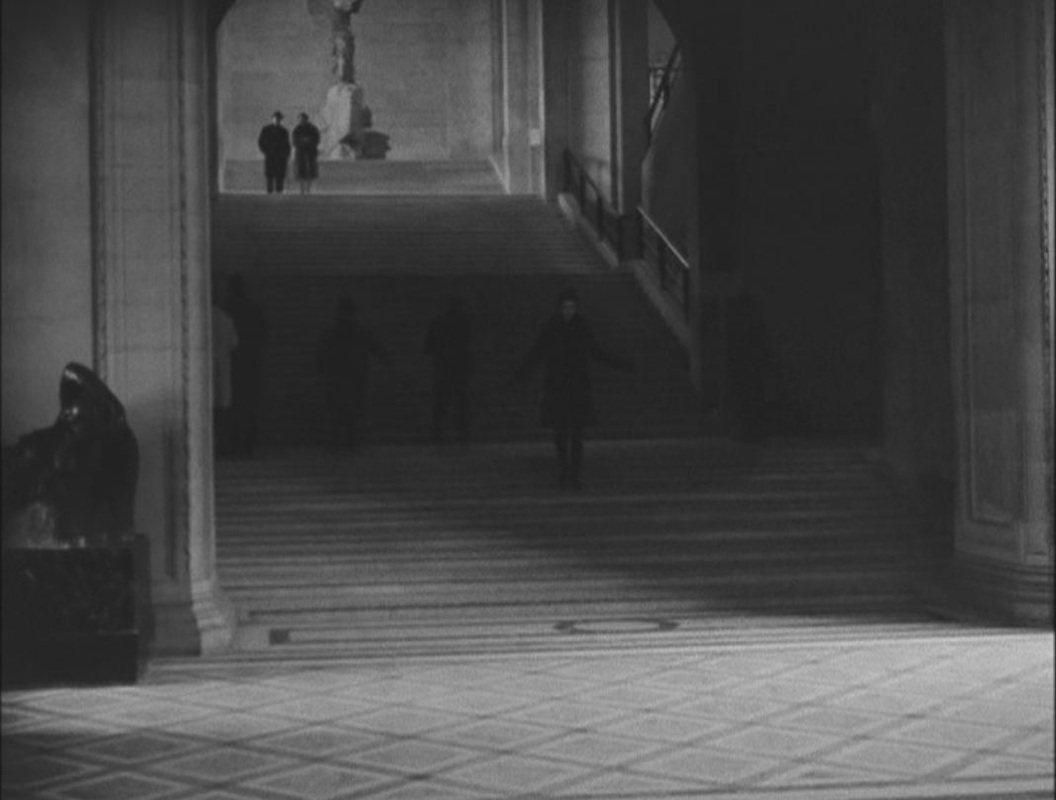 Bande à part (Jean-Luc Godard 1964) 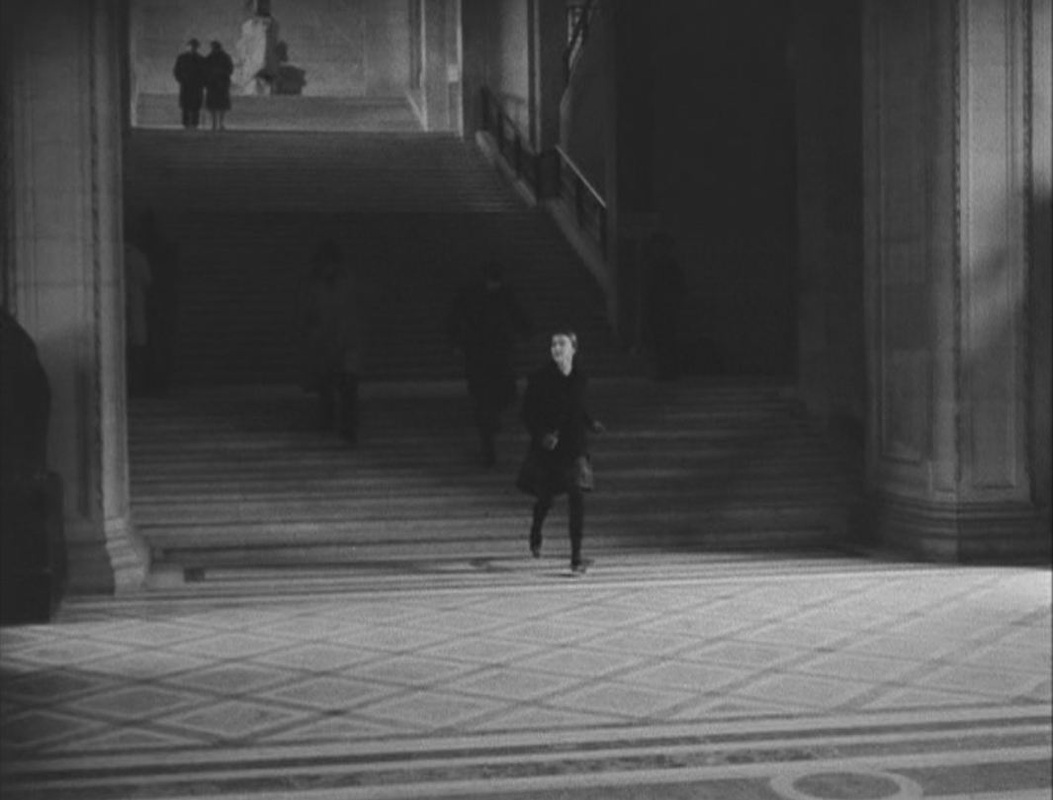 Bande à part (Jean-Luc Godard 1964) 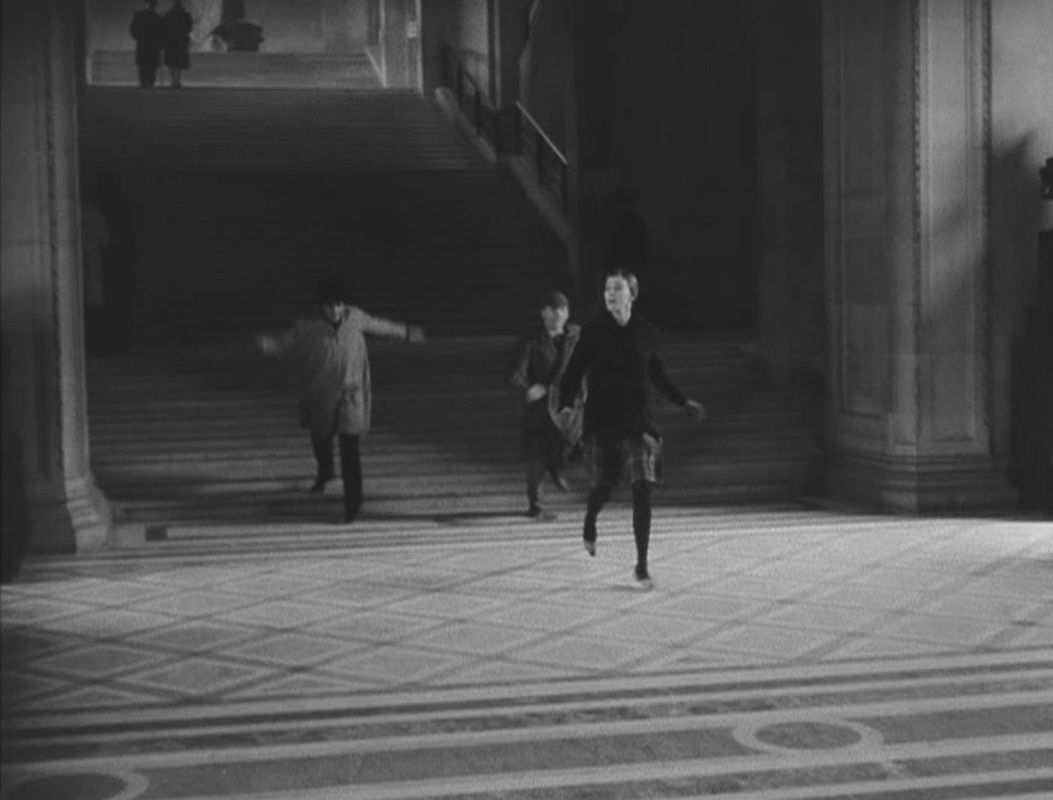 Bande à part (Jean-Luc Godard 1964) 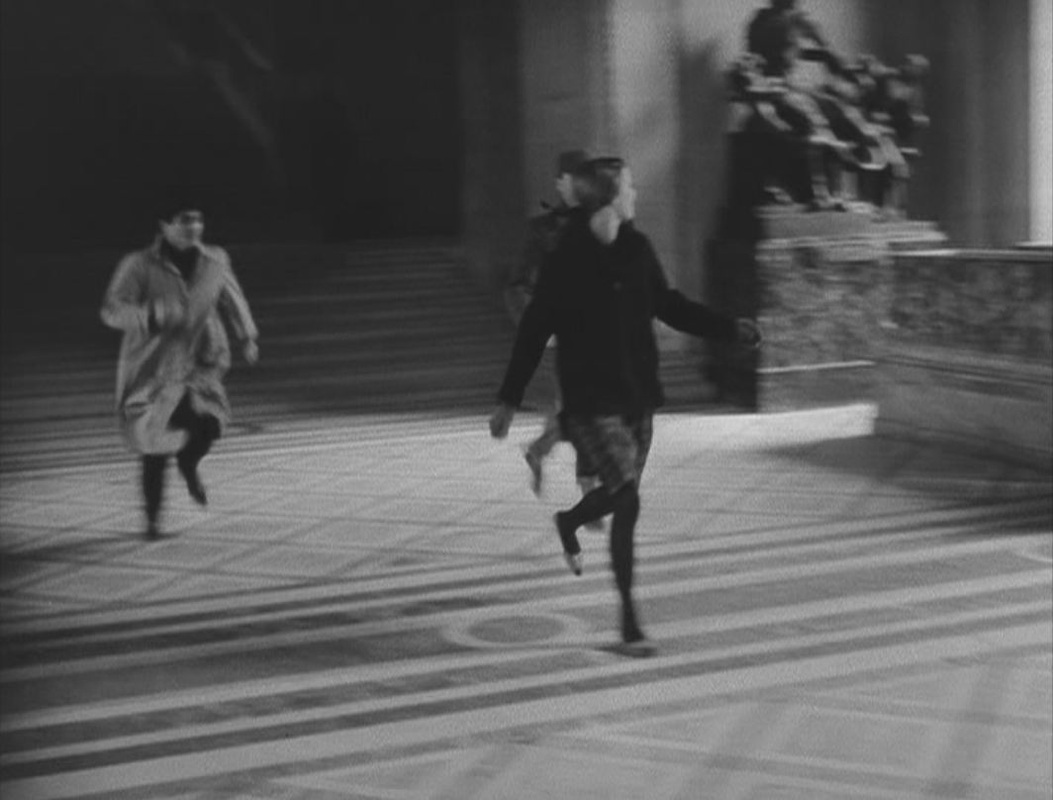 Bande à part (Jean-Luc Godard 1964) 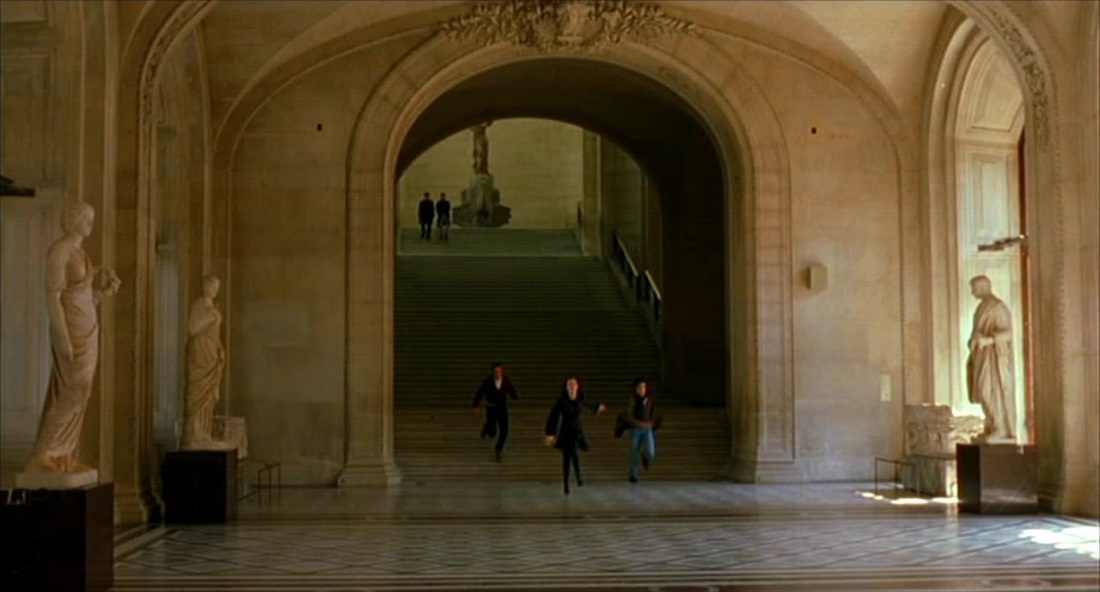 The Dreamers (Bernardo Bertolucci 2003) 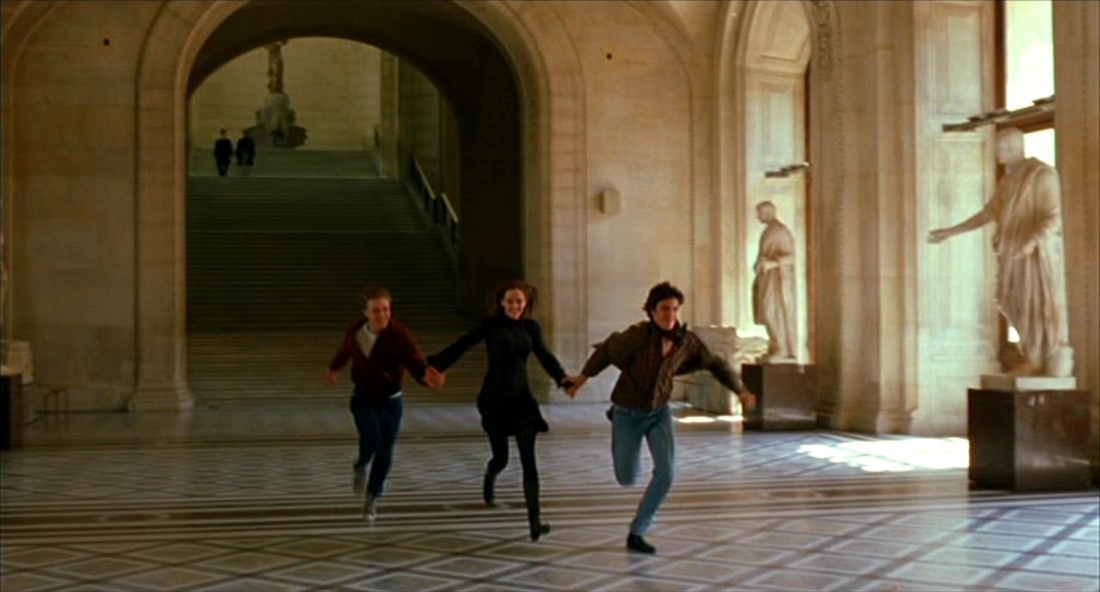 The Dreamers (Bernardo Bertolucci 2003) 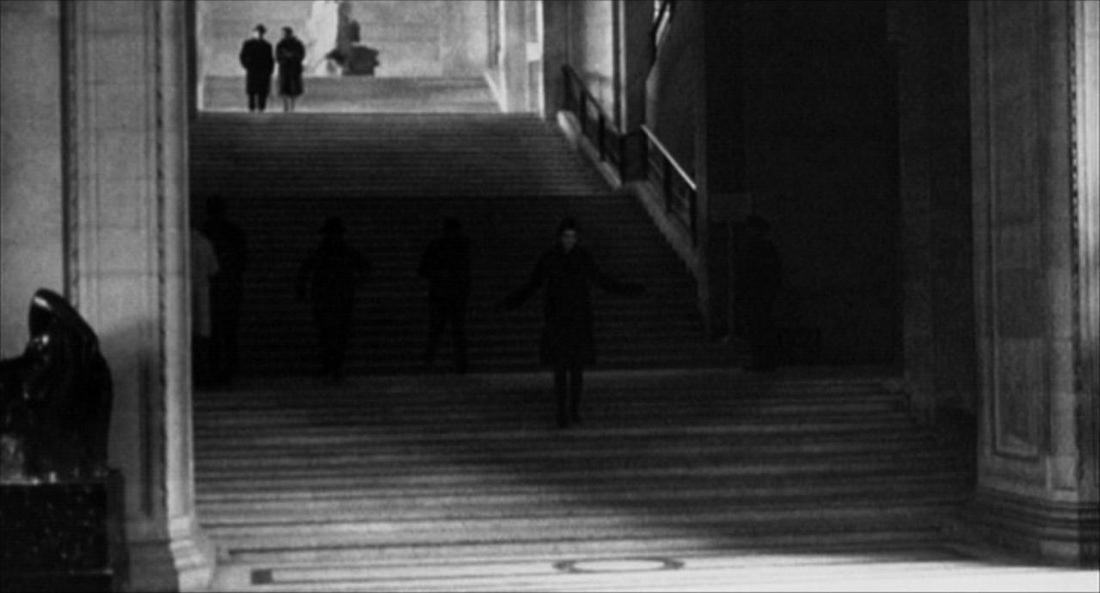 Bande à part (Jean-Luc Godard 1964) in The Dreamers (Bernardo Bertolucci 2003) The escalier Daru is part of Hector Lefuel's modifications of the Louvre in the 1850s. Lefuel was the Louvre architect from 1853 until his death in 1880. The escalier Daru was only fully completed in 1930. 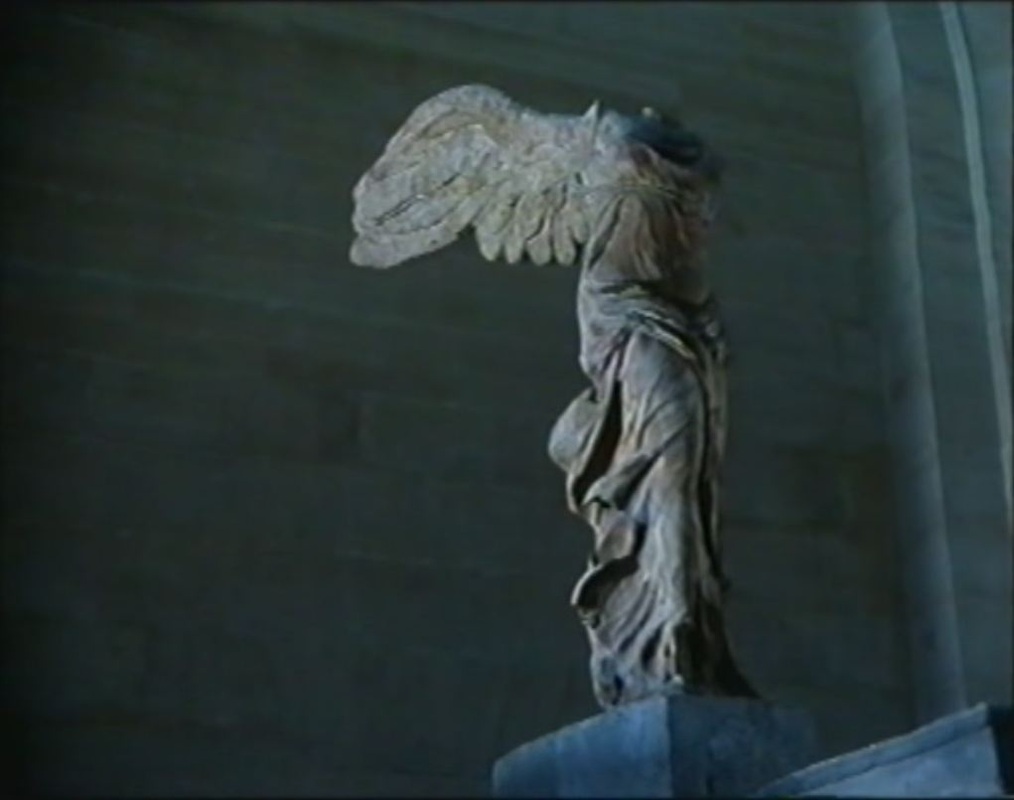 Une visite au Louvre (Danièle Huillet & Jean-Marie Straub 2004) 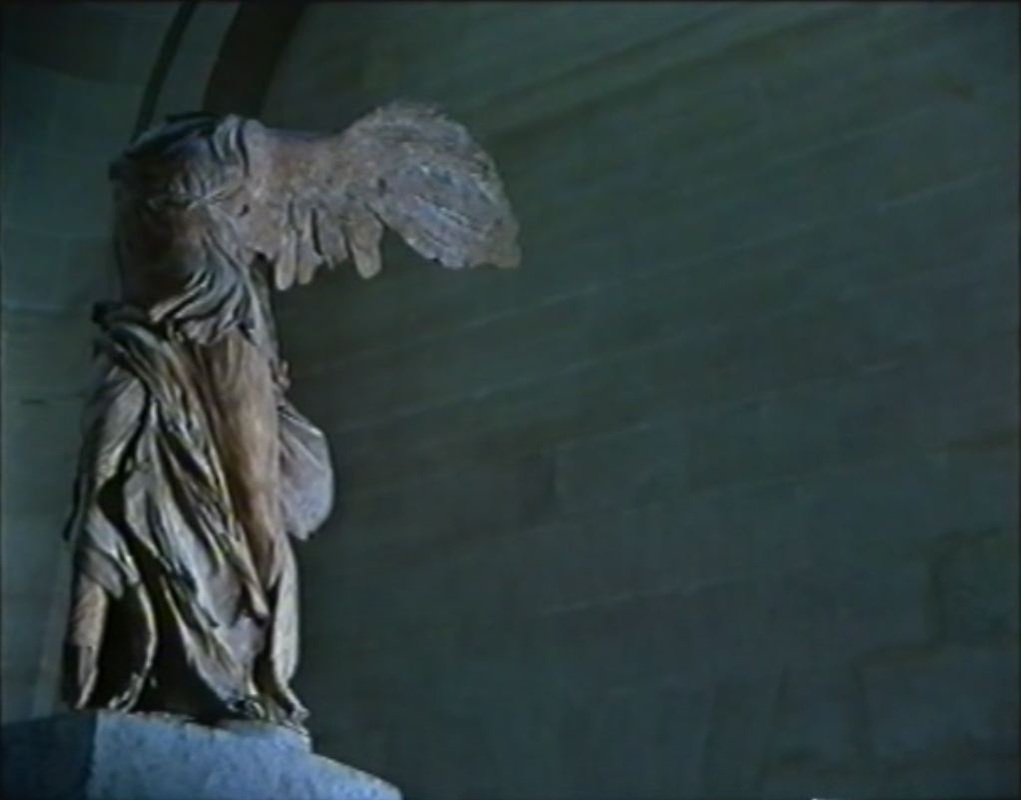 Une visite au Louvre (Danièle Huillet & Jean-Marie Straub 2004) Straub and Huillet give two views of the Victory of Samothrace, but do not show the stairs above which the statue was placed in 1884.
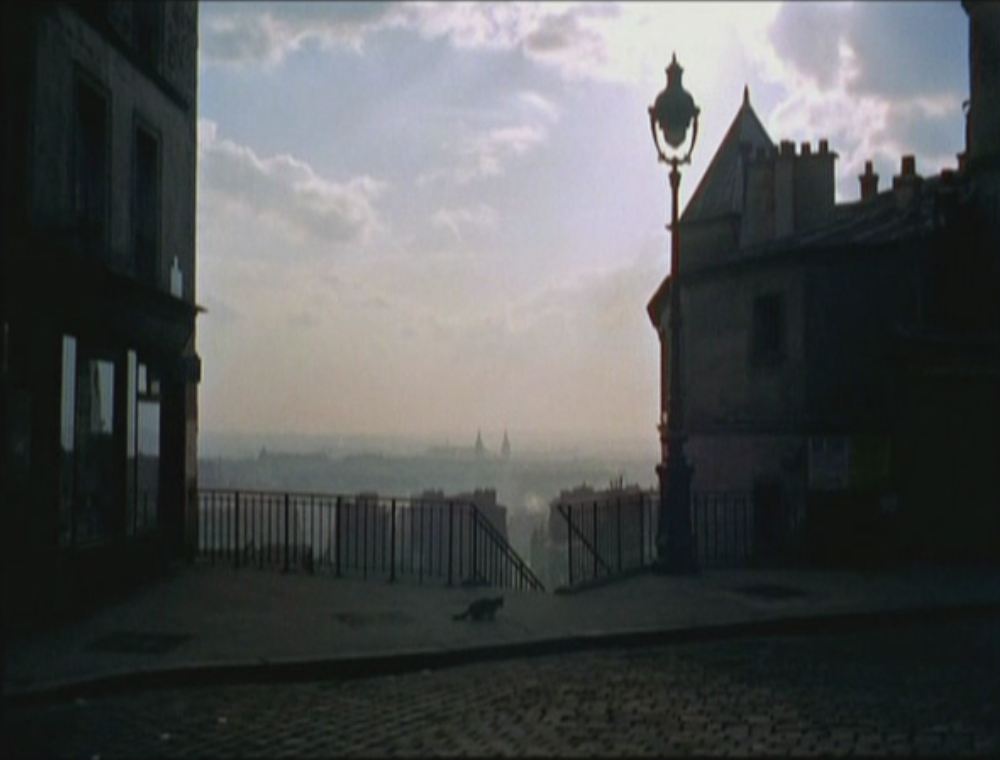 petit carrefour, rue Piat, 20e  Sous le ciel de Paris (Julien Duvivier 1951)  passage Julien Lacroix, 20e 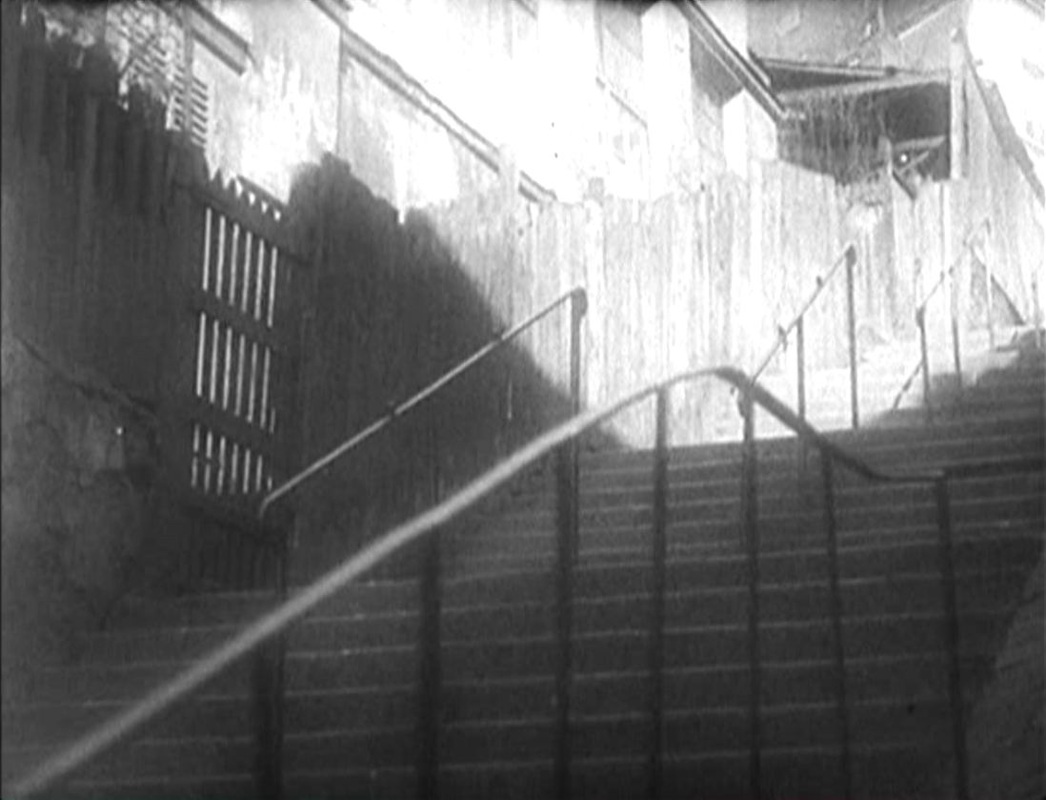 Ménilmontant (Dimitri Kirsanoff 1926)  rue Piat, 20e 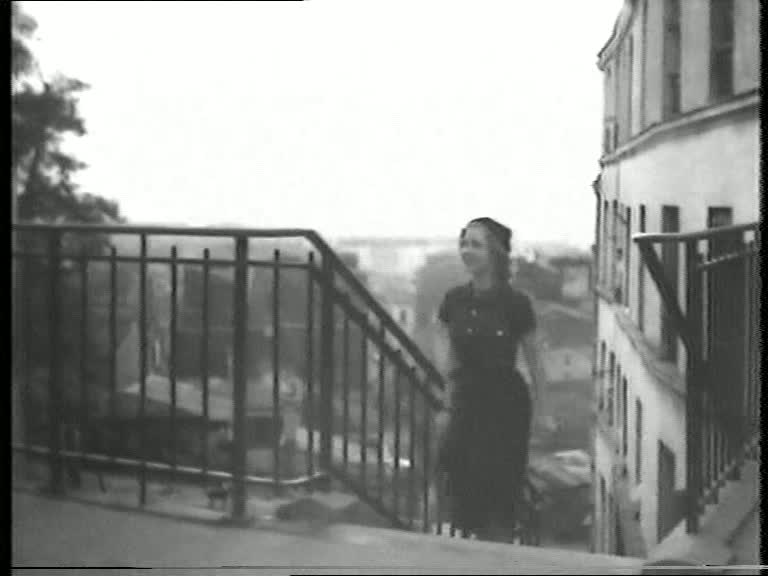 Ménilmontant (René Guissart 1937) 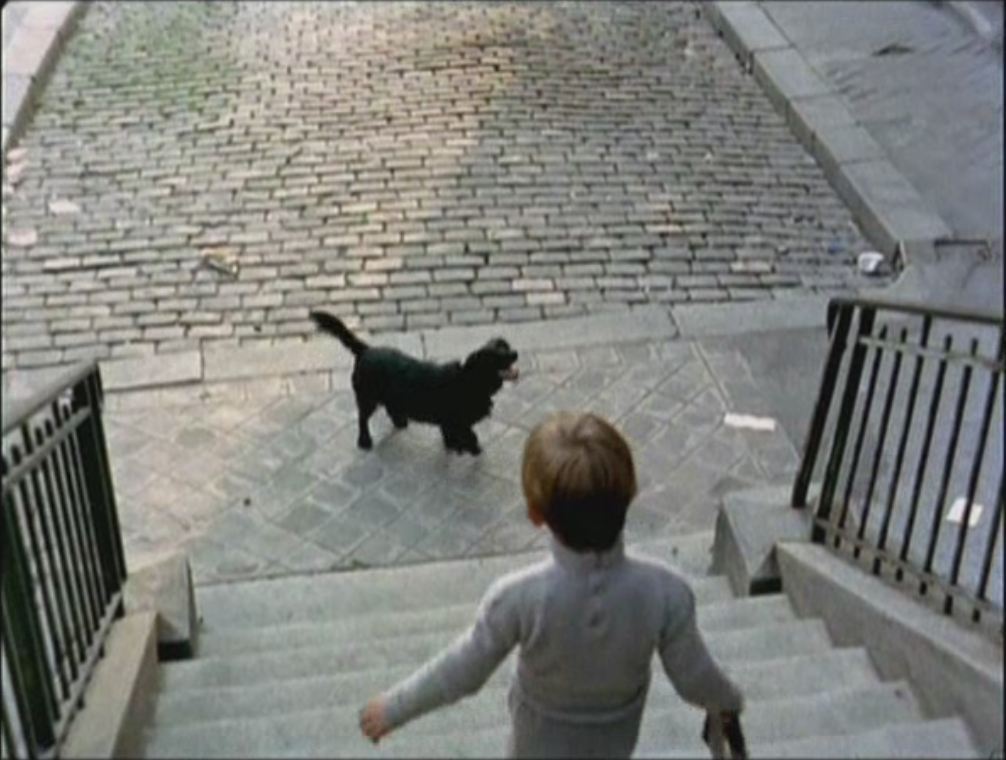 rue Vilin, 20e 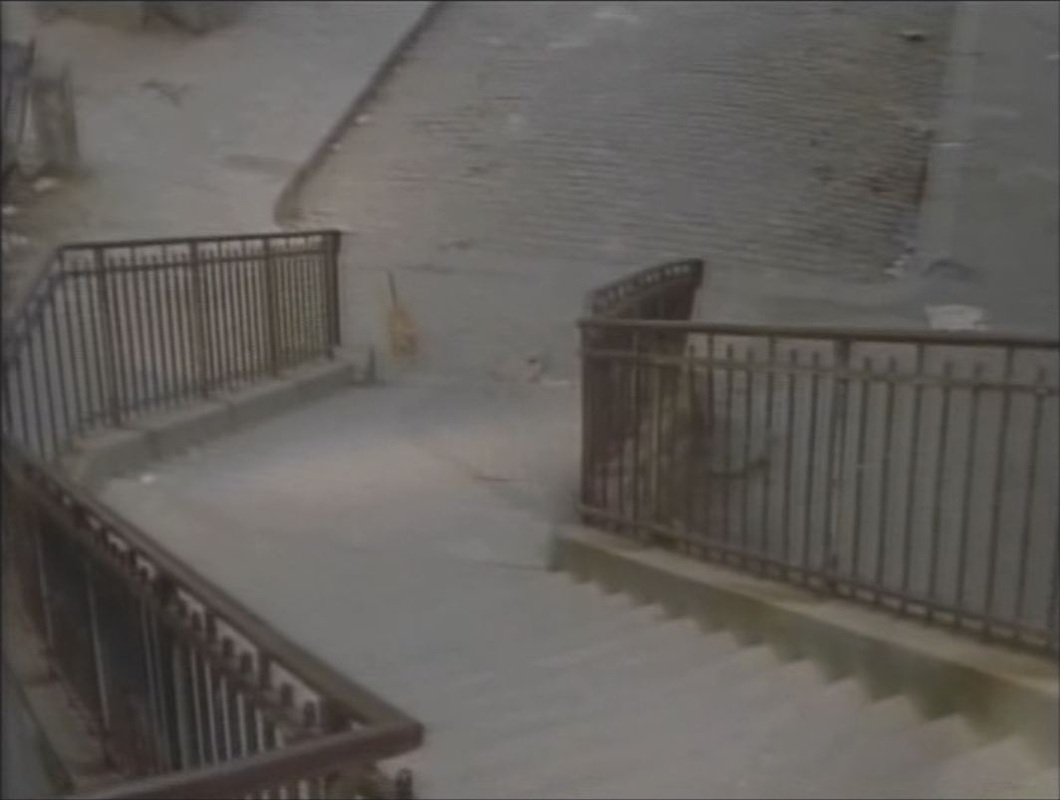 Gigot (Gene Kelly 1962) 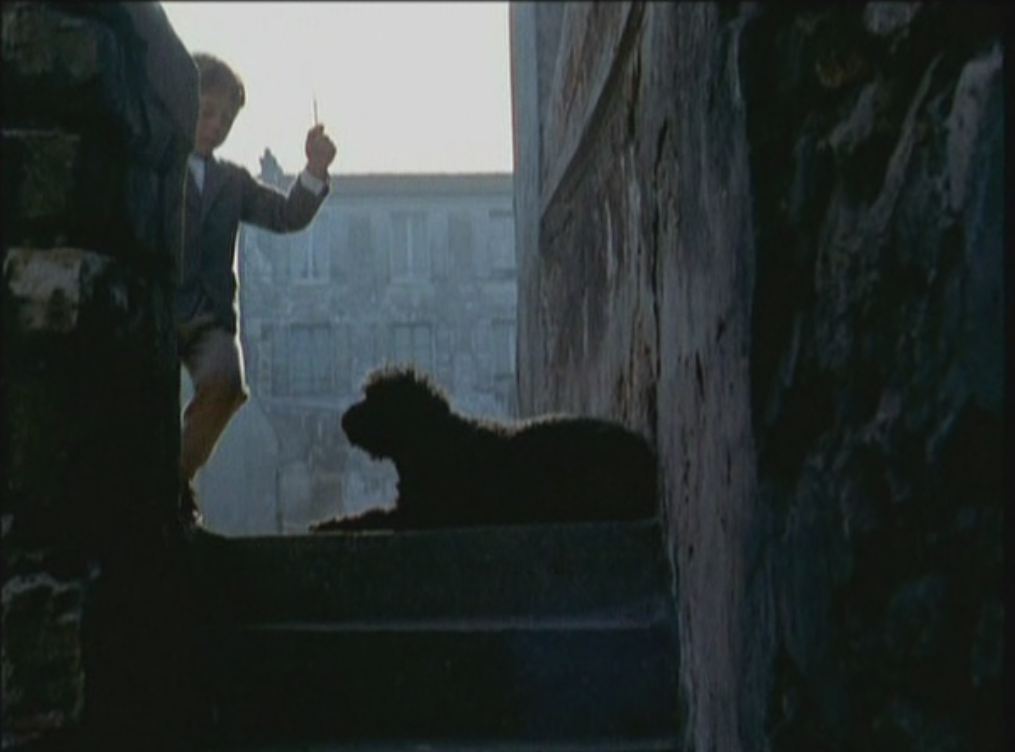 passage de la Duée, 20e 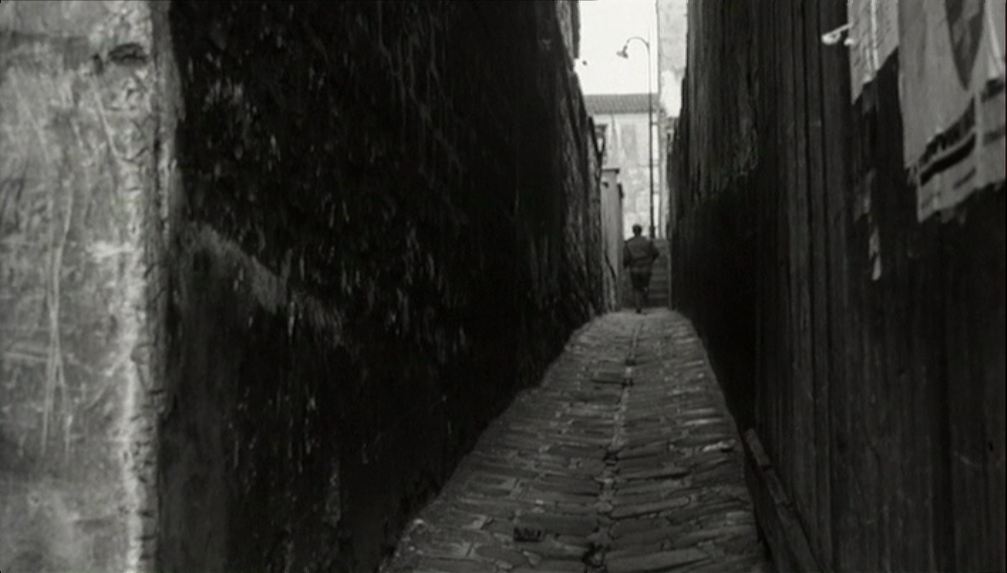 Les Distractions (Jacques Dupont 1960) 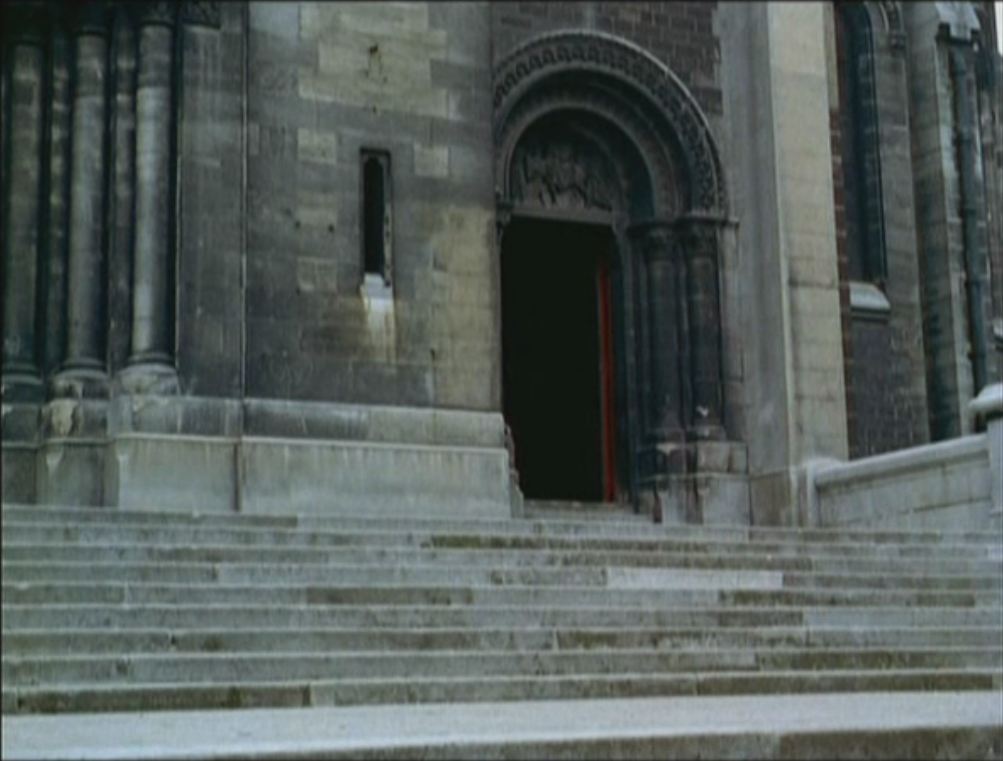 Notre Dame de la Croix, 20e 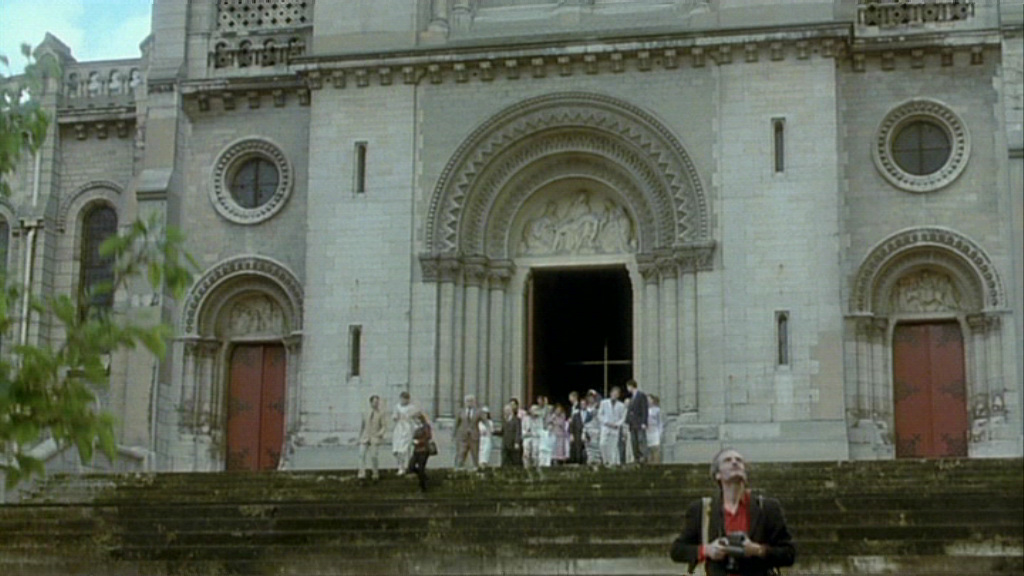 Femme Fatale (Brian de Palma 2002) (With thanks to Piet Schreuders and Furore, where you will find the missing red balloon.)
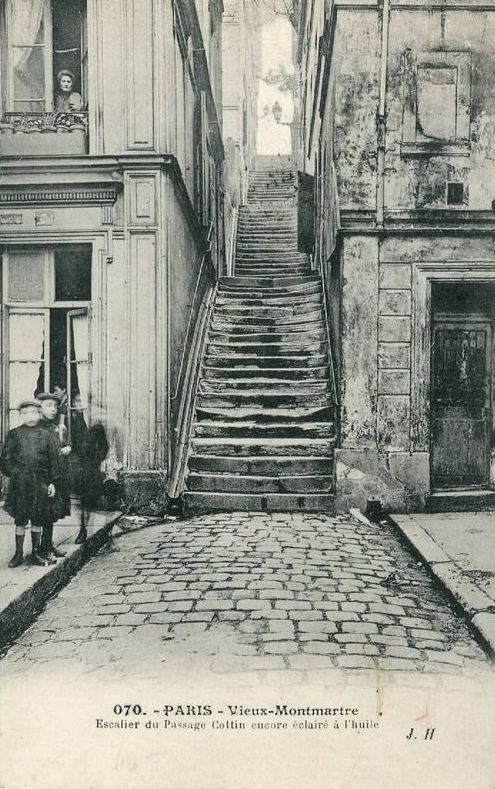
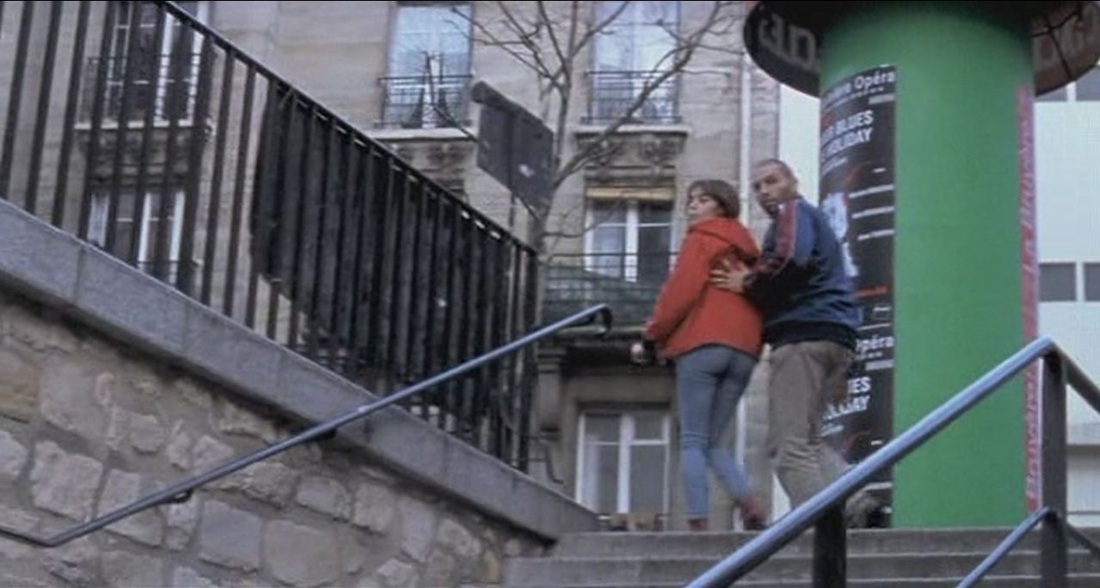 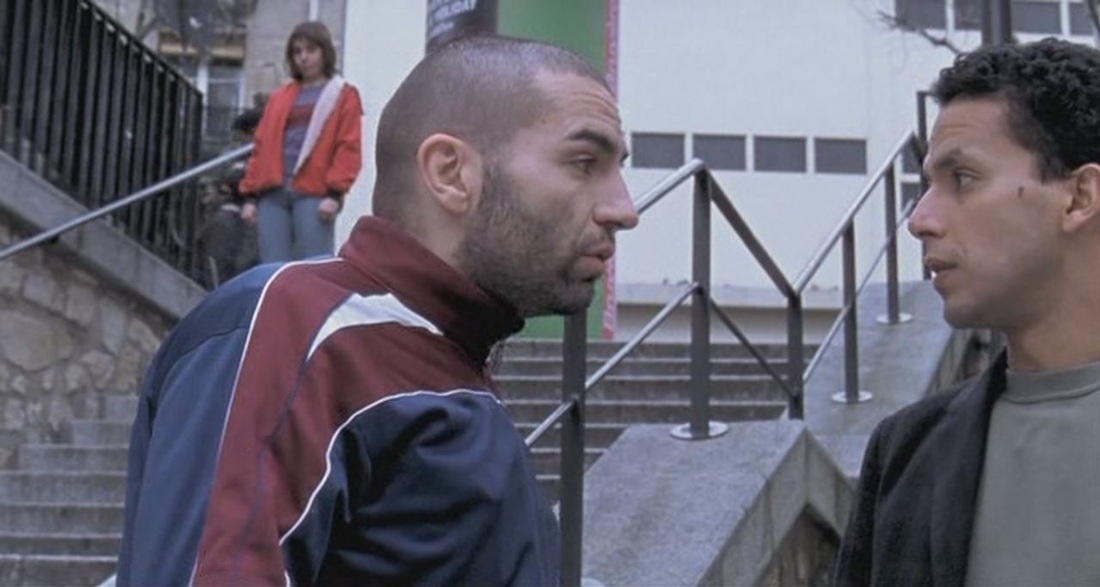 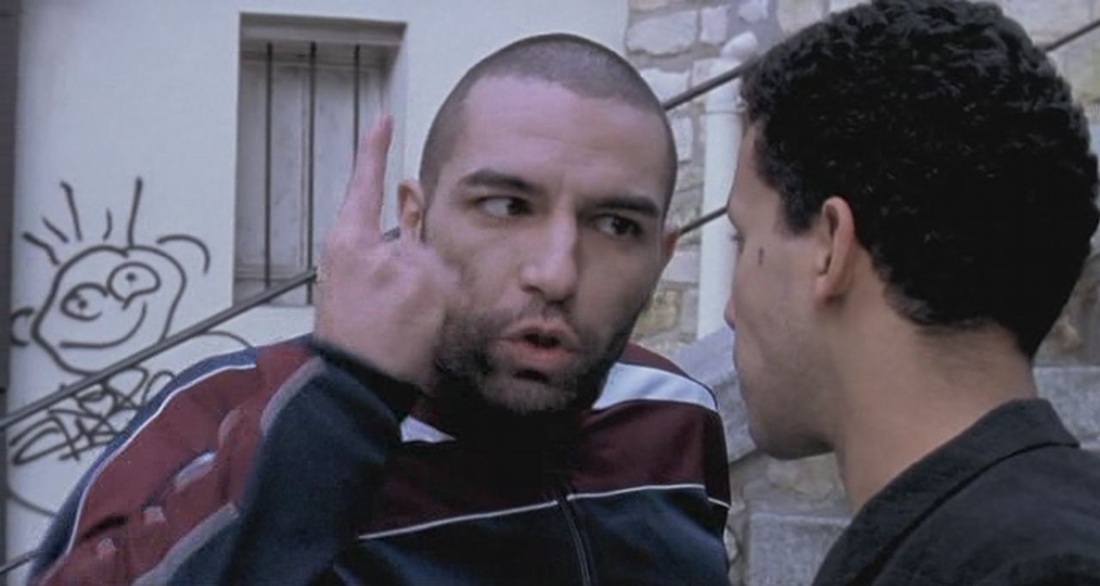 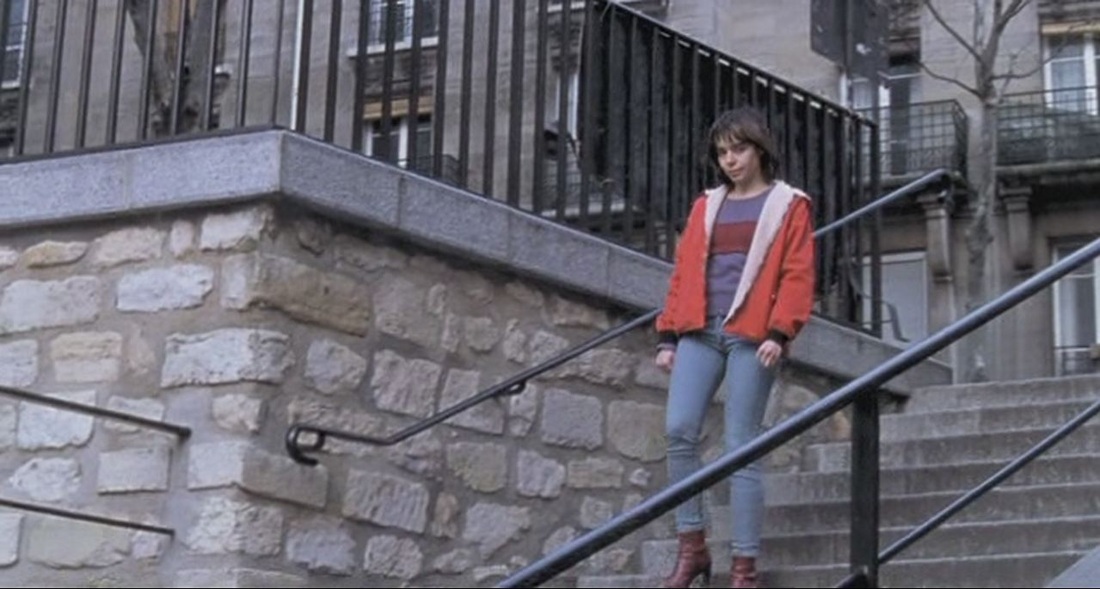 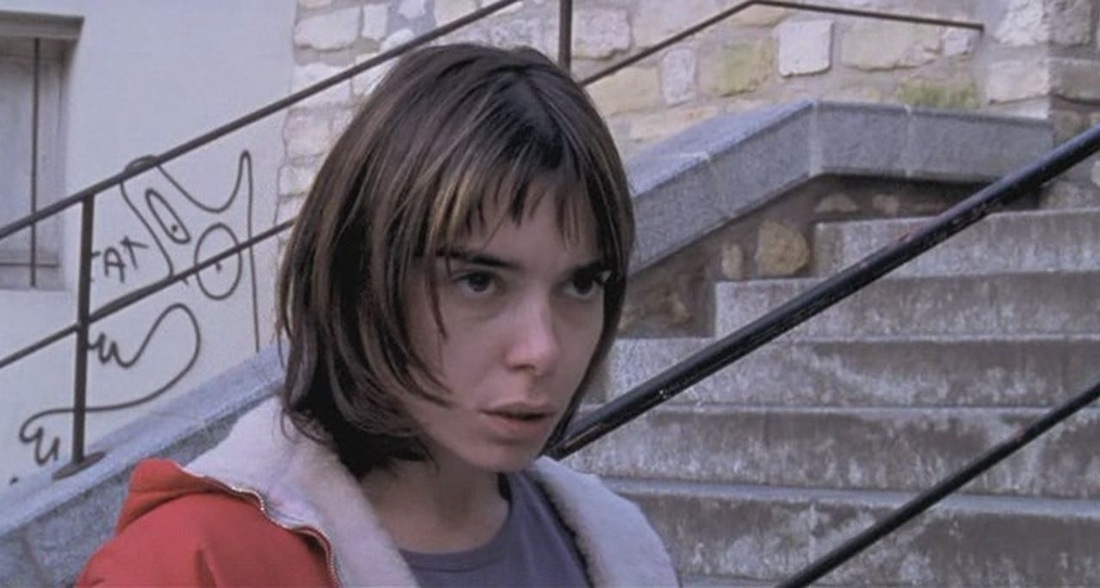 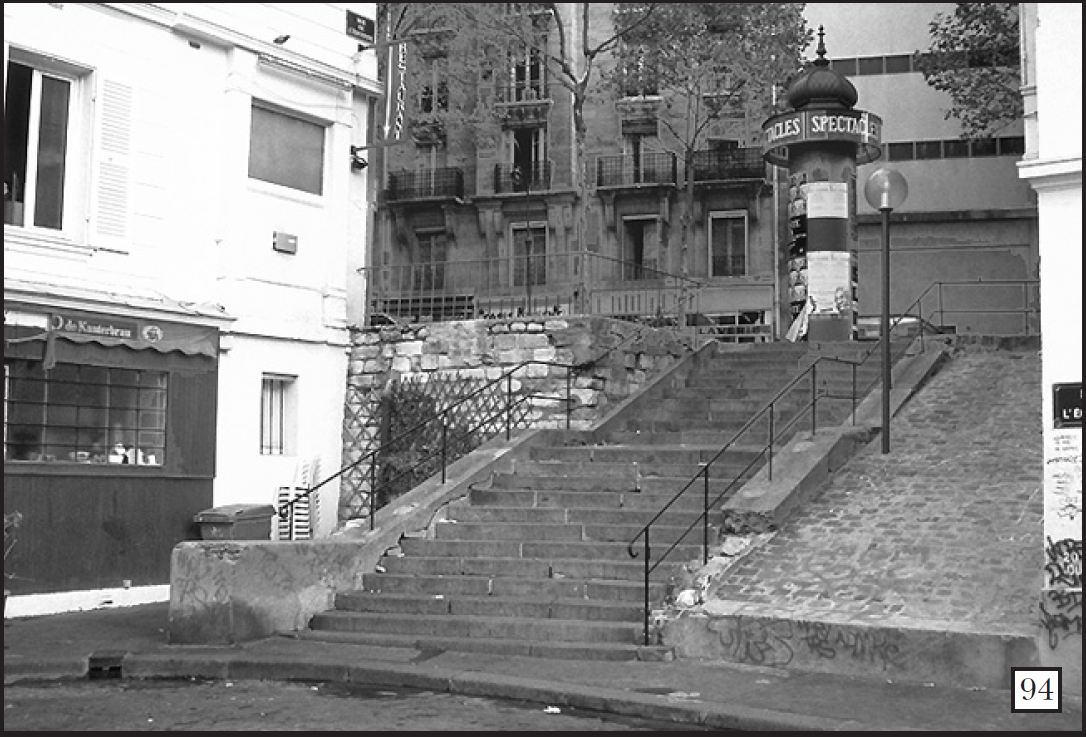 François L'Henaff, Paris en marches 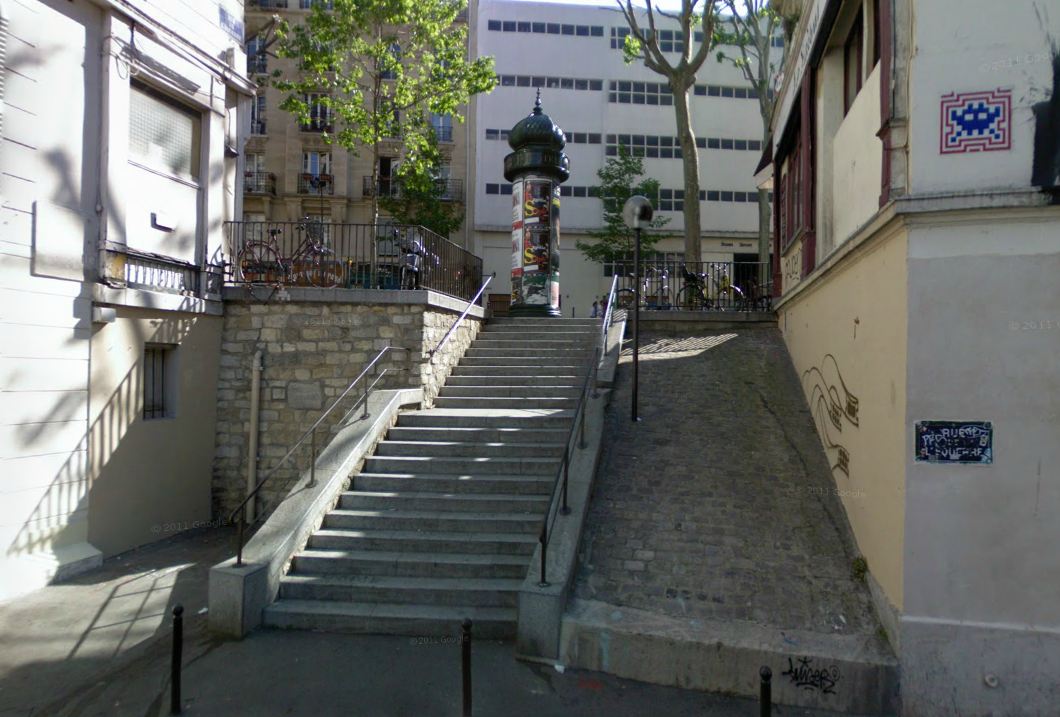 GoogleMaps 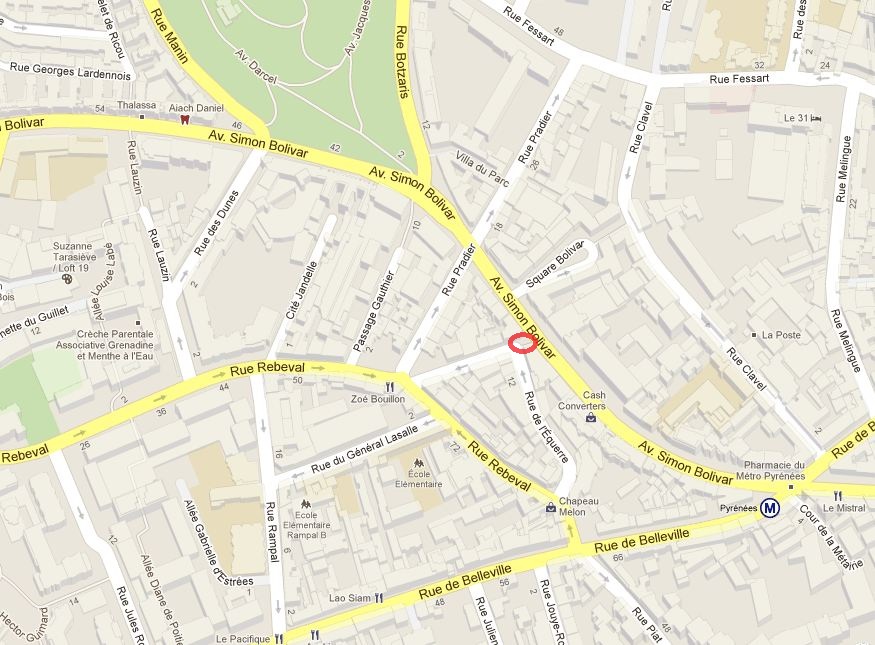 GoogleMaps  I Vinti (Michelangelo Antonioni 1953) 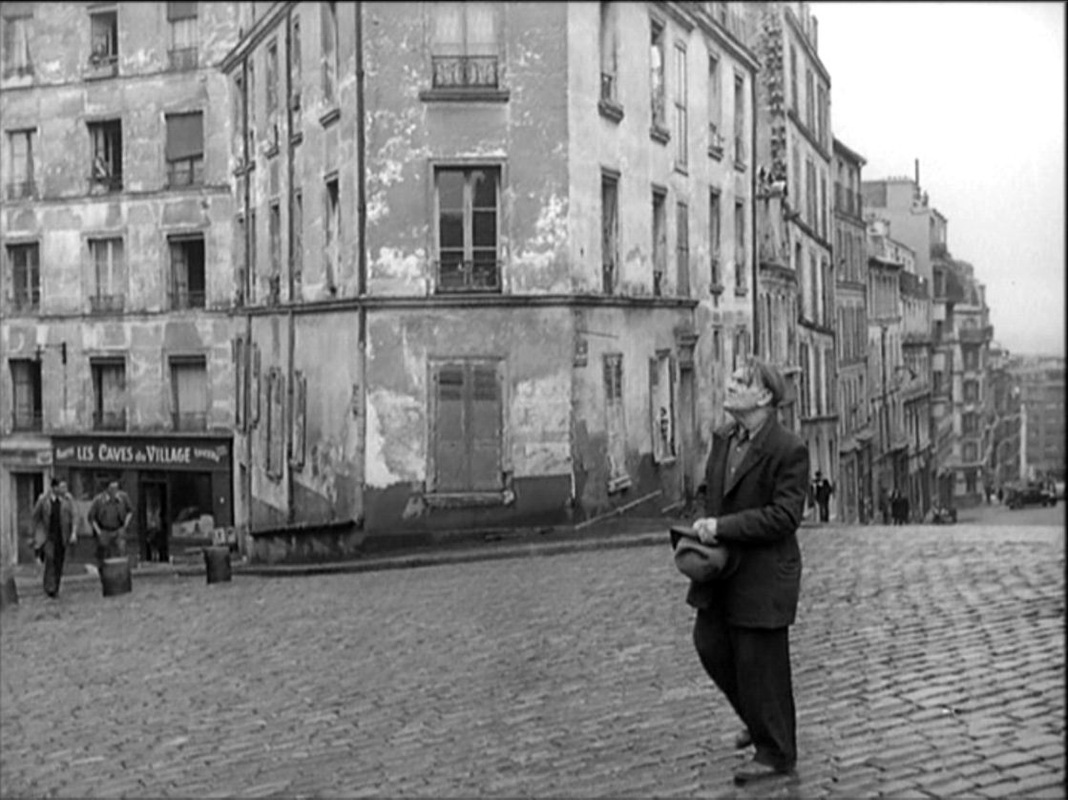 I Vinti (Michelangelo Antonioni 1953) 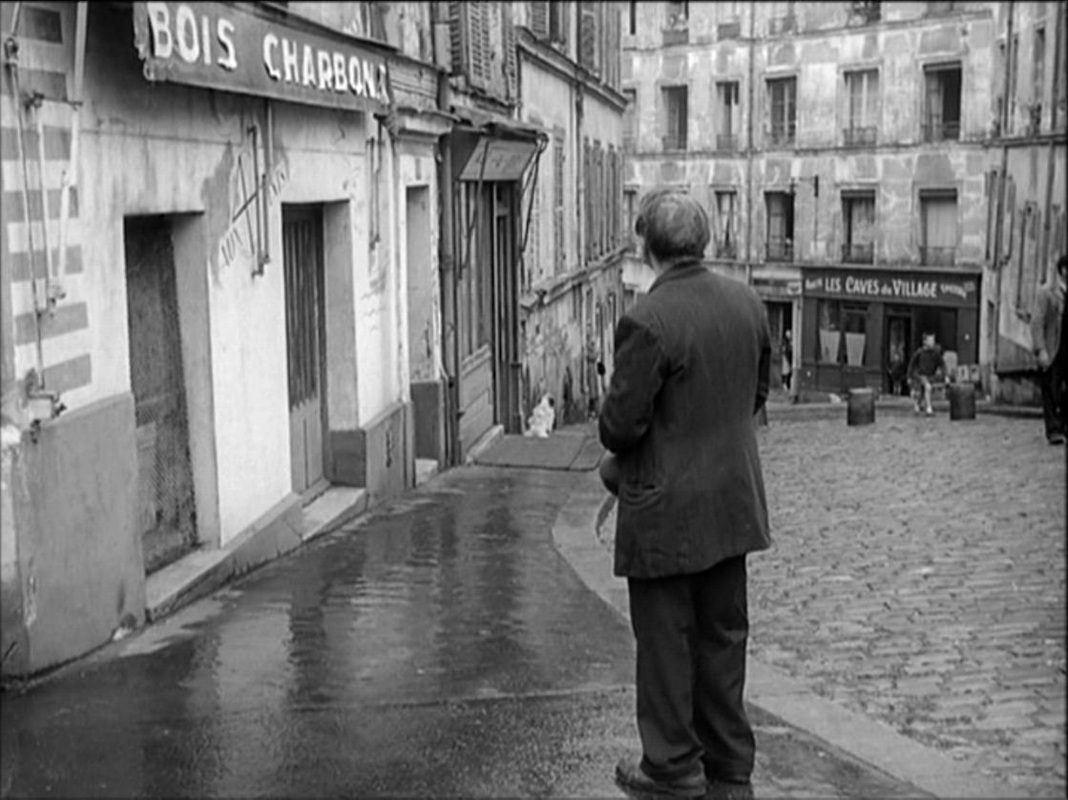 I Vinti (Michelangelo Antonioni 1953) 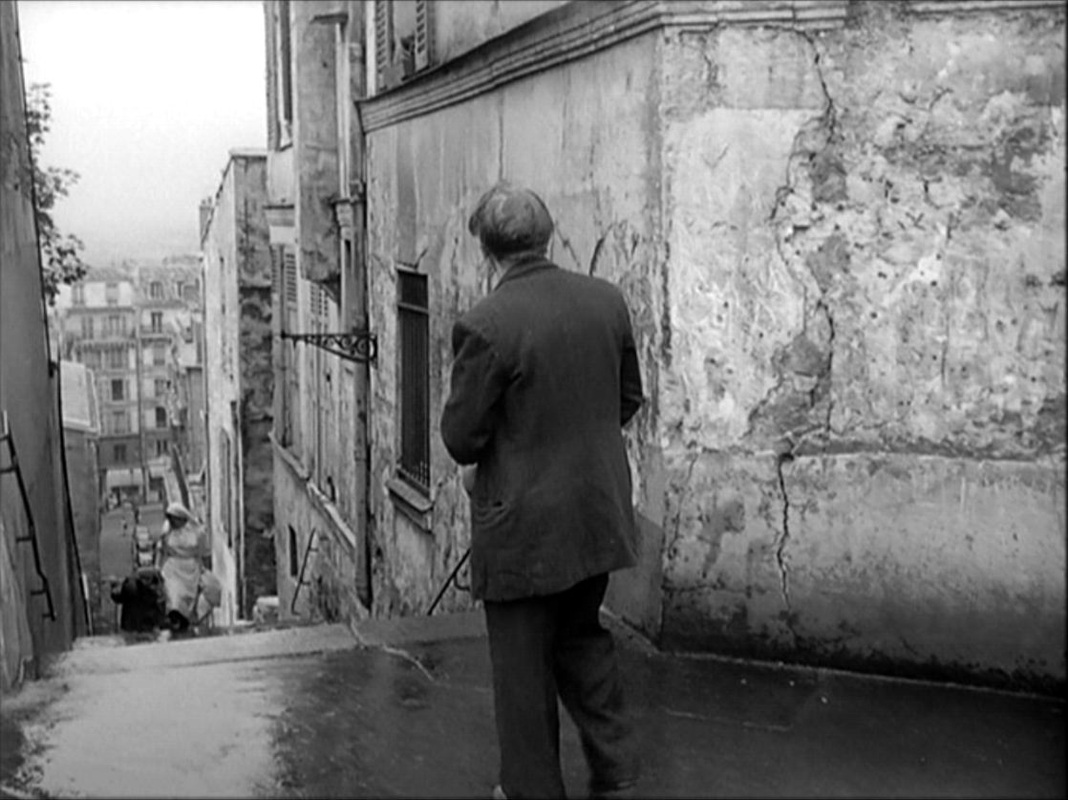 I Vinti (Michelangelo Antonioni 1953)  I Vinti (Michelangelo Antonioni 1953) The passage Cottin appears in its natural dilapidated state in Antonioni's film, made and set in 1953, but eleven years later, in Richard's film, it has to be cleaned up to represent the Paris of 1917: 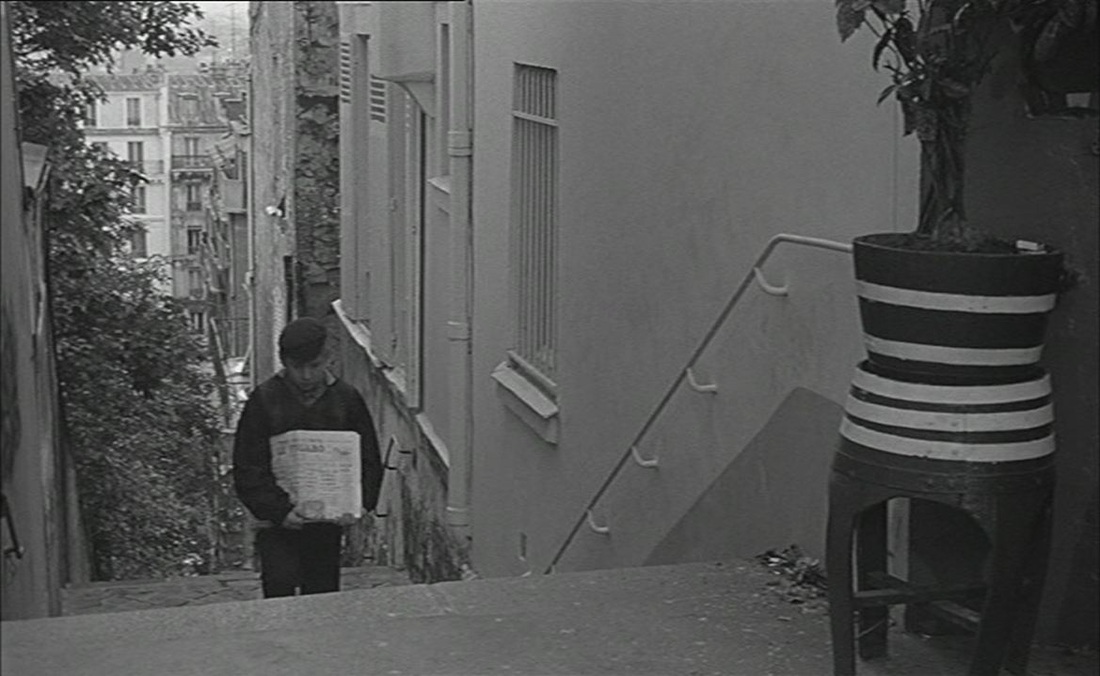 Mata Hari agent H.21 (Jean-Louis Richard 1964) 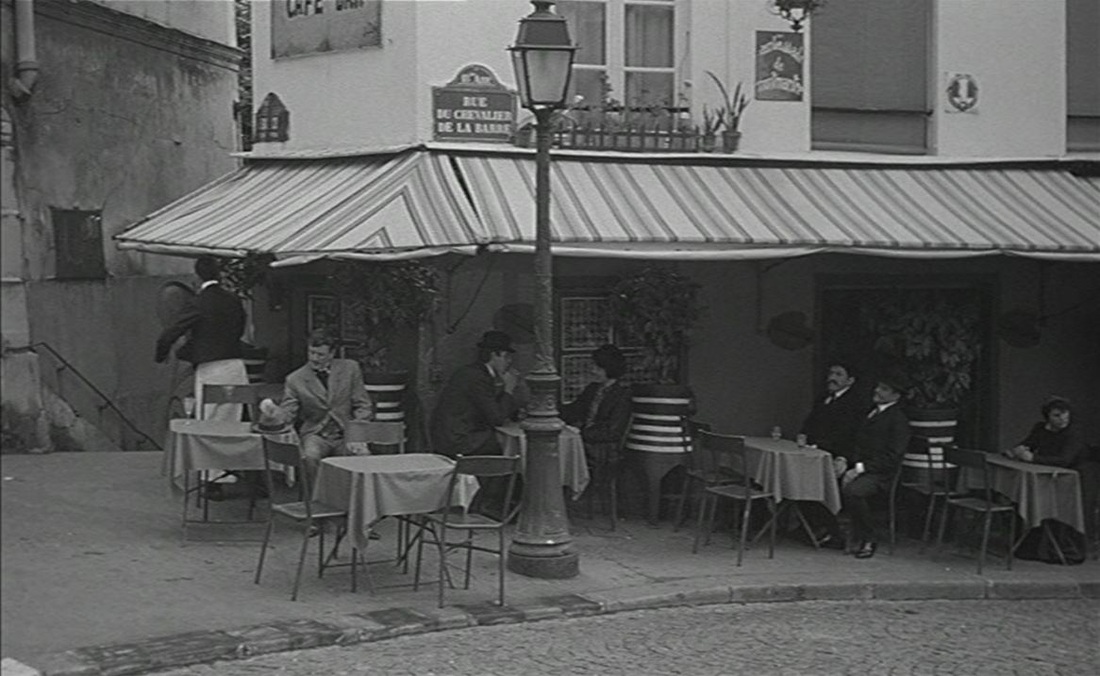 Mata Hari agent H.21 (Jean-Louis Richard 1964) 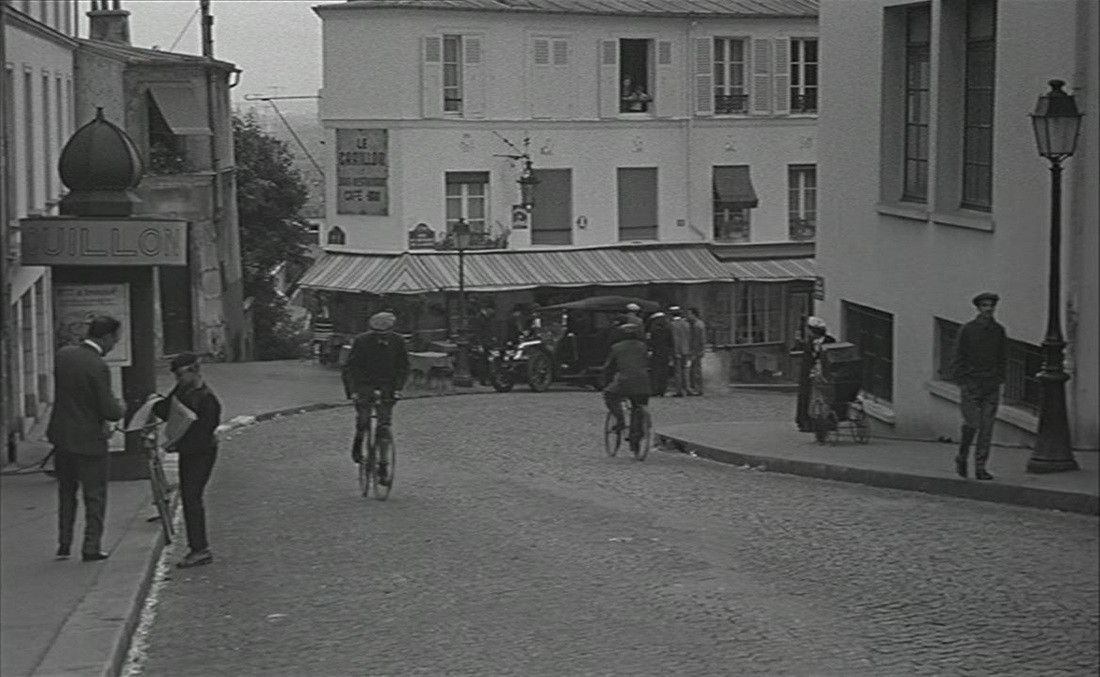 Mata Hari agent H.21 (Jean-Louis Richard 1964)
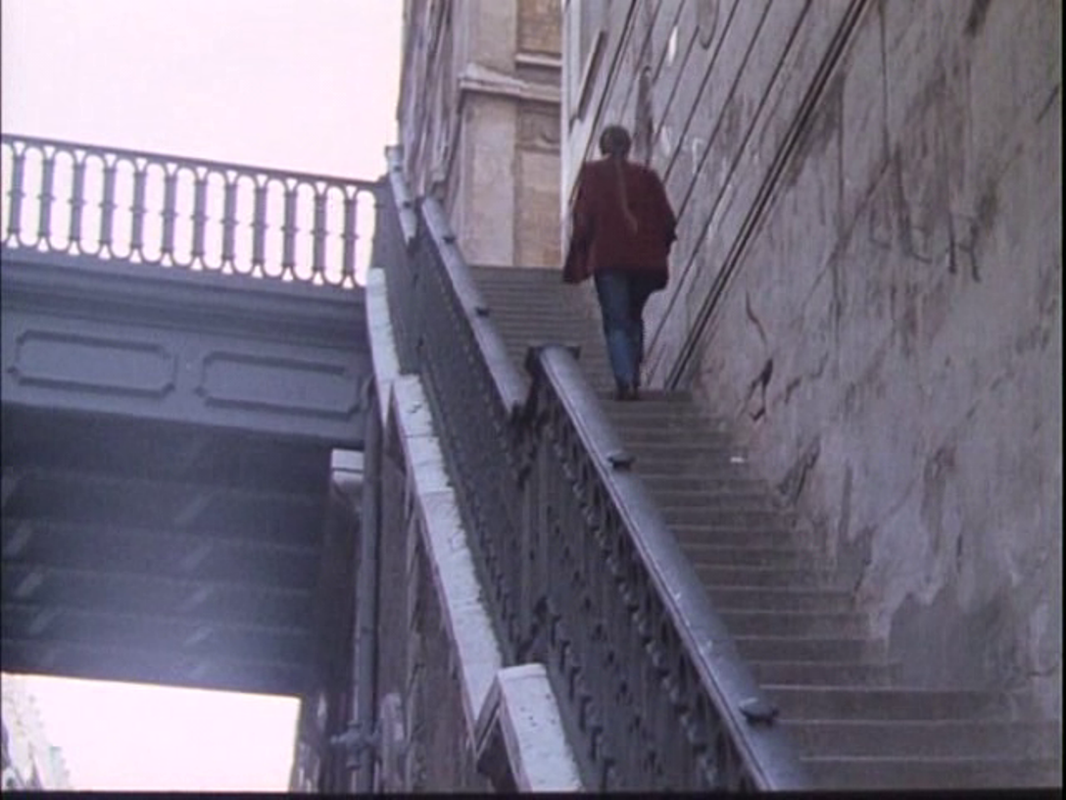
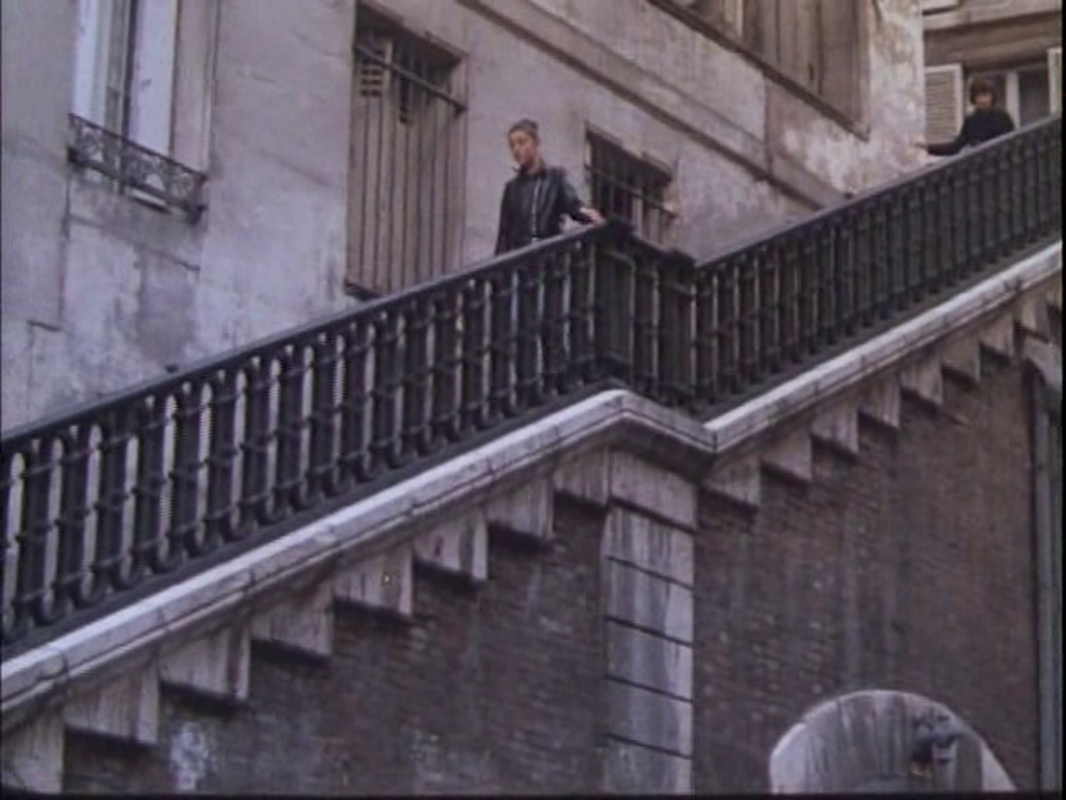
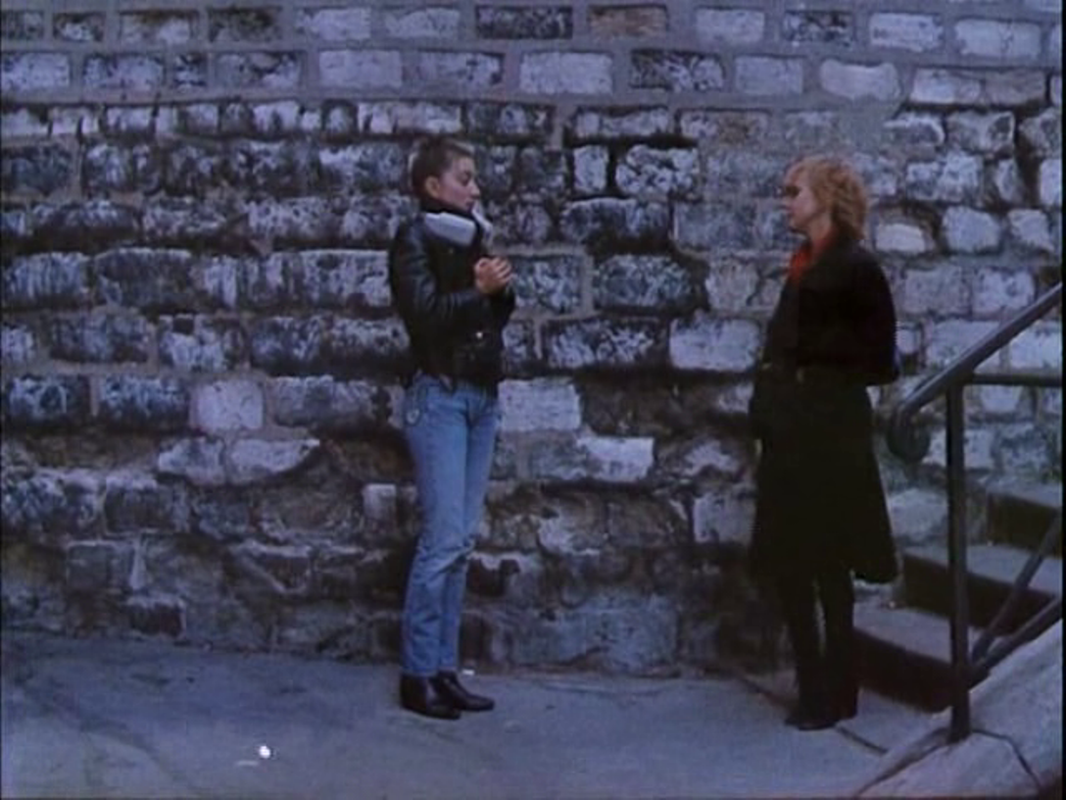
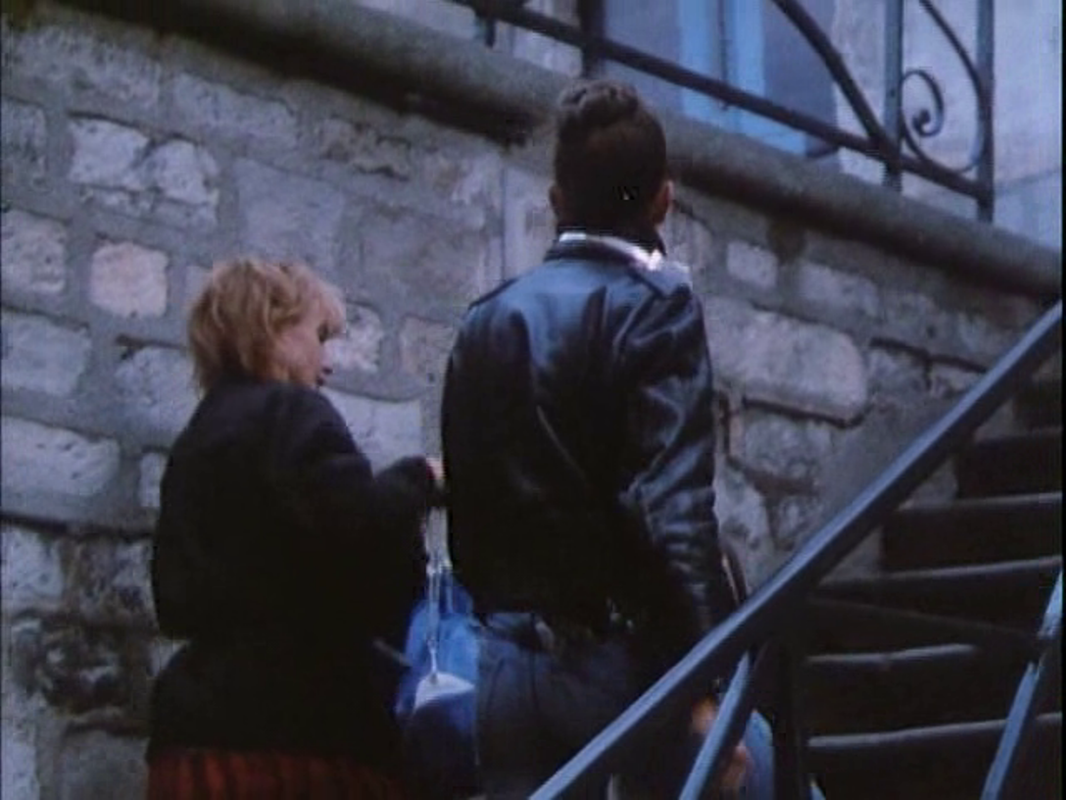
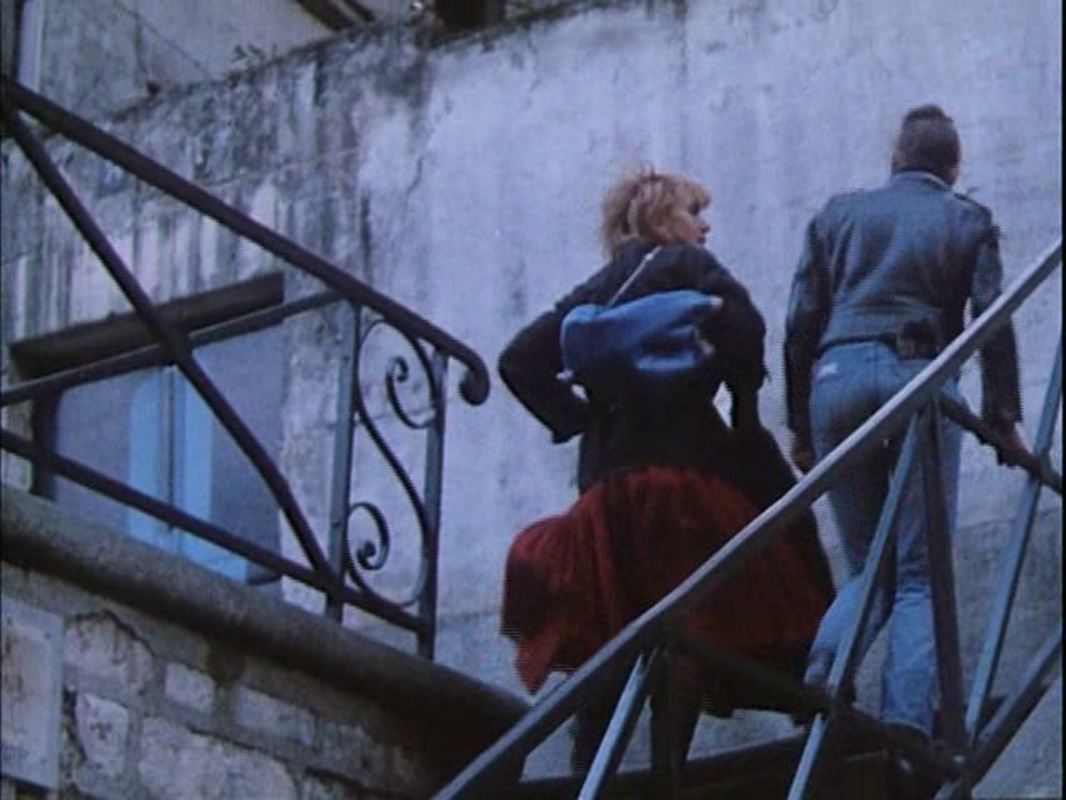
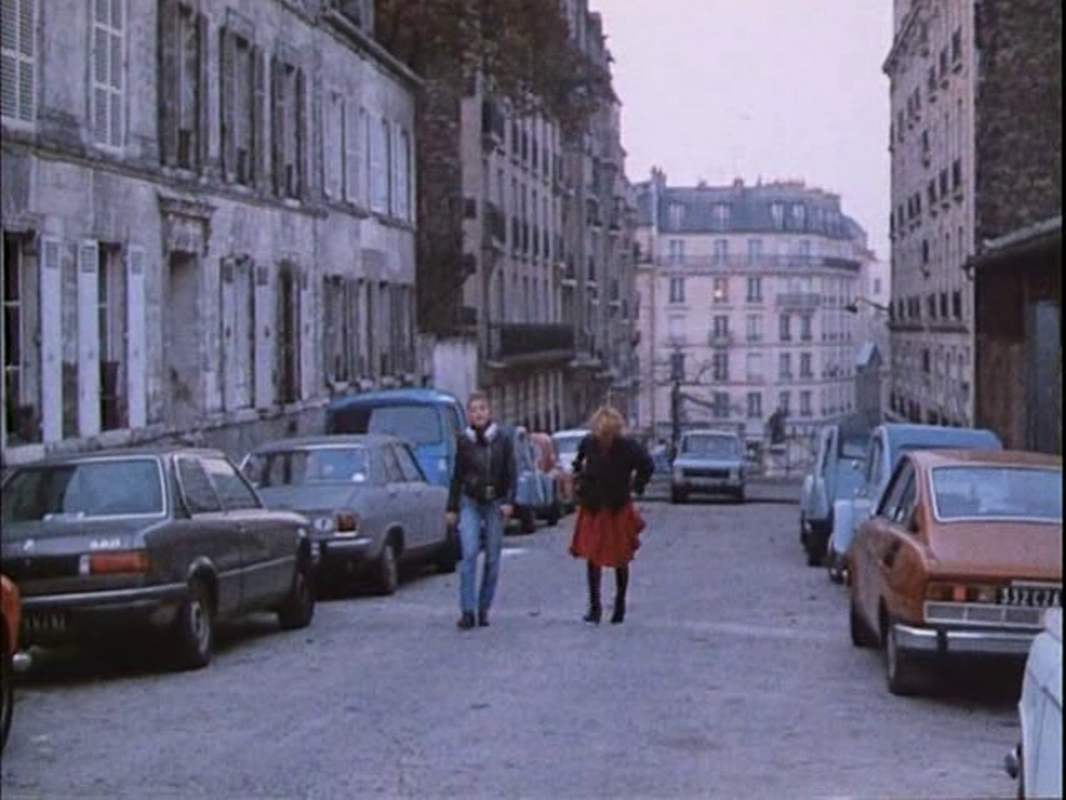
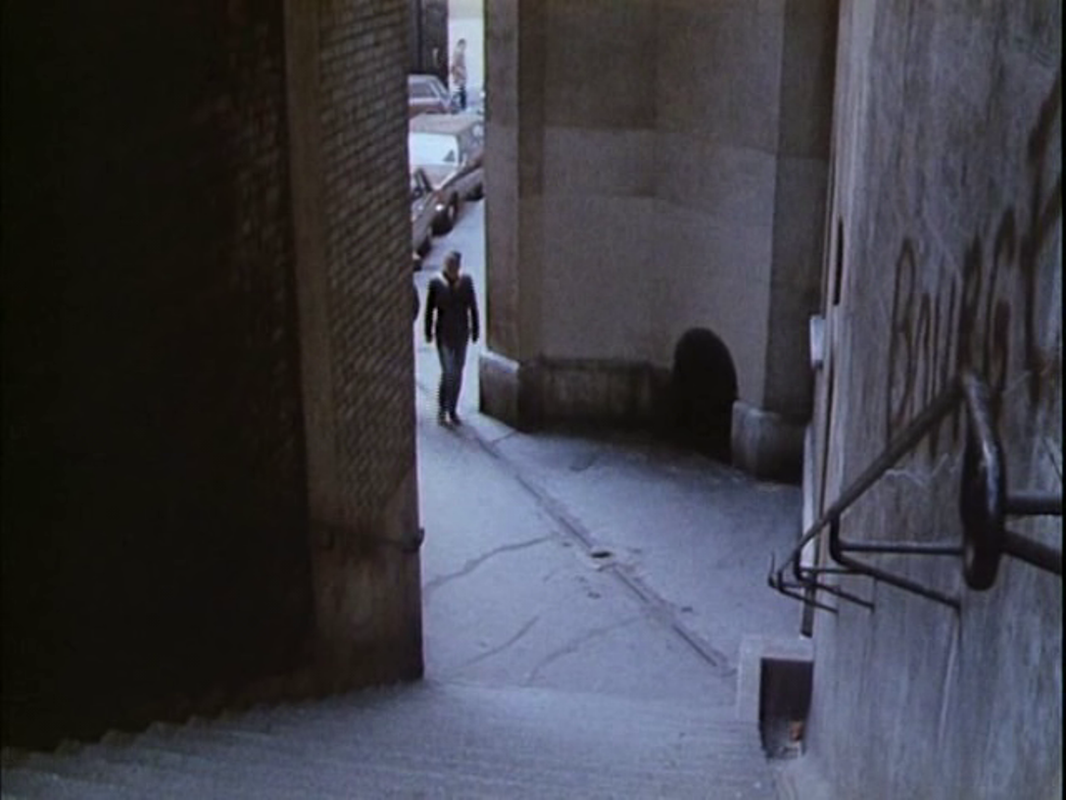
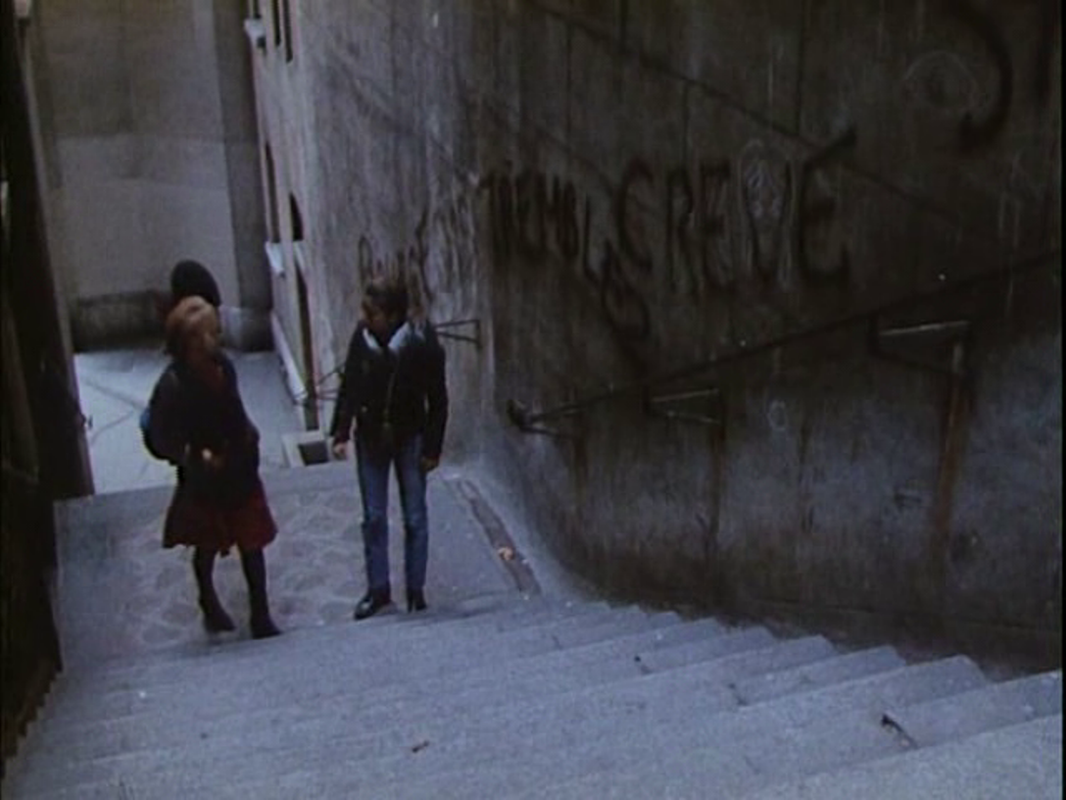
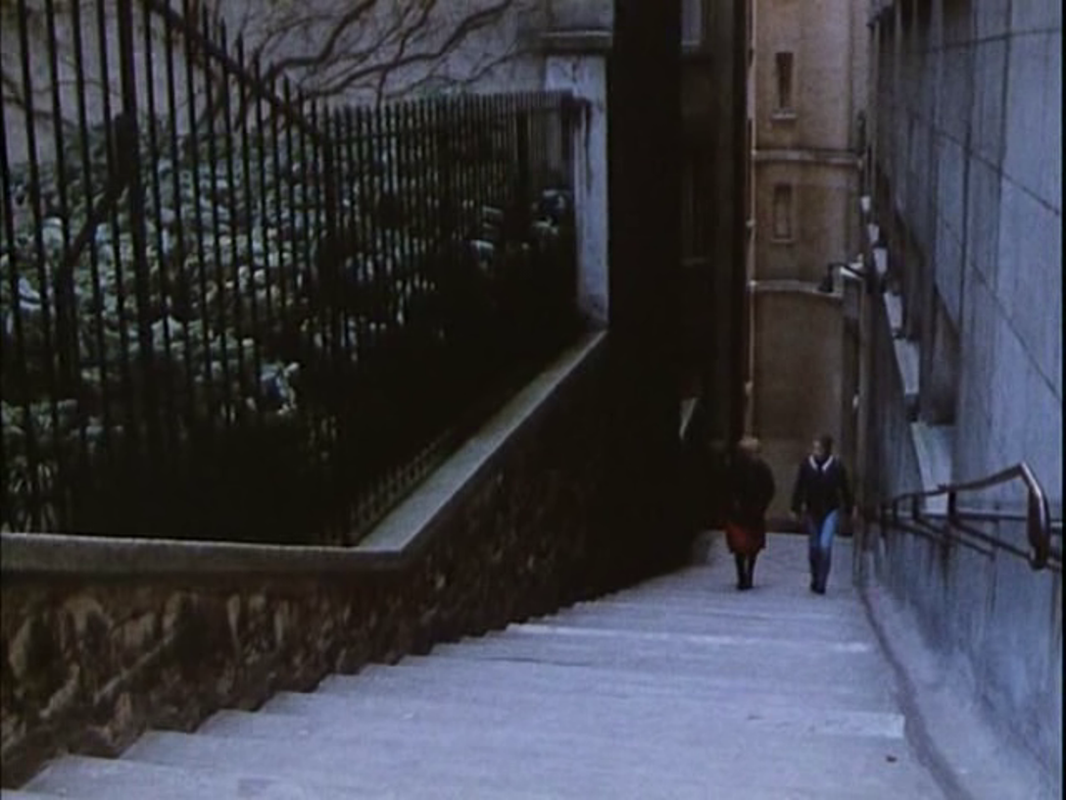
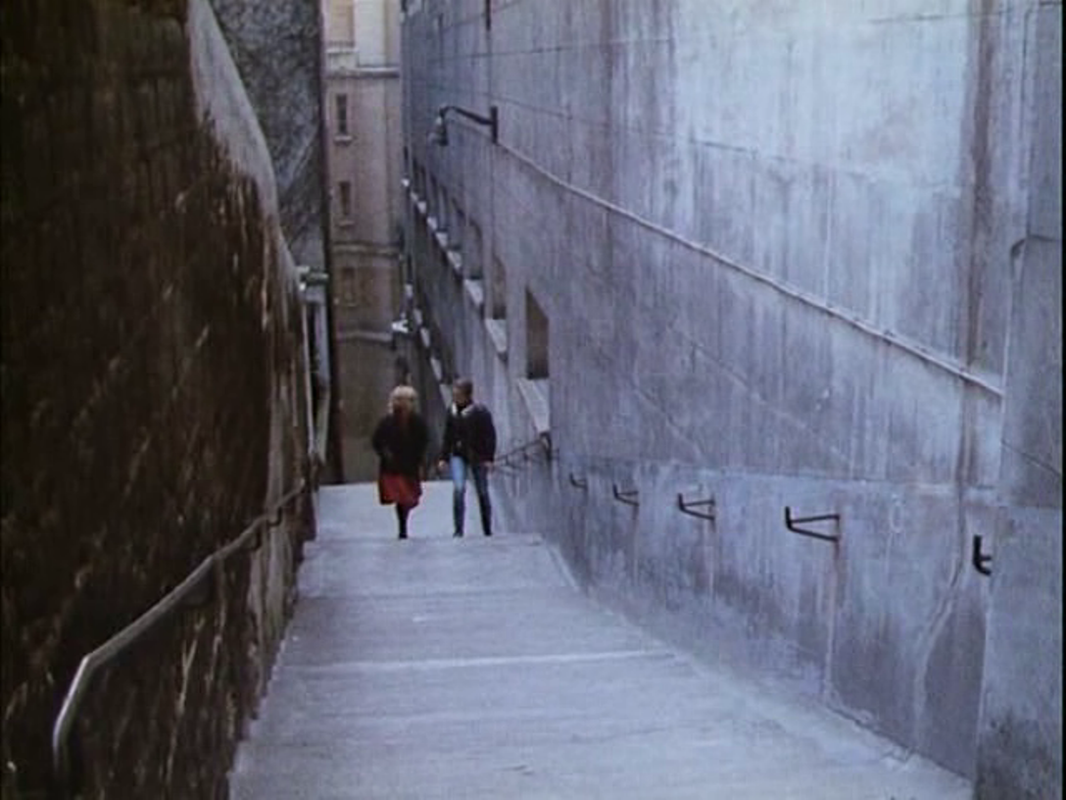
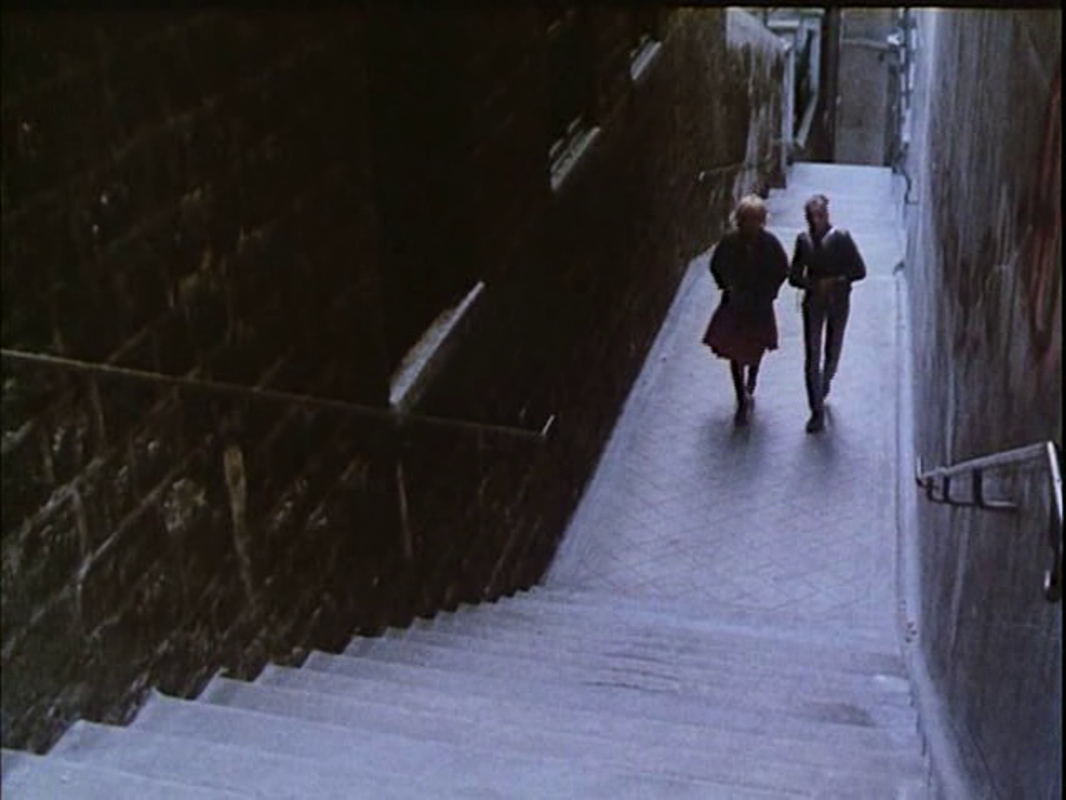
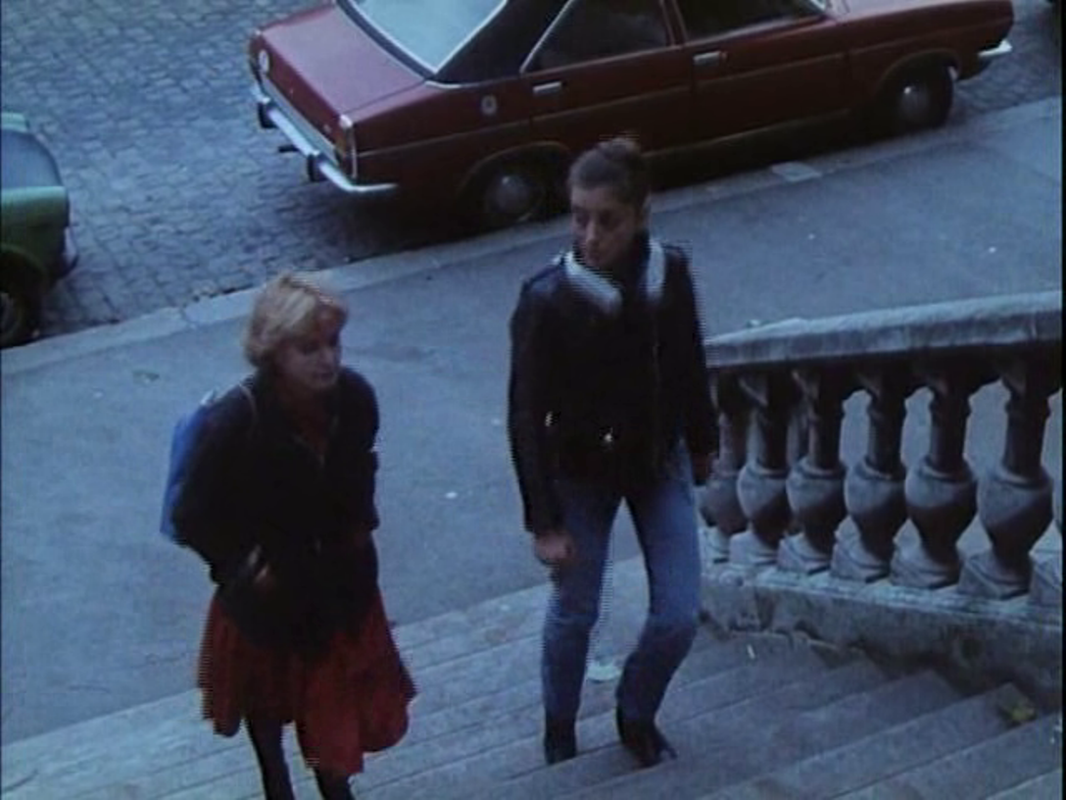
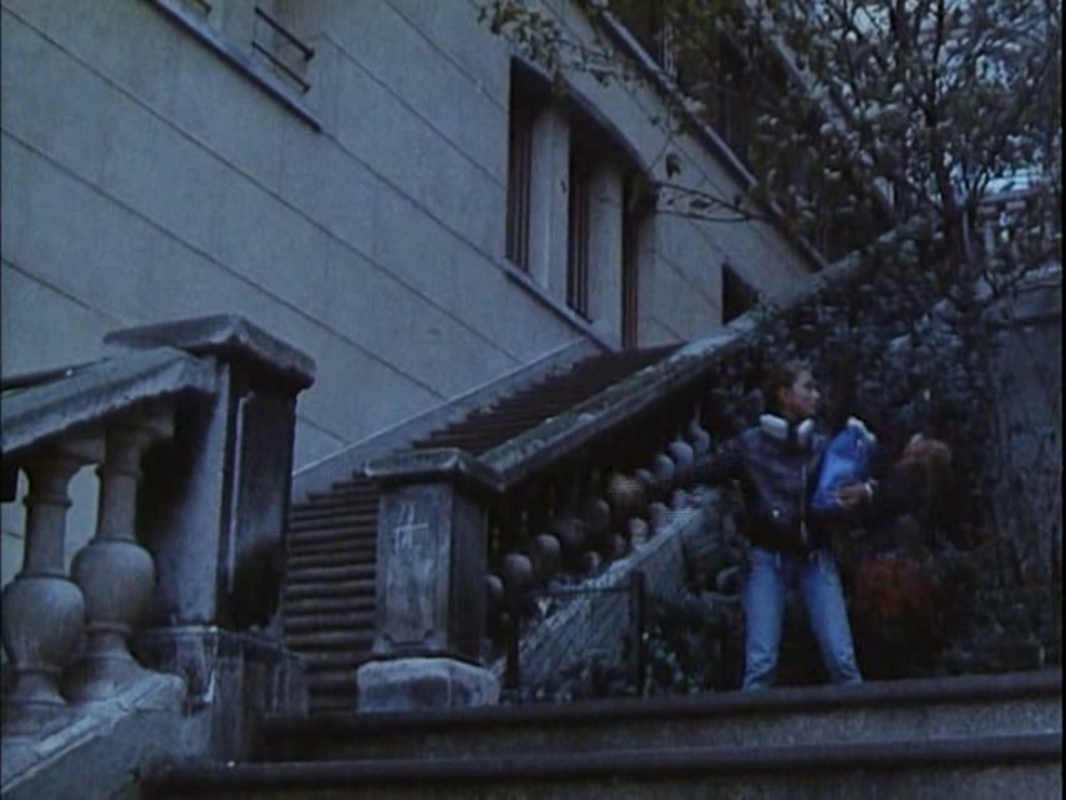
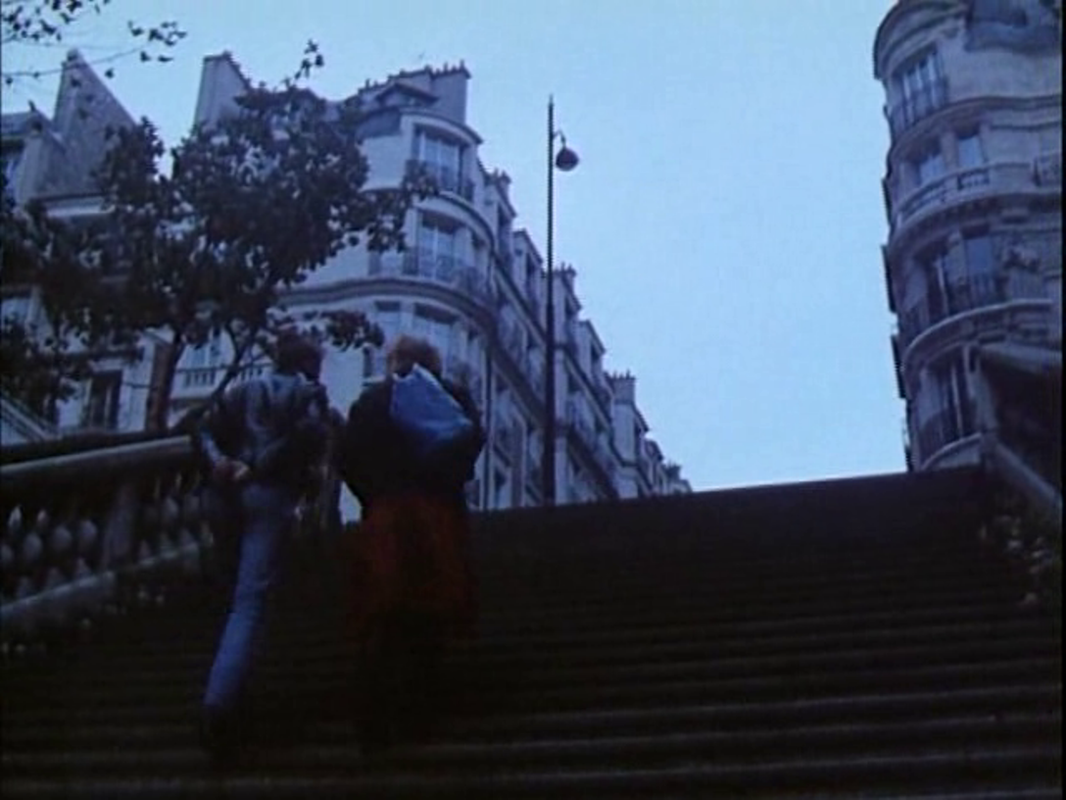
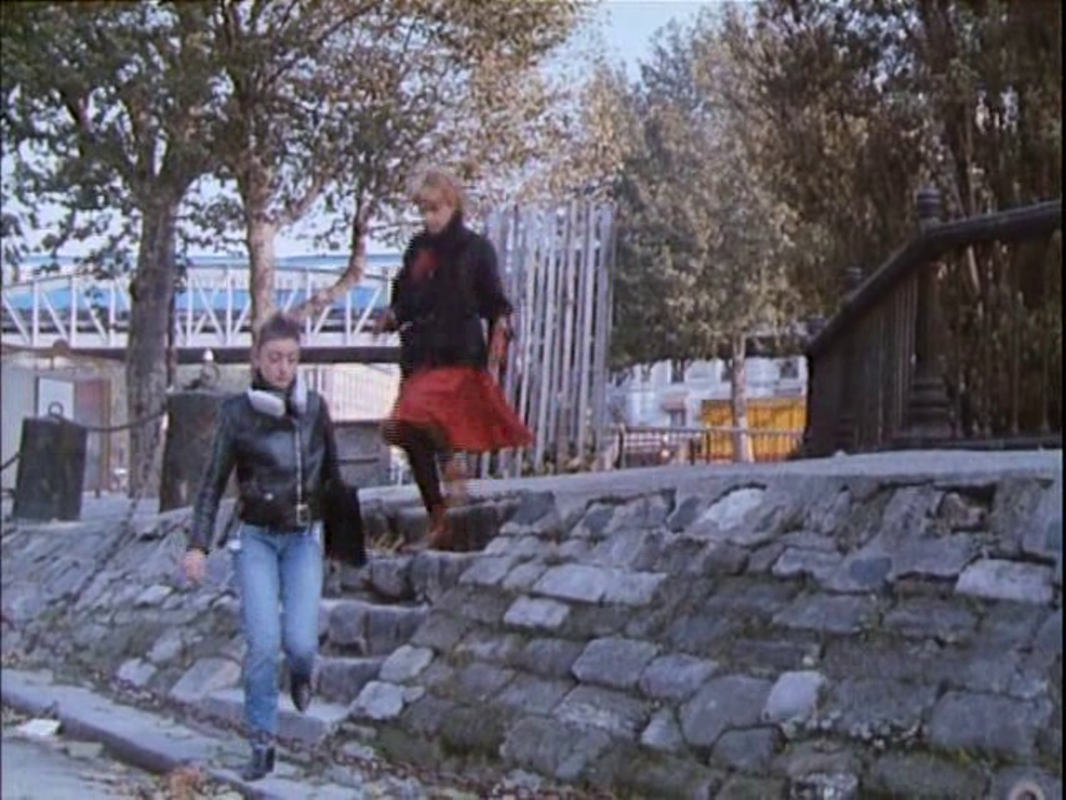
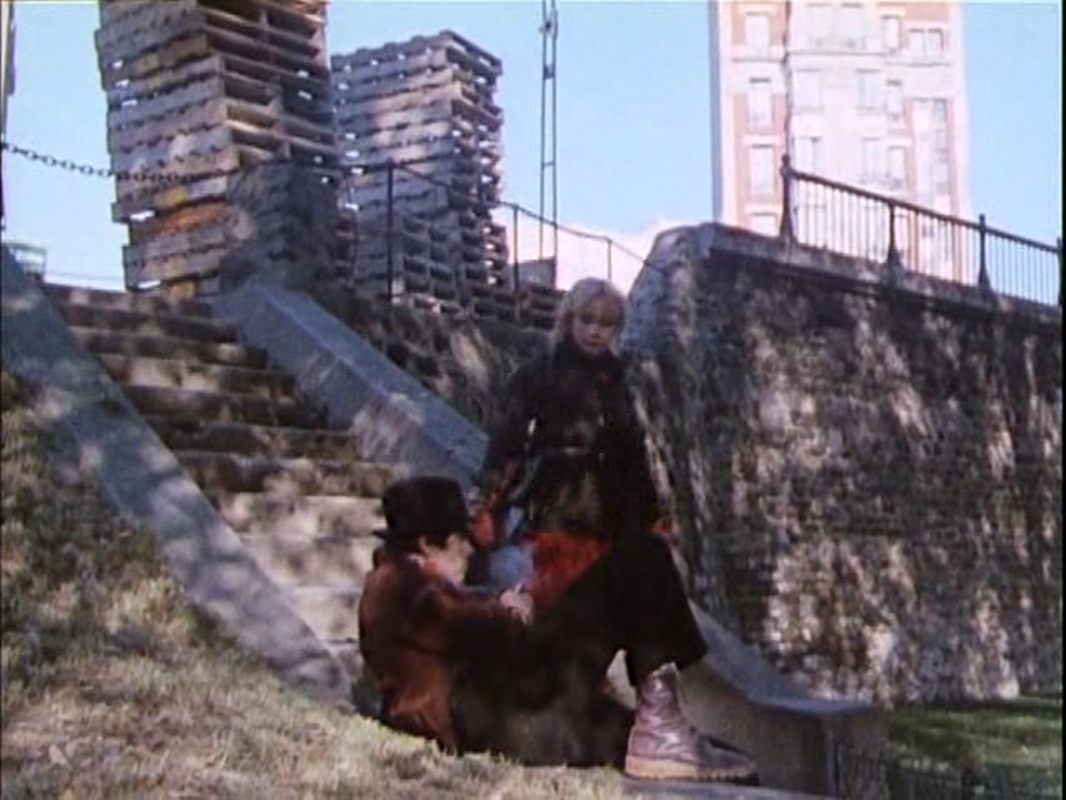
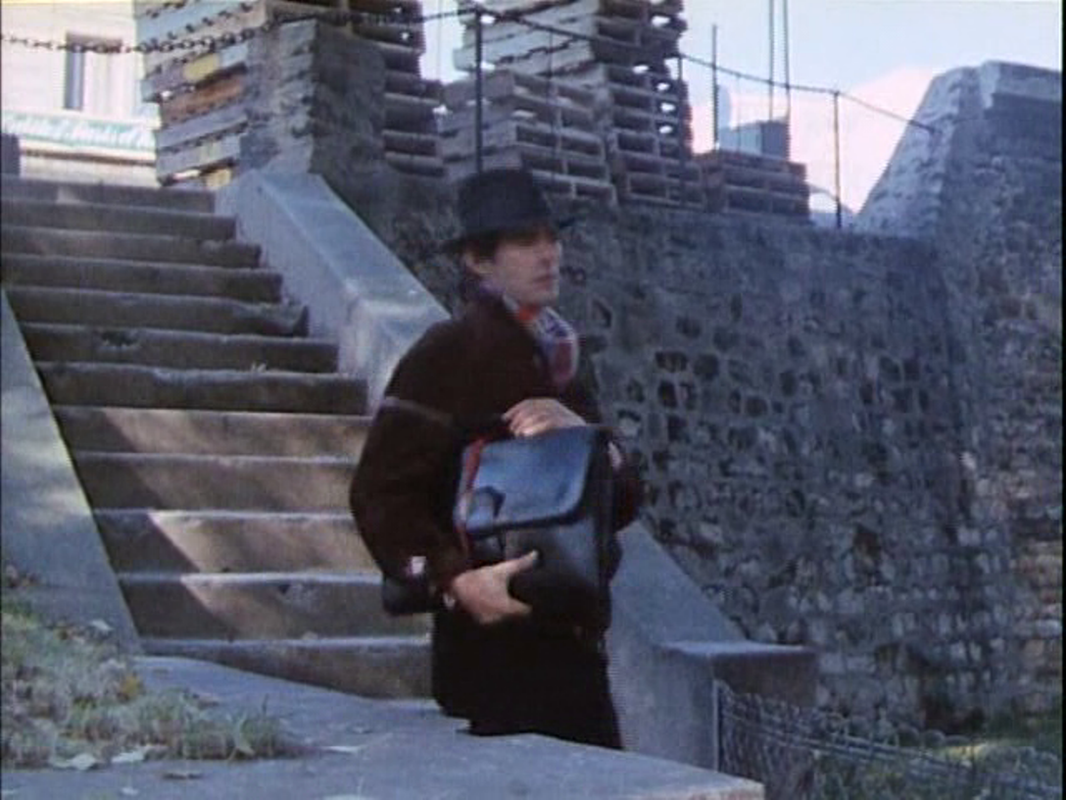
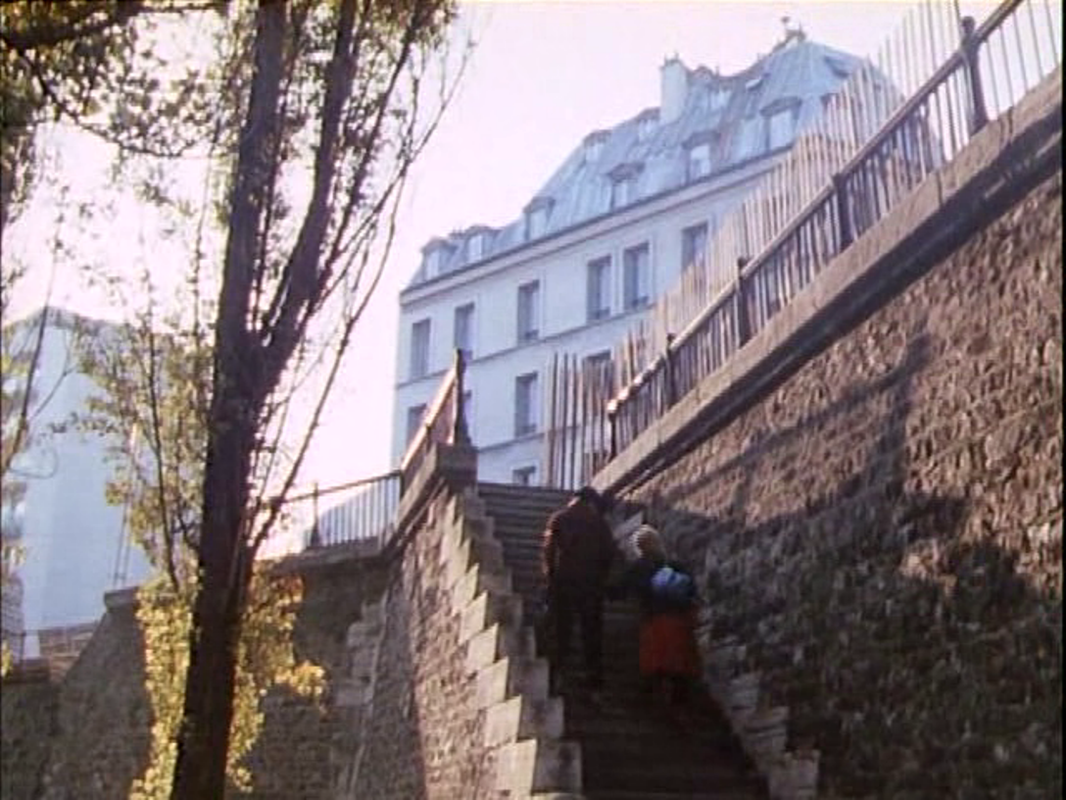
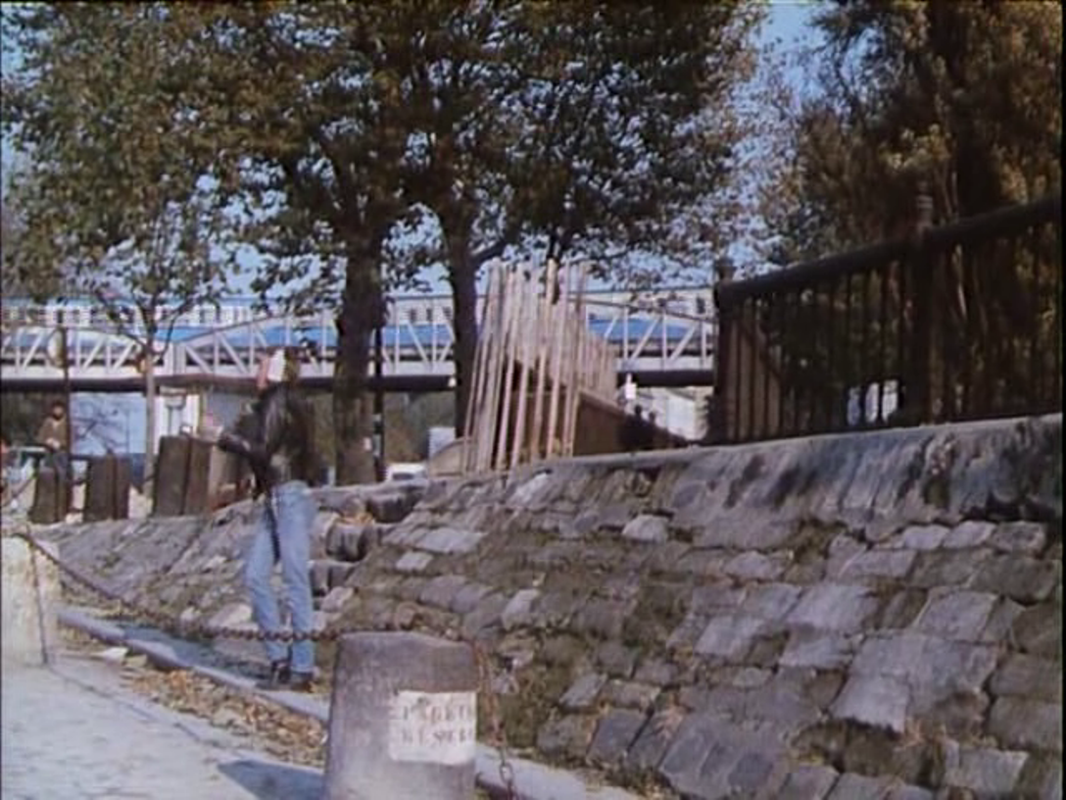
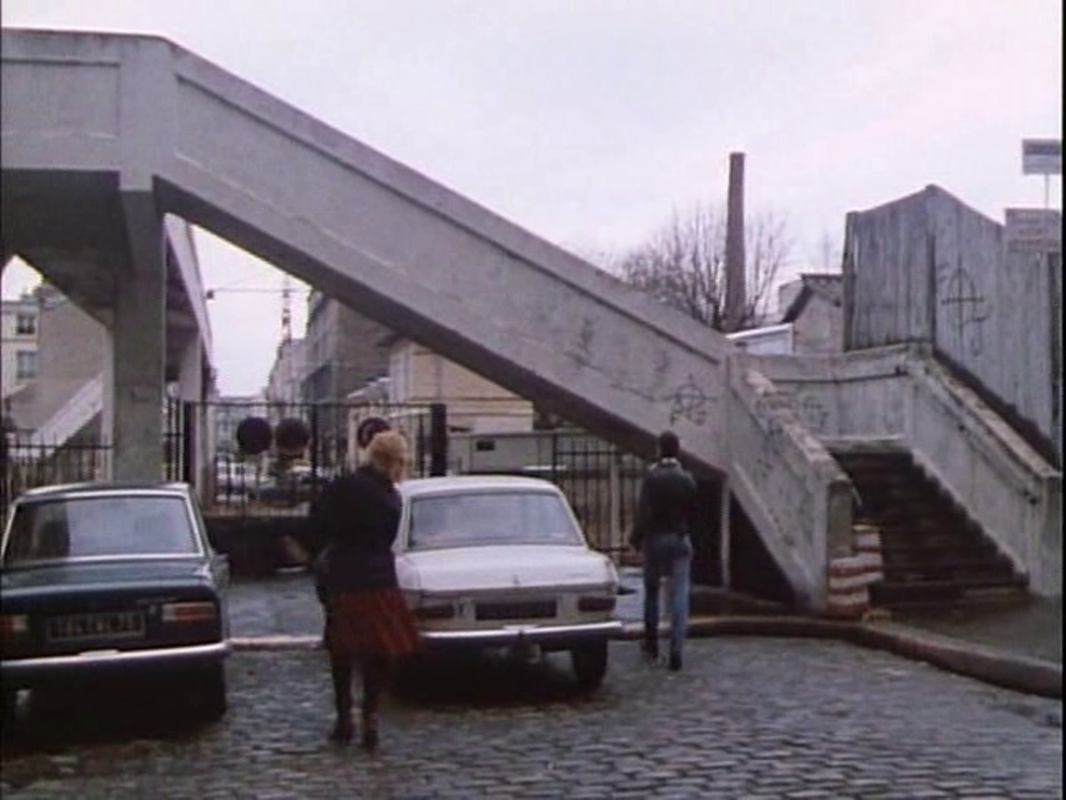
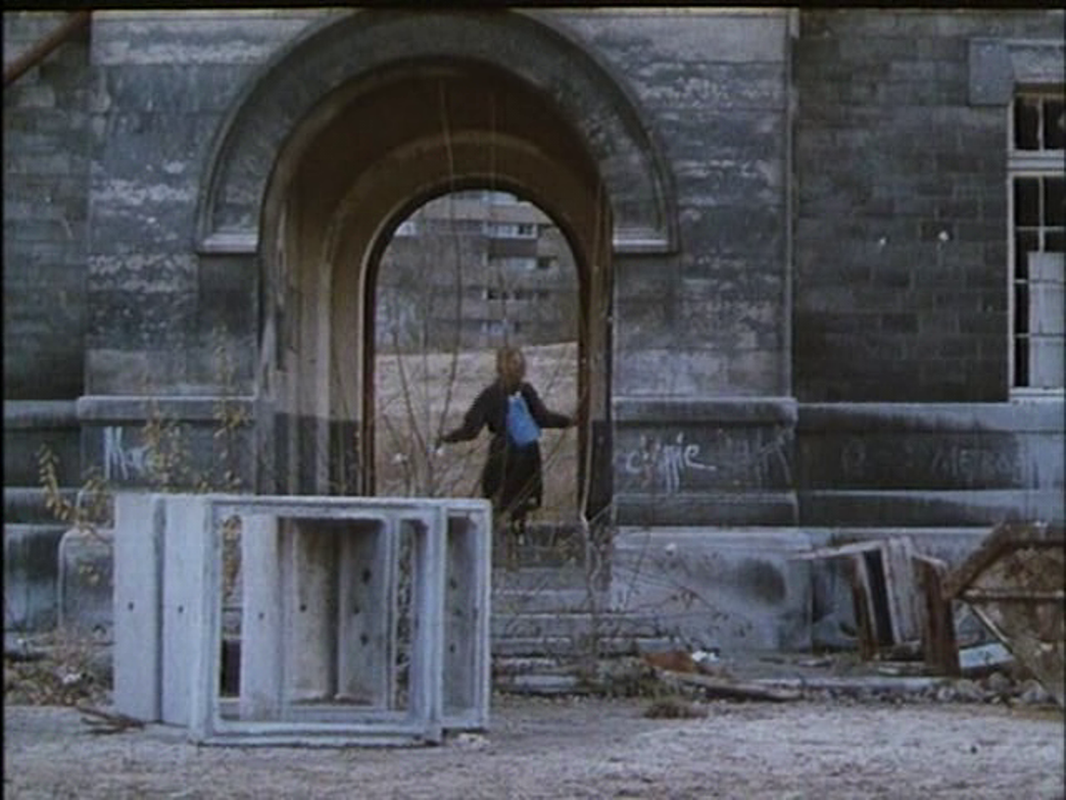
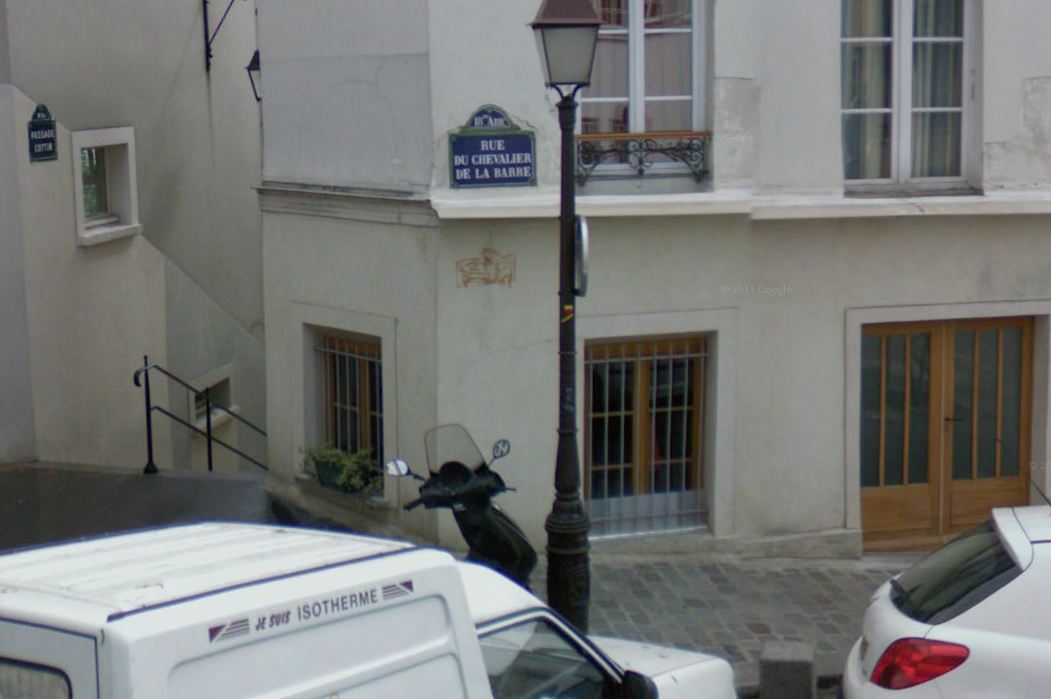 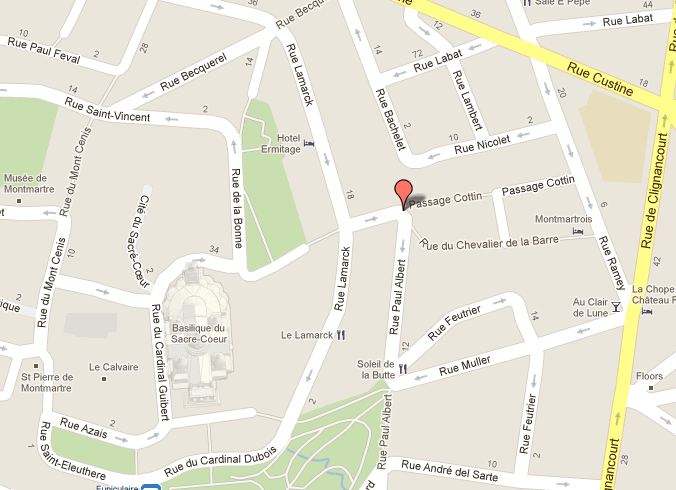 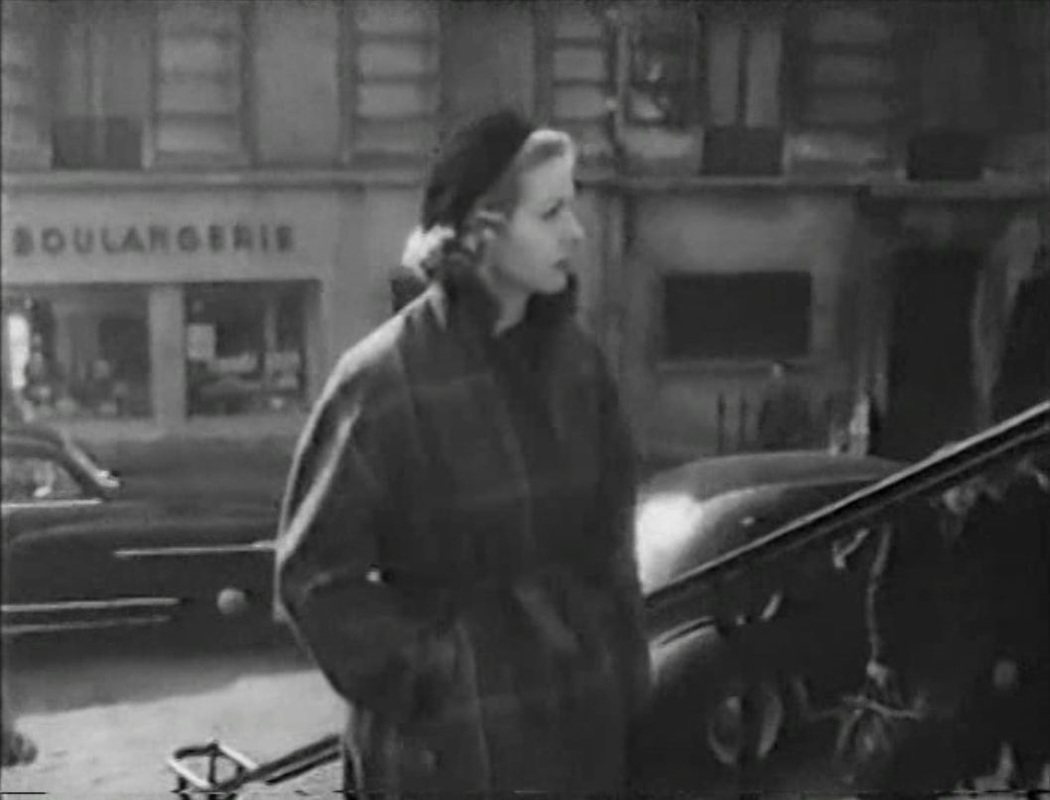 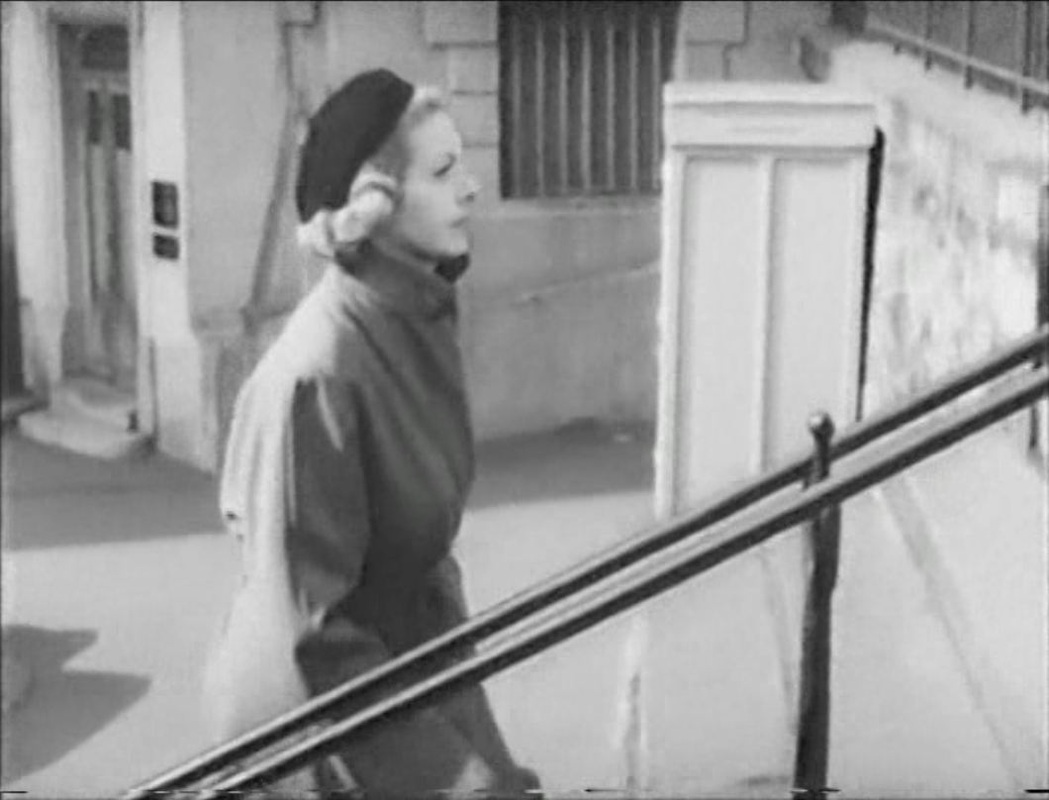 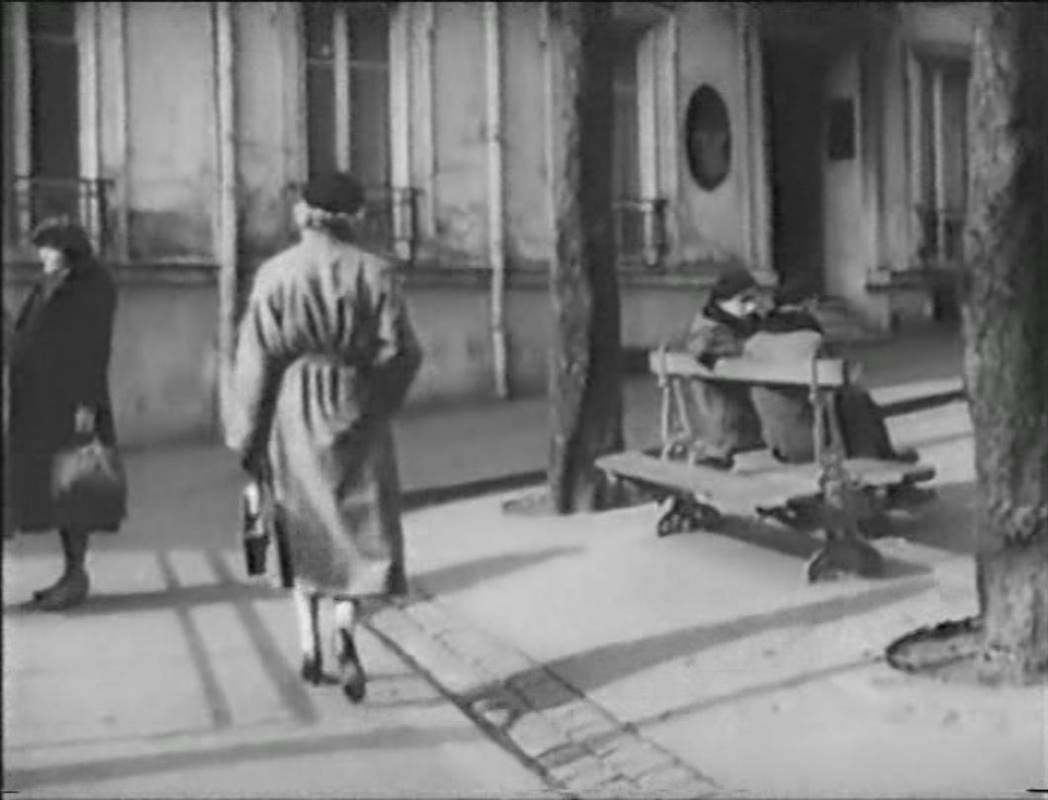 The pension where the protagonists live is in the place Emile Goudeau. It's now a TimHotel, and appears in Eric Rohmer's Les Rendez-vous de Paris (1995):    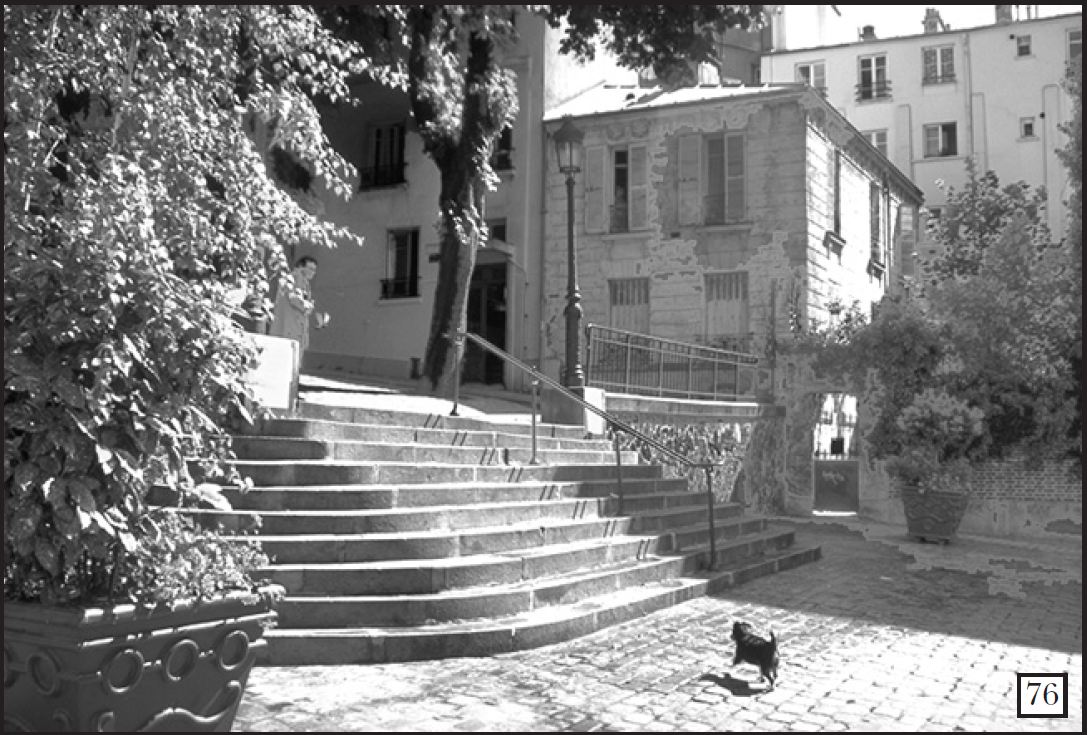 François L'Henaff, Paris en marches The same stairs appeared in Jean Renoir's La Chienne (1931):  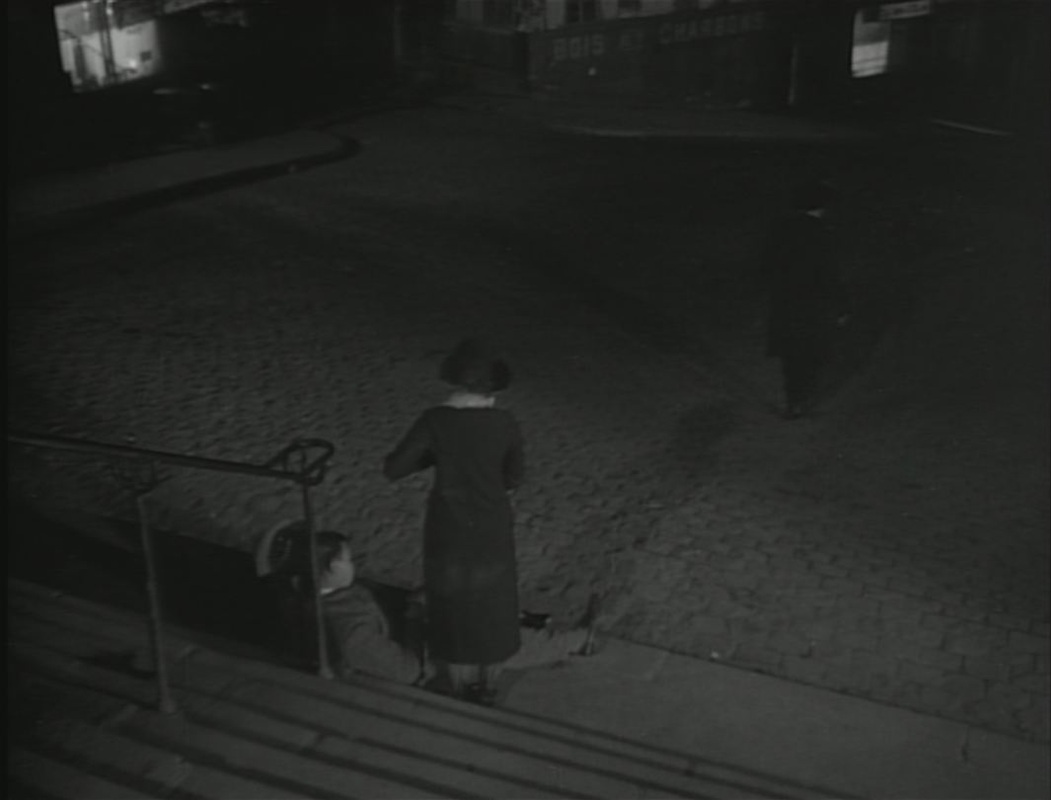 For other stairs in La Chienne, see an earlier escalographe post, here. In Leur Dernière Nuit, the school where the woman works is nearby, at the bottom of the stairs rue Paul Albert: 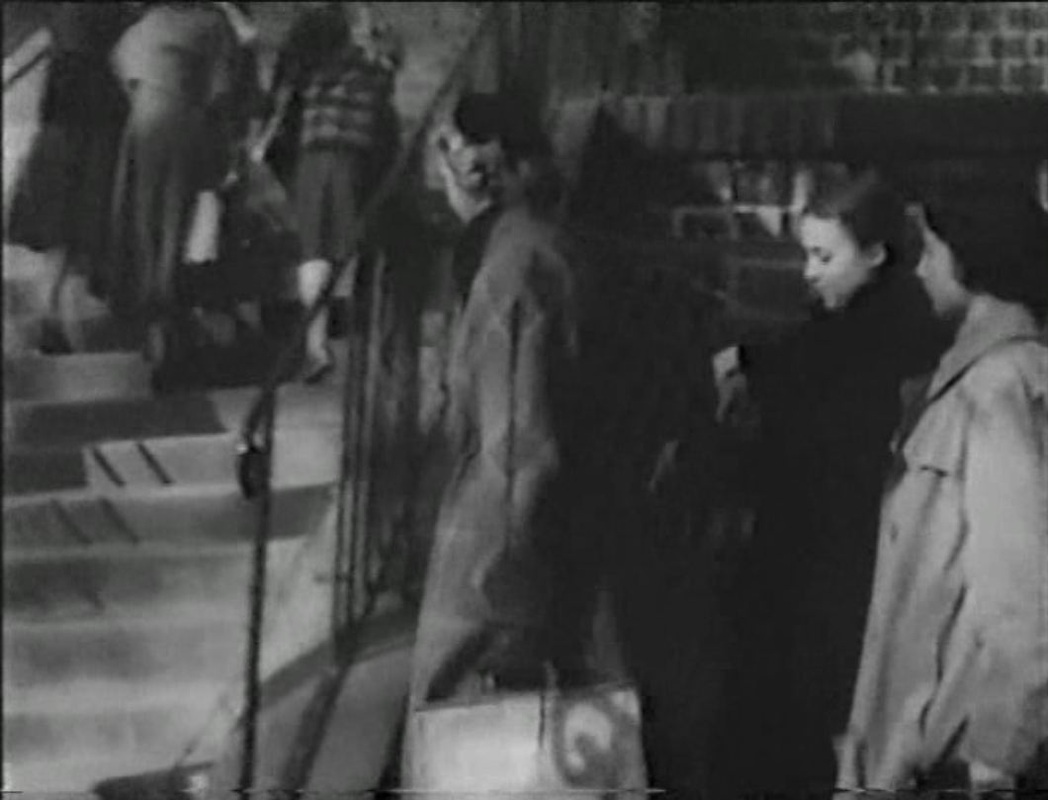 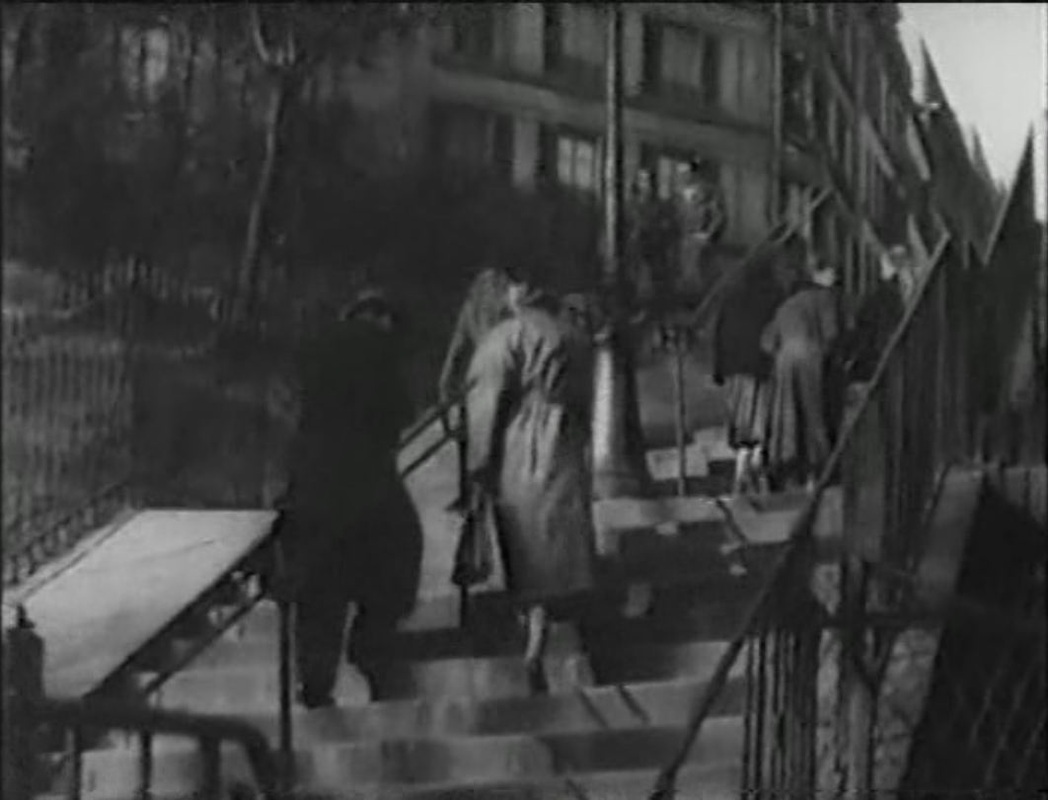 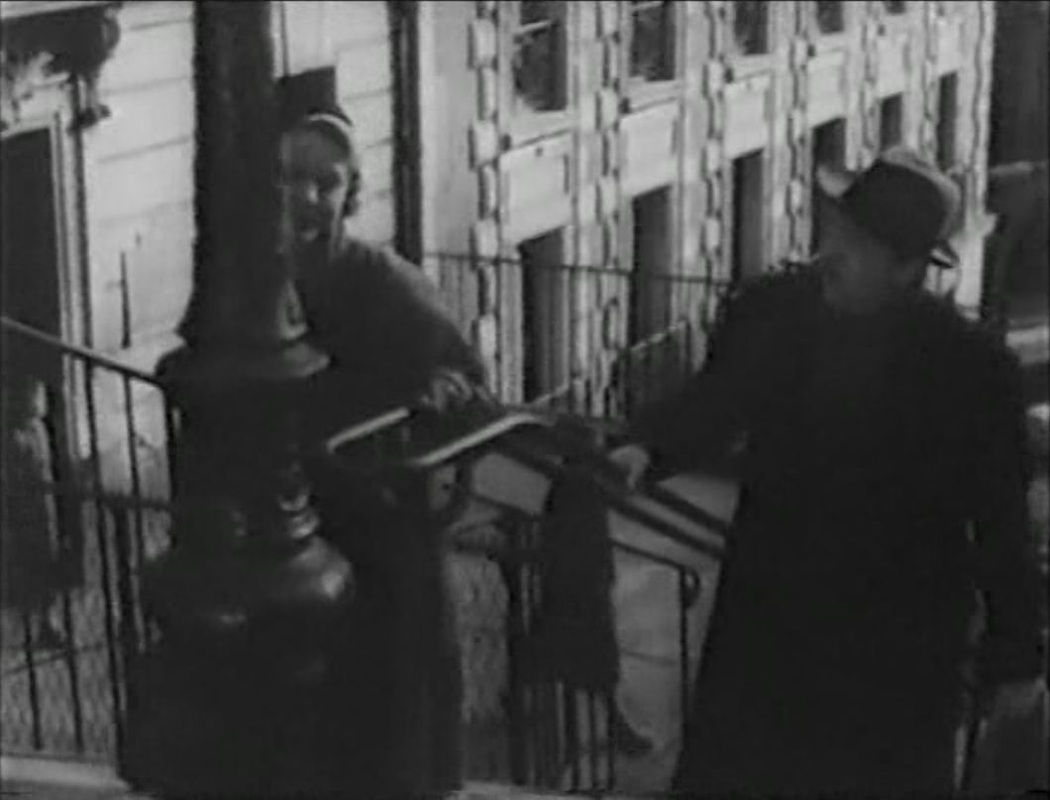 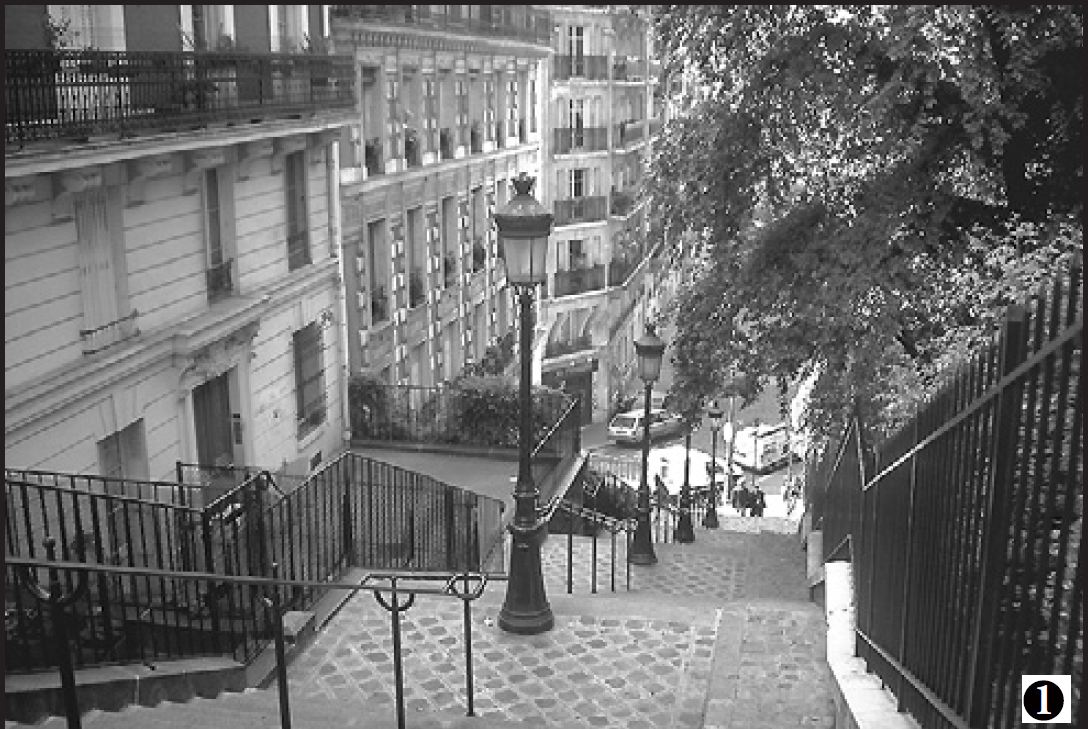 François L'Henaff, Paris en marches    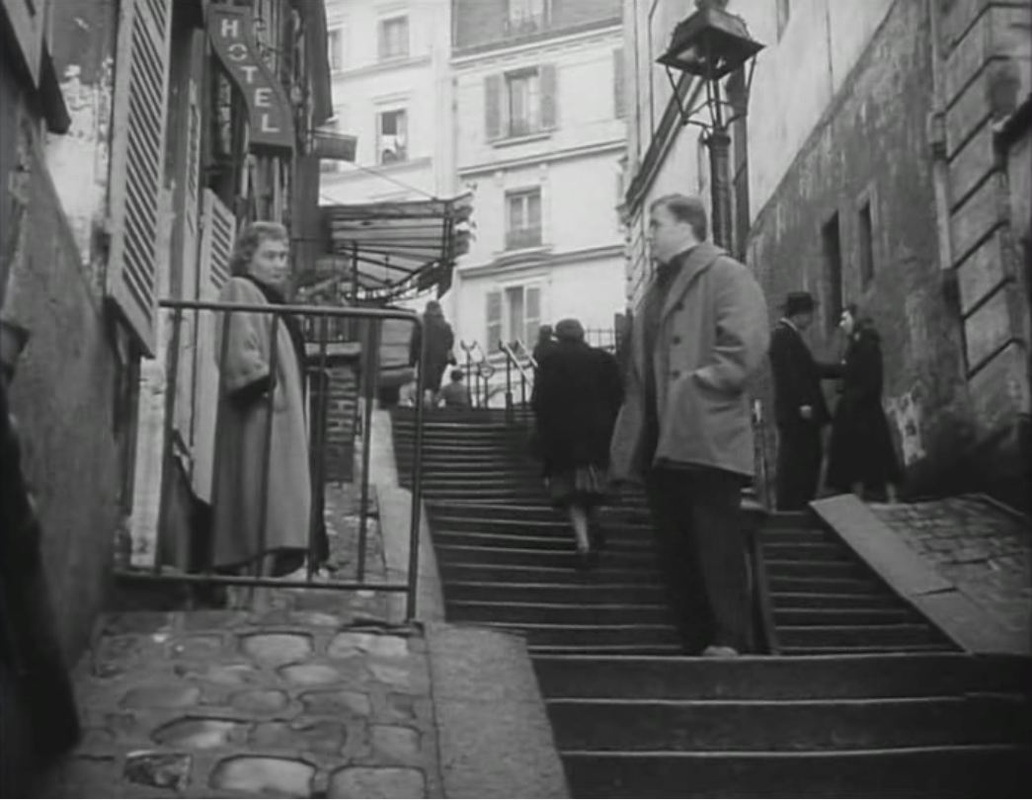 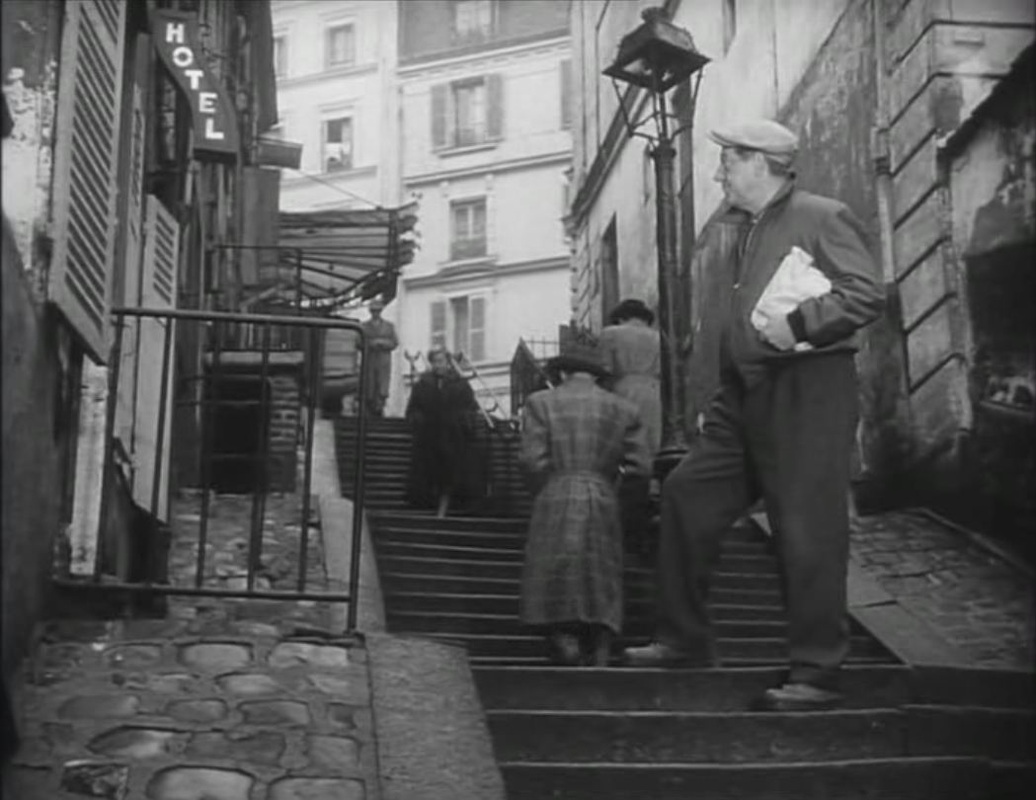 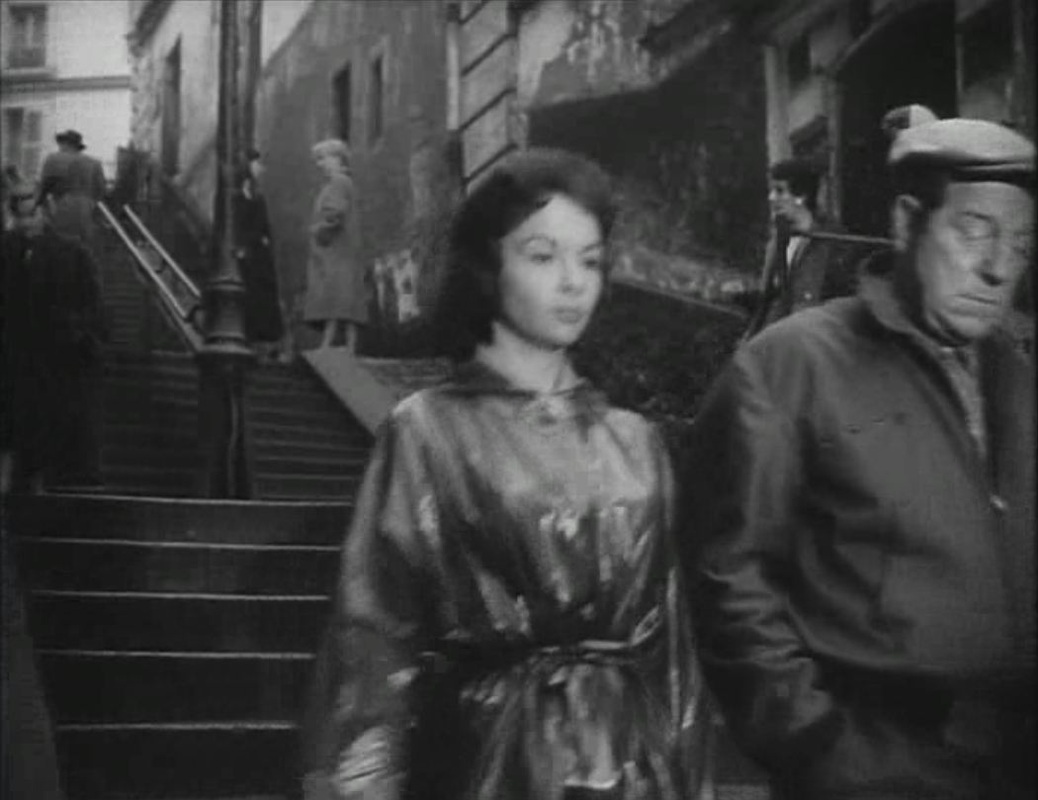 These look like these stairs in Renoir's La Chienne (1931), but there isn't enough readable detail to be sure:  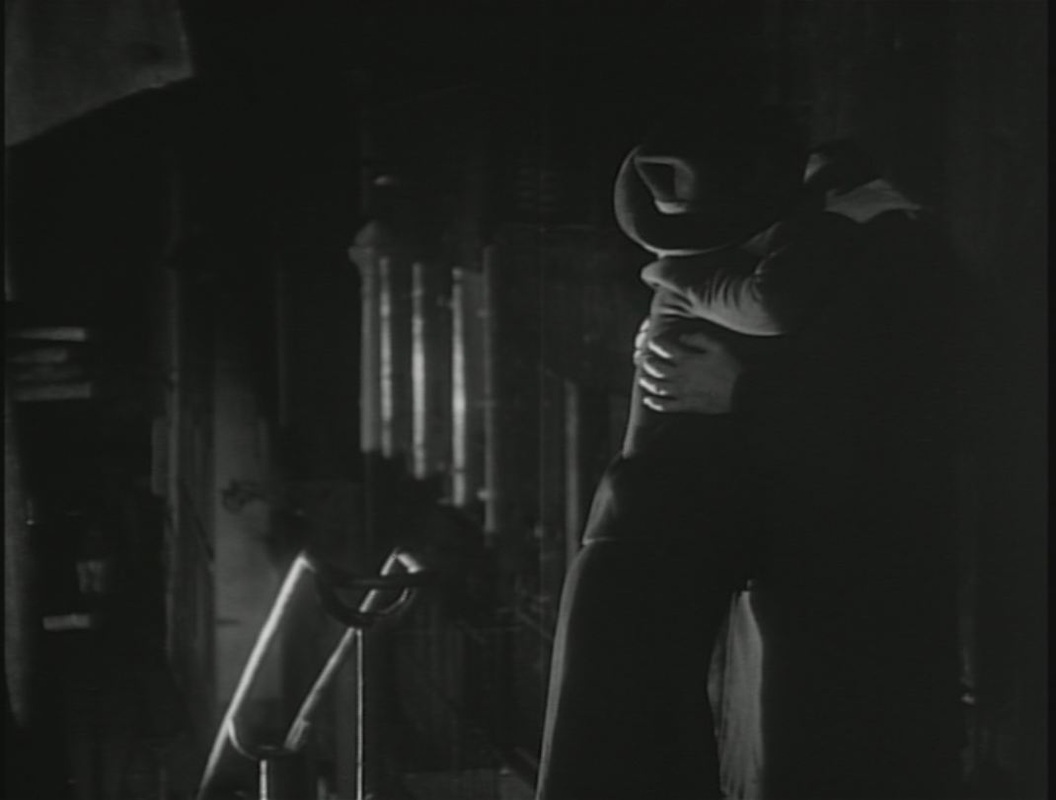 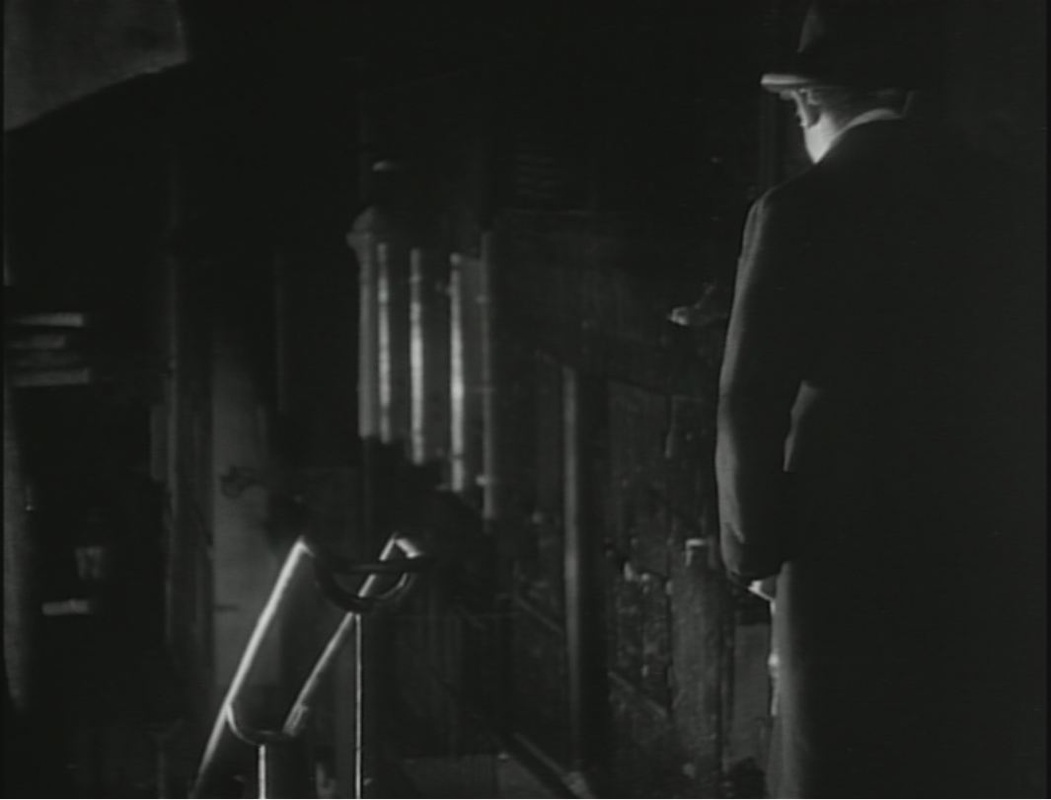 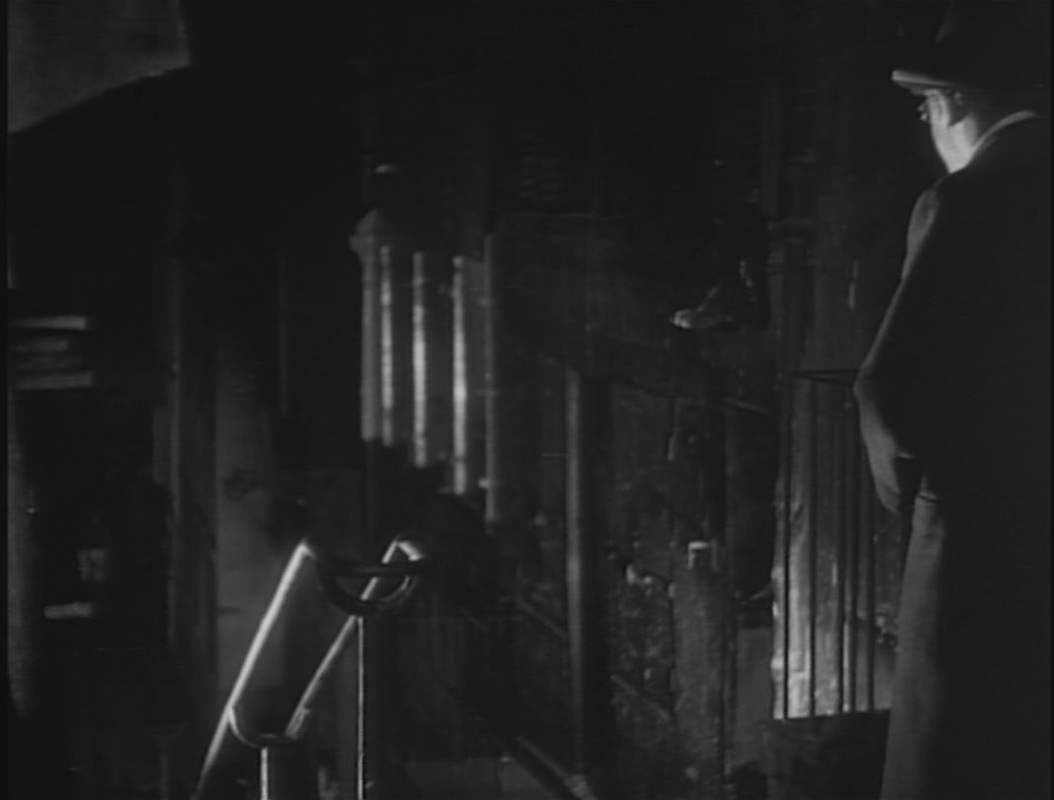  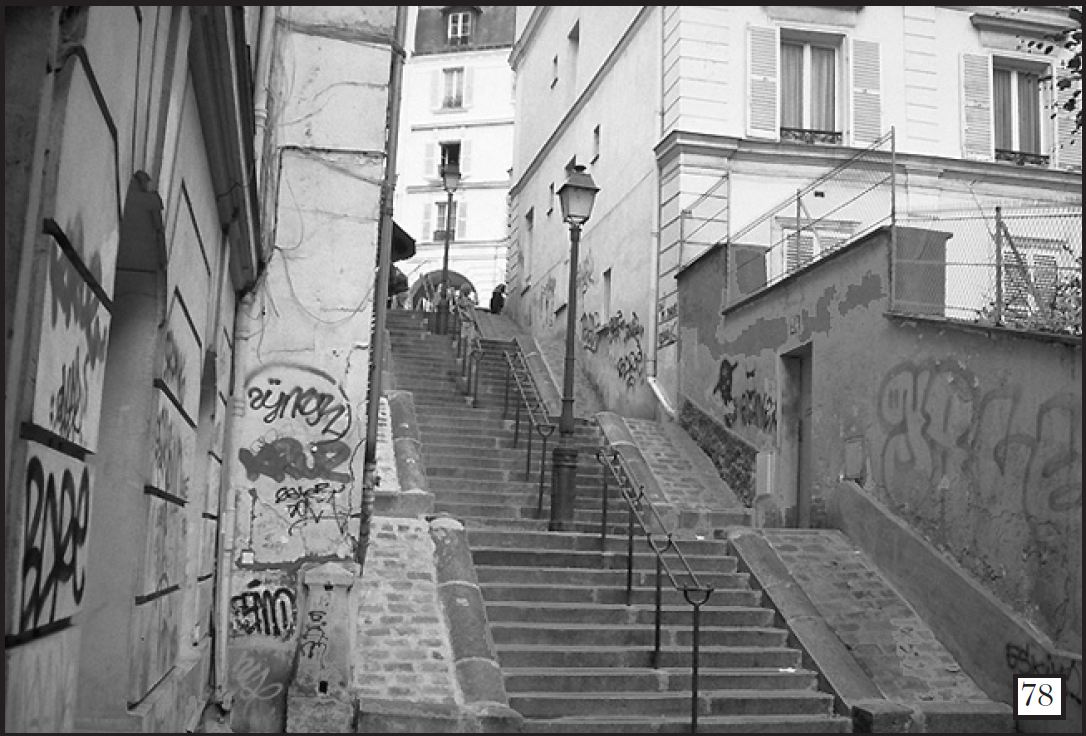 François L'Henaff, Paris en marches 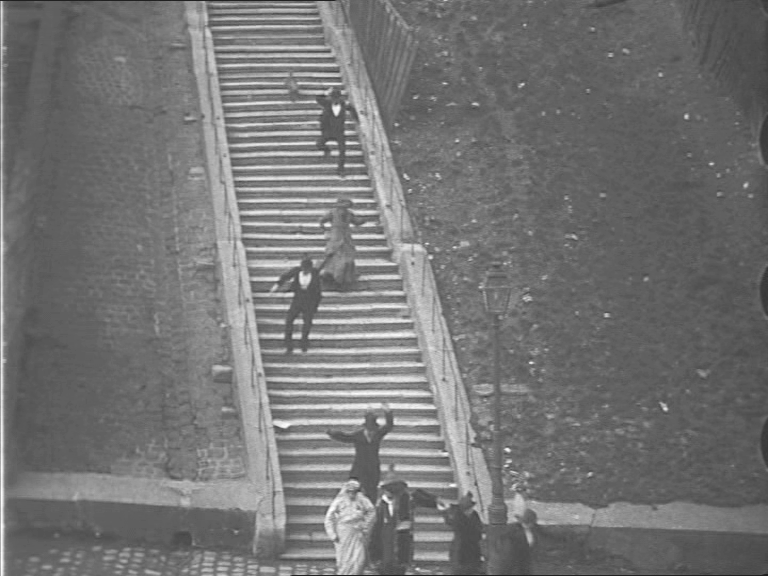 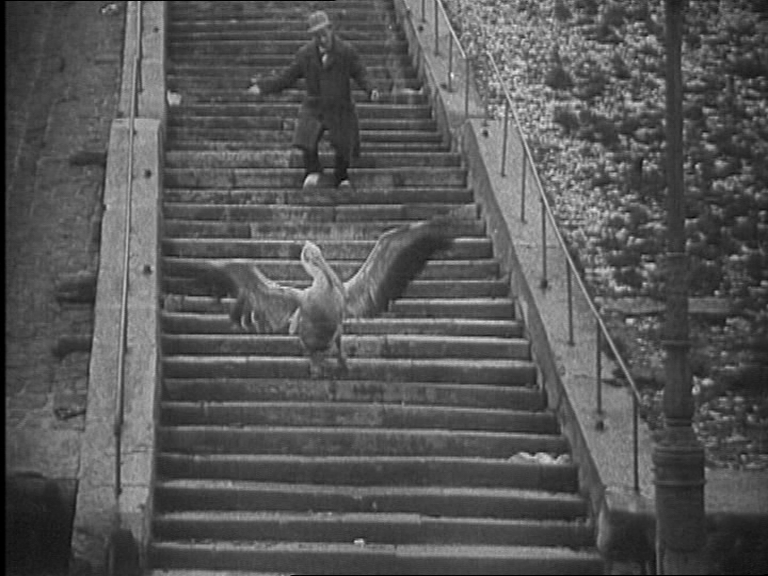 These stairs appear in two Gaumont comedies, one from 1913 and the other from about the same period. The shot of Onésime and the pelican features in the documentary about Jean Durand in the Gaumont box featuring his films (Le Cinéma premier vol.2), but the film is not identified there.
This is likely to be somewhere near the Gaumont factory and studios,in Belleville. We see two flights of twenty steps, and the third is probably of the same length, making this a substantial stairway. It doesn't seem to match any stairway in Paris today. 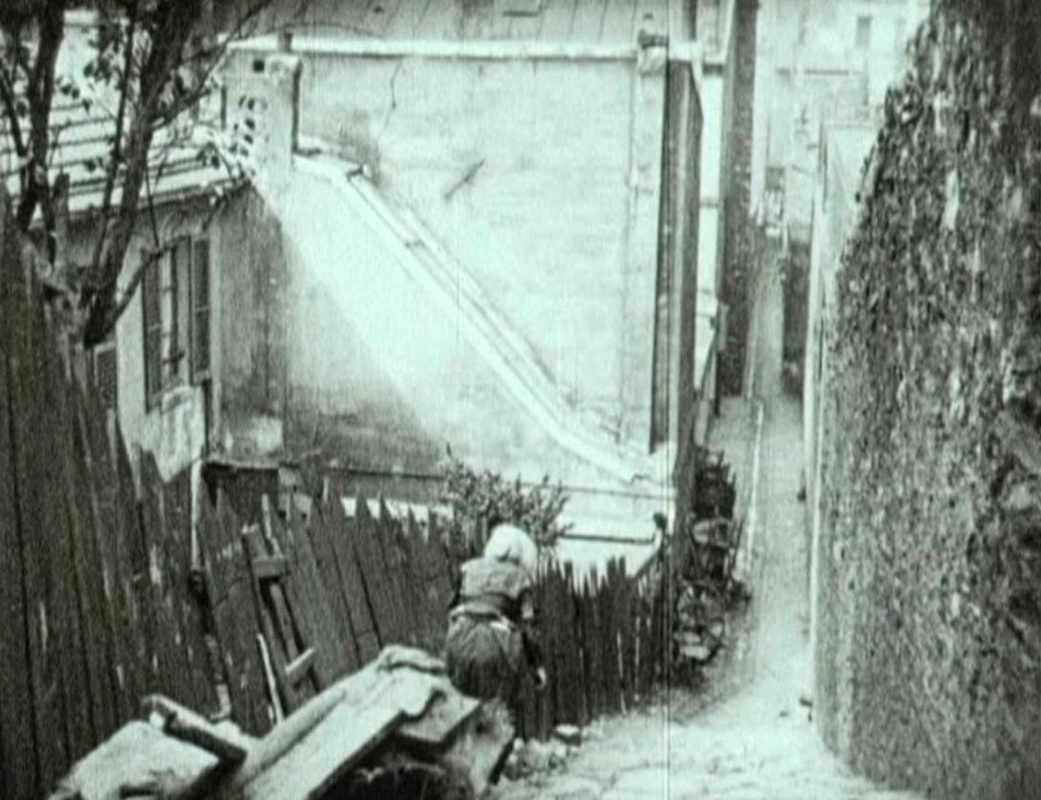  This same stairway appears in Cavalcanti's Rien que les heures (1926) and almost thirty years later in Dassin's Du rififi chez les hommes (1955). In the interim a central handrail has been added, and the wooden fencing replaced with railings. By my rough calculation there are about forty steps. Rien que les heures is not sufficiently localised to give a clue as to whereabouts, but in Rififi the context strongly suggests Ménilmontant. In the credit sequence of the Ménilmontant-set La Maternelle (1949) there is a view of this staircase, which seems to me conclusive: 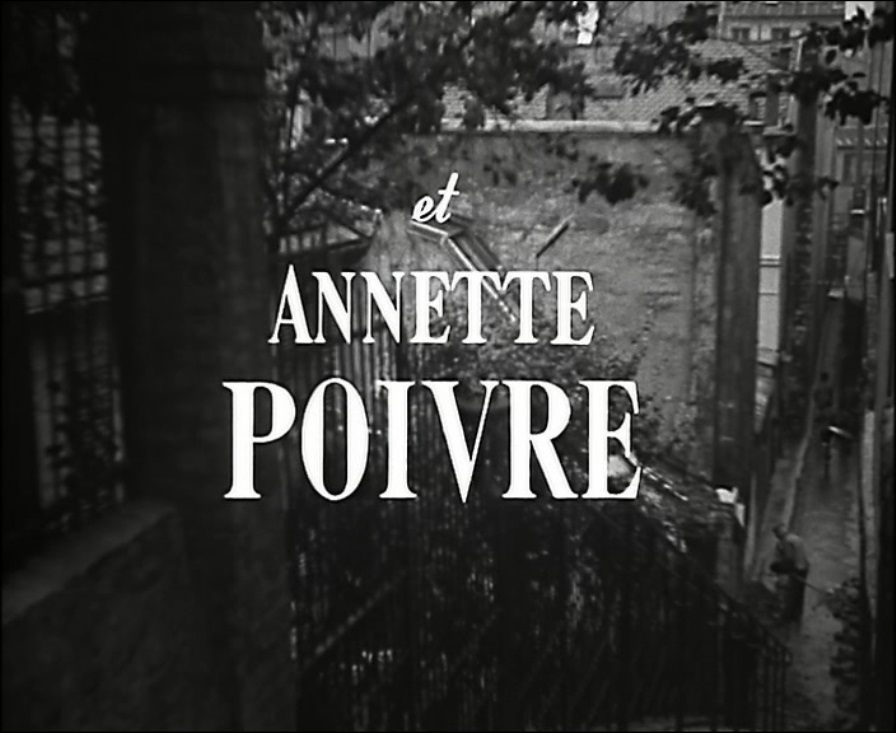 La Maternelle (Henri Diamant-Berger 1949) The poster for La Maternelle appears to show the staircase from the other direction but doesn't supply any identifying features: 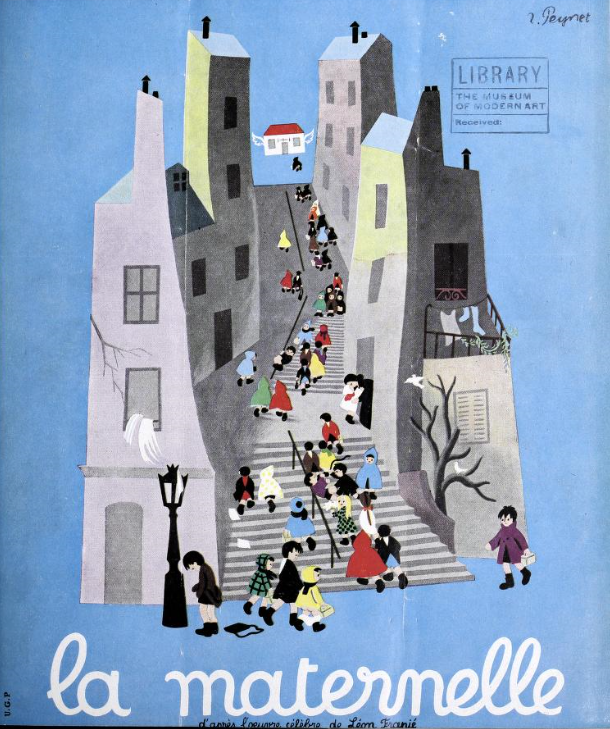 |
L'Escalographe is an occasional blog about stairways in Paris that appear in films
BibliographyMy chief work of reference is François L'Henaff's magisterial Paris en marches: les escaliers des rues de Paris, published by the APUR, and available here. Archives
October 2014
Categories
All
|









 RSS Feed