

|
0 Comments
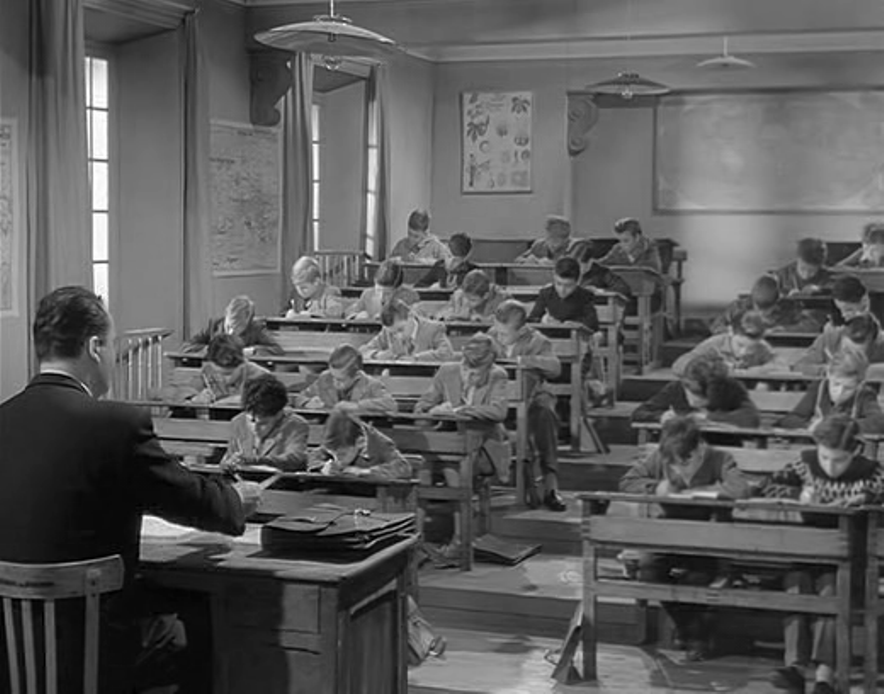
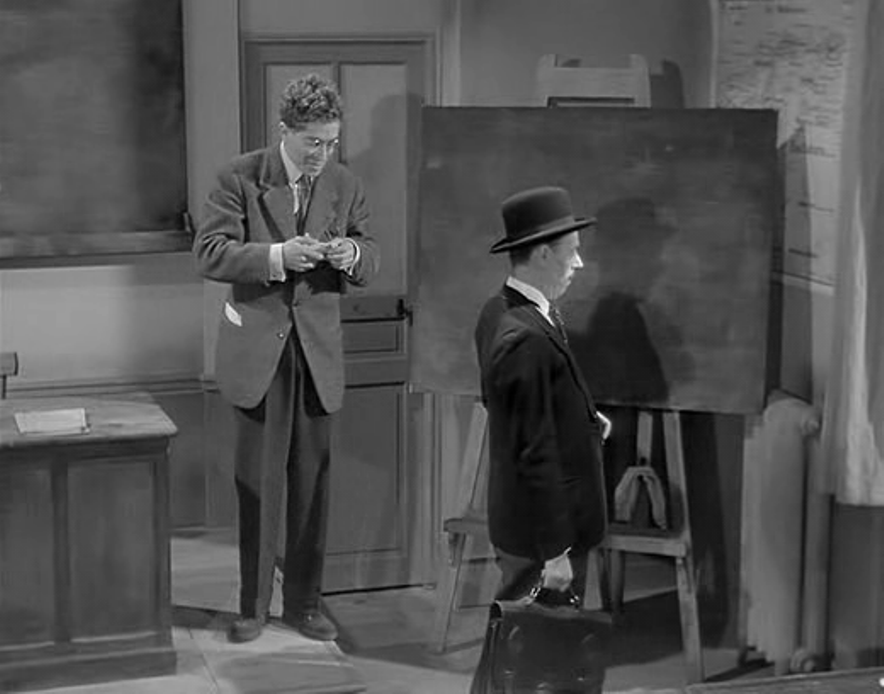
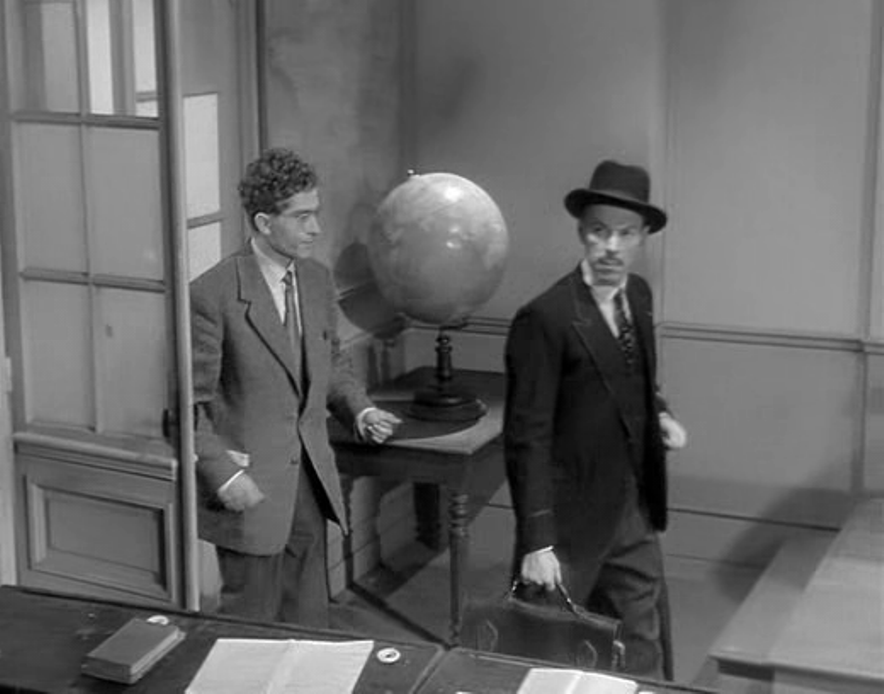
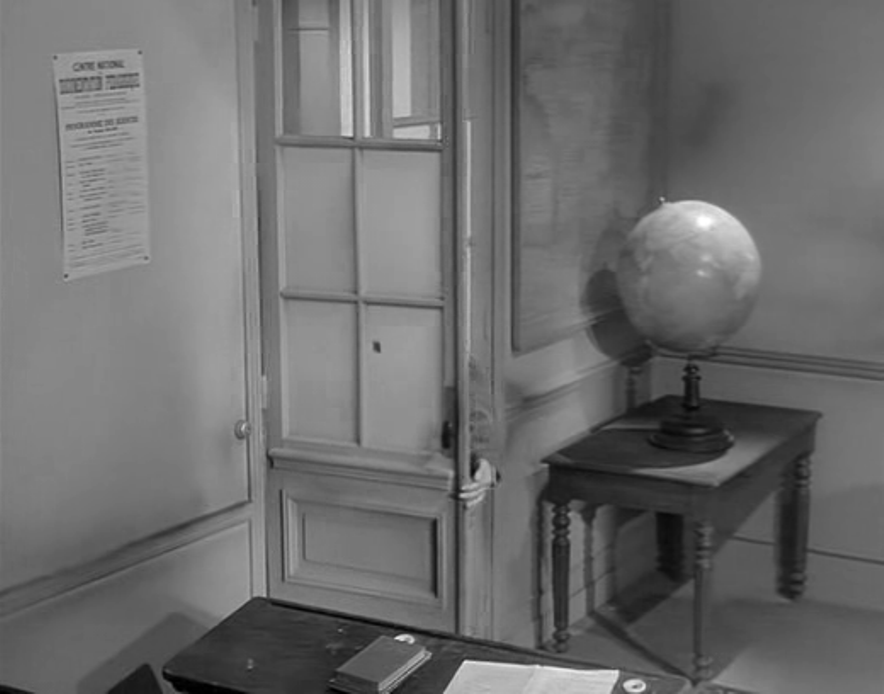
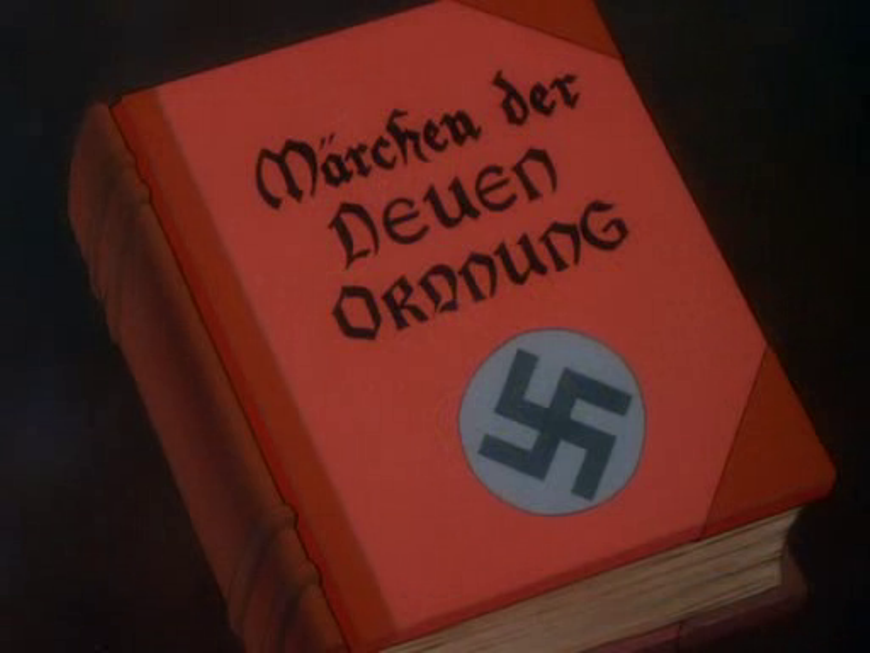
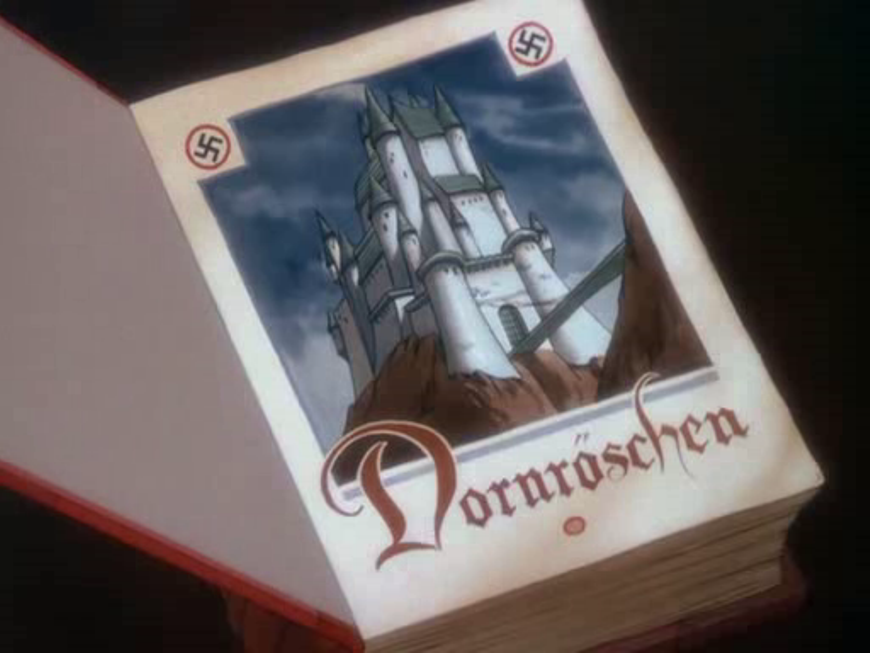
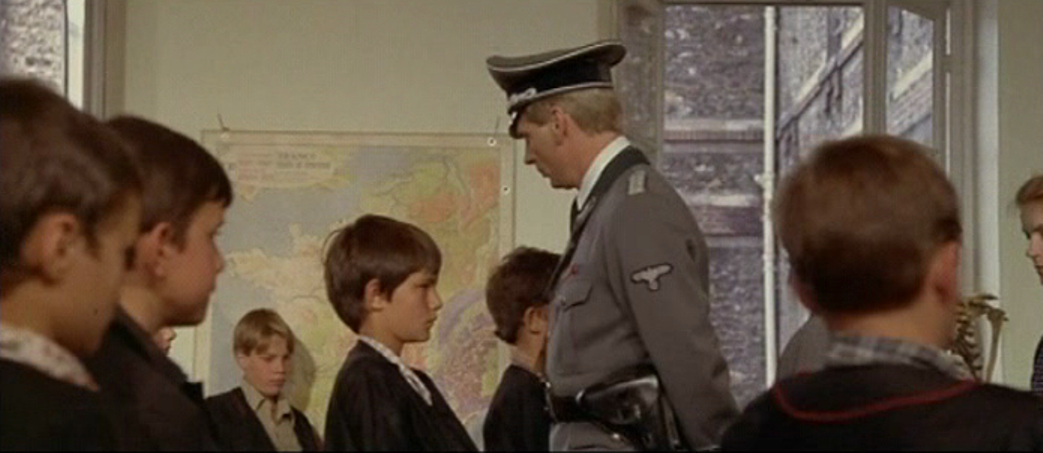
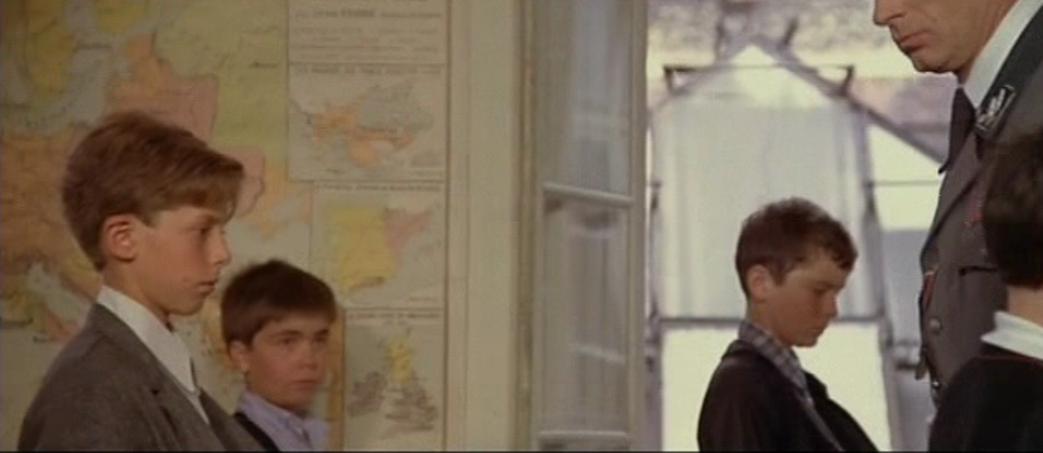
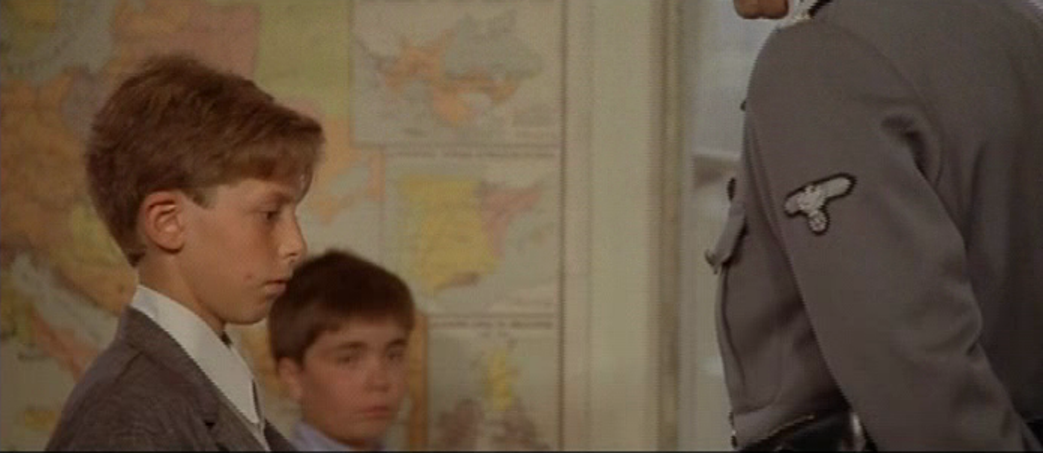
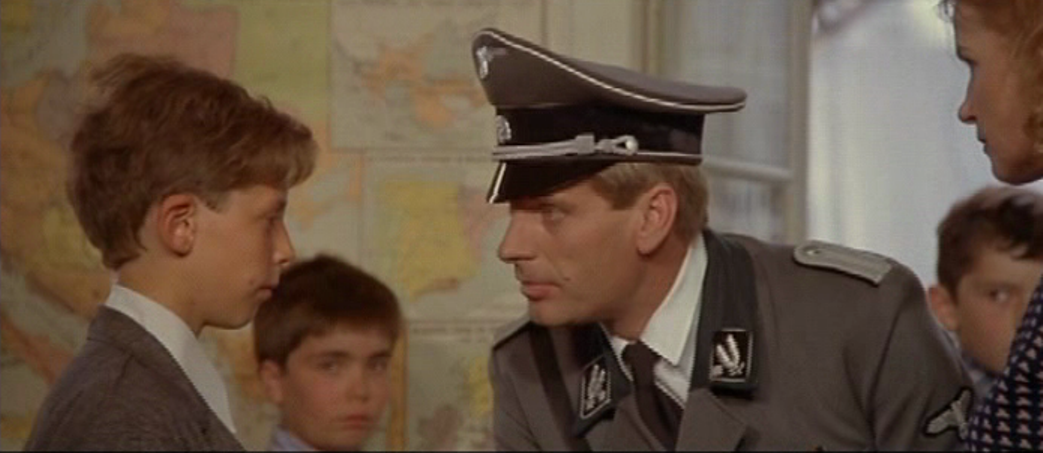
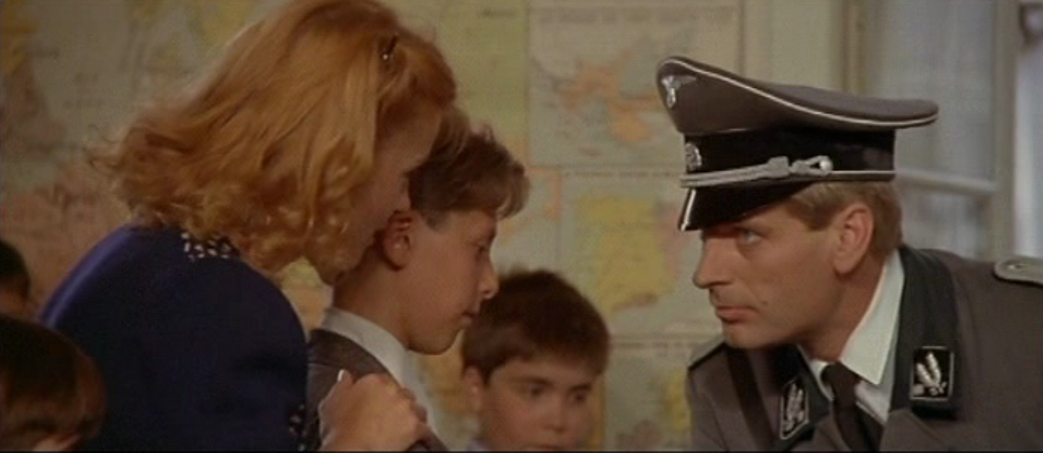
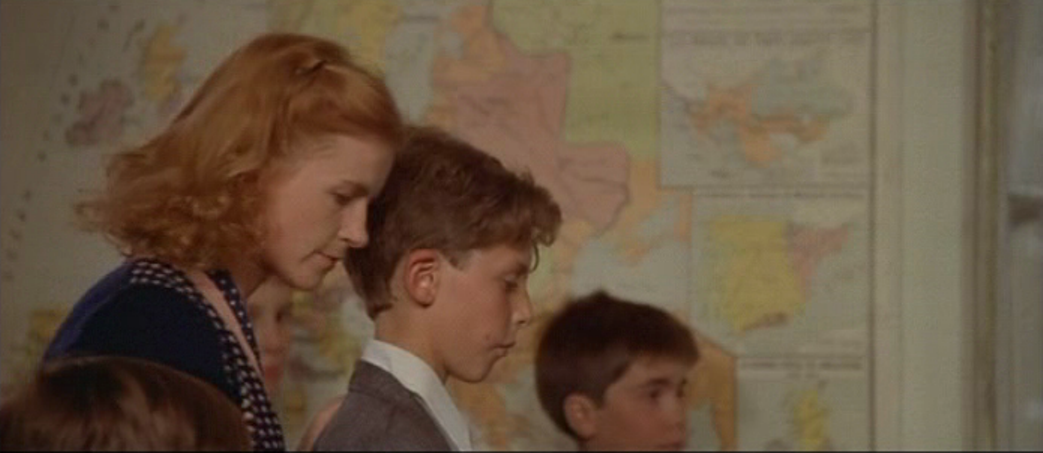
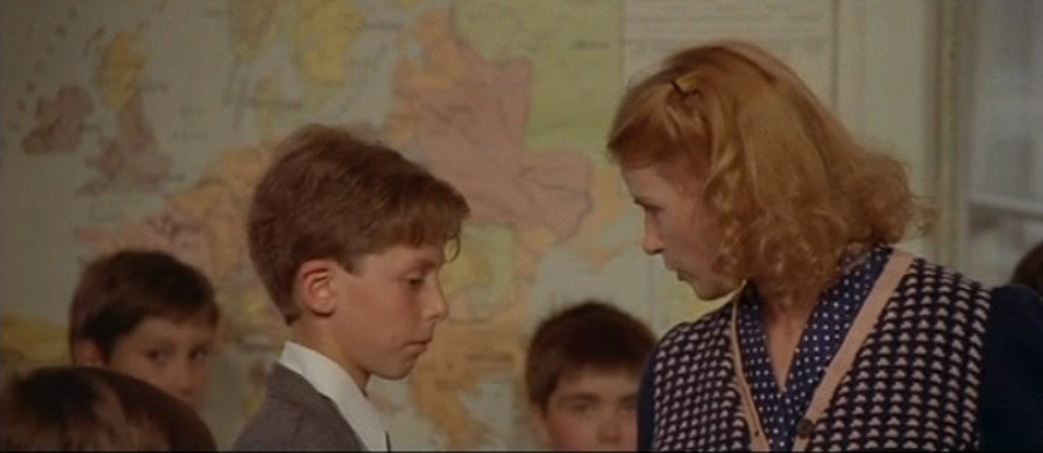
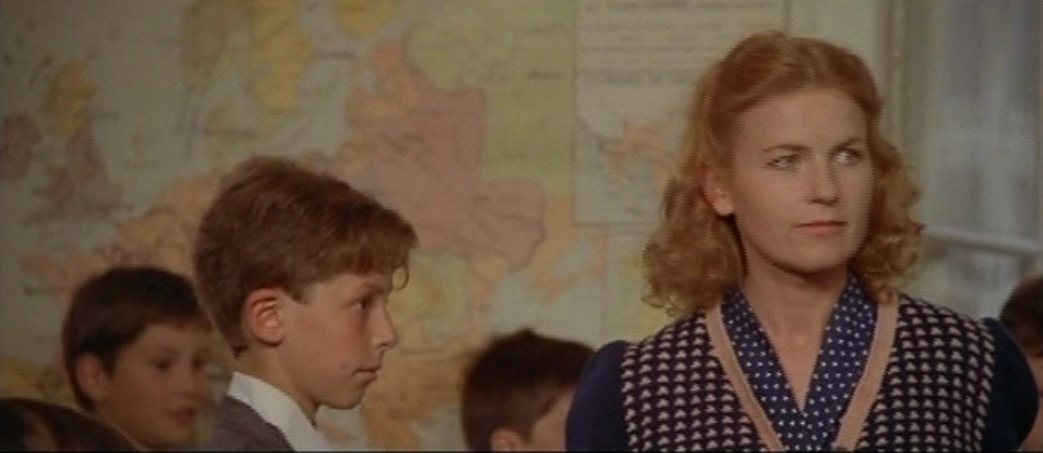
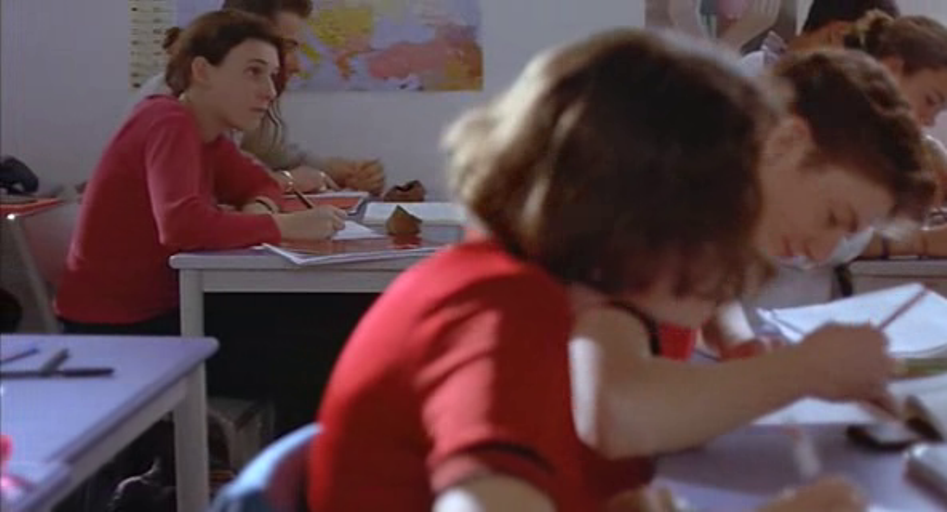
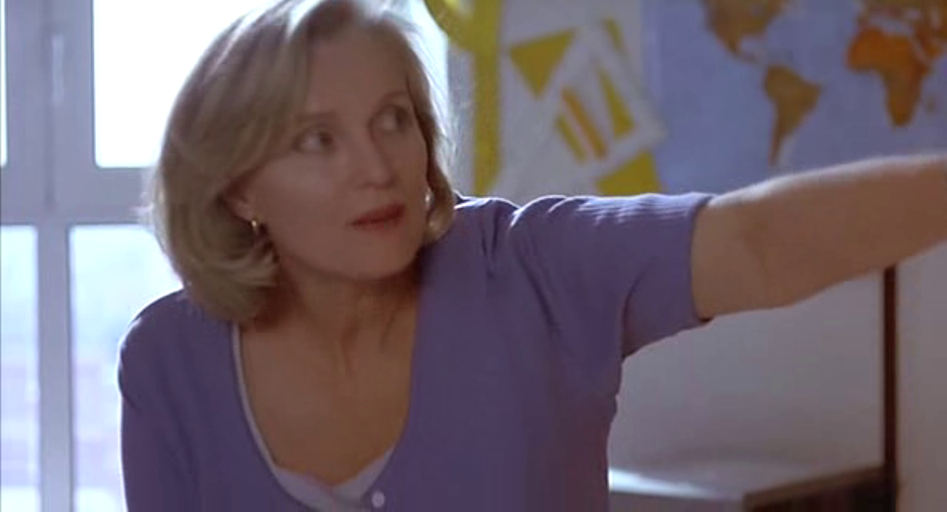
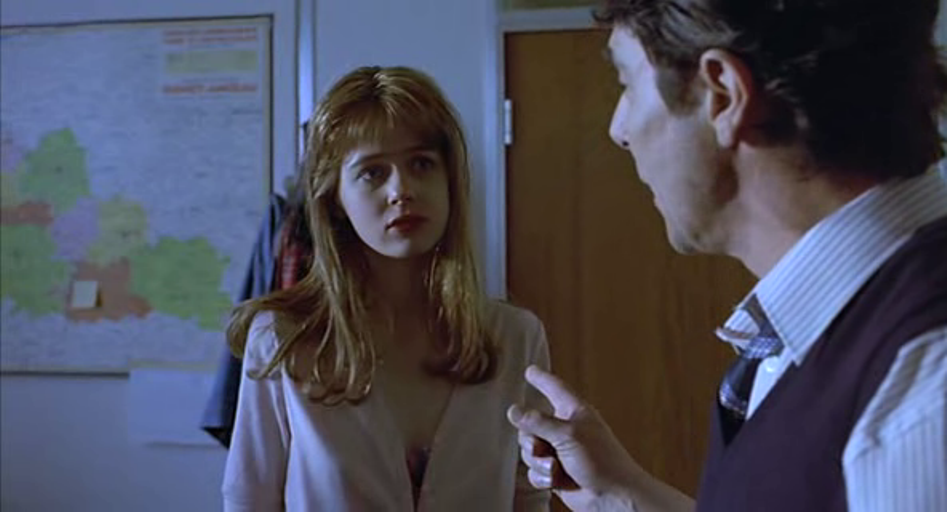
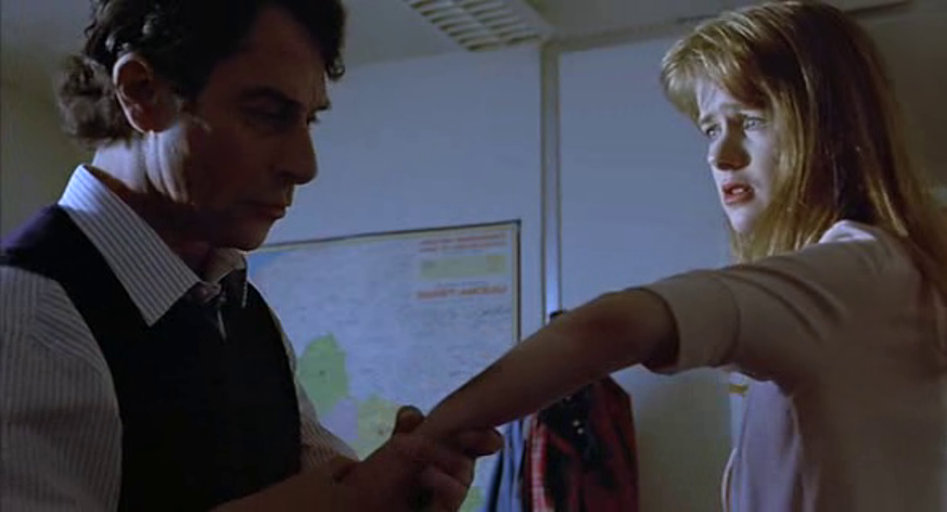
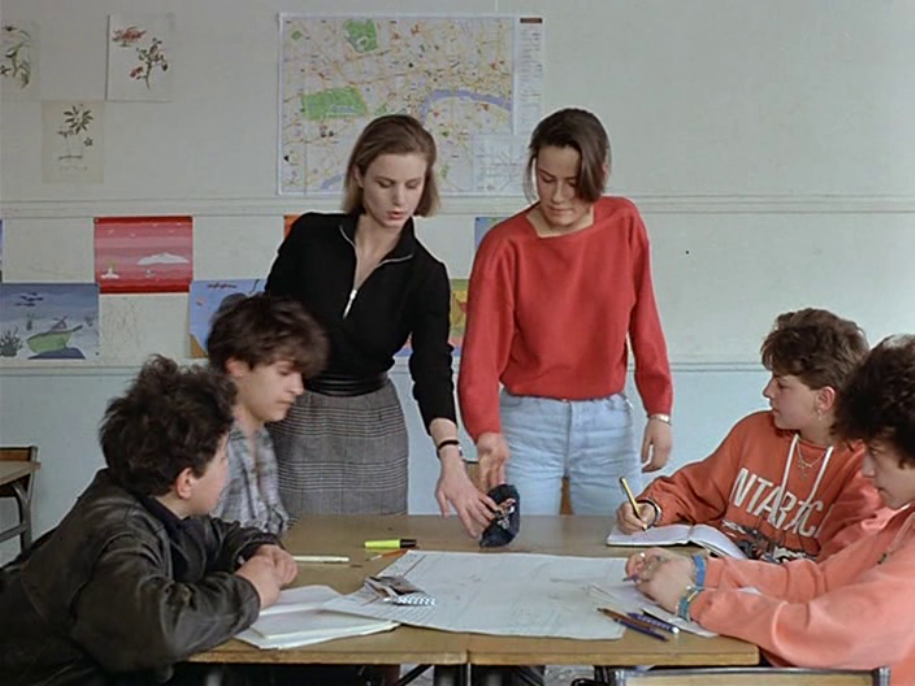
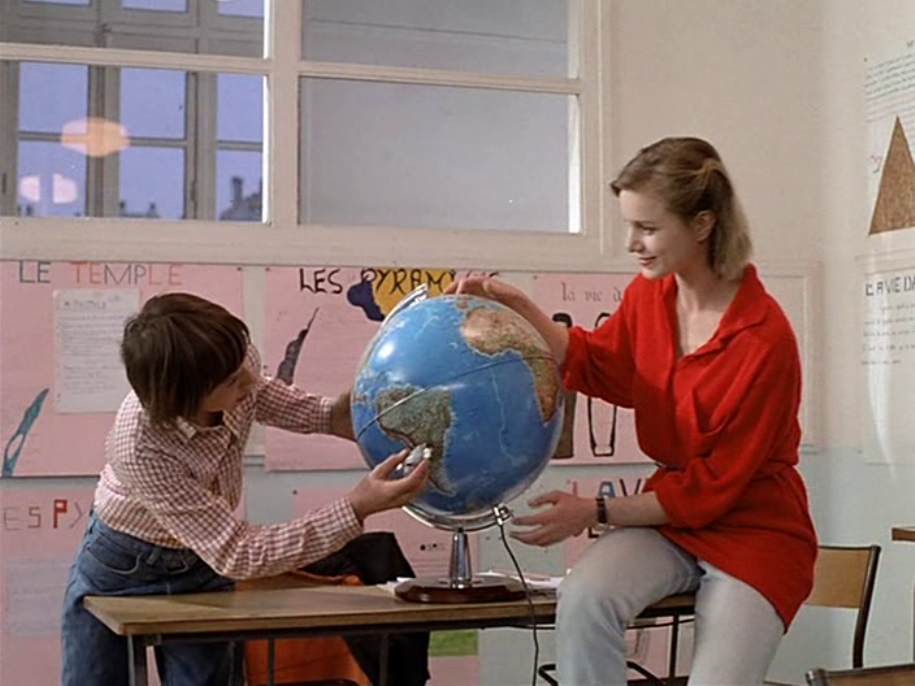
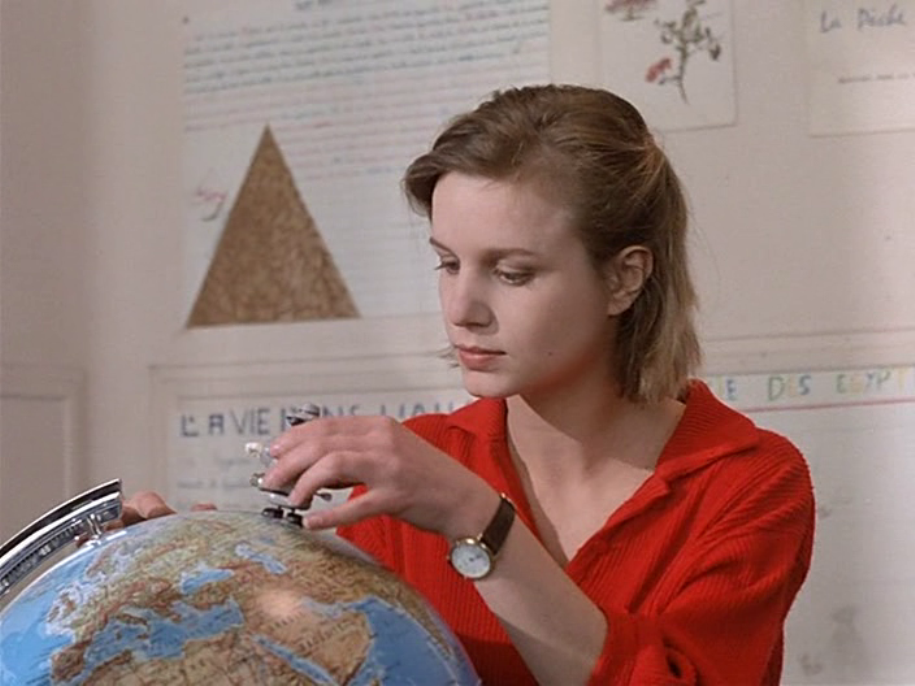
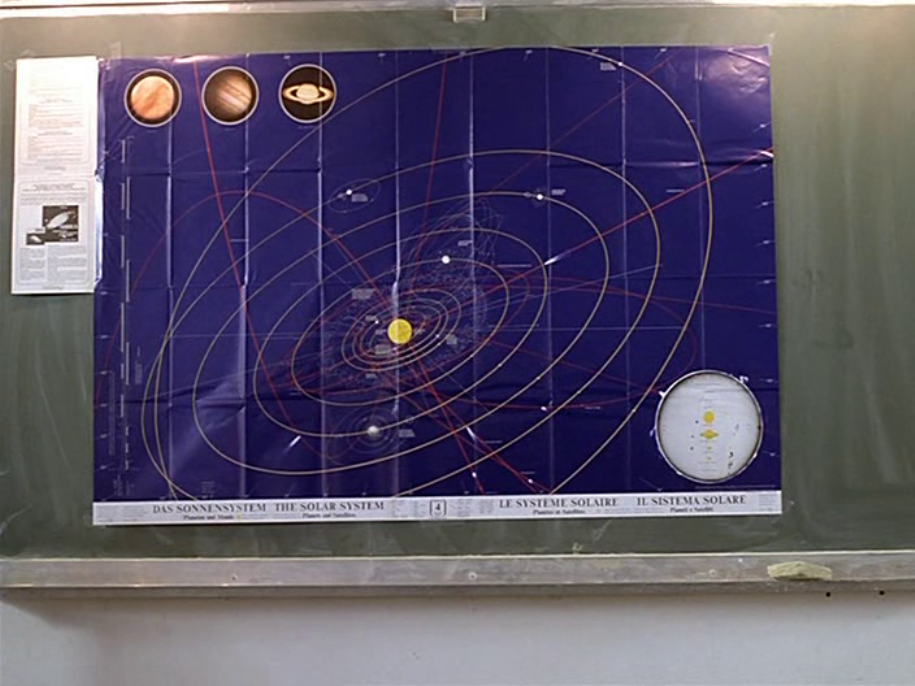
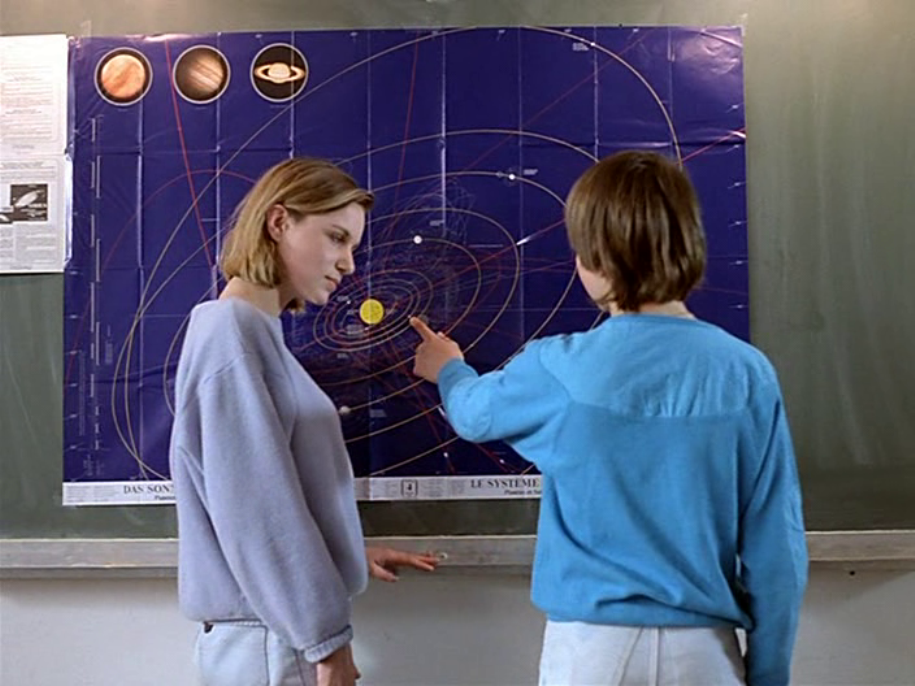
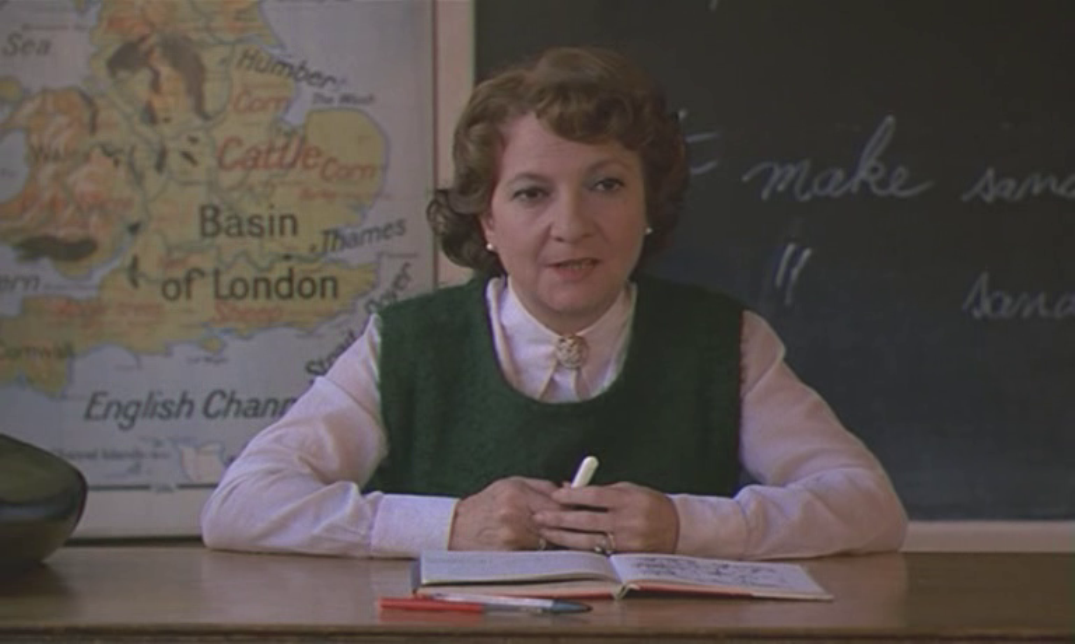
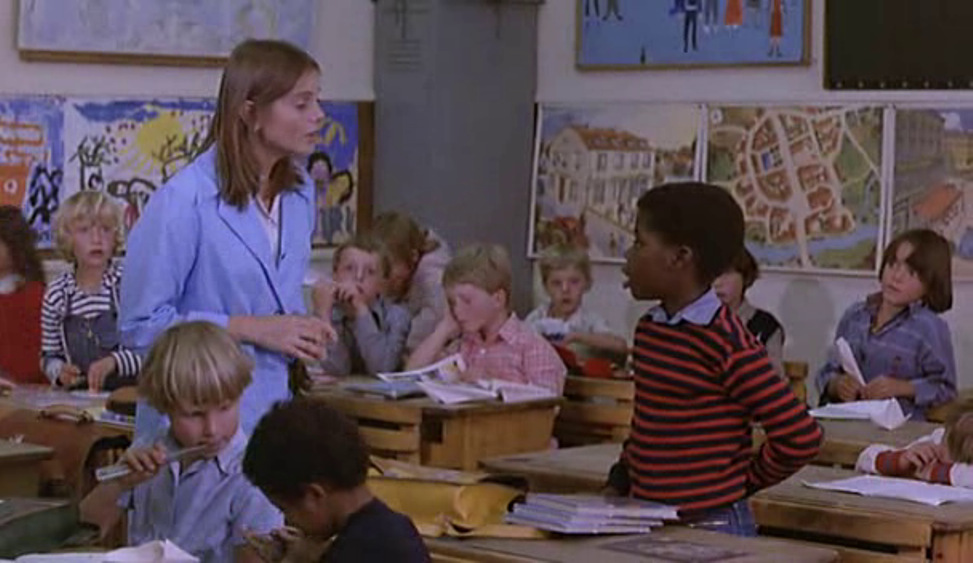
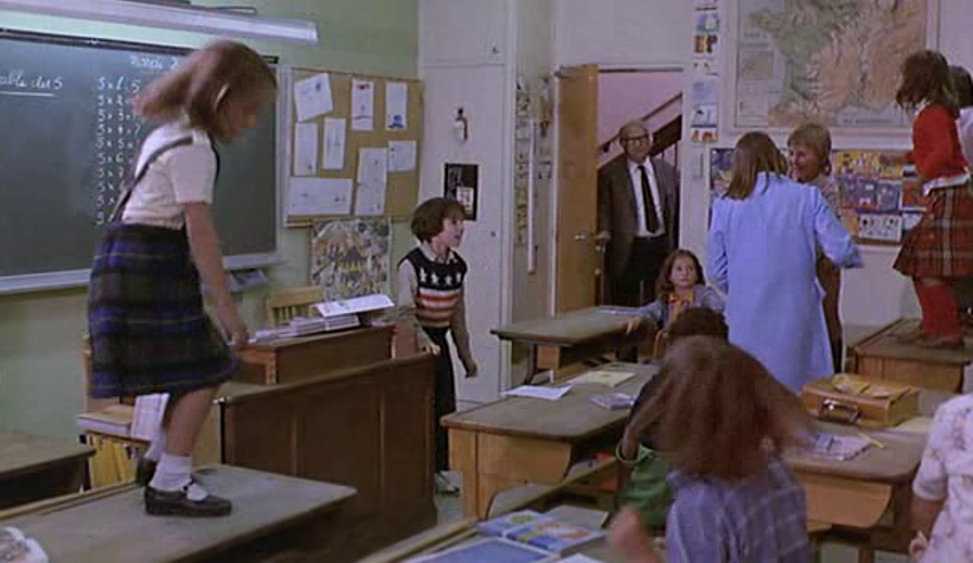
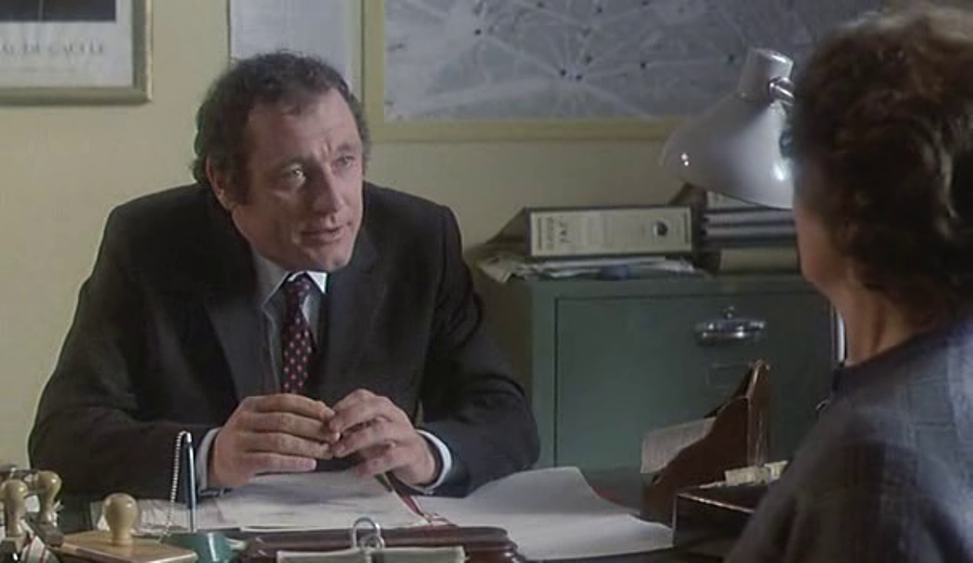
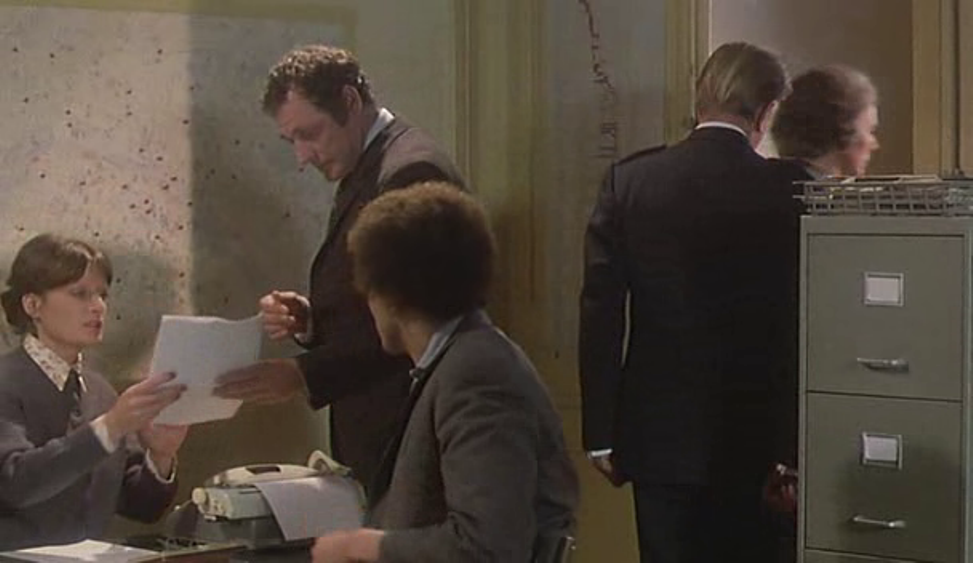
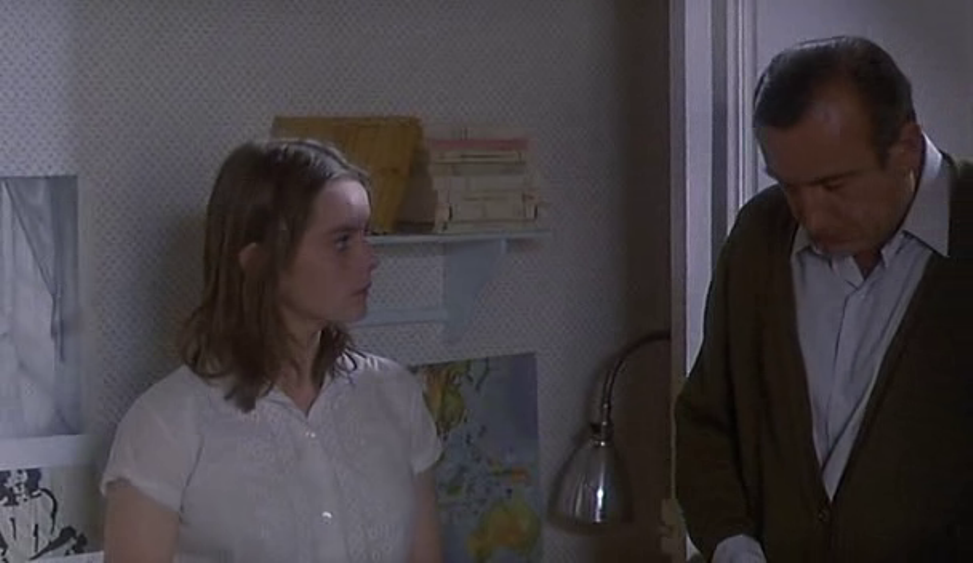
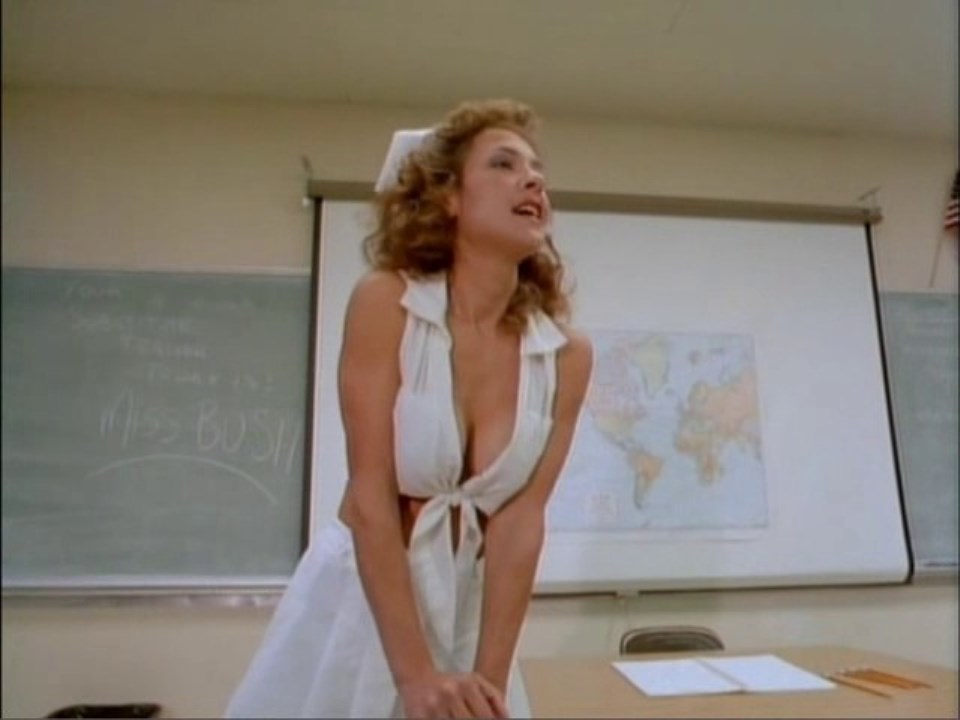
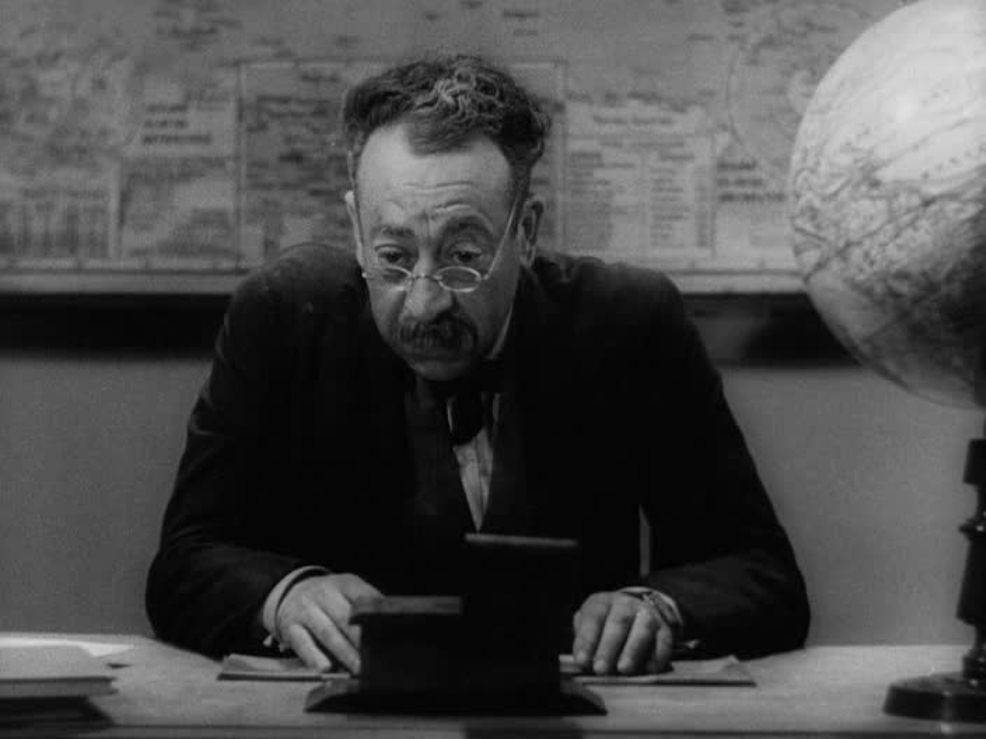
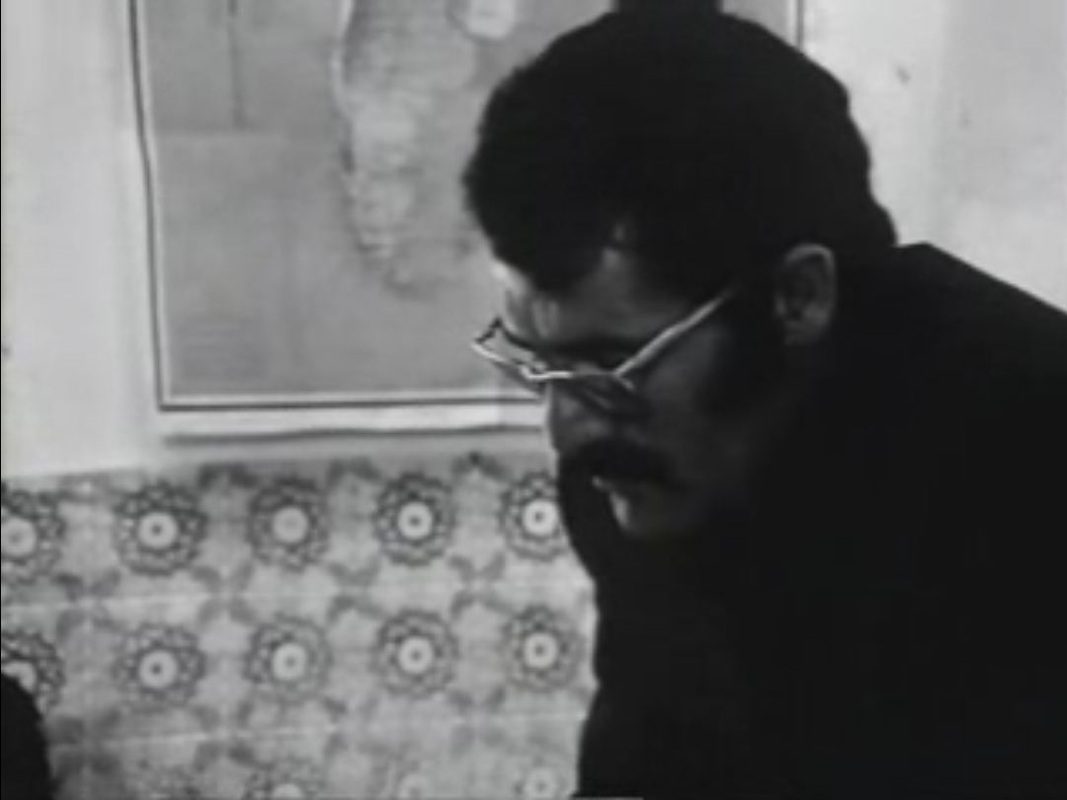
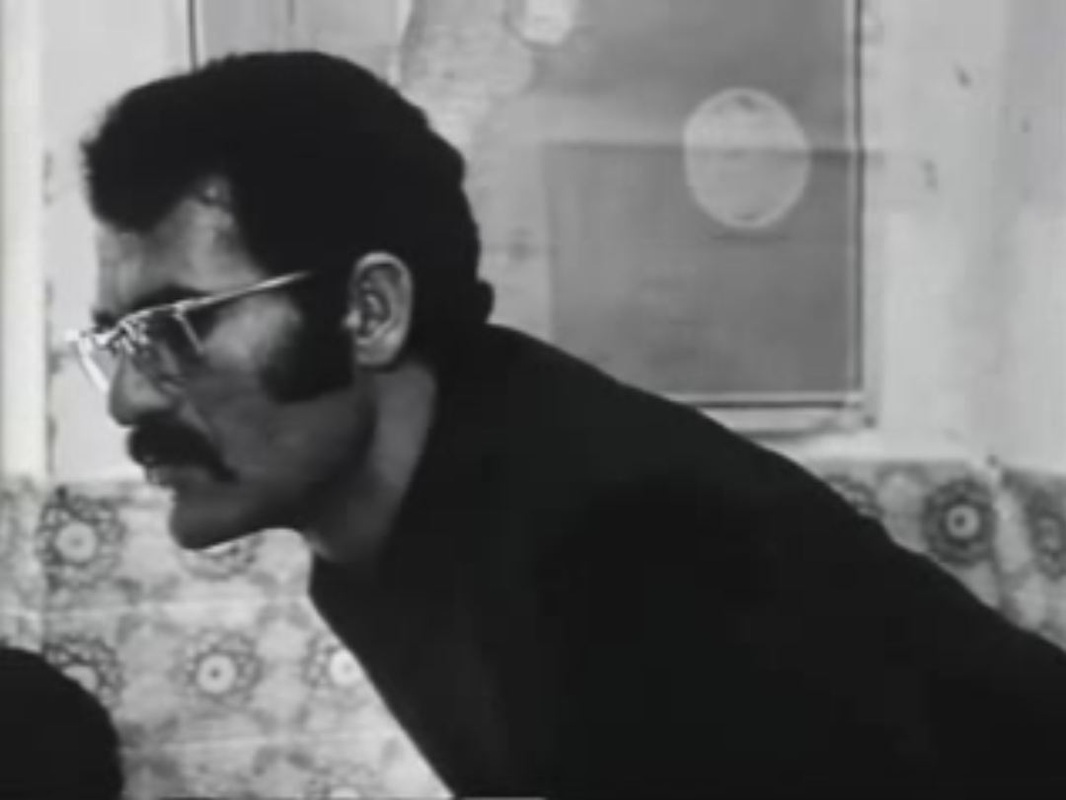
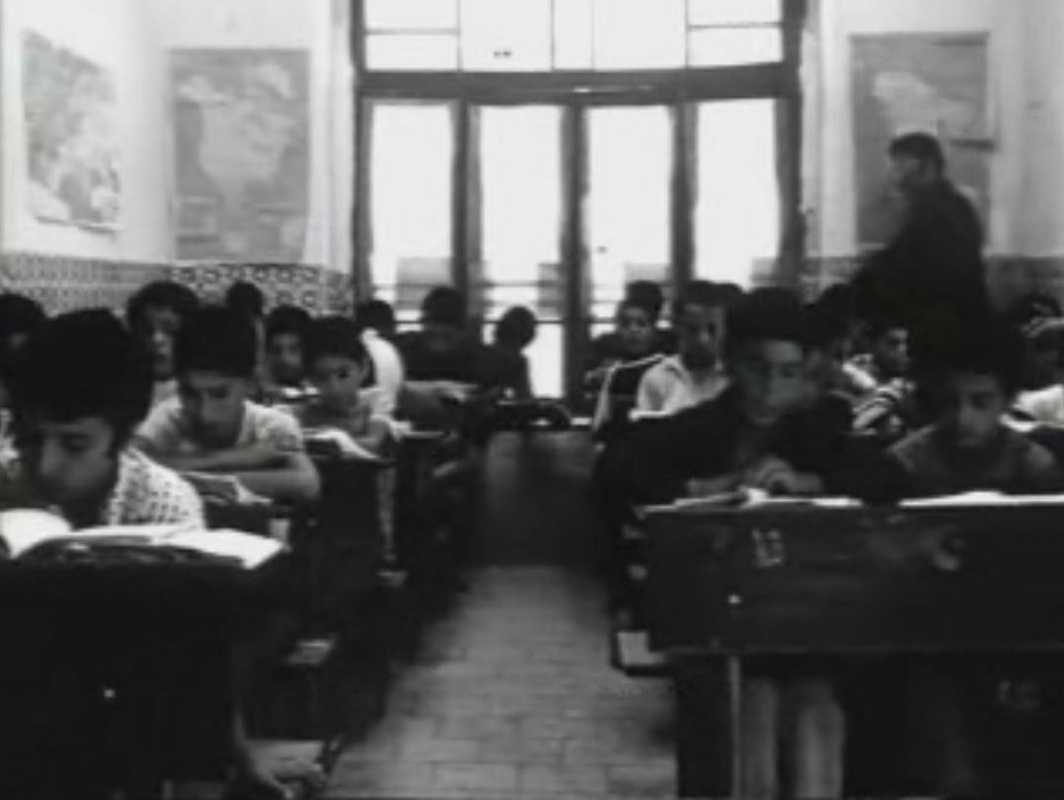
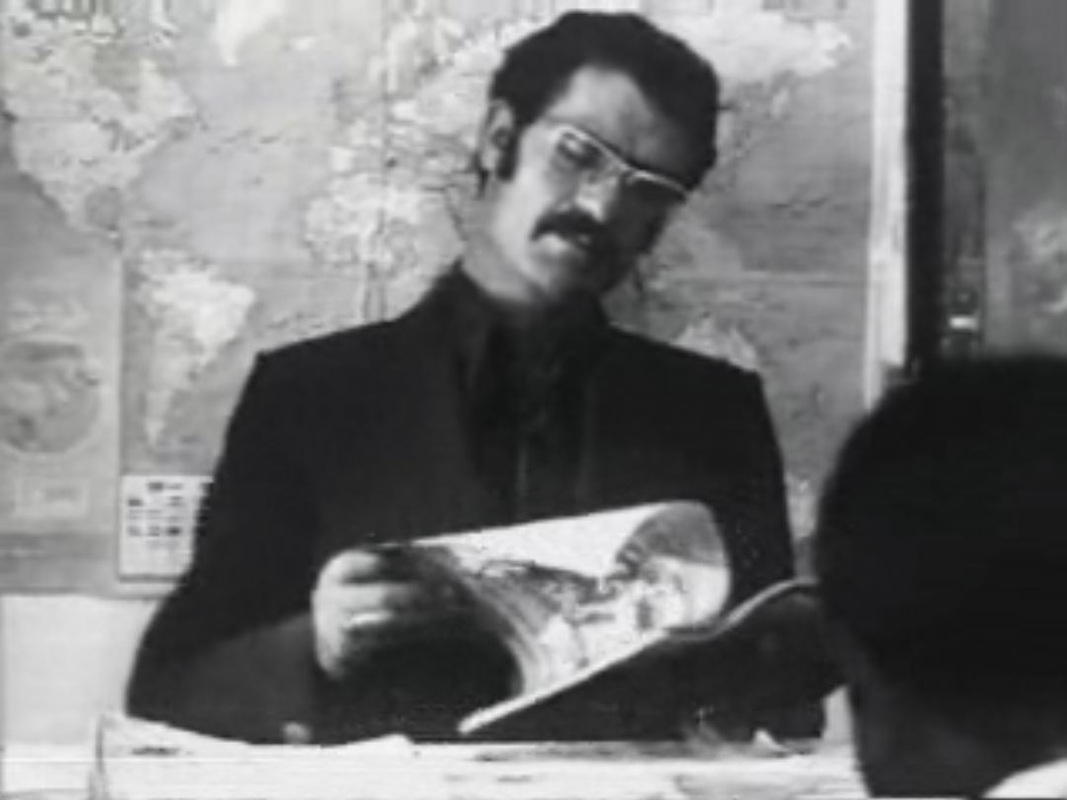
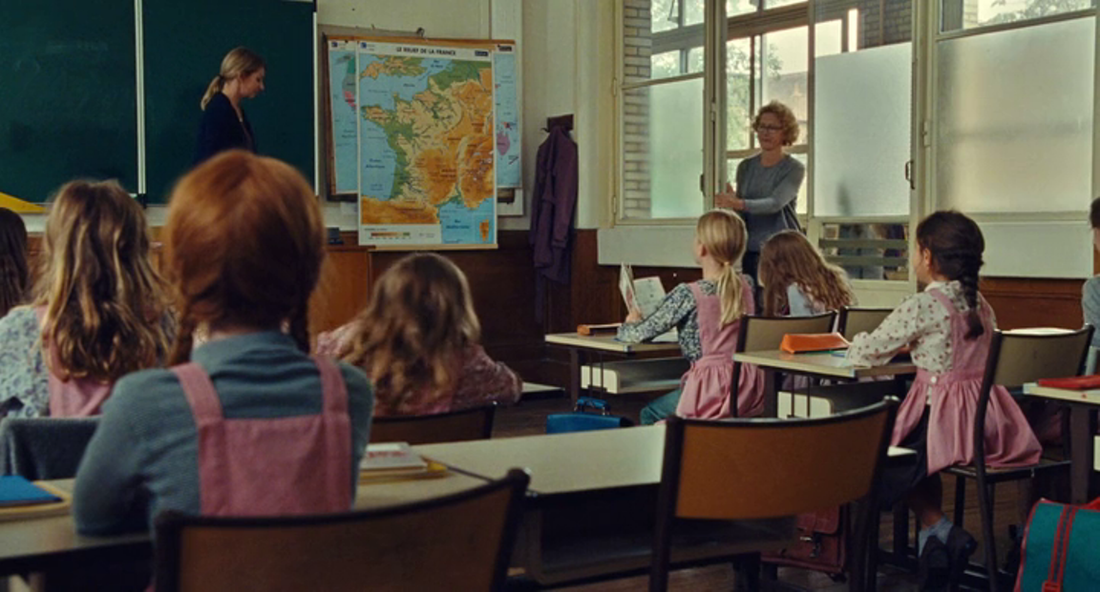 Une nouvelle amie (François Ozon 2014)  Une nouvelle amie (François Ozon 2014) Here are some other maps of France in French schoolrooms:  Les Chansons ont leur destin (Gaumont 1908) 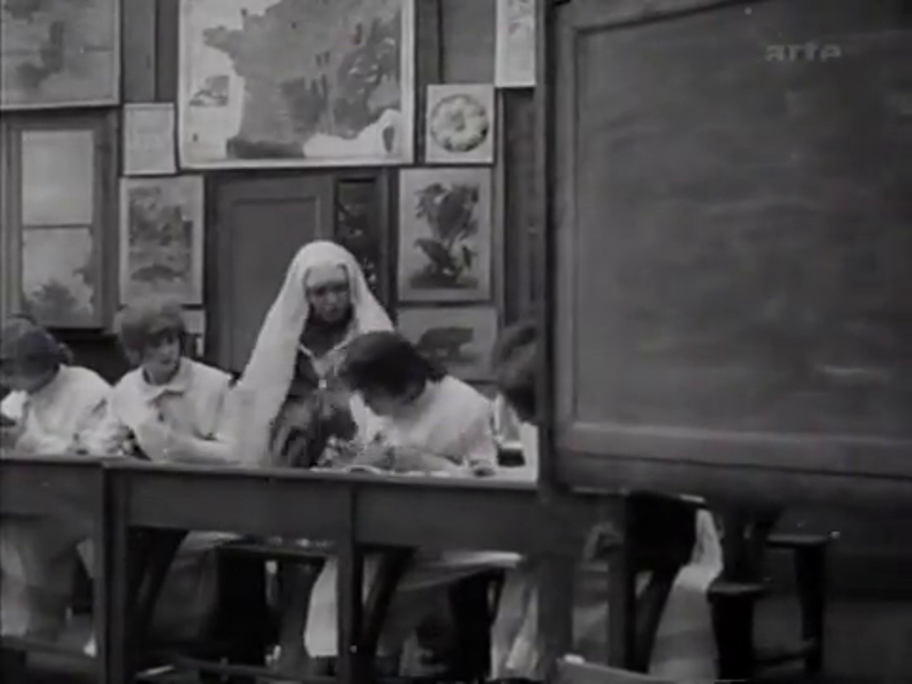 Max au couvent (Pathé 1914) 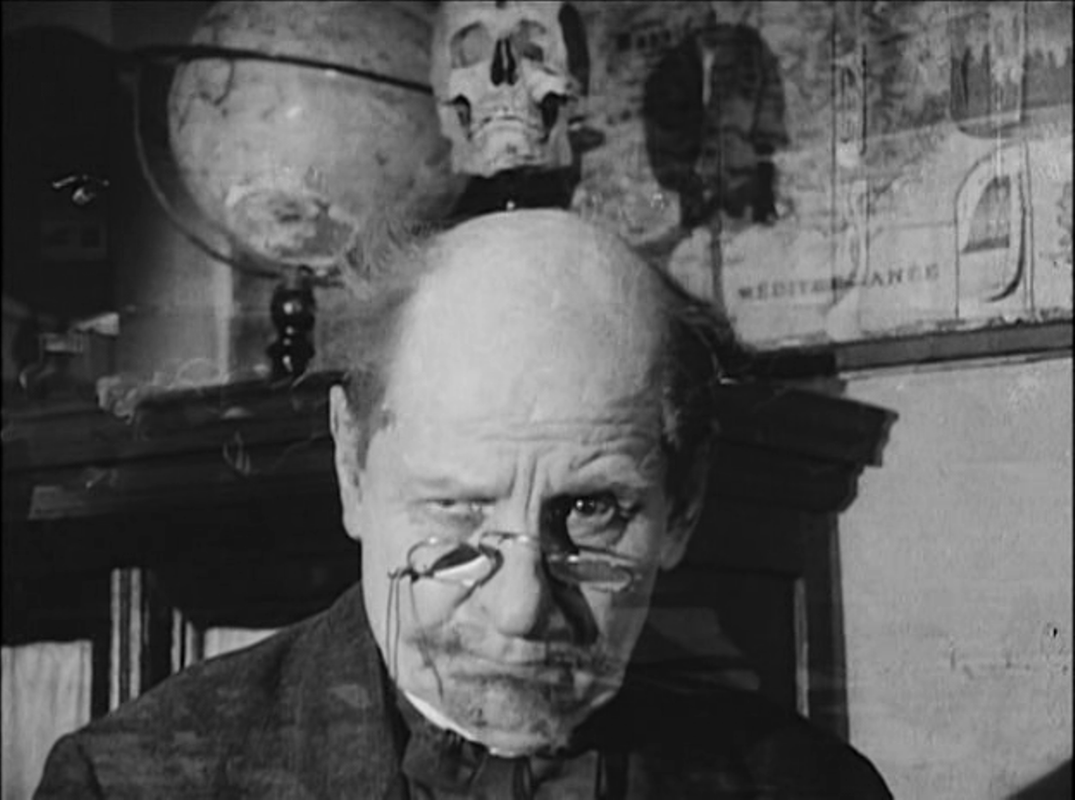 Poil de carotte (Julien Duvivier 1925)  La Vie est à nous (Jean Renoir et al., 1936) 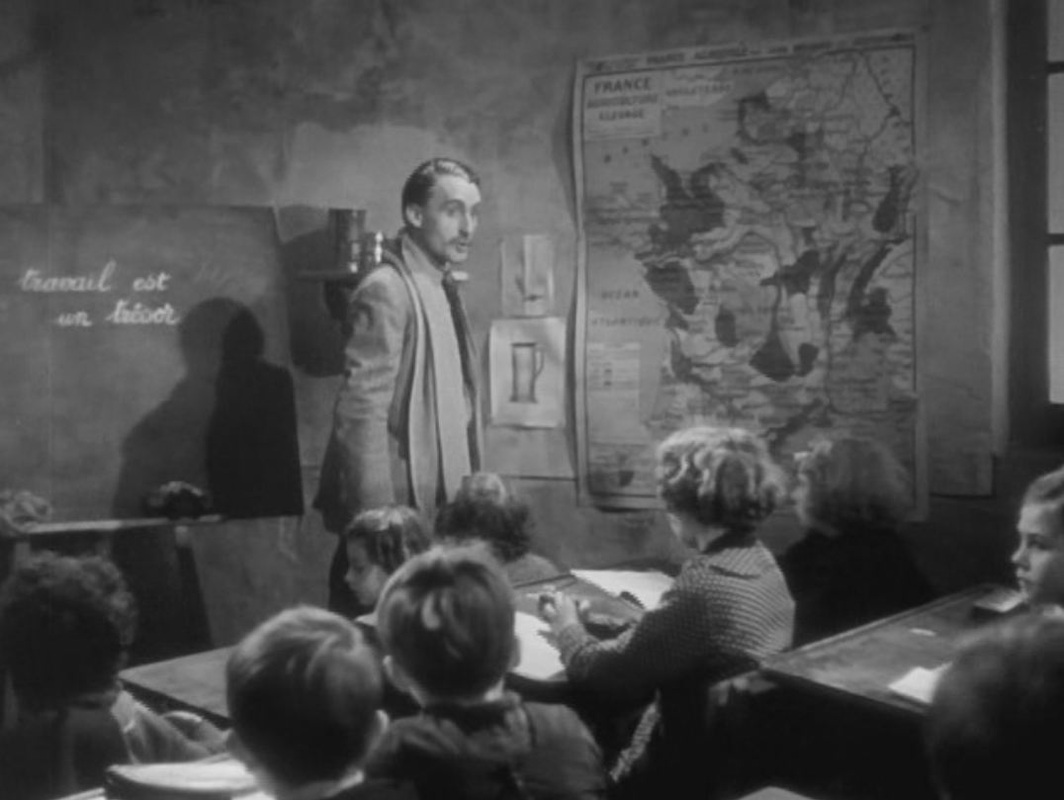 L'Assassinat du père Noël (Christian-Jaque 1941) 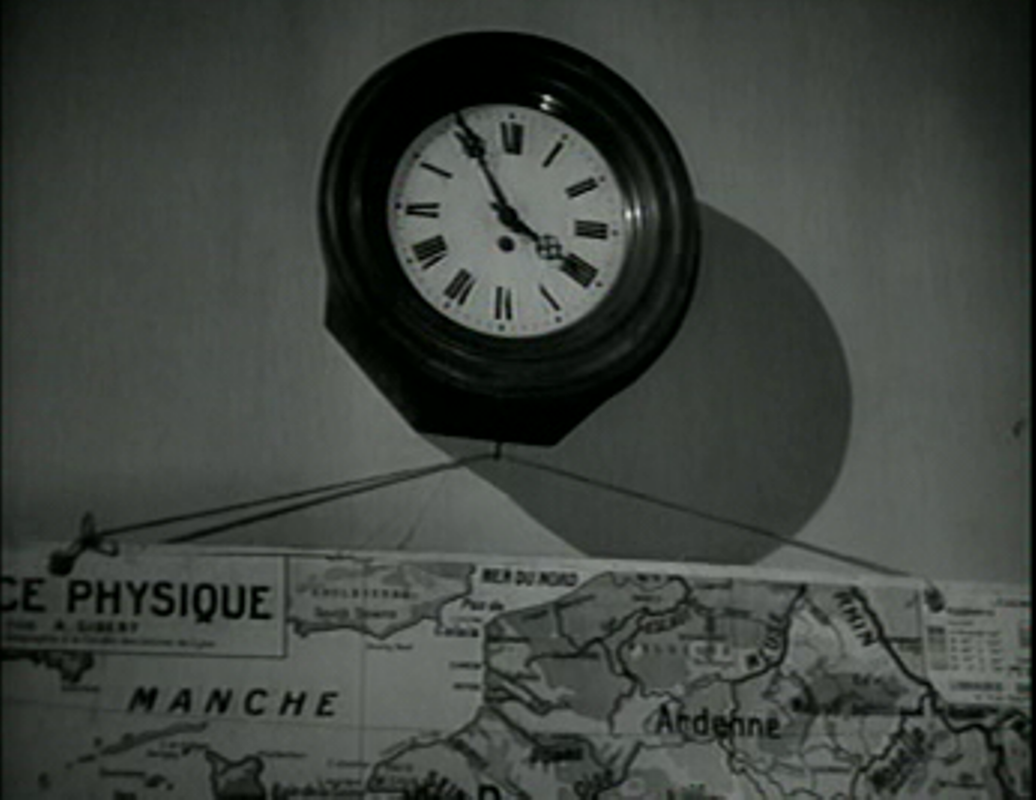 Les Dernières Vacances (Roger Leenhardt 1947)  Poil de carotte (Paul Mesnier 1951) 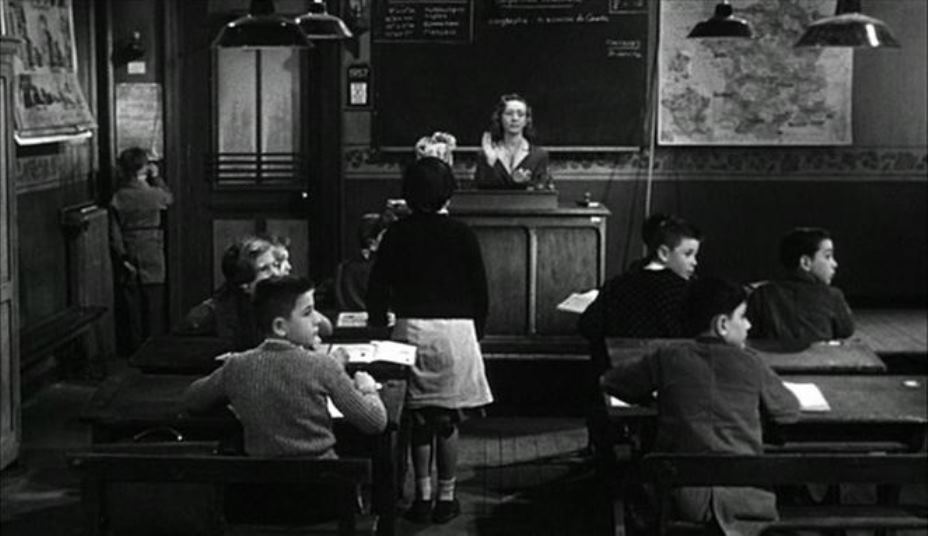 Les Espions (Henri-Georges Clouzot 1958) 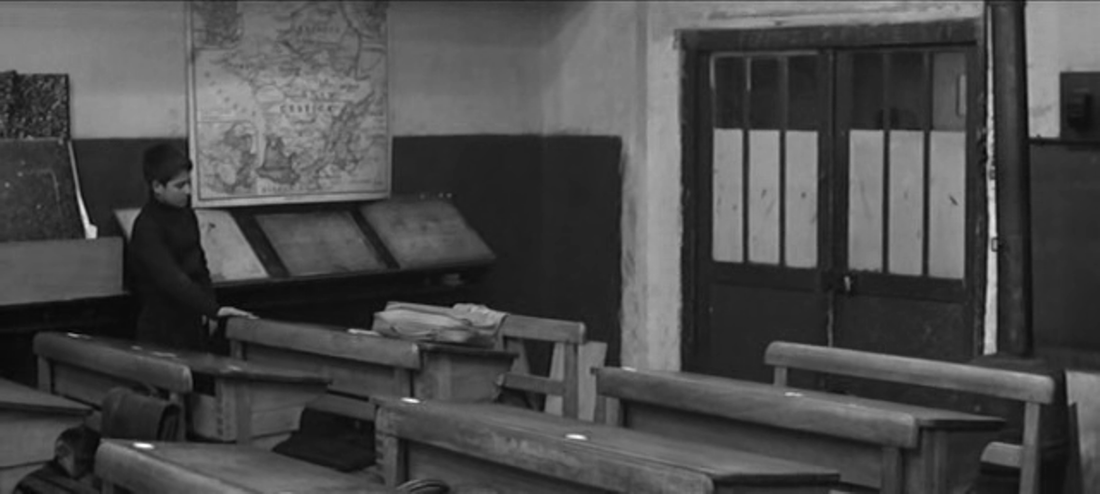 Les 400 coups (François Truffaut 1959) 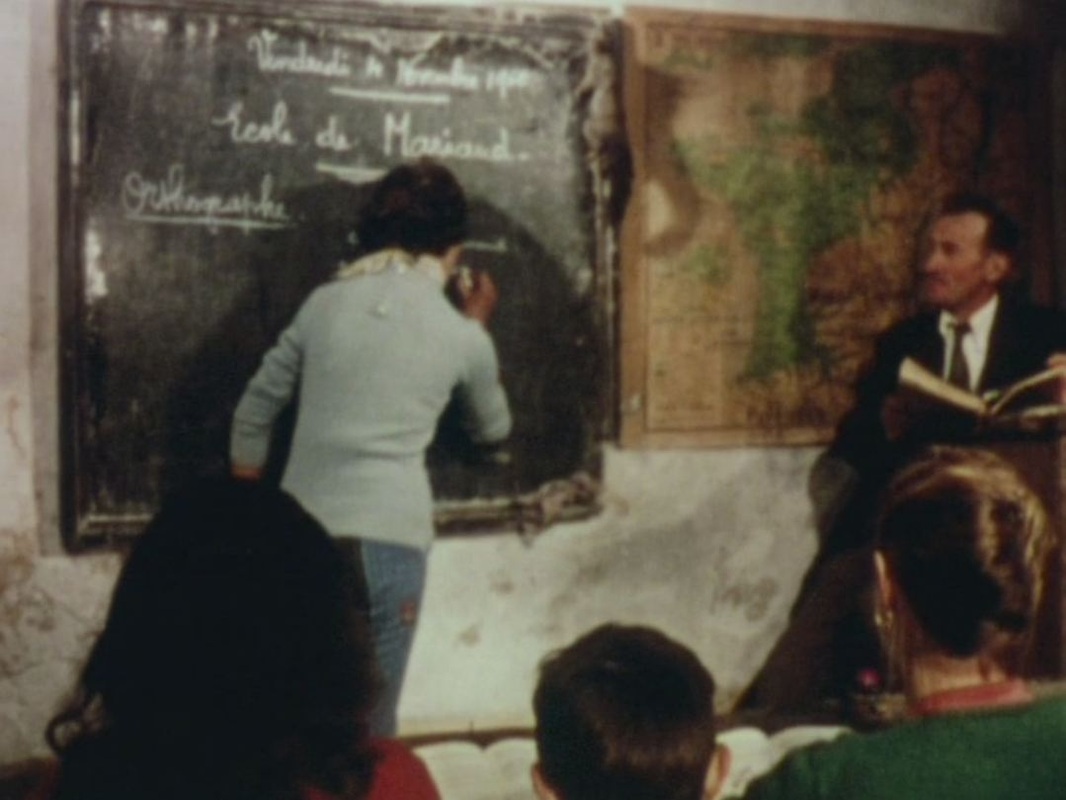 Terres noires (Luc Moullet 1961) 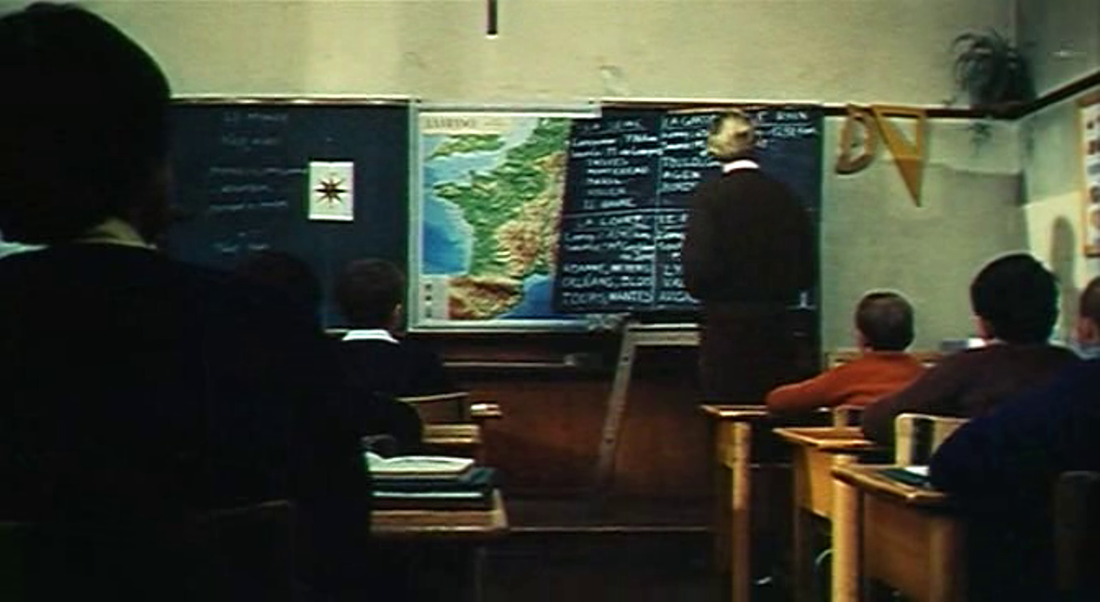 The Girl On a Motorcycle (Jack Cardiff 1968) 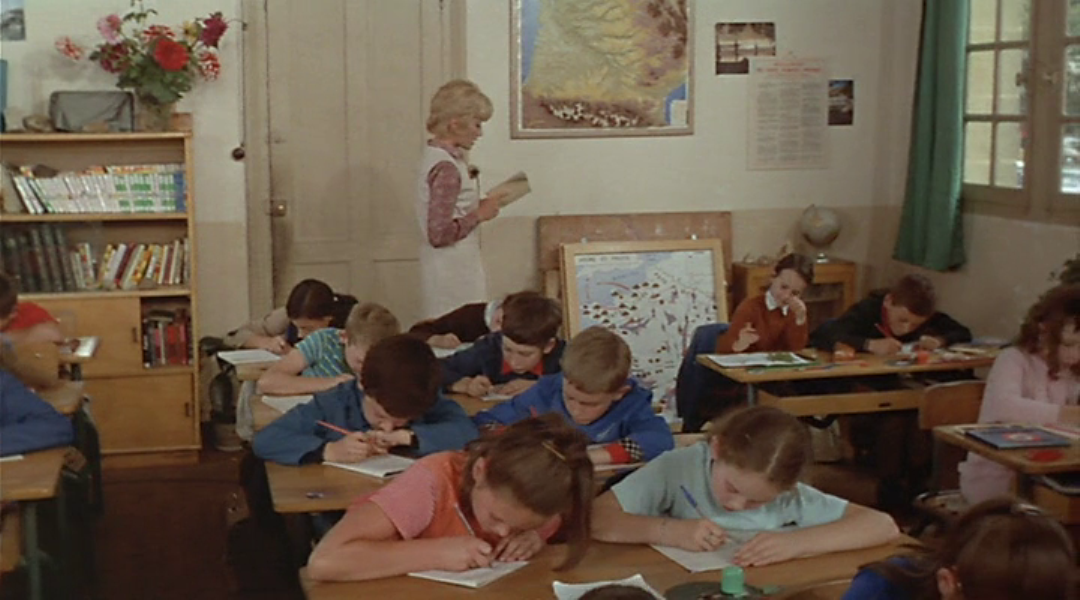 Le Boucher (Claude Chabrol 1970) 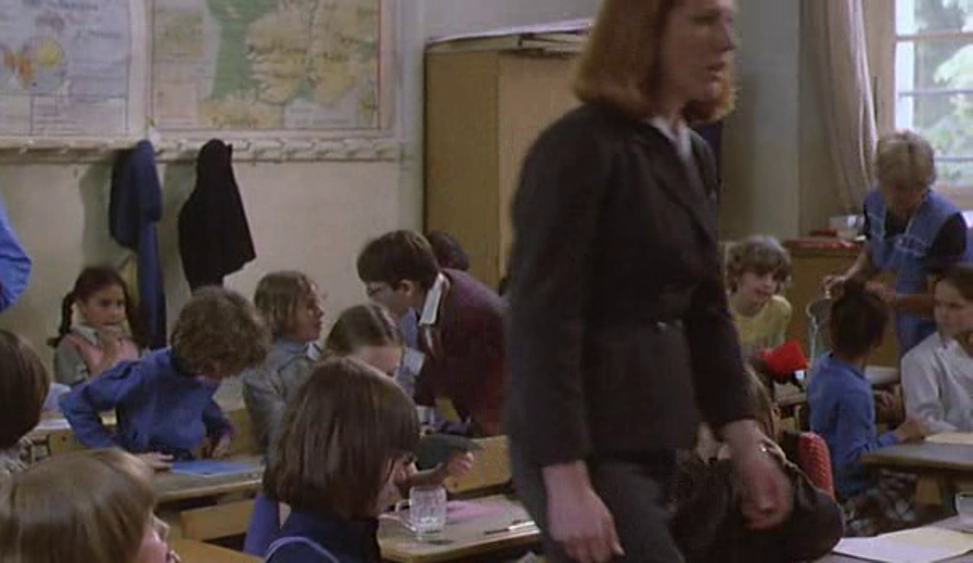 Confidences pour confidences (Pascal Thomas 1978)  Le Pion (Christian Gion 1978)  Mon oncle d'Amérique (Alain Resnais 1980) 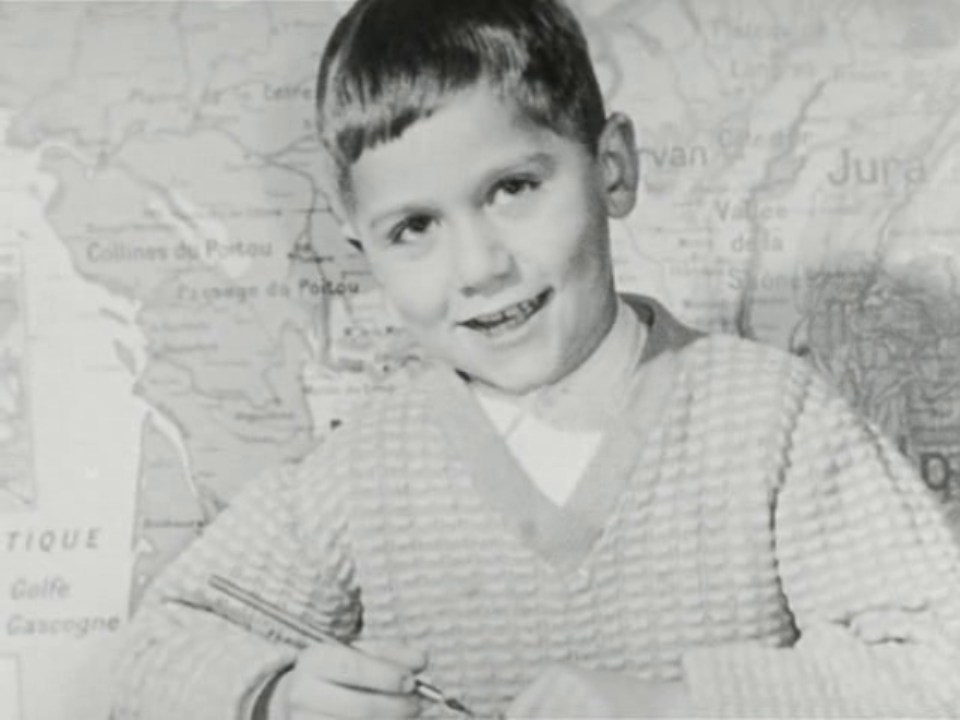 Mourir à trente ans (Romain Goupil 1982) 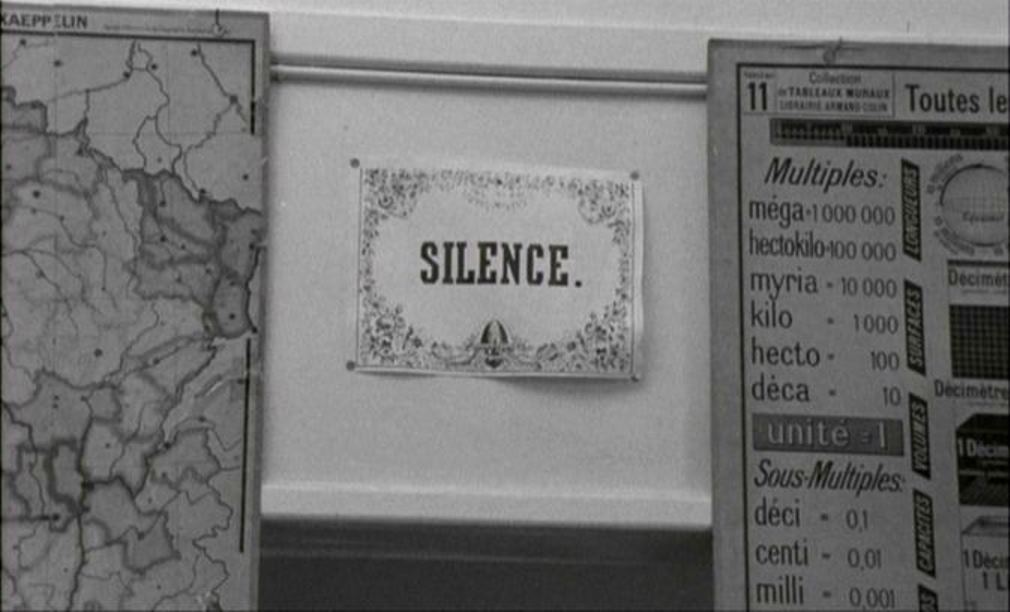 Jacquot de Nantes (Agnès Varda 1991) 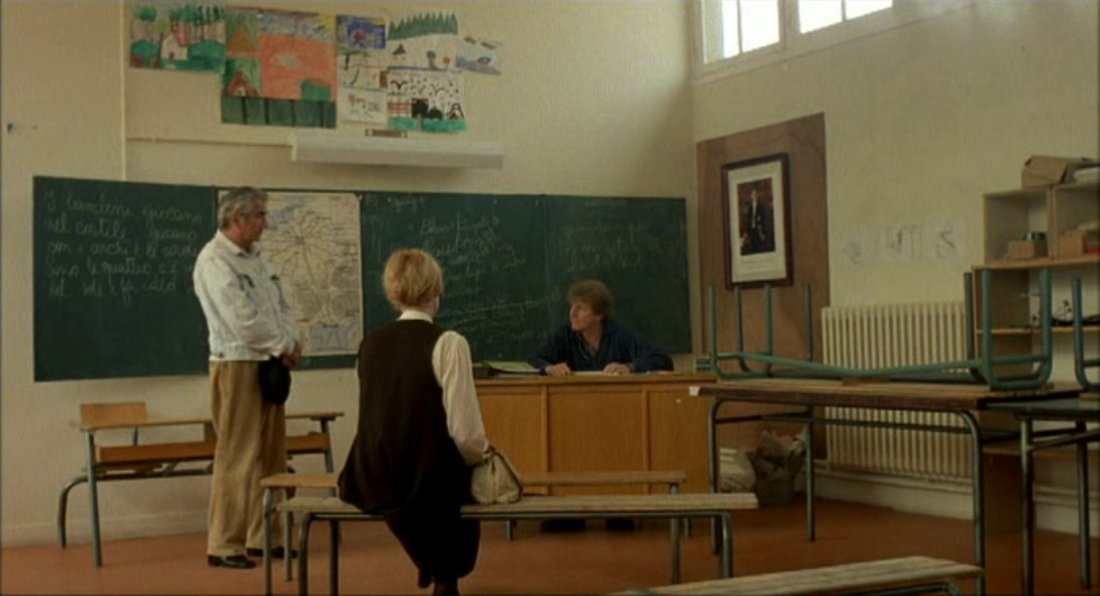 Les Enfants (Marguerite Duras 1985) 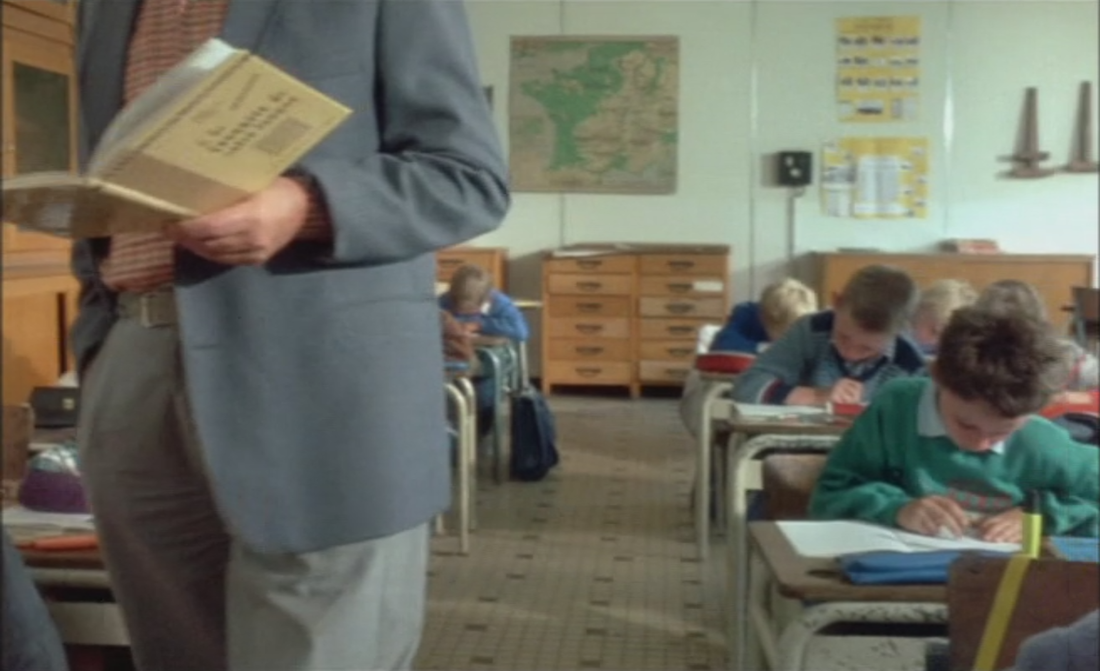 La Vie est un long fleuve tranquille (Etienne Chatiliez 1988) 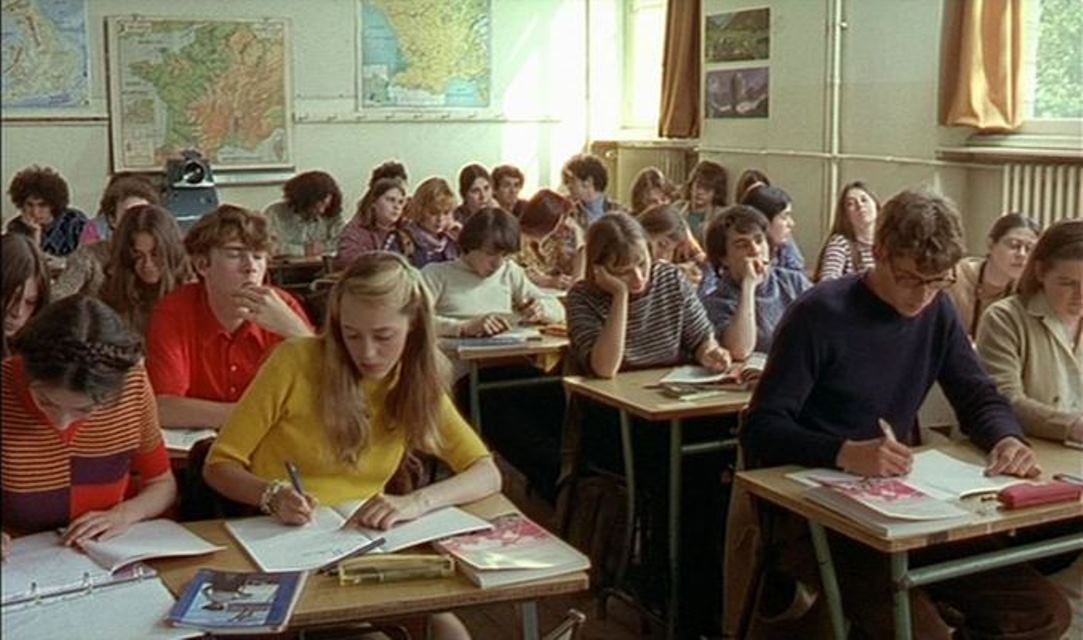 Le Péril jeune (Cédric Klapisch 1994) 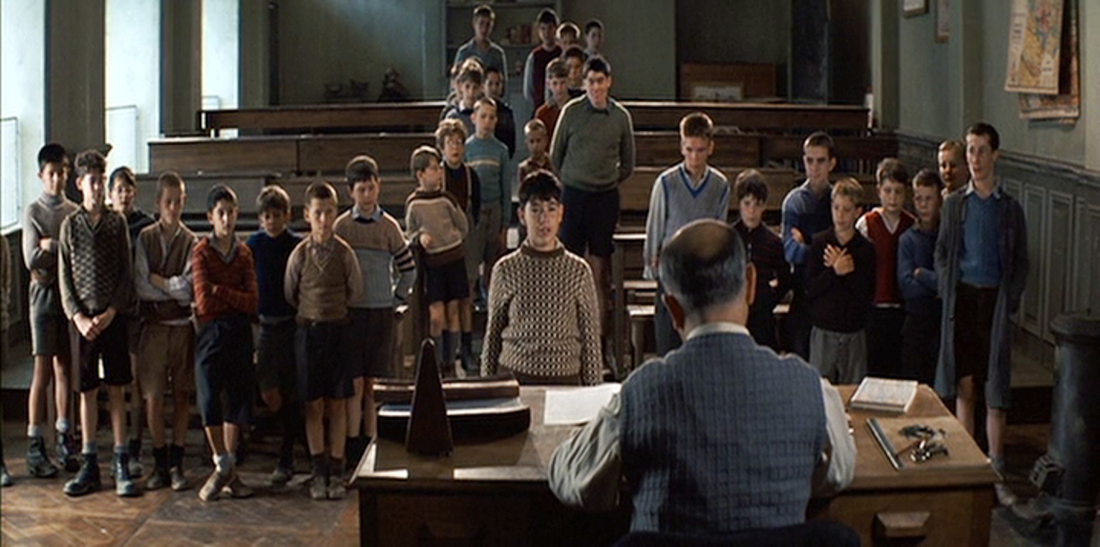 Les Choristes (Christophe Barratier 2004) 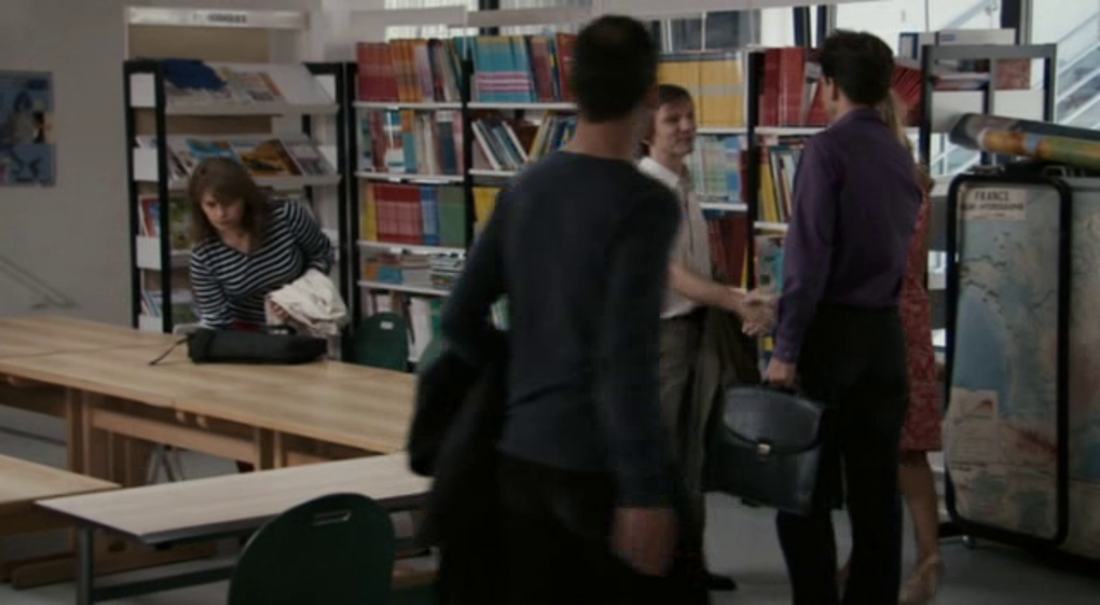 Entre les murs (Laurent Cantet 2008) 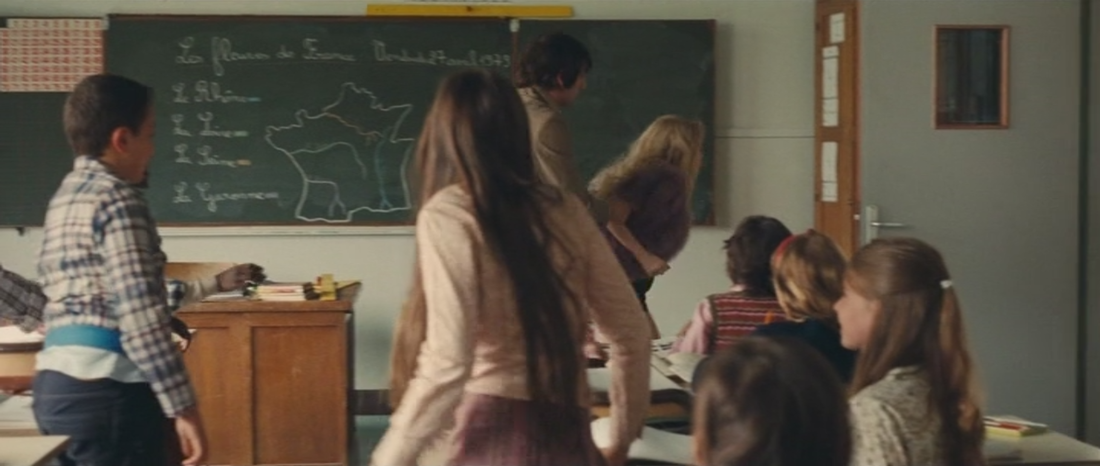 My Little Princess (Eva Ionesco 2011) 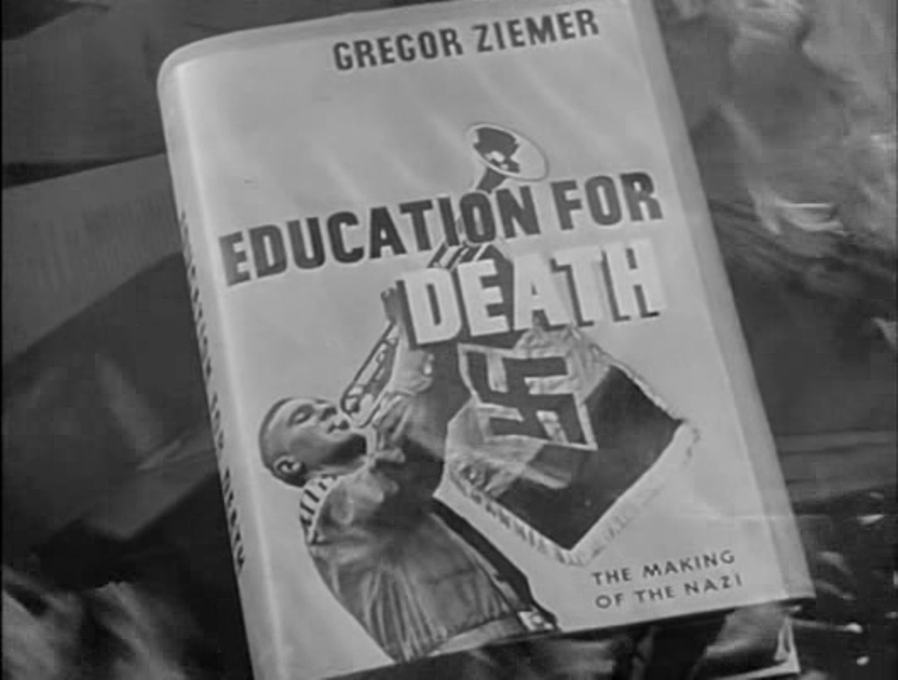 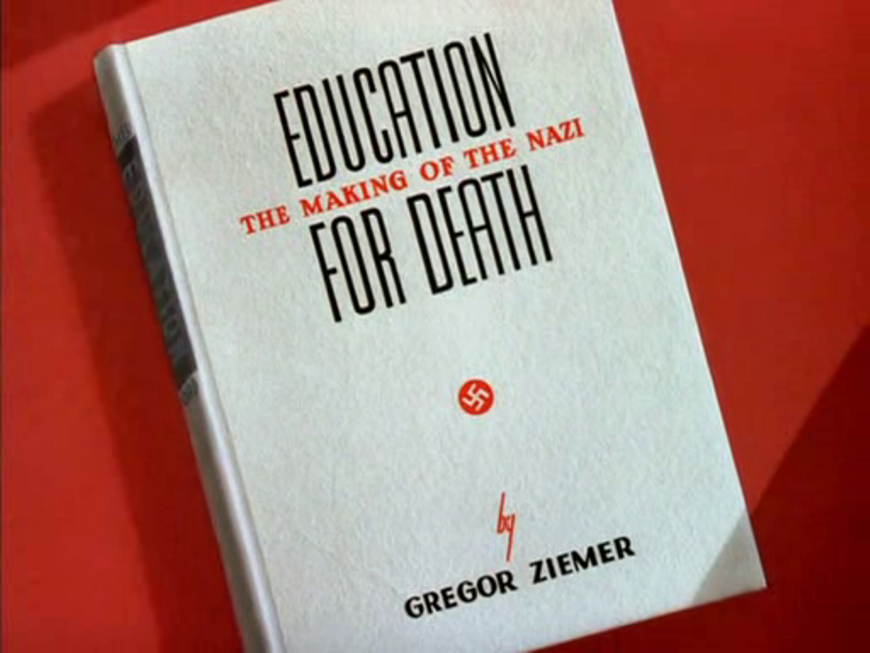 Of the two 1943 films based on Gregor Ziemer's 1941 book, Edward Dmytryk's Hitler's Children has the more maps. An early vis-à-vis of a Nazi school and an American Colony school shows two different classes being taught through different maps: 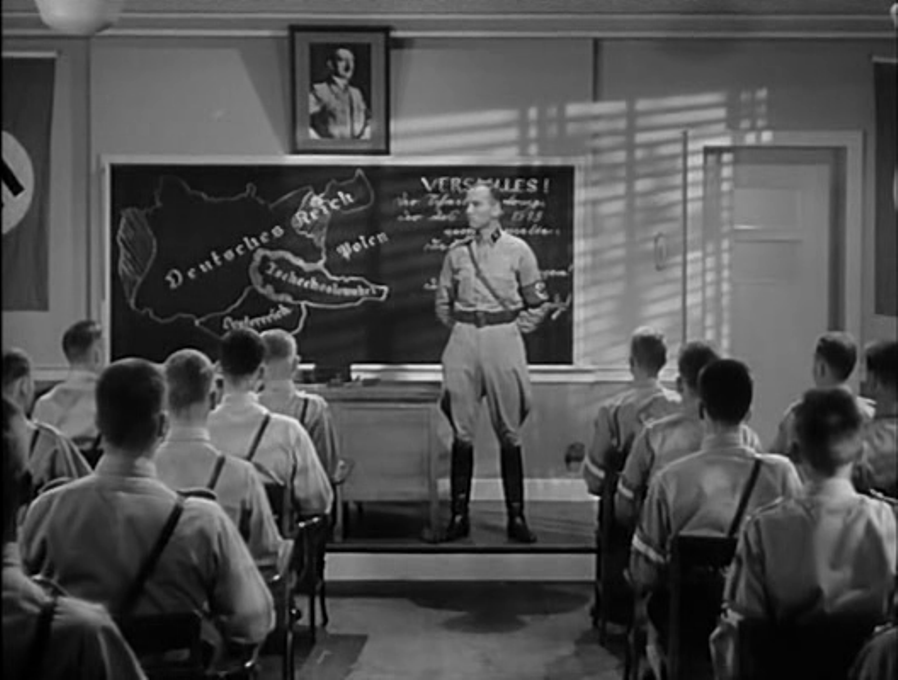 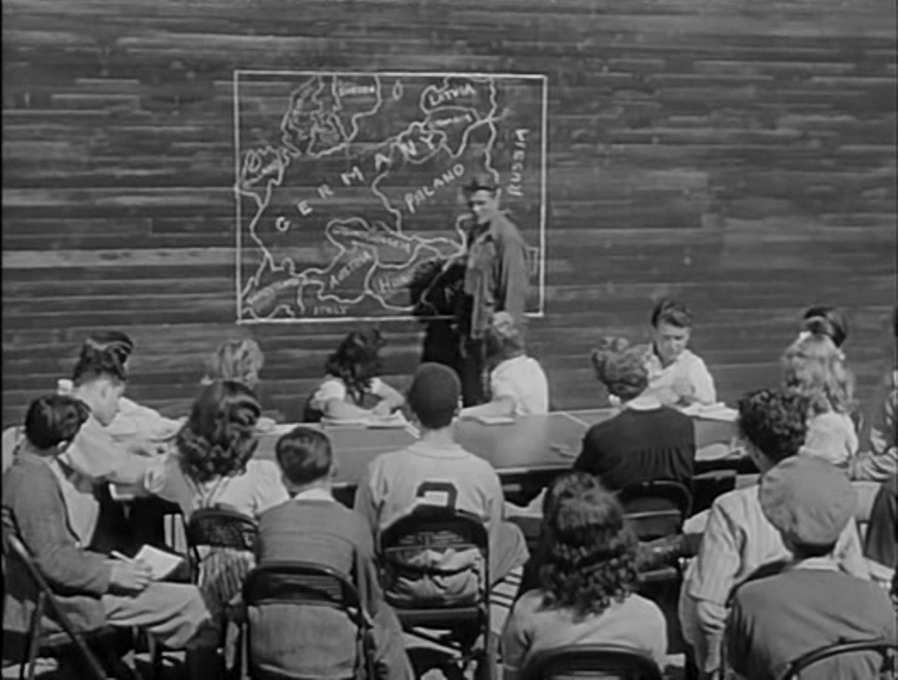 The film also has a wall map and two globes: 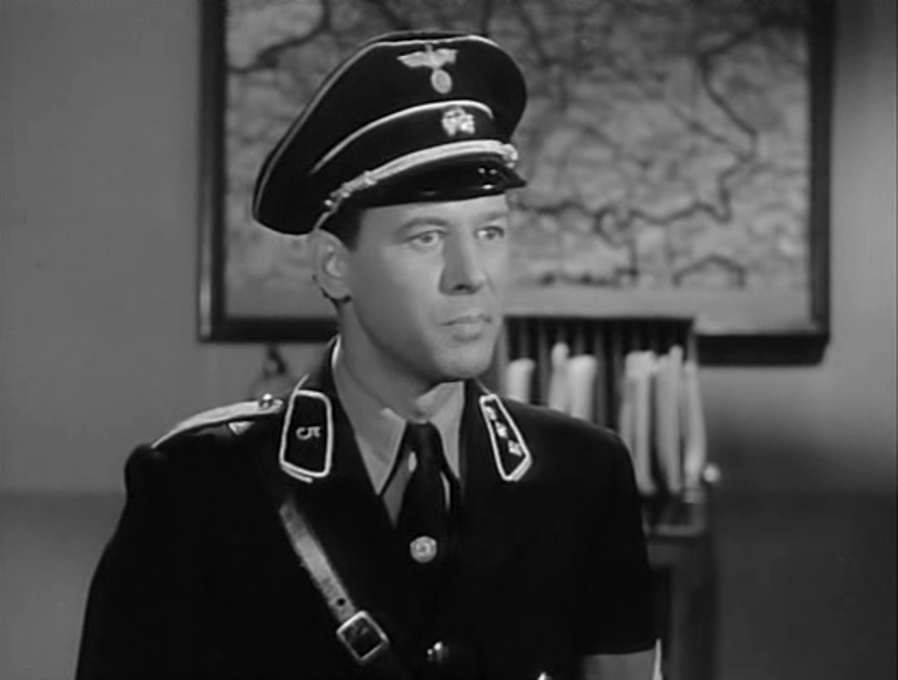 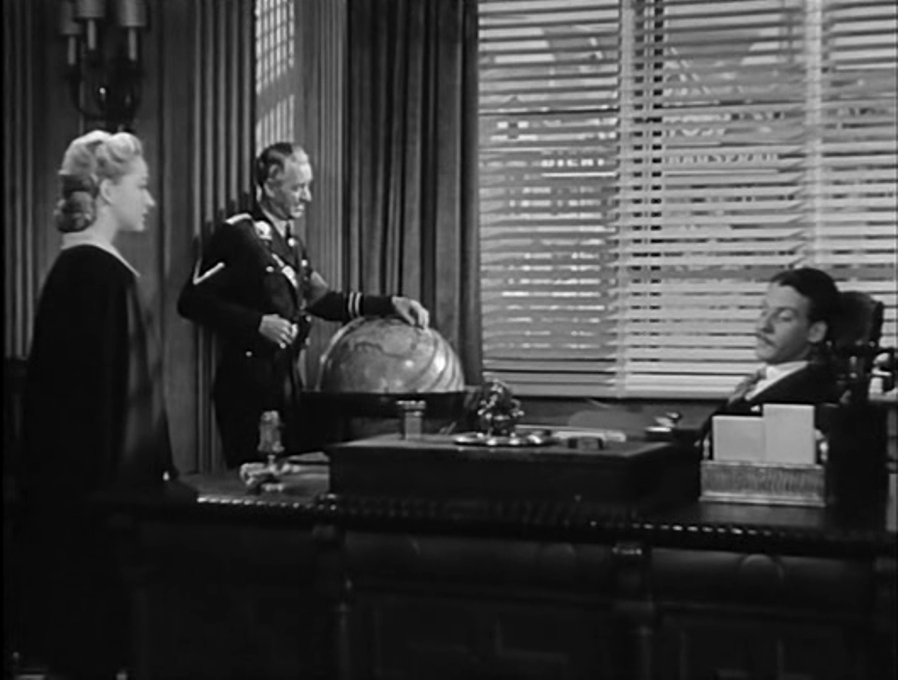 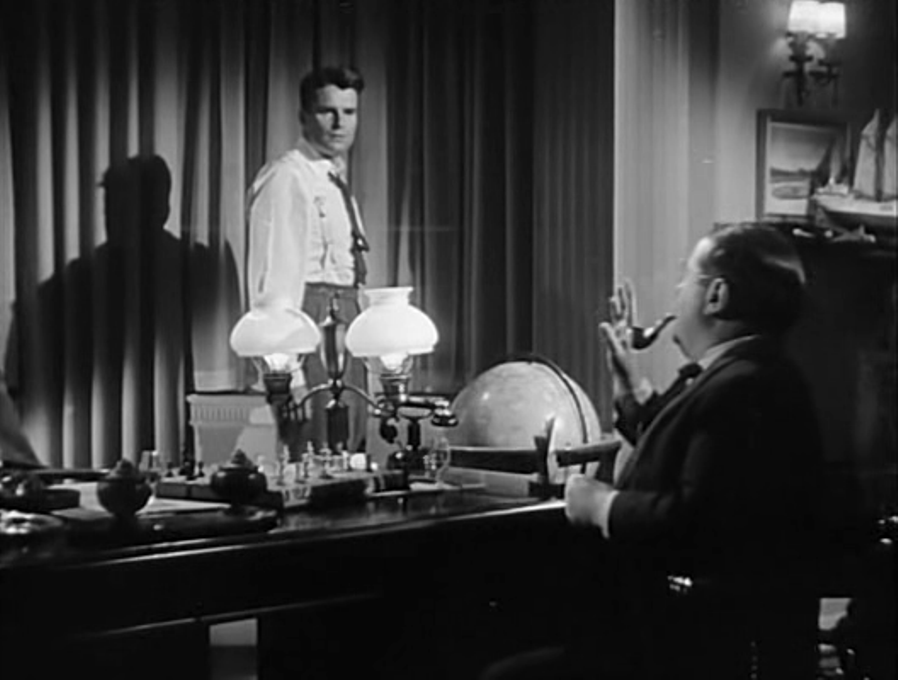 Clyde Geronimi's Walt Disney production Education for Death only has a globe: 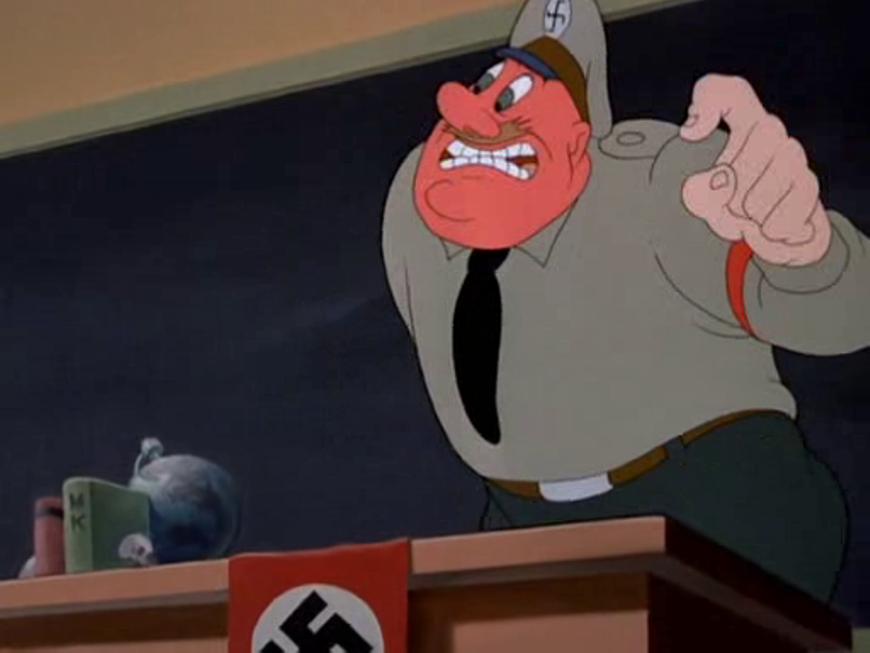 Both films emphasise the authority of the book on which they are based. The Disney film is particularly focussed on the book as motif. The green book on the desk above, next to the globe, is Mein Kampf, seen earlier in a different edition: 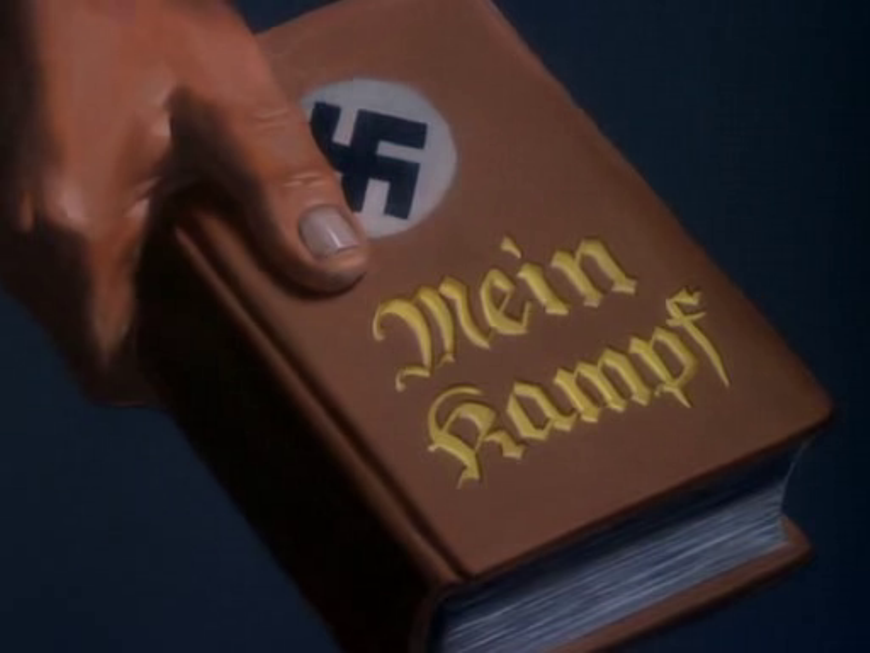 The red one may be meant to represent the book of 'New Order Fairy Tales' that had prompted the film's retelling of Sleeping Beauty:
The status of Mein Kampf as Nazi Bible is made explicit in a dissolve: And a central place is given to the burning of books: I assume that the 'Ma....' seen alongside Einstein, Spinoza and Voltaire is Marx. The key book moment in the narrative of Hitler's Children is when the American teacher reads to the American girl and Nazi boy from Goethe's Faust: 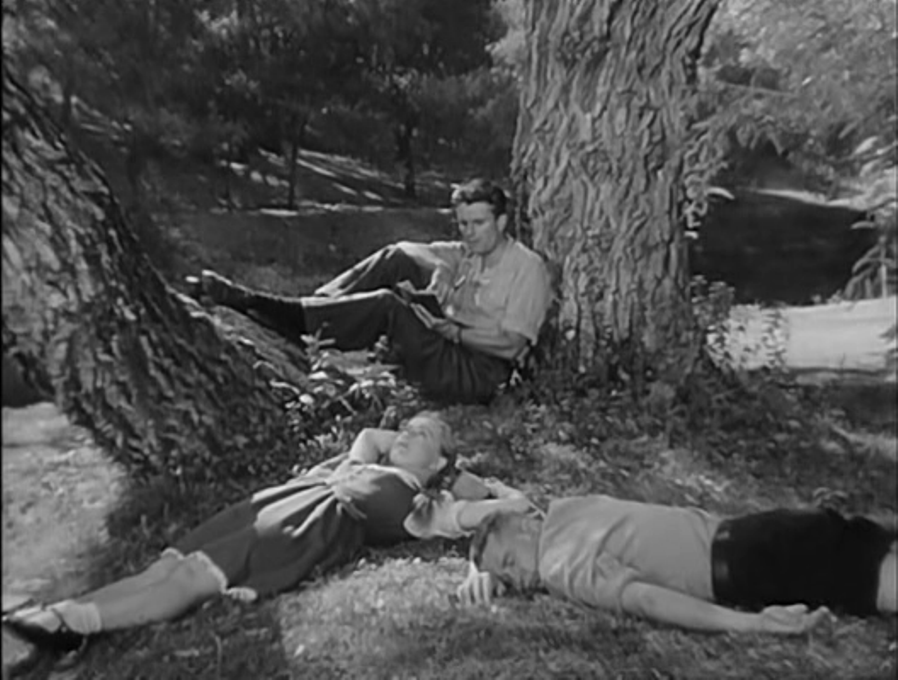
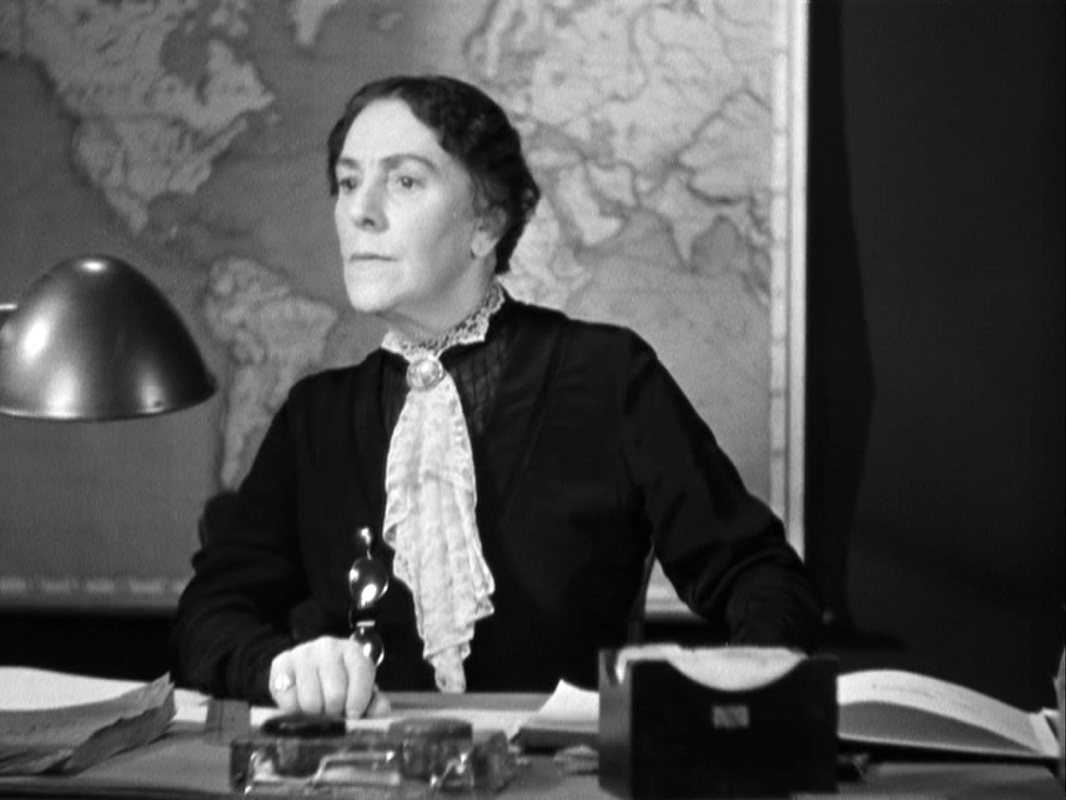
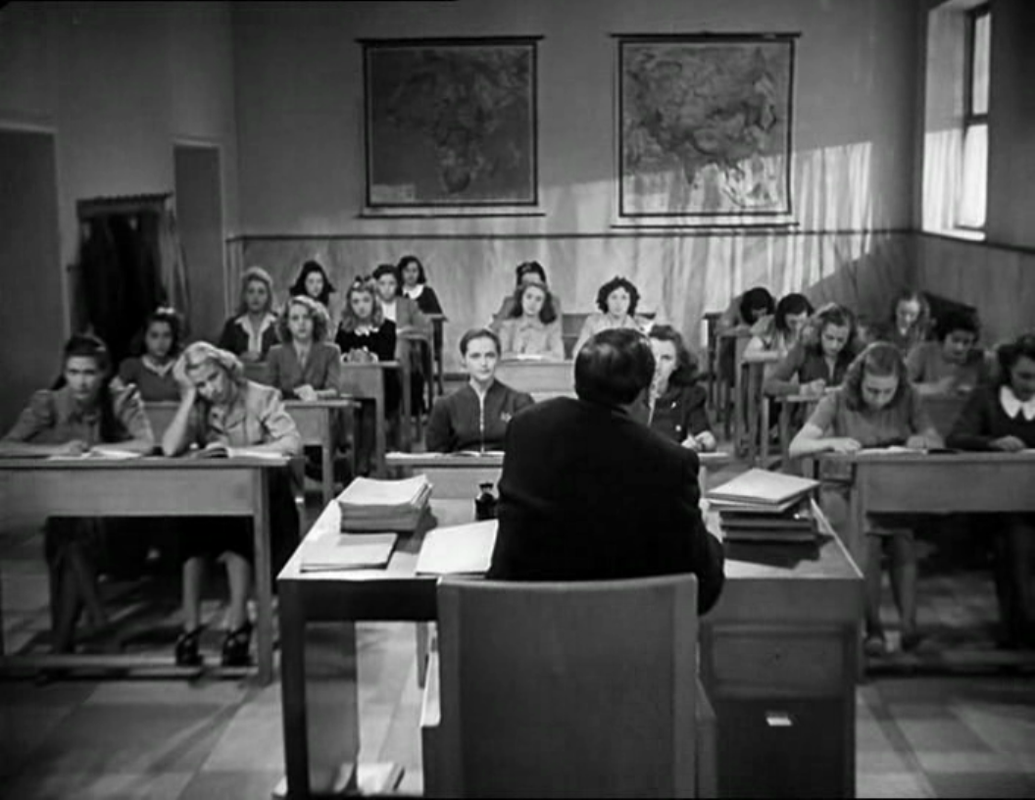
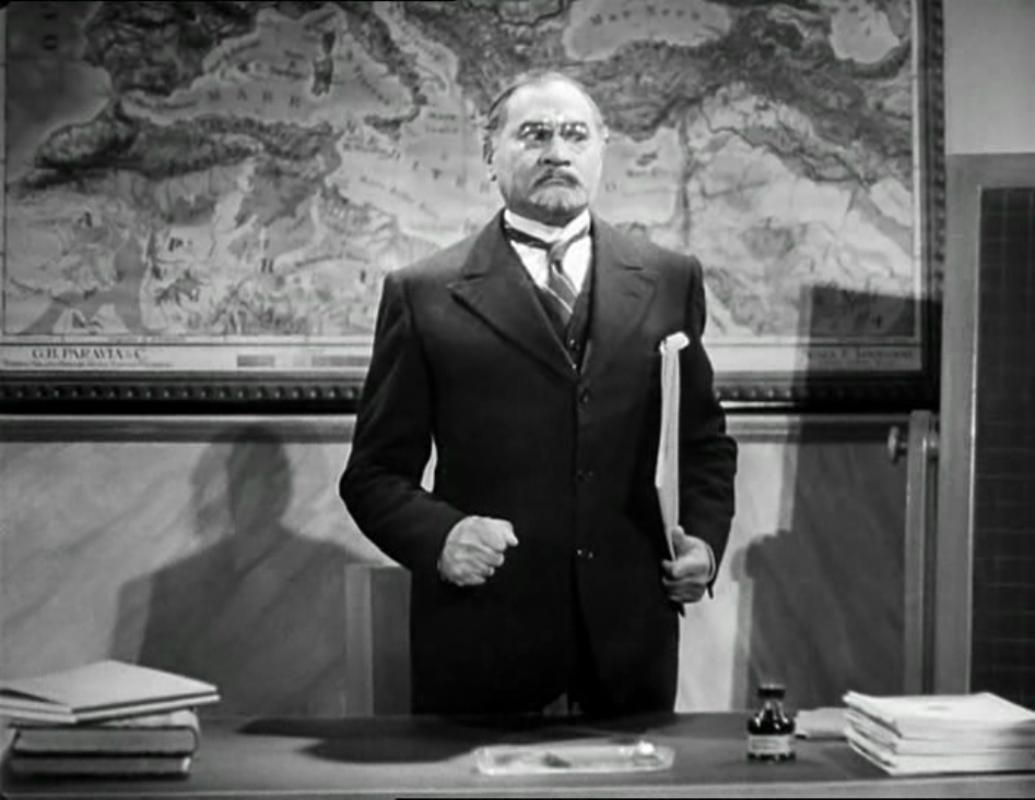
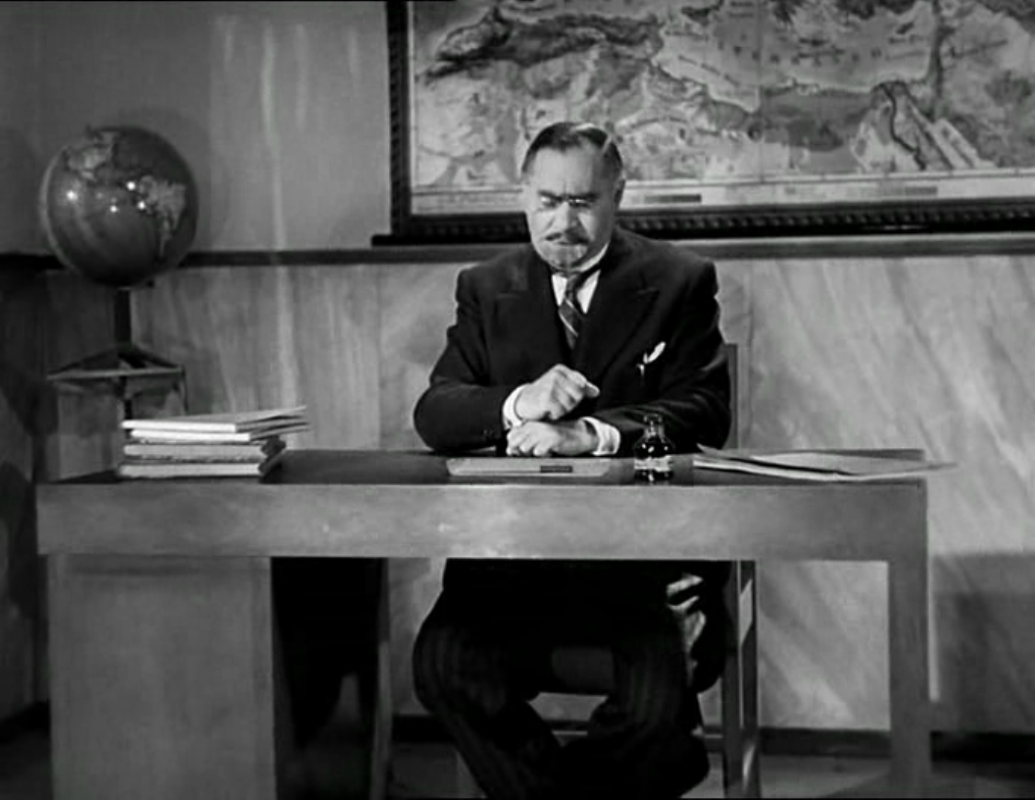
He adds: 'The same poet expressed it in a simple line: "And those who live for their faith shall behold it living".' I haven't found this attributed to Goethe anywhere, and it seems like it may be Schiller. Any suggestions here, please. 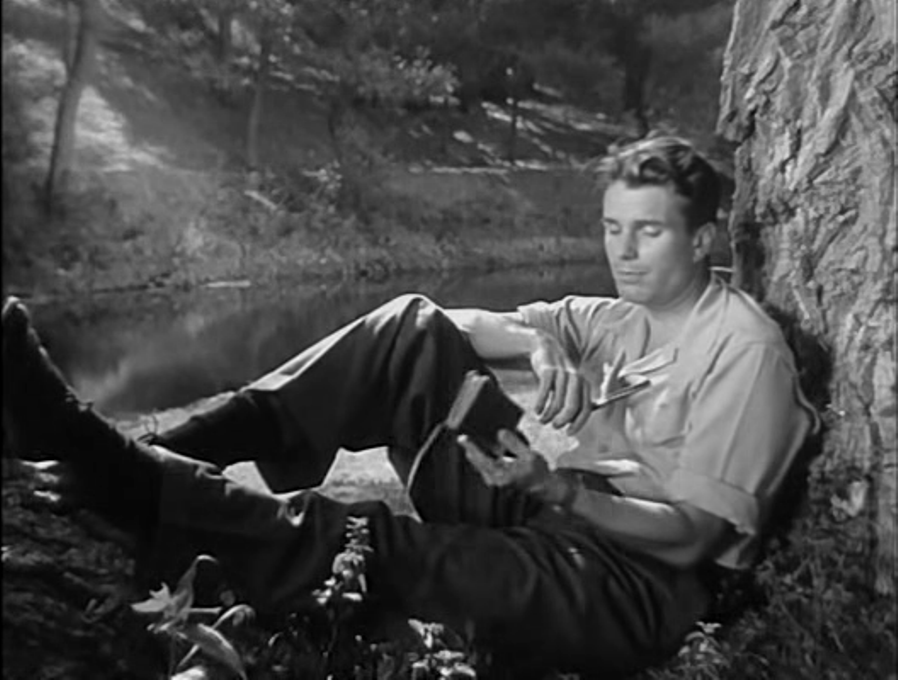 The burning of books is evoked by Hitler's Children in the opening prologue that leads to the film's title and credits. From a burning pile of books emerges Ziemer's Education for Death, spared from the flames but, through animation, marked with blood: 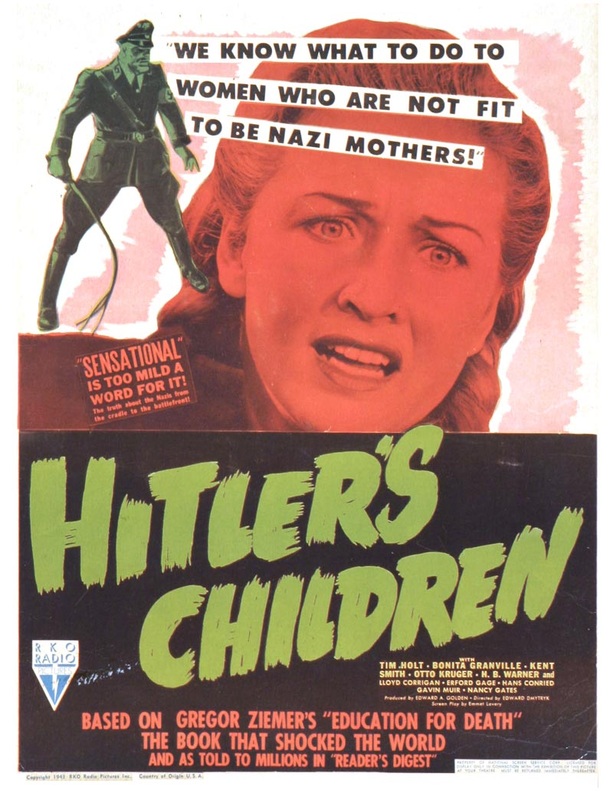 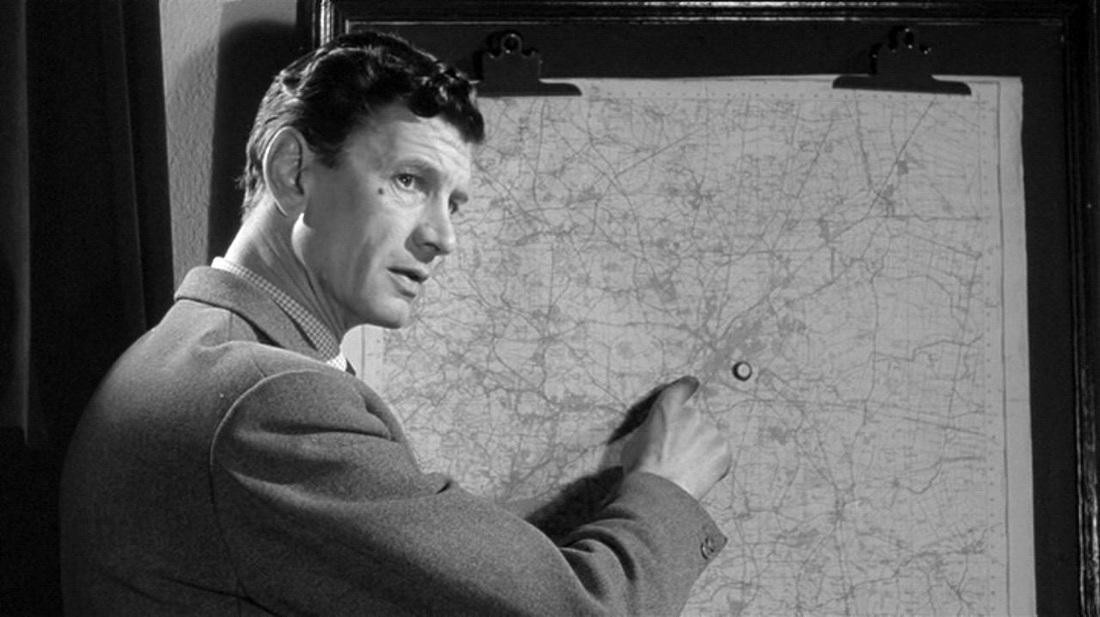 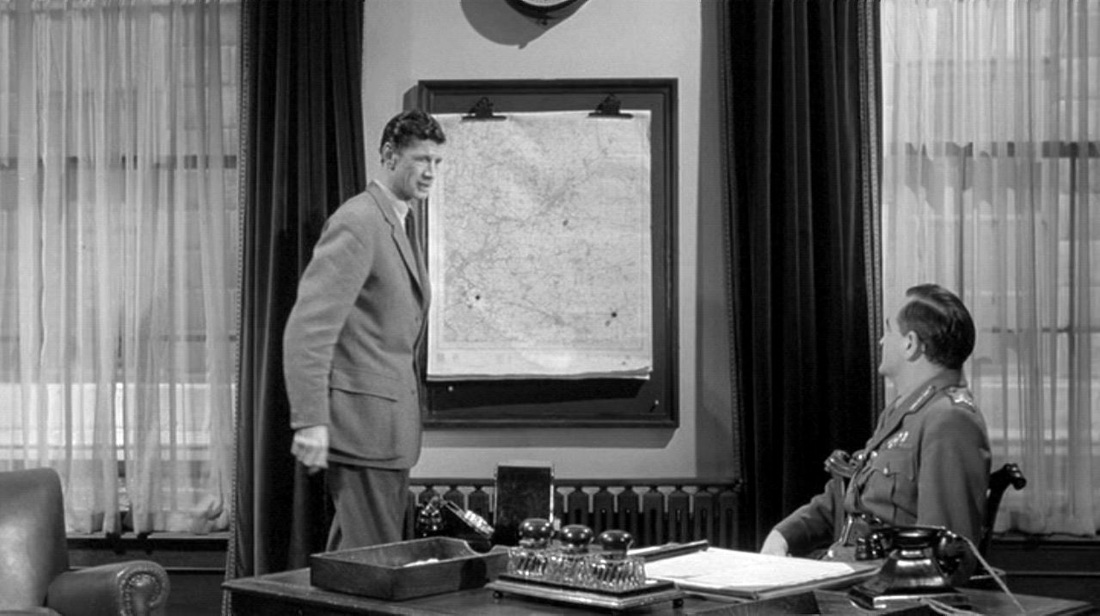 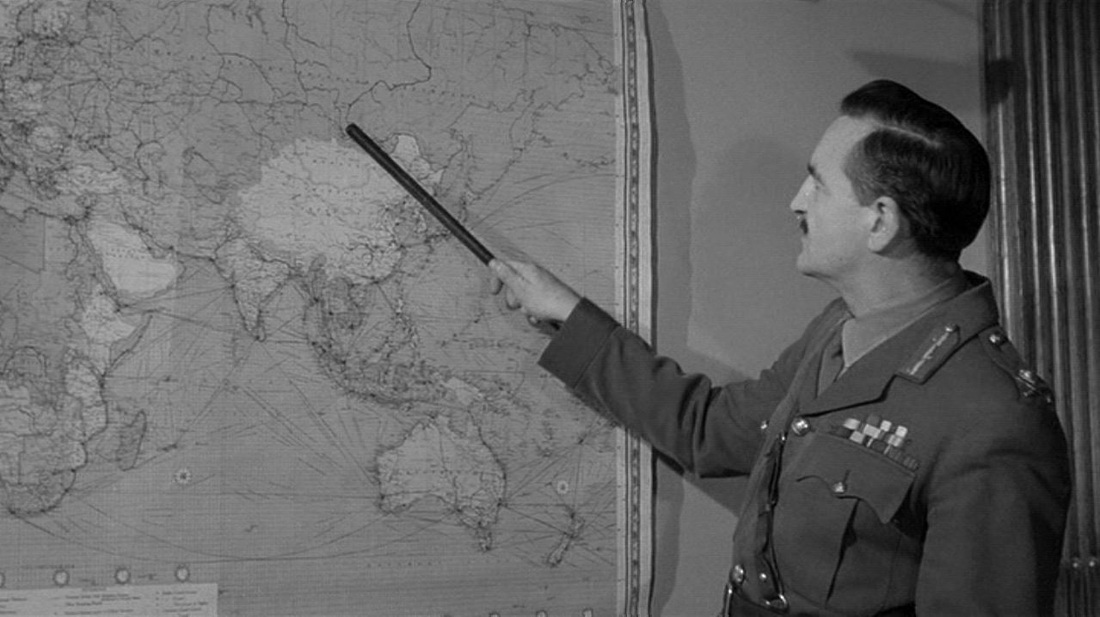 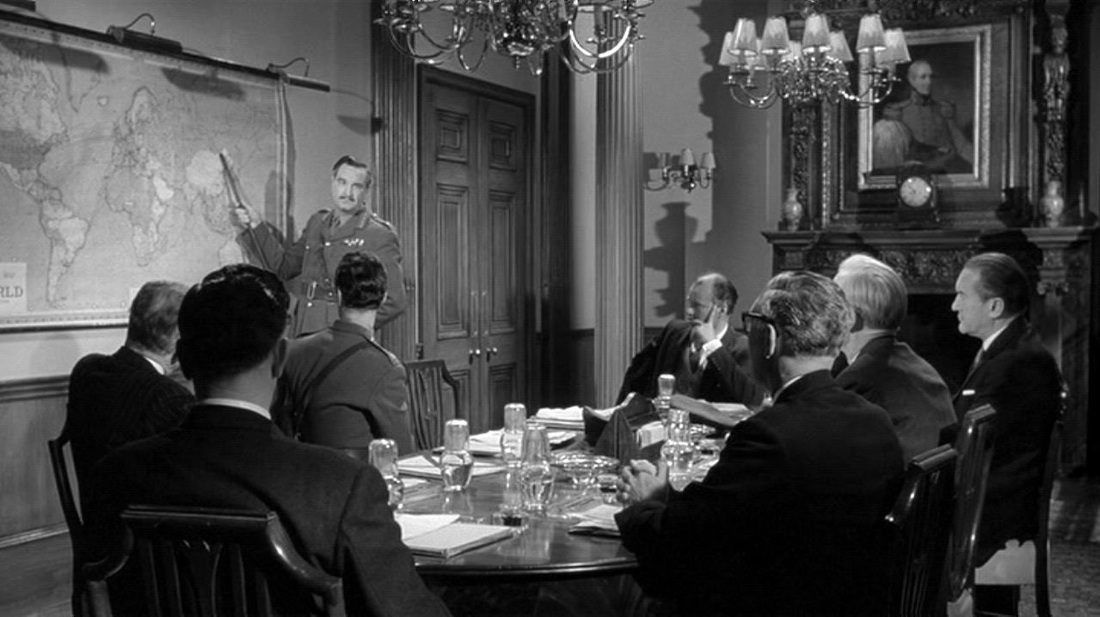 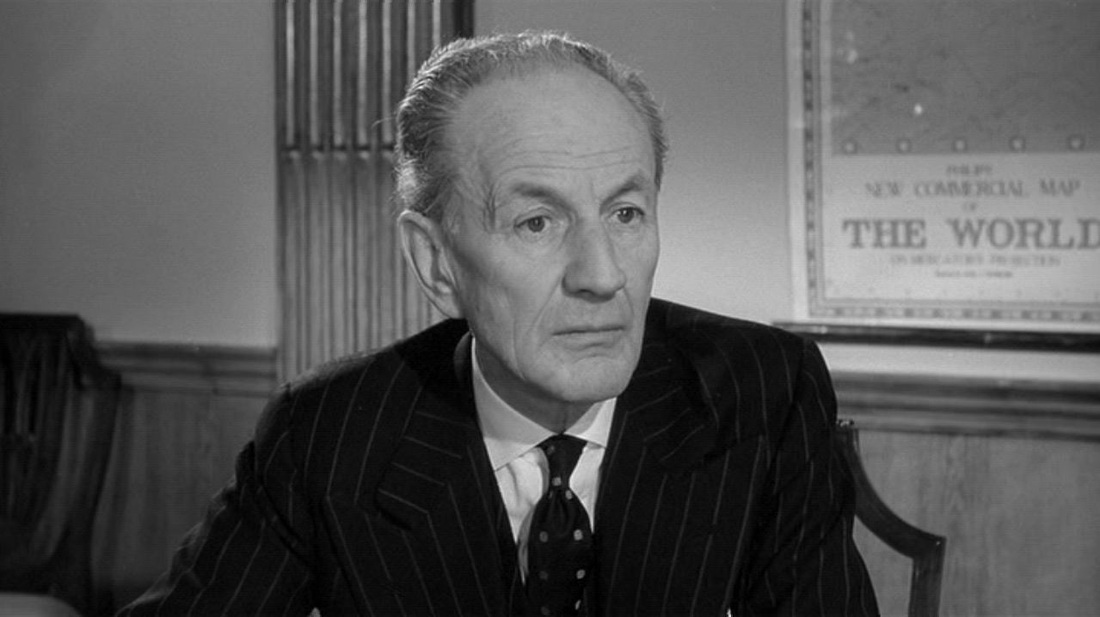 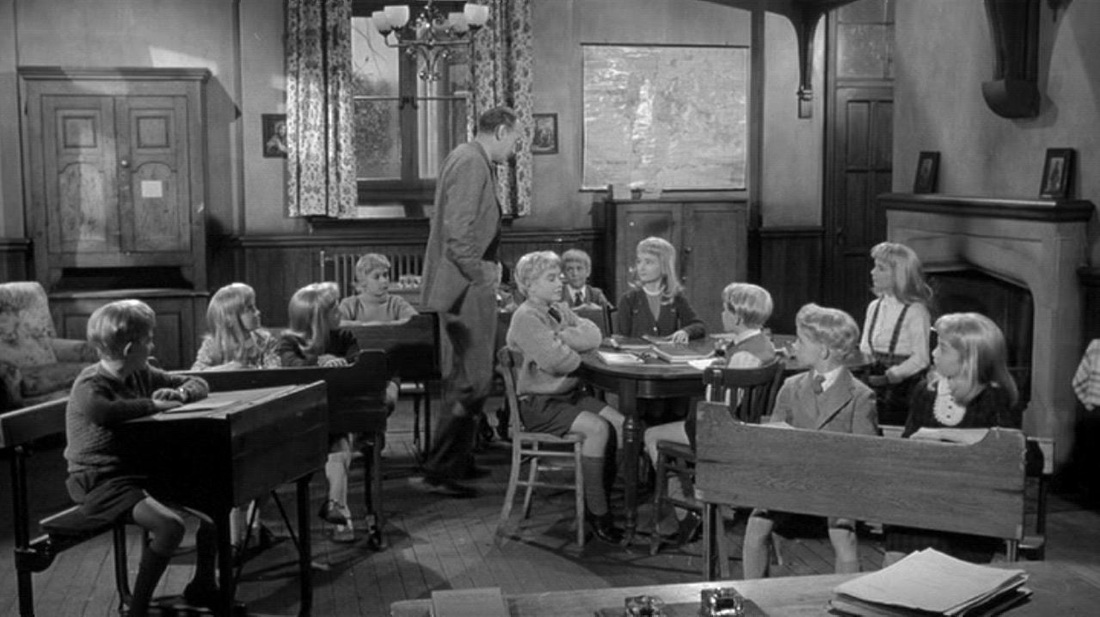 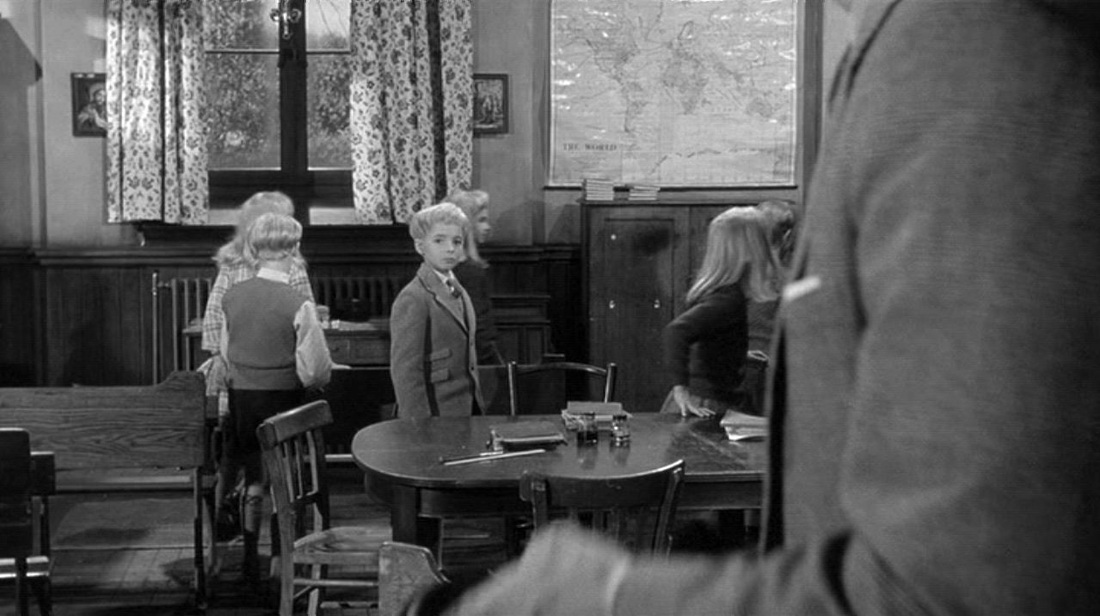 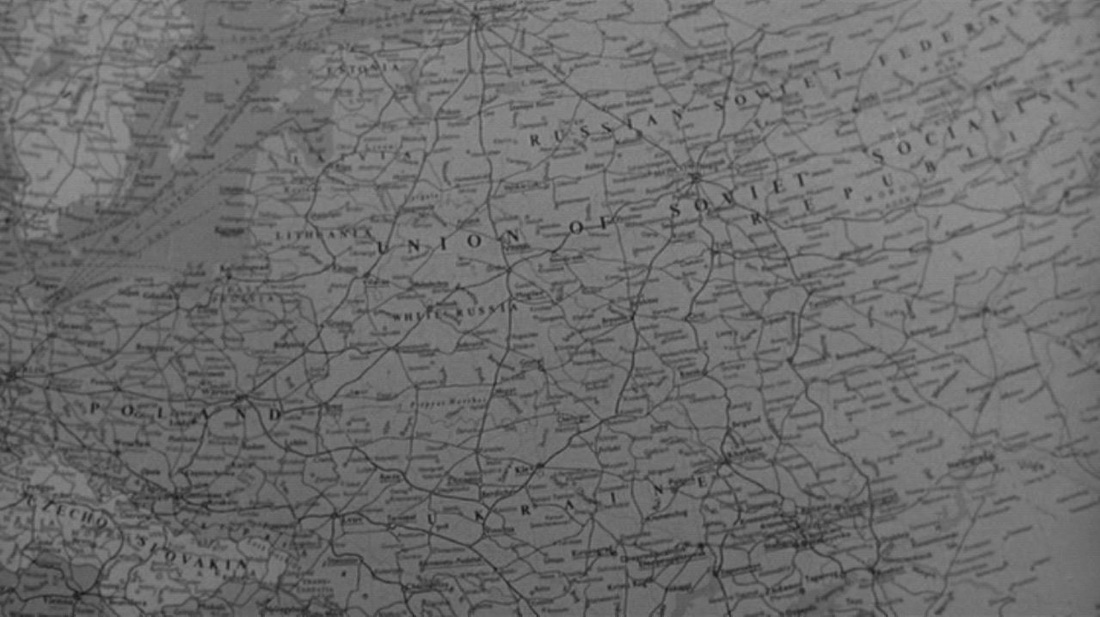 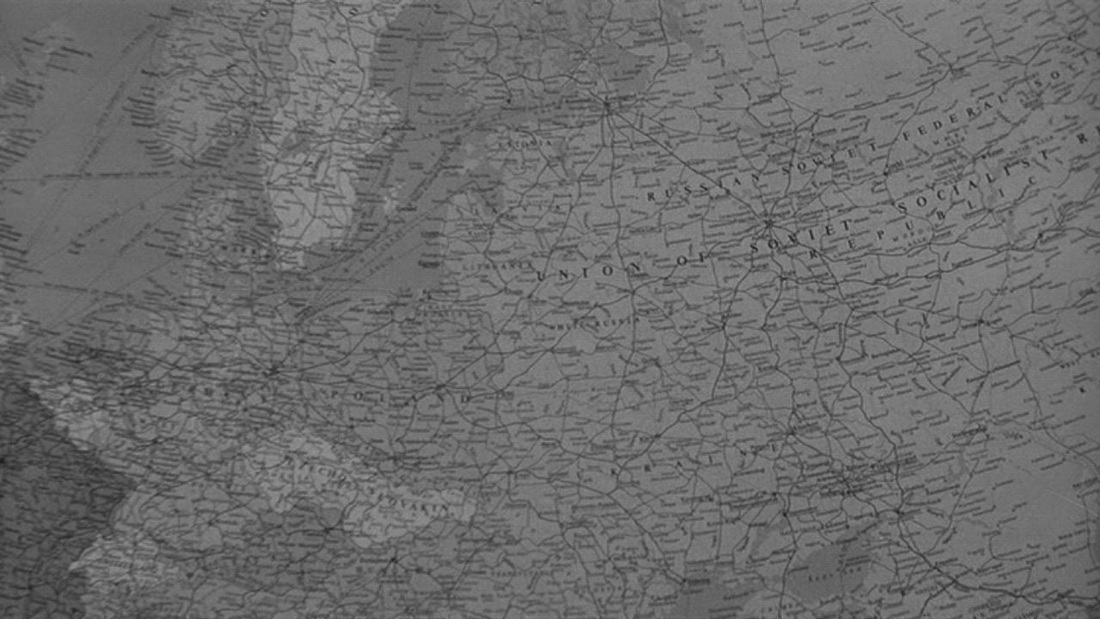 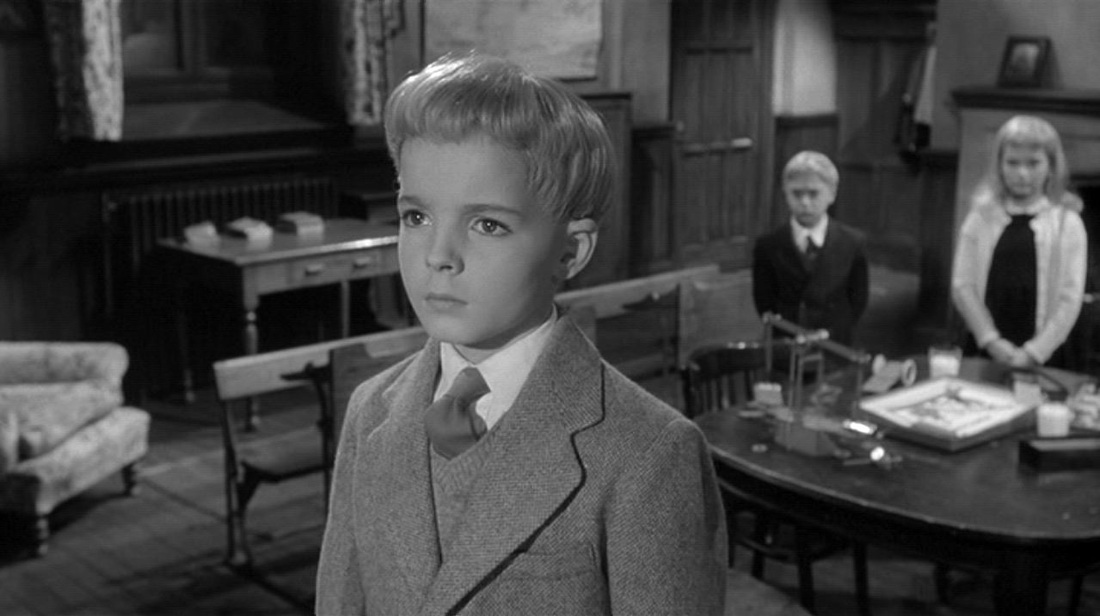 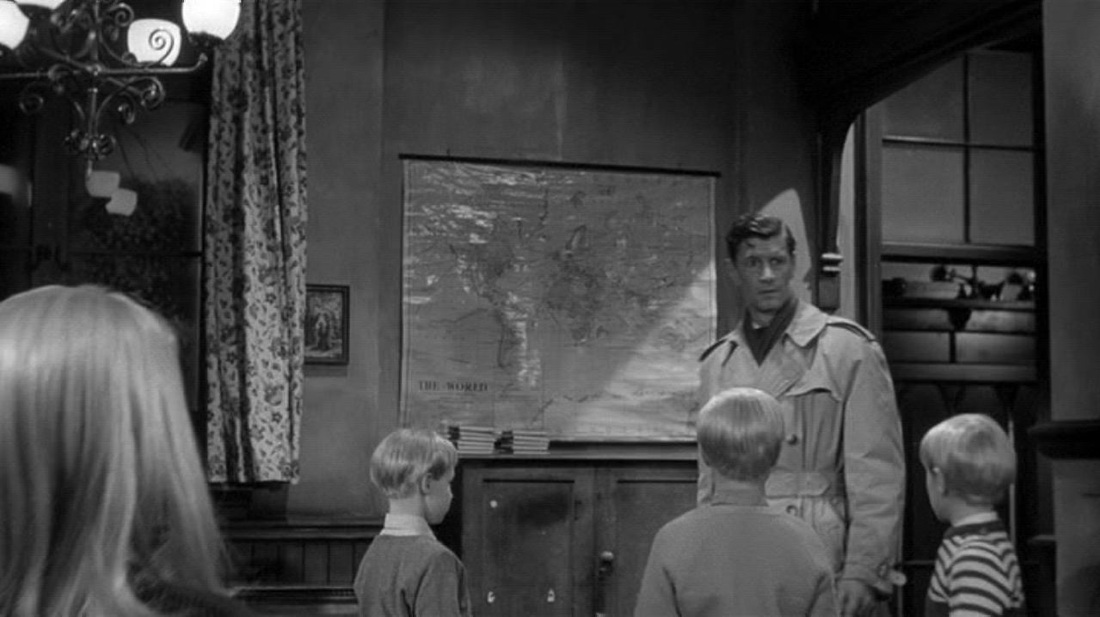 261/ L'Assassinat du Père Noël [The Murder of Santa Claus] (Christian-Jaque 1941): all the maps24/12/2011 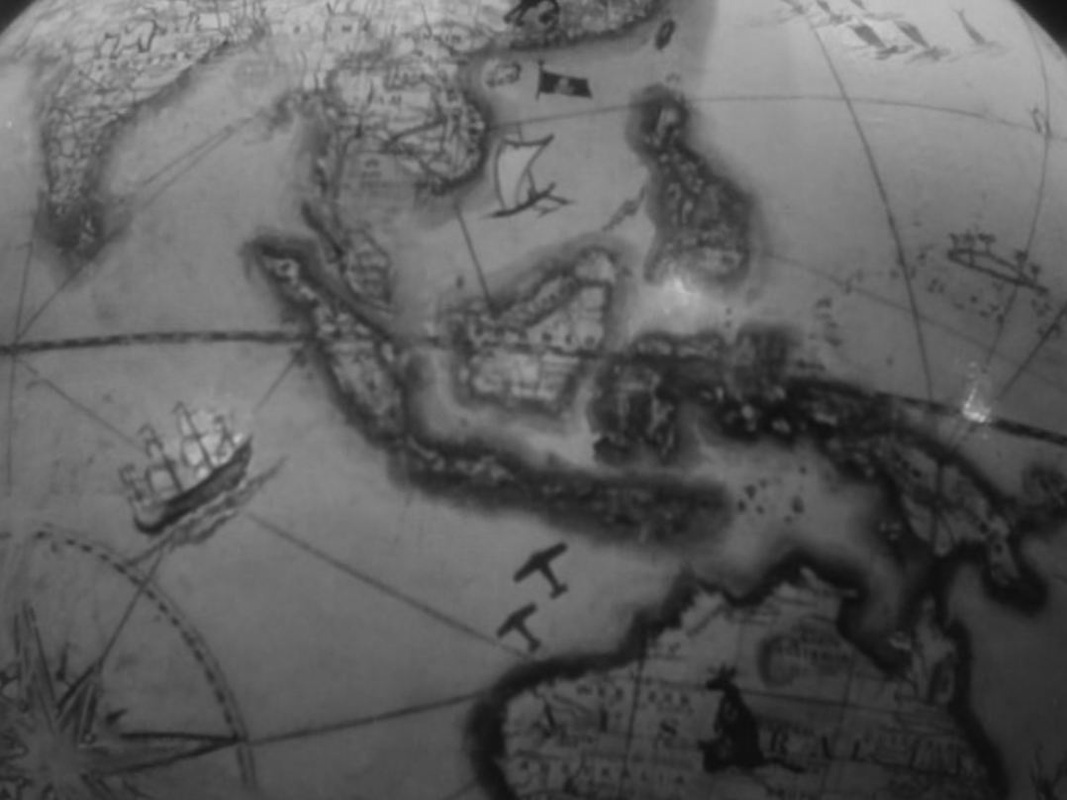 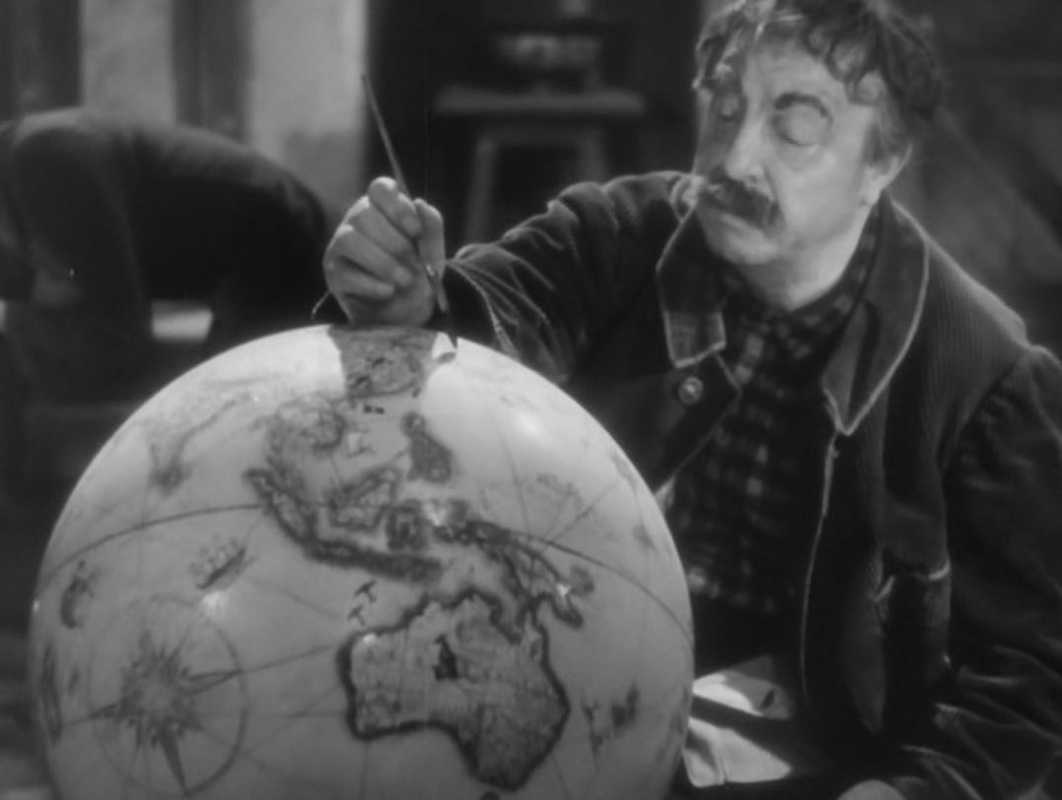 'Some films, however — vague allegories of French indomitability — also could be interpreted as suggesting resistance to oppression. Perhaps the first such film was Christian-Jaque’s L’Assassinat du Père Noël (The Murder of Santa Claus 1941). Set in a snow-covered mountain village, it tells the story of a map-maker, Cornusse, who plays Santa Claus for the local children every year. On Christmas Eve, odd events occur: a sinister figure steals a saint’s relics from the church, and the village’s baron, returned from an enigmatic absence, courts Cornusse’s ethereal daughter. All ends well, with Cornusse’s visit miraculously curing a crippled boy. Cornusse tells him that a French sleeping beauty will someday be awakened by a Prince Charming. Although L’Assassinat du Père Noël was the first production by Continental, the German firm, its symbolic message was presumably apparent to many French filmgoers.' Kristin Thompson & David Bordwell, Film History (New York: McGraw-Hill, 2009), p.274. The maps in the film point to a reading in terms of what is happening in the world beyond the village, i.e. France, as above, in the globe-maker's curious addition of modern war planes to the embellishments of his pre-modern depiction of the world. The part of the globe shown here is very much the other side of the world, but a connection with France is suggested because the globe shows Indo-China, a French possession. In the schoolroom, this map showing the Soviet Union, just as the German offensive on the Eastern Front was building momentum, would make a similar point about the world beyond France, but if there is a message relating to the situation of France it is in the proverb displayed above: 'Bien mal acquit ne profite jamais' (there is no profit in goods ill-acquired). We may conclude that the Germans will not profit from their acquisition of France, nor from their efforts to acquire Russia: 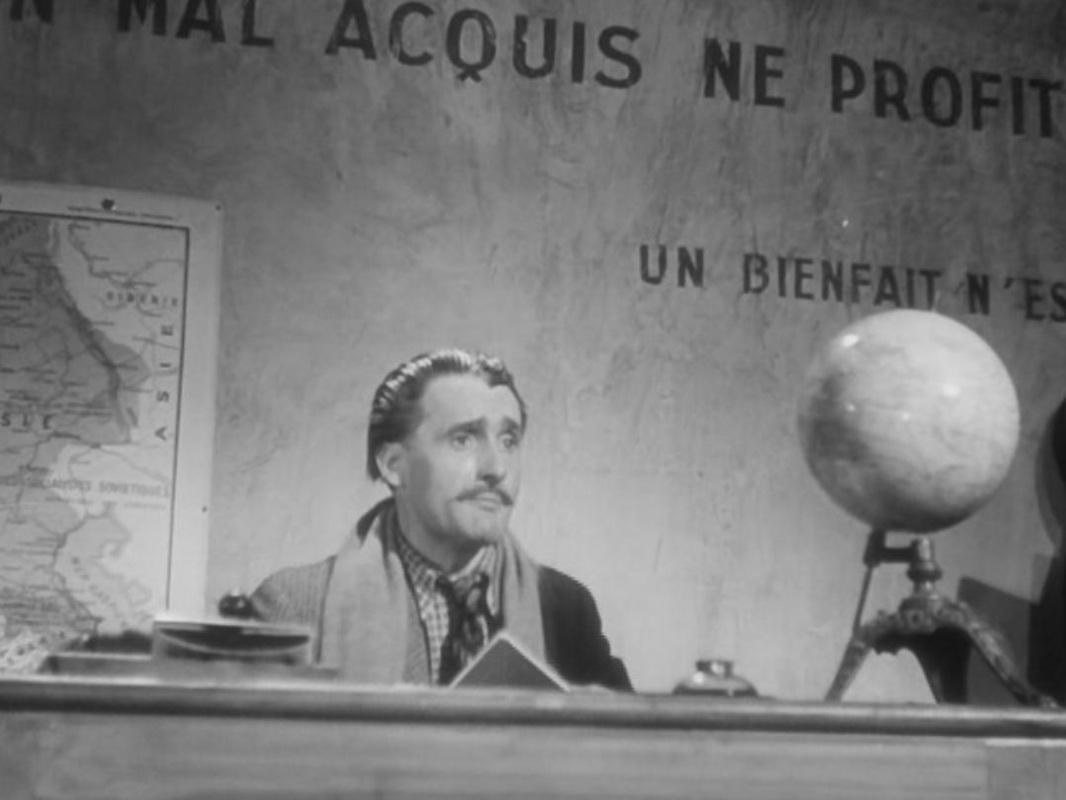 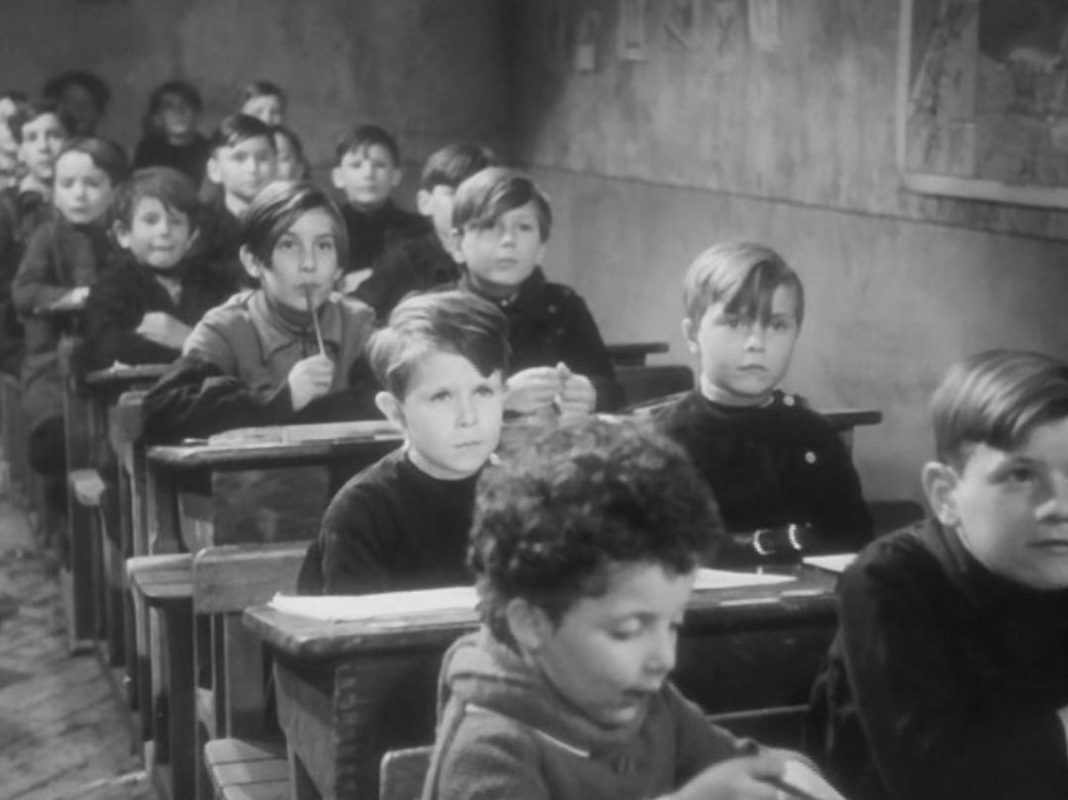 A Vichyist context is all the more apparent in the subject of the children's lesson. The teacher has put a quotation from La Fontaine on the blackboard: 'Le Travail est un trésor' (work is a treasure). La Fontaine's phrase (from 'Le Laboureur et ses enfants') looks like an affirmation of Vichy values ('Travail Famille Patrie'), especially when framed with a map of France, but the fact that the phrase comes from a fable should invite the reader to read the film also as a fable: 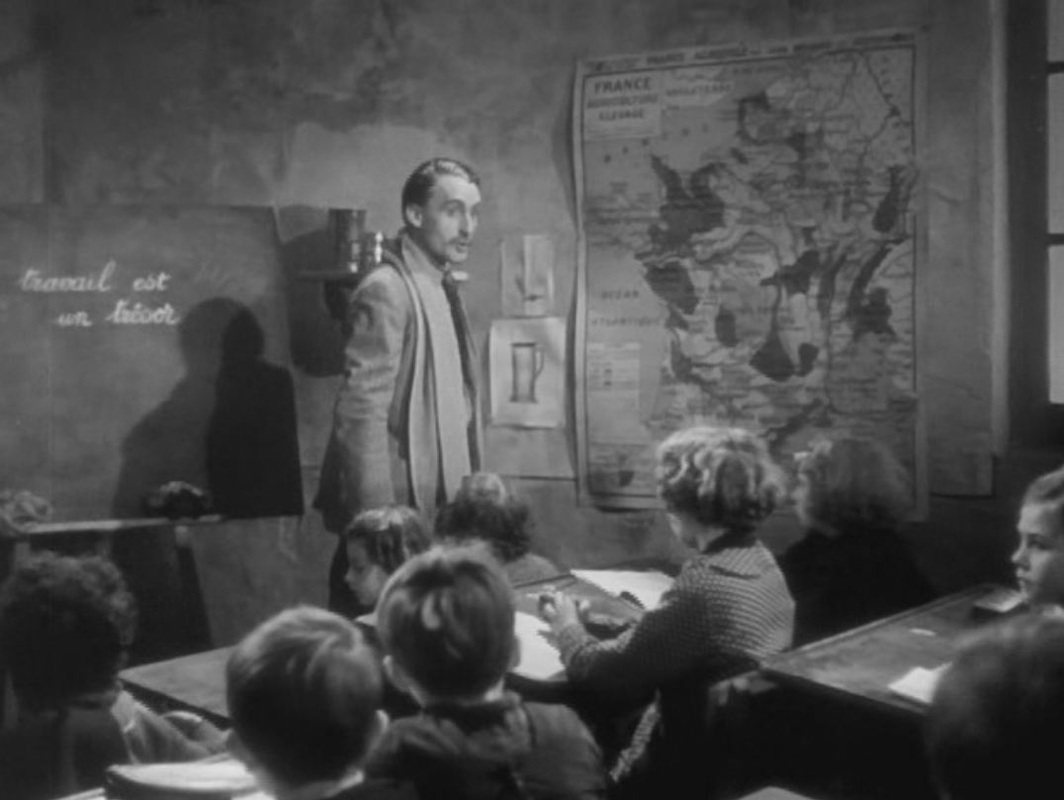 Later, in one of the film's more crudely allegorical moments, a stolen globe slips from a child's arms and rolls away to smash against a tree. Later still, and beyond allegory, the death of Harry Baur under torture by the Gestapo makes it difficult for us not to read the films he made under the Occupation as emblems of resistance to oppression. 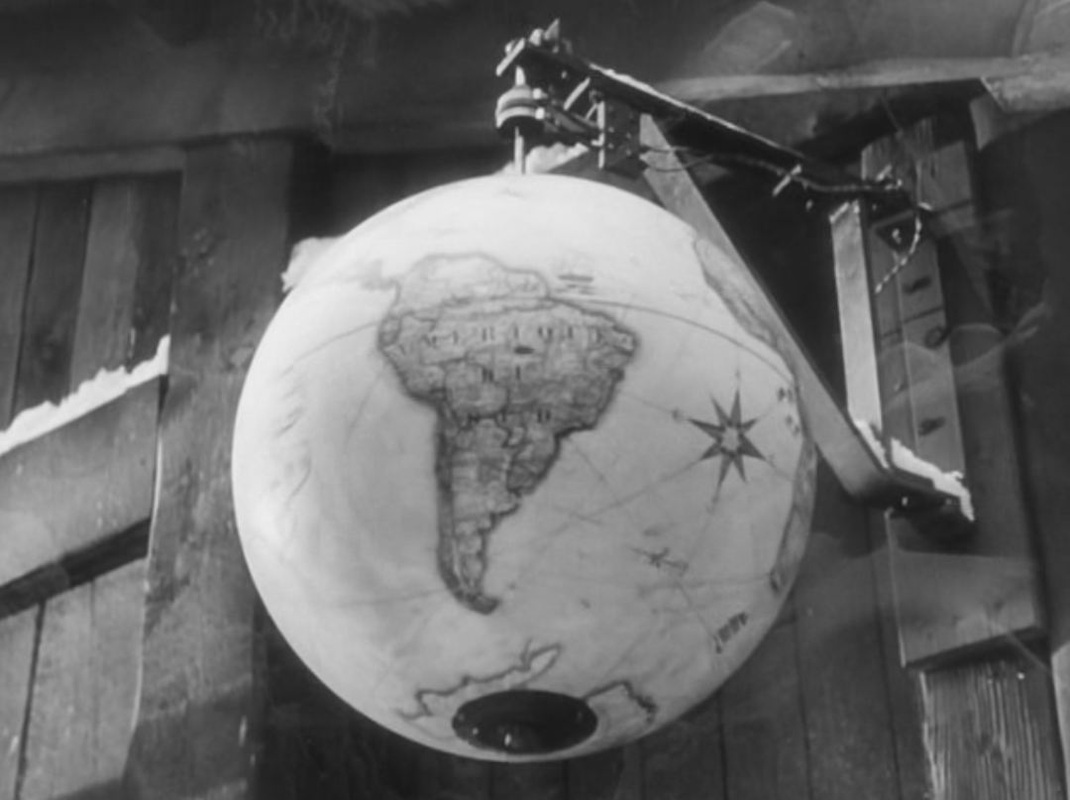 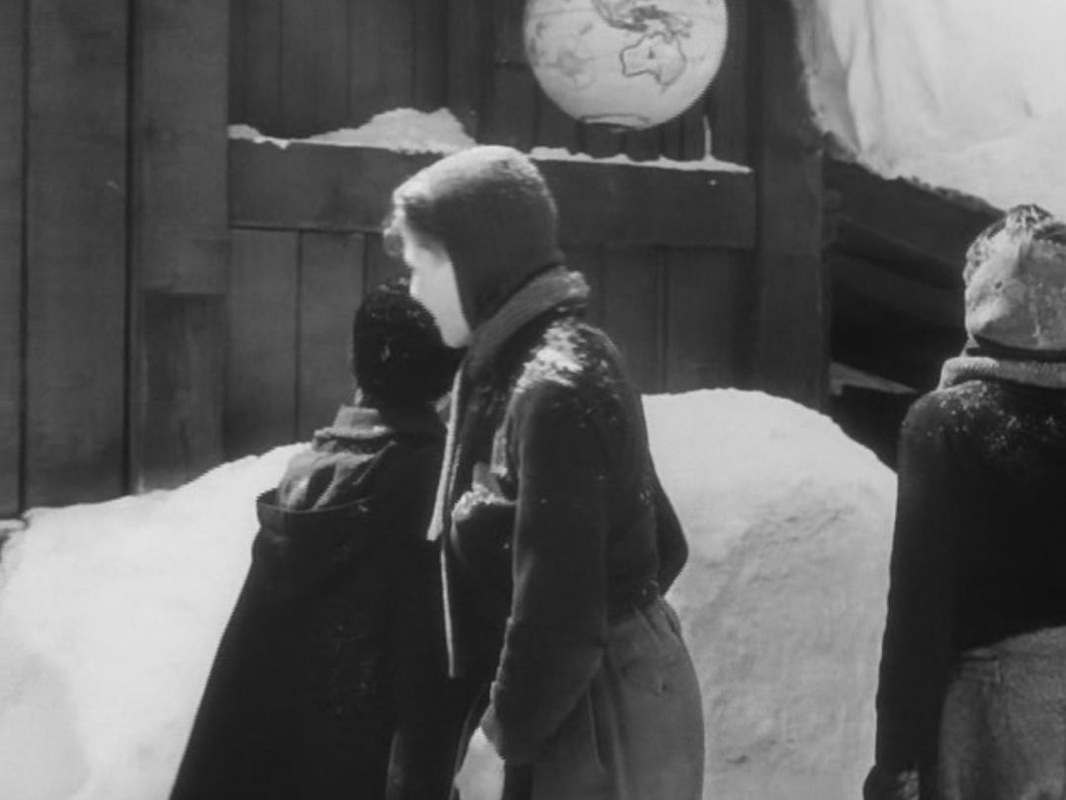 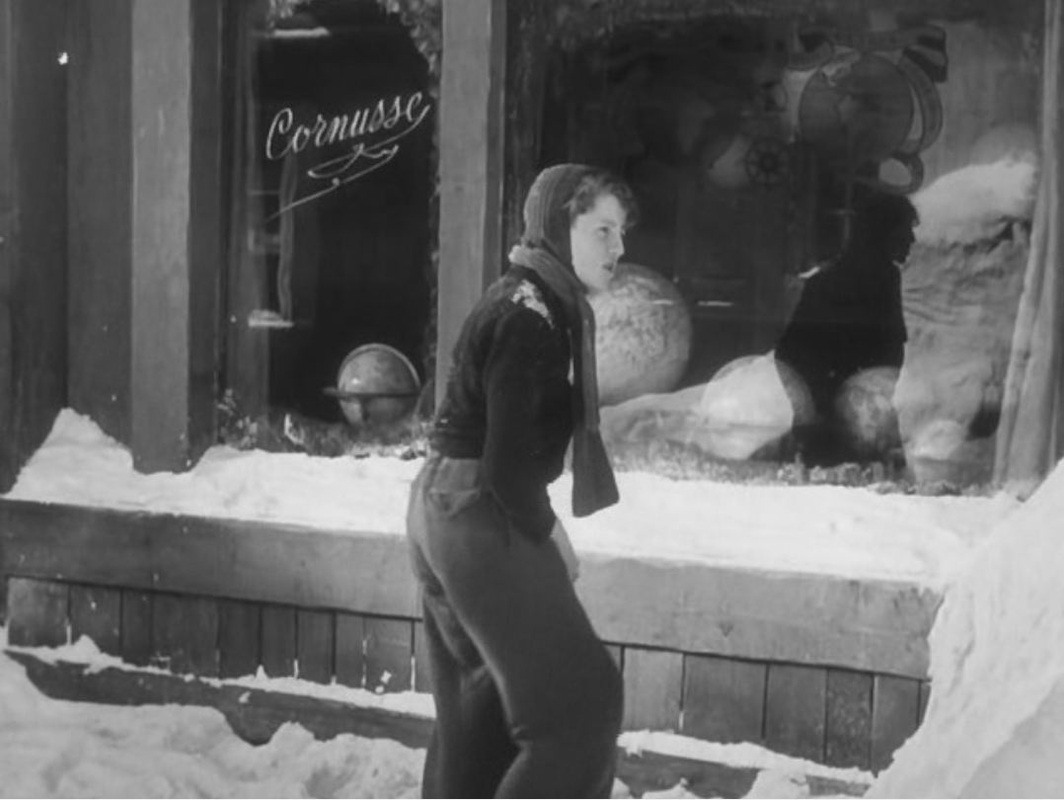 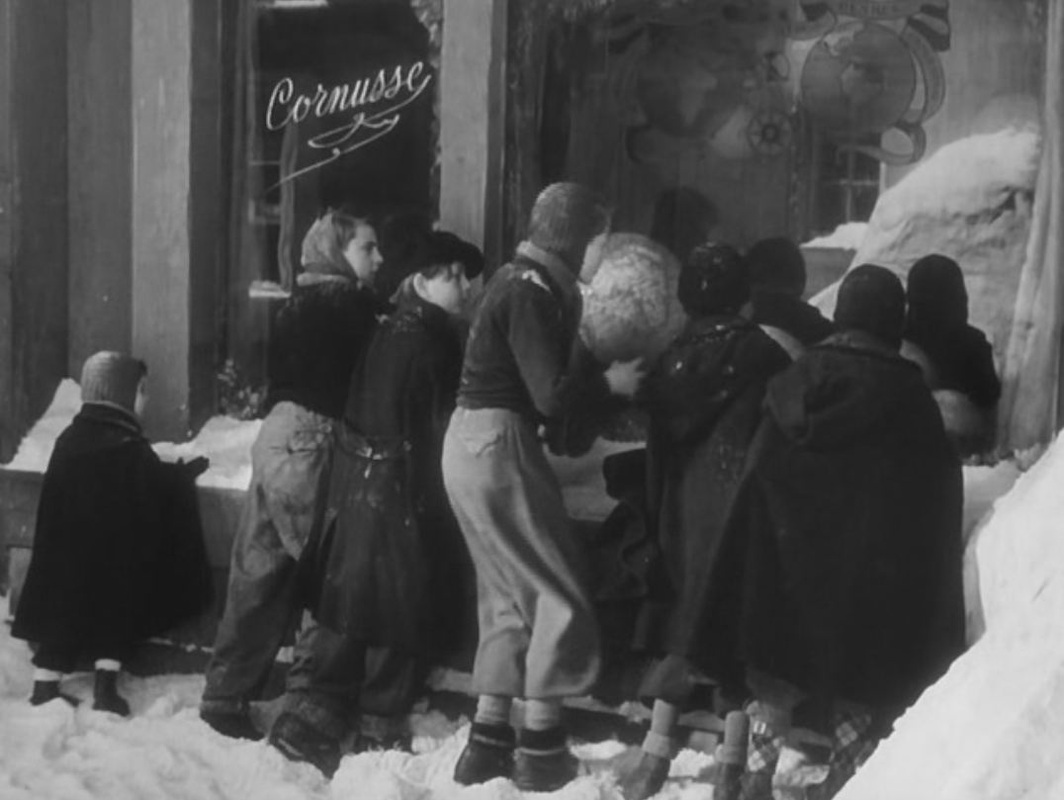 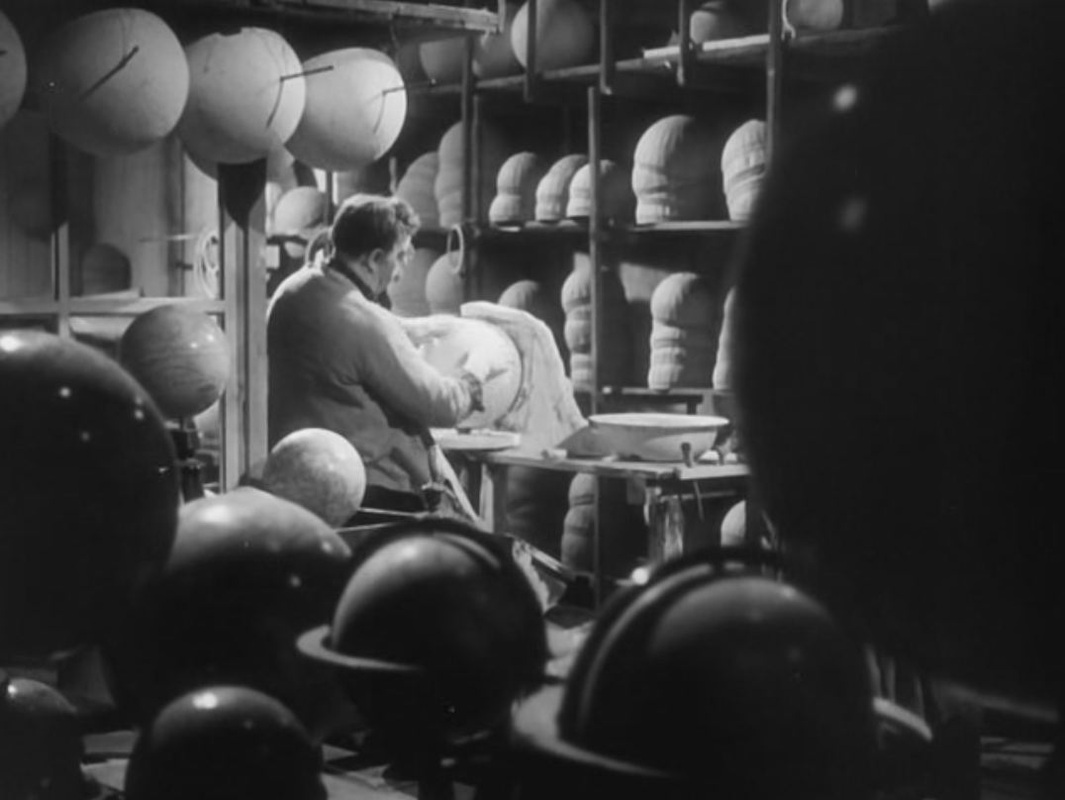 In an earlier post (here) I had speculated that a scene in Edward Scissorhands held the record for showing the most globes, but it is clearly beaten by Cornusse's shop in L'Assassinat du Père Noël. 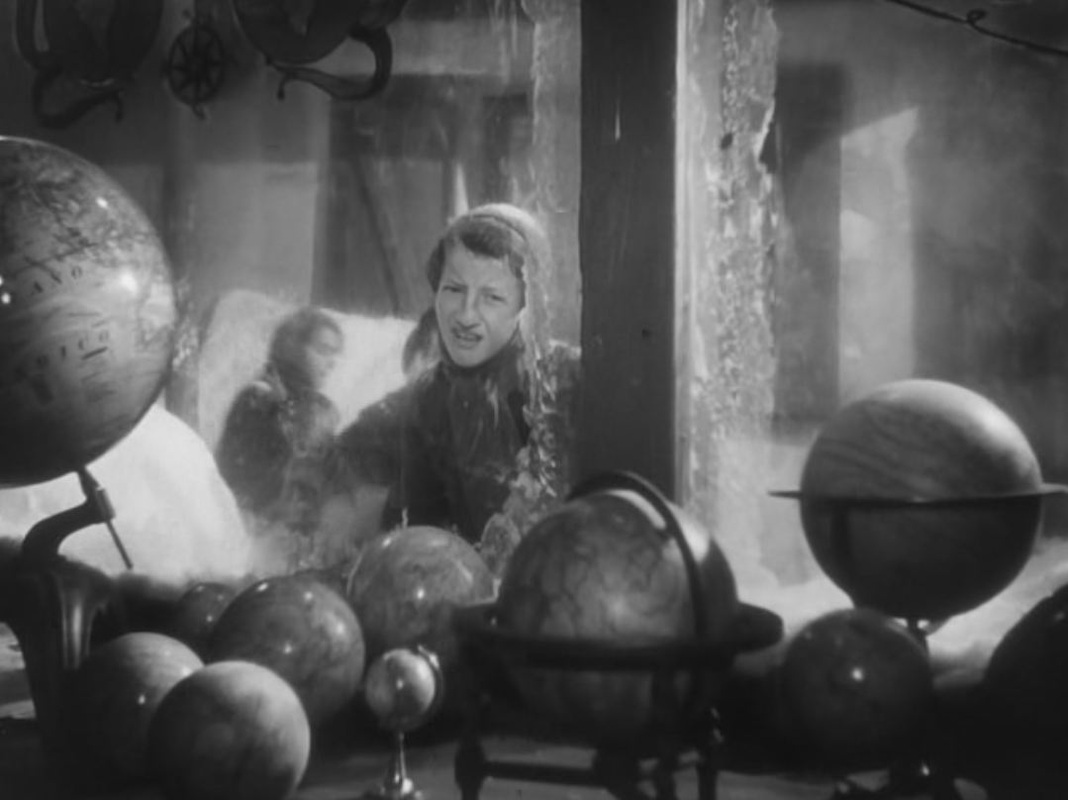 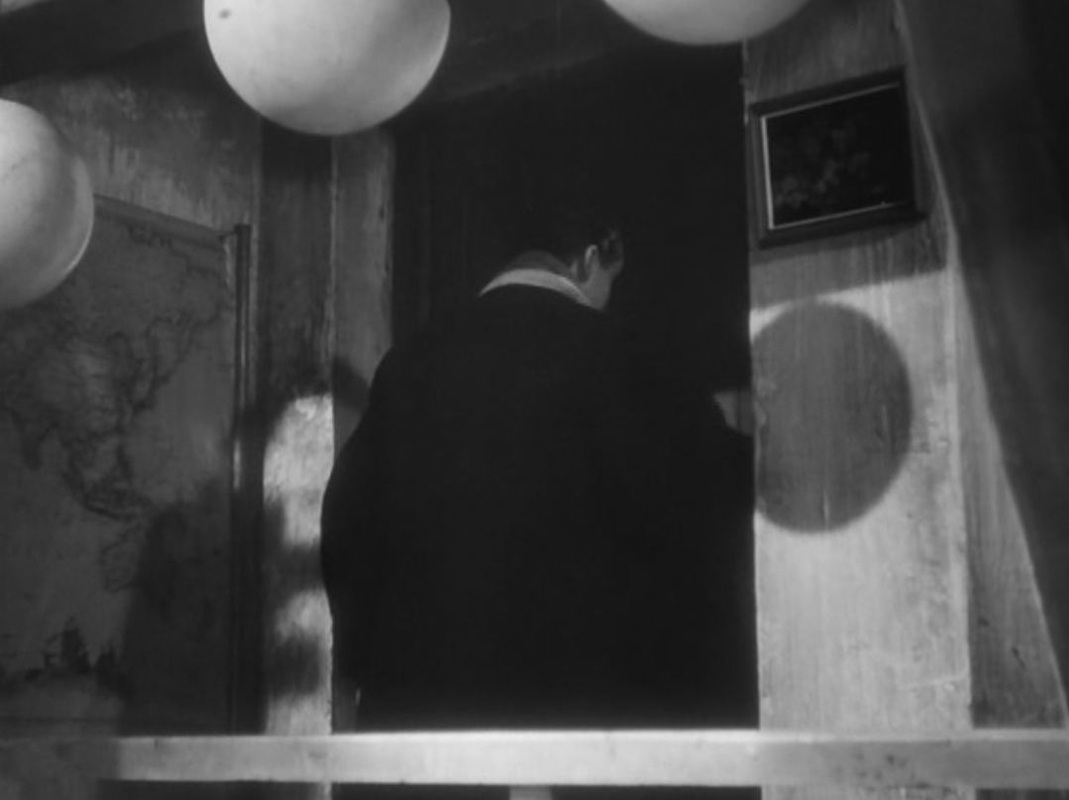 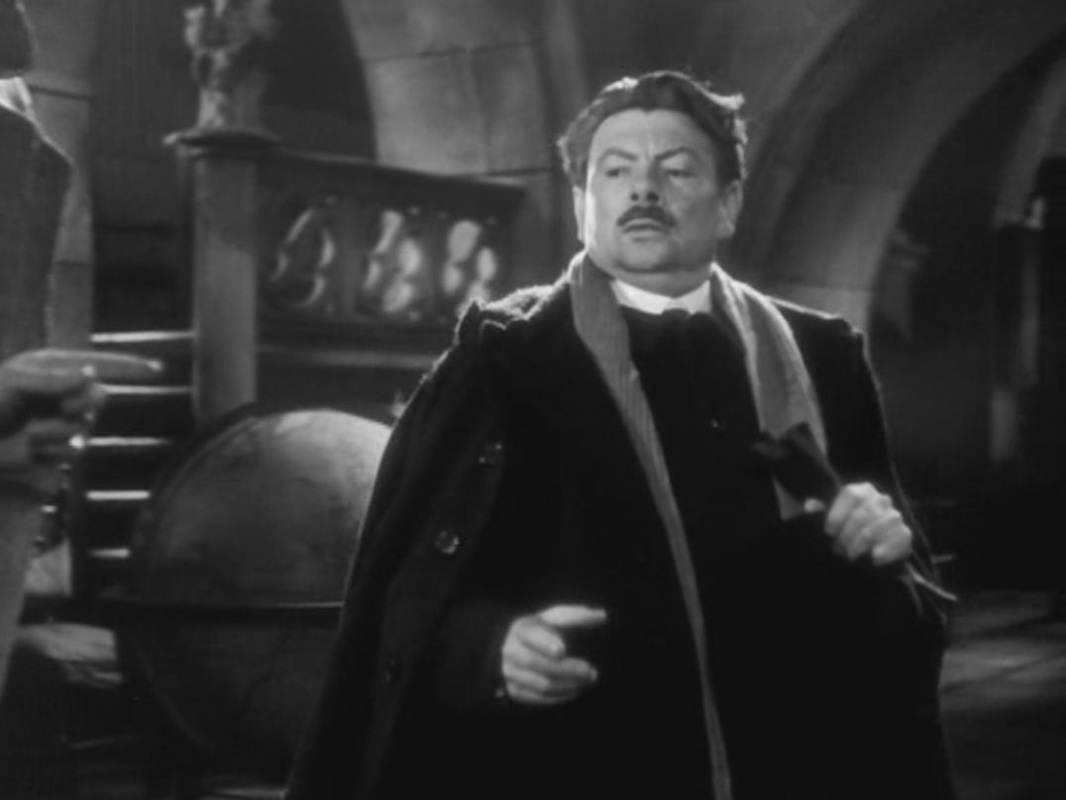 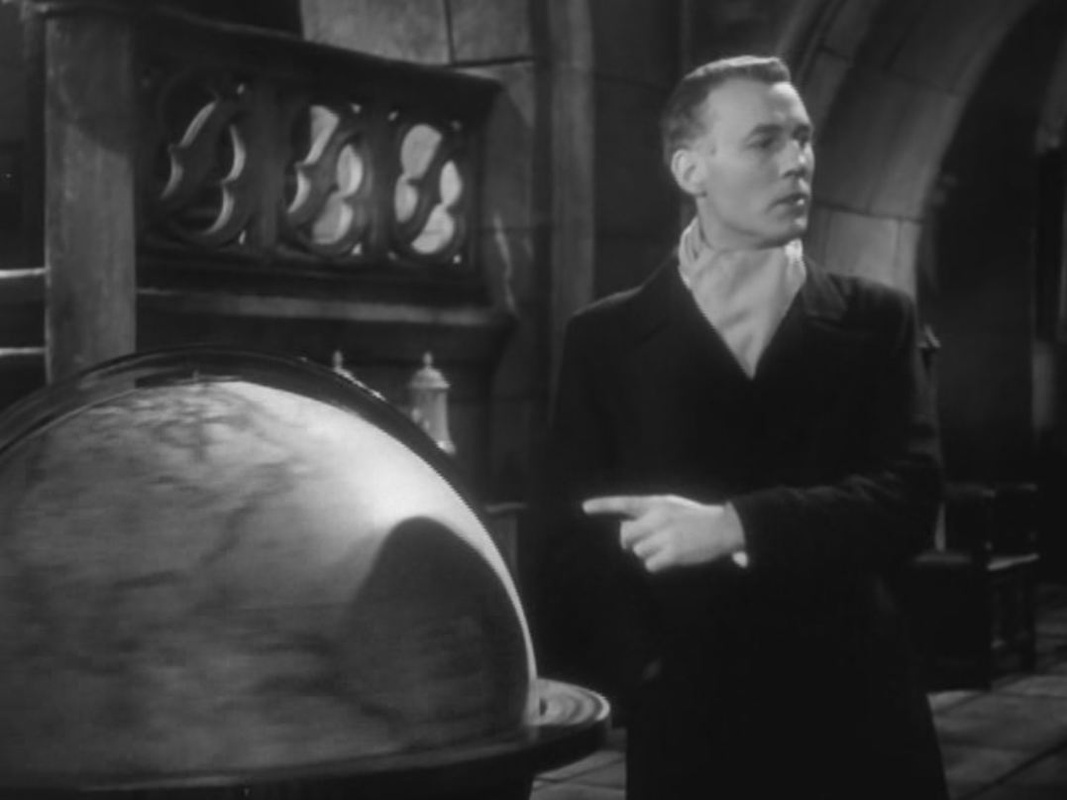 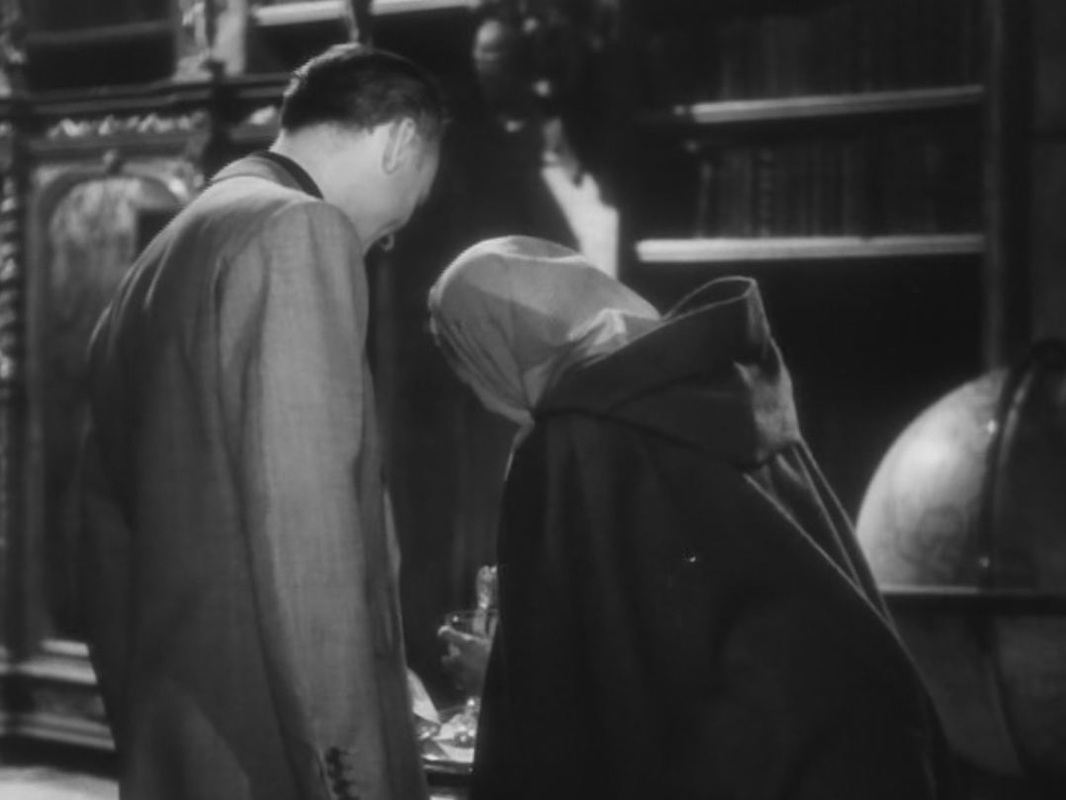 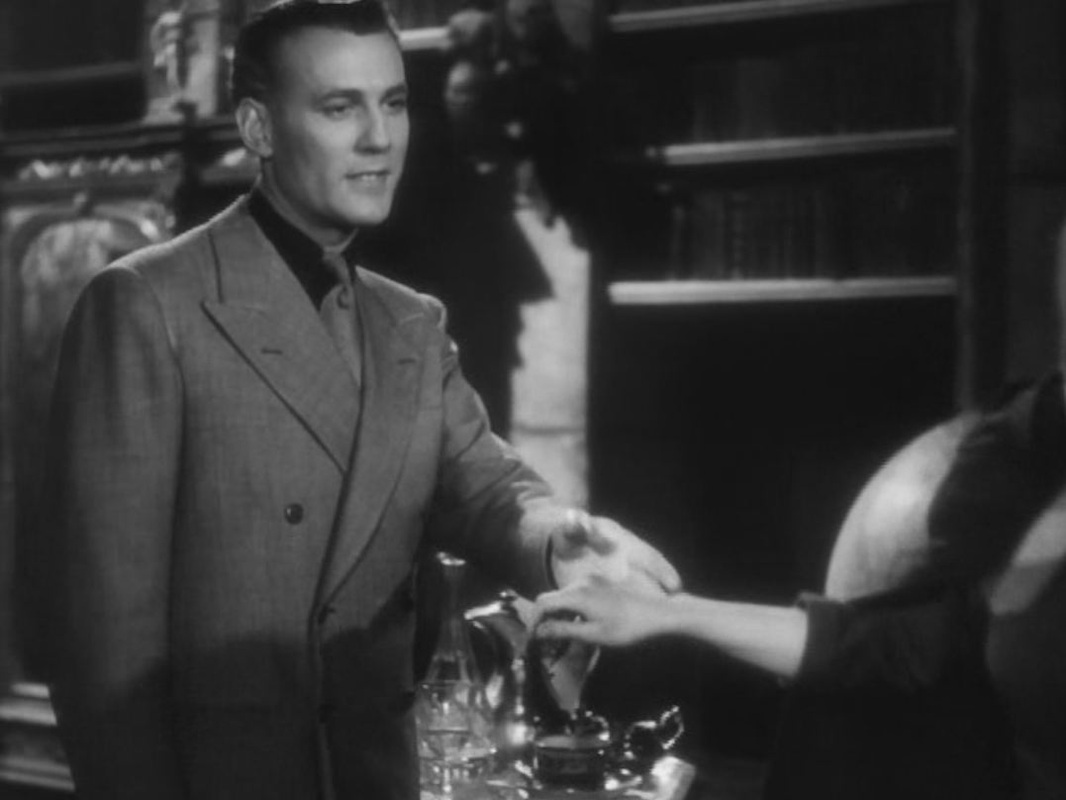 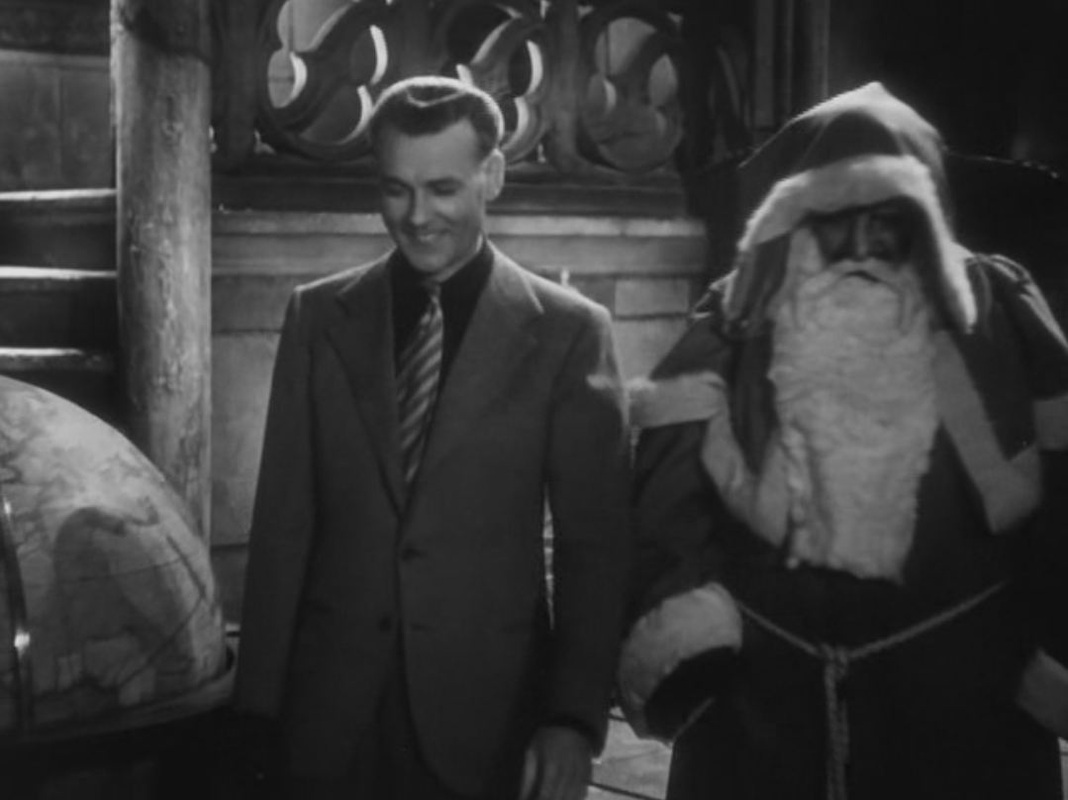 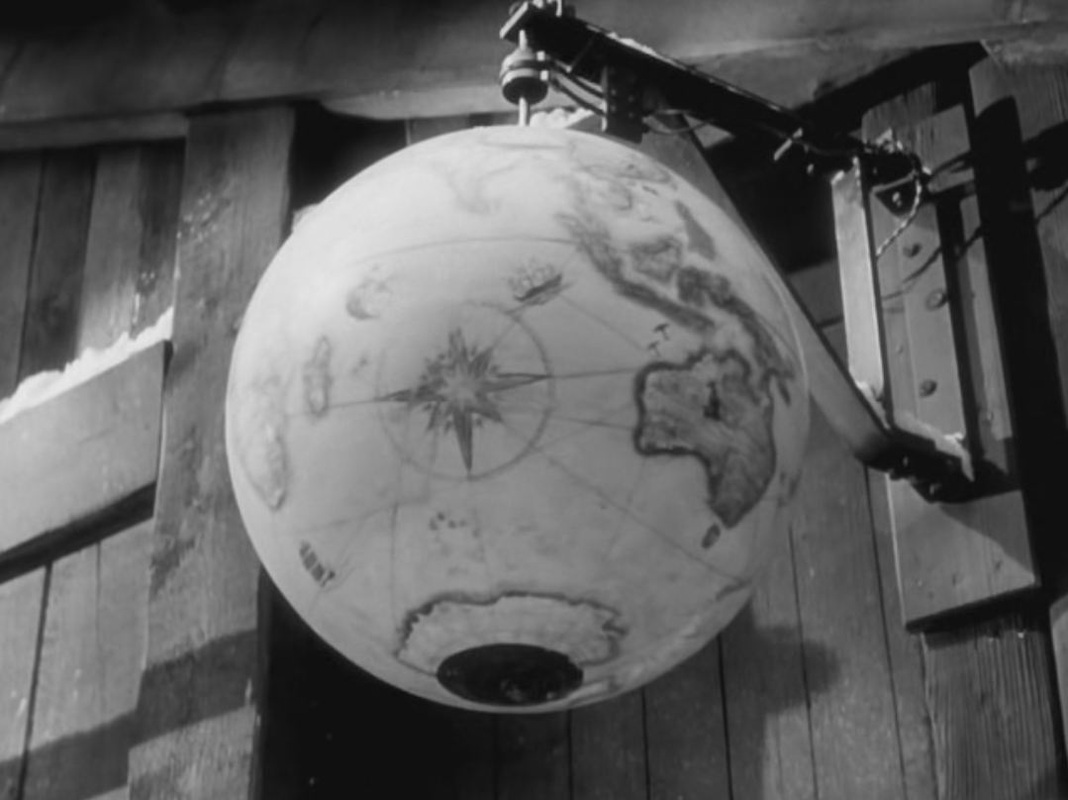 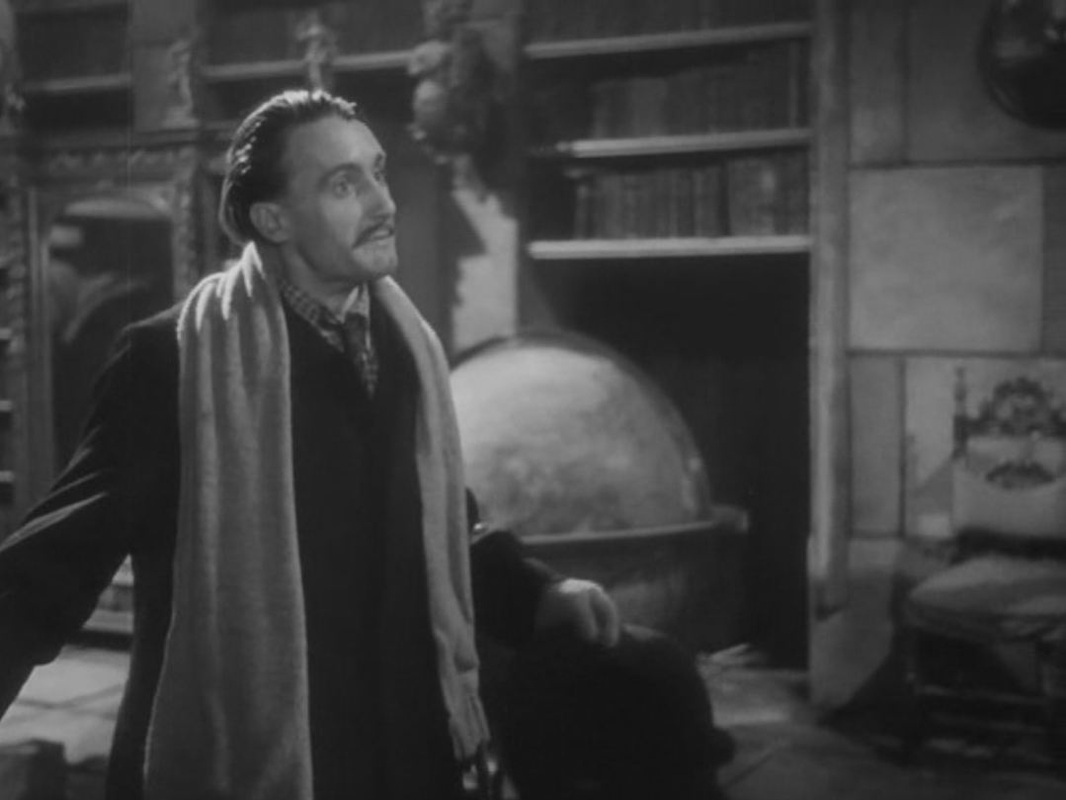 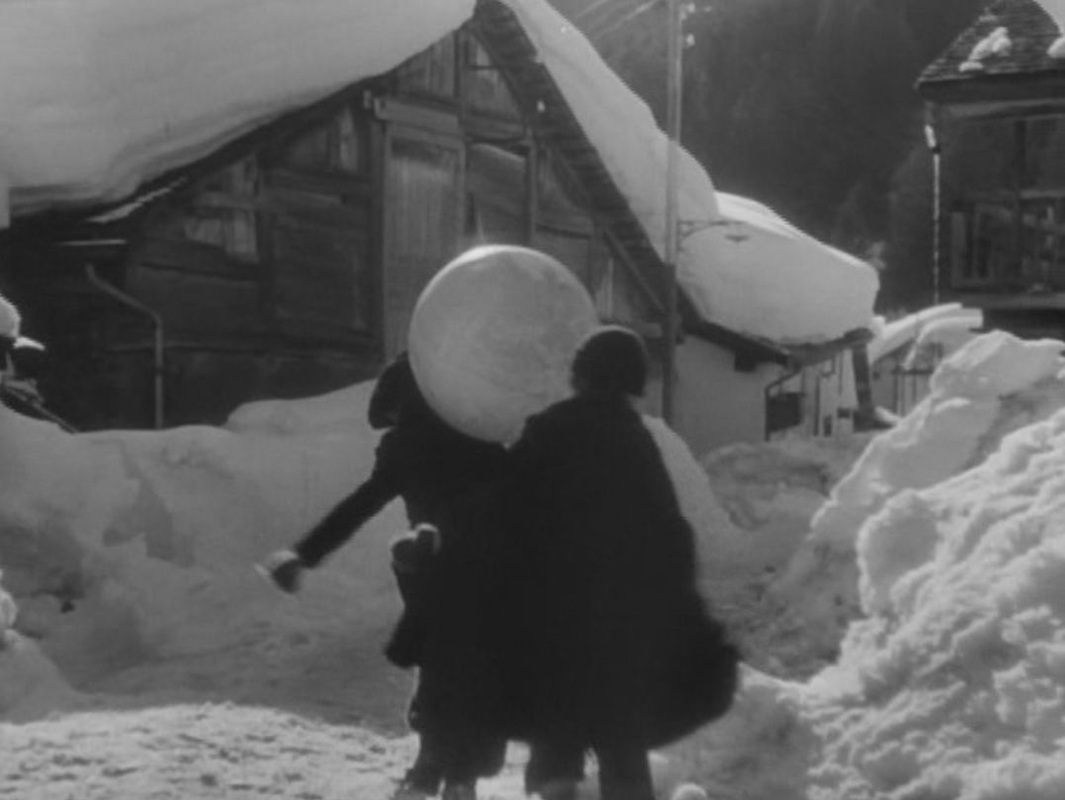 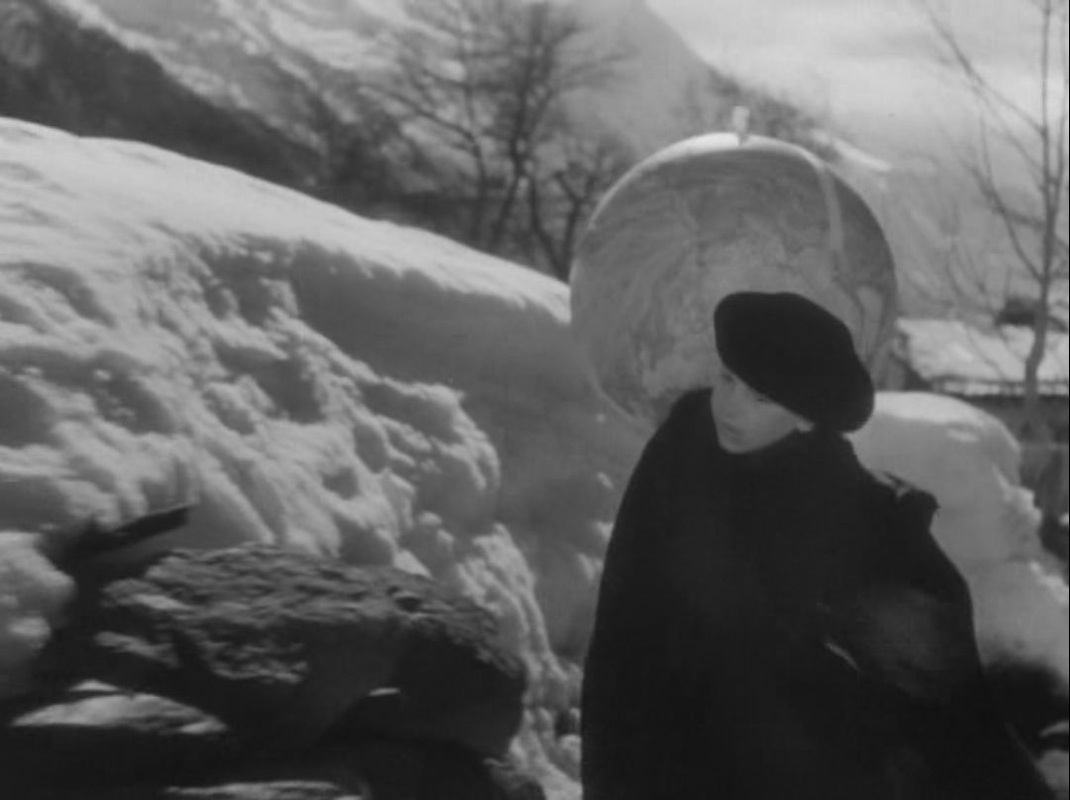 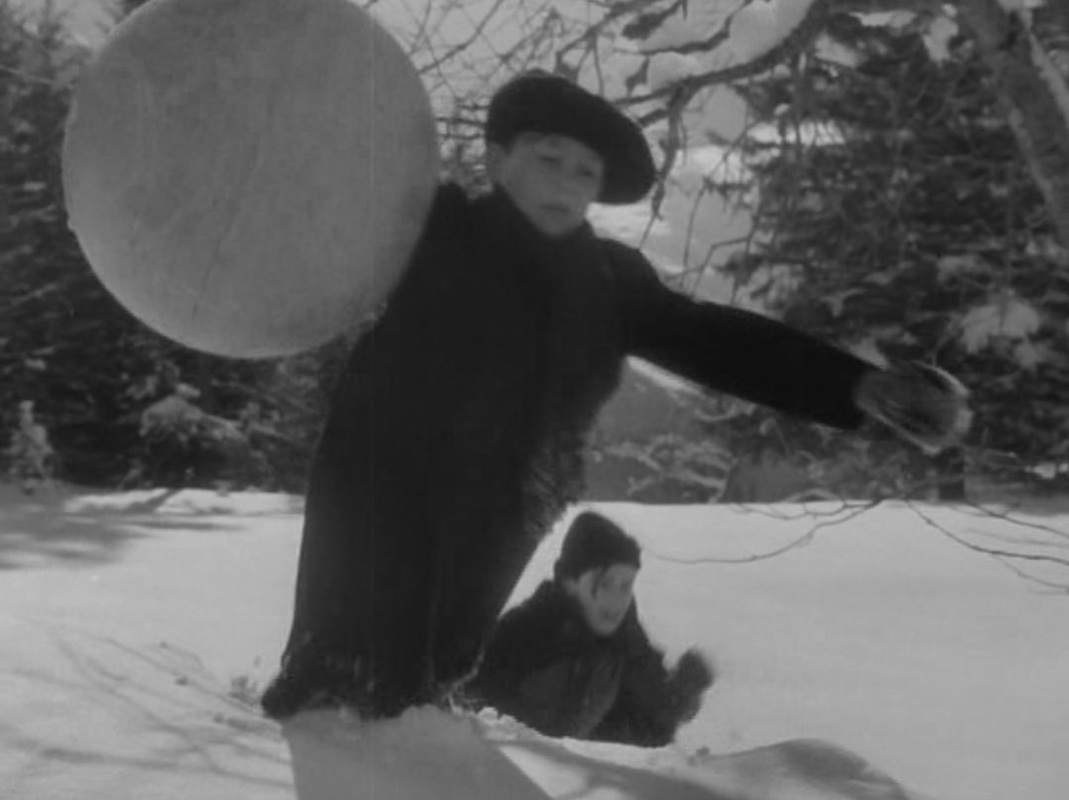 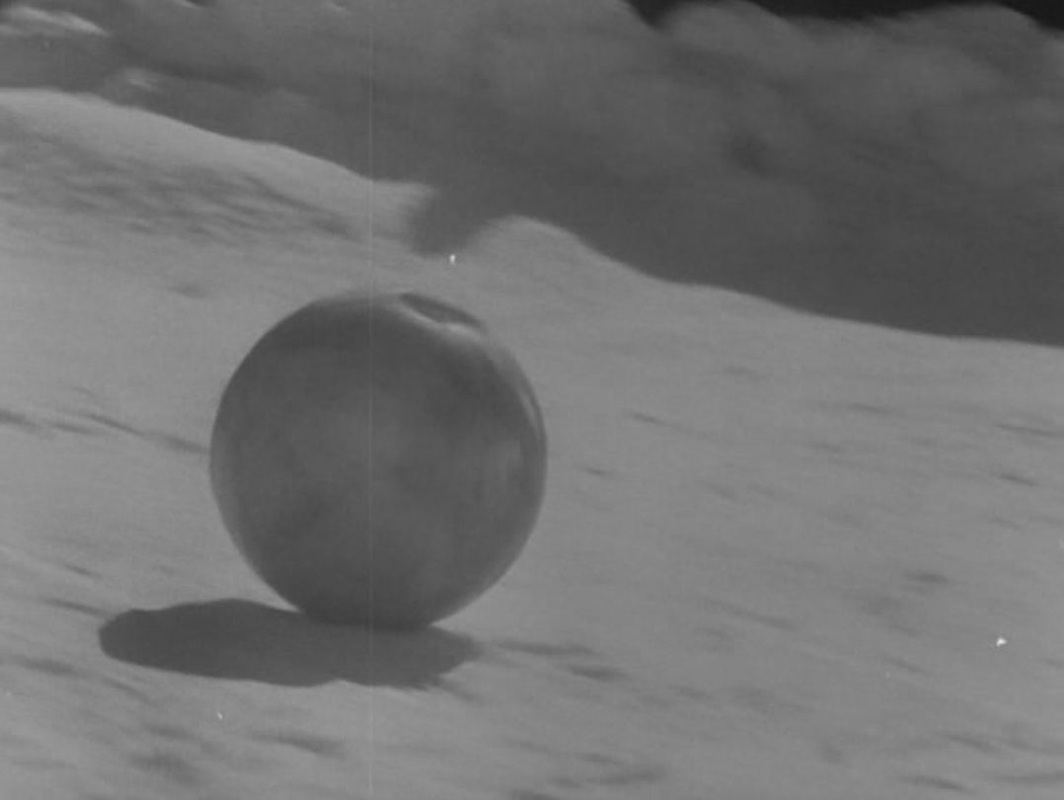 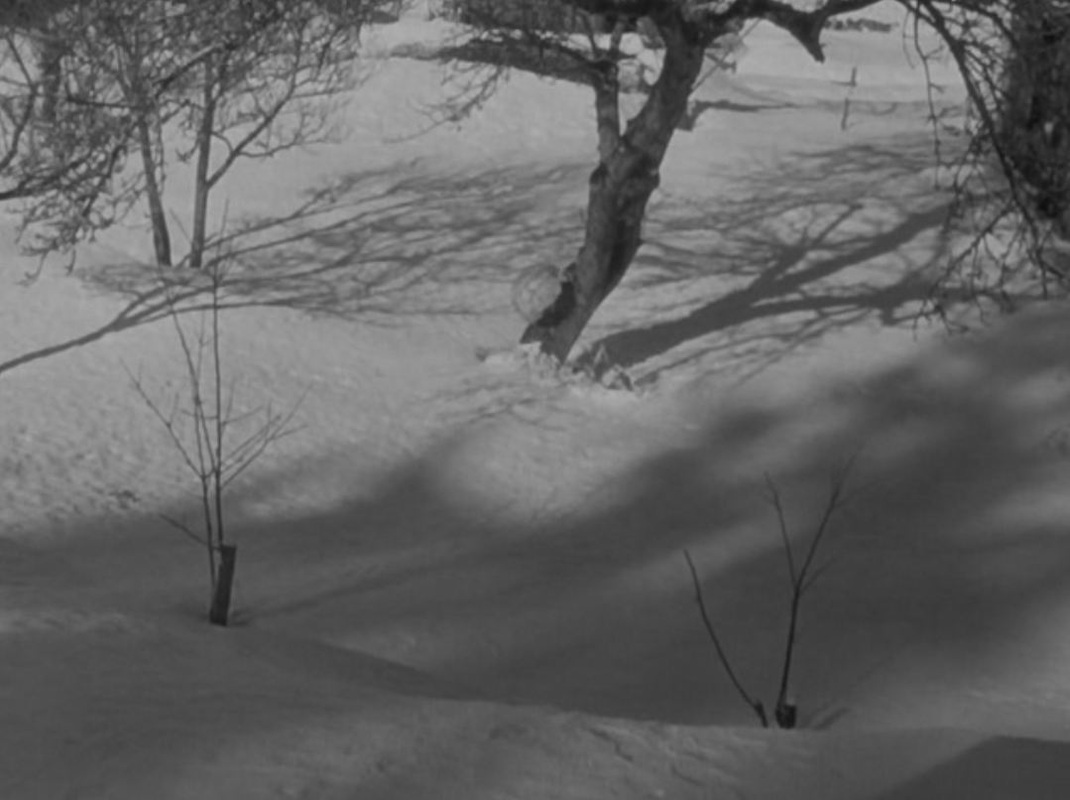 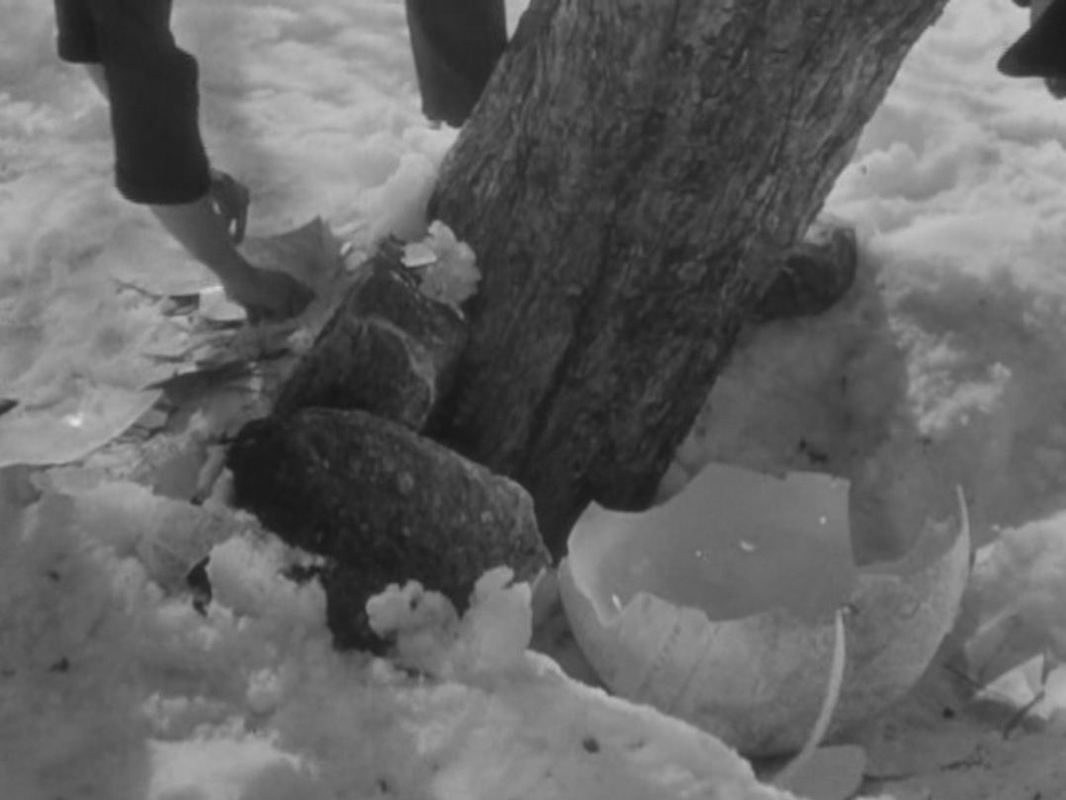 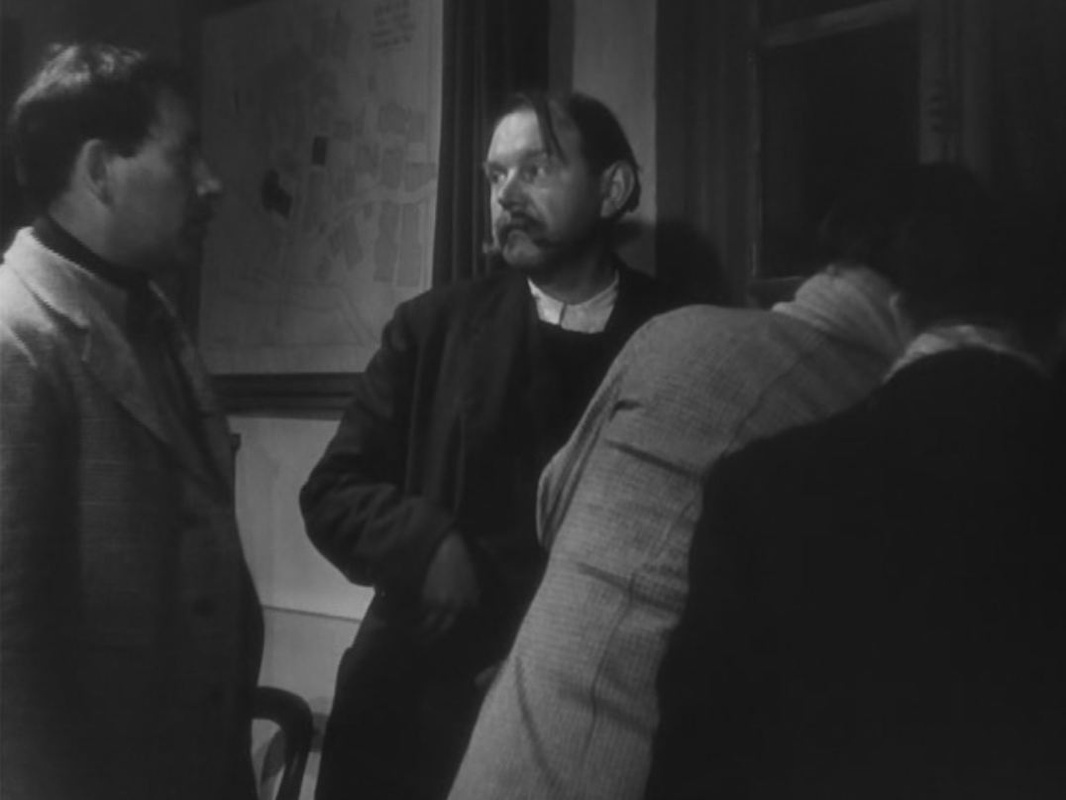 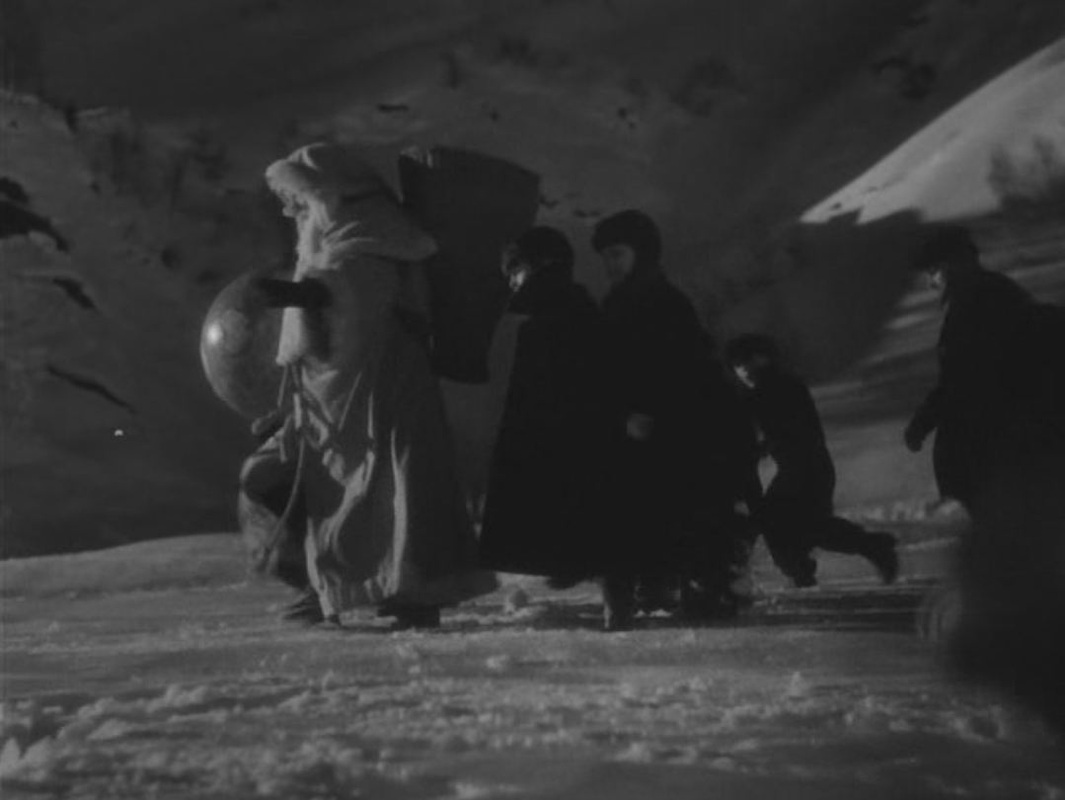 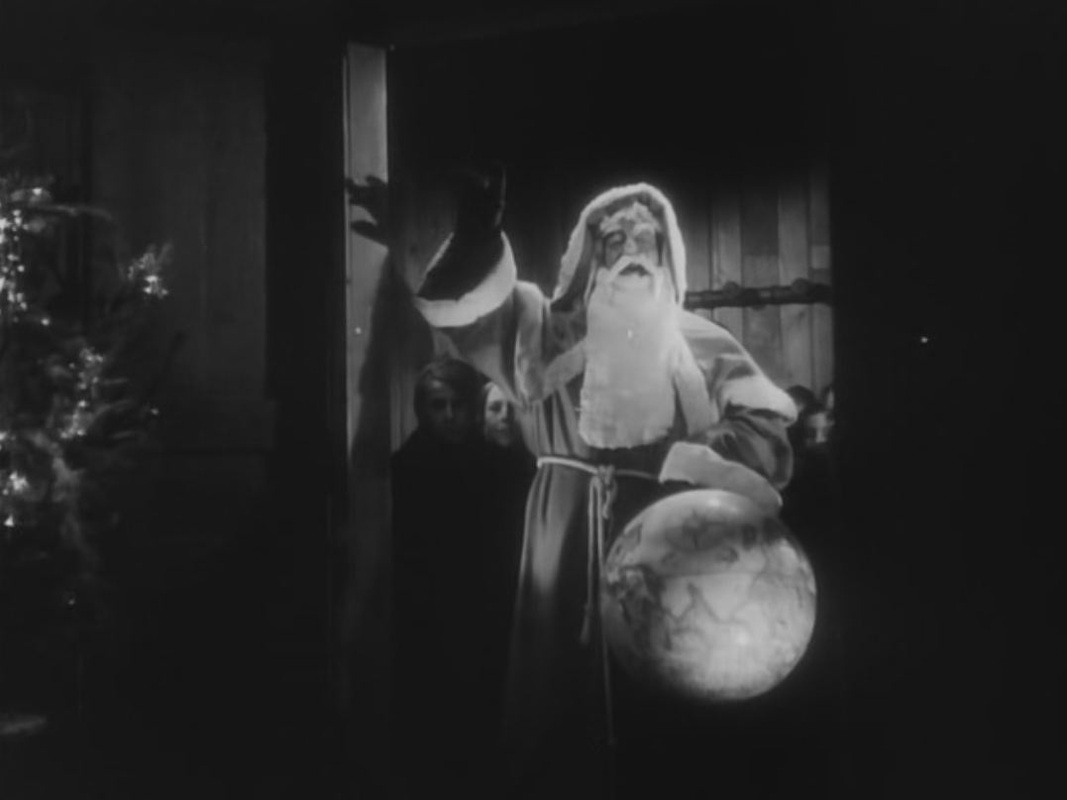 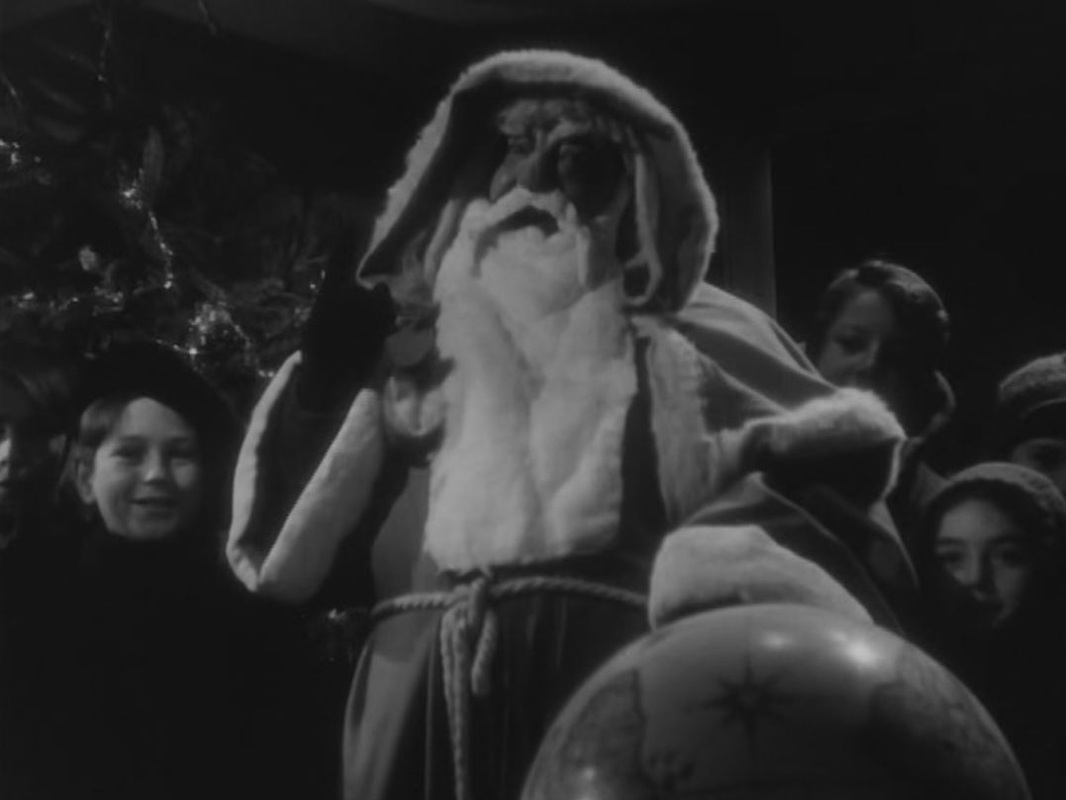 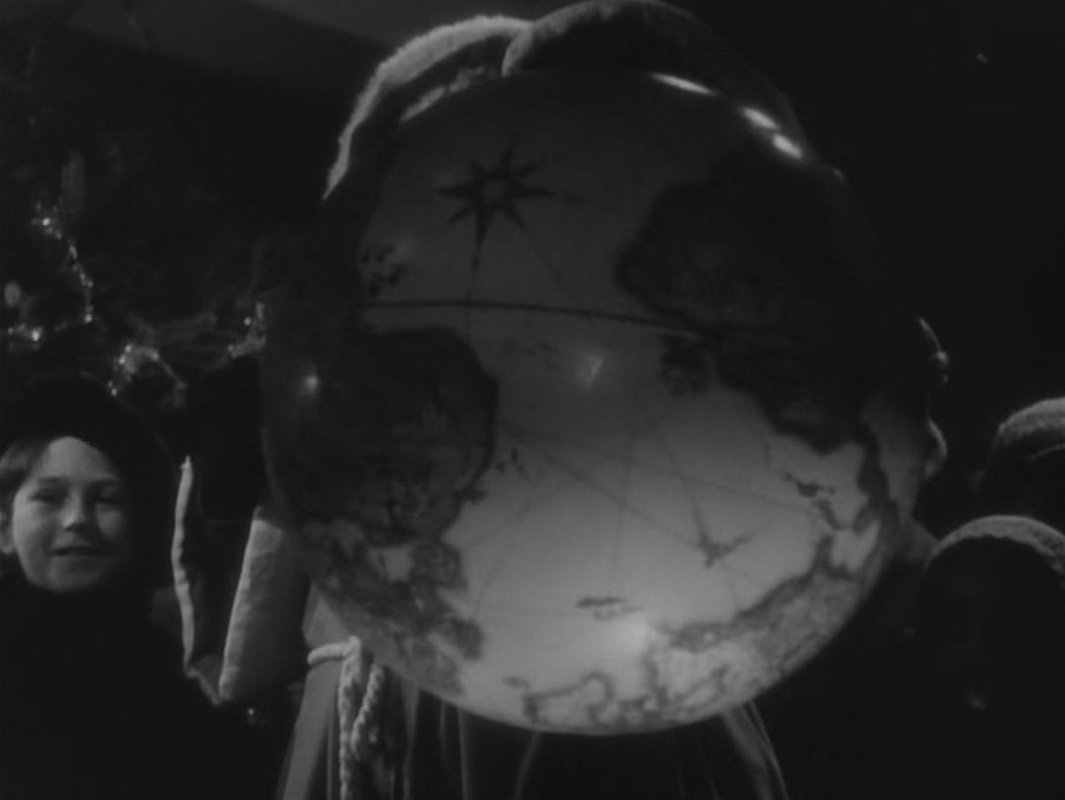 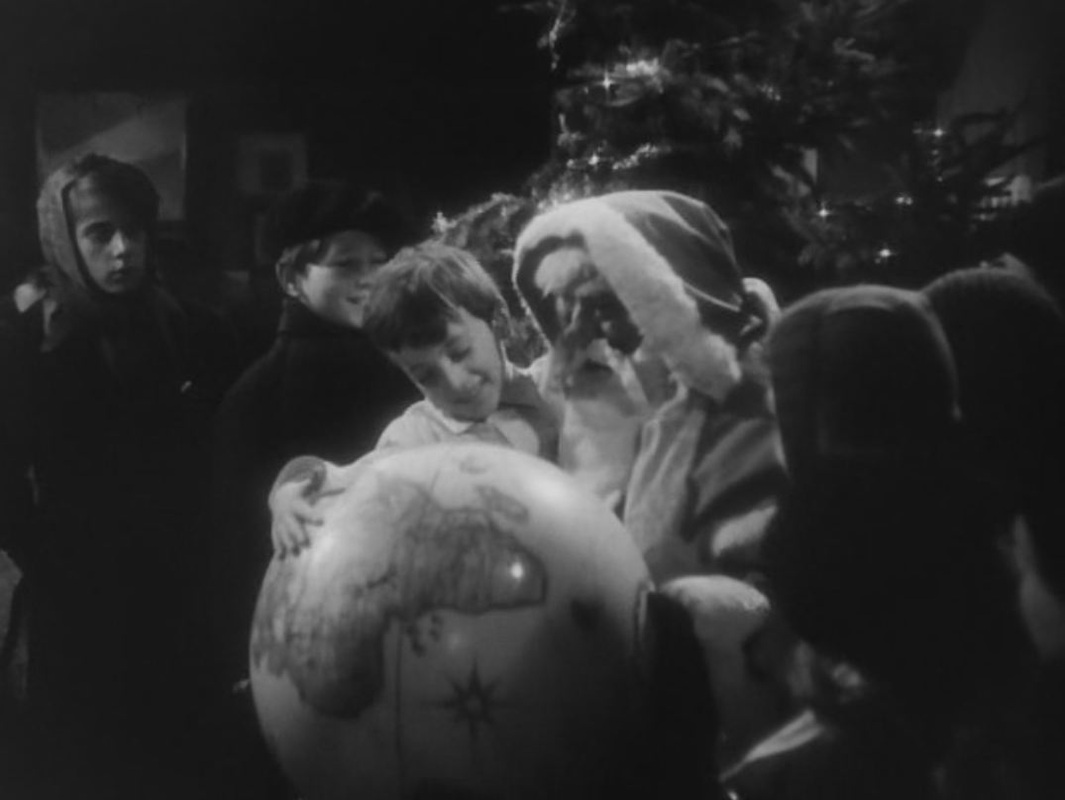 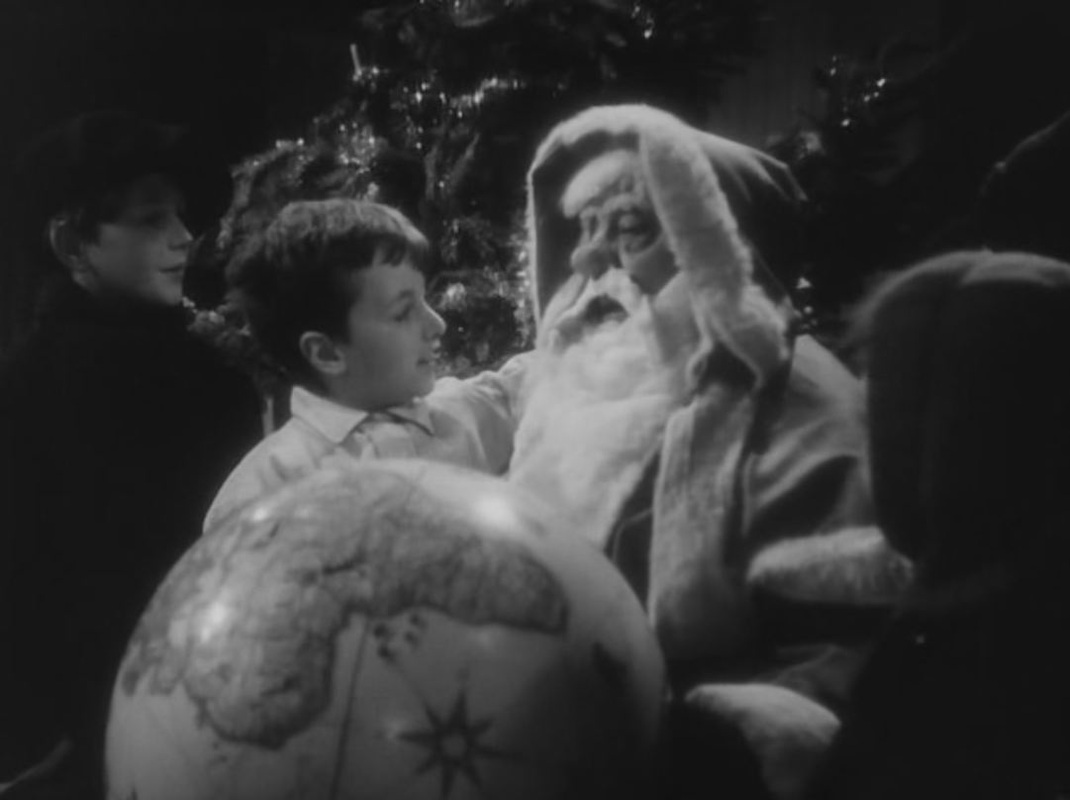 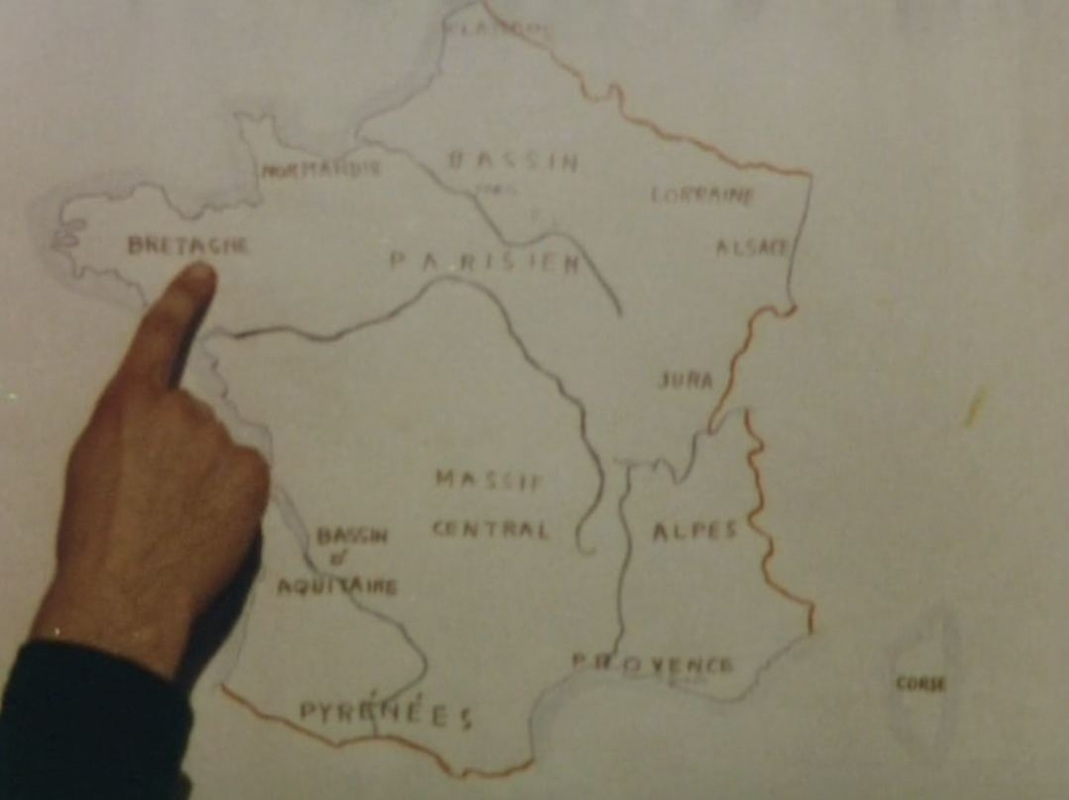 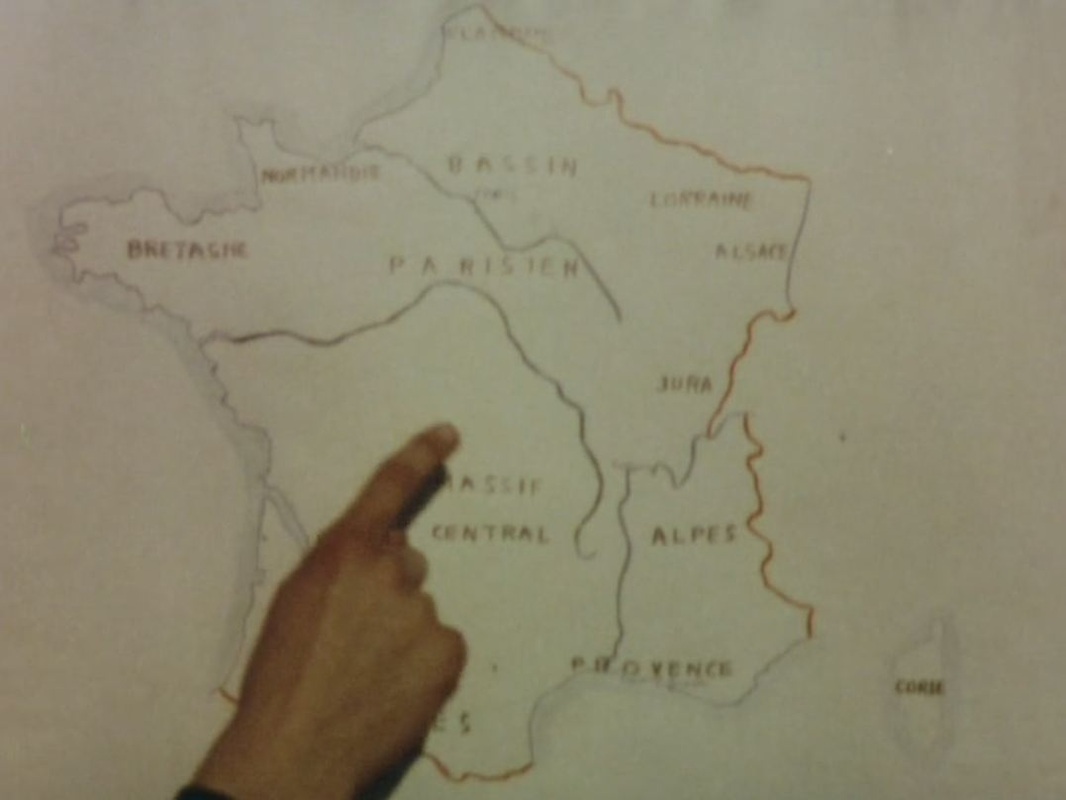 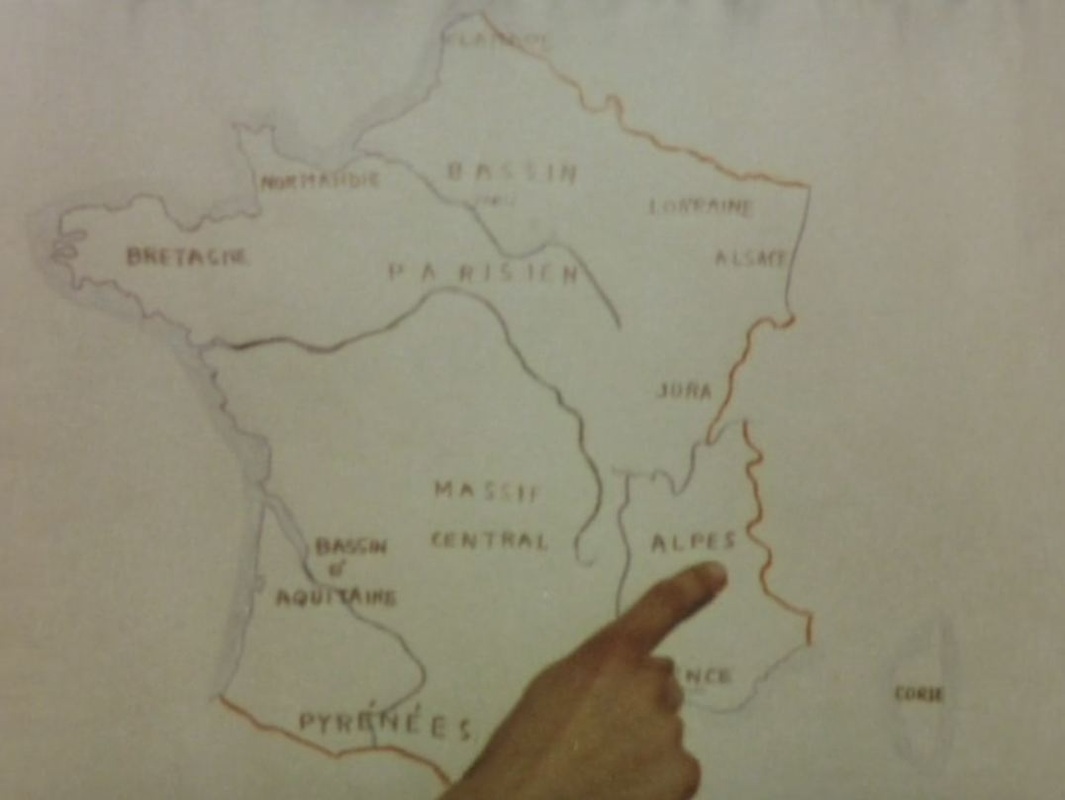 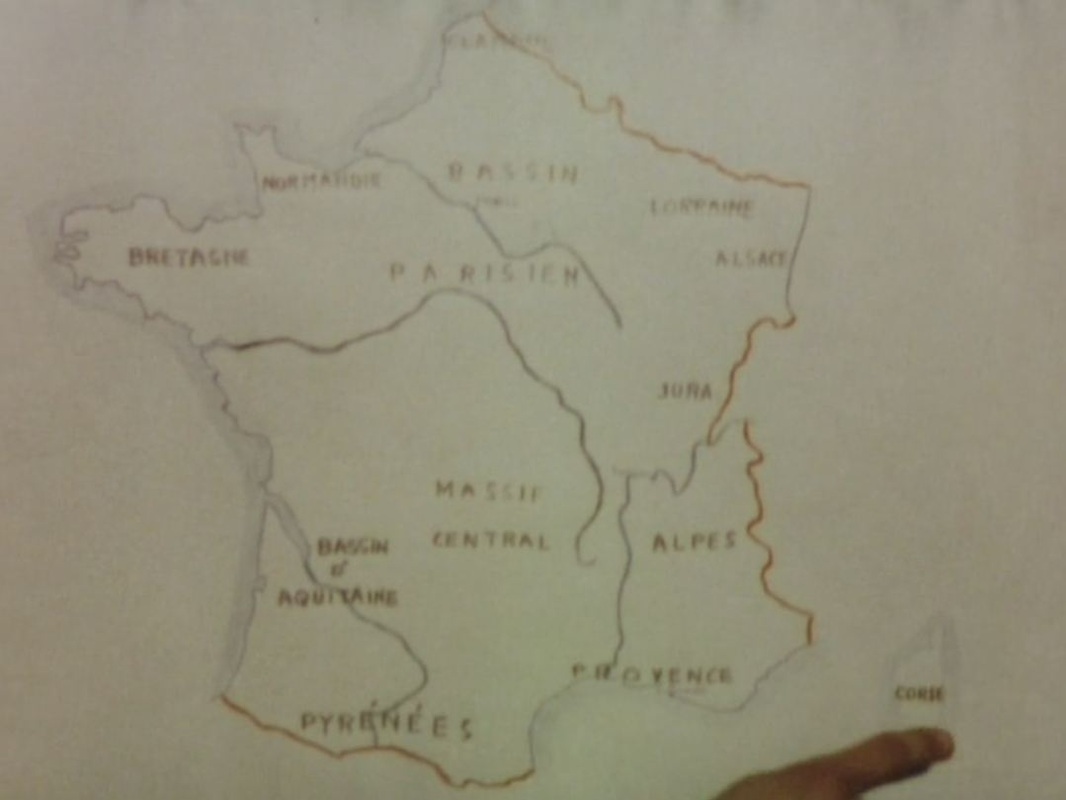 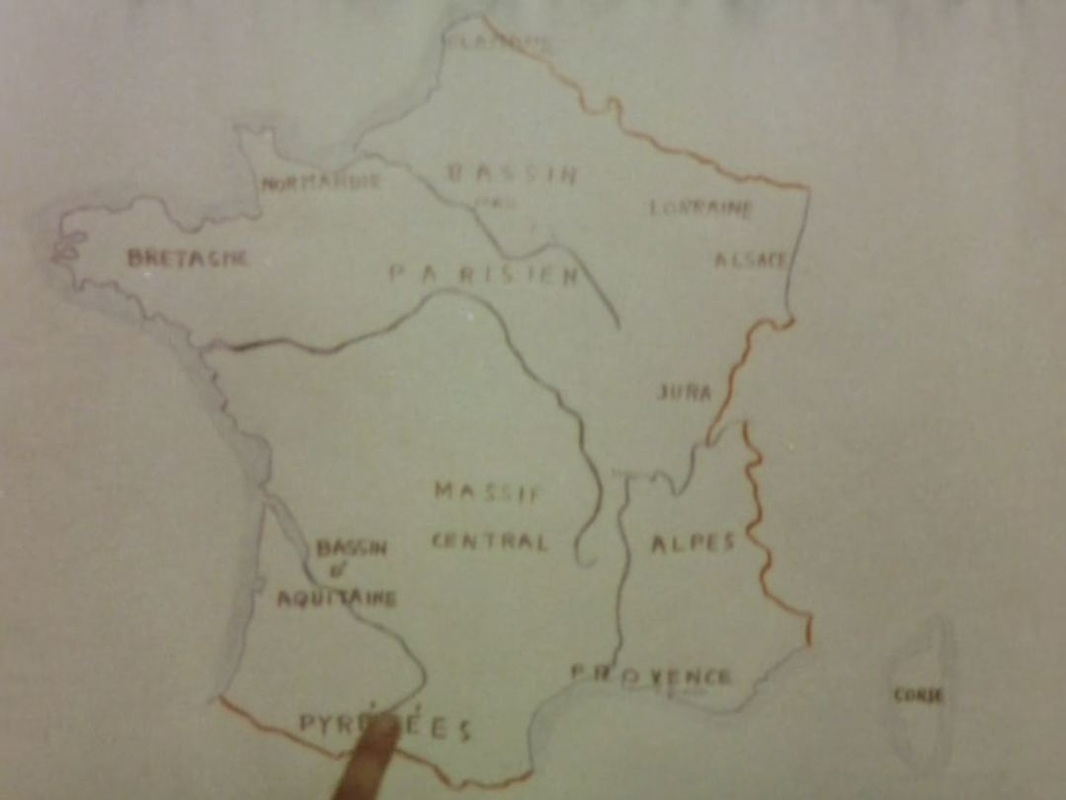 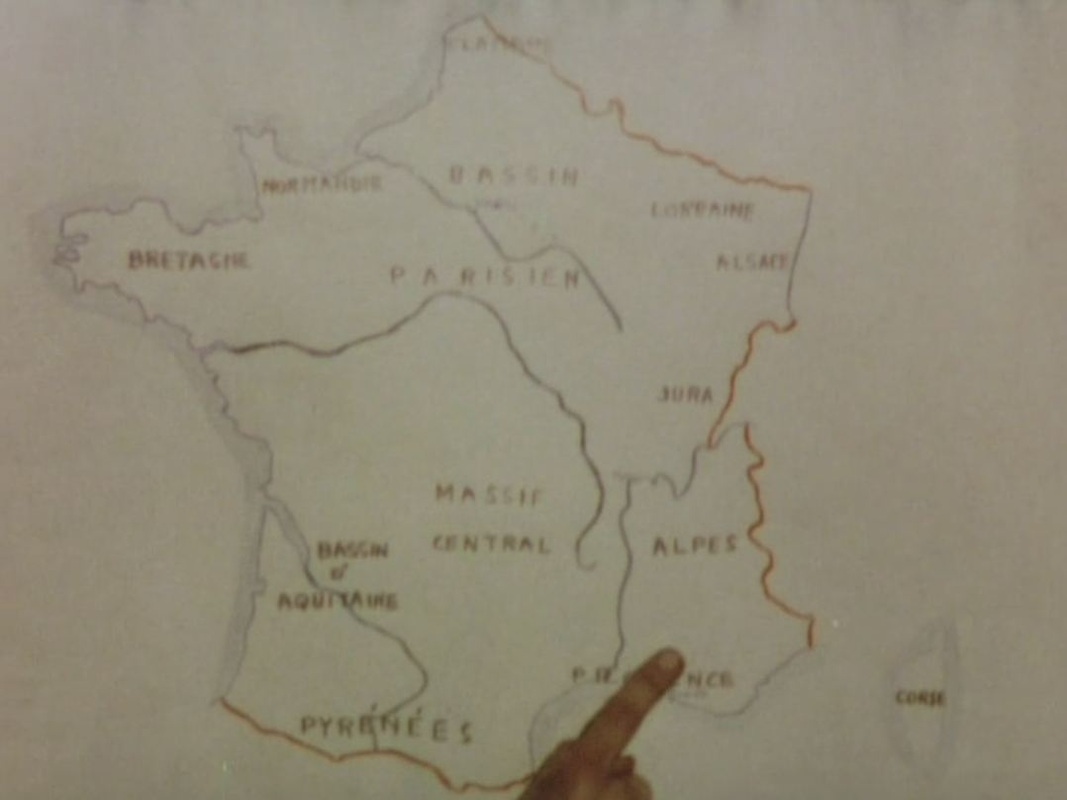 After pointing to relevant locales on the map of France, Moullet's New Wave documentary (reflexive, intertextual, montage-driven, jumpcutting) about abandoned or near-abandoned villages uses regional maps to fix exactly the places filmed, and to illustrate movement from one place to another: 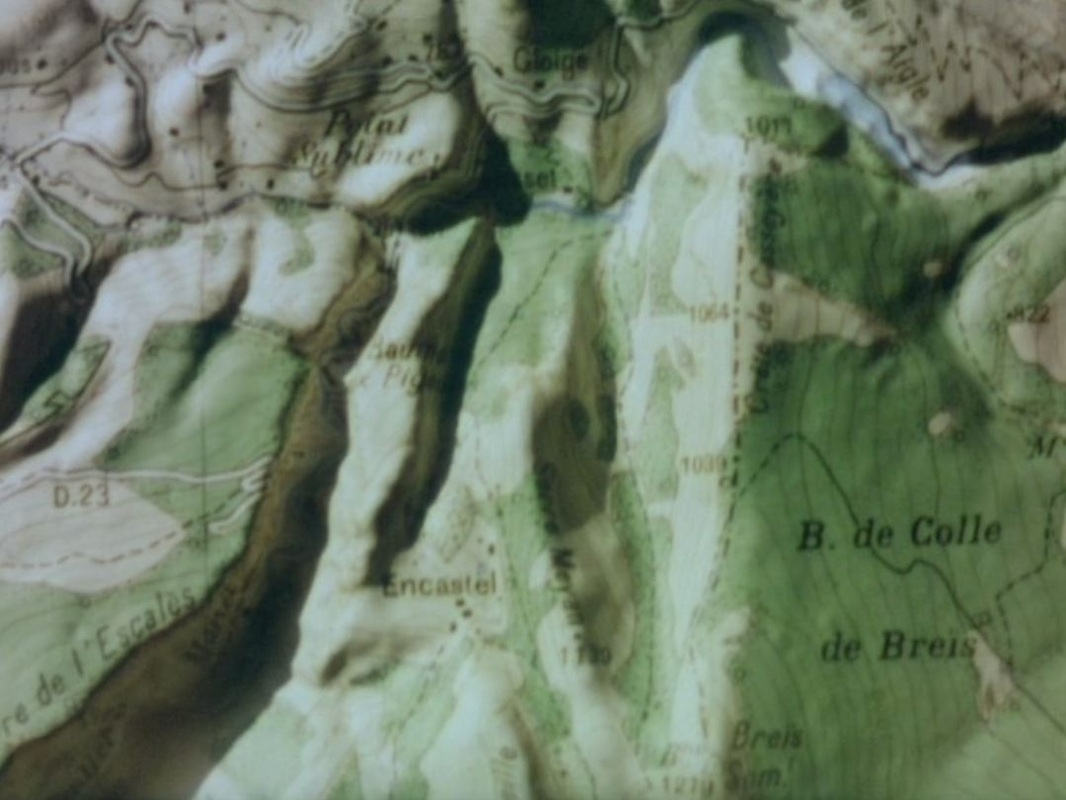 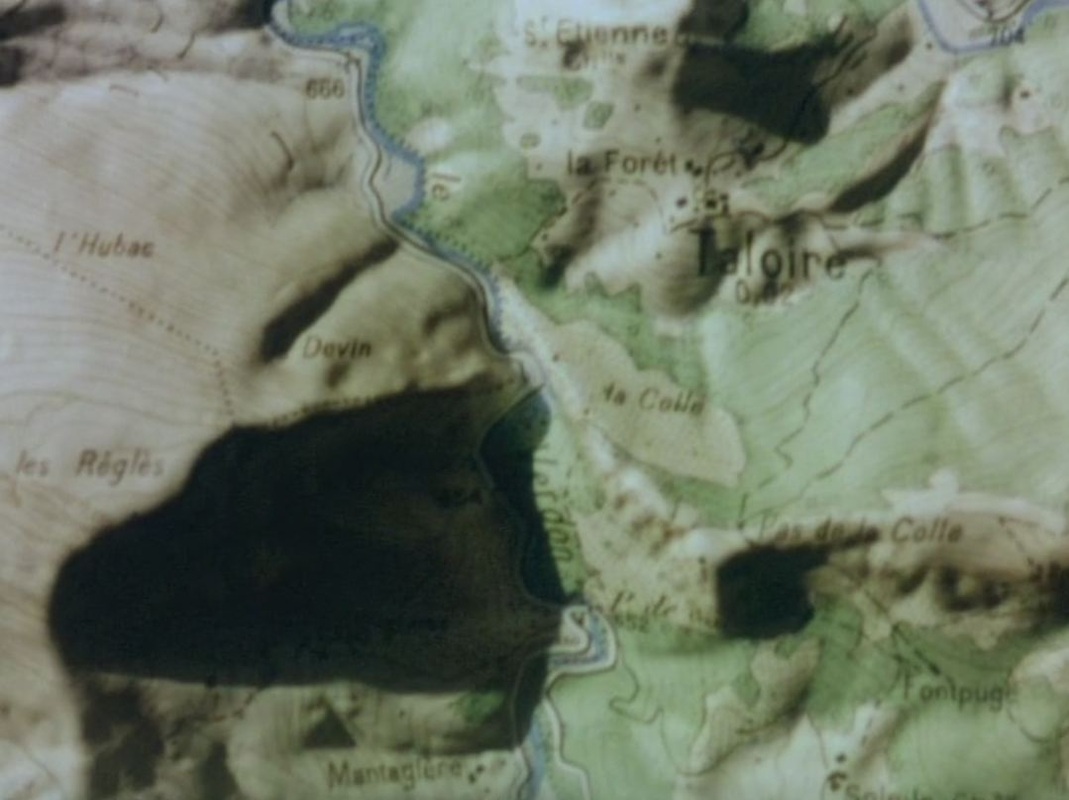 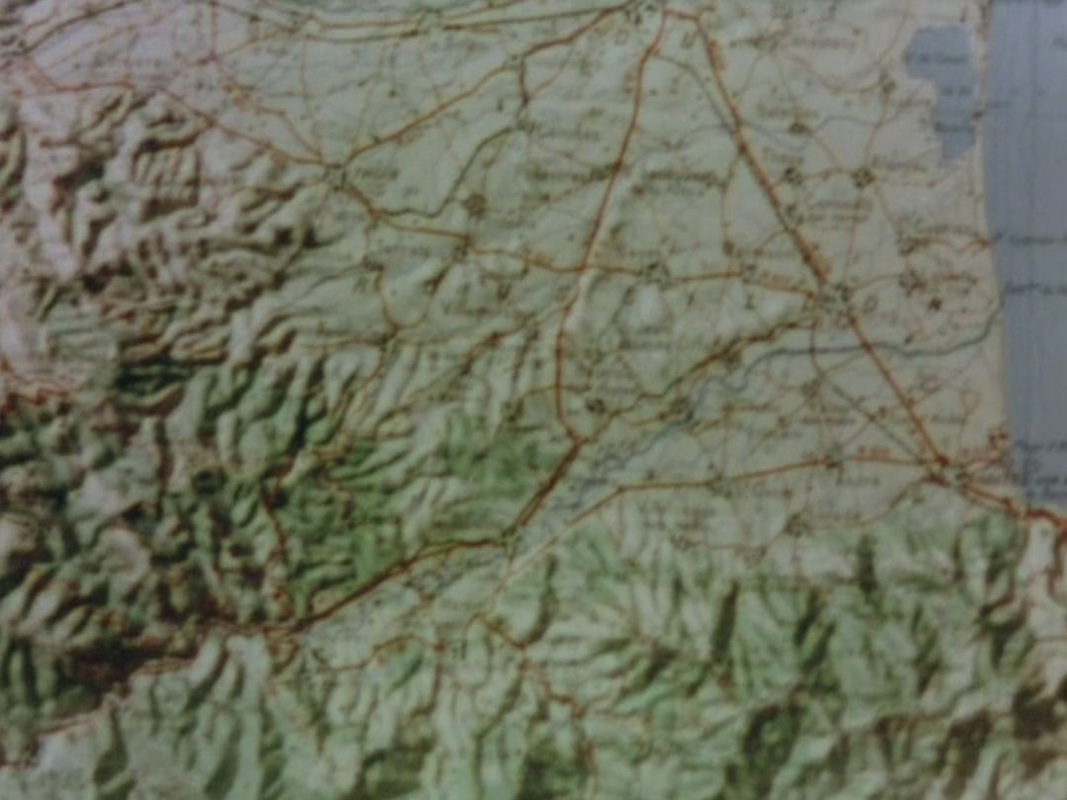   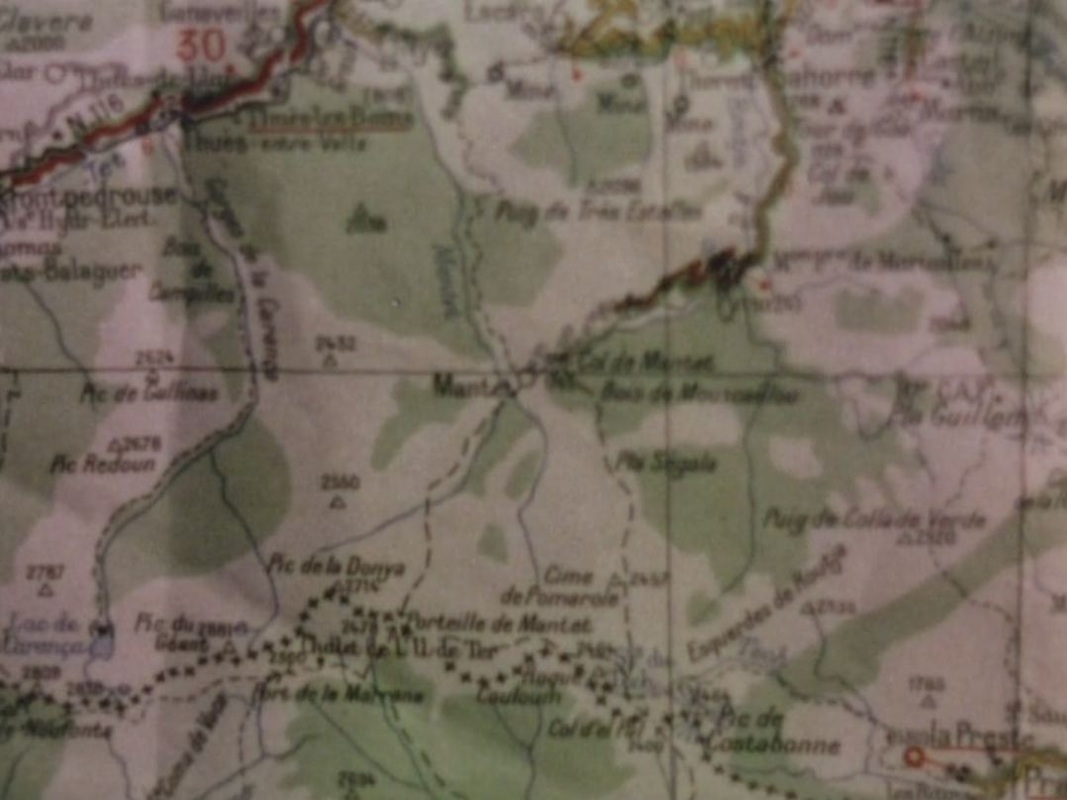   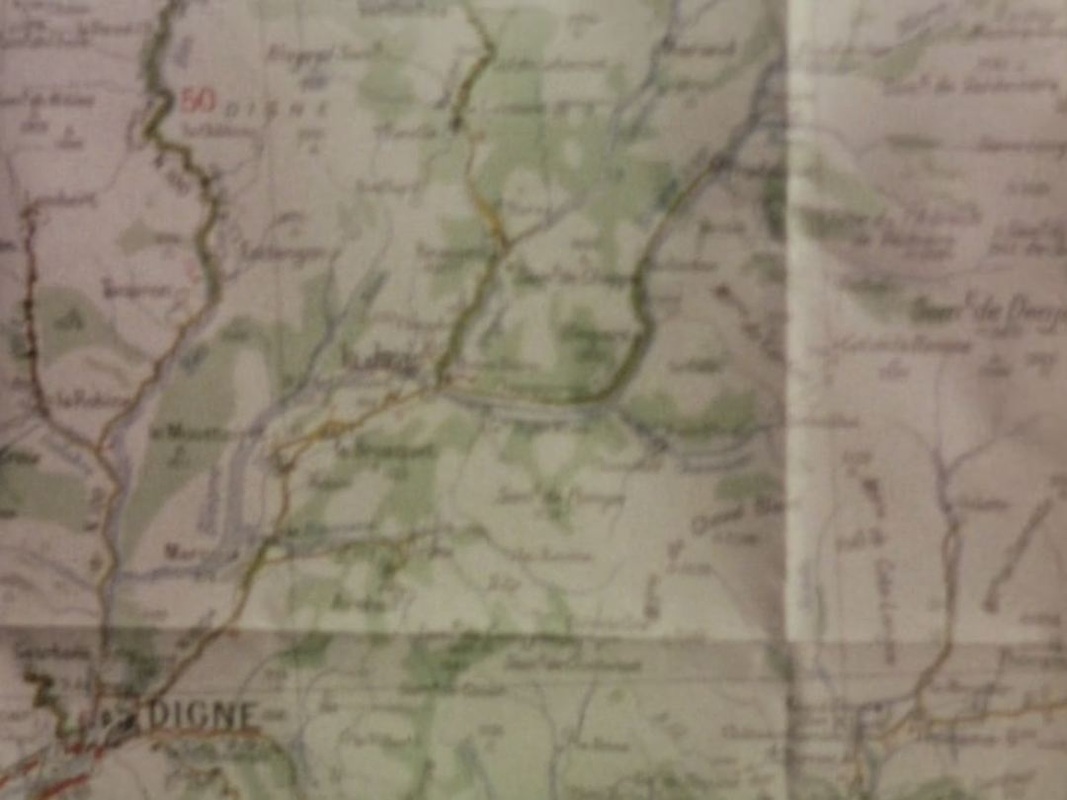 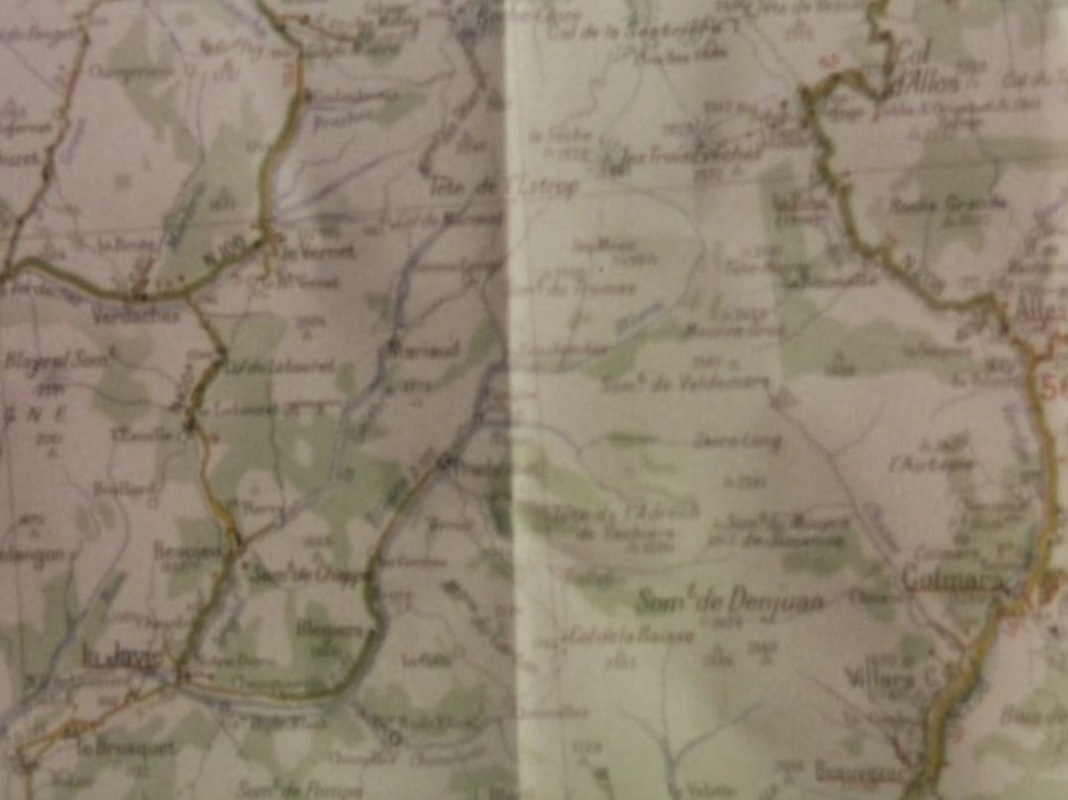 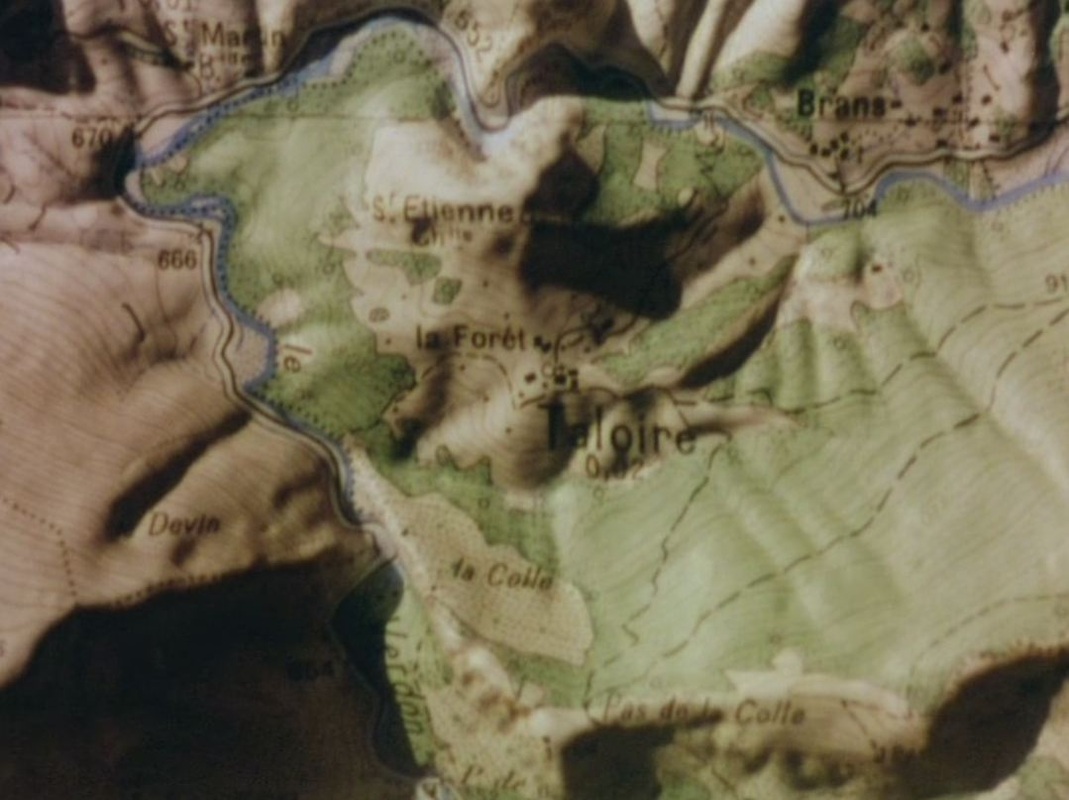 Two maps in the mise-en-scène, in schoolrooms, serve as counterpoint to the maps in the montage: 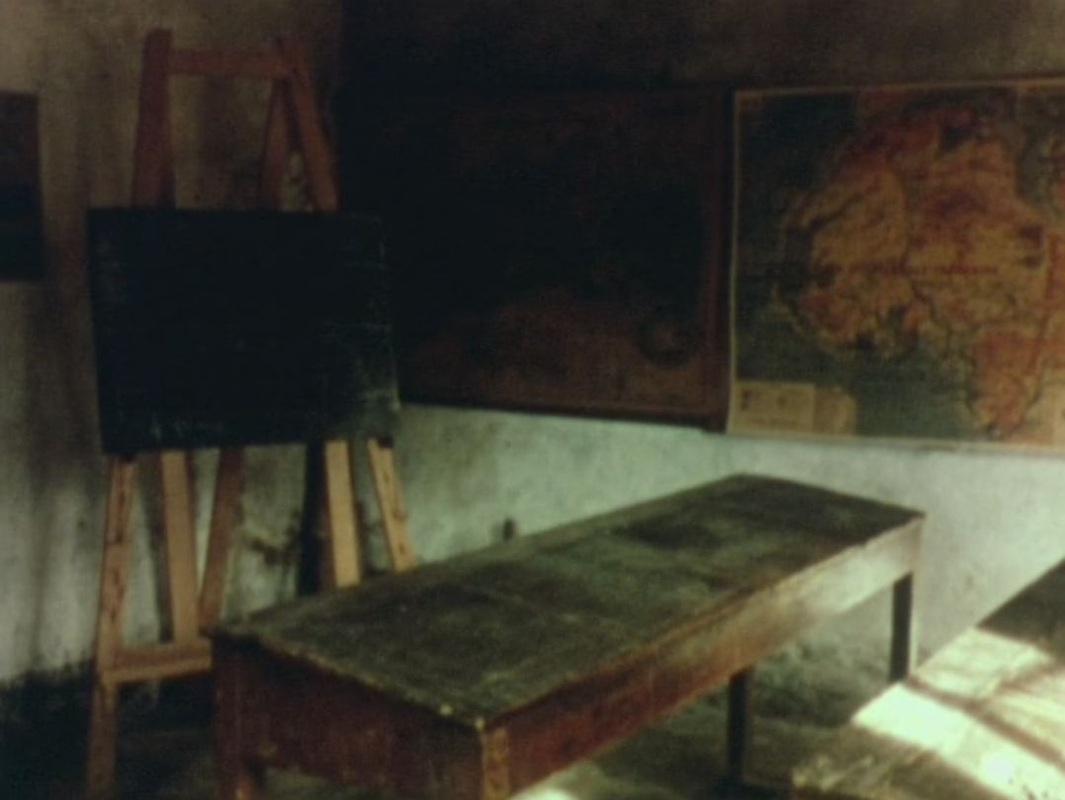 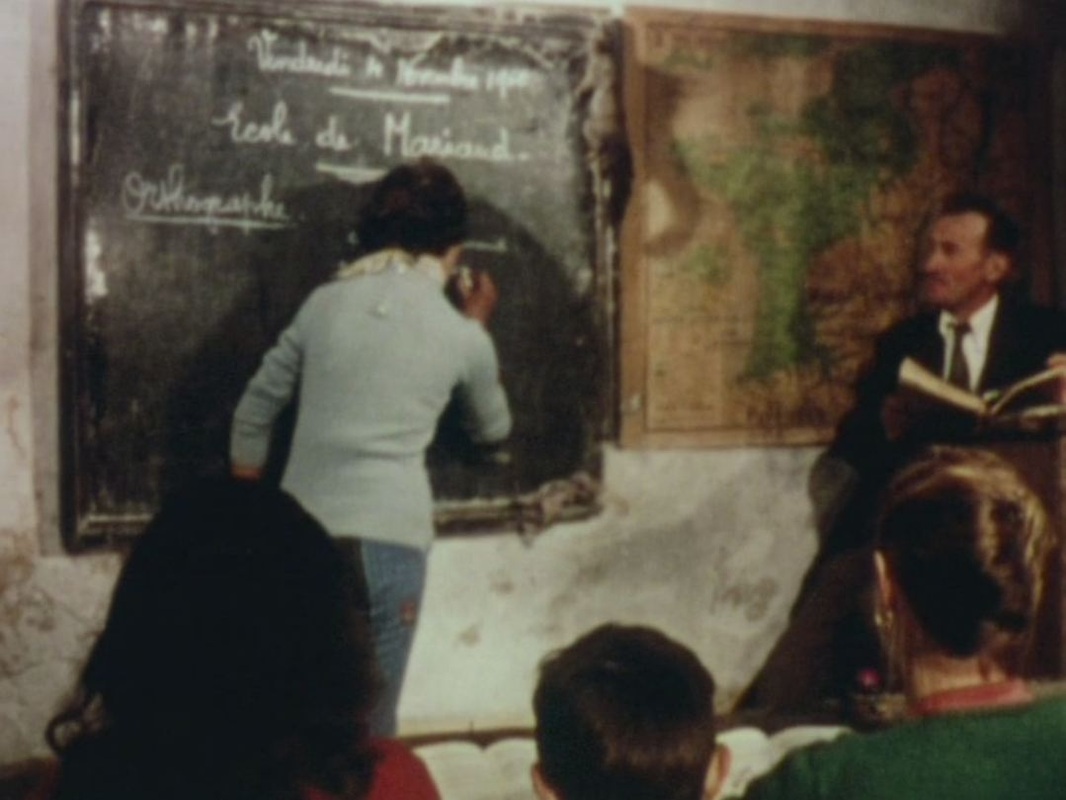 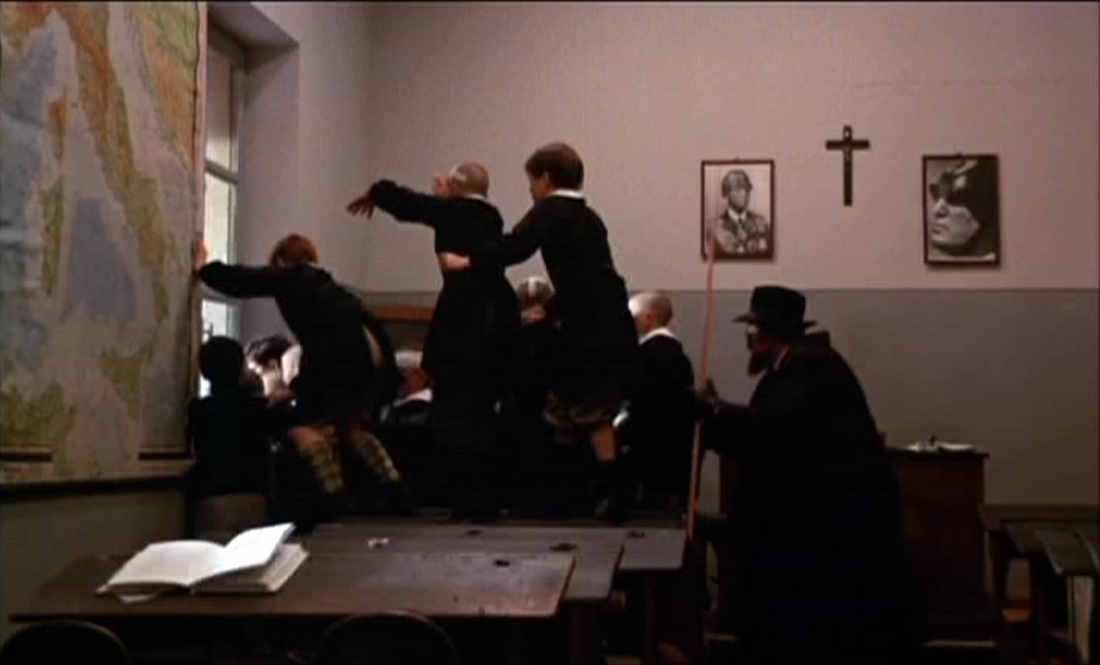 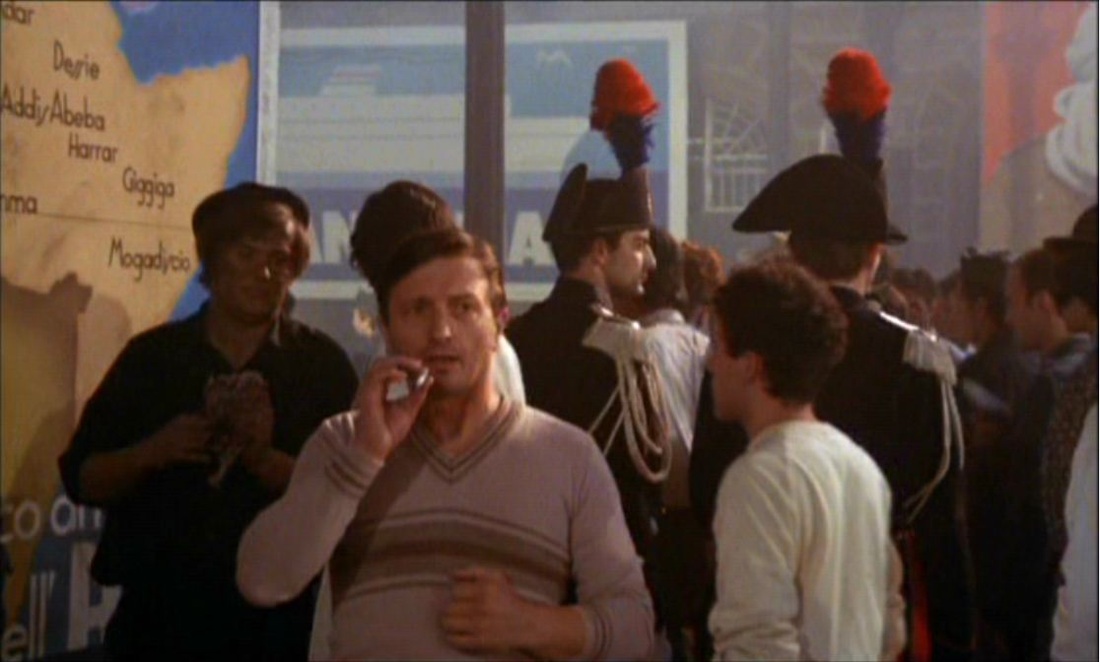 Roma has no need of maps to orient us around the city.
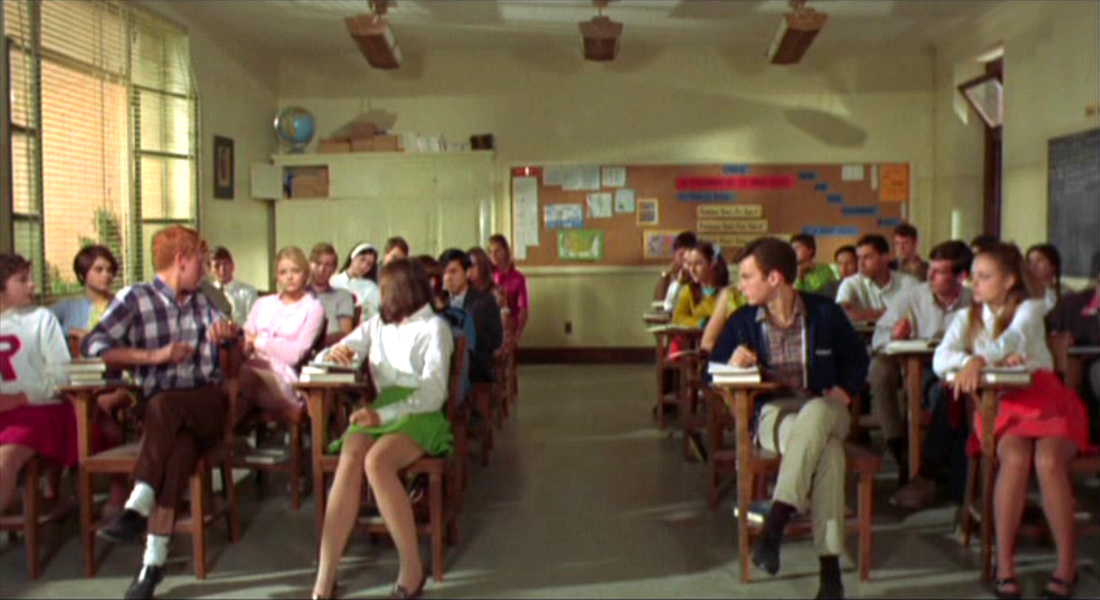
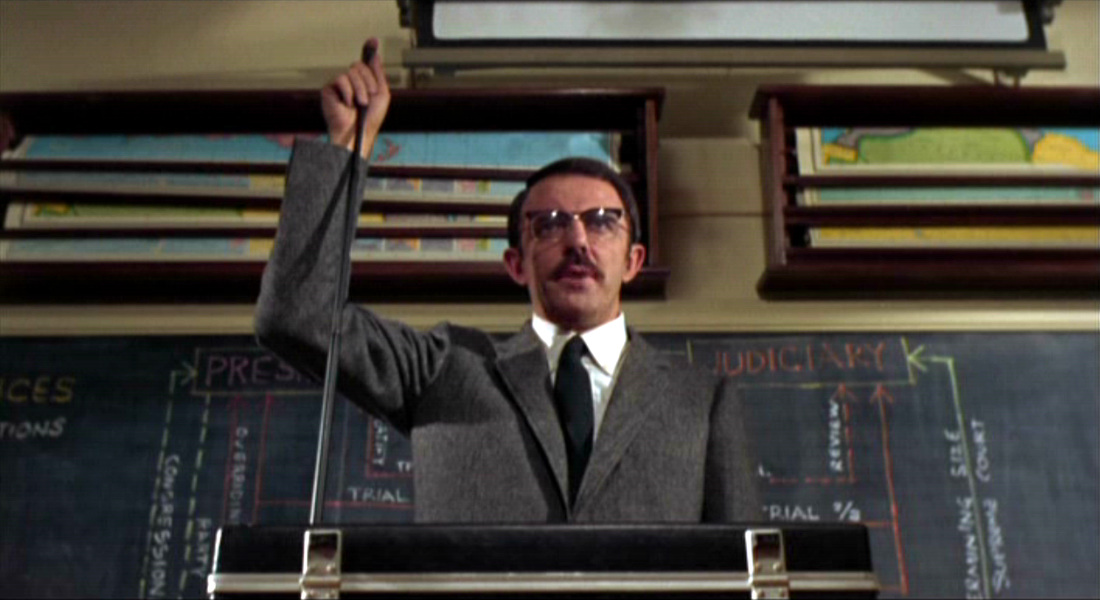
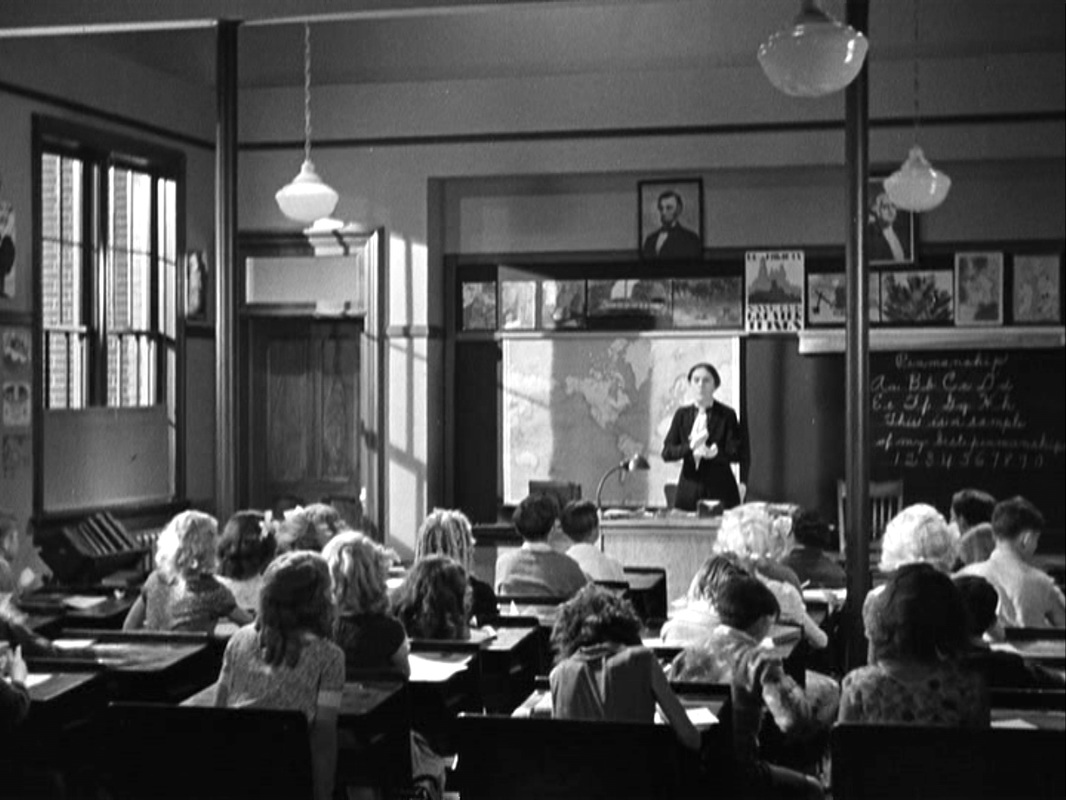
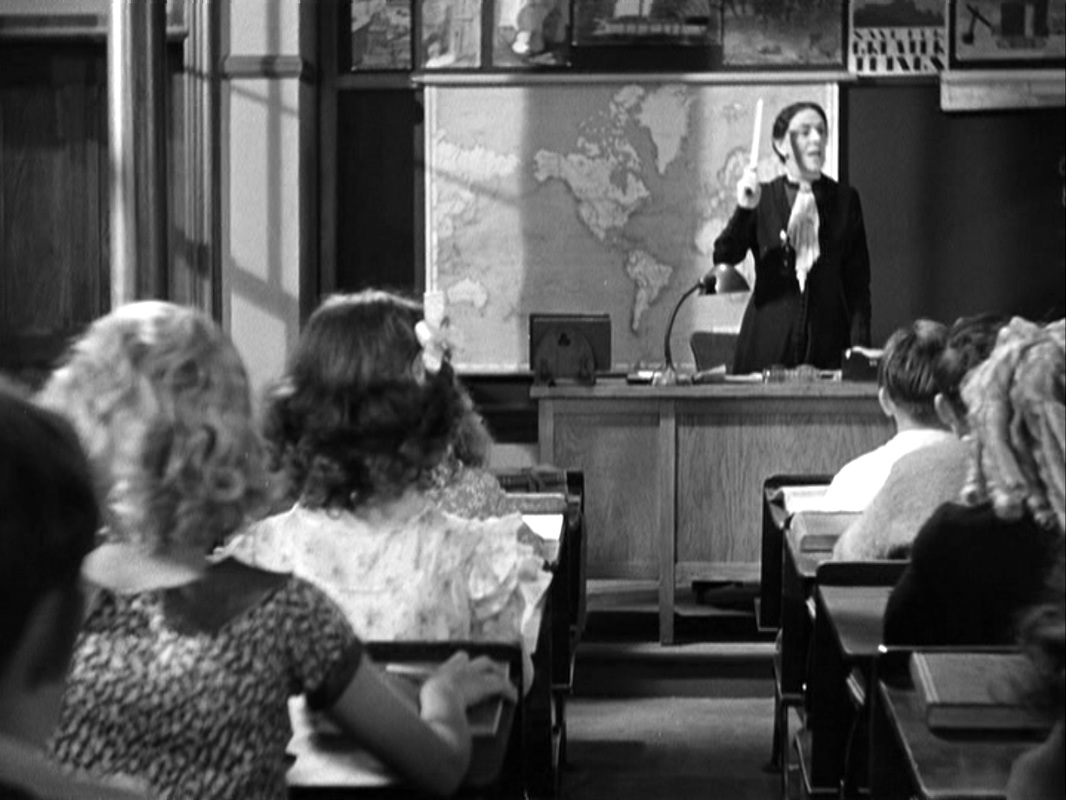
The only two maps in the film are details in a memory. That each occupies the same place in the frame allows us to read them together, even if the similarity is only a coincidence (about eight minutes separate them in the film). 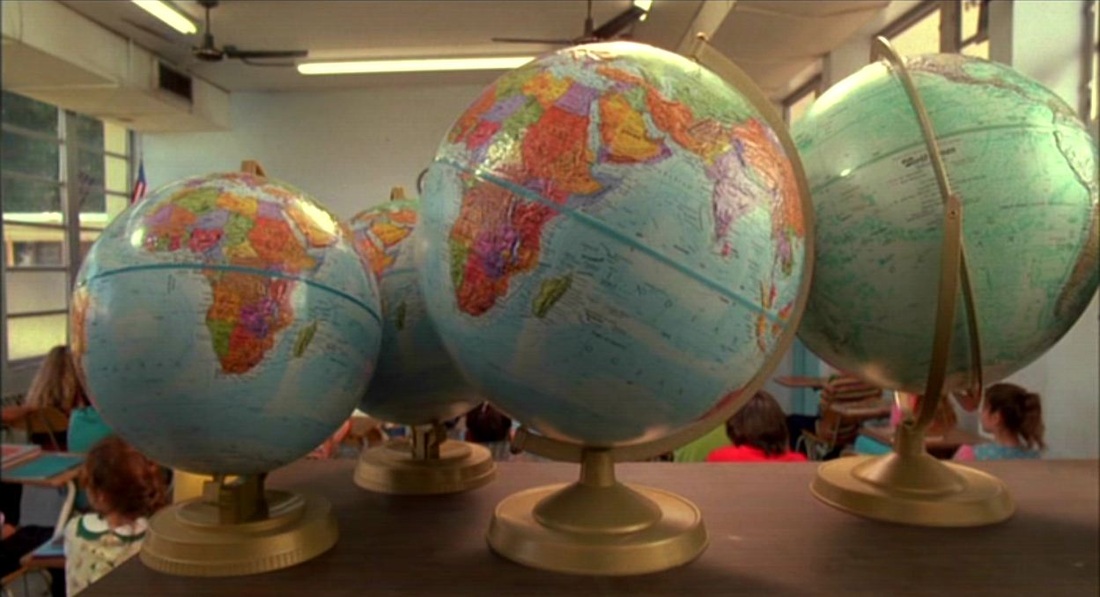 The most globes in close-up I have seen, and - given the cupboard-full on which these globes stand - the most globes seen in a single scene (please let me know if you know of any higher globe counts). 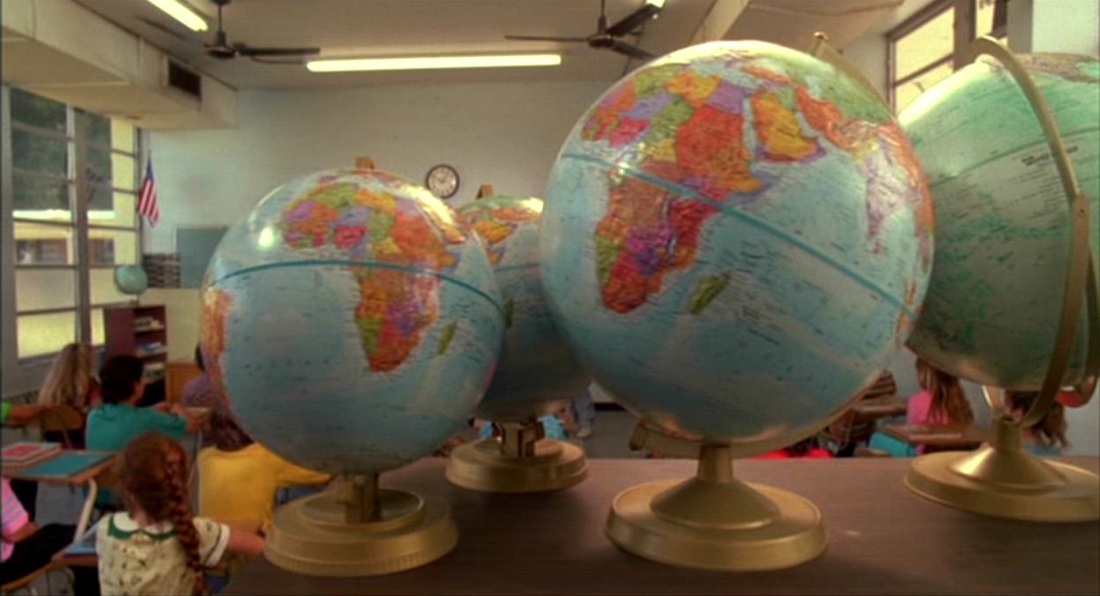 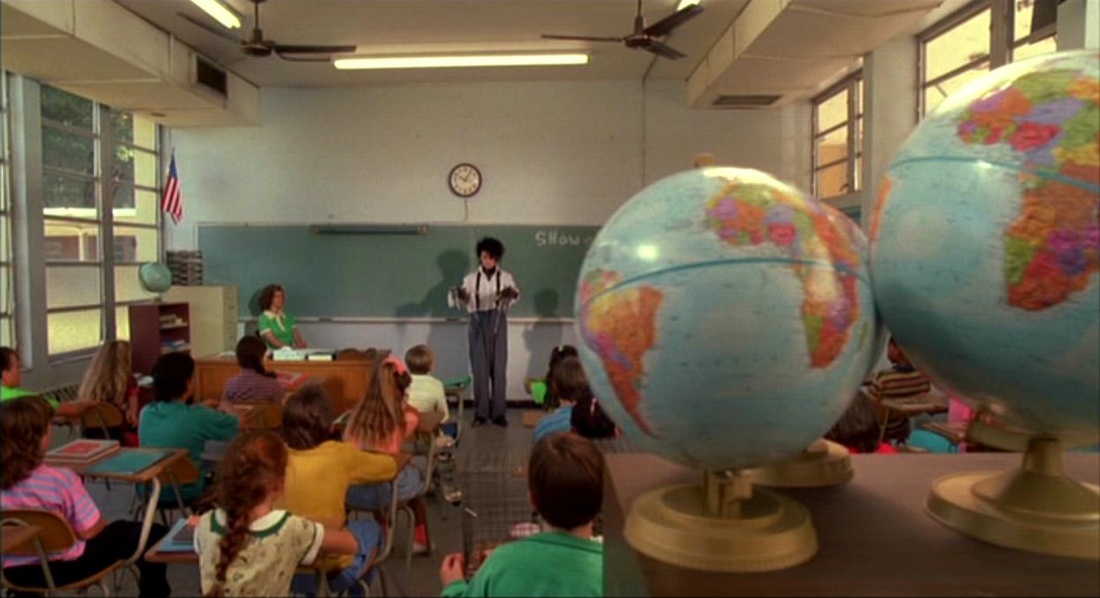 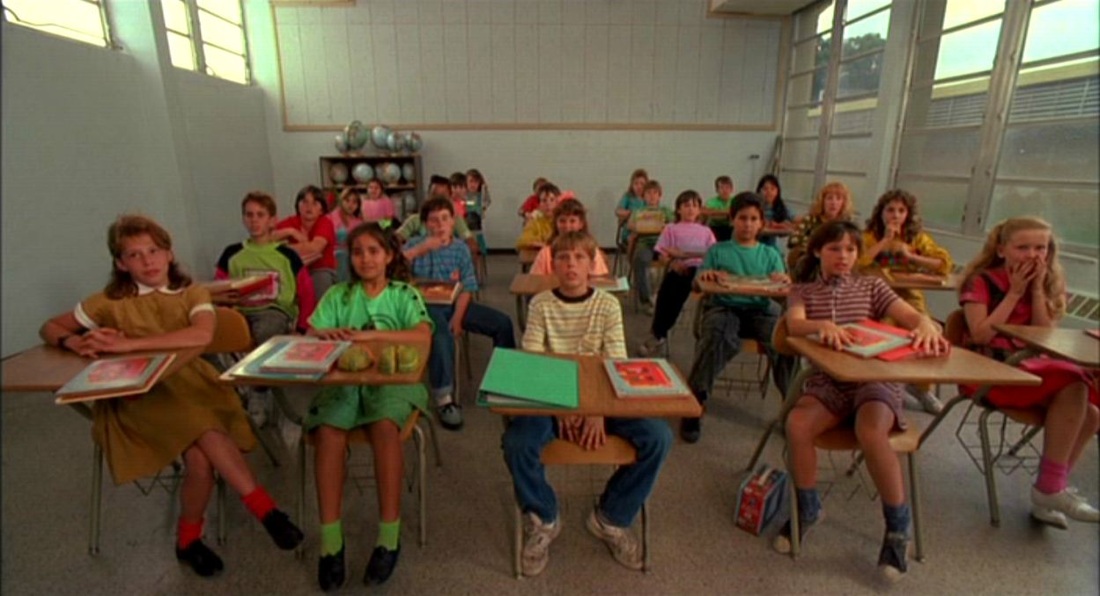 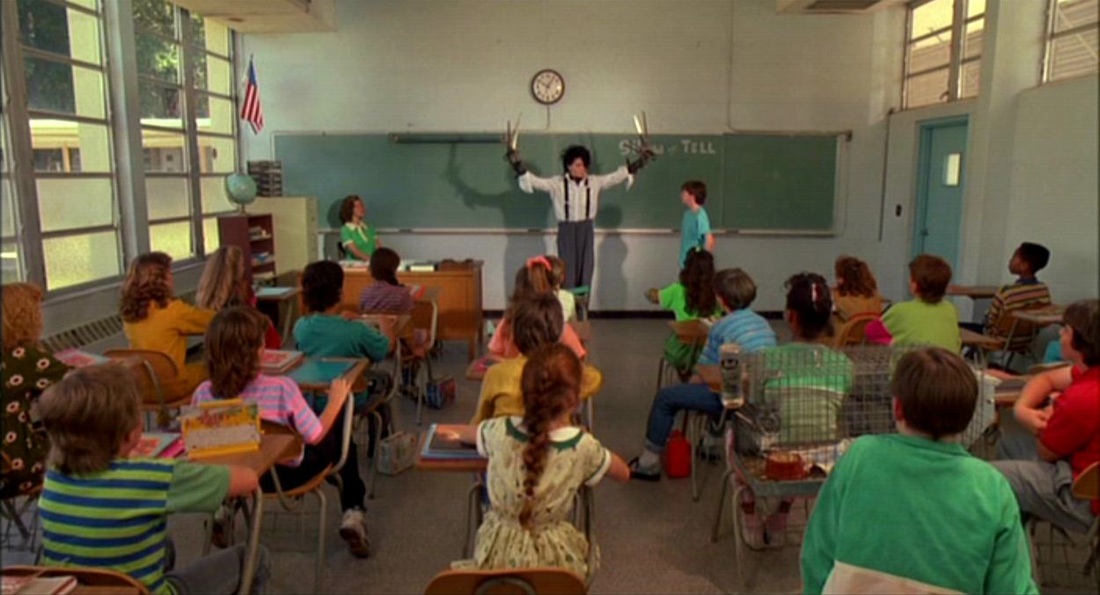 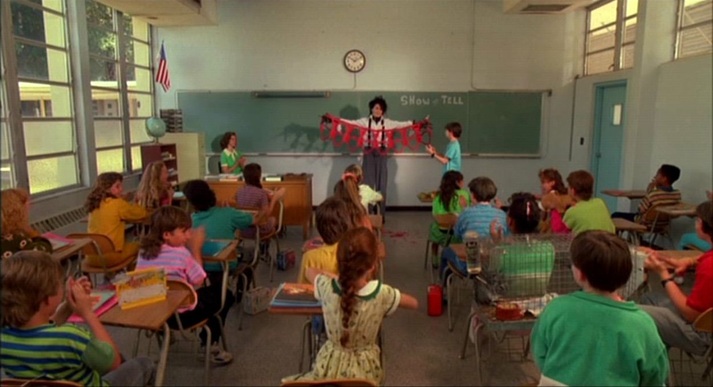 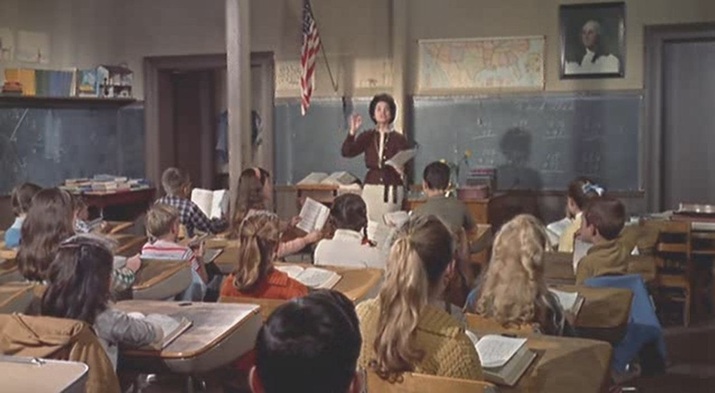 The only maps in The Birds are those you would expect to find in a schoolroom, alongside all the other usual accoutrements: 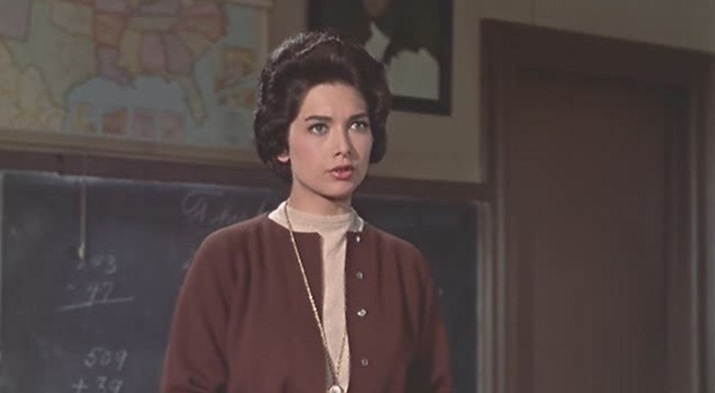 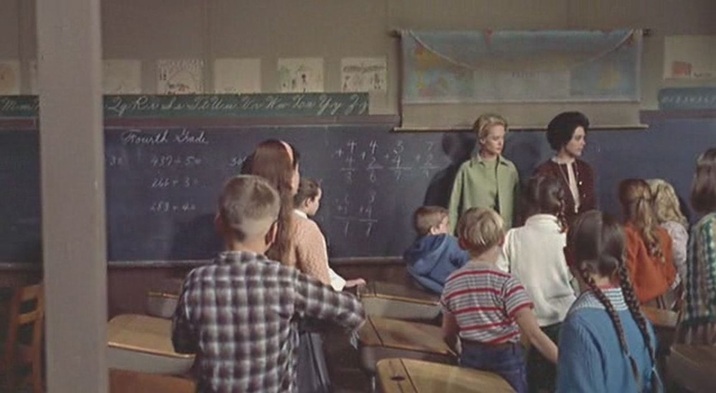 For a map of the locations, go to cine-touristic websites such as this: 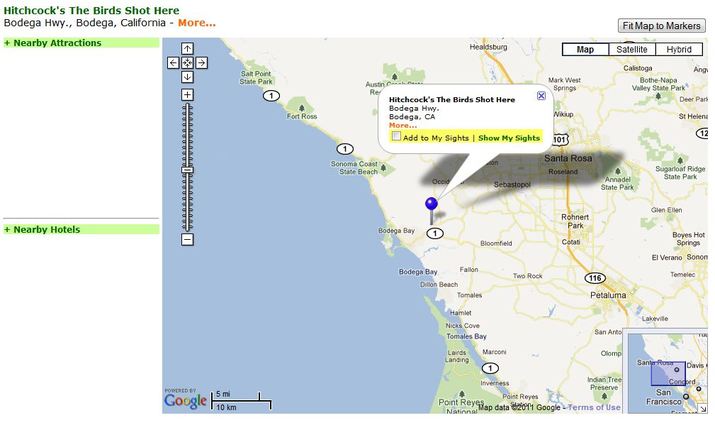 Or see those provided by the 'Making of...' documentaries in dvd editions: 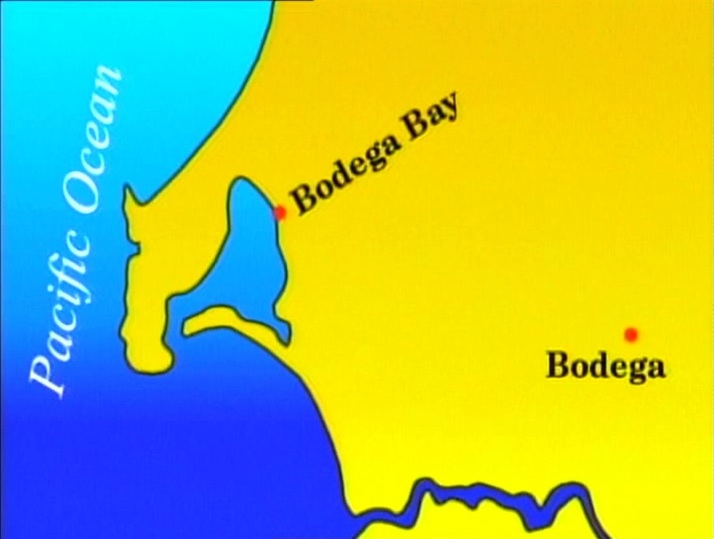 The film itself provides no map of the area, but does enjoy a map-like birds' eye view of Bodega Bay: 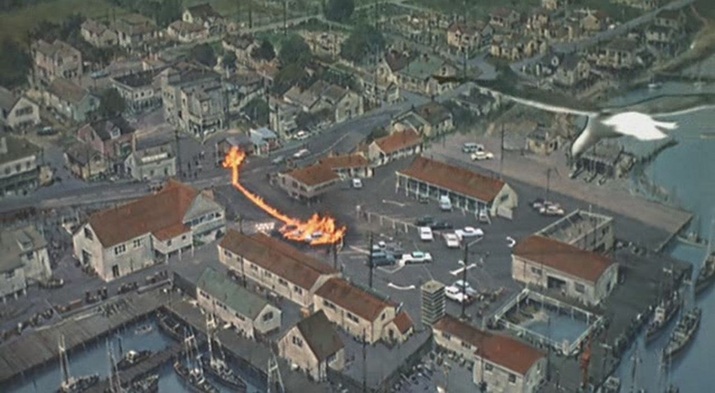 The change in the aspect of the logo from beginning to end may occur with every Universal film at the time, but it seems to correspond to the dark mood at the end of The Birds:   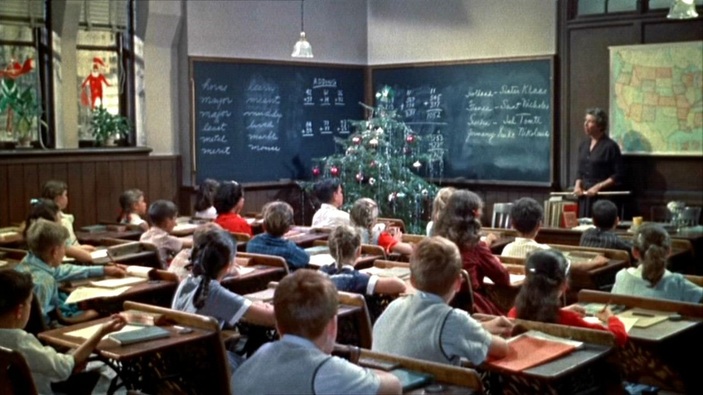 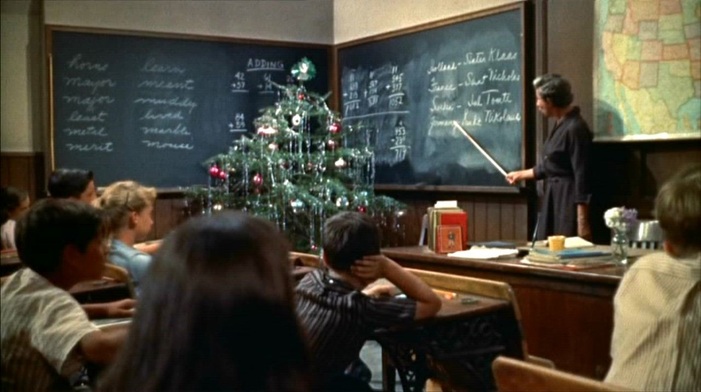 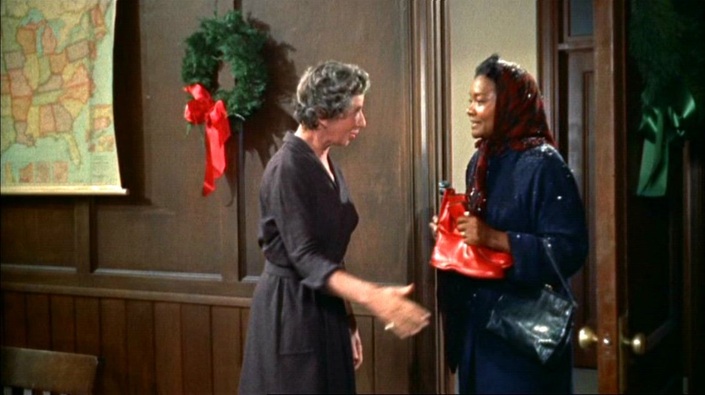 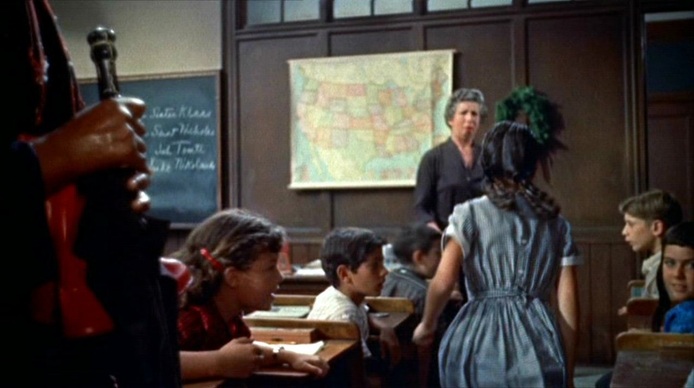 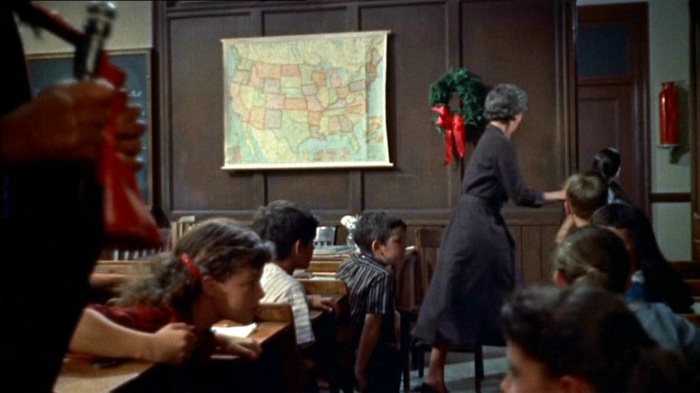 The schoolroom is the one map scene in Imitation of Life. The arrival of Annie (Juanita Moore) reveals to the class her daughter's blackness, causing her to run from the room, the first of several such flights around which the mother-daughter story is organised. The lesson is about difference on an international scale (what Santa Claus is called in different countries), but the map of the United States is an invitation to read the personal melodrama in national terms. For a full-scale reading of Imitation of Life in such terms, see Ryan DeRosa, 'Black Passing and White Pluralism: Imitation of Life in the Civil Rights Struggle', in Deborah Barker & Kathryn McKee (eds), American Cinema and the Southern Imaginary (Athens GA: University of Georgia Press, 2011), pp. 151-78.  |