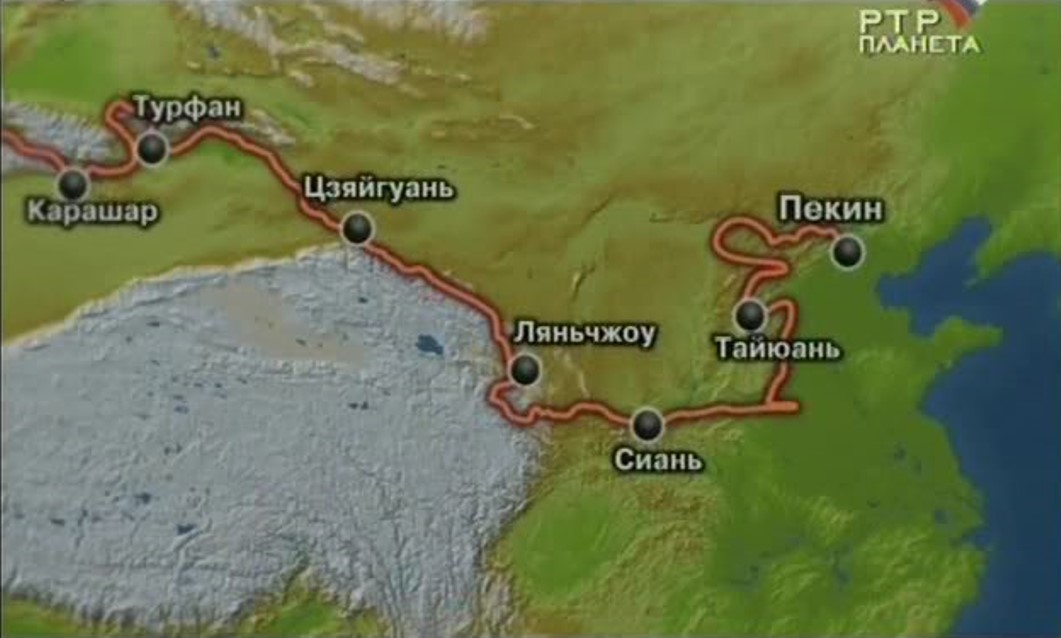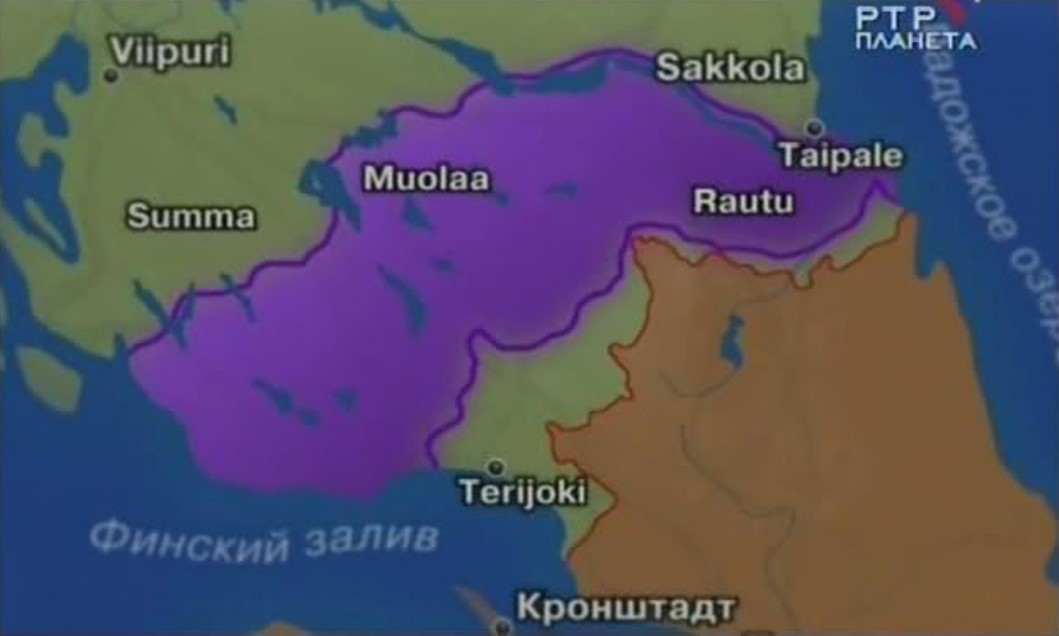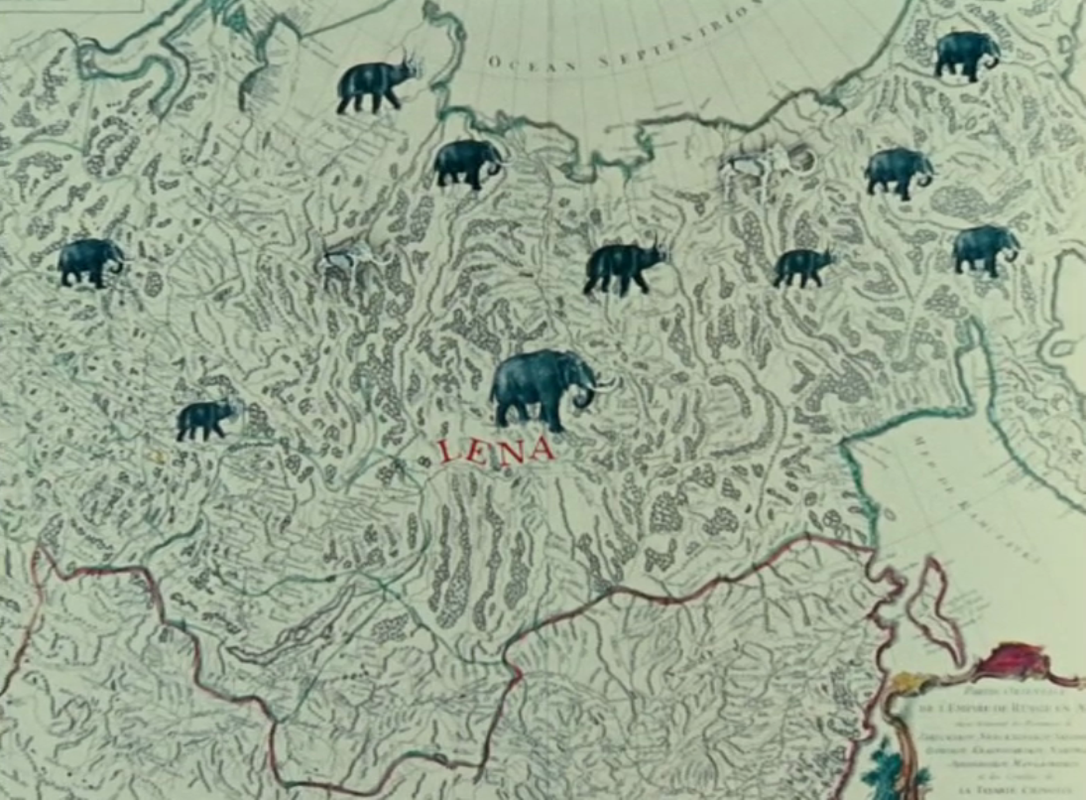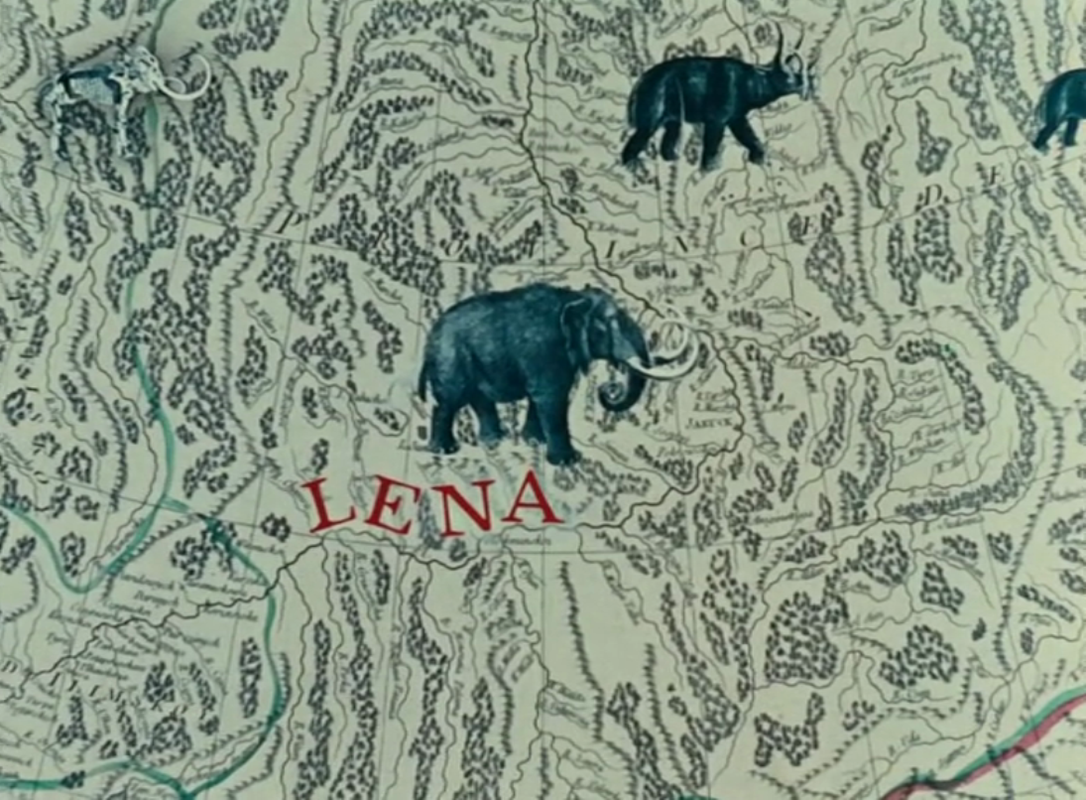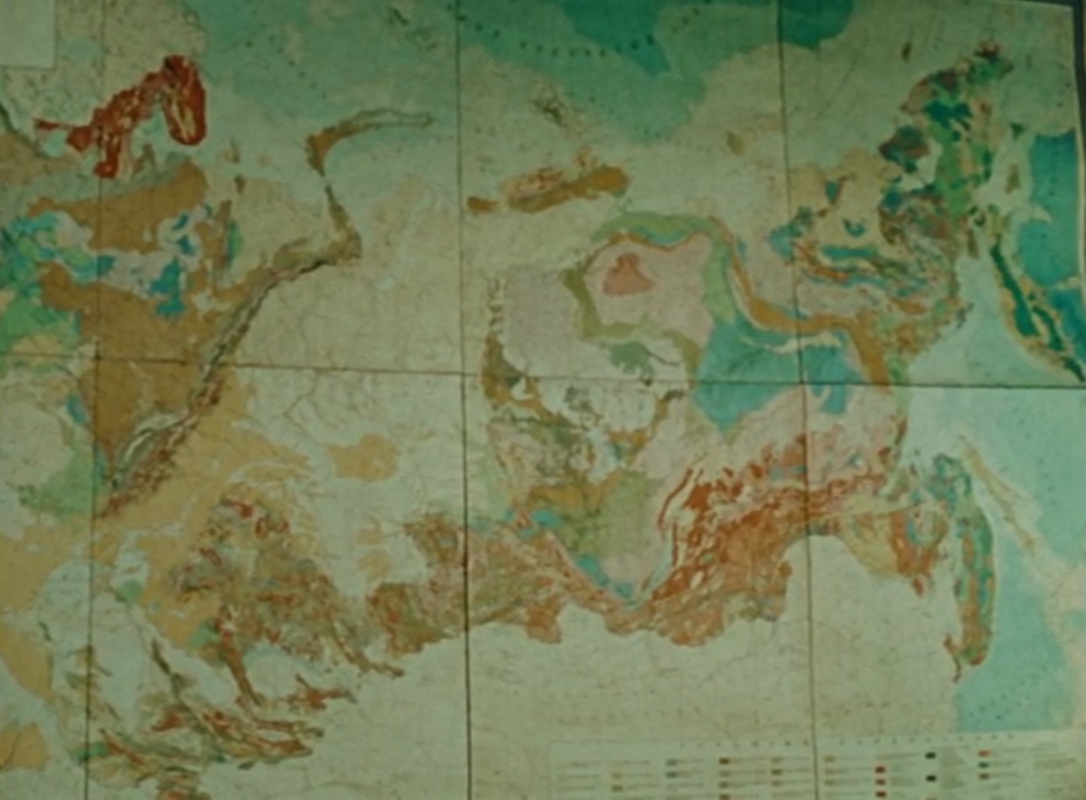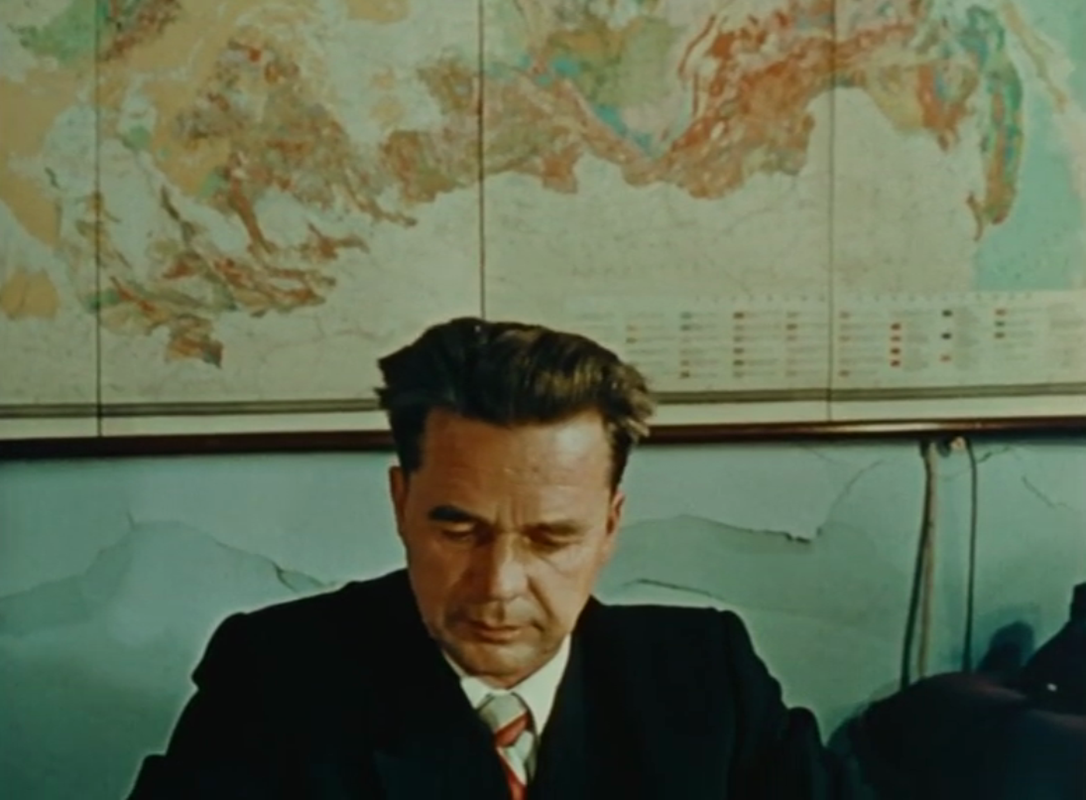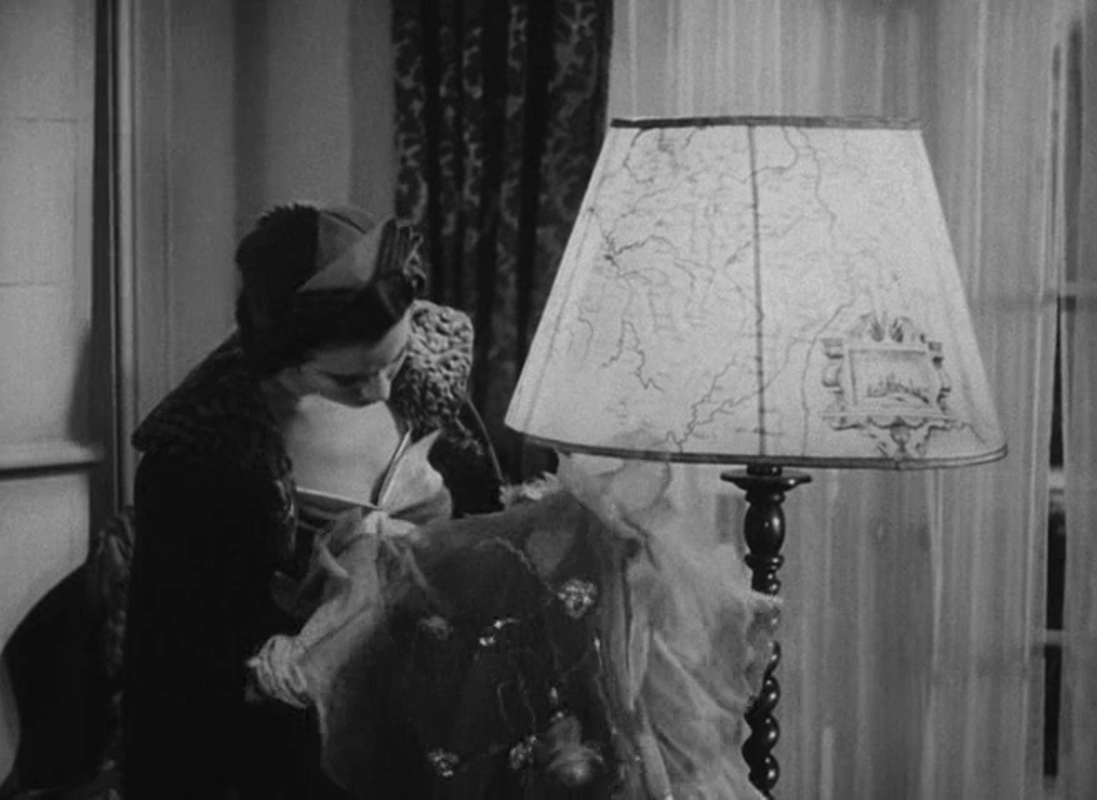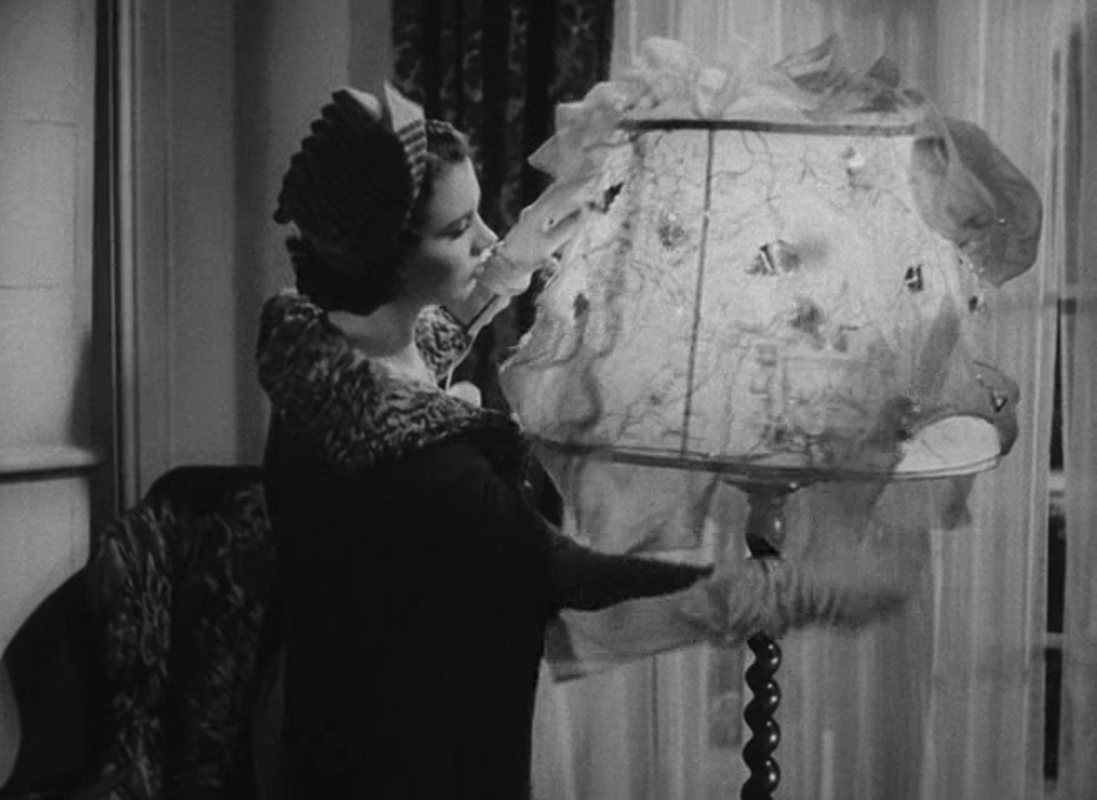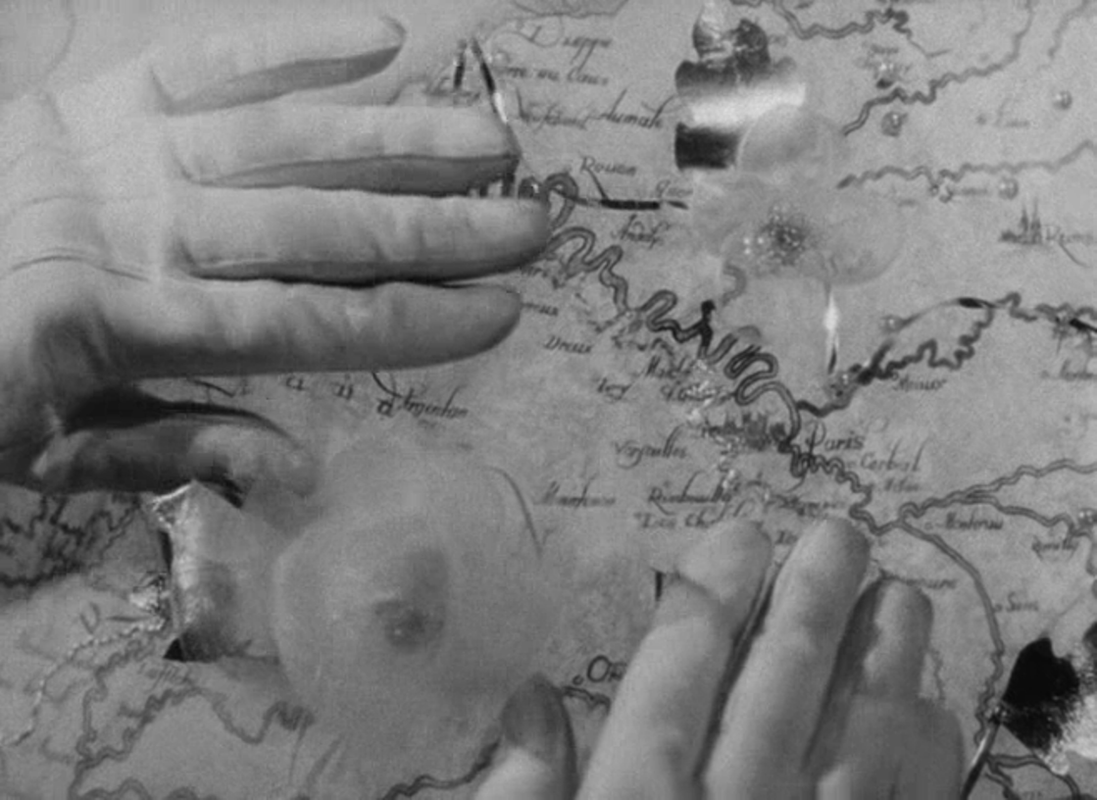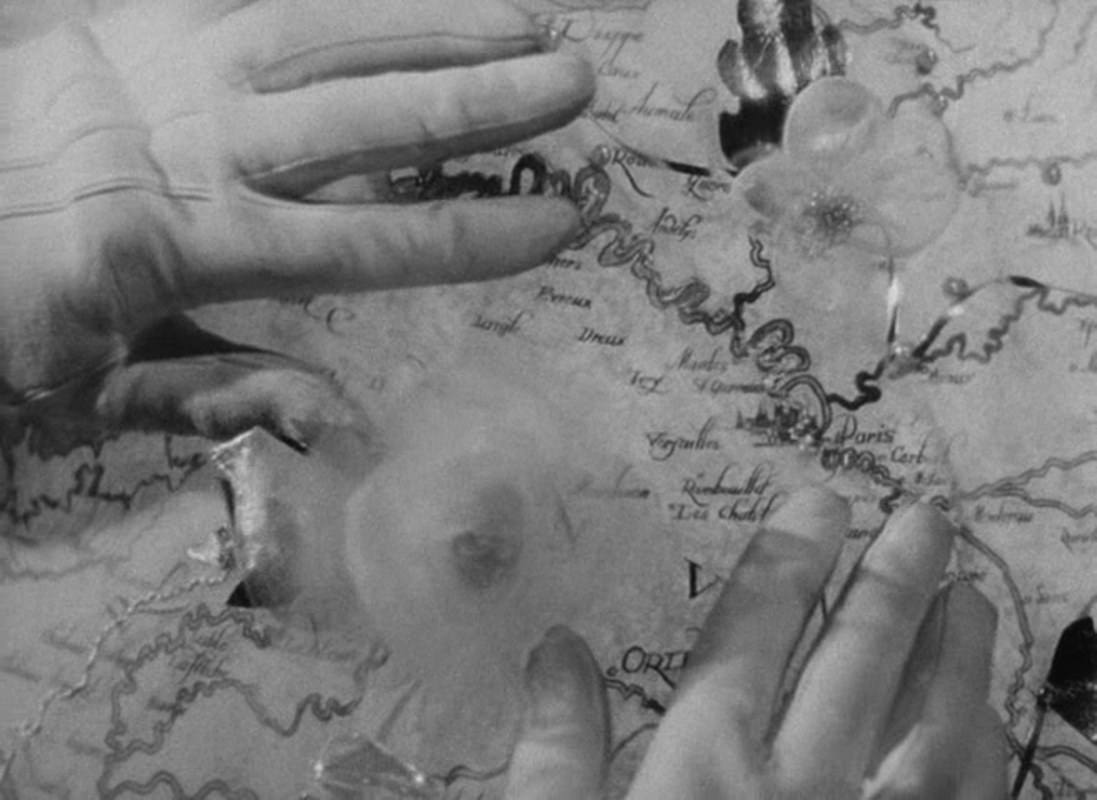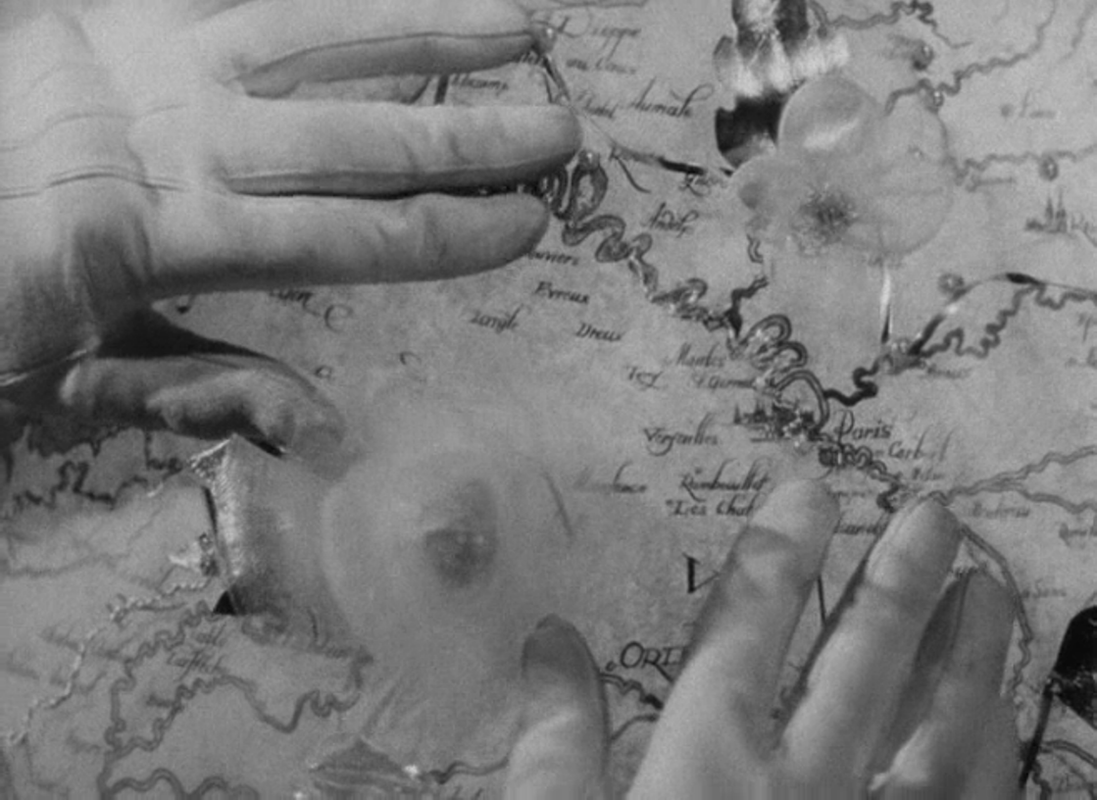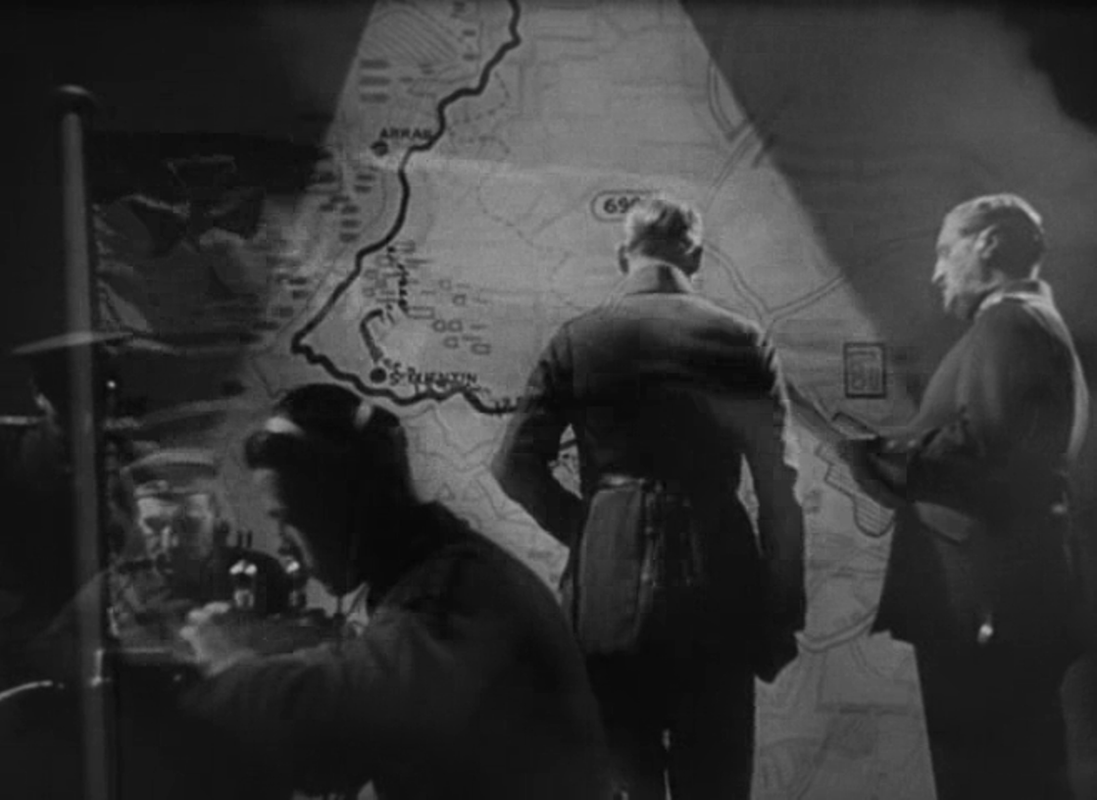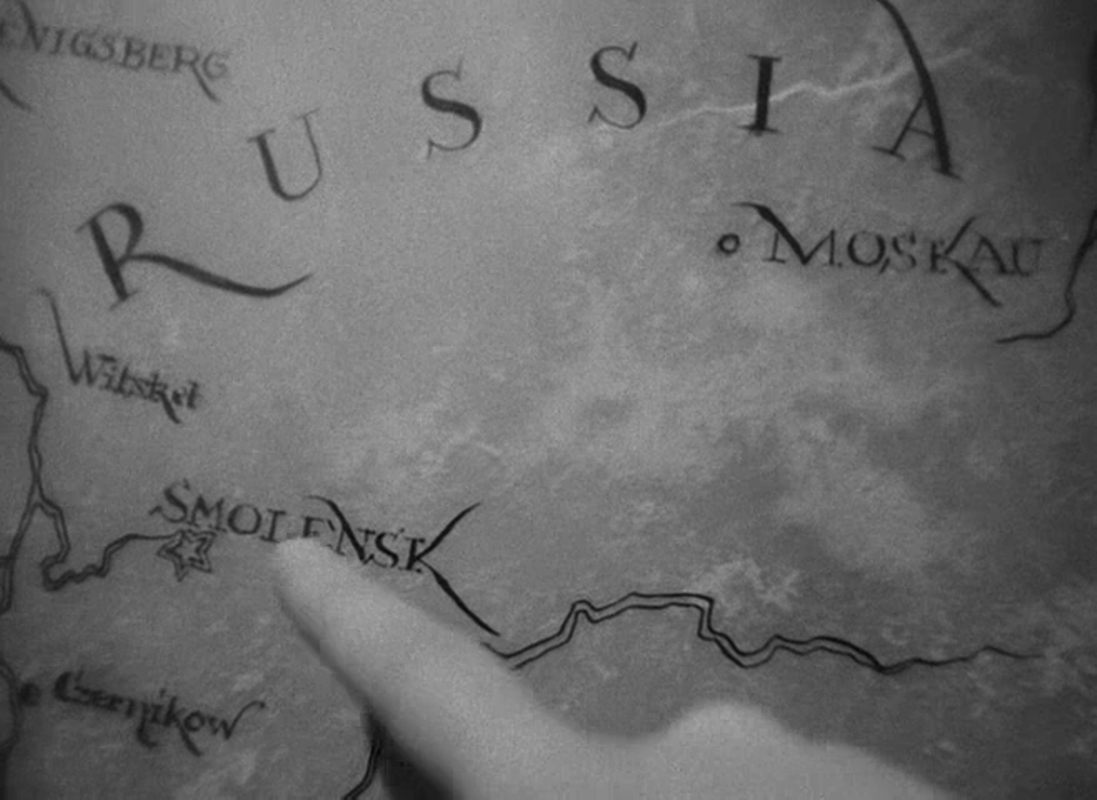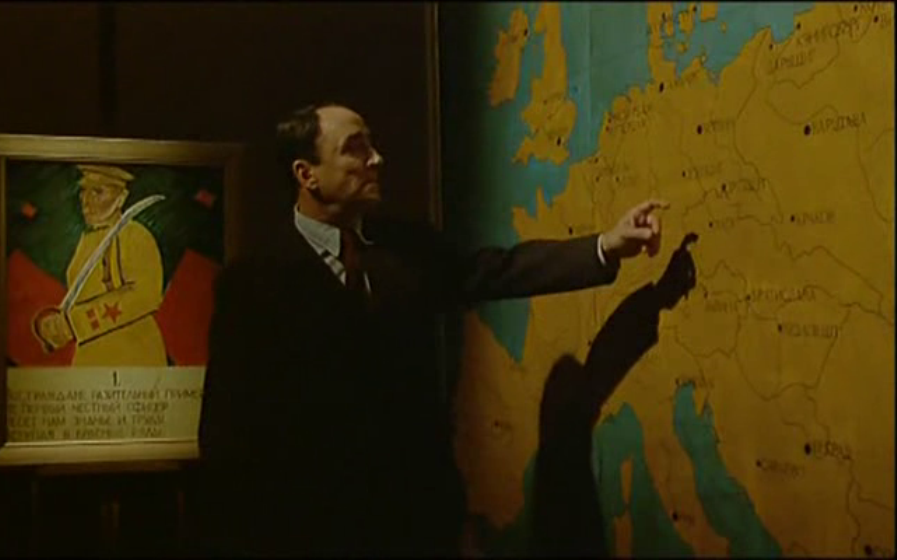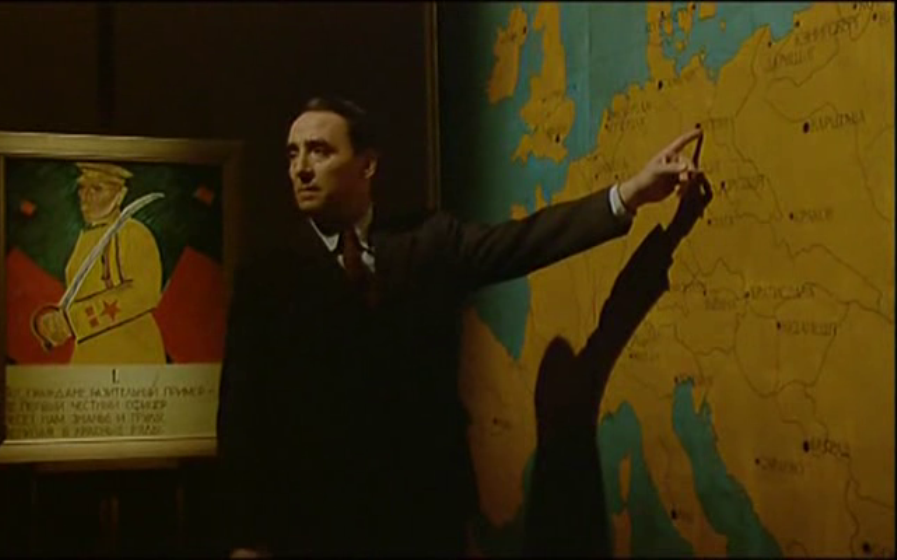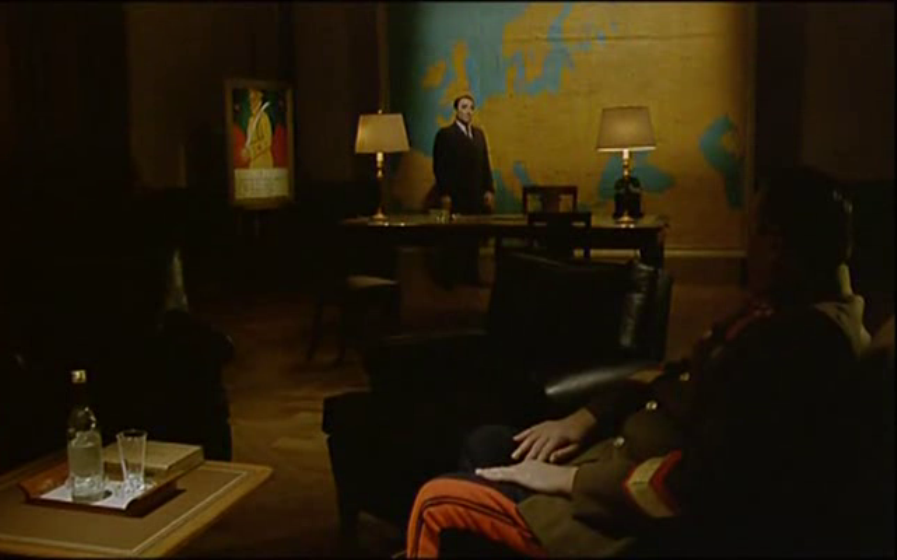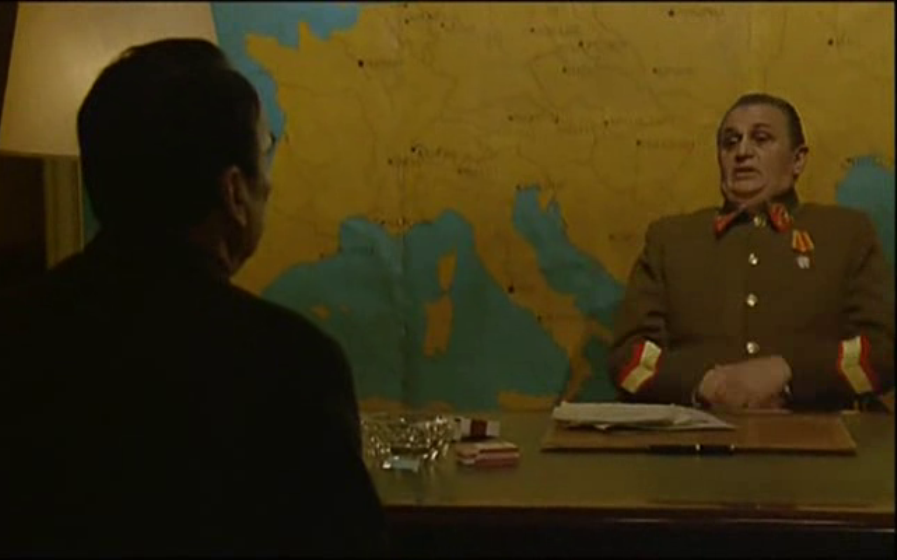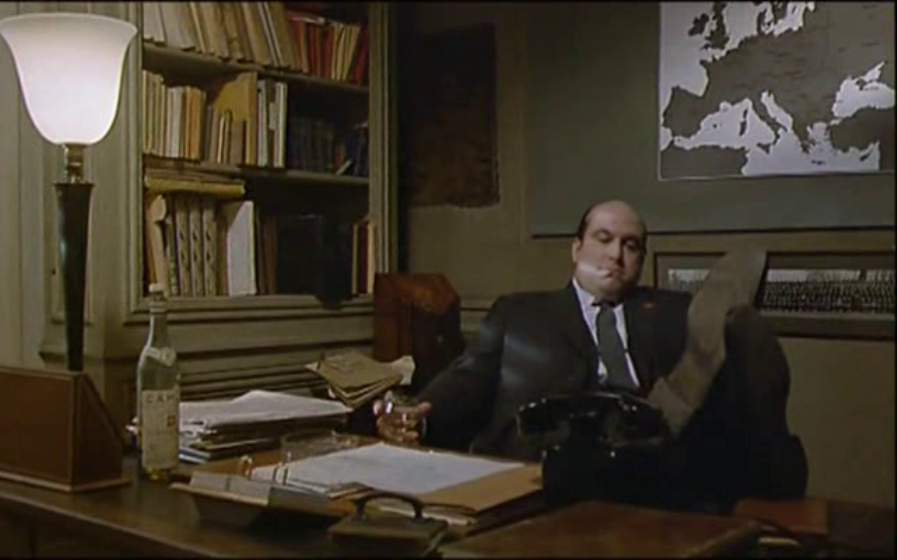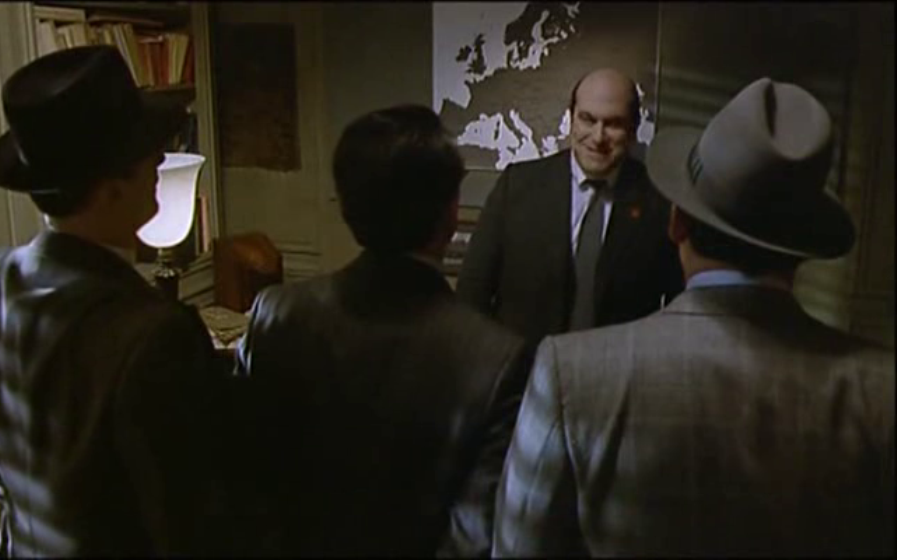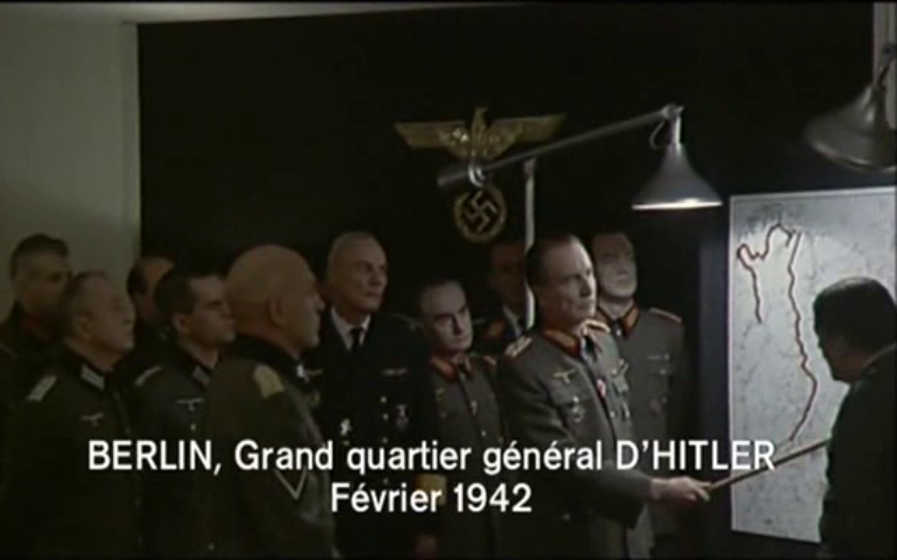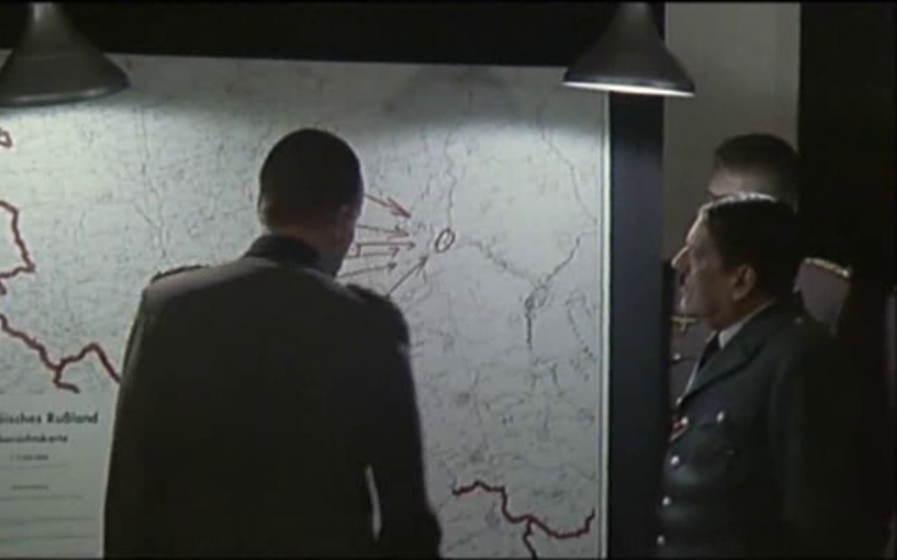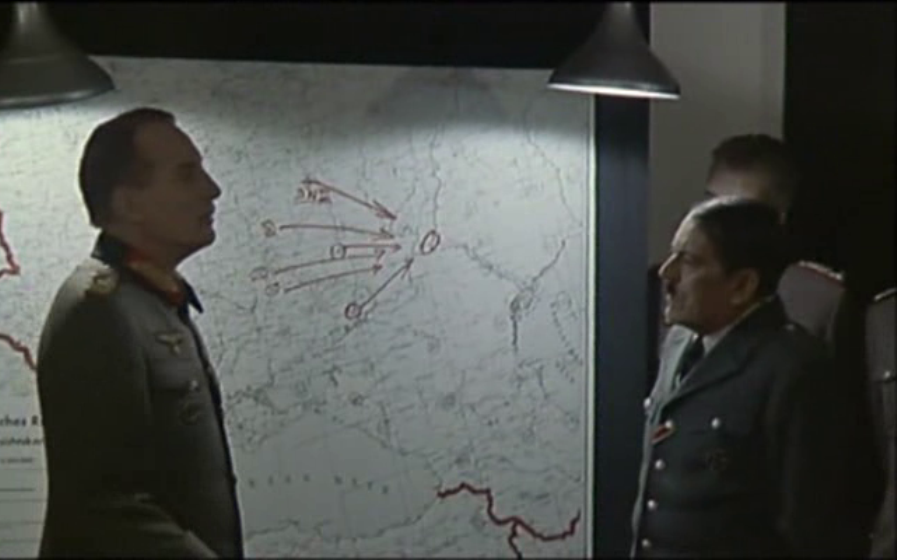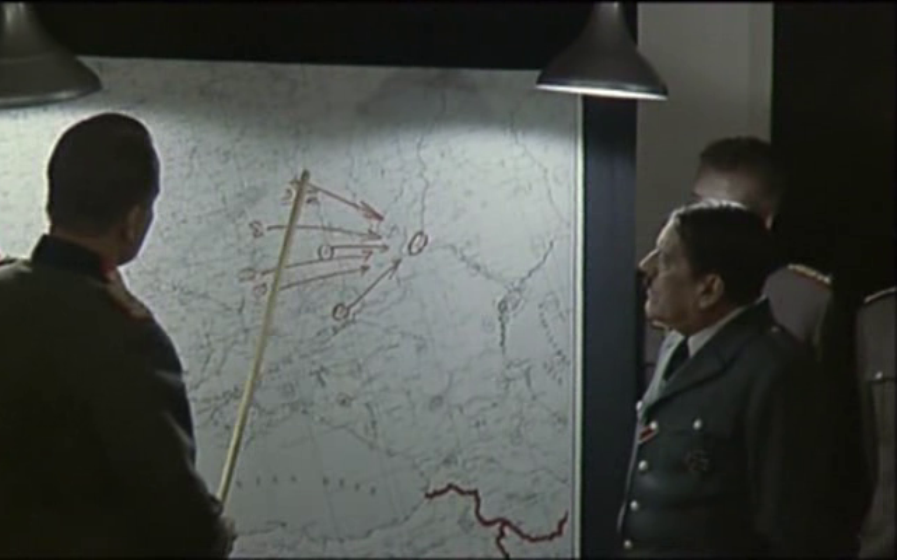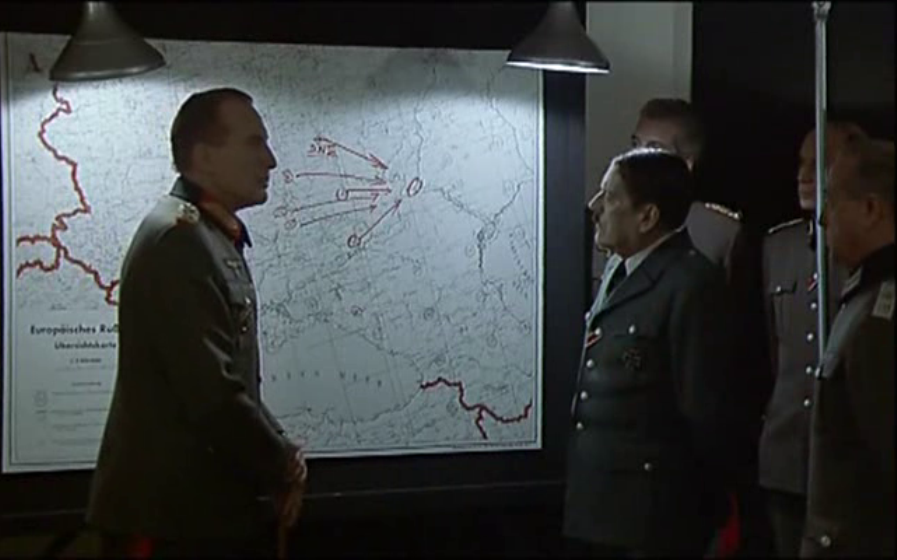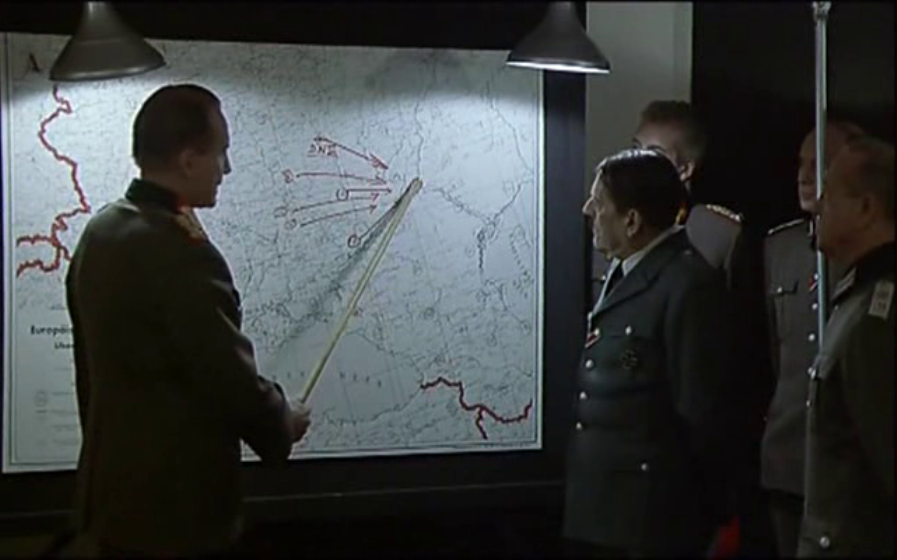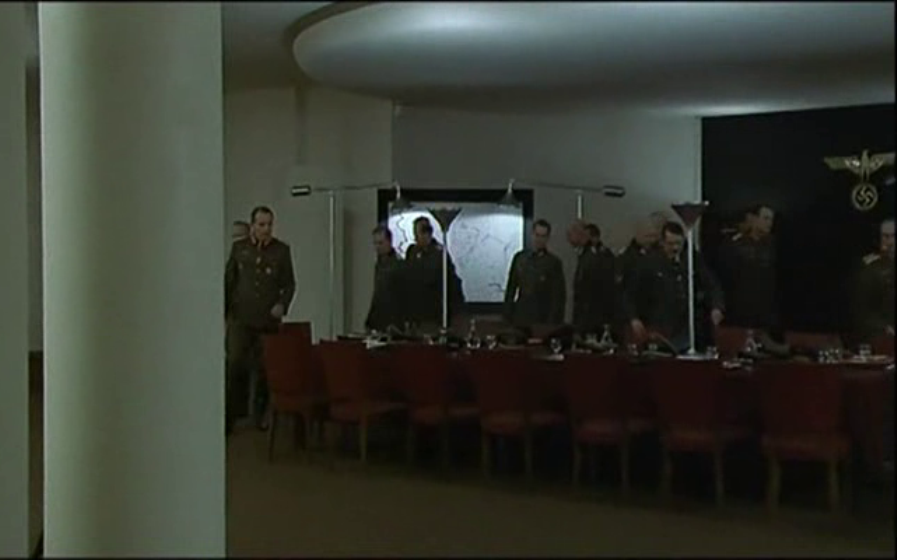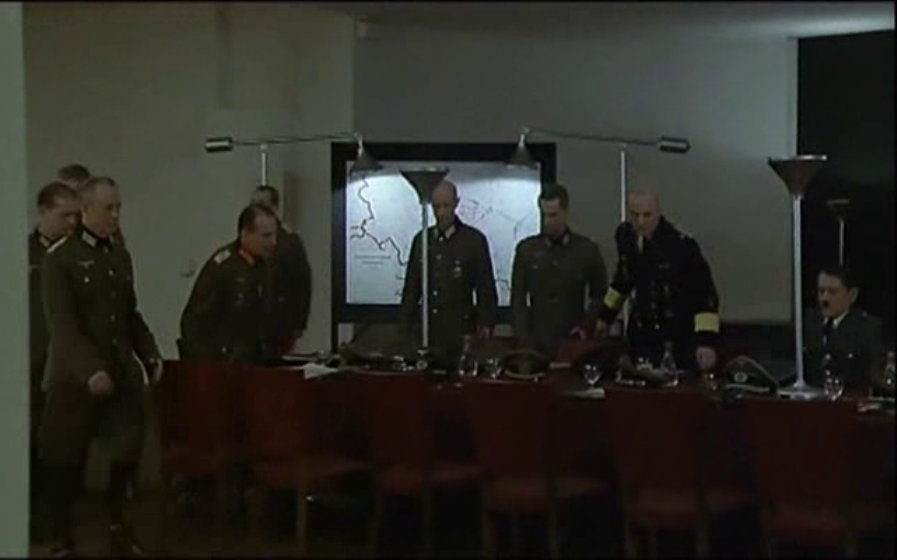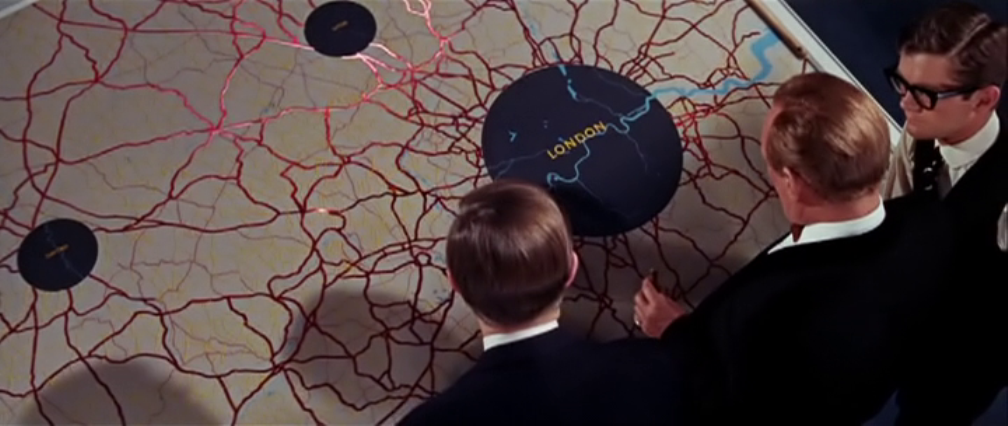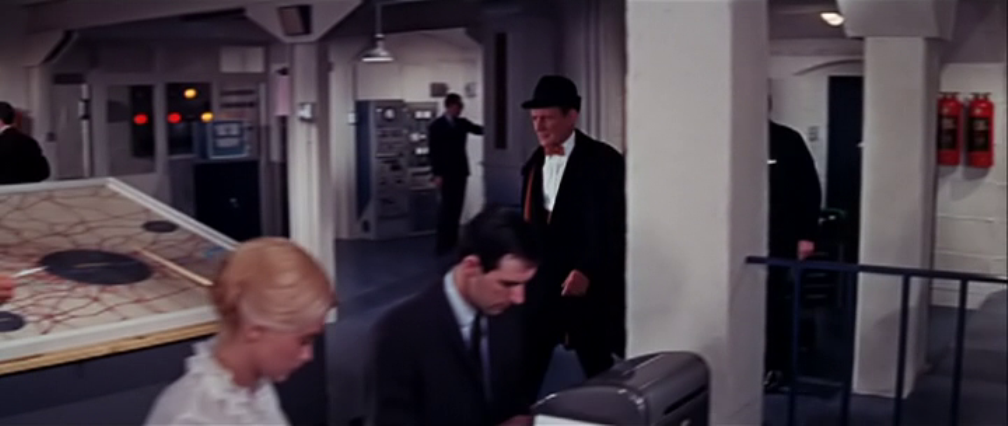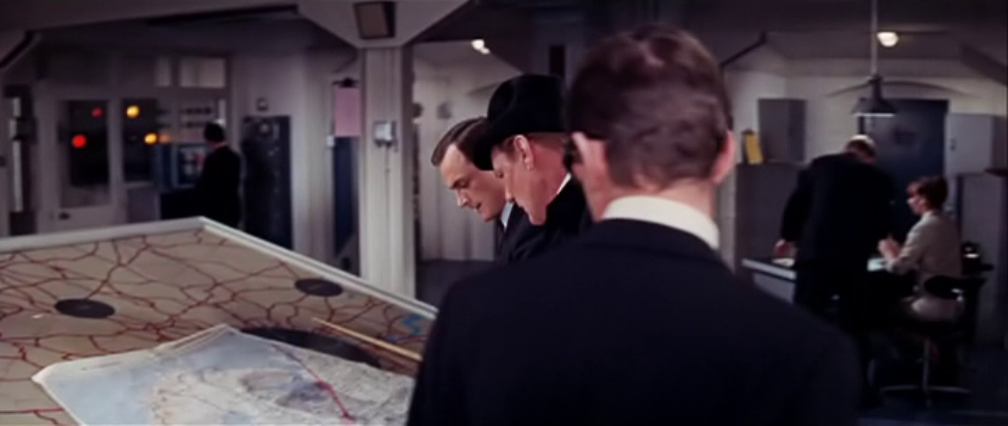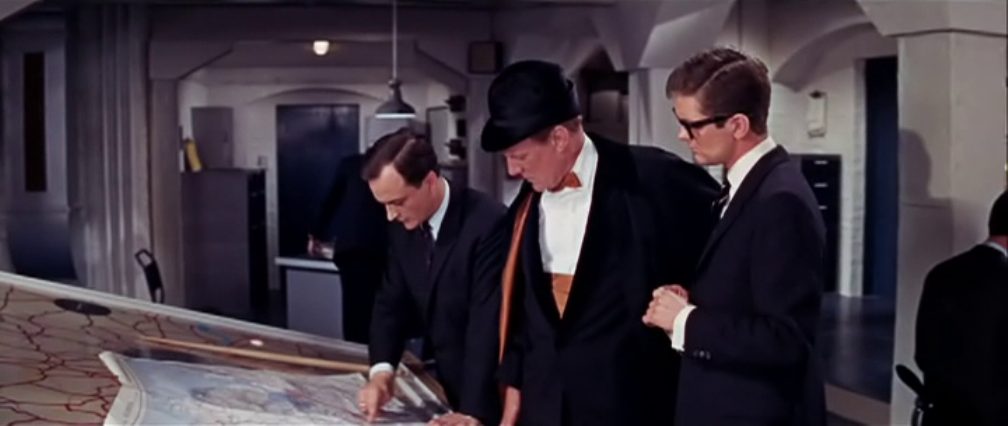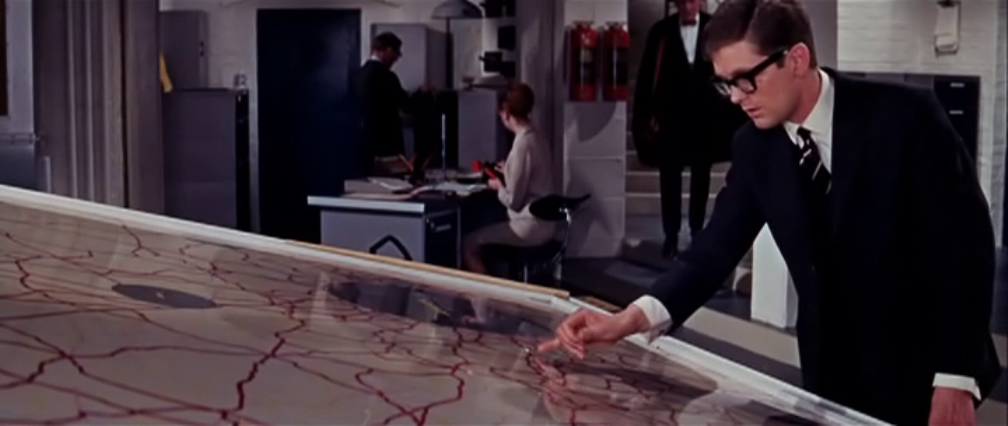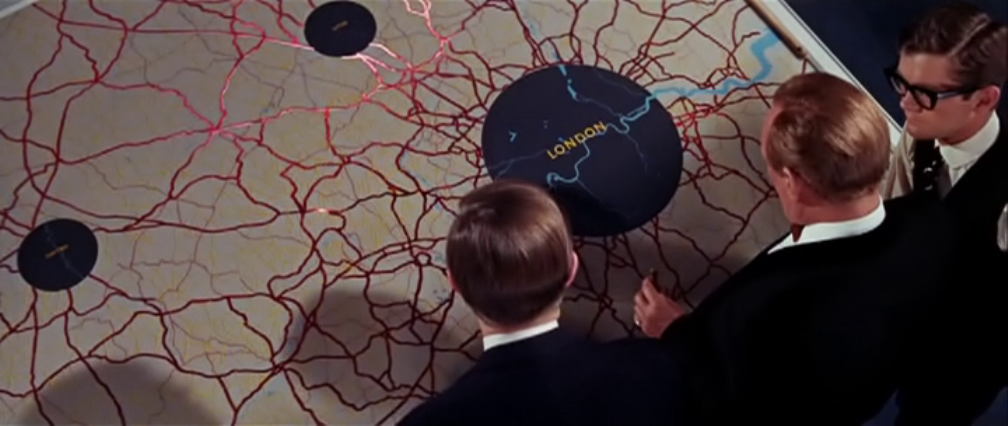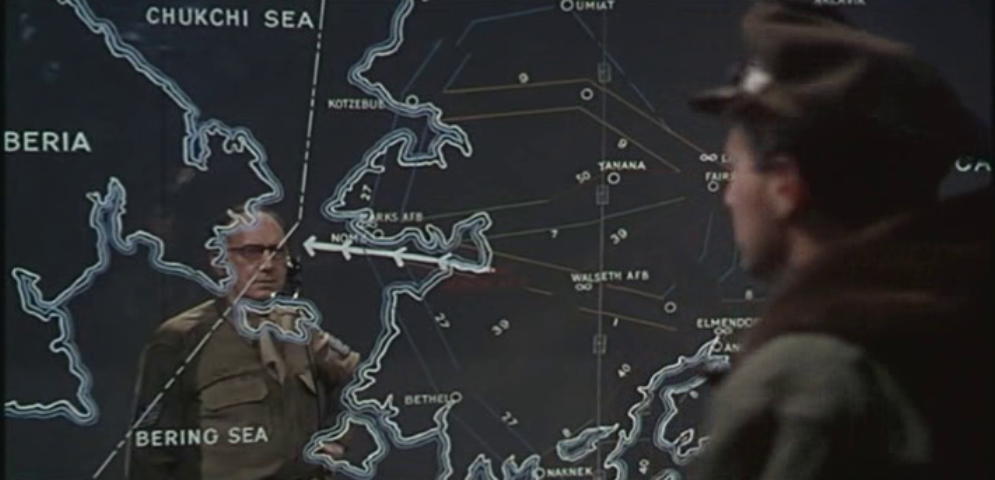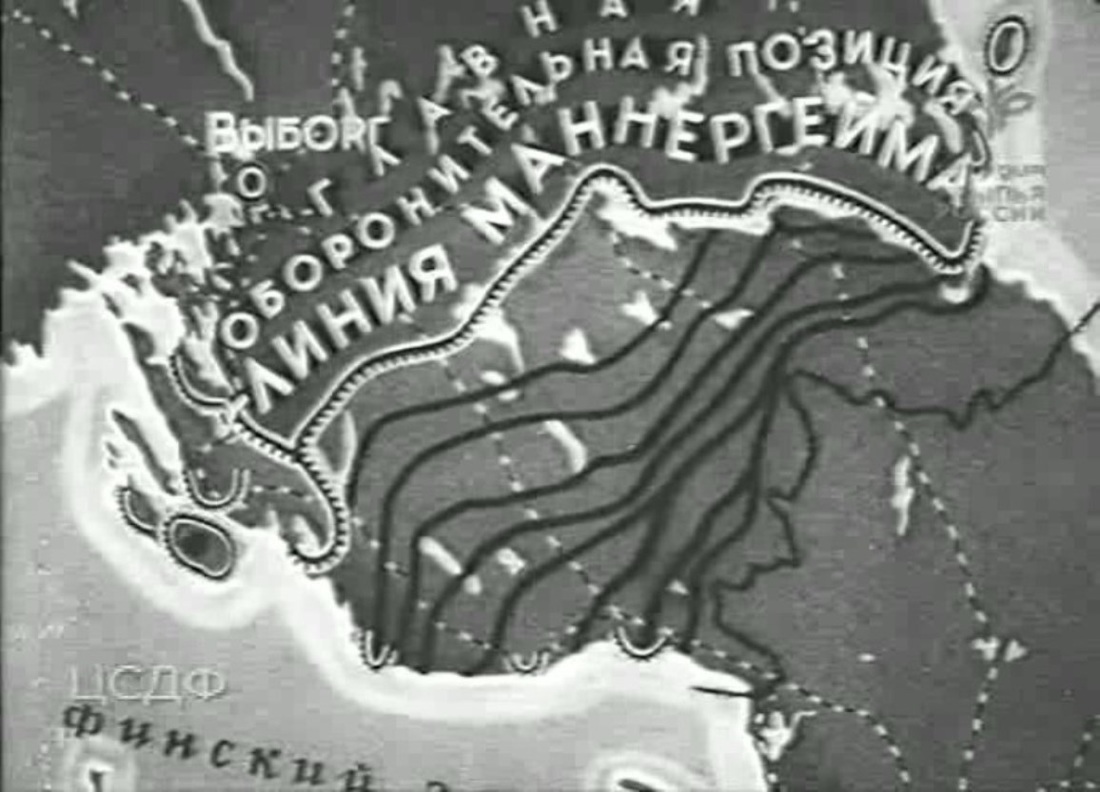


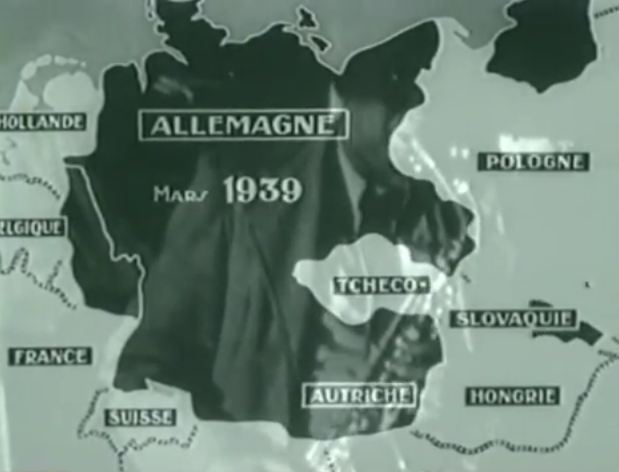
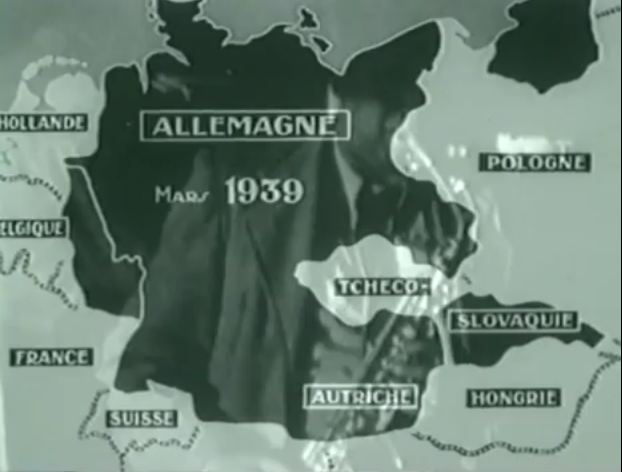
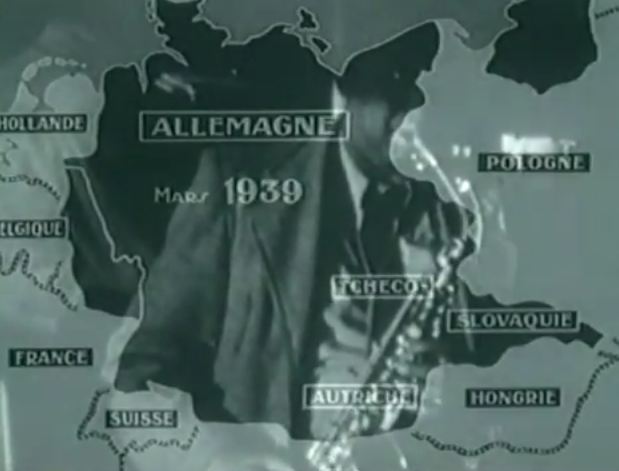
    Laszlo Strausz, 'History as a Palimpsestic Narrative in The Danube Exodus', Film-Philosophy 15.1 (2011). p.101. The cine-maps in The Danube Exodus operate at Strausz's first narrative level, seeming to create an objective narrative situation. The superimpositions, however, hints at the imminent disruption of that naïve conception. You can read the whole of Strausz's excellent essay here, in the latest issue of Film-Philosophy. 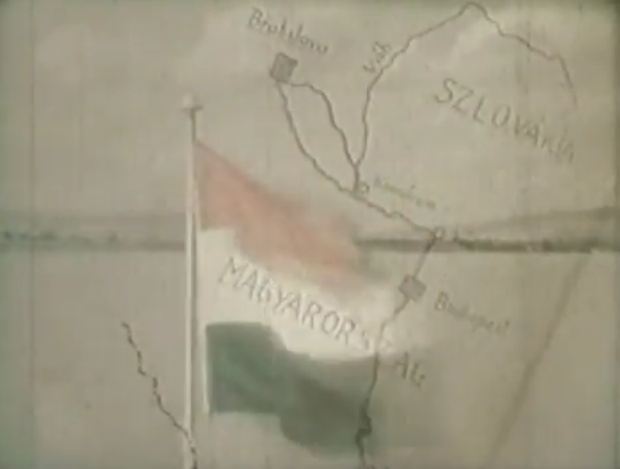 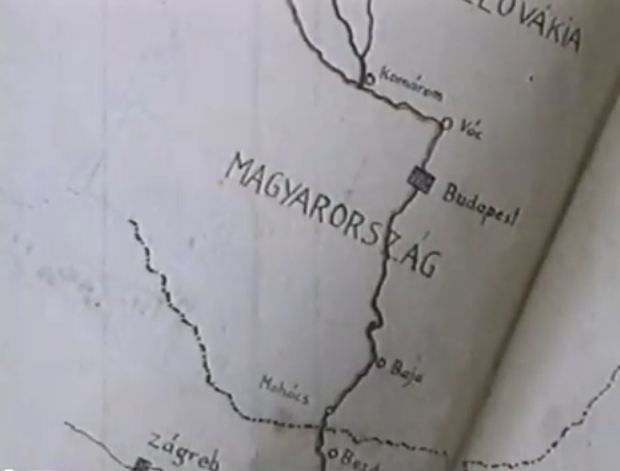 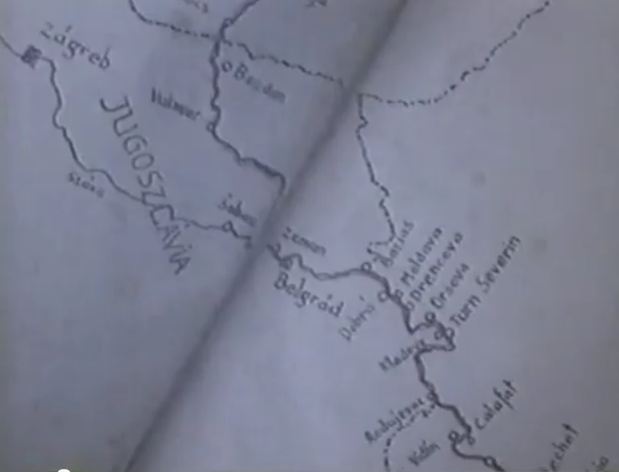 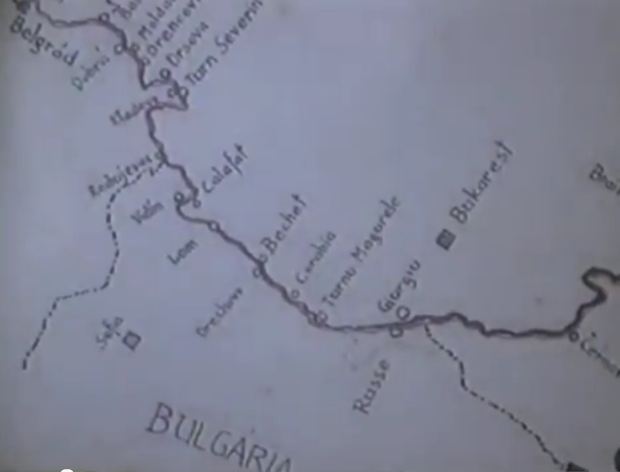 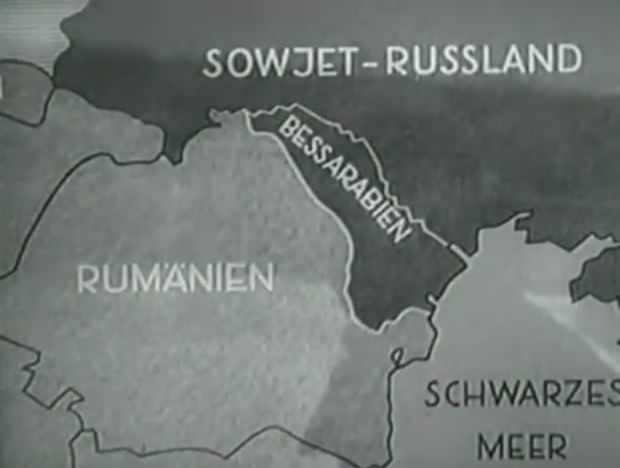 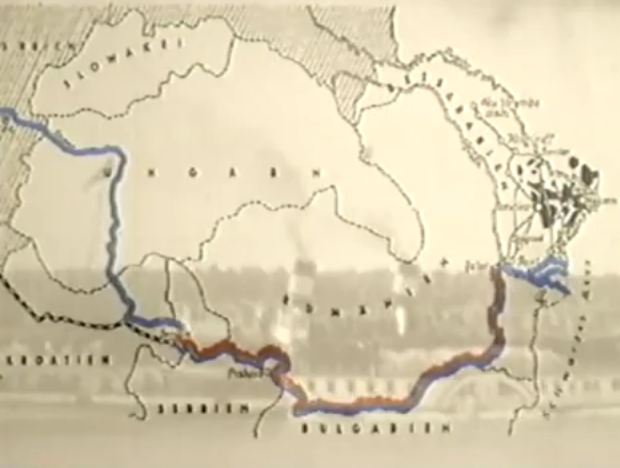 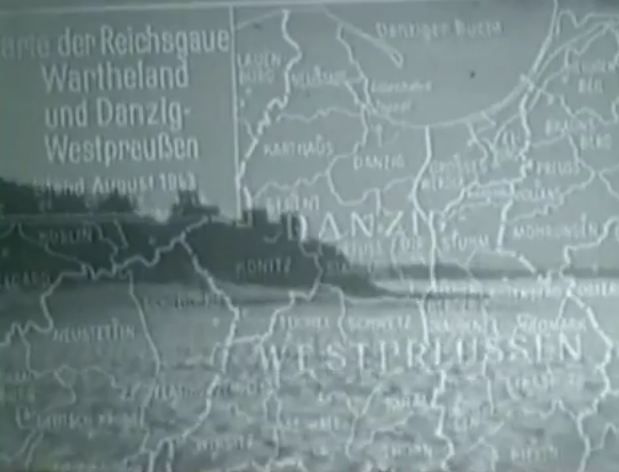 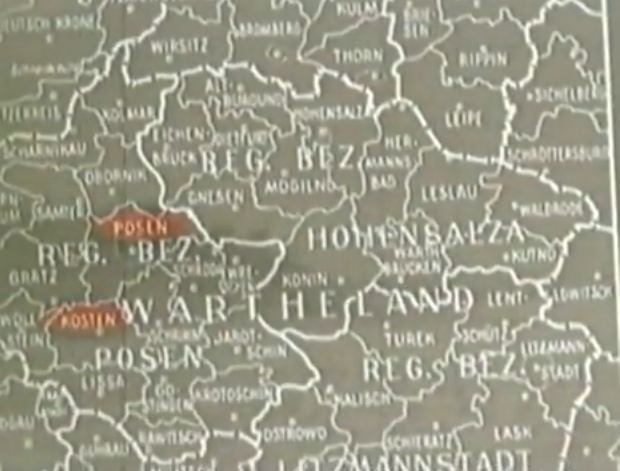  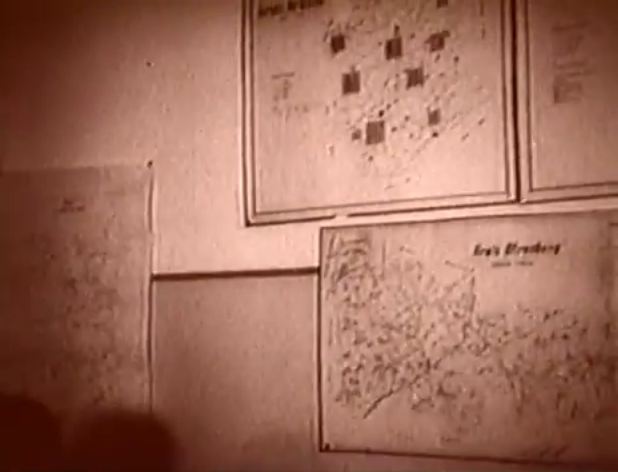 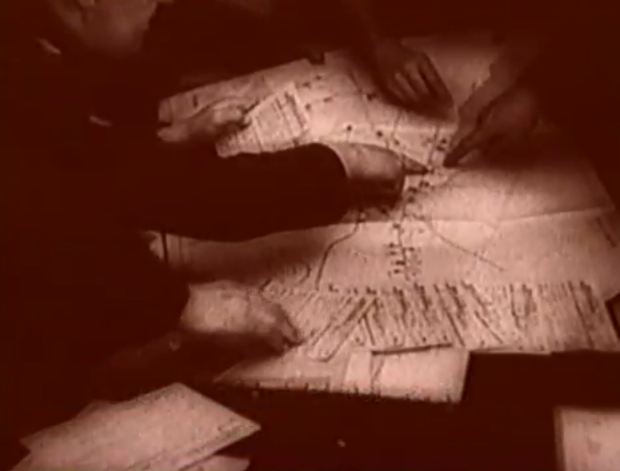 148/ Cross of Iron (Sam Peckinpah 1976): all the maps, & Breakthrough (Andrew V. McLagen 1979)2/9/2011 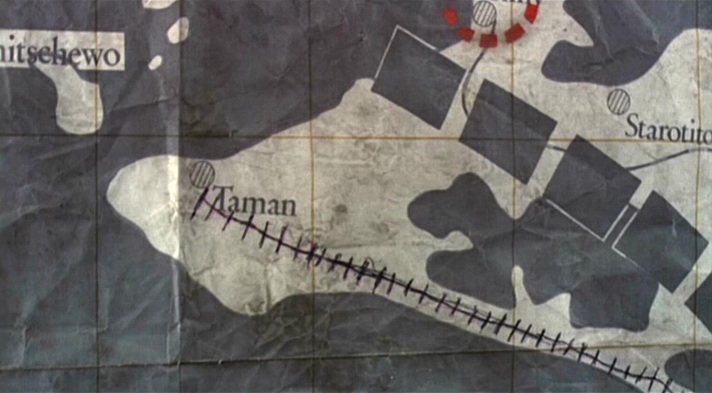 Unusually for a war film, the maps in Cross of Iron do very little to situate the action, and for a long time we only know vaguely where on the Eastern Front this German unit is (Compare with other war films here, here and here). The first map we see is being studied by Brandt (James Mason) as he muses in general terms about 'this damned country', adding that 'one of these days this land will swallow us up': 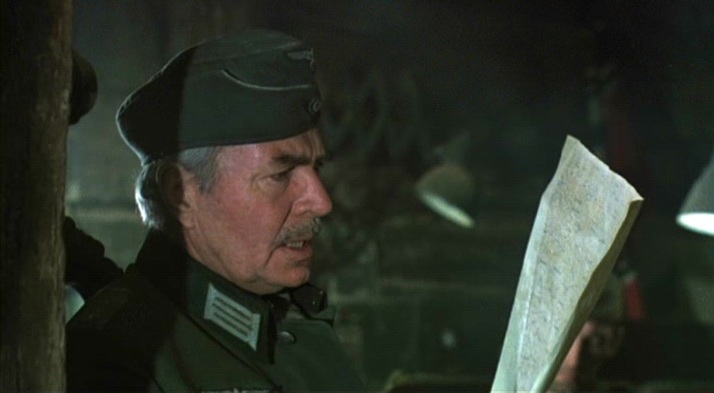 Later in the same scene, Captain Stransky (Maximilian Schell) is impressed at being offered a glass of German wine: 'a 1937 Moselle in the southernmost corner of Russia', which allows Brandt to brood again about where they are: 'A bottle of Moselle is no more out of place in this region than we are ourselves'. The film's topographical focus is largely this, that the Germans here are out of place. This room is littered with maps, none of which has legible detail: 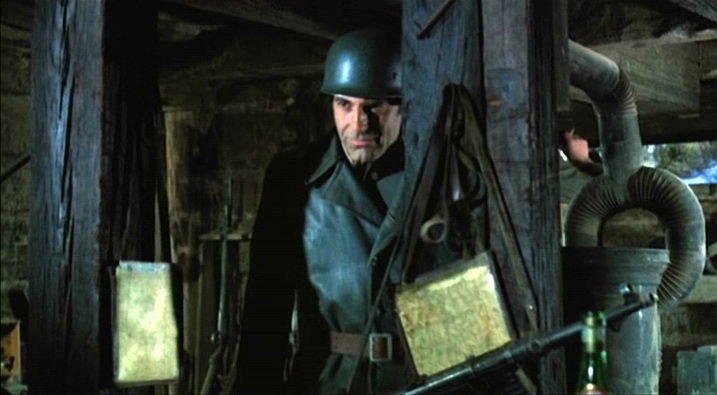 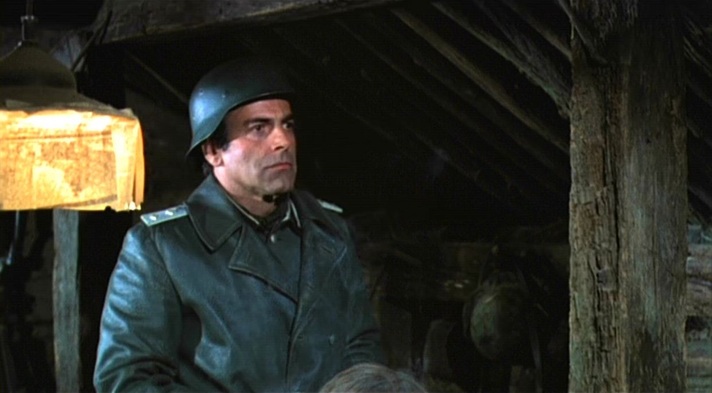 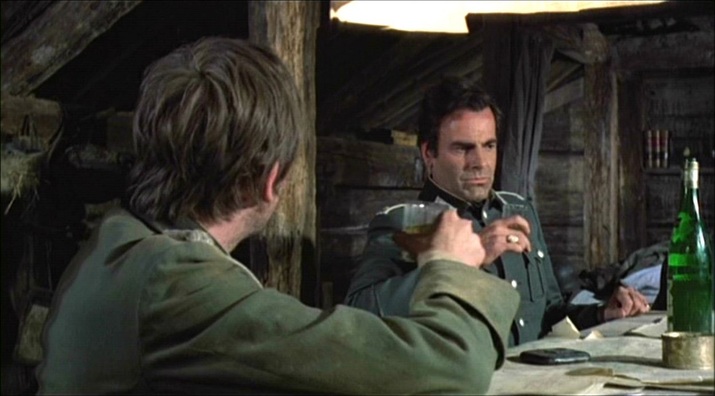 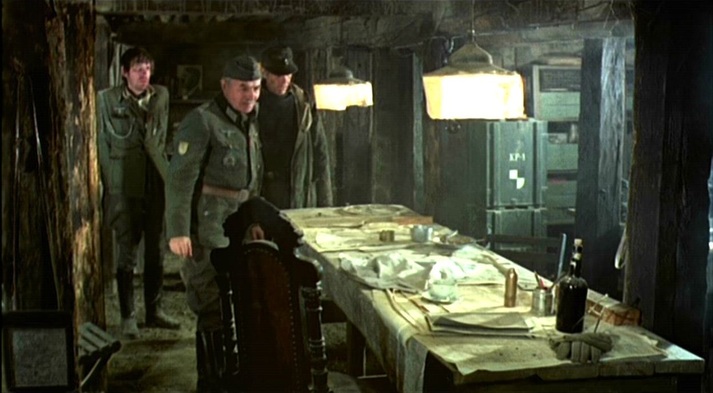 Much later, when Sergeant Steiner (James Coburn) is with his unit in 'no man's land', he consults a map but again we see nothing that identifies the exact locale: 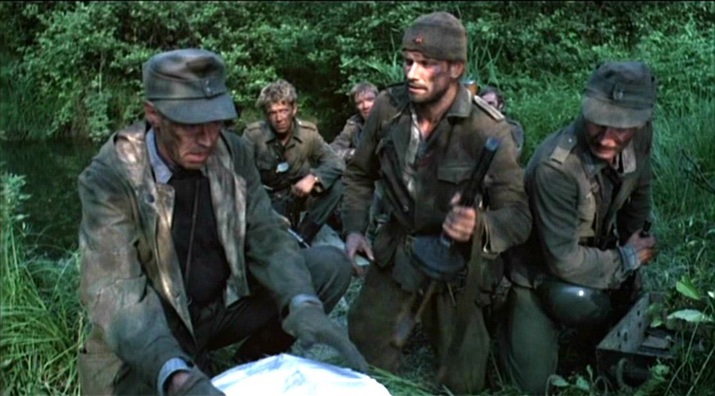 Eventually, the film offers the expected scene in which operations are indicated on a map, usually for the benefit of both characters and spectators. The map has legible detail, but only someone familiar with the 'Taman Offensive Operations' during the Battle of the Caucasus in 1943 would be able to situate the German unit we have been following. In fact this map is examined only for the benefit of the characters. A larger view of this map is not much more informative, nor are Brandt's world-weary comments as he points out the improvised train line on the map: 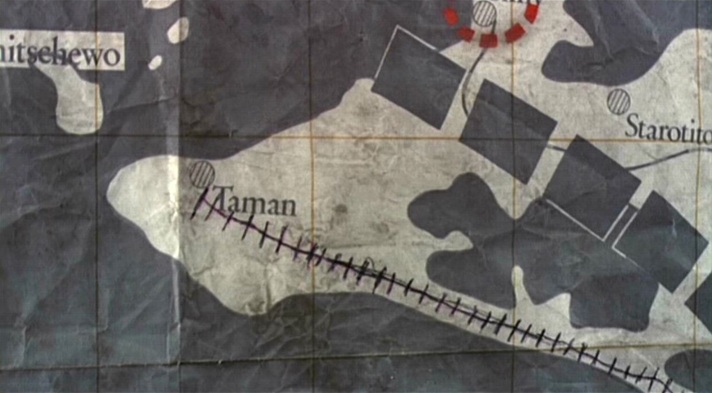 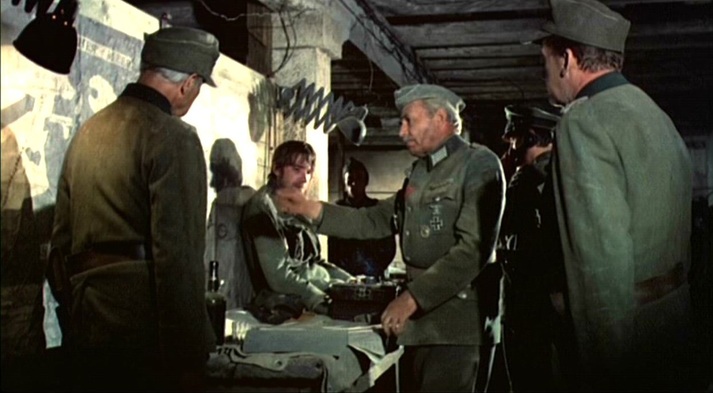 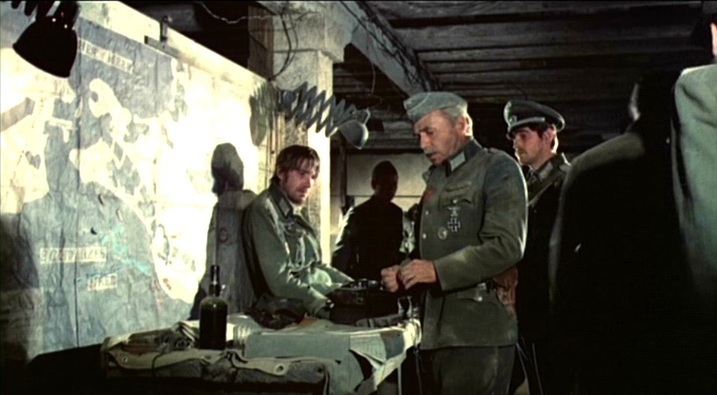 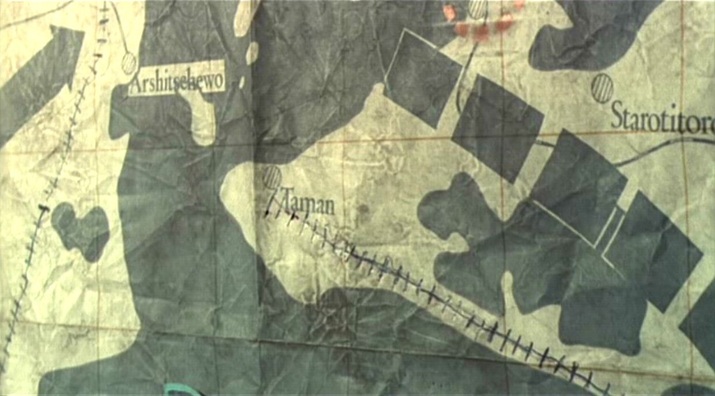 A last map in the film is being used by Russian women soldiers when they are attacked by Steiner's unit. Like the previous map, it has been modified in accordance with the immediate military situation. What we can see of the map are only these modifications: 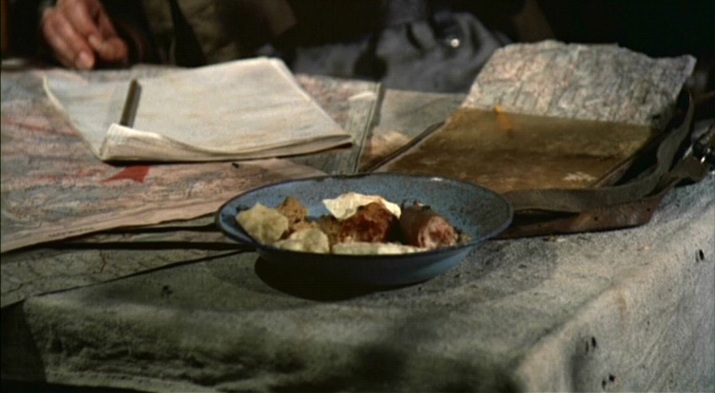 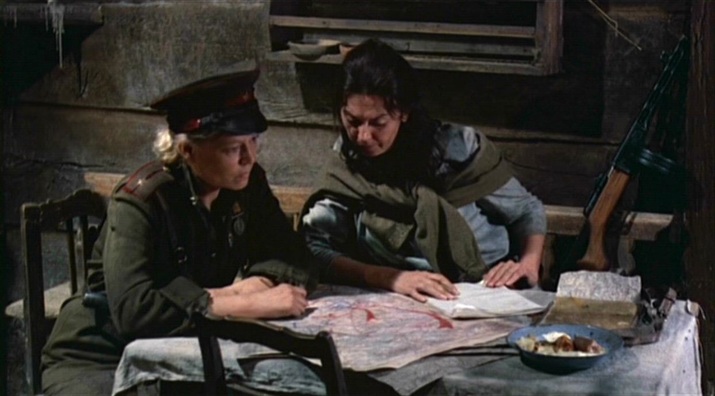 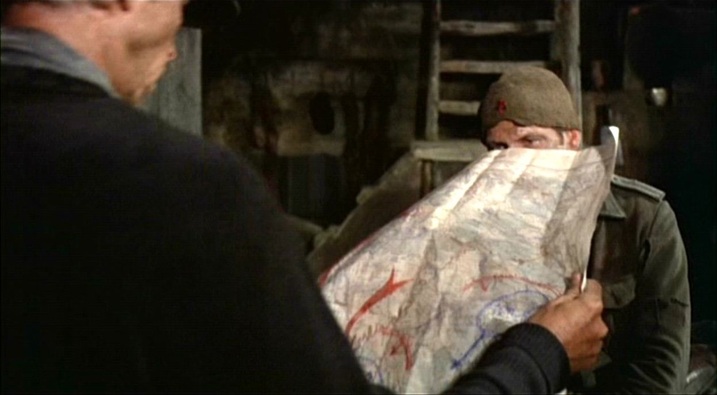 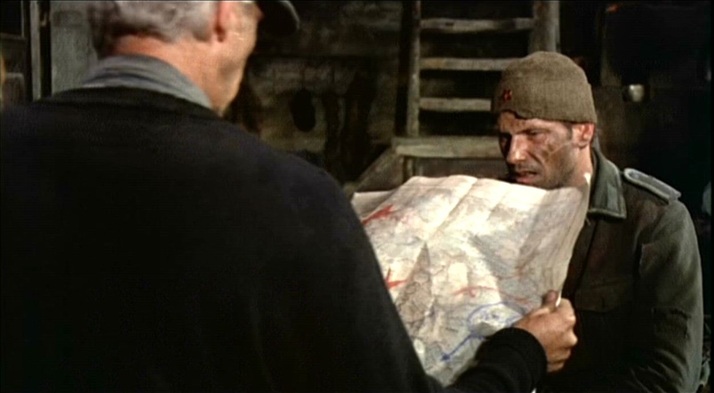 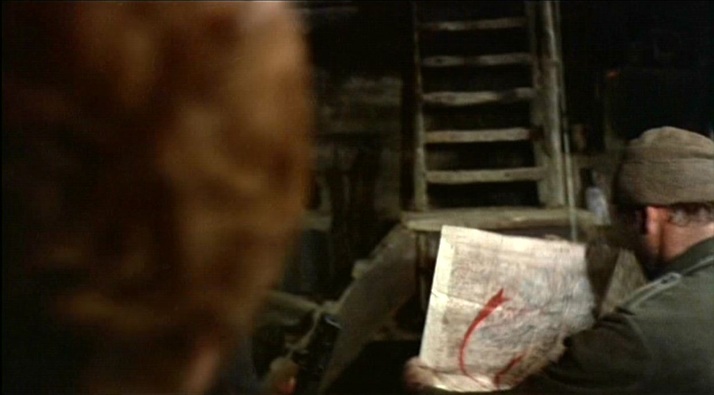 Cross of Iron is admired - especially by enthusiasts of militaria and weaponry - for its accuracy of detail, and more broadly for its realism. The use of maps as décor is a conventional realism, but the lack of a discursive topographical frame, leaving the spectators in greater than usual confusion as to where they are, is a refinement of realism. Andrew V. McLagen's 1979 sequel to Cross of Iron is much more conventional in its presentation of maps, especially when its action shifts from the Eastern to the Western Front. It also has a voice over giving an historical overview of the action presented, alleviating spectator confusion. (Breakthrough is not generally admired for its realism, nor for its accuracy of detail.) 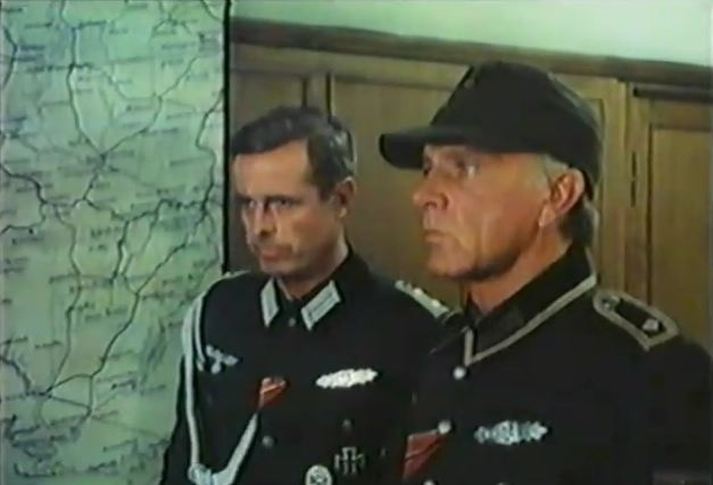 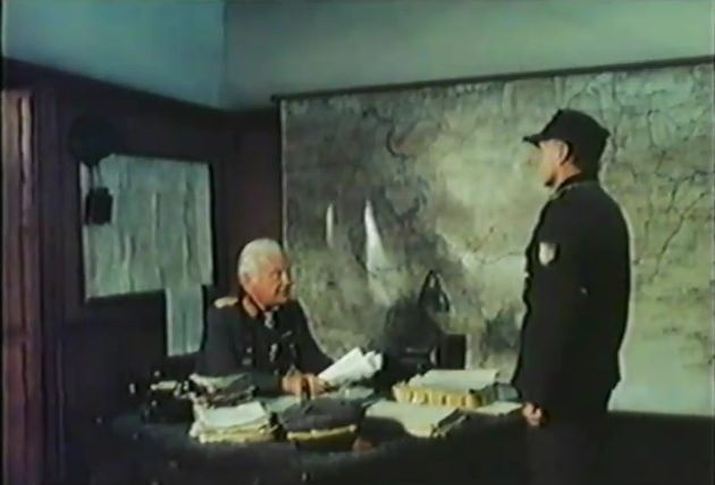 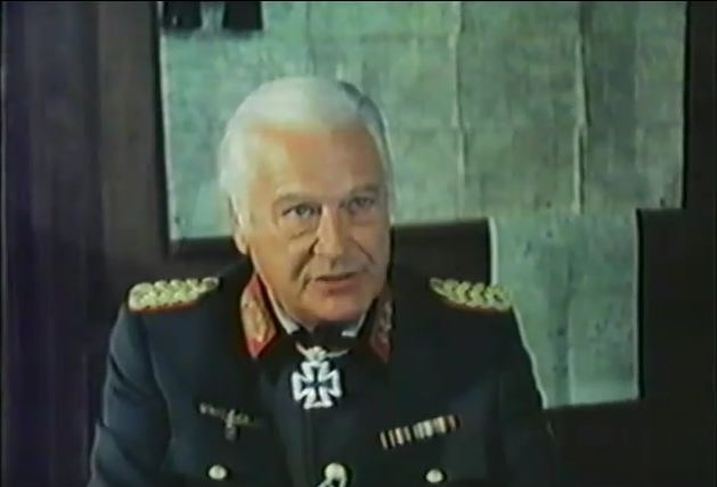 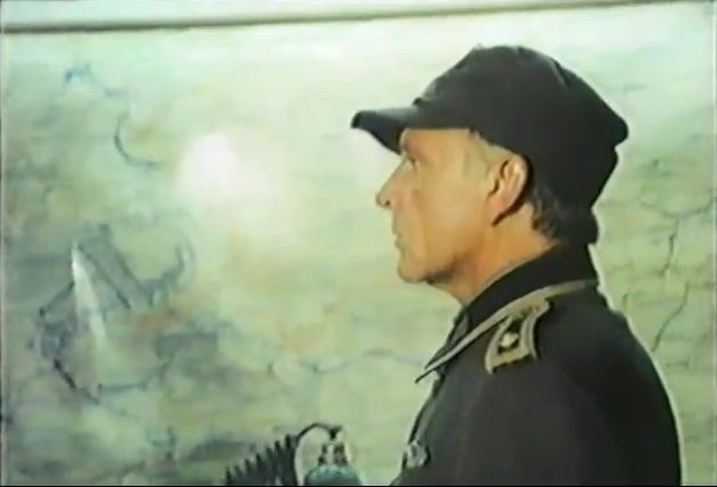 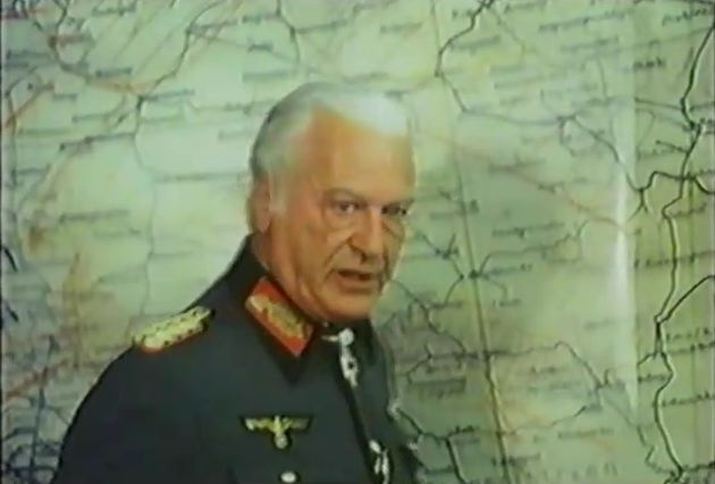 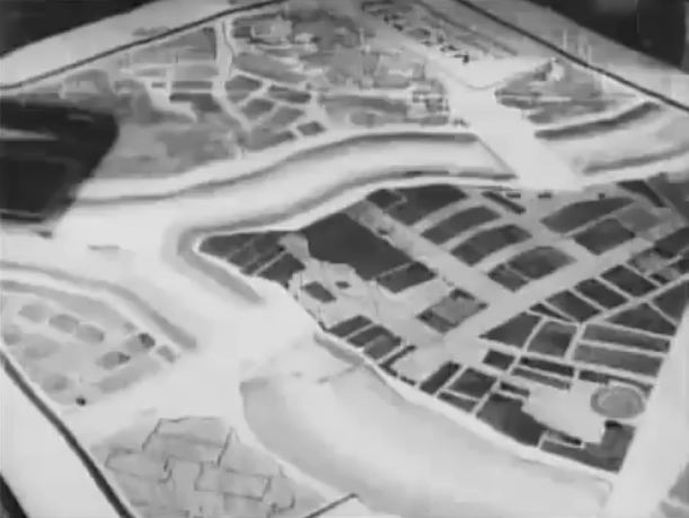 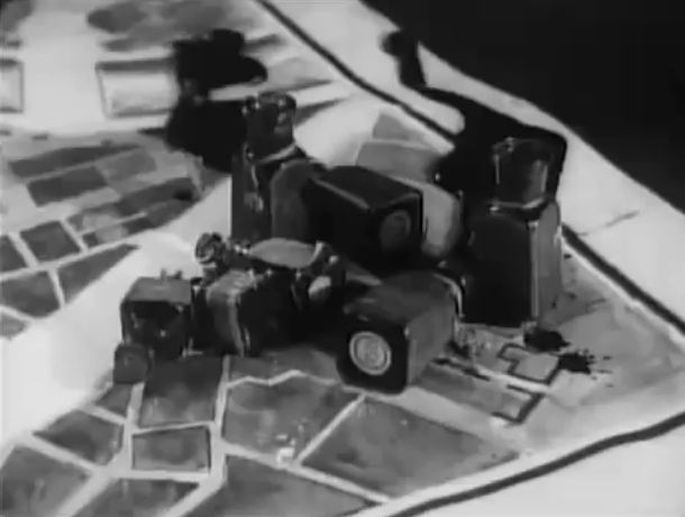 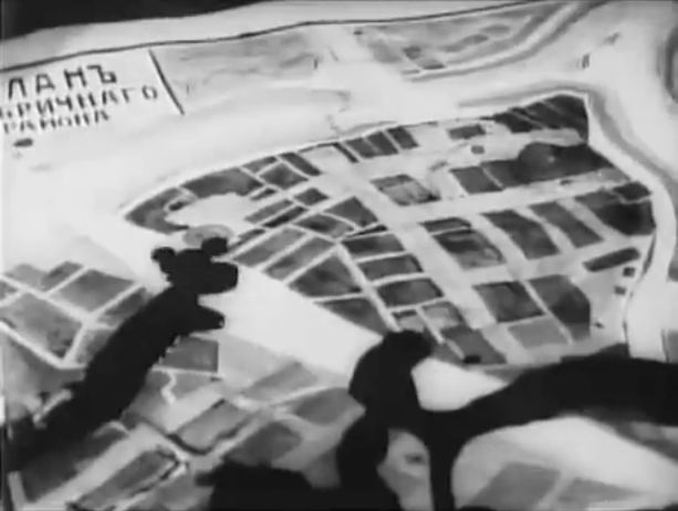 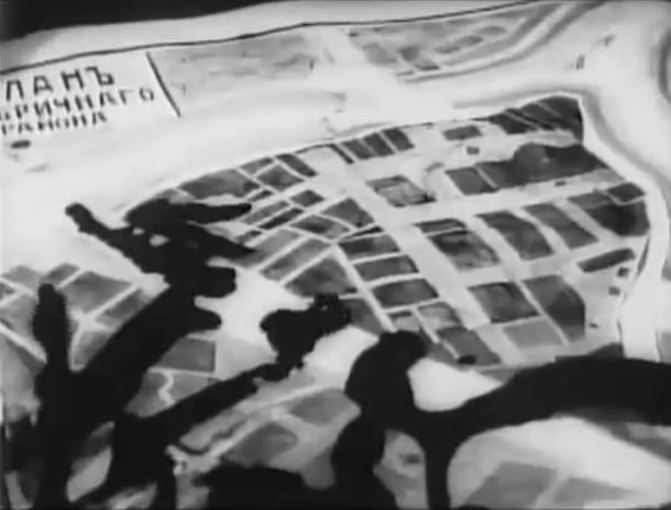 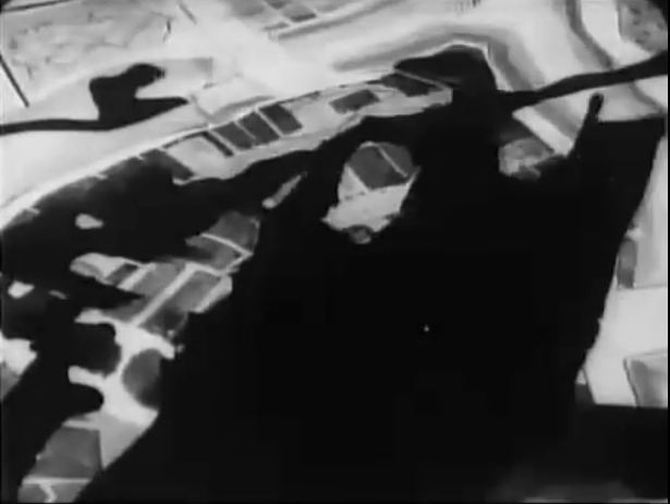 ‘Eisenstein prepares for the leap into nondiegetic metaphor by a rapid series of more motivated ones. Confronted by the defiant Bolshevik leader, the raging police chief pounds his desk, knocking bottles of ink across the map of the workers’ district. The shot literalizes the metaphor of “the streets running with blood”.’
David Bordwell, ‘Monumental Heroics: Form and Style in Eisenstein’s Silent Films’, in Lee Grieveson & Peter Krämer (eds), The Silent Cinema Reader (New York: Routledge, 2004), p.384. 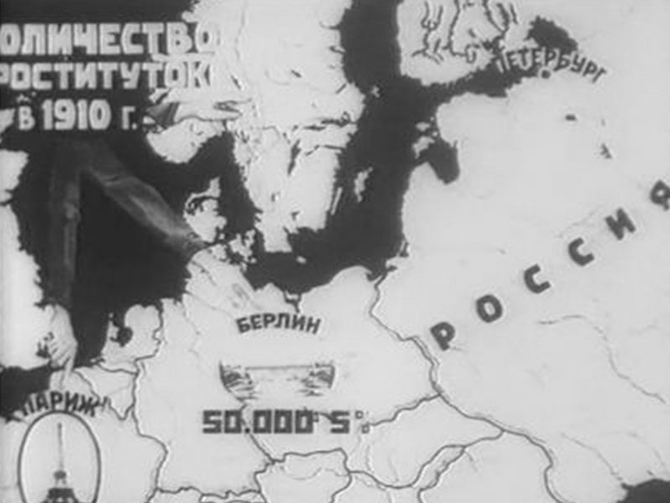 ‘The map is almost as close to becoming the center of the new Russian iconic cult as Lenin's portrait. Quite certainly the strong national feeling that Bolshevism has given all Russians, regardless of distinction, has conferred a new reality on the map of Europe. They want to measure, compare, and perhaps enjoy that intoxication with grandeur which is induced by the mere sight of Russia; citizens can only be urgently advised to look at their country on the map of neighboring states, to study Germany on a map of Poland, France, or even Denmark; but all Europeans ought to see, on a map of Russia, their little land as a frayed, nervous territory far out to the west.’
Walter Benjamin, ‘Moscow’ [1927], in Selected Writings 1927-1930 (Cambridge, MA: Harvard University Press, 1999), p.27. |