Till Roeskens:
In the beginning, when I thought about coming here, all I had in mind was to ask the residents to draw maps. I did not know that I would make a film; but over the years, video work has became more and more important for me. This thing that I call “video-mapping,” I think it comes from a film I saw about Picasso where they--
Azareen Van der Vliet Oloomi:
Yes, The Mystery of Picasso?
Till Roeskens:
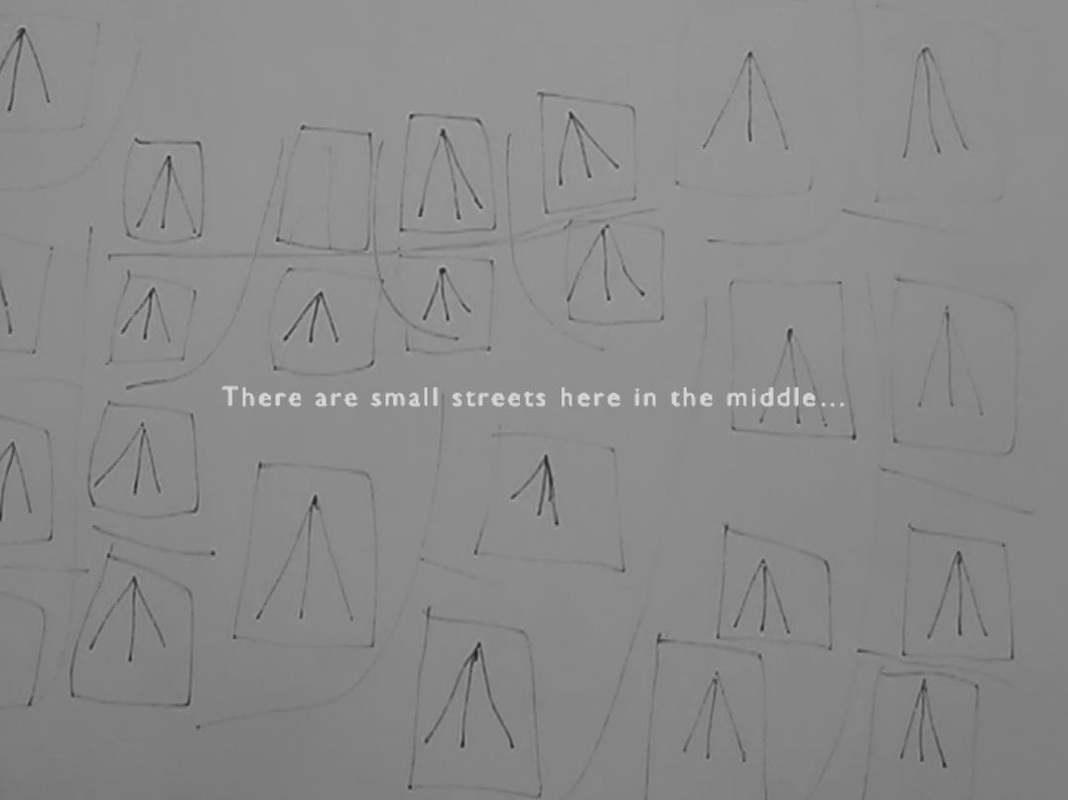
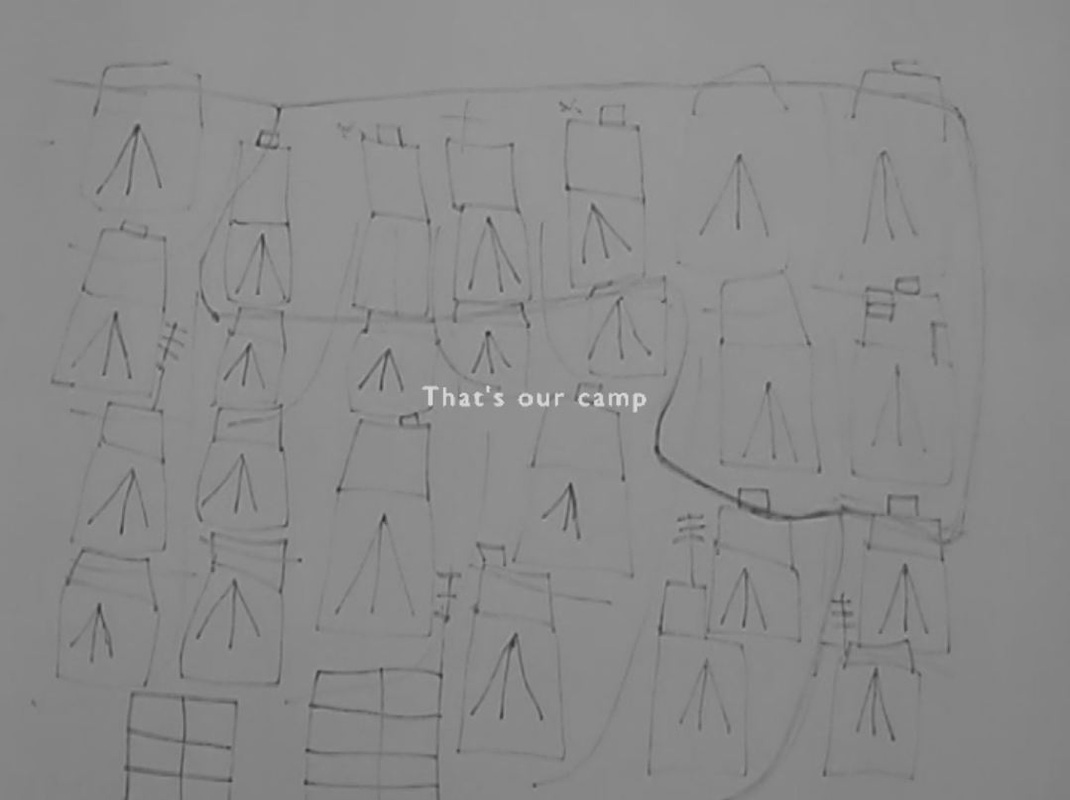
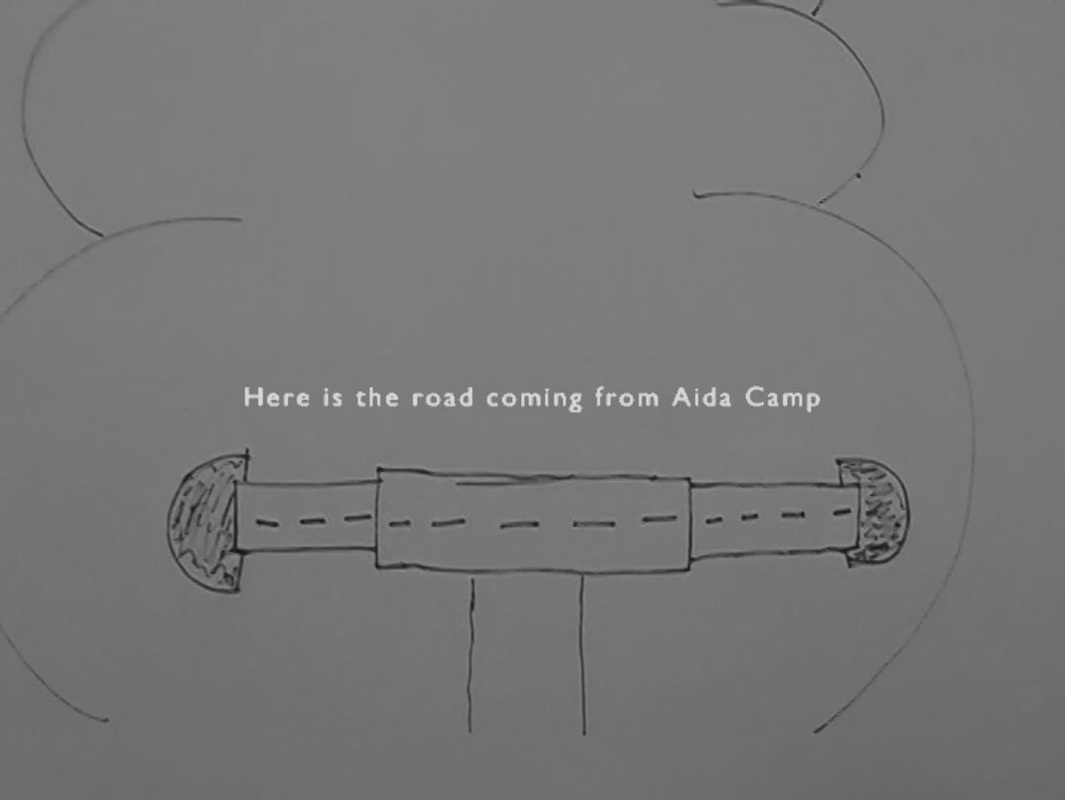
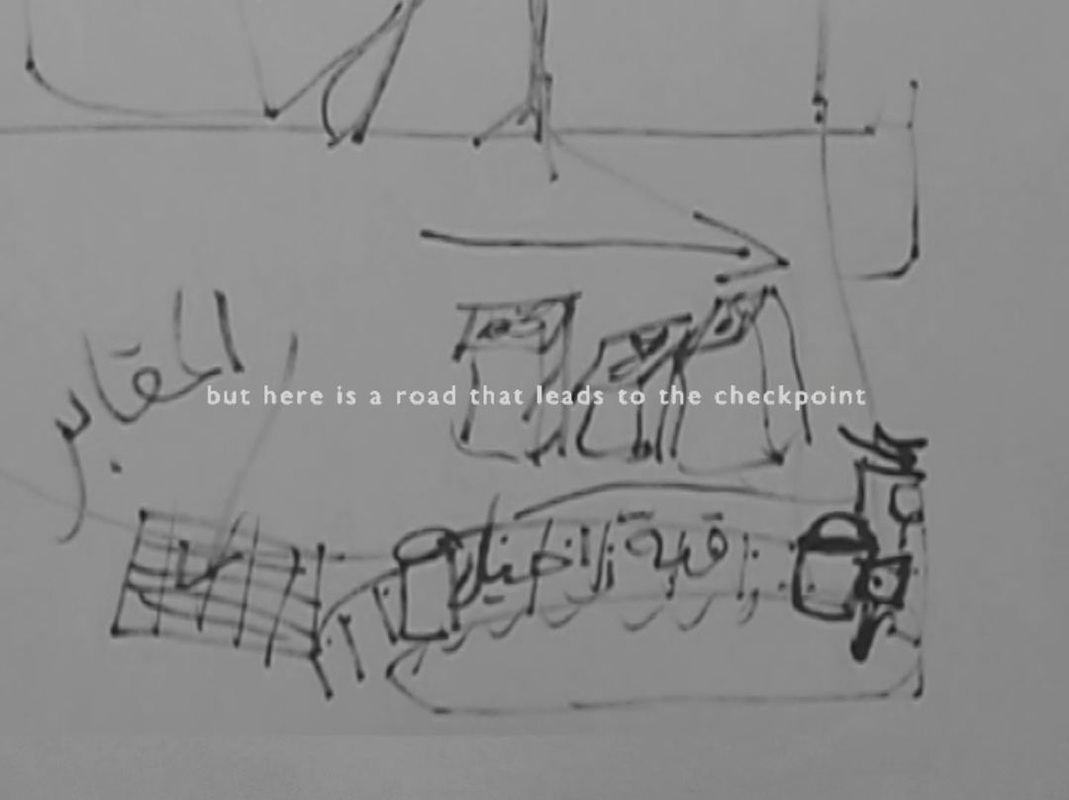
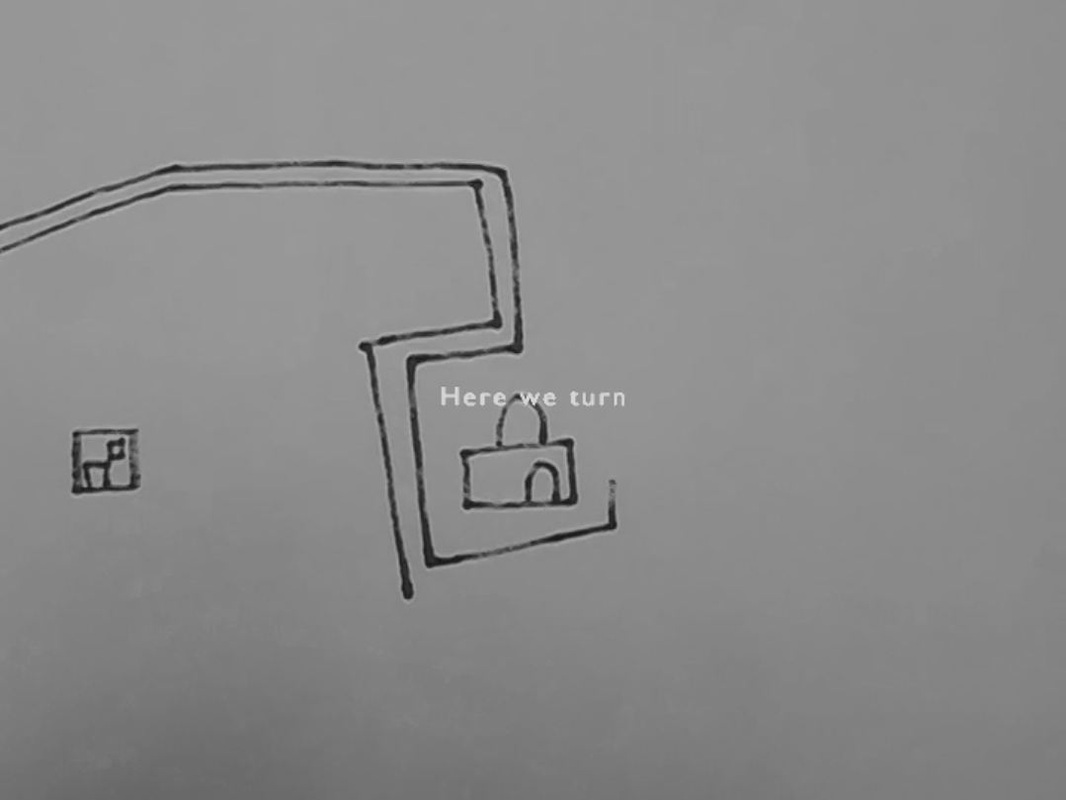
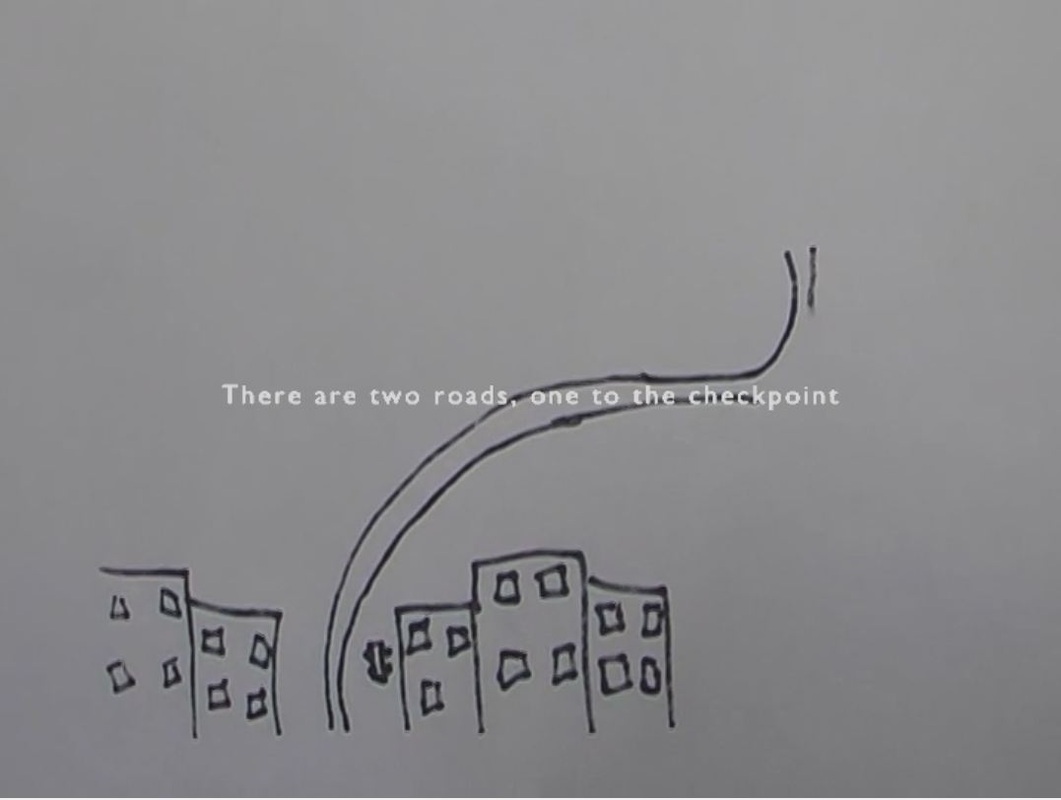
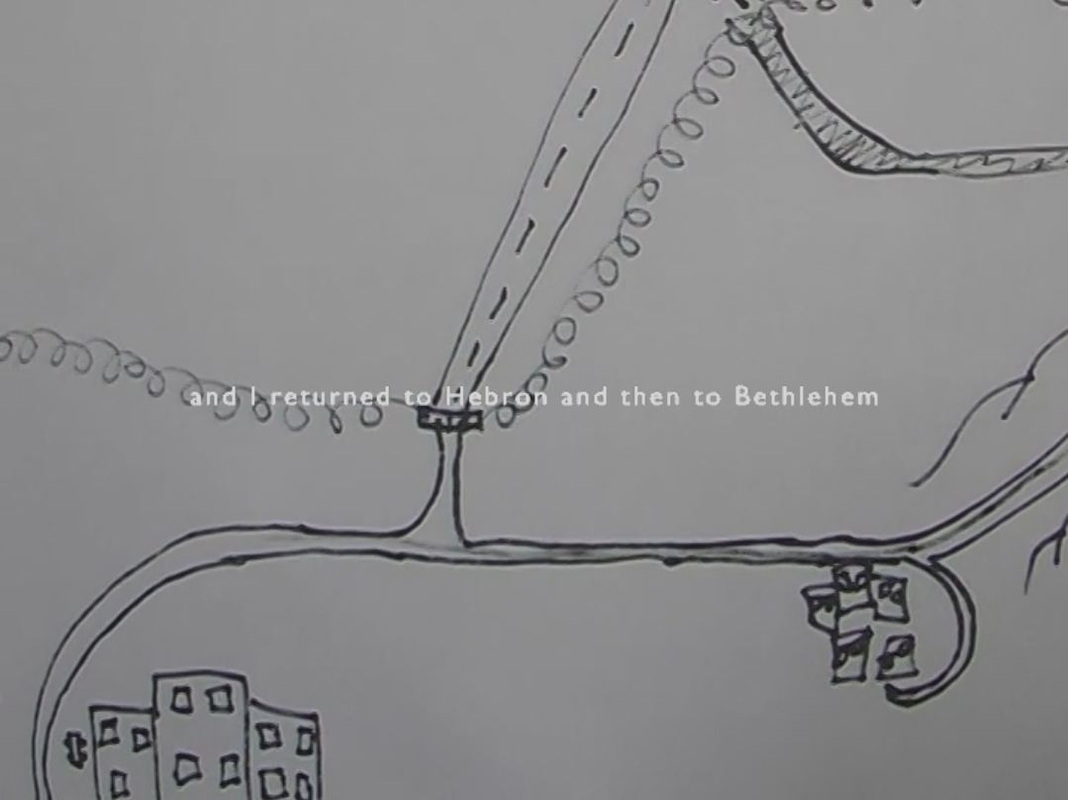
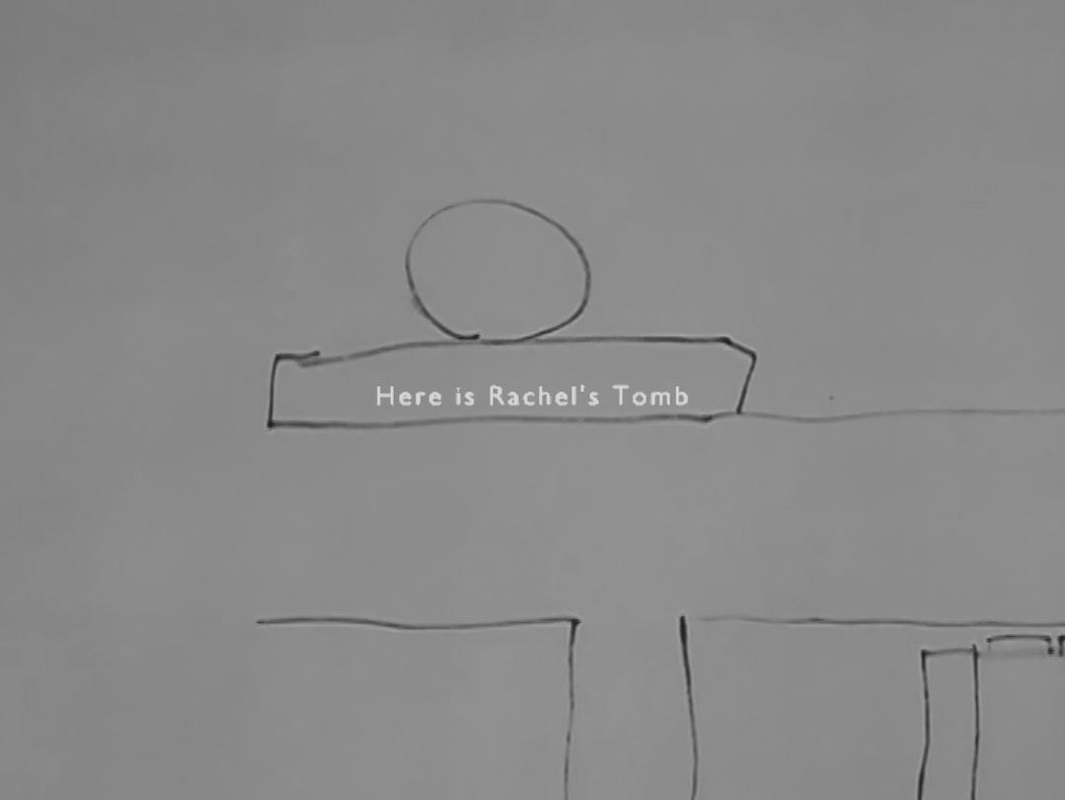
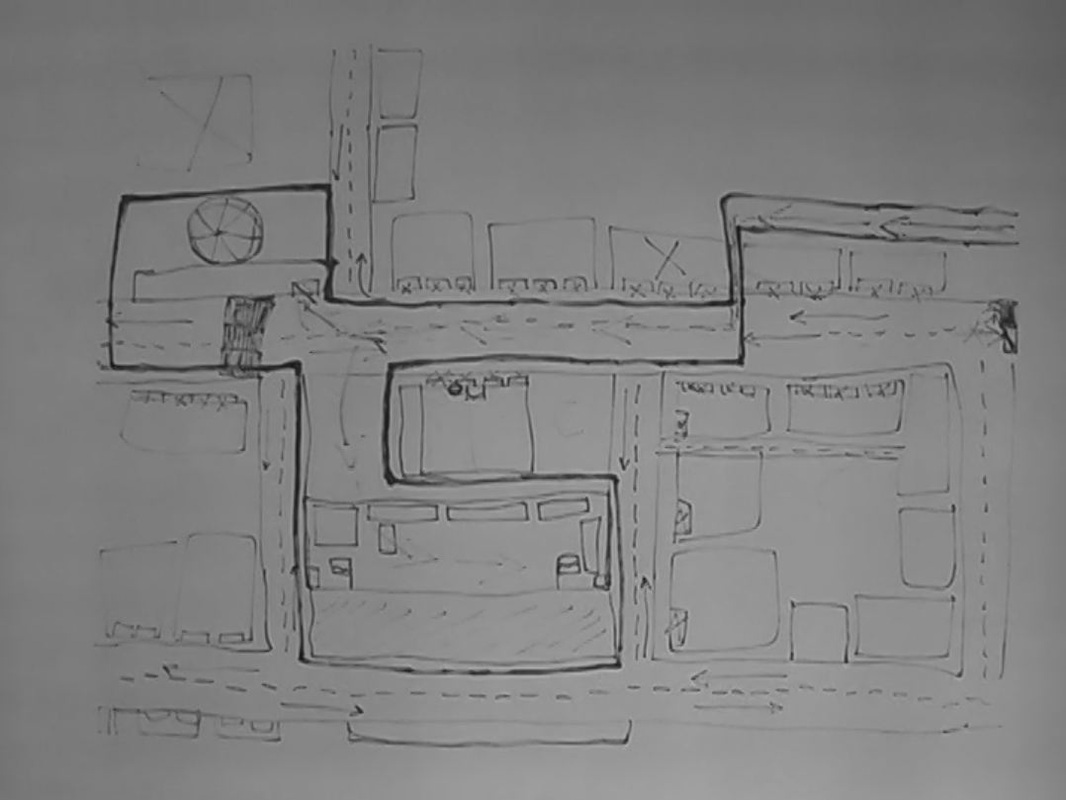
Tes, where they made drawings like this. So I reinvented it a little bit and built a frame with wood I found lying around the camp. The nails you could buy from the grocery store—used nails. They’re really very precious here, I think. I built it so that it can stand upright on the table and fit the shape of the biggest sheets of paper I could find, which were about one meter large. Then, I asked residents of the camp to draw with big ink pens so the marks would go through the paper. I filmed from the other side, as they drew, so I didn’t see the person while they were drawing and speaking; I saw only the white screen with the light coming from behind me.
Azareen Van der Vliet Oloomi:
And they were speaking as they drew, simultaneously?
Till Roeskens:
Alternately, I would say. The editing makes it seem like it’s really in the moment—the words come and the line comes as if the words are magically drawing the map. Of course in reality it’s a little bit more disconnected because it’s hard to speak and to draw at the same time. I would ask a question—there was always someone from the camp who spoke a little English sitting on the side of the table who could see both of us—so I would ask a question and he would translate, and the participant would draw something. And then I would say, “Can you explain to me what it is? Can you make this or that a bit more specific?” Then they would do it and I would say, “If you go further in this direction, what is there, what happened then?” It was quite a long dialogue, but the editing makes it seem more like one concentrated story.
Read the full interview here
In the beginning, when I thought about coming here, all I had in mind was to ask the residents to draw maps. I did not know that I would make a film; but over the years, video work has became more and more important for me. This thing that I call “video-mapping,” I think it comes from a film I saw about Picasso where they--
Azareen Van der Vliet Oloomi:
Yes, The Mystery of Picasso?
Till Roeskens:
Tes, where they made drawings like this. So I reinvented it a little bit and built a frame with wood I found lying around the camp. The nails you could buy from the grocery store—used nails. They’re really very precious here, I think. I built it so that it can stand upright on the table and fit the shape of the biggest sheets of paper I could find, which were about one meter large. Then, I asked residents of the camp to draw with big ink pens so the marks would go through the paper. I filmed from the other side, as they drew, so I didn’t see the person while they were drawing and speaking; I saw only the white screen with the light coming from behind me.
Azareen Van der Vliet Oloomi:
And they were speaking as they drew, simultaneously?
Till Roeskens:
Alternately, I would say. The editing makes it seem like it’s really in the moment—the words come and the line comes as if the words are magically drawing the map. Of course in reality it’s a little bit more disconnected because it’s hard to speak and to draw at the same time. I would ask a question—there was always someone from the camp who spoke a little English sitting on the side of the table who could see both of us—so I would ask a question and he would translate, and the participant would draw something. And then I would say, “Can you explain to me what it is? Can you make this or that a bit more specific?” Then they would do it and I would say, “If you go further in this direction, what is there, what happened then?” It was quite a long dialogue, but the editing makes it seem more like one concentrated story.
Read the full interview here