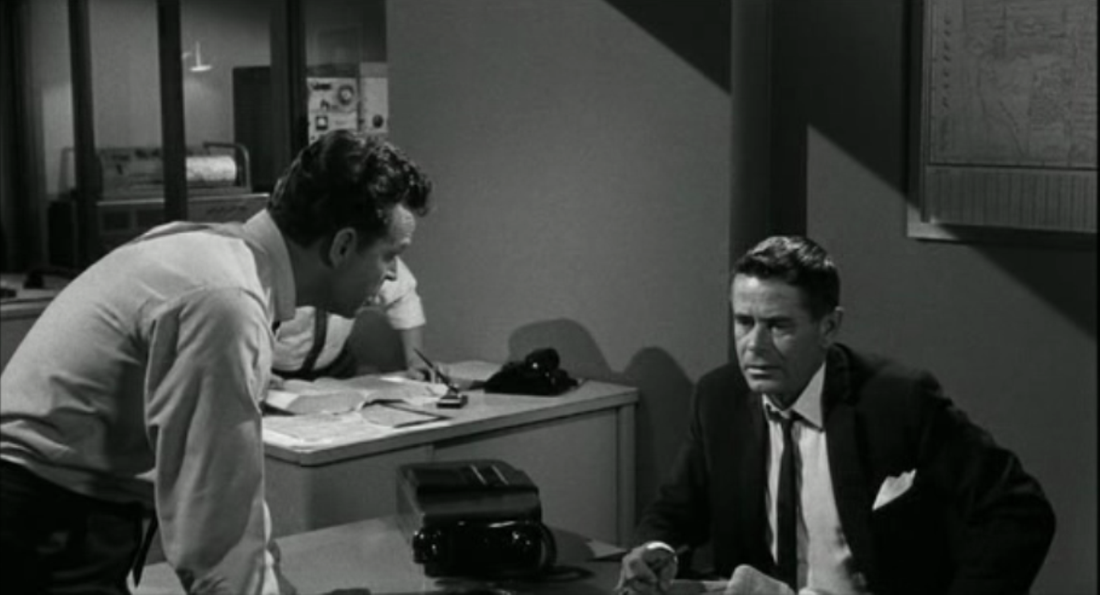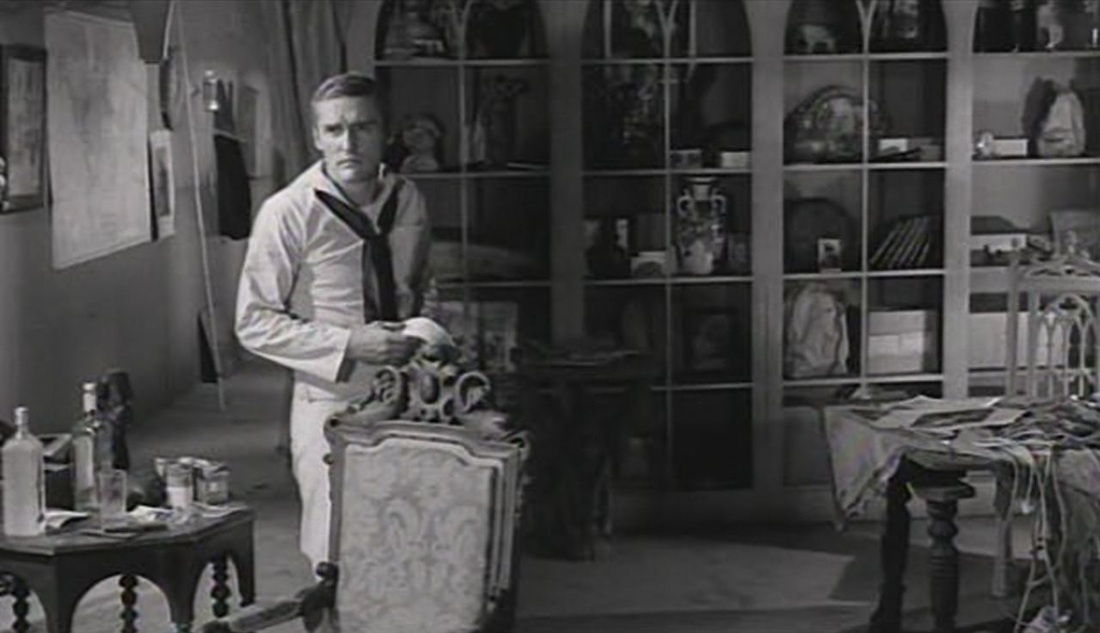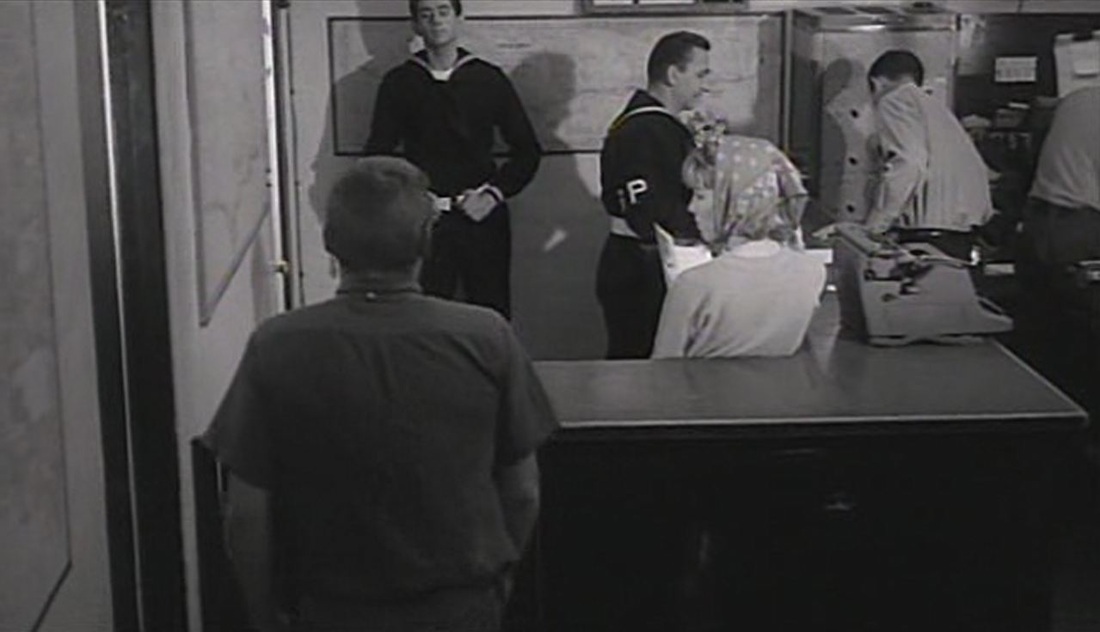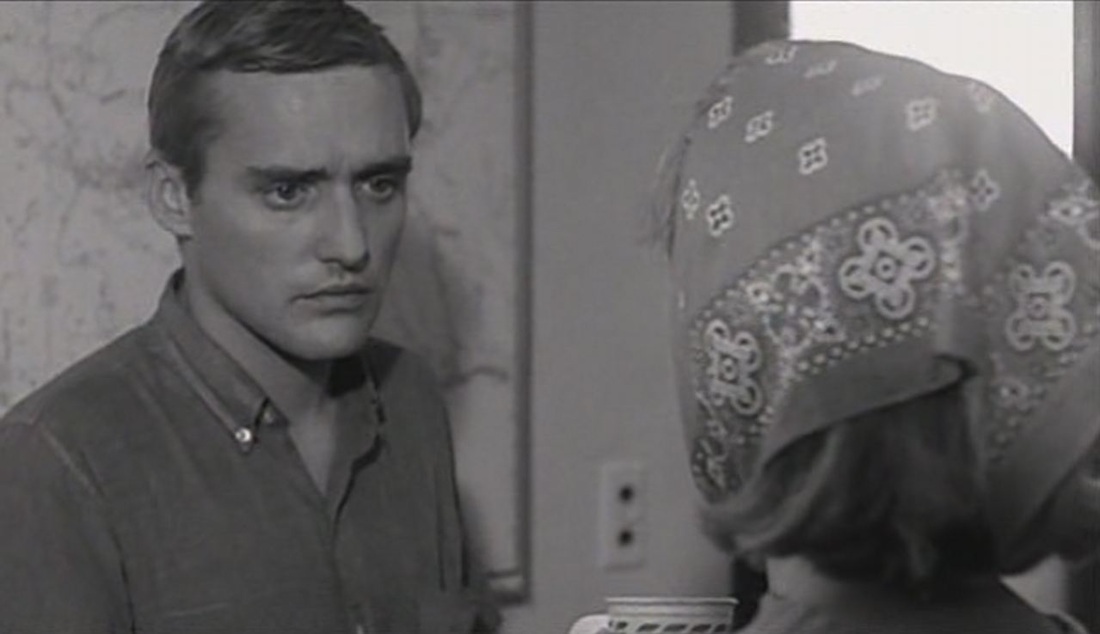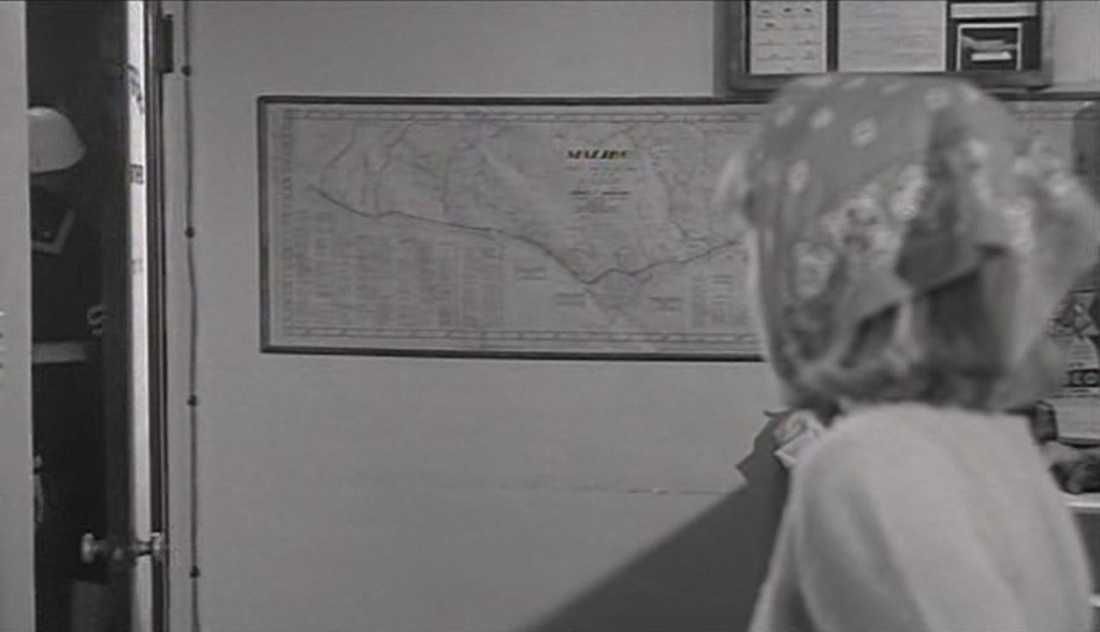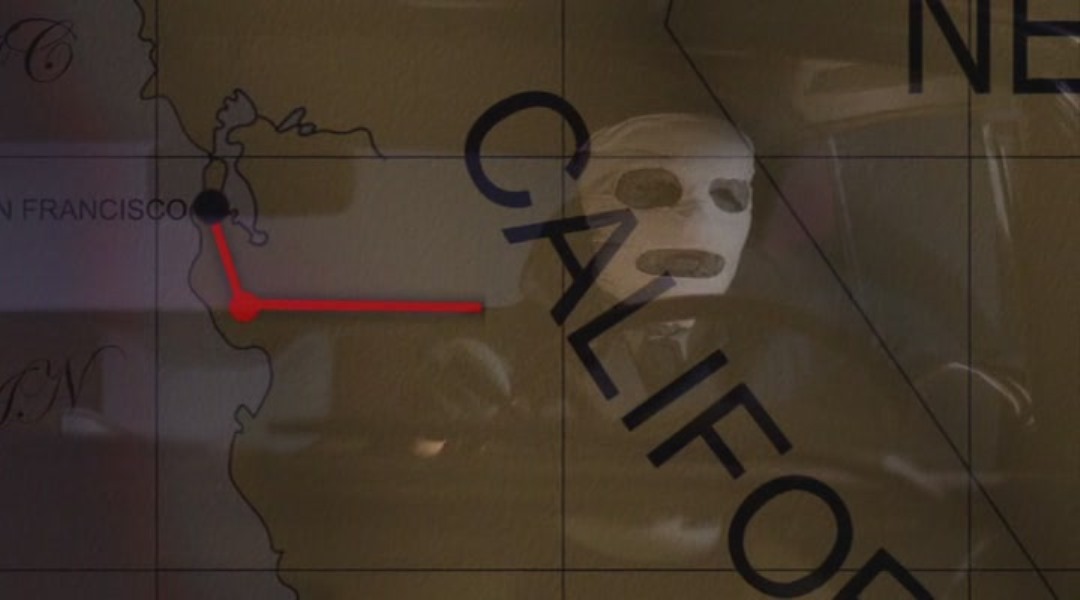
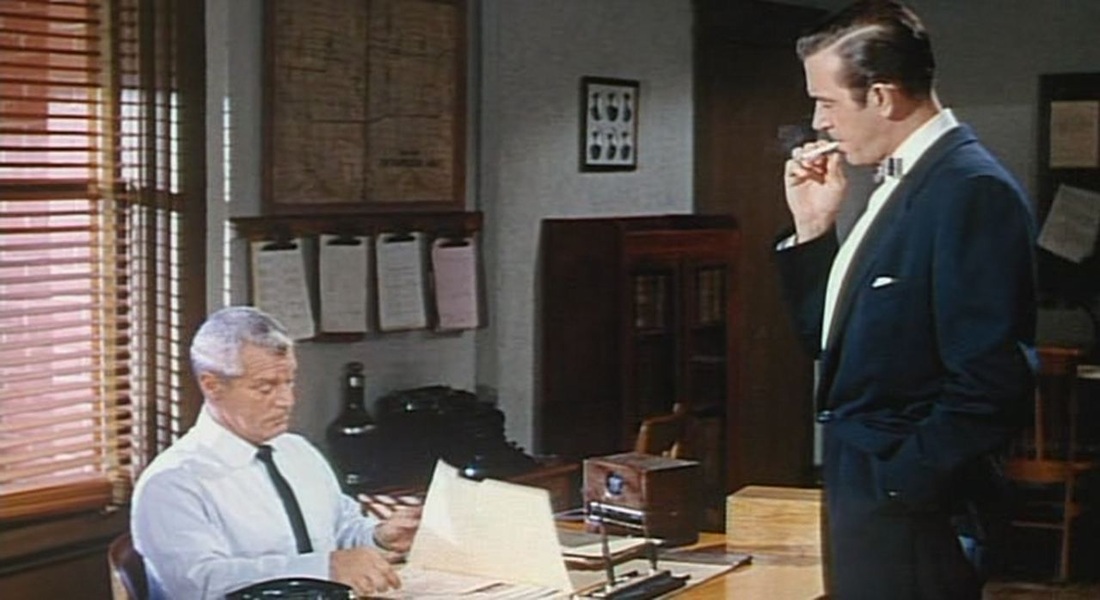
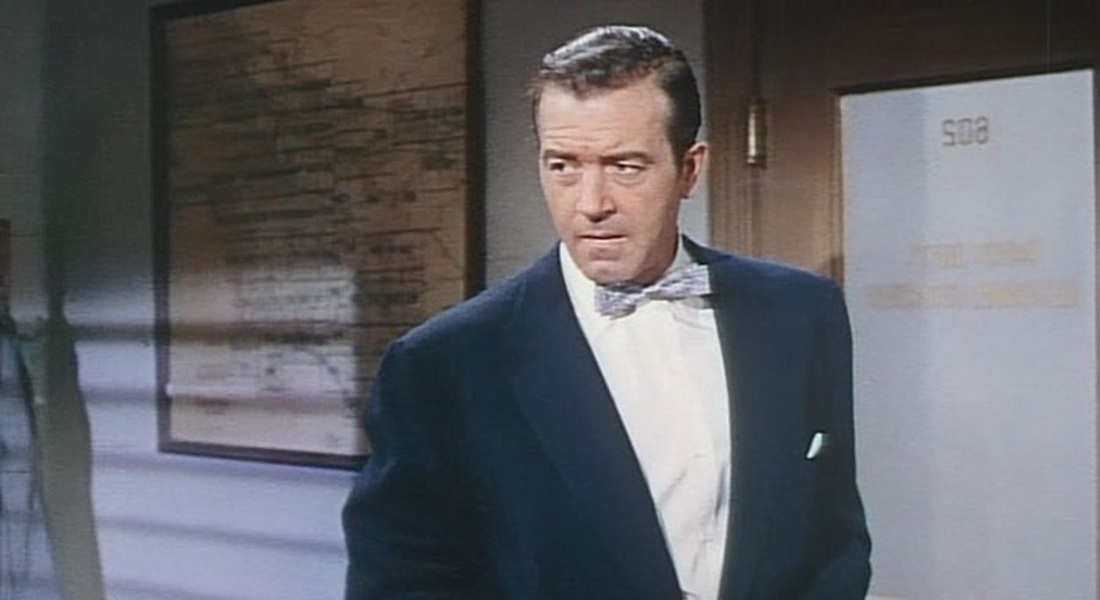
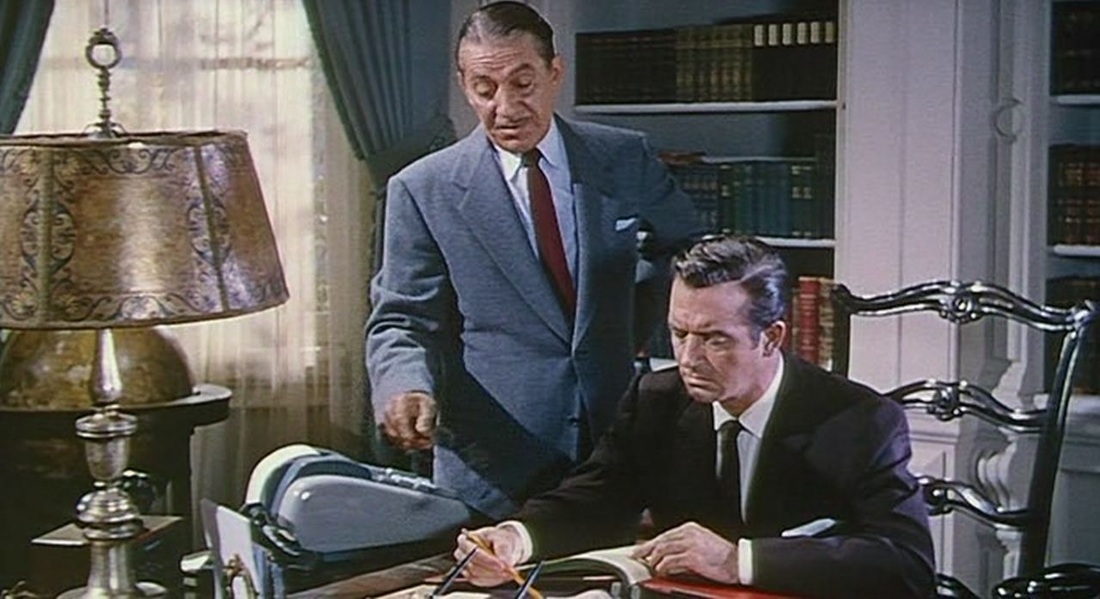
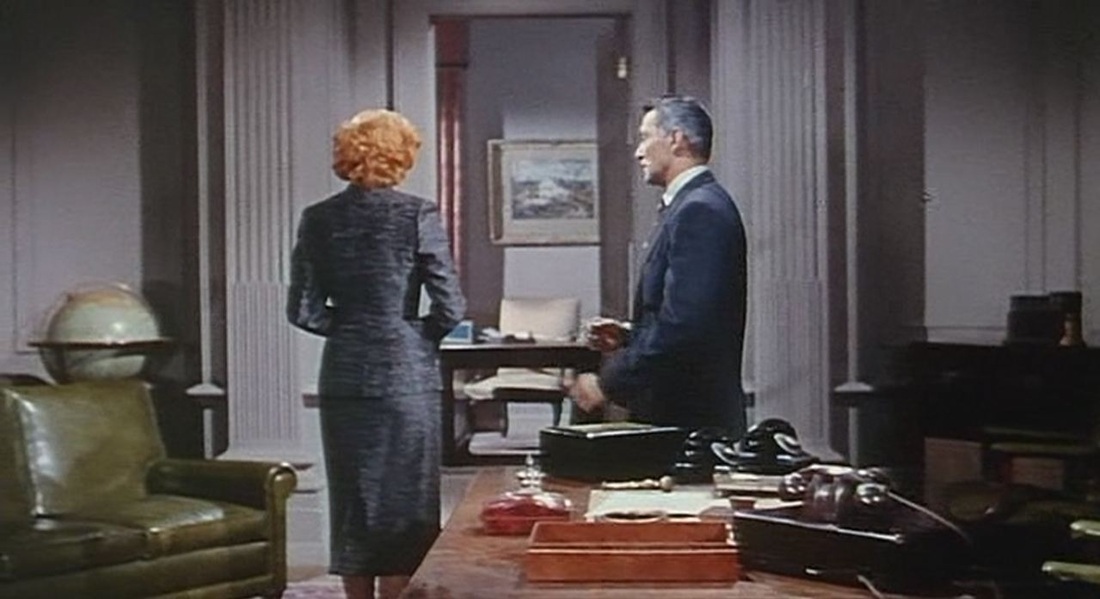
    Two area maps in the Bay City police chief's office and two globes in two other offices supply incidental décor. Briefly, a newspaper publisher studies a set of blueprints, just before he is murdered: 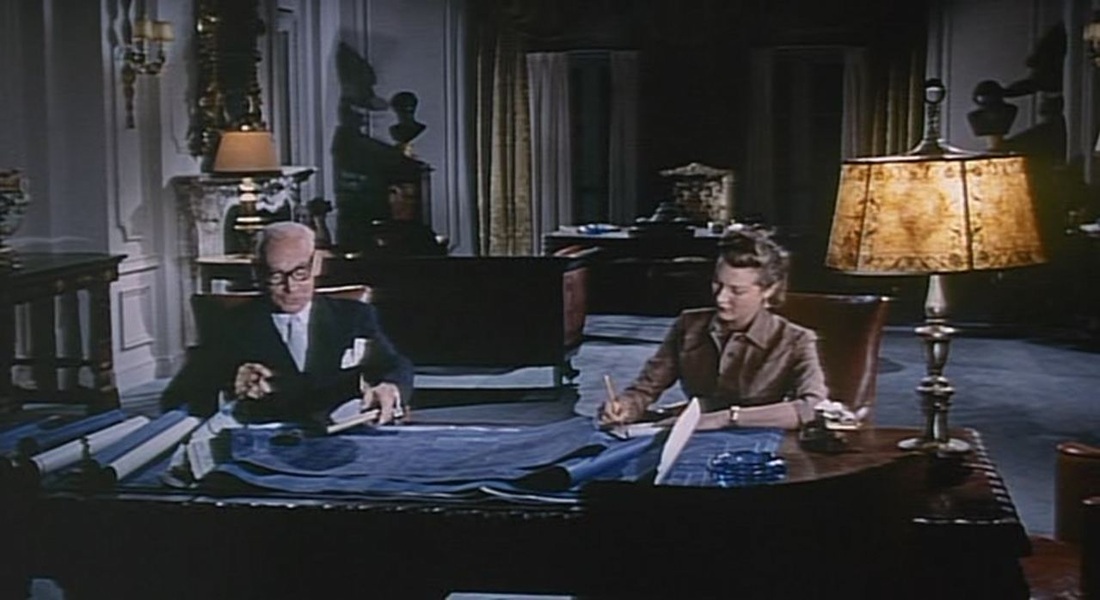 (See The BlowUp Moment for some slightly more interesting images, here.)
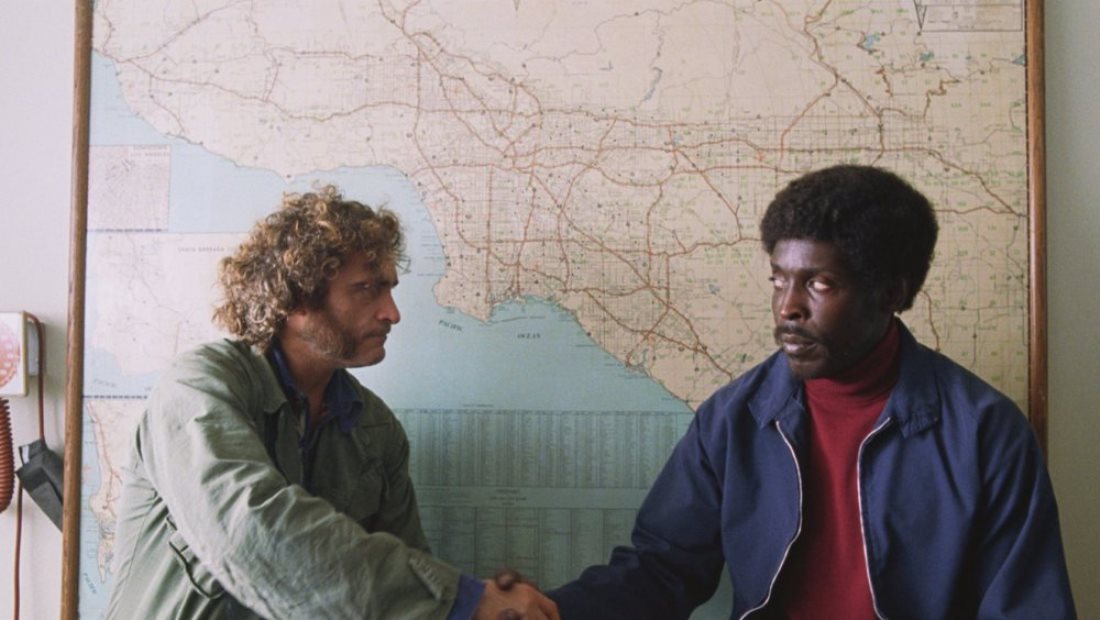
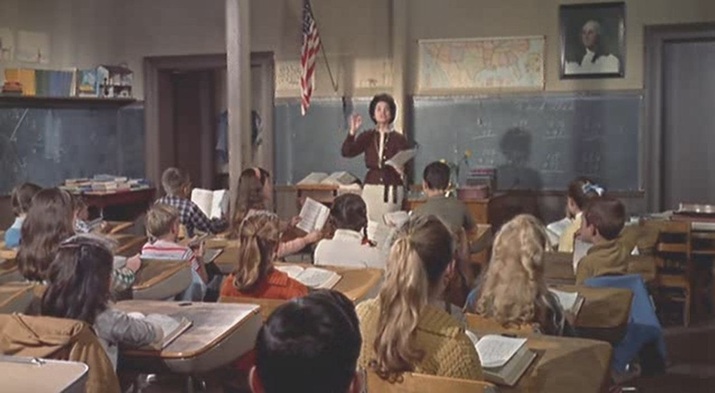 The only maps in The Birds are those you would expect to find in a schoolroom, alongside all the other usual accoutrements: 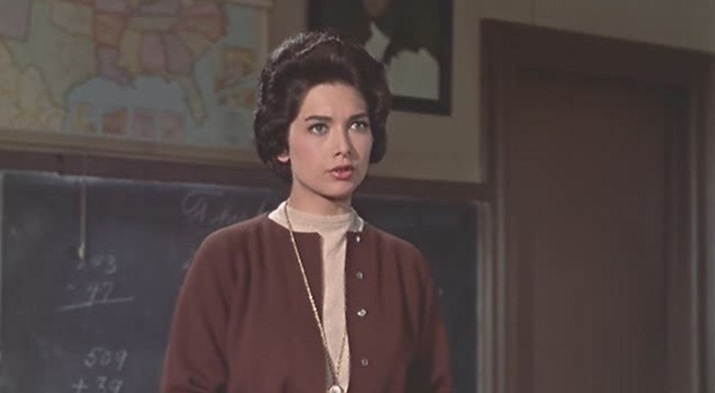 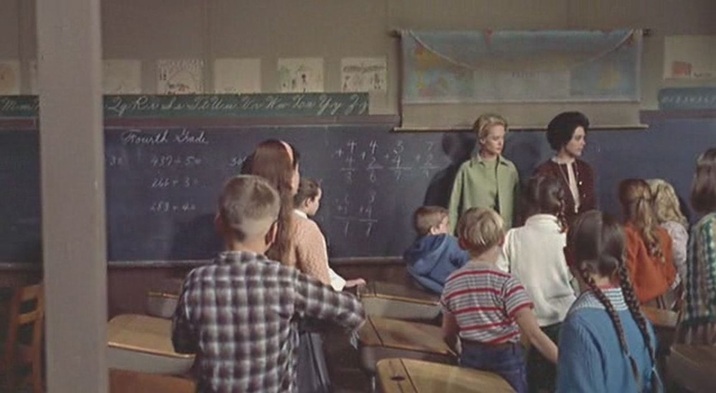 For a map of the locations, go to cine-touristic websites such as this: 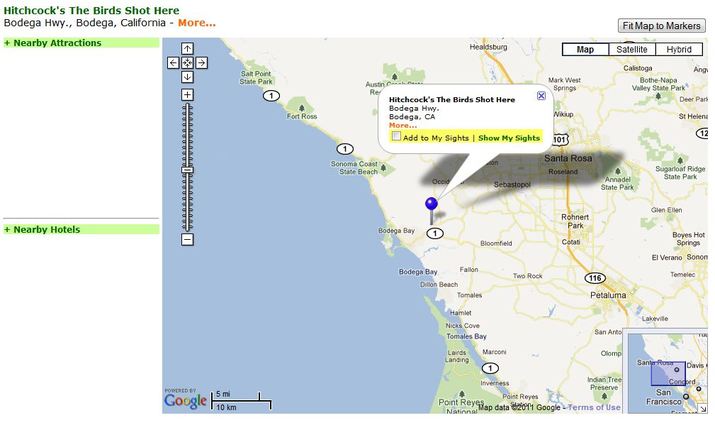 Or see those provided by the 'Making of...' documentaries in dvd editions: 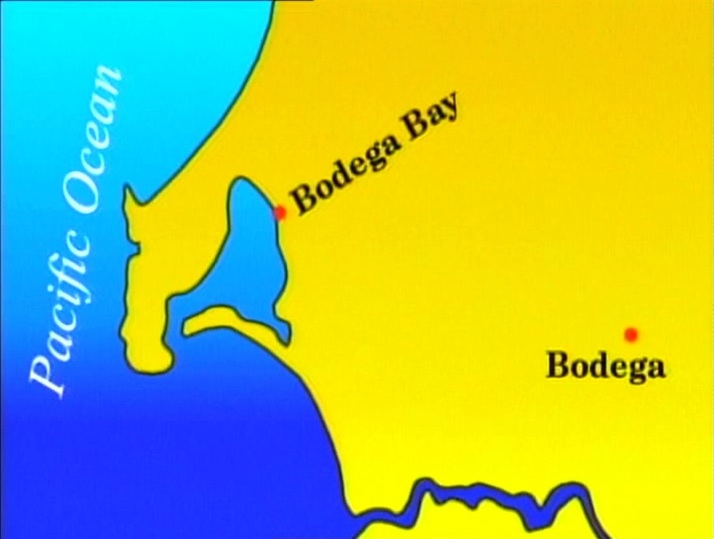 The film itself provides no map of the area, but does enjoy a map-like birds' eye view of Bodega Bay: 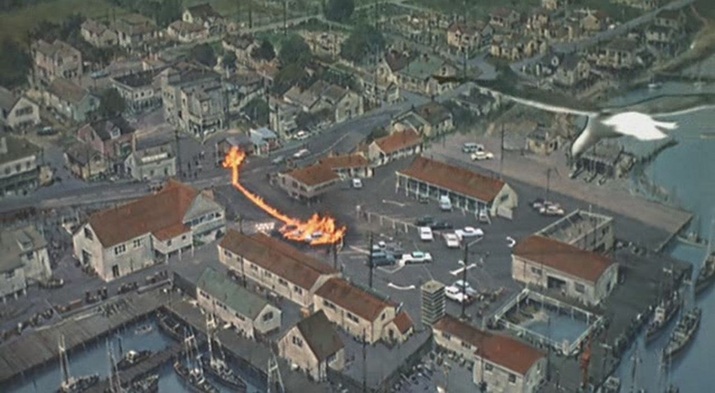 The change in the aspect of the logo from beginning to end may occur with every Universal film at the time, but it seems to correspond to the dark mood at the end of The Birds:   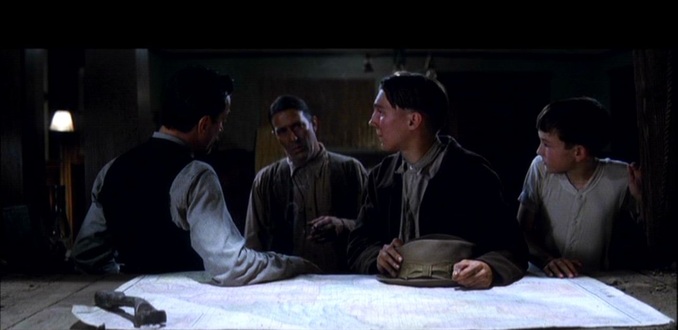 David Bordwell has read in detail the first map scene in There Will Be Blood (here), analysing the simple but powerful staging of this one-shot sequence: 'Many directors would have cut in to a close-up of the map, showing us the details of the layout, but that isn't important for what Anderson is interested in. The actual geography of Plainview's territorial imperative isn't explored much in the movie, which is more centrally about physical effort and commercial stratagems.' There are three more map scenes in the film, each of them as indifferent to the actual geography of that part of California, because Anderson isn't interested in the details of the layout, of course, but also because these would be real maps on which the fictional 'Little Boston, Isabella County' couldn't appear. The next map scene is Plainview's visit to a real estate office, a two-shot sequence in which there are three maps on the wall, differentiated in look but hardly readable in detail. A fourth map is brought out after Plainview asks Al Rose the pertinent question: 'Well, where's the map?' 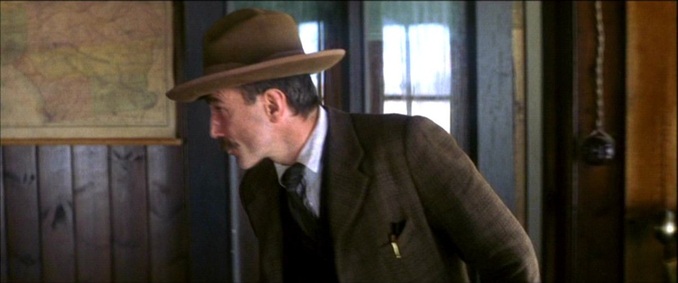 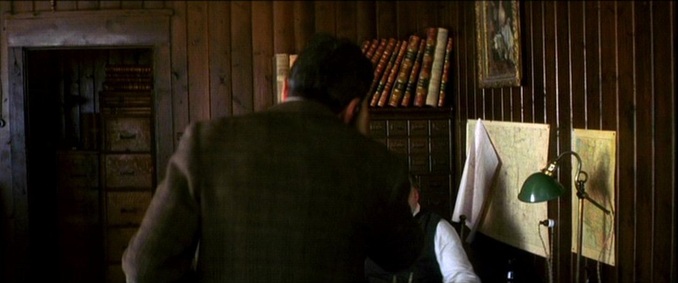 This map is discussed in detail, but no portion of it is shown: 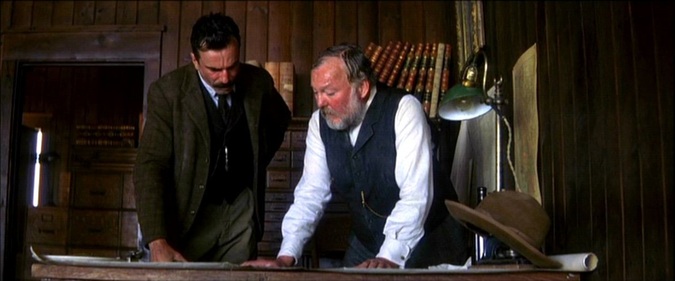 This scene is followed up later in a one-shot sequence where Plainview discusses the same area with Rose. This time the camera moves slowly in towards a closer framing of the table on which the map is placed. The map is distinctively coloured but still not readable: 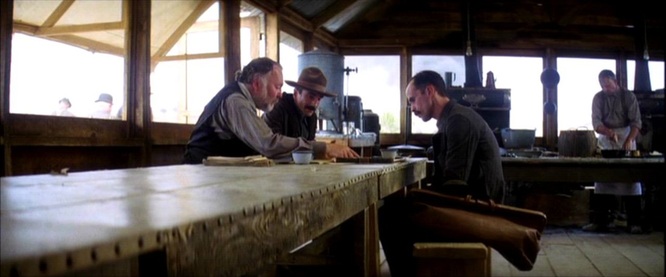 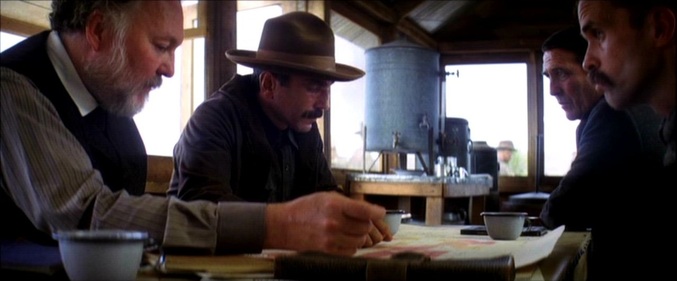 At the end of this shot the map is rolled up. Two earlier views of a rolled-up map, in Plainview's site office, serve as reminders of the territorial imperative, but also that we are not fixed on the actual territory: 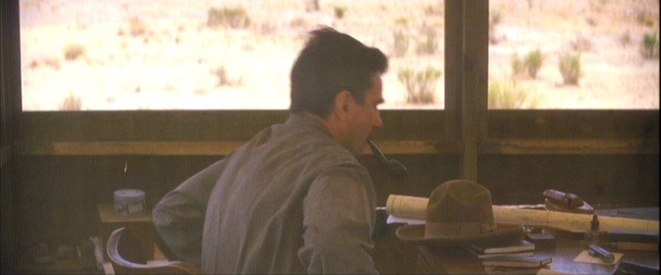 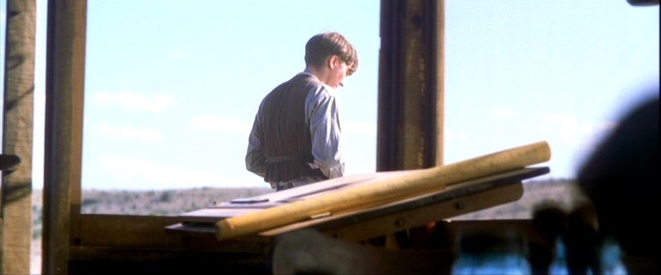 The last map scene offers a satisfying match of territory and map, not through actual geography, but in the repetition over a map of a gesture performed in the territory. First a wooden stake is hammered into the ground, signalling the route for the pipeline: 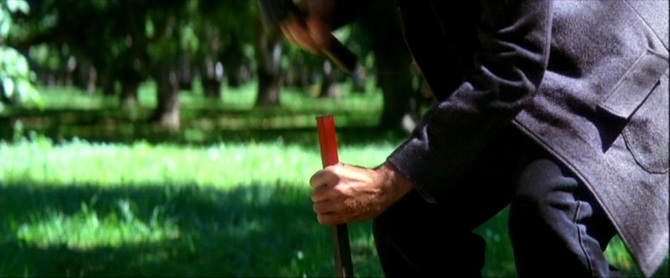 And then, at a meeting with his Union Oil associates, Plainview hammers a stake into the map, through the map and into the table on which it is spread: 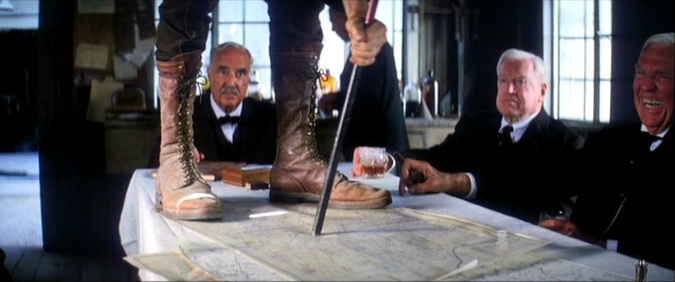 The film will run for another fifty minutes without being interested in maps again. A short dvd-bonus on the research that went into the film shows two maps consulted, and a period photograph of maps being used: 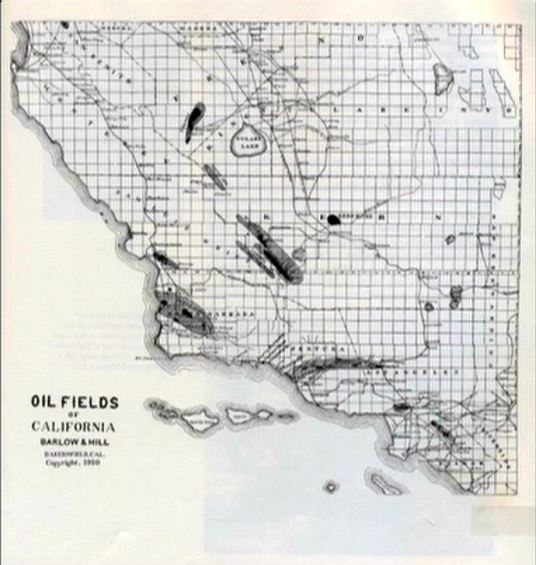 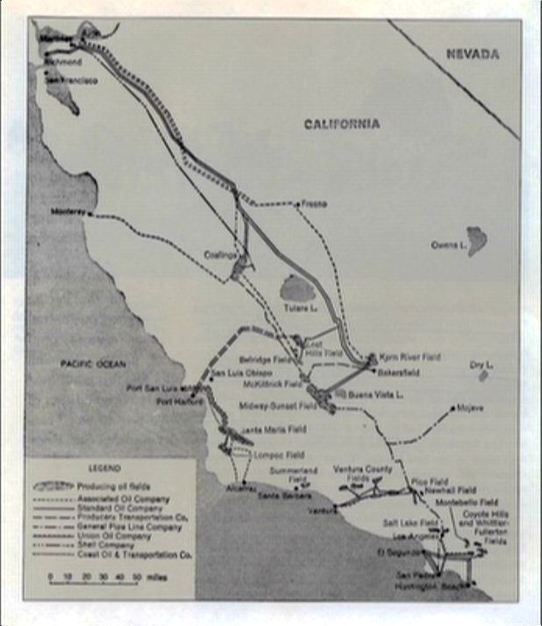 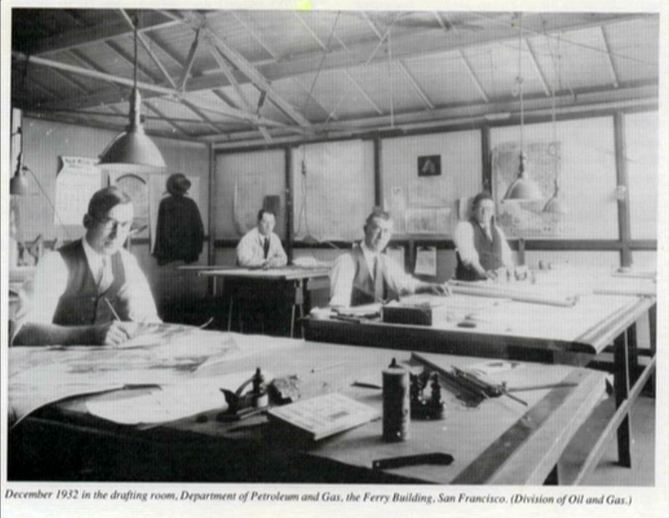 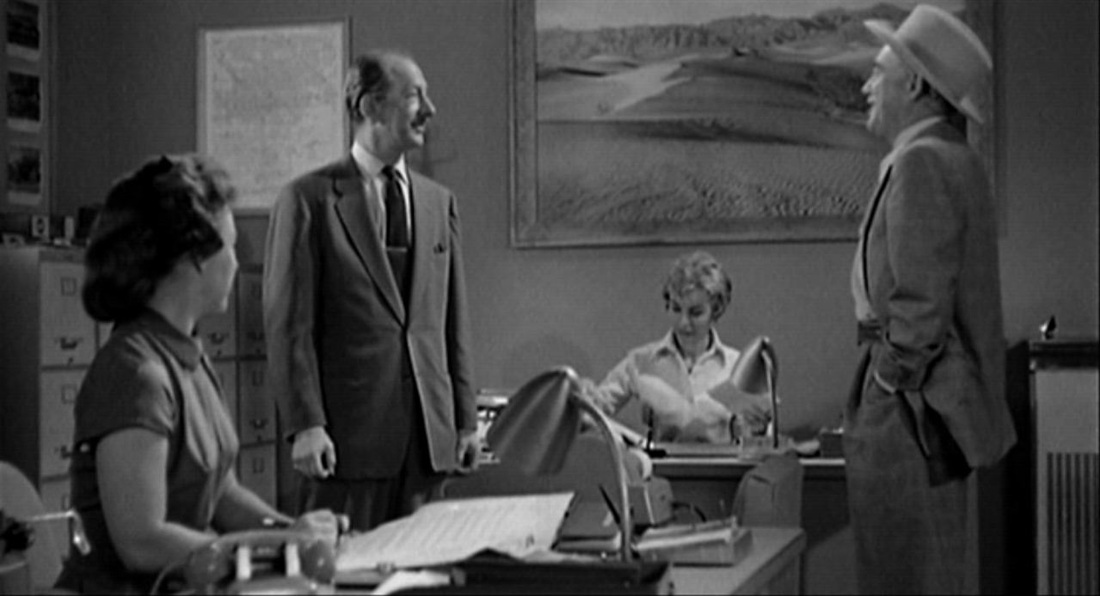 There are (I think) six maps in Psycho. Three are just part of the establishing decor. The first (above), in the office in Phoenix (it is probably a map of Phoenix), draws far less attention than the two large landscapes to the right of it. The second, in the office of the used car lot in Gorman, may not even be a map at all: 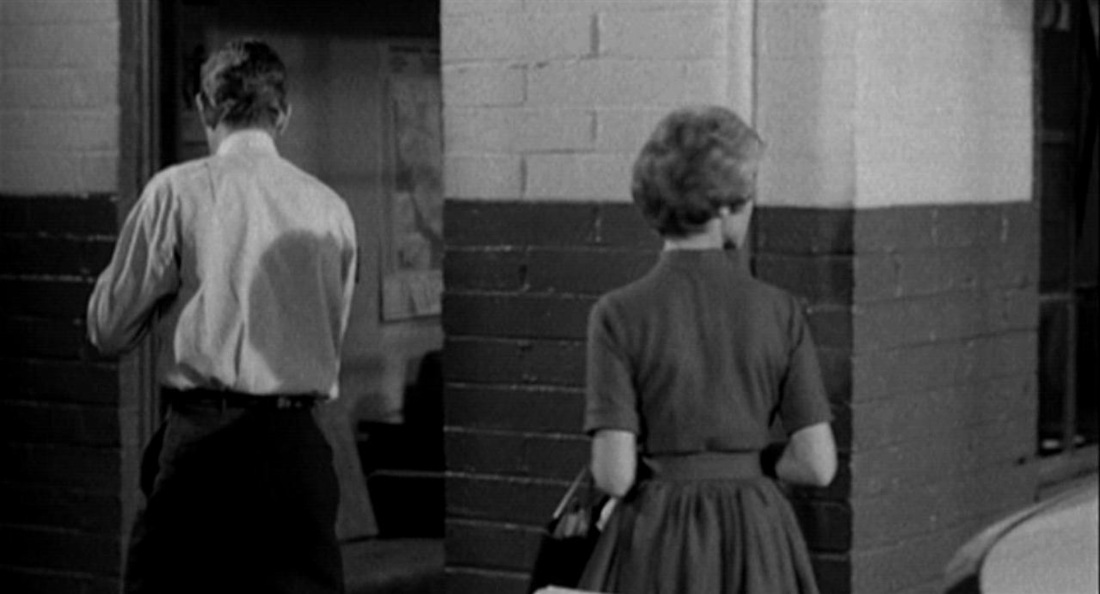 The third, in the corridor outside the office of the Chief of Police, in Fairvale, is no doubt supposed to represent that locale, but the map has no identifiable features: 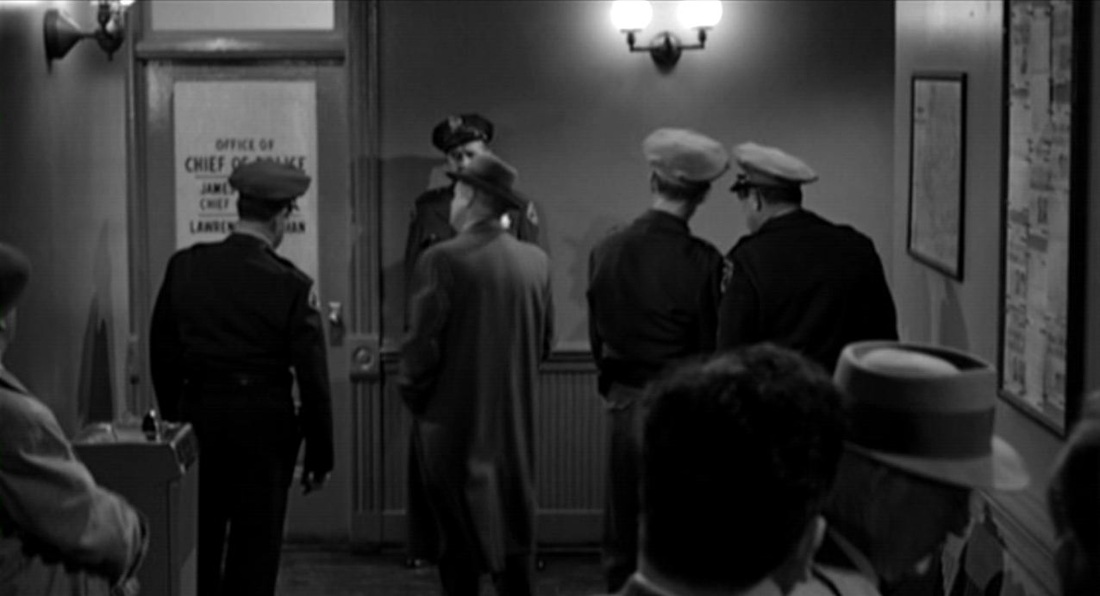 The other three maps are more interesting. One is on the front page of the ‘Los Angeles Tribune’ which Marion buys in Gorman: 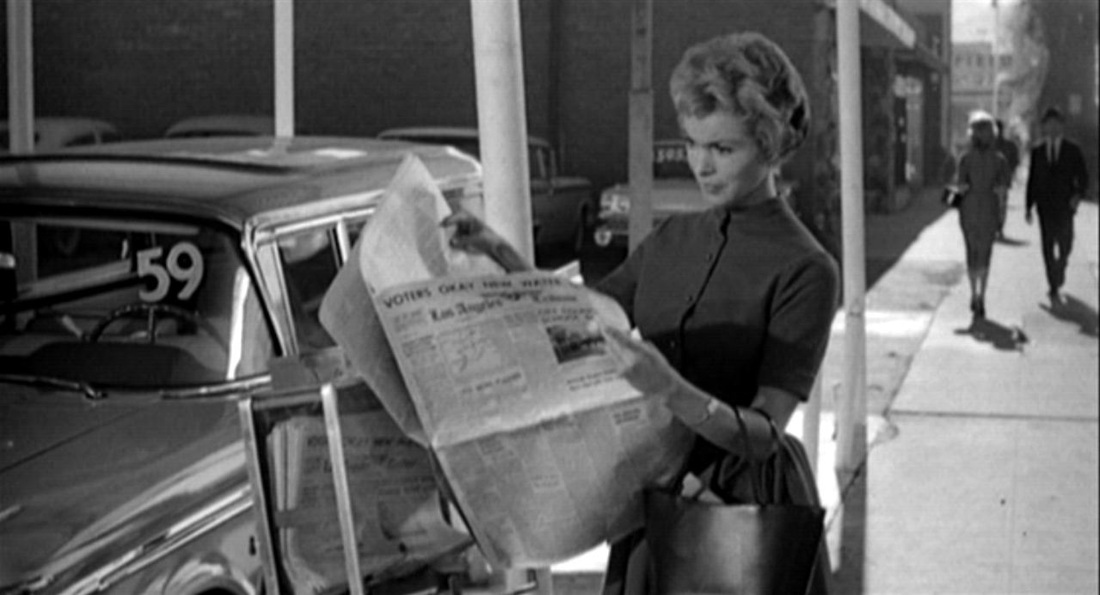 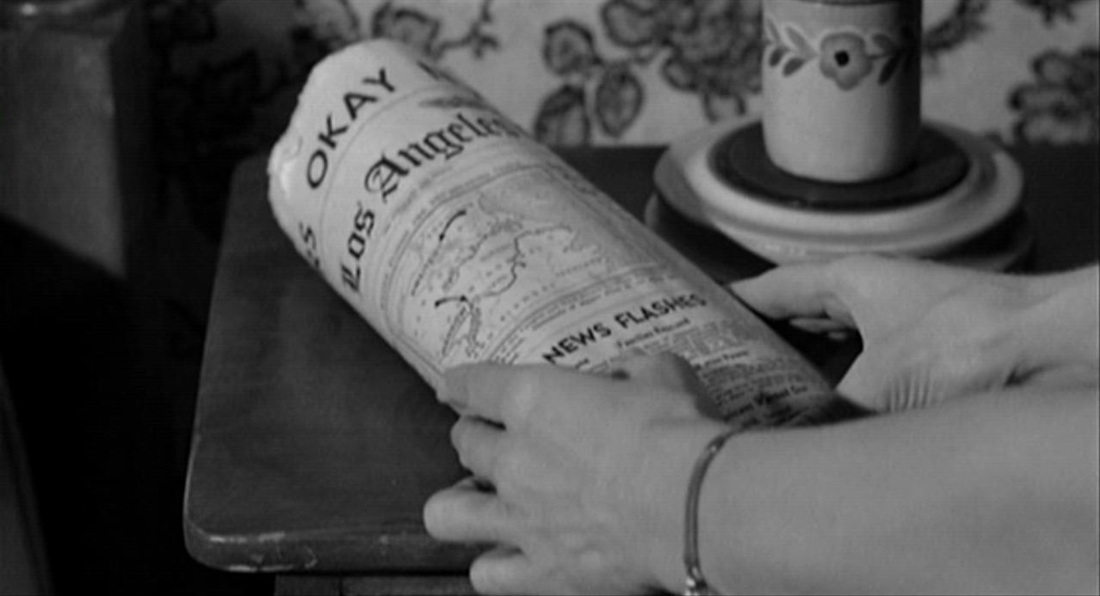 Though the lines of the map are distinct, I cannot identify the locale: possibly it relates to the headline concerning the establishment of a new water district in Los Angeles (though it appears to represent an eastern coastline). Since, anyway, the newspaper is a fictional construct, its headline and illustrations can have been assembled from very disparate sources. Our gaze is constantly returning to this map, not for its topographical interest but because Marion wraps the money in it. The next map is a globe, a familiar type (see the previous entry in this listing), and is here in a familiar setting, as an item in the bric-à-brac of Norman’s room. It signifies only the minimum that globes can signify when attention is not drawn to them by the film (merely pointing to a world beyond the film's locales): 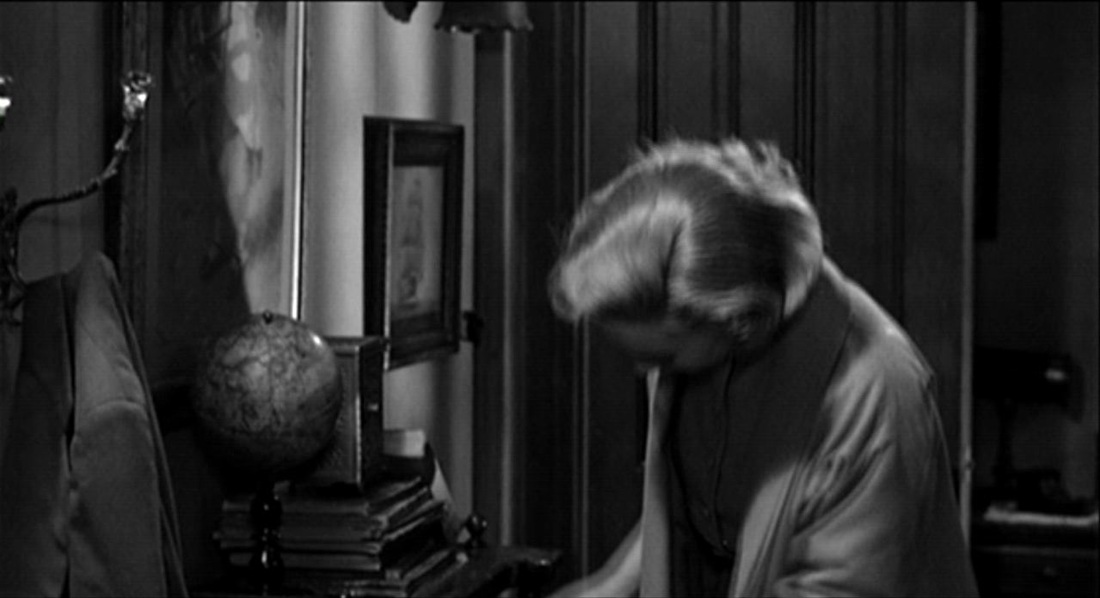 The last map is the most interesting. In the Police Chief’s office, the psychiatrist offers his explanation of Norman’s behaviour. He speaks for five minutes, and for almost all of that time he is standing in front of a map on the wall. There are occasional cuts away for questions and reactions from his audience, but mostly we are looking at the psychiatrist and a map: 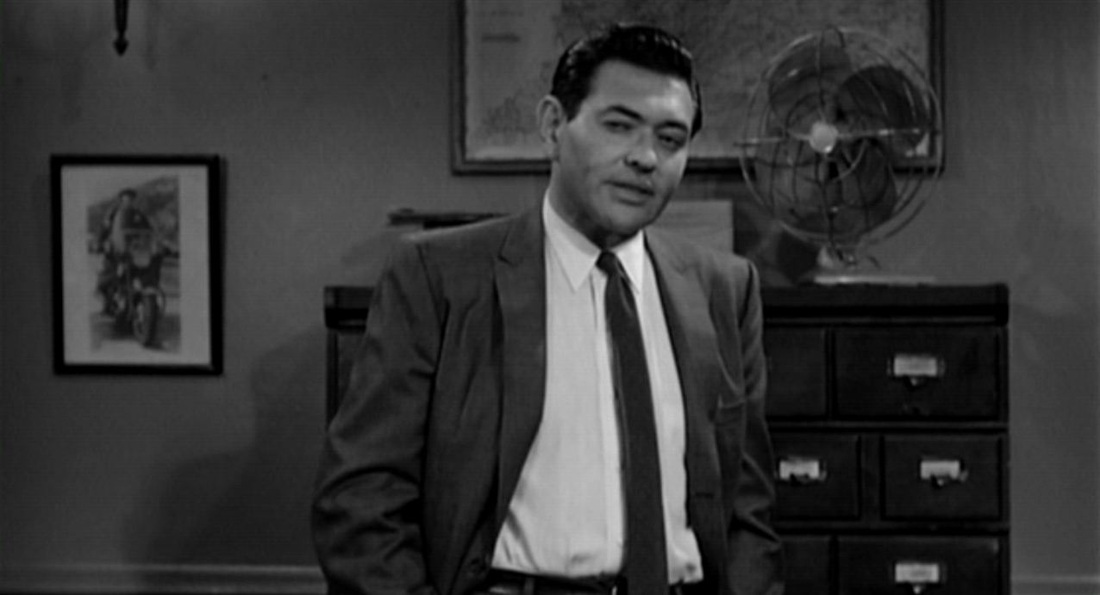 In The Moment of Psycho (2009), David Thomson identifies this as a map of Shasta County, northern California,and demonstrates that this is a feasible location for the town in which the film’s action comes to a close. Psycho has moved from Phoenix, a real place rendered with a panoramic view and identified in screentext: 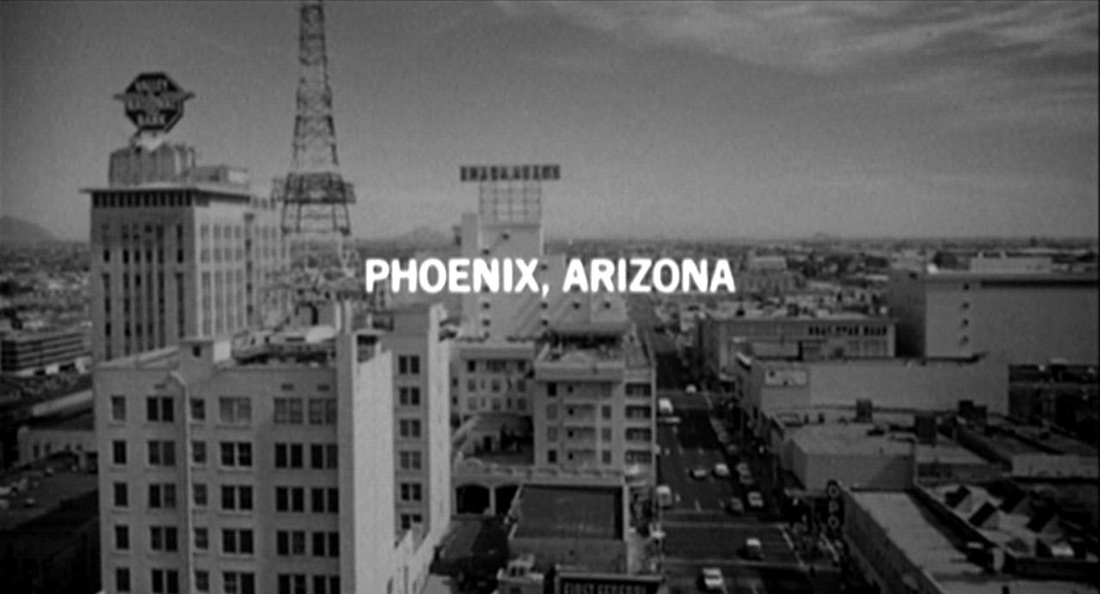 to ‘Fairvale’, a fiction confected on the studio lot. Though the map is not easily decipherable, it is peculiar that the film here undermines earlier efforts to detach the town from topographical reality, though perhaps only Shasta County residents would have recognised the place on the map from this closer detail: 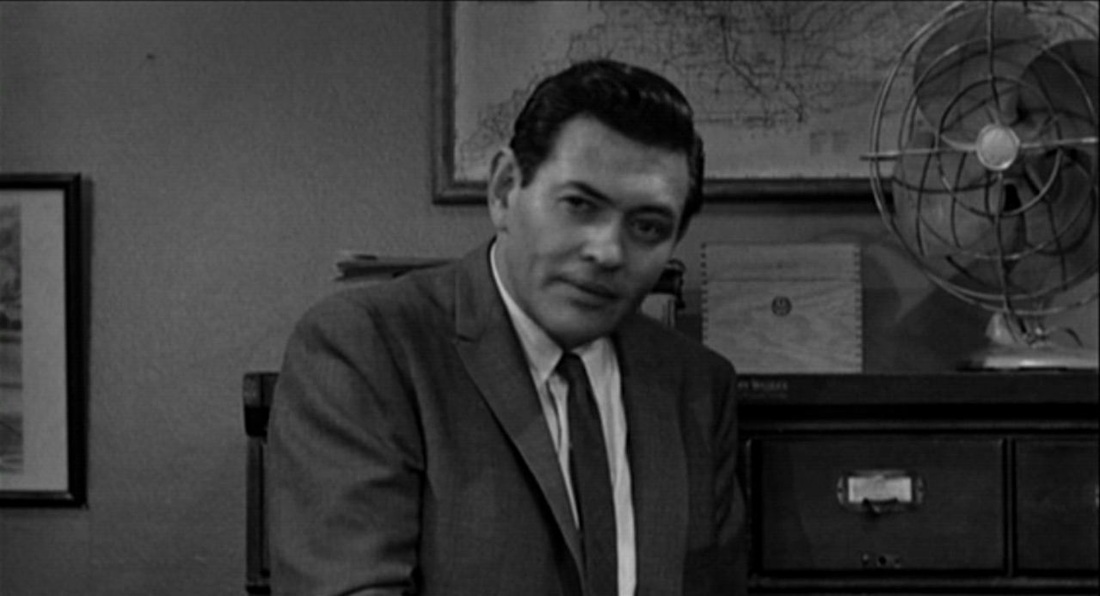 Detachment from exact reality is the dominant note here. The film had began with chronological exactitude on Friday December 11th (1959): 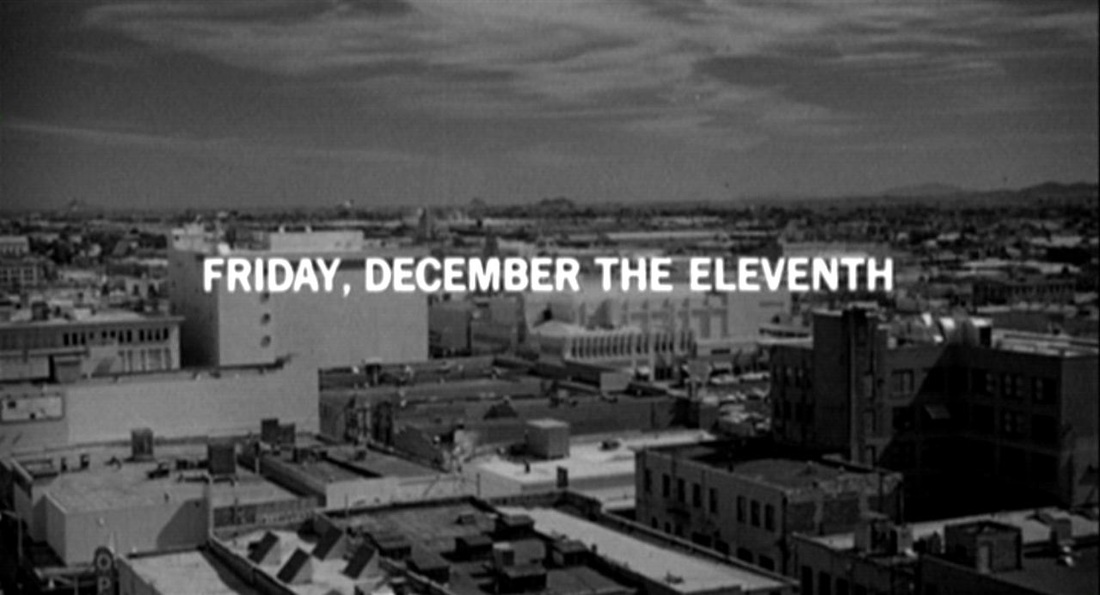 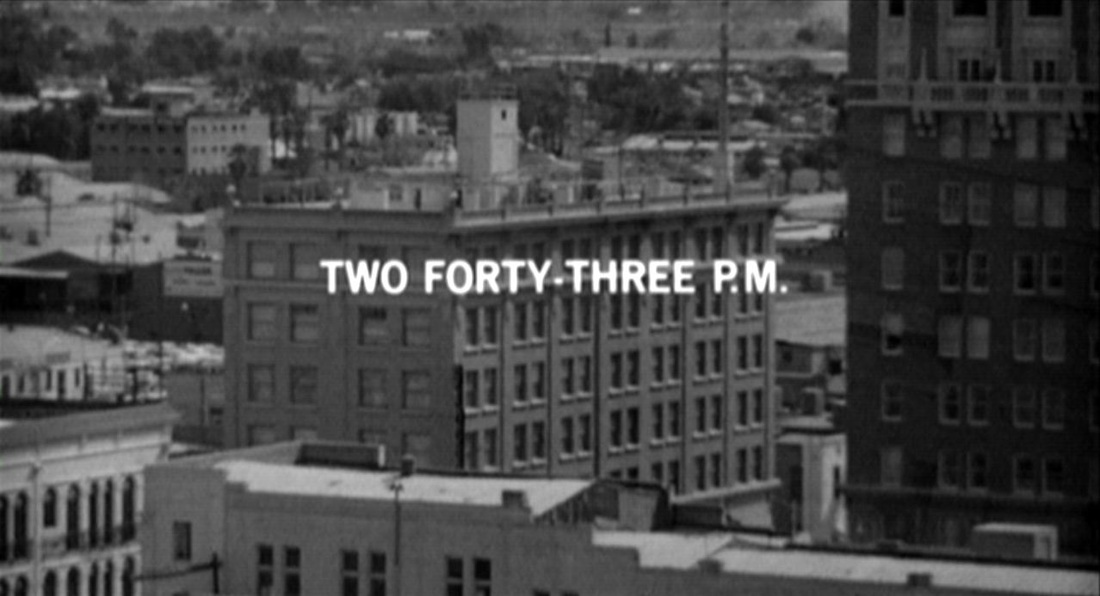 carrying over to the murder of Marion on Saturday the 12th. Arbogast’s investigation then stretches vaguely over the following week, until he is murdered on Saturday the 19th. Things come to a head on the Sunday, and the closing scene at the county courthouse seems to take place that evening. No dates are specified, but a calendar in the office reads ‘17’: 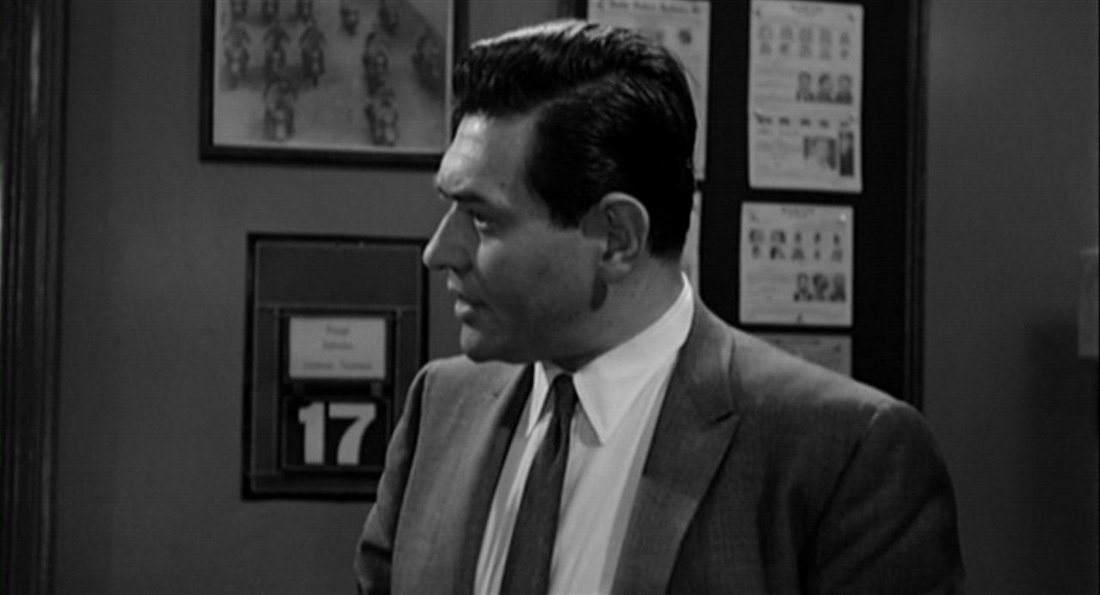 meaning either that the Police Chief's calendar has not been changed since the preceding Thursday, or that the film is no longer concerned with being exact ('It's tough keeping track of the time', had said Norman).
This would harmonise with the view (presented by David Thomson) that the ‘psychological explanation’ is itself at some remove from exact reality -- that Hitchcock was ‘pulling our leg’.     ‘What doe the cinema of space par excellence think about when it dreams of Baudrillard? It thinks about lines (dialectical polarity), about maps (the precession of the map over the territory), about networks (reversibility and the circular forms of commutation), about hyperbola (potentialisation), about interstices (viral strategies) and about spirals (ecstatic enthusiasm and thought as precipitation). In short, it thinks about fatal spaces of resistance.’ Jean Baptiste Thoret, ‘The Seventies Reloaded (What does the cinema think about when it dreams of Baudrillard?)’, translated by Daniel Fairfax, Senses of Cinema 59 (2011), originally published in Les Cahiers de L’Herne, 84 (February 2005)     |